53.3 F
Davis

Davis, California

Thursday, December 25, 2025
Home Blog Page 372

$163 billion grape industry at risk due to spread of grapevine red blotch virus with no known treatment

$3 million grant given to institutions in California and Oregon to address unknowns of disease and mitigate its effects on grape production, wine quality

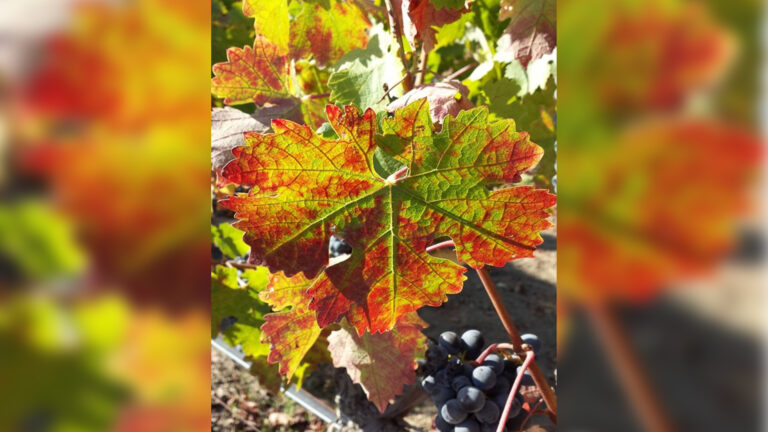
Less than an hour from UC Davis, lie the towns of Napa and Sonoma, both hubs of the $163 billion US grape industry. California-grown grapes makes up 90% of the country’s wine production, yet they are at risk as a currently untreatable grapevine disease spreads rapidly across the country but especially in California and Oregon vineyards. 

The grapevine red blotch disease is caused by the grapevine red blotch virus, which was first identified as a virus by Mysore R.Sudarshana, a research biologist through the United States Department of Agriculture Agricultural Research Service (USDA-ARS) department of plant pathology in 2012. 

“It is of huge concern to the wine industry because the virus and the disease have only been recently discovered and there are many unknowns about the disease biology and management,” Sudarshana said via email.

Once the grapevine has become infected with this virus, the impacts on the wine include reduced sugar content and increased acidity. Lower sugar reduces the wine quality resulting in a decreased value of the fruit. Winemakers are unable to produce high quality, premium wines with these changes.

Aside from the wine quality, the disease also greatly impacts the crop yields of grape varieties. This can be seen more intensely on red wines, as it takes longer for the grapes to ripen, forcing growers to allocate more resources as the growing season lasts longer. In some cases, growers do not have the economic means to wait for the grapes to fully ripen, resulting in lost yield. For the grower and the winemaker, the disease holds great power to impact each year’s yield and quality of product. 

To address this urgent issue in the grape industry, UC Davis researchers received a $3 million grant from the USDA National Institute of Food and Agriculture to study the grapevine red blotch virus and identify possible vectors, or organisms that spread a pathogen, of the virus. This four year grant is in collaboration with researchers and team members from UC Davis, UC Berkeley, UC Riverside, Oregon State University and USDA-ARS at Davis. 

Spread throughout California and Oregon, the project team is interdisciplinary in nature with experts in entomology, economics, engineering, plant pathology, virology and viticulture. Due to the complexity of this issue and all that is still unknown, Anita Oberholster — the project director and cooperative extension specialist in the department of viticulture and enology — sees this diverse set of expertise as an asset of the grant.

“The advantage of the grant is that it is multiple year so you can really build upon it, and it is multidisciplinary due to its large enough budget that allows for everyone to be involved in it,” Oberholster said. 

With this funding, the research team plans on starting two highly similar experiments in California and Oregon in various grape production areas throughout the two states to build upon the little that is already known about this virus and its vectors.

Since the initial discovery and identification of this virus, Sudarshana, along with Frank Zalom, a professor of entomology and nematology, showed that the three-cornered alfalfa treehopper insect is a vector of the virus. But this study was conducted successfully in a highly controlled environment. 

Further study of this specific species of treehopper has shown that it can serve as a vector of the virus, although the insect does not favor grapevines when given legumes or alfalfa to feed on. Due to how quickly this virus is seen spreading, especially in California and Oregon, there may exist multiple vectors that vary depending on environmental factors across the country. 

Because of the complexity of this virus and the ways it can change in response to situational environments, more research is needed to fully understand the vectors of the virus. This grant will allow for further study of possible vectors and a deeper understanding of management possibilities.

“The first step is just understanding the ecology of this insect vector in this cropping system,” said Houston Wilson, a cooperative extension specialist in entomology at UC Riverside.

Since the three-cornered alfalfa treehopper is not one of the common grapevine pests, more research needs to be done to fully understand the patterns of this insect in order to effectively mitigate its impacts. To be able to create management practices, there needs to be more knowledge on how the insect vectors act in this specific cropping system of vineyards. Beyond the vectors, the movement patterns of the virus itself have to be better understood as well.

“There is so much about the basic biology and chemistry of the virus that we don’t understand yet, it is only when you really understand these things that you can target and control it to mitigate the effects,” Oberholster said. 

Throughout the next four years, the team hopes to find conclusive data that will be able to shape management practices and guidelines that will soon be able to help growers and winemakers make informed decisions. 

“This is all about education and helping [growers] make informed decisions,” Oberholster said. “We want to develop some really decent guidelines and it won’t be the end of this problem but we want to make good progress.”

This collaborative and interdisciplinary research project is making the first major steps to fully analyzing and understanding the grapevine red blotch virus while providing helpful insight to the growers and winemakers dependent on the health of vineyards. 

Written by: Alma Meckler-Pacheco — science@theaggie.org

Nytch Inc. helps local businesses beat out large online stores

New app connects shoppers with desired products at local businesses in Yolo County

Born and raised in Woodland, Grant Lea saw a problem in his local community, one that is also reflected in the rest of the world: Local businesses, offering unique merchandise and personal interactions, struggle to survive against major online retailers, like Amazon. Due to the high cost and logistics involved, these small businesses cannot sustain websites, but Lea saw a fix to this problem. 

In July 2019, with the help of fellow Yolo County native, Chase Kellison, Lea founded Nytch Inc. in Woodland and subsequently launched an app. Nytch, the app, connects small businesses’ offline inventory and expertise with shoppers in Yolo County. Already, 60 restaurants, retail stores and other local shops are registered on the app. The app’s current customer base reaches around 1,000 users, with ages ranging from 18 to 70+. Kellison is the company’s chief operating officer and Lea is the chief executive officer. 

“These small businesses are being beaten up by large online retailers and it’s difficult for them to compete because they can’t function at the same level that these giants can,” Kellison said.

The app is available on iPhones and Androids and can be downloaded on the Apple App Store or Google Play. Interested customers can also visit www.nytch.me

To use the app, a customer submits a request of what they want to purchase. They can include a description, pictures, the size and the color of what they desire. Any business registered through Nytch can respond to the customer with what they have to offer that is similar to the request. Businesses can send their price and pictures of the recommended product. If customers like the product, they can purchase it through the app or put the item on hold and then pick it up. Currently, no delivery service is offered, but they are working on it, Kellison said. 

“It is one point of access to 60 businesses,” Lea said. “We describe ourselves as a platform that connects communities to the unconnected.”

Customers should use Nytch because it supports local businesses, is environmentally sustainable and is the easiest way to find desired products, Lea said. 

“We’ve created the pathway for shoppers to connect with businesses in their communities in a way no other platform has before,” Kellison said. “There are no other apps like Nytch nor other apps that can do what we do. We’re one of a kind.” 

Shopping locally can benefit customers because they get to receive expert knowledge from store workers, which is lacking in online shopping, Lea said. These knowledgeable workers can connect customers to the right products without a single phone call or Google search.

“The businesses that you shop in offer more than just their inventory,” Lea said. “They offer customer service, knowledge and good experience. They know how to solve problems that their customers have, which you cannot do online.”

Noemi Gregorio, a third-year communication major and intern for Nytch, helps the company manage its social media presence and reach out to new businesses. As a shopper herself, Gregorio was drawn to Nytch as a new way to find clothes from local businesses. 

“I am always thinking of different outfits in my head,” Gregorio said. “I can just think of something, google it and send in the request to local businesses. I like it because I don’t have to go out to a bunch of different stores to look for one thing.”

Gregorio also appreciates the ability to shop locally while still having the convenience of online shopping. By shopping at small businesses, the money stays local and Davis community members invest in their city.

“What is Amazon going to give back to the people of Davis?” Gregorio asked. 

So far, Kellison said mostly older individuals use Nytch, but the company hopes to expand its user base to a younger audience. Kellison thinks that students would really enjoy the shopping convenience the app provides.

For UC Davis students, using Nytch can benefit the town that supports their university. A thriving downtown makes UC Davis a more desirable university to attend. Nytch allows for students to explore the businesses around them, Lea said. 

“When you are applying to UC Davis, we couldn’t boast about any of the stores or businesses downtown if they weren’t there,” Lea said. “We can talk about the unique shops, farmers markets and businesses that make these towns special places.”

Nytch originally launched its platform only in Yolo County because of the strong community emphasis the county has and the connections both Lea and Grant have from growing up there. 

“Both [Lea] and I thought the communities would really appreciate something like this,” Kellison said. “It’s a really special city and county to live in because it’s so community-centered.”

To recruit new businesses for the app, Lea and Kellison originally went door-to-door to businesses and spread the idea through word of mouth. 

“The businesses like what they hear,” Lea said. “It connects them to their communities in ways that they aren’t.”

The SPCA Yolo County Thrift Store joined Nytch to help them reach a wider customer base, said store manager Darci Soiu via email. After connecting with Nytch, they have received many new, regular customers from other towns. 

“We appreciate the wide variety of people [the app] reaches and the advertisement this company gives us,” Soiu said. 

Another business, Shu Shu’s LLC, has grown through Nytch. Via email, owner Shu Shu Hanjani said it helps her focus on customer relationships instead of other issues. 

“It really helped me avoid all the stress […] of figuring out what to put online, how to put it online, and everything else that goes with that,” Hanjani said. 

In the future, Nytch wants to expand its range beyond Yolo County. As of now, however, Nytch wants to focus its efforts on providing the best results for customers and businesses in this smaller region, Lea said. 

“We want to deliver on expectations,” Lea said. “We are delivering on what our people expect and once we do that, we will focus on how to save other local businesses across the country.”

Currently, businesses get to use Nytch for free with no strings attached, Kellison said. This stems from founders’ love of the Yolo County community. Once Nytch launches elsewhere, the company will charge a 10% fee on each sale made, however, companies in Davis and Woodland will never have to pay this fee. As the home county Nytch stems from, Yolo County businesses will always be able to use the app for free. 

Through Nytch, Lea hopes that small businesses in Yolo County and beyond can survive and thrive while up against large online companies. 

“Nytch makes it possible for small businesses to actually compete,” Lea said. 

Written by: Margo Rosenbaum — science@theaggie.org 

UC Davis encouraged to become fair-trade university

Senate passes resolution for social justice and environmental sustainability

With UC Davis’ commitment to sustainability initiatives, the university will continue to support social justice and environmental sustainability as ASUCD encourages the university’s transition to become a fair-trade university through Senate Resolution #7. 

Growers of coffee, tea, cocoa and other products are often paid low wages, and millions of children worldwide are engaged in child labor. Fair-trade practices ensure fair wages, safe working conditions and environmental sustainability. These practices also prohibit forced labor of any kind. 

The resolution endorses the incorporation and promotion of fair-trade products into campus dining services to support proper working conditions for people and communities that are commonly exploited by conventional food systems. 

Though many campuses across the nation have active fair trade campaigns, UC Santa Cruz and UC Davis are the closest to becoming the first UCs to achieve fair-trade status. SR #7 passed unanimously on Jan. 9 after its introduction by the Environmental Policy and Planning Commission (EPPC) Chair Kyle Krueger. 

“The fair-trade label is supposed to ensure that the workers who make a product are treated fairly and that the environment is taken into account in that production,” Krueger said. “We don’t want to be externalizing our impacts on marginalized groups.” 

Krueger said he was happy to take the baton and finish the Fair Trade Initiative, which his EPPC Chair predecessor Alice Beittel started about two-and-a-half years ago. He said the Fair Trade Campaigns organization provides the designation of becoming a fair-trade university and that EPPC has worked to receive this designation through educational programming and working closely with dining services on campus. 

Over the past couple of years, EPPC has maintained frequent check-ins to ensure accountability with outlets throughout campus. EPPC continues to work with Student Housing and Dining Services and Associated Students Dining Services to establish a long-term plan to increase procurement of fair-trade products in all dining commons and other campus outlets such as The Silo, The CoHo, Biobrew, Peet’s Coffee and catering. In addition to fair-trade food products, the resolution urges campus outlets to include apparel and handicrafts such as jewelry and other gift items. 

In 2015, UC President Janet Napolitano unveiled The Fair Wage/Fair Work Plan which included the requirement that “all UC contractors undergo an annual compensation audit to ensure they are paying their employees at a level at or above UC’s minimum wage and complying with all local, state, federal and UC workplace laws and policies.” 

The Fair Wage/Fair Work Plan requirement, other university requirements for ethical sourcing of products and the newly passed fair trade resolution will work in conjunction to incorporate more environmentally and socially responsible contracts for producers and food vendors. 

Through the fair trade resolution, ASUCD aims to inspire other institutions and organizations to support Fair Trade and enhance its image as a leader in sustainability and social justice issues. 

With this long-term commitment and respective responsibilities, Krueger explained that the transition to fair trade also poses potential maintenance issues as a result of leadership turnover. 

“Something we see sometimes in student government is that the rapid turnover leads to the inability to maintain long-term projects,” Krueger said. “I would make sure that we have properly defined roles that keep us involved in frequent conversations with Student Housing and Dining Services and The CoHo to make sure that they’re being held accountable and that we’re maintaining the goals that we set forth.”

Krueger also addressed the possible challenge of pricing of fair-trade products. 

“These products do sometimes cost a little more, but one of the reasons why we want to hit the educational aspect hard is to demonstrate to people why they might be worth buying,” Krueger said. “We’re also careful to make sure that there are lower priced products in these outlets as well for students who can’t afford something like fair-trade [products].” 

Similar to the implementation of zero waste by 2020 and the Carbon Neutrality Initiative, the university will commit to explore and expand the incorporation of fair-trade procurement through SR #7. 

“[The university] has had fair-trade products on campus, catering options, educational events and other things that we’ve been working on over the past couple of years,” Krueger said. “The resolution is a culmination of that and is the final step to recertify the university’s commitment to a lot of the values of fair trade.” 

Written by: Graschelle Fariñas Hipolito — campus@theaggie.org

Campaign for College Opportunity celebrates 2019 Legislative Dean’s List

Inaugural ceremony honors lawmakers for work in higher education accessibility

The Campaign for College Opportunity honored seven California lawmakers for their commitment to legislation that increases access to higher education during their inaugural Legislative Dean’s List ceremony on Jan. 8. The Campaign for College Opportunity focuses on preserving access to higher education, improving student success, maintaining affordability and increasing equity.

Among those honored in the Eureka Room of the California State Capitol were Senators Connie Leyva and Richard Roth for a Distinction in College Affordability, Assemblymembers Evan Low and Ben Allen for a Distinction in Statewide Higher Ed Leadership, Assemblymembers Monique Limón and Jesse Gabriel for a Distinction in Undocumented Student Support and Kimberly Rodriguez, the legislative director for Senator Toni G. Atkins, for a Distinction in Student-Centered Policy. 

As the Chairperson of the Education Committee, Leyva worked on Senate Bill 291, which would cover the true costs — books, class materials, rent and transportation — of attending community colleges. SB 291 did not make it to Governor Gavin Newsom’s desk, but earlier this year, Leyva sponsored SB 24, which was signed into law by Newsom. SB 24 guarantees that all public universities provide access to medication abortion services at on-campus student health centers by 2023.

“I’m sure people, like me, didn’t realize that our community college students are sometimes paying as much or more as our UC and CSU students,” Leyva said. “We’re going to continue that work this year, and there are a myriad of [other] issues that need come before us this year like college tuition, K-12 [and more].”

Leyva encouraged students across the three higher education systems to voice their opinions and frustrations. 

“I think it’s incredibly important for us to hear from our students,” Leyva said. “And it’s incredibly important for them to put pressure on us and hold our feet to the fire and tell us what’s important to them.”

Limón was presented with her Distinction in Undocumented Student Support by a UC Davis student who is very active with the Coalition for Humane Immigrant Rights.

Roth called for an increase in funding for tuition, academic counselors and mental health counselors and services. 

“We need to work on college affordability,” Roth said. “We need to increase funding for academic counselors so students receive effective and efficient academic counseling because if the student and the counselor make a mistake, that can cost a student one, two or three semesters worth of work.”

Roth also commented on the state of mental healthcare in California higher education.

“I think we have a tremendous need in the area of mental health, counseling and services,” he said. “It’s unacceptable to have students wait two, three or four weeks for the opportunity to see a counselor. It’s not acceptable even if when a student’s in crisis, they can get in within a day, but it’s unacceptable that the follow up appointment is two, three, four or five weeks out or not at all.”

Representatives from the UC Student Association were in attendance, including ASUCD External Vice President Adam Hatefi. The UC Student Association presented Roth with his honor for his work on expanding the Summer CAL Grant. The UC received $4 million in funding in the new state budget. 

“One of those campaigns [we worked on] is Fund the UC,” Hatefi said. “Fund the UC is focused on providing funding for the UC and providing funding for financial aid. And one of the bills that we focused on last year was the issue of summer CAL Grants and CAL Grant expansion. The Senator’s leadership in that issue is something that we’re very proud of.”

Written by: Liz Jacobson — campus@theaggie.org

Other Collective’s newest issue focuses on displacement

Student-run magazine features marginalized voices

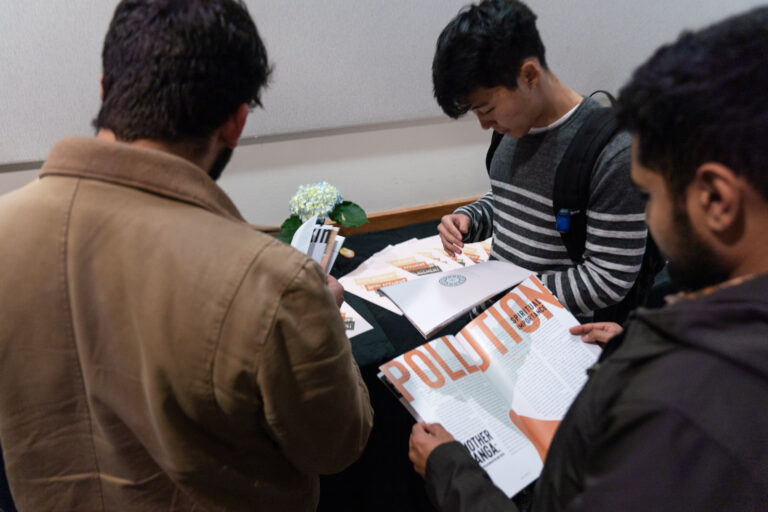
Other Collective, a student-run magazine that focuses on student voices that aren’t regularly heard in Davis publications and works, released the second issue of their magazine on Monday, Jan. 27. The publication aims to dismantle orientalist media perspectives. 

This year’s issue is displacement. The Editorial Board decides each new theme and the entire staff goes through the process of finalizing which topics are fit to publish. Each issue contains a variety of article styles including personal essays and poetry, to name a few. 

“This idea [for the magazine] was created as a response to a need to challenge the media’s stereotypical clumping or antagonizing of [the regions of South Asian, South West Asian and North African] cultures as a result of today’s polarized global/political climate,” said founder of the magazine Kimia Akbari, a fourth-year Middle East/South Asia Studies and psychology double major, via email. “The magazine serves to portray the diversity existing in these regions and highlight their unique voices through a creative and educational platform — especially in a small community like Davis where there is low representation of these communities.”

When the magazine was created, Akbari wanted to incorporate everyone left out in Western society. Not only do the articles represent inclusivity, but the name itself does as well.

“[The title] Other Collective evokes a beautiful feeling in itself,” said Radhika Marwaha, a third-year global disease biology major and treasurer of the organization, via email. “Literally speaking, it brings together anyone who is an ‘other.’ The thought behind creating this name was some of the forms that we end up filling as college students or just regular people do not have our ethnicities appropriately depicted, and we end up checking the ‘other’ box.”

The magazine gives students a voice and encourages readers to see the world from a different perspective. Deepa Singh, a third-year psychology major and Other Collective contributor, said her personal goal for the journal is to continue to write pieces she’s passionate about.

“I have a platform to write, I’m not an activist, but when I write I feel like I am actively making a change in the world,” Singh said via email.

Due to the limited amount of grants student publishing organizations can receive, Other Collective focuses on getting donations from on- and off-campus sponsors. They have, however, recently secured non-profit status and are on their way to earning more funding for their magazine. The funding allows them to publish more copies in-print and, hopefully, send the magazines to individuals outside of Davis, as Other Collective has gotten a few requests to do so.

“A huge help would be to provide more priority to the students who are here making a difference on the campus,” Singh said. “I wished that the campus [supported] us more.”

Writers get to choose whether they would like to find a personal piece to speak on or if they would like to use a more journalistic approach for their edition in the magazine. Either one hits home for them as they are quick to find a topic that relates to their newest issue.

“For the Displacement issue, I interviewed Kurdish-American artists and the ways in which their work challenges nation state borders and identity boundaries while addressing the fragmentation of Kurdistan, identity formation in diaspora and the weight of the devastating refugee stories of their families who fled violence and persecution in Iraqi Kurdistan,” Akbari said.

Singh’s article was about her own community, which invited readers to see a vulnerable connection with the writer and her piece.

“My piece, “Finding a Place,” is very dear to me since it speaks about the Indo-Fijian Diaspora where I speak about the history of the diaspora as well as emphasize the struggle for the current generation to formulate an identity with so many pieces of their identity lost forever,” Singh said. 

The magazine isn’t just a space where readers can learn to grow as an individual, it’s also an opportunity for writers to learn more about topics that are often left out of editorial narratives.

“My piece is about an internally displaced population of women and children that came as a result of an event of ethno-religious violence against Sikhs in 1984 in India,” Marwaha said. “In a way, this issue of Other Collective allowed me to learn and research more and come to terms with the atrocities caused by this event in the country and how we can fix those in real-time.”

But displacement is a sensitive topic for some individuals, and with this latest issue, there were worries of overloading the writers. 

“When I presented some sample topics under displacement that could be covered, I was afraid that I was throwing a lot of heavy content on our staff that might overwhelm them,” Marwaha said. “However, they exceeded my expectations and came up with some of the most insightful discourse by combining some topics that I had presented and doing their own research to tie in some niche topics with our theme.”

With this newest issue focusing on important subjects, the writers aim to let students know that they are valid and visible on campus.

“In my opinion, visibility and active community engagement is always a plus — it allows students to feel like they matter, their stories matter,” Marwaha said. “I also believe that being apolitical is a privilege that not everyone can enjoy today, and having a platform like Other Collective allows you to learn and create an opinion — to think and take the stance you truly believe in, whether one agrees with our stance or not!”

Other Collective is a safe place where people can say what needs to be said and inform individuals about things to which many people are oblivious.

“It provides a platform for mostly similar thinking people to be able to join together as a collective unit to fight/discuss a similar cause,” Singh said. “It’s an idealistic dream, but I hope to see a day where everyone is recognized at the table and we won’t have to create divisions to be recognized.”

The magazine is free, but supply is limited. In order to get this issue, the staff will be tabling or accepting requests via Instagram. The Other Collective aims to publish twice a year. The magazine features 10 writers for every publication, but they are always open to accepting guest submissions online through their website

Written By: Itzelth Gamboa — arts@theaggie.org

Guest: Vote “yes” on Proposition 13

Prop 13 will protect university students across the state from outdated infrastructure

Disclaimer: The views and opinions expressed by individual columnists belong to the columnists alone and do not necessarily indicate the views and opinions held by The California Aggie.

California’s university buildings are aging and pose a direct risk to the life and health of students and faculty at UCs and CSUs across our state. In March of 2020, Californians are going to be given the opportunity to vote on the College Health and Safety Bond. 

The bond, also known as Proposition 13 (unrelated to the infamous and often reviled Prop 13 dealing with property tax) will protect students from potential injuries as a result of aging buildings on campuses across the state. Nowhere is this measure more needed than at UC Davis.

In 2018, UC Davis administrators announced that Freeborn Hall would be demolished due to concerns over its seismic safety. 

The building, an institutional location for concerts and campus events for almost 60 years and home to vital student services such as The California Aggie and KDVS, was too costly to repair.

As sad as Freeborn’s demolition is to many of its current residents, it isn’t the only seismically unsafe building on campus. Out of the 317 buildings evaluated for seismic safety standards, 126 have been slated for demolition or already demolished, according to The Davis Enterprise

In recent years, everything from the Memorial Union to dorms in Segundo and Tercero have needed renovations to ensure that they don’t collapse in the event of an earthquake. But there are more reasons to renovate these outdated buildings than just earthquake safety.

In 2011, as students took their final exams in Wellman Hall, they found firefighters barging into their classes, evacuating them as a result of asbestos exposure in the ventilation system. In 2015, UC Davis employees reported that asbestos was released in Wellman and other campus buildings during renovations and repairs. 

Students are not only at risk of death in the case of an indefinite future earthquake, they are potentially being exposed to the airborne, cancer-causing products of our aging campus infrastructure. 

This comes alongside issues that most of us are all too familiar with: overcrowded classrooms forcing students to sit on the floor; crumbling walls and peeling paint; broken projectors, screens and lights in our lecture halls. 

We, as students, want the ability to learn in classrooms that account for our disabilities — in classrooms that don’t force us to sit on the floor and that allow our professors and teaching assistants to present lecture slides without struggling for 20 minutes before giving up and going back to the chalkboard. 

We are not demanding the world. We are demanding the basics of what we need to learn and study. 

This is why I, Adam Hatefi, and my office, on behalf of the UC Davis Undergraduate Student Body and as their official representatives, implore you to vote “yes” on Proposition 13 and to ask your friends, family and associates to do the same. 

Written by: Adam Hatefi 

Adam Hatefi is the external affairs vice president of ASUCD and a fourth-year political science, and science and technology studies double major at UC Davis. 

UC Davis Police Department’s 2020 resolutions include greater focus on mental health

0

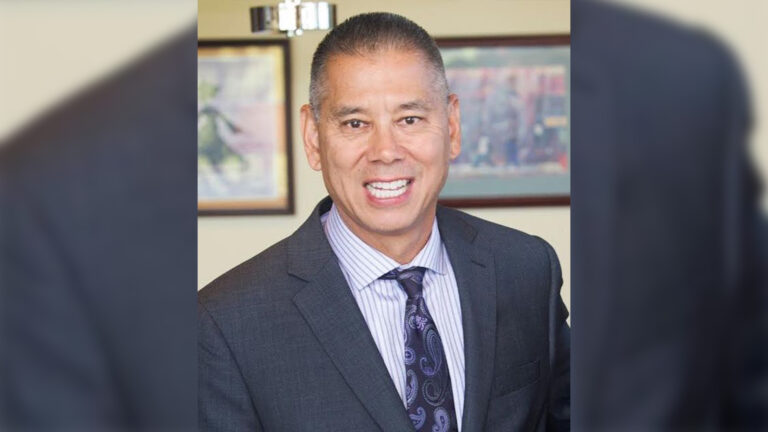
Police Chief Joseph Farrow discusses goals for the year

UC Davis Police Chief Joseph (Joe) Farrow and the police department have made a few serious resolutions for the new year — resolutions Farrow is confident the department will be able to achieve. 

Farrow, who has been in his position since 2017, said it’s been exciting to witness Davis’ changes.

“My first two years at Davis have been most enjoyable,” Farrow said. “I was in awe over everything. Davis is truly a wonderful place.”

For Farrow and the UCDPD, 2020 is already shaping up to be a busy year. The department is highlighting four specific goals to be achieved by the end of this year.

First, Farrow said the department is working to continue to hire a more diverse workforce, which also means hiring students who are familiar with campus life.

“I believe in hiring students,” Farrow said. “Bringing them in serves the department and the community well. Many of our new hires are recent UCD graduates.”

Immersive programs such as the Police Community Academy and the Cadet Academy introduce students to the real purposes of policing and how these change with the times, Farrow said. The Police Community Academy is a nine-week program for students and community members to learn more about the role of the UCDPD. 

The Cadet Academy is a scholarship program open to UC Davis students and graduates interested in law enforcement. The program gives graduates of the program the opportunity to work at the UCDPD and attend the Sacramento Police Academy. 

Farrow said that with heightened tensions as well as negative views about police officers in America, the UCDPD uses these programs to help students understand what policing really looks like.

The department’s second goal involves the proper handling of what Farrow calls a “mental health crisis” on college campuses. 

“We’re trying to train every officer in critical incident training,” Farrow said. “This program is geared toward deescalation when dealing with people experiencing a mental health crisis.”

In a 2018 article with the Davis Enterprise that reflected on Farrow’s first year as chief, Farrow defined a crisis as an individual “having their worst day, either because they’re under the influence, they’re mentally ill or they’re just having a bad day. How do you control someone who’s not rational at the time?”

Farrow added that the department plans to have every officer properly trained to handle a potential crisis situation by this June. 

Additionally, the police department hopes to complete the four-year law enforcement accreditation process.

“Accreditation is all about adhering to the highest standards in the country,” Farrow said. “When accomplished, it means we are trained and are guided by the most thought out and collaborative policies in the country.”

The International Commission on Law Enforcement Accreditation is based on former President Barack Obama’s 21st Century task force on policing, Farrow explained. These police standards are the most modern in the country.

“The Police Department wasn’t accredited three years ago,” Farrow said. “We’re planning to finish the training in three years instead of four.” 

Farrow’s final goal is one partial to all UC campuses. The UC president developed a task force to look into policing and training of police on all UC campuses. The 2019 Report of the Presidential Task Force on Universitywide Policing revealed 28 recommendations for UC police departments “to strengthen the ties between the community and UCPD and to continually improve UCPD operations.” Chief Farrow said that out of the 28, they have only a few more to complete. 

“We are trying to become compliant by mid-summer,” Farrow said. “A good year-and-a-half before the due date.”

The task force’s recommendations include better officer training, transparency in police operations, diverse workforce planning and police accountability boards. 

Farrow said, overall, 2019 was a good year. Although the accumulation of robberies of UC Davis students greatly concerns Farrow, he said the campus had a relatively safe year and that incidents like these ones should not define campus security in general. The chief is grateful for another year to serve the community around him, and said he looks forward to 2020 being another year of growth for the police department. 

“On a day-to-day basis, I am  surrounded by extraordinarily smart people who are supportive, inquisitive or critical of what we do,” Farrow said. “My focus for our department remains on continual self assessment and improvement while collaborating with our campus community.”

Written by: Alana Wikkeling — features@theaggie.org 

The UC Davis Experience from an international lens

Exchange students reflect on their time at UC Davis

Whether it’s through personal experience, an information session or the occasional (or not so occasional) Instagram feed post, most students are familiar with the idea of studying abroad. But what happens when roles are flipped and studying abroad means coming to UC Davis? 

While we are eating delectably crisp baguettes in Paris and tanning on the beaches of Barcelona, many international exchange students choose to uproot themselves from their own home countries to enjoy the cultural and academic opportunities offered in our very own quaint town.

         They bring with them their own cultural backgrounds, strengthening the diverse network offered on campus.

Sunny Yu, a foreign exchange student from Taiwan studying economics, came to the U.S. expecting to find a college community where she could learn from an esteemed academic institution, experience a new culture and practice her English language skills. 

         “I chose UC Davis because I had heard that they didn’t have as many Asian students, which would force me to speak English instead of Chinese,” Yu said.

          Despite her original intentions, she found that the school did not completely live up to her original expectations. She found herself only interacting with other Chinese-speaking students instead of interacting with her solely English-speaking peers.

          “I [am] usually hanging out with my Asian friends, and I don’t have many channels to know more English speakers,” Yu said.

Coming from a different country to interact with students from different cultural backgrounds can be a daunting task. For Yu, a combination of cultural and lingual barriers keep both parties distant.

         “I want to hang out with the Americans, but there are cultural barriers,” Yu said. “Asian people like staying together while Americans are individuals who like to do things by themselves.”

Yu found that her American counterparts had drastically different social habits than her own. So instead of going outside her boundaries, she found comfort in the company of students who were of a similar background. In addition, the cultural anxiety of speaking English to native speakers deterred her and her friends from initiating conversation.

  “We think it’s embarrassing, and that if we use it incorrectly they will be annoyed,” 

Yu said.

Yu found an outlet to exercise her English through the International Pal-Program. She described the Pal-Program as an integral part of her social and learning environment.

“The one channel I do have is the pal program,” Yu said. “If you want to learn a language, they will partner you up with an American who you can talk to and hang out with weekly.”

Yu spends her downtime much like other students on campus: hanging out with friends, hiking in Yosemite and going to the occasional party. She acknowledged that California has more of a party culture than back in Taiwan and a different approach to learning. 

Yu noted that the education system functions differently in the U.S. where teachers focus on hands-on, participation-based methods that include interactive discussions. Back in Taiwan, she found that the faculty left the learning to the students.

Helena Lundvall, a Swedish exchange student and sociotechnical systems major from Uppsala University, also said the teaching was more hands-on and guided at UC Davis. In Sweden, her education wasn’t guided and she was left predominantly to her own efforts and responsiveness. Teaching materials like study guides were completely foreign. She described her surprise at one of her management classes she had taken in the fall.

“For the midterm, he more or less told us what was going to be on the midterm,” Lundvall said. “This would never happen in Sweden.”

As a result, she found herself both studying and learning more while at Uppsala.

The difference in difficulty level may be partly due to some complications Lundvall had during registration at the beginning of the quarter. During registration, Lundvall did not receive any instructions on how to sign up for her classes, which prevented her from registering for highly impacted computer science courses that she needs for her major back in Sweden. This difficulty was further exacerbated due to her status as an exchange student and her zero registered units at Davis, which put her at the same late registration as the incoming first-year class. So far, she hasn’t been able to take any of the classes that she originally intended to take.

“It was frustrating because I didn’t know about pass times,” Lundvall said. “Nobody really told me. This quarter I tried to enroll again and all the classes were filled up once again.”

         Lundvall also found that the structure of the education system was significantly different to that of back home. She said students traditionally take some time out between high school and college to travel, work and explore what they are interested in or might want to pursue as a career.

“For me, it’s weird that you start college straight out of high school, because back in Sweden that is very uncommon,” Lundvall said.

Sweden and the U.S. have substantial institutional differences. Lundvall, like all Swedish students, received significant support from the government in her educational and career pursuits.

         Apart from the academic experience, Lundvall had nothing but praise for the UC Davis community when it came to her social experience. She found that both the faculty and her fellow students welcomed her with open arms.

“I have been so surprised by how friendly everyone here has been,” Lundvall said.

Emil Obro, an international exchange student from the Danish University Aarhus BUS majoring in economics, had similar opinions to those shared by Lundvall.

“Everyone has been helpful if I needed help with anything,” Obro said. “I really fell in love with UC Davis, which was due to great professors, wonderful co-students and amazing trips around California.”

         Although these students said they were all happy with their UC Davis experience, they all pointed to specific areas for improvement — from organization to more interactive programs.

Obro specifically recommended that the university expand social events between students who have J-1 visas for studying in the U.S. like himself. 

“At the international orientation, we had a day of lectures and then an ice cream mixer where we could get to know each other,” Obro said. “It would have been nice with some events other than that. It was only in the last two weeks we realized that there was actually another group of J1-visa students that we hadn’t met.”

Lundvall also gave her two cents on improvement, referencing her issues with MyUCDavis and registration at the beginning of the quarter.

“It would have been better to know how the system worked beforehand,” Lundvall said.

Yu said a further expansion of the Pal programs would be beneficial for both English learning and cultural integration for international students like herself.

“Davis should expand on the Pal programs where we can meet up weekly but talk to different kinds of people with different cultures and backgrounds,” Yu said.

The three international exchange students seemed to highly value their experience on campus thus far. For them, it offered a nice combination of small town college life, engaging academics and a chance to explore the greater California area. 

Written by: Andrew Williams  — arts@theaggie.org

What shows are coming to their end this year and what will replace them?

Upcoming Endings and New Beginnings

With January going by too quickly for me to even memorize which classroom my lecture is in, it’s time for new shows to premiere and occupy my time. But where new shows come alive, old ones go to die.

What’s Ending:

“The Good Place”
The selfish Eleanor Shellstrop (Kristen Bell) finds herself in the Good Place after she passes, and it doesn’t take her long to realize that she doesn’t belong. With the help of her soulmate, a philosophy professor named Chidi, she takes morality classes to try and become more deserving of the Good Place. 

The series had a short run with only four seasons, but it didn’t end due to a lack of viewers. The series wants to go out while it’s still on top. Since first airing, the series has won a Humanitas Award and a Peabody Award along with a number of other winnings and nominations. The Good Place, which first appeared on Sept. 19, 2016, will air its last episode on Jan. 30. 

“Criminal Minds” 

“Criminal Minds” will end its fast-paced crime drama on Feb. 15. The show has 15 seasons, most of which can be watched on Netflix to stay up-to-date on the most recent season. Its first episode aired on Sept. 15, 2005. The final season will consist of 10 episodes. Although a number of its original cast has left, the show remains true to its crime episodes that end with the villain getting caught to give the audience a happy ending.

“Fresh Off The Boat”

Following Constance Wu’s controversial tweet back in 2019, “Fresh Off The Boat” was cancelled and is due for its last season. In the tweet, Wu said she was crying over the renewal for season six — and not in a good way. When fans exploded over the tweet, she went on Instagram to clear up the situation and explained that she wasn’t upset about FOTB being cancelled, but about the schedule conflict that it created with another project she was interested in. 

The series followed Eddie, played by Hudson Yang, a young hip-hop loving pre-teen as he deals with a controlling mom, an optimistic dad and the gruesome ropes of middle school. As the series progresses we see the family take on new challenges. The show is based off of chef Eddie Huang’s best-selling memoir of the same name.

With this last season coming up, the show will introduce a spin-off with the Indian family of a young girl who goes to Eddie’s school. The series will end with an hour long episode on Feb. 21. 

“Modern Family”
With multiple Emmys on its shelf, Modern Family will be wrapping up on April 16. The comedy series first premiered on Sept. 23, 2009. The series features one big family living in three separate households — the Pritchetts, the Dunphys and the Pritchett-Tuckers. The show gave viewers many laughs and the opportunity to see the kids of the show grow into adults, their characters changing along with them. 

“Supernatural”

After a long run, “Supernatural” is finally getting its last season. The show first aired back in September of 2005 when the pair of brothers Dean (played by Jensen Ackles) and Sam (played by Jared Padalacki) investigate their father’s death in the supernatural world. The siblings had quite the ride over the years, facing evils such as demons, wendigos and even the Devil himself. The show holds the title for the longest running sci-fi genre series, but after a general agreement amongst the cast and the producers, they decided 15 seasons was long enough. With two failed spin-off series and 360 episodes, the cast has left quite the shoes to fill for any upcoming sci-fi/horror show. May 18 will be the last time the public gets to experience a new adventure with the Winchester brothers.

New Shows:

“Everything’s Gonna Be Okay”

After the passing of their father, Nicholas (played by Josh Thomas) steps up to take care of his two half-sisters, one of whom is on the autism spectrum. The show first aired on Jan. 16, 2020 and it’s unknown whether or the show will be renewed for Season 2. The series has a fun and wildly entertaining cast, and viewers see it’s the small moments that make a family. 

This show airs every Thursday on Freeform. 

“Awkwafina Is Nora From Queens”

Golden Globe winner Awkwafina is the star of the sitcom “Awkwafina is Nora From Queens.” Nora is raised by her father and grandmother as she navigates her life in Queens, New York. The series is a scripted depiction of Awkwafina’s life beginnings as she started her career in New York City. The series has been renewed for Season 2. 

The show premiered on Jan. 22 and will have new episodes every Wednesday on Comedy Central. 

“Briarpatch” 

Rosario Dawson stars as Allegra Dill in a murder drama. Dill goes back to her hometown to investigate the death of her sister and finds herself confronted with the truth that her hometown has turned into a corrupt city. This series is based on Ross Thomas’ novel “Briarpatch”. 

The series will premiere on Thursday, Feb. 6 on the USA Network.

“Katy Keene” 

Katy Keene is a spin-off of the show “Riverdale” and takes place five years after Keene leaves behind the eerie and confusing murder-infested Riverdale. Keene (played by Lucy Hale) is an aspiring fashion designer trying to make her name in the big city. With best friend and ex-Riverdale resident Josie (played by Ashleigh Murray) by her side, the two friends make their way to live out their big dreams in a five-person apartment.

This series will premiere on the CW on Feb. 6. 

Written by: Itzelth Gamboa — arts@theaggie.org

UC Davis softball ready to begin marathon season

Aggies will rely on upperclassmen to launch another successful run

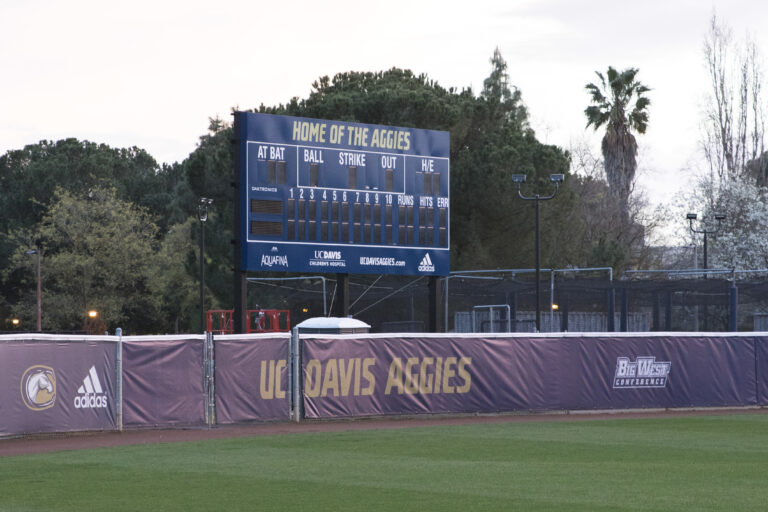
In the blink of an eye, a long, quiet offseason has vanished and the 2020 season is officially underway for UC Davis softball. The Aggies will embark on a 55-game schedule starting with a doubleheader on Feb. 6 versus Saint Mary’s and California Baptist at La Rue Field. 

The Aggies are fresh off a 39-14 season in 2019, the best mark in the program’s Division I history, that earned them a third-place finish in the Big West Conference. The team was in the thick of the title race until late in the season, vying for a spot in the NCAA tournament regionals. 

UC Davis only lost two starters from last year’s team and has an excellent core of upperclassmen to make another run this spring. The juniors and seniors will be relied upon heavily to lead the way for a promising five-player freshman class. 

“Just two years ago, we were talking about how young some of our team was, and now they’re juniors and seniors,” said sixth-year head coach Erin Thorpe. “Now, we’re talking about having that leadership there. We’re looking to them and now’s their time to step up and lead.”

The team received a significant blow when junior pitcher Brooke Yanez, the ace of the staff, announced her transfer to Oregon in June. 

“I think that’s something where everyone’s going to feel it a little bit differently,” Thorpe said. “It always hurts when you have a loss like that. It’s one of those things in our sport right now that’s happening a lot and this is the first time it impacted us.”

Yanez is one of the top arms in the entire country, putting up mind-boggling numbers in her two years on campus. She departed Davis with a career record of 40-18 and a 1.38 ERA. She was recognized as the league’s Pitcher of the Year last spring after she threw a perfect game and no-hitter. 

Needless to say, there are some big shoes left to be filled in the circle, but Thorpe is confident she has more than enough impactful talent on the roster to fill that void. 

“From a coaching staff perspective, it’s something that you just roll with the punches,” Thorpe said. “Now, we have our team out here and we figure out how to battle and win the ballgames with what we have. I feel very strong in the core that we have. We have two very strong freshman pitchers and hopefully they’re going to have the opportunity to shine in a way that maybe they wouldn’t have had Brooke still been here.” 

Thorpe and her staff are excited about the abilities of freshmen hurlers Taylor Fitzgerald and Kenedi Brown, a duo of local right-handers from Rocklin and Elk Grove, respectively. 

“We’re looking for both of them to get a lot of pitching time this year and maybe step up and play a role that freshman don’t always get the opportunity to play,” Thorpe said. 

In addition, the team still gets one more year from senior pitcher Katie Kibby, a fourth-year starter who’s thrown over 400 innings and made 69 starts as an Aggie. Kibby threw four shutouts last season and ranked fifth in the conference for fewest hits allowed (97). She was the leader of the staff before Yanez arrived and now reenters the spotlight for one final ride. 

“Katie has been in a starting role since the time she was a freshman and now has an opportunity to leave as the winningest pitcher in Division I history here at Davis,” Thorpe explained. “We’re excited to see how she’s going to grab the bull by the horns. We are looking for her to lead and show our young pitchers the way of the land.”

No matter who’s pitching, the Aggies have the utmost confidence they can back them up and make all the plays in the field. UC Davis was the second best team in the Big West last season, in both fielding percentage and fewest errors, and its defense will continue to benefit from the group of players that have been together for so long. 

“In these leagues now, you’re not seeing too many overly-dominant pitchers across the board so we’re going to have to play defense,” Thorpe said. “We’re poised to get even better from last year defensively and it’s another year out there together.”

Thorpe admitted that the girls will have to rely a little more on their offense this season after the departure of Yanez, but that shouldn’t be a problem for the league’s third-highest scoring team last season. The Aggies have few holes from one through nine in the lineup and will prove a tough out against any opponent. 

The team’s top-four hitters are back from last season and look to replicate their success at the plate.

Junior outfielder Alyse Rojas is the leader of the pack and a dynamic hitter at the top of the lineup. She led the team in batting average, hits, runs and on-base percentage while starting every single game. Rojas’ older sister, senior first baseman Maddie Rojas, has started nearly every game she appeared in over three years and is looking to cap an exceptional Aggie career. She hit .299 last year and enjoyed several hot streaks throughout the season. 

Senior utility player Isabella Leon is also a mainstay at the top of the lineup, with good plate discipline and sharp instincts on the basepaths. Her 26 walks and nine stolen bases were both team-highs a year ago. Similar to Maddie Rojas, she has started all but four of the games she’s appeared in during her three-year stint on campus. 

Senior outfielder Marisa Given can provide the punch in the middle of the lineup with gap-to-gap power and the ability to cover a ton of ground in the outfield. 

There’s no doubting the physical and mental stress that a 55-game schedule can have on a player. The Aggies are scheduled to play 18 doubleheaders and often play as many as 4-6 games in a weekend during the non-conference slate. Thankfully, Thorpe’s experience has allowed her to get a handle on managing the intense demands that each season brings. 

“We think about how to attack it with periodization throughout the year and figure out when we want to be strongest and playing our best games,” Thorpe said. “Most of the time, we have a pretty good attack on what parts of the season we’re working on different things to try and be strong at the end.”

The older players on the roster will also have a key role to play in setting examples for the new underclassmen. 

“This year, because we have such strong core of upperclassmen coming back, we’re really relying on them to help the younger girls understand how to go about working their bodies and conserving their energy and still being able to stay focused during the pre-conference part of the season,” Thorpe said. 

The team tries to schedule as many home games as possible in the non-conference in order to mitigate the burden of a long season and allow players to put their best foot forward in the classroom. It’s hard enough being a student at a top university like UC Davis, but the time commitment for practices and games makes it even tougher to keep up with a rigorous academic course load. 

Thorpe believes that being able to sleep in your own bed and actively participate on campus is vital for every one of her players, and is a big focus in the overall structure of her program. 

Besides the academic benefits, playing home games at La Rue Field lets the players feed off the passionate support from their local community. When the weather is warm and the sun is shining, the team typically draws very strong crowds and Thorpe says “the louder it is, the better.”

Overall, Thorpe has made tremendous strides in her five-plus years at the head of the program, and she continues to foster an environment of ambition and self-growth. 

In addition to churning out top talents on the diamond and helping her players succeed in the classroom, she was instrumental in carrying out much-needed renovations at La Rue Field in early 2018. The facelift included a new dugout and bullpen, as well as a clubhouse beyond the right field fence. Most importantly, a redesigned drainage system was constructed to help deal with the perennial rain in Davis. The infield dirt and outfield grass were also replaced. 

“It’s about finding the right combination of people to believe in a similar thing, to be able to move forward,” Thorpe said, looking back on her time at Davis thus far. “I feel comfortable in those areas because I’m constantly striving to move forward.”

Chancellor Gary May recently unveiled a new mantra for the university: “Outgrow the Expected.” Thorpe believes this motto embodies everything she strives to be for the softball program. 

“Throughout my career, I’ve come into programs where we need to work on growing and taking baby steps every single year to get better,” Thorpe said. “I truly believe in making every year better than the last and working hard to make sure we’re constantly showing growth in those realms.”

The Aggies have put together two straight winning seasons — the first in the program’s Division I era — and have all the looks of a team that will play an exciting brand of ball and create many more memories throughout the 2020 season. 

“We’re constantly working to be better, 1% every day,” Thorpe said. “We don’t know what the ceilings are for what we’re capable of doing. All we can do is get out here every day, try to be that 1% better and try to leave the program in a better position than when we all found it in the first place.”

Written by: Brendan Ogburn — sports@theaggie.org


Students share their favorite films of the 2010s — Queen and Slim, Call Me By Your Name among those listed

Other favorites include Disobedience, Shutter Island, The Martian

This decade brought extraordinary films that left their mark on the history of cinema. Disney saw major success with the release of both “Frozen” and “Frozen 2,” as well as the highly anticipated sequel to “The Incredibles.” The Marvel cinematic universe finished the decade with multiple “Avengers” movies, ending one chapter and allowing a new one to begin in the new decade. These blockbuster films have made their mark on viewers, but there are other films that made a more personal impact on UC Davis students. 

A number of students took the time to share their favorite pieces of cinema from this decade with The California Aggie.

Minh Tran, a first-year biopsychology major, said her film of the decade was “Silenced,” directed by Hwang Dong-hyuk. 

“The film was an advocate for sexual assault victims, [and it] calls out the predator and toxic power dynamic in work environment,” Tran said.

Caroline Hopkins, a first-year undeclared major, said “Disobedience,” directed by Sebastian Lelio, is a deeply emotional and cutting tale of self-discovery.”

Neha Singh, a third-year neurobiology, physiology and behavior major, said “Wonder Woman,” directed by Patty Jenkins, was the film that stood out to her this decade because it was “empowering” and “very funny.”

Husnaa Formoli, a third-year neurobiology, physiology and behavior major, said her favorite film was “Shutter Island” directed by Martin Scorsese.

 “I love movies that are unpredictable, and this movie was unpredictable with a twist at the end,” Formoli said. “The acting was phenomenal.”

Ariel Guzman-Avila, a third-year international relations major, expressed his opinion on “The Martian” directed by Ridley Scott. 

“The film demonstrated unity and genuine cooperation throughout the entire film involving many parties who always are at odds,” Guzman-Avila said. “I was most impacted understanding that I too would wish to see global cooperation such as that of NASA and China or a new space colonization effort with my lifetime.” 

Est Banuelos, a third-year political science major, named “Queen and Slim,” directed by Melina Matsoukas, as her favorite film this decade. 

“It impacted me the most because it allows its viewers to grasp a closer sense to what we are currently facing today in America,” Banuelos said. “The door to higher levels of racism opened up with the current president we have.”

Madison Satre, a fourth-year psychology major, was moved by “Call Me by Your Name,” directed by Luca Guadagnino.

“It reinforced living in the moment and taking chances when you can, because you never know when the moment will pass,” Satre said.

 Shreya Kandasamy, a fourth-year psychology and Chicana/o studies double major noted that “Before Midnight,” directed by Richard Linklater, “taught [her] how relationships are not perfect and that communication is key to sustaining relationships.”

Noemi Gregorio, a third-year communications major, said “World War Z,” directed by Marc Forster, made an impact on her. 

“I thought it was crazy because it was something I had never seen before,” Gregorio said. “If you see the movie you will literally see the world collapsing in front of you. It was just a movie, but [it] felt possible.”

Alisha Singh, a third-year political science and public service major, said “the film that resonated with me the most was “Alita: Battle Angel,” directed by Robert Rodriguez. 

“It taught meaningful lessons about the strength of grit and never giving up.”

Written by: Gabriela Hernandez — arts@theaggie.org

Latitude dining commons and market now open

International food from Latin America, Asia, Europe, India, Middle East showcased in new dining commons 

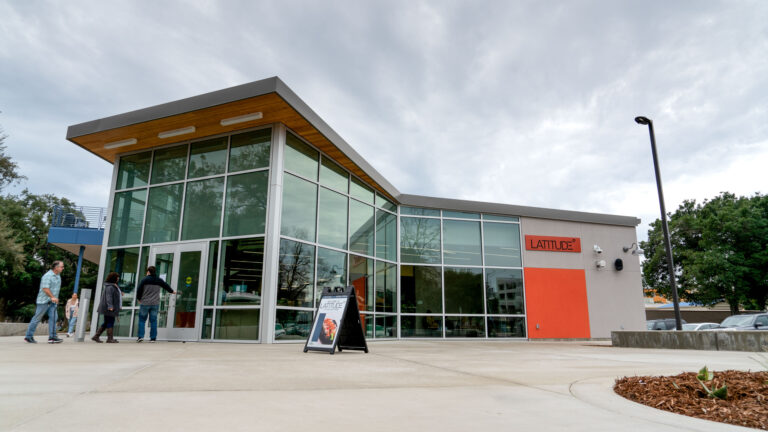
Latitude, located on Bioletti Way south of Hutchinson Drive, nestled alongside the residential buildings of Tercero and catty corner from SciLec, opened on Jan. 15. The new dining commons, featuring international cuisine, will help reduce stress on other dining commons.

“I love the intermingling of so many different cultures and the way the grand opening brought so much excitement to the school campus,” said Camilla Barbaduomo, a first-year global disease biology major.

The “Latitude restaurant celebrates the diversity of the UC Davis community by featuring an exquisite menu of international dishes scratch-made from fresh, locally-sourced ingredients,” according to the UC Davis Student Housing and Dining Services. 

“You will find that the focus of this location is the diverse cuisine,” sad Felipe Becerrai, assistant director of residential dining, via email. “This location does not have the regular items found in other dining rooms. Items like cereal, pizza, burgers and chocolate chip cookies, these will continue to be available for anyone looking for them at our three other locations.” 

Latitude features a two-story dining area — open 10 a.m.–3 p.m. and 5–8 p.m. Monday through Friday — and a retail market open 8 a.m.–7 p.m. Monday through Friday. 

“It was very exciting to see our team come together after months of preparing for the opening day,” Becerrai said. “It was also very rewarding to see the reactions from our residents and anyone else walking in for the time.”

Latitude accepts meal plans and Aggie Cash and access is not limited to UC Davis students. The general public is invited to dine at Latitude, and Lot 40 is open for off-campus visitors to park. 

According to Harley Ellis Devereaux (HED) — a national, multidisciplinary architecture, engineering and design firm — the design of the Latitude Dining Commons is “inspired by the sun-drenched agricultural heart of the state.” Specifically, Latitude is characterized by “exposed structure, pitched roofs, and large expanses of glass on the eastern and southern elevations.” 

“The space is beautiful, the architecture and design are modern and artistic,” Becerrai said. 

The building’s sustainability level is LEED Gold, according to HED’s website. LEED, or Leadership in Energy and Environmental Design, “is the most widely used green building rating system in the world […] available for virtually all building project types, from new construction to interior fit-outs and operation and maintenance,” according to the U.S. Green Building Council, or USGBC website. Many other buildings on campus, such as the MU, also have LEED certification.

“I enjoy the design of Latitude,” said Vinal Chand, a first-year communication major. “It allows you to eat outside when it’s nice weather. I really enjoy how there is a lot of seating, as opposed to the other DCs where seating is harder to find.” 

Seating 500 people, Latitude’s construction cost amounted to approximately $26 million, according to the HED’s website. 

“The process was long and very involved as this was a major project that involved

multiple departments,” Becerrai said. “Overall the issues that came up were not out of what you’d expect for a project this large.” 

In choosing to offer a diverse array of international foods, Dining Services is responding to years of feedback from students.

“We find that international food is regularly at the top of the requests received,” Becerrai said. “Latitude was an opportunity for us to offer inclusive menu items that represent the diversity of our Student Resident population.” 

Latitude’s executive chef, Roger Thompson, alongside staff members, spent more than a year crafting over 300 recipes, according to the UC Davis website.

“During the planning process, we tried to identify areas of the world with strong culinary recognition, that would allow us to showcase a delicious sample of international cuisine for our guests,” Becerrai said. 

Barbaduomo said that she enjoyed trying meals she was not familiar with.  

“I love the high energy in the dining commons,” Barbaduomo said. “Everyone is very excited and eager to try new things. I also liked that it pushes me out of my comfort zone, as someone who usually likes to eat things I am familiar with. Latitude has expanded my horizons, and introduced me to new foods.” 

Now, Latitude chefs have a catalog of 90 dishes they can replicate and serve. Visitors can indulge in dishes like Pupusas con Pollo, an El Salvadorian chicken filled flatbread; Espinacas con Garbanzos, chickpeas with baby spinach; Shawarma beef and lamb, a Middle Eastern dish of grilled meats, vegetables and yogurt sauce; Jeera Chawal, an Indian cumin-infused basmati rice or Nikujaga, a meat and potato stew from Japan. 

“Our chefs took over a small kitchen on campus for about a year, where they tested multiple recipes gathered from international cooking books, family recipes from some of our team members and online searches,” Becerrai said. “After multiple samplings presented to staff and students, we agreed on the menu cycle you see today.” 

Chand also said he enjoyed the food options.

“I really liked the quality of the food,” Chand said. “I love the variety of how there’s different parts of the world and different tastes.”

So far, Latitude has received “very positive feedback” and the menu options and recipes “have been well received,” Becerrai said. 

Aside from the dining area, Latitude sells an extensive array of food that can be taken to-go at their retail market. 

“I love the market,” Chand said. “They have nice food that’s accessible. They have different types of food in comparison to other markets. It’s more convenient because they have more meals as opposed to snacks.” 

The Latitude Market “offers artisan and custom sandwiches and sides, fresh sushi bar, hot-food and cold-food bar, made-to-order drinks and shakes, rich gelato, and pre-made to-go meals, snacks, treats, and drinks,” according to the UC Davis Student Housing and Dining Services.

Looking toward the future, Becerrai said Latitude “will continue to explore foods that represent different areas of the world, and will continue to do our best to showcase them in Latitude.” 

“We are constantly looking to improve the dining experience of our guests,” Becerrai said. “Latitude is just another way for us to accomplish our mission to provide a dining experience that is least stressful and the most enjoyable part of our student’s day.” 

Written by: Aarya Gupta — campus@theaggie.org 

Orchid bees mix unique perfumes to signal potential mates

Evolution of scent receptor genes distinguishes a divergent species of orchid bee

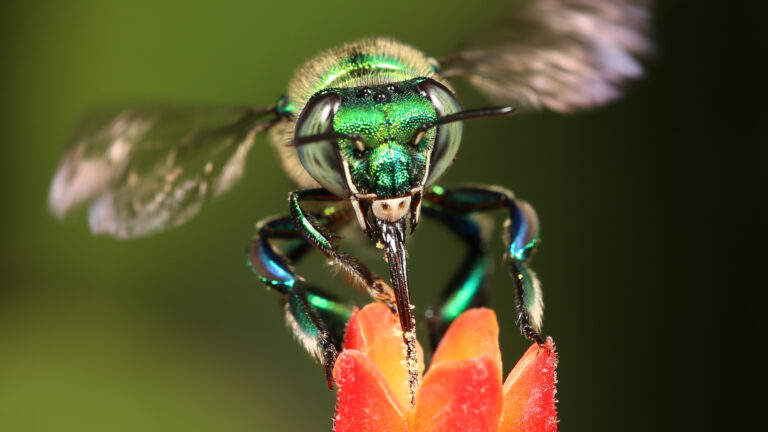
Orchid bees are master chemists. Each species gathers a unique mix of smells from the environment to attract mates. In a recent study, researchers surveyed two related species of orchid bees, Euglossa dilemma and Euglossa viridissima, and compared their unique perfumes. Even though the two species look identical, they are genetically attuned to their own specific scents.

         “This research links the evolution of sexual signaling to a specific gene,” said Philipp Brand, lead author of the study published in Nature Communications and recent Ph.D. graduate from UC Davis, via email. “It is incredibly hard to draw connections like this.”

This study focuses on speciation: the process of a single species diverging into two species. In short, small genetic and behavioral changes accumulate over time to create new organisms. Although speciation happens all the time, it is difficult to pinpoint exactly when one species has split into two distinct lineages.

        In the case of orchid bees, Brand hypothesized that the evolution of these perfumes was involved in their divergence. To isolate the small differences that make these bees unique, he needed two model species that were still very similar.

“We focused on trying to find the most recently diverged pair of species of orchid bees we could find,” said Santiago Ramirez, a professor of evolution and ecology. 

The two species chosen for the study, E. dilemma and E. viridissima, diverged from each other about 150,000 years ago. This may seem like ancient history, but on the evolutionary time scale, it is as if it happened yesterday.

These two “sister” species of iridescent green bees are virtually indistinguishable — except for their fancy perfumes. Their special scents may play a key role in keeping the two groups of bees from hybridizing back into a single species. 

“Male orchid bees collect scents from environmental sources such as flowers, rotten wood and even feces, which they store in pockets in their hindlegs,” Brand said. “These pockets can retain the collected chemicals for weeks and over time the male accumulates a complex chemical blend in them. They eventually release this blend, which we call ‘the perfume,’ during courtship display.”

Male bees spend weeks collecting scents from their environment to impress potential mates. In order for the perfumes to be effective, female bees must be able to sense them.

         “They have these structures on their antennae called odorant receptors,” said Micah Freedman, a Ph.D. student in the Ramirez lab. “We think females are attracted to the perfumes that the males collect, and that’s how they recognize males of their own species.”

         Through comparing genes for odorant receptors between E. dilemma and E. viridissima, one stood out from the rest: olfactory receptor gene 41 (OR41). To test out how OR41 works, Brand inserted the gene into fruit flies and exposed the flies to different chemical concoctions. The flies with the sensing gene repeatedly picked up on a specific perfume, suggesting that the bee’s unique perfumes are linked to their sensing gene.

         “Because we identified the OR41 receptor gene and functionally linked its evolution to the changes in the perfume chemistry, we now have a better idea of the evolutionary history of perfume communication and the genetic mechanisms that are involved,” Brand said.

Making and detecting signature scents drove these bees to split into two completely separate species. Both behavioral changes (mixing scents) and genetic shifts (specialized receptors) reinforce the differences between them.

Curiously, the perfume concoctions for E. dilemma and E. viridissima were identical except for two chemical compounds. Even with this slight difference, the bees detect members of their own species and stay separate from their sister species. 

         “In this story the speciation of these two particular bees, the compound that really strongly differentiates them — that one bee species collects but the other one doesn’t — we have no idea where they’re getting it,” Freedman said. “That’s part of the fun mystery of this system. As far as we know, no one has found a naturally occurring source of this chemical.”

No matter where the bees find their perfumes, the main difference between E. dilemma and E. viridissima is tied to both mating behavior and genetic shifts. 

         “The bees don’t seem to care where they get these compounds as long as they get the right combination,” Ramirez said. 

The correct compound collection is key to discovering how these bees communicate to members of their own species. The link between chemical collecting and scent detecting reveals how small changes shift populations to become new, separate lineages.

Orchid bees are only a single case study in the larger question of how sexual signaling behavior creates tangible genetic differences between populations of a diverging species. Focusing on chemical differences between these bees provides insight to the molecular level of speciation and the ways these bees start to manifest minute differences.

         “The traditional taxonomy and the way that we describe species usually involves studying only the morphological characters that these bees have,” Freedman said. “It’s only through using techniques like studying the chemicals they collect from their environment and their genetics that we actually know how different they really are.”

Written by: Lauren Glevanik — science@theaggie.org

Basement Gallery, KDVS host pop-up show

Students DJs and artists host concert, gala in basement of Art Building

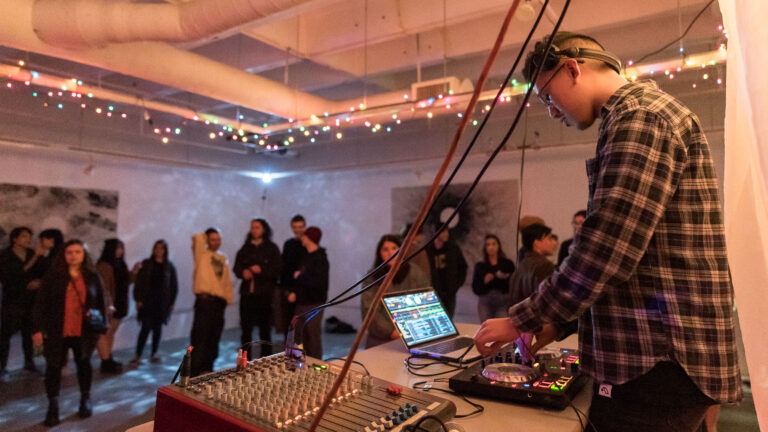
The student-organized Basement Gallery teamed up with KDVS on Jan. 16 to host a pop-up show featuring three student DJs. The show was produced by lead director and fifth-year design major Zoë Reinhardt and fourth-year art studio major Karewith Casas, who works as the director of marketing for the Gallery. Casas also had art on display at the show. 

The featured DJs at the performance were Emmanuel Fernandez (Noho), Jeremiah Clagui (DJ Miah) and Alanis Gordillo Hernandez (Pan Frances). 

Fernandez, a third-year economics major and KDVS’ general manager, has had a passion for music for most of his life, saying he feels invigorated when he gets to connect with an audience. 

 “Playing music isn’t hard, but finding good music that a whole crowd will enjoy is probably the hardest thing about it,” Fernandez said. “Having people pull up Shazam during a set is a nice compliment. Honestly that’s my main inspiration: being able to play something someone has never heard before and getting them addicted to that sound.”

Calagui, who goes by the stage name DJ Miah, is a fourth-year cinema digital media and communication double major. He began experimenting with music about a year ago by making mixes and posting them online. Calagui is inspired by a variety of genres, from deephouse to techno and trance. 

The performance in the Basement Gallery was Calagui’s first time performing for a crowd. 

“At first I got a little nervous because I didn’t know if people were gonna like the music I played that night, but after a few transitions and seeing the crowd go wild, the night felt euphoric,” Calagui said.

Hernandez is a fourth-year sociology—organizational studies major. She works as an Events co-director and ORMF Music Festival director for KDVS. She began DJing for KDVS two years ago but only recently began performing at live events. Her music is influenced by Radiohead, De Ambassade and DJ Sama. 

She was honored to be a part of the performance and is excited for DJ culture to be more popularized on campus. 

“It was such a privilege to be one of the first DJs to break it in,” Hernandez said. 

The Basement Gallery is located in the Art Building and regularly hosts art, music and cultural events throughout the year. Upcoming events will include an opening reception and the winter awards. 

Written by: Alyssa Ilsley — arts@theaggie.org

Long-distance relationships devalue your college experience

Why your long-distance relationship is tethering you down

In what is the most unabridged capitalization of my own personal turmoil, I’d like to discuss the long-distance relationship. At it’s best, long distance is a best friend in a phone, and at its worst, it’s an incessant obligation to the melodic ‘ping’ of a text. 

 I’m not going to beat around the bush — this is a difficult topic to discuss. When arriving as a first-year on campus, it can be difficult not to rely on certain crutches from the past: your stuffed animal that you snuck in your carry-on, the one random heirloom that you never use but still brought and your friends from home. The longing for the past is unrelenting, and if you let it overwhelm you, it can directly conflict with your move into the future.

 The long-distance relationship is the epitome of this cruel dichotomy. It is all of the labor of a relationship without the reward of touch, time and communication. A text left on “read” is a person ignored and a missed phone call is a slight that cuts to the core.

A good friend of mine has been in a long-distance relationship for the past six months and has found that it has made the transition into college even more difficult. 

Suddenly, the world in which you are together is no longer the real world but a world ruled by your device and those who doubt the longevity of your relationship. 

A quick Google search is immediately reflective of these views. The most popular searches include a stream of nagging questions: Do long-distance relationships work? How do I survive a long-distance relationship? What is the success rate of long-distance relationships? 

All of these questions imply the same underlying message: long distance does not work. 

As a first-year student, the whole world is crashing down on you. It’s hard, and being in a long-distance relationship can be comforting. 

Those who are involved in a long-distance relationship often claim that their relationship provides them with the emotional support that is amiss in the people they meet every day in Davis. I reject this idea wholeheartedly. 

When you are constantly reporting your day to your significant other, your lived experience is diminished. Most of us seek emotional support from our partners in a true state of crisis, but the lack of bike parking in front of California Hall doesn’t warrant a long-winded complaint to your significant other — just tell a friend. 

The time that you spend typing out another text is time that you can use to develop emotional connections with the people around you, especially with other first-year students. Getting down and dirty in the shared trauma of first-year life is not only relieving but helps you bond with your peers. 

The reality of the situation is this: If you are attempting to “survive” a long-distance relationship then you should not be in that relationship. When handled without care and communication, these relationships can be quickly decimated by the tensions of a new school and lifestyle. But when given too much attention, these relationships can interfere with one of the most meaningful time periods of your life. 

Breaking off a long-distance relationship in college can feel like the end of the world when you’ve neglected to build a life in your new environment. Being in a long-distance relationship is not in and of itself bad, but we have to remember to live our own lives. You can’t let your relationship define you. Many people allude to this idea, but it’s especially applicable as a first-year college student. 

Up until the point I exited my relationship, it felt like I was split between two worlds: the world my boyfriend was living in and the world I was trying to create for myself. Relationships are very demanding, and long distance narrows the means of meeting these demands. I often found myself using all my free time to talk with my boyfriend, and all the moments between our talks were just waiting periods until the next one. I was trying to build a new life while orienting it around someone who wasn’t physically present. 

Now, all of the emotional energy that I was using to maintain my relationship is being rightfully devoted to myself. I didn’t realize I was missing out on personal experiences and my own development until it ended. 

It’s not for me to tell you not to try a long-distance relationship. All I can say is that it wasn’t going to work for me until I could become my own person, and I’m excited to find out who I am.

Written by: Isabella Chuecos – ifchuecos@ucdavis.edu

Disclaimer: The views and opinions expressed by individual columnists belong to the columnists alone and do not necessarily indicate the views and opinions held by The California Aggie