


by MARIO RODRIGUEZ — marrod@ucdavis.edu
by MARIO RODRIGUEZ — marrod@ucdavis.edu

Synthetic dyes derived from plant material could encourage sustainability in the fashion industry
When thinking about sustainability and carbon footprints, it is important to consider society’s most polluting industry: fashion. The industry is responsible for over 10% of carbon emissions, more than air and sea travel combined, and is the second largest consumer of water. In addition, the use of petroleum-based synthetic dyes not only indirectly supports the continued mining of petroleum but also releases microplastics into the ocean. Inevitably, in taking steps toward sustainability, the issue of pollutive dying processes must be considered.
Professor at the UC Davis Department of Chemistry and head of the Mascal Research Group Mark Mascal and his team developed a method to derive synthetic dyes from plant-based materials while studying papers from the early 20th century that used a platform molecule called 5-chloromethyl-furfural (CMF).
“You can turn [CMF] into many value-added products. That’s the research the Mascal group has been focussed on in the past, probably at least a decade” said Jon Saska, a postdoctoral researcher at UC Davis and member of the Mascal Research Group.
The group has been studying CMF and its properties for a long period of time. It is their “trademark molecule” and they have demonstrated successfully that it can be used to make biofuels, monomers and specialized chemicals with pharmaceutical and agrochemical usages. The dye is a result of redoing experiments from the 1910s that the original authors never managed to truly characterize.
“We were able to reverse engineer what had happened,” Mascal said. “The compounds that were produced were deeply colored and that’s where we got the idea that, ‘Hey, these could be effective dyes!’”
Currently, the dyes are effective on synthetic materials and wool but not cotton, although potentially they could be altered to fix that. Originally the team only had three dyes, but currently there are five dyes within a red to yellow color range. The experiment they borrowed from only created a single compound of canary yellow crystals, so there is potential that with further research, a larger part of the color spectrum can be included in these dyes.
The dyes are still fully synthetic in nature. What separates them from the dyes in industrial use today is that they are bio-based and therefore carbon neutral, which means they remove as much carbon dioxide from the atmosphere as they release, making them more sustainable.
“Just the fact that there’s awareness about it and that they’re trying to cut down one part of the problem in the dying industry, that’s great,” said Mathilda Silverstein, a fourth-year gender, sexuality and women’s studies major.
As of today, the dyes have not been put into commercial use, but there is potential. CMF is being produced at an industrial scale, which means a material essential in the production of the dye is readily available.
“We designed the reaction with [commercialization] in mind,” Sasak said. “Everything that is being used is relatively cheap, accessible, and effectively everything from the process is recoverable and reusable.”
Of course, theoretically, just about anything is completely recoverable and reusable. The molecule used to manufacture plastic bottles and polyesters, PET, could be 100% recycled if not for the fact that the process is expensive and requires a lot of effort. Although that specific benefit of these new dyes is debatable, it is still environmentally healthy in that it is produced from biomass. When dyes decompose, as all things do, and release carbon dioxide that will end up in the atmosphere, it is important that these dyes originate from a biological source.
“You have got to remember that it started out as natural carbon and it will end up as natural carbon,” Mascal said. “Those millions of tons of dyes will decompose to carbon, what matters is the source. Is it natural? Then it’s in a cycle. Is it petroleum? Then it isn’t. The problem with the use of petroleum is that you’re using carbon from ancient biological cycles. Everything should be used in its own cycle.”
By providing plant-based alternatives to the synthetic dying process, the Mascal Research Group is taking part in the initiative to reduce our carbon footprint and decrease reliance on petroleum.
If fashion is to remain essential to the modern lifestyle, it is important to take steps toward making it a sustainable industry.
“Synthetic dyes are relatively new, so using organic powder dyes could be an option, but the shelf life is shorter,” Silverstein said. “The best thing they can do is just keep trying to make better technology for this and keeping it more organic and plant-based. A lot of the companies that are using these harmful dyes are in Southeast Asia and South Asia and exploit their workers, and that’s unsustainable for the whole industry. If we’re focusing on sustainability as a whole, obviously we want safer dyes but we also want safer working conditions for workers and better factory practices.”
Written by: Husn Kharabanda — hkhara@ucdavis.edu
Looking back at the best players from the 2010s
When looking back at the 2010s, there have been many amazing performances, series and seasons by some truly talented NBA players. It was a decade with advanced athletes, as we saw a shift in how the game of basketball is played from the beginning to the end of the decade.
So, in the process of creating a team of the best players of this decade, one must look at more than just the numbers. Championships, playoff success and individual accolades are just some of the many focal points out there to narrow down a crowded field. It was a task not easily done, but here is The California Aggie’s NBA all-decade team:
Guard: Steph Curry
Although the early years of his career were clouded by injuries, Golden State Warriors superstar guard Steph Curry arguably had the greatest impact on the league this decade. Curry first began coming into his own during the 2012-2013 NBA season, when he and his Warriors squad ushered in a new era of basketball driven by an even greater emphasis on the three-point shot.
It took years for the rest of the league to adapt to the Warriors’ system, but in between that time, Curry flexed his dominance, winning two league MVPs and three NBA championships, while also making six all-star All-NBA appearances. His best season came while being apart of the historic 73-9 Warriors in 2015-2016, when he became the first unanimous MVP in NBA history by averaging 30.1 points, 6.7 assists and 5.4 rebounds per game. Curry ended the decade averaging 23.5 points, 6.6 assists and 4.5 rebounds a game.
Although he never won a Finals MVP, his presence was felt this decade as his way of playing the game began a new era that focused on shooting and speed rather than natural athleticism and, for that, he is a staple in the team of the decade.
Guard: James Harden
Having started the decade as the third-best player on his team, his prowess during the early 2010s was somewhat limited. But that did not stop him from becoming one of the most dominant isolation players of all time or from putting up truly historic numbers.
Following his departure from the Oklahoma City Thunder after the 2012 season, where he won the NBA Sixth Man of the Year Award, Harden became the number-one player on the Houston Rockets. Almost immediately he dominated, jumping from 17 points to 26 points per game after joining his new team, which earned him his first of seven all-star appearances during the decade. He also ended the decade with six All-NBA appearances, two scoring titles, a league MVP and a 24.3 points/6.3 assists/5.2 rebounds per game average.
For the second half of the decade, Harden has been a legitimate contender for MVP every season and is on pace to be again in 2020. Although an NBA championship still eludes him, he is no doubt up there for having one of the most dominant decades.
Guard: Russell Westbrook
This next spot is the one that is most open for debate, as one could make a legitimate case for a number of players. But if you look at the historical and big-picture context, Russell Westbrook is the player who takes over.
His decade has been nothing less than incredible. Westbrook’s athleticism and energy from the guard position is something we have never seen before and may never see again for quite some time. Although he is not the prototypical point guard in terms of efficiency, the numbers and performances he put up were extraordinary.
Early in the decade, he shared the spotlight with Kevin Durant in Oklahoma City, but still managed to make the all-star team five times while he was there. He totaled eight all-star appearances and notched eight All-NBA honors during the decade. Westbrook was a two-time scoring and assist leader, and the league’s MVP in 2017. But his most impressive feat by far has been averaging a triple-double not only in one single season, but three. While he may not have had the greatest team success over the past 10 years, Westbrook is going to go down as one of the best point guards ever and one of the best players of this generation.
Forward: Kevin Durant
Not only will Kevin Durant go down as one of the best players of this decade, but he will also go down in history as one of the greatest scorers of all time.
His seven-foot frame combined with his ability to get buckets is something never before seen in the NBA, making him nearly impossible to guard. Durant had a decade-best 10 all-star appearances and won MVP in two of those games. His nine All-NBA selections is second to only one player, and it was only because of an injury during the 2014-2015 season that he didn’t get ten.
After winning four scoring titles in five years and an MVP as a member of the Thunder, Durant decided to take his talents to the Golden State Warriors, where he won two championships and Finals MVPs in both. Although the move was heavily criticized, achieving the elusive championship further advanced his legacy and cemented him as one of the decade’s best, finishing with a decade-high 28 point average, along with 4.4 assists and 7.4 rebounds per game.
Forward: LeBron James
When future generations look back at this decade and try to decide who was the best player, the numbers, success and overall dominance point to LeBron James. Arguably the greatest player of all time, James has left his mark on the NBA this decade, solidifying himself as one of the best to have ever played the game.
No one came into the league with more pressure than James did back in 2003, and it is likely that no one will ever surpass those expectations as he did. After his heavily scrutinized “decision” to start the decade by joining Dwayne Wade and Chris Bosh on the Miami Heat, he captured his first and second NBA Championships and won Finals MVP both years. He then solidified his legacy by going back to his home state and joining the Cleveland Cavaliers, where he beat the historic 73-9 Warriors after being down 3-1 in the series.
James won a decade-best three league MVPs, 10 all-star appearances and 10 All-NBA nods. He led his teams to eight-straight finals this decade and although he only won three of them, his team was the underdog in six of those eight. He led the decade in points scored and made four All-Defense teams.
Although his legacy of dominance on the court is unquestioned, his legacy off it is just as great, as James set the example for a new generation of players to become more charitable and active in their communities. James has been the best player of the decade by far, and his historic dominance will be hard to match by any future player.
As mentioned before, the Russell Westbrook addition can be questioned, as many believe someone like Kawhi Leonard is more worthy of that spot. Although Leonard has undoubtedly had two great Finals runs and many accolades, his debate has more to do with recency bias than anything else. The first half of the decade was spent with Spurs teams and a system that hindered his ability to become a huge star. He eventually won two Finals MVPs, but aside from that, he was not a player that dominated the decade as much as Westbrook did. He is in the top 10 of the decade, but looking at his whole body of work would not lead you to believe he is among the best five.
Regardless, these five players have shown greatness all throughout the past ten years and will each go down in their own right as some of the best to ever play in the NBA. When looking at the list, there is a clear omission of a true center, which is telling of the way the NBA has changed and moved away from a player like that. This decade of NBA basketball gave fans a tremendous amount of excitement and possibly the peaks of some of the all-time greats. As time goes on, the 2010s should no question be debated as one of the best decades for basketball in history.
Written by: Omar Navarro — sports@theaggie.org

And you’re watching Disney Channel
For most college-aged students, the pay-television Disney Channel was a household staple and a huge part of their childhoods. The original movies and shows resonated with many young viewers and provided iconic characters for teens and pre-teens to look up to.
Having entered the age of streaming, Walt Disney Company launched its own streaming service to rival competitors such as Netflix and Hulu. Disney+ not only produces new content, but it allows members unlimited access to the shows they grew up watching on Disney Channel.
Before delving into the nostalgia, here’s a list of the best Disney Channel original series.
Hannah Montana (2006-11)
Miley Cyrus was only 14 years old when this series shot her into stardom. She played Miley Stewart, an average teenage girl who moonlighted as a world-famous pop star in disguise. The series was immensely popular with its viewers, especially young girls. There is a universal fascination with the rich and famous, but many secretly hope that celebrities are just like everybody else. “Hannah Montana” perpetuated this fantasy and gave a new definition to the idea of living a double life. Young teens gravitated toward Cyrus and her co-stars, sparking the release of multiple soundtracks and live concert tours based on the series. The series premiered with 5.4 million viewers, one of the highest openings on the channel yet.
Good Luck Charlie (2010-14)
“Good Luck Charlie” emerged in 2010 after series such as “Hannah Montanta” and “Wizards of Waverly Place” had dominated viewership on the channel. This show was refreshingly normal compared to the teenage pop stars and secret wizard societies that had been featured on the channel for so long. Bridgit Mendler led the series as Teddy Duncan, a high-school student who makes video diaries for her younger sister to watch when she grows up. With both Duncan parents working full time, Teddy and her two brothers help raise their youngest sibling. The family dynamics are realistic and relatable. This a rare children’s show where the parents, played by Leigh-Allyn Baker and Eric Allan Kramer, are just as funny and likeable as the younger actors. Together, the relatable nature of the series and the strong performances from the cast made this series a memorable one.
Suite Life of Zack and Cody (2005-08)
Before “Suite Life on Deck” where Zack and Cody attended a strange and questionably legal boat school, the twins were endearingly mischievous pre-teens living in a high-end hotel in Boston named The Tipton. In the series, Zack and Cody (Dylan and Cole Sprouse) are being raised by their single mother Carrie (Kim Rhodes), who works as a singer for the hotel in exchange for a room. Phil Lewis portrays Mr. Moseby, the hotel’s stern manager. The amazing chemistry Lewis had with the rest of the cast led Mr. Moseby to become a father figure to many of the characters whose own fathers were absent. The genuine friendship and care the characters held for one another allowed the series to be rather poignant as well as comedic. Brenda Song and Ashley Tisdale rounded out the cast and gave female viewers characters to root for and relate to. Due to the diversity of the cast and characters, the show was enjoyed by many and is pleasing to watch at any age.
Wizards of Waverly Place (2007-12)
This program premiered in 2007 and was met with praise from children and critics alike. After the rise of the “Harry Potter” franchise, the coupling of the fantasy genre with relatable teen characters resonated with viewers. Disney capitalized on this public fascination and created a lighthearted comedy about a wizard family living in New York and running a sandwich shop. In 2009, the series won a Primetime Emmy award for Outstanding Children’s program. Selena Gomez carried the show as the main character, Alex Russo, who constantly quarreled with her two brothers and struggled with normal teenage problems. The writing for this series felt more mature than other series at the time, which resonated with older viewers as well as Disney’s target audience.
Lizzie McGuire (2001-04)
This series cornered the market on relatable teen issues. Lizzie, played by Hillary Duff, is an entirely average girl in the seventh grade. Duff is likable and real, while at the same time perfectly portraying the awkward transition from adolescence to teen. Lizzie deals with issues such as going bra shopping with her mom and trying to look cool for a class picture. Lizzie McGuire was a role model for girls to look up to, a character in which nearly every fan saw at least some aspect of themselves. What made the show unique was an animated version of Lizzie’s alter ego that would often express all the emotions and confusing feelings that Lizzie had. It was a manifestation of the little voice in every teenagers head that was deeply relatable and loveable. Not to mention, “The Lizzie McGuire Movie” that was the first theatrical film released based on a Disney Channel series. The film had cult fans raving and its soundtrack is still favored in many hearts today, so it’s unsprising that a reboot starring Duff will premiere on Disney+ sometime soon.
Phil of the Future (2004-06)
“Phil of the Future” is arguably one of Disney’s most underrated series. Lasting only two seasons, the series follows the Diffy family — a family from the future whose time machine breaks down in the present day. Raviv Ullman played Phil, the likable oldest son who comes to appreciate the present more and more. He meets a best friend, Keely, played by the loveable Aly Michalka. The two have amazing chemistry and portray an adorable young romance as well as a genuine friendship. Watching the family adjust and attempt to blend in to modern times is comedic and enjoyable. The family dynamic feels natural to watch and the cast is impeccable in their roles. The tone of the show is playful and quirky. It was one of the few single-camera shows on the channel at the time, which made it unique among its contenders. With season two ending on a complete cliffhanger, the series feels unfinished and left fans wanting more.
Phineas and Ferb (2007-15)
This 2007 animated series, while seemingly a bit goofy, became one of the most entertaining and clever animated series Disney has ever created. Each episode follows a very simplistic formula that younger viewers can follow, but imbues wit and running jokes into the storylines that can get people of any age laughing. The writers of the show assumed that children were smart and therefore wrote for smart children. While watching precocious step-brothers Phineas and Ferb build impossible inventions in their backyard is enjoyable, the perpetual B-story between pet-detective Perry the Platypus and the evil Dr. Doofenshmirtz is one of the most memorable running gags on a Disney show. The eccentric and bumbling Doofenshmirtz often distracts himself with monologues from childhood traumas that get increasingly ridiculous with each episode. Matched with the blank stares from Perry the Platypus, scenes with these characters is what took the series from being a lovable kid’s show to a respectable comedy for all ages.
That’s So Raven (2003-07)
Arguably one of the most enduring and respected Disney Channel shows was “That’s So Raven.” The series stars Raven-Symoné as a teenage psychic growing up in San Francisco. Having to hide her powers as well as get out of zany schemes with her friends and family showcased Raven-Symoné’s physical comedy prowess. She would often dress in disguise or impersonate other characters in the nature of Lucille Ball from “I Love Lucy.” Raven was also a great role model for young and impressionable girls; she was unapologetically strong and always spoke up for what she believed in. The series takes on controversial topics such as racial issues and body image. Raven has a strong moral compass and the show was never afraid to allow Raven to use it. “That’s So Raven” was the first Disney Channel series to surpass the 65-episode barrier and remains close to the hearts of fans who grew up with Raven as their role model. “Raven’s Home” on Disney Channel is in its third season and follows Raven raising her children (one of whom also has psychic powers) alongside best friend Chelsea.
Written by: Alyssa Ilsley — arts@theaggie.org

Discussing top nominations, integrity of the process
In November, the nominations for the 62nd Annual Grammy Awards were announced — and, like every awards show, everyone’s got opinions.
And similar to the reaction everyone seemed to have to their Spotify Wrapped data, this year’s General Field nominations were initially a bit puzzling. At the same time, they made perfect sense, as if the nominees were simply pulled from data sets — no different than how my Top 5 songs of 2019 were determined by Spotify.
As for best new artists, there’s a typical mix of names you don’t recognize and those that you could’ve sworn you’ve been listening to for years including Lizzo, Billie Eilish and Lil Nas X who are all also nominated for Record and Album of the Year. With some exceptions, General Field nominees are mostly chart-toppers.
Most years, there is a name that appears in every category it possibly could, and this year it’s Lizzo, who led the pack with eight nominations. Billie Eilish and Lil Nas X followed close behind, with six each.
There are always deserving names that are missing, which may vary depending on who you ask. This year, Taylor Swift only appears once despite having released an album this year. Similarly, Bruce Springsteen, who released his first album in five years, didn’t make it into a single category. In addition, most General Field nominations were pop and rhythm and blues artists, leaving out the hip-hop and rap artists who are usually given at least a couple nods in these top nominations.
We all know artists who are equally as talented as many if not all of the artists who received nominations; it begs the question: How are these artists chosen? There are 12,000 committee members (out of 21,000), each of whom meet a qualification related to creating and releasing music. These members decide on the first vote, according to Billboard. The ballot they choose from for each category is comprised of hundreds of entries submitted by whoever meets the qualifications. From this initial vote, 150 so-called star committee members choose the final five nominees per category, with some opportunity for change when the larger committee votes again on a subset of categories they are experts in.
With so many people voting on a topic that is substantially judged based on subjective opinion, it seems like the finalists are chosen somewhat arbitrarily. Moreover, who are these committee members and who chooses who gets in? The highest achieving or best connected individuals arguably could make up a lot of the vote. Thus, artists with similar portfolios likely have relationships with voters, giving people like Ariana Grande, Drake and Beyoncé a better chance at a nomination and a win than the less popular names that sometimes make it on the list.
I can’t say this is true of all categories, both because I don’t listen to every genre (despite my Spotify Wrapped deeming me genre-fluid this year, refusing to let one sound define me), and because there is a greater mix of popularity levels of artists in certain sub-categories. For Best Rhythm and Blues Album, for example, Anderson .Paak and Ella Mai average around five to seven million more monthly listeners on Spotify, respectively, than the three other nominees, BJ The Chicago Kid, Lucky Daye and PJ Morton.
In addition, there are so many components of song making that are made possible by people the average music lover doesn’t know about. This year’s non-classical engineering, producing and remixing nominations mostly give credit to people who have worked on particularly successful records.
Every year, seeing as this award grants the highest status of achievement in the music industry, I expected there to be some hidden gem of a song — some earth-shattering recommendation from the experts. And yet, this year’s lists were underwhelming; the radio songs and chart toppers take up most of the space, other than Best New Artist.
This hasn’t always been the case. Kacey Musgraves wasn’t as popular before her Album of the Year win in 2019 and, being a country singer, it was a surprise to see that General Field nomination. It’s safe to say that the Grammys put me onto Ms. Musgraves’ golden voice.
This is not to say that we should cancel the Grammys. Regardless of our knowledge of the inner workings, it is undoubtedly a historic and respected event, and being nominated should be considered a huge accomplishment.
And so this year I will join 20 million other music lovers in watching the Grammys. Maybe we tune in for the unique and never-to-be-seen-again performances, or the extravagance and beauty that these events display. Or maybe we don’t mind questioning another ambiguous and possibly flawed system. Because at the end of the day, it gives us what we want: entertainment. And in the case of evaluating entertainers, isn’t that the point?
Written By: Allie Bailey — arts@theaggie.org

Some may see their resolutions through, while others watch resolutions fizzle out by February
Inevitably, an abundance of resolutions are made at the start of each new year — for some, resolutions can be as broad as ‘study harder’ or ‘be kinder.’ For others, resolutions are more specific or work toward a desired outcome, such as kicking a daily Starbucks habit or engaging in self-reflection once a week.
Research statistics show that many resolutions made are fitness or health related, followed by money and mental wellness resolutions. Most New Year’s resolutions, however, are not kept for 12 months — in fact, according to the research, more than 80% of resolutions fail by February.
While many choose to set goals for themselves, others do not find purpose in creating resolutions — including UC Davis Chancellor Gary May, who does not believe in New Year’s resolutions.
“From a personal standpoint, I have never been a big believer in New Year’s resolutions,” May said via email. “However, my daily goals are also applicable to a longer-term perspective. Those are to learn something, help people, and try to make the world better. This is what I resolve to continue to do in 2020 and beyond.”
In response to whether or not she sets New Year’s resolutions every year, Ching Sun, a second-year chemical engineering major, said “no.”
“I don’t [set resolutions every year],” Sun said. “Sometimes I would set goals for myself throughout the year instead of making a list at the beginning of the year. When I make New Year’s resolutions, they usually last about two or three months and then they go on and off.”
Sun noted that she looks to the previous year to see what she could improve upon in the coming year — “This year, I want to put a lot more effort into school and I want to learn to manage my money,” Sun said.
As Chancellor, May has high ambitions for UC Davis in 2020.
“We expect to make significant progress on many fronts, including empowering students to be agents of their own success, making discoveries that address societal challenges, raising the status and international visibility of our university, serving the regional and state communities, and generating research and philanthropic resources to accomplish these goals,” May said. “The specific framework for how we address these objectives in 2020 and the coming decade is best summarized in our strategic plan, ‘To Boldly Go.’”
In summary, ‘To Boldly Go’ addresses how the university strides to guide itself “to new heights of distinction” and “maximize opportunities as a driver of innovation and economic growth for the public good,” with five strategic plan goals, following its responsibilities as a public land-grant university.
Whether or not students maintain their resolutions is a personal decision, and everyone has a different method of self-motivation. Given trends, however, it seems that more ambitious goals may burn out quickly — something students may or may not want to take into account when planning out their 2020.
Written by: Linh Nguyen — features@theaggie.org

The NFL will never be safe enough
We’re a century into the NFL, and I’m not entirely sure if the league is the best or the worst it has ever been. Ratings are spiking in a year when it seems like the amount of injuries are the same, and bad officiating is at its most prevalent. The NFL has addressed issues of social justice but lacked the discipline to diversify its coaches or protect its players and communities from coaches with major domestic abuse red flags.
Is there a healthy future for a sport that has so many inherent problems? The violence of the sport is attractive to many but damaging to the players.
This league’s greatest assets are built to break down. The human body isn’t meant to play football. With players of Andrew Luck’s caliber retiring so suddenly this year, the NFL needs to face the reality that its game is a fragile one — not even new technology or analytics can save it.
I have no doubt that certain technologies can make the NFL safer. Helmets with thermoplastic urethane cushioning are absorbing more impact than ever, nano-spectrums of light help assist in the reduction of injuries and helmet sensors monitor physical deceleration to detect concussions. But I worry that technology will never make the game safe enough.
We can build helmets that limit the consequences of helmet-to-helmet contact, but we will never be able to build helmets that prevent concussions. As long as football is a contact sport, there will be concussions. Potentially concussion-causing hits happen every single play, every single game — and they are celebrated and highlighted every single weekend.
Just last week, the NFL announced a partnership with Amazon Web Services to use cloud computing and analytics to better understand how and why head injuries occur. Using machine learning and data science to solve the NFL’s concussion crisis sounds fantastic, but eliminating concussions in a sport this fast and painful is an unsolvable problem.
New state-of-the-art facilities are getting players in better and smarter shape than ever. As a result, players are able to decrease chances of non-contact injuries and perform at levels we’ve never seen before. But it is also making players stronger and faster, which leads to more powerful collisions on the field.
In the race for profit, owners are pushing for an 18-game season when the current 16-game season is barely manageable. The future of scheduling is where the NFL always finds its future: in college. College football kickoff times are perfectly spread out on Saturdays so that games are staggered all day — you can watch as much football as you want. In the NFL, 10 a.m. and 1 p.m. Sunday time slots are killing watchability because every single game takes place at one of those two times. That’s like telling fans they can watch as much football as they want and then restricting them to only three games. Altering the schedule to mimic college football kickoffs would increase revenue and television ratings without jeopardizing the health of players in an 18-game season.
But who knows what the rules will even look like in five years. Will defenders still be allowed to sack the quarterback? The future of football is coming fast, and right now we are hurtling toward an inflection point that could drastically change the game.
It is not hard to imagine a world where the NFL no longer exists. It is much harder to imagine a world where the NFL maintains its success while being substantially safer for players. If there is one inevitable conflict for the NFL, it is the balance between profitability and player safety. And so far, the league has shown its favor for profit every time.
This will forever be the dichotomy of the NFL. New advancements will make players safer, but how safe is safe enough? How much more damage are we willing to allow these players to suffer? The NFL is just fine making billions of dollars for as long as we let it — profit is its only end goal.
Ultimately, the sport will never be safe enough. The balance that the NFL desires between safety and profit is a false hope.
Written by: Calvin Coffee — cscoffee@ucdavis.edu
Disclaimer: The views and opinions expressed by individual columnists belong to the columnists alone and do not necessarily indicate the views and opinions held by The California Aggie

‘My Vagina’ piece a part of the installation project for ART 151
Kaiden Zaldumbide’s art piece was the talk of the town on the UC Davis campus. A box of penises laid planted in dirt and left on display outside Peter J. Shields library. At first glance, it seemed like a joke — why would numerous phallic sculptures be lying around the study sanctuary?
The piece’s statement reads: “I am a transgender male and I experience gender dysphoria. But no one has ever asked me where I experience it.”
“The ‘My Vagina’ piece was a part of the installation project for ART 151, the intermediate studio sculpture class,” explained Zaldumbide, a second-year studio art major.
The project was to make 100 copies of an object. Originally, he was going to copy the image of a tampon to represent gender inequality from the period tax.
“I suddenly got the idea to use this packet I had gotten for free at the LGBTQIA Resource Center, and I don’t know why, but it just suddenly clicked,” Zaldumbide said. “I got really excited about it, and I was like ‘I wanna do 100 d-cks!’”
“Let me turn the prime symbol of masculinity and turn it into something viewed typically as gender neutral or a more feminine sense,” he continued.
Zaldumbide crafted the penises into flowers as a way to reshape society’s conventional perspective of gender. The original color of the piece was a baby blue color which, from feedback, made viewers associate the piece to a child’s sandbox.
“I very easily made a wooden box and I just bought dirt and planted [the penises], and I spent an entire night sewing them with flower petals so that it looked more like a garden. It did a real number on my fingers,” he said with a chuckle.
“I found it rather funny that people were actually playing with the [piece],” Zaldumbide said. “Part of our assignment was to maintain it, and I would have friends saying that they would see people messing with [my art]. I feel like I should be offended, but at the same time, that’s funny. That just brings out such an inner level of childness that you could just play with it and you don’t even read what it’s about.”
Besides being a new piece of playground equipment, Zaldumbide shared what he wanted passersby to take away from the piece.
“The most important part of my piece is that I just wanted to mainly share a story,” Zaldumbide said. “I have always seen art as a way to tell a story whether you want to use that for political action or something towards the feminist movement or just something for entertainment reasons.”
“That is kind of what I wanted to do, I just wanted to tell my story and to show people an insight on what it is like to be transgender,” he continued. “One, it is a very unique experience, and two, it is a very hard experience to try and understand and empathize with. [Being transgender] is completely foreign to cis[gender] people. I want to share who I am and the way I have grown up. How it is sort of isolating to feel like gender norms were pushing me to feel a certain way and me not realizing that it is okay to feel different and otherwise.”
He explained further, saying he wanted others to realize “there are a lot of different faces to the transgender experience.”
“None of them are inherently correct, but they’re all extremely personal and individualized,” Zaldumbide said. “If you don’t understand it, it’s okay because it is not always easy to understand.”
Zaldumbide explained how he received emails from transgender men telling him how beautiful his piece was and how much they could relate to his experience. He was so moved that his piece had told a story, had reached a community and touched the hearts of others.
“I feel like the role of genetalia and its connection to gender norms in society is very archiac and very dumb and unecessary,” Zaldumbide said. “[Genitalia] don’t better you in any way, they don’t need to be defining characteristics. Even though it can, I don’t feel like it should be playing a role in gender.”
“I feel like gender is your experience, your identity and how a person individually sees the world,” Zaldumbide explained. “It is something very customizable. I feel like gender is very lucid and very much what each person chooses for themselves, and it shouldn’t necessarily be something that has a definiton or link, especially to sex.”
He explained his own experience with gender dysphoria and what he has struggled with as a transgender men, such as the pitch of his voice or the round shape of his face.
“Talking about the transgender experience, there is this general idea that everything femenine about you is what’s causing this dysphoria and this distress, but that’s not always true,” Zaldumbide said. “For me, personally, it has never been the fact that I am feminine, it is always certain aspects of my femininity that don’t make me feel like a man that affect me.”
The art piece was on display during Fall Quarter 2019 — “I did something good,” Zaldumbide said of it.
Written by: Sierra Jimenez — arts@theaggie.org

Devastating wildfires and long-term blackouts caused by PG&E spur Davis representatives to call for its transformation from a private to public company
The Davis City Council voted unanimously on Dec. 17, 2019 to approve a resolution supporting the transformation of PG&E into a customer-owned utility. Resolution 2019 lists the city’s frustrations with the company.
“Californians have experienced a dystopia of alternating wildfires and blackouts that have displaced hundreds of thousands of residents, and disrupted the daily lives and livelihoods of millions more,” the resolution read.
In addition, the resolution includes a proposed solution to the perceived inefficiencies of PG&E.
“The Davis City Council […] calls for the California Public Utilities Commission and the U.S. Bankruptcy Court to fully consider a proposal to transform Pacific Gas & Electric into a customer-owned utility,” the resolution read.
The vote was made during the consent calendar portion of the City Council meeting, which consists of a list of noncontroversial matters that require no discussion and are all approved with a singular vote.
In November, Mayor Brett Lee joined a coalition of Northern California mayors supporting PG&E’s transformation from being run by investors into a customer-owned utility by signing a letter to call for change.
“Finally, the customer-owned utility structure would allow PG&E to begin the process of restoring public confidence, in part by allowing the public to have greater role in determining decisions that increasingly have come to define matters of life and death,” the letter read.
To decrease its reliance on PG&E, Davis founded Valley Clean Energy (VCE). This nonprofit is run locally and provides power to Davis, Woodland and other Yolo county residents.
“In June 2018, VCE began offering customers clean, low carbon power that we control locally,” its website read. “We’re a not-for-profit agency, and revenues are reinvested right back into our communities.”
Power generated by VCE is advertised as clean energy delivered at the same rates as PG&E. In 2018, according to the company’s website, 48% of its power was renewable and 85% was carbon-free.
Nevertheless, PG&E continues to deliver VCE-generated power through its own power lines. As of October, however, Valley Clean Energy bid $300 million to purchase PG&E’s distribution infrastructure.
California Governor Gavin Newsom issued a statement supporting local bidding on PG&E infrastructure.
“I back more competition,” Newsom said, according to VCE’s website. “I am very specifically encouraging others to come into this space and to make some bids. We want to create a competitive space — and all of it with an eye on different approaches.”
VCE expects to learn the result of the bidding after the conclusion of PG&E’s bankruptcy case. The ruling is expected to arrive in 2020.
Recently, Newsom lambasted PG&E’s plan to settle its billions of dollars of debt with victims of wildfires in a letter to the company.
“For too long, PG&E has been mismanaged, failed to make adequate investments in fire safety and fire prevention, and neglected critical infrastructure,” the letter read. “PG&E has simply violated the public trust.”
In a statement to Fox40, however, PG&E refuted claims that becoming publicly-owned would improve its service to Northern California.
“We remain firmly convinced that a government or customer takeover is not the optimal solution that will address the challenges and serve the long-run interests of all customers in the communities we serve,” the statement read.
Written by: Eden Winniford –– city@theaggie.org
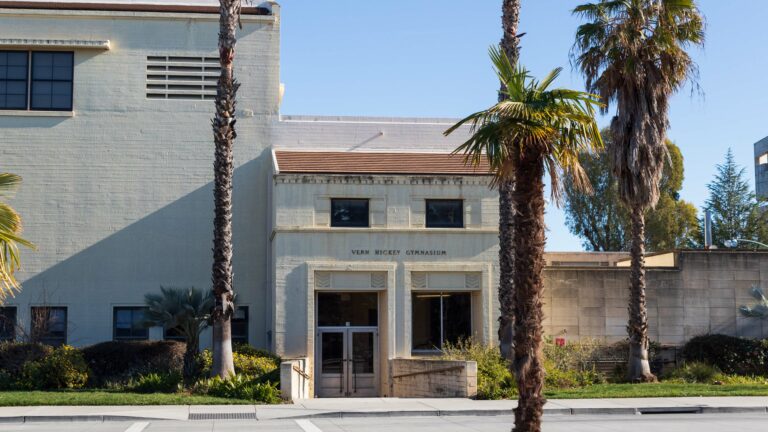
Many of the dedicated student athletes were on campus training for their upcoming seasons
UC Davis’ status as a Division I may be prestigious, but it doesn’t come easy — while a majority of students spent their Winter Breaks at home visiting their families and celebrating the holidays, many student athletes at UC Davis remained in town, dedicating their time to winter training.
The 628 Division I athletes at UC Davis all approach winter training differently depending on their sport and its season. Those who are “off season” spent their time staying in shape on their own schedule, whereas most athletes who are “in season,” or who will be soon, were on campus training, practicing and competing. Both men’s and women’s basketball teams are in the midst of their season and had several games throughout the break. During break, they were able to focus on athletic performance without added academic pressure. The gymnastics team was also training in preparation for upcoming competitions.
Kevin Blue, the UC Davis athletic director, spoke about the benefits of winter training for athletes, describing the importance of staying in shape during the season.
“The pursuit of one’s sport is an ongoing activity that has its ebbs and flows as far as the intensity is concerned, but the winter holiday period is not one that any athlete wants to fully disengage,” Blue said. “It’s a good thing for our student athletes to take rest between quarters when their sport is not in season, but the student athletes who are in season or preparing for their seasons are not eager to fully disengage from their sport.”
The women’s swim and dive team was also on campus for much of the Winter Break, with their winter training split into two parts. The first segment took place Dec. 14 to 19, after which athletes were able to take a break and go home for about a week. Then they returned on Dec. 27 and finished their winter training with a meet on Jan. 4.
Anna Lee, a first-year biological sciences major who specializes in butterfly and freestyle, talked about a typical day of winter training for the swim team, saying that, in many ways, it’s more intense than practice during the quarter.
“Winter training differs from our typical training during the school year since the NCAA rule that only permits 20 hours of training does not apply, so we have a lot more hours of practice during winter training,” Lee said. “It’s also different in the sense that we have two swim practices every day, including Sundays, along with other activities compared to the school year — where we only have two swim practices twice a week and a day off on Sundays. Our [winter] training includes swimming for two plus hours twice a day and we have an hour of weights and an hour of yoga every other day. On average, it’s around five-plus hours of training everyday.”
Blue, talking about differences in training regimens, said “it’s different from team to team.”
“For the teams that are in competition, there are specific schedule requirements that are exactly the same as the schedule requirements that are occuring during the academic year in terms of practice hours and required time off,” he said.
Committing so many hours in the pool and to the team over break has not only allowed the swim and dive team to stay focused and fit but also bond as a group — especially given that a large portion of the campus was empty. Sophia Sebastian, a first-year sociology major who focuses on backstroke and breaststroke, found the experience to be beneficial to both her and the team.
“I believe winter training has helped me become a better athlete in regards to the way I train and challenge myself in the pool and weight room,” Sebastian said. “Winter training allowed for many different team bonding opportunities both during and outside of practices. With almost everyone else on campus gone, we luckily all had one another to spend time and hang out with. During the tough practices, we motivated and cheered for one another.
“All of us knew how hard the training was, but we were all in it together. Winter training is not anyone’s ideal way to spend Winter Break, but the mental toughness, physical strength and [bonding] with my teammates that resulted from it made the experience all worth it.”
Written by: Lei Otsuka — features@theaggie.org

Police are considering installing surveillance equipment around city to ward off future property crimes
The Davis Police Department said it is considering installing security cameras and license plate readers in public areas around the city in response to a recent uptick in property crimes.
Police Chief Darren Pytel introduced the possibility of public security cameras in a City Council meeting on Dec. 3. He began by outlining crime statistics in the city over the past five years, noting that crime levels in Davis have remained relatively stable. Reported violent crimes in the city — including aggravated assault, homicide and rape — have decreased over the five year period, according to Pytel. Certain property crimes, such as larceny and theft, show a minor increase in the statistics, however.
“We have seen an increase in theft or larceny in the past year,” Pytel said. “We’ve been trying to figure that out [and] study it more.”
Particularly concerning, Pytel said, was the series of armed robberies that occurred in Davis during fall 2019.
“The series we’ve had recently is different,” Pytel said. “We haven’t had carjackings in over five years, and just over the past month or so we’ve had two — and they’ve been involving armed suspects, and our UC students have been the victims.”
Pytel said that some arrests had been made in connection with the robberies, and investigations are ongoing. Some of the crimes have been connected to “renewed gang activity” and violent crime centered around Woodland and West Sacramento, according to Pytel.
Pytel also pointed to the string of “very brazen” laptop robberies in downtown coffee shops that occurred in late 2018 and early 2019. The Davis Enterprise reported a recent strong-arm laptop theft at Philz Coffee on Dec. 29, 2019.
The Davis PD put forward two proposals to the council for increased crime prevention. First, Pytel suggested that the police enroll in an online crime-mapping and data analysis tool called Accurint Virtual Crime Center, which would allow Davis police to share crime data with other law enforcement in the Greater Sacramento region.
The second proposal was a “Remote Public Safety Camera System” (RPSCS), a series of surveillance cameras placed in public parking lots and potentially some roadways and intersections that police hope will act as a crime deterrent and a tool to assist investigations. Davis already has two such cameras, according to a staff report, but with some technological limitations.
“The two existing cameras can be used for relatively short periods of time because of their limited storage and power capacity; they are not designed for long-term use at a single location,” the report read.
Pytel said that the cameras could help compensate for what he believed was an understaffed local police department. He acknowledged the city’s budgetary concerns and said that the RPSCS offered a less expensive alternative to hiring more police officers.
“I’m not here asking for more cops tonight,” Pytel said. “But I do think that some of the conversations with the Remote Public Safety Camera system have to include that this is a new, emerging way to use technology to increase our eyes in the sky and to monitor areas where we simply don’t have the personnel to do it.”
The RPSCS does not include face recognition technology, Pytel said, but is capable of license plate recognition (LPR). He said LPR technology is particularly useful for identifying stolen cars — a function that would assist police in their ongoing carjacking investigations.
Echoing a concern put forward during public comments, Mayor Brett Lee asked Pytel whether the RPSCS could be used to track minor violations, such as unpaid parking tickets and expired registration. Pytel said the proposed LPR system could be used to alert police to cars with unpaid tickets, but a use-policy could be developed to prohibit using the system for this purpose.
Lee and the council expressed support for the recommendations, with the caveat that an appropriate use-policy could be developed to strike a balance between safety and privacy.
“I’m very supportive of investing in some camera systems, and I think we can find a path forward that is suitable to maintain our civil liberties,” Lee said.
The council requested that the Davis PD produce a proposal regarding the cost and use-policy of cameras and LPRs before further consideration.
Written by: Tim Lalonde — city@theaggie.org
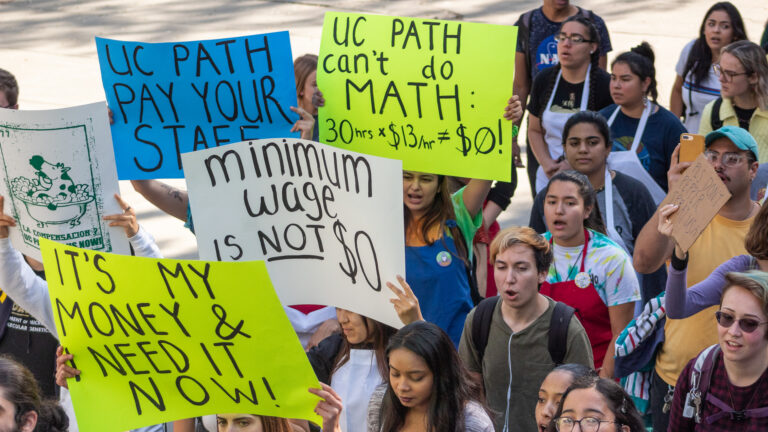
UCPath payroll issues may continue as two more campuses added to system in December
Despite student protests and large-scale backlash, as many as 50 students had not received paychecks for the entirety or part of Fall Quarter by the time the term ended. Although campus leadership assured that students’ paychecks were coming, no official date was released for the arrival of these paychecks before the quarter ended. According to recent accounts, all payment issues have been addressed by now.
In addition to issues regarding delayed and incorrect paychecks, UCPath’s employment processing freeze that lasted until Oct. 28 has also had negative impacts across campus. Jeff Flynn, the Unitrans general manager, commented on how the shortcomings of UCPath impacted both student employees and riders during Fall Quarter. Due to the hiring freeze, Unitrans failed to hire new drivers for Winter Quarter in a timely manner. As a result, student employees and riders are expected to bear the brunt of UCPath’s failings in the upcoming quarter.
“Unitrans had hoped to introduce additional Winter Quarter capacity buses — when two buses operate together on one line at the same time — to help reduce pass ups, improve arrival times to campus and reduce crowding when ridership is highest,” Flynn said. “Unfortunately, the class of approximately 20 drivers that we tried to hire in the last week of August was delayed until the middle of Fall Quarter due to the transition.”
Because of this, drivers will not complete mandatory training before the start of the Winter Quarter. Students should expect increased delays, overcrowding and additional pass-ups going into Winter Quarter.
In addition to impacting Unitrans riders, currently 20 Unitrans student employees have not received paychecks for one or more pay periods during Fall Quarter, according to Flynn.
More than a month after UC Davis released a statement on Nov. 7 expressing dismay at some students not receiving paychecks, some students continued to experience ongoing issues. This statement, which came on the heels of a student-employee walkout, said, “we are dismayed that some of our student employees have not received their pay in a timely manner and agree this is unacceptable. Chancellor May has directed that all student employees be paid what is owed them immediately.”
In a letter to the editor, Christine Lovely, the associate vice chancellor of human resources and Matt Okomoto, university controller, offered a differing opinion.
“Payroll wasn’t perfect before UCPath and despite our best efforts, pay errors will continue to occur,” Lovely and Okomato said. “With an implementation of this scale (nearly 40,000 paychecks), there are bound to be issues.”
Despite having almost two years to prepare for the upcoming transition to UCPath — and given that five other UC campuses have already implemented UCPath, several of which experienced many of the same issues with payment — more than 800 faculty, staff and undergraduate employees have experienced issues since the transition on Oct. 1 according to a statement from Chancellor Gary May.
Initially claiming they were not aware of ongoing issues with pay as of the time of writing, Lovely claimed the inquiry made by The California Aggie caused her team to discover more existing issues.
“We discovered after your inquiry that there were still some issues outstanding,” Lovely said. “Most of these issues were not caused by UCPath, but the implementation of UCPath revealed that some of our local onboarding practices, timekeeping processes and start date decisions were not in keeping with best practices and wouldn’t work with UCPath.”
In light of recent issues involving pay and threats from student employees to pursue legal action, the Office of the Vice Chancellor of Student Affairs has assigned additional resources to address issues with student employment processing.
Emergency paychecks seem to be the main tool to address students’ issues with accurate and timely paychecks. Lovely alleged that the school has been more proactive than a number of students in correcting paycheck issues. Among the emergency checks issued, Lovely stated that 43 checks are still awaiting student pickup.
In the last month alone, more than 300 emergency checks have been issued. As of the time of writing, 50 students still have pay outstanding, according to Lovely. Among those, 17 emergency checks were issued during Finals Week. For some students, paychecks were set to available by Friday, Dec. 13, the last day of Finals Week before Winter Break. For others, Lovely expected issues to be resolved the week after finals.
In response to the widespread failure of the UC system to pay employees on time across UC campuses, California Governor Gavin Newsom signed Senate Bill No. 698 into law, that will allow impacted student employees to seek legal compensation. Therefore, it is in the best interest of UC leadership to resolve all existing pay issues before the end of the calendar year because the UC system will no longer have legal immunity from wage theft penalties as early as Jan. 1, 2020.
While UC Davis has only recently been affected by UCPath payroll issues, this bill was originally introduced in Feb. 2019 after similar issues occurred at all other UC campuses where UCPath was introduced. For other UC campuses and thousands of student employees, this bill will go into effect too late to provide any legal compensation. For some at UC Davis, however, they will have the opportunity to protest late paychecks in the coming quarter.
Students experiencing ongoing issues may be impacted by UCPath’s planned shutdown from Dec. 9-18. During that time, two additional UC campuses, UC Irvine and UC Santa Cruz, are scheduled to be incorporated into the UCPath system. This will add the total number of employees served by UCPath to 164,694, according to their website. With ongoing issues for many at UC Davis, support during this window will be limited.
With no institutional changes made to UCPath since its implementation at UC Davis, it is unclear what to expect with UC Irvine and UC Santa Cruz adding to the number of employees reliant on UCPath.
Written by: Ally Russell — campus@theaggie.org

This first step cannot be end of city’s efforts
Davis City Council took a critical first step toward serving the city’s homeless population on Dec. 17, 2019 by approving construction plans for a daytime respite center to be built on Fifth Street. The Editorial Board commends the city in making progress to solve this state-wide crisis, and we hope these efforts will be expanded upon in the future.
The center, staffed with employees from the Yolo County Health and Human Services Agency and Communicare Health Centers, will provide shower and restroom services, storage facilities and connection to social services. These amenities will play a vital role in mitigating many of the immediate issues of homelessness. But in a state that makes up the bulk of the national unsheltered homeless population, and in a city with a homeless population of 190 — 60% of which are unsheltered — a daytime center alone will not adequately address Davis’ homelessness issue.
The next step must be to open an overnight center and to ensure that such centers offer essential services like health care to address mental and physical illness. A lack of such care often results from, and at times contributes to, homelessness. The UC Davis administration also has a duty to address the issue of homelessness as many of its students are dealing with, or have already experienced, homelessness first hand.
Since 2009, the number of unsheltered homeless people in Davis — which differs from the total homeless population — has steadily risen, with the most recent number reported at 114 in 2018. Seven percent of UC Davis students experienced homelessness for a period of time, and 18% “experienced either homelessness or some form of housing insecurity,” according to UC Davis’ Affordable Student Housing Task Force page. Yet the administration’s response to this issue, as detailed on the page, has been meager.
The most substantial attempt by the administration to address housing issues has been the construction of more housing units through the expansion of West Village. And while a lack of housing availability is one contributor, the larger issue exacerbating the homelessness crisis, both in Davis and across the state, is housing affordability. Much of the student population cannot afford to pay West Village’s minimum rent of $700. Building more apartments at this price rate will do little to aid those most at risk of housing insecurity.
The task force has recommended adjusting UC financial aid budget calculations to reflect actual market value of rental units. But the Editorial Board feels that the university should more immediately address and adjust tuition rates, which are staggeringly high and have increased almost annually for the past two decades. Lowering tuition would alleviate many issues impacting current and potential university students — most importantly, in this case, being the ability to afford housing.
At the heart of California’s homelessness crisis is an economy that works for few. Yes, the lack of physically available housing units is substantial and we hope that the possible approval of $1.4 billion of the state’s budget to address the homelessness crisis will help mitigate that issue. But building more housing units is only effective in so far as individuals are able to afford it.
Combating homelessness must be a comprehensive effort on the part of the state government, local governments and communities across California. Money must be allocated where it’s needed, and the state and its localities must ensure that the services they provide tangibly address the causes and effects of homelessness. This issue will undoubtedly take time to solve, and establishing this respite center in Davis is a critical first step in doing so. But with an issue of this scale, we cannot afford to stop here. More can and must be done.
Written by: The Editorial Board

New burger restaurant makes additional plant-based alternatives accessible to Davis community
In an era of increasingly popular health fads coupled with the growing importance of environmental awareness, veganism and plant-based diets are becoming more common, and research continues to show both the health and environmental benefits these diets have. And soon, Burger Patch will bring what founder Phil Horn calls “convenient consciousness” to Davis.
Burger Patch, a completely plant-based burger restaurant with locations in Downtown Sacramento and the Golden 1 Center, will expand to Davis in early 2020 in Davis Commons at 500 1st St., just a short walk from campus. The establishment’s opening will be facilitated by founders Phil and Danea Horn.
Burger Patch hopes to encourage students to explore the plant-based lifestyle. In addition to providing convenient plant-based alternatives, Co-Founder Phil Horn explained that the team “loves being a part of the late night scene [in Sacramento],” and said he hopes “we can do that in Davis.”
On Friday and Saturday nights, Burger Patch stays open until 1 a.m. and offers classic late night snacks like burgers, shakes and fries with plant-based twists. The owners also hope to serve breakfast at the new Davis location.
The plant-based lifestyle is quickly gaining popularity. According to Liz Applegate, a distinguished senior lecturer in the nutrition department and former director of sports nutrition at UC Davis, there are countless upsides to adopting more plant-based meals into one’s diet.
“When you choose a diet that’s based in more fruits and vegetables and beans and other unprocessed plant products, you get more fiber and more phytonutrients that reduce the risk of a variety of chronic diseases [including] heart disease, cancer and developing type-two diabetes,” Applegate says.
She did caution that “consuming a plant-based burger does not mean it’s better for you.”
“If I were to go to In-N-Out and get a burger and fries and a shake, or if I was to go to Burger Patch and get their standard burger, fries and shake, [they have] relatively the same nutrition profile,” Applegate said.
Applegate urges people to recognize that Burger Patch should not be considered “diet food,” and that it is not a reflection of the plant-based diet as a whole. The plant-based diet is made up of many fruits, vegetables and legumes, and Applegate said it is great for reducing long-term health problems and said reducing meat consumption is an all-around healthy choice.
Beyond the health benefits of a plant-based diet, there is also a positive impact on the environment. Phil Horn explained that the environmental impact of creating beyond meat versus ground beef differs phenomenally.
“The stats are numerous in terms of the amount of CO2 emissions and the amount of water it takes to make a meat burger versus eating a non-meat alternative,” Horn said. “One cow, for instance, takes hundreds of thousands of gallons of water to create food on your plate. Using a meat alternative is a fraction of that.”
Burger Patch strives to increase restaurant sustainability, a goal that contributes to their overall mission: one that Horn said boils down to kindness. This is visible in terms of kindness toward animals, the environment and people.
Burger Patch also has a “#grilpower” initiative, which states that the restaurant will strive to have at least 50/50 representation of men and women in positions of power, such as team leads, key holders and managers, by the end of 2020. Horn also explained the restaurant’s commitment to a monthly “Patch Match.”
“Every month we select a non-profit in the local area and we give back a portion of every burger sold, in addition to doing one night when we give 10% of all sales to the organization,” Horn said.
Burger Patch will open its doors in early 2020, and Horn urged students and community members alike to stop by and try his personal favorite burger: “The total patch: a beyond burger patty, our chicken alternative and our bacon alternative all on one burger. It’s amazing”
Written by: Katherine DeBenedetti — features@theaggie.org

Students, advisors recommend starting early, seeking help via advising centers
A significant amount of planning is required for studying abroad, and given that enrollment for faculty-led and immersion programs taking place in the fall of 2020 opens up this month, students interested in going abroad should start their planning now.
Dana Armstrong, a program coordinator and intake advisor for the Global Learning Hub, encourages students to come by the International Center on campus so that her team can help curious students find what they are looking for.
“International competence and global learning, in general, is becoming more important as our world gets more globalized,” Armstrong said. “Employers look for competitive applicants. To get more competitive in the workplace, soft skills learned through international travel, like the ability to communicate with people of different cultures and backgrounds, are helpful.”
Two types of programs that students can take part in include faculty-led programs and immersion programs. According to UC Davis’ study abroad website, the Global Learning Hub, faculty-led programs include courses from the general UC Davis catalog, are taken with other UC Davis students and are taught by a member of the UC Davis faculty. These programs are not merit-based and often require mandatory prerequisites.
This year, there are seven programs open for Fall Quarter 2020, 20 internship programs and 40 summer abroad programs — the details of which can be found on the Global Learning Hub’s website. Getting an early start is oftentimes essential, as these programs are on a first-come, first-serve basis. Students must meet a medical clearance requirement and a passport check before they can secure a spot in the program through the payment of a non-refundable $300 fee.
Immersion programs work a little differently and require more dialogue, planning and involvement on the student’s end. With over 400 different locations available, this type of program allows students to craft their own custom experience abroad. Students apply through the UC Education Abroad Program website (UCEAP) to enroll in classes offered at a host university of their choice. Units gained through the program are UC-convertible, however, the Global Learning Hub urges students to meet with their major advisors to see if the units gained will contribute to their degree.
Second-year Japanese and microbiology double major Jacob Byersa attended the International Christian University in Japan for six weeks in the summer of 2019 via UCEAP. His biggest tip for students looking to go abroad is to avoid procrastination.
“As soon as you know you want to go abroad, talk to the abroad office to figure out what program […] you want to apply for,” Byersa said. “Write down all the deadlines you’re given in a prominent place, and try to get everything done as quickly as possible. Figure out if you need or want financial aid, and follow up on all the opportunities you’re eligible for.”
Fourth-year economics major Arielle Zoken attended King’s College in London over Fall Quarter 2019 through UCEAP. She said studying abroad pushed her out of her comfort zone, allowed her to meet new people and exposed her to a country she knew little about. She says the process was straightforward after she had a consultation at the Global Learning Hub.
“I gathered the various documents I needed — signatures, medical records, etc. — ranked the top three universities I wanted to apply to and heard back in May from King’s that I was accepted,” Zoken said.
Deadlines for immersion programs are as early as mid-January and faculty-led program deadlines are in April.
Written by: Isabella Beristain — features@theaggie.org

©2021, ASUCD. Designed by Creative Media.