55.5 F
Davis

Davis, California

Tuesday, December 23, 2025
Home Blog Page 408

In memoriam: Walter Robinson

Former enrollment leader served UC Davis for seven of his nearly 40-year career in higher education

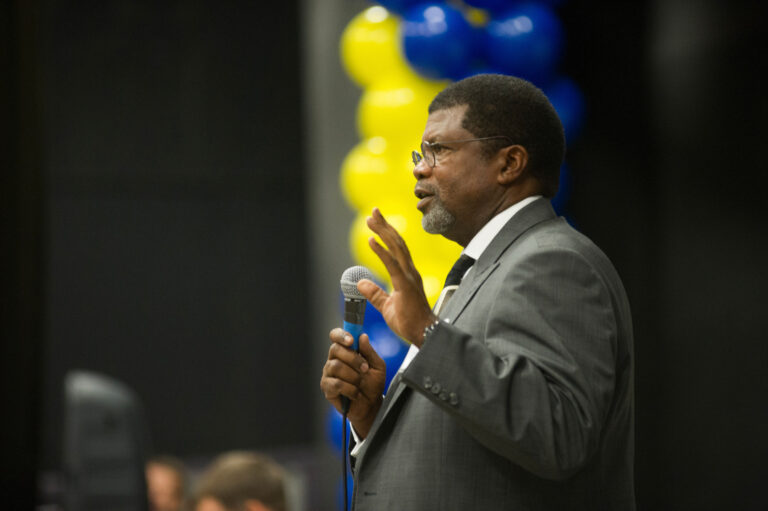
Walter Robinson, the former leader of Undergraduate Admissions and Enrollment Management at UC Davis, passed away at his home in Vallejo on June 9, according to UC Davis Dateline.

Robinson served at UC Davis for seven years and had nearly 40 years of experience in higher education.

He began his time at UC Davis in 2011 as executive director of Undergraduate Admissions. He was elevated to an associate vice chancellor position in 2015 and helped establish the Enrollment Management office, comprised of Undergraduate Admissions, Financial Aid and Scholarships, the University Registrar and Enrollment Management Analytics.

In this role, Robinson sought to recruit a diverse and talented class of students to the university. In the eyes of UC Davis Chancellor Gary S. May, he accomplished this through his “accessible and approachable” leadership style.

“Walter worked tirelessly to recruit the brightest minds to UC Davis,” May said via email. “We spent many mornings together at pep rallies in local high school gyms, encouraging students of all backgrounds to apply to UC Davis. Walter was passionate about championing underrepresented students and mentoring them toward great success. I learned so much about the heart of UC Davis’ diverse student body through him. The passion that Walter brought to the university was an energizing and encouraging force for all those who worked around him.”

Provost Ralph J. Hexter further described Robinson’s leadership style.

“Walter’s leadership style was unique,” Hexter said via email. “All the people who worked with him felt that he met them where they were. He was not only approachable and collaborative but his warmth and energy made everyone excited to join him in realizing his vision.”

Though Robinson left the university in 2016 upon his retirement, his legacy continues to echo within the institution.

“His work to recruit and support underserved students, including women and minorities, helped to create a diverse and inclusive environment, where all are welcome,” May said. “This legacy will shine for generations to come. One of our strategic goals is to make UC Davis a model for diversity and inclusion. Through this goal, we will continue the important work that Walter started.”

Before joining the ranks of UC Davis, Robinson had a diverse set of educational experiences. Graduating from Berkeley High School, he attended the College of Alameda before transferring to Fresno State University, where he earned a Bachelor of Science degree. He then worked at Fresno State upon graduation and continued to work there until 1994, when he began work at the University of Florida, Gainesville. He worked there until 2005, when he became assistant vice chancellor and director of undergraduate admissions at UC Berkeley for six years before coming to UC Davis.

Written by: Kenton Goldsby — campus@theaggie.org 


Audit proposes new safeguards for UC following national college admissions scandal

Two audits conducted to improve admissions processes

The UC’s Ethics, Compliance, and Audit Services (ECAS) recently released a summary of the UC’s new admissions procedures audit in response to the nationwide college admissions scandal that broke this spring. 

“Only a few cases of fraudulent activity related to admissions at UC campuses have been identified by federal investigators thus far,” the ECAS summary said. “We recognize that even one case is too many, and the university is doing everything it can to identify those who are culpable and prevent any additional wrongdoing.”

The bribery scandal implicated a coach at UCLA, a parent and student at UC Berkeley as well as other individuals at similarly prestigious universities. The UC Office of the President (UCOP) subsequently pledged to enact a thorough review of admissions policies and contacted both the ACT and the College Board to “ensure the integrity of students’ scores.”

The audit reflects a new impetus to improve the current UC admissions policies. 

“The UC admissions process is effective overall,” ECAS said in the document, “but [we] did identify a number of improvements and enhancements to refine our admissions procedures, all of which we are implementing.” 

ECAS has conducted two audits, one of which was completed in June 2019. The first audit calls for stronger documentation of the overall admissions process, particularly for students who are accepted on the basis of athletic ability or a special talent. These individuals constitute a small percentage of accepted students each year. 

The document proposes “improving mechanisms in place to monitor student-athletes’ participation in athletic programs.” The “reporting structure” in athletics compliance offices will be “modified,” and employees will be briefed on these new protocols. 

The audit also proposes “monitoring donations” to ensure that students are not being accepted “on the basis of financial gain to the university.” The UC system “does not grant preferential admission” to the children of donors or alumni, according to UCOP.

The audit additionally cites the need for other stronger “verification controls” which would potentially include identifying “falsified applicant information” more easily. They will also limit the influence that third parties could have on “special talent” applicants.

Campuses should be implementing the first audit’s recommended procedures by July 2019, according to ECAS. The second audit will be completed by the end of the year and “will include a deeper dive into selected areas, such as application verification controls, IT system access and student-athlete participation.” 

Students who fraudulently apply to the university “jeopardize” their admission, as it is in violation of the statement of integrity on the UC application, according to UCOP. Those admitted to the university under “false pretenses” could be dismissed if the allegations are substantiated. The Family Education Rights and Privacy Act (FERPA), however, mandates the privacy of student educational records and prevents the university from offering specific information about ongoing investigations.

Written by: Rebecca Bihn-Wallace — campus@theaggie.org 


John A. Pérez new chair of UC Board of Regents

Cecilia V. Estolano is new vice chair of UC governing board

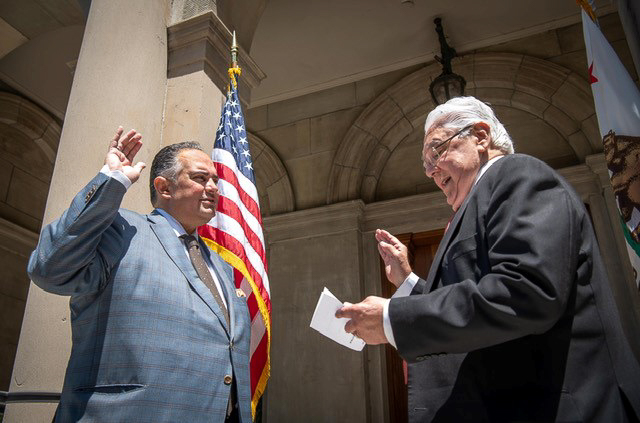
UC Regent John A. Pérez assumed his new position as chair of the UC Board of Regents on July 1. He will serve in this role for one year.

Also elected at the same time was Regent Cecilia V. Estolano, who will serve in her role as vice chair for a year.

Pérez’s election took place in May, but he did not start as chair until July 1. He takes the place of Regent George Kieffer who was first appointed in 2009 and who will continue to serve as a regent until 2021. 

The new chair was appointed to the board in 2014 and has a long history in California politics — he is known for being one of the longest serving speakers of the California State Assembly in the era of term limits, elected to that position in 2010 and 2012. 

One of his landmark pieces of legislation was the Middle Class Scholarship Act. This program “has provided tuition relief of up to 40 percent for nearly 100,000 California State University and University of California students,” according to his webpage.

“I am honored to serve as chair of the board and continue advocating for our students and their families, in addition to the UC community at large,” Pérez said in a statement. “I look forward to working closely with my fellow board members to continue UC’s tripartite mission of education, research and public service, while giving our students the tools and resources they need for success at UC and beyond.”

Estolano first joined the UC Regents in 2018 and her appointment expires in 2022. 

“Ms. Estolano is the Co-CEO and Co-Founder of Estolano LeSar, an urban planning and public policy firm,” her webpage states. “She has worked directly with public, private, institutional and nonprofit clients to plan, finance, design, implement and operate policy-driven programs and projects that promote sustainable solutions tailored for each community.”

New committee chairs have also assumed their roles within the board.

Written by: Kenton Goldsby — campus@theaggie.org 
UC Davis ranks 104th best university in the world

While this may be a drop from last year’s 100th ranking, students still show love for their campus

UC Davis is no underdog on the global stage — the university was recently ranked the 104th best university in the world. In light of this achievement, students weighed in on the significance of university rankings.

The ranking, published by Quacquarelli Symonds (QS), took over 1,001 different universities into consideration. The list was released on June 18, just as the academic year wrapped up. UC Davis also secured other prestigious rankings from QS, including being ranked 31st in the nation and 13th among public schools.

“The campus stood out most for its academic reputation and — as an indication of the impact of its research — the number of citations per faculty member,” said Julia Ann Easley with UC Davis news and media relations.

Mariah Nibert, a second-year political science and Spanish double major, also weighed in on the ranking. She said that while college rankings can be indicative of the quality of education an institute provides, they should be taken with a grain of salt.

“College is really what you make of it,” Nibert said. “I think that UC Davis being ranked 31st in the nation is somewhat representative of the quality, in the sense that in my experience, classes have been wonderful and [that] speaks to the high ranking we have. However, I have also had experiences and classes that don’t reflect the quality that UC Davis prides itself on.” 

Fourth-year applied mathematics major Ya’ara Trost took an alternative stance, stating that college rankings don’t say anything about a university’s prestige. 

“A ranking solely gives people the ability to judge your intelligence and abilities based on absolutely nothing but the school’s name,” Trost said. “Each individual will be the most successful based on the programs, lifestyle, et cetera of a particular school that best fits them and their needs.”

Trost further added that even if a university is ranked “number one” it still may not fit each and every student’s specific wants and needs.

“Davis may be ranked 31st in the nation, but [maybe] someone who would not thrive in a city like [Berkeley] — the number one public university — would do extremely well in Davis,” Trost said. “Davis, and every school at that, will feel different to each and every person, and if we do rank schools, we should look at their specific strengths and weaknesses to better assess ‘quality.’”

Written by: Isabella Beristain — features@theaggie.org


Five Community Retention and Resource Centers offer resources, programming

Each center has initiatives to support different marginalized communities

UC Davis is an undeniably diverse campus, as reports like the UC Davis Student Profile show. That is why the university has many ways to uplift the varied identities of the students who study at the university.

The most visible form that these efforts take is the collection of Community Retention and Resource Centers on campus. These five centers focus on many different aspects of the individual, including race, ethnicity, personal interests, academics, sexuality and gender.

The five centers that make up this network are the Center for Student Involvement (CSI); the Cross Cultural Center (CCC); the Lesbian, Gay, Bisexual, Transgender, Queer, Asexual, and Intersex (LGBTQIA) Resource Center; the Women’s Resources and Research Center (WRRC) and the Student Resource and Retention Center (SRRC).

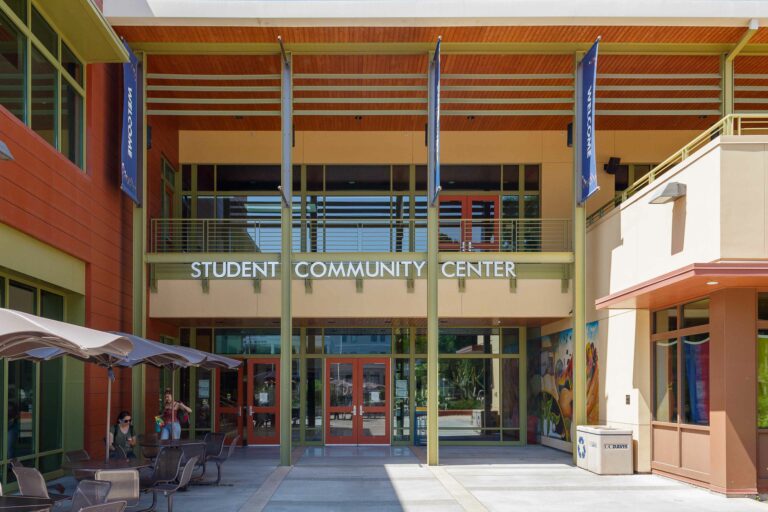
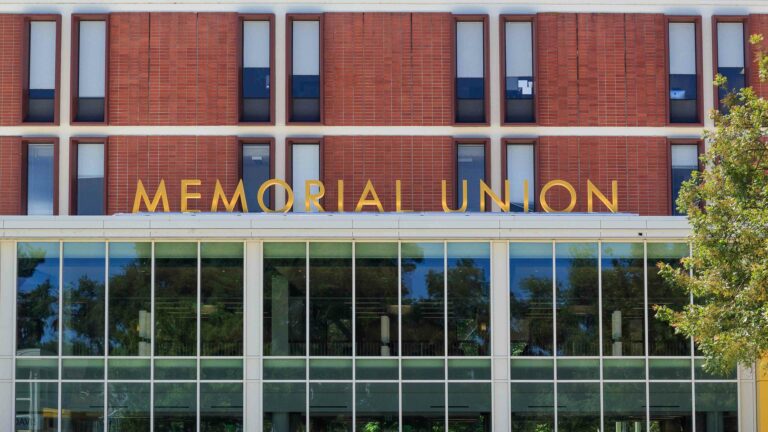
Three of these centers, the CCC, the LGBTQIA Resource Center and the SRRC, are in the Student Community Center. The WRRC is in North Hall while the CSI is on the fourth floor of the Memorial Union.

The CSI is the on-campus hub for everything that has to do with registered student organizations, or RSOs. Most any club that a student can become a member of is an RSO. There are over 700 RSOs at UC Davis, falling into varied categories such as advocacy, political, religious, community service, health and more. Students can browse the list of student organizations on the AggieLife website, run by CSI.

In addition to just browsing the long list, though, there is also an “Involvement Calculator” offered by CSI to help students find a club that fits their interests.

“On the Involvement Calculator you tell us a little bit about yourself (identities, career goals, major, hobbies, etc.) and we send you back a custom list of RSO to consider joining,” said Jaime Allen, a leadership development and outreach specialist for CSI, via email. “It is one way CSI can help you find the right RSO to join from the hundreds on campus. After you get your list, you can come in and meet with one of our Involvement Mentors to talk more about the RSOs or get help reaching out to help to learn how to join.”

The CCC traces its roots back to a hunger strike that took place in 1990 on the steps of Mrak Hall, where students presented three demands. They wanted an investigation into alleged racism in the Spanish department, the establishment of an on-campus ethnic and cultural center and increased full-time faculty in the ethnic studies departments. After the six day strike, the activists and the university reached an agreement and the CCC opened in 1992.

The CCC has six values that guide its work in the community: advocacy; cultural competency; academic excellence, research and education; identity exploration and leadership development. This is done through the many programs that the CCC puts on each year, such as culture days like Black Family Day, La Gran Tardeada, the Powwow and the Asian American and Pacific Islander Night Market. The CCC also does other programming around things like race and ethnicity and disability activism, while also hosting retreats for campus communities.

The LGBTQIA Resource Center’s mission is to “provide an open, safe, inclusive space and community that is committed to challenging sexism, cissexism/trans oppression/transmisogyny, heterosexism, monosexism, and allosexism. We recognize that this work requires a continued process of understanding and dismantling all forms of oppression.” 

Beyond just this, the center provides numerous physical resources to students: a library, condoms and other sexual health supplies, a gender-affirmation clothing closet, a small food pantry and menstrual products. The center also provides something essential to self-expression: a space. 

“We provide space for folks to consistently study, have student organization meetings for events — I think that’s a huge piece on a day-to-day basis,” said Crystal Knight, the student services coordinator at the LGBTQIA Resource Center. “We [also] have career staff and scholar staff that can help with a number of issues related to LGBTQIA identity and help refer people to additional resources.”

The center also puts on community based programing, like Pride Month in May, Queer Leadership Retreat in January and other workshops and events throughout the year. QLR is designed to be a place for students to make friends and become a bigger part of the LGBTQIA community at UC Davis.

“[QLR] is one of those moments throughout the year that I consistently refer to for what beautiful, supportive community looks like,” Knight said.

The WRRC seeks to “promote gender equity and social justice.” This work focuses on supporting “womxn, transgender, nonbinary and gender expansive individuals.”

The WRRC traces its roots to student activism in the 1970s, with the center opening in 1972 because of the efforts of the Women’s Liberation UCD student organization. 

Along with the LGBTQIA Resource Center, the WRRC is a confidential resource for those who have experienced gender-based violence, including sexual harassment or assault. These two centers do not have to make reports to the university when a community member comes in to talk about their experiences around sexual violence. They can help with referrals to other places on campus to get more support. 

Many other resources are offered by the WRRC, including a library, study space, sexual health supplies, menstrual supplies and a Student Parent Closet. The Student Parent Closet “provides free diapers, wipes, nursing pads, and other supplies for parenting and caregiving students at UC Davis,” and is open on Tuesdays and Wednesdays from 10 a.m. to noon. One can contact the center to set up an alternative time to get things from the closet.

While all CRRCs focus on student leadership, the SRRC’s model focuses on student-initiated and student-led community building. The SRRC’s mission is to stand for educational equality.

“Our student-run and student-initiated programs created by students for students foster holistic, academic and personal development while raising political and cultural awareness for youth and college students,” its mission statement says. “We educate, engage, and empower students to act as dynamic leaders for their communities so that we can all transform knowledge into action.”

One way that this student-run focus is clear is its organizing model. The SRRC is overseen by the 10 person Recruitment & Retention Organizing Committee, comprised mostly of undergraduate students.

The SRRC’s work focuses around seven student-led community programs. 

African Diaspora Cultivating Education, or ACE, “seeks to create a supportive environment that encourages personal development, cultural awareness, and academic success through programming, retreats, and conferences that inform and empower students within the African Diaspora.”

The American Indian Recruitment and Retention, or AIRR, program “addresses the unique needs of the American Indian, Indigenous, and First Nations identifying student population at UC Davis […] [seeking] to create a space where current and future students can access resources and support services.”

Founded in 1987, BRIDGE serves the Pilipinx community. Its “goal is to empower students to transform this educational system and validate the complexity of the Filipinx culture through our many services and events.”

Collective focuses on transfer and non-traditional student empowerment. Its three main programmatic focuses are transfer outreach, retention and campus visits.

“Dedicated to empowering and retaining historically underrepresented graduate and professional students,” the Graduate Academic Achievement and Advocacy Program, or GAAAP, “is the first UC-based, student-initiated, student-run recruitment and retention program for graduate students.”

Southeast Asians Furthering Education, or SAFE, targets its work at those who identify as Southeast Asian and Southeast Asian American, centering “hxstories* and experiences tied to the Vietnam War, Khmer Rouge, the Secret War, and Pathet Lao.”

The seventh program the SRRC offers is S.O.L. y L.U.N.A (formerly known as Yik’al Kuyum), which focuses on providing resources to retain Chicanx and Latinx students in higher education.

Written by: Kenton Goldsby — campus@theaggie.org


Studying abroad broadens horizons, offers unique opportunities

Financial aid, diversity counseling and advising helps make studying abroad more accessible

Studying abroad gives students the opportunity to explore different cultures, see the world in different ways and broaden their horizons. Traveling to a different country and navigating life as a foreign student presents amazing opportunities, unforgettable experiences and incredible challenges, each of which are reasons to consider studying abroad. 

UC Davis students have access to quarter-long and summer programs, seminars, internships, independent exchange opportunities and UC-wide programs. The UC Davis Study Abroad office and major advisors can help students plan for their study abroad experience as early as freshman year.

Kelly Lucas, a third-year animal science major, studied abroad at the University of Edinburgh during Fall Quarter 2018. Lucas’ program is offered through the University of California Education Abroad Program (UCEAP). She studied alongside both Scottish and other international students.

“I went to the study abroad office super early and planned exactly what classes I was going to have to take [so that] the classes at Edinburgh [would] properly transfer,” Lucas said.

Lucas recommended reaching out to major advisors or the study abroad office as early as a year before students plan to study abroad. 

Lucas also participated in a veterinary internship while abroad, which gave her valuable international experience that she hopes will make her a more competitive candidate when she applies to veterinary graduate programs.

UC Davis quarter abroad programs are offered during the fall, winter and spring. Students have the opportunity to study alongside other UC Davis students led by a UC Davis faculty member in an international setting. Ranging from 10 to 16 weeks long, students are able to earn anywhere between 13 and 20 units. Courses vary by quarter and offer a wide range of subject material: current programs offered in Fall Quarter 2019 include language acquisition in Argentina, writing internships in Australia, culture in Italy, healthcare in Mexico and organic chemistry in the United Kingdom, among others. 

For students who feel too overwhelmed to study abroad during the school year, UC Davis also offers summer abroad courses that are an appealing option for many STEM majors. Programs take place in Asia, Europe and Latin America and topics include life sciences, microbiology, fashion, viticulture, writing, thermodynamics and many more. More than 30 programs allow students to take advantage of small class sizes of 18 to 30 students that are built around UC Davis course standards. Shorter than quarter-long programs, summer abroad programs are also a more affordable option for students. 

Katie Lewis, a third-year civil engineering major, participated in the Sustainable Cities of Northern Europe program during Summer 2018. During the program, Lewis had the opportunity to explore Sweden, Denmark, Germany and Switzerland while learning about the plans, systems and designs for urban sustainability.

“With my major, it would have been really difficult to incorporate study abroad with my course load,” Lewis said. “To me, it made the most sense to do a summer program. This allowed me to complete units while actually getting ahead of my normal schedule.”

In addition to UC Davis faculty-led programs, another popular option for students is UCEAP. These are more independent study abroad opportunities where UC Davis students study and travel with students from different UC campuses, and even other U.S. universities. Some programs offer students the opportunity to study at foreign universities with local students, stay with local families or apartments and explore different national settings more freely. Others are organized around UC centers abroad. UCEAP offers more country and course options for students and can be a quarter, semester or year long. 

Students can also opt to study abroad through programs that are not affiliated with UC. Laurel Hinshelwood, a third-year Spanish and international relations double major, took advantage of a program offered through the University Studies Abroad Consortium, an external study abroad program. Hinshelwood studied in San Sebastian, Spain alongside local Spanish students.

“Not only will you learn about the culture and people, but you learn a lot about yourself and being in situations outside of your comfort zone,” Hinshelwood said. “I was there for only a semester, but I experienced so much personal growth. You have to adapt and live in such an unfamiliar situation.”

Organized around the ambitious goal of achieving a global education for all students, the UC Davis Study Abroad office offers many resources to make studying abroad a feasible option for students of all backgrounds. The office has resources to increase the accessibility and diversity of students participating in study abroad experiences, with specific resources for students of color, LGBTQIA+ students, DACA students and students with disabilities. 

Moreover, the office hosts numerous scholarship workshops that are designed to help students take advantage of financial assistance. In addition to major and program specific scholarships available for UC Davis students, there are also scholarships awarded by the Study Abroad Office and independent grants that can help students fund their trips.

Written by: Ally Russell — campus@theaggie.org


More than student government: ASUCD is in charge of many events and services on campus

Over 1,000 students are involved with the association

When students are new to campus, they might not realize that services they use on a regular basis — like the Coffee House, Unitrans buses, and the Bike Barn — are actually all run by students like them. The student government of UC Davis, known as the Associated Students of the University of California, Davis is in charge of these services.

More than just student government composed of 12 senators, an executive office and multiple commissions and committees, ASUCD is in charge of 20 units that each provides a service to students and allows them to get involved with different parts of campus. These units focus on everything from media that provides information to students to food insecurity to environmental awareness. 

Units like the Coffee House and CoHo South Cafe feed students every day. Several units are also completely in charge of planning some of the biggest events on campus, including Picnic Day and Whole Earth Festival. These two events draw crowds to Davis every Spring Quarter. Picnic Day, for example, is the largest student-organized event in the nation.

“Whole Earth Festival is a three day art and music festival that is completely zero-waste and student run,” said Tinka Peterka, one of this year’s festival directors and a third-year design major. “We have about 35 staff positions […] Our staff is an incredible group of creative, supportive and hard working people, and it just feels like family.” 

Davis has also hosted a variety of artists over the years, including Kendrick Lamar, Drake and Khalid. Entertainment Council, another unit of ASUCD, is responsible for planning these concert events. The unit also puts on Sunset Fest and Lawntopia, popular events in the fall and spring, respectively.

“The unit is run entirely by students and offers work experience in talent buying, marketing, productions, and event planning,” said Liz O’Neill, director of Entertainment Council and fourth-year managerial economics and psychology double major.

Even the buses seen around campus and Downtown Davis are an ASUCD unit. Unitrans began running with two vintage London double decker buses in 1968 after they were purchased by ASUCD. Since then, Unitrans has partnered with the City of Davis and expanded to 48 buses that service 22,000 people each day. Even though it is such a large operation, Unitrans has only 14 career staff, and the rest are students. 

“A lot of our shop mechanics are students and we fix a lot of our buses in house,” said Akshara Bangalore, a human resources manager at Unitrans and third-year communication major. 

Other units include Aggie Studios, which allows students to gain experience in video production; The Pantry, which provides students with free food; KDVS, the campus radio station; and The California Aggie, the campus’ student-run newspaper.

Written by: Andrea Esquetini— campus@theaggie.org

UC Davis Football Recap & Preview

Aggies look to make a statement and improve off of historic season

Led by head coach and Eddie Robinson Award winner Dan Hawkins, the UC Davis football team took a big leap last season, winning a share of the Big Sky conference and making the FCS playoffs for the first time in school history.

After an underwhelming 5-6 season in 2017, the Aggies began the 2018 season against San Jose State and became the first FCS team of the college football season to upset an FBS school. Junior quarterback and 2017 Big Sky Conference Newcomer of the Year Jake Maier threw for 446 yards and three touchdowns against the Spartans, leading the way to a 44-38 away victory. This explosive offensive performance by the Aggies, both through the air and on the ground, proved to be an accurate glimpse into what the entirety of the season would look like, as the offense’s lightning-fast tempo would made it difficult for opposing defenses to keep up.

Following a blowout win against the University of San Diego the next week, the Aggies fell to Pac-12 powerhouse Stanford, which was ranked ninth in the nation at the time. From that point forward, the team began a six-game win streak that saw them score an average of 47 points per game. 

One of those wins was a thrilling overtime victory against the Idaho State Bengals in front of a sold out Aggie Stadium on Homecoming. After being down by 16 at one point, the Aggies stormed back and defeated the Bengals on an overtime touchdown by redshirt freshman Ulonzo Gilliam. 

Despite a loss in the second to last week of the season to Eastern Washington, the Aggies entered their final regular season game with a chance to clinch a share of the Big Sky Conference title. In an unusual Causeway Classic game against rival Sacramento State in Reno, Nev., UC Davis won handily by a score of 56-13, clinching its spot in the FCS playoffs for the first time in program history. 

With a 9-2 overall record, the Aggies earned a six seed in the FCS postseason, which meant that the team’s first ever playoff game would be held at Aggie Stadium against the Northern Iowa Panthers. 

In front of a capacity crowd of over 10,000 people and broadcasted live on ESPN3, the Aggies took down the Panthers in a gritty 23-16 win. The historic victory allowed the team to advance to the quarterfinals, where UC Davis was slated for a rematch against conference rivals Eastern Washington. 

The following Saturday in frigid Cheney, Wash., the Aggies went back and forth with the Eagles in a contest that proved much more compelling than the blowout loss UC Davis suffered earlier in the season. And with 1:13 remaining in the game, Davis took a 29-28 lead on a gutsy two-point conversion following a late touchdown from Gilliam. But Eastern responded quickly and, with 26 seconds remaining in the game, the Eagles scored a 35-yard touchdown to end the UC Davis season and its hopes of advancing to the FCS semifinals. 

Despite the loss of All-American wide receiver and Walter Payton award finalist Keelan Doss, All-Big Sky Third team selection Isiah Olave, and a number of other graduated seniors who are now competing on NFL training camp rosters, the Aggies look to make it even further this season. Now entering his senior year with a Big Sky Conference Offensive Player award under his belt, Maier is ready to lead the Aggies once again. The quarterback threw for 3931 yards and 34 touchdowns and was a Walter Payton Award finalist. 

In his backfield remains Gilliam, who had 1,361 total yards and 17 touchdowns in 2018. Alongside him will be Junior running back Tehran Thomas, who recorded 841 total yards and eight touchdowns in his own right. 

Maier’s pass-catching corps will have much to prove in the wake of Doss’ departure, but it still features two key pieces that have the skillset to keep things rolling. Junior wideout Jared Harrell was the Aggies’ second-leading receiver in 2018, catching 62 passes for 896 yards and 5 touchdowns. He’ll be complemented by senior tight end Wes Preece, who had a breakout sophomore year in 2017 and tied Doss with nine receiving touchdowns last year.

As these Aggies prepare to have the offense perform up to the now high expectations, the entire team will have its work cut out for it to get back to the postseason. UC Davis’ non-conference schedule included a tilt against Pac-12 program Cal in its season opener, and a trip to Fargo, N.D. to take on the defending champions North Dakota State Bison. 

The Aggies will begin conference play at home on Sept. 28 against Montana in what’s sure to be a quality matchup. The game will be broadcasted live on ROOT Sports. 

Among other notable games this season is the UC Davis Homecoming game against Cal Poly on Oct. 12. The Aggies defeated the Mustangs last year by a wide margin, and hope to give Aggie fans another statement victory. Another major contest that will be held at Aggie Stadium this year is the Oct. 26 matchup against the Weber State Wildcats, a team that has finished ranked top five in the nation in each of the past two seasons. Similar to last year’s first battle with Eastern Washington, this game could have a major impact on the conference and who makes the playoffs. 

The Aggies will finish off their season against Sacramento State in the 66th annual Causeway Classic. They will look to take home the causeway trophy for the eighth time in ten years. All in all, 2019 is sure to be another exciting year of Aggie football, as the program continues to rise under head coach Dan Hawkins. UC Davis students have free admission to each home game, so don’t miss out on a chance to cheer on your fellow Aggies.

Written by: Omar Navarro — sports@theaggie.org


2019-20 UC Davis Sports Calendar

Get your Aggie gear ready

Remaining Football Schedule

Saturday, September 28 vs. Montana Grizzlies

Aggie Stadium

Homecoming — Saturday, October 12 vs. Cal Poly Mustangs

Aggie Stadium

Saturday, October 26 vs. Weber State Wildcats

Aggie Stadium

Saturday, November 16 vs. Montana State Bobcats

Aggie Stadium

66th Annual Causeway Classic — Saturday, November 23 vs. Sacramento State Hornets

Hornet Stadium at Sacramento State

Fall Sports

Football (August to December)

Men’s Water Polo (September to November)

Volleyball (August to November)

Field Hockey (August to November)

Cross Country (September to November)

Men’s and Women’s Soccer (August to November)

Winter Sports

Men’s and Women’s Basketball (November to March)

Equestrian (November to April)

Gymnastics (January to March)

Lacrosse (January to April)

Swimming and Diving (October to February)

Spring Sports

Baseball (February to May)

Softball (February to May)

Beach Volleyball (March to April)

Men’s and Women’s Tennis (January to April)

Women’s Water Polo (January to April)

Outdoor Track and Field (March to May)

Year-Round

Men’s and Women’s Golf


Freshmen and seniors compare college experiences

Graduating seniors advise freshmen to be bold, attend office hours

As the academic year comes to a close and with papers yet to be finished and finals looming, first-year students and graduating seniors look back at their experiences — whether in the past one or previous four or more years. For both groups, huge changes took place: freshmen managed to last an entire year away from home, while seniors wrapped up their college experience.

If Elizabeth Morgan, first-year undeclared student, were to describe this past year in one word, she’d pick “exciting.” She explained that although the many new experiences and unfamiliar people were nerve-wracking at first, it was a “good new” that provided her a fresh start.

Morgan considers herself a little shy, and initially found herself not enjoying her first year as much as she expected. She reached out to some of her senior friends who gave her advice that she took to heart. 

“I wasn’t enjoying [college] for a little while, just because I felt lonely and I just missed my friends from home,” Morgan said. “And I thought maybe I should transfer, but [my senior friends] were like, ‘Stick it out, stick out your first year and see if you like it,’ and by the end I ended up loving it.”

One of Morgan’s friends, Elizabeth Costa, a fourth-year managerial economics major,  described her first year at UC Davis as “what set the course for the rest of college.” Morgan got along well with her freshman year roommate — incidentally also her current best friend — and found a group of friends with whom she’s stayed “incredibly close.”

“Facing those first few months with positivity and being willing to put myself in situations that pushed my comfort zone made the time so much more enjoyable,” Costa said. “I know that not everyone is so fortunate in their dorm situations, but I encourage them to be bold and strike up a conversation with a stranger in the DC, or go to that random event […] You never know what it will lead to.”

Morgan followed Costa’s advice, and now, at the year’s end, she said meeting new people was the highlight of her freshman year, as well as the common thread tying together all of her favorite experiences. Morgan particularly enjoyed the events put on by her dorm, conversing with new people in classes and attending sporting events with friends. She has a few goals for the next few years when she will be living off campus.

“I look forward to being able to explore more off campus […] and meet more new people,” Morgan said. “[I’ll] probably go to more events than I went to this year and join more clubs too.” 

Costa described the past four years she spent at UC Davis as a “madhouse.” She said throughout this time she gained confidence and learned a lot about herself. Coming from a small town to a huge university was beneficial for her.

“Having the ability to come to college […] and grow into myself as an individual has been an incredibly freeing experience,” Costa said. “College taught me empowering things, like how to make lifelong friends and how to know when someone isn’t truly there for you. I’ve learned how to accept people for who they are, and to not be quick to judge. College has taught me that it’s okay to walk away sometimes, and it’s okay to not always please everyone in a room.”

Justin Welham, a fourth-year economics major, described his four years in college as “spontaneous.” For him, one of the defining moments of the college experience was moving from Southern California to Davis.

“I moved to [UC Davis] with nothing but suitcases,” Welham said. “My family was back home and I got to see them on breaks [or the] end of the quarter. I experienced home sickness to the extreme, but it helped me grow because I truly understood and appreciated my friends and family more. […] Davis became my new home, and now I have friends in both NorCal and SoCal.”

Throughout his four years, Welham said he learned the importance of office hours and doing homework, even if it’s ungraded. He also suggests joining an intramural sport to network with a variety of people and to stay in shape. 

“A question I was once asked [was], ‘What does one say to someone you’ve never met?’” Welham said. “I suppose you start with, ‘Hello.’ So go out there and introduce yourself.”

But most of all, Welham said students should say yes to almost every opportunity.

“Some of my best developing moments have been from saying yes to things I wasn’t sure about,” Welham said. “However, take this with a grain of salt. Be smart and calculated. Have fun nights in college and stay out late, but also make sure you can handle class in the morning.”

Costa and Welham agree that students should talk to professors, and Costa also suggests students learn how to actually budget. She, too, urges students not to shy away from opportunities. 

“You never know what good could come from new experiences. And you can’t hide from them forever,” Costa said. “Get out there as much as you can. Even though you have a midterm this week, you can set aside one hour to check out something new […] You’re here to grow in more ways than academics, and time flies, so have fun while you can. Oh, and believe me, it gets easier.”

Written by: Anjini Venugopal — features@theaggie.org


Freshmen technology tips to help navigate college transition

Helpful, hidden applications for students to enhance the college experience

As Spring Quarter draws to a close at UC Davis, and high school seniors elsewhere prepare to make the college transition, the time has come for incoming freshmen to type “UC Davis” into their Google search bars, looking for advice on how to start off their college careers. There are some hidden gems that do not necessarily come up through an initial search, however. Here are a few of UC Davis’ secret tools to help navigate your time here.

UC Davis Schedule Helper Google extension 

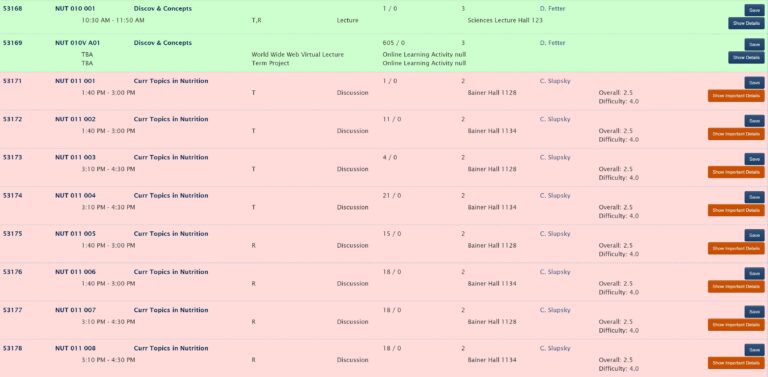
Although the importance of Schedule Builder in planning out classes has become a fact evident to all UC Davis students, some may not know of Google Chrome’s extension which allows students to view which of their classes conflict through a color-coded system. Rather than switch back and forth between list view and calendar view, this extension allows students to see right off the bat which classes they can fit into their schedule. And, if a teacher is on RateMyProfessor, clicking on their name will send you straight to their RateMyProfessor page.

Pages on Facebook

Rather than buying textbooks or iClickers for full price on online websites or from the UC Davis bookstore, students have the opportunity to purchase the same products for a much lower price or haggle for a more reasonable one through the Textbook Exchange page. Students can also request certain materials they need through these exchange pages and other students can offer to sell their old supplies. 

Other useful pages on Facebook include UC Davis Ride Sharing, Free & For Sale and UC Davis Off-Campus Housing. Be sure to look for and request access to your UC Davis freshmen class page as well!

Wildfire 

For up-to-date information on recent crimes, advice on what courses to take or campus gossip, Wildfire is commonly used as the go-to app for campus information. In addition to being a news source, Wildfire may also be used as a social media app to talk about local parties, campus crushes or just late night thoughts.

UniTransNow

Although the campus buses offer pamphlets explaining routes and route schedules for each bus line, UniTransNow serves as an easy app that explains where the buses are located in real-time and which bus stops are nearby. 

TapRide

When students feel unsafe walking back home after a late night of studying — or when it’s pouring rain outside — they are able to call a Safe Ride through the TapRide app and a vehicle will come to their location to pick them up and drop them off. Safe Ride is a service offered through the university.

Written by: Michelle Wong — science@theaggie.org


The best late-night eateries in town

Students share favorite places to grab food late at night

With everything the college lifestyle may hurl at students, sometimes a midnight snack is necessary. Whether at the Dining Commons or through a delivery service, there are many ways to satisfy late-night food cravings in Davis. 

This year’s best late night snack, according to The California Aggie’s Best of Davis survey, was In-N-Out. The fast food joint is a favorite of many, due to the affordability and consistency it provides. 

For students who live or have lived in the dorms, the words “late night” may bring to mind the DC’s offerings of chicken wings, rice bowls and warm cookies. In past years, the Segundo, Cuarto and Tercero DC’s have provided “late night” from 8:30 p.m. until midnight. To the dismay of some students, however, only the Segundo DC will serve late night in the 2019-20 school year. This makes it all the more necessary for students to be aware of their after-dark dining options. 

“I think it’s pretty unfortunate that late night is closing everywhere except Segundo next year because I really like late night and it’s pretty convenient,” said Tanya Saxena, a first-year biological sciences major. “I go pretty often, especially when I have classes that end later such as night lab. It’s very relaxing to go to late night after night lab, even if it’s just for a bowl of cereal.”

Saxena added that late night usually offers comfort food, which she claims are best enjoyed in the later hours after a long day. When she wants a different late-night food choice, Saxena said she typically uses food delivery apps such as UberEATS or DoorDash. Some of her go-to places are Red 88 Noodle Bar and Woodstock’s. 

Red 88 Noodle Bar is open as late as 2:30 a.m. on Thursdays, Fridays and Saturdays and is open until midnight the rest of the week. They offer their own delivery service as well as delivery through DoorDash and UberEATS. 

First-year history major Erica Payne generally goes to late night in the Segundo DC for late night food cravings or to one of the markets for the sake of convenience. Payne lives in Cuarto, where the DC closes at 8 p.m. and does not offer late night. And, if she is in the mood for “something special,” she goes downtown — two of her favorites are Open Rice Kitchen and Burgers and Brew. 

Open Rice Kitchen is open until midnight, save for Thursday, Friday and Saturday when it doesn’t close until 2 a.m. Similarly, Burgers and Brew serves customers until 3 a.m. on the weekends. 

“I’m probably going to have to be more prepared about what I buy at stores [next year],” Payne said. “I think there are definitely a lot of options if you want a late night snack. There are a lot of places that are open at night.” 

Third-year neurobiology, physiology and behavior major Sereen Banna goes to Old Teahouse, which is open until midnight everyday, or In-N-Out, which is open until either 1 a.m. or 1:30 a.m., for late night snacks while she’s studying. Banna also occasionally find herself in need of a caffeine boost for late-night studying sessions and loves that Dutch Bros is open 24/7. 

“I would recommend exploring Davis before you settle into a pattern or routine,” Banna said. “Unless you explore Davis, you won’t know where to go for food — you’re going to stick to the basics, which is what we did in our house for a while. Everyone in Davis has their specific taste buds, and they all like something different, but there are some hidden gems here that Yelp can show you.”

Written by: Anjini Venugopal — features@theaggie.org 

Yolo County Sand Fire signals blazing start to summer wildfire season

Sand Fire contained before significant destruction or danger, but some officials warn the upcoming fire season could rival the last

Right before the start of finals week at UC Davis, a wildfire nicknamed the Sand Fire erupted in Yolo County. The fire burned through 2,512 acres, prompting evacuations and power shut-offs before it was fully extinguished on June 15.

If they weren’t watching the news, UC Davis students might have missed the huge wildfire entirely. The Sand Fire started in the far northwestern corner of rural Yolo County, near the town of Guinda, roughly an hour’s drive from campus. Air quality in Davis remained more or less normal throughout the week that the wildfire occurred — unlike last year’s Camp Fire, where smoke created hazardous air quality conditions that led to public health warnings and a two-week campus shutdown. 

According to CBS13, PG&E shut-off power the morning of the Sand Fire to certain areas in Yolo County to reduce further fire risk, affecting about 1,700 customers in southwest Winters and near Lake Berryessa. 

Higher winds and hot, dry weather conditions created a fast-spreading fire on the steep slopes of the Capay Valley that initially proved difficult to contain.

Once the wind died down, Bruce Lang, a fire prevention specialist at Cal FIRE, noted that fire personnel were able to “get a handle on things.” By 8 p.m. the next day, the fire was reported at 20% containment.

Though the air around Davis remained relatively clear, social media posts from the Bay Area showed that smoke from the Sand Fire had blown as far south as San Francisco. 

The fire was fully contained a week later on June 15 at 8 a.m. There were no reports of damage to residential structures and no serious injury as a result of the Sand Fire. 

Had the Sand Fire erupted later in the season, Lang said, it’s possible the wildfire could have spread farther and caused more destruction. According to Lang, conditions are more “favorable” early in the summer — meaning that the grass and other brush that typically fuel wildfires had not dried out yet from the summer heat. 

“The fuel moisture was favorable,” Lang said. “The fuel moisture dries out as summer goes on.”

Lang said that they must wait to predict the types of fires California may face this summer. Weather conditions will play a large role in determining how large wildfires grow and the difficulty level with which they are extinguished. According to Lang, Cal FIRE will adjust its fire prevention and containment strategies dynamically, based on changes in wind, temperature and humidity this season.  

“It all hinges on the weather,” Lang said. “We base all our decisions and everything we do on [the] weather because that’s the main influencing factor with fires.”

But government officials worry that conditions are ripe for a wildfire season that could rival last year’s — which was noted as the most deadly and destructive in California’s history. In a Senate hearing on June 15, Shawna Legarza, the director of fire aviation and management for the US Forest Service, spoke on some of the factors that could increase the risk of wildfires on the West Coast. 

“We know that our predictive services are showing that it’s going to start to increase — that we could have a very significant fire year again,” Legarza said. “This year in California and the Pacific Northwest, all those grasses are going to be drying out from the heavy rains and snowpack — with that will come large fires. So we must continue to be prepared.”

In the same hearing, Jeff Rupert, the director of the Department of the Interior’s Office of Wildland Fire, detailed the destruction of last year’s Camp Fire and warned that similar challenges may be faced this upcoming fire season.  

“It’s hard to imagine a repeat of this experience, but this is the potential reality that we face again this year,” Rupert said. 

Written by: Tim Lalonde — city@theaggie.org


2018-19 UC Davis Sports Recap

After a fruitful 2018, Aggie Athletics just beginning to scratch the surface

Nestled in a small town a stone’s throw away from Sacramento, UC Davis is known more widely for being one of the best public universities in the country than it is for catapulting its student athletes to the professional ranks. We are known more for having the best veterinary school in the nation than we are for capturing conference championships or earning March Madness bids. At UC Davis, we’re known for having the best agricultural program in the country, but brandishing Aggies on our chests now tells a different story — a story deeper than our affinity for bicycles and “picnics.”

2018 marked the 118th year UC Davis has competed in intercollegiate sports, and what a year it has been. In November, the university announced plans in conjunction with UC Davis Health to build a brand new student-athlete performance center. The 38,000 square foot facility is expected to fetch a price tag of more than $40 million. The new center will provide better services for current Aggie athletes as well as serve as a beacon for potential recruits as Davis continues its Division 1 transition.

The center represents a growing commitment by UC Davis’ Director of Athletics Kevin Blue to take the Aggies to the next level. Blue saw that commitment pay throughout the last school year, during which time UC Davis enjoyed one of its most successful athletic years.

Here are some of the year’s most compelling storylines:

Football

After taking the reins of the football program in 2016, Head Coach Dan Hawkins has been on a mission to turn the program around. In 2018, the Aggies finished with a 10-3 record and captured their first Big Sky Championship in school history. 

Junior quarterback Jake Maier threw for 34 touchdowns on his way to winning Big Sky Offensive Player of the Year. The handy recipient of 9 of those touchdowns was 2019 graduate Keelan Doss, who also made First-Team All-Conference. Doss was snubbed in the NFL Draft, but signed with the Oakland Raiders not long after, and is currently fighting for a position on their roster. 

Women’s Basketball 

If you’re still not on the women’s basketball train, I promise you it’s not too late to hop on. The women’s hoopers finished the season 25-7 – 12-1 when playing in front of the Aggie Pack and were catapulted to a Big West conference title for the second time in program history. Behind strong senior leadership, the Aggies earned a berth in the NCAA tournament for the first time since 2011. 

Of their experienced core, UC Davis will particularly miss the splash-sister backcourt of Karley Eaton and Kourtney Eaton, as well as 6-foot-4 jack-of-all-trades Morgan Bertsch. Bertsch will be carrying her Aggie pride with her well beyond the hardwood of The Pavilion. In April, she became the first player in UC Davis history to be drafted to the WNBA — one of only 36 women chosen to compete on basketball’s highest stage. Though Bertsch was waived by the Dallas Wings in May, she plans to play overseas until she can give the WNBA another crack.

Softball

Despite ending the year 39-14, the softball team missed out on its ultimate goal of winning the Big West Conference. Backed by the steady bats of junior outfielder Alyse Rojas and senior outfielder Marisa Given, however, their nucleus is poised to achieve their goal this upcoming season.

The Aggies will continue to lean heavily on pitching phenom Brooke Yanez in 2020. Last year, the junior finished league-best in strikeouts (273), ERA (1.03) and wins (25), making her the first Aggie to both be named on the All-American Second-Team and earn Big West Pitcher of the Year.

Water Polo

The women’s water polo team missed out on a conference title, but showed promise behind now-sophomore standout Noelle Wijnbelt. After scrawling her name into the UC Davis record books with a 20-game scoring streak and 54 total goals, the Big West Freshman of the Year was named to the All-American Third-Team.

Men’s water polo dominated the regular season, finishing 18-8 and tied for first in the WWPA. The Aggies ultimately fell just short of the conference championship, losing a heartbreaker to UC San Diego in the title match. 

Notable Aggies

Solie Laughlin

Swimmer Solie Laughlin wrapped up a decorated Davis career in 2019, officially becoming the most successful swimmer in school history. Laughlin, a psychology major, was selected to First-Team All-MPSF in 200m backstroke, 200m and 400m IM, and Second-Team in 200m and 400m Medley Relay. Her dominance in the pool earned her a spot at the 2020 Olympic Trials, which is set to take place next June.

Tanner Murray

After being named Big West Freshman Field Player of the year in 2018, sophomore shortstop Tanner Murray continued to be a bright spot for the Aggies in 2019. Murray led the baseball team in 10 categories, including batting average (.364), runs (37), hits (71), doubles (16), triples (4) and slugging percentage (.503) on his way to his second consecutive All-Conference Second-Team selection.

Christine Danielsson

Senior golfer Christine Danielsson completed a stellar season in 2019. The Paris-born standout qualified for the NCAA regionals, and was named Big West Women’s Golf Player of the Year, becoming the second Aggie in many years to capture the award.

New Sports

UC Davis has continued its commitment toward the advancement of women’s athletics with the the official introduction of Beach Volleyball and Equestrian teams. 

Led by head coach and former professional Ali McCulloch, beach volleyball got off to a quick start in March before ultimately finishing 8-10. But the new program showed promise, and McCulloch intends to continue recruiting and building the budding program.

The addition of the equestrian program was also a unique landmark for the university. The team is “partnering with the School of Veterinary Medicine and the College of Agricultural and Environmental Sciences — both regarded as world-leaders in teaching and research in their respective fields,” according to the UC Davis School of Veterinary Medicine.

In an interview with the Davis Enterprise, UC Davis Chancellor Gary May recognized and supported the commitment to UC Davis Athletics. 

“We have a real commitment to, first, the academic mission of the university among the student-athlete population,” May said. “[We also] have a competitive spirit in wanting to be better at representing the university.”

Aggie Athletics showed great promise in 2018, but with increasing support from a variety of sources, we are only just scratching the surface.

Written by: Carson Parodi – sports@theaggie.org

Save the date: artsy events to have on your calendar this academic year

September 

RuPaul’s Drag Race: Werq the World Tour 

When it comes to Davis, students might have to travel a little ways to go to bigger events. Luckily, Sacramento is only a 20-minute Uber ride away. On Sept. 20, RuPaul’s Drag Race arrives in Sacramento at the Memorial Auditorium. 

Glow Run 

On Sept. 23, head over to the Hutchinson Field at 9 p.m. for a small run or if you’re feeling a little lousy, just head on over for a walk. This nighttime walk is free and glow sticks are provided.

Sunset Fest

On the first Friday of Fall Quarter, ASUCD puts on Sunset Fest, a free concert that livens up Davis. The concert starts around 6 p.m. and the music is sure to be heard from your dorms, but the closer you get to the Quad, the better. This event gives students a chance to win free merchandise and get to know a little more about what ASUCD has to offer. 

October

International Festival Davis

On Oct. 6, Davis hosts the International Festival. The festival is held at Central Park, which is just a short walk from anywhere on campus. If you have some time to sit back and browse around, the festival will have arts and crafts vendors, entertainment stages and culture booths. 

Jonas Brothers Concert

On Oct. 15, see the Jonas Brothers live in concert at the Golden 1 Center. If you’ve ever felt like your 10-year-old self missed out on what could have been something amazing, then this is your chance to see the brothers live. Before they split up, again. 

November 

Turkey Trot 

Before you scrounge for all the food you can get during Thanksgiving, head over for some light running (or leisurely walking) during the Turkey Trot. This event takes place Thanksgiving weekend.

December

Holiday Tree Lighting

On the first Friday in December, the traditional lighting of the Christmas Tree will take place in E Street Plaza. The tree lighting kicks off the Christmas season and is sure to put everyone in the holiday spirit. 

January

Broadway On Tour

When you’re tired of all the movie screens and cliche film plots, head over to the Memorial Auditorium in Sacramento to see “Dear Evan Hansen.” The show will run January 15 through January 26. So if you’re feeling up for an adventure, grab a ticket for any of those days. 

April

Powwow

The 48th-Annual Powwow will take place on Saturday, April 19 following the 4th-Annual Indigenous Arts Market on Friday, April 18. Head to the UC Davis Quad to learn a little more about Native American culture and support small businesses by buying different food or unique jewelry. 

Picnic Day

Save the date for April 18 because that’s when Picnic Day is here! Picnic Day is Davis’  biggest event, and is also the largest student-run event in the nation, and people from all over come to visit Davis for this one day extravaganza. The jam-packed event can be explored with an itinerary or it can be one of those days where you go with the flow. Either way, this family-friendly event is free for everyone invited and gives everyone the opportunity to let loose. 

May

Danzantes del Alma Annual Show 

Every year, the ballet folklorico group on campus, Danzantes del Alma, puts on their annual show performing different regions at the ARC. The regions range from Chihuahua to Baja, Calif. and this last year they had their dancers blindfolded as they danced with machetes. What a way to set the bar for this upcoming year. 

Whole Earth Festival

UC Davis will host their annual Whole Earth Festival in May. The festival will include a wide variety of entertainment and vegetarian only food. This sustainable event gives students the opportunity to buy homemade crafts, delicacies or get a henna tattoo. 

Written by: Itzelth Gamboa — arts@theaggie.org