55.5 F
Davis

Davis, California

Tuesday, December 23, 2025
Home Blog Page 409

Culture Corner: the Arts Desk’s Davis-themed arts picks

Recommendations for your next favorite TV show, movie, book or band

TV: “The Simple Life”

This gem of a throwback from the early 2000s follows then-best friends Paris Hilton and Nicole Richie as they trade in their charmed lives to live on a farm for five weeks. Your new college life at UC Davis might possibly replicate such an experience — more or less. I promise in the heat you will smell the cows no matter where you are on campus. Pollen will get in your eyes when you are biking. You will experience the grime of houseboats. But who doesn’t love to get a little down and dirty? 

Movie: “Lady Bird”

For those who cannot recall, the movie occurs during the anxiety-ridden time when main character and Sacramento native Lady Bird is applying for colleges. When she is accepted to UC Davis she declares, and I quote: “I’m not going to a f****** university that’s famous for its f****** agricultural school!” When watching the movie, one of my best friends and a gung-ho UC Davis student, hilariously walked out of the theater when that line was said. You will soon come to discover the strength of each department on campus and realize that we are more than just an agriculture school. Maybe this movie will be a source of solace during this scary transition. 

Book: “Animal Farm” by George Orwell

It’s always good to refresh yourself on the classic books that established the foundations of your literary interest. I chose “Animal Farm” not only as an ode to the plethora of cows, goats, sheep and other animals available for your petting pleasure, but because of the depth of knowledge you will discover. My biggest advice: take at least one sociology class while you are here. Not only will it give context to the book, but you will gain a deeper understanding of the institutions that hold power over us. Vive la révolution! 

Music: Creedence Clearwater Revival 

A possibly little-known-fact: this famous 1970s folk rock band is from the Bay Area and their song “Green River” is actually about Putah Creek — the well-loved Spring Quarter swim spot at the edge of campus. You will be spending most of your sunny days swinging from the rope spring and tanning in the dirt with your closest friends. What better way to set the rustic mood than with some good ol’ rock ‘n’ roll. 

Written By: Caroline Rutten — arts@theaggie.org

Students recommend: top class picks from freshmen year

Current first-years recommend SAS 13, HDE 12, PSC 1

One of the largest differences between high school and college that incoming freshmen often note is the newfound freedom to choose classes. The classic ‘one schedule fits all’ model, complete with an English, science, math and history class, is much less common in a university setting. 

Similarly, because many first-years have yet to fully decide on their major, they may opt for a more diverse schedule to help them find their passion. 

Students are able to pick from a wide array of options. There are over 100 different subjects to choose from on Schedule Builder — ranging from Anthropology to Wildlife, Fish, and Conservation Biology. While this assortment may seem daunting at first, there a few standard classes that most first-years seem to favor. 

Science and Society 13: Disease and Society, more commonly known as SAS 13, has gotten enthusiastic reviews from many students. The course has a five star rating on Rate My Professors, with a level of difficulty of 1.7 out of five. 

Arianne Bloore, a first-year animal science major, explained that the class was perfect to take as a freshman because the professor gave straightforward lectures and quizzes and was able to connect class concepts to the real world.

“Not only was the professor amazing, but he was really good at connecting what he was teaching to the world around us — like how philosophy influences society which influences how we treat disease as a human race,” Bloore said. 

Another popular course that many students register for is Human Development 12: Human Sexuality, or HDE 12. The class covers topics including development of sexuality, intimacy and reproductive health. 

Madelin Smith, a first-year biological sciences major, felt that HDE 12 benefitted her in a number of ways. Not only was the class manageable — being three units and meeting only two days a week — but it also taught her valuable information that her high school never addressed. 

“I think it’s really important for any person to learn about sexual health, and all of the things that come along with sexuality,” Smith said. “A lot of times, [sexuality is] seen as taboo and not talked about, when it really is important and should be discussed, especially on a college campus.” 

Smith also suggested that if freshmen are unsure of their major, they should take a few standard prerequisites to figure out what they may be passionate about — such as general chemistry, principles of economics or introduction to communication. 

Psychology is another field that many students choose to study. Psychology 1: General Psychology, or PSC 1, is one of the larger lower-division courses at Davis, enrolling around 500 students per quarter. 

First-year Virginia Beall confidently declared her psychology major after taking both PSC 1 and PSC 41. She explained that PSC 1 piqued her interest in the field, and after taking PSC 41 — the next prerequisite for the major — she was able to develop specific career goals. 

“Psychology 41 benefitted me as a freshman because it taught me a significant amount of statistics and research methodologies,” Beall said. “The psychology courses I took in college helped me realize how passionate I am about this major. These classes really truly helped me in deciding my future career of clinical psychology.” 

These are only a few of the classes that were named as top freshman class choices. The California Aggie has ranked NUT 10 as the “Best GE Course” several years in a row. Similarly, other individuals named VEN 3, ANT 2, PLS 21, HIS 80 and BIS 10 to be their first-year favorites. 

Written by: Claire Dodd — features@theaggie.org

Humor: Murder on the Orientation Express

“May Otto the Arboretum Otter rest his soul”

You know, there is something about a tangle of strangers pressed together for days with nothing in common but the need to go from one building to another, and maybe see each other again when the school year starts.

I see evil on this campus. A student has died. You assume they were killed? Indeed, he was murdered. If there was a murder, then there was a murderer. The murderer is with us, and everyone at orientation is a suspect. 

Was it Cal Fogetta Boutit, the boy man who never learned how to use a public restroom? We all saw him walk into the shower and ignore the warnings about bodily fluids wrecking the bathroom piping as he “fell asleep in the shower.” That stall was an abstract oil painting by the end of 60 minutes — as was the crime scene. Perhaps there is some correlation. Or perhaps, things are just getting messier.

What about Misty Bloomingdale, heir to the Bloomingdale family? She claims innocence now, making friends with everyone, sweet as can be. At the end of September, you’ll wave to her from across the room at a party, and she’ll pretend to not see you. She’s with real friends now.

Or how about miss goody good, Tracy Valentine? She’s from a strict Christian family, raised devout, all cashmere stockings, skirts and headbands. Still reserved and curious — so curious, you’ll see her snorting coke off someone’s body at a kickback Winter Quarter. Just a wild child waiting to break out, or wild enough to kill?

And then there’s Jackson “Alaskan” Pollack. You’ll be roommates and talk endlessly at orientation, make up a handshake, possibly make out under the climbing wall at “How Do You REC?” You’ll never see him again. Maybe he transferred, maybe your schedules never lined up or maybe he avoided you because you had a cold sore and you know he contracted herpes from you, god why are you such an idiot Gregory? Or maybe, just maybe, he’s on the run.

Why not John Bon Ron Shawn? At orientation, you’ll avoid each other — whether by choice or chance. You’ll run with different crews, lounge in different lounges, go to different talks. Then, in your SOC 001 class, you’ll sit next to each other, spending the rest of that quarter scraping by for that C-, bonding over Dutch Bros and Late Night Cookies. You’ll be best friends — and then he strikes. Well, possibly. If he is the murderer, then definitely.

There are so many other suspects. The Douche from LA who already “started his own tech company.” The Party Girl who finds God with Davis Christian Fellowship. The Weird Guy who eats milk sandwiches at the DC. Who among them could have committed such a crime?

Who am I, you might ask? What are my credentials for this subject?

My name is Conner Shaw, and I am probably the greatest orientation leader at UC Davis. Welcome to the UCD Orientation Express. 

Written by: Conner Shaw — cjshaw@ucdavis.edu

Disclaimer: The views and opinions expressed by individual columnists belong to the columnists alone and do not necessarily indicate the views and opinions held by The California Aggie.

Cartoon: Welcome

ROSEY MOREARTY / AGGIE

Written by: ROSEY MOREARTY — rosey@morearty.org 

Humor: Tercero cow wears disguise to avoid families during orientation season

Heifer caught going in-cow-neato

What was supposed to be a fun introduction to life at UC Davis for incoming freshman James Daly ended in butt-hurt. Daly, recently admitted for biochemistry, was attending orientation and hoped to get a cliche photo with a Tercero cow after registering for classes. Spoiler alert: he did not.

“I’m just so upset,” said Daly’s mother, Kate Weiner-Daly. “I took Jimmy to campus so he could get registered for classes and to take a picture of my little man with those cows by the dorms. My precious was already sad because he couldn’t get the best Chem 2A professor, Dr. Startlate, and also had to sign up for a 7 to 10 p.m. lab. Isn’t that right, precious?”

Daly shrugged.

“As you can see, he’s very upset,” Weiner-Daly continued. “So yeah, I thought he would cheer up once he got a picture with the cows. AND LO AND BEHOLD, not a single cow was in the pen by the dorms. Un-freaking-believable. I’m giving this orientation a one-star review on Yelp, and the school will be hearing from my lawyer.”

The Daly family was not the only ones to notice a lack of lactate-rs that weekend. Numerous parent-child duos called the UC Davis police department to report the absent cows. Officers sent to investigate the case of missing moos suspected it to be the work of the notorious Davis Beef Thief.

In the midst of conducting the interview with the Dalys, Campus News reporter Vicky Cattleman noticed a strange figure in a grey hoodie, sunglasses and ball cap slinking around the corner of Mahogany Hall. Cattleman approached what she thought was a fellow human being when she realized that this “person” was actually one of the missing cows in disguise.

“Ugh, can you paparazzi just leave me alone?” said Cow 2789. “It’s bad enough with all the parents and their little brats trying to get a photo with me ‘cause it’s orientation season. My milkshake brings all the boys to the yard, but I don’t WANT them in my yard.”

“I see, Miss 2789,” Cattleman said. “I’ll let you go enjoy your weekend.”

“Thanks, you a real one,” 2789 said, finger-gunning and walking into the sunset.

Written by: Madeline Kumagai — mskumagai@ucdavis.edu

(This article is humor and/or satire, and its content is purely fictional. The story and the names of “sources” are fictionalized.)

Conquering the search for housing

Advice for students seeking to live off-campus

Looking for housing may be a daunting task for incoming transfer students as well as new second-year students who are leaving their Segundo, Tercero or Cuarto spaces. While hunting for a new place to live is a sign of becoming a full-fledged adult, the excitement may wane with all the decisions students must make in order to secure housing. 

Rebecca C. Spin, a second-year design major at UC Davis, stressed the importance of securing housing at an early date before dense competition ensues, pressuring new students to find a place to live. 

“Definitely do it earlier rather than later — don’t leave it until the last minute,” Spin said. “I know some people have been absolutely left in the cold with that. Choose options that are financially good for you. Realize whether or not you’re going to be in control of the internet, water and power because we did not consider any of those [and] now, we are responsible for those things.”

Shari Houston, the director of site management and resident relations at Tandem Properties, also indicated that starting early is crucial. 

“It can be challenging for first-time renters to find the right balance between rushing to sign too soon and waiting too long to start their housing search,” Houston said via email. “It’s important to do your research and connect with your top-choice communities early.”

Lorna Hyatt, the community manager for University Court, mentioned that most students start planning their housing in December, a year before their intended move-in date. 

“They probably need to plan on looking starting in December,” Hyatt said. “Most popular properties in Davis would start pre-leasing in December the year before. University Court has no vacancy for a number [of] weeks now. I know that’s the case for a lot of the popular properties, and space can be found at some of the older properties that are further from campus. If you want to live within reasonable biking or walking distance in well-maintained properties that have good management, maintenance and reputation — those fill up quickly.”

Spin also indicated, however, that there are more options outside of apartments for students to live in. For instance, she chose to live in a house. 

“In our case, it was because we were living with five people, so [a house] was the most financially reasonable option for the amount of space we needed,” Spin said. “As it stands, it was an affordable and spacious option — really a nice option overall.”

Spin further noted that students are not alone in their journeys to find housing. 

“Research, ask parents, ask other college students who have done this already,” Spin said. Also, seek out people who are in control of your apartment or complex. In our case, we actually have a front office that deals with all of our main issues. Just talk to them because they will care for most of the problems—you just have to be able to know who can help you.”

Hyatt emphasized the importance of researching outside of internet sources to get a better feel for housing complexes other than what is claimed online. 

“I’ve encountered students who come to Davis and they have not seen it before,” Hyatt said. “They are disappointed by what they are moving into if it doesn’t look like what it looks like online. If you are shopping online, you should try to connect with groups on campus about properties and what they truly are like versus what they look like online.”

Students can access housing resources on the Tandem Properties website, which offers information about the individual lease program option for students who are facing last-minute decisions with housing. 

“For last minute housing, it might help to consider communities that offer an individual lease program option,” Houston said via email. “With these programs, you can still obtain the benefit of sharing the cost of living expenses with a larger household, but being on a separate lease ensures each leaseholder is responsible only for their own portion of rent—this is especially beneficial if you are joining a household with roommates you don’t know.”

Spin mentioned that if she had to go back and change her housing experiences, she would consider more about education and research. 

“Mostly, I would want to know more about how to take care of the finances because that’s been a very long-lasting journey,” Spin said. “It throws you into caring for yourself really quick, and that was a little too fast for me. Also, … the main thing I would have wanted to know more about [is] how to deal with pest control, drain clogging, water damage and all that stuff that I have to deal with now since I had no prior education. If I had known more about that before any of this, I would have been much more prepared.”

Hyatt indicated that each student has a different background and context when looking for housing, and research remains key because of that.  

“It probably depends on where they are coming from,” Hyatt said. “If they are not transferring out of the dorm — and they haven’t lived here in Davis — then I think a lot of the common mistakes are not knowing more about the property that they find the lease at since they have not traveled to Davis. They do not know the area or the neighborhood. Shopping online has its pitfalls since apartments will feature their best photos and perhaps only show a model.”

Written by: Stella Tran — city@theaggie.org

Meet the Davis City Council members

Mayor, city council members welcome incoming UC Davis students 

When first arriving in Davis, students may find it helpful to know about their local city government. The Davis City Council consists of the mayor, mayor pro tempore and three other city council members. The job of the council is to oversee the operational aspects of running the city of Davis, thereby giving support to the community. 

Brett Lee: Mayor of Davis 

UC Davis alumnus Brett Lee is the current mayor of the City of Davis. Lee has been a part of the city council since 2012 and his term in office ends in 2020.

Lee welcomed new students with enthusiasm, noting the multiple ways they can get civically engaged within the city. 

“I would start with the Farmer[s] Market at Central Park,” Lee said. “There are also many clubs and organizations on campus in which students can become involved.”

Gloria Partida: Mayor Pro Tem 

Gloria Partida, also a UC Davis alumna, was elected to the city council in 2018. She has been involved with the Davis community for many years — in addition to being a part of city council, Partida sets time aside for community service.  

“I have been volunteering for a long time and run a nonprofit in town,” Partida said. “I saw this as the next logical step to be able to set policies. The city council needs different perspectives, and I found that my perspective as a Latina was lacking.” 

Partida welcomed incoming students, emphasizing Davis’ friendly atmosphere. 

“I would tell them to jump in,” Partida said.  “There are many ways to get involved in this community. Davis is generally a friendly city, and it is easy to find something to be interested in.” 

Partida described the civil engagement of the City of Davis’ citizens.

“I love the engagement of the city’s citizens,” Partida said. “You can come to a city council meeting any day of the week, and it will be crowded with citizens who advocate for what they’re passionate about.”

Dan Carson: City Councilman 

City Councilman Dan Carson is an alumnus of UC Davis as well as a former reporter for the San Diego Union-Tribune newspaper. Before being elected to the Davis City Council, Carson was the chair of the city’s Finance and Budget Commission.  

“I love Davis” Carson said. “I have raised three boys here with my wife, and it is a great place to raise a family. Davis also has an amazing park system and recreation department.”

The members of the city council are required to attend regular meetings where they discuss concerns of the community, with the goal of making the city a better place to live. Contact information for members on the council as well as access to the agendas for future meetings can be found on the City of Davis’ website. The members are also available to speak with at community events throughout the year. 

Written by: Taylor Martinez— city@theaggie.org 

Annual campus events to look forward to

Keep an eye out for these on-campus activities

Fall Quarter

  • Move-in Weekend
  • Welcome Week
  • Week 1: Community Resource and Retention Centers
  • October 6: Involvement Fair on Quad (Student Org stuff — CSI)
  • Pajamarino
  • Homecoming
  • Sunset Fest
  • Involvement Fair
  • ASUCD Fall Elections — six Senate positions open up
  • Fall Career Fair

Winter Quarter

  • Mental Health Conference
  • ASUCD Winter Elections — six Senate positions and executive team positions open up
  • Career Fair

Spring Quarter

  • Lawntopia
  • April: Picnic Day
  • May: Whole Earth Festival
  • Black Family Day
  • Asian American Pacific Islander Night Market
  • Powwow
  • La Gran Tardeada
  • May: LGBT Pride Month
  • Career Fair
  • Commencement ceremonies

Written by: Kenton Goldsby –– campus@theaggie.org 

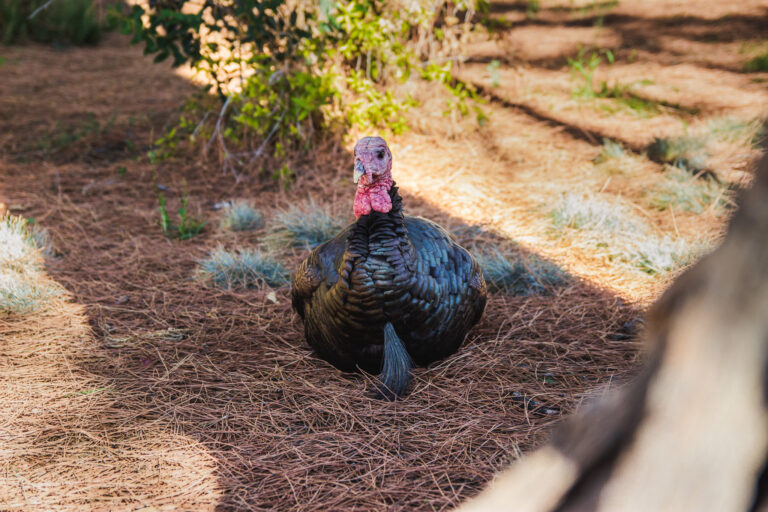
Humor: Davis turkeys mysteriously vanish after Chipotle introduces new protein option

Top-ranked animal scientists suspect fowl play

For years, many an Aggie had to bear witness to the brutality of the Davis turkeys. These birds haunted Cowtown ever since God said, “Let there be turkeys” on the first day of creation. They blocked streets with their slow, fat bodies. They flocked around automobiles with the ferocity of a used car salesman trying to make commission. And they intimidated countless little freshmen into dropping out of college with their aggressive battle cries.

That is, until they vanished.

For this past quarter, the granola people of Davis have enjoyed a very turkey-free spring. Not a single person has had to climb out of their vehicle in an attempt to chase one of those fat bastards off the road. Ornithophobes can walk around town in peace knowing that they will not have to look into the turkeys’ beady little eyes while en route to the farmers market.

The most shocking part of this development is that no one is certain what caused the turkeys’ disappearance.

In other news, the Chipotle in downtown Davis is now serving turkey as a protein option for their entrees. Residents of the 95616 can now fill their burritos or tacos with meat from Meleagris gallapavo.

“The new protein option is really, really good,” said fourth-year Oliver Lucchesi. “Do I get it in a burrito or bowl? Man, the real question is ‘What happened to the turkeys in town?’ I don’t know.” Lucchesi took a bite of his burrito before continuing, “All I know is that this turkey burrito is hella good. I think it’s ‘cause the meat is really fresh.”

Written by: Madeline Kumagai — mskumagai@ucdavis.edu

(This article is humor and/or satire, and its content is purely fictional. The story and the names of “sources” are fictionalized.)

Gunshots fired by DaVinci Apartments

Suspect still on the loose

The Davis Police Department received reports of gunshots by DaVinci Apartments on Thursday, June 12 at 10:30 p.m. City of Davis Police Lieutenant Tom Waltz confirmed that the gunshots occurred on the 1600 block of the apartments.

“Officers responded to check the area,” Waltz said. “They determined that there had actually been gunshots that had occurred.”

The Davis Police Department received calls concerned with the gunshots. It was later revealed that the incident involved a personal issue.

“At that point, we had callers calling in who were victims of a dispute,” Waltz said. “Officers responded and determined that our suspect had confronted an ex-girlfriend.”

The issue centered on how a third person became involved in the dispute, which led the suspect to wield a firearm.

“An associate of the ex-girlfriend had become involved,” Waltz said. “He brandished a firearm at the victim — who is the associate of the ex-girlfriend — and then fled the scene.”

Currently, the Davis Police Department has not caught the suspect.

“We are still investigating,” Waltz said. “It appears that as he fled the area in the vehicle, he fired gunshots.”

While no one was hurt at the scene, the suspect still remains on the loose.

“There are no injuries — no damage,” Waltz said. “He was not caught at that time, [and] we are still investigating. We may have some information later, but it’s still early.”

Written by: Stella Tran — city@theaggie.org

Humor: This Article is Redacted

Providing humorous insight on ██████████

This article is intended to be hilarious. Unfortunately, many of the jokes, jests, jeers, japes, quips, gags, parodies, pranks, puns, ████████████████████████████████████████████████████████████ clever turns of phrase and witty comparisons in this article contain sensitive information pertaining to other absolutely hilarious humor and satire of mine that is currently in development. In order to avoid compromising future jokes or prematurely spoiling their punchlines, much of this article has been redacted. I apologize for the inconvenience.

The ██████████████████████████████████████████████████████████████████ simply because he was bald. ████████████████████████ and providing yet another example of how removing neck tattoos can go horribly wrong.

████████████████████████, but after the incident with the raccoons, he finally caved and bought a new bicycle. ████████████████████████████████████████████████ and they had been following him around the block. If only he hadn’t been doing a handstand at the time. ████████████████████████████████████ a $5000 reward, which seemed excessive for a ████████████ like that.

████████████████████████, which was obviously a very bad sequence of events, especially at a crematorium.

█████████████████, where there was a pudgy old man with food in his beard. He achieved ████████ in spiritual puppet shows, imparting bible lessons from generation to generation, and they ████████████████████, just as Jesus would have wanted. █████████, one of the brains behind █████, wrote a series of essays on derivative humor, but it was just a bunch of random math jokes. No one expected that being only semi-meme-literate would be an advantage in a situation of such █████████████████████████. ███████████████, which was one of several bizarre things discovered by the mysterious Amish “computer hacker.”

Meanwhile, ████████████████████, calling herself an “influencer.” █████████████████████ but in the end, it was the heavy backpack full of spare Hydro Flask parts and accessories that caused her to lose her balance and █████████████, ruining what would have been an Instagram-quality selfie at the top of the cliff. Unfortunately, but to nobody’s surprise, ███████████████████████,“███████████████ and it’s not wrong at all because we’re all good Christians here,” Matt said.

“No, ██████████, so please pass the ketchup!” replied God.

Written by: Benjamin Porter— bbporter@ucdavis.edu

(This article is humor and/or satire, and its content is purely fictional. The story and the names of “sources” are fictionalized.)

Street Food: preserving tradition and culture through culinary delicacies made on the streets

Series brings to forefront issues affecting street vendors throughout world

The Netflix original series “Street Food,” created by the creators of “Chef’s Table,” steps away from the Michelin Guide and hits the streets in search of unknown culinary masters. As a celebration of the roots of Asian cuisine, some destinations include Delhi, Seoul, Singapore, Bangkok and Osaka, exploring the culinary delicacies of everyday people.

Like “Chef’s Table,” this spin-off uses the same, slow-motion shots accompanied by suspenseful classical music, but it differs from the elite, white tablecloth restaurants showcased in the first four seasons of “Chef’s Table.” By taking an Anthony Bourdain-style approach, the series features street cooks who represent their culture’s traditional foods.

These hawkers, none of whom went to culinary school, have been cooking the same dishes for fifty years, have secrets they had to learn the hard way and hold a deep respect for the food.

Each episode follows the story of one main cook and how they came to be masters of their trade without professional training. Most of these individuals are elders with extensive knowledge of the ingredients and traditional techniques passed down through generations. The creators of “Street Food” declare these street cooks as not only chefs, but preservers of culture.

Street food developed because many poor people did not have kitchens in their homes. Instead, they depended on street vendors for their meals. These dishes were first made for the working class, but today, the street food scene has evolved to defy class barriers — attracting everyone from young to old and poor to rich, street food is now for everyone.

The chefs featured in “Street Food” not only show how they make food, but also tell their family’s story and exhibit their culture. Nearly all of these hawkers inherited their stands from their families, using traditional methods and family recipes passed down through generations. Authentic dishes are a product of dedication and attention to detail, with only the best surviving the cut-throat nature of street vending. Simply having the recipes and the name is not enough: the success of these chefs comes from extensive knowledge of their craft, tireless work and perseverance.

For some vendors, it was expected they would inherit the family business as a symbol of family honor. Others, however, wanted their children to move away from the grueling and laborious trade. Most street food businesses don’t provide stability, only allowing these workers to make enough money to get by — it is a labor of love, not profit.

Each episode tells a story of hardship, poverty, devastation from natural disasters and family separation, but what keeps the cooks going is their passion for cooking meals for others and putting a smile on people’s faces. Each of the chefs rose to the top of their respective city’s food scenes by breaking new ground and redefining what street food means in the modern day.

For some, like Mbah Satinem in Yogyakarta, Indonesia, this meant keeping dishes constant in an evolving food scene, becoming the last bearer of jajan pasar — a treat made from palm sugar, sticky rice, cassava and coconut. For others, this meant being part of the evolution by adapting, growing and popularizing their dishes, like Jay Fai in Bangkok, Thailand, who created dishes like dry tom yum and her famous crab omelettes which earned her a Michelin Star.

But for all of these cooks, maintaining the integrity of the traditional recipes means using quality, local ingredients. The camera follows them to their local, outdoor markets where they hand-select seafood, produce and spices. It also means sleeping no more than four hours a night and working nonstop every day for years on end. And these hawkers are faced with a new challenge: government regulations in many of the cities which threatens their livelihood and existence.

Thailand’s military government is waging war on street vendors and forcing them off the sidewalks. The Bangkok Metropolitan Administration (BMA) has moved over 20,000 street vendors from nearly 500 locations since 2016.This affects not only the livelihood of the vendors themselves, many of them women, but also the communities that rely on street food for affordable meals.

The cuisine from street food vendors is not a newly explored frontier, but “Street Food” is the first to address the changing political landscape that is threatening the survival of these economies and communities. The success and recognition of these street vendors like Jay Fai represents hope for the future of street food vendors. If the food is good enough, they bring people in on their own terms. “Street Food” has started a global conversation and brought to the forefront threats against street vendors in the hopes of liberating a counter movement.

Food is a tradition passed from generation to generation. Food is nostalgia. Food brings people together. Food is a representation of culture, and media like “Street Food” is a window into that culture, documenting and preserving heritage. This series left me inspired, salivating and hungry to explore the culinary destinations of Asia, not by a Michelin Guide, but by the streets.

Written By: Grace Simmons — arts@theaggie.org

The morality of murder movies

Do true crime stories villainize or glamorize killers of the past?

Over the past few years, true crime documentaries and films have been on the rise. From the 2016 FX series “The People v. O. J. Simpson: American Crime Story” to the podcast “Serial” to Netflix’s documentary “Conversations with a Killer: The Ted Bundy Tapes,” there seems to be an emerging fascination with monsters of the past. As new media is produced on this topic however, questions about ethical responsibility rise as well — one must consider the morality of giving these narcissistic killers a resurgence of popularity and whether these new platforms spread their hateful stories.

The recent Netflix film “Extremely Wicked, Shockingly Evil and Vile” explores the mind of ’70s serial killer Ted Bundy. Starring Zac Efron as the notorious killer, the film has been praised for its performances and story, although people have also criticized the tone of the film and the romanticisation of Bundy’s character.

An article in the Washington Post articulates the issues with the writing of Bundy’s character.

“‘Extremely Wicked’ doesn’t glorify Bundy, exactly, but it makes little effort to do the opposite,” writes Sonia Rao. “By primarily focusing on Bundy’s charade instead of his psyche […] [director] Berlinger fails to properly reckon with the brutal crimes Bundy committed.”

Vanity Fair journalist Richard Lawson argues that the film does not justify the retelling and further publication of Bundy’s story.

“At its worse, the movie feels almost sympathetic to Bundy,” Lawson writes. “Its title is taken from a statement read by Judge Edward Cowart (John Malkovich) as he sentenced Bundy to death, a weary speech that also included a sort of rueful wish that Bundy could have employed his smarts and resourcefulness toward something good and productive, as if that’s the real loss, the real shame, here.”

Although Bundy’s name is as infamous as ever, what about the 30 women he murdered? Do viewers of these films and consumers of true crime media know the names of these women?

“As a culture, we’re having more and more conversations about what stories we should tell and how we should tell them,” wrote Huffington Post columnist Maija Kappler. “There are so many kinds of people and experiences we still haven’t seen reflected in our media. If we’re going to re-tell a story that’s so familiar — a powerful man victimizing women — […] there should be a good reason. And frankly, this movie doesn’t seem to have one.”

Meanwhile, an article in Vulture delves into the current fascination with old killers. Writer Tori Telfer concludes modern feats of mass terror and destruction desensitized people to the threat of individual murderers. “We’re scared of other, less knowable monsters these days.” Telfer wrote. She cites documentarian Celene Beth Calderon and Elizabeth Munroe in her article as well.

“‘Our focus has changed, as far as what we’re fearful of,’ says Calderon. She adds that every time she goes to the movies, she looks around, wondering if anyone will open fire. Munro says that she’s less afraid of finding a Bundy-esque stranger in her house than she is of seeing an active shooter at the mall, or at work,” Telfer writes.

The world is in a constant state of unease, making documentaries of old school serial killers more fascinating than frightening for the average viewer. Consumption of these stories is easy and, therefore, rapid. Both producers and consumers of this type media, however, should first contemplate the moral implications.

Written by: Alyssa Ilsley — arts@theaggie.org

Seniors share post-grad plans

Graduating seniors discuss their various plans for post graduation

The end of the quarter usually means the start of summer for most students. For graduating seniors, however, the end of Spring Quarter marks the beginning of a new chapter in their lives.

Most seniors’ plans for the future vary case-by-case, from applying to jobs, to taking a gap year to starting work immediately after graduation.

Katelin Hermone, a fourth-year design major, explained that many students applying for jobs in the design field may require extra time to focus on polishing their portfolio.

“At the moment, I’m looking for jobs in entry-level design positions, mostly in the Bay Area,” Hermone said. “If I don’t find a job right away, I really just want to focus on perfecting my portfolio and doing some work on the side, like freelancing. I want my portfolio to be something that I’m really proud of, so I do need to set aside time to get it to be perfect. That way when I do send it out when applying to jobs, I can feel confident in doing so.”

She also touched on her plans for the future —within the next five years, she hopes to attend a graduate school in London and complete a design and photography program there. Hermone said that this will hopefully help her get more jobs post-graduate school.

Stacey Kling, a fourth-year sociology major, detailed her immediate post-grad plans, saying she plans to skirt from the traditional route of full-time work.

“For post-graduation, I’m definitely going take at least one or two gap years before going back to school for higher education,” Kling said. “I’m interested in a teaching program that offers a masters in teaching or education with a teaching credential. Eventually, I believe that I want to become a teacher, probably for a middle school English class. In my gap year, I have to take certain tests — CBEST and CSET — just to apply for the program that I want to get into.”

In addition to spending her gap year applying and studying to prepare for graduate school, Kling hopes to find some type of part-time work. She wants to find a position that’s related to her career aspirations that will help her gain exposure into the field, to take advantage of her skill set.

Kling also noted the importance of taking time for herself in her decision to take a gap year before returning back to an education program.

“When you start working, your amount of free time becomes so limited and I feel like I need that time to be able to do whatever and decompress to do things that I want,” Kling said. “I don’t want to go back to school already burnt out, because then I’d just become even more burnt out and be miserable.”

Another student who has plans for a gap year is Rhegille Baltazar, a fourth-year anthropology and Asian American studies double major. She plans to focus on gaining more experience in the field she hopes to enter one day.

“This year, I plan on getting experience working with youth a little bit more, since I eventually want to become an ethnic studies educator,” Baltazar said. “Right now, I am applying to be part of an internship program which primarily teaches ethnic studies, mainly teaching Filipino studies to elementary, middle and high school students as an after school program in the San Francisco area.”

Baltazar, who also plans on attending graduate school one day, reiterated other students’ concerns over diving directly into higher education upon finishing their undergraduate careers.

“I knew that I couldn’t just go straight into more school,” Baltazar said. “It’s hard. I’m definitely taking this time for myself for at least a year, maybe two. Either way, I know that once I do enter the workforce, I’m in it for life, and I need to take some time to focus on myself first.”

Written by: Alyssa Hada — features@theaggie.org

Police Logs

Elder vs. playground

May 23

“Unknown ringing doorbell for last fifteen minutes. Three females on porch. Vehicle in driveway.”

May 24

“Playground equipment is being re-installed by parks department, elderly harassing employees, verbally protesting the repair.”

May 25

“Reporting party concerned, because she located children’s items in the trash and feels a child may be in danger. She placed the items in a Trader Joe’s shopping cart at the complex trash bins.”

May 26

“Sounds of walking. No response. No answer on call back.”

May 27

“Reporting party found wallet and dropped off.”

May 28

“Accidental dial. No emergency.”

May 29

“Open line, negative signs of distress, unable to call back.”

“Two pickup trucks pulled into the gate — gate was open.”