55.7 F
Davis

Davis, California

Monday, December 22, 2025
Home Blog Page 410

UC Davis to offer online MBA

Program to offer small classes, chance to meet classmates in person

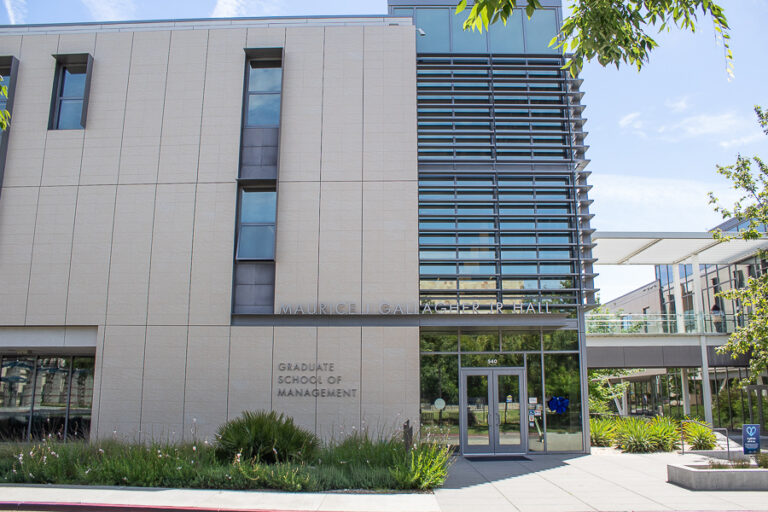
The UC Davis Graduate School of Management will offer an online MBA program beginning in Fall 2019. The program will include live virtual classes, pre-recorded lectures and residential sessions. Unlike the in-person MBA which has 50 to 60 students in each class, this program will have 15 to 19.

“We can do things in a virtual classroom that you can’t in a large lecture hall,” said Robert Yetman, a UC Davis professor of management and academic director of the online MBA program.

Students in these classes will be able to see and interact with their professors and one another. Students can press a button to let others know they have a question, making the class interactive. Professors can also write questions and immediately see what students answer to assess whether students understand the material.

“It causes the online students to be even more engaged,” Yetman said.

The pre-recorded lectures will also have questions for the students, allowing professors teaching the live sessions to see how their students are doing before they start class.

One part of the program is not online, requiring students to occasionally travel to Davis. Residential sessions are meant to give students the opportunity to interact with their classmates in person. Four of these sessions are held per year and students are required to attend at least two.

According to Andrea Shaw, senior director of admissions at the Graduate School of Management, most students are expected to come from Northern California, but the program can also accommodate global students.

The requirements to apply to the online MBA program will be very similar to those for the full-time MBA program.

“We’re ensuring that the academic experience and rigor is consistent with the on-campus program,” said Shaw, via email.

Yetman, who led the proposal process for this program, began drafting it about two years ago. He has since obtained the approval needed from faculty, the UC Davis campus and the UC System.

Written by: Andrea Esquetini — campus@theaggie.org
Documents reveal 19 substantiated cases of employee sexual misconduct at UC Davis between 2016–18

In some cases, harassment, assault spans months or even years

CW: Sexual assault, violence, harassment

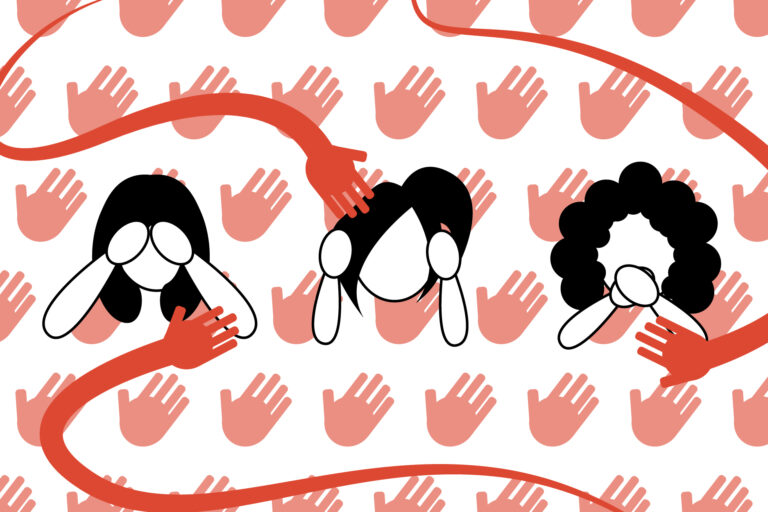
Last fall, UC Davis officials from Strategic Communications sent The California Aggie a total of 19 cases representing all substantiated complaints of UC Davis employees found to be in violation of the Sexual Violence and Sexual Harassment (SVSH) Policy between the time period of 2016–18. The case reports and summaries totalled just under 700 pages and each case report was heavily redacted. The Aggie spoke with university officials in the Strategic Communications and the Public Records Office as well as the university’s Title IX officer in relation to the cases and combed through each and every page to summarize the findings of each case.

These documents were released upon the submission of a public records request for Title IX documents from at least six news media outlets. Instead of releasing the documents publicly itself on the UC Davis website, for instance, the Director of News and Media Relations Melissa Blouin said the university decided to send the documents to The Aggie as a courtesy while also responding to the parties that submitted the initial request.

Each case includes a “respondent,” the accused, and either one or multiple “complainants,” the accuser(s). The names of the respondents in the initially-released 14 cases were redacted, but the names of the respondents in the last five cases were included. The university investigator assigned to each case also interviewed witnesses with relevant knowledge of the situations at hand.

Even in cases of misconduct substantiated by university findings, if the respondent is not a “high-level public official or does not hold a special position of trust in relation to the complainant,” disclosing their identity would “constitute an unwarranted invasion of personal privacy,” according to the media response letter from the university sent alongside the cases.

In most, if not all, of these cases, the respondents repeatedly downplayed and defended their actions, sometimes claiming that cultural differences were an explanation for their behavior — such as in the case of former Food and Sensory Science Professor Michael O’Mahony who was found to have engaged in a pattern of misconduct and said Americans don’t “get” irony when asked about his actions, or in the case of current Symphony Conductor Christian Baldini who claimed his misconduct toward a student was the result of his Argentinian heritage or of an unnamed male professor who said his kiss on the cheek of a female student could be chalked up to custom.

Additionally, the complainants in these cases frequently expressed fear of retaliation if they reported. The timeframe of harassment reported by the complainants ranged from one incident to months or even years of misconduct.

Wendi Delmendo, the UC Davis chief compliance and Title IX officer, said the university is participating in outreach efforts and has the Center for Advocacy, Resources and Education as a means to help campus community members feel safe coming forward to talk about sexual harassment or assault. In the 2016–17 year, the university received 105 reports of sexual violence while in the 2017–18 year, there was a total of 344 complaints sexual harassment, sexual violence or other prohibited behavior resolved through informal resolutions or formal investigations.

Corrective action for each respondent was determined on a case-by-case basis. While some individuals who violated SVSH policy were terminated from their position or resigned in lieu of intended termination, others received lesser actions, such as in case 170215 in which a respondent who was found to have harassed a co-worker from 2013–17 received a 15-day suspension without pay.

Delmendo said corrective action is influenced by different policies that relate to staff members versus faculty members and whether the employees are union or non-union members. During this specific 2016–18 time period, there were also policy changes stemming from legal developments as well as a systemwide consultations.

When asked how she thought the release of these cases would impact the university’s image, Delmendo said she hoped the impact would be positive, “to show the university takes these things seriously, and when we receive these reports we look into them and when they are substantiated we take corrective action.”

The following are 19 different cases in which complaints brought against UC Davis employees between 2016–2018 concerning sexual harassment, assault and/or violence were found to be substantiated through a university investigation. The Aggie has summarized each report for length and clarity. All of the quotes are taken from official case documents.

Each case no. is hyperlinked with the entirety of the official case document as released by the university to The Aggie.

Professor’s 30-plus years of misconduct

Case No.: 160142

Respondent: Professor Michael O’Mahony

Outcome: Resigned in lieu of intended termination

Michael O’Mahony, a professor at UC Davis, was alleged of three violations of university policy, with the first allegation being substantiated as a violation of both SVSH policy and of the Faculty Code of Conduct. The university substantiated the allegation that O’Mahony had made “an unwelcome and demeaning comment of a sexual nature” to a graduate student in April of 2016.

According to several sources interviewed in relation to the investigation, O’Mahony had a well-known reputation and history of saying “politically incorrect” comments, “dating back to at least the late 1980s.One source stated that a female friend had requested their presence at a meeting with O’Mahony in the early 80s “because she was uncomfortable with things he had said to her.”

O’Mahony had a well-known reputation and history of saying “politically incorrect” comments, “dating back to at least the late 1980s.

“There is a long history of complaints regarding O’Mahony’s conduct and previous substantiated allegations of sexual harassment, indicating a pattern,” the university concluded. “His behavior demonstrates either an inability or unwillingness to cease introducing subjects of a sexual nature into his interactions with students.”

The earliest sexual harassment complaints filed against O’Mahony appear to be from 2007, during which time he reportedly passed around pornographic cartoons in a class he was teaching. In 2011, he made a comment alluding to students offering up sex in return for better grades.

In 2013, he was found to have sexually harassed a staff member, leading to a temporary reduction in his salary. That same year, he made a student uncomfortable after calling her “gorgeous” and “exotic.” Also in 2013, he made a comment insinuating that UC students “put out” for good grades.

He was counseled in 2016 after an allegation regarding inappropriate touching.

As a result of the investigation, O’Mahony resigned in lieu of termination on Feb. 28, 2017.

Professor sexually harassed student, later threatened her

Case No.: 160045

Respondent: Professor Nilesh Gaikwad

Outcome: Resigned in lieu of intended termination

The complainant in this case is a graduate student who received unwanted comments about her appearance, unwanted gifts and a hug and kiss on the cheek from Nilesh Gaikwad, a former UC Davis nutrition and environmental toxicology associate professor, whose lab she worked in. The student was retaliated against when she returned the gift to Gaikwad — she underwent private and public criticism, received threatening comments and had her projects assigned to other people.

The sexual harassment began in 2015 with an invasion of personal space — Gaikwad reached over the student and used her computer mouse with her hand still on it. Gaikwad disputed this account, instead saying it was the student who was inappropriately close to him on multiple occasions and who touched him inappropriately.

Gaikwad wrote in an unspecified letter that the student “is cute,” and later denied that he wrote this. The student said Gaikwad inappropriately hugged her, pressed his body against hers and held her for an extended period of time.

She was later gifted a purse containing chocolates from Gaikwad, which she later returned to him through a co-worker. The co-worker placed it on Gaikwad’s desk with a note saying the student “felt it was inappropriate” and requested that he “respect her personal space.” Gaikwad then crumpled the note and threw both it and the purse into the trash.

Gaikwad denied ever giving the student a gift, claiming that he bought the purse on clearance, had it lying around in his car and said the student misinterpreted the gesture as a gift.

After this, there was another incident in which the student described being forcefully hugged and restrained by Gaikwad while the two were both working on a piece of broken lab equipment.

“He held on to me, I put my arms down and I tried to get away but he would not let go, as I was trying to get away and pulling back, he pulled in and kissed my cheek,” the complainant said in the case report. “I felt disgusted, uncomfortable and realized that he was definitely not hugging me professionally.”

Gaikwad denied this account, saying he “was sweating and does not see how she could view the hug as romantic.” He wrote in a response to the complainant that it was customary to give someone you know well a kiss on the cheek when hugging them.

The student also described a final incident where Gaikwad showed her a PowerPoint slide which contained the word “CuTe.” He dismissed this, saying he was showing her an organization’s promotional material.

Gaikwad was found to have engaged in unwanted sexual conduct and it was found that the workplace became “intimidating and offensive as a result of” his actions. It was also found that Gaikwad’s actions after all of the alleged harassment took place constituted retaliation, such as when he publicly criticized her in a lab meeting.

Gaikwad was found to have violated the Faculty Code of Conduct and University Sexual Harassment policies. While what appears to be Gaikwad’s professional website claims that he “left his tenure track professor position at UC Davis to start worlds (sic) first steroidomics company,” he actually resigned from his position in lieu of intended termination.

Four employees report postdoc for unwelcome sexual misconduct

Case No.: 170080

Respondent: George Chenaux, former postdoctoral researcher

Outcome: Early termination

Four employees came forward in February of 2017 to report “unwelcome conduct of a sexual nature” from George Chenaux, a former postdoctoral researcher at UC Davis, occurring over the prior 18-month period.

The university substantiated allegations from three of the complainants, but one of the substantiated allegations was found not to be in violation of SVSH policy.

“Complainant 2” reported that Chenaux pushed the complainant against a wall and rubbed his body against hers. He only stopped once she elbowed him in the face. “Complainant 3,” a different individual in the case, described Chenaux as her superior, reported that he frequently touched her without her consent over a period of 18 months despite being told not to on numerous occasions.

He only stopped once she elbowed him in the face.

Complainant 2 also described Chenaux as more senior than her and a fellow colleague whom she has a strictly professional relationship with. In January of 2016, however, at a celebratory event, Chenaux was drinking in excess and began touching her inappropriately. A little while later, after the complainant purposefully evaded Chenaux, he found her, pressed her against a wall and grinded on her. She told him to stop, but eventually had to use force to get him to move away.

Complainant 3 said Chenaux would frequently place his hands on her hips and physically move her to the side instead of asking her to move. Though she asked him to stop, he would just laugh in response.

On one occasion, Chenaux requested to speak with Complainant 3 alone. Though she did not feel comfortable doing so, she felt she had to speak with him because he was her superior. Chenaux accused her of turning him in and became “very hostile” and “berated her.” She left this meeting in tears.

“It was an obvious and brazen move to intimidate me and make me feel silent,” she said in the report.

Ultimately, University Investigator Carl L. Reed concluded Chenaux committed sexual violence against Complainant 2 and sexually harassed Complainant 3. Chenaux was subject to a termination of his postdoc appointment earlier than the previously-intended termination of his position.

Six employees report colleague for misconduct at UC Davis hospital

Case No.: 170385

Respondent: Clinical Nurse Antonio Martinez

Outcome: Resigned in lieu of intended termination

This case involves six complainants who alleged their coworker, Antonio Martinez, a clinical nurse, engaged in unwelcome behavior while they worked together at UC Davis hospital.

In September of 2017, “Complainant 4” informed a manager that Martinez had touched her inappropriately on a number of occasions. After an official from Harassment & Discrimination Assistance and Prevention Program (HDAPP) followed up with the managers of the employees in this case, six complainants emerged.

All six of the complainant’s reports were substantiated and a university investigator determined that the reports given by Complainants 3, 4, 5 and 6 of Martinez’s behavior violated SVSH policy. Martinez engaged in inappropriate touching, unwelcome physical conduct, along with invading personal space and using inappropriate and unwelcome language of a sexual nature.

“Complainant 3” said at first she thought Martinez’s constant attention was nice — he walked her to her car, offered to pay for meals and brought her blankets so she could take a nap — but she soon became uncomfortable and began parking farther away so he wouldn’t follow her out to her car. She told Martinez to stop because it was making her uncomfortable, but he laughed in response as if “it was all a joke.” Between 2008–10, Complainant 3 said this behavior occurred on a daily basis.

“The more she told him to stop, the more [he] seemed to touch her,” the case states.

In 2012, Complainant 3 moved to a managerial position. Around 2016, Martinez was banned from working on the complainant’s unit “because of his conduct towards women co-workers.” She believed Martinez targeted a specific group of women — she, along with Complainant 1 and 2, are all young, married women. Complainant 3 also said Martinez is known as “the pervert” at work and is around 60 years old although he tells people he is 35.

Complainant 3 also said Martinez mentioned a previous sexual harassment case lodged against him which his lawyer took care of.

The university investigator asked Martinez about a previous sexual harassment case during the investigation. He denied anything of the sort, even after he was shown an official Letter of Counseling and Letter of Warning concerning his sexual harassment of another individual who was not one of the six complainants in this case. He denied ever being told “there is no touching in the workplace” and said he did not recall being told by the sexual harassment analyst not to engage in behaviors such as “tickling, massages and hugging.”

Complainant 4, 5 and 6 said after they began to fully rebuff Martinez’s advancements, he began completely ignoring them at work. Martinez, a senior nurse, would no longer offer either his expertise or help at work, and became hostile and aggressive and encouraged others to reprimand them.

Complainant 5 stated that Martinez cornered her in an unconscious patient’s room and slapped her butt.

After a complaint against Martinez was filed by the complainants in this case, he continued working during the investigation. This made many of the complainants uncomfortable to the point of missing work to avoid him.

“The fact that [he] is still working is preposterous,” Complainant 4 told university investigators. “I don’t know that I would have made the decision to come forward knowing what I know now.”

Complainant 5, also upset with the way the case had been handled — and the fact she still had to work with Martinez — said, “I will never come forward again.”

In response, Martinez told university investigators he believed that all of the individuals who came forward with allegations against him conspired together and “fabricated” the sexual harassment complaints.

In addition to the six complainants, a number of other witnesses interviewed as part of this investigation, including other nurses, said Martinez had, at one point, made them feel uncomfortable, touched them inappropriately or acknowledged that they had witnessed him touching others inappropriately.

Ultimately, Reed, the aforementioned university investigator, and the Chancellor’s Legal Fellow Sylvia E. Cunningham concluded Martinez created a hostile work environment for some of his colleagues, engaged in sexual harassment and made both the individuals he harassed uncomfortable as well as those who witnessed the harassment. As a result, Martinez resigned in lieu of intended termination.

Conductor who engaged in misconduct with student returns to position

Case No.: 170177

Respondent: Christian Baldini, symphony conductor

Outcome: Returned to position after quarter-long suspension

In place of attaching a case report, university officials sent The Aggie a link to The Sacramento Bee’s article detailing the decision by UC Davis officials to place Christian Baldini, who still serves as conductor of the university’s Symphony Orchestra, on unpaid administrative leave in late 2017.

Baldini was found to have engaged in misconduct of a sexual nature directed toward an undergraduate student who subsequently left the university because of the incident.

Baldini “engaged in conduct that included touching this student’s hands and shoulder, dancing with her alone (including touching her waist and spinning her, leading to her buttocks being held against [his] body), and kissing this student’s cheek,” according to the letter of censure which was sent to The Aggie by university officials in 2018.

At this time, The Aggie reported that the letter was not placed in Baldini’s academic review file.

In a prepared statement sent to The Aggie via email in 2018, Baldini said that although “nothing sexual was intended” he deeply regretted “that over time this was perceived by [the] student in such a way.” He also referenced his Argentinian heritage as justification for his actions.

“My faults are failing to recognize that my behavior could have a reaction in her that was unintended,” the statement read. “I feel contrite and remorseful that one of my students would have felt this way by something I did, and I deeply apologize for any stress and pain this may have caused.”

Baldini was placed on unpaid academic leave during Winter Quarter 2018 and has since returned to his position.

Employee found to be “stalking” student

Case No.: 170436

Respondent: University employee, name redacted

Outcome: Terminated from position

The complainant in this case is a student who moved into a dorm building in fall of 2017. The respondent in this case is a university employee who was lofting beds in student housing when he met the complainant. The complainant thanked him for lofting her bed, and he began to talk with her for half an hour, complimenting her smile.

The complainant would see the respondent around her dorm building and in the dining commons and say hello. In October of 2017, she received a Facebook friend request from him and was unsure how he found her, as he did not know her last name. He also messaged her and told her she could talk to him at any time.

In mid-October, the respondent began leaving post-it notes on the complainant’s bedroom door in her dorm. She reflected on their previous interactions and became uncomfortable with his prior actions. She told university officials she felt freaked out because she knew he had access to her dorm room.

The complainant reported his behavior to university officials and, in a meeting with his supervisors, the respondent said his behavior wasn’t meant to be predatory, and “he was just friendly.” In an interview related to the investigation, however, the respondent admitted he was not friends with any other students on Facebook and had not left notes for other students.

Video evidence shows the respondent visited the residence hall where the complainant lives “numerous times” — approximately seven of the 12 days during the two-and-a-half week period between move-in day and the day the respondent was ultimately placed on leave.

“Respondent acknowledged that he did not have work orders for projects in that building at that time,” the report states, adding that there was no work-related reason why he would go to the upstairs floor of the residence hall the complainant lives on, yet he did on at least five occasions during this time frame.

One of the witnesses interviewed by the university investigator said the respondent does occasionally check out young girls, and will sometimes follow them a short distance or start chatting with them and has made comments such as, “she’s hot.”

This university investigation found the respondent’s conduct met the definition of stalking, his conduct created an intimidating and offensive environment for the complainant, and he ultimately violated the university’s sexual harassment policy.

The investigation also concluded the respondent’s conduct was sexual or romantic in nature. When asked how he would feel if his daughter were in the complainant’s situation, the respondent said he would be upset.

When asked how he would feel if his daughter were in the complainant’s situation, the respondent said he would be upset.

“That statement supports that he understood his behavior reasonably appeared romantic of sexual in motivation,” the report states.

Although the university investigator explicitly stated it did not seem the respondent’s behavior was meant to hurt or frighten the complainant, because of his persistence in visiting her place of residence without any business being there, a “reasonable person” in the complainant’s position would fear for their safety and experience emotional distress.

Ultimately, the respondent was terminated from his position as a UC Davis staff member.

Volunteer coach assaulted student

Case No.: 150331

Respondent: Unnamed volunteer coach

Outcome: Terminated from position

This case, lodged by a UC Davis student against a volunteer coach for a club sports team, regards a series of incidents, including one in which the coach, the respondent in the case, had inappropriately touched the student, the complainant in the case, “by attempting to put his hand in her pants without her consent after he insisted on staying the night in her apartment” in May of 2014.

The incident was brought to Delmendo on Nov. 1, 2015. As part of the university’s investigation, 13 witnesses were interviewed over a three-month period.

In May of 2014, the complainant went out drinking with members of her sports club. After consuming several beers, the complainant became “relatively intoxicated,” and she and the respondent went to her home, where he asked to be let in to use her bathroom. He ended up staying and talking with the complaint about her past relationships.

He told her that she “shouldn’t be alone and he would stay over,” at which point the complainant retrieved a sleeping bag and told him he could sleep on the floor beside her bed. The respondent said he couldn’t sleep and said she should lay down beside him. Feeling intimidated and not knowing what do do, she joined him on the floor.

“Soon after she laid down next to [redacted], he began touching her,” according to the case report. “He groped her chest and then he put his hand down her pants and touched her vagina. At that point [redacted] said she pushed him away, got up from the floor and said, ‘Stop. Don’t touch me.’ […] He left when she left for class the next morning.”

There was an email exchange between the two soon after the incident. In one of the complainant’s emails to the respondent, she stated: “without my consent nor knowledge (you) decided to act upon that assumption […] I feel upset and uneasy. What happened was highly inappropriate because you are my [redacted] teacher […] I opened up because I believed to be safe with you.”

The complainant decided to leave the club after what happened, and then later left UC Davis entirely. In response, the respondent denied being able to even recognize the complainant, even “if she was in the room right now.” He denied ever touching her genitals and claimed he did not remember going to her apartment.

When shown the email exchange between the two of them, he said, “Wow. I do not recall having this conversation with her […] She’s saying I groped her? I don’t do anything like that. Not one kid in the club would say I groped them.”

Bruce H. Hupe, the investigations coordinator for this case, wrote in the report that “email exchanges with [redacted] the day after the alleged assault provides convincing evidence that what she alleges happened did in fact occur and serves to undermine his credibility.”

The university issued the respondent three violations of policy: his conduct “unreasonably interfered” with the complainant’s education and “created an intimidating, hostile, and offensive learning environment in violation of the University’s Sexual Harassment policy in place at the time”; his ‘couch-surfing’ at the complainant’s home was “unusual and inappropriate,” constituting a behavior that could be expected to “detract from the reputation of the University” and the respondent was found to have sexually harassed the complainant.

As a result of the investigation, the respondent was terminated from his position.

Six undergraduate student interns issue complaints of misconduct

Case No.: 160127

Respondent: Unnamed staff member

Outcome: Resigned from his position

This investigation, begun in May of 2016 and conducted by Ellis Buehler Makus LLP, regards six undergraduates students, all of whom were interns and all of whom filed complaints with the university alleging that the respondent in the case engaged in “conduct of a sexual nature with student interns.”

Zee Syed, who prepared the university’s report, affirmed that the respondent had engaged in “conduct of a sexual nature that interns, faculty, and staff members found offensive. He made sexual jokes and innuendo, watched videos containing sexual content, and organized performances on campus that were sexual in nature.”

Syed also affirmed that the respondent’s conduct violated university policies prohibiting sexual harassment, given that conduct included “making sexual jokes and comments, watching videos of a sexual nature, and arranging performances at UCD [redacted] Day that were laced with sexual innuendo. The conduct was offensive to reasonable people.”

As part of the investigation, 16 individuals were interviewed in May and June of 2016. According to one account, the source interviewed “found these [sexual] jokes embarrassing, but reluctantly participated in them because she did not know how to react.” The source also said that the interns favored by the respondent “were also the ones who made sexual jokes most frequently.”

“He was looking at the interns bodies and evaluating them,” one source said, adding that the respondent “often prefaced comments by saying ‘I don’t want to go to sexual harassment training again,’ implying that he had been to training because of the comments he made in the past.”

An eighth account from a source who also recounted inappropriate comments made by the respondent said she feared that if she reported the conduct, the contract for her position would not be renewed.

Ultimately, the university’s investigation substantiated the allegation that the respondent had made and encouraged interns to make sexual comments and jokes. The university did not substantiate the claim made by the respondent that the allegations made against him were an attempt to get him in trouble because they had a personal relationship with “a former intern who previously made a complaint against him.”

The respondent also allegedly put on “raunchy” videos and movies for the interns, which contained “sexual content.” The investigation substantiated the claim that the respondent played or allowed interns to play a video titled “[Redacted] Can’t Stop Thinking About Sex.” One intern, who felt uncomfortable watching one of these videos, continued watching “because it was the start of her internship and she did not feel comfortable making a scene.”

The investigation also found that the respondent had, on one occasion, given the complainant’s phone number out, leading to harassment.

A separate incident involves a “sexually-laced performance” that likely occurred at Picnic Day 2015, though the title of the event appears in the case documents as [Redacted] Day 2015. One intern said they saw the respondent ask another intern “to find some male friend who would conduct a strip show during the [redacted] demonstration.” According to the same account, “The men were reluctant to participate and [redacted] told them he would provide them with alcohol to boost their courage.”

Two additional allegations against the respondent are redacted in their entirety, as are six documents, included because they contained information relevant to the case. In the 64-page case document, pages 44 through 63 are entirely redacted — on page 64, the only non-redacted content is the conclusion which states, “This Report concludes the investigation,” and Syed’s signature.

The respondent was ultimately found to have “engaged in conduct that violated UCD’s Sexual Violence and exual Harassment policies.” Based on a on “preponderance of evidence,” the respondent engaged in unwelcome and offensive conduct of a sexual nature that impacted learning and work environments.

As a result of the investigation, the respondent resigned from his position.

Faculty member accused of misconduct retaliated after rejection

Case No.: 160131

Respondent: Unnamed faculty member

Outcome: Nine-month monetary sanction, not reappointed

The respondent in this case was found to have engaged in “unwanted touching” and told the complainant in this case he had “developed feelings for her.” After the complainant rejected his advances, the respondent “treated her differently, including denigrating her to others.”

The investigation began in June of 2016 and ended that September. The case’s complainant describes incidents that occured in June of 2015, including multiple embraces instigated by the respondent. At one work party, the respondent told the complainant he felt “really good with her” and, in response, she “managed to get out of the situation by indicating she felt a paternal connection to him.”

About two weeks later, another hugging incident occurred. The complainant “acted cold to stop the embrace.” The respondent apologized via text. With the help of a second party, the complainant drafted a response in which she stated that she thought of him “as a father-figure, and they needed to keep the relationship professional.” The second party told the complainant to report the behavior, but she did not want to.

The following Monday, the respondent told the complainant “he had feeling for her and wanted to treat her like a daughter, but couldn’t help but see her as attractive […] [and] that she needed to be careful around him because he would have trouble controlling his emotions.” This is when the witness first noticed the respondent “was treating her differently, and felt he was retaliating for her rejection of him.”

the respondent told the complainant “he had feeling for her and wanted to treat her like a daughter, but couldn’t help but see her as attractive […] [and] that she needed to be careful around him because he would have trouble controlling his emotions.”

The complainant found that this situation impacted the work environment, a lab, finding “it stressful to be there.”

One outside source interviewed as part of the investigation said the respondent treated

“women differently in general, as though they are below him.”

“It seems like if a women questions him or does something he doesn’t like, he will target them for poor treatment,” the source said.

A fourth source who, given her position, “was required by policy to report the behavior,” was unhappy with how the department handled the case initially, as the lab became a hostile workplace.

A fifth witness, who is unidentified but appears to be the respondent, denied that he shared romantic feelings, and said he never gave the complainant compliments on her appearance and said the complainant was resistant to criticism, which frustrated him.

The respondent was found to be in violation of the Sexual Harassment and Sexual Violence policy and the Faculty Code of Conduct. As a result of the investigation, the respondent received a nine-month monetary sanction and did not receive a reappointment.

Supervisor terminated after sexually harassing employee

Case No.: 160405

Respondent: Unnamed supervisor

Outcome: Terminated from position

The respondent in this case, a supervisor of the complainant, “made inappropriate comments of [a] sexual and flirtatious nature,” including suggesting sexual favors in return for money, in October of 2016 and again that December, which were found to have violated the University’s Sexual Violence and Sexual Harassment Policy.

“Complainant stated [it is] uncomfortable for her at work because she does not want to say anything in front of Respondent that could possibly open up to a ‘joke’ turned sexual ‘insinuation,’” the case states. “Complainant stated she hopes the complaint results in her not feeling uncomfortable at work in the future.”

“Complainant stated she hopes the complaint results in her not feeling uncomfortable at work in the future.”

The complainant made a report to the assistant manager about the second incident, which the assistant manager was required to report. The respondent completely denied either incidents occurred, according to the report, calling it “a lie, a fabrication” and claiming the complainant wanted to get him in trouble. He also said he does “not have time for the stuff that I am being accused of saying.”

With regard to another incident where the respondent called another person in the workplace “baby girl,” he said that he had taken measures to learn to not repeat such behaviors, such as taking cultural awareness classes and online sexual harassment training. He used this as reasoning for why he would not have done what he was alleged to have done by the complainant.

The investigator ultimately concluded that “Respondent engaged in sexual harassment in violation of University of California’s Sexual Violence and Sexual Harassment Policy.”

As a result of the investigation, the respondent was terminated from his position.

Employee sexually harassed, verbally assaulted by faculty member

Case No.: 170024

Respondent: Unnamed faculty member

Outcome: One-month suspension without pay

The complainant in this case was touched inappropriately by the respondent in this case on multiple occasions, including a time in October of 2016, where he slapped her butt, and a second set of incidences between November and December of 2016, where he poked her in the ribs and in the stomach on more than one occasion.

The university found that the respondent engaged in sexual harassment in violation of the SVSH policy. This includes “unwelcome physical conduct [that] was sexual in nature,” which interfered with the complainant’s employment and “would be perceived as offensive or intimidating to a reasonable person.”

The complainant described verbal abuse from the respondent, including a time where “he grabbed a garbage can and told her that her research was trash.” The respondent threatened her termination in front of the lab manager and students. He “would say that she looked like a 5 year old girl” and “described the lab environment as ‘hostile.’”

On one occasion, when the complainant was bending over and reaching into a drawer, “out of nowhere” the respondent “hit her on the bottom […] pretty hard, enough to surprise her.” The complainant recalls telling him to stop and “described the event as emotionally painful.” She also “reported being ‘quiet from her husband and the whole world,’” following the incident. Witnesses were present when this occurred and a complaint was then lodged with HDAPP.

The complainant recalls telling him to stop and “described the event as emotionally painful.”

The respondent randomly poked the complainant’s ribs on multiple occasions. After he did this, the complainant would tell him ‘no’ and, in her interview, she said she stopped working with him because this behavior persisted.

As a result of these incidents, the complainant “reported ongoing physical symptoms, including gastrointestinal issues, nervousness and sleeplessness,” which were classified as potentially impeding or interfering with the complainant’s employment.

The respondent denied “engaging in any verbal berating,” denied or did not recall poking the complainant’s ribs and denied hitting the complainant on the buttocks, stating he may have brushed against her. The investigator did not find this excuse to be supported.

As a result of the investigation, the respondent received a one-month suspension without pay.

Employee fearful of retaliation after rejecting advances from colleague

Case No.: 170035

Respondent: Unnamed staff member externally contracted

Outcome: Referred to external contractor for discipline

This case regards a male employee at the UC Davis Medical Center who was “repeatedly and inappropriately touched” on his arm, back and shoulders, and had “inappropriate comments of a sexual nature [made] toward him” by a female respondent.

According to the preponderance of the evidence, it was substantiated that the respondent in this case engaged in sexual harassment in violation of the Sexual Violence and Sexual Harassment policy. It was supported that the respondent “engaged in unwelcome physical conduct” when he touched the complainant inappropriately and engaged in “unwelcome verbal conduct,” which included insinuating that the complainant “had engaged in sexual conduct as an explanation for his ‘good mood.’”

It was concluded that this conduct was of a sexual nature, and that it “was sufficiently severe or pervasive to impede or interfere with [the complainant’s] employment.”

The complainant described how pervasive the inappropriate touching was, including how the respondent would say tell him to “work his magic” and how she would get extremely close to him, so close that “he could see the blackheads on her nose and smell her breath.” Her breasts were described as rubbing on people because of how close she would get to them. The respondent also “openly discussed details of her personal life” and made a comment about the complainant’s sex life.

The complainant became concerned about “possible retaliation for not returning or showing […] affection.” He also “described getting a ‘bad’ or ‘weird sick’ feeling in his stomach that he compared to being ‘pulled over by the police’ or ‘panic’ when he would see [the respondent].”

The complainant became concerned about “possible retaliation for not returning or showing […] affection.”

People referred to his harasser as “his girl” and would ask him where she was if she was not around him. The complainant initially wished to remain anonymous and not file a formal complaint. After the complainant reported the behavior to his union representative, he felt that he was treated differently. The respondent “stopped touching him, began giving him ‘stank eyes,’” and “stopped talking to him.”

The respondent, in her interview, asserted “she did not agree” with the allegations against her,” denied any inappropriate touching and alleged there was a conspiracy, with people “in ‘cahoots’ to get her out.” The respondent said that “if she is ‘guilty’” of anything it was “telling people to do their jobs” and said this is “character assassination.”

Accounts from witnesses contradict the respondent’s account. The investigator of this case found no motive for the complainant to lie about what he reported and found evidence to support the complainant’s late disclosure of the incidents after he was unhappy with the response from management.

As a result of this investigation, the respondent was referred to the external contractor for discipline.

Employee pursued sexual relationship with undergraduate researcher “against her wishes”

Case No.: 170047

Respondent: Unnamed staff member

Outcome: One-week suspension without pay, no reappointment

There are six allegations brought against one respondent in this case, three of which were substantiated in part and three of which were fully substantiated.

It was partly substantiated that the respondent had made unwelcome and sexually suggestive comments in 2015 to an Undergraduate Researcher (UR) A. A university investigator found this occurred once and was not a repeat incident. It was also partly substantiated that at a social event, the respondent “stood uncomfortably close to UR A” and “put his hands on her waist without consent.” A university investigator found the respondent did not persist when she told him to stop touching her.

The next day, the respondent wanted to talk to UR A alone.

“UR A did not want to be alone with Respondent and her ‘stomach dropped,’” she said in her interview. “UR A told Respondent that everything that went down at the party was really inappropriate and she was uncomfortable and did not want anything like that to happen again […] Respondent told UR A he did not mean to make her uncomfortable and he was sorry.”

After this happened, UR A described worsening working conditions, where the respondent would “single her out” and “make up rules that applied only to her.” She described him as “constantly ‘pissed off.’”

A fifth allegation asserts that the respondent pursued an intimate relationship with UR B, a separate undergraduate researcher, “against her wishes.” This allegation is supported by evidence and was substantiated in part. The university substantiated the fact that the respondent suggested UR B should “leave her position in the laboratory due to their conflict.”

UR B recounted that she had attended a party, to which other people had been invited, but only the respondent attended. She recalled kissing him, but texted him after clarifying that she had no intention of having any further sexual contact because of their working relationship.

“During that conversation, Respondent said, ‘you kissed me, so there must have been some sort of attraction,’” the report states. “Respondent did not accept her saying ‘no.’ He continued to ask her out on a date.”

UR B told him she was not interested in dating him. He implied that they could have sex together, which she also refused. After the two had a normal conversation, UR B “thought things would be fine and they would continue being friends.” As time passed, however, “things got progressively ‘weirder.’”

UR B began avoiding the lab in order to avoid the respondent. When she did go into the lab, the respondent asked her why she would not date him — according to the interview, “his voice was raised and he was very frustrated […] UR B described it as a draining three-hour-long conversation.”

In this conversation, UR B recalled the respondent insinuating that she should leave the lab.

“Respondent told her that he did not know if he wanted to keep her because he was not getting what he wanted,” the report states. “In her interview, UR B said she did not realize that this was ‘textbook sexual harassment.’ […] [He said] that it seemed like a one-way street where she was getting what she wanted, i.e. to stay in the lab and not sleep with him, but he was not getting what he wanted.”

UR B reported the respondent’s conduct to a faculty member who told her that this was the third complaint he had received about the respondent in the timespan of one week.

The university’s investigation concluded that the respondent engaged in unwelcome sexual conduct and created a hostile work environment.

As a result of the investigation, the respondent received a one-week suspension without pay, his appointment was ended and he was not reappointed.

Supervisor exposed himself to employee

Case No.: 170141

Respondent: Unnamed staff member

Outcome: Terminated from position

This case of a female employee filing an official complaint with her supervisor was brought to the attention of the UC Davis Harassment & Discrimination Assistance and Prevention Program. The male employer inappropriately touched her without her consent and exposed his penis in April of 2017.

Although the respondent denies these allegations, all of these complaints levied by the female employee were substantiated through interviews with five different individuals and available video footage.

On April 10, the respondent asked the complainant in the case to “hang out” in the designated supervisors’ office during the middle of her shift. She complied and, during the meeting, the respondent made the complainant aware that he was her new supervisor — a fact substantiated by a university investigation. He told her if she needed time off, he could work it out.

At this point in the conversation, the respondent touched her leg inappropriately. When the complainant attempted to leave, the respondent asked her why she was “acting so shy” and exposed himself.

“Following these incidents, complainant was visibly shaken, she missed work and her schedule was adjusted so she could work in another facility away from [the] Respondent because she was uncomfortable being around him and feared retaliation,” the report states.

Available video footage shows the complainant exiting the office before the respondent, appearing “visibly uncomfortable.”

The complainant in the case initially avoided explicitly naming the respondent, her supervisor, to avoid “getting him in trouble.” She “cited concerns about Respondent’s financial well-being” and “described fear of retaliation.”

“She is worried that if people find out she reported Respondent they will be angry with her because he has so many friends that work there,” the case reports. “At the same time, she couldn’t not say anything. She was too uncomfortable with the idea of being around Respondent. She was also worried about having him as her supervisor.”

“She is worried that if people find out she reported Respondent they will be angry with her because he has so many friends that work there,”

The complainant also addressed concerns about the respondent gaining access to her personal home address.

University officials concluded the respondent engaged in unwelcome sexual conduct, created a hostile work environment for the complainant and violated sexual harassment policy, resulting in his termination from the university.

Employee seeks mental health treatment after being sexually harassed by supervisor

Case No.: 170183

Respondent: Unnamed staff member

Outcome: Terminated from position

This case, filed May 9, 2017, regards a female employee who filed an official complaint against her male supervisor after she sought out anxiety medication from her doctor in order to cope with her uncomfortable work environment.

Three years before the male respondent in this case was hired as a supervisor, there was a complaint about him from another female employee who said he had “bothered her” and made her uncomfortable. He was subsequently moved to another area, but nothing ever came of it because, according to him, the woman “pulled the case because she didn’t want to pursue it.”

The female complainant in this case alleged the respondent, her supervisor, began visiting her at her work station numerous times a week after promoting her. Over a two-month period, he began referring to her as “cute girl” at work instead of by her name, would make comments about her appearance such as, “Why do you always look so good?” and “You’re so cute” and referred to employees he did not like as “bitch” and “fucking bitch.”

On one occasion, the respondent said “If you want a job at UC Davis, it’s called ‘no blow job, no job’” and “it’s not who you know, it’s who you blow” to another male supervisor in front of the complainant. After that conversation, she thought he might be insinuating that she perform a sexual favor for him.

After two months of this behavior, the complainant sought mental health help because she was having anxiety attacks at work, she could not sleep and her eating habits had changed. According to the report, she told her doctor that, at times, “she would get so emotional that her heart would be pounding, her hands would get sweaty and she had so much adrenaline she felt she was going to explode.”

She was also scared to be at work. The respondent had made it clear to the complainant who he did and did not like. On one occasion, when he saw her talking with someone he disliked, he got very angry and aggressive with her, demanding to know what they talked about.

“[In April], complainant lied to Respondent and told him she had a family emergency because he wanted to meet with her and she was really afraid of him and did not want to meet with him,” the report states. “There were times she got so scared of [the] respondent that she started shaking.”

On one occasion, the respondent grabbed her shoulders — “she was hoping the interaction would end, but she did not feel she could tell her supervisor to leave — and she feared retaliation if she reported him.

“she was hoping the interaction would end, but she did not feel she could tell her supervisor to leave — and she feared retaliation if she reported him.

“On the one hand, she felt she should have told him to leave her alone. But she did not want to upset him,” the report states. “She said she was worried if she told another supervisor, they would protect him. […] Complainant had not said something earlier because she felt Respondent had her job in his hands. She worried that the only way to get a job at UC Davis might be through him, and he had said he would do his best to get her in here. Eventually, though, she decided that her job was not that important and she ‘just can’t deal with it emotionally.’”

While some of the 16 witnesses interviewed by the university investigator said he is a hard worker and professional at work, others corroborated what the complainant alleged, one said “he is a perv,” another said they, too, were made uncomfortable by him and had asked not to be left alone with him, but she did not report his behavior because “she needed the job.”

While the respondent did acknowledge he made a comment about performing sexual favors to get promotions at the university, he denies much of what complainant alleged, claiming she might be making up these claims to get a promotion of her own.

At a meeting with management and the union, union organizers said they wanted the respondent placed on leave, insinuating they knew of at least five complaints against the respondent.

Following a university investigation, it was concluded the respondent in this case created an environment that was intimidating, offensive and hostile and engaged in unwanted sexual conduct. He was terminated by the university.

Employee subjected to misconduct from co-worker from 2013–17

Case No.: 170215

Respondent: Unnamed staff member

Outcome: 15-day suspension without pay

The complainant in this case reported her co-worker at UC Davis health after she was subjected to “inappropriate jokes” and “inappropriate remarks of a sexual nature” from 2013 to 2017. The respondent called the complainant “pretty” and “gorgeous,” made suggestive comments about her body and watched her in her home, accused her husband of cheating on her with another man and discussed his own sexual experiences in front of her.

In 2017, the complainant made the university aware of her co-worker’s harassment. The complainant had attempted to resolve the situation unsuccessfully in 2013 when she decided to meet with another employee and request sexual harassment training be given to the entire department.

In-person sexual harassment was given to the entire department. The complainant hoped the comments from the respondent would stop, “but it continued and it got worse and worse as the years went by.”

The complainant hoped the comments from the respondent would stop, “but it continued and it got worse and worse as the years went by.”

In 2016, the complainant said the comments became more sexually suggestive. He alluded to the fact there might be cameras in her office watching her, and from then on she became paranoid of the possibility of hidden cameras. She became afraid to go to her car.

“I don’t know if he told me this to intimidate me, harass me or bully me, […] I just know that I couldn’t protect myself against him and it made me afraid,” the complainant said in the report. “I just don’t want to have to deal with that anymore.”

The report states the complainant feared reporting the respondent because “she understood that it is hard to prove sexual harassment cases because respondent’s comments often occurred while they were alone.”

“I don’t understand why he tells me these things, I don’t know what to do,” the complainant said. “I don’t understand why I feel this way, I wish I was stronger but I get paralyzed.”

At the time of the investigation, the respondent disclosed that a former manager of his made accusations against him four years earlier but nothing came of it. During the investigation, two witnesses said the respondent frequently pulled up photos of 18 to 19-year-old girls and commented on their looks.

The university concluded the respondent accused created a hostile work environment for the complainant as well as those who overheard the comments he made to her. As a result of this investigation, the respondent was subject to a 15-day suspension without pay.

Employee bombards other employee with texts messages, shows up outside of her home

Case No.: 170421

Respondent: Unnamed staff member

Outcome: 10-day suspension without pay

The complainant in this case reported the respondent in this case to HDAPP in October of 2017 for continuous and unwanted flirtatious behavior occurring over a six-month period, the sending of unwanted text messages and gifts and requests to go out on a date. All of the allegations were substantiated by a university investigation.

“Between Complainant’s last message to Respondent and a March 2017 message where Complainant asked Respondent in writing to stop texting her, Respondent sent Complainant more than 100 unanswered text messages,” the report states. “He kept messaging her until she blocked him on text and Facebook.”

“He kept messaging her until she blocked him on text and Facebook.”

The text messages sent by the respondent asked the complainant to go out to eat or get coffee, referenced the complainant’s physical appearance and offered gifts or personal favors. The complainant had asked the respondent to stop messaging her.

“Complainant started her interview by saying that she didn’t really want to be here,” the report states. “Respondent had done a lot of things that she thought were inappropriate, but she had just hoped it would blow over.”

The complainant in the case began to fear for her safety after the respondent pulled up to her in his car when she was walking and, on a different occasion, when she saw him outside of work circling the block. She feared she was being followed. Once, she watched footage from cameras at her house that showed a car resembling the respondent’s pass by and brake in front of her house.

The university’s investigation concluded Respondent repeatedly flirted with the complainant over the timespan of approximately a year, and that the respondent sent unwanted text messages “even after Complainant sent Respondent a text reminding him that she wanted a strictly professional relationship and explicitly asking him to stop contacting her over text.”

The investigation also found the respondent gave unwanted gifts, asked the complainant out on a date and appeared at the complainant’s house.

Ultimately, the university found the respondent to have acted in a manner that could be qualified as stalking and in violation of the university’s sexual harassment policy.

The respondent was subject to a 10-day suspension without pay.

Professor sexually harassed student employee in his lab

Case No.: 170496

Respondent: Unnamed faculty member

Outcome: Four-month suspension without pay

In November of 2017, a graduate student employee, “Witness A,” emailed Delmendo to relay allegations made by a former student employee who they supervised. The student, an undergraduate and the complainant in this case, had made a number of allegations against her boss, a faculty advisor and professor at the university. The professor, the respondent in this case, supervised the complainant, an undergraduate researcher in his lab at UC Davis.

The complainant began working in the respondent’s lab to fulfill her research requirement. The complainant and respondent had a friendly relationship, occasionally getting food and drinks together, and the complainant would dogsit for her boss.

On more than one occasion, the respondent asked the complainant why she was so tense and if he made her uncomfortable. During her interview with a university official, the complainant said she was uncomfortable but didn’t feel comfortable with confrontation, though she did tell him she was tense on a number of these situations.

She told another student employee “she didn’t know what to do because Respondent was her boss.”

“she didn’t know what to do because Respondent was her boss.”

“Complainant […] thought that Respondent saw her as a daughter, so she did not see it coming when ‘things escalated and got creepy,’” the report states.

He complimented her smile and started telling her to smile when he walked into the lab while she was working.

“While working together in the lab, Respondent would ask her to smile and touch her hair,” the report states. “Respondent offered to increase Complainant’s pay […] in an effort to have her stay on an his employee. […] The Complainant noted that she doesn’t want to ruin Respondent’s life [and] doesn’t want him to lose his job.”

During his interview, the respondent said “most of this comes from misunderstandings, misinterpretations, some small lies and some truth.” He feels he’s being wrongly portrayed as a sexual predator when, in reality, he said that “he felt compassion and misplaced parenthood.”

Witnesses interviewed as part of this investigation noticed the inappropriate relationship that had formed between the complainant and the respondent.

Witness A told university officials during this investigation they had warned the respondent that the rumors that were being spread about his relationship with the complainant could be “life ruining” and told him to go to therapy.

“She told Respondent to get his priorities straight, everyone is upset partially because they care about him and the wellbeing of the lab,” the report states. “He was putting himself in emotional and professional danger.”

Once chatter began to increase in the lab, respondent brought the graduate students and postdocs into his office and drew an elephant “to represent the elephant in the room.” He said he had no sexual feelings for the complainant, that he knows others in the lab have been avoiding her and she is a sensitive person and said “he felt under attack.”

Witness G, who saw the complainant and respondent out getting drinks and cozying up to each other one night, said when she saw the other two, they were all embarrassed. Later, the respondent told the others in the lab not to trust what Witness G was saying.

The situation “got really bad” around August of 2017. At this time, the respondent gave the complainant a notebook. In the book, he had written that his happiest moment was kissing her on the cheek on his birthday, although that had never happened. The book disturbed the complainant, and she didn’t want to keep it but figured she might need it for proof as part of a process like this investigation.

The complainant began changing her work hours to avoid her boss and avoided cafes and restaurants he frequented. In September, the complainant called Witness H, a former student employee, crying and confided in them. That same month, the respondent sent the complainant an email in which he asked her not to leave the lab and said their relationship could be strictly professional.

“By the time you asked if you were making me uncomfortable I felt threatened and totally shut down,” the complainant wrote in an email.

A university investigation substantiated that the respondent invaded the complainant’s personal space, touched her on more than one occasion and put his hand under the back of her tank top and made comments about her, including calling her “the highlight of the lab.” In response, the respondent said at the times these situations occurred, his memory was “cloudy” and he was medicated.

The investigation found the respondent’s behavior could be constituted as of a sexual nature, that his sexual conduct was unwelcome, that he created a hostile work environment and, ultimately, that the respondent violated sexual harassment policy.
“Given the power differential between the parties and the fact that Respondent consistently asked Complainant if she was uncomfortable only after he already had started touching her, it is not surprising that Complainant would not speak out to tell him he was making her uncomfortable in the moment,” the report states.

The respondent was subject to a four-month suspension without pay.

Three employees complain of unwanted sexual advances from co-worker

Case No.: XXXXX

Respondent: Unnamed staff member

Outcome: Two-week suspension without pay

There are three complainants in this case: Complainant A, Complainant B and Complainant C. All three allege the respondent in this case, a female UC Davis staff member, acted inappropriately toward them. Complainant A charges the respondent with making unwelcome comments of a sexual nature to her and engaging in sexual advances. Complainant B says the respondent made offensive statements and verbally harassed her. And Complainant C says the respondent told her she could be her girlfriend or “girlfriend on the side.”

Complainant A alleges the respondent made sexual advances in January of 2015 in person and over text messages. She reported these advances to her supervisors and said the situation had caused her so much distress that she fell physically ill and missed work.

Complainant B said the respondent told her she was a closeted lesbian and needed therapy. After confronting the respondent about something work-related, the respondent said Complainant B was a bad person because of her religion, which is “anti-gay.” She also said the respondent “used her size and voice to intimidate her.”

But Complainant B stood her ground. She did not tell anyone what the respondent had said to her, but the respondent told other people.

“Complainant B did not report the incident at the time because she did not want Respondent to lose her job,” the report states.

Complainant C said in the fall of 2015, the respondent had put her arm around her while at work and said she could be her girlfriend.

After Complainant A reported the situation to her supervisor, her supervisors asked if she knew of any similar situations involving the respondent and said she was required to report these. Complainant A knew about the situation involving the respondent and Complainant B because the respondent had told her about it and she reported it to her supervisors.

After reporting, the respondent told others Complainant A was raising these concerns because she is homophobic.

“Complainant A expressed she is certain that if a male employee was hitting on Respondent even after she made it clear that she was a lesbian and was not interested, Respondent would see it as an assault on her rights and would be trying to get the person fired,” the report states.

During her interview with a university investigator, the respondent said “this smells like homophobia.”

“I don’t know if she would have responded this way if a man had made those comments,” the respondent said. “Maybe it triggered something in her that she hadn’t thought about with her sexuality; maybe the only thing she knew how to do was report and push me away.”

The investigation concluded the respondent created an intimidating, hostile or offensive work environment for Complainant B. Her conduct toward Complainant A violates the university’s sexual harassment policy. But the evidence does not substantiate that the incident between the respondent and Complainant C could be concluded as having violated the sexual harassment policy.

As a result of these findings, the respondent was placed on a two-week suspension without pay.

Written by: Hannah Holzer and Kenton Goldsby — campus@theaggie.org

It costs to park: How fans can combat rising parking prices at sporting events

Some fans opt to pay comparatively lower parking fine than pay parking fee

Going to watch your favorite college or professional team at its home stadium is a feeling like no other. The atmosphere, the fans and everything else makes that in-person experience special to many people. Since not everyone has the time or money to attend games consistently, many consider going to the ballpark a special occasion. Recently, however, a trend among sports stadiums has made driving to an event much more costly.

According to a recent story in the San Francisco Chronicle, fans of the Cal Berkeley Golden Bears football team will now have to pay $225 for parking around Memorial Stadium on game day. This is a significant increase from last year’s price of $100 and has many fans up in arms.

The reason behind the new price is related to people parking in areas that require a residential parking permit. Fans attending sporting events at Memorial Stadium receive a $98 fine if they park in residential areas without a permit. Since the fine is less than the $100 price for parking, many violations occurred as fans opted to pay the fine rather than pay for a more expensive permit. The price increase is intended to prevent fans from parking in residential areas and encourage them to look for alternative ways to get to the stadium, such as by public transportation.

Put into perspective, $225 is as much as nine times the price of the least expensive ticket to a typical Cal football game. Similarly, the cost of parking at other stadiums around the country has gone up considerably over the last couple of years. For example, a general parking spot in the “silver lot” for a Los Angeles Chargers home game in 2018 at the Dignity Health Sports Park (formerly known as StubHub Center) in Carson, CA, cost $100. This is only the Chargers’ temporary home. There has yet to be an announcement regarding the price of parking at the new $4 billion stadium in Inglewood, CA, but fans can expect the price to be around the same or even higher.

When the Rams relocated to Los Angeles in 2016, they hosted the Dallas Cowboys at the Los Angeles Memorial Coliseum for their first game back in Southern California. The Coliseum has been around for 96 years and is not in the best condition. Nearby parking garages priced parking from $80 to $100 for a preseason game. The same parking garages typically charge $25 for USC football games that are held in the same stadium. This pricing trend continues for the Rams as they play at the Coliseum for before they join the Bolts in the new L.A. stadium.

The Cowboys have also increased parking costs for fans, charging $75 for general parking at AT&T Stadium in Arlington, Texas. The parking fee is relatively low, because the Cowboys’ stadium is in the city of Arlington, where there are virtually no alternate methods of transportation. This results in fans having to drive to the stadium regardless if they want to pay or not.

The absurd parking costs on top of the already expensive seating in the stadium to watch the game has caused some fans to prefer other methods to travel, like public transportation. For instance, Levi’s Stadium in Santa Clara, CA, home to the San Francisco 49ers, has a train station right outside the stadium, making it easy for many fans to arrive and leave. The same rail line, and Bay Area Rapid Transit lines, perform similarly for Oakland Raiders fans. Whether fans are going to the Oakland Coliseum or Oracle Arena, use of these public options is a very practical way to save money and even time.

In the lead up to this past years’ Rams Divisional Playoff game (against the Cowboys, nonetheless) parking near and around the stadium was rumored to be in the $100 range. Many fans decided to take the public transportation route and used the Los Angeles Metro Rail System. The rail drops fans near Exposition Park in Downtown Los Angeles and is separated by a short walk to the stadium. People attending games at the Coliseum or near Downtown L.A. can choose a similar route and save a lot of money.

At Dodger Stadium, there are shuttle options that run to and from the stadium and the main train station. It is convenient and an efficient way to get more people into the park and reduce the traffic congestion on game day. This has been a common theme for teams around the nation: franchises like the New York Yankees, the 49ers, the Chargers, as well as major college programs like LSU and Kentucky, have chosen to add game day shuttles.

As the cost to attend games continues to rise in almost every aspect, it is becoming more and more difficult for a person or family to enjoy this amazing experience. Even when the tickets are relatively inexpensive, fans now have to worry about parking costs as well.

There are positives aspects of increased parking costs, however. Alternatives like public transportation and game day shuttles not only help ease traffic congestion, but also they reduce greenhouse gas emissions. As the popularity — and prices — for these sports and new expensive stadiums continue to grow, how much more can prices increase before people will have had enough?

Written by: Omar Navarro — sports@theaggie.org

Oracle Authors

The Predictive Powers of Dystopian Writers

Dystopian novels captivate audiences within worlds fraught with totalitarian regimes pursuing an incessant march of order. The most formidable dystopian works act as cautionary tales exhibiting our future’s most disturbing possibilities. Renowned authors from George Orwell to Ray Bradbury were historians of the human psyche, carefully observing the ebbs and flows of humanity’s imperfect and often terrifying tendencies. They had an uncanny ability to digest and repackage these dispositions in jarringly raw forms. With this gift, they cultivated their stories, linking societal trends with envisioned technologies to make shockingly accurate predictions.

Aldous Huxley’s timeless 1932 novel “Brave New World” captures the nature of predictive insight. The novel’s setting is dominated by hedonism, order and mindlessness. The keystone technology keeping this society in equilibrium is called soma, a drug that cures all negative symptoms across the psychological spectrum. Characters reference taking soma to going on a holiday, creating an “impenetrable wall between the actual universe and their minds.” Openly advocated for by the government and used as an opiate for the masses, soma mechanically shepherds citizens throughout their lives.

Fifty years after the release of “Brave New World,” the life-changing pill Prozac was introduced. It was to be the king of all anti-depression drugs: a pleasure-creating, anxiety-freeing solution for people in psychological duress. Prozac is not the same as soma; however, it mimics many of soma’s mind altering qualities and, like soma, its use in addressing psychological issues has grown exponentially.

A study done by the Centers of Disease Control and Prevention reported that the rate of usage for antidepressants like Prozac has skyrocketed by 400% since 1988. In contrast to “Brave New World,” Prozac has been applied more cautiously and is oftentimes a godsend for people with certain psychological disorders, allowing them to functionally integrate within society.

On the flipside, Prozac is also frequently prescribed as a quick fix to problems that can and should be treated without artificially tampering in brain chemistry. Regardless, for 12.7% of Americans over the age of 12, portions of Huxley’s 90-year-old vision now play a distinguishable role in their lives.

Seventeen years following “Brave New World,” and in the wake of World War II, George Orwell released his classic “1984.” In “1984,” society is overseen by an omniscient surveillance system known as the telescreen. On the other side of the telescreen is the government’s authoritarian gaze, scrutinizing and documenting their citizens’ every move. The telescreen was wielded against society to maintain strict compliance and homogeneity, picking apart citizens’ habits and reporting irregularities. In 2019, across the Pacific Ocean, an almost identical surveillance technology is being developed and put to use.

Within China’s Xinjiang province, the Communist government has set up its own all-encompassing surveillance system to control and indoctrinate the Uighurs, China’s ethnically Turkish-Muslim minority. The technology was applied in response to Uighur rebellions against China’s ruling Communist regime. A recent article in The New York Times reports on the technology’s far-reaching capabilities.

“The system could retrieve the photo, home address and official identification number of a woman who had been stopped at a checkpoint on a major highway,” the article states. “The system sifted through billions of records, then displayed details of her education, family ties, links to an earlier case and recent visits to a hotel and an internet cafe.”

The government has tabs on every single Uighur in the area, coercing them into submission, while sending agitators to indoctrination camps.

Telescreens also echo the inner-mechanisms of the world’s largest corporations. Companies from Facebook to Google operate on similar life tracking systems to drive their profit engines, making money hand over fist on ads plastered throughout the internet. Customers are analyzed, broken down and synthesized into data that can be marketed to companies. Everything from travel, eating habits and, based on a new report from the Wall Street Journal, menstrual cycles have been catalogued for market research. Now even some of our beloved everyday use technologies emulate fabricated dystopian devices from the past.

Take, for example, the rise of the questionable AirPods, used to wirelessly sync to phones, laptops and even TVs. The premise for the AirPod was first conjured up in a book you probably read in your high school english class — Fahrenheit 451. Characters in this novel commonly used ear devices called seashells.

In the novel, Bradbury described their function as “little […] thimble radios tamped tight, [with] and an electronic ocean of sound, of music and talk.”

Seashells were the OG AirPods — much like AirPods, they prevented the user from being fully immersed in the present, wrapping them in an entertainment cocoon.

In retrospect, it’s quite astonishing to see the foresight of these visionary storytellers. Their ability to delineate future technologies grants them status as modern oracles. When looking back on society’s progression we can take heed of the lessons taught in these dystopian worlds. They are not simply pleasurable stories to enjoy, but touchstones for our trajectory.

When analyzing our society’s direction, we can scrutinize the use of such technology from the lens of the texts, weighing their benefits with their repercussions and perhaps taking a step back whenever our environment seems just a little too familiar.

Written By: Andrew Williams — arts@theaggie.org

Review: “El Chicano”

Film misses opportunity to positively represent Latinos

With the newly-released film “El Chicano,” viewers get a glimpse of a Mexican-American vigilante hero who takes back East Los Angeles from the threat of cartels and gang members.

The film begins with the vigilante hero “El Chicano” kneeling in the heavy rain in front of a gravestone, with blood dripping while a bright light shines down on him from a police helicopter. The audience is already put on the edge of their seats, unable to draw their eyes away from the iconic figure portraying himself as a Mexican-American Batman.  

The film then flashes back to the Hernandez twin brothers hanging out with their friend Shotgun. The brothers witness Shotgun’s father being confrontational toward the police on patrol. They also see the infamous El Chicano drag Shotgun’s father away on the back of his motorcycle and then stab him in the heart with an Aztec knife. This scene establishes El Chicano as the antihero who seeks to “kill the evil” that runs the streets of East Los Angeles.

Flashing forward 20 years, one of the twins, Diego Hernandez, is now a cop for the East Los Angeles Police Department. After he lost his twin brother to gang violence, he chose to pursue a life of justice instead.

While Diego Hernandez is working on a police case involving the deaths of gang members, the storyline messily connects the significance of the main character’s motivation to continue the case when he finds out all the deceased members bear the same tattoo. They all have on their arm his twin brother Pedro’s nickname “Mito” as well as their birthdate. Already it’s unclear of the connection between Pedro and the victims, and this specific detail of the tattoos is not pursued later on, leaving it unresolved.

Later, Diego Hernandez goes off to investigate his brother’s death when it’s briefly mentioned that his brother was believed to have committed suicide. Hernandez takes another look at the case and delves deeper into the reason behind his brother’s unexplained death. The film misses the opportunity to develop a stronger backstory for the relationship between the brothers, so when we see Diego Hernandez finding the objects his brother left behind, there is a missing connection for why this drives him to become the new El Chicano.

It all appears too convenient when Diego Hernandez stumbles across a hidden room in his brother’s storage unit, ready and set up for him to take on the role as El Chicano. When Diego looks into his brother’s belongings, he finds books on revolution, and there is the potential to see that his brother was more than just an ex-gang member but someone that was looking to help the neighborhood of East Los by bringing El Chicano back.

This brief mention of his brother Pedro, however, served more to create tension between the cartel and gang antagonists instead of adding a sense of purpose to Diego’s storyline.

The developing background of Hernandez’s character is disorganized and feels clunky in the beginning, and the audience finds a sense of relief when there are more action-packed scenes to make up for the confusing beginning. For example, a neighborhood friend named Jesus appears repeatedly in Hernandez’s memories saying how “bad things happen when the sky turns black,” a line that becomes integrated throughout the rest of the film. There is no clear meaning connected to the line other than the implication that El Chicano is active in enacting justice in the community. What kind of justice he is actually pursuing remains unclear.

While all of these events are occuring, the audience is made aware of how the entire cast is Latino. All of the main characters and filler protagonists are of Latino background, creating the potential for the film to portray Latinos in a more positive way in light of the political racism transpiring today.

But the film was unable to make a distinction between the cartels and gangs without delving deeper into the origins of both bad sides. There were very iconic lines used, an authentic use of Spanish slang and specific details mentioned, such as “I fight for East Los, Por vida, for I’m Mexican American.” If developed better, it could have been a more significant achievement for the Latino audience.

This film had many opportunities to flourish with authenticity in representing East Los and its culture, but in the end, the film fell backwards by focusing on an outside antagonist who didn’t really need to be included. With “El Chicano,” the sense of justice is lost, and the opportunity to show the unity of a community being protected by one of their own is left untouched.  

Written By: Gabriela Hernandez — arts@theaggie.org

A blind water taste test to end all debate of the best bottled water

Finding the undisputed best water

We’ve all been there — coming home after a hot summer day, reaching into the fridge, grabbing a cold bottle of D tier Fiji water and thinking, “Man, is this really the best water?” The quest to answer the illustrious question of which water is best has been attempted by many. With the help of Maurice Kennedy, a first-year history major who has an extensive knowledge of all things water, The California Aggie conducted a blind water taste test to find out which water deserves to be among the greats. To rank our selections, we used the common ranking system of F-tier to S-tier.

F Tier: Arrowhead, Nestle Pure Life

These waters unfortunately fall flat in numerous departments. The spring water of Arrowhead tastes less like it came straight from the freshest mountain streams and more like the water you drink when all hope is lost — the water that increases your thirst rather than quenches it. While Nestle Pure Life may not taste bad initially, its aftertaste assaults your taste buds and simply ruins the drinking experience. Save yourself the trouble and skip out on this one.

D Tier: Fiji water

Considering the hype that surrounds it, Fiji water is a bit of a disappointment. While it doesn’t deserve the F tier ranking, it nonetheless lacks in taste and falls short. The natural filtering of Fiji water may be impressive but does little overall to deliver on the promise of a smooth taste. It’s a decent bottled water experience, but it does not demand to be the premium water experience.

C Tier: LIFEWTR, Crystal Geyser, tap water

LIFEWTR is a crisp water with good taste, but when compared to the other waters — which we’ll discuss soon — it’s only good enough to be in the middle of the pack. It’s not a bad choice of water, but rather than inspiring thirst with creativity, you’ll probably be inspired to choose something more if you can. Crystal Geyser is along the same lines. A good choice that is passable, but not a go-to water. Tap water surprisingly finds its way into the middle tier with an average taste that isn’t quite flat but also not outstandingly crisp.  While you probably won’t rush to the nearest sink for a satisfying drink, it’s at least a lot better than any of the previous waters.

B Tier: Dasani, Aquafina, Evian

Dasani initially had promise, but unless you’re a fan of an overpowering water flavor, it proved to be too much to warrant any ranking higher than B. Still an enjoyable water to drink briskly, but nothing brilliant. As far as Aquafina is concerned, the flavor is nice and clean. An above-average water that gets the job done when you’re in need of something refreshing. Evian provides a nice flavor beaming with natural electrolytes. It has a certain clarity to it that the other waters lacked, but its overall flavor is what holds it back from that coveted A ranking.

A Tier: Essentia

Essentia is water you want to have at the ready. Its subtle flavor is enough to keep you hydrated and satisfied no matter the occasion. In just a few sips you’ll start to feel the abundance of electrolytes re-energizing you which will take you from trudging along to putting more pep in your step. Whether you’re coming fresh off a workout or simply want to experience water that rewards your taste buds with an invigorating feeling, this is high-quality, essential water.

S Tier: Smartwater

The superior water that stands tall above all the rest. This water has everything you need: hydrating qualities, sophisticated taste and a pure aftertaste. Just like Essentia, you feel the effects of Smartwater right away, but what makes it so special is that its flavor is truly unique. It is the culmination of all the strong qualities of the A and B tier waters without the lackluster hindrances of the rest of the bunch. Once you’ve tasted Smartwater, there’s no going back.

Written by: Vincent Sanchez — features@theaggie.org

The Davis Graduate to close on June 30

No more salsa night

The Davis Graduate, a sports bar and grill located in University Mall, will close on June 30. The classic pub grub is known for providing dance lessons, such as Country and Salsa Night, where students often go to relax. Charlie Swanson, the owner of The Davis Graduate confirmed the Davis institution’s closure via Facebook post.

April Yoshihara, a third-year animal science major at UC Davis, expressed that she wants to experience all that The Davis Graduate offers before its closure.

“I’m feeling pretty sad,” Yoshihara said. “I’ve only gone [to Salsa night] a handful of times, but it’s a super fun experience — they teach you how to do it. It’s a great way to de-stress. I still haven’t gone to Country night. Since they’re closing, I got to get on that.”

Similarly, Lasya Shah, a transfer clinical nutrition major and fourth-year at UC Davis, indicated her disappointment that her go-to spot will now close.

“I am really sad about it,” Shah said. “I wish it wasn’t closing, but it’s nothing much we can do at the moment because it’s something that the owners are going through from what we’ve heard.”

Shah has been an ongoing regular at The Davis Grad for Salsa Night.

“My initial reaction was just disbelief and shock,” Shah said. “I’m a regular at The Grad — I go every Thursday for Salsa Night.”

Yoshihara also frequented The Davis Grad to dance at Salsa Night.

“My favorite memory was when I went with two of my other friends — it was their first time — and we all danced together,” Yoshihara said. “My one friend got asked by a guy, and he taught her how to dance. It was really funny and cute.”

Shah will mostly miss the community she found at The Davis Graduate.

“I will miss making all of the friends that I’ve made there because I was a student who came later as a transfer,” Shah said. “It was hard to make friends at a new school when everyone’s established. When I went to The Grad, it opened me to making new friends.”

According to Yoshihara, The Davis Grad is a special part of Davis.

“I think it’s a really cool place,” Yoshihara said. “It’s something different that you don’t necessarily see everywhere or know about. People ask, ‘What’s there to do in Davis?’ It’s a cool thing to say that you can go to Country Night or Salsa Night.”

Written by: Stella Tran — city@theaggie.org

Humor: “No, we’re supposed to haggle,” says advisor to student who just wants to graduate on time

And now for, something completely not different that millennials still won’t understand: a Monty Python parody!

The following is a scene from the life of Brian. No no, not the movie “Monty Python’s Life of Brian.” No, we’re talking about Brian Cohen. No no no, not Brian Cohen of Judea, the “Messiah” in the movie. This is Brian Cohen of Reno, a third-year UC Davis student, who has made the intellectually ambitious but logistically idiotic and virtually unfeasible choice of pursuing a double major in two subject areas with no similarities: environmental policy and music. What a dope!

In the early months of 2019 A.D., Brian discovered that despite his careful two-and-a-half years of schedule planning, course timing conflicts could prevent him from meeting all his graduation requirements for both majors, through no fault of his own. In the midst of over half a dozen email correspondences with his various advisors, Brian tried to take a calming walk through the Arboretum, but was unable to escape the feeling that he was being chased across campus by Roman guards (yes, just like Brian in the movie — quiet now, please). Alas, the poor fool could not escape his emails. With crucial details and nuances lost in translation, Brian was forced into the unenviable task of actually going to the advising office and speaking to an advisor face-to-face, as people did in Biblical times. Awkward!

Anyway, we’d like to thank Amazon for providing us with access to the recording made by the advising office’s Alexa:

ADVISOR: Hello, Mr. Cohen, is it? Welcome. Sit down. Would you like just the five minutes or the whole half hour?

BRIAN: Of what?

ADVISOR: Of the argument! Would you like the five-minute argument or the full half hour?

BRIAN: Oh, I must be in the wrong place. I’m not here for an argument, I’m here regarding my course schedule overlaps and my excess unit peti—

ADVISOR: Of course! I’m just messing with you! That’s a different sketch! I see here in your file that you’re a double major. That’s very difficult, are you sure you want to do that? You’d better just quit now and choose only one if you want to graduate.

BRIAN: No, I’m fully committed to completing both majors within four years, I just need help avoiding conflicts in my sche—

ADVISOR: Oh, well you know you can’t enroll past next spring anyway as per the conditions of your excess unit petition. I’m sorry, good luck!

BRIAN: No, wait, yes, I’m aware of that fact. That’s why I’m here. I’m trying to get that extended because several required courses for my two majors overlap next year despite my careful pla—

ADVISOR: I’m sorry, you’re f**ked, shit-out-of-luck, my dear. You’re going to have to take 20 units per quarter in order to graduate.

BRIAN: Right. I’m prepared to do that, I just don’t want to take two classes that overlap at the same ti—

ADVISOR: What?

BRIAN: There you are. *Points to academic plan on computer screen.*

ADVISOR: Wait a minute, well, we’re — we’re supposed to haggle!

BRIAN: No, I worked this out, 20 units per quarter, plus the—

ADVISOR: Steve! This student won’t haggle!

STEVE: Won’t haggle?!

BRIAN: All right. Do we have to?

ADVISOR: Now, are you telling me your two degrees aren’t worth 20 units a quarter? Look at it. *Grabs diploma hanging on office wall* Feel the quality!

BRIAN: All right. I’ll take 19 units then.

ADVISOR: No, no, no. Come on. Do it properly.

BRIAN: What?

ADVISOR: Haggle properly. “This degree isn’t worth 19.”

BRIAN: Well, you just said I need to take 20!

ADVISOR: Ohh, dear. Ohh, dear. Come on. Haggle.

BRIAN: Huh. All right. I’ll take 10. 10 units.

ADVISOR: That’s more like it. 10?! Are you trying to insult me?! Me, an esteemed  representative of the University of California?

BRIAN: All right. 11.

ADVISOR: Now you’re gettin’ it. 11?! Did I hear you right?! 11?!

BRIAN: 17?

ADVISOR: No, no, no, no. 17……

BRIAN: 18?

ADVISOR: No, no. You go to 14 now.

BRIAN: All right. I’ll take 14.

ADVISOR: 14?! Are you joking?!

BRIAN: That’s what you told me to say.

ADVISOR: Ohh, dear.

BRIAN: Ohh, tell me what to say. Please!

ADVISOR: Take 14 units!

BRIAN: I’ll take 14!

ADVISOR: He’s offering to take 14 units per quarter!

BRIAN: 15!

ADVISOR: 17. My last word. I won’t let you take a unit less, or strike me dead.

BRIAN: 16?

ADVISOR: Done. Nice doing business with you.

BRIAN: But what about my course overlaps and excess unit peti—

ADVISOR: Sorry I couldn’t be of more help. And I’d just like to add, on a personal note, my own admiration for what you and your hard work are doing for us as an academic institution, Brian, at what must be, after all, for you, a very difficult time. Al-ways look on- the bright- si-ide of life!

Written by: Benjamin Porter — bbporter@ucdavis.edu

(This article is humor and/or satire, and its content is purely fictional. The story and the names of “sources” are fictionalized.)

America hasn’t learned its lesson on immigration

Chinese exclusion set the stage for present day immigration policies, mistreatment of migrants at the southern border

Martin Luther King Jr. reminded us that, “Injustice anywhere is a threat to justice everywhere,” and the truth of this statement is evident when we examine America’s history of discrimination against particular ethnic groups.

The highly-publicized anti-immigration policies and practices currently directed toward Mexican immigrants and citizens are based on exclusion policies directed toward Chinese immigrants and citizens less than 150 years ago.

Chinese exclusion policies replaced America’s initial policy of open migration. The Chinese Exclusion Act of 1882 was the first federal law prohibiting immigration to the U.S. for members of a specified ethnicity or nationality. The Chinese Exclusion Act defined illegal immigration as a criminal offense, yet Chinese continued to immigrate to America using “illegal” methods, such as adopting a fake identity or coming across the northern and southern U.S. borders. Anti-immigration laws and policing strategically ignored Europeans immigrating into the U.S. “illegally,” making Chinese immigrants America’s initial “illegal” aliens.

Border patrols, immigration raids, detention centers and deportation were introduced and directed toward Chinese immigrants in an attempt to enforce the Chinese exclusion policies. As anti-Chinese sentiment grew, the target of exclusion policies expanded to encompass Chinese-Americans, subjecting them to exclusion practices. Their citizenship was frequently questioned and invalidated because, in the eyes of mainstream America, anyone who looked Chinese was potentially “illegal” and was treated as such.

Chinese exclusion found many unexpected supporters. First-generation and second-generation Irish-Americans ironically led campaigns against Chinese immigrants in order to establish their previously contested status as white Americans. Chinese-Americans and “legal” Chinese immigrants initially protested exclusion; as time passed, this tactic seemed futile, and many adopted the tactic of separating themselves from “illegal” Chinese immigrants, as Erika Lee discusses in her book “At America’s Gates.” In doing so, they sanctioned the unjust treatment toward “illegal” Chinese immigrants in an effort to gain better treatment for themselves. Chinese exclusion policies were rarely contested by anyone but the people being affected. This limited resistance, combined with the overwhelming support for Chinese exclusion, facilitated the entrenchment of these discriminatory practices.

The institutionalization of Chinese exclusion set the stage for America’s continued racialized and nativist approach to immigration. Harsh and unjust policies initially directed toward Chinese immigrants have since been used in attempts to control other groups. Mexican immigrants are currently the target of anti-immigrant policies and practices, and Mexican-Americans are often affected due to a misguided notion that they are all potentially “illegal” immigrants. Assertions that Chinese immigrants were unassimilable threats and stole jobs from white Americans scarily parallels the racialized rhetoric surrounding Mexican immigrants today.

Chinese that were attempting to enter or return to the U.S. were kept on Angel Island, a detention center for Chinese that was thinly veiled as an immigration station. They were subjected to dehumanizing conditions and treated as criminals as they waited for immigration officials to interrogate them and determine whether they would be permitted into the U.S. Today, America manages the largest immigration detention system in the world, and there are more immigrant children being detained under the Trump administration than ever before. Migrant families are disproportionately broken up and detained along the U.S.-Mexico border. Parents and children are detained in separate facilities, and the conditions of the detention facilities continue to be incredibly demeaning.

Border patrol along the U.S.-Mexico border has expanded considerably since it was first implemented to exclude Chinese immigrants. Immigration raids and the deportation of undocumented Mexican immigrants occur frequently, breaking up families already living in the U.S. and causing great emotional, psychological and financial distress to the victims of these prejudiced practices.

While there are far more people protesting these practices and policies than during the Chinese exclusion era, support from illogical places persists. Among supporters are those who have forgotten their own family’s history of immigration to America. Ted Cruz and Marco Rubio, two prominent Republicans in Congress, promote restrictive immigration policies, despite being the sons of immigrants. Some first-generation immigrants, including some Mexican-Americans, also perpetuate the demonization of Mexican immigrants who come to the U.S. “illegally” by emphasizing their own “earned” citizenship. And there are all of those who fall in between support and protest, indifferently accepting the injustice because they don’t believe it will affect them.

It’s ineffective to speculate about what might have occurred if Chinese exclusion was contested to a greater extent. But an important lesson emerges from this history: We must stop perpetuating or ignoring injustices directed toward a group merely because we don’t identify with them. We must stop ignoring injustices simply because we are unaffected in this moment. As long as injustice exists, there is always a possibility that we will be implicated and persecuted next due to some arbitrary aspect of our identity.

Social injustices may violate a few, but affect us all. People were affected then, people are being affected today and another group of us will be affected if we do not take a stance against injustice now. We must fight for each other’s rights, if for no other reason than to protect our own.

Written by: Nicole Matsuda  

The writer is a third-year undergraduate student studying communication and sociology at UC Davis.

Humor: Don’t judge these controversial figures for their politics — judge them for being bad at music

By knowing nothing about classical music, Millennials deny themselves a valuable political attack strategy

Bach, Beethoven, Brahms, Bartók, Haydn, Mozart, Mahler, Strauss, Chopin, Liszt, Debussy, Ravel, Rachmaninoff, Richard Nixon. Walter, Toscanini, Karajan, Abbado, Bernstein, Barenboim, Solti, Rattle, Dudamel, Dennis Prager. Paganini, Joachim, Kreisler, Heifetz, Milstein, Menuhin, Kogan, Oistrach, Richter, du Pré, Wang, Kern, Vengerov, Hahn, Fischer, Kavakos, Stern, Ma, Perlman, Zukerman, Ben Shapiro, Condoleezza Rice and Vladimir Putin.

You may not be used to hearing the names of some of these amateur weekend musicians spoken in the same breath as many of the greatest composers, conductors and soloists in the history of classical music, but despite not being professionals, they belong in this pantheon of greats nonetheless.

I’m just kidding. Of course they don’t. But most young people today (even if they did recognize a name or two on the list) wouldn’t know that because they don’t know jack shit about classical music. This is quite regretful because if Millennials were more musically cultured, then they would be able to masterfully wield their knowledge of classical music as a useful weapon against political figures with whom they disagree, supplementing their already-employed, highly successful and brilliant tactic of simply saying that people they disagree with shouldn’t be allowed to speak.

Just imagine…imagine how shocked and flustered Ben Shapiro would be if, while in the middle of totally owning the libtards in an epic speech, an audience member confronted him about his poor violin skills. He’d crumble! Young liberals would have far more success debating Shapiro if they could occasionally throw in a sick burn about his inability to keep his bow straight or about his horrible technique and posture in his Game of Thrones cover. Or, they could destroy him over his total disregard for rhythm, tempo, intonation and phrasing in a video of him playing Haydn’s Violin Concerto in G Major. And following-up from that, Shapiro definitely deserves to get roasted for choosing such a basic piece to show off his “skills” and still botching it anyway! Lame! Or how about ridiculing him over how plebeian his list of top 15 classical works is? Or, better yet, why not read Shapiro the riot act for his unmusical, uninspired and emotionless performance of the theme from “Schindler’s List” when he was only 12!

And what about influential conservative radio host and founder of “PragerU,” Dennis Prager? As classical music lover and amateur conductor, Prager was invited in 2017 to guest-conduct the Santa Monica Symphony at a fundraising gala at Walt Disney Concert Hall in Los Angeles. Citing Prager’s divisive politics, many community members protested and some orchestra members boycotted the performance. Since this was a classical music event, it wasn’t even on the radar of millennials in the first place, but if the salty musicians had just waited until after the concert to attack Prager, they would have been able to avoid politics altogether and simply attack him for his poor conducting, as a brilliant internet commenter who attended the concert did: “Tonight’s guest conductor flailed about like an inflatable used-car lot dancing man, indifferent to Haydn’s music emanating in front of him.” Ouch. Burn!

This proves that the there is far more success to be had from taking cheap shots than from actually engaging in civil political discourse or worse, agreeing to disagree. Too bad that most of Prager’s ideological rivals would prefer to handicap themselves in debate against Prager rather than gain the classical music knowledge required to really make fun of him. What a shame!

Let’s turn our attention to an even more powerful and influential wannabe musician: Russian president Vladimir Putin. While waiting to meet with Xi Jinping in 2017, Putin hunted and pecked on an out-of tune piano in the hallway with the graceful confidence of a 9-year-old learning to type. It’s a wonder that he hasn’t purged the video from the internet, as it certainly doesn’t make him look good. Perhaps the video is only available outside of Russia, as I’m sure that if the Russian people (far more cultured than their American counterparts) saw it, they would oust him from power immediately.

Speaking of presidents, it would be criminal to ignore the criminal compositional skills of the crook-in-chief himself, Richard Nixon. While making a television appearance on “The Jack Paar Program” in 1961, Nixon was surprised when the show hired some “15 Democratic violinists” to accompany him in a performance of his Piano Concerto No. 1, certainly a flattering and misleading name for what is in reality no more than a trivial tune with fluffy ornamentations and harmonies in the strings. Props to Nixon for having his part memorized, but of course, anyone could memorize a few elementary chord arpeggiations and melodic gestures. This should have been bigger than the Watergate Scandal!

A discussion of prominent Republican politi-musicians would not be complete without mentioning former Secretary of State Condoleezza Rice. Now this one is a bit tricky because Secretary Rice is actually pretty good at piano (not that millennials would be able to tell). However, her undeniable talent at the piano should not prevent millennials from using classical music to attack her. For example, the same millennials who protested Rice for being a “war criminal” would be far more convincing if they also condemned her for using her beautiful piano playing as a cheap PR strategy. Or, the millennial left could stay more on brand and accuse Rice of being a bad black female minority by promoting and elevating the music of oppressive patriarchal dead white male composers!

So while the Millennial left’s lack of classical music knowledge blinds them to opportunities for eviscerating their political rivals, we can also observe the inverse of this to be true: Despite being passionate advocates of social justice issues, the fact that millennials couldn’t care less about classical music means that they are oblivious to these social justice issues as they relate to the world of classical music, even when they occur right in front of them. In other words, the millennials’ noble and spirited commitment to social justice is overpowered by the sheer strength of their utter disinterest in classical music. Nothing will break that wall!

For example, college students have gotten into the habit of protesting conservative  speakers they don’t like, such as Ann Coulter, Milo Yiannopoulos and our favorite virtuoso violinist Ben Shapiro. UC Davis students infamously protested Yiannopoulos and Martin Shkreli in 2017, causing the event to be cancelled. Through the lens of college students, many prominent classical music figures could easily be viewed as representing an assault on social justice values, in similar ways to the right-wing personalities against whom they fervently protest. While it’s certainly an open question whether or not divisive figures of this ilk should be given a platform, it’s ironic and highly amusing that UC Davis’ “college left” has taken no notice whatsoever when their own school has hosted, celebrated and given a platform to such figures of the classical music world.

Just last March, the Mondavi Center hosted a concert featuring the Russian National Orchestra under the direction of renowned Russian conductor and pianist Mikhail Pletnev. However, Pletnev found himself in a sticky situation in 2010 when he was arrested in Thailand for possession of child pornography, allegedly raping a minor and allegedly being involved with a child prostitution ring. Although the investigation was later dropped, it’s somewhat surprising that UC Davis students didn’t dig this up before his performance at the Mondavi Center, where he was welcomed and applauded by a sold-out crowd.

In November 2017, the Mondavi Center hosted the Mariinsky Orchestra with conductor Valery Gergiev, who is BFFs with Vladimir Putin. His close relationship with Putin has often come under scrutiny in the West. It’s difficult to fathom how young socially-conscious liberals on a college campus could be completely oblivious when such a divisive figure with Putin’s ear is celebrated on their campus, especially given Putin’s hostility toward journalists, free speech and LGBTQ people and his role in manipulating American democracy during the 2016 election. Even if college students didn’t know all of this — perhaps if they weren’t uncultured swine and knew a thing or two about classical music — they at least could have made fun of Gergiev for his bizarre conducting style, which often involves using a toothpick as a baton!

Yuri Temirkanov is another revered Russian conductor who is chummy with Putin and went entirely unnoticed by socially conscious college students when he led the St. Petersburg Philharmonic in a Mondavi Center performance in March 2017. While Gergiev could be considered a passive bigot for his support of Putin and his policies, Temirkanov goes the extra mile for making on-the-record bigoted comments of his own!

Temirkanov does not think women can or should be conductors, saying, “The essence of the conductor’s profession is strength. The essence of a woman is weakness.” He justifies this by, of course, citing, God, nature and Marx: “I don’t know if it’s God’s will, or nature’s, that women give birth and men do not. That’s something that no one takes offense at. But if you say that a women can’t conduct, then everyone’s offended. As Marx said, in response to the question ‘What’s your favorite virtue in a woman?’ — ’Weakness.’ And this is correct. The important thing is, a woman should be beautiful, likable, attractive. Musicians will look at her and be distracted from the music!”

I attended this 2017 Mondavi Center performance because they were playing Dmitri Shostakovich’s Symphony No. 5, one of my absolute favorites. Shostakovich, who lived under the nearly constant threat of getting purged by Stalin, wrote this violent and paranoia-filled symphony during a time when he was not in Stalin’s good graces. The work is often viewed today as a musical representation of torture. Ironically, Stalin interpreted it as a glorious display of nationalism. I found it quite difficult to comprehend the absurdity and hypocrisy of watching a bigoted supporter of a modern-day dictator conduct a piece that was inspired by the anguish and fear of living under an oppressive dictator.

I’m not saying whether it would be right or wrong for college students to band together to cancel events featuring controversial classical musicians. I just find this to be a particularly intriguing example of selective hearing when it comes to social justice. At the end of the day, there is one important silver lining for classical music-loving Americans to keep in mind: Through his shitty piano playing and controversial connections to famous musicians, America’s de facto president Vladimir Putin is still actually supporting and promoting the fine arts; meanwhile, President Trump is inviting the likes of Kid Rock and Ted Nugent to the Oval Office.

Written by: Benjamin Porter — bbporter@ucdavis.edu

(This article is humor and/or satire, and its content is purely fictional. The story and the names of “sources” are fictionalized.)

Delving into biological function of metals

UC Davis researchers explore the role of metal in biological processes.

Metals like copper, zinc and iron are necessary for many biological processes. Oftentimes, however, when biologists study those processes, metals are controlled for or ignored because they are present only in trace amounts. For most research, this approach is warranted due to an inability to study everything. Yet the Heffern Lab in the department of Chemistry at UC Davis believes that thinking about the roles metals play in the body might be a useful framework to approach some difficult biological mysteries.

One such mystery involves the usefulness of a strange string of amino acids called c-peptide. The molecule is essential for the production of insulin, a key regulatory protein that controls how glucose is absorbed in the body. For a long time, researchers believed that c-peptide’s only role was to help with the production of insulin, but further research suggests that c-peptide plays other roles in the body.

“There is a bit of controversy over what c-peptide does,” said Marie Heffern, an associate professor in the Department of Chemistry and leader of the Heffern lab. “One of our hypotheses, is that part of why there is confusion is that metals are essential to its activity, and we are not taking them into account.”

Biological agents like peptides rely on cofactors, or “helpers,” in the body to function properly. The Heffern lab thinks that metals might be co-factors that allow the c-peptide to function.

To test this idea, the research team conducted several experiments to probe the relationship between the metals and c-peptide.

The team was curious to learn if the presence of metals would have any effect on the ability of c-peptide to enter cells through a process called internalization. They took different metals and combined them with c-peptide and then placed them around human embryonic kidney cells. They then measured how much of the c-peptide internalized and compared it with when there were no metals present. The researchers found that chromium and copper seemed to inhibit the ability of c-peptide to get into the cells.

“With chromium and with copper, there is a huge decrease [in internalized c-peptide] compared with apo [when the scientists just added the peptide without any metal],” said Michael Stevenson, postdoctoral researcher at the Heffern lab. “That is what led us to say let’s focus on copper and chromium.”

The team also used spectroscopy, another technique that involves shining light through the cell to find approximate stoichiometries, and explored possible inhibitory mechanisms using various other experimental techniques.

While the researchers were not able to definitively determine that metals are crucial co-factors for the action of c-peptides in the body, or explain the actual biological processes that peptides contribute to, they were able to determine that metals have some inhibitory influence on peptides. The new questions that have arisen with the information uncovered could be crucial.

“The study we have done is one of the few that actually tries to make a link between a biological effect and a binding interaction that is happening at a molecular level,” Heffern said.

Written by: Peter Smith — science@theaggie.org

Studio 301’s final production of the year

A fun take on the Addams Family

This past week at the Vanderhoef Studio Theater, Studio 301 put on their final production of the quarter, “The Addams Family the Musical,” a twist on the classic movie. While “The Addams Family” movie focused on the family dynamic as a plot, the musical set their focus on daughter Wednesday Addams and her new love interest. The show was directed by Jill Price who graduated in 2015 from UC Davis with a bachelor’s degree in English.

Studio 301 is a student-run theatre social club and production company. While most theatre organizations consist of exclusively theatre majors, Studio 301 does not have any major requirements for members, creating a diverse group of dedicated individuals.

“It’s a different sense of pride if it’s something you and your peers put together,” said Leah Richter, a third-year environmental science and management major.

I genuinely loved the musical. There were a couple of scenes where the background would freeze and the narrating character would step forward and break the fourth wall. The actors in the background demonstrated a lot of skill in their ability to stay still and allow the attention to be directed to the narrator.

JP De Leon, a first-year theatre and dance major, played Gomez and was proud to be part of the cast for the year.

“I feel weird to boast it, but the entirety of our cast [is] really good,” De Leon said. “Singing wise, we’re a really good sounding cast. All of our leads have different moments in songs. It just sounds so good.”

When Nikki Villalon, a fourth-year animal science major who played Wednesday, stood on stage and performed “One Normal Night,” my eyes bulged out of my sockets. Not only was Villalon’s pure talent mind boggling, but De Leon’s was as well. De Leon’s voice is perfect for musicals. He knows how to capture the audience, whether it be with small glances or the twirl of a prop.

The ensemble was comprised of Addams family ancestors that were forced to stay on Earth in order to help Wednesday’s family be accepting of Lucas, Wednesdays’ love interest.

“While being that [they’re dead], they’re also so alive,” De Leon said. “The ensemble makes up a lot of our show, they dance in all the numbers and they’re giving the feel for the audience. They are really making the sets and the moments really fun.”

Each lead character played their role perfectly. Tannah Boyd, who played Morticia Addams, impressed me. As an actor, she is someone who I would continuously pay to see perform.

“We do this because we love doing this,” De Leon said. “So it’s kind of this cathartic thing where it’s at the end of the day when I’m stressed out of my mind at a classes or something, I get to come to a place where I get to just sing and dance with my friends.”

When I went home and my housemate asked how it was, I only had one response: “you missed out.”

“I think when you have a really talented cast it gets you really excited to put on this show, especially with a fun show like this,” said Raegan Price, a third-year theatre and dance major. “It kind of puts your worries away because you can focus on having fun and putting on a really good show.”

Written By: Itzelth Gamboa — arts@theaggie.org

Humor: Jackass in humanities class baffled by how many academic papers “Al Et” has written

Alfred? Alexander? Alexandra?

Dear Editors at The California Aggie,

My name is Dr. Barnaby Alastair Exeter-Asherton, PhD, and I’m a professor in the Department of Sociology at UC Davis. I’m writing on behalf of myself and my colleagues in the sociology department to express our grave concerns over the sorry state of public education at all levels in California and America.

I think it would be quite impactful if you were to write an article about this crisis, so I’m providing you with a valuable piece of evidence that can perhaps help steer your investigation in the right direction. Below, I’ve copied a portion of a recently-submitted paper proposal in which some dumbshit student in my general sociology class is seemingly under the impression that “Et al” is not an abbreviation —  rather, a person named Al Et. As in last name, Et, first name, Al. You have to see this, it’s just too good:

“While writing my first paper for this class earlier in the quarter, I became fascinated by the prolific and remarkably-interdisciplinary output of the academic Al Et. My paper was also of an interdisciplinary nature, which required integrating theories and principles from the social and natural sciences. As I researched, I was struck by the fact that Et authored just about every academic paper and journal article I used as a source, including extensive papers on biology, evolution, neuroscience, psychology, philosophy, political science, law, economics, music, art history, computer science, sociology, feminist theory, geology, astrophysics and esports. What a Renaissance Man! But this got me thinking: is Et a man or a woman? Al could be short for Alfred, Alexander, Alexandra, Allison… so many possibilities! And how does the mystery surrounding their gender and sexual orientation impact their work? Thus, I think conducting further research into Et’s life and work would be an incredibly interesting way to explore and deconstruct the topic of how different societies encourage or discourage an integrative, interdisciplinary approach to problem solving through the style of their educational systems. Let me know if you have any more recommended sources!”

You know, when it comes down to it, I’m not really thatt concerned about pubic education. To be honest, I think this jackass student is way too funny and I just had to share this bullshit with someone. I’m out drinking with some colleagues in the sociology depsrtmnet right now,,,, snd my cowworkers thought my fumbass student was fivling hilarious as shot too snd    i think their daring me to send this pour kids homework to a newspapwe as a prank or somethingggggggggggggggggggggggggggggggggggggggggggggggggggggggggggggggggggggggggggggggggg o shit i;m pretty hammered npw i must

Ve fallen asleep or blaked outt

Sin sincerely,

A., B.A.E

Re: Public Education

Dear Editors at The California Aggie,

My deepest apologies for the spam email you received last night. My UCD email account was definitely hacked, so I hope you don’t turn this into a story about young professors acting unprofessionally, drinking irresponsibly and disrespecting their students. We have the utmost respect for our students and our role as educators.

All the best,

Dr. Barnaby Alastair Exeter-Asherton, PhD

Written by: Benjamin Porter — bbporter@ucdavis.edu

(This article is humor and/or satire, and its content is purely fictional. The story and the names of “sources” are fictionalized.)

UC Davis athletics 2018-19 year in review

A review of some of the highlighted achievements from UC Davis sports teams and athletes

The 2018-19 year was successful for teams and individual athletes across UC Davis sports programs. Championships were won, athletes were drafted into professional leagues and some set achievements were praised by fans and supporters alike. The following is a list of highlighted achievements in UC Davis athletics this year.

Football wins first ever Big Sky Conference Championship

Since the recent arrival of head coach Dan Hawkins, the UC Davis football team has improved at a seemingly lightning-fast pace. In 2018, the team finished with a 10-3 overall and 7-1 conference record, while going undefeated at home. The team defeated Sacramento State 56-13 in its final regular season game to earn the title of Big Sky Conference Champions. This was the first Big Sky Championship in the school’s history and its first conference championship since 2009.

Before advancing into the NCAA Football Championship Subdivision (FCS) quarterfinals, the Aggies defeated Northern Iowa to earn their first ever Division I postseason victory. An unfortunate 34-29 loss to the Eastern Washington Eagles ended the Aggies’ hopes for an FCS championship run.

Due to the team’s impressive season record and Big Sky Championship-finish, Hawkins was named Big Sky Coach of the Year and won the Eddie Robinson Coach of the Year award for the nation’s most outstanding coach at the FCS level. Wide Receiver Keelan Doss was named the Athlon Sports 2018 All-American Team and signed with the Oakland Raiders after a 1,000-yards receiving season milestone and over 100 receptions achieved in his final season with the Aggies.

Morgan Bertsch drafted by the Dallas Wings in the WNBA Draft

After shattering a number of career and single-season marks in her four years as an Aggie, Morgan Bertsch, a biomedical engineering major and forward, was drafted by the Dallas Wings in the third round of the WNBA draft in early April. Bertsch is currently the all-time leading scorer for both the UC Davis men’s and women’s basketball programs, with 2,422 career points.

Bertsch is the first UC Davis player to ever be drafted to the WNBA. She was also named 2019 Big West Player of the Year, averaging 23.6 points per game and shooting nearly 50 percent from the field in her senior year. In her collegiate career, Bertsch holds 11 different all-time program marks and is third on the Big West all-time scoring list. Just in her senior year alone, Bertsch was No. 4 in the nation in scoring, No. 9 in total points, No. 6 in free throws made, No. 10 in free throw attempts and No. 7 in field goals made.

Women’s basketball earns Big West Championship

Sporting a 25-7 overall and a 15-1 conference record, the UC Davis women’s basketball team won the Big West Conference Championship Tournament. The Aggies came back from a 17-point deficit in the third quarter to secure a 58-50 victory over Hawaii, punching their ticket to the program’s second ever NCAA Tournament appearance as a Division I program.

Unfortunately, the team’s hopes for an NCAA Championship ended in the first round of the tournament with a loss to Stanford of 79-54. Before this loss, the Aggies were on an impressive 16-game winning streak, one of the longest in the program’s history. For her impressive coaching performance during the season, Head Coach Jennifer Gross was named the league’s top coach for the third consecutive season.

Brooke Yanez adds a perfect game and a no-hitter to a huge softball year

Pitching the first perfect game in the program’s Division I history, sophomore Brooke Yanez also threw UC Davis’ fourth no-hitter at the Division I level. Yanez produced an amazing 25-7 record for the year, with 25 complete games pitched and a 1.03 Earned Run Average (ERA). She also struck out a total of 273 batters this season, ranking first in the program’s Division I history, third on the school’s all-time list and eighth in Big West History.

Throughout the year, Yanez earned a variety of awards, namely Softball America’s All-American second team honors and the National Fastpitch Coaches Association All-Pacific Region First Team. She is the first Aggie to receive both awards at the Division I level. Currently, Yanez is a two-time NFCA all-region selection, earning the Big West Conference Freshman Pitcher of the Year award in 2018 and the Pitcher of the Year award this past season.

Written by: Ryan Bugsch — sports@theaggie.org

UC Davis researchers model climate change impact and search for resilient options on campus

University looking at reducing carbon emissions from its heating, cooling systems

For students sticking around campus for summer session classes, research or work, more triple-digit degree weather is ahead thanks to climate change — but that’s not all.

“What we are used to is going to be gone [over the next few decades], there is going to be a new normal,” said Camille Kirk, the director and campus sustainability planner for the UC Davis Office of Sustainability.

Climate change highlights a dramatic change in weather patterns. It has been associated with changes in precipitation, temperature, wildfires and other natural disasters. By the end of the century, the climate surrounding UC Davis is predicted to match Phoenix, Arizona. So far, UC Davis has seen wildfires with air quality shuttering its buildings, year-long droughts leading to strict water conservation efforts and atmospheric rivers flooding the area with heavy precipitation. This year’s Spring Quarter featured a few thunderstorms in its final weeks.

“I was in Davis in 1972 [and] on an ordinary day, the air pollution and smog around the city was so bad you couldn’t breathe,” said Arnold Bloom, a distinguished and John B. Orr endowed professor at the UC Davis Department of Plant Sciences. “The horizon would be brown for half the year. On a sunny day, you could move towards Sacramento or Southern California, it would be even worse. You could feel your eyes burning.”

Five greenhouse gases: carbon dioxide, nitrous oxide, methane, ozone and chlorofluorocarbons contribute to Earth’s changing environment and atmosphere. Carbon dioxide and nitrous oxide are the biggest contributors to greenhouse gas emissions. Even though these gases are invisible, they are producing noticeable, long-term changes.

Paul Ullrich, an associate professor at the UC Davis Department of Land, Air and Water Resources, models climate change’s effects on the Earth through physical logs of the Earth’s mass, energy and momentum conservation. From there, the atmosphere, condensation, evaporation, radiation, land use and ocean environmental factors, such as salinity and local water resources, are factored in through equations into a computer model.

“The predicted primary effects of greenhouse gases are water availability, changes in precipitation where we see more atmospheric rivers and increased heat, which will affect our agricultural viability,” Ullrich said. “We might need to abandon agricultural practices in certain areas, others might open up.”

The atmosphere’s current carbon dioxide levels are 0.04%. Even then, agriculture has experienced changes.

“Plants get a temporary boost in photosynthesis, where they make higher energy compounds from the carbon dioxide in the atmosphere,” Bloom said. “When plants get limited by other nutrients, such as nitrate, due to greenhouse gas emissions, they lose their ability to make proteins. They have stunted growth. Pests become more voracious when they’re not reaching their protein needs.”

Notably, high carbon dioxide availability leads to water-efficient plants. The higher carbon dioxide concentration encourages plants to close the openings in their leaves to allow carbon dioxide in for photosynthesis, keeping water inside the plant longer.

UC Davis’ plants have a slightly different experience. The extreme weather, especially the drought, have stressed out the campus landscape.

“We are thinking about landscape adaption, looking at places we that have plants that can live in this type of environment,” Kirk said. “We want to make this campus liveable and have landscape plants that can translate across time. We can be a beautiful campus while still being resilient.”

There are multiple ways to get involved with climate change, starting with this campus.

“There are two major categories, or sects, in climate science: mitigation, where we focus on decarbonization — reducing greenhouse emissions from the atmosphere, and adaptation, where we acknowledge climate change is unavoidable and create strategies that allow us to continue on in this changing climate,” Ullrich said. “California is going to see an increase in water conveyance, where we will need to send more water from Northern California to Southern California.

In 2012, UC Davis emitted 209,000 metric tons of carbon dioxide, adapting solar farm technology to power the campus in 2015. The 16.3-megawatt solar farm provides 14% of the energy resources on campus.

“In the past three years since our solar farm went online, we have seen our emissions go from 194,000 metric tons of carbon dioxide down to 163,000 metric tons,” said Alyssa DiGirolamo, a fourth-year civil and environmental engineering major and greenhouse gas inventory data analyst for the UC Davis Office of Sustainability. “Our electricity emissions are getting closer to zero.”

UC Davis is also looking at reducing carbon emissions from its heating and cooling systems, which use natural gas. The UC Davis Medical Center uses a natural gas cogenerator to maintain its heating and cooling.

“You can start with your day-to-day life,” DiGirolamo said. “You can compost, not use single-use plastics, and share your personal experiences with others. This is also not about judging others. People move at their own pace, communicate with each other and try to educate others. Use your information and pass it along to share with someone else.”

Written by: Foxy Robinson — science@theaggie.org