58.6 F
Davis

Davis, California

Monday, December 22, 2025
Home Blog Page 474

Yolo County firefighters return from battling Camp Fire

CAITLYN SAMPLEY / AGGIE

Strike team of local, campus, city fire personnel came home to Davis after fighting deadliest blaze in state history  

A team of firefighters from Woodland, West Sacramento, the City of Davis and the UC Davis Fire Department joined other fire departments from across the state on Nov. 8 in an effort to contain the deadliest wildfire in state history. After over a week of battling the Camp Fire in Butte County, local firefighters were released from deployment and returned home safe in time for Thanksgiving.

On Nov. 17, the City of Davis Fire Department announced on Twitter that deployed personnel were returning to Davis.

“Our crew is on their way home after a 9 day deployment on the #CampFire,” the tweet read. “The crew is honored to have served our neighboring Butte County Community during this terrible tragedy. Welcome home!”

Campus firefighters returned on the same day, according to the Dateline UC Davis Twitter, though task force leader Captain Steven Dunn remained for two additional days.

“The four-person @UCDavisFire crew is back home and safe, after being released from the #CampFire Saturday,” Dateline tweeted. “Still helping there: UC Davis Capt. Steve Dunn was sent Friday as a task force leader.”

A regional strike team composed of Davis, Woodland, West Sacramento and UC Davis firefighters were among the first to reach the fire the day it broke out. The Camp Fire started at 6:33 a.m. on Nov. 8, according to CAL FIRE reports. Regional officials requested additional personnel from the area around 9 a.m., and City of Davis Fire Assistant Chief Dennis Reilly reported. A little before noon that day, the regional strike team met at a rally point in Sacramento and was engaged in containment efforts in Butte County by that afternoon.

“Our regional coordinator started making phone calls 9 o’clock that morning,” Reilly said. “We identified four people — they had met at the rally point, which was a West Sacramento firehouse at 11:30 that morning. Then they left and went straight up to Paradise.”

The close proximity of Yolo County to the Camp Fire meant that local and campus firefighters played a significant role in early efforts battling the blaze. Once firefighting efforts were underway, the strike team worked long shifts on the front lines of the Camp Fire for about nine days.  

“They were heavily engaged,” Reilly said. “We’re only about an hour and change away from Paradise, and we were notified so quickly — they got there that afternoon in the height of events. They went to work as soon as they got there. I believe they worked 36 hours, then got a break. Then they were 24 hours on, 24 hours off for the rest of the time they were there.”

The deployment of firefighters is on an as-needs basis, so fire personnel don’t know when they will return after they are sent out. If there are other wildfires nearby, deployed firefighters may also be diverted to other parts of the state.

“There’s no guarantee how long firefighters will be away when it comes to battling wildfires,” Reilly said. “They can leave out of here and be gone quite some time, based on the activity, the scope and the magnitude of the incident. When they go out the door, there’s no guarantee that they’ll be back in a set amount of time.”

The Yolo County strike team gave the go-ahead to return home on Nov. 17, when the CAL FIRE Twitter reported the fire was about 55 percent contained. The Camp Fire was declared fully contained about a week later on Nov. 25.

It’s not uncommon for city and campus firefighters to be summoned to fight wildfires in other parts of California, according to Reilly. During the wildfire season, the statewide network of fire departments will send personnel and trucks to other parts of the state to assist in containment and rescue operations.

“It’s quite common for this agency during the fire season to send people out on these strike team assignments,” Reilly said. “California’s got some big fires, it takes a lot of people to mitigate a big fire.”

According to CAL FIRE, nine of the state’s most destructive wildfires occurred in the past five years. Reilly couldn’t say for certain whether strike team assignments in other parts of the state were more common in recent years for the Davis Fire Department, but he said that seems to be the case.

“It just seems like it’s a more frequent occurrence,” Reilly said. “It seems like these strike team assignments are coming up more frequently. I think it would be fair to say it would not be surprising to us to have several of these events over the course of a 12-month period. It’s to the point now where I think all fire departments in California say, ‘Okay, fires are gonna come and we’re gonna do what we have do to mitigate the situation.’”

Written by: Tim Lalonde — city@theaggie.org

Editor’s note: The version of this article that appeared in print on Dec. 6, 2018, stated that the Camp Fire was the deadliest fire in history. That is incorrect. It is the deadliest fire in California history. The article has been updated to reflect this correction. The Aggie regrets the error.


Rain or shine, 37th annual Candlelight Parade marches through downtown

ZACHARY LACSON / AGGIE

Family-friendly activities, tree lighting occupy E Street Plaza

Downtown Davis transformed into a holiday wonderland on Nov. 29, hosting various community traditions and showcasing performances of community-based groups. The event encouraged residents and students alike to converge in downtown to celebrate the upcoming holiday season.

A historical and tradition-filled event, the Davis Holiday Celebration always takes place the Thursday after Thanksgiving and begins with the Candlelight Parade at the UC Davis Food Co-op, which co-sponsored the event this year.

In addition to the annual parade and tree lighting, the event featured appearances from Santa and Mrs. Claus, a showing of “How the Grinch stole Christmas” at the Varsity Theater, horse-drawn carriage rides, donations to “Toys for Tots” and ugly sweater and downtown window decorating contests.

“This is one of those events that much of it remains the same each year, and I think that people look forward to the traditions,” said Carrie Dyer, who works in the city manager’s office and appeared as Mrs. Claus for the fourth time. “Our goal every year is just to have a community celebration that people are excited to participate in. What you can see and expect is an incredible celebration of community.”

Many UC Davis and local community organizations participated in the parade, including the Aggie Marching Band-Uh! and Davis High School student groups.

“Every year does change just because the cast of characters does change and the world changes a little bit,” said Bob Bowen, the public relations manager for the City of Davis and an organizer of the event. “But we like to think that it’s a traditionally based community event that people can bring their kids and their grandkids to and feel good about being a part of it.”

The showstopper of the event was arguably the Christmas tree that city council members lit up. This year, the tree is about 35 feet tall, according to Bowen.

“We get thousands of people downtown and when you turn on the lights on the tree, this gasp goes up in the crowd,” Bowen said. “It’s kinda hard to explain unless you’re there. When you think about looking at a tree like that through the eyes of a two- or three-year-old looking up — it’s going to be something that they’ll never forget.”

Lily Jenkel, a fourth-year international relations major at UC Davis, is from Australia and observed the different ways two cultures celebrate Christmas.

“We have lunch outside because it’s summer and sometimes we’ll go for a walk down to the beach,” Jenkel said. “I think the American Christmas is more reflective of the typical Christmas just because it is colder weather so people are wearing sweaters and drinking hot chocolate, and it’s more cozy.”

Jenkel noted her excitement to experience an American Christmas in downtown Davis.

“I love looking at Christmas trees and the lights,” Jenkel said. “I’m always really happy when I’m in that atmosphere.”

While many of the attractions remain constant through the years, event organizers took extra caution to ensure the safety of participants in the past few years.

“Unfortunately, in the world we have people that have done some things at large outdoor events, and so we try and make sure to really close down streets so that they are secure,” Bowen said. “We’ve been working closely with the police department to have a safe event that families can feel secure at.”

Members of Alpha Phi Omega, a UC Davis co-ed service fraternity, teamed up with the City of Davis and the police to protect and direct event-goers.

“We’ll be helping at the parade,” said Kevin Jin, the service vice-president of the fraternity and a fourth-year biotechnology major. “We’re helping the police with the barricades, where we make sure to help people walk around the parade route and to keep the walkers be at the right lane and guide them through, beginning to end.”

Jin hopes that his fraternity can partake in more city events in the future and engage with the community.

“We saw this chance to reconnect the City of Davis and our fraternity, and hopefully we can help out at many more events,” Jin said. “We want to try to help out as best as we can and do what we can for the community of Davis.”

Overall, the event is not just a celebration of the holiday season but also a celebration of the Davis community.

“When you’re part of [a] community, whether it be the greater community including UC Davis, we think experiences are something that are authentic and are memorable,” Bowen said. “Davis isn’t as small as it used to be, but we’re trying to maintain that small town neighborliness –– that spark of community.”


Written by: Renee Hoh — city@theaggie.org


After 10 years, City Council bargaining unit enters negotiated contract

TESSA KOGA / AGGIE

City Council approves agreement with Davis City Employees Association

On Nov. 13, the Davis City Council approved a four-year labor agreement with the Davis City Employees Association. The decision concluded 10 years of negotiations, a time period during which workers operated with no agreed-upon contract and no new raises. This new contract offers city employees salary adjustments as well as introduces a cost-sharing retirement plan.

The DCEA consists of nearly a quarter of the city workforce, primarily employees who work in the field, such as electricians, maintenance workers and collection system staff.

The last contract that was agreed upon between the city and the DCEA ended in 2009. The two groups then reached an impasse when the DCEA rejected a proposal for a new contract in 2013. The Public Employment Relations Board stepped in, and after two fact-finding processes, the board allowed an imposed contract to go into effect that same year. This contract imposed two of the city’s concessions: changing the cash-out system and having employees pay their own California Public Employees’ Retirement System contributions, met with no offers for raises.

In light of those concessions being put into place, DCEA President Dave Owen said one reason why the DCEA now agreed to the 2018 contract was to avoid being imposed upon again.

“It’s better than where we were at,” Owen said. “Are we happy with it? No, but [it was] the best that we could do that we can see at this point.”

City Manager Michael Webb said he believes negotiations have become more productive in the past two years and that shifts in human resources management and in city council philosophy during that time — as well as the help of a new negotiator, Patrick Clark — contributed to the approval of the current contract.

“Under the last city council and then under our current city council is where I think a more robust conversation really started to take place — about compensation and compensation models — and trying to bring some greater alignment with our other bargaining units,” Webb said. “We also really took an approach of looking at total compensation and not just looking at salary.”

Owen disagreed with Webb with regard to both the claim that negotiations are becoming much more positive and that the conversation is changing to one of total compensation.

“We’ve been looking at total comp for years,” Owen said.

The outcomes of these compensation discussions have included integrating the cost of living adjustments as well as market adjustments for salaries of positions that have not kept up with the market. In a study, benchmarked positions were found to be below the market median when compared to similar agencies. The new contract brings all positions within 5.26 percent below the market median.

The DCEA had requested that the adjustments instead bring them all the way to market value, and Owen feels the city should have agreed with that request.

“They have built in for themselves more than a 5 percent discount,” Owen said. “It left a bad taste in your mouth that you were being discounted in this way, but the majority of our membership decided that this was better than nothing, so they took it.”

Webb acknowledged that the adjustments were limited but is confident in the decision.

“This agreement brings them into better alignment with the market,” Webb said. “I’m not saying it just brings them automatically up to market, but we ended up getting everyone within five and a quarter percent.”

As for other adjustments, all positions will receive at least a 2 percent yearly cost of living adjustment, unless pension costs change. This element provides for risk-sharing between the city and DCEA, a detail that Mayor Brett Lee considers an important part of the contract.

“In the past, whenever the pension costs either have gone up or down, the city is the one that has had to adjust,” Lee said. “In this agreement, both groups adjust.”

The cost of living adjustments could then potentially decrease — although to no lower than 1 percent — or increase to as high as 3 percent, depending on CalPERS, the city pension system.

Lee and Webb see the agreement as a success.

“[I am] very pleased with the outcomes because I think it strikes a nice balance between recognizing the value of our staff and making them the appropriate adjustments that are also in keeping with our need to make sure that we’re being fiscally prudent as an organization,” Webb said.

Owen, however, is frustrated with council’s presentation of the agreement as exclusively positive.

“We do have an agreement, but it isn’t the panacea that they would like you to believe this is,” Owen said. “[Councilmember] Lucas Frerichs can stand there and say that the city and the DCEA are pleased with this agreement, [but] he’s certainly not authorized to speak for us.”

In approximately two years, the city and the DCEA will begin negotiations again. Until then, the city at least anticipates that having a contract will bring a greater sense of stability to the organization.


Written by: Anne Fey — city@theaggie.org


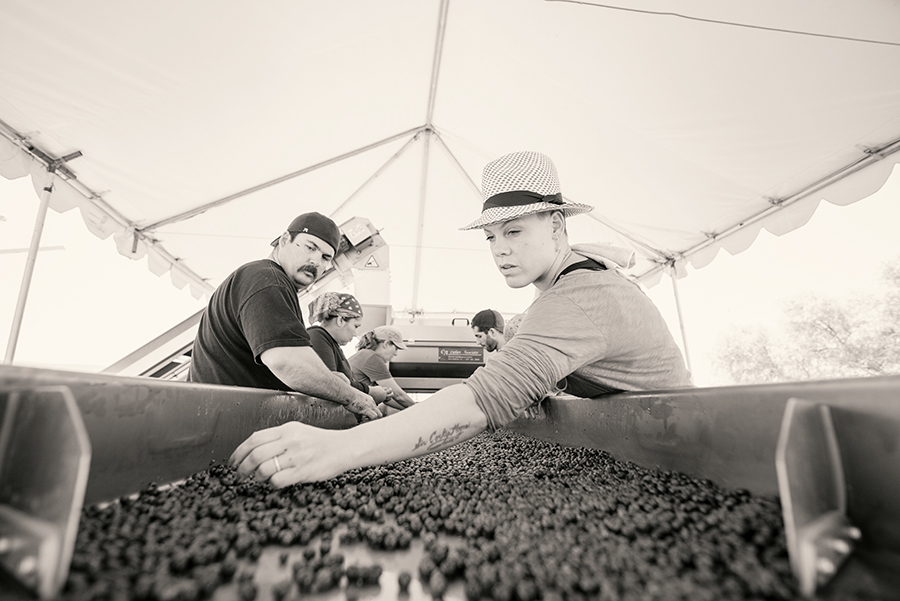
The Aggie talks to Alecia Moore (P!nk) about taking UC Davis courses and her passion for winemaking

ALISON THOMSON / COURTESY

Moore’s first wines became available for public purchase last week, selling out that day

Holding a bottle of wine up to a computer camera, Alecia Moore, more commonly known by her stage name Pink or P!nk, points out her daughter’s drawing on the cork — “that’s her little butterfly on our rosé.”
Moore has kept secret her passion for winemaking and the wine brand she’s created for over five years, bringing both into the public eye last year. Just last week, 85 cases of three wines from her Two Wolves Wine brand were made available for public purchase for the first time: a Cabernet Sauvignon, a Cabernet Franc and a Petit Verdot. All three sold out the same day.
“My husband warned me I was going to be disappointed with how fast it went,” Moore said in a Skype interview with The California Aggie on Dec. 3.

After signing her first record deal at age 16, Moore dropped out of high school. But upon discovering her love for winemaking, she has now re-entered the classroom, having taken extension courses online through UC Davis and UCLA while on tour, and attending in-person classes at UCLA. Her assistant winemaker, Alison Thomson, received her masters degree from UC Davis in viticulture and attended UCSB as an undergraduate.

Both Moore and Thomson talked to The Aggie about taking the pretentiousness out of the craft, the utter terribleness of Manischewitz and sharing their passion for winemaking with their children.

The following is a transcription of an interview. It had been edited for length and clarity.


The California Aggie: You’ve kept this project under wraps for the last four or five years — how did it feel to finally bring it into the public eye?


Alecia Moore: Like ripping off a band-aid. It was nerve-wracking, and also it was very bittersweet for me. It was a really fun secret to have. It was nice to be able to learn at my own pace and sort of live this life that no one was really interested in or aware of. But now that we’ve had our first tiny little baby release, it’s really exciting.

TCA: All three wines were just made available for public purchase last week and already all three are sold out — what was your reaction?

AM: It was really fun to watch. But our next release will have more. We’re working out the bugs. And I’m learning how a wine business works, how to launch a wine brand, how to take a dream and make it a reality and make it sustainable. Our dream, for the two of us, is one day our children will take over for us.

TCA: What sort of feedback have you received?


Alison Thomson: People, overall, have been super excited and supportive of it. And I think what we’re doing comes from the heart, it comes from a place of really wanting to create not just a brand, but wines that have integrity and follow the style Alecia’s leaning toward and have personality. It’s not just something to slap a name on and sell. This whole project means a lot to both of us.


TCA: And how would you describe the experience of having something you’re both so passionate about, see it literally grow from the ground up and then see it become successful?


AM: It’s funny, I’m kind of a weirdo, I miss the garage. We started out on a blacktop outside in a tiny little garage that we air-conditioned and it was pretty fun — not always fun. In the last five years, we’ve built an actual winery, we have an actual space that plays music. It’s wild.


AT: I think we’re still not quite there, it seems like we have still more steps to go. We haven’t actually shipped out the wines, for example. The people that have tasted them, we’ve had different tastings where we’ve gotten feedback, but the general public hasn’t really seen the wines yet, so that’s the next big step is getting the wines out to them.

AM: There’s two pendulum swings with this: there’s the winemaker from Bordeaux who comes and compliments us and says, ‘You guys are making really bold choices and it’s delicious.’ And then you have people writing to me saying, ‘I’ve never had wine before but I can’t wait to buy this for myself for Christmas or for my 60th birthday.’ And the part that’s really fun is opening up a whole new world for people who would otherwise be intimidated. We know our shit, we do our research, we do our experimentation and we take it really seriously, but at the same time, we’re also having a blast painting outside the lines.


TCA: For many college-aged individuals, the transition from drinking wine just to drink wine to drinking wine because it’s actually enjoyable hasn’t yet happened. Was there a sort of a-ha moment for you?

AM: It definitely wasn’t around 21 or 22 — think I was still drinking vodka redbull. Honestly, I’d say my mid-20s. I had a manager and an agent and a promoter that are all these fantastic older men, one’s Australian, one’s English, one’s American, and they’ve been around the world, they’re experienced, they had more money than I had and could afford the Châteauneuf-du-Pape and the Bordeauxs and all those wines I would never, ever be able to order. And it was sort of a revelation to me, because I don’t come from money, my mom doesn’t have a lot of money. She’s also Jewish, and we had to drink Manischewitz as a child. And it was horrible, it felt like a punishment and I hated wine. But then learning about different regions and going to those places, I was able to go and see these places and meet people. I guess as soon as you meet a French person who makes wine, you sort of fall in love. And you want to be a French person who makes wine.

TCA: Manischewitz every Friday night is not my favorite part of the week.

AM: It’s punishment! What did I do? I’m eight, why do I have to drink this?


TCA: When did you both know you were passionate about not only wine, but also about winemaking?

AT: I started out in the wine industry in sales, in a tasting room, and I got into it because I liked science, I studied biology at UCSB as an undergrad and I was into agriculture, growing plants, food — I loved cooking and fruit  — my grandma had all of these fruit trees and I was always in charge of harvesting all the apricots and making jam and processing all of the fruit.

AM: No wonder you’re so good at it!


AT: Yeah, I’ve been doing it for a long time. After college, I worked doing restoration ecology, but I also worked in a tasting room and really just loved learning about wine. Being able to taste around Napa, I just realized I really loved learning about wine and the process. And that’s what made me want to learn more. So I decided to apply to UC Davis to get my masters degree in viticulture. I wanted to do it from more of an agricultural standpoint, so I went through the horticulture and agronomy graduate group and was able to get into a lab at Davis. I didn’t have my first winemaking or production job until I went to Italy for an internship while I was in grad school. So I took a quarter off and went to Barolo to work for a producer there. It was there I knew for sure — I loved the work and I loved being part of it, I loved every aspect of it and I knew it was something I wanted to do for the rest of my life.


TCA: What do you find enjoyable about being hands-on and involved in the full process, from picking the grapes to bottling the wine?

AM: When I first moved here, I got together with the vineyard manager, Ben, and I said, ‘I want you to teach me everything you know. Do you have time?’ And he was such a great teacher. He said, at one point, ‘I haven’t been on my hands and knees in a vineyard this much in a really long time — thank you.’ I started with pruning and I fell in love from the very first moment, I fell in love with the actual work of farming vines. It was something I could do on my own, I could go out in the morning and get an early start. That’s very rare for me. And I could just be in nature. I’m a high school drop-out, I’ve had a record deal since I was 16 years old. So I’ve learned that craft and — they say it takes 10,000 hours — I’ve mastered that craft. That’s my number one craft. But to be a student again, and to be learning, my brain was so happy. And besides the online courses I’ve been doing and the tastings and all of that, to actually get physical and get your hands dirty, it became my obsession, it’s my second dream. One day I will have my 10,000 hours, and 20,000 and 30,000, and then my daughter will take over because my back will hurt.

TCA: Having not been in a classroom setting since you were 15 or 16, what was the experience of returning to the classroom for you?

AM: My brain has never been more happy. I honestly think education is wasted on the young, a little bit. Until you know what you love, it’s so boring and you don’t know how you’re going to apply it to your life, especially if you don’t know what you’re going to do. And for me, it was music, so science had nothing to do with my life. But once I became sort of obsessively interested in this subject, and learning about how much there is to learn — not just enology, but viticulture, and the seasons and the moon and biodynamic and organic, and then there’s wine to drink, too – the fun part. I’ve never been happier. I love school. I’m the best student now, and I was a flunker then. I was horrible, I slept through all of my classes. I wish every young person could find their passion before they have to shell out a shit load of money on school.


TCA: How did you both end up taking courses through UC Davis? Why UC Davis?

AM:  For me, it was easy. UC Davis is revered and I had the chance and the time and I’ll go anywhere. I was able to go to UC Davis and do an introduction to wine chemistry and it blew my mind. I’m a 39-year-old kid who’s never sat through a chemistry class in my life because I dropped out of school before I even got to that part. So it was just mind blowing. And also I knew I could go home and have new knowledge in my back pocket that I could actually use. It’s easy, if you want the best, they say go to UC Davis.

AT: For me, there wasn’t really any program besides Fresno at the time, Cal Poly was just getting started with their program. And so it was the only choice for me — not because it was the only one available, it just seemed like the right fit for what I wanted to learn.


TCA: Alecia, have you worried people won’t take you seriously as an established winemaker either because of your relatively new entrance into winemaking or because of your celebrity?

AM: I’m aware of it. I’m not worried about it. I think there’s nothing you can do about that. I’ve been busting my butt, I’m a hard worker at everything I do, whether it’s mothering or daughtering or winemaking or songwriting or performing. Somebody told me a while ago, ‘You’re going to have to prove the dirt beneath your fingernails.’ And I think that’s a process. I think the wine will speak for itself, if people give it a chance. We’re making beautiful wines and I’m really, really proud of them. I think also the second anyone sits down with me and talks to me about it then it’s just a mutual love. It’s no longer a judgement of how experienced you are, or are you full of shit? It’s: why do you love this? And what can you and I teach each other? I think inevitably there will be people who are like, ‘Oh god, another celebrity winemaker.’ That’s inevitable. But I don’t know if I’m making wine for those people.


TCA: Why is it important for you to have your kids involved in the process?


AM: We’re moms and we’re working moms, and guilt comes with that. And also we love being moms, and I love my family, and I would love to have time with them and be able to teach them something and have them teach me.


AT: I love it because they can see what I do in a day and it’s tangible. They know what winemaking looks like. They know when I’m away all day, what I’m doing

AM: And that you’re proud of what you’re doing.


AT: Yeah, and they’re proud of it. They like to be a part of it, they feel ownership over it as well, and I think that’s really important to stir up that passion and that interest early on, not necessarily that they have to be a winemaker, but because I think it fosters a good sense of work and wanting to work and knowing a work ethic. And sometimes getting that end product bottle of wine takes a lot of work.


TCA: The world of professional wine is so heavily dominated by men — from professional sommeliers to vineyard owners. Do you have advice for young women seeking careers it viticulture?


AM: I think women need to give other women a chance. And I think also women are just as capable in the cellar as men and we can lift heavy shit too. When you’re a woman, you have to work twice as hard. But you gotta put your head down, and you gotta just do the work, and your work will speak for itself.

AT: Sometimes with women in the wine industry, especially coming out of Davis, there’s a divide where a lot of women get pushed into enology — the lab side of things — whereas men will go into the cellar. And I think it’s really, really important for women to get that cellar experience. Understanding and knowing all of those processes in the cellar will make you a better winemaker in the end and being able to do it yourself is really important. Before I came to Davis, I was talking to somebody who was an acquaintance. He was working in the wine industry at the time, and I told him I wanted to get into the wine industry and be a winemaker and he kind of looked at me and scoffed and said, ‘You know, you have to be able to pick up a barrel.’ And it was this judgement that made me want to prove to him, even though he was nobody I cared about, I could do that. When you’re not used to doing that kind of physical labor — Alecia and I are not big people, we’re both under 5’5” — it’s totally possible, you just have to work smarter.


TCA: Can you talk about why you chose the Two Wolves name and how you felt that specific Cherokee proverb connects to your brand?

AM: We live right next door to a 1,400-acre reservation. I heard this parable and it just blew my hair back, because balance is really interesting to me and the spectrum of human potential and this war that rages on inside of each of us. I think the reason why we called it that was because number one, we are wild and two, I believe the balance in wine is just as important as the balance inside of a person. You can make a wine that is a monstrous beast and you can really be a winemaker: you can involve yourself in every part of the process and really put your print on it. Or you can step back and try to be gentle and watch and observe and have hope and be a wine grower. We try to keep them in the middle, sort of balanced and elegant and a wine that you could drink at lunch and not a need a nap after. Because my nature can be very aggressive, I’m trying to be very gentle in this process.


TCA: Where do you both see room for growth and expansion of the brand?

AM: Well we’re just starting out! There’s going to be a big part of this that’s going to be charitable and that was important to me — in order to start a new thing, it needed to do some good in the world. And we’ll see, we’re having a blast. We don’t ever want to be this huge deal. I want my kids to look at it and go, ‘I can do this, and this looks fun-ish.’ I don’t want to create this huge undertaking. Never say never, but I don’t think we’ll ever go above 2,000 cases a year. We’re kind of already running out of space and I kind of like it this way.

Written by: Hannah Holzer — campus@theaggie.org

Alumna said university forcibly removed her from event for talking about her sexual assault

DIANA LI / AGGIE

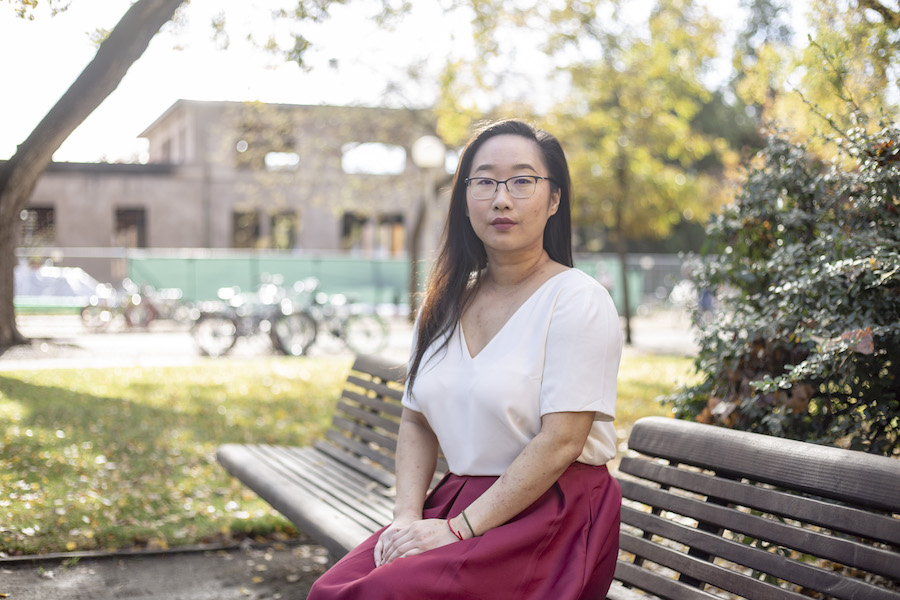
Yee Xiong speaks out against UC Davis after experience at Southeast Asian Youth Conference

Yee Xiong, a UC Davis alumna from the class of 2015, recently made headlines in Oct. 2018 for winning a prolonged legal battle against a man she accused of sexual assault.

While Xiong has maintained that UC Davis handled her sexual assault case appropriately, when she returned to campus last year to perform a spoken-word piece about her assault at the Southeast Asian Youth Conference, she said a university official forced her to leave the event due to the subject matter of her poem.

Xiong alleged that she was subject to both verbal and physical harassment and her freedoms of speech and expression were violated. Xiong has demanded a formal apology from the university for the way that her performance was handled and has said that she has not yet received one.

Responding to the allegations in a Nov. 7, 2018 email sent to The California Aggie, Mayra Llamas, the executive director of the Community Recruitment and Retention Center, confirmed Xiong was asked by a coordinator of the conference to leave the event “to avoid further triggers and distressing the youth whose emotional safety was our main priority.”

“The University respects Yee’s bravery in coming forward and regrets that its request caused offense to Yee,” Llamas’ email stated.


Xiong’s Story

Xiong is currently employed as a volunteer coordinator at Empower Yolo, an organization devoted to helping victims of sexual violence. A former Asian American studies and design double major, she was active in campus life as a UC Davis student, and worked for Southeast Asians Furthering Education.

Southeast Asians Furthering Education, or SAFE, is a community program at the Student Resource and Retention Center that “centers hxstories* and experiences tied to the Vietnam War, Khmer Rouge, the Secret War and Pathet Lao,” according to the SAFE website.

But Xiong’s involvement in sexual assault awareness advocacy didn’t begin until later on in her college career. Xiong was sexually assaulted by Lang Her, a friend and fellow student, on July 9, 2012 at a house party after a night of heavy drinking. She was incapacitated during the incident but soon reported it to the police and the Title IX commission on campus.

The following account of the legal battle that ensued when Xiong brought charges against Her was corroborated by Yolo County Chief Deputy District Attorney Jonathan Raven.

The first trial related to the incident occurred in 2015, three years following the alleged assault itself. During this process, Her’s defense attorney accused Xiong of dramatizing her experience in a ploy for attention, and the attorney also insinuated that she had borderline personality syndrome.

The trial ended in a hung jury, with the verdict 4-8 in Her’s favor. The re-trial in 2016, resulted in a second hung jury, 10-2, this time in Xiong’s favor.

Her pleaded guilty to harm or intent to create bodily injury and was sentenced to one year in jail. Due to the protracted nature of the case, Xiong felt compelled to accept Her’s lighter sentencing.

Minutes after she left the courthouse with her family, Her’s legal team served Xiong with a defamation suit from Her’s legal defense team, threatening to sue Xiong because one of her siblings had referred to him as a rapist on Facebook. Xiong returned to court in 2017 to fight the defamation suit, which the judge tossed out in a matter of minutes.

Xiong has now successfully sued Her for sexual battery.


Returning to UC Davis

The grueling legal battle Xiong endured heightened her commitment to raising awareness about consent culture within the Southeast Asian community.

Xiong comes from the Hmong community in Yolo County; according to a 2010 census report, California has the largest Hmong population in the United States.

Xiong’s former colleague at SAFE, Lyia Jalao, who was also present at the conference when Xiong was asked to leave, said that, in some Southeast Asian communities, there is a culture of shaming and silencing those who have been victims of sexual assault and other forms of physical and psychological violence.

In the six years since her assault, Xiong has become an activist and advocate for sexual assault awareness and has remained involved with SAFE.

Although Xiong is satisfied with the way that the university handled her rape case, she remains deeply affected by the incident that occurred when she was invited to speak at the Southeast Asian Youth Conference on Feb. 11, 2017.

Jalao, who was present at the conference, described the event, organized by SAFE, as “empowerment and leadership-based” and a venue for “showcasing academic and artistic expression” for high school students in the Southeast Asian community.

SAFE invited Xiong to perform a spoken-word piece highlighting her experiences as a sexual assault survivor. Xiong said that, before the performance, she issued a disclaimer as well as a trigger warning, given that verbal accounts of such behavior can re-activate traumatic memories for those who have had similar experiences.

During her performance, she witnessed a high-school aged student leave, upset by the content of her poem, and then return around five minutes later. But immediately following her performance, Xiong was asked by an employee of SAFE, who asked The California Aggie that her name be withheld from this piece, to not participate in the Q&A session as was originally planned.

When Xiong conveyed that she felt that this would be a disservice to the other students in the audience who may have wanted to ask her about her experience, she was told that the students were “unable to digest” the topic and that she had “triggered [all] of the students in the audience.” Xiong alleged that the staff member “refused to leave [her] side” until she left the building.

When contacted about the incident in an email, the unnamed staff member stated that she did not escort Xiong out of the event but that Xiong left “after the recommendation was shared with her.”

Xiong said the experience left her feeling “dirty, disgusted, violated and humiliated,” especially since she had been invited to the conference to perform a piece centered around the issue of sexual assault.

Jalao was present at the conference and has confirmed Xiong’s account of the events.

“There’s a long history of shunning from the [Southeast Asian] community and a complete dismissal of victims and survivors and their stories,” Jalao said. “We wanted to show […] that there’s this beautiful resiliency that we all have, and no matter how hard it may be, we need to provide a platform for survivors to showcase their strengths.”

But Jalao’s hopes for the event were not brought into fruition.

“This was a great opportunity for UC Davis students and high school students to see that the institution supports survivors, but that never happened,” she said. “It was two steps backward and not forward. All of the cultural shame and dismissal was repeating […] in an institution that touts moving forward and advancement and all of these positive traits, it’s not what happened at all.”

Jalao said that usually when Xiong has performed her pieces, it has been for adult audiences. From what she gauged, the coordinators of the event were “very enthusiastic.”

“[But the staff member] said that Yee’s performance had not been okayed or approved and that had they known what the content was they would have said no,” Jalao said. “Yee explained […] that she’d been welcomed by the student coordinating the event and that there hadn’t been an issue with the content […] [and] explained that she wouldn’t leave.”

With respect to the content of the poem, Jalao noted that the piece was not “lewd” and described the sequence of events as “embarrassing.”

“She’d performed it many times, and she didn’t go into graphic detail,” Jalao said. “Her piece highlights consent […] [Xiong] was unceremoniously kicked out and everyone was really confused. We felt that the college students who’d coordinated this wanted to talk about consent.”


Seeking An Apology

Expressing similar dismay to Jalao, Xiong said she did not receive a formal apology from the university despite having filed a hate and bias report that included a statement from her on-campus victim advocate.

Xiong related her concerns to the then-Vice Chancellor of Student Affairs Adela de la Torre, and a follow-up meeting was scheduled to address her grievances. Present at the meeting were the unnamed staff member, Llamas and Sheri Atkinson, the current vice chancellor of student affairs.

Xiong said she was later informed by a board member at the SRRC, whose name she was unable to disclose, that the minutes from the meeting had been destroyed.

In a follow-up letter to Xiong and provided to The California Aggie dated May 30, 2017, the SRRC responded on behalf of the university.

“This is not something we take lightly, and we will continue to have ongoing conversations with student staff and career staff to prevent experiences like yours, and your colleagues, in the future,” the letter stated, adding that a sub-committee was in the process of being formed to create “best practices” for youth conferences, like the one Xiong participated in.

The letter acknowledged that these conferences are “high risk events” but also said they are “often very rewarding” for participants.

“Our aim for this sub-committee is to continue to work on reducing the risk of these events and ensure that all participants, invited community members, and student staff have a meaningful and safe experience,” the letter stated. “With regards to career staff accountability, Sheri Atkinson has reviewed all materials and will follow up with any necessary appropriate action.”

In an email sent to The California Aggie on Nov. 7, 2018, Llamas acknowledged that Xiong delivered a spoken word performance at the 2017 Southeast Asian Youth Conference and said the “nature of her presentation about her sexual assault and the presentation upset some of those attending, and most of those in attendance were minors.”

“The safety and well-being of all our students and guests on our campus is important, and it remains a high priority for the University,” she wrote. “For additional resources, please visit our Sexual Violence Prevention and Response site.”


A ‘Disappointing’ Response


With no formal apology from the university, Xiong has described UC Davis’ response as “disappointing.”

“It breaks [my] heart to have a space that I worked in be so progressive and then change completely,” Xiong said.

Xiong said that she wants upstander culture to be upheld, and that UC Davis students need to feel comfortable seeking help in any space without fear of judgement or retaliation. She also feels it’s important that people become aware of the realities and obstacles survivors face and hopes her experience empowers people to stand up for what’s right.

For both Xiong and Jalao, the incident is another example of the ongoing issue of victim-blaming and silencing that Empower Yolo addresses.

Jalao acknowledged that Xiong has “the strength” to deal with shaming, but there are others who do not have strength or support to rely on — “this is why victims don’t come forward,” she said. “This is why potential survivors become victims.”

“There have been so many attempts to silence [Xiong], including people from our own community,” Jalao said. “I’m so exhausted by that. I’ve worked with so many Southeast Asian women survivors who have escaped abuse only to find that it’s happening within their community. Seeing this happen again from someone my age was extremely heartbreaking and disappointing.”


Written by: REBECCA BIHN-WALLACE — campus@theaggie.org


Net Impact team at UC Davis holds forum on national debt

Organization aims to teach students about impact of rising debt

Net Impact, an organization on campus, aims to educate students about the country’s national debt.

“Net Impact Davis is an organization dedicated to sustainability,” said Viktoria Haghani, a third-year genetics and genomics major and the Net Impact president, in an email interview. “We’re currently focusing on economic sustainability by participating in the national competition: Up to Us.”

Up to Us is a nonpartisan organization that “inspires action among millennials, the generation most impacted by the nation’s long-term fiscal and economic health,” according to the group’s website.

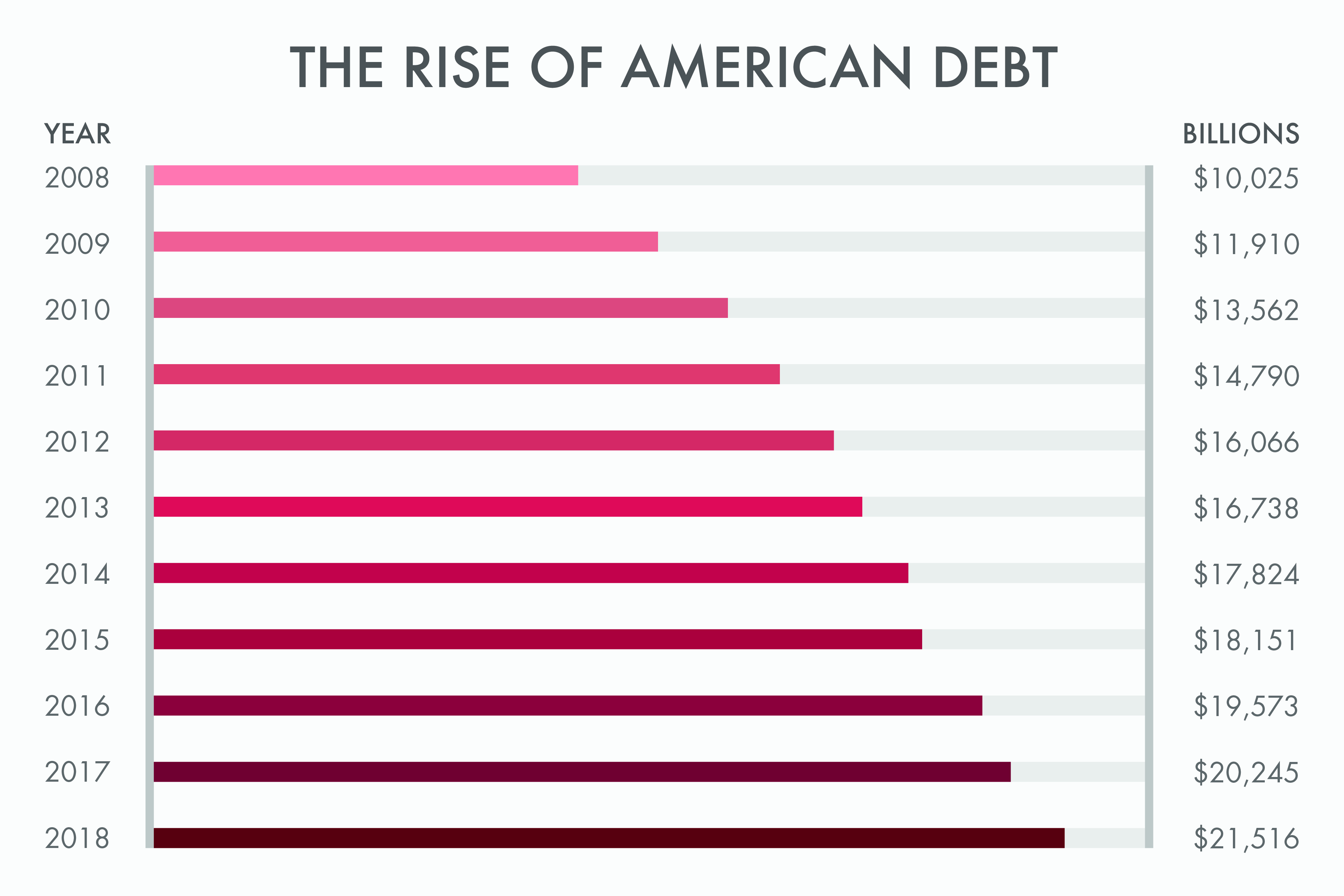
On Nov. 8, Net Impact held a forum called “My Two Cents Day: Up-to-Us National Campaign” in Bainer Hall. The event discussed the U.S. debt, which is at $21.6 trillion. It also discussed how rising debt will affect the current generation and others to come.

“It’s important that students are aware of the national debt because it’s something that is continuously growing in the background and is easily an afterthought for everyday people,” said Kelsey Kim, a second-year environmental policy and economics double major and director of design for Net Impact. “However, all Americans will bear the burden of it, especially our generation.”

The event also featured UC Davis Economics Professor Gregory Clark.

“If we build awareness of it now, we have a better shot at managing it and not being blindsided by it,” Kim said. “As a club, our passion is tackling issues like this in order to create a more sustainable future.”

In addition to this event, Net Impact has also worked on a variety of other events and projects that promote sustainability.

According to the Net Impact Davis website, in the 2017-18 year, the organization created teams focused on one of three themes: poverty, food waste and waste management.

The Poverty team “is in the process of developing and implementing a mentorship program that helps students of Grant Union High School in Sacramento explore occupational and educational opportunities after high school.”

The Food Waste team is developing a “centralized online resource that provides transparent, accurate, and useful information on food help resources.”

Finally, the Waste team is creating a “smart trash can that can capture images of waste, process them and then automatically separate the waste into compost, recyclable, or landfill waste bins.”

“We focus on sustainability, but in all aspects not just environmental, like people may expect,” said Carolyn Chandler, a third-year biochemistry and molecular biology major and Net Impact director of Marketing. “By having such a broad outlook on sustainability, I believe that anyone can find a place in the club and a passion for sustainability in any form.”


Written by: Clara Zhao — campus@theaggie.org

Police Logs

NICKI PADAR / AGGIE

Odd behaviors and strange texts

November 15

“Stated texted wrong person.”

November 17

“Male 35 to 40 years of age thin dark clothing. On bike with shopping cart that also had shopping car, rode into neighbor’s C/Port, then approached other neighbor’s front door. When reporting party went outside to check the subject, he began mumbling about going through trash. Reporting party did not see subject looking in any trash bins. Thought subject was acting odd.”

“Group selling labradors in the park, approximately six dogs. Reporting party concerned for puppy mill.”

“Reporting party received email extortion letter requesting money via Bitcoin. Requested advice.”

“Vehicle parked in a disabled space without displaying disabled placard.”

November 18

“Loud party/gathering, subjects leaving area have been urinating in the plot.”

November 19

“A chair was thrown through a football field snackbar window.”

“Secondhand information required squirrel with shredded leg.”

“Non-electric vehicle parked in an electric parking stall.”

November 20

“Verbal dispute with roommate over cleanliness of apartment, roommate threatened to beat reporting party, reporting party left apartment standing by near the pool for contact.”


Arsonist sets fires in Woodland

Firefighters responded to multiple fires in Woodland area

On Nov. 12, firefighters responded to six fires set around the Woodland area in the span of two hours. All fires were within a two-block radius of Main and West streets.

It is believed that the fires were intentionally started by an arsonist. By 8:30 a.m., police took in a person of interest matching the description witnesses gave: an “individual seen wearing a black hoodie and possibly a black face mask.” Sergeant David Krause, a member of the Community Relations Bureau, commented on the arrest.

“No one has been charged with these crimes at this time,” Krause said. “It’s been assigned to our investigative bureau — they’ve been following up on cameras in the area of fires and help to be able to identify someone who matters.”

Marilyn Kung, a second-year computer engineering major at UC Davis, was surprised about the incident.

“I do think it is out of the ordinary,” Kung said. “It’s especially worrying that this is happening during the tragic Butte County fires that are deeply affecting Northern California.”

Vicky Ma, a first-year engineering major at UC Davis, expressed worry for the community.

“With [an] arsonist just going around lighting fires on purpose, it’s concerning,” Ma said. “You don’t know where and when one would appear.”

The first incident was reported at 7:23 a.m. at California and Cross streets. The next was at 7:37 a.m. at 404 W. Cross St. and a third at 8:03 a.m. at 120 W. Main St..

The most serious of the fires occurred at 8:03 a.m. near California Check Cashing on 115 Main St. The building’s front, which faces Main St., was badly scorched, and a sign was also burned down.

Another fire was reported at 8:18 a.m. at the Les Schwab Tire Center on 65 W. Main St.; the fire was found south of the business that faced Court St. near a dental office.

This set of fires occurred almost in conjunction with incidents reported on Sunday, Nov. 11 regarding fires set in dumpsters. There is no evidence, however, of the two cases being linked.

These fires concerned many who believe that incidents such as arson are diverting resources away from combating larger fires in Northern California.

“With the horrific fires going on right now, I hope that [the] arsonist wasn’t doing it to take away time and resources from the firefighters,” Kung said.

The Woodland Police Department has responded to the situation and was still looking for any information on the suspected arsonist at the time of publication.

“We respond to them as we would any other call that we were dispatched to,” Krause said. “[We] actively look for anybody in the area as it was occurring, following up on any lead  by the community that was coming in at the time. [We] just try to figure out what’s going on and get it stopped.”


Written by: John Regidor — city@theaggie.org

How social media is eclipsing books

Teenagers, adults spent more time on social media than reading books, magazines, newspapers

The year is 2018, and no matter where we are, it’s quite a common sight to see people immersed in their virtual universes on their cellphones. Whether it’s at a café or even a family gathering, social interactions have been somewhat replaced by social media or digital media. This is more evident in teenagers, who are Snapchatting more than reading novels or following hashtags rather than going through the morning newspaper. According to a study published in 2016, nearly 82 percent of 12th graders visited sites like Facebook, Twitter and Instagram every day, while only 16 percent reported reading a book, magazine or newspaper every single day — compared to around 60 percent in the 70s. And although 33 percent of 10th graders said they read a newspaper almost every day in the 1990s, by 2016, this number had dropped to just 2 percent. Encountering people who leisurely read on a daily basis is rapidly becoming a rarity.

We may conclude that in these past ten or so years, with the arrival of this new virtual age, our lives have transformed drastically. To a teenager born in the 21st century who has been exposed to social media from a young age, reading books for pleasure doesn’t seem like a top priority when most teenagers of the same age are so immersed in their virtual lives. Television was the undisputed king of digital media in the pre-internet era, and youngsters had little to no options for watching something that aligned with their interests. Thus, spending time reading books on topics of their interest was often a go-to.

Circumstances changed massively after the unprecedented introduction of the internet, and with time people, started using Google as their main source of information and knowledge. No doubt, the internet is perhaps one of the greatest inventions of modern era and it has made our lives much easier. But the internet nowadays is mostly dominated by social media sites, which in some ways have diverted from the main purpose of the internet. Teenagers prefer social media over books or magazines, as they may feel a sense of connection to a community from which they are accessing their knowledge. But the information on social media is often times unreliable — which usually isn’t the case for books.

With the world at our fingertips, we are multitasking all the time and receiving information from social media faster — often times at the expense of receiving the complete information. Thus, multitasking has made us more impatient when gathering knowledge. Rather than gaining quality information on a single topic, we go through multiple tasks and end up with incomplete knowledge on multiple topics. In order to read one book, one has to invest their time and completely focus on it. But a lack of attention span plus impatience may be the reason that teenagers today prefer quantity over quality. According to the National Centre for Biotechnology Information, “the average human attention span has dropped from 12 seconds in 2000 to 8 seconds in 2013 (just one second below that of a goldfish).” We can’t completely blame social media for this decrease, but at the same time, giving excessive time to interacting in the virtual universe versus spending quality time in the real world undoubtedly has its repercussions.  

With different types of information on social media, youngsters today may look at a certain topic through a biased perspective. And why read a book on a given topic when there are several, shorter online sources to read instead? One writer on Quartz estimated that individuals could read 200 books a year if they used their time on social media to read instead. These figures are really disturbing, and every parent should make sure that their children spend some quality time reading books rather than being on social media for hours.

And this isn’t just the case for teenagers. Adults also spend more time online than being engrossed in leisure reading — university assigned readings or books on syllabi don’t count. There’s a need for fostering a reading culture in our homes and schools as social media, despite being more accessible, doesn’t enable us to think outside the box. The virtual experience isn’t as rewarding due to the lack of effort. Meanwhile, when reading a book we transcend to a whole new dimension; for example, book lovers often associate the smell of books to a certain experience and feeling in the past. Even the smell of a certain book can be reminiscent of fond memories (this is not possible with Kindles, let alone with social media).

It’s no wonder that Plato once said, “Books give a soul to the universe, wings to the mind, flight to the imagination and life to everything.” Books and reliable sources on the internet, not social media, should be our sources of knowledge because right now it’s more likely that a person will be influenced by the opinion of a horde of people on social media rather than take the opportunity to develop their own viewpoint.    


Written by: Kanwaljit Singh — kjssingh@ucdavis.edu       

Recipes for the holiday season

RAEL HANUS / AGGIE

Follow these steps to make the perfect holiday treat

The holiday season is a time for old traditions to come together with new ones. This holiday season, take the opportunity to create new traditions with these tried and true classics. You can never go wrong with a cheesecake. This recipe is easy to follow and the cheesecake will be ready to please.

The ingredients are: one can of condensed milk, three eggs, one and a half sticks of cream cheese, one-sixth of a queso fresco cheese and a premade pie crust.

Preheat the oven to 345 degrees fahrenheit. Beat the eggs one by one in a bowl, and then add the cream cheese. Next combine this mixture with all of the remaining ingredients until smooth. Then, pour the resulting liquid into the premade pie crust and place into the oven for ten minutes. Wait a couple hours for the cheesecake to cool in the fridge or freezer, and it will be ready to eat.

Sugar cookies may be a year-round favorite, but when the holiday season comes, the best thing to do with these chewy cookies is cut them into Christmas-themed shapes. To make festive sugar cookies, holiday cookie cutters are a must. The ingredients for sugar cookies are: 16 tablespoons of unsalted sugar, ¾ cup of sugar, one egg, one teaspoon of pure vanilla extract, 2 ½ cups of flour, ¼ teaspoon of baking soda and ¼ teaspoon of kosher salt.

Preheat the oven to 350 degrees fahrenheit. Mix the butter and sugar in a bowl with an electric mixer until the two ingredients look smooth. Once mixed, add the egg and mix again. Then add the vanilla extract. Once all of the ingredients have been properly incorporated, grab a bowl and pour in the flour, baking soda and salt. Proceed to mix all of the ingredients together. The dough will be stiff after mixing, so roll it out until it’s roughly one inch flat. Wrap the dough in plastic wrap and refrigerate for 30 minutes. Once the 30 minutes are up, roll the dough again — this time so the dough is ¼ of an inch thick.

After the dough has been rolled, break out those festive cookie cutters. After the cookies are shaped, place the cookies onto a parchment-lined baking sheet. Bake for 10 to 12 minutes until the edges of the cookies are a light golden brown color. After the cookies are baked and have cooled down comes the fun part. Grab any color frosting and sprinkles to decorate.

For those in the family that don’t have the biggest sweet tooth, a coconut ball is sure to impress come dessert time. The cookies are perfect for a snack on the dessert table that everyone will love. The ingredients are: two sticks of unsalted, softened butter, two cups of an all-purpose flour, two cups of sweetened flaked coconut, ¼ teaspoon of salt and ¼  cup of confectioner’s sugar.

To start, grab the electric mixer, and mix the butter and the confectioner’s sugar. Mix until  combined and has a fluffy texture. Mix in the flour and salt after until well-combined. Once all of that is done, add in the coconut.

Preheat the oven to 350 degrees fahrenheit. While the oven is heating up, grab the dough, form one-inch balls and place them on a baking sheet. Bake for 15 to 20 minutes until the coconut balls have a nice brown color. Rub the coconut balls into the confectioner’s sugar. Do not wait until the coconut balls are cooled to complete this step. The confectioner’s sugar will not stick to the balls unless warm.

Holiday desserts can be fun to make and eat, but there are some that are so cute they’re hard to eat. Polar bear cupcakes are one example. To make them the ingredients are: one chocolate box cake mix, one can of vanilla frosting, three cups of sweetened shredded coconut, 72 brown m&m’s and one package of oreos.

Preheat the oven to 350 degrees fahrenheit. Prepare the cake mix according to its instructions, and pour the cake mix into the cupcake liners. Place the cupcakes into the oven for the amount of time indicated on the box recipe. In the meantime, place the coconut shreddings into a bowl. Once the cupcakes are baked and cooled, frost them and dip the cupcakes into the coconut shreds. Place an oreo at the edge of the cupcake, on top of the frosting. If the cupcake looks too bulky or there are not enough oreos, split the oreo in half and only place one half at the bottom. Stick four M&M’s on top of the oreo so that it resembles a paw. These cupcakes will have everyone wanting to grab one to take home if not to eat then to simply admire it. They will be sure to leave everyone in awe and wanting to take pictures for their Instagrams.  

With these recipes the holiday season will be livelier and everyone will love the baked goods that go along with the festivities. Happy Holidays, Aggies!


Written by: Itzelth Gamboa — arts@theaggie.org


Anxiety and students: How it manifests in different forms

0
JEREMY DANG / AGGIE

Students reflect on the difference between anxiety and anxiousness, how to care for themselves

Anxiety is real. It comes in many different forms. It’s there, hidden beneath. But, for some, that anxious feeling is something that can eventually consume one’s life. Anxiety has the ability to influence people on many different scales. This can range from anxiety disorders to the feeling of being anxious. It can occur in early life, but for some it is especially apparent during college years.

Minerva Olaya, a fourth-year biomedical engineering student, didn’t realize she had anxiety until her first year of college.

“My dad was in the ICU for about a month during Fall Quarter, and when I came back to school Winter Quarter, I was constantly worried about him and thinking that something bad would happen to him or my family in general,” Olaya said. “It then got to the point where I felt like I was going to fail every class even though I was doing well in them.”

Once she started going to therapy due to continuous breakdowns, she began to understand her anxiety and how it made her feel. To Olaya, her anxiety is feeling uncomfortable in social situations and feeling like she is going to fail no matter what measures she takes.

“It’s a constant worry that something is going to go wrong and everything is out of my control,” Olaya said.

For second-year international relations major Angelica Nemani, junior year of high school was the time she realized she had anxiety.

“I had already gone through a period of depression, and one way I coped with it was by reading a lot about mental health and how to overcome the challenges that come with having a mental disorder,” Nemani said. “I came to realize that what I was feeling correlated to the feelings associated with anxiety.”

She described anxiety as a complicated condition where people feel an overwhelming feeling of panic that can happen at any moment.

“For me personally, anxiety is like another person in my head controlling my thoughts and telling me I should be more worried about everything that is going on in my life,” Nemani said. “[It’s] telling me that what I am doing is not good enough or even that I, as a person, am not good enough.”

For Nemani, facing her anxiety is almost a daily routine. However, she has a lot of different emotions that depend on the situation and how severe it feels.

“When I feel an intense wave of anxiety during an event or moment, the physical symptoms I often feel are an increased heart rate, heavy breathing, lightheadedness or a headache, nausea and dizziness,” Nemani said.

While most people feel anxious at some point in their lives, it may not be equivalent to having an anxiety disorder. Julissa Oropeza a third-year Spanish major, has not been diagnosed with an anxiety disorder but still experiences anxious feelings that occur normally during the end of the quarter. She described it as a tight feeling in her chest, and she feels like she needs to pace herself or get some breathing room.

“Balancing life at that point becomes extremely difficult, and it’s the time where I can’t go home or be with friends due to the busy schedule,” Oropeza said.  

However, the thing that helps her cope is being around other people and having the emotional support that reminds her she is not alone.

“It reminds me of the bigger picture and to not be caught up in the little things,” Oropeza said.

Oropeza explained that seeking help is the best way to go to when dealing with these kinds of feelings. As a friend to someone with an anxiety disorder, Oropeza says that getting better is an exercise.

“[Getting better] won’t happen overnight or go away, and that’s ok,” Oropeza said. “Sometimes things need to be practiced and exercised.”

A common misconception about anxiety is that someone is over-exaggerating about their feelings.

“They don’t believe that your mind is as powerful as it is because, ultimately, it’s your mind that is playing games with you,” Olaya said.

Nemani, in addition, pointed out that the term “panic attack” is used nonchalantly within society.

“I don’t think people really understand what it means,” Nemani said. “It’s not just the feeling of your heart rate increasing rapidly or breathing heavier than usual when you’re nervous. For most people with anxiety, a panic attack can feel like a heart attack, and it is a very serious event that can happen fairly frequently for some.”

To help people become more aware, Oropeza believes that awareness should be presented earlier on.

“There isn’t enough awareness and understanding until college (at least for me), and I think that it should go beyond that,” Oropeza said. “It should be taught at school in health classes because mental health awareness is still health.”

For students seeking help, all three students believe that going to the Student Health and Counseling Services Center is a big help.

“I personally believe that every student should go to CAPS at least once, considering we pay for it with our tuition and fees,” Olaya said.

She also believes that when students are coping with anxiety, they should reach out to their professors. She stated that most professors are understanding and will help you.

Regarding the Student Health and Counseling Services Center, Oropeza says, “[The Student Health and Counseling Services Center] really helps you navigate your emotions and reasons for them. They give you help and more resources beyond that session.”

Counseling appointments can be made through the SHCS website, which offers information about their counseling services and other resources regarding health topics.

To students and anyone who has anxiety, Nemani speaks from her own personal experience.

“If you have never experienced the feelings associated with this illness before, I think it’s really beneficial to talk to someone that you’re comfortable with about what you’re facing and what you need help with,” Nemani said. “Keep the people that are important to you aware of what you’re going through.”


Written by: Sierra Burgueno features@theaggie.org


Succumbing to stardom

JAMIECHEN / AGGIE

Mac Miller and Lil Peep were taken by their greatest flaws

American society is obsessed with pop culture. Being a celebrity in America entails a life of presumed fame and fortune as well as embodying the persona of a cultural icon. It is this lifestyle that many people yearn for hoping to one day make it on late night talk shows, receive millions of likes on social media and be wanted and validated by the public sphere.

Living as a celebrity is accompanied by a heaping amount of external validation, which many think may be the solution to their problems. However, looking at past and present celebrities and their lifestyles and demises, it is clear that although celebrities live lives far differently than most people, many of them still struggle with depression and drug usage.  

Due to the frequency of celebrity deaths at the age of 27, “the 27 club” was coined to signify these recurring tragedies. Some of this club’s members include Jimi Hendrix, Kurt Cobain, Janis Joplin, Jim Morrison, Brian Jones and Amy Winehouse. The 27 club is only supposed to include people who died at the exact age of 27, but the most important takeaway from this club is that many celebrities die in their 20s, a shockingly young age. Many celebrities have lost their lives within the past year or so. It is important that their impact is not forgotten and that their demise is understood and discussed.

Gustav Elijah Åhr, better known as Lil Peep, just posthumously released a new album titled “Come Over When You’re Sober Pt. 2.” Lil Peep, who was known for his genre blending rap and alternative rock style, died two weeks after his 21st birthday on Nov. 15, 2017. He died of an accidental fentanyl-Xanax overdose, only three months after releasing his debut album titled “Come Over When You’re Sober.” His music admitted suicidal thoughts and focused on personal drug use, difficulty with depression and past relationships. Some of the lyrics from his songs exemplify these themes: “drugs in my nose, good drugs in my cup,” “Do I make you scared? Baby, won’t you take me back?,” “You don’t wanna find out, better off lying

You don’t wanna cry now, better off dying.” Lil Peep seemed to be heading toward the peak of his career. He had achieved the modern American dream of becoming a prominent and well-defined member of pop culture, so his deep internal struggles and eventual death are confusing and concerning.

Malcolm James McCormick, a commercially successful rapper from Pittsburgh commonly known as Mac Miller, died on Sept. 7, 2018, at the age of 26. Like Lil Peep, he died soon after the release of his newest album, “Swimming,” which was released on Aug. 3, 2018. His fifth studio album was well received, earning a score of 7.5 from Pitchfork Magazine and an aggregated score of 78 on Metacritic. Miller died due to an accidental overdose of a mixture of fentanyl, cocaine and alcohol. Much of the lyrical content of “Swimming” contains themes of self-help, growing as a person, failing as a person, personal quandary and his perceptions and confounds with fame.

Miller was regarded as an outstanding rapper after cultivating his craft for more than 10 years, and the release of “Swimming” proved that he was nowhere near the end of his musical capabilities. During Miller’s time as a rapper, he released many popular albums and mixtapes that defined him and his style while also encapsulating his talent and musical drive. Some of these include “K.I.D.S.,” “Blue Slide Park,” “Watching Movies With the Sound Off” and “The Divine Feminine.”

On Oct. 31, 2018, a memorial concert called “Mac Miller: A Celebration of Life” was held in remembrance of Miller. The concert featured a culminating cast of prominent musical figures, including Chance the Rapper, John Mayer, SZA, Schoolboy Q, Travis Scott, Miguel, Vince Staples and many more.

The deaths of Mac Miller and Lil Peep are nothing but tragic and ultimately perplexing from the public’s perspective. These two artists were commercially very successful, and they made meaningful music that resonated with millions, so how could it be that they both died of drug-related causes at such a young age?

The personas created by artists are just that — personas. It can therefore be hard to separate the real human being from a carefully crafted image of a human being. Both Lil Peep and Miller spoke very openly about their dealings with depression and drug usage. Despite the lives they created for themselves — full of fame, fortune and musical success — the two rappers also battled drug abuse.

“I was not happy and I was on lean very heavy. I was so f–ed up all the time it was bad. My friends couldn’t even look at me the same. I was lost.” Miller said in an interview with Complex Magazine and in the same interview, he seems to have foreshadowed his own end “I’d rather be the corny white rapper than the drugged-out mess that can’t even get out of his house. Overdosing is just not cool. There’s no legendary romance. You don’t go down in history because you overdosed. You just die.” These aforementioned late musicians both admittedly used drugs heavily, which can be an indicator of a larger issue.

If people who have achieved the celebrity lifestyle and all of its luxuries are unable to cope with the detriments of mental illness, how is the average non-celebrity supposed to deal with these troubles? On a daily basis, over 115 people die in the United States due to opioid overdoses, according to the National Institute on Drug Abuse. Even celebrities who have resources at their disposal are overdosing on drugs, pointing to the opioid epidemic in America. Many have been affected by the devastating effects of opioid dependence.

Because Miller and Lil Peep gained such a following during their lives and delivered powerful music to many, their legacies will be remembered. Although they may have met a dismal end, their music will be accessible forever, and they can be remembered as great musicians.


Written by: Ethan Pearson — arts@theaggie.org


Aggies Chop Down Lumberjacks

JULI PEREZ / AGGIE

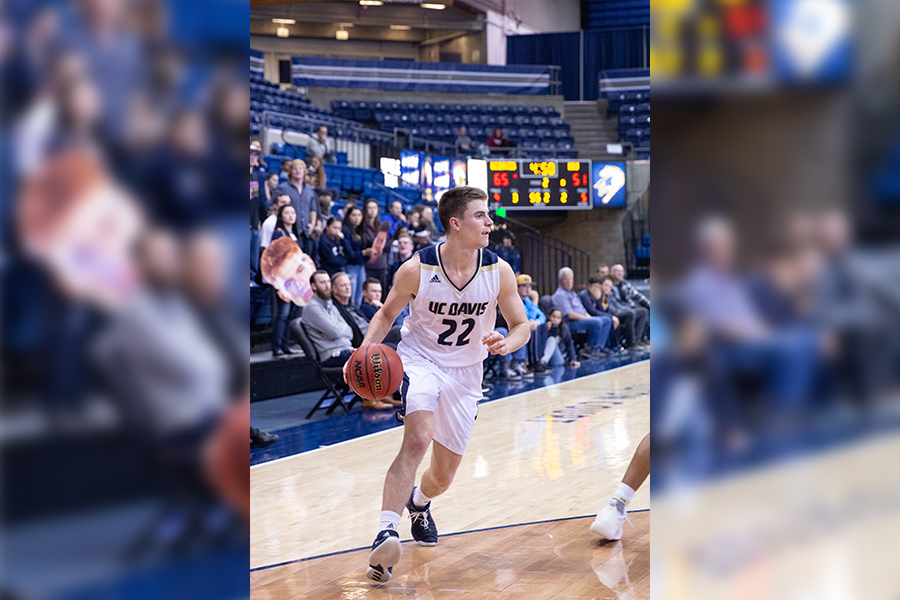
After rough road trip, men’s basketball triumphs over Northern Arizona

With just one win in its first seven tries, the UC Davis men’s basketball team came back home with hopes of getting things back on track as the season approached conference play. With three straight losses and a 1-4 record on the five-game road trip, any sign of improvement would be valuable to the Aggies going forward. On the other side, the Northern Arizona Lumberjacks entered the game with a 2-2 record and hoped to take advantage of their struggling opponent.

When the whistle sounded, the Aggies began the game intent on correcting the mistakes that had haunted the first portion of their season. Beginning with a layup from senior guard Siler Schneider almost a minute into the game, the Aggies moved the ball well, repeatedly finding the player in the best position to score. This challenged the Lumberjack defense, while the Aggie defense helped to stifle NAU on the offensive end. Head Coach Jim Les talked about how the offense and defense worked together.

“Our offense was part of our defense,” Les said. “[NAU is] a top 100 team in terms of pace, so they wanted to play a helter skelter, get up and down the floor [game], and I think our offense slowed that down. And it’s hard to run if you’re taking the ball out of the basket. And I thought that our attention to detail on what they were trying to do offensively was really good.”

The strategy paid off. The Aggies began the game on 12-2 run, thanks in part to a pair of early threes from junior guard TJ Shorts II and first-year guard Caleb Fuller. With the early lead and just days after losing a late-game lead to rival Sacramento State, however, the Aggies’ next challenge was to secure the victory. Shorts explained what he thought made the difference.

“I felt like we just locked in more on the defensive end,” Shorts said. “Some of those other games where we had the lead and let it go, when we go back and watch the film, we see that there’s a lot of lapses on the defensive end — a lot of simple mistakes that build up, and next thing you know, they’re on a 10-0 run, so when they were kind of going on a run late, we knew we needed to get one stop at a time.”

After a deep three-pointer from red-shirt freshman guard Luke Avdalovic, Northern Arizona cut into the lead with a series of miniature runs, lowering the Aggie lead down to four on multiple occasions. At halftime, however, the Aggies entered the locker room with a comfortable 39-28 lead, thanks in large part to the efforts of Shorts II and Fuller, who led the Aggie scoring with nine and eight points, respectively. Shorts II also found his teammates well, dishing out four first-half assists.

The beginning of the second half proved to be much scrappier –– there were many exchanged baskets, players diving for the ball and fastbreak opportunities. As the Lumberjacks began to cut into the lead, Shorts II once again took it on himself to make sure that the lead was safe, scoring eight of the team’s next ten points, including a pair of three-point baskets to give the Aggies a 60-44 lead with nine minutes left in the game.

At 65-47, the game appeared all but over, but the Lumberjacks put up one last fight with a 9-0 run, before Shorts II responded with another well-timed three to put the Aggies up 12, icing the Lumberjacks and ensuring a 73-57 victory.

After a tough but hard-fought loss to Indiana, this was a victory to hang the team’s hat on, according to Les.

“I think it’s a good step,” Les said. “I thought, actually, that Indiana — despite the result was a step, and this was another positive step, but sandwiched in-between the games were what I thought were really good practices […]  We’ve had a couple good days, and that showed up here tonight, and I was glad. [The Aggies] deserved that result based on the preparation coming in.”

Shorts II finished the night with 21 points to go along with seven assists and six rebounds. Fuller, who set a new career-high in scoring, finished with 13 points to go with five rebounds. With Schneider adding 12 points of his own, the three top scorers combined to shoot 19-32 from the field, proving too much for the Lumberjacks.

Reflecting on his night, Fuller credited his team and coaches for being prepared for every game.

“As a freshman, I haven’t obviously had a season here yet,” Fuller said. “But I know I have 100 percent trust in my teammates, 100 percent trust in my coaching staff — so I know what they know works, and I’ve just been buying into that.”

The Aggies take the court again on Wednesday, Dec. 5 to face Northern Illinois University. After that, UC Davis will begin an 11-day break. Shorts pointed out that this extended time off does not necessarily mean that the team will be relaxing.

“We’re just going to get back to doing us on the practice floor, which is where you build your habits.” Shorts said. “Coach always stresses, ‘What you do in practice is what you’ll do in the game,’ so we’ve got to have […] 15 or 16 practices between that. We’ve got to have 15 or 16 really good practices going into the next game after that.”

The Aggies’ next home game is on Sunday, Dec. 16 at 2 p.m. against William Jessup University. The game will also be televised on Big West TV.


Written by: Bradley Geiser — sports@theaggie.org


Aggies beat Northern Iowa, head to quarterfinals

LUIS LOPEZ / AGGIE

UC Davis football earns a rematch with Eastern Washington after 23-16 home win

The UC Davis football team was victorious in its first-ever playoff game at the Division I level, slipping past the visiting Northern Iowa Panthers, 23-16, on Saturday evening at Aggie Stadium.

There was a time last season when the Aggies had to score at least 30 points in a game if they wanted a chance to come out on top. Saturday’s slugfest showed just how far the Aggie defense has truly come in the span of a calendar year. On a night when the UC Davis offense wasn’t racing up and down the field like it typically does, it was the team’s defense that came through with key stops time and time again.

“When the offense needs to rely on us, we try to make plays to get the ball back to them,” said senior linebacker Mason Moe. “We just feed off each other. We had to bite down because it was crunch time.”

Northern Iowa had its chances on offense, often driving down the field with relative ease, but were unable to finish off these possessions the way it wanted. The bend-but-don’t-break UC Davis defense buckled down deep in its own territory, as the Panthers scored just one touchdown on four trips to the red zone. In addition, the Aggies recorded two interceptions inside their own 25-yard line to keep the Panthers off the scoreboard.

Saturday’s ground-and-pound style of play was quite unfamiliar for this UC Davis team.

“It wasn’t in the typical fashion that we have [won] in the past,” said the UC Davis Head Coach Dan Hawkins. “I thought our defense played exceptional football with a lot of turnovers and a lot of stops in the red zone. Holding them to field goals was critical.”

Normally, the Aggies rely heavily on their vaunted passing game, led by junior quarterback Jake Maier and a slew of talented wide receivers. While Maier still threw for over 300 yards, completing throws to eight different players, it was the Aggie rushing attack and offensive line that showed tremendous toughness and grit late in the game.

“We were able to compete and contribute at all positions,” said senior wide receiver Keelan Doss. “At the end of the day, that’s what it’s going to take to win these playoff games, especially if you want to win a national championship.”

With UC Davis clinging to a seven-point lead late in the fourth quarter, offensive coordinator Tim Plough called nine consecutive running plays to consume over four minutes of precious time and gain 63 yards.

“It was a little atypical for us to get our horns out and run the football,” Hawkins said. “The diversity and the way that guys adapted and rolled to that shows a lot about them and who they are.”

All in all, sophomore running back Tehran Thomas and redshirt freshman running back Ulonzo Gilliam combined for 135 yards on the ground on 24 carries.

“They trust us to put the game on our backs at the end of the game, be able to move the ball, pick up first downs,” Thomas said. “It means a lot. We like to rotate and keep fresh legs out there. I try my best to give the team everything I got, get first downs and make plays.”

Much like Northern Iowa, the UC Davis offense had its own troubles in finishing drives with seven points, instead of three. On two separate occasions, the Aggies had a first-and-goal situation from inside the 10-yard line, but settled for field goals both times.

With every landmark victory and memorable performance on the field, this year’s UC Davis team continues to cross new barriers for the program. In his postgame press conference, Hawkins referred to the team as the “gold standard” of UC Davis football for their accomplishments and groundbreaking achievements at the FCS level.

“Back in the old days, we didn’t play these kind of teams or play at this level,” Hawkins explained. “Every Aggie that’s ever played here will look at this team as the new gold standard.”

UC Davis now advances to the quarterfinals of the FCS playoffs where it will meet Big Sky counterpart Eastern Washington, the team that handed the Aggies their worst loss of the season — a 39-point drubbing in week 11. The Eagles overcame a slow start in their matchup against Nicholls State on Saturday but rebounded and scored 39 straight points to win by a final of 42-21.

“[Eastern Washington is] a great team and they got after us last time we were up there,” Hawkins said. “I’m sure our guys and coaches are looking forward to going back there and playing better.”

Northern Iowa received the opening kickoff of the game and trudged down the field into Aggie territory with a pair of long pass completions. It took several plays, but the UC Davis defense finally found its footing and bunkered down to force a 43-yard field goal by the visitors.

The Aggie offense put together a 14-play scoring drive and Maier was able to connect with four different wide receivers for first down completions. UC Davis was unable to punch it in on three straight plays from the seven-yard line and subsequently settled for a 24-yard field goal to tie the score at 3-3.

Junior kicker Max O’Rourke had his busiest game of the season, converting three of his four field goal attempts.

After the Panthers jumped back in front with a 36-yard field goal, senior wide receiver Keelan Doss got the following drive started with catches of 22 and 31 yards. Later, sophomore running back Tehran Thomas scurried for an 11-yard gain on a long third down play, putting the Aggies in striking distance. On the four-yard line, Maier faked a handoff and flipped the ball to a wide open junior tight end Wesley Preece in the endzone for the touchdown, giving the Aggies a lead they wouldn’t relinquish.

Early in the second quarter, Northern Iowa threatened to regain the lead, steadily moving the ball at will. On a third down play from the 26-yard line, sophomore safety Erron Duncan deflected a short pass over the middle and snatched the ball out of the air for the interception.

Later in the quarter, UC Davis took advantage of four key penalties by the Panther defense that put them in field goal range. O’Rourke banged through his longest field goal of the night from 35 yards away to stretch the lead to 13-6.

Northern Iowa quickly punted the ball back to the Aggies after three plays, thanks in part to a sack from senior linebacker Anthony Baumgart on the third down. This set up yet another historic, record-breaking play by Doss.

On a fourth down snap with 16 seconds remaining in the half, Doss made a leaping catch down the sideline, surrounded by two defenders, for a gain of 31 yards. This acrobatic reception put Doss over 100 receiving yards on the evening, which marks his 18th career 100-yard game — a new program record.

“He’s so smart about in-game stuff and he knows what’s going on,” Hawkins said. “He’ll recommend things because of what they’re doing to him. He’s a big, physical, strong, fast guy.”

UC Davis took a 10-point lead into the locker room, following a 19-yard field goal by O’Rourke as time expired in the second quarter. It was a tightly contested first half, with just a few critical plays separating the sides. The opportunities were there for UC Davis to take a larger, commanding lead but the offense was stood up on two separate trips inside the Panther 10-yard line. Overall, the Aggies only got one touchdown in four total trips to the red zone.

On the opening possession of the third quarter, UC Davis turned the ball over for the first time when Northern Iowa grabbed an interception off the hands of Preece at the two-yard line, before returning the ball 63 yards the other way. In the moment, this was a pivotal turn of events that kept the Panthers firmly in contention and denied the Aggies a chance to make it a three-score game.

Nevertheless, the Aggies didn’t back down on defense, forcing a 51-yard field goal try that fell about 10 yards shy of the crossbar.

The UC Davis offense took advantage of the good field position by putting together its second touchdown drive of the game. Sophomore wide receiver Jared Harrell made a sensational 45-yard catch, diving headlong to haul in the football despite being blanketed by two defensive backs. Two plays later, Gilliam coasted across the goal line from two yards out, pushing the home team’s advantage to 23-6 midway through the third quarter.

Northern Iowa quickly responded with a six-play scoring drive, aided by a 43-yard pass completion, to cut their deficit to ten points.

After an uncharacteristically-bad interception by Maier, who threw the football into double coverage, senior defensive back Vincent White undercut a route for an interception of his own on the very next play.

Northern Iowa converted a 45-yard field goal early in the fourth quarter, but couldn’t get the game-tying touchdown they needed on their last two drives. On their final possession, the Panthers keep their hopes alive with a fourth down run of 17 yards. On UNI’s final snap from the UC Davis 36-yard line, Moe leaped in front of the receiver to break up a pass near the first down marker to seal the victory for the Aggies.

Next weekend’s quarterfinal against Eastern Washington will kickoff at 1 p.m. in Cheney, Washington. The game will be televised nationally on ESPN3.

Written by: Brendan Ogburn — sports@theaggie.org

PERIOD group aims for campus-wide distribution of free menstrual products

JEREMY DANG / AGGIE

Club has voluntarily stocked select bathrooms on campus, is in process of approaching administration with proposal

The UC Davis chapter of PERIOD, a national nonprofit dedicated to the destigmatization of menstrual cycles, is in the midst of a project to stock all campus bathrooms with free menstrual products.

PERIOD’s UC Davis members’ goal, titled #FreethePeriod, is to have pads and tampons available on a regular basis at no cost to students — ideally in all women’s, men’s and gender-neutral bathrooms.

“You would never go into a bathroom and be like, ‘Oh, will there be toilet paper in here?’ or be really excited to see toilet paper was provided,” said Annie Wang, the UC Davis PERIOD chapter club president and a third-year materials science and engineering major. “That’s just the expectation that a public university would provide basic hygiene necessities.”

Hung Doan, a PERIOD club member and a fifth-year graduate student studying plant pathology, approached the chancellor’s office with the club’s initiative and was met with interest about the logistics of the monetary necessities needed for campus-wide free menstrual products.  

“Chancellor May and the office of the chancellor and office of the vice chancellor […] were really receptive of the idea, but they said they need some type of data and cost analysis,” Doan said.

In response, a pilot project has been in effect in which PERIOD volunteers stock campus bathrooms that have high foot traffic with free menstrual products. The goal of the pilot project is to gauge students’ response to having menstrual products made available to them and track their use.

As of Fall Quarter 2018, women’s bathrooms in Roessler Hall, Sciences Lecture Hall, Shields Library, Wellman Hall and the Student Community Center (SCC) have been stocked. The gender-neutral bathrooms on the first and second floor of the SCC have been provided with products as well. Each bathroom has been stocked weekly with 40 pads and 30 tampons.

“Community volunteers sign up for week-long shifts in which they are responsible for the bathrooms in a single building,” Wang said. “They check the usage of products [and] enter the usage into a Google form, which helps us generate a spreadsheet and restock. We’ve had 24 volunteers help re-stock.”

A petition is currently in circulation to track campus support for campus-wide menstrual products.

A survey distributed by PERIOD with 151 respondents resulted in the finding that “34.03% of respondents missed some or all of class or work during the 2017-2018 school year due to lack of access to menstrual products at least once. 47% [of] respondents stated that menstrual products are a financial burden. 90.7% definitely supported providing period products on campus for free,” Wang said via email.

The project was initiated in January of 2018, and the pilot project began in May. Within that time, PERIOD has collaborated with Student Health and Counseling Services (SHCS) for funding and help with research to draft an estimated budget for campus-wide implementation.

“Student Health and Counseling Services ran a similar project last year, and now stocks all restrooms in the Student Health and Wellness Center with menstrual products,” Margaret Walter, the executive director of health and wellness for the SHCS said via email.SHCS is excited to assist the UCD PERIOD chapter in campus wide research, utilizing the Dr. Michelle Famula Fund for Student Success.”

The Dr. Michelle Famula Fund for Student Success is a fund within Student Affairs which, according to UC Davis Giving, is meant to “provide funding support for student engagement, learning and outreach programs offered through the Student Health and Counseling Services.”

THINX, a New York-based feminine hygiene company, has collaborated nationally with PERIOD and has helped the UC Davis chapter boost its signal on social media and in funding.

The club received the funding necessary to begin stocking nine bathrooms in five buildings in May, took a break from its pilot project during the first Summer Session of 2018 and then resumed the project during Fall Quarter. Due to two weeks of campus closure, the project has been on pause.

PERIOD has just purchased 10,000 pads and 7,500 tampons to continue restocking for Fall Quarter. In Winter Quarter, the group plans to approach administration with a proposed budget to initiate a permanent presence across campus.

“There’s been a few times when someone has left a Post-It note or something […] like, ‘Oh my gosh, thank you so much, this saved my life because I was running between classes and work,’” Wang said. “I think it’s those little notes that reaffirm that this is something a lot of students need.”

Club members made a point of stating that their goal is to provide free menstrual products in all campus bathrooms, including both men’s and gender inclusive bathrooms.

“I think it was important for us to recognize that not all people who menstruate necessarily identify as women,” Wang said. “So we wanted to make sure those products were available to everyone who needs them”

Phase One of #FreethePeriod involved the volunteer pilot program and the collection of data. PERIOD plans to move onto Phase 2 which involves getting support from colleges on campus.

According to Doan, PERIOD plans to reach out to deans, stock bathrooms in colleges throughout campus and collect college-specific data on students’ use of free products. Once complete, the information can be presented to deans and the chancellor’s office to determine the project’s permanent implementation.

“Our team is really convicted by the idea that your body shouldn’t be an inconvenience to your educational opportunities especially at a university campus,” Wang said. “So putting menstrual products in bathrooms is a matter of equal access to education.”


Written by: Elizabeth Mercado — campus@theaggie.org