55.4 F
Davis

Davis, California

Sunday, December 21, 2025
Home Blog Page 490

Humor: Thieves Have Humor Too!

DAVIS WHALEN / AGGIE


Elderly Davis couple discovered thief in their home after husband told joke

It was a cold, windy night in Davis when Rick O’Shea Jackson, 81, and his wife Ethel Jackson, 78, reported a truly haunting crime. According to Mr. Jackson, after coming home from a brisk walk with his wife and two dogs, Winnie and le Pooh, they returned to find 23-year-old Jackmerius Tacktheritrix hiding in the warm confines of their estate.

Apparently, the overnight thief entered through the back door of the Jackson home –– because we all know old people can’t lock a door for nothing –– and went to town on their belongings. As Tacktheritrix was finishing up his thievin’, he heard keys jingle and fall about five times before the door opened. As Mr. and Mrs. Jackson drifted to their autumnal-colored velour picture-patterned sofa, Tacktheritrix hid in the nearest room he could find.

It turns out the reason Tacktheritrix was caught and detained by the lovely Davis police was due to a rather lackluster joke from Mr. Jackson.

“My wife and I were watching Fox News cover the latest Florida hurricane when my wife commented on how brave the reporters were for going out there and risking their lives,” Mr. Jackson said. “That’s when I chimed in and said ‘Their job sounds easy peasy to me. Hold my dentures!’”

“All of a sudden we heard an overbearing cackle from upstairs,” Mr. Jackson said. Due to the recent break-ins, the couple wasted no time calling 911.

The police officers arrived and found Tacktheritrix eating one of Mrs. Jackson’s famous weed edibles. He hadn’t moved since hearing Mr. Jackson’s rather lackluster joke.

Tacktheritrix is currently being held on a $2,000 bond at a local holding facility. The Jacksons hope to recover from this horrific event by locking their back doors in the near future.

Written by: Hilary Ojinnaka – hiojinnaka@ucdavis.edu

(This article is humor and/or satire, and its content is purely fictional. The story and the names of “sources” are fictionalized.)
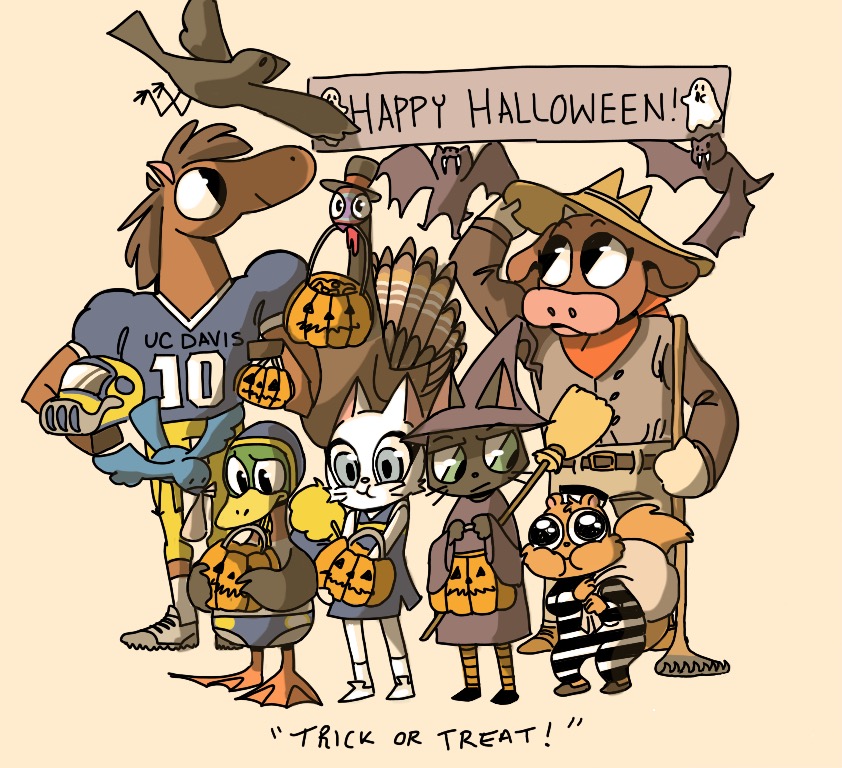

Cartoon: Trick or Treat!

DIANA OLIVARES / AGGIE

Clickbait: Fake news on social media

JULI PEREZ / AGGIE

Social media users should make sure that their information comes from a reliable source

Anyone who is well-acquainted with social media has probably been exposed to neo-yellow journalism, which lures users to a highly-exaggerated post or thumbnail link. Many of us, while being suspicious of its authenticity, take the bait anyway. Despite falling for clickbait, it seems like we never really learn following our mistakes. This curiosity of ours to find out more about these provocative news headlines, stories and articles may be the reason why.

Among social media sites, Facebook is highly utilized by private websites whose profit is determined by clickbait. The main goal of these sites isn’t to sell some product or push their views onto the readers, but to get high views simply to generate ad revenue. Thus, we can deduce that sites that thrive on clickbait news make money just by spreading fake news or misleading news.

There are tons of articles on Facebook that operate through this mechanism and, although there have been recent developments in order to curb this issue, there’s still a long way to go. But, then again, can we hold Facebook accountable for this issue instead of the sites themselves? Many argue that Facebook is a private social networking site that mainly serves the function of connecting people no matter where they are, and it is in no way a news outlet.

Even though Facebook isn’t news media, the repercussions of the fake news that appears on this social network may sometimes be very serious and assist in fostering hate speech or, in some extreme cases, violence — not to mention that hate speech on social media can be seen pretty much every day.

And fake news is not only a problem in the United States. Especially in developing nations with high numbers of internet users like India and China, this issue is even more severe. In China, because there is no Facebook, fake news is prevalent on the social media site WeChat. Jian Kuang, a third-year computer science major at UC Davis, hails from Hubei, China and has been living in the United States for the past four years. Kuang said that WeChat is mainly used for political purposes and it’s much more exaggerated and sensationalized, so one could easily tell that it’s clickbait.

Sometimes, clickbait may fulfill its promise but only to some extent, or the user can never make it through the whole article due to all the advertisements and how long it is. And there’s another form of clickbait in which the only reason a user clicks on the link is to know more about the person or place on the thumbnail. For instance, the thumbnail might show a famous sportsperson who is supposedly poor now, so the reader becomes curious to know about the tragic story. But then that person, place or thing shown on the thumbnail is never addressed in the article or post. Despite not getting to know about the specific famous athlete’s story that was advertised, the article might mention other athletes and their tragic stories — thus misleading the readers while still feeding their curiosity.  

However, as much as we may want to downplay clickbait’s impact on people’s minds, incomplete knowledge is far more dangerous than no knowledge at all. These fake posts have resulted in the formation of battalions of people who enter discussions on social media — which is usually a great thing — but all their points, or many of the points they make, are sadly based on the fake news spread across social media and the internet as a whole. It is always a better option to not blindly believe everything we read on social media and to instead refer to confirmed reliable sources about a topic that we don’t know much about. Knowledge is always evolving, which also means that its fake version is, too.   


Written by: Kanwaljit Singh — kjssingh@ucdavis.edu

Disclaimer: The views and opinions expressed by individual columnists belong to the columnists alone and do not necessarily indicate the views and opinions held by The California Aggie.

Campus culture wars

BRIAN LANDRY / AGGIE FILE


How an unwillingness to debate is creating a toxic campus political environment

According to UCLA researchers, college first-years are more politically polarized today than they have been in over five decades.

The class of incoming college first-years from Fall Quarter of 2016 were, distinctly, the most politically polarized cohort in 51 years, according to a newly released study by the UCLA Higher Education Research Institute (HERI). Using an annual survey to collect data, HERI found that fewer students than ever before (42.3 percent) described their political leanings as “middle of the road,” reflecting an increase in political polarization that has affected the country as a whole.

While the highly contentious 2016 presidential campaign played a major role in increasing political polarization, the aggressive and intentionally provocative actions of campus groups on both the left and right also likely played a crucial part in accelerating the divide. Take, for example, the so-called “Battle of Berkeley,” which saw sporadic incidents of violence erupt between various Antifa organizations and pro-Trump political groups on the UC Berkeley campus. This ultimately cost the university hundreds of thousands of dollars. For a more local example, recall the time that widespread protests on the UC Davis campus shut down a Davis College Republicans-hosted speaking event featuring pharmaceutical executive Martin Shkreli and right-wing provocateur Milo Yiannopoulos, who was also a senior editor at Breitbart News at the time.  

So what exactly is causing these conservative speakers to flock to college campuses?

Campus culture in the United States has an undeniably long history of favoring left-leaning politics, even more so among students and faculty associated with university humanities departments. Step into many courses within fields such as political science, American studies or sociology and you will likely find a syllabus outlining concepts such as critical theory, or a reading list dominated by the Marxist intellectuals of the Frankfurt School. These trends are merely a reflection of academia’s composition, where left-leaning professors increasingly dominate these departments. For example, one sample of 8,688 liberal arts professors found a 10.4:1 ratio of registered Democrats to Republicans (the ratio rises to a startling 12.7:1 when the two military colleges in the survey are removed).

It therefore comes as no surprise that college conservatives are likely to project themselves as contrarians. This is reflected in the increasingly popular trend of campus Republican groups to deliberately schedule inflammatory speakers in favor of nuanced intellectuals — largely because these speakers are likely to draw aggressive responses from leftist groups. While this practice may provide these groups with extensive media attention, it also serves to strengthen the political divide among students and decrease the likelihood of open dialogue.

To some degree, however, conservative groups are not entirely to blame for inciting these reactions. When even milquetoast, establishment Republicans like Ben Shapiro are violently protested and labeled as alt-right by leftist protestors, the prospects of insightful political debate become increasingly unlikely.

What college campuses need are open circles of dialogue that aim to provide healthy rhetoric and civil discourse between opposing groups. Scheduling purposefully-incendiary speakers or placing blanket labels over entire political spectrums does not fuel the intellectual growth of a student body. What it does is fan the flames of demagogic collegiate politics, diminishing the academic tradition of open debate and setting the stage for escalating political conflict. Campus political groups should seek to challenge opposing beliefs in a legitimate manner by constructively debating the opposition and not reverting to ideological tribalism. In the end, the demonization of the other benefits no one.

It’s time to grow up.

Written by: Brandon Jetter — brjetter@ucdavis.edu

Disclaimer: The views and opinions expressed by individual columnists belong to the columnists alone and do not necessarily indicate the views and opinions held by The California Aggie.

Looking back at UFC 229

0
ALLYSON KO / AGGIE

Unpacking all the action from the McGregor-Nurmagomedov showdown

UFC 229 is in the books, but audiences are still reeling from one of the most anticipated pay-per-view events in recent memory, and what UFC has called the biggest fight of its 24-year history. It’s not hard to see why –– from the pre-fight antics, the post-match ringside brawl, to talks of a Nurmagomedov-McGregor rematch –– there is a lot going on.

The preamble was typical of the notorious trash talk Conor McGregor is known so well for. UFC President Dana White described McGregor as the master of the mental game, and the UFC 229 press conference in New York was no exception.

McGregor took aim at billionaire Russian Oligarch, Ziyavudin Magomedov, who is the primary financier of Nurmagomedov’s fight club, the Eagles MMA. Magomedov was arrested back in April by Russian officials for allegedly embezzling money during the construction of the World Cup stadium in Kaliningrad.

Mcgregor also tried to get under Nurmagomedov’s skin by bringing up ethnic tensions between the Chechen and Russian people and hurled insults at his father for praising the Chechen dictator Ramzan Kadyrov on social media.

McGregor, while not necessarily falling short of expectations given his two year absence from MMA and UFC, didn’t quite live up to his own standards in the octagon. He claimed he would “stomp on [Nurmagomedov’s] head as he’s unconscious” after taking a swig of his new whiskey, which he promoted at UFC 229, Proper Twelve.

Nurmagomedov wasn’t phased at all. He maintained control throughout the fight, and eventually submitted McGregor in the 4th round with a rear naked choke.

A defeated, disappointed McGregor sat on the canvas until the post-match brawl erupted. Immediately after he submitted McGregor, Nurmagomedov pointed to the McGregor camp, leaped over the cage and, in an instant, chaos ensued, prompting a swarm of security personnel.

Nurmagomedov later apologized to the Nevada Athletic Commission in the post fight press conference.

“I want to say sorry … I know this is not my best side,” Nurmagomedov said. “He talk about my religion, he talk about my country, he talk about my father, he came to Brooklyn and he broke bus, he almost kill a couple of people.”

All told, White predicted that the pay-per-view buys would be around 3 million. While UFC does not make its pay-per-view figures public, White later told TMZ Sports that sales stood around 2 million. Nurmagomedov reportedly took home a $2 million purse, while McGregor netted $3 million.

White told ESPN that McGregor is demanding a rematch with Nurmagomedov just a day after tapping out.

The aftermath of UFC 229 has brought new challengers into the fold. McGregor crossed over into boxing legend Floyd Mayweather’s territory in the ring in 2017 –– a fight that attracted 4.3 million pay-per-view buys and reportedly netted a $100 million purse. After his victory over McGregor, Nurmagomedov issued a challenge to the supposedly retired Mayweather through social media while standing next to the CEO of Mayweather promotions. Mayweather didn’t back down and called on media outlets and Las Vegas to “get the checkbook out.”

It didn’t stop there, as Mayweather expressed interest in another showdown with McGregor after a potential fight with Nurmagomedov.

Pay-per-view predictions can sometimes be misleading. Mayweather-McGregor approached the total pay-per-view buys from the Mayweather-Pacquiao bout, which generated $4.6 million buys. It isn’t farfetched to consider a Nurmagomedov-Mayweather showdown would be in the $3 to $4 million buy range.


Written by: Bobby John — sports@theaggie.org


The life of Kanye

ALLYSON KO / AGGIE

Kanye West, a man who never runs short of surprises

Kanye West first revealed his genre redefining musical style and bombastic personality to the public eye in 2004 with the release of “The College Dropout.” The album was a mainstream success and 3,358,000 albums were sold. West continued to gain traction and define his sound with consecutively successful and inventive albums; “Late Registration,” “Graduation” and “808s & Heartbreak” helped define what 2000s hip-hop was and solidified West as a hip-hop superstar. He continued to maintain relevance within the music industry by consistently releasing albums, appearing on records and producing. West’s musical identity, success and loud style have undoubtedly correlated with elements of his personality.

A striking moment portraying Kanye West’s unique perspective was during NBC Universal’s “A Concert for Hurricane Relief,” for Hurricane Katrina, when he ad-libbed accusations of racism regarding how black victims of the natural disaster were being portrayed by the media and treated unfairly. It was during this event that West infamously said “George Bush doesn’t care about black people.”

One of the most unforgettable moments in Kanye West history was during the 2009 MTV VMAs when he decided it was in his best interest to steal the microphone from Taylor Swift while she was accepting her award over Beyoncé for Best Female Video.

“Yo Taylor, I’m really happy for you, Imma let you finish, but Beyoncé had one of the best videos of all time! One of the best videos of all time!” West said as Swift stood shocked and Beyoncé appeared utterly confused.

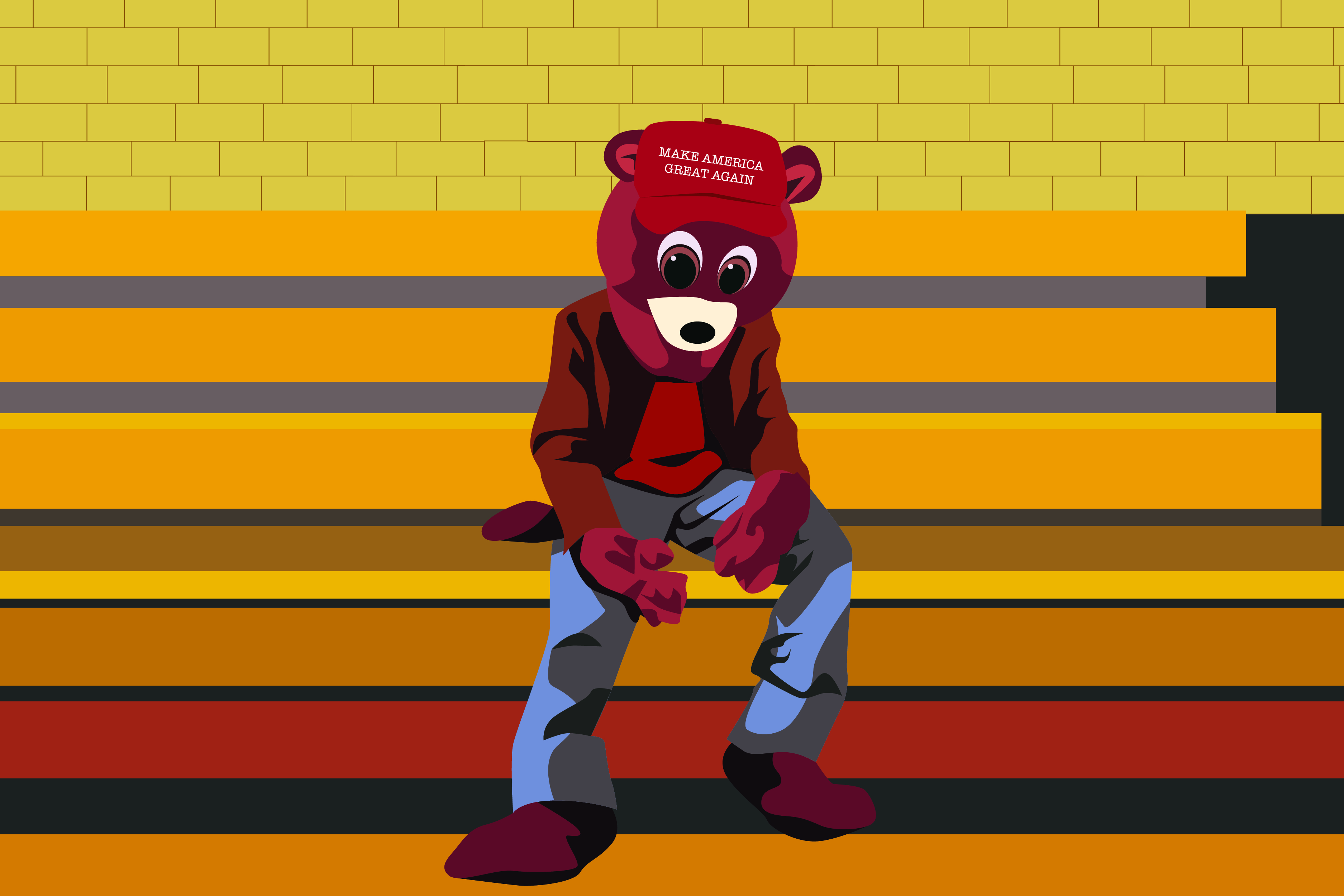
Kanye West’s acts of outrageousness have built a culminating and telling tale that has seemingly begun to climax with his unshakeable support of President Trump. He originally met with Donald Trump in 2016 and recently visited his presidential acquaintance in the White House for a meeting in the Oval Office. After delivering a pro-Trump speech while sporting a “Make America Great Again” hat on his most recent appearance of Saturday Night Live (which was ultimately edited out), he then tweeted out a picture of himself wearing his MAGA hat claiming “this represents good and America becoming whole again […].”

He recently announced a new album named “Yandhi” that was scheduled to release on Sept. 29 and although he has typically delivered to the fullest with his music, the album was nowhere to be found. He later admitted that he had not finished the album and rescheduled the release for Nov. 23. It appears that West is attempting to once again redefine himself through his musical personality with the specific self reference and allusion to Gandhi in the naming of this new album. West has had no problem in establishing himself in multiple fields, and he is continuing this trend.

Kanye West has continuously proven his talent through his various passions and through his artistry. However, the world of Kanye West is also full of surprises and seems to be aboard a one track train of incredulity with no stops in sight.


Written by: Ethan Pearson – arts@theaggie.org


Involvement Fair doubles turnout with major success

0
JAMIE CHEN / AGGIE

The Involvement Fair continues growth, staff expresses excitement over its success

Every year, the Center for Student Involvement hosts the Involvement Fair on the Quad during Fall Quarter. The involvement fair showcases hundreds of student organizations to help students find a group that fits their interests best. This year, the Involvement Fair took place on Oct. 10 and was bigger than ever before, with more clubs present, higher attendance and a larger space.

Joe Martinez, the student expressions and campus activities coordinator at the Center for Student Involvement explained how the Involvement Fair was able to double in size over the course of a year.

“This year, we got more funding so that we could expand the Involvement Fair,” Martinez said. “One of the big things we wanted to do was to make it bigger, so we had to use both sides of the quad. We then had to let groups know that we had more signups – a big part of it was letting the signups go for as long as they could to make sure that more departments and student groups could sign up. We had never had departments included in the past so we really had to send a lot of information to get them. We ended up having around 290 groups signed up.”

With so many groups in the space, Martinez noted the difficulty of organizing the giant space between the two quads.

“The biggest challenge was looking at it as categories,” Martinez said. “So if groups signed up as a particular category, we had to let students who were coming know where the category is for the club that they’re looking for.”

Hosting the Involvement Fair required a lot of time and planning, in order to contact student organizations, set up for the fair itself and bring students out to meet the different organizations on campus.

“A lot of the execution of it was a team effort, so we had to put in a lot more time earlier in the summer to tell groups to sign up and let them know that there were things they could do to advertise that they would be there,” Martinez said. “On the flip side, when we got closer to the event we had to focus on getting people there. The estimated attendance was between 5,000 and 6,000 students came out. Last year, there was probably about 3,000 people in attendance.”

Martinez noted the ample changes made between last year’s Involvement Fair and this year’s, attributing the success of this Involvement Fair to many of these changes.

“The biggest thing is to have as many groups as possible available out there so that students interested in getting involved can see all the different choices that they have,” Martinez said. “The great thing this year was having departments there show that students can get involved not just in student organizations but that they could also do department programs and things like that. By getting involved in something that the departments are doing, like getting involved with things that the Recreation Center offers, like intramurals, that’s involvement too.”

Overall, Martinez expressed satisfaction with this year’s Involvement Fair, due to the success of the event and the large turnout. However, he noted that he hopes to see the Involvement Fair become even more successful in coming years.

“Initial feedback from the student groups that were there were excited that it was larger,” Martinez said. “Next year, the biggest thing is to see how we can encourage students that are attending to visit more of both sides of it, and how we can better communicate that ahead of time. We also want to better advertise the groups that are there next year in case students are looking for a specific group.”

Kathleen Hinkson, the activities coordinator at the Center for Student Involvement, explained that sponsors help the Involvement Fair run smoothly every year, and are another big factor in enticing students to come out and participate. Pepsi is a major sponsor of events like the Involvement Fair, hosting giveaways and free tastings during these events.

“Every year, Pepsi gives us supplies and giveaways to give to our students,” Hinkson said. “They were really happy with what they saw at the Involvement Fair. One thing that they do that’s awesome is that they give student organizations sodas and waters for their events. That’s one of the ways that Pepsi really gets their name out there to the different organizations on campus. They also helped us give away two Pepsi bikes with the Open House and the Involvement Fair. They were really excited to see the students’ reactions and to see the students getting excited over the things that they brought.”

On the Involvement Fair, Hinkson expressed her goals for the future and how the Center for Student Involvement could better present potential resources to students at these events.

“We really want to make it as seamless as possible in regards to communicating with students the resources we’re providing at the fair,” Hinkson said. “We want to give students the opportunity to showcase their talents and really draw people to their table. We can’t really grow in size at this point because we’re already taking up both quads, but I hope we can bring back the stage.”


Written by: Alyssa Hada — features@theaggie.org


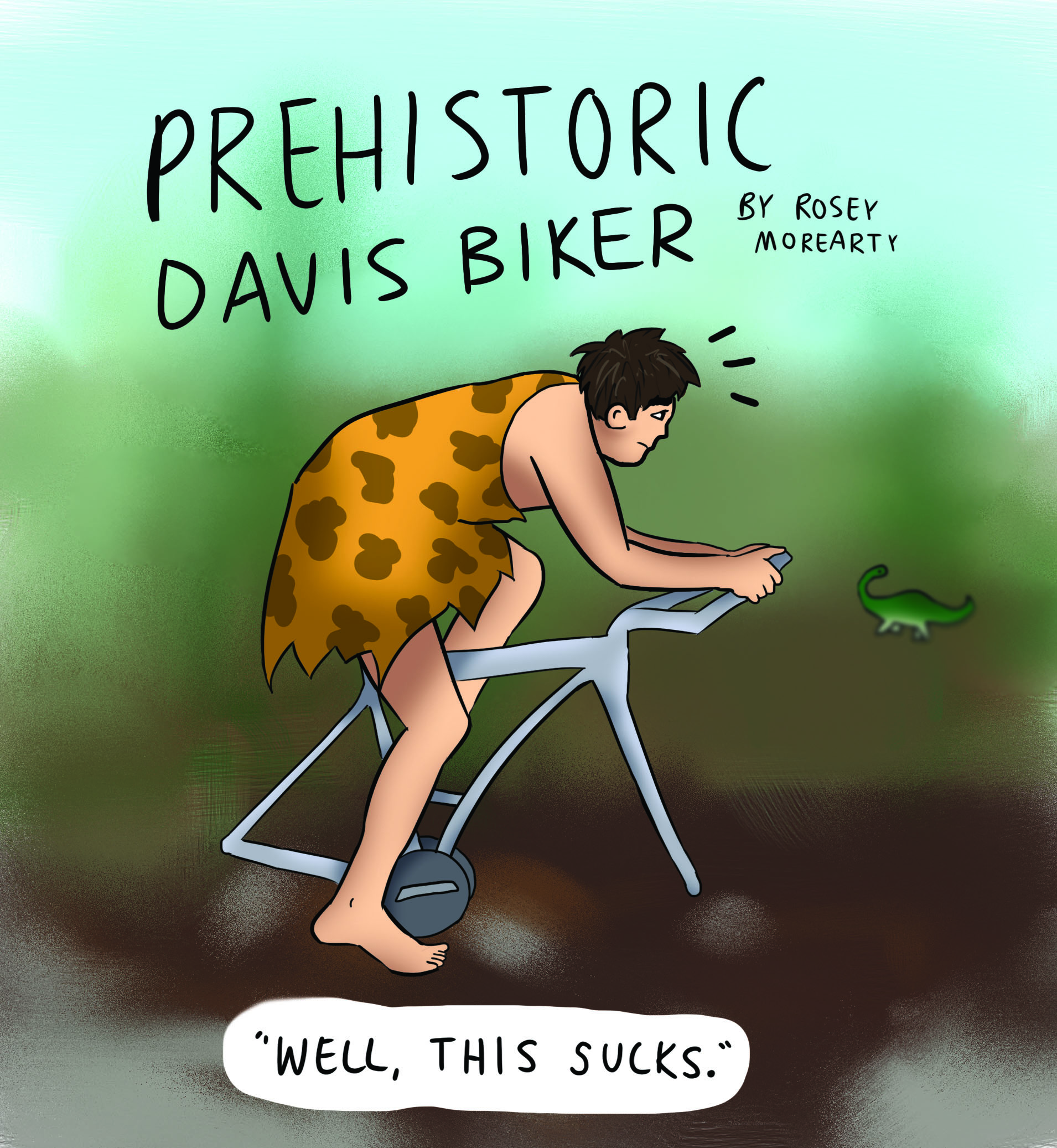
Cartoon: Prehistoric Davis Biker

ROSEY MOREARTY / AGGIE

By ROSEY MOREARTY — rosey@morearty.org


Following radioactivity testing on beagles decades ago, UC Davis to finish cleaning contaminated soil

RAUL MORALES / AGGIE

UC Davis to clean 25-acre former testing site as part of $14 million settlement with EPA

The U.S. Environmental Protection Agency (EPA) stated in a recent press release that it had reached a settlement with the UC Regents to clean up decades worth of contaminated soil, solid waste and soil gas at the “Laboratory for Energy-related Health Research/Old Campus Landfill Superfund site” in Davis.

Studies completed at the laboratory from the 1950s to the 1980s were focused on the health effects of low-level radiation on laboratory animals, according to the press release.

Scientists at UC Davis were specifically examining the “long-term consequences of sublethal radiation exposure” on beagles in what is now called Project Four, according to an official university post online.

According to The Sacramento Bee, Project Four was part of an agreement with the same unit of the Defense Department which had overseen the Manhattan Project — the project focused on developing an atomic weapon, during World War II,

Although there are no radioactive materials remaining, The Bee reported that the site is still contaminated with “pesticides, lead, chloroform and other toxic materials.”

After an expansion of the project in the ‘70s, it was terminated at the end of the Cold War in the ‘80s. The federal government spent “millions of dollars decontaminating buildings and hauling away the remains of hundreds of dead dogs,” The Bee reported.

“The site, which contains laboratory buildings and undeveloped land, covers approximately 25 acres on the University’s South Campus,” the release stated, adding that the site is just 250 feet north of “the South Fork of Putah Creek” and “south of Interstate 80 and east of Old Davis Road.”

The studies contaminated soil and groundwater on the site with what the EPA states are “hazardous chemicals”.

“Three inactive landfill areas remain on site,” the release said. “Following initial actions to protect human health and the environment, site investigations, groundwater treatment and long-term cleanup planning are ongoing.”

Andy Fell of UC Davis News and Media Relations said that the “low-level radioactivity” of the site was cleaned up in 2002. The EPA’s website confirmed this information.

A statement sent via email from Melissa Blouin, the director of University News and Media Relations, said the university has been “proactively addressing” the site since the 1990s.

“This announcement reflects the EPA’s approval of our long-term plans for this portion of the property,” the university’s statement read. “UC Davis is glad that this long-planned collaborative and positive process is now officially moving forward towards completion.”

According to the EPA press release, this cleanup is estimated to cost $14 million. This agreement was reached under the Superfund law, “which requires parties responsible for contaminating a Superfund site to clean up the site, or reimburse the government or other parties for cleanup activities,” the release stated.

More information about the cleanup and contamination is available on the EPA’s website.


Written by: Sabrina Habchi — campus@theaggie.org


Sierra Leone Bats Host Ebola Virus

MELINDA CHEN / AGGIE

Researchers discover new strain of virus in free-tailed bats in Sierra Leone

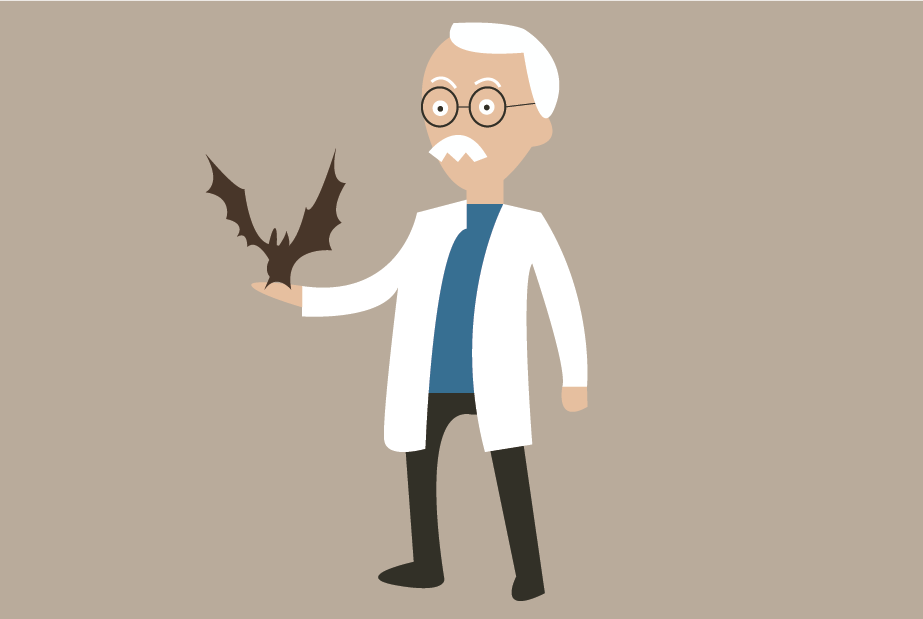
A new Ebola virus, the Bombali virus, was found in insectivorous bats roosting in people’s homes in Sierra Leone. This discovery led researchers to believe that bats are the natural hosts of Ebolaviruses.

“Bombali virus is the first full genome of an Ebolavirus to be recovered from a bat, providing strong evidence that bats are a natural reservoir of these viruses,” said Tracey Goldstein, a professor at the One Health Institute at UC Davis. “It also suggests that along with fruit bats, insectivorous bats play an important role in the ecology of Ebola viruses and surveillance efforts should be expanded.”

The Bombali virus is a different strain from the one that caused the 2013-2016 outbreak, which was the Zaire virus. This research revealed that the Bombali virus has the potential to infect human cells and researchers are still trying to determine if it is harmful. In Sierra Leone, the research team worked as part of the PREDICT Ebola Host Project.

The team conducts extensive non-invasive sampling of wildlife and other animals in Sierra Leone, and then conducts testing of these specimens to detect viruses like Ebola and Marburg,” said Brian Bird, a Research Virologist working in the One Health Institute and global lead of the Sierra Leone team. “With this information we can understand their lifecycle and develop better health communications materials to identify exactly which animals may be infected and help the local population to reduce the risks of being exposed to these serious health threats.”

This discovery could lead to more conversations about the Ebola virus.

I hope that now that we, the scientific community, know a little more about this family of viruses that it will further the discussion and knowledge base of this virus and its hosts,” said Brett Smith, a lab manager at the One Health Institute. “We will be able to learn how to prevent future outbreaks. We will have a better understanding as to how humans interact with wildlife. And one day, hopefully, we find a cure.”


Written by: Kriti Varghese — science@theaggie.org


2018’s trendy costumes

ALLYSON KO / AGGIE

A prediction of this year’s most popular Halloween costumes

Halloween ushers in a creative time to get into character and become a frightful figment of our deepest darkest nightmares. For some, pop culture is the source of inspiration and lends a helping hand when picking costumes for evening festivities. There were many cultural benchmarks in 2018 that will likely make their mark this All Hallow’s Eve.

According to Google’s Frightgeist, an online service that shows the most searched for costumes online, Fortnite is likely to be the most popular costume inspiration this year. Fortnite is an interactive game that swept the world’s gaming community and has created an entire culture of enthusiasts. Backpacks, combat boots and a cross between tomb-raider and military gear are all part of the Fortnite look.

The release of “The Incredibles 2” this year is probably the reason why Incredibles-themed costumes are flying off the shelves at Party City. “The Incredibles” is costume that group will likely coordinate this season.

Unicorns are gearing up to be the most popular mythical creature costume because of how prevalent they were this year. They dominated Instagram, TV and inspired an awful frappuccino flavor that left a lot of people wanting their money back after the hype.

Black Panther wins most popular superhero costume for 2018. The first Marvel movie to have a majority African-American cast made history earlier this year. The costume inspired by the film will allow anyone to become the perfect superhero to protect kids trick-or-treating on Halloween night from goblins and ghouls.

The decade in demand is the 90s. Don’t be surprised if there is a resurgence of many Britney Spears and Christina Aguilera-inspired looks. Britney in “…Baby One More Time” with her pink pigtails and liberated schoolgirl look or Christina Aguilera in “Dirrty” with her grunge vibes are two looks that anyone can serve.

There will be many dancing queens this Halloween in light of the recent “Mamma Mia” sequel. Lots of flowy, hippie attire are all that’s needed to channel the free spirit of a young Meryl Streep in the 80s.

Cardi B is surprisingly not at the top of the list. Recreating the “Invasion of Privacy” album cover wouldn’t be difficult to do with a yellow wig, checkered top and cat-eye sunglasses. Cardi B is arguably one of the biggest names that defined music culture in 2018 and channeling her persona for Halloween would make anyone the life of the party.   

Written by: Josh Madrid – arts@theaggie.org

The truth about being a student pet owner

0
VENOOS MOSHAYEDI / AGGIE

Students talk about owning and taking care of a pet

Having a furry friend by your side may sound appealing, but it’s good to know both the good and the bad when it comes to making decisions about taking on the responsibility of another life. UC Davis students spoke about the positives and negatives of owning an animal while taking classes.

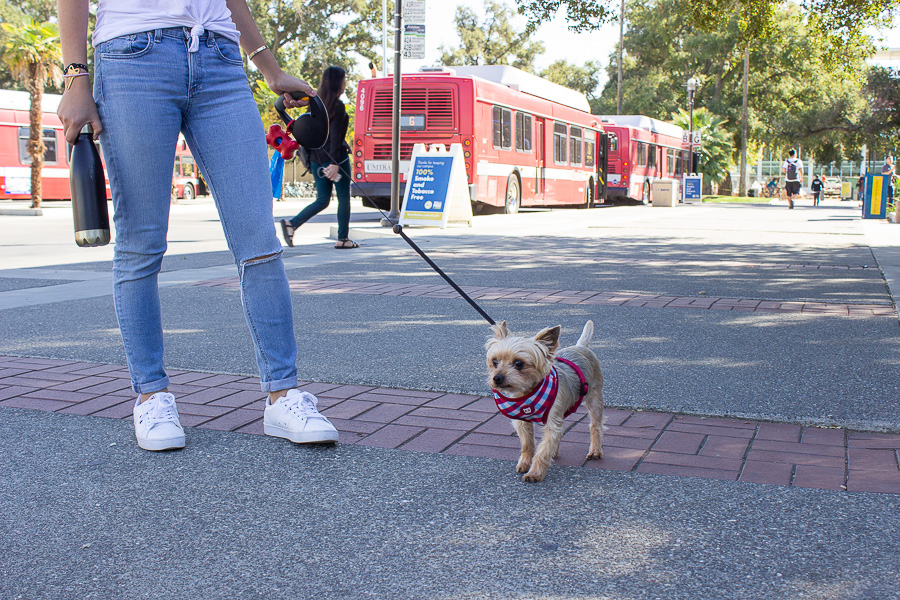
Bianca Estrada, a fourth-year sociology major, talked about her pet, Kota, a Yorkshire terrier.

“I wouldn’t change anything about my situation with Kota,” Estrada said. “I absolutely love the fact that she’s at school with me and [and acts as a] support system when I have had tough days at school or simply need company while studying. However, the other end is sometimes I do feel sorry that I have to leave her for hours at the apartment alone because I am busy on campus.”

Having pets comes with huge responsibilities, according to third-year theatre and dance major Katie Halls.

“I think having pets is a tremendous responsibility because you’re in charge of caring for another living thing,” said Halls. “It may not be as big of a deal as raising a child, but pets still need to eat, do their business and get cleaned often.”

Third-year anthropology major Ashdale Pierre shared their thoughts on whether or not having a pet adds stress to a student’s life.

“I think that having a pet both adds to and relieves the stresses that come along with being a student,” Pierre said. “If there are no unforeseen medical expenses, and if your animal doesn’t have any behavioural issues that need tending to, I would say that if you have the money to buy food and the requisite materials, having an animal is not stressful. They can be very helpful in relieving the stress of being a student.”

While a pet’s presence may be nice and comforting, students contemplate whether or not a college apartment is a nice home for an animal, which is another thing to consider for those planning on getting a pet.

[Pets are] nice but I don’t think college apartments are a good environment for animals,” said fourth-year cinema and digital media and theatre and dance double major Riley Smith. “But I feel that multiple people can easily take care of [a pet].”

Bringing a pet from back home to college and getting a new pet altogether are two distinct choices that result in different experiences.

“Being honest, it is not the most realistic choice to have a pet while in college if it is a new pet,” Estrada said. “I have had Kota for so long that I’ve been in so many situations where I already know how to juggle her in my life.”

Pierre had to make some crucial decisions for their dog’s health and well-being, and discussed their experience of having to give him to another family.

“He started to take up so much time that I could not dedicate that time to school, and it would have been unfair of me to bring him to Davis with me, where I would have less time to dedicate to his well-being,” Pierre said. “Being that my priority was having him be in the best situation for him and not necessarily the situation wherein I could keep him, I felt that my best bet was to find a family who I knew would be able to handle him. As hard as it was to give him up, I know that he is thriving now.”

As young adults in college, students work hard to manage their finances efficiently. There is a general consensus among students, that having another life to financially provide for is another aspect which should be considered.

“Pets require a lot more than just having them there,” Estrada said. “They need food, leashes, brushes, toys, beds, doctor visits and anything else you can possibly think of. It adds up. They eat my bank account!”

Managing a budget to make space for pet expenses is another piece of advice offered by Halls to potential or current pet owners.

“Pet owners should know that having a pet can be costly, depending on the pet,” Halls said. “For dogs, you’ll have to take them to the vet and groomers on occasion, pay for giant bags of dog food, as well as other goodies. Make sure you have this money in your budget before you get a pet.”

Smith offered some advice to anyone debating about what pet they should get.

“I would recommend a Betta fish since they are affordable and easy to take care of,” Smith said. “I don’t think college is a good place for cats and dogs.”

Halls had similar views.

A dog needs attention, walks, to be cleaned often and of course, food and water every day, but a pet fish doesn’t need as much attention as a dog, just food and a tank clean every so often, but definitely less time and responsibility,” Halls said.

It is well known that being a pet owner comes with a lot of emotional and financial responsibility, and so students provided advice on making the decision of whether to bring a pet into a collegiate life or not.

Unless you have the time to take them out and give them the physical and mental stimulation that they need everyday, whether the weather is nice or not, then you should leave the animal at home with your parents,” Pierre said.

Estrada suggested that students manage their schedule and time well, and ask themselves certain questions before they decide to be a full-time pet owner.

“Truly think of your schedule, not in present time but in the future,” Estrada said. “Having a pet during the beginning of the quarter might seem easy but think about how you are during the end of the quarter juggling a lot of units. Are you overly stressed with classes? Will having a pet only add to the stress or relieve it? Also think about your living, traveling situations.”

Lemann spoke about understanding and catering to your pet’s behaviors and needs.

“Getting a pet while they are young is important so that you can better establish yourself as the alpha,” Lemann said. “When a pet is behaving badly it is your own fault, not theirs. Understand this and correct your own behavior towards them.”

Halls advised students to take control and ownership while taking care of a pet.

“Don’t rely on your roommates, this is your responsibility,” Halls said. “Make sure you’re home enough so you can spend time caring for them.”

Owning a pet comes with huge financial and emotional responsibilities and requires good organization and time management skills. Are you ready to bring a furry friend into your home?


Written by: Rabiya Oberoi   —  features@theaggie.org


Humor: Hipster exclusively listens to bands comprised of sexual abusers: “It’s the ultimate underground!”

MELINDA CHEN / AGGIE

Music so underground it’s rotting in jail!

A recent study conducted by The Aggie has found that many music listeners couldn’t care less whether their favorite band is full of abusers and rapists. We talked to one student named Jesse Lacey for his perspective on this recent unmasking of the indie community.

“Well, it’s just that I don’t think we should judge these people, especially if they make really good art,” remarked Lacey, who is in his own band called Brand New Brand New. “In fact, I think we should pay them extra money. A lot of it. I listen to this one band called Brand New Brand New and I think they should be paid a ton of money. Please.”

We talked to another student named Ben Hopkins, who gave us some insight on what they believed were unfair mob trials of justice.

“You know, you get some of these bands getting a couple of accusations and then BOOM. Their entire livelihood is stripped away from them. I mean, it’s just not fair,” remarked Hopkins, who also is involved in a band on the side called Power Bottom. “I listened to this one band called PWR BTTM, and, like, they just had a couple of accusations and everything was taken away. It’s not fair.”

One student, Harvey Weinstein, reflected thusly: “If we re-evaluate the legacies of these bands, that means we have to re-evaluate all of the writers, musicians, actors, painters and film producers of the past. People like David Bowie, Pablo Picasso. Hell, John Steinbeck. And I don’t think it’s fair!” At this point, the interviewee began to stomp his feet petulantly like a child, while tears welled up in his eyes.

Various people in the music community have all agreed that it’s time to go back to when there were no consequences for being a horrible person.


Written by: Aaron Levins  — adlevins@ucdavis.edu

(This article is humor and/or satire, and its content is purely fictional. The story and the names of “sources” are fictionalized.)
 

California Office of Traffic Safety offers grants to help fund safety programs

JEREMY DANG / AGGIE

Yolo County District Attorney’s office receives grant

The California Office of Traffic Safety (OTS) has provided grants to the Vacaville Police Department of Education and Enforcement, the Yolo County District Attorney’s Office as well to the Yolo County Health and Human Services Agency this year for various programs to help increase safety on the road.

Timothy Weisberg, a public information officer for California Office of Traffic Safety, elaborated on the office’s history.

“The history of the California Office of Traffic Safety dates back to the 1960’s when Congress passed the Highway Safety Act of 1966,” Weisberg said. “In 1966 alone, nearly 51,000 people died on U.S. roads and recently, 2017 statistics showed just over 31,000. The act set new standards for traffic safety including the National Highway Traffic Safety Administration to administer funding for different traffic safety programs. In 1967, OTS was created to carry out California’s traffic safety program under the direction of the governor’s highway safety representative.”

Matt De Moura, the deputy district attorney for Yolo County, helped develop a DUI program, which also received grant funding. He was the first prosecutor in the program and was involved from 2012 to 2017.

The grant helps continue the program,” De Moura said. “We first got the grant through the California Office of Traffic Safety in 2012. In that time, it still is a highly competitive process. We got the funding to develop a specialized DUI unit to look at the most complicated and serious DUIs. We focused on drug-related DUIs, like marijuana and heroin. The more serious ones were where there were severe injuries leading up until death for particular homicides.”

De Moura noted how DUIs pose threats to the public through both drug and alcohol related incidents.
“Once a person gets behind a wheel of a car while impaired, they lose all ability to determine their actions,” De Moura said. “DUIs are so dangerous because they don’t choose their victim, and they are crimes that don’t discriminate against the victim. Anyone can be a victim because they’re so unpredictable. There’s also huge financial costs, and several billions of dollars are lost to damage, injury, lots of work — all because of DUIs. They pose a great risk to health and finances.”

Jeff Reisig, the district attorney for Yolo County, also indicated how DUIs pose threats, according to a Yolo County press release.

“Yolo County, along with all of California, will face a unique time in its history with cannabis becoming more accessible through businesses this year,” Reisig said in the press release. “With an increasing number of DUIs nationwide over the last few years it is crucial that law enforcement agencies and District Attorney’s offices dedicate resources toward protecting unsuspecting victims from the destruction that DUI drivers leave both physically and emotionally on their victims and the victims’ families. Our OTS program allows us to be proactive in deterrence through education, but at the same time reactive through holding those accountable who break the law and put the public at risk.”

The Yolo County District Attorney’s Office has received funding for this year. They plan to focus on three categories to enrich the community’s knowledge.

“The goal is threefold — it’s prosecution, education and outreach,” De Moura said. “The outreach is where we do our community engagement, where we educate the population that drug impaired driving is a real issue. It’s increasing and it’s prevalent. Prescription pills, even when prescribed by a doctor, can impair you and make it unsafe when operating a car. We want to share that with the public with students and education falls in line with that.”

The grants can provide money needed for resources to carry out such programs like making sure pedestrians and drivers yield to each other. In addition, the purpose of these grants is to help educate children and teens on traffic rules.

“It is about saving lives through different traffic safety efforts, not just enforcement but through education, public awareness [and] campaigns to promote safe behaviors,” Weisberg said. “Each year, we develop a highway safety plan that identifies priority areas for funding and goals to reduce traffic injuries caused by dangerous actions. Almost all crashes are preventable and we can’t drive that point enough.”


Written by: Stella Tran – city@theaggie.org


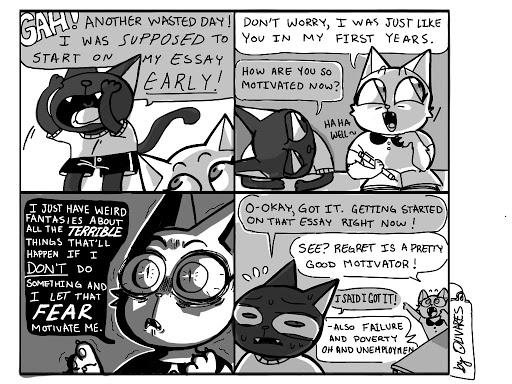
Cartoon: ProCATStination

By: Diana Olivares — deolivaresvalencia@ucdavis.edu