59.2 F
Davis

Davis, California

Friday, December 26, 2025
Home Blog Page 523

Exploiting private users’ information for opposition research

KYLA ROUNDS / AGGIE

Private data harvesting unlikely to stop after Cambridge Analytica scandal

In the wake of Facebook CEO Mark Zuckerberg’s congressional testimony, many people have come to the conclusion that political campaigns will never be quite the same. The scandal of Cambridge Analytica and the ensuing revelations about privacy breaches among unsuspecting social media users has raised questions about how far campaigns should be permitted to go when conducting opposition research. In a time of deepening polarization, it’s unsurprising that political movements should pursue increasingly aggressive tactics in order to win the approval of the electorate.

The efficacy of this belligerent approach came to light during President Donald Trump’s campaign. The campaign’s choice to contract a third-party firm like the conservative-leaning Cambridge Analytica is a testament to the fact that the rules of political competition are being reassessed through the broadening lens of the internet. Neither the Trump or Clinton campaigns were particularly concerned with the ethics of such fierce opposition research, perhaps because the egotism of both parties often overcame any sense of moral duty that either of them had.

Cambridge Analytica arose at a time when the Western world was at its most ethically vulnerable, when collective anxiety about income inequality, unemployment and political correctness was at its zenith. Perhaps due to a growing feeling of alienation among primarily older and lower-income voters, populist movements began to flourish in both the U.K and the U.S. while former President Barack Obama was in his second term. Firms like Cambridge Analytica recognized that this changing zeitgeist would be beneficial to them. The firm was more than happy to exploit this unease since it meant furthering the often discriminatory polemic outlined in the Brexit and Trump campaigns. Social media simply turned out to be the easiest way to do this.

While it’s unlikely that either of the controversial campaigns anticipated the extent to which the company would be invading people’s privacy, it’s telling that Cambridge Analytica understood that social media was the most effective means of profiling potential voters. Given how public personal data actually is, it’s unlikely that the tactic of online voter profiling via Facebook will actually stop. Cambridge Analytica is being held up as an example of opposition research gone wrong, but we should also be concerned about the potential for other third-party actors exploiting social media users’ political vulnerability. We must not only consider questions about personal privacy but also about whether we want our online data to be fodder for some of the most incendiary populist movements in recent history.

If any means of opposition research is deemed acceptable, ordinary people will become especially vulnerable to the political polarization present in the American electorate today. It’s all too easy to become an unwilling victim of the new amorality pervading campaign tactics, to accept unquestioningly the idea that our privacy is being invaded for possibly ulterior purposes. The Cambridge Analytica scandal has brought to light not only the vulnerability of voter constituencies — some of whom, evidently, have been the innocent victims of data harvesting — but also a fundamental shift in the way people view campaigning. It has become acceptable now to obtain private information on the grounds of political necessity. Perhaps most disturbing, any means of doing so is up for grabs.


Written by: Rebecca Bihn-Wallace — rlbihnwallace@ucdavis.edu

Disclaimer: The views and opinions expressed by individual columnists belong to the columnists alone and do not necessarily indicate the views and opinions held by The California Aggie.

Humor: Romantic outing turns into tightrope walk as date asks opinion on Israel-Palestine conflict

It went there

Sources were shocked Friday when Davis resident Dan Morris was forcibly removed from the Vacaville Olive Garden after polling table guests about their opinions on the Israeli-Palestinian conflict.

The trouble began around 7:15 p.m. According to Mr. Morris, his date with a Mr. Todd Benjamin had been going well up to around midway through the encounter.  

“When we were both wearing athleisure in our profile pictures, I knew it was going to be a great fit,” Morris said. “He wasn’t particularly funny or interesting, but we were totally going to bone if I could just get through the date without having the wrong opinions.”  

As the date progressed, both parties navigated conversational staples such as the weather, work and traffic with flying colors. Witnesses stated that both parties were highly adept at keeping their faces poised to appear just interested enough to not be rude, but disinterested enough to remain intriguing.

“Dan seemed like a nice enough guy,” Benjamin said. “The problem started when I told him that I was thinking about visiting Israel during the summer and I casually brought up the new embassy in Jerusalem. Dan sort of just started malfunctioning.”  

Guests outside the building told The Aggie that, as Mr. Morris was ejected from the premises, he was frantically repeating the phrase, “It’s a very complicated issue.”

“I’m a 6 on most days, a soft 7 if I’ve had enough coffee and have been watching my sodium intake,” Dan insisted. “But my date was a strong 8 even on his worst day. I just couldn’t mess this up by appearing uneducated!”

Olive Garden employees reported feeling little sympathy toward Dan, as they felt Todd was “hot enough to get a pass for bringing up politics at the dinner table.”  

Dan told The Aggie that he does not expect this problem to reoccur should another tough topic arise on a date, as he fully intends to upgrade his data plan so that he can more quickly skim Wikipedia articles in the bathroom.


Written by: Parker Nevin — phnevin@ucdavis.edu

(This article is humor and/or satire, and its content is purely fictional. The story and the names of “sources” are fictionalized.)

Humor: Cool story, Dutch Bros. Can I have my coffee now?

JORDAN CHOW / AGGIE FILE

I came for a latte but left with three new BFFs

How did I go for a cup of coffee and end up with three new BFFs? After a long day of Week 4 lectures, I decided to stop by Dutch Bros for a little pick-me-up. But what began as a 10-minute errand quickly turned into a many-more-minutes nightmare.



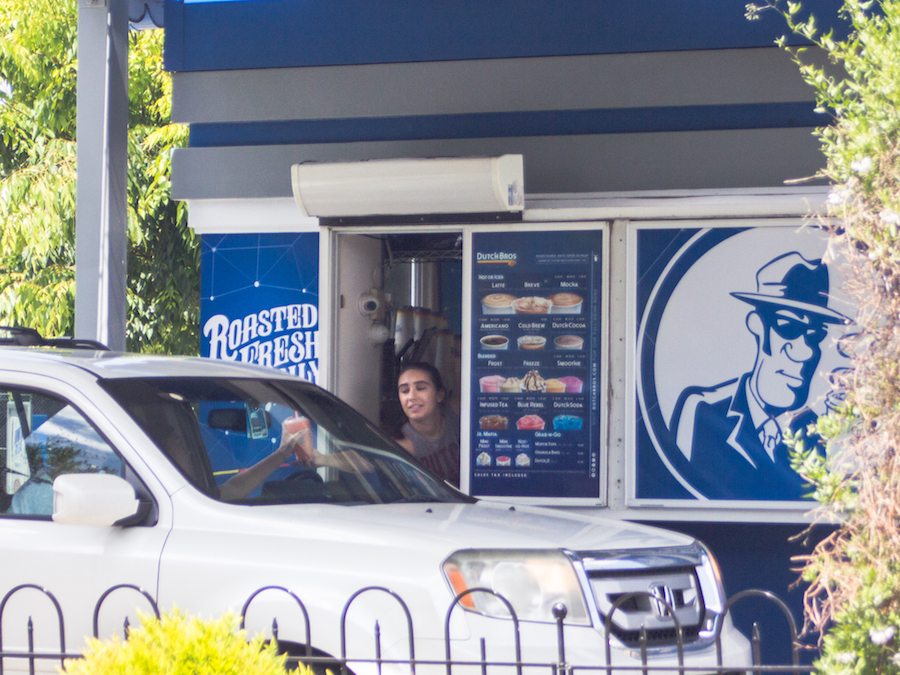
While I waited in the drive-thru line at Dutch Bros, an employee suddenly materialized outside of my car window, scaring the bejesus out of me. I could only guess that she crawled out from underneath my idling car.

“Suh, girl! Welcome to Dutch Bros! What can I get you? How about a Big Gulp-sized javarooni? What kinda brewski you like? Into a little black juice? Okie dokie, one 32-ounce Unicorn Blood Frost with extra whip cream and confetti sprinkles for you, sis,” she said, staring into my soul. After “taking my order,” she handed me a pad, which asked me if I wanted to leave a tip. The answer selections were “Yes” and “I hate puppies.” I told her that I couldn’t possibly make that choice.

“Let me help you with that, sis” she said. “Alright, you just paid $24.50. Do you want to hear the joke of the day?” After I told her no, she proceeded:

“How am I like a cup of coffee?” Silence. “I’m hot and cool. Wanna hear yesterday’s joke of the day?” But I didn’t hear her, because I proceeded to drive to the drive-thru window, where baristas gyrated to ‘90s country music and made faces as they prepared coffee.

“Is that a Hanson shirt?” asked the drive-thru barista, pointing to my Houston T-shirt. “I love Hanson. What’s your favorite Hanson song? My favorite Hanson song is ‘Mmmbop.’ ‘Mmmbop, ba duba dop.’ What’s your blood type? Do you want to share my sucker?” she said, inserting her lollipop-clutching hand into my car.

I managed to pry my coffee from her other hand and leave before she could touch her sucker to my face.

“Wanna see my new dermal piercing?” she shouted as I drove away. “Where do you live?”

“I had 17 shots of espresso. I’M WOKE!” said one barista, standing uncomfortably close to the drive-thru exit. “I have hiccups in my heart.” In my rearview mirror I could see the baristas walking after my car with their arms extended. They clawed at my back window, growling.


Written by: Jess Driver — jmdriver@ucdavis.edu

(This article is humor and/or satire, and its content is purely fictional. The story and the names of “sources” are fictionalized.)

Humor: Students resort to classroom sleepovers after affordable housing pushback

BRIAN LANDRY / AGGIE FILE

Surge III and Mrak Hall become popular housing options among students

On a bright Thursday morning, UC Davis third-year Callen McCarthy woke up for her 9 a.m. chemistry lecture just like on any other day. Her alarm went off at 8 a.m. and she pushed the snooze button until 8:30 a.m. After putting her clothes on, nodding “Bye” to her roommates and packing a granola bar for breakfast, she crossed Hutchison Drive and entered Sci Lec 10 minutes early for class. Yes, Callen McCarthy lives on campus, but not exactly where you’d expect for a UC Davis upperclassman.

“I’ve been living in Surge III for almost three months now,” McCarthy said, granola bar in hand.

McCarthy is one of nearly 100 students who chose to take up residence in UC Davis classrooms due to the lack of affordable housing.

“For me, it was an easy choice,” explained second-year Gabriel Sanchez. “It was either take out loans, apply for scholarships, ask my parents for money, live in my freaking car or move all of my stuff into the place where I spend most of my time anyway.”

Sanchez also lives in Surge III, one of the more popular living areas among the other “Residential Undergraduate Classroom Areas,” or RUCAs. Other facilities under this unofficial designation include Rock Hall, Roessler Hall, Mrak Hall and selected classrooms in Olson and Wellman halls. At the beginning of the quarter, students decide which area to move to based on their class schedules.

Public opinion on the matter is split along teacher-student lines. Several professors have voiced their concerns about RUCAs, calling them “understandable, but still a disruptive solution.”

Professor Andy Boupadakis, who said he preferred to remain anonymous but never said “please,” told The Aggie, “I don’t care if I get fired for it, I will throw a student out on the street if I have to.”

Students, on the other hand, claim that the situation doesn’t have an adverse effect on their learning, as most of them are either skipping class or hardly paying attention anyway.

What’s clear is the consistent backlash against UC Davis Chancellor Gary S. May and other campus administrators for not providing affordable housing for Davis students.

“I don’t personally live in a RUCA now, but if that’s the only affordable option on campus, then I might consider it next year,” said first-year George Lee. “I mean, if I have to make the choice between buying a coffee every morning and paying rent, I would much rather take the coffee and live on campus for free. The CoHo is so close, too.”

UC Davis administrators declined to detail a solution to the RUCAs, saying the matter “will take care of itself and, frankly, we need more money to accommodate incoming freshmen.”

In an unrelated turn, local fashion and style company RVCA has recently reached out to RUCA residents about possible sponsorship deals.


Written by: Conner Shaw — cjshaw@ucdavis.edu

(This article is humor and/or satire, and its content is purely fictional. The story and the names of “sources” are fictionalized.)

ALT-J and BØRNS

BRIAN LANDRY / AGGIE

UC Davis’ annual big act rocks the Pavilion

On Monday, April 23, alt-J’s U.S. tour came to the UC Davis Pavilion. The concert marked the first big show put on by ASUCD Entertainment Council since last year’s Chance the Rapper gig. The British indie rock band was joined by rising pop artist BØRNS, who spent the last two weekends performing at the renowned Coachella Valley Music and Arts Festival.

As is typical for most UC Davis concerts, the show began at 8 p.m. on the dot. The late start that is characteristic of a big show was nowhere to be found in this sleepy college town. Because of this, as soon as BØRNS took the stage, it became clear that his act would be rushed. Such is the nature of a concert opener at UC Davis.

As he played, it also became clear that a large part of BØRNS’s music appeal is his image and subsequent stage presence. With BØRNS’ next song beginning almost as soon as the previous had ended, the rushed nature of the show understandably undercut his opening performance. Nevertheless, he was able to salvage his show by ending with his trademark song, “Electric Love,” wowing the crowd with his vocal range and guitar skills.

If one wanted a metaphor for his performance, it came during his final bow: after catching flowers from an adoring fan in the crowd, another fan threw a vinyl record at the singer, hitting him squarely in the face as he fumbled with his flowers.

After a 30-minute interlude for stage prep, alt-J made their long-awaited arrival. The three band members emerged shrouded in smoke and surrounded by flickering lights — an awesome sight. The band played songs from all three of its acclaimed studio albums, each track paired with a different intricate light show, serving to both engage the audience and convey the feeling and message of each song.

For “Hunger of the Pine,” the lights turned a dark orange. Coupled with the undulating smoke, the stage appeared to be covered in burning embers, perfectly matching the dark and mysterious song. In contrast, the track “3WW” from their most recent album, “Relaxer,” was paired with grass-green lights and amorphous shapes, backdropped by the lyrics: “There was a wayward lad / Stepped out one morning / The ground to be his bed / The sky his awning.”

The show took on a feeling much like that of last year’s Chance the Rapper concert. Between songs, members of the audience could audibly be heard wondering aloud, “Is this really alt-J at UC Davis?” It’s no secret that, until recently, Davis had often been overlooked by larger musical acts. The annual “big shows” at UC Davis are therefore all the more important for students, staff and residents — we all know these are special moments.

alt-J made sure that that moment became all the more special with their last two songs: uptempo renditions of “Left-Hand Free” and their most popular track, “Breezeblocks.” The energy throughout both songs assured audience members had the perfect nightcap. Even when the band walked off stage and the lights flicked on, signaling the end of the festivities, illuminated fans could be seen bobbing heads and dancing with trance-like happiness. Another “big show” in the books for UC Davis, another special moment.


Written by: Rowan O’Connell-Gates — arts@theaggie.org

The dilemma of Asian eats in Davis

ALLYSON KO / AGGIE

What students seek in Asian restaurants

A frequently circulating topic regarding Davis food pertains to the lack of authentic Asian cuisines available. While it’s apparent that restaurants like Panda Express are Americanized versions of the culture they represent, the line between what’s genuine and gentrified becomes blurred.

With a large population of Asian students attending UC Davis, one of the first things incoming freshmen and transfers look for are go-to restaurants that remind them of home. However, they oftentimes can’t find a restaurant that meets their expectations.

Restaurants like Raja’s Tandoor, Manna Korean Restaurant and Tasty Kitchen appear authentic. When it comes to taste, the conversation surrounding authenticity gets complicated. And while eating “authentically” is important for many, affordability is even more important.

Jacqueline Regan, a second-year neurobiology, physiology and behavior major, usually goes to Thai Canteen, Dumpling House or Open Rice Kitchen for comfort Asian food. While she doesn’t particularly affiliate herself with these cultures, her choice for these restaurants is usually determined by their price.

I enjoy the atmosphere and vibe in most of the restaurants in Davis,” Regan said. “It’s evident that many places downtown cater toward UC Davis students. I believe that most of the restaurants are somewhat fairly priced, especially because of their convenient proximity to campus.”

Restaurants in Davis have acknowledged the needs of college students in terms of cheaper food costs. Students eat out often because of their busy schedules. Sometimes it’s quicker to buy a good meal instead of spending long hours cooking one.

Davis Sushi Buffet’s manager, Tiffany Nguyen, believes her restaurant’s fairly priced food makes it stand out among the Davis community.

“We keep the prices for a long time,” Nguyen said. “I think the most important thing for students when it comes to eating is the price, right? To stand out in a college town, we need to keep our price affordable.”

Minh Bui, a third-year communications major, also loves the reasonable prices for food in Davis.

“What I really like about Asian restaurants here in Davis is that they are cheap and convenient,” Bui said.

Low prices seem to attract younger customers, yet the topic of authenticity still pops up in conversations.

Authentic food is definitely a priority because, when I go to a restaurant, I assume that the food I’m ordering is representative of the culture that the restaurant claims to stand for,” Regan said. “Food is one of the main aspects of a culture and can be seen as one of the most important ones. If the food is not authentic, then it isn’t a real indicator of the culture it represents.”

According to Bui, growing up with a particular type of food and being surrounded by a community that specializes in a specific cuisine has taught her how to identify an authentic restaurant.

“I grew up in an Asian household, which explains why I have an intensive knowledge regarding the authenticity of Asian food,” Bui said. “I can easily differentiate what is authentic and what is not. I think authenticity in food is important because food defines culture and we want give others a good impression of our culture.”

Similarly, Regan believes authenticity can be defined by home cooking. If it tastes like something your mom could make, it’s probably authentic.

“I’m half Filipino and half white, so my household was split relatively equally in terms of influences from both sides. In reference to food cooked at home, Asian food was more prevalent because of my mom’s Filipino cooking,” Regan said.

Manager of Zen Toro Amy Nishiyama works alongside her husband who took ownership of the restaurant after his parents.

“We took over the restaurant from Scott’s parents, and they are Japanese nationalists,” Nishiyama said. “He’s worked in many places, including three restaurants at one time, so he’s had quite a bit of experience. He also worked in Japan. The recipes have been handed down to my husband, and nothing has changed in regard to the original recipe, but we still have specials we create on our own.”

Both Japanese and non-Japanese customers enjoy the variety of food available at Zen Toro. According to Nishiyama, many customers have said their food brings them close to home, which by Regan’s standards is a clear indicator of authenticity.

“Everything is made to order here,” Nishiyama said. “We don’t pre-cut the fish; we cut it and break it down. Quality takes time. There’s no going around.”

Still, price and authenticity aren’t the main concerns for the Davis Asian community — it’s the lack of diversity.

“[Davis] already has a lot of restaurants,” Nguyen said. “Many open and many close out. We’ve been here for a while so we know. For the number, it’s okay, but for the diversity, there’s not enough. They have a lot of Thai and Indian food but not enough of, for example, Chinese. They don’t have Hong Kong- and Singapore-style restaurants or Vietnamese food,” Nguyen said.

Like Nguyen, Regan and Bui also want to see more diverse restaurants in Davis that are relatable to their culture. While restaurants like Zen Toro are successful in reaching out to their customers in this way, the lack of diversity excludes much of the UC Davis Asian community.

“I hope to see a Filipino restaurant or more variety in terms of places that represent other Asian cultures,” Regan said. “While the Asian population is not the majority in the city of Davis, the student body at UC Davis is extremely diverse, so I would like to see more Asian restaurants that represent the spectrum of the multiple Asian cultures on the UC Davis campus.”

College students may be the harshest food critics, but they’re also homesick. After moving miles away from family for the first time in their lives, maybe all they want is a piece of home at school.

Written by: Becky Lee — arts@theaggie.org

Abandoned dogs found in Clarksburg

JAMIE CHEN / AGGIE

Yolo County Sheriff’s Office looking to public for help in animal cruelty case

The Yolo County Sheriff’s Office is currently investigating an animal cruelty case concerning abandoned dogs in Clarksburg, Calif. The office is seeking public assistance, as it does not have any leads on who abandoned the dogs, one of which was an injured white-and-tan pitbull who suffered from an unprofessional spaying.

Vicky Fletcher, the manager of Animal Services under the sheriff’s department, elaborated on how the situation panned out.

“Our officer that was on call or on duty that day received a call from a citizen that there was a dog laying by the side of the road,” Fletcher said. “There was another call that came in later after he got down there to discover that the dog has a huge incision on its midline. He determined that there was also a second dog that had been there since someone saw the two dogs together earlier before he got there. It turned out to be two dogs.”

Both abandoned dogs were pitbulls. Fortunately, the other dog did not have the same spaying injuries.

“One dog was fine — no injuries, normal weight, looked good,” Fletcher said. “The other dog had a what looked like a stitched-up incision on the center of her stomach, and she was pretty underweight. He took that dog immediately to UC Davis. We brought that dog back here the next day and it was UC Davis’s opinion, as well as our veterinary, that someone without much experience spayed the dog.”

Rob Warren, the communications and marketing officer for the UC Davis Veterinary Hospital, denied further comment about the case due to lack of permission from the clients.

While the perpetrator has not been identified yet, the sheriff department is working hard to elicit information from the public.

“We’ve asked the media and talked to neighbors around the area, but we really don’t have a lot of leads at this point,” Fletcher said. “The only thing we can do is hope that the public sees these media posts and somebody will hopefully come forward.”

Even so, there are few traces to follow on the case so far.

“We have asked for the public help in this, but we have not had anybody come forward saying that they were aware of the dog had been in someone’s house or someone’s care,” Fletcher said. “We haven’t had any tips at all.”

Situations such as this have been a recurring problem. Authorities have picked up 16 abandoned dogs in this area within the past six months. 10 were pitbulls who had suffered injuries. Fletcher emphasized that the office is willing to help those who need help with the spaying to prevent such cases from happening again.

“The public can help by talking to friends if they have any knowledge about it,” Fletcher said. “If somebody needs to get a dog spayed — and they choose to do that and they need help — we’re more than happy to try to help people in that situation instead of having somebody try to do it that is not experienced.”

Even though the white-and-tan pitbull was rescued, she did not survive the surgery.

“Obviously, the animal suffered a great deal. She was severely infected, the sutures were not appropriate, the incision line was not appropriate,” Fletcher said. “Our vet was unable to clean up the suture line and actually repair her, so she had to be euthanized. We would much rather help somebody if they don’t know how or what to do, and if they have a dog that needs a spay, we would rather help than have them in that kind of situation.”

According to The Sacramento Bee, the Yolo County Sheriff’s Office mentioned how terrible the circumstances were in a news release.

“The condition of this dog was horrifying, and whoever performed the spay surgery did so in an unprofessional manner prior to this dog being dumped in Clarksburg,” the news release said.

For further information on affordable spaying resources, the Yolo County Animal Services Shelter is available to help. Koreena Walsh, the assistant at the Yolo County Animal Services Shelter, noted that the organization helps with such services.

“Our organization helps foster and adopt out abandoned animals, provides resources for low-cost spay/neuter and veterinary care for owners, and maintains an office at the Yolo County Animal Services Shelter so that we can work closely with the shelter to offer more life-saving programs for animals and the community in general,” Walsh said via email.


Written by: Stella Tran — city@theaggie.org

Undocumented Art and Activism: A Dialogue with Natalia Deeb-Sos

ZOË REINHARDT / AGGIE FILE

Art, activism, being undocumented collide

For many artists, their productions are their best attempts at bringing to life a tangible creation derived from some feelings, thoughts, core beliefs, experiences or emotions. Contemporary art tends to create a situation for the audience that aims to ultimately pull these certain feelings and thoughts out of them.

Using various media, such as video, sculpture and live performance, fourth-year art studio major Aida Lizalde navigates between depicting her experience in the performance form and the contemporary form. She uses the latter in an attempt to give the audience a taste of her experience.

On June 6 from 4:30 to 6 p.m. at the Jan Shrem and Maria Manetti Shrem Museum, she will be part of an event titled “Undocumented Art and Activism: A Dialogue with Natalia Deeb-Soss.” At the event, Lizalde will have a discussion with Professor Deeb-Soss about topics including living life undocumented, how art can be used to tell that story and how to use art as a form of activism.

“I don’t really want to just limit the way that I’m expressing things about society to just one material,” Lizalde said. “I mean it matters how [this is done], but I don’t want to be so purist in the sense of how I’m conveying them. I just went to this lecture and somebody referred to themselves as a ‘scholar-artist-activist’ and I feel like that is kind of how contemporary conceptual artists work nowadays.”

Lizalde already has plenty of experience, vision and talent behind her to help kickstart her near future.

“It’s really intimidating; it’s the first time that I’ve given a talk in such a big institution,” Lizalde said. “But I think it’s also intimidating because I’m really outspoken about things and I’m kind of like no filter sometimes in speaking about race issues.”

This self-described “no filter” personality was made clear as Lizalde noted her tendency to ask her faculty uncomfortable questions. She is also fearless about voicing concerns or criticisms, for example, about the museum’s lack of diverse representation in their exhibitions.

“I think that because of my identity [as a Mexican woman] and because of how I experience power structures and institutions, I have become really aware and really active in trying to understand the things that I consume and trying to just be really intentional about it,” Lizalde said. “If I have an opportunity to speak about something or to bring something up that people are maybe not thinking about in terms of identity or race or equality in the arts, then a lot of the time I do and it can be kind of obnoxious, but it’s something I feel really compelled to do.”

Although Lizalde says undocumented students can relate to her art, she also mentions that it reflects her own point of view. Other undocumented students may not see her experience as universal, and she fully acknowledges that “there are all kinds of ways that other students can talk about their experience or not.”

“Because of being in the situation of being an undocumented AB 540 student for so long, I think that there’s so much of my experience that gets put into my work that is interesting for other people that are going through the same experience to look at and understand how you can use an art practice to kind of carry out these conversations,” Lizalde said.

The Comparative Border Studies program is co-hosting the event along with UC Davis Asian American Studies, the AB 540 and Undocumented Student Center and the Manetti Shrem. Robert Irwin, a co-director of the Mellon Initiative in Comparative Border Studies, explained why Lizalde was the perfect complement to Professor Deeb-Soss for discussing similar issues as those that the Mellon Initiative researches.  

“She had been undocumented and is an accomplished artist — someone who UC Davis students can relate to directly because she comes from very same circumstances,” Irwin said.  “She was interested in talking about her experience being undocumented and how that speaks to her artistic creation and kind of the politics behind her art. We thought that sounded like an interesting idea to introduce to the space of the museum, where that could be put in dialogue with the art that’s on exhibit at the museum.”

On why he believes these sort of discussions should take place, Irwin outlined how they play a part in humanizing the reality of being undocumented and informing people on a deeper level.

“It’s really important for people to understand what that experience is like and what it means for people who have lived it,” Irwin said. “Particularly nowadays […] there are a lot of undocumented people around us and a lot of people in California care about them and want to be able to protect them but don’t actually know very much about them — about how they think, about the kinds of things that they experience, what their kind of fears and worries are, what kinds of challenges they face, etc. in any kind of a detailed way.”

For him, how this event will bring to light a firsthand account of living life undocumented is most interesting. This is especially because these types of firsthand accounts aren’t very attainable, as the undocumented population is largely one seeking to remain out of the spotlight for fear of the potential consequences.

“We know something about the undocumented because it’s gotten a lot into the news recently, but it’s mostly been, historically, an invisible population that doesn’t participate in the public sphere,” Irwin said. “So they’re not people that you see on the television, they’re not people who you see becoming prominent in professions or in the arts, and here we have the case of someone who is on track to becoming a prominent artist who has that experience behind her which is not the experience we have […] seen expressed publicly in the arts.”

In an email interview, Liz Santana, a second-year P.h.D student in the department of Spanish and Portuguese, commented on why events like Undocumented Art and Activism are vital.

“I personally feel that having these type of events on campus creates an atmosphere in which undocumented students and undocumented allies can feel that […] the university supports and intends to understand issues that affect the day to day of many of our students and their families, specially those who are from a mix-status family,” Santana said.


Written by: Cecilia Morales — arts@theaggie.org

Paying attention to long-term meditation

ADELINE VAN WANING / COURTESY

UC Davis study shows the long-term benefits of meditation training on sustained attention, age-related cognitive decline

No matter how hard one concentrates, staring at one point for a long period of time is difficult. Your eyes will flicker to the side or shift perspective ever so slightly. You might not even notice. Eventually, you lose focus. Humans in general have trouble with sustained attention. While some people are better at it than others, their attentiveness will begin to falter after about five to seven minutes. It’s a difficult task and may be more so in people affected by age-related cognitive decline.  


“Cognitive decline is a pretty expected pattern that occurs in healthy older adults as they age,” said Anthony Zanesco, a postdoctoral researcher in the Department of Psychology at the University of Miami, in an email interview. “Deficits across a number of different cognitive domains have been seen in healthy adults as they get older. Some of the research on meditation practice suggests that certain practices can be used as a form of mental training that might be able to improve aspects of attention and cognition.”


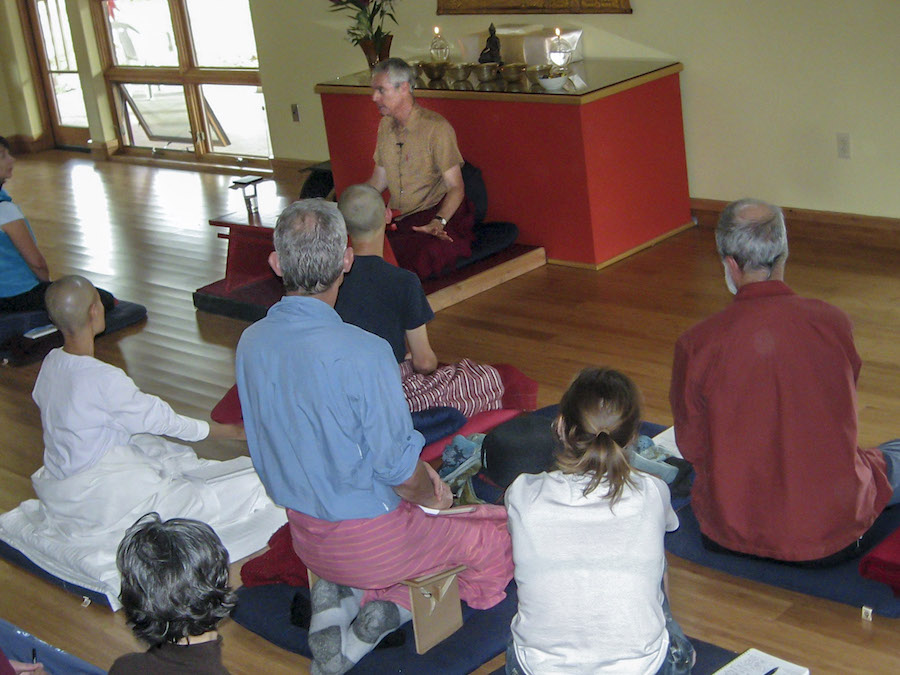
Meditation has long been known to help improve attention and emotional health through practice. The Shamatha Project, led by Clifford Saron, a professor and neuroscientist at UC Davis’ Center for Mind and Brain, studies the mental and physical effects of meditation. Saron, Zanesco and their colleagues recently published the results of a follow-up study done after an experimental meditation retreat through the Shamatha Project. Two groups of about 30 people, all with previous meditation experience, practiced mindfulness and contemplative meditation under the guidance of a teacher for three months each. The study focused on how well the retreat participants retained the attentional benefits they gained over the months and years following the event. It appears that any sustained benefit depended on how much participants continued to meditate afterward.


“Our findings seem to suggest that the attentional benefits of a meditation practice depend on continued practice, but such benefits likely will plateau without more and more intense and rigorous training,” Zanesco said. ”Like strength training or physical exercise, you might have to put in more and more hours in the gym to see gains from where you were previously — especially if you are experienced already.”


The participants overall had better perceptual discrimination, accuracy and reaction time variability during and at the end of the retreat than at the beginning. Accuracy was also maintained for at least four years afterwards, while improvements in reaction time variability were lost over the follow-ups, which were done periodically at six months, one and a half years and seven years after the initial study. However, those who continued meditating maintained more of their improvement. These gains also appeared to moderate age-related declines in reaction time variability, altering the expected trajectory.  


The project not only focuses on attention but also on emotional and physical differences resulting from intensive meditation practice. The scientists collected different kinds of data, from emotional response to bloodwork. The wide variety in age of the participants was useful for a longitudinal age-related survey, so they focused on that information for the purposes of this study. However, the original experiment had a wide focus, partly due to the inherent difficulty of analyzing a spiritual, deeply formative experience like intense meditation.


“There are many different limitations,” said Quinn Conklin, a doctoral student in psychology working with Saron at UC Davis. “Some of those are methodological in terms of the tools we have to measure certain phenomena or processes. Others are conceptual, others are ethical, some are just practical or logistical — you can’t randomize people to be in a meditation condition or not or blind them to the condition that they’re in because it’s generally a practice that they have to engage in and know that they’re engaging in. One of the scientific gold standards that you usually aim for is having a randomized blinded study, which just isn’t very realistic for this type of work.”


It may be difficult, perhaps impossible, to scientifically define what happens during a meditative state, but observing how experiences at the retreat continue to affect participants after they leave helps determine how deeply they were influenced and how they continue to be in the context of daily life. Meditation has been found to be helpful for dealing with various conditions in a medical context, powerful in a spiritual context and unique in allowing people to experience themselves in a different way. The retreat in the study, though intended to be scientifically informative, was the same.


“In the Shamatha project, ever, ever more fine, focused attention was an explicit goal of the three-month retreat that our participants did, but it was embedded in a larger context,” Saron said. “One that included training in loving kindness: wishing for yourself and others to be happy and achieve the conditions of happiness; compassion: wishing for yourself and others to be free from suffering; sympathetic joy: feeling the reality of goodness in other people’s lives and equanimity: understanding that everyone, no matter how close or far from you, is deserving of these first two, loving kindness and compassion.”


Written by: Kira Burnett — science@theaggie.org

Students involved in Multiculturalism in Agriculture, Natural Resources and Related Sciences share experiences

KATE LEE / COURTESY

Individuals of different backgrounds find aid in organization dedicated to minorities’ professional growth

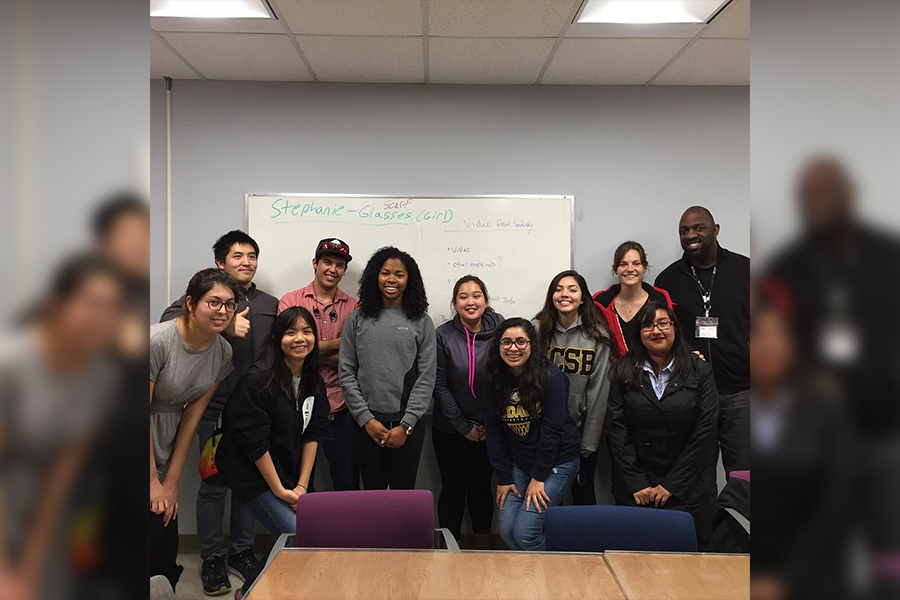
Multiculturalism in Agriculture, Natural Resources and Related Sciences, also known as MANRRS at UC Davis, is a nonprofit organization that promotes diversity in all majors, with a focus on agriculture. Weekly meetings double as a one-unit class that students can register for after attending a meeting.

The organization was initially created with the goal of offering a network to minority students of professionals in the agricultural field. Its mission continues to be to promote the academic and professional advancement of its members and to empower minorities in various fields.

MANRRS provides opportunities for many students to prepare themselves for the post-college workplace. Shannon Chee, a fourth-year computer science major, has been involved with MANRRS for the last four years and has found her experience with the organization to be extremely beneficial and fruitful.

“At MANRRS, we hear the success stories of others who started out just like us, we learn about and practice professionalism, and we gain hands-on experience in leadership,” Chee said. “It’s an opportunity to learn, further our career dreams, and gain exposure to the real world of business. We have weekly meetings where we have successful guest speakers from both industry and academia come in and tell us about the work they do, how it impacts the world, how they got started, and give us advice as well as workshops that teach students how to write a resume and cover letter, or negotiate salaries or the basics of Excel, or other skills that you need to learn as a working professional. There’s an amazing network of mentors and recruiters so it definitely helps with landing jobs and internships.”

Chee also noted that while MANRRS is an opportunity for students to learn and develop, it also provides these professionals from a minority background with an opportunity to get involved with a community of similar roots.

“For working professionals, it’s a chance to give back and to shape the hearts and minds of the next generation of agricultural leaders,” Chee said. “It’s an opportunity to change the world one student at a time.”

Nationally, the goals of the organization are tailored toward individuals hoping to enter an agricultural field. As such, the organization holds events and conferences to bring together students and professionals in those industries. Kate Lee, a fourth-year animal biology major, recalled her experience in the organization and how it has helped her break into her intended career path.

“Through MANRRS, I was able to meet so many professionals that are in animal-related fields and they’re doing things that I didn’t even know existed as a career,” Lee said. “It’s really amazing because when we do go to these networking events, [these professionals] genuinely want to help you. They will go out of their way to do whatever it takes to help you and that’s so encouraging.”

The organization offers many platforms for students to network with professionals both in the form of regional events and at the Annual National Training Conference and Career Fair. Lee reflected on her experience attending the national conference and how conducive it was to her professional advancement.

“Especially when going to the national conference, it was so amazing to see all these intelligent, kind, passionate people of color and that was just so awesome to see,” Lee said. “I would talk to people for like 10 minutes and they would find out my major and be like ‘I know someone in [this] company, I’ll contact them and ask if there are any openings.’”

Lee noted that while these conferences are a place to network with professionals that may help students find opportunity in their intended job sector, many of these individuals are also inspirational figures to students who experience similar hardships as minorities.

“We have so many professionals come in and conduct seminars and workshops and a lot of them are minorities,” Lee said. “Seeing them make it in the world is so inspiring and impactful. These professionals are role models for all of us and a lot of the times, they’re leaders their fields. They allow us to gain access in their world.”

While MANRRS’ initial goal nationally was to promote diversity in fields focusing on agriculture, the Davis chapter aims to be as inclusive as possible with individuals striving to enter any professional sector.

“As a national, nonprofit organization, the vision for MANRRS was to change the face of agriculture,” Chee said. “Here at Davis, we wanted to expand on that idea and make sure we are as inclusive as we can be to all groups of people. The agricultural industry needs engineers, designers, business majors as well as food scientists and veterinarians to run a successful company. There’s also a misconception about what ‘agriculture’ is and a lot of people in agriculture majors feel like they don’t belong when in actuality they do. We’ve gotten questions from food scientists, geneticists, geologists, and hydrology majors asking if MANRRS is right for them and the answer is always yes.”

Zaid Al Rakabi, a second-year computer science major, noted how he found personal growth after joining MANRRS, though he doesn’t intend to pursue either a career in agriculture or in a related field.

“MANRRS is an organization that incorporates many fields and disciplines and offers anything for anyone who is willing to learn more and put themselves out there,” Al Rakabi said. “I would anyone to definitely come out if they are interested in professional development, networking and gaining more professional experience; MANRRS isn’t limited to just your field of study. Personally, it’s made me better at networking, better at connecting with others, and a better leader.”

For more information about Multiculturalism in Agriculture, Natural Resources and Related Sciences, and to get in contact with the organization, students can connect with MANRRS on its Facebook page, or attend a meeting at Meyer Hall on Wednesdays at 5:10 p.m..


Written by: Alyssa Hada — features@theaggie.org


Last week in Senate

HANNAH LEE / AGGIE

No new legislation introduced at April 19 Senate meeting

Senator Gaven Kaur called the ASUCD Senate meeting to order on Thursday, April 19 at 6:10 p.m. in absence of Vice President Shaniah Branson. Senator Danny Halawi and Senator Brandon Clemens were also absent.

The meeting began with by ASCUD President Michael Gofman nominating Meital Machulsky, a second-year international relations major, for the position of controller. The controller’s main function is to create a budget. Machulsky said that she has a history of internships which have allowed her to gain financial experience, and that she currently oversees a group of interns.

“I interned last summer and I did a lot of financial assets,” Machulsky said. “I did a lot of data work and analysis. As part of my position right now, I started as an intern and am now managing a small group of interns. I focus on analysis of revenues and establishing the budget market space.”

Machulsky was confirmed as controller without objections.

The unit director for Entertainment Council, Liz O’Neill, was also confirmed shortly after. O’Neill, a third-year managerial economics and psychology double major, said she has been working with Entertainment Council since she was a freshman. When asked about her ideas, O’Neill said that she is looking to increase the significance of Lawntopia and bring different types of entertainment to UC Davis, like video games and dancing events.

“Next year we’re definitely looking to get Lawntopia way bigger than we have before,” O’Neill said. “We’re looking to do more types of events and local events. We want more types of entertainment like video games and dancing events. We want to foster a stronger local scene in the community.”

O’Neill was confirmed as unit director for Entertainment Council without any objections.

The last confirmation that took place was the Elections Committee chair. Mahssa Rezuei, a second-year biological science major, was asked about promoting voter turnout and said that she thinks her committee should advertise to students from the very beginning once they arrive at orientation.

“One main thing is to promote elections from freshman orientation and getting them involved the very first day,” Rezuei said. “People who were in high school government would be interested.”

Rezuei was then confirmed without any objections.

According to Entertainment Council’s quarterly report, the rental revenue from equipment it owns is expected to add up to between $1,700 and $1,800, which is significantly above the original goal set for the council.

Other quarterly reports were then presented, including that of Student Transportation Services. The report stated that the unit’s fiscal goal was reached by the fourth week of Spring Quarter. The STS reported that a current project is hiring new drivers and promoting a few drivers to supervisors.

The Unitrans quarterly report announced new challenges, including a growing deficit. Additionally, its reserves are predicted to be depleted in two years. In order to combat these issues, Unitrans is looking into new revenue sources, like reduced fuel cost, fare increase and fleet advertising, as well as discontinuing some free services it previously offered, such as the V line.

The Senate also discussed ASUCD Senate Bill #57, which intends to create a restricted Picnic Day reserve for revenue that Picnic Day produces. The bill passed, although it was amended to allow only 50 percent of revenue to go into reserves, while the other 50 percent will go back into the association.

ASUCD Senate Bill #56, to allocate money to send a delegation to the UC Irvine Mental Health Conference, was passed without any objections after some amendments.

Senate Bill #55, which authorizes the vice president to administer the oath of office to ASUCD Senators, and Senate Bill #60, which allocates $2,556 from Senate reserves to cover lighting and sound expenses for Lawntopia, were also both passed.

There was also the introduction of emergency legislation, ASUCD Resolution #12, that was intended to show ASUCD’s recognition and condemnation of the Armenian genocide by the Ottoman Empire in the early 20th century. This resolution passed without objections.

No new legislation was introduced.

Public discussions occurred, during which Senator Ko Ser Htoo mentioned that UC Davis’ annual Whole Earth Festival is coming up in May and its theme this year is Bloom. Public announcements were also made, including a reminder about the ASUCD attendance policy, as three senators were absent from the meeting.


Written by: Sabrina Habchi — campus@theaggie.org


$100,000 of taxpayer money down the drain

KYLA ROUNDS / AGGIE

District Attorney’s office accused of wasting paper, taxpayer money

On April 12, Dean Johansson, an attorney at the Yolo County Public Defender’s Office and a district attorney candidate for this election cycle, released a press statement regarding paper waste in the current district attorney’s office.

In the release, Johansson accused the current district attorney, Jeff Reisig, and his office of hypocrisy. Johansson asserted that, although the current district attorney’s office has claimed to have gone “paperless” as part of a commitment to ecological responsibility, Reisig’s office still profits off of printing, shipping and shredding reams of paper. Johansson went on to describe that, while millions of pages of data are transferred from law enforcement, government and medical agencies to the district attorney’s office online, the DA still prints these out in full and ships boxes of these documents to the public defender’s office, where they are scanned, shredded and disposed of, rather than sent digitally.

“I’m sick and tired of a system that is broken and doesn’t make sense and wastes so much unnecessarily,” Johansson said. “When you think about the cost, the hours taken by accounting, the labor, that is all unnecessary. They print out all this paper, put it in a box in front of their office. One of our secretaries goes over daily to pick up the discovery from that box, carries it over here, they scan it back into binary form and put it in our computer system and then take that paper. We’re talking reams. They shred those papers, and they’re picked up weekly by a shredding company.”

The district attorney’s office charges the public defender’s office 25 cents per sheet of paper, which Johansson claims has added up to over $97,000 in the last year alone. And this cost does not include all of the labor that is paid out to the shipping services and secretaries who scan the boxes of paper.

According to the district attorney office’s website, “In 2010, Yolo County District Attorney Jeff Reisig announced an ambitious plan to transform the District Attorney’s Office to a paperless environment within a year’s time […] the District Attorney’s office successfully launched paperless prosecution of all new misdemeanor criminal cases in April of 2011 and completed the conversion of adult criminal cases to paperless by including all new felony criminal case filings in August of 2011.”

The Aggie reached out to the Yolo District Attorney’s office for comment regarding the paper shredding but received no response. The Aggie did get in touch with Californians Against Waste, an environmental advocacy organization based in Sacramento.

“It is wasteful for the environment and for taxpayers when any agency fails to provide the public and others with paperless pathways to public information,” said Mark Murray, the executive director of Californians Against Waste. “In this instance, it would appear that the Yolo County District Attorney’s Office is violating their own policy and purposefully jerking around the public defender’s office.”

Johansson claimed that this paper waste issue is symptomatic of a larger problem regarding overcharging and waste in the Yolo County law enforcement and judicial system. Nearly three quarters of detainees and inmates in Yolo jails are awaiting trial because of bail amounts that are set too high, costing taxpayers $150 per day. And 41 percent of the current DA’s felony charges are acquitted or dismissed by a judge — more than twice the state average.

“Nearly $100,000 is wasted on paper between these two offices alone,” Johansson said. “With our high incarceration rates and acquittal rates, you can imagine how much more we are losing.”


Written by: Ahash Francis — city@theaggie.org

Phantom Thread is not “propaganda for toxic masculinity” but a genius satire of it

ALLYSON KO / AGGIE

A case study in society’s worsening ability to make distinctions

Some might insist that I shouldn’t discuss toxic masculinity because I’m a cisgender white male. However, a recent article in The New Yorker titled “Why ‘Phantom Thread’ is Propaganda for Toxic Masculinity,” was also written by a cisgender white male, and as a proud movie buff, I feel obligated to defend my favorite movie of the year when it’s unfairly criticized.

The article angers me because it includes so many thoughtful points about the regressive gender politics displayed in the film but never proves why it deserves to be labeled as “propaganda.” Films that depict past eras and antiquated social attitudes may do so favorably, in a propagandistic style, or unfavorably, in a satirical, critical style. “Phantom Thread” clearly accomplishes the latter by showing the destructive power of toxic masculinity. The author of the New Yorker article, Aleksandar Hemon, implies that depicting these attitudes is equivalent to propagandizing them.

The first clue that the film is going to be a subversive satire rather than propaganda is the name of Daniel Day-Lewis’s character: Reynolds Woodcock. It’s pretentious and sophisticated, yet almost a vulgar parody. The innuendo is almost too on-the-nose for such an elegantly crafted film, but it embodies the film’s many absurdities, and it’s hilarious. This name instantly signals the film’s dark humor and critical nature.

Hemon writes that the film “might appear to some as a critical exploration of male power, but for that to be the case there would have to be alternative positions that are not dependent on the hero’s centrality.” Firstly, Woodcock is no hero. And it’s arbitrary and nonsensical to say that the film can’t be a criticism of the patriarchy just because it fails to present an alternative situation for Alma. Alma wants to stay with Woodcock and his other female dressmakers despite the toxic and psychologically abusive environment. The dictatorial male figure shows what is still an unjust reality for many women today, which is why it’s important to accurately depict the unfavorable outcomes of this reality. This is what “Phantom Thread” does, but Hemon fails to recognize the difference between this and an actual endorsement of the behavior.

An early scene clearly indicates how the movie will attack and caricaturize people who take themselves way too seriously. At breakfast, Woodcock’s sacred time of the day, a tense argument ensues, and Woodcock whines in an incensed yet proper voice, “I cannot start my day with a confrontation.” This made me laugh out loud. It perfectly captures Woodcock’s petulant, eccentric and controlling nature and shows how he thinks he deserves special accomodations, just because he’s a creative genius. Subtle humor like this appears throughout the movie to highlight how unhealthy relationships are a direct result of his toxicity, so the idea that the movie somehow implicitly endorses this behavior is absurd.

Over time, Alma avoids being cast aside by discovering Woodcock’s vulnerabilities and exploiting them so that he continues to need her. Hemon makes the point that Woodcook is “so supreme that it [he] can choose even when and how to be weakened in the presence of a woman, who, in exchange for monogamy, is ever willing to serve it.” Yes, this is what happens. But the film in no way depicts this as something positive that any woman should experience, and Woodcock is not supreme — he is insecure and weak. Alma’s wanting to be with him despite his flaws is not a hidden, sinister, anti-feminist message; it’s just part of an intentionally absurd plot that highlights the powerful man’s role in creating twisted sexual dynamics. Situations like this happen in reality, so it’s only logical for us to make interesting, complex films that allow us to discuss and study them.

Arguments like Hemon’s are dangerous because they might cause other woke people to jump to conclusions that ultimately deny them the opportunity to actually experience (and more importantly, enjoy) a thought-provoking, compelling, subversive story with fantastic acting, gorgeous cinematography and immersive music. Political correctness can make people avoid ambiguities, so the rich nuance in works like “Phantom Thread” is often lost.

This film made me think deeply about power dynamics in relationships, the idea of the “delicate genius” and how abusive men with power often absorb inordinate amounts of credit. I certainly did not leave the film wanting to psychologically torment a woman to the point that she would poison me with mushrooms and cause me to develop a food-poisoning fetish. Anyone who did leave the theater craving that tasty experience has issues far more pressing than potentially being susceptible to “propaganda.”


Written by: Benjamin Porter — bbporter@ucdavis.edu

Disclaimer: The views and opinions expressed by individual columnists belong to the columnists alone and do not necessarily indicate the views and opinions held by The California Aggie.

10 endearing professor quirks

CAITLYN SAMPLEY / AGGIE

Idiosyncratic intellectuals

Posting a way-too earnest Canvas profile image: Why is it always so zoomed in? Sometimes it’s a selfie, and not a subtle one at that. I seldom see a student image on there, and there’s more of us than there are of them, so I’m not sure what the imperative is to post such a glowing, radiant headshot. To be fair, it does bring a smile to my face to see a tiny round professor smiling in the corner of the screen.


Sending emails with winky faces: Any flirtatious implications aside, what email could a professor be sending where the sentiment is “cheeky?”


“Oops, now I still need to connect the sound…”: Yes, the video is already playing. Yes, it wasn’t easy to get the video going in the first place. Yes, it’s that cord. You’ve got it. Yes, let’s rewind.


Telling you to pour yourself a glass of wine before x assignment: Haha. Where did you get the idea that college students buy wine? Anyway, I’m wondering if they really expect homework done with a glass of wine in hand. It says more about their hardcore grading process post-finals.


Being the only people on bikes wearing helmets… and saddle bags… and a reflective vest?!: It makes sense. After investing in a Ph.D., you’d want to protect your brain. It’s actually nice to see someone so equipped to ride a bike amid five people on their phones while riding electric skateboards. It’s also nice to see a professor similarly running late.


Having six (plus?) adaptors in your bag: I just don’t think I could keep track of that many adaptors. It’s unclear if they are older and newer versions of one model, but, in any case, none of them seem to be working. Let’s just call tech support.


Getting super angry when the previous class doesn’t wipe off the board: I didn’t even know this was an expectation until I witnessed outbursts. It’s okay, we understand you’ve had a stressful day.


Being super proud of the class cover image that you figured out how to post on Canvas: You make a self-deprecating joke about how long it took, but there’s some sadness in your wistful eyes. It looks very nice. Yes, let’s come back to it later in the quarter.


Distributing painstakingly photocopied pdfs of course texts: Totally selfless, generous use of your time. Recognizing how much easier this makes the lives of some students is a blessing. We’re pretty sure you’re the only people still photocopying things.


Making a little closing speech at the end of the quarter: We should always applaud. By the end of 10 weeks, we have come to love your quirks, those very familiar and completely surprising to us.


Written by: Stella Sappington — features@theaggie.org

A playlist for a mellow spring

JAMIE CHEN / AGGIE

Songs for arboretum walks, sunset strolls

Forgive my introvertedness, but must spring be such a constant buzz of energy? The general spirited mood of Spring Quarter is definitely a plus, and it’s reflected in the upbeat, happy music that people typically listen to at this time. But sometimes, something calmer better suits the mood. So put away that pre-game music you’ve been blasting and listen to this short list of calming, not-so-spring-pep tunes. I imagine ideally swaying along to this under the hue of a honey-yellow light in comforting solitude.


“Iota” — Angel Olsen

In an interview with Consequence of Sound, Olsen describes this track as “dreamy and unalarming, yet lyrically dark.” Heavier songs like “Iota” can be intimidating in terms of trying to figure out their meaning and applicability to a wider audience, but Olsen detracts from this feeling by reminding us that her songs are deeply personal.

“I’m not trying to write like a triumphant work, novel, or album. I’m not trying to write a piece about the human condition,” Olsen said in the interview. “It’s more about my human condition, what I experience in everyday life with my friends, what I’ve seen around me that I’ve somehow found a fault with.”

In turn, trying to figure out the meaning of every word from something so attached to the artist’s experiences and thoughts is nearly impossible.


“Good Side In” — The Japanese House

The Japanese House, the self-imposed stage name for Amber Bain, utterly captivates in her disarming mix of sounds, production, lyrics and vocal pitch, making for a beautifully composed end product. This applies not just to “Good Side In” but to every song she creates.


“Congratulations” — MGMT

In this track, soft guitar strumming accompanies the classic high-pitched, indie, pop and psychedelic voice of MGMT’s lead singer, Andrew VanWyngarden, making for a subtle, tranquil and magical ride.


“Love My Way” — The Psychedelic Furs

Flash back to the ‘80s with this more cheerful dance track. If you’ve seen “Call Me By Your Name,” flashback to when Elio Perlman, played by Timothée Chalamet (sigh), grooves to this on screen.


“Sister Golden Hair” — America

America’s folksiness verges almost a little too close for comfort to country music in some instances of this tune. But as is the case with most ‘70s songs, you can’t help but sing along to this track.


“Buzzing in the Light” — Dr. Dog

Dr. Dog originally captured my attention with “Heart It Races,” and I subsequently fell in love with their sound through “Ain’t It Strange.” Dr. Dog is a five-member rock band that brings a sense of mellow euphoria to their tracks. You might relate to the line “Only in the light, I’m buzzing in the light, of this world” as you walk across the sunny Quad this Spring Quarter.


“Life” — The Walters

The chorus dragging out the line “Life moves slowly” in a hazy trance will make you want to relax, withdraw and take some time for yourself.


“Sleep Walk” — Santo & Johnny

At this point in the playlist you might be ready for a nap. This instrumental originally released in 1959 can help seal the deal.


If you’re still craving some livelier music to get hyped to, the following is a selection of tunes that should definitely satisfy:


“untitled 02” by Kendrick Lamar

“Red Light” by EARTHGANG

“A$AP Forever”” by A$AP Rocky and Moby

TOKYO” by BROCKHAMPTON

“Prima Donna” by Vince Staples

“Chum” by Earl Sweatshirt

“sweet sweet” by Travis Scott

“Wavy (Interlude)” by SZA

“Forever” by Noname Joseph Chilliams and Ravyn Lenae

“SMILE” by Saba

“sdp interlude” by Travis Scott

“QUEER” by BROCKHAMPTON

“Waves” by Kanye West

“The Dreamer” by Anderson .Paak

“untitled 03” by Kendrick Lamar

“Running Out of Runway” by Topaz Jones


Written by: Cecilia Morales — arts@theaggie.org