55.7 F
Davis

Davis, California

Saturday, December 20, 2025
Home Blog Page 550

Last week in Senate

HANNAH LEE / AGGIE

No decision on severing ties with Tapingo without paying large cancellation fee

The weekly ASUCD Senate meeting was held in the Mee Room of the MU on Feb. 8 and was called to order by Vice President Adilla Jamaludin at 6:12 p.m.

The table was in full attendance. Academic Affairs Commission Chair Abigail Edwards and Internal Affairs Commission Chair Jacob Ganz arrived late.

Samantha Chiang, a fourth-year English major and the director of the Mental Health Initiative, presented on the initiative’s prospects and the outcomes of the group’s Mental Health Conference with fourth-year English major Katrina Manrique and fourth-year global disease biology major Jacqueline Grady, both program coordinators.

The conference was reported as a success. Sold-out tickets have encouraged the coordinators to remove a cap of attendants for next year’s conference. The initiative hopes to continue its work with high schools to build mental health awareness. The coordinators also intend to coordinate projects for Mental Health Awareness month in May.

Senators Danny Halawi and Gaven Kaur were nominated and appointed as the adopted senators of the Mental Health Initiative.

Former Business and Finance Commission Chair David Heifitz, a fourth-year managerial economics and psychology double major, was considered by the table to, once again, fill the empty BNF chair position. In the position, Heifitz plans to recruit new members to the commission, as most of the members presently in place are seniors who will graduate in the coming months. Heifitz was appointed as BNF chair.

New legislation was introduced regarding the “expansion and improvement” of the ASUCD Judicial Council, which was only created last year. The bill would grant the Judicial Council the power to subpoena. Deliberation over the powers of Judicial Council was held between the Senate table and representatives from Judicial Council present. Ultimately, the bill passed as amended.

 Six bills were introduced as new legislation. Among the six was a bill to allocate $550 for maintenance and repair for Campus Center for the Environment and another to rent out classrooms for ASUCD training.

ASUCD President Josh Dalavai and Controller Jin Zhang reported that they chose Scott Stevenson from Student Affairs Divisional Resources as a full-time staff member involved in marketing. Stevenson was set to begin his work the week of Feb. 13 and will serve to drive ASUCD marketing.

The Senate reported on the status of ending ties with the food-ordering app Tapingo after controversial affiliations with private prison company Aramark was brought to light. The fee to cancel ASUCD’s contract with Tapingo was projected to cost between $100,000 and $500,000. Originally, the Senate believed that giving a two-month advance notice of cancellation to Tapingo would mean no cancellation fee.

There is currently no decision on how to move forward — paying the severance fee would be a blow to ASUCD funds which would come from the CoHo’s profit. The Senate reported that its best-case scenario would be to keep the contract with Tapingo but not use its service or promote it. ASUCD cannot condemn the use of Tapingo and, in theory, non-ASUCD affiliated groups on campus are not obligated to use Tapingo services.

Halawi had the idea of giving the profits made from Tapingo to charity. Gender and Sexuality Commission Chair Becca Nelson responded to the idea.

“I think that’s an excellent point that it’s benefiting a prison industry and is particularly aimed at black/brown communities it should be going back to those communities,” Nelson said.

Zhang then brought up an idea about implementing fees for transactions at the CoHo using credit cards in place of a student-wide fee hike.

“I really like the idea but I think this is a way to go behind students’ backs and have hidden costs,” said Senator Andreas Godderis. “Students won’t be expecting it and I’d rather be transparent about it like the hike. [By] raising the costs by 10 cents, faculty also pay the increase.”

Dalavai said there would “be an awareness campaign to let people know” of the credit card fee. There was a call for senators to speak with their constituencies and communities about the proposed credit card fee.

Julienne Correa, the Ethnic and Cultural Affairs Commission Chair, then reported on the status of KDVS’ handling of the public’s negative response to an interview with white supremacist Richard Spencer. Giving Spencer a platform to share his views was considered to be a recruiting opportunity. KDVS will be delivering a statement of apology and furthermore requiring the approval of the entire staff for an invitation to any guest.

Correa also reported that the #BeyondtheBudget Mrak protest would be put on hold until organizers speak with administration.

Senator Rahi Suryawanshi then delivered a fake presentation about the intent and impact of words and actions that was actually a collectively-coordinated surprise celebration for Jamaludin’s birthday. For a few minutes, the table shared birthday messages to Jamaludin using a PowerPoint presentation, gave her cake and celebrated.

Ex-officio reports were then given, followed by elected official reports.

The meeting adjourned at 8:46 p.m.


Written by: Elizabeth Mercado — campus@theaggie.org
Humor: Student disappointed to learn that “Funk Night” is not an orgy

MARINA OLNEY / AGGIE

Would have been pretty sick, though

This post was found on Aaron Levins’ Facebook page.

I guess it’s just that I had watched “Eyes Wide Shut” last night and was doing some searching around on Facebook for any local orgies. Not my fault “Funk Night” sounds like a thinly veiled excuse for a sick, sex-crazed, masked night of devious debauchery. Maybe the owners should have thought of THAT.

And before you go posting on my page “How EMBARRASSING, you showed up to a normal crowded bar wearing nothing but a bathrobe and G-string,” I’ll have you know that I was also on shrooms and that it is very unlikely I could have ever known about the fact that this night was simply a funk-music-themed bar anyways, because for all intents and purposes I was on Mars and the big burly bouncers who were kicking my ass were extremely angry aliens that were very mad I had decided to “probe” their planet (would have been a killer trip if it had actually been an orgy).

I’ll have you know that if anyone decides to post on my wall about how I’m so weird and stuff, I will immediately DELETE you and then call the appropriate authorities with which to kick your punk ass.

Anyway, I pull off a G-string quite well.


Written by: Aaron Levins — adlevins@ucdavis.edu

(This article is humor and/or satire, and its content is purely fictional. The story and the names of “sources” are fictionalized.)

Davis Senior High’s Citrus Circuits aids Davis Police Department in finding homeless shelters

0
JEREMY DANG / AGGIE

High school seniors Kyle Stachowicz, Sam Chung fill need for communicative technology

A new app has recently been beta-tested in Davis to help police officers better serve the homeless. Davis Senior High School 12th-graders Kyle Stachowicz and Sam Chung were contacted by the Interfaith Rotating Winter Shelter to build what has become a three- to four-year project.

“We reached out to them because one of the things that’s lacking is that, when the police pick up someone on the street they don’t know which shelter has space or who would accept them,” said IRWS board chair Eric Elton.

Stachowicz explained that the app itself has two interfaces — one for the shelters to log incoming guests for the night and another for the Davis Police Department to effectively search for a shelter with open beds.

“The app allows the police department and the winter shelters to effectively communicate about the state of the shelter,” Stachowicz said.

According to Elton, the app may have further uses in larger cities.

“I can see it filling a need in Sacramento, where there’s more homeless shelters, or partnered with neighboring cities such as Woodland,” Elton said.

Stephen Harvey founded Team 1687 Citrus Circuits in 2004 and has fostered a student-led classroom for the last 12 years. During the day, he works as a mathematics and robotics teacher at Davis High. His team incorporates students from different schools around Yolo County, including Davis High, Da Vinci Charter Academy, Holmes Junior High, Emerson Junior High and Harper Junior High.

“The hardest part was actually implementing it with the police department — that involved actually going out and interviewing with the police,” Harvey said. “That’s not easy for high school students to do. They set up all the meetings with the police department and trained the police on how to work it.”

Stachowicz said that his role in Team 1678 usually involves programming robots, while Chung heads the app programming subteam. Chung’s focus group has written a number of data collection apps.

“This was my first time writing something from beginning to end in terms of an app that’s actually used in a production environment,” Stachowicz said. “I ended up doing most of the technical implementation while Sam [Chung] did a lot of the PR outreach side of it — talking directly to the police department and the winter shelter. It’s basically just been us.”

Stachowicz has been a part of Citrus Circuits for all four years of his high school career. During that time, he’s seen the programming department grow from four members his freshman year to 25 his senior year. The team is currently in its off season, gearing up for competitions in March.

“It’s been really exciting seeing how the team has grown, particularly from a code standpoint,” Stachowicz said. “It’s really exciting to see students getting excited about programming.”

The team holds a booth at the farmers market weekly and focuses its attention on outreach promoting local STEM programs. It competes against other teams in the For Inspiration and Recognition of Science and Technology robotics competition. Since 2004, they have taken home several regional awards and went on to win the World Competition in 2015. Harvey credits his students’ successes to their own willingness to learn.

“Our students take the lead on almost everything we do on this team,” Harvey said.

“Our app programmers are phenomenal.”


Written by: Genevieve Murphy-Skilling — city@theaggie.org


East Coast cello rock band meets Davis

SINGAPORE NIGHT LIVE / COURTESY

Yale’s Low Strung stops in Davis for West Coast tour

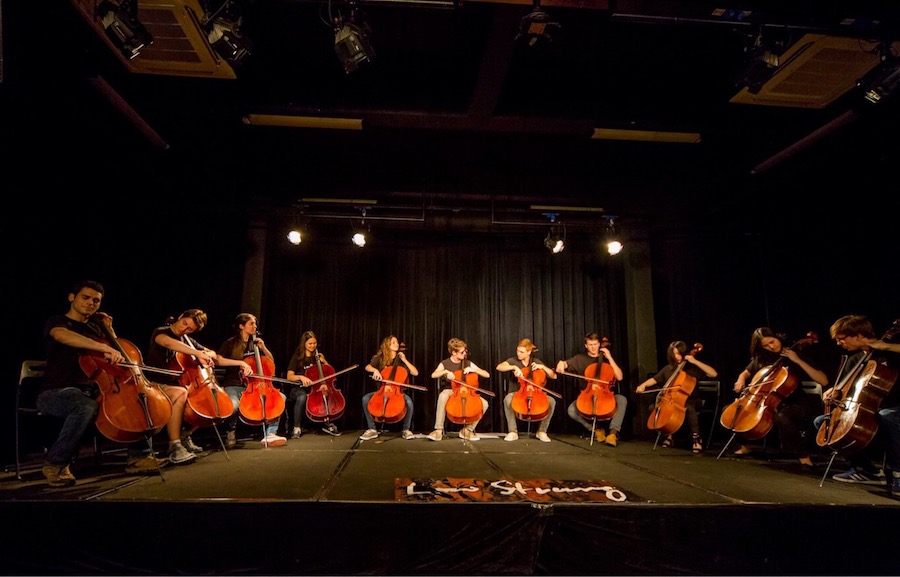
Yale is often recognized for its high academic rigor and quality. One facet of such a demanding community that may find itself unsung could prove to be one of Yale’s most unique. A 12-person cello band hailing from New Haven, Conn. plays music ranging from the rock of the ‘60s to present-day pop in its own energy-filled rhythm. Low Strung makes its way out to Davis on March 15 to present the Aggies with the jam power of 12 cellists. Such a distinctive combination of genre and instrument found its start from Yale’s own music-loving students.

“Low Strung was founded in 2006,” said Chloe Zhou, the tour manager of Low Strung. “It was started by a group of cellists in Yale’s orchestra. They decided they didn’t want to play just orchestra music, so they got together and started Low Strung.”

All the while, the organization has been completely student-run.

“We have four positions: we have tour manager, business manager, president and music director,” Zhou said. “Everyone in [that] group is a cellist and a good one at that.”

Zhou plays a large part in greasing the touring engine, making certain all parts fall into place where they should.

“When we have local gigs, such as the New York area or anywhere within driving distance, we just rent two cars and one U-Haul,” Zhou said. “[We] put all the cellos in the U-Haul, get in the cars and drive there. It’s a bit of a project.”

U-Hauls from New Haven to New York City may work, but given the greater distance between New Haven and the West Coast, these cellists fully feel the weight and size of their instruments.

“[When we] travel within the U.S. with expensive airline fares, we don’t bring our own cellos,” Zhou said. “You can’t put your cellos in the cargo, usually. You have to buy a seat for the cello! Which would double prices and would not be feasible, really.”  

A solution is typically found in the neighboring areas.

“We usually, at the location where we’re touring, we rent cellos,” Zhou said. “We are going to be renting from a store from El Cerrito [for our Davis concert].”

New Haven and Davis are quite a far distance apart, so what brings Low Strung out to the West Coast?

“We really just care about our audiences, so we’re looking for people that are going to enjoy it and who will really give us back the energy, that’s why we do everything from nightclubs to schools,” said Sofia Checa, the PR and business manager of Low Strung. “They have kind of the same reaction. In terms of why Davis, we traditionally travel to the home of one of our members, once a year. One of our members is from Davis, Calif.”

Han-ah Sumner, the Davis native, could not be reached for a comment, but the expanse of Low Strung’s touring was touched upon, having sold out notable venues in both Los Angeles and Washington D.C.

“The largest place I’ve been in was for the grand opening of the MGM National Harbor Casino in Maryland,” Zhou said. “We had all the people coming who had come for the grand opening, so that was thousands of people […] It was a great experience.”  

Low Strung has also rung out on foreign soil.

“Just last spring we toured in Singapore, which is the home city of one of our members,” Zhou said. “Prior to that […] [Low Strung] toured in Costa Rica and played in schools there. The group has also been to Switzerland, not as a tour, but to play in a music festival there, which is also really exciting.”

Checa found interest in the trip to Singapore.

“Singapore was at spring break for us,” Checa said. “We got off the plane in this paradise location […] We played at Universal Studios there. [We played] theme parks there, and we did a few country clubs, a few schools […] We had a concert outside, in a kind of outdoor market kind of area.”

Like their touring, their setlist parallels in variety.

“We got a ton of new arrangements of songs,” Zhou said. “We got ‘Hips Don’t Lie’ and we have older songs, like ‘Tragedy’ by The Bee Gees […] We do play a lot of The Beatles, Led Zeppelin, that kind of stuff […] [People] should come in with an open mind, to all sorts of of different pop and rock songs. I don’t think we are really the type of band that plays just one thing.”

Checa perceives such diversity as an advantage.

“I think the main draw is in the variety,” Checa said. “The fact that we can go from, in one concert, playing ‘Daddy Lessons’ by Beyonce to ‘Living on a Prayer’ by Bon Jovi […] It’s fun to be all over the map like that.”

Low Strung doesn’t shy away from more contemporary music; they even play music with substantial electronic production.

“We have ‘Bad Romance,’ Lady Gaga, and a lot of the synthesizer effects happen on the offbeat,” Zhou said. “I thought that was really hard to kind of play, as a person, what a machine would usually do.”

Their unique style of music brings in a wide audience.

“Our audience tends to be very diverse,” Zhou said. “We get everybody from younger students who want to play cello to college-aged students when we do performances at Yale and then people who are a bit older who like hearing these throwback songs because we are a cello rock group.”

So what should a Davis audience expect from Low Strung?

“I really like playing ‘Sweet Child O’ Mine,’” Zhou said. “What’s really fun about it is that we really get to rock out. There are parts we stand up and flip our hair crazy and have a good time.”

Low Strung also seeks an exhibition of a healthy band environment.

[The band] is extremely collaborative,” said Emily Cornett, the former president of Low Strung. “As much as we’re a group of cellists, we’re a group a friends […] Its very much like a big family because we do travel together so much.”

Checa had similar sentiments about the band.

“For me, [the band] is just the most fun thing ever,” Checa said. “It’s my favorite part of Yale, and my favorite part of being a college student is that I’m this lucky, that Low Strung is part of my life, and I can’t imagine what my life would be without it.”

This organization has left lasting impressions on its members.

“It’s pretty amazing to see how talented each person in the band is, but not only playing cello, also what they can bring to the group,” Cornett said. “Even people who aren’t in leadership positions are just always helping out and have ideas and opinions. It’s just a super immersive and active group.”

From the sound of Low Strung, the only thing their cellos won’t be offering Davis is classical music. If your ears are tuned to the energy of ‘60s rock or the jump in today’s pop, Low Strung may be able to kick a little rhythm into your step. Tickets are on sale for $15 on their website.


Written by: Nicolas Rago — arts@theaggie.org


National statistic trends observed at UC Davis sports

IAN JONES / AGGIE FILE

Women’s and men’s teams not drawing same crowds despite athletics coverage

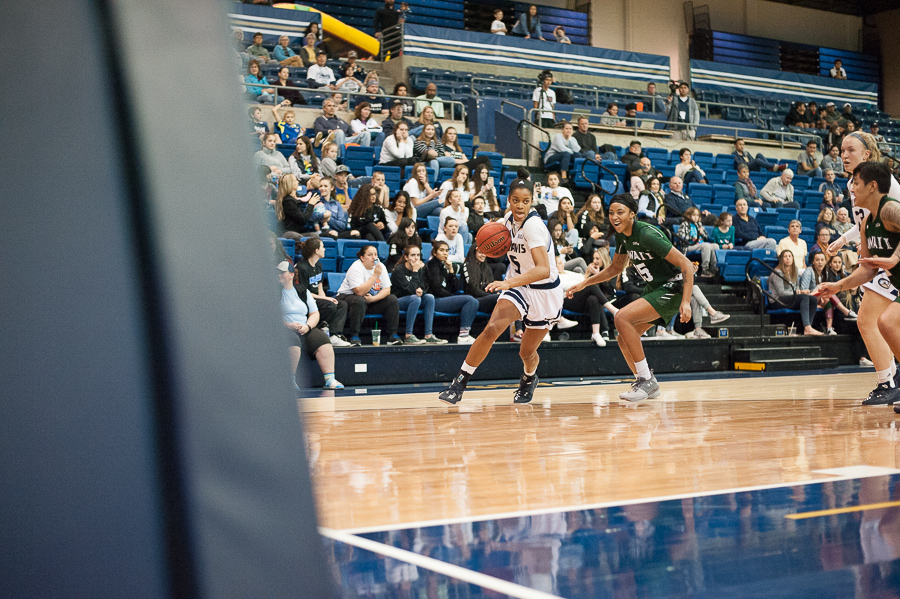
Many young sports fans notice early on that the crowds of fans at women’s athletic events are smaller than those of men’s athletics events. They wonder why this lack of support continues to persist through high school athletics, college athletics and professional athletics. This discrepancy, most notably between women and men’s basketball, also exists on the UC Davis campus.

Haley Blackwell, a fourth-year marine and coastal science major and an avid basketball fan, said that she noticed the difference in support for women’s athletics early on.

“No one shows up to the women’s games at all, but the men’s games get this huge section where everyone is standing up,” Blackwell said. “On top of that, if it’s a big men’s game, the entire Dance Team or the entire Cheer Squad will be there for men’s games, I’ve noticed that sometimes, too.”

Blackwell has also noticed that TAPS is only present at men’s games in the Pavilion parking lot to assist people with parking. This inconsistency is a result of the discrepancy between attendance at games.

Based on data from attendance listings from each basketball game this season, the average number of people in attendance at UC Davis men’s basketball games at the Pavilion is 2,179.3 people. For the UC Davis women’s basketball games at the Pavilion, the average number of people in attendance is 500.6 people, which is less than a quarter of those in attendance for the men’s games. The attendance data for the women’s basketball games is skewed slightly because no attendance is entered into the box score during double headers, but regardless, there is still a stark difference in the number of fans coming out for the events.

With double headers, historically, the UC Davis women’s basketball team plays first with a tip-off time of 2:30 p.m. or 4 p.m., followed by the men’s game, which starts at 5 p.m. or 7:30 p.m.

“There’s not a reason we schedule them that way,” said UC Davis Athletics Director Kevin Blue. “And a lot of the time both teams benefits from the fans of the other attending the games.”

This dramatic discrepancy is not a result of difference in skill nor record. The UC Davis women’s basketball team is currently leading the Big West Conference with a record of 11-1. The men’s basketball team is currently 8-4 in the league, trailing behind UC Santa Barbara and UC Irvine.

It’s hard to pinpoint exactly why women’s athletics gets less attendance than men’s athletics. It could be that women’s basketball isn’t as popular because it hasn’t been around long enough to grow a larger fanbase. The Women’s National Basketball Association wasn’t founded until April 24th, 1996, whereas the National Basketball Association was founded on June 6, 1946.

“I go to men and women’s games equally,” said Darius Livingston, a sophomore wide receiver on the UC Davis football team. “I mean, comparing the NBA to the WNBA, not in my eyes, but the competition to many other people, they feel like competition is more fierce and more engaged and it’s just a more social setting for them to attend the men’s games than the women’s game for whatever reason. I try to attend all events all equally. I’m just as engaged at the women’s games as I am at the men’s game, so I have fun either way.”

Blue stated that he, too, notices the difference in support.

“I have noticed a discrepancy throughout my professional career and I wish it were different,” Blue said. “I don’t know that there are good reasons for it, especially in the case of our current team. We have an exceptionally good, highly successful, highly entertaining team. You’d have to ask all the people out there who aren’t coming why they aren’t coming and then why they’re missing out on a really good experience.”

Jan Morrison, a season ticket holder for both men’s and women’s basketball teams, discussed the issue she’s also noticed, but doesn’t know what could be a possible solution to the problem.

“My opinion on that is that men’s sports always are more popular with people,” Morrison said. “That’s just the way it is. Our daughter played basketball from 5th grade to 12th grade, so we got into women’s basketball, so we actually started start coming to women’s games before the men’s.”

According to a data collection by ThinkProgress, collegiate athletics coverage is subject to a stark gender bias. On the NCAA website, men’s basketball was three times as likely as women’s basketball to be the lead image on the home page, and more than twice as likely to be featured in the top headlines. On the ESPN homepage, the Men’s Division I Basketball Tournament, commonly known as March Madness, was nine times as likely to land a featured spot at the top of the website, and almost three times as likely to be featured on the front page as a whole than the Women’s Division I Basketball Tournament.

In a positive divergence from these statistics, the UC Davis Aggies Instagram account, which is run by UC Davis Athletics, seems to follow fair and equal standards for content. At the time of this article, there are currently 12 posts dedicated to men’s basketball and 16 for women.

“When we promote and market our athletics programs, it is intended to promote and highlight the accomplishments of both our teams, whether they are men’s teams or women’s teams,” Blue said. “We follow conventional sports marketing and sports communications practices for each team.”

UC Davis Athletics is currently in the process of selecting a new women’s athletic program to install at UC Davis. This new addition will increase the number of women’s varsity athletic programs to 15 and the total number of varsity sports programs to 24. This new addition is to bring the university into compliance with Title IX of the Education Amendments Act of 1972, which ensures fair and equitable athletics opportunities for male and female students.

“I think that more variety of sports and and further enhancing women’s sports opportunities is is a good thing for UC Davis,” Blue said.

While it is hard to pinpoint why the attendance at women’s athletic events is lower than at men’s event, UC Davis Athletics remains consistent in its coverage and promotion contrary to national statistics. Regardless, women’s basketball only getting a quarter of the attendance that men’s basketball does is an issue that affects the team’s playing.

“It was a little sparse crowd there today,” said women’s basketball head coach Jennifer Gross in a post-game interview on Jan. 24. “So you know, when it’s a little quieter in the stands, you got to come up with that [energy] yourself and that’s what we were challenging ourselves to do throughout the game.”


Written by: Liz Jacobson — sports@theaggie.org


UC Davis narrows choices for new women’s team to four viable options

0
DIANA LI / AGGIE

Athletics working group chosen to analyze, decide addition to UC Davis sports  

As stated in a press release on Feb. 16 by UC Davis News and Media Relations, the working group chosen to review the nominations for the new women’s athletic team has reviewed said nominations on the four criteria mentioned in past press releases: number of participation opportunities, philanthropic support, competitive opportunity and conference affiliation. After an intensive analysis of all nominations, four viable team options have been created.

According to the press release, “[the university/athletics] will need to add as many as 40 to 45 new participation opportunities for female student athletes.”

This increase in opportunities comes from the overwhelming ratio of undergraduate female students to male students at UC Davis.

The release explains that in order to fulfill these large number of opportunities, athletics is “also considering teams that can support relatively large squad sizes to be most viable, but are also evaluating the possibility of adding two smaller teams.”

The hope for these two smaller teams is to add the number of participation opportunities for the smaller teams, possibly creating a lower cost than one large team.

As far as the requirement for the new women’s team to be an official NCAA team, the release explains that it is not a requirement for the team to be in NCAA contention, but that sports sponsored by the NCAA would support a more competitive schedule, as well as provide funding to support student-athlete scholarships.

A facility on campus for the new team also is a deciding factor for the working group, particularly if facility enhancements need to be made, adding to the team’s startup cost.

The four most viable options/combinations of new sports the working group has considered, as well as notes on possible success of the teams directly from the press release are:


    • Beach volleyball and rugby
      • Beach volleyball would produce a roster size of 12-20 individuals, and there are currently 55 Division I programs for the sport. The roster size for rugby would be about 25 to 35 individuals, with eight current Division I programs active. Beach volleyball is sponsored by the Big West and UC Davis excels in club rugby.
    • Equestrian


  • Equestrian would produce a roster size of 25 to 55 individuals, and there are currently 17 Division I programs for the sport. Equestrian is complementary to notable academic strengths of UC Davis.


    • Fencing and rugby


  • Fencing would produce a roster size of 14 to 22 individuals, and there are currently 25 Division I programs for the sport. The roster size for rugby would be about 25 to 35 individuals, with eight current Division I programs active.


    • Rowing


  • Rowing would produce a roster size of 55 to 70 individuals, and there are currently 88 Division I programs for the sport. Women’s rowing had varsity status at UC Davis as recently as 2010.


Currently, the group is still “reviewing detailed information related to costs and donor support for the teams most strongly being considered.”

As a part of this process, the intercollegiate athletics fundraising staff will connect with prospective donors to understand the full degree of philanthropic support present, according to the release.

There is currently a “‘contingent’ pledge document available that will be sent by email to all survey respondents who nominated either rugby, rowing, fencing, equestrian or beach volleyball, and also indicated interest in making gifts to support their nominated teams.”

Individuals or groups interested in making a pledge can “send an email to Rob Norris (assistant athletics director for development) at athleticsdevelopment@ucdavis.edu. Interested donors should be sure to make their pledges by March 9, 2018.”

The full press release is available online.


Written by: Ryan Bugsch —sports@theaggie.org


Guest: Capitalist deception and corporate universities

TREVOR GOODMAN / AGGIE

The UC system must be democratized for students and workers to obtain power over their everyday lives

It’s well known that those with power and influence disproportionately craft the narratives that we’re exposed to (because access to prominent platforms isn’t equally distributed) and will generally do so in ways that benefit them. For instance, when companies, even large ones, increase prices, they often try to blame low-wage workers — with the most infamous examples of this corresponding to increases in the minimum wage. However, these companies are still making significant profits, and some of their employees, such as executives, receive compensation packages that are hundreds of times greater than those of the company’s lowest paid, or even average, employees.

With few exceptions — especially when it comes to larger companies — this framing, as well as the low compensation that certain workers receive, is the result of choices. Despite claims to the contrary, there are plenty of situations in which companies aren’t forced to profit maximize and could easily survive with slightly lower profits. Furthermore, their highest paid employees could accept lower compensation packages yet rarely choose to do so.

Now, some may argue that high compensation is necessary to attract the best candidates for these positions. But leaving aside the fact that this argument would apply to other employees as well (there’s that biased narrative again), what exactly is meant by this? What constitutes “best” in this context?

Usually this means people whose decisions will effectively maximize profits, but the question then becomes, “Is this even desirable?” As mentioned earlier, many companies could survive with slightly lower profits, and higher profits often come at the expense of the most vulnerable employees — and customers, for that matter. On top of this, do we even want a few unaccountable individuals to be making decisions that affect everyone? Instead of such authoritarian control, perhaps we the people should collectively make these decisions for ourselves.

A similar situation exists within the UC system, along with plenty of other universities, whereby top administrators claim that increases in tuition and fees are necessary because of wage increases for their lowest paid employees, while continuing to get highly compensated. This too is a choice and a matter of framing. Low wage workers are considered expendable, while those making the decisions and crafting the narrative would never even consider the impact of their own salaries and benefits on budgetary concerns (at least not publicly). Such high compensation levels are again said to be required in order to attract the best administrators. But an almost-identical critique can be made against this assertion, as was made against the analogous one involving corporate executives. Despite supposedly being a public good, the UC system acts like a corporation in a lot of ways.

Going beyond administrative bloat, there are larger issues surrounding the university’s priorities — budgetary and otherwise. Because of the university’s undemocratic nature, its resources are often used in ways that don’t really benefit and sometimes even directly harm — intentionally or not — students and workers, including such things as a recently renovated chancellor residence, armed police and groups designed to stifle student activism and resistance, in addition to administrative bloat. Rather than devoting our limited funding to these and related projects, it should be going toward student needs like truly affordable on-campus housing, community centers and improved physical and mental health care. Note that, of these, the latter two are actually having their funding reduced and misused, respectively.

Luckily, there are several groups at UC Davis (and elsewhere, but here the focus will be on UCD) attempting to counter these violent structures and the narratives created by administrators in an attempt to justify them. These range from Students and Workers Ending Racial Violence (SWERV), to Students for a Democratic Society (SDS), to all of the community centers mentioned previously (and there are probably other groups doing related work that I’m unaware of, as well).

And then there are the numerous campus unions that fight to protect the rights of both workers and students. This is not only because some students are workers and some of them are part of the UC Student-Workers Union (UAW 2865), nor is it just because our working conditions as campus employees are also students’ learning conditions. Another major reason for this is because campus workers care about student concerns, and solidarity is important. This is why students should support AFSCME Local 3299, which represents, among others, service workers and has a history of actively helping students organize around Regents meetings; the California Nurses Association; and UPTE-CWA 9119, which represents professional and technical employees, in their ongoing contract negotiations, as well as all campus unions (and unions and workers more generally) in theirs. When we recognize that students’ struggles and power are intrinsically connected to those of workers and exercise this collective power to push back against oppressive institutions, we all win.

The UC system needs to be democratized by giving students and workers real power (as opposed to non-binding input) over the decisions that affect their everyday lives. This has been the goal of organizers and movements for decades, with the most recent iterations at UC Davis being #FireKatehi (which was about far more than just Katehi as an individual) and the Mrak sit-in a few weeks ago, for which several students are now facing charges with Student Judicial Affairs, and it will continue to be an important goal on the path to full democracy for society as a whole. One concrete starting point can and should involve students and workers having the ability to determine current Vice Chancellor of Student Affairs Adela de la Torre’s replacements, along with having more power over the allocation of mental health resources and decisions — since the unelected and unaccountable administration clearly can’t be trusted to make the best decisions for students and workers on their own.


Connor Gorman is a fifth-year physics graduate student at UC Davis and a trustee on the statewide executive board of the UC Student-Workers Union (UAW 2865), the union that represents Academic Student Employees across the UC system. He is also active in SWERV and SDS.


Written by: Connor Gorman

Disclaimer: The views and opinions expressed by individual columnists belong to the columnists alone and do not necessarily indicate the views and opinions held by The California Aggie.

Humor: Frat kicked off of campus after turning off “Africa” by Toto at a party

NICHOLAS CHAN / AGGIE

Action was taken after attendees couldn’t hear the drums echo in the night

One of the deadliest crimes was committed at a local frat party this past weekend. The night started like any other night. “Red Nose” was playing on loop and the whole crowd was getting progressively sweatier but powering through with the magic of friendship and the cheapest vodka Costco could offer. In a glorious change of the tides, the classic beats of “Africa” by Toto began humming through the speakers as a boy who could be anywhere between 12 and 30 years old manned the aux, not realizing what he had just done.



“I felt like… like maybe culture was being revived for the first time since Silly Bandz left us,” said third-year Allyson Yniguez. “Suddenly, I believed in my dreams again.”

The dance floor began to assemble into what can only be described as a battleground of joy and uncultured swine. Alas! Some people did not know the magic of “Africa” and would not stand for this out-of-the-ordinary selection.

“You put on ‘Come Get Her’ by Rae Sremmurd or you set this house on fire!” said fourth-year Freddy Fiddlesticks. “There’s no place for yacht rock in this town!”

The crowd polarized and suddenly it was a scene from an old Western: the non-believers versus the Africans. Wait… no… not accurate… oh god….

Lil’ boy-man at the aux freaked out. The song barely got through its first verse before he pulled the plug and played, “Rake It Up,” their emergency bop.

That was when the Greek god of Chaos peeked through the window.

“Oh, damn…” he whispered.

Suddenly, it was war.

“You didn’t even let it get to the chorus!” said first-year Jack Pollock. “That’s like baking a cake and then choosing to flush it down the toilet instead of frosting it! You monsters!”

One party member shrieked so loud that a police officer heard it from across campus. He had been giving a child a ticket for biking with unregistered training wheels, but this seemed like it might be a little crazier.

“I must go, Timothy,” the police officer said as he stapled the ticket to the bike.

“Is it about ‘Africa’ by Toto?” Lil’ Tim-Tim said.

“With a shriek of that magnitude, that’s damn near the only thing it can be, my boy,” the officer responded. With that, he pedaled into the night all the way to the frat house. He had never used such vigorous hand signals in his life.

When he got there, it was a brawl. Brothers were fighting brothers, that one dog that lives at the house that you always worry about was tearing apart the couch (or repairing it — it was kind of hard to tell, honestly) and the aux was on fire.

“What in Gary May’s name is going on in here?” the officer said.

One brave woman with two stripes of blood under her eyes emerged from the mass with a baseball bat in hand.

“They turned off ‘Africa’ by Toto!” she hollered.

“Oh?” the officer responded.

“Before it got to the chorus!” she screamed.

“Oh!!!” the officer screamed back.

He shut the whole house down for their sin. As he directed the men out of the house, one boy turned back to look at what used to be his home and whispered, “It’s gonna take a lot to drag me away from you….”

Finally, he understood. However, for a crime this severe, there’s nothing that a hundred men or more could ever do to regain their fraternity.

Bless the rains.


Written by: Olivia Luchini — ocluchini@ucdavis.edu

(This article is humor and/or satire, and its content is purely fictional. The story and the names of “sources” are fictionalized.)

A Taste of History in a Glass

ALLYSON KO / AGGIE

Earliest evidence of wine production found in Armenian cave gives scientists insight on ancient, modern methods

Wine is one of the most popular alcoholic beverages in the world. The history of this fine delicacy dates back many millennia. In September of 2010, the earliest evidence of wine production was found in a cave in Armenia, proving that humans systematically produced wine 1,000 years earlier than previously thought.  

According to the Book of Genesis in the Old Testament, the first vineyard was planted in present-day Armenian territory after Noah’s Ark landed in the Mountains of Ararat. The discoveries made in the Armenian cave gave archeologists a complete picture of 6,100-year-old wine production for the first time, showing that making wine during that period was on a large scale.

Dr. Nelli Hovhannisyan, a professor at Yerevan State University in Armenia, came to UC Davis in late January to share more about the world’s first-known winery at the Robert Mondavi Institute for Wine and Food Science. She is responsible for the excavation of the cave.

“The cellars had different layers,” Hovhannisyan said. “The upper layers were bearing wide pots where the wine remains were very concentrated. There were also old manuscripts describing in detail how people were making raisins.”

The oldest known leather shoe was also discovered in the same cave — dating back 5,500 years. Aside from this artifact, archaeologists excavated drinking cups, a wine press for grape stomping, storage and fermentation vessels, withered grape vines, skins and seeds.

The Areni cave in Armenia contained a large number of seed specimens.

“The grape remains found in the cave were practically perfect,” Hovhannisyan said.

In archeological excavations, near-perfect relics are rare. The main limitation is the number of available samples from each site. Merely five or 10 seeds would limit the statistical confidence in the scientific claims.

“You have to have enough number of seeds with the right level of preservation,” Hovhannisyan said.

Having a large sample size gave scientists greater confidence in their analysis by comparing the ancient grape seeds with modern grapes. Weathering makes it difficult to find perfectly-preserved seeds, but the cave’s natural features gave them a perfect shelter.

Armenia is very interesting because of the old remnants of the vineyards are found in monasteries,” Hovhannisyan said.

The grape stems discovered in the 6,100-year-old cave show very close genetic relationships to those that are still growing in monastery vineyards today. In fact, the same grapes that were used in red wine production today were found in the Armenian cave, collating ancient and modern times.

Back then, the wine was pressed by the stomping of human feet, giving the term “made the old-fashioned way” more specific context. The juices from the crushed grapes were then drained into a tub and were left for fermentation. The wine was kept in clay jars and stored in the cool, dry Areni cave that made the perfect wine cellar.

Shards of pottery were chemically analyzed for signs of wine storage. The clay pots themselves were radiocarbon-dated between 4,100 B.C. and 4,000 B.C. The results showed traces of malvidin, a plant pigment that gives red wine most of its color, is also found in pomegranates — Armenia’s national fruit.

Aside from its historical significance, there are also some modern benefits from this finding, such as disease resistance.

Dr. Summaira Riaz, a researcher in the Department of Viticulture and Enology at UC Davis, worked with grapevine samples from Armenia in Dr. Andy Walker’s lab. Viticulture is the science of growing farm grapes and enology is the science of making wine. The two branches make the industry that is wine-making.

“We look for natural sources of resistance to different pests and disease to carry out conventional breeding by making crosses of resistance and susceptible varieties,” Riaz said. “This allow us to understand the genetics of resistance and develop molecular tools to speed up breeding process.”

The common grapevine, Vitis vinifera, has over 5,000 different varieties around the world. The UC Davis study used 45 samples of Vitis vinifera from Armenia to analyze the grapevines’ resilient properties. Walker’s lab focuses on breeding disease-resistant grapes to reduce the use of insecticides and fungicides in vineyards.  

“We worked with plant tissue and extracted DNA to carry out DNA fingerprinting, and testing of plants in the field and lab for powdery mildew resistance,” Riaz said.

The research showed that the cultivated grapevines are resistant to mildew.

Riaz attended Hovhannisyan’s talk on the cave’s excavation.

“[The findings] will give us better understanding of natural diversity of plant germplasm [a living tissue that preserves biological diversity] and would allow us to maintain germplasm collections in more efficient way to preserve it for future generations,” Riaz said.

UC Davis is ranked in the top two viticulture and enology programs in the United States. Nicholas Shurden is a UC Davis transfer student from the Lodi area majoring in agricultural business. Last summer, Shurden worked in Napa Valley farming wine grapes, where he was exposed to the various diseases affecting the vineyards. He attended Hovhannisyan’s talk to get a better understanding of the various cultivars.

“This research will play a pivotal role in identifying ancient strains of grapes along with genetic restoration will result in the rebirth of ancient wines being produced again in the 21st century,” Shurden said.

Today, Armenia’s Ararat Valley is like that of California’s Napa Valley — and the wine industry is booming just as well. Wineries are opening all around the country and wine bars are flourishing in Yerevan, the nation’s capital. Over the past few decades, Armenian wines were off the radar, and now they are gaining global recognition.  

In 2012, the Zorah Karasi Areni Noir Armenian wine (2010) was ranked among Bloomberg’s top 10 wines for the year. It was the first vintage wine to be made based on the findings from the Areni cave. Made from Areni noir grapes and aged clay amphora, tasting this red wine is like drinking a part of history.

“One thing I respect about our particular industry — the wine industry — is the willingness to help and share information without prejudice from country to country,” Shurden said.  


Written by: David Madey — science@theaggie.org

Aggies impress at Aggie Shoot-Out

0
DANIELLE MOFFAT / COURTESY

UC Davis women’s water polo team competes in Aggie Shoot-Out, wins three of five games played

The UC Davis women’s water polo team made a splash at the Aggie Shoot-Out tournament last weekend. The Aggies played four games that counted toward their overall season record, and snatched the victories in three of those games, pushing their overall record to 10-6.

Beginning the tournament against Santa Clara, the No. 10 NCAA-ranked Aggies dominated their opponent, winning 15-6. UC Davis outscored Santa Clara in every quarter of the game. In total, seven different players put goals in the back of the net for the Aggies, with senior attacker Paige Virgil and junior attacker Emily Byrne each earning a hat trick to help propel UC Davis to a victory.

Facing No. 2 Cal in the second game of the tournament, the Aggies were not able to repeat their success of the first game, taking a brutal 16-1 loss. Senior center Greta Kohlmoos was the only Aggie to score.

Momentum for UC Davis picked up in the third game, however, against Cal State Monterey Bay. Similar to their dominant first game performance, 10 different Aggies earned goals to their name to propel the team to a 14-4 victory. It seemed as if the win for UC Davis was apparent after just the first period of play, scoring six goals and preventing Monterey Bay from scoring even once. The Aggies possessed a seven-point lead after the first half of play, and shut down their opponent in the third period of play, again not allowing a goal to be scored against them to bring their team to victory.

On Feb.18, UC Davis began their second day of play against Fresno State, which they won 18-9. On the offensive end, it was Virgil who shined for the Aggies, scoring an overwhelming six goals on the match. Senior attacker Sammy Preston also had an impressive performance, earning a hat trick. UC Davis finished each period of play with a minimum of four goals, outscoring the opponent in every period and not giving much room for Fresno State to come back.

Right after their game against Fresno State, it was right back in the pool as the tournament was rounded out for the Aggies in an exhibition against China’s National Team, where they took a 15-5 loss. China put six goals in the back of the net before the Aggies were able to put one on the board. Freshman Emily Alkema earned two goals in the match. If competing against a national level team isn’t hard enough, the Aggies did show defensive improvement statistically, limiting China to two fewer goals than they scored in their previous encounter on Jan. 20 of this year.

Because exhibition matches are not counted against a team in regular season the records, the loss to China did not harm the Aggies’ overall record, which is currently at 10-6.

UC Davis continues its season play this Saturday, Feb. 24 as the team travels to Santa Clara to compete in the Santa Clara Invitational.


Written by: Ryan Bugsch — sports@theaggie.org

Manetti Shrem exhibit: “Welcome?”

ZOË REINHARDT / AGGIE

UC Davis art exhibition explores gritty topics like refugee crisis

The Manetti Shrem Museum of Art opened its third exhibition of the year on Thursday Feb 1. Running until June 24, “Welcome?” tackles pertinent issues like immigration and homelessness through the lens of hospitality. In light of the new curation, The California Aggie explored what “Welcome?” has to offer.

When I initially entered the Manetti Shrem, an employee at the door approached and asked if I was here for the Wayne Thiebaud exhibit. The famed artist and former UC Davis professor has a concurrently running exhibition of his own work over a 10-year period, titled “Wayne Thiebaud | 1958–1968.” As innocent as the passing remark may have been, it made me wonder if the “Welcome?” exhibit, a mere two weeks into its allotted time, had been overshadowed and forgotten — much like the topics included in the exhibition.

After navigating my way through the vast quantity of beautiful Thiebaud paintings, I found myself in the back of the museum. The beginning of the exhibition is marked by two gleaming golden mylar emergency blankets, mounted on walls opposite one another.

Beneath each lies an overflowing mound of the same mounted blankets, encased in a plastic bag. Each blanket contains a small sheet of paper adorned with the following quote: “With silent lips. Give me your tired, your poor, Your huddled masses yearning to breathe free, The wretched refuse of your teeming shore.”

Taken from the base of the Statue of Liberty, the words cut straight to the core of the global refugee issue. The whole piece is titled “(America) Adopt a Refugee.” The artist, Daniel Joseph Martinez, appears to not only challenge the United States’ immigration approach, but also to address the fact that our country’s own history stems from immigration.

Further into the exhibit, I found Simon Leung’s “War After War.” The 90-minute film comments on homelessness through the nomadic lifestyle of Leung’s friend, Warren Niesluchowski. The film follows Niesluchowski, who plays the role of a refugee, as he struggles to find a reliable place to stay. The predicament leads Niesluchowski to crash the lives of several individuals who put him up for the night. It demonstrates all of the positives and negatives behind taking a refugee in. While one’s life may gain a newfound individual of interesting background and substance, the fear of allowing a foreigner into our lives remains quite real. This narrative allows Leung to analyze what hospitality entails and how it makes us feel.

Andrea Bowers dominates the last wave of the exhibit. Her massive maize-colored quilts each inscribed with a quote from the Bible are attention-grabbing, to say the least.

“I was a stranger and you welcome me,” reads one of the quilts. The other holds the same message, but in Spanish. The piece, titled “Quilt of Radical Hospitality/Edredon de Hospitalidad Radical,” touches on the fact that, while quilts are European in origin, these quilts are weaved with traditional Mexican patterns. The use of the quilts and European and Mexican interaction recall both the idea of the United States’ “blanket” stance on immigration and the intermingling of American and Mexican cultures.

Bowers follows this up with two pieces: “An Act of Radical Hospitality” and “Mother and Child in Political Sanctuary, Adalberto United Methodist Church, Chicago, IL, July 2007.” The pieces depict the very real immigration story of Elvira Arellano in film and photographs, respectively. The pieces tell the story of a single illegal Mexican mother and her young child. Facing deportation, Arellano is granted federal sanctuary by the Adalberto United Methodist Church and its Reverend Walter Coleman. The story is both sobering and uplifting, stripping away any ambiguity in the art; we are left with nothing but truth and simple questions like, how do we treat people? And how do we welcome them in the modern world?

“Welcome?” is a brash exhibit with big ideas. Aspects of the art seem distant from the core principles of hospitality and welcomeness. However, many of the pieces strike a real chord of emotion, which is a true accomplishment for any art form. Even more so, the art approaches the exhibition’s ideas in both avante garde and simple ways. In this sense, it caters to both sides of the artistic audiences. Much like the issues it’s after, it’s not perfect, and it doesn’t promise to be. And yet, despite the presence of an artistic legend in the same building, “Welcome?” stands tall.


Written by: Rowan O’Connell-Gates — arts@theaggie.org

If I was a CoHo pastry I would be a…

0
JEREMY DANG / AGGIE

A critical analysis of personified pastries

Zen Bar

What’s the point of getting a pastry if you take out all the fun stuff? Just stick to your oatmeal, dude. You’re the friend who gets sorbet when you go out to ice cream. You’re the one eating and storing everything in a collection of jars and thermoses. You’re not a bad person or anything, you just really need to chill out. A little dry but surprisingly sweet when you hit the raisins, I guess you’re a good way to quell a sweet tooth if you’re avoiding refined sugar.


Apple Apricot Streusel Bar

You’re the type of significant other that parents love. You’re sweet, familiar and not too challenging. A more modern take on apple pie, you’re like looking at old photos of someone’s pretty grandma. It’s just nice. We all wish that there were more of you in the world, but at the end of the day your flavor isn’t all that complex and you end up being numbingly sweet. If we could make one suggestion: Be more substantive! Throw some more tart fruit on top — we know you have it in you.


Ecstasy Bar

You are shameless. I mean, it’s all in the name. Very up front, decadent, bold. Not a calorie-saver but you don’t aim to be. You are totally vivacious, fulfilling and indulgent. Your friends can only hang out with you like once a month because they need that much time to recover. However, when they turn you down they kind of regret it. You remind us that you only live once, might as well have an ecstacy bar.


Dream Bar

Vastly underestimated, immensely pleasing. You’re that person of few words who holds back in class except for those few, insanely poignant comments that expose how freaking bright you really are. You are rich in knowledge and are highly complex. You’re a real treat when you get a chance to just talk one-on-one, although you’re good to split with a friend because there’s just so much there. You’re that person you could stay up until 4 a.m. talking to; it must be because you’re such a dream.


Funfetti cookie

Who the heck even are you! So bubbly, happy-go-lucky, childlike. You’re so much fun but would we really choose you every day? You’re a special, silly occasion. You’re obviously pretty and you know it, totally sweet, don’t really taste like much else. There’s something nostalgic about you. Lots of people want to taste the rainbow and you’re probably the best way to do that.


Chocolate espresso cookie

There’s something oddly masculine about you. Understated and yummy, you’re a rare find. Often elusive, perhaps as a result of your popularity, we’ll buy two of you when we get the chance and don’t even feel bad about it! Though it could serve you to be a little heartier, you don’t feel the impetus to change much. Oddly enough, we end up liking you more for it.


Vegan coconut fudge bar

Perfectly balanced. Although we wish we could bestow that title on the Yin Yang cake, you deserve it. You’re a totally indulgent flavor palate, but spare us the animal products. A great choice for those trying to limit their environmental footprint, you relieve our conscience at the same time that you’re totally satisfying. A good friend on compromising days, you make us feel better about our weaknesses without forcing us to reform. Thanks, friend!


Zucchini bread

You’re that measured, organized person who has a little baggie for pens and pencils and uses binder dividers (with the tabs). You pack your own lunch in divided tupperwares and only eat breakfast at breakfast time. This is your choice sweet because it’s perfectly loaf shaped, perfectly digestible and perfectly yummy, albeit not everyone’s cup of tea. You’re agreeable but walk to the beat of your own drum.


Rice krispie treat

You know that person you so randomly run into and enjoy, but only completely sporadically? That’s you. Funny, quirky but somehow simultaneously a classic. You’re nice to pretty much everyone and are that person who when walking around with on campus, says hi to literally everyone. We’re not sure who your close friends are, but we’ll get you while you’re hot.


Savory scone

You don’t like sugar. You’re hungry and it’s morning time. You’re buttery and yummy but very practical. You’re honestly not a healthy choice for breakfast, but you’re the kind of friend who just eats everything and anything. You’re very laid-back and grounded and we love you for it. You’re someone that our parents would like, which makes you comfortable but often uninteresting. In any case we’re glad you’re an option.


Written by: Stella Sappington — features@theaggie.org

University tries, fails at transparency, accountability

CAITLYN SAMPLEY / AGGIE

Former CAPS director wrongfully fired

UC Davis Student Health and Counseling Services hosted the Mental Health Town Hall on Feb. 13 for an “open dialogue about mental health at UC Davis.” Students were invited to express concerns regarding the questionable allocation of mental health funds. SHCS officials were present to address these concerns with the exception of Sarah Hahn, the former director of Counseling and Psychological Services. Her absence prevented her from giving critical information on where student fees intended for mental health services are really going.

Hahn has proven to be a steadfast advocate for the integrity of student counseling services but was fired this month from her position at UC Davis. One of the reasons for her termination was a “lack of proficiency in college mental health service delivery,” according to the termination letter given to Hahn from Margaret Walter, the SHCS executive director.

However, with over 400 students publicly expressing opposition to Hahn’s termination, it hardly seems that she has failed in providing mental health support to students. In fact, Hahn appears to have done the opposite.

In 2015, the UC approved a raise in annual student fees to support increased mental health services system-wide, and UC Davis itself planned to hire 12 additional counselors with the additional funding. It is now 2018 and no such counselors have been hired, begging the question: Where is our money going?

As an advocate for student well-being, Hahn expressed criticism and concern over the fact that UC Davis has yet to make good on its promise to hire additional counselors. She stood up for students, reporting issues regarding the lack in proper mental health services despite the $18 million initiative to alleviate this problem.

It does not seem that her inquiries were well received by officials, in particular Walter. Not only was Hahn prohibited from speaking at the town hall, but she was also fired six days before she was set to receive financial information or access to an external needs assessment report which will be released to university officials. These incidents suggest that her termination was part of a larger motive of the university to keep certain information concealed from the public.

It was only in the face of public outcry that the university was finally cornered into releasing an audit confirming that $250,000 worth of mental health funds were spent by UC Davis in a manner “inconsistent with non-binding guidance.”

The Editorial Board is disappointed that the university, one that prides itself on providing free and accessible mental health services, resorted to what outwardly appears to be a retaliatory firing of an individual who was actively engaged with the student community and its mental well-being. The audit was only released as a result of heightened awareness of an internal problem, indicating a poor job of ensuring transparency between the UC and its students.

The Editorial Board urges students to join the growing network in support of Hahn’s efforts and continue pressing for transparency in university affairs.


Written by: The Editorial Board 

Nishi 2.0 approved by City Council

0
JAMIE CHEN / AGGIE

Davis residents to decide on fate of project in June

On Feb. 6, Davis City Council discussed the Nishi Student Housing project, a proposed housing plan for 700 apartment units on the field between the I-80 highway and Old Davis Road.

A smaller, broader Nishi project was proposed two years ago but was shot down by voters, losing by a margin of 600 votes. This new Nishi proposal, nicknamed “Nishi 2.0” by the council and news outlets, focuses on providing housing for Davis students in particular, rather than providing for residents and families.

At the meeting, the council came to a unanimous 5-0 decision to place the new proposal onto the June ballot, marking a small victory for Nishi 2.0.

“They listened,” said Don Gibson, the chair of the Graduate Student Association-ASUCD Joint Housing Task Force, at the Feb. 6 meeting. “They listened to what the biggest needs are: housing. Fundamentally, this project is far better for the student community than what was proposed two years ago […] This is exactly what our students need: close to campus, close to downtown, affordable and inclusive units. Hopefully this and Lincoln 40 will set a new standard for housing in Davis.”

Dozens of Davis students and residents attended the meeting, declaring support for the new project and urging the council to place it on the ballot. The student housing crisis Davis has been facing for the last few years has affected students and residents alike, as apartment vacancy levels have dipped alongside an increase in prices.

Developers seem confident that pushing Nishi 2.0 through will not only help combat the housing crisis by offering students affordable, convenient housing, but also offer the city some much-needed economic development and growth.

“With the first project, we lost everything,” said John Whitcombe, the founder of Tandem Properties, the development firm proposing and helming the Nishi Project. “And so now we’ve come back with a new project that is focused — at this point — on student housing. And that’s where we’re at because that’s what we know best, and that includes 700 apartment units — or 2,200 beds — and we have an inclusionary affordable housing program that starts at $400 a month, and other units go to $673 a month for a substantial 15 percent of the project.”

Because the Nishi project lies outside city limits, the council cannot directly approve the project for construction. Davis residents will vote on the proposal in June after City Council’s approval. The project needs a majority vote of 51 percent in order for developers to move forward and begin construction.

Developers and council members are optimistic about the vote and the future of the project. Previous contention against the project involved potential traffic and environmental impacts. Mayor Pro Tempore Brett Lee is confident that these effects will be mitigated by a proposed underpass that would directly connect Nishi 2.0 to campus and that the benefits of the project far outweigh the possible downsides.

“There’s a lot of positives and very few negatives,” Lee said. “I think Nishi 2.0 is just more focused on helping us address the student housing shortage. We don’t have to worry about impact on the Richard-Olive intersection with this project, and it’s all student-oriented in terms of placement, so I’m happy to support 2.0. […] I’m optimistic.”

The final day to register to vote in the June election will be May 21, which is 15 days before the general municipal election on June 5. California residents can register to vote on the California Secretary of State’s website.


Written by: Ahash Francis — city@theaggie.org


ASUCD executive tickets hold CoHo debate

SCREENSHOT FROM ASUCD FACEBOOK

Candidates discuss how to end toxicity within Senate

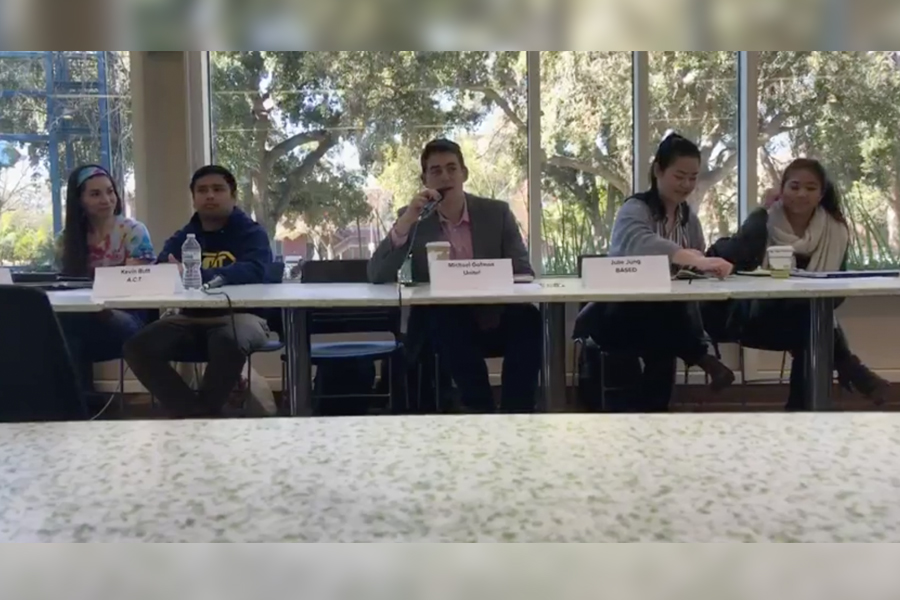
The three executive tickets running for the positions of ASUCD president and vice president held a debate at the CoHo starting at 11 a.m. on Wednesday, Feb. 21. Aggie Community Transfer’s (ACT) executive ticket Toni Sandoval and Kevin Butt were present as was BASED’s executive ticket Julie Jung and Julienne Correa. While the Unite! slate’s presidential candidate Michael Gofman was present, his running mate, Shaniah Branson, was unable to attend.

Sandoval is a third-year communication major and transfer student. Her running mate, Butt, is a transfer, third-year political science and African American Studies double major. The ACT slate expressed their hope to create more opportunities for transfer students and implement more transparency and accountability within ASUCD.

Gofman, a second-year political science and economics double major, is running for president alongside Branson, a third-year communication major. The Unite! slate aims to address food insecurity, transparency and transfer student resources.

Jung, a third-year political science and psychology double major, is running for president with running mate Correa, a third-year psychology and sociology double major. The BASED slate aims to increase resources for ASUCD units, increase communication with administration and increase advocacy for underrepresented communities.

The debate began with the candidates addressing where ASUCD has historically let students down in terms of accountability and representation. Sandoval gave a passionate critique of the Senate’s shortcomings during the elections process and how difficult it has been for her and her running mate during this process.

“I think that ASUCD uses this institution to continue to operate the way that they do and keep power in the hands of those they choose for it to be in,” Sandoval said.

Gofman addressed the university’s failure to properly advocate for disability rights. Similarly, Jung chastised ASUCD’s failure to show up for marginalized communities.

When asked about past experiences with ASUCD, Gofman and Jung discussed their work as senators while Sandoval claimed the question was inherently biased against her and her running mate, who are new transfer students at UC Davis and have no experience with ASUCD.

Outside of ASUCD, Gofman referenced his work with the Davis Veteran’s Success Center, working within his fraternity and with disabled rights groups.

Jung spoke about her work as an intern at the International Center. Jung, an international student herself, participates in workshops and a mentorship program that works to connect international students.

Jung also discussed the lack of accountability among senators.

“I think it’s very easy to say you’re going to show up for someone because a lot of ASUCD senators say that, but they continually fail to [do so],” Jung said.

In hopes of making ASUCD more accessible, Jung described her aim to make ASUCD’s Night Out a quarterly event rather than an annual event. ASUCD’s Night Out is a large open house that helps students connect with ASUCD.

Jung also said she aims to use different centers on campus, such as the Cross Cultural Center and the International Center, to host the event as another way to make ASUCD more accessible to traditionally overlooked communities on campus.

When asked about candidates’ problem-solving abilities, Gofman discussed being a controversial figure on the Senate but not letting professional disagreements cross over to affect friendships. Jung spoke about aiming to hold senators more accountable.

Gofman addressed the controversy of the Campus Center for the Environment removing him as their adopted senator in the summer of 2017. The decision resulted from Gofman abstaining from voting on a resolution put forth by the student organization Environmental Justice for Underrepresented Communities. Gofman also referenced the controversial Senate Bill #76, which made the American flag optional at Senate meetings.

“I actually did tell them in advance that I would abstain on that vote,” Gofman said. “In the interest of not offending any of the communities I represent, I chose to abstain. I think their reaction to it largely came from political reasons regarding the flag bill that I opposed at the time.”

Butt addressed the current atmosphere of exclusion and toxicity that surrounds the ASUCD Senate.

“It’s time for a change, we need to get new people in with fresh ideas who aren’t a part of the problem,” Butt said. “If anyone’s ever gone to an ASUCD meeting, you see the toxicity, you see the hostility. That’s not how it should be.”

While Sandoval and Butt had to leave the table for class, Gofman, Jung and Correa answered questions from the public as well as from ASUCD President Josh Dalavai and Vice President Adilla Jamaludin.


Written by: Ally Russell — campus@theaggie.org