55.1 F
Davis

Davis, California

Saturday, December 20, 2025
Home Blog Page 549

UC Davis baseball ready to take next step forward in 2018

0
NICHOLAS CHAN / AGGIE FILE

Aggies look to rebuild pitching staff, improve on promising 2017 season

As the UC Davis baseball team opens up another season this month, there is a certain optimism surrounding the program that this could be the year the Aggies take another big step forward and start challenging their Big West foes for a NCAA Regional berth.

Head Coach Matt Vaughn, in his seventh year at the helm, stressed the importance of sticking to the process and continuing to get better each and every day after coming off a 2017 campaign that saw the team finish fifth in the conference.

“We try to play the game one pitch at a time and we try to focus on process-type stuff and getting better at the details and the little things that help you win baseball games, knowing that the results aren’t always in your control,” Vaughn said.

Vaughn believes that this program is on the cusp of breaking out as long as everyone stays the course and puts in the necessary amount of work everyday.

“If you take a look at our program, we’re always really close and we play in a lot of close games but we haven’t quite gotten over the hump in terms of winning those games,” Vaughn said. “It’s a constant process and a daily grind. We expect our guys to stay on that grind, regardless of the results.”

Undoubtedly, the biggest challenge the Aggies will face this year is rebuilding a pitching staff that lost its top three pitchers and entire weekend rotation from last season. Justin Mullins, Orlando Razo and Robert Garcia accounted for almost 60 percent of the team’s innings pitched in 2017. Razo and Garcia, both left-handers, were selected in last summer’s Major League Baseball draft, while Mullins was lost to graduation.

This year’s squad will have to get more contributions from up and down the staff to stay competitive in a very talented Big West conference.

“We’ve got to throw strikes and compete in the strike zone,” Vaughn said. “I think we have a couple guys that can eat up innings, but I think it’s going to have to be more of a full staff. We normally carry somewhere between 14 and 16 pitchers and I see us this year maybe using all of those guys.”

        Senior right-handed pitcher Matt Blais is the only returner on the staff with considerable experience, as he appeared in 17 games last year and made nine starts as the primary midweek starter for UC Davis.

        “In order for us to get to the Regionals, we’ve got to have good pitching,” Blais said. “We have a lot of young pitching this year and we’ve just got to help the younger guys build on their momentum.”

For the second year in a row, the Aggies are projected to finish in last place according to the Big West baseball preseason poll, which is voted on by all the coaches in the conference. When asked about it, Vaughn revealed that he hadn’t even seen the results of this year’s poll and clearly did not put much stock into it.

“That’s where we were picked last year and we finished in the middle of the conference, above four teams,” Vaughn said. “We can’t worry about all of those things, we’ve just got to play the game the right way and hopefully the results take care of themselves.”

The Aggies will have their work cut out for them, playing in the highly-competitive Big West conference that sent three teams to the NCAA Tournament a year ago. UC Davis compiled a 10-14 record against these opponents last season, but finished strong by winning two of its final three series in conference play.

Nevertheless, Blais believes that the Aggies always have the ability to go toe-to-toe with every one of its Big West counterparts on any given day.

“The good thing about the Big West is that it’s all pretty much the same talent level and whoever executes that day is going to be a winner,” Blais said. “Every single game is usually a one- or two-run game and it’s just all about who’s on the upper hand and makes the least mistakes.”

       As far as position players are concerned, UC Davis will have returning players starting at every position in the field this year with the exception of first base. This substantial amount of experience will be monumental in allowing some of the young arms to simply focus on going after hitters and attacking the zone while having full confidence in the defense behind them.

“I’m a lot more comfortable this year,” Vaughn said. “This is one of the best communicating teams I’ve had defensively. They’re always talking to each other.”

The Aggies are looking forward to welcoming back junior catcher Logan Denholm to the roster after he missed all of last season due to an injury. Denholm started 46 games behind the plate as a true freshman in 2016. His veteran presence will be a welcome sight for the young hurlers on the mound.

In the batter’s box, UC Davis is poised for another solid season offensively, led by the outfield trio of redshirt seniors Alex Aguiar and Ryan Hooper and junior Ryan Anderson.

“Their progression has been great,” Vaughn said. “Those guys are our leaders and they have a lot of experience at this level. We expect them to be consistent and guys that are helping drive us forward.”

The Aggies averaged nearly five runs per game last year and proved to be quite disruptive on the base paths as well, finishing second in the conference with 25 stolen bases.

Anderson, a left fielder, started every single game of the season, leading the Aggies with a .313 batting average, 63 hits, and 39 RBI’s. He caught fire during a torrid midseason stretch that saw him record hits in 19 straight games and reach base in 21 consecutive contests.

In right field, Hooper also started every game that he appeared in, batting .310 and finishing with a .392 on-base percentage, which was first among the team’s starters.

Aguiar made opposing pitchers work extra hard on the mound, drawing 17 walks, and put the pressure on opposing defenses by swiping 11 bases on 14 attempts — both were team highs.

This season, UC Davis had the unique opportunity of signing 13-year-old Jetty “J.J.” Huish to the team’s roster. Huish is a huge baseball fan, and suffers from a condition known as X-linked Severe Combined Immunodeficiency which requires him to make frequent visits to the hospital for treatment.

“He’s facing an incredibly tough situation and you would never know it,” Vaughn said. “A lot of our guys have spent time with him. We feel like it’s an incredible addition to our program.”

Huish has already spent a lot of time around the team and will be alongside throughout the season at practices, games and other events.

“He had no problem gelling with the team,” Blais said. “He brings a lot of energy and he fits in well with the older guys.”

Vaughn spoke very highly of Huish and reiterated how great of an impact his arrival has had for both parties involved.

“I think it’s going to be a great thing for him, but it can be an even greater thing for us as a program,” Vaughn said.

Vaughn acknowledged that it’s time to start seeing some consistently productive results on the diamond.        

“As you look at our time here, we graduate our guys and we give them a good experience,” Vaughn said. “Our guys get good grades and do well in the classroom. We raise money and we’re making our program better. We’ve done everything really well here, except win games, and so we’ve got to take the next step with that.”

Earlier in the offseason, Vaughn received a four-year contract extension to remain the head coach for the Aggies. He has been with the program since he graduated from UC Davis in 1992, serving as an assistant coach before taking full control in 2012.

“I’m very excited about it,” Vaughn said. “I’m very humbled and honored that Dr. Blue and the administration here has seen fit to let me continue working. We’re building toward something and it’s a momentum thing, but we’re going to get there. It’s just a matter of time.”

The Aggies opened up the season on the road over the weekend, winning two out of three games against CSU Bakersfield. Senior shortstop Brad Pluschkell went 10-12 at the plate with four runs scored during the series, earning him the honor of Big West Conference Player of the Week.

UC Davis fell to visiting Stanford 3-2 in the team’s home opener on Monday afternoon. The team will remain home for a three-game series versus Creighton starting on Friday afternoon.


Written by: Brendan Ogburn — sports@theaggie.org
Inked

JESSE STESHENKO / AGGIE

Students explain designs of their tattoos

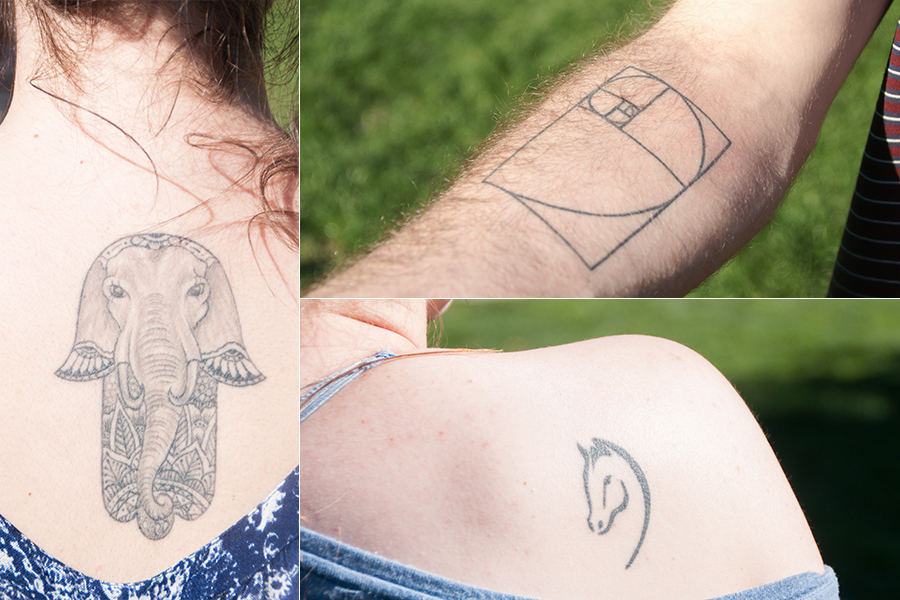
Tattoos, as art that permanently marks people’s bodies, most often come with a story. Often ambiguous designs hold meanings one could not understand at first glance. Here are a few examples from the UC Davis student body.


Sofia Donovan, third-year biological sciences major


The Aggie: When did you get the tattoo?

SD: “I got the tattoo November of 2015 right after I turned 18, and I had wanted to get the tattoo for a while.”


The Aggie: What’s the story behind your tattoo?

SD: “This tattoo runs in my family. The reason I wanted to get it was that my mom passed away from cancer four years ago in November of 2013. Some of her best friends all have it, too. The physical design itself is the logo of a company that my mom created while she was undergoing treatment. The company is called Pony Expressions, and she sold little gemstone ponies. Cancer has run in my family for a while. Since one of my mom’s parents got cancer, they started this tradition of passing down this little pony, and it comes with a story: There are two twin boys, one’s a pessimist and one is an optimist. And their parents are wondering why they are so different, so they take them to a psychologist. They put the pessimist in a room full of toys, expecting him to play with them, but he starts crying right away worried that he’ll break them. And they put the optimist in a room with horse manure, and he’s flinging it around having so much fun. They ask him why he’s so happy, and he says ‘there has to be a pony in here somewhere.’ So the pony represents in what seems like the worst circumstances you can still find something positive.”


The Aggie: Why is the design so important in the tattoo?

SD: “The design is super important to me since it was my mom’s logo; it makes it that much more special and more tied to my mom. It doesn’t say the word pony or is just a random design. The design is what made me what to get the tattoo.”


Maya Barak, second-year international relations major


The Aggie: When did you get your tattoo?

MB: “I was in Thailand traveling on my gap year. I was in my favorite place in Thailand, Kanchanaburi, and I was close with the local businesses and the people who owned them. There was this one bar next door the hostel I was staying, and there was a tattoo parlor attached to it and I knew the owner of it. One day we got to talking and he asked if he could do a tattoo on me, make his mark on me.”


The Aggie: What’s the story behind your tattoo?

MB: “My tattoo is of a hamsa, which is common in Middle Eastern cultures for the watchful eye. In the middle of it is an elephant whose eyes have a lot of little details. I got it because growing up this is what I always doodled. The tattoo artist and I started doodling together, and the immediate thing I doodled was a hamsa with an elephant on it. I did the basic idea, and he showed me a new one he edited himself. He’s an amazing artist. I think my spirit animal is an elephant because I feel like I’m an old lady, but I have some wisdom to share and I have this spirit animal watching my back.”


The Aggie: Why is the design so important in the tattoo?

MB: “Tattoos are such a form of expression for so many different ways and showing who you are through this stamp on your skin. For me, the design specifically, the design is a doodle I’ve always done as well as the intricate doodles. This speaks a lot about myself and who I am as a person.”


Jake Stebbins, third-year computer science and engineering major


The Aggie: When did you get the tattoo?

JS: “It’s on my right forearm. I got the tattoo in Pittsburgh where I’m from, and my dad bought it for my 20th birthday present and [I] had wanted it since I was about 15.”


The Aggie: What’s the story behind your tattoo?

JS: “It’s the fibonacci spiral inscribed on the golden ratio rectangle. The fibonacci sequence is from a famous infinite sequence, and basically the way you build it is to add the previous two numbers to get the next one and it goes on infinitely. So it comes up a lot in nature and in computing, actually, too. […] the ratio between the fibonacci numbers approaches this number called phi, and that is the golden ratio. This ratio is that, if you make a rectangle with this ratio, you can make an infinite number of rectangles. But this is very pleasing to the eye; it is one of the sacred geometry axioms. When you combine the two, you can create a spiral, like the one on my arm, conch shells or ram horns.”


The Aggie: Why is the design so important in the tattoo?

JS: “It happens a lot in math. As humans we are able to see and observe things and understand how to use them and how they arise. But there is often a disconnect as to why they happen; there are still things we cannot really comprehend. We can find it and calculate it, but why do these things happen in nature? It’s a double-edged sword for me. It’s always wanting to keep up the pursuit of understanding the world around us physically and then also a humbling idea. We are always going to learn new ideas, but there are some things out of our reach. It’s easy to be learning so much and to then think you know everything.”


Written by: Caroline Rutten — arts@theaggie.org

Arts and Humanities GEs for Spring Quarter

NICHOLAS CHAN / AGGIE

Options for those still struggling with Pass Two

When pass times hit and every class seems to be full, Schedule Builder can seem like an abyss of defeat. With Spring Quarter right around the corner, many students attempt to opt for a lighter class load in the hopes of spending more time lounging in the sun and less time cooped up in the library. Whether you’re simply searching for an interesting GE class to take, a chance to get those arts and humanities requirements out of the way or perhaps just looking for an intriguing learning experience, here are some classes to look out for once Pass 2 comes around.


AMS/FST 55: Food in American Culture

GE Credit: AH, DD, SS, ACGH, WE

Units: 4

With food being such a pivotal aspect in the development of culture, it’s strange to wonder how those elements, so effortlessly weaved into the fabric of human society, came about in the first place. In this class, students have the opportunity to discover the relationship between food and American culture itself. From identity to cultural responsibility, this class deeply explores food’s influence and role in American culture as we know it today. Additionally, this class satisfies several GE and Core Literacy requirements. Students are sure to leave feeling hungry, but perhaps with a different perspective on their next meal.


ART 009: Beginning Photography

GE Credit: AH, VL

Units: 4

Materials and Services Fee: $55

Before there was Instagram, the art of photography was a technical process. Gain hands-on experience in ART 009, a course in which students have the opportunity to learn the formal and behind-the-scenes aspects of photography. Additionally, students will have the chance to utilize the black-and-white darkroom for film development and printing. What better way to kickstart a career in photography or simply learn the mechanics behind snapping a photo than to utilize the resources available to students here at UC Davis?


RST 1B: Death and Afterlife

GE Credit: AH, OL, VL, WC, WE

Units: 4

Not only does RST 1B satisfy several GE and Core Literacy requirements, but it also offers students the learning opportunity to expand their philosophical horizons. What happens after we die? Although this class may not answer all such questions, it dives into the various beliefs in regard to the afterlife in comparative religious traditions and practices.


AAS 182: Hip Hop Globalization

GE Credit: AH, WC

Units: 4

AAS 182 encompasses the history and culture of hip-hop outside of the United States in places such as Africa, Asia, Europe, South America and the Middle East. Although at times it seems as if American culture invented the world of hip-hop, that is not necessarily the case. How has this genre of dance and music evolved outside of the United States, and how it will it continue to grow in these places?


UWP 104 A though F, I, J, T: Various

GE Credit: AH, WE

Units: 4

From Journalism to Business Writing to Writing in Science, UWP 104 offers a variety of different courses tailored specifically to each profession, from science journalism to legal writing. Get that upper division writing requirement out of the way, while simultaneously gaining insight and hands-on experience in your desired field of study.


Written by: Sydney Odman — arts@theaggie.org

Controversy over historic Gibson House

0
ALEXA FONTANILLA / AGGIE

YoloArts slated to take over management at Gibson House

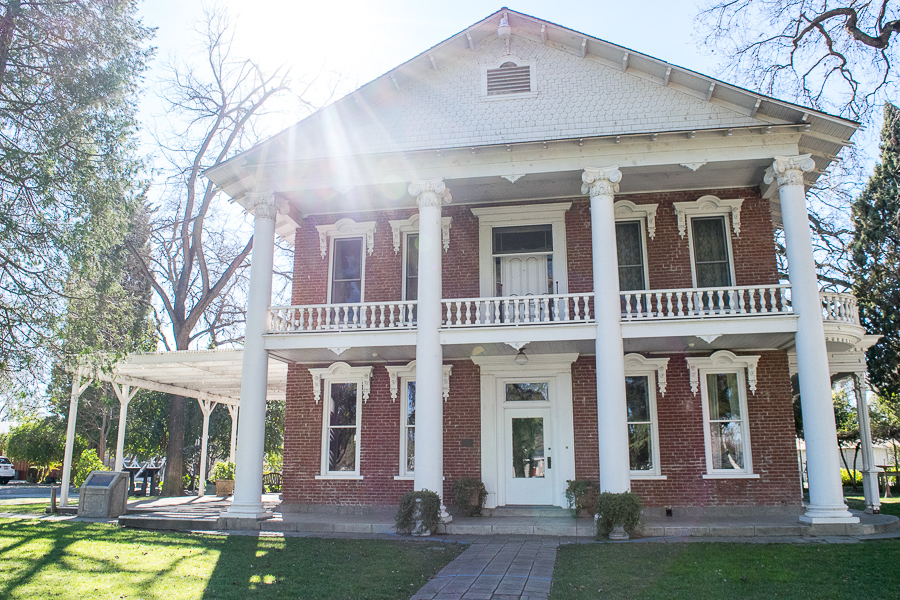
YoloArts is in the process of taking over the historic Gibson House museum, which the Yolo County Historical Museum group is currently running. Some community members are not content with this change and are now petitioning against the new authorization, claiming that the museum will lose its historic roots.

Alison Flory, the YoloArts executive director, explained YoloArts’ intentions once they gain ownership of the house.

“We want to honor and preserve the Gibson House for future generations,” Flory said via email. “The mansion will continue to host exhibitions that are reminiscent of a historic home and facilitate key programming like the 3rd grade school tours. The Gibson Gardner’s program will remain and expand. YoloArts will also be working closely with the new County Curator to find a balance between the display and preservation of historic objects in the collection.”

Even though the Gibson House will have a change in management, YoloArts still wants to extend the house rather than hinder its historical attributes. It plans to bring together the arts, history and culture of Yolo County through exhibitions and programming, which will extend into the mansion and the rest of the property in order to integrate different disciplines.

“YoloArts’ plan is to expand the vision of the Gibson House and property to be a cultural center,” Flory said. “For example, public and educational programming will include classes, lectures, and the showcasing of performing arts. We want to welcome in a diverse audience, giving them the opportunity to engage in new interests and ideas that nurture understanding and appreciation for different creative expressions.”

Flory recognizes the petition’s important contribution to the ongoing discourse about arts and history surrounding the house.

“We understand the passion,” Flory said via email. “We recognizing the time, energy, and care that has been contributed to the Gibson House over the years. It is great to have so much community discussion around arts and history.”

Matt Rexroad, the Yolo County supervisor, is also in support of YoloArts managing the house.

“I support the idea of YoloArts taking over the Gibson House because I think that they will do a better job managing and taking care of it and preserving that piece of Yolo County history for years to come,” Rexroad said.

Rexroad believes that changes will be made to improve the house, rather than keep it in a stagnant state.

“There will be changes for the better,” Rexroad said. “We will be able to have a lot more people come through the facility and be able to look at the architecture of the house and pieces of the collection. I’m hoping that there will be change.”

Rexroad emphasized that YoloArts must acknowledge the petition; however, he still stands by the organization as he looks at the bigger picture.

“Petitions are fine — the reality is that we have a responsibility to lead and take care of that,” Rexroad said. “Having grown up in Woodland, I toured [the house] in the 3rd grade, and I haven’t been back since. I’d like to see YoloArts take over so that people would have a reason to come back and that their kids can come back continually throughout their primary education.”

Jenny Lillge, a board member of the Yolo County Historical Museum, is against YoloArts taking ownership of the house.

“In terms of this board and organization as a whole, there has been ups and downs like all nonprofits,” Lillge said. “The museum faced challenges — we had an executive director who tried to resign. Around that same time, we received information that some of the items in the collection were not doing very well, and the conditions for which they were being stored weren’t up to archival standards. At that point, we didn’t take action on this because it seemed like the county wanted to look at everything before we let any drastic changes [occur], and we let the county fall to that.”

Lillge defended the house and the board members, as they were criticized because of county mandates.

“Prior to that, we had a collections committee among our board members and they have been going through our items to figure out what did not belong,” Lillge said. “The county had shut that down because of concerns over the excession policy. That’s just one of the many frustrating elements of this situation in that we’re being criticized for our care of the collection when part of the criticism is the result of county mandates.”

Lillge started the petition, which is based on a platform in order to get the word out and elicit support from the community.

“To us it’s not good enough — we’ve already seen their proposal,” Lillge said. “We know that history is not their focus. We would like them to focus on art elsewhere and let us continue to have our history museum. There is a reason why 4,369 people have signed the petition — because they also think that the Gibson House should be a history museum.”

It is not known yet when YoloArts will be managing the museum; however, there will be supervisor meetings with representatives to figure out this transition and draft a contract.


Written by: Stella Tran — city@theaggie.org

Sexual Violence Prevention and Response Board created

MEENA RUGH / AGGIE FILE

Systemwide student advisory board formed to increase education, outreach against sexual violence on campus

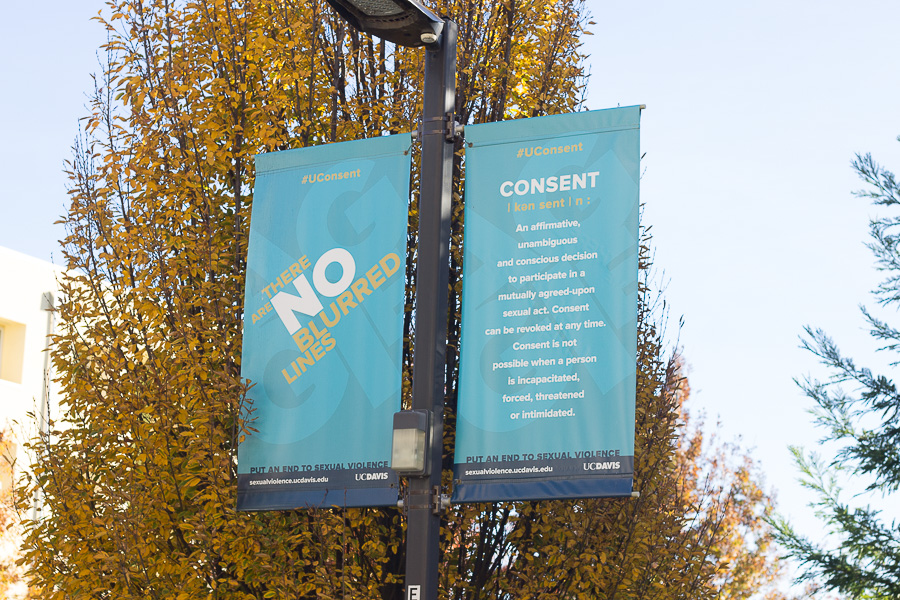
On Feb. 5, a newly-formed 19-member Student Advisory Board under the direction of the UC Title IX office met in Oakland to discuss ways to generate advice to combat sexual harassment and sexual violence on UC campuses. The advisory board, chosen by officials from the UC Office of the President, is made up of undergraduate and graduate students from all campuses.

Jessa Rae Growing Thunder, a fourth-year Ph.D. candidate in Native American studies at UC Davis, offered her reason for joining the advisory board.

“I have been doing advocacy work with sexual assault for many years, and I thought this was a great opportunity to bring my work here and expand on it as a community member at the university,” Rae Growing Thunder said. “I think this is a great opportunity to create more awareness for outreach to our graduate student population.”

Claire Chevallier, a third-year psychology major at UC Davis and another member of the advisory board, supported Rae Growing Thunder’s sentiment and compared the education of graduate and undergraduates students on sexual violence.

“Traditionally undergraduates have had more outreach than the graduate students have had,” Chevallier said. “I think that will be a challenge for Jessa to getting that outreach established for us.”

Danielle Fasani, a third-year PharmD candidate in pharmacy at UC San Francisco and a member of the advisory board, talked about problems faced by people who experience sexual violence.

“Another thing is changing the perception that people who are accused in this process are somehow at an unfair advantage,” Fasani said. “I think there is this sort of myth going around that anybody can be accused and found guilty for no reason. I think something we can do is bring awareness that — no, it is actually the victims who are the most disadvantaged at every step of the process. It is the victims who need the most protection.”

Fasani said current training is not adequate and it needs to be updated to suit the current conditions.

Gianna Pauline Passalacqua, a second-year political science and English literature double major at UC Santa Cruz and also a member of the advisory board, spoke about the prevention of sexual violence and sexual harassment.

“There has been an increase [of] incidences of sexual violence or sexual harassment — commonly called SVSH — that are being reported to Title IX,” Passalacqua said. “That is not because the number of incidences are going up but, it is actually people are feeling more comfortable reporting.”

Passalacqua spoke about the dilemma faced by those when deciding whether or not to report their assaults.

“My hope is that more people will feel comfortable coming forward and telling their stories, because they believe that the system will actually work for them,” Passalacqua said. “But even if people do come forward, I really want to acknowledge that not everyone has to report an instance of sexual harassment or sexual violence in order to be considered valid. And I really want to acknowledge the stories of survivors who choose not to tell anyone — whether they choose not to tell people in their lives or they choose not to go through a formal Title IX investigation process. Because their stories are incredibly valid.”

Sunney Poyner, a second-year law student at UCLA School of Law and a member of the advisory board, highlighted the importance of outreach.

“I think this board will be able to give student input in ways they have not been necessarily been able to garner […] before,” Poyner said. “The vision is for these representatives to engage in outreach to our communities and be able to convey what we are learning directly to the UC Title IX coordinator and the UC Office of the President in a way that is just not happening right now.”

Leann Pham, a third-year Asian American studies major at UCLA and a member of the advisory board, offered insight about how the advice given by the board might be implemented differently among campuses based on the variety of issues they face.

“It is not necessarily a problem, because we are all on the same Title IX policy,” Pham said. “We all talk about prevention, and we all have the conversation about sexual assault in a different way. I personally do not think [the procedures] should be fixed, because we have different issues, we are able to find solutions that are different. And so when we come together and meet and we share what we found [works] for our campus, it helps other people in other campuses have more creative solutions for how they are going to combat [these] issues.”

Pham spoke specifically about the disparity in the number of counselors in the Center for Advocacy and Resources and Education program relative to the student demand.

“UCLA has a CARE program just [like] every other school, but ours only have a few counselors and we are the biggest campus in regards to population,” Pham said. “Imagine being one of the two counselors who deal with the 24-hour hotline and all the students and their dependents coming to you [for help]. That is a lot of overworking. And if you compare that to Berkeley, they have 10 CARE counselors and advocates which is so much more than just two — especially considering that their student body is smaller than UCLA’s. So each specific need is very much different.”   

Poyner was optimistic about the prospects of the student advisory board.

“I really, so far, am very impressed with the other people who had been chosen to serve on this board,” Poyner said. “I am really looking forward to working with them. And I am hoping that we can bring things to the administration that will hopefully influence their policies for the better. I am very hopeful about the administration’s willingness to engage with us.”


Written by: George Liao — campus@theaggie.org


Editor’s Note: An earlier version of this article misstated that Danielle Fasani is a Ph.D. student. She is a PharmD student. The article has been updated to reflect this correction. 

In Memoriam: Markos Huerta

RAFAEL HUERTA / COURTESY

UC Davis freshman remembered for empathy, kindness, leadership

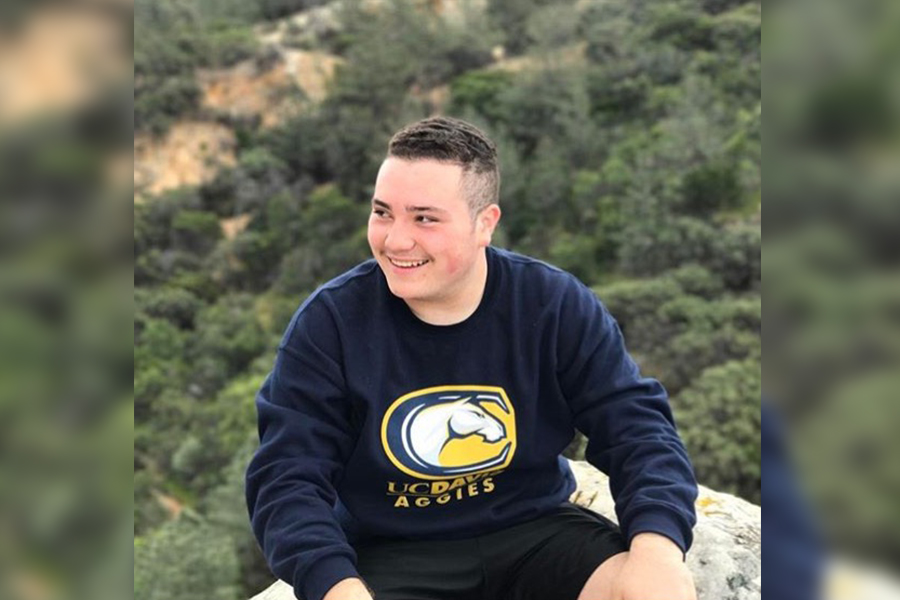
UC Davis first-year student Markos Huerta passed away in November of 2017. The teenager was a victim of a car accident on Highway 160 in Rio Vista, California.

Before coming to Davis, Huerta lived in Oakdale, Calif. Huerta’s fraternity, Nu Alpha Kappa, noted in his obituary that he was very close with his parents and his two younger siblings.

“He loved his amazing family very much,” the obituary reads. “Everything he did was to always make them proud.”

Huerta’s father, Rafael Huerta, recalled that his son always made time for his brother and sister and loved to spend time with his family.

“He always liked to do family things,” Rafael said. “We always did things together.”

In addition to his family, Huerta cared greatly for each and every one of his friends. Rafael describes him as incredibly empathetic and very aware of his friends’ moods and feelings.

“He cared a lot about his friends, and that was one of the things we started to realize after the accident,” Rafael said. “All his friends started coming to us […] and telling us how he would make them feel really, really special.”

At UC Davis, Huerta was a neurology, physiology and behavior major. According to his obituary, he wanted to become a plastic surgeon with the intention of helping others be comfortable with their appearances.

“He said he knew what it was like to have insecurities, and he wanted to help others fix their insecurities and make them happy,” the obituary reads.

Huerta was a member of the Kappa Chapter of Nu Alpha Kappa, a “Latino-based fraternity.” The fraternity’s core values are education, culture and brotherhood. His brothers remember him as dedicated to academics, his fraternity brothers and, especially, his family.  Huerta’s obituary notes that he was an exceptional leader who demonstrated initiative and drive in all that he did.

“He showed tremendous work ethic, discipline and outstanding leadership,” said Nikko Mendoza, the president of Nu Alpha Kappa, in an email. “His initiative and proactive thought at his age was and is remarkable.”

As a brother of Nu Alpha Kappa, Huerta was the president of the fraternity’s Tau Pledge Class. Rafael noted that Huerta was a great leader who would push his friends and peers to strive for success.

“He would push them to be better than themselves,” Rafael said. “He was an influence to tell them, ‘You could do better,’ and ‘Don’t settle for less.’”

After his passing, Huerta became a member of Nu Alpha Kappa’s Omega Class, which honors the deceased members of the fraternity. This designation honors Huerta’s contributions to the UC Davis chapter of Nu Alpha Kappa and cements his place in the fraternity’s history.

In honor of Huerta, his family created the Markos Huerta Scholarship Fund. According to its GoFundMe page, the scholarship will support students in need of financial assistance. The scholarship has already raised over $4,500 in honor of Huerta.


Written by: Jacqueline Moore — campus@theaggie.org

The most obscure, random and amusing things that can be found on Davis Wiki

0
MACLEAN HARTFORD / AGGIE

What can be learned about Davis from a highly-concentrated hub of quasi-factual information?

Davis LocalWiki is an online encyclopedia using the wiki model that allows users to collaboratively share information and observations about local events, locations, people, restaurants and history.

One could say that occasionally reading a page on DavisWiki is a good way to become more connected to the community. In fact, the test that new applicants for The California Aggie takes even includes a section in which the applicant must list pages they have read on Davis LocalWiki. Wikipedia states that the LocalWiki project was actually founded by the people who started the DavisWiki.

However, since the public is free to edit anything on these pages, it is essential to remember that wikis are not consistently reliable, up-to-date sources of hard facts and cannot be taken entirely at face value.

Nonetheless, a more meta analysis of the types of information and details that can be found here can reveal a lot about the community’s people, values, quirks and idiosyncrasies. So, to get a nice slice of culture, here are some of the most peculiar and entertaining topics that can be explored on DavisWiki:


Benches

DavisWiki includes many pages that list and catalogue many entries on a specific topic, like the page on benches. This page allows the user to quickly glance through the entries that profile over two dozen benches across town.

One of these entries is on The Dog Bench, located in the courtyard of Shields Library. This entry is complete with a comment from a user that reads, “This sculpture is kind of disturbing if you think about it, as the bench juts out of the sides of the dogs…makes me think of a fistulated cow.” The writer of the comment did indeed take the time to include the link to the DavisWiki page on fistulated cows, proving how Wiki can somehow cause dogs and cows to lead people down the rabbit hole.

Another entry describes a bench near the train station called The Singing Bench, so named because of how “the metal squeaks and sounds like a bird singing.” The writer of the entry was thoughtful enough to advise Davisites to enjoy the bench before the screws are tightened.


Bathrooms

In addition to list of benches, there is also a page that lists several of the bathrooms around town. This page also directs readers to a different page that provides more detailed descriptions of over 30 bathrooms on the UC Davis campus, each of which is classified as either “cleanest,” “decent” or “tourist-trodden and scary.”

Under the “cleanest” category, the bathrooms at the Genome and Biomedical Sciences Facility are called “a home away from home […] complete with decorations and air fresheners,” while the bathrooms of the Chemistry Annex are described as having “delicious solitude.”

On the scary side, it is written that the Olson Hall bathrooms seem “to have standing water on the floors at least three out of five days during the academic week.” Regarding these restrooms, “personal floatation devices” are described as “prudent.” It is also said that the CoHo “has pretty bad bathrooms, but EXCELLENT vandalism.”

Noise

There is an entry devoted to the coverage of problems that have arisen because of the Noise Ordinance. In 1994, a Davis woman was cited for snoring too loudly, an incident that even received coverage in The New York Times. The Noise Ordinance was enacted in 1981 to prevent any “willful sound that disturbs the peace,” which apparently applied when college student Chris Doherty called the cops on his neighbor, who he claimed was making too much noise by snoring and said he’d talked to her about it in the past.

This page also includes sections on noise complaints from the Davis High School Stadium PA system and, of course, the horrible sounds of children at daycare centers.


Plethora vs. Dearth

The aim of this page is to identify things in Davis that are either overly abundant or sorely lacking. Some items appearing in the “plethora” list include Thai Restaurants, massage services, trivia nights, jaywalkers, stop sign runners and bike shops. Meanwhile, Davis is apparently lacking in donut shops, live music venues and Ethiopian food. Interestingly enough, cafes are listed in the “plethora” category but good coffee is in the “dearth” category.


Love and Hate

Intended to complement each other, the “I Love Davis” and “I Hate Davis” pages allow people to share their love or hate for certain things about the town.

Loved for its “fearless quirkiness” is the Toad Tunnel. The Toad Tunnel was constructed to allow toads and frogs to cross underneath Pole Line Road to reach a pond without getting hit by cars. However, the effectiveness and rationality of this project has been widely questioned, including on this 1999 segment from The Daily Show with Jon Stewart. In the segment, then-correspondent Stephen Colbert investigates the Toad Tunnel, even setting up a camera  inside it to see if toads were using it. Unsurprisingly, no toads were caught on camera. Despite the controversy, the Toad Tunnel is still loved by many and was featured in the children’s book ‘The Toads of Davis’ by local author Ted Puntillo.

Also loved in Davis are the town characters, over two dozen of which are listed here. While they are not listed in the I Love Davis page, there are entries about cats in Davis, like the widely-loved Veihmeyer and Physics cats. Meanwhile, other things in Davis are listed as being hated, like TAPS, housing costs and “All of the crazy liberal people who need to grow up and live in the real world!!”

There is one item that appears on both lists:  The Aggie.


Written by: Benjamin Porter— features@theaggie.org

Stars align in Los Angeles for NBA All Star Weekend

0

PRAYITNO [(CC BY 2.0)] / FLICKR
Fans, players alike were given an entertaining show all weekend

With nearly three-quarters of the NBA season behind them, players, fans, coaches and legends of the past convened in Los Angeles from Feb. 16 to 18 for the NBA’s annual All Star weekend. While the rest of the NBA season relies on wins and losses, All Star weekend is meant to entertain, and with a slate of events that took place over three days, there was a little bit for everyone from the hardcore fans of NBA basketball to the casual observers.

Since 2005, the weekend has been kicked off by a Friday night double-header of the NBA All Star Celebrity Game and the Rising Stars Challenge, an exhibition match between the league’s best rookies and the sophomores from across the globe. For the celebrity game, stars from across sports and entertainment came together to put on a light-hearted exhibition to get things started. This year, the roster included singer Justin Bieber, rapper Quavo and actors Michael B. Jordan and Jamie Foxx. The duo of celebrity-filled rosters, named after the Lakers and the Clippers, got some help from former NBA players and current WNBA players like Paul Pierce, Tracy McGrady, Jason Williams, Candace Parker and Stefanie Dolson. The final result was often more humorous than it was competitive, as the Clippers defeated the Lakers 75-66.

The Kia Rising Stars challenge proved far more competitive, as it included up-and-coming NBA talent from the rookie and sophomore classes in a game that pits Team USA (featuring Kyle Kuzma and Brandon Ingram of the Lakers, De’Aaron Fox of the Kings and Dennis Smith Jr. of the Dallas Mavericks) against Team World (featuring Philadelphia 76ers guard Ben Simmons and center Joel Embiid and Sacramento Kings guards Bogdan Bogdanovic and Buddy Hield). The game, which often resembled a dunking and three-point shooting contest, was a fast-paced exhibition which did not slow down from start to finish. Thanks to a flurry of three-point jumpers from Bogdanovic in the first half, who scored 26 points in his MVP performance, Team World won the game 155-124. Boston Celtic guard Jaylen Brown of Team USA led all scorers with 35 points, while Hield led Team World with 29 points.

While Friday and Sunday were about the games, Saturday night was for the skill-based competition. For the Taco Bell Skills Challenge, the league continued its recently adopted tradition of pitting the league’s power forwards and centers against the more traditionally-skilled and smaller players. In the final matchup, Chicago Bulls center Lauri Markkanen found himself against Brooklyn Nets guard Spencer Dinwiddie for the title. Dinwiddie’s speed advantage during the final stretch proved too much, however, and he was the one hoisting the trophy in the end.

The JBL Three-Point Contest pitted Oklahoma City Thunder guard Paul George, Golden State Warriors guard Klay Thompson, Phoenix Suns guard Devin Booker and more of the league’s best shooters against one another. While many of the shooters — including George, who shot for a dismal nine points in the starting round — struggled during the first round of shooting, Devin Booker put up a historic 28 points in the final round en-route to securing his three-point shooting title.

The final event on Saturday night, the dunk contest, is often viewed as the highlight of the individual competition. However, save for the classic matchup between Zach Lavine and Aaron Gordon in 2016, recent years have left a little bit to be desired. Bringing in high-risers Dennis Smith Jr., Cleveland Cavaliers forward Larry Nance Jr., Indiana Pacers forward Victor Oladipo and Utah Jazz guard Donovan Mitchell, the NBA was hoping to breathe new life into the struggling competition. What they got was a night of nostalgic callbacks, meaningless cameos and missed opportunities. During the final round, where Nance Jr., who previously paid homage to his father, a former slam dunk champion, threw a double-tap off the backboard in what many declared to be the dunk of the night. Mitchell responded with a throwback to legendary dunker Vince Carter’s classic 360-degree, one-handed throwdown and won the contest. Though the contest left some to be desired, the final product gave the fans enough highlights to keep them entertained

Finally, the All Star Game itself. It has been a staple of nearly every NBA season since 1951. While the game has typically been a simple match of East versus West, the NBA decided to switch things up this season and give leading vote-getters Cleveland Cavaliers forward LeBron James and Golden State Warriors guard Stephen Curry the opportunity to pick from a pool that was picked by fans, players and league personnel. With Team LeBron falling victim to several injuries, Team Steph appeared to be in the driver’s seat, taking an early double-digit lead in the first half, and after coming all the way back in the early part of the second half, the lead was exchanged between both squads for the rest of the game until LeBron James led a final surge over Team Steph, leading his team to victory and winning All Star MVP in the process. It was a fast-paced game where both teams desire to win appeared to outweigh their desire to put on a highlight-reel and the competitive atmosphere was evident from the very first whistle.

All in all, the weekend was a success. From highlight plays to the stiff competition, the weekend provided a friendly, entertaining show for fans across the world. The teams will now go back to their regular season competition, where playoff standings and lottery position are still left in the balance. The next All Star Game will be played in Charlotte, North Carolina from Feb. 17 to 19, 2019.


Written by: Bradley Geiser — sports@theaggie.org

Former Aggie takes bronze in PyeongChang

THEDCMS [(CC BY 2.0)] / FLICKR
Freeskier Brita Sigourney talks career, future

UC Davis alumna Brita Sigourney landed her first Olympic podium with a bronze medal in the women’s freestyle skiing halfpipe competition in the 2018 Winter Olympics in PyeongChang on Feb 20. behind Canada’s Cassie Sharp, who took gold, and France’s Marie Martinoid who took silver.

The Aggie alumna is excited to have a second shot at an Olympic podium. Sigourney fell shy of the podium at the 2014 Sochi Games, finishing second in the qualifying round and ultimately placing sixth in the final round. The 28-year-old Carmel, Calif. native was the first female to land a 1080-degree spin — three full revolutions — in a competition halfpipe run in 2012.

Sigourney was confident going into PyeongChang as the leader in the halfpipe 2018 World Cup standings.

“As soon as I had that first podium in Snowmass, it was just kind of an upward momentum that I just kept rolling with and it definitely paid off,” Sigourney said.

She rolled with that momentum into the United States National Olympic freestyle halfpipe qualifier at Mammoth Mountain in which she landed first place and secured her spot on the U.S. Olympic team on Jan. 19. with clean tricks and massive air, and her first World Cup victory since 2013 scoring 91.20 points.

“I just started having fun again,” Sigourney said. “It was pretty stressful because I was trying to get good results to make the Olympic team.”

Sigourney plans to maintain her energy from this season’s victories for PyeongChang.

“I’m just going to keep doing what I’ve been doing, and keep building and do as well as I can,” Sigourney said. “I’ve been doing what I’ve always done, I was just feeling more like myself.”

The three halfpipe medalists from the 2014 Sochi Games, USA’s Maddie Bowman, Japan’s Ayana Onozuka and France’s Marie Martinod are all viable medalists in the women’s halfpipe competition. Sports Illustrated predicts Sigourney will snag a silver medal behind Team Canada’s first time Olympian Cassie Sharpe who will take gold.

The competition, according to Sigourney, isn’t nearly as tough as the qualification process because making the Olympic team is the hardest part.

“It’s pretty much the same people I’ve been competing with all winter,” Sigourney said. “It’s not as hard as the normal competition, because not everyone made their respective Olympic teams.”

Her recent success stands in contrast with her results in the past few years.

“I’ve been struggling with confidence the past few years, battling some bad results,” Sigourney said of the change.

Sigourney sustained season ending injuries earlier in her skiing career including a torn ACL in 2012 and a broken collarbone in 2013. She was operated on three times in 2013, and seven times total during her career. But injuries did not stop her from securing a spot on the U.S. Olympic Team for the 2014 Sochi Games.

Sigourney offered a deeper look into her mindset change following the setbacks.

“I worked on the mental part a lot,” Sigourney said. “We got a sports [psychologist] who I’ve been using the last few years.”

She has been fine-tuning her techniques to train muscle memory and instinct to kick in during runs, rather than letting her brain interrupt her flow.  

Although the number of injuries Sigourney has sustained have been great, she made a point for mental toughness in her sport.

“It became part of my life,” Sigourney said of her recovery. “I definitely had to work to not let that affect my skiing, but I also never really struggled with a comeback as much as I know a lot of other people do when they get hurt. If anything, I was more excited to be skiing again.”

While studying at UC Davis, Sigourney also balanced playing on the women’s water polo club team, and competing in skiing events. The Aggie reported on her X Games halfpipe debut where she took silver in 2011, while she was still a UC Davis student. When the opportunity to become a professional athlete was right in front of her, she thought it was a no-brainer and decided to start skiing full-time leaving UC Davis without completing her degree in graphic design. Sigourney credited this decision to the sport being physically demanding and that “there is an age limit to it.”

Third-year managerial economics major and president of the UC Davis Alpine Ski and Snowboard (DASS) team, Logan DeAngelis, is excited to watch a former UC Davis student compete in the Olympics.

“It’s kind of given our team a new fire to be able to go out and compete and be the best that we can knowing that someone else from our university is representing us in the Olympics,” DeAngelis said.

Last year, DASS’ men’s ski and snowboard team competed in the 2017 United States Collegiate Ski and Snowboard Association National Championships for the first time ever in school history. The club team has 60 members and DeAngelis is exploring ways to increase membership.

UC Davis Ski or Snowboard Club President Abbo Nathan has also noticed a change in the club stemming from Sigourney’s success.  

“It’s really cool that a UC Davis student has reached that level,” Nathan said. “I also think it’s really cool that she’s a girl, it kind of gets all the ladies of SOS and DASS pretty amped.”

Sigourney wants to finish her degree when she is done skiing.

“I just wanted to give my full attention to school,” Sigourney said. “Getting my degree from a UC would be awesome.”  

Sigourney plans to finish her bachelors degree in graphic design.


Written by: Bobby John — sports@theaggie.org

Aggies earn third place at MPSF Championships

0
IAN JONES / AGGIE

Swim and dive team makes big jump from fifth to third place on last day of MPSF championship  

Throughout the first three days of the Mountain Pacific Sports Federation Championships, the UC Davis swim and dive team held onto a stagnant fifth-place standing. However, on the last day of the competition, the Aggies pushed their way up to third place overall from a collection of impressive performances from the team in Monterey Park, Calif., finishing with 489 total points. Hawai’i (848) and UC Santa Barbara (643) finished first and second, respectively.

In the second final of the night, junior Solie Laughlin defended her league title in the 200 backstroke with a new MPSF record time of 1:55.22, her third successful MPSF title defense since her freshman year.

Sophomore Jamie Pincin came in third in the 100 freestyle with a time of 50.41 while senior Ali Sena came in 18th with a 51.52 time. Pincin and Sena finished sixth and 18th, respectively.

IAN JONES / AGGIE

The 200 breaststroke became the Aggies’ biggest performance, adding 34 points to the team’s total. Junior Kristin Schumann came in third in the 200 breaststroke, earning her first NCAA “B” standard time (2:14.91) of the 2017-18 season. Freshman Kyla Leacox also advanced to the championship round, finishing seventh with a time of 2:19.26. Leacox earned the 10th spot in the UC Davis top 10 list for the competition. Sophomore Tori Kaleta earned a spot in the consolation final, finishing 11th with a 2:19.64 time.

In the 200 fly, the last individual swimming event of the night, junior Nina Gonzalez earned third place overall with an impressive 2:01.18 time, now ranking third overall in the UC Davis top 10 list. Junior Eva Chung finished eighth (2:05.10). In the consolation final for this event, sophomore Olivia Smith came in first  (2:03.89), sophomore Cora McClelland came in 12th (2:04.85) and freshman Laura Lampron finished 16th with a time of 2:07.97.

For the diving portion of the competition, held at the Rose Bowl Aquatics Stadium in Pasadena, Calif., it was senior Angelina Proshak who finished fifth overall in the platform event with a score of 211.45, earning her second place in the UC Davis top 10 list record books for the platform. Freshman Katie Truong earned the second highest score by an Aggie on the season (198.90), placing her ninth overall. Juniors Inessa Toropov and Jessica Fernandez finished 12th (187.10) and 15th (174.40) respectively, while senior Ani Vemury finished 16th (166.50) and freshman Amanda Chau in 18th (157.25).


Written by: Ryan Bugsch — sports@theaggie.org

You don’t need to be a “humanities person” to study the humanities

MEENA RUGH / AGGIE

The liberal arts teach life skills that science just can’t

Since the advent of modern science, students who have an inclination toward the discipline have questioned the “point” of studying the arts. The argument is an old one, and for unknown reasons there will always be a back and forth on why a liberal arts education is an asset. The opinions are banal and resolve into platitudes. Some students will continue to believe the sciences are more important — there’s no point trying to convince them. But there are students who are unsure whether it’s necessary to study outside their discipline. And to them, there’s one, hard answer: Yes.  

From personal experience as a science major, humanities classes exude a different vibe — a lot more conversation, exchange of ideas and teamwork. And while a STEM student can argue that those same skills are developed in their labs or on the field, it’s not the same. What is taught in the humanities is risk-taking. Today’s world is all about taking chances and putting yourself out there. These skills are not only assets in these subjects, but requirements. Humanities students are more prepared to stick their hand up in class and be wrong. That’s a rarity in a world that always wants to be right.

Students in the arts must take science and engineering classes to graduate. I can’t imagine that they enjoy them all the time — but there’s an expectation that those subjects must be understood. So why doesn’t it go the other way? When my peers in STEM say they don’t like reading or writing, it makes me wonder if it’s “cool” to not like what is the foundation of education. If someone said they didn’t like science, it’d be an outrage. It’s not about falling in love with subjects, it’s about understanding what makes them relevant.

Contrary to popular belief, there are wrong answers in the humanities. A stream of consciousness scribbled on paper will never be rewarded — professors are trained to spot it. For most science students, there comes a point when this realization is made. Resentment follows. Evidently, communicating and organizing ideas is not an easy feat, and humanities students do it commendably. The idea that these classes are “easy” is a put-down. Students in the arts are not doing less — they’re using their brains in a way that is hard for the average science student to do.

If being challenged in a way that is atypical can elicit such strong opinions about entire fields and about the passions of thousands of fellow students, it doesn’t seem very well-adjusted. One of the major problems with science is that scientists are not able to communicate their discoveries and progress to the layman. That information is limited to just those part of the immediate scientific community because only they have the lexicon to understand it. It’s imperative to stop that — to spurn the arts is to leave untapped potential avenues for recognition.

More than loss of opportunity, what’s worrying is that my peers in STEM want to specialize so early. Finding passion in a subject is quite different from shunning the others. And this is where risk comes in again. Students want to be comfortable all the time — take classes that they enjoy, learn about things that interest them, be around students who share the same passions. Putting oneself in a class or environment that’s different is an asset. Maybe that sociology class isn’t interesting, but there’s still a takeaway and still an opportunity to work and learn from peers who are diverse.

The humanities are not hobbies. Without these subjects, science could not have advanced to its current place in society. We will always need them, and to convince ourselves that they don’t matter does a disservice to the investments we’ve made in our education. STEM students must understand this. As irrelevant as those GEs may seem, they stress the importance of the world that exists outside the realm of science. There’s not always a right answer, but to think the humanities don’t matter anymore is certainly a wrong one.


Written by: Samvardhini Sridharan — smsridharan@ucdavis.edu

Disclaimer: The views and opinions expressed by individual columnists belong to the columnists alone and do not necessarily indicate the views and opinions held by The California Aggie.

The Evolutionary Reason Behind Dogs Eating Their Own Poop

SHEREEN LEE / AGGIE

Veterinary Researchers at UC Davis look into why dogs eat their own poop

16 percent of dogs engage in frequent conspecific coprophagy, which means that they have been seen eating their own stools at least six times, according to the results of a web-based survey from veterinary researchers from UC Davis.

Veterinarians frequently get asked why their dogs eat feces,” said Melissa Bain, a professor of Clinical Medicine and Epidemiology at UC Davis and co-author of the recent paper. “Obviously, it is a very disgusting behavior to owners, and difficult for owners to get a handle on. No one wants a kiss from their dog after their foraging expedition.”

The researchers set out out find out not only why dogs eat their own faeces but also the efficacy of 11 commercial products that are supposed to help mostly through tablets that make the feces taste bad. To do so, they needed a large sample of dogs, which is where the web surveys came in.

“We have conducted a variety of web surveys to get information pertaining to pets, how people feel about them, and challenges they experience,” said Lynette Hart, a professor of population health and reproduction at the UC Davis School of Veterinary Medicine. “Usually in these surveys people have an opportunity to describe some positive aspects of their relationship with their pet, but this survey was focused on a behavior that people find very disturbing. We had a good response to these two surveys, and then of course it was exciting to see what showed up in the data — that about one-sixth of dogs frequently engaged in this behavior and that none of the treatments were working.”

While the results showed no correlation between the habit and diet or age, researchers found that this habit could be a remnant of evolution. Eating feces could be an instinct left over from dogs’ ancestors — the wolves. It turns out that eating feces is an evolved parasite defence strategy.

“We related the behavior to den sanitation instinct [where] a fecal dropping left in the den area by an injured wolf would be a source of intestinal parasite re-infestation if just left there,” said Benjamin Hart, a distinguished professor emeritus in the Department of Anatomy, Physiology and Cell Biology at the UC Davis School of Veterinary Medicine. “In nature, removing the fresh stool, before infective larvae hatch from ova, by eating it, removes the danger to the pack.”

The current solutions for preventing coprophagy haven’t had much success, with the most successful having a reported 2 percent success. However, hope is not lost yet, as the researchers are currently planning to conduct an open-label pilot trial to test their own product for this issue.


Written by: Kriti Varghese — science@theaggie.org

Evolution of the stereotypical college diet

ALLYSON KO / AGGIE

Are college students eating healthier today?

Contrary to the popular belief that an average college diet consists of ramen, pizza and peanut butter and jelly sandwiches on a day-to-day basis, studies show that current college students are actually more health-conscious than they’re given credit for. While most students are indeed strapped for cash, they are more likely to spend on food to maintain a healthy lifestyle.

Naman Ajmera, a third-year mechanical engineering major, allocates time in his week to cook despite his busy schedule with school and work. Ajmera’s primary motivation for being healthy is self-confidence.

“My diet consists mostly of high-protein foods. Outside of protein, I include as many fruits as I can, most frequently bananas and apples,” Ajmera said. “I meal plan for short periods of time because I prefer eating fresh food over the convenience of having a meal from a couple days earlier. My meal planning revolves mostly around making meals that provide sufficient protein, and I meet my calorie requirements by eating smaller snacks and ready-to-eat food through the day,” Ajmera said. “There could be multiple reasons for [students] to want to be more conscious. However, I think it’s most commonly a desire to [improve attractiveness]; have one less aspect of your life to worry about and one more to be confident and proud of.”

Whether students are making the decision to eat healthier for their physical appearance or personal well-being, students are understanding how better foods can be life-changing. Alexandria Crisler, a fourth-year chemistry major, makes the constant decision to eat healthy to avoid medical complications.

“My immediate motivation for health consciousness is to avoid foods and habits that can trigger my migraines,” Crisler said. “At this point, I know there is a clear correlation between unhealthy foods and migraines for me,” Crisler said “My other motivation sources are to proactively combat my medical history. My family has a long history with diabetes, heart disease and cancer. I know I can’t prevent the genetic markers for any of these conditions, but I can at least live better now through healthier choices.”

Although time and money are hindrances to developing a healthy regimen, better eating is being made possible through access to further resources and food options including gluten-free and vegan foods at the ASUCD Coffee House.

Cameron Henton, the manager of Chopstixx at the CoHo, which sells pho and sushi, has seen more students asking questions about the ingredients. However, he believes the dietary concerns at UC Davis have remained unchanged in the past few years.

“Students are coming up to us and asking about non-GMO products and whether it’s gluten-free or not,” Henton said. “Students have also asked about why we raised prices. Well, we provide a lot noodles and protein and have better-quality products. If you want something that’s a little more and authentic, it’s going to be a bit more expensive. Before [Chopstixx] was selling about a 150 bowls, but recently it’s jumped to over 300. Students want something that tastes good and something to fill them up. In terms of ingredients, everything’s fresh, and we provide different options.”

In spite of the fact that students are making stronger efforts in their eating habits, there are still days where it is difficult not to succumb to convenience and affordability. While Ajmera and Crisler are attentive to what they consume, they too crave unhealthy snacks.

“I think that [the Freshman 15 stereotype] is less true now than it used to be, but I’m sure that college students still use those foods occasionally out of convenience and because they’re so tasty,” Ajmera said.


Written by: Becky Lee arts@theaggie.org


Traditional Chinese music classes to be offered through UC Davis Confucius Institute

ALLYSON KO / AGGIE

Confucius Institute seeks to help students, community members develop foundation in two traditional Chinese instruments

Beginning this spring, the Confucius Institute will offer UC Davis students and members of the community an opportunity to learn traditional Chinese music, taught by a former UC Davis student.

Alan Yip, a UC Davis class of 2015 alumnus with a master’s degree in horticulture and agronomy, will share his knowledge of two traditional Chinese instruments with the community in a small-class format. One of the instruments, the guquin, is a seven-stringed Chinese zither with a long history and deep connections to Chinese philosophy. The other instrument, the erhu, is similar to a violin.

Yip has been working alongside the director of the Confucius Institute, Michelle Yeh, to promote understanding of Chinese culture. In collaboration with the Music Department, the Confucius Institute seeks to help potential students develop a foundation for the techniques of the guquin and the erhu in an eight-week program.

Yip, who learned from guquin masters in China, noted that many students who study the instruments in China do not learn the proper techniques, thanks to what he calls a “lucrative business” where “underqualified” guquin players market themselves as masters to those looking to try to learn traditional Chinese arts.

“More and more people want to have this idea of going back to the ancient ways of a slower paced life and culture and so on,” Yip said. “So lots of people are actually going back to try to learn the ancient arts like painting, calligraphy, older styles of traditional music.”

Yip began studying Chinese music in middle school and eventually took a quarter off during his time as an undergraduate at UC Davis to study in Shanghai and Beijing from guquin masters. Yip’s grandmasters included a handful of people who essentially saved the guquin from the cultural purge during China’s Communist Revolution, where the communist government attempted to outlaw many parts of classical Chinese culture.

“They worked very hard to save the instrument,” Yip said. “One of my teachers said the red guards were outside while [my] teachers were learning the guquin, which was illegal in the eyes of the government. [The guquin] was an elitist instrument, and that was heavily frowned upon.”

While the class will primarily be focused on learning how to play the guquin and the erhu, Yip intends on organizing the class to allow students to embark on “a musical journey.”

“Some of [the class] is going to be music appreciation as well as in Chinese music,” Yip said. “What I really want to do is emphasize the artistic value. Learning by doing is how I would emphasize the course.”

Yeh is excited to introduce a music class to not only students at UC Davis, but to anyone in the surrounding communities who may be interested in learning about Chinese tradition and culture.

“It’s not easy to find a good teacher for traditional Chinese music,” Yeh said. “And Alan is great. We were just so impressed by his music, and he’s a very serious musician.”
In 2015, the Confucius Institute organized a solo concert for Yip, who showcased his talents for the guquin and erhu to a full crowd in a UC Davis lecture hall. People from Davis and the greater Sacramento area came to listen to Yip’s program, where he played five pieces on the guquin and two pieces on the erhu.

Mengyuan Xiao, a Ph.D. candidate in plant sciences, met Yip at this concert, where Yip told her about his journey learning the guquin and the erhu. Xiao, an international student studying horticulture, learned how to play the erhu at a young age and continued to play during her time as an undergraduate student in China as part of her college’s Chinese traditional orchestra.

“I didn’t expect to see young people in the U.S. playing Chinese traditional music so well,” Xiao said in reference to Yip’s 2015 concert. “I’m glad Alan can start this class and get more people to learn it and learn about Chinese traditional culture and traditional music.”

Xiao hopes that in addition to serving the community, the Chinese traditional music program will allow international and American students to gather together and hopes for the possibility of an orchestral performance.

“[The guquin] is a living tradition,” Yip said. “And without it being a living tradition I don’t see the guquin being able to survive in its entirety.”

Students who are interested in Yip and the course can contact him at apyip@ucdavis.edu.


Written by: Taylor LaPoint — campus@theaggie.org


Humor: How the Davis housing bubble crashed the Dow Jones

ZOË REINHARDT / AGGIE

This one’s going to leave a dent

Oops, we did it again. And by “oops” I mean that somehow Davis is involved in a money-making scandal that went awry. Except this time, it’s the town of Davis and not the college — but really the two are so intertwined that it probably did have something to do with someone serving on some board that they probably shouldn’t have been on. Anyway, the details are hazy, and it’s been a while since I took a high school economics class or watched “The Big Short.” What I do know is that the Dow Jones has seemed to go down. It might have gone up since I decided to write this article, but regardless, if it has changed, it will probably change again, and then this article will be applicable and I will have predicted something before it happened. I guess maybe this is “The Big Short” sequel. Sorry, I’m getting ahead of myself.

Anyway, Davis is a town with some houses and apartment complexes, and people seem to pay rent and live in them. People also sometimes own them, but I’m not really sure what that’s like. There’s also student housing. You catch my drift. Lots of housing. But like my good friend “anonymous” (not the online activist group but someone whose name I don’t know) said, “With a lot of housing come a lot of loans from the bank.” I’m not sure who is taking out these loans or how they are being disguised or packaged in this day and age (I think that’s the correct terminology, but it definitely isn’t). All I know is that there is some sneakiness going on, and that sneakiness has lead to some investing and maybe some price manipulation. And, mazel tov, it turns out that cute little Davis has the capacity of crashing the stock market once and for all.

This might have seemed a little too vague or too complicated to understand the true implications of the Davis housing bubble, but I don’t make the rules. If you want to learn more about this, I suggest you ask your landlord. I’m sure they will have something factual and honest to say about it.


Written by: Rosie Schwarz — rschwarz@ucdavis.edu

(This article is humor and/or satire, and its content is purely fictional. The story and the names of “sources” are fictionalized.)