57 F
Davis

Davis, California

Sunday, December 21, 2025
Home Blog Page 555

Humor: Young adult pays to work rather than getting paid to work

DANIELLE MOFFAT / AGGIE

UC Davis sells student organs
A study has revealed that over 35,000 residents in the Davis area are afflicted by a strange mental illness in which they pay to work.

“We love this,” said a shady capitalist businessman in a top hat. “Slavery was a terrible idea. This is way better.”

“What the hell is the point of this homework?” asked guy-who-has-better-things-to-do Drew Hanson.

“It’s to improve your critical thinking skills,” replied professor-who-solely-reads-off-the-PowerPoint.

“I can think critically, which has brought me to the conclusion that my time is better spent doing something else,” replied Hanson, “such as writing satire that nobody reads, as far as I’m aware.”

“I love the university,” said automaton Mary Johnson. “I have a UC Davis hat, UC Davis sweater and even this tattoo that says, ‘UC Davis owns my soul.’”

“We own the souls of many students,” Chancellor Gary May said at a private tour of the student salvage factory in Lower Wellman. “Souls just don’t sell for as much as the actual physical form, though. Even when the physical vessel gets worn out and depreciates, we can always scrap the organs for their salvage value.”

May scooped the liver out of a partially-conscious animal science major and put it into a steel bucket, the wet plop of the liver masked by the student’s moans. The liver had done much overtime in its college years, yet had outlived the other organs. Ultimately, the student’s brain had undergone so much indoctrination and seemed to have put itself into a coma.

“All of the drugs we confiscate are generally used in place of general anaesthetics,” said UC police officer Dick Grimes, making strange wet noodle noises from behind the hospital curtains. “Although we generally do all the drugs we find. How the hell else could I numb the existential pain of being a campus police officer?”

“Do you know what happens to the rest of this student’s body?” asked May in a sardonic tone. I was given a complimentary meal to the dining commons.  


Written by: Drew Hanson — andhanson@ucdavis.edu

(This article is humor and/or satire, and its content is purely fictional. The story and the names of “sources” are fictionalized.)
Career Fair: STEM students seek connections

Aggies connected with potential employers including US Department of Veterans Affairs, CA Resource Board, Amazon

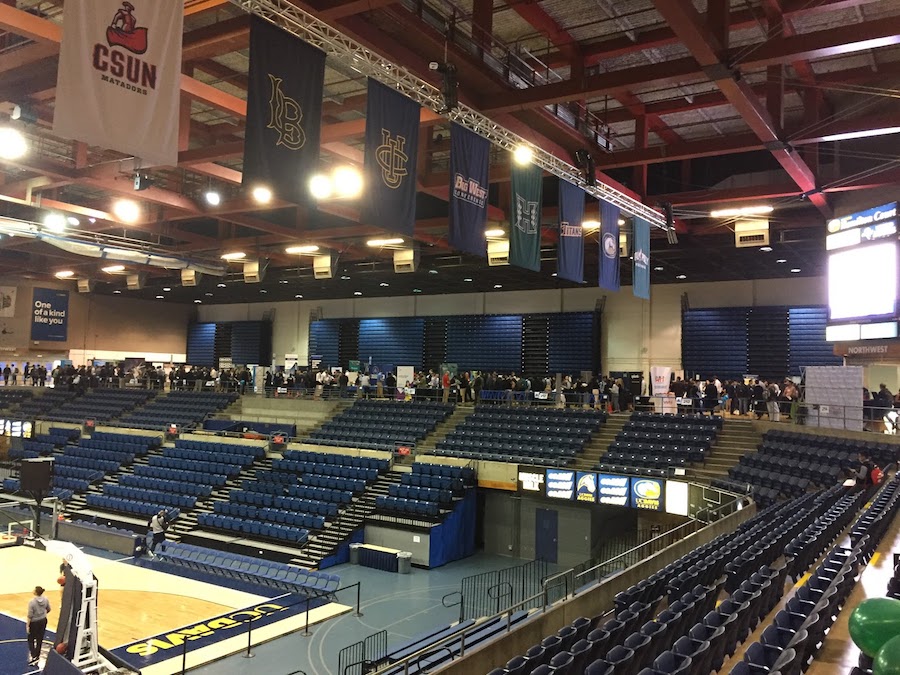
On Jan. 24, 144 companies attended this year’s Engineering and Physical Sciences Internship and Career fair at the UC Davis ARC Pavilion.  

The Internship and Career Center hosted the event. Marci Holland, the executive director of the ICC, was excited to see Aggies making connections.

“I hope students gain confidence in their ability to speak with employers about the great assets that they have to offer,” Holland said. “And I hope that they make connections that result in internships and jobs.”  

Noted on name tags was that some employers were UC Davis alumni or transfer student alumni who graduated as recently as 2016 and others from 2009 or prior. Many of the recruiters said that they obtained their jobs by speaking to company representatives at a career fairs years ago. Holland hoped the name tags would help students’ build their confidence.

“Knowing that the recruiter they are talking to is a UC Davis graduate [or] was a transfer student, gives them common ground which can open the door to more comfortable conversation,” Holland said. “It also helps transfer students see that they are not ‘behind’ and have great career prospects.”

The ICC hosts four career fairs each academic year, with the Engineering and Physical Sciences Internship and Career fair being the only career-specific event. Organizations from previous years returned, such as Advanced Semiconductors Materials Lithography, the California Energy Commission and ACCO Engineered Systems, Inc.

“I’m mostly looking for semiconductor jobs,” said Diana Mikhail, a third-year chemical engineering undergraduate. “I talked to ASML at the fall career fair.  It was cool to see them here again.”

Mikhail is hoping to find an internship before entering her fourth year at UC Davis.

The ICC introduced other companies to the career fair for the first time, including VVH Consulting Engineers and Condon-Johnson & Associates. The President of CJ & Associates, James Johnson, said he was excited to attend the fair and meet “the next generation of designers and builders.”

CJ & Associates is a specialty contractor focusing on geotechnical projects.

“We are looking for candidates who are looking for the challenge of designing and then following through with the actual construction of the project,” Johnson said.

The company met a large number of candidates for both internships and full-time positions. Some companies were seeking to hire interns for their social media department.

While the Engineering and Physical Sciences Internship and Career Fair is tailored toward students in STEM, “it doesn’t mean that they are only hiring engineers,” Holland said. “They have accounting, human resources, sales departments to name a few. Firms are hiring for many tasks associated with business operations.”

For the first time, the career fair was located on the second tier of the ARC Pavilion instead of the ground floor where the basketball court is normally set.

“It has some definite benefits, though some parts are quite difficult to maneuver,”  Holland said. “We’re trying to get rid of the choke points.”

Staff at the ICC will be examining the advantages and drawbacks of the setup to analyze whether it will be an optimal configuration for the future.

The career fair is an opportunity for both undergraduate and graduate students to make connections. Arman Asrani, a master’s student in computer science who received his undergraduate degree in Mumbai, attended the event.  

“The career fair seems less crowded than last year,” Arsani said. “I like the fact that it’s upstairs.”

Amazon was at the top of Arsani’s list. Arsani was one of the many students who stood in line to speak with representatives from Amazon at the fair.  

“Amazon used to sell mostly books, and now they’re everywhere — even grocery stores,” Asrani said.  

Not only was Amazon the largest company at the career fair, but it also had the longest line — with about 30 minute wait times. But not all lines were this long. Some ranged for a few minutes while others were closer to 15.

In addition to bringing quarterly career fairs to campus, the ICC hosts information sessions and on-campus interviews, bringing work opportunities directly to students. Located in South Hall, the ICC provides career counseling, mock interviews and workshops for students interested in gaining early work experience in their respective field. About 80 percent of undergraduates participate in internships during their time at UC Davis. The ICC has aided this feat by facilitating over 10,000 internship opportunities each year.

The last two Internship and Career fairs for this academic year will be on Wednesday, Feb. 28 and Wednesday, April 18 from 10 a.m. until 2 p.m. at the ARC Pavilion. Over 150 companies are estimated to attend the upcoming general career fair in February.

“People may not walk out with a job offer in their hand here, but they’ll walk out with a contact that will potentially lead to that — if they follow-up,” Holland said.


Written by: David Madey — science@theaggie.org

Entertainment Council: Past, Present, Future

TREVOR GOODMAN / AGGIE

ASUCD’s entertainment unit hopes to bring more big names to campus.

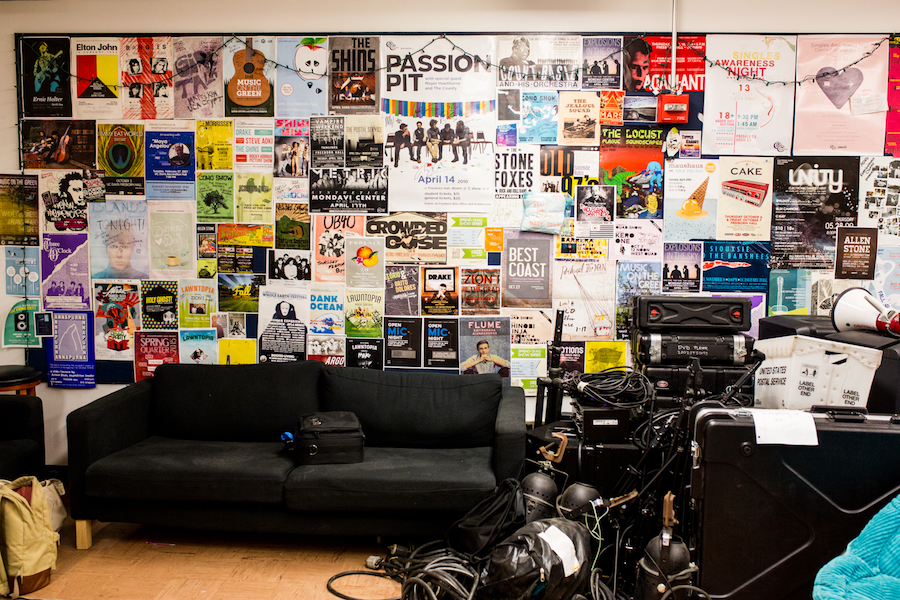
Upon walking into the headquarters of Entertainment Council, located in the basement of Freeborn Hall, the walls of the small office tell it all. Lining the wall from floor to ceiling are music posters and event promos accumulated over the years. While it may seem reminiscent of an angsty teen’s bedroom, the posters tell a story, documenting all the artists, bands and performers that have made their way to the UC Davis campus over the years.

It all started in 1979, with a goal to bring the best possible entertainment content to the cultural scene of the UC Davis student body. Now, nearly 40 years later, the ASUCD EC has managed to bring the likes of Chance the Rapper, Kendrick Lamar, Drake, Porter Robinson and Vampire Weekend directly to the Davis campus. But how do they do it?

In recent years, EC has worked largely with big event promoters, such as Live Nation and Another Planet Entertainment, to bring students the artists they want to see. This past fall, EC put out an empty survey to the student body, asking what kind of artists and bands that students would hope to see on campus in the future. After determining which artists were in greatest demand, EC worked with APE to make the wishes of Davis students a reality.

“I hope that with our growing connection with Another Planet Entertainment we’ll get more and more big shows like the ones we’re having in the spring,” said EC assistant director and third-year genetics major Katie Lewis. “Hopefully, if the student body continues to be interested in these bigger artists, then our connection with APE will continue to grow.”

But booking and hosting massive concerts isn’t all that EC does. They also hold several showings and advanced screenings of films, such as the upcoming feature of “Game Night” at Varsity Theater on Feb. 14. In the past, EC has also brought advanced viewings of movies including “The Social Network,” “Big Hero 6” and, most recently, “Justice League.” In addition, EC holds quarterly open mic nights in the ASUCD Coffee House for Davis students to perform and showcase their talents.

“We’re the only organization on campus that gives students access to different forms of entertainment throughout the year,” said EC promotions coordinator and third-year managerial economics major Emmy Hughes. “I especially enjoy the open mic nights because we get to see burgeoning talents on campus that might not have another outlet to perform or be heard anywhere else.”

This spring, Entertainment Council will also be hosting its annual event, Lawntopia, a free outdoor concert for the student body. Lawntopia, spearheaded by EC director Liz O’Neill, has brought artists such as Elephante, Mako and Sydewaze to UC Davis in past years.

“I think my favorite part of it all is getting to see the events come together,” said O’Neill, a third-year managerial economics and psychology double major. “It takes a lot of work and months of planning to do it, and once the day comes it’s really quite rewarding.”

O’Neill also said she hopes to soon see a fee referendum on a future ASUCD ballot in order for EC to receive funding to put on more student shows. The director hopes that, with more financial stability, EC will one day be able to bring a festival event to the Davis campus, similar to that of UCSD’s Sun God Festival or UCSB’s Extravaganza.

As for upcoming shows, alt-J and BØRNS are to perform at the ARC Pavillion on Apr. 23, while R&B artist Khalid will be making a stop in Davis on May 7. For more information, visit EC’s website and Facebook page.


Written by: Sydney Odman — arts@theaggie.org 

Firehawks more than myth

DICK EUSSEN / COURTESY

Indigenous knowledge of birds spreading fires rediscovered in Australia

The type of environment, climate, vegetation and human activity all play a role in how fires spread. In Australia’s deserts, a new factor must be considered: birds.

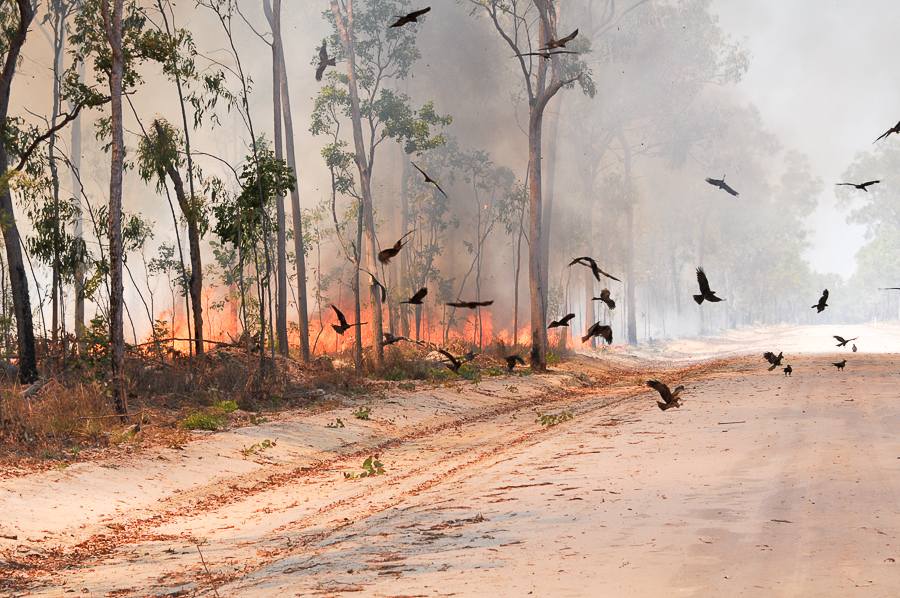
The indigenous peoples of Australia had myths and tales of raptors starting fires, and recent ethnographic work has shown birds using fire is a real possibility. These hawks are known as fire-foragers, and feed on animals fleeing fires or the remains of animals caught in fires. These ‘firehawks’ supposedly grab burning sticks to drop them elsewhere. It is theorized that the purpose of starting fires elsewhere is to feast on the numerous small prey that collectively flee the fire. Their direct association with dangerous territory makes this issue difficult to document, as many people do not wish to be near wildfires.

“The birds aren’t doing things optimal for fire management and need to be taken seriously,” said Dr. Mark Bonta, a geographer at Pennsylvania State University and one of the authors of the paper published about firehawks.

The birds in question are the brown falcon (Falco berigora), whistling kite (Haliastur sphenurus), and black kite (Milvus migrans). All of these birds are common in the Australian savanna, especially the black kite, which has the nickname of “shithawk”. Although illegal, it is suspected these birds are killed as pests.

Bob Gosford, an indigenous lawyer for Australia, reached out to Bonta about the project. Previously, Bonta had done ethnobotany research in Central America on cycads and the relationship between humans and the plant.

“It [firehawks] surprised me initially, but I have a track record of finding stuff,” Bonta said. “The earth has been imperfectly explored. We know a tiny bit and most of it is probably wrong.”

Bonta helped Gosford structure interviews to get primary accounts claiming the birds were spreading the fires. Bonta later went to Australia with funding from Pennsylvania State. Most of the funds were spent on plane tickets.

“It’s still a low budget operation, it’s still exploratory,” Bonta said.

“By and large, raptors aren’t one of the groups of birds most renowned for tool use,” said Julie Cotton, the volunteer and outreach coordinator at the California Raptor Center. “[…] most of the tool use in raptors is some vultures species use rocks to help break open eggs. There are some vultures, and some eagles as well that are known to do that. But the birds most famous for tool use out there tend to be the corvids; the crows, ravens.”

While there has been no official documentation of firehawks starting fires, eyewitness accounts and blurry Youtube videos have called attention to this behavior.

“I’ve had people say I saw a cougar and then it’s like an orange housecat… I always take people’s wild sightings with a grain of salt. But if it’s a trained person, then I trust them a little bit more,” Cotton said. “[…] these people were trained people who’ve lived there, who know the different species, who work in the field, so that, to me, gives it a lot more credibility.”

The knowledge of the firehawks had been mostly reserved to the Aboriginal community and those battling wildfires. Sightings of the hawks using fire were rare, even in this setting. Although having known about birds’ abilities to use fire, Monique Borgerhoff-Mulder, a UC Davis anthropology professor who has done conservation and development projects in multiple African countries, warns against idealizing indigenous knowledge.

“There are many things science miss, many things indigenous peoples miss,”  Borgerhoff-Mulder said. “Important indigenous knowledge is how to make a living in an area. Knowledge is important, but be very careful to not romanticize it.”

One future research topic on the firehawks that needs to be addressed is whether or not the birds are picking up the burning sticks on purpose. Even if the smouldering sticks are accidentally dropped by the birds, the end result of feasting on fleeing animals would be the same.

“There are so many wild animals, their response to fire is fear, they flee. It will be interesting if those birds really do have some way to put aside that, you know, evolutionary history fear of fire,” Cotton said.

Bonta is aware the team has to win over skeptics that think fire is solely reserved for humans. The team is planning on doing controlled burns in May to see if they can document the phenomenon.

Aboriginal communities and fire managers have cooperated and helped Gosford and Bonta in their fieldwork. Bonta appreciates the traction this work has gotten with only preliminary results.

“We haven’t published the best stuff,” Bonta said.


Written by: Rachel Paul — science@theaggie.org

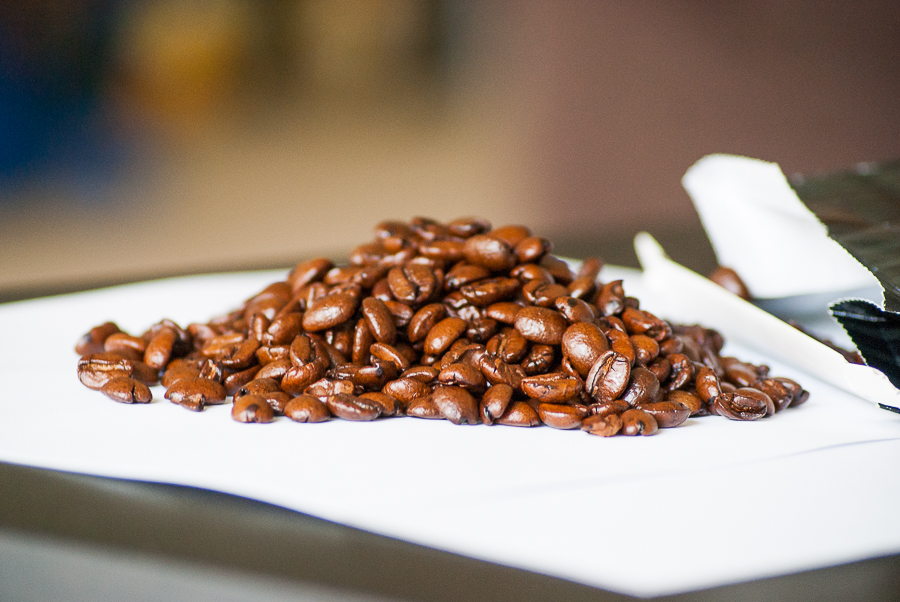
Coffee may be the game changer for reversing climate change skepticism

KAILA MATTERA / AGGIE

Climate change threatens global coffee supplies

Americans disagree on a lot of things — politics, musical tastes, sports teams, appropriate places for tattoos. But we pretty much agree on one thing: coffee, good.

A study conducted by the National Coffee Association USA found that 62 percent of the 3,000 people surveyed in 2017 were daily coffee drinkers — which is why over half of the country may cry when they learn that climate change affects coffee bean production and could impact future coffee supplies.

Climate change makes areas too hot and dry for coffee plants, threatens coffee-pollinating honey bees with higher temperatures and less rainfall and allows just the right conditions for leaf rust fungus, which kills coffee plants. Coffee produced under such circumstances may not even taste the same, since hotter temperatures affect the way that beans ripen and develop flavor.

Researchers predict that, due to climate change, countries that grow coffee beans will experience a loss in area where coffee can grow. They estimate Latin America will lose 88 percent of coffee-growing land to climate change — with Honduras, Nicaragua and Venezuela being impacted the most.

“Scientists think good coffee ground in 2050 will span only a fifth to a quarter of current coffee-friendly habitat,” said Meghan Bartels, a science writer at Newsweek.

Coffee growers in Ethiopia — where 15 million people rely on coffee to make a living — have already experienced a 15 to 20 percent decrease in summer rains, which has devastated crops in the country. Researchers predict that the country could lose up to 60 percent of coffee-growing land by the end of the century.

Coffee farmers who depend on the crop for their livelihoods will have to move their crops or implement new strategies like mulching to continue growing coffee. The added hardship may prove too difficult for already struggling farmers. Some coffee growers have already made the switch to more reliable crops.

Coffee farming will become less possible and less practical. Coffee demand could make coffee more expensive, too. What does all this mean? A large coffee frappe might cost more and taste worse in the future.

But that’s only part of the problem.

“There is a whole lot more at stake here than, ‘Is my nice espresso in New York going to get more expensive?’” said Taylor Ricketts, the director of the University of Vermont’s Gund Institute for Environment. “Climate change is going to threaten this primary livelihood for millions of people in vulnerable communities all over the world.”

Coffee is the largest global commodity besides oil and provides an income for 25 million families in over 60 countries. Climate change impacts on coffee production will devastate family incomes. In other words, people are depending on you to drink more coffee — and to make small lifestyle changes toward sustainability so that they can continue farming.

The Sustainable Coffee Challenge is facilitated by Conservation International and promotes sustainable coffee practices. The challenge strives to make coffee a more sustainable crop, prevent deforestation, protect jobs and make coffee available in the future.

“It’s time to think about coffee beyond our daily cup,” said Dr. M. Sanjayan, the CEO of Conservation International. “Coffee holds the promise of driving sustainable agriculture and farmer prosperity across commodity crops and engaging hundreds of millions of people around the globe in sustainable living.”

If nothing else will bring people together to combat climate change, I hope coffee will. If endangered pikas, poor air quality and extreme weather events won’t sway people to believe that climate change is real science, maybe losing that morning cup of joe will.

Individuals can encourage sustainable coffee practices by asking whether their next cup was sustainably grown.


Written by: Jess Driver — jmdriver@ucdavis.edu

Disclaimer: The views and opinions expressed by individual columnists belong to the columnists alone and do not necessarily indicate the views and opinions held by The California Aggie.

New water meters coming to Davis

0
KYLA ROUNDS / AGGIE

Potential benefits for Davis water consumers

New water meters will be installed in the city of Davis, replacing the existing water meter boxes. The upgrade will use an advanced metering infrastructure to transmit hourly water usage information approximately four times a day.

Having access to water usage information will help consumers keep track of their daily and weekly water usage and spending. The upgrade will also enable customers to set up usage alerts, which will notify them of water leaks.

“The water meter upgrade project will modernize city infrastructure and allow for real-time monitoring of water usage by our customers aiding leak detection and water conservation efforts,” said Mayor Robb Davis in a press release.

The majority of existing meters in Davis were installed in 1997.

“The city’s existing water meters are past their useful life, and replacing them was identified as a Capital Improvement Project and brought to Council,” said Michael Mitchell, the principal civil engineer for the City of Davis. “The meter project is consistent with the Davis City Council’s goal to fund, maintain and improve infrastructure.”

Dawn Calciano, the conservation coordinator for the City of Davis, predicts that the project will most likely expand to other cities in California as well.

“The economic and environmental benefits will be advantageous for most communities,” Calciano said. “Knowing daily and hourly consumption will allow for a better understanding of a property’s water usage and allow households and businesses to set up alerts for potential leaks and other unusual usage.”

According to Mitchell, the installation will be quick and efficient. Prior to installation, postcards will be sent to residents’ homes to let them know when the contractor will be in their area.

“On that day [of installation], the residents’ water will be shut off for about half an hour while the meters are changed out,” Mitchell said. “When the work is complete, the installer will leave a door hanger, which explains the procedure that took place, communicates any further actions needed by the customer if a meter was unable to be exchanged and provides instructions for flushing the water line prior to use.”

If needed, a new meter box will be installed. Pre- and post-installation photographs will be taken.

Using the city’s new water-use portal, AquaHawk, water usage will be tracked on an hourly basis instead of the current monthly basis.

Residents can help contractors by clearing pathways from obstructions and by securing pets away from water meters on the day of installation.

The project is expected to be completed by early March in North and West Davis, March in Central Davis, April in downtown Davis and mid-June in East and South Davis.

The entire upgrade will be completed by mid-June 2018.


Written by: Rabiya Oberoi — city@theaggie.org

Senator term review: Michael Gofman

A year of accomplishments, controversy, pursuits for the executive office

Michael Gofman, a second-year economics and political science double major, has been serving his term as an ASUCD senator since he was elected in Winter Elections of 2017. Gofman ran on the platforms of environmental sustainability, affordability for low-income students and student-teacher relations.

ASUCD President Josh Dalavai and Vice President Adilla Jamaludin described Gofman as composed, organized and proactive during his campaign for Senate.

“I wanted to get more involved in our student government,” Gofman said. “I figured joining the ASUCD Senate would be the best way in order to create some of the changes that I wanted to see on campus and tackle some of the problems that I had heard from other students going on with campus.”

In office, Gofman has served as the adopted senator for the Campus Center for Environment, the Bike Barn, the CoHo, Entertainment Council, KDVS, Refrigerator Services and Unitrans.

He regularly worked with Senator Marcos Rodrigues, former Senator Julie Jung, interim Senator Shaniah Branson and Internal Affairs Commission Chair Jacob Ganz — he referenced these individuals’ “unit centric” outlooks and like-minded goals.

Gofman became involved with controversial ASUCD legislation over whether or not to mandate the presence of the American flag at Senate meetings. National media outlets including Fox News weighed in. Gofman voiced his disapproval at removing the mandate to keep the flag present.

“I think [the flag legislation] put him in a very controversial position for a period of time,” Jamaludin said. “I have been impressed at the way that he has made very good relationships, for the most part, […] with the unit directors and has done his duties.”

In the summer of 2017, the Campus Center for the Environment removed Gofman as its adopted senator over disagreements regarding the senator’s decision to abstain from voting on a resolution concerning the student organization Environmental Justice for Underrepresented Communities.

Gofman said the separation between himself and the CCE prevented his ability to move forward with projects he had in mind for sustainability on campus. Efforts to synthesize environmental groups into a coalition toward progress in environmental sustainability did not come to fruition.

“A lot of the work that I was hoping to do with them, they did not want to do, and they didn’t want to do it with me,” Gofman said. “If I could do things over again, I would definitely have tried to get closer with them earlier on so that even if we may have had political disagreements it wouldn’t have gotten in the way of the work that I was hoping we’d be able to do together.”

Gofman’s accomplishments are tangible within the CoHo, after legislation was passed to get more microwaves available to students. He spoke on the finalization of a project that would create a space for students to “bring their food from home and cook it in that 20-minute period in between classes instead of having to wait for that half hour line that starts across the CoHo.”

His attention to affordability led to the creation of the Career Closet. In association with Alumni Relations, the closet provides professional attire to students who cannot afford clothes for a job or an interview.

Unit directors who have continued to work with him described Gofman as responsive and attentive to their respective units. Liz O’Neill, the Entertainment Council unit director, said Gofman maintained a communicative relationship with the unit and CoHo Unit Director Darin Schluep said he feels the needs of his unit are being supported.

“It’s helpful to know that every Thursday we have someone at the Senate table who is representing our interests and would let us know if we came up as a topic of discussion,” Schluep said. “This doesn’t happen very often, but it’s nice to know that you have that support.”

Jamaludin also discussed Gofman’s strong connection to his voter base and to “the communities he comes from.”

“A lot of senators will cultivate that relationship when they’re running and sort of drop off the face of the planet once they’re in the Senate,” Jamaludin said. “[They] tend to forget that, yes, you’re in this ivory tower, but you should try and democratize the ivory tower and make it more accessible to other people. I think Michael has done a good job of doing that.”

Gofman acknowledges disagreements among voices on the table and welcomes discussion over disagreement.

“I get into disagreements over bills, issues with senators and commission chairs all the time,” Gofman said. “I think we’re able to move past it and generally agree to disagree. But we manage to put those things aside so that on the issues we both want to work on together we can actually work on instead of fighting over the little things.”

Gofman is currently pursuing the position of ASUCD president. He said he advises the Senate to focus on financial management and says the association is “on the brink of falling apart.” Gofman mentionioned the inconsistencies regarding election cycles and waning public interest, but places the most stress on irresponsible spending by ASUCD.

“The cost of operating the [association] has skyrocketed but our income has not,” Gofman said. “I’m really worried as less and less experienced senators and executives coming in, that some of those issues are going to go to the wayside while they focus on important current event issues, not realizing that the association is falling apart through their wasteful spending.”

Gofman leaves Senate with pride in his work and takes his relationships with ASUCD members into the 2018 Winter Elections.

“I’ve stayed true to myself and I’ve stayed true to the people that voted for me and hopefully that helps me out this Winter Quarter,” Gofman said. “But even if it doesn’t, I can leave knowing I never betrayed my principles.”


Written by: Elizabeth Mercado — campus@theaggie.org

Humor: Chancellor mistakes tuition hike for Davis Hiking Club event

MEENA RUGH / AGGIE

Everybody knows that a tuition hike is just a tuition-themed hike

Oftentimes it’s easy to mistake one thing for another. Whether that thing be a word you misheard, an item you misplaced or a protest against rising tuition costs, we all inevitably have caught ourselves in one of those silly moments. Sometimes, one thing just sounds like another, and even though they have completely different meanings that don’t have any relevance or relation to another, the words happen to be homophones and we suddenly forget everything we learned in the second grade.

Recently, a beloved chancellor and all-around man who doesn’t usually make mistakes was caught in one of these wild situations, but we won’t give away who we’re talking about just yet.

If you’re curious who we may be referring to, it is in fact Gary May. Gary May made the honest error of confusing recent gatherings in Mrak Hall to protest tuition hikes with one giant tuition-themed hike — a humble mistake.

Sources say May could not tell that the protesters were not dressed up to go on a hike because everyone in Davis wears hiking boots and Patagonia all the time.

Additionally, May could not understand why all the students who were about to embark on the hike were so angry. However, he brushed it off because he figured it might have all just been in his head, justifying to himself that the students probably weren’t angry but were instead jazzed to go on the tuition hike.

It wasn’t until May offered to Venmo the students for gas if they drove him to Lake Berryessa that they began to realize he thought their protest was an actual hiking event.

After explaining what was actually going on, May immediately lost interest and reportedly sought out the nearest hiking trail.


Written by: Lara Loptman — lrloptman@ucdavis.edu

(This article is humor and/or satire, and its content is purely fictional. The story and the names of “sources” are fictionalized.)
Aggies Dominate Dons

0
MACLEAN HARTFORD / AGGIE

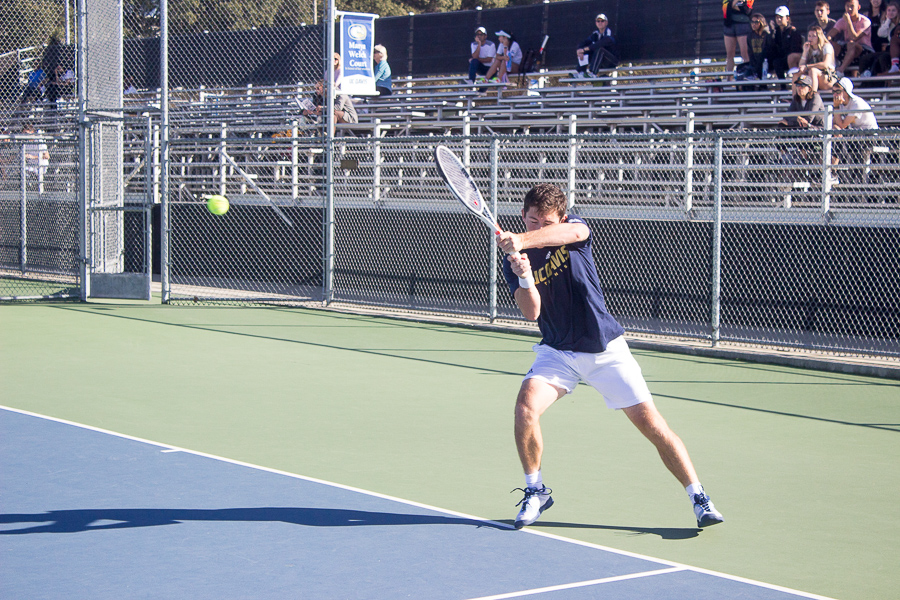
UC Davis men’s tennis team defeats USF Dons 5-2 in home opener

The UC Davis men’s tennis team defeated the University of San Francisco Dons 5-2 on Feb. 3 in a non-conference match at the Marya Welch Tennis Center.

Beginning the competition in three doubles matches, freshman Ivan Thamma and senior Everett Maltby secured a 6-3 victory for the Aggies. Taking a loss in the second doubles match, an overall one-point lead for UC Davis all came down to a tiebreaker in the third doubles match, where freshman Chethan Swanson and sophomore Jonathan Star were able to pull out a nail-biting 7-6 victory, giving the Aggies two of the three doubles victories and the 1-0 overall lead on the day.

“Both teams had match points before the tiebreaker and that doesn’t happen very often but it does happen at times,” said Head Coach Eric Steidlmayer about the final doubles match to finish. “Both teams were playing very hard and once we got to the tiebreaker we loosened up, played well, and got the win.”

It was then on to six separate singles matches to decide if the Aggies could capitalize on their lead for the overall victory, or if the Dons could produce a comeback from their doubles deficit. Senior Tommy Lam and sophomore Mitchell Iwahiro were the first and second players, respectively, to secure victories in singles, Iwahiro winning in two straight sets 6-3, 6-2, and Lam with an incredible performance, winning each of his sets 6-4 and 6-0, respectively.

“[In] the game I was a little nervous because this is our first home match of my senior year,” Lam said. “I am glad I fought through and was playing well in the end.”

After two singles victories by the Dons, the overall score came to a close 3-2 margin with the Aggies leading. However, the Aggies kept on rolling, with Maltby defeating his opponent 7-6, 6-2 in straight sets, and Thamma finishing out the day for UC Davis, winning the finals singles match in a dominating first (6-1) and a close second set (7-5), to propel the Aggies to a 5-2 victory. This win pushed the team’s overall record to 2-4, and their home record to 1-0.

“I am pretty happy with the way I played,” Thamma said about his singles performance. “I played pretty loose in the beginning but just got a little nervous toward the end and luckily I was able to stay mentally tough and pull it out.”

The Aggies continue their season play tomorrow, Feb. 9, at the University of Washington, and will surely look to pull out another win.

“I think we have already made a good stride forward,” Steidlmayer said. “It has been six weeks of practice this winter and every week we have improved. We are going to get better.”

From a player perspective, Thamma agrees that the team will continue to gain experience and get better moving forward.

“I feel we are getting better and better and each match we are learning,” Thamma said. “We got a good win here today and we get a little more experience match by match and we are gonna be a good team.”


Written by: Ryan Bugsch — sports@theaggie.org

Humanizing Deportation project tells story of deportees through video

ROBERT IRWIN / COURTESY

UC Davis team documents deportee narratives

The Humanizing Deportation project is a collaboration between UC Davis and Colegio de la Frontera Norte, in Tijuana, Mexico, to document personal stories of deportees expelled from the United States. The narratives were collected last summer over the course of a month-long field study.

Robert Irwin, a professor in the Department of Spanish and Portuguese at UC Davis, co-leads the Humanizing Deportation project.

“Humanizing Deportation is a digital storytelling project,” Irwin said. “Its objective is [to] help disseminate more true, nuanced and humanized idea[s] about deportation than what we hear about in the media.”

Irwin said that the purpose of the project is to provide a more genuine view of deportation.

“A lot of people have opinions about deportation and about people getting deported without knowing up close what it is like,” Irwin said. “We devised this project in order to [deliver] to the media and the world through our website a more real view of what is happening.”

Irwin also discussed why Tijuana was chosen for the study.

“The project was conceived in collaboration with people here at UC Davis and Colegio de la Frontera Norte, which is a university in Tijuana,” Irwin said. “We chose Tijuana as a field site from which to launch the project because it receives more deported people than any other city in Mexico and probably the world, with something like 350 [people] arriving there everyday.”

Irwin stated that videos by deportees gave them the ability to tell their personal stories.  

“We are simply giving a platform for people in the [deportation] community who have something they want to say [and] to say it in an audio-visual form,” Irwin said. “We facilitate the production but we don’t control the content. They are not our stories, and we don’t select just certains kinds of people — anyone who wants to say something about deportation, about their personal experiences with deportation, is invited to do so on our platform.”

Irwin also talked about how issues related to deportation have resulted in homelessness, substance abuse and the breakup of families.

“It is definitely a humanitarian issue,” Irwin said. “Another problem that occurs in Tijuana, unfortunately, is many of the people end up living in shelters. They have difficulty getting employed. Some of them fall into drug addiction or other forms of substance abuse. Some of them fall into homelessness or semi-homelessness where they are drifting [from] shelter to shelter.”

Lizbeth de la Cruz Santana, a second-year Ph.D. candidate in Spanish as well as a member of the Humanizing Deportation team, further discussed the separation of families caused by deportation.

“We noticed when we were there [that] you could see more men who have been deported and you can see more women and children as well,” de la Cruz Santana said. “Dr. Irwin would encourage us to go to a shelter. There you would see the reality of the whole issue. They come with a deported mom and dad or one of [the parents] stays behind, so you then start seeing families being separated. For me, that was one of the biggest issues with deportation.”

De la Cruz Santana also talked about how people in the United States often do not see the real situation in Tijuana.

It is a different type of way in which we talk about [deportation] here in the United States, because it is a phenomenon we see that is going on,” de la Cruz Santana said. “But once you go into Tijuana, you see the reality of how their lives are and how they try to get out of that state.”

Marinka Swift is a fourth-year Ph.D. candidate in sociolinguistics at UC Davis and another member of the team that went to Tijuana. Her interest in the project stemmed from how the Spanish language is used by deportees compared to that of native speakers in Mexico.

“I was looking for opportunities to learn about people’s language experiences in Mexico — people who have been deported and repatriated back to Mexico,” Swift said. “I was interested in the linguistics experiences of the deportees [and] I was curious about what languages people are using after they are deported. I know that many people who are deported are not necessarily fluent in Spanish or they will simply choose that they would rather be speaking English, because it was their dominant language after spending so much of their lives in the United States. I wanted to get a sense of how people feel about Spanish and English and looking at that through the lens of human rights and linguistic rights.”

Sarah Hart, a second-year Ph.D. candidate in performance studies at UC Davis and another member of the field study team, said she wanted to understand the plight of the deportees and how to express their experiences through her work.

“I come from a background in socially-engaged performance,” Hart said. “I was interested in how to work with narratives or testimonies that people experienced in a creative way, and how to express those experiences to a public audience in order to raise awareness around social issues.”

When asked how she would describe her experience in Tijuana, Hart said she “would tell people to be informed and to question where they are getting their information [from] and why they are being told the things they are being told about people. And to exercise some empathy.”

The Humanizing Deportation narratives can be viewed at http://humanizandoladeportacion.ucdavis.edu/en/.


Written by: George Liao — campus@theaggie.org

Totally Psyched

0
MICHELLE GORE / AGGIE

UC Davis psychology students, faculty provide insights on major

Psychology is consistently at the top of the list of UC Davis’s most popular majors. For the 2016-17 school year, 8 percent of all undergraduate students at UC Davis declared a major in psychology. But what exactly is the study of psychology, and what makes it such an attractive major?

UC Davis offers two tracks for the psychology major, a B.A. or a B.S. If the latter is chosen, students have the option of narrowing down their studies with a biology emphasis or a quantitative emphasis. Kristen Diaz, a third-year psychology B.A. major, described psychology as a multifaceted field of study that encompasses many areas of specialization. She added that, contrary to popular belief, psychology is, a science.

I think the best way to describe the study of psychology is to do so broadly, because there are various branches of psychology, including but not limited to: social psychology, personality psychology, developmental psychology, industrial-organizational psychology, cognitive psychology and clinical psychology,” Diaz said. “A general definition that would cover all areas of the science is that psychology is the study of the human mind and behavior. And yes, psychology is considered a science.”

Daniella Lara, a first-year undeclared major who plans on pursuing a B.S. in psychology with an emphasis in biology, notes that psychology is often misconstrued for its divergence away from conventional fields of science, but she says that in no way undermines the curriculum.

“There are many misconceptions about the curriculum because it strays away from traditional science courses such as biology and chemistry,” Lara said. “However, psychology is just as important because it answers more conceptual questions about why people behave [the] way they do.”

According to Diaz, psychology is not only fascinating, but it’s also highly applicable and can provide analytical insight into everyday activities.

“By studying psychology, you learn about and understand how people think, why they do what they do, and how you can use that information to influence your own and other people’s behavior,” Diaz said.

The major’s versatility makes it desirable for individuals with all different career trajectories. Those who obtain degrees in psychology can branch off into numerous career paths. Diaz plans to obtain her master’s degree before ultimately seeking a career in human resources.

“I want to pursue a career in human resources because it’s the perfect blend of psychology and business,” Diaz said. “After I graduate from UC Davis, I plan to pursue a master’s degree in organizational behavior or organizational development before I try to find a job to make myself a competitive candidate.”

Gabrielle Montiel, a second-year psychology B.A. major, wishes to attend graduate school to further immerse herself in the field of psychology post-undergrad.

“I would love to go to graduate school and get a master’s in a specific field of psychology […] and eventually I would love to do something in the [field] of mental health,” Montiel said.

Montiel encourages all students to take at least one introductory psychology course throughout their collegiate career because she says that the curriculum’s universal applicability makes it valuable to all individuals, even those who are not psychology majors.

“I believe that every student would benefit from taking an intro to psychology class because it is extremely relevant to everyday life and circumstances,” Montiel said. “It is [also] very interesting.”

Dr. Joshua Herrington, a professor of psychology, shared his own experience with the major and explained what initially intrigued him into entering the vast realm of psychology.

“I decided to major in psych because I volunteered as a research assistant as an undergraduate,” Herrington said. “At the time I was a biochemistry major, and I was just taking a couple of psych classes just out of interest. I got really interested in the research, and from there I just kind of followed what really made me happy, which was being in a lab […] and studying the biological basis of behavior.”

Herrington believes that psychology is increasing in popularity as a major because of its ability to relate to individuals on a more personal level.

“I think a lot of what draws students here to the psychology department is just an inherent fascination with the subject, based on the fact that we are all people, and we all have human experiences,” Herrington said. “A lot of people come into the major thinking ‘I want to learn more about myself,’ so anecdotally, I would assume that a lot of people choose psychology because they have a personal connection to it.”


Written by: Emily Nguyen — features@theaggie.org

Chancellor Gary May, Professor Jay Lund elected to National Academy of Engineers

CAITLYN SAMPLEY / AGGIE

May, Lund join legacy of UC Davis staff in Academy

On Feb. 7,  the National Academy of Engineers announced that it had elected UC Davis Chancellor Gary May and Jay Lund, a distinguished professor of civil and environmental engineering and the director of the university’s Center for Watershed Sciences, to join the organization. According to its website, NAE is an American, nonprofit, non-governmental organization that strives to promote engineering professions by “marshalling the expertise and insights of eminent engineers to provide independent advice to the federal government on matters involving engineering and technology.”

To be elected, candidates must be nominated by their peers in the NAE. Becoming a member of the NAE is one of the highest professional honors that can be bestowed upon an engineer. According to a press release from the NAE, May was elected “for contributions to semiconductor manufacturing research and for innovations in educational programs for underrepresented groups in engineering.”

A press release from UC Davis included May’s response to his recent election into the NAE.

“I am honored to be included in the National Academy of Engineering Class of 2018,” May said in the press release. “It is gratifying to be recognized for my research in semiconductor manufacturing and for creating programs to encourage underrepresented groups to pursue STEM careers. All of us can play a role in inspiring people of all ages to find ways to follow their dreams.”

In the aforementioned NAE press release, it was stated that Lund was elected “for analysis of water and environmental policy issues leading to integrated water resources planning and management.”

Lund has been a professor at UC Davis for 31 years and is not only involved with civil and environmental engineering, but also with graduate education, such as the Hydrologic Sciences Graduate Group.

“This is a great place,” Lund said. “It’s got great students, good colleagues and, I guess for me, importantly, it’s close to a lot of good water problems.”

Lund described his initial reaction to the announcement of the NAE Class of 2018 as “shock.”

“I’ve done a lot of things over a long period of time,” Lund said. “And I guess people like it. This is just a great honor.”

Lund’s most recent work is primarily focused in water resources and environmental system engineering.

“I think it was a culmination [of all research done], but I think it probably helped that I’m doing a lot of work on drought and that I have a drought to work with,” Lund said. “We’ve worked a lot [on] the effects of the drought on cities, ecosystems and agriculture throughout the state and how [effective the…] state, federal and local agencies [have] been in managing water during the drought.”

Lund reflected on the impact this election into the NAE may have on his career.

“It’ll probably make me busier than I am already,” Lund said. “But it’ll probably bring some good attention to UC Davis and the students that graduate from here. Usually these things come a little bit later in your career, but it’s good that I’ll be around for a while still as a professor so that the students and the campus can benefit from it.”

Lund said that students who participate in research alongside professors often do not fully comprehend the enormity of the work that they are assisting with, and credits part of this honor to many students over his tenure at UC Davis.

“I don’t think students completely understand just how important their success is for the success of the professors and they greatly benefit from each other,” Lund said.

Lund quoted his mother when describing what motivated him throughout his many years of research and other projects he had worked on.

“I have to blame my mother because she always told me, ‘If you see something that needs to be done, do it’ and maybe I’ve done too much of that,” Lund said.“But it certainly kept me motivated throughout my whole career.”

Lund said that he attempts to impart a little of that motivation he received from his mom to his students.

“There [are] a lot of problems that we have out there and […] students are often a little meek in thinking ‘Well, I’m not very good, […] maybe there’s nothing I can do,’” Lund said. “Well, that’s actually not the case. Most students are much better than they think they are, and I think that part of the role of the university is to not only […] improve the knowledge that the students have, but also improve their level of comfort in actually working on these problems and coming to solutions.”

Lund described his eagerness to continue with his ongoing research and said he is looking forward to lengthening his tenure as a professor at UC Davis

“I’m just delighted to be here at UC Davis,” Lund said. “[I] am looking forward to being here for quite a while longer.”


Written by: Priyanka Shreedar — campus@theaggie.org

Abby Stein: TRANSitions

ISABEL EPSTEIN / COURTESY

A story about change

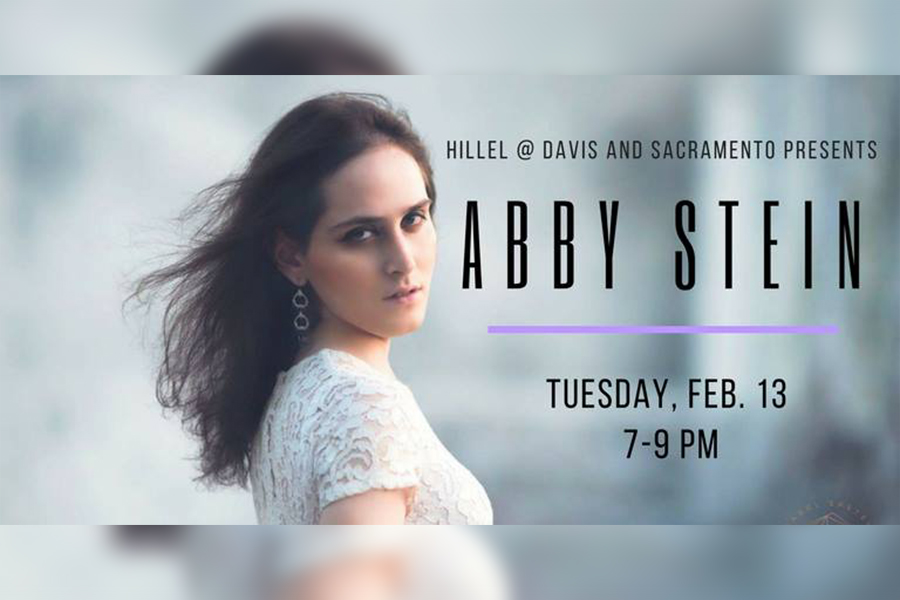
Abby Stein, a Jewish educator and activist, will be speaking about her struggles as a transgender woman in the Hasidic community.

Born and raised in Brooklyn, Stein grew up in a community of Hasidic Judaism, a sub-group within ultra-Orthodox Judaism. It is known for being religiously conservative and secluded from the outside world. Growing up, Stein attended Yeshiva (rabbinical school) and then went on to become a rabbi — all by the age of 20. She left the Hasidic community the following year and then came out as a transgender woman a few years later.

Daniella Amir, the Israel Fellow at Hillel in Davis, is part of the planning for this event.

“Having a speaker like Abby who has such an inspiring and unique story would help show the many different aspects Judaism can have,” Amir said.

As a transgender woman in a highly conservative community, Stein has been working to raise support and awareness for people in situations similar to her own. Specifically, she aims to improve transgender rights and help those leaving ultra-orthodoxy.

She is currently studying gender studies and political science at Columbia University, and in 2016 Abby was named one of the “36 Under 36” emerging Jewish leaders by The Jewish Week.

Charline Delkhah, a fourth-year managerial economics major, has been looking forward to hearing Stein speak.

“This event is important because it brings to light an issue that is prevalent in society and culture today,” Delkhah said. “She discusses issues that her community has failed to address. Abby Stein is a role model for people in any religion who face the struggle of coming out to their family, especially to those who are ultra-conservative. She has decided to be true to who she is, something that many are afraid to do. I am honored have her come and speak about her life and the issues the transgender community faces.”

Dana Benavi, a third-year communication major and the vice president of the Aggies for Israel club, expressed the significance of Stein’s visit not just to the Davis campus, but to the Jewish community.

“I’m so happy so see the Jewish community be open and embrace Abby Stein,” Benavi said.

The event will take place on Tuesday, Feb. 13 from 7 to 9 p.m. at Hillel at 328 A Street. A Q&A period will follow Stein’s speech.


Written by: CaraJoy Kleinrock — arts@theaggie.org

Students for a Democratic Society meets with chancellor to address food, housing insecurity, budget mismanagement, tuition hike

SCREENSHOT FROM SDS FACEBOOK PAGE

Meeting opened to students, public

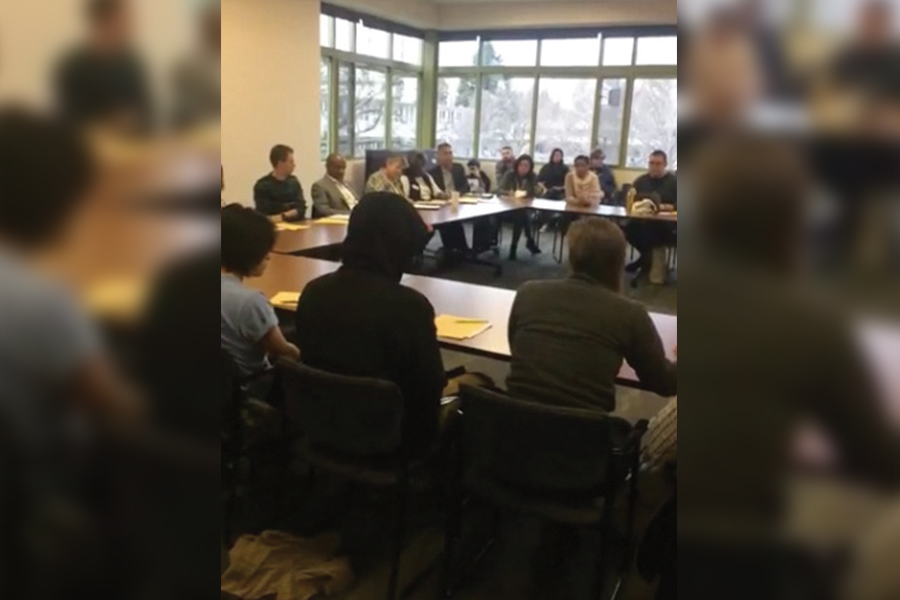
On Jan. 26, UC Davis students and Students for a Democratic Society held a public meeting with Chancellor Gary May and other UC Davis administrators in the Student Community Center. While the meeting was spurred by proposed UC tuition hikes, SDS also demanded that UC Davis address housing and food insecurity, the removal of lethal weapons from the campus police department, the Noah Benham case, student protest referrals, May’s severance from outside boards and other issues.

Students also advocated for the reallocation of the UC’s $175 million in funds that the the state auditor said the UC Office of the President had hidden. Since the findings from the state auditor’s office were released, the proposed tuition increase the regents will vote on in May would raise $143 million for the school. SDS seeks to hold the UC administration and regents responsible and is calling for increased student input over budgetary decisions and democratizing administrative decisions.

According to The Sacramento Bee, May profits from Leidos and Charles Stark Draper Laboratory by serving on the boards of the companies. In 2015, May earned $288,280 in salary and stocks from Leidos, a defense company that has partnered with Lockheed Martin. May acknowledges his positions on these boards, but says he has a right to do whatever he wishes if it does not impact his duties as chancellor.

“The focus should be on how we improve the experience of UC Davis students and the overall quality of the university,” May said at the meeting on Jan. 26. “My board service doesn’t detract from my service as chancellor.”

There were similar concerns with Chancellor Emerita Linda Katehi, who ‘moonlighted’ by taking board positions at outside companies — online education and textbook companies Devry Education Group and John Wiley and Sons.

B.B. Buchanan, a sociology graduate student worker and leader of the Jan. 26 SDS meeting, agreed that May’s time may be his own, “but being on boards of defense businesses is not just something that affects” his time, but also “affects the people right here campus.” Buchanan also laid out a goal of collective bargaining between students and administration for budgetary allocations.

“When we say we want to have meetings, we aren’t just [interested] in what you have to say,” Buchanan said. “We know what you need to do and we need to be part of the process.”

After May stated that he does not set his salary which is “determined by university president and regents,” SDS member Shira Briskin, a fourth-year entomology major, responded.

“You still have the option to commit those funds [toward students],” Briskin said. “There’s no reason for a large mansion — how can you sit in your mansion when students don’t have a place to sleep or food to eat?”

According to an article published by The Sacramento Bee, the chancellor’s residence is 7,779 square feet, and stocked with a large staff and household allowance. SDS members at the meeting asked that his residence be sectioned off for student-dedicated areas, such as a mental health building.

May responded that “the residence is actually a university property and its use [is] determined by the Office of the President and regents.”

May agreed to look into food and housing insecurity issues as well as setting up means of transporting students to Board of Regents budget meetings. He told students that their other demands were controlled by the regents or UCOP. One of SDS’ demands responded to this point — asking for administration to advocate for these needs to their higher-ups, like legislators and regents.

May then took a moment to reply to student comments regarding the UC upholding institutional white supremacy.

“My staff and my wife have counseled me not to take this personally,” May said. “I mean this with all due respect and love, but I will not be lectured to about white supremacy by people [who] haven’t been called a n***** to their face. I will not be lectured to about white supremacy by people who don’t have two daughters that other parents said they couldn’t play with because they’re brown.”

In response, SDS members said that the point they made to the UC upholding institutional racism and white supremacy was not directed specifically at May, but instead toward the institutional umbrella of UC administration.

Amara Miller, a graduate student worker within the department of sociology, spoke about the university cost trajectory since the UC was started in 1868. Until 1956 — nearly the first 100 years — tuition for in-state students did not exist, and the student and incidental fees were only $84 per year. In 1970, a shift away from free tuition began in the form of an additional student educational fee. Miller posited that this change was enacted for political reasons and has been continued to price out marginalized students, student activists and students of color.

SDS members placed posters on the wall of the conference room that read “I still can’t  believe we still have to protest this shit” and “Why are UC athletics coaches being paid millions a year while students starve?” Another sign listed May’s base chancellor salary — $495,000 — as well as the salaries of other UC Davis administrative figures.

SDS members asked the administration and Student Judicial Affairs to be transparent about the Noah Benham case. Benham is a UC Davis student who was allegedly arrested and charged with felonies for non-violent protests at Milo Yiannopoulos’ UC Davis appearance last year. Sheri Atkinson, an interim associate vice chancellor, spoke about the criminalization of student protesters such as those who received referrals for protesting in Mrak Hall and Noah Benham’s situation.

“There will be an opportunity for those folks to provide their defense and go through the proper channels to express your disagreement, but we will not be dropping those at this time,” Atkinson said. “There will be a due process for those.”

Miller rejected some of these answers as dismissive.

“I wanted to note that the two things you did not say you would help us with or respond to were the SJA referrals being dropped and the Noah Benham case,” Miller said. “You are targeting student activists.”

According to Miller, de-escalating the militarism of campus police is imperative to democratizing the UC.

“The Picnic Day 5 are a wonderful example of […] police regularly targeting people of color on our campus,” Miller said. “Most of us have seen the little, fancy, god-knows-how-much vehicle the police drive around in on Picnic Day. That shit should be going to tuition, housing and food. The police do not need a fancy car. I also want to point out when police pepper sprayed students in 2011, they were doing so with military grade pepper spray. Socio-psych research shows that the very nature of having a [gun] on their person makes them more likely to use it. You have to make sure that they do not have lethal weapons that they are able to use in high-intensity situations. Why give them this?”

Buchanan again asked if the administration is “against using lethal force on students.”

“That has been something that you’ve skirted around quite significantly,” Buchanan said.

The administration did not directly answer this and did not agree to remove lethal weapons from the UC Davis police.

One student spoke about how administration could be incorporating cheaper on-campus housing, as it claimed it was in the beginning of the meeting. They pointed out that students who are priced out of expensive university housing become de-incentivized from going to class and work due to lack of proximity, Unitrans hours and expensive campus parking permits. According to this student, the university is helping out the people who don’t need help by giving better access to education to people who can already afford it.

May responded to student remarks that his answers were not solidified in his response to SDS’ demands.

“One comment about the wishy-washy language, every time I said we’re happy to consider something, consider that a ‘yes,’” May said.

By the end of the meeting, May and other administration agreed to meet with SDS regularly and publicly. Concrete agreements revolved around addressing food insecurity through campus projects, providing transportation and access to UC Regents’ budget meetings, advocating for the Cross Cultural Center and accessing the lost $175 million.

The student organization said it wants to hold UC Davis to the agreements made at the meeting.  


Written by: Aaron Liss — campus@theaggie.org

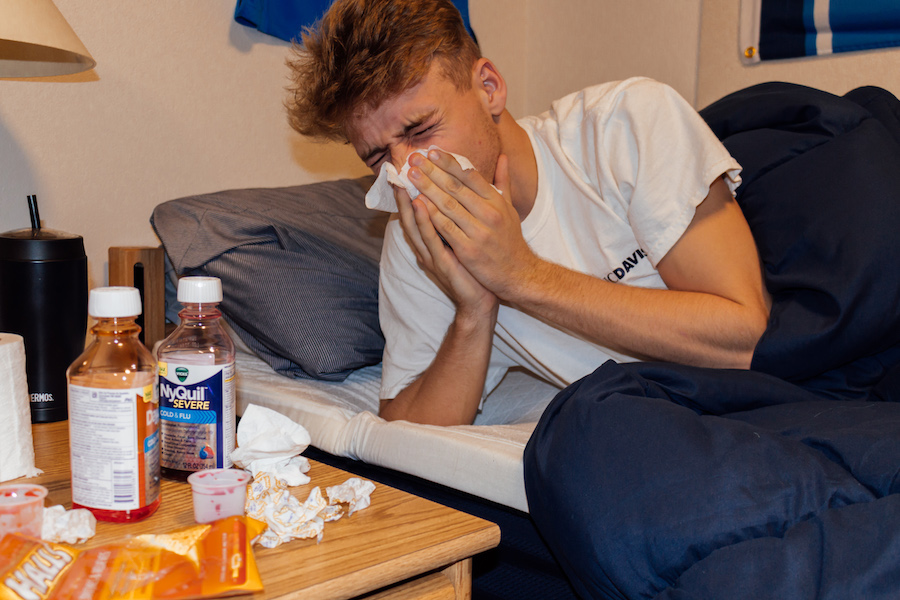
Humor: This year’s flu created by UC Regents to combat over-enrollment in classes

DANIELLE MOFFAT / AGGIE

They’ve done it again

This might come as no surprise to you, but it turns out the UC Regents are behind this year’s especially horrible flu. How, you ask? I’m not exactly sure (I never am), but between all their degrees, I’m sure they found some way to do something that would screw over the entire student body.

Anyway, I guess Davis ran into a problem with seating all its students, and instead of figuring out how to open more classrooms or staff more teachers, the UC Regents thought it would be best to take their favorite approach — one that disregards everyone but themselves. I’m sure it’s more complicated than this, and I don’t really know anything about this particular strain of flu, but I’m just guessing that it had to come from somewhere. And since the property of one bad thing must be caused by another bad thing, I’m choosing to blame the school or the system or whoever is actually in charge.

I’m a little hesitant to say something that’s veering too close to the truth when we’re constantly living in satire, so if it ends up that the UC Regents happened to be funding some ineffective flu vaccine and whatnot, I’m severely sorry. But also, nothing is out of the realm of possibility anymore.

This issue boils down to the simple matter of our lecture halls only seating 300 students while the school continues to admit even more students who are interested in taking that specific class at that specific time. I’m sure there’s an algorithm.

So how did the big people up top escape this epidemic? Easy. They just stay the heck off of college campuses and watch from above — and through the cameras in the lecture hall when they’re feeling sneaky. The unfortunate thing they failed to consider was the flu’s effect on teachers. Turns out sick teachers cost the school money somehow, and even though the problem of over-enrollment was solved, the problem of no teachers was only beginning.

The Regents quickly decided that this would not do, so they whipped out the cure for the flu that they developed in the ‘80s and quickly distributed it with a price tag so high that only the teachers’ UC health insurance could afford it, thereby fixing the problem of over-enrollment in students while simultaneously ensuring that teachers would never miss a day again.


Written by: Rosie Schwarz — rschwarz@ucdavis.edu

(This article is humor and/or satire, and its content is purely fictional. The story and the names of “sources” are fictionalized.)