57 F
Davis

Davis, California

Sunday, December 21, 2025
Home Blog Page 554

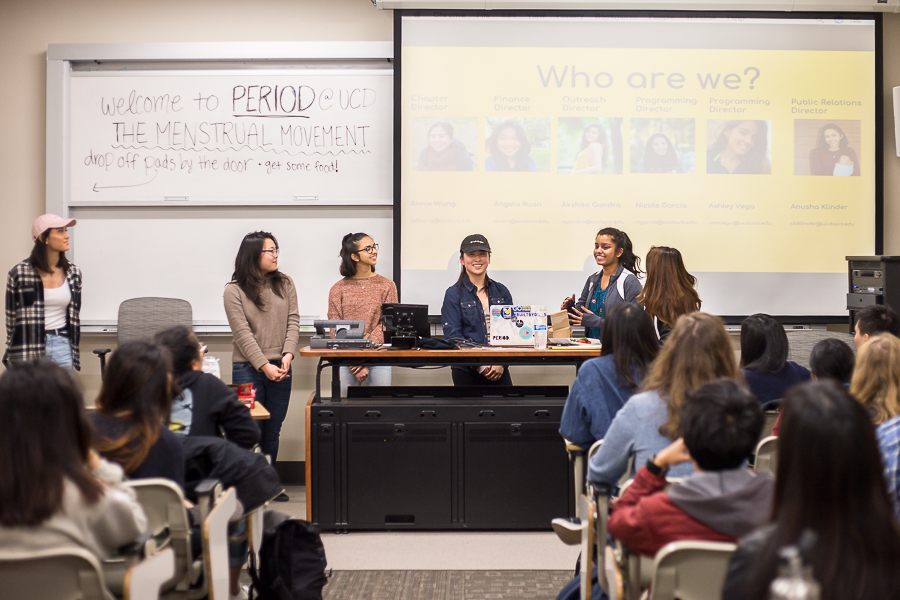
PERIOD holds pad and tampon drive, first informational meeting

JORDAN CHOW / AGGIE

Organization campaigns for free menstrual hygiene products on campus

On Jan. 31, the UC Davis student organization PERIOD held an information night to celebrate its first official meeting. The event also served as a pad and tampon drive for My Sister’s House, an organization that supports victims of domestic violence, sexual assault and human trafficking.

PERIOD is a nonprofit organization with chapters around the world. It was founded in 2014 with the mission of supporting those in need of menstrual hygiene products. This support can take the form of pad and tampon donations, awareness events and political campaigns for making products more accessible to those in need of them.

The UC Davis chapter of PERIOD is focused on campaigning for free menstrual hygiene products for students. One of its campaigns involves stocking restrooms on campus with complimentary pads and tampons.

“The goal is to get free menstrual hygiene products in all campus bathrooms,” said public relations director Anusha Klinder, a second-year global disease biology major. “We’re going to start with the women’s restrooms, but we’re hoping to expand that to all-gendered restrooms.”

Additionally, PERIOD hopes to have a Cramp Car, which would provide students with free menstrual hygiene products in a similar way to the Love Lab, which gives away different forms of contraception at certain times in the ARC.

“A really big piece is funding,” said chapter director Annie Wang, a second-year materials science engineering major. “We’re really looking into opportunities to fund those machines.”

At the meeting, the club leaders shared a link to a survey that allowed students and other affiliates of UC Davis to submit their opinions on PERIOD’s campaign for free menstrual hygiene products.

According to Wang, administrators stand behind PERIOD’s efforts to support students in need of menstruation products.

“UC Davis is very interested in pushing the menstrual movement forward in as many ways as possible with as many organizations as possible,” Wang said.

In addition to campaigning, the UC Davis chapter of PERIOD works to raise awareness about menstruation and students’ need for menstrual hygiene products.

“Because menstrual health is such a sensitive issue, a lot of our work is centered around education,” said programming director Nicole Garcia, a fourth-year communications major.

At the informational meeting, the club leaders held a “Free Flowing Conversation” in order to encourage attendees to break the stigma associated with talking about periods. Attendees were split into different groups, then asked to respond to questions relevant to menstruation and how it is socially perceived.

“[Menstruation is] a topic that is very taboo, and that leads to dire consequences,” Wang said. “That’s why we started PERIOD at UC Davis.”


Written by: Jacqueline Moore — campus@theaggie.org
Chancellor May appoints Kelly Ratliff as new vice chancellor

JULIA ANN EASLEY / COURTESY

New leadership for division of finance, operations and administration

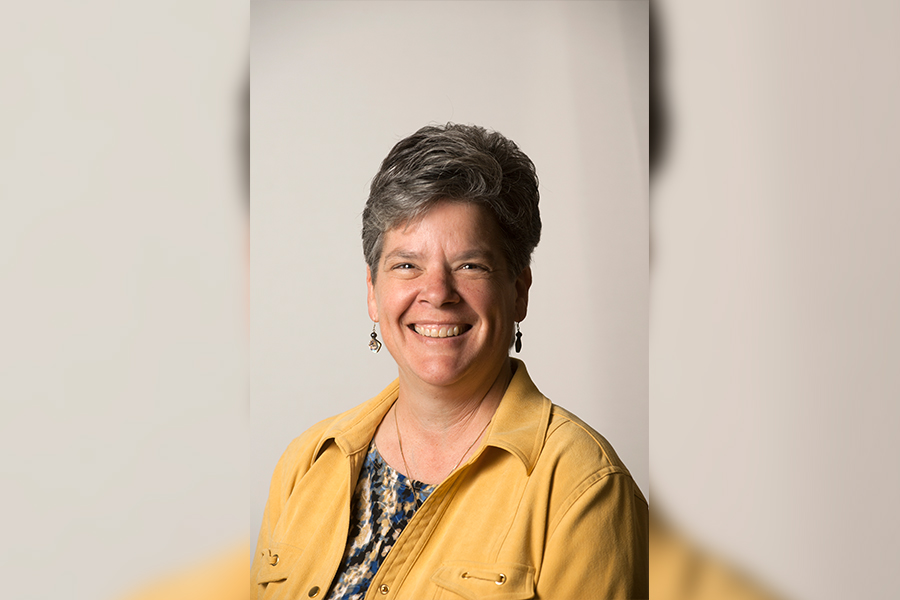
Effective Jan. 1, Chancellor Gary May announced his appointment of Kelly Ratliff — the former senior associate vice chancellor of finance and resource management as well as the interim vice chancellor — as the vice chancellor of finance, operations and administration. May described Ratliff as displaying an effective stewardship of university resources.

“Since I arrived in August of last year, Kelly has taken solid steps to make sure our finances are in sound shape,” May said via email. “She has a good eye for managing complex budgets while making sure our priority remains on making UC Davis a safe and rewarding experience for our students, faculty and staff. We already have a great dynamic.”

Ratliff has worked at UC Davis for 30 years, first in the veterinary school in an administrative position before moving to the budget office.

“I had a series of increasing responsibilities in the budget office and then I was serving as the senior associate vice chancellor — perhaps for the last five years for budget, accounting, finance and different functions of it,” Ratliff said. “But it’s sort of been just a steady career progression — UC Davis has been a great place to build a career.”

Prior to her current position, Ratliff held a direct responsibility over budget, accounting and institutional research. Upon serving as the interim vice chancellor since May of 2016, however, her duties have expanded to include human resources, facilities and university buildings.

“That was the big scope change, but that really happened when I assumed the role as interim,” Ratliff said. “Now that I’ll be permanent, I’m going to be able to replace my former position [and] bring in someone who can more carefully focus on the finance and budget aspects and really let me focus even more of my time on the HR and physical parts of the campus. Our vision for the division is we strive to make the university better every day.”

Sarah Mangum, the academic budget and policy director, worked with Ratliff before her appointment as vice chancellor, and described Ratliff as having a strong work ethic.

“She also really supports work-life balance with her staff and team that she works with,” Mangum said. “She has a very collaborative approach and style and builds relationships very well. I think there is a big emphasis on transparency and wanting to be available to have conversations, attend committee meetings and whatnot. [She’s] interested in being able to meet with faculty, students, anybody on the campus community, really.”

Jason Stewart, the assistant director of Institutional Support and Enrollment Management, also worked closely with Ratliff.

“Kelly works really well with others [and is] able to try to see this place from all different perspectives,” Stewart said. “There’s times when we’re trying to think about all students, all faculty, all staff and how certain decisions we’re making will impact them or how will this impact this office versus that office. She’s always tried to be aware [of] what the impact will be on different types of stakeholders.”

Ratliff’s responsibilities have many different focuses. She has regular interactions with the Council on Student Affairs and Fees and hopes to look to student groups, such as ASUCD and the Graduate Student Association, to understand students’ needs and concerns.

“Listening is absolutely critical,” Ratliff said. “Really, I do a lot of listening, connecting and problem solving. I think those are the things I bring to the position the most.”

So far this year, Ratliff has been working on a few major projects, including customer service and space and quality of facilities. Construction on new study spaces and classrooms will span over the course of the next few years, as will renovations for current facilities.

In her division, Ratliff works with finances and facilities, but also strives to maintain good relationships with her coworkers. Stewart described Ratliff as someone who ensures that people don’t lose sight of key principles, emphasizing that transparency and communication are crucial.

“She always sort of challenged us to make sure whenever we’re writing or when we’re creating documents to be able to distill it so that people can understand it,” Stewart said. “She’s very good at communication, she’s very good at working with other people, with listening to other people, hearing their point of view and I think that all of those things make her a really, really good person for this job.”


Written by: Kaelyn Tuermer-Lee — campus@theaggie.org

Transgender author Janet Mock discusses intersectionality at UC Davis

JORDAN KNOWLES / AGGIE FILE

Mock’s memoir chosen for Campus Community Book Project, inspires year of workshops, lectures, panels

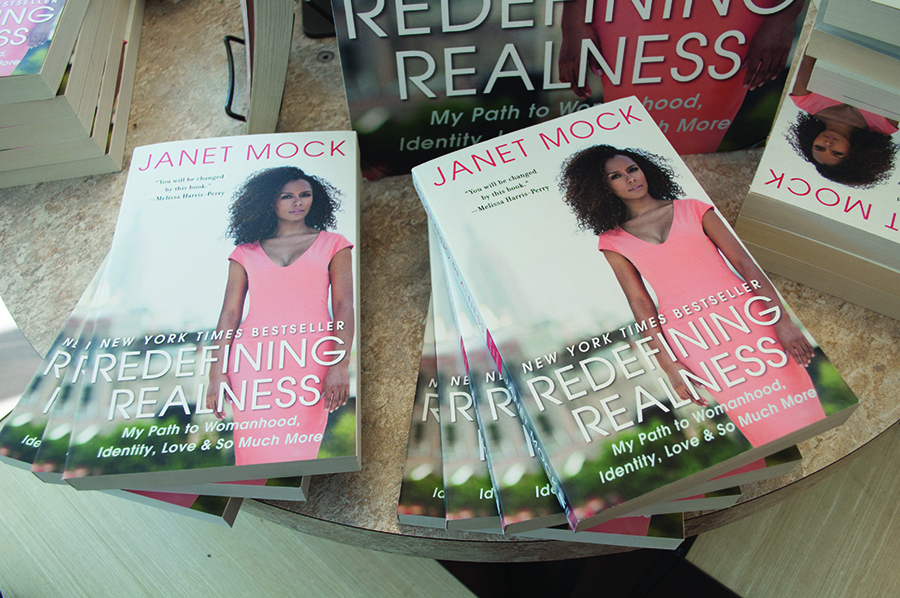
On Feb. 5, Janet Mock delivered an hourlong talk at the Mondavi Center followed by both moderator and audience questions. Mock also took part in a Q&A panel alongside UC Davis and Yolo County LGBTQIA advocates earlier that same day at the Mondavi Center. “Redefining Realness: My Path To Womanhood, Identity, Love & So Much More, Mock’s memoir, was chosen for UC Davis’ 2017-18 Campus Community Book Project.

The CCBP is an initiative started to promote dialogue through a book club with “related events, workshops, panels and lectures, exhibits, film screenings and book discussions exploring intersectional advocacy.” Workshops and discussions centered on “Redefining Realness” took place from September of 2017 through February of 2018.

Mock is a transgender activist, bestselling author, journalist and TV host. She was a former staff editor of “People” magazine online, is a contributing editor to “Marie Claire” magazine, has been profiled by The New York Times and produced the HBO documentary “The Trans List.

“Redefining Realness” addresses the intersecting topics of LGBTQIA and racial identities. Mock’s memoir discusses growing up non-cisgender; those who are non-cisgender have a gender identity that may not match their assigned birth sex, including transgender, non-binary and genderfluid.

Mock seeks to fight transphobia, sexism, racism, classism and ableism through interweaving the movements, not separating them. She discussed reframing mainstream feminist and gay activism around “black and brown trans, black and brown queer” and “indigenous queer” narratives, not just around the financially privileged, white and cisgender. According to Mock, society must dismantle the minimizing and discriminatory practices of trans-exclusionary radical feminist aspects of feminism, queer and women’s activism that promote transphobia, classism and racism.  

She also discussed the life and legacy of Sylvia Rivera — a seminal transgender Latinx protester who, in 1973, was nearly booed off a stage at New York City’s Christopher Street Liberation Day Rally. To Mock, this represented the ousting of transgender people from burgeoning gay rights and feminist movements.

“As I stand here on this stage as a black and Native Hawaiian trans woman, I know that I’m only standing here because of the work of those who put their bodies on the line to fight for self-determination,” Mock said. “I know that our movements must remove structural inequity prioritizing white bodies, cis bodies, able bodies, [and] deeply pocketed bodies over others. I also know too that, specifically for trans women of color, when they do see trans women of color, oftentimes its a celebrity or someone on a TV show. I always have to anchor it to folks who are not household names, and tell parts of their stories. That’s why I bring back Sylvia [Rivera] —  I’m not the first trans woman to be on a stage and talk.”

Mock spoke about her activism through the utilization of writing and communication, “wielding” her “pen like a weapon against racism, sexism, transphobia, ableism and the erasure of black and brown indigenous people.”

“I truly believe that telling our stories, first to ourselves, and then to one another, is a revolutionary act,” Mock said. “My activism began with me sitting down at my desk. You realize that the act of telling is not that simple. If it weren’t for writers like Audre Lorde, Toni Morrison and Zora Neale Hurston, I would not be here. If it weren’t for trans activists like Marsha P. Johnson and Sylvia Rivera, I would not be here. I think so often, [for] all of us, specifically  marginalized folks, queer trans folk, people of color, everything is a struggle. Quite early, that’s one of the first messages I learned — be quiet, contain yourself, wait until you find a proper space that you can properly express who you really are.”

Mock returned to the message of the power in merging advocacy spaces so that transgender kids will not have to wait to find a proper space like she did. Intersectionality strives to streamline efforts of marginalized groups by creating an overlapping network of identity-based communities like ethnicity, sexual orientation, gender and class. Mock explained how women of color can be erased from discussions of sexism and racism.

“In 1989, [Kimberlé] Crenshaw identified a long-standing problem,” Mock said. “Black women were not truly being seen. We were able to see black men, recognize the racism they face. We’re able to see white women and recognize the sexism they face, but we’re often unable to see black women and recognize the compounding effects of sexism and racism we face. Crenshaw used a simple analogy — a black woman is positioned in the middle of an intersection, exactly where the roads overlapped and met, impacted by both her gender and her race. She did not experience her race and gender separately — she experiences her race and gender simultaneously. Many of us are positioned similarly, impacted not just by our gender and race but our class, our ability, our size, our sexuality, [and] our religion. Intersectionality upholds our lived realities, how our identities complicate and create levels of systematic injustice and marginalization.”

Mock grew up in a culture that taught her the need for intersectional advocacy in navigating communities, where the fight for marginalized identities should be bridged and not at war with one another.

“I was born in the ’80s in Honolulu, Hawaii to a teen mother and two sisters who were teen mothers and a father who struggled with addiction,” Mock said. “I witnessed firsthand the plight of my neighbors: low income people of color. If growing up black, native and poor wasn’t enough, I also had my own identity struggles as a trans kid. As a young person, I struggled deeply and fought hard to be myself and reveal myself, and express myself, in a culture that mandates that if you’re born with certain body parts, you are not allowed to express who you truly are. Growing up, I had a series of battles with my parents from choosing to wear my hair long to having both of my ears pierced. I was acutely aware and uncomfortable of the fact that I was different, and I tried my best to appease my parents, family and peers by hiding deeper in myself.”

While growing up, Mock saw how someone in her community self-actualized their gender identity in a bold way which inspired Mock. The two are still best friends, Mock said.

“In the seventh grade, a gift came into my life,” Mock said. “The way I saw myself began to shift when I saw my best friend Wendi. She was a 12-year-old trans girl — Filipino, had a green bob, wore short shorts and pranced around schools as if she ruled them. Her boldness and her fearlessness to be fully herself, no matter the consequences, pushed me to to proclaim what I secretly knew about myself all along: that I was a girl.”

Mock discussed the struggle of family acceptance growing up both in her book and talk at UC Davis.

“I remember being adamant with my father about hearing my pronouns and him not being able to process it,” Mock said. “I wrote him that letter 18 years ago about calling me by my right pronouns and my name. And if [you] can’t do that, then don’t talk to me anymore. It’s been a journey.”

She was the first member of her family to attend college, and went to New York University for journalism. Mock talked about all of the “mini-compromises” she made when moving to New York City with regard to “passing” — being physically seen as your chosen gender identity through appearance — and choosing to keep her transness to herself. Transgender, nonbinary and gender-fluid folks must be focused on presentation, or presenting, in ways that cisgendered people are not, according to Mock. She said that she is now privileged through leveraging a passing presentation and financial capital.

“I’m super lucky to do the work that I do, but the irony of my success is that it often deludes many into believing that success is possible for all those growing up like I did,” Mock said. ”The reality is, it isn’t. Just because I made it doesn’t mean others are able to do the same. Many trans people, specifically those from low-income communities of color, are invisibilized and ignored. We need to begin to acknowledge that trans women, that black brown and native bodies, are worthy of our protection and care.”

Mock wrote her memoir with accessibility in mind, including definitions for terminology some may be unaware of. She wanted to “make sure that” she was able to be in “spaces where the aunties and the mothers of the girls that” she was fighting “alongside, and for, are watching.” Mock talked about her experience in an interview with Oprah. Oprah said she was “scared” of saying the wrong thing to Mock, and Mock replied: “What are you so afraid of? Ask me anything.”

Mock spoke of the double-edged sword of explanation, ridden with expectations of emotional labor. She has had to balance her willingness to educate and recognizes a well-intended naivety of ignorance with the fact that someone’s identity does not beg justification or teaching. There is often a question of who is forced to educate, and Mock said that she tackles this burden so those less privileged than her do not have to.

“It was a language thing,” Mock said. ”No one wants to say they don’t know, right? So it’s hard. For me, I oftentimes make myself vulnerable to say that I’m gonna take in this stuff so that my sisters and sibling don’t have to do that work. I can distill things and make it plain.”

In the audience question portion, Mock responded to a parent asking about parenting a seven-year-old transgender daughter in politically tumultuous times by telling them to reinforce the concept that their daughter’s “school is her school, [and] knowing that she is not a problem.”

“She is deserving and worthy, and I’d keep on chanting that over and over again,” Mock said.

Mock encouraged the audience to clap, snap and express emotions during the talk. One trans woman who asked a question during the audience Q&A took a moment to mention how a man “felt the need to get up and tell” her “to be a little more quiet.”
“As a trans woman, no — we are not going to be quiet, not now, not ever,” the woman said. ”Everyone that’s in here, you have a responsibility to carry this information forward and resist every single day.”

Hours earlier, a Q&A panel the forum discussion “Reimagining Home: Support Networks and LGBTQIA+ Communities” was held. Sitting on the panel were Mock, Anoosh Jorjorian of Yolo Rainbow Families, director of UC Davis Women’s Resources and Research Center Cecily Nelson-Alford, Community Coordinator for the LGBTQIA+ center Mat Talton, Office Coordinator for the LGBTQIA+ Resource Center Joanna Villegas and Director of the UC Davis Cross Cultural Center Bruce Smail. Smail, who acted as the moderator, asked the five panel members questions that had been previously submitted online by students and the public.

Jorjoria found comfort in her Davis community, which she says has provided an inclusive space for her gender-nonconforming child. Jorjorian said she likes to “check in with asking what kind of pronouns” they want to use “every once a while, not making a big deal out of it.”

“The really great thing now about the younger generations coming up is that my kids never questioned that two women can get married, for example, and it’s happening the same way with gender,” Jorjorian said. “As a parent of a gender-nonconforming kid, there was this really wonderful experience when we moved to Davis, and my younger child went to kindergarten. There was a sixth-grader who was one day helping with kids and the sixth-grader was like, ‘Is this kid a boy or a girl?’ The others were like, ‘Tavi’s both!’”

Jorjorian is also a member of Parents for Equity for Davis Teachers and the founder of Yolo Justice and Action Network. According to Jorjorian, family law in America can become problematic for non-cisgender kids with divorced parents.

“We have issues of children who want to express a certain gender identity, [and] if the parents are divorced, that can be quite contentious,” Jorjorian said. “We’re still trying to navigate how that works. The reassuring thing is that, here in Davis, in Yolo County, in Sacramento County, we have the resources of the Gender Health Center which is prepared to take on those issues and work on negotiating between partners. Even at the law school at UC Davis there are lawyers who can provide services.”

Regarding national political views on gender, Jorjorian expressed anxiety over the ability for non-cisgender kids and people to be themselves among the social enforcing of a gender binary.

“It is a really uncertain time for really young children who are gender non-conforming because of […] the Trump administration,” Jorjorian said. “For young kids who maybe don’t fall within the binary or haven’t expressed a crystalized gender yet, then the question is, ‘Do we change the birth certificate? Do we change the passport if we have to move to Canada because they’re coming after our kids? What kind of legal protections do we need to have in place for our kids?’”

The panel members talked about how their families, friends and support networks function as allies. They grappled with the concept of family, as did Mock in her keynote in her speech at the Mondavi Center later that night, explaining how chosen family differs from birth family and how traditional family can often breed toxic invalidation.

“Cultivating a home space and cultivating who’s invited into that homespace, and in turn is invited to know me more deeply, [is important],” Mock said. “I’ve chosen so many [members of my family], and I’ve been so lucky [that] I’ve been able to choose them and embrace them in my everyday. But, there definitely are people in my life, part of my growing up, who I set boundaries with or no longer engage in that way.”

Mock spoke about opening up the transgender narrative into a human narrative, where non-transgender based topics and themes should involve transgender folks. While accepting the harsh societal reality and danger of being transgender, Mock talked about wanting to explore the successes and triumphs of transgender folks, normalize them and form a narrative beyond the trauma. According to Mock, the fact that “we have to talk about violence all the time” to make people “realize how urgent things are” is problematic.

“People want to hear the statistics, that it’s sad, that we have a hard time — which is real!” Mock said. “But I know my people and myself to be so much more than just the tragedies that happened to us. We’ve always had these hard times, but we’ve also had great resilience and creativity, and we made new networks to take care of ourselves and each other. You can build communities of people who see you fully beyond just the tragedy porn.”

Nelson-Alford explored the power of intersectionality through sheer necessity. Segregating marginalized identities is a scary reality, according to Nelson-Alford.

“There wasn’t space for me to me black, and queer and poor,” Nelson-Alford said. “It was like, ‘Pick one!’ [That’s] one of those things you have to wrestle with when you sit in multiple fields of marginalization.”

Nelson-Alford explored the concept of straight passing, where she is afforded a “great privilege where” she is “not seen as queer.” According to Jororian, “stealth queer” is something that many women experience and opens up the question of societal presumptions of sexual orientation, appearance, presentation and passing.  

When the panelists were asked how they navigate self-care, Talton responded that they learned the best way to take care of themselves is “just to be myself.”

“When I was growing up, it was this narrative that you need to be the respectful black person, you have to do well in school, you have to talk a certain way, dress a certain way,” Talton said. “That restricted how I presented myself to [the] world. How I’ve learned to take care of myself is just to be myself. Wearing clothes I want. If I wanna dress masculine one day, that’s cool; if I wanna dress femme one day, that’s cool. That doesn’t change my gender.”

Talton talked about the role of agency in presentation in grappling academic and workspace settings as a non-cis person. Talton also discussed they/them pronouns and how it’s “always scary” because “there’s still people who say “that’s not a real thing, that’s plural.” Talton has combated this through self-acceptance.

“If they actually care about me, then they should be willing to hear what I have to say,” Talton said.


Written by: Aaron Liss — campus@theaggie.org

Executive, Senate endorsements: Consider the following

CAITLYN SAMPLEY / AGGIE

The Editorial Board would like to commend the large and diverse body of students who chose to run for senatorial and executive positions in the 2018 Winter Elections. It is our genuine hope that a similarly large and diverse student population votes in this election after seeking out information about the candidates and their respective platforms.


Executive Endorsement: Julie Jung and Julienne Correa (BASED)


Julie Jung, a former senator, is running for president, and Julienne Correa, current chair of the Ethnic and Cultural Affairs Commission, is running for vice president. Both candidates have been involved in ASUCD since their first year at UC Davis, and this experience in office clearly plays to their advantage. The Editorial Board was impressed with not only their clear designation of roles, but also the organization of their platforms. In terms of internal affairs, the duo would like to expand resources for ASUCD volunteers and committees and hold senators accountable for their interaction with adopted units and their budget expenditures. Considering the low candidate turnout rate during the 2017 Fall Elections, the Editorial Board is pleased with Jung and Correa’s drive to improve senator involvement and accountability. The two also showed an in-depth understanding of the ASUCD budget, providing numerous examples of how various funds could be reallocated to subsidize their platforms. Their knowledge of the budget, along with their confident and intelligent demeanors, assured the Editorial Board that Jung and Correa are qualified candidates for the executive ticket.


Senate Endorsements:


  1. Atanas Spasov (Unite!)

Spasov displayed an impressive grasp of the inner workings of ASUCD, the roles and responsibilities of an ASUCD senator and the accomplishments that are feasible in office. Spasov presented three extremely well thought-out platforms, which he talked about extensively and with pride. All three platforms — financial scrutiny, sexual health and making class scheduling significantly less stressful — are individually strong, and we hope he gets the opportunity to achieve them.


  1. Daniel Tillman (BASED)

Tillman’s mix of doable platforms, his honest demeanor and his determination when speaking about his plans for office impressed the Editorial Board. Tillman exhibited a charismatic hopefulness to make tangible changes on campus that will benefit the communities he represents and cares about. These platforms include planning for gender-inclusive restrooms in the layout of new buildings on campus rather than starting from scratch on long-term projects. Tillman also wants to work in conjunction with Housing Advising for Undergraduate Students and Student Housing to tackle issues of housing insecurity.


  1. Ko Ser Lu Htoo (BASED)

Htoo was excited to discuss their comprehensive plans for representing marginalized groups on campus — which include expanded resources for the LGBTQIA community as well as working alongside the Whole Earth Festival, with which Htoo is already involved. They arrived to the endorsement interview extremely prepared, and we feel confident they will maintain their preparedness and positive attitude if elected.


  1. Simran Kaur (BASED)

Kaur demonstrated a strong understanding of ASUCD and a recognizable passion for her platforms. Her desire to give back to the UC Davis community was readily apparent. One of her goals, which is especially timely and relevant, is to improve student-administrator relationships. Kaur also hopes to increase cultural awareness across campus as well as work closely with The Pantry to improve food security — goals we find commendable.


The Editorial Board encourages all students to attend the Senate CoHo debate on Tuesday, Feb. 20 at 11:00 a.m. and the Executive CoHo debate on Wednesday, Feb. 21 at 11:00 a.m.


Elections will be held on elections.ucdavis.edu from Tuesday, Feb. 20 at 8 a.m. until Friday, Feb. 23 at 8 a.m.


Written by: The Editorial Board

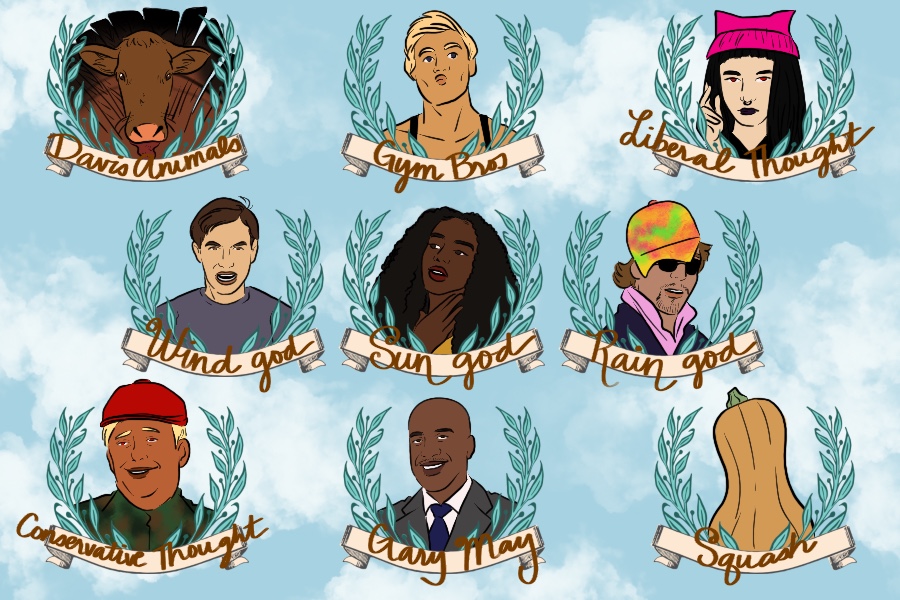
Humor: A comprehensive guide to the Petty Gods of Davis

CAITLYN SAMPLEY / AGGIE

First of all, they don’t like being called petty

Now you may know me as a man who loves his peyote, or perhaps as that guy with the bomb shelter in the middle of the Sonoran desert. Perhaps you know me as the man with all the absolutely bonkers theories about Hillary secretly being a lizard. (I can link you some great documentaries — they’re like four hours long each but SERIOUSLY it will change your life and also make you much more suspicious of lizards in general.) You may think that these minor details of my totally normal and stable life make me an otherwise uncredible witness regarding the petty gods of our beloved cow town. But that’s where you’re wrong.

I’m actually, besides a full-time student, a part-time prophet of the gods of Davis, splitting my time between them all and prophesying like a clairvoyant paternal prophet who’d like to see all his children succeed.

I’d like to provide you with this comprehensive guide to the Petty Gods of Davis.

The Wind God

I’ve spoken of this bastard before. He’s a real asshole. Likes to mess with people’s hair and bike commutes and to blow papers out of people’s hands in a real comedic and cinematic way. He looks like a 100-foot version of Jeff Bridges’ character from “The Big Lebowski,” except if Jeff Bridges also looked like Jared Kushner. The whole “being a god” thing has really gone to his head. If he tries to get validation from you because of his pranks, act unimpressed, even if they’re super funny.

The Sun God

An absolutely radiant, beautiful god. She’s really a wonderful person, but sometimes she can be really overbearing. Big fan of pantsuits because she thinks it makes her look like Hillary Clinton. (I know what you’re thinking  — the Sun God is a Lizard! This is not true.) She’s the sort of de facto leader of the Wind God and the God of Rain. You wouldn’t want to do a group project with them.

The Rain God

Seriously, where the hell is this guy? I mean, I know he smokes peyote as well, so I get it, but seriously man you’ve got a really important job to do. When I do see him, he’s always wearing sweatpants, HUF socks and probably holding a fat blunt in between his pinky and thumb. It’s weird, I know.

The God of Davis Animals

Just a cow mixed with a turkey mixed with a squirrel. Really likes Neutral Milk Hotel.

God of the Gym Bros

This dude walks around like he’s trying to pinch an egg in between his upper thighs, like he’s chafing all the time. Always has a protein shake in one hand and a phone in the other, on which he’s disinterestedly sending a text to a girl he hooked up with once. Nice guy, though.

God of Liberal Thought

Beanie. Septum piercing. Denim jacket, denim jeans. Holding a coffee cup, kombucha because they’re doing a “cleanse” or a mason jar full of just water. Loves Doc Martens. Always shoving a clipboard in your face regarding some cause. Little do they know that I love civil rights, but I still yell at them. Also, they have three heads, except the other two heads are where their butt cheeks are supposed to be. I don’t make the rules.

God of Conservative Thought

This dude is literally always floating around in head-to-toe camo while gripping the lifeless head of a deer and shouting about how hunters are a discriminated class of people while interspersing “MAGA” every so often.

Gary May

He is a god.

The God of Squash

A 400-hundred-foot-tall gender non-conforming vegetable. Has a great golf swing.


There it is: your guide.


Sincerely,

Peyote Aaron


Written by: Aaron Levins — adlevins@ucdavis.edu

(This article is humor and/or satire, and its content is purely fictional. The story and the names of “sources” are fictionalized.)

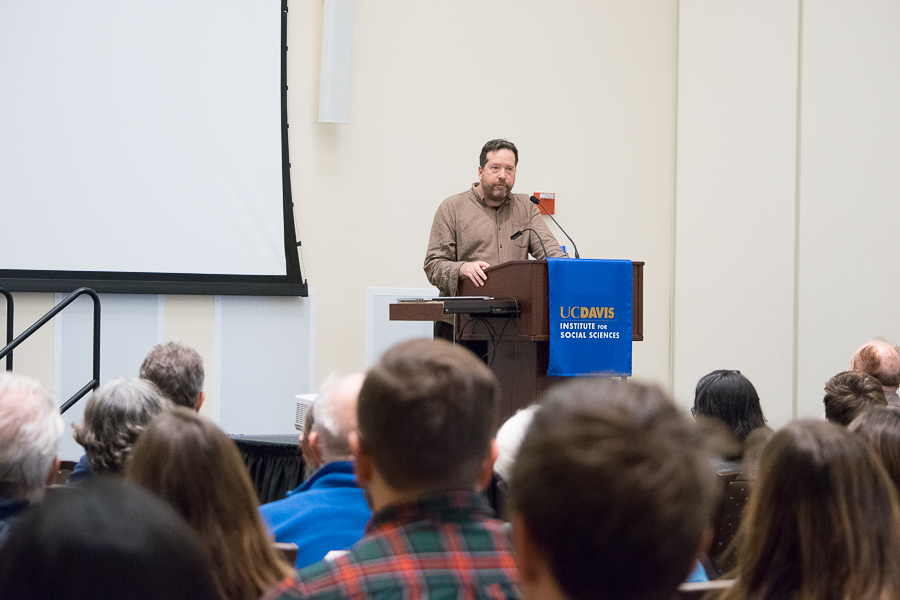
Journalist Todd Miller speaks about climate change, migration

ALEXA FONTANILLA / AGGIE

Institute for Social Sciences hosts Miller’s lecture, book signing

On Jan. 25, journalist Todd Miller visited UC Davis to speak about his most recent book, “Storming the Wall: Climate Change, Migration, and Homeland Security,” as a guest of the UC Davis Institute for Social Sciences. At the lecture, Miller described his travels for his book to communities around the world that have been harmed by climate change-induced phenomena.

“The book itself is what some have called reportage journalism, in the sense that there’s a lot of storytelling, but storytelling with woven analysis and data and statistics,” Miller said.

According to the event page website, Miller “has researched and written about border issues for more than 15 years, the last seven as an independent journalist and writer.” He currently resides in Tucson, Ariz. but has lived and worked in Oaxaca, Mexico.

Miller drew connections between these natural disasters and homeland security and border regimes, noting how both especially affect the socioeconomically disadvantaged. Miller urged the audience to understand that although this connection may not be especially apparent to many Americans, it is a harsh reality for citizens of many developing nations.

“I have set out to chronicle the way a massive system of social and economic exclusion militarizes divisions not only between the rich and the poor, but between the environmentally secure and the environmentally exposed,” Miller wrote in his book.

To learn more about how climate change, migration and homeland security are interconnected, Miller traveled to the Mexico-Guatemala border, the United States-Mexico border, the Philippines, Thailand and Central America. He also visited Paris in 2015 during the United Nations Climate Change Conference.

“When I would go to each place, I would try to interview as many people as I possibly could on the subject matter,” Miller said. “With every single possible person, I tried to be as thorough as possible, and I tried to get the most compelling stories.”

Miller recalled traveling to a coastal community in the Philippines that had been visibly ravaged by rising sea levels. He observed the shell of a home that had been destroyed by the ocean and was especially struck by two victims of the natural disaster, a father and his young son, who stood next to the ruins.

“I just watched the father and the child, and I looked at them, and that’s actually how ‘Storming the Wall’ opens,” Miller said. “I started thinking about that child because obviously the sea was going to affect that community.”

Miller said he spoke with countless victims of climate change, many of whom live in developing countries. Miller remembers talking to a victim of Typhoon Haiyan, which hit Southeast Asia in 2013, who recalled his near-death encounter with the hurricane in vivid detail.

“I asked him, ‘Can you describe what happened during Typhoon Haiyan?’” Miller said. “And he said, ‘Do you have eight hours? Because I remember every single horrific moment of it.’”

Rather than write solely about the survivors of climate change-induced natural disasters, Miller also examined how these survivors are displaced due to climate change. His research revealed that the number of displaced survivors is currently extremely high, and that it’s projected to increase even more in the near future. Miller also noted that there’s no climate refugee status that might allow these survivors to move to a safer or less affected country of residence.

“There’s no legal framework around climate refugees, neither in an international sense […] nor in any individual country, though New Zealand is the one possible exception,” Miller said. “If New Zealand were to do this [pass a law recognizing climate refugees], I think that would be the very first example of a country authoring some sort of climate refugee status.”

Miller pointed out that without this protection, refugees of natural disasters face barriers and regulations that they cannot resolve on their own.

“It’s more and more likely that they’re going to face militarized border regimes that are only increasing,” Miller said.

Near the end of his speech, Miller criticized America’s inaction with regard to supporting those who have been displaced by climate change-induced natural disasters. He called out the Trump administration’s vehement denial of the existence of climate change, stating that it was harming the movement to protect climate refugees.

“It’s worth taking a step backing and thinking about how Washington and climate change, particularly right now because the President is a renowned climate change denier,” Miller said. “There have been some really chilling effects.”

Miller said he is hopeful that the American political machine will shift in favor of protecting immigrants fleeing the effects of climate change.

“There [have] been many different people, organizations that I’ve met that are doing really incredible things,” Miller said. “And assume that even right here, even though I don’t know you, even many people are doing incredible things here in this audience.”


Written by: Jacqueline Moore — campus@theaggie.org
 

Listen up

CAITLYN SAMPLEY / AGGIE

A list of notable gay podcasts

With so many podcasts out there to get addicted to, I couldn’t help but wonder: Where are the gay ones? Podcasts are a great at-home and on-the-go companion that can make you laugh, cry or both — sometimes at the same time. They cover everything from short and sweet comedy and topical conversations to historical retrospection. Here’s a few podcasts that I think you might like — in no particular order.

“The Savage Lovecast”

A sex-advice columnist on the side, gay podcaster Dan Savage focuses most of his time on answering calls from frustrated lovers. His show centers around sexual and relational problems that can use an objective opinion. The couples that call into the show are of different kinds — we all have problems regardless of the labels we stick to our relationships. There are complications in every relationship out there, and Dan Savage has heard it all. There’s a lot to learn about love and relationships, and it doesn’t hurt to have a knowledgeable man whispering some advice in your ear from time to time. “The Savage Lovecast” is a witty and sharp listen for anyone.

The Love Bomb

Nico Tortorella is all about explosive love in his podcast “The Love Bomb.” The star of TV show “Younger” invites “humans that he loves” to his show to talk about what love means to them. This light conversational topic never fails to brew interesting responses and perspectives. He has interviewed familiar names, such as his co-star Hilary Duff and YouTube sensation (and his ex) Kyle Krieger. LA-based Tortorella also provides interesting insight into the industry and how love is portrayed on the big screen. Tortorella is a great advocate of self-expression and self-worth, which makes for a great, uplifting podcast.

What’s the Tea?

RuPaul’s podcast, “What’s the Tea?” covers all the bases, from drag to Golden Girls to politics. RuPaul is a hilarious, shade-throwing icon with a microphone in one hand and a cup of tea in the other. She is regularly accompanied by Michelle Visage along with a featured guest each podcast. Past guests have included Lady Gaga and Vanessa Williams. This is a great source for current gay culture and entertainment.

Making Gay History  

I did say podcasts can make you cry, didn’t I? Making Gay History is a collection of interviews done by Eric Marcus to document LGBT activists and icons that have contributed to gay civil rights movements. Older (but still very relevant) influencers like Sylvia Rivera reveal what life was like for a transgender woman in New York in the mid 20th-century. Ellen DeGeneres, a more well-known name nowadays, talks of the historic turning point when non-heterosexual couples were first shown in television. This podcast enshrines the history of LGBT activism and the long journey that has led to where we are now.


Written by: Josh Madrid — arts@theaggie.org

Humor: “Under the Sea, BP & Me” Little Mermaid live action play features WWII chemical barrels

JEREMY DANG / AGGIE

Does she have crabs?

The ARC Pavilion will be the first to host part one of the new live-action spectacle “Under the Sea, BP & Me,” a tale of a little mermaid who struggles to find love in a polluted ocean. The California Aggie spoke to the story’s writer, Scooby Droo, who gained critical acclaim for his play on the 2016 election, “A Tale of Two Shitties,” and his film about the monogamous relationship between a man and his horse, “Fifty Shades of Hay.”

The story opens with a mermaid being born and rejecting vaccinations. The doctors are primarily shocked that the baby can talk, and given her aquatic nature, the smell of the mother is thus understood. Alas, after the parents refuse to gender the child, the government breaks into the hospital room and steals the baby mermaid since they need her to investigate all the oil spills and toxic chemicals in the ocean. It’s at this point that the mermaid is definitively determined to be a female and not a merman, which has the body of a fish and the legs of a man.

Insert a montage with motivational music as we watch the mermaid grow up. She struggles with the problems that most of us confront: acne despite how many times she washes her face, existential dread as she ponders which career paths seem most appropriate and how to properly masturbate while on display at the San Diego Zoo, where the government trained her in secret.

It’s at this point that the mermaid is broken out of the San Diego Zoo by protesters, who accidentally kill a whale after shattering its tank without having a way to transport it. The mermaid is taken to the ocean and thrown in, as the protesters yell at her that she’s free. The protesters don’t realize that there are no other mermaids, so our mermaid will be quite lonely. So it goes.

The mermaid decides to head west. Everyone always talks about how great the West is. She realizes that, despite having learned how to read and speak by watching educational videos on Pornhub, she has no name. Thus the mermaid begins her quest and starts swimming as deep as she can. At the bottom of the ocean she finds several barrels of chemical weapons from WWII that are nearly leaking after years of decay and, without knowing their contents or meaning, takes her name after them and decides to start cleaning the ocean.

Thus begins the true tale of Mustard Gas the Mer-maid.


Written by: Drew Hanson — andhanson@ucdavis.edu

(This article is humor and/or satire, and its content is purely fictional. The story and the names of “sources” are fictionalized.)

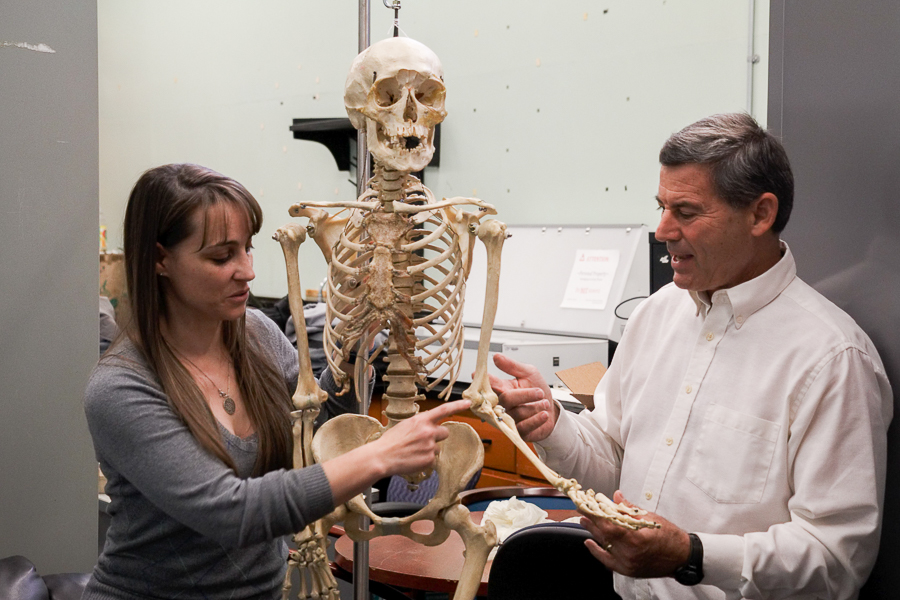
A closer look at campus cadavers

0
MARINA OLNEY / AGGIE

Investigating UC Davis gross anatomy course, cadaver origins

While most introductory anatomy classes are taught in a typical classroom setting with a textbook, only a handful of undergraduate universities offer a class that’s actually centered around the use of cadavers as a learning tool. UC Davis is one of these schools.

“My informal research has [shown] that there’s maybe four or five [undergraduate courses that are cadaver-based] in the entire United States,” said Dr. Doug Gross, a UC Davis School of Medicine professor in the departments of cell biology and human anatomy and a UC Davis Medical Center pediatrics professor. “There are many undergraduate-level anatomy courses [that are] relatively low introductory level that rarely use cadavers. In terms of a really high level, detailed, very cadaver-based-focused course, it’s very rare in an undergraduate institution.”

The undergraduate class offered here, instructed by Gross, is officially called CHA 101: Human Gross Anatomy and is made up of a lecture and lab component (CHA 101 and CHA 101L). Every week, about 500 students file into the lab room at the rear of Haring Hall in order to take what they learned in the classroom and apply their knowledge to the examination of real human cadavers.

“Gross anatomy is what we’re talking about,” Gross said. “That’s the study of the human body that you can see with the naked eye. Anatomy includes pretty much any study of the structure of the human body from microscopic to ultramicroscopic to neuroanatomy to developmental anatomy — they’re all a part of anatomy.”

Gross has been teaching anatomy for more than 40 years. When he came to UC Davis, he was expected to take hold of the anatomy class that already existed and ramp it up to become a more focused and rigorous course. Of all the undergraduate classes taught today at UC Davis, it is easily one of the most demanding. Indeed, students are expected to learn nearly a thousand new terms every week.

“I would say the majority of the undergraduate anatomy courses [besides UC Davis] take a different approach and teach from a systemic approach rather than a regional approach,” said Jenny Plasse, an academic coordinator for all of the undergraduate and School of Medicine anatomy courses. “They’re looking at an entire body system, like these are the bones in the entire body, these are the muscles in the entire body, they look at the entire vascular system and so on and so forth. We’re looking at a regional approach, which I think is more clinical-based.”

The class is not limited to any certain field, though, and is open to any major as long as the student has taken the introductory biology prerequisite. However, many of the students who do take the class need it as a prerequisite for future endeavors like physical therapy or nursing.

Plasse points out that it’s a common misconception that the class is made up of mostly pre-medical students, and that yearly surveys show that only about 18 to 19 percent of the students intend to go into medicine. In fact, this course isn’t too far off from the anatomy class medical school students have to take.

“I would say there’s only really two major differences between the undergraduate course, CHA 101, and the medical school course,” Gross said. “[For the] first year medical school course, CHA 400, one difference is in terms of the content, they’re virtually identical — the scope of coverage of anatomy, the detail, the expectation, the rigor, is very, very similar, [but] the medical school course includes embryology, which is developmental anatomy, […] and radiologic anatomy, and that’s studying imaging along with it.”

According to Plasse, the UC Davis undergraduate lab itself holds a collection of 250 specimens. The sheer amount of specimens available for UC Davis students begs the question of where they come from and how they get here.

“[Body donation] is all done through programs at most major medical schools,” Gross said. “Medical schools have programs called donated body programs, so the UC system — all the five medical schools — have their own. Then the [University of California Office of the President] has an overarching donating body organization.”

The UC Davis Body Donation Program has been around since 1968 in order for people to contribute to the educational goals of the UC Davis Medical School. According to its website, the Body Donation Program receives donors who were Davis alumni or have some other tie to the university or medical school. Every year the program receives about 150 body donations to be used as teaching materials and support research.

“[The program has] a director, an assistant director and a number of staff who go through all the legal proceedings,” Gross said. “They do all the forms, they contact the families, and then when that individual dies, they arrange for the transportation of that body, which has to be done through a mortuary service. They then test the body for certain communicable diseases, and then if it’s deemed being a suitable body for embalming and use in education, then they do the embalming and they then distribute those bodies without charging — so they’re not buying the body.”

According to Plasse, the majority of the specimens used in the undergrad lab are created by faculty members — that is, they’re meticulously dissected to become high quality specimens that should last a long time. On any given day, students in CHA 101L could be examining a specimen that has been on campus for 20 years, or one that was donated only a year or two prior.

“There are some [specimen] that are very delicate structures, so when you’ve got a class like ours when we have 10 lab sections in the winter, each with 40 students, that’s from 6 or 7 in the morning until after midnight every single day,” Dr. Gross said. “Students going through them, you can imagine things are going to get worn out, broken, at some point they are no longer useful and they need to be replaced.”

Each lab section is headed by a teaching assistant, generally a graduate student or someone who has been involved in the anatomy program at UC Davis for a number of years. Each of these TAs then has four lab aids to teach during the lab sections. The aids can be current students or graduates who have taken the class, done well and thoroughly enjoyed the experience.

“I think it’s a very, very unique opportunity for undergrads to actually see and learn off of actual human beings and the cadavers that were donated,” said Alexander In, a TA for the class and a UC Davis class of 2016 graduate with a degree in exercise biology. “That aspect alone makes this class very special, and it’s the reason why most of us come back to help teach and share that experience with the other students.”

During lab, students rotate between four stations, each headed by a lab aid, and examine various specimen. Whatever they are learning in lecture corresponds exactly with their lab material; they can be examining spinal chords, shoulders, skulls, hearts or any part of a cadaver that has been previously dissected by a skilled anatomist for presentation and teaching.  

“[For] me personally, as a student, you go in [the lab] on day one and are like ‘oh my goodness I’m going to see real dead human beings, something I’ve never seen before,’” In said. “We generally try to ease people into it, we don’t just show faces and hands right away, we start with general breastplates and something very neutral.”

Not only is the course rigourous, but it’s taken extremely seriously by everyone involved. In emphasizes the depth of respect and care the students are taught on day one of instruction. In fact, students don’t really learn the material the first day in lab, but are shown how to take care of and handle the specimens as well as the facility.

“The thing about this course, and the concept behind using donated specimens, is really respect for those specimens,” Plasse said. “This is something that we really try to take home with our students, [that] these are actual people who their last wish was to donate their remains so that someone else could learn and make the world a better place. We need to give them the reverence they deserve.”


Written by: Marlys Jeane — features@theaggie.org

Police Logs

0
NICKI PADAR / AGGIE

You don’t see (or hear) that every day

Jan. 20

“Male stealing recyclables, has child in stroller with him screaming.”


Jan. 21

“Approximately 30 people with people spilling out of the unit into the walkway.”

“Unknown subject shining flashlight into living room window on the east side, reporting party looked out and saw a subject with short hair across the street, subject is doing it to other apartments as well, requesting area check.”


Jan. 22

“Intoxicated female laying on the grass near the bus stop.”


Jan. 24

“Knock heard on downstairs back sliding glass door, reporting party went to check but didn’t see anyone outside.”


Jan. 25

“Occurred 30 minutes ago — male came into the clinic and was refused service due to him being rude to employees — male then threatened to burn down the building after being asked to leave — reporting party advised subject is no longer on site and unknown if he left in vehicle or on foot.”

“Customer inside location yelling at other customers and slamming doors, claiming he has a pistol in his bag.”


Jan. 28

“In the intersection, sinkhole next to manhole — 8 inches wide by 2 feet deep.”

Biodiversity Day

ANH-TRAM BUI / AGGIE

Guide to all 12 museums, collections

Across the UC Davis campus on Saturday, Feb. 17, free museums and collections will be open to the public for Biodiversity Day. Look for the volunteers in matching yellow t-shirts to find the exhibits.


Arboretum and Public Garden 9 a.m. to 1 p.m.

Visitors can take home their own plant and upcycled pot after stopping by the Good Life Gardens near the Mondavi Institute. Melissa Cruz, the outreach coordinator, said prime nursery plants, such as the California poppy, will be available. In addition, volunteers and displays will inform visitors about the importance of pollinators and some creative ways plants reproduce. Spanning 100 acres, the Arboretum houses plant collections and walking paths for visitors.


Bohart Museum of Entomology 9 a.m. to 1 p.m.

Dr. Lynn Kimsey said this museum has the seventh largest insect collection in North America, hosting over 8 million different bugs. At biodiversity day, a live mantis and a petting zoo will join their counterparts. This research collection does specialize in California fauna and mosquitoes, but expeditions are sent around the world to gather specimens.


California Raptor Center  9 a.m. to 1 p.m.

Meet Sullivan, Juliette, Mad-eye, and all of the other birds of prey at the Raptor Center. Julie Cotton, the outreach coordinator, said about 30 birds will be out for visitors to see, with 10 of them being “on the glove”, which means out of their cages. This veterinary and rehabilitation center hosts golden eagles, redtail hawks, great horned owls and more. Visitors can see the center’s new museum space, stop by a coloring table, and see an exhibit about American Kestrels made by a local Girl Scout.


Museum of Wildlife and Fish Biology 9 a.m. to 1 p.m.

The Museum of Wildlife and Fish Biology, only open to the public on Biodiversity Day, is a collection of 60,000 mammals, birds, fish, amphibians and reptiles. The curator, Andrew Engilis, Jr., collects specimens come from around the world, and uses them in UC Davis classes, research and outreach programs. Just in time for Biodiversity Day, taxidermists will be working on two California Condors. This critically endangered bird has a 10-foot wingspan and visitors can get an up-close experience at these impressive vultures.


Paleontology Collection 9 a.m. to 1 p.m.

The research collection contains specimens from 550 million years ago to more recent times. Fossil invertebrates, vertebrates, and plants are all a part of the big research collection. Typically used for classes only, visitors can see the past contained more than just dinosaurs.  


Phaff Yeast Culture Collection and Viticulture Enology Culture Collection 9 a.m. to 1 p.m.

According to Dr. Kyria Boundy-Mills, visitors can explore the world of microbiology through yeast collection, a winery tour, microscopes, and coloring and reading materials. Guests can learn how yeasts can be kept alive for hundreds of years, and how yeast can be made into art. Kombucha, vegemite and marmite tasting stations will be nearby a yeast smelling station and agar plates visitors can touch. Used for research projects and work contracts around the world, this is a rare chance for visitors to experience the world of single-celled organisms that are in everything from bread to wine.


Botanical Conservatory 12 p.m. to 4 p.m.

With over 3,000 different species, the Botanical Conservatory hosts many unique plants in its greenhouses. The curator, Ernesto Sandoval, is most excited about the fruit on the coffee and chocolate trees. The conservatory also hosts carnivorous plants, orchids, cacti, succulents and more.


Center for Plant Diversity Herbarium 12 p.m. to 4 p.m.

Aside from being able to browse the 300,000 to 350,000 preserved plants, visitors will have the chance to participate in activities put on by the center. This includes using microscopes, plant pressing, mounting demonstrations and going on tours. A student will also be displaying traditional Hmong medicinal plants. Kids will have the chance to mount their own plants on paper.

Although open to the public during the year, the Center for Plant Diversity works more like a library, according to Ellen Dean, the curator, because visitors come looking for specimens to help identify plants or describe new species. This is the only day to truly look around the massive collection.


Department of ​Anthropology Museum 12 p.m. to 4 p.m.

Used before the bow and arrow were created, an atlatls, a type of spear thrower, can be tried out by visitors. It is from Central Mexico and only brought out for visitor use on Biodiversity Day. Dr. Christyann Darwent is also setting up demonstrations of flint knapping, or stone tool making, that will be hosted outside the anthropology building. Inside, in honor of the year of the dog, a dog-themed scavenger hunt will take participants through the anthropology labs and museums. Fossil hominids, primates, and the new anthropology exhibit on the Inuit people will be stopping points along the scavenger hunt.


Design Museum 12 p.m. to 4 p.m.

Only available until April 22, “It’s Bugged: Insects’ Role in Design” showcases unique interactions between people and insects. Visitors can see art made from insects and insect products. Clothing and photographs of bugs or inspired from bugs will be displayed alongside specimens from the Bohart Museum of Entomology.


Häagen-Dazs Honey Bee Haven 12 p.m. to 4 p.m.

This half-acre farm hosts 225 different plant species; Dr. Christine Casey, the manager of the haven, has seen 85 different species of bees. Activities include making seed cookies to plant in your own garden and the ability to use a bee vacuum to catch bees and examine them closely. While primarily used to teach about the importance of bees, the haven is also used for research and classes at UC Davis.


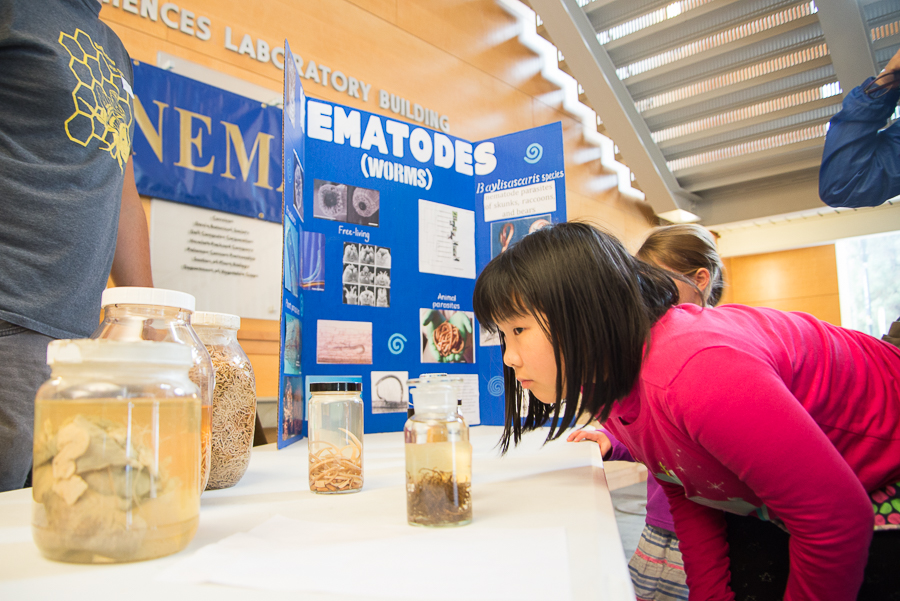
Nematode Collection 12 p.m. to 4 p.m.

Nematodes, sometimes called worms, are parasitic or free-living organisms found in every type of environment. While a cubic foot of soil may contain millions of nematodes, it is believed only 3 percent of species have been described. The research collection of nematodes is used to help understand ecological and farming environments, although visitors will also be able to see really big whale intestinal worms.


Written by: Rachel Paul — science@theaggie.org


Latinos are underrepresented in higher education

MICHELLE GORE / AGGIE

The role that race plays in learning

I’m a first-generation college student, and this spring I will finally graduate from Davis. While it certainly hasn’t been an easy road to get where I am, it has been a memorable journey. Against all the odds that I’ve had to overcome in my life, I’ve never been closer to achieving this lifelong dream my parents envisioned for me.  

My parents immigrated to the U.S. over 25 years ago in order to provide a better lifestyle for me and my brother and sister. I owe everything that I have in life to the sacrifices my parents made. Thanks to them, I have countless more opportunities than they had growing up.

My mom grew up in Mexico in the ‘80s during a time when things were different. Even though my mom begged my grandpa, she wasn’t allowed to continue her education because it was deeply rooted in society that women back then didn’t need to go to school.

Because my mom was denied her access to higher education, she made sure to try to instill within her children the value of a four-year degree. My mom is by far the biggest role model in my life. She showed me that, against all odds, anyone can beat the system. She inspires me. I remember when I was in high school, my mom obtained her GED: She took night classes while juggling the duties of a mom and wife and working in the mornings.

When I look back on old memories that I have with family members, my parents, uncles, aunts and cousins all said the same thing to me: “Stay in school and go to college.” From a young age, I felt like going to school was my entire purpose.

Yet there are institutional barriers in place that greatly limit the odds of someone like me graduating. Even though the high school dropout rate has considerably dropped over time, Hispanics still have the highest dropout rate among blacks, whites and Asians, according to the Pew Research Center.

There are a number of factors that contribute to this phenomenon. For one, Hispanics and children of immigrants tend be poorer. There’s a variety of statistics that show the same trend: students who come from lower socioeconomic backgrounds struggle academically versus their more affluent counterparts.

When I was in high school, my parents couldn’t afford to hire an SAT tutor or enroll me in Study Smarter programs. I had to buy an SAT book and study on my own. I didn’t have any tutors to help me with math or science homework.

There are students who don’t have the necessary resources to help them succeed in the classroom because of a lack of funds. To a certain extent, parents’ income and education affect whether a student will go to college.

I went to school with students whose parents gave them everything they needed to succeed. I was jealous because I didn’t have those same resources. Nonetheless, I still managed to thrive in school through my own hard work.

A college degree opens the door to the middle class; a college degree holds power. The difference in income between high school graduates and college graduates is staggering. A college graduate will make $1 million more over their lifetime versus someone with a high school degree. The advantages and benefits that come with a college degree are significant.

Yet as of 2014, only 15 percent of Hispanics between the ages of 25 and 29 have a bachelor’s degree. Moreover, Hispanics are least likely to earn a bachelor’s degree among whites, blacks and Asians. In particular, this is because Hispanics are less likely than other ethnic groups to enroll in a four-year college. Hispanics, more than any other race, enroll in community college or two-year schools instead.

The rising cost of education prevents students from wanting to go to college. Student debt is higher than credit card debt in the U.S. For that reason, so many students are exploring other alternatives, such as community college, with the intent to transfer to a public university later on.

Hispanics have always been at a disadvantage when it comes to higher education. Language barriers in the classroom greatly limit our vocabulary. I grew up speaking Spanish at home while speaking English at school. As such, my diction was much different than my peers’. During my time at school I felt like I always had to play catch up because my other classmates were way ahead of me in other subjects.

The barriers that stand in the way of Hispanics are threatening — yet they are surmountable. I’m an example of such. My classmates and other Hispanics at four-year universities are also examples that we can succeed. Hard work pays off. Educational equity is the goal for the future.


Written by: Alejandro Lara — amlara@ucdavis.edu

Disclaimer: The views and opinions expressed by individual columnists belong to the columnists alone and do not necessarily indicate the views and opinions held by The California Aggie.

A Valentine’s Playlist

GENESIA TING / AGGIE

Songs for the hopeless romantic

Valentine’s Day, or singles awareness day, frequently evokes one of two emotions: infatuating bliss or resentment. Despite the array of pressures that arise with this Hallmark holiday, both single people and couples can enjoy the sentiments of a love song.


Tennis, “Diamond Rings”

The ‘80s-esque indie pop duo from Denver, Colorado released its newest album, “Yours Conditionally,” under its own label in spring of 2017 followed by an EP called “We Can Die Happy” in response to the album’s success. The EP describes the emotions of the duo’s musical journey, celebrates its achievements and describes Alaina Moore and Patrick Riley’s marriage. “Diamond Rings” takes on a new sound for Tennis and is perfect for Valentine’s Day.


Phoenix, “Fior Di Latte”

After recording for two years, Phoenix finally released its sixth album this past summer. Considered an optimistic album in times of terror, “Ti Amo” became an accidental political statement on the Paris attacks. “Fior Di Latte,” as well as the rest of the album, was inspired by gelato, passion and desire. Lead singer Thomas Mars aimed to create a hyper-romantic piece, illustrating his fantasy version of Italy and the band’s European culture. “Fior Di Latte” and other tracks like “Tutti Frutti” are sweet enough to fulfill your chocolate cravings.


Electric Guest, “Waves”

“Waves” expresses conflicts that will inevitably ensue a “21 months”-long commitment. Although not the most picturesque depiction of a relationship, the song’s fast-paced rhythm, cheery beats and retro vibes will have you thinking otherwise. Even with the ebbs and flows in the relationship, the lyrics conclude that it’s hard to give up on it.   


The Lemon Twigs, “I Wanna Prove to You”

“I Wanna Prove to You” is about someone trying to convince a prospective lover to share their same longing to be together. The music video’s director, Nick Roney, makes a comment at the end saying, “My experience with The Twigs and my grandparents showed me that love is for desperate people who can’t get by on their own. Perhaps it’s best to cherish loved ones only briefly. After all, isn’t life one big lesson on letting go?” Sometimes Valentine’s Day can make you feel more alone, which makes this song simply relatable.


She & Him, “Stay Awhile”

Zooey Deschanel and M. Ward’s cover of “Stay Awhile” on their album “Classics” resembles the Christmas song “Baby It’s Cold Outside,” where the singer begs their partner to stick around a bit longer. This rendition is softer than Dusty Springfield’s original that was released in 1964 and is downright lovey-dovey.


The Beach Boys, “God Only Knows (Mono Mix/Live/1967)”

Although “God Only Knows” doesn’t necessarily describe a romantic love, this version is slowed down just enough to make it perfect for slow-dancing. Regardless, it’s still a good song to listen to whether you’re single or in a relationship.


Written by: Becky Lee arts@theaggie.org


Davis Teachers Association calls community together

0
JEREMY DANG / AGGIE

Rallies held around Davis to protest for better wages, benefits

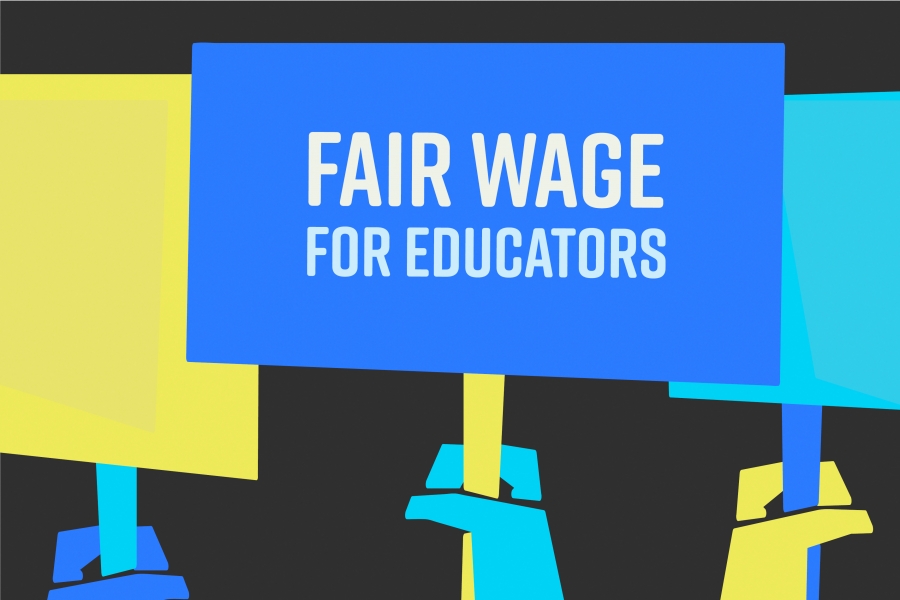
On Jan. 18, the Davis Teachers Association held a rally for better wages and benefits at three major intersections in Davis: 5th and B, Mace and Chiles and Covell and Pole Line. The rallies were attended by teachers working all over the district, from Patwin Elementary to Davis Senior High School. Davis students and parents joined educators as they picketed and rallied.

“We’re concerned about the district compensation gap in that it’s making it very difficult to hire new teachers and retain existing ones,” said Dianna Huculak, a history teacher at Davis Senior High School and the president of the Davis Teachers Association. “It’s bad for our school communities, and we’re looking to promote stability and sustainability for our students. There’s a 3 to 5 percent compensation gap the district has identified throughout the district. We’re asking for 4 percent, and we’re still working on it […] I’m really hopeful that we can close the gap.”

Huculak also emphasized the need for the district to stay competitive in recruiting teachers. She noted that, currently, the district has trouble even retaining teachers, let alone attracting new ones, and that the teacher turnover rate is high, as new teachers aren’t willing to take lower pay and benefits to work in the district. Huculak emphasized that it is the goal of DTA to not only retain more promising teachers, but also to attract more talented teachers to the district and that competitive wages and benefits would be necessary to do so.

“We feel there are some things challenging the ability of the students to be successful, so we felt we needed to be reaching out to the community for them to understand that we are together trying to strive forward,” said Victor Lagunes, a member of the teacher union negotiations team and organizing committee and a teacher at Da Vinci Junior High. “For example, the math department at Davis Senior High School is highly impacted right now. We have teachers teaching six classes instead of five […] Some classes have gone without teachers for months now […] Students aren’t getting the attention they need.”

Lagunes also explained the negotiations process, stating that, while the gap has been identified as around 4 percent, the district has offered lower numbers, like a one-time payment of 1 percent, around $450, and another offer for a 2 percent increase. Negotiations are still going on, but Lagunes and Huculak remain hopeful that the union and district will come to an agreement that will help the students.

In Davis, we have a compensation gap; this is no secret,” said Maria Clayton, a spokeswoman for the Davis Joint Unified School District in an email interview. “Because we value our employees, we are committed to closing this regional compensation gap […] The employee compensation gap is a result of a state funding model that has disadvantaged Davis. We receive below average funding—about 87 percent of the state average for a unified school district. What this means is that we have less money than our regional neighbors to do the things we need to do.”

Clayton also mentioned that DJUSD’s Strategic Plan, which shows its commitment to its employees, can be viewed on its website and that the district board is discussing a parcel tax for the November ballot. The parcel tax might tax Davis residents on multiple items such as rent, housing or power so that more money might become available to the district, teachers and, in turn, the students.

“I could work literally anywhere else and get paid more, but I found a good situation and a good community at my school,” said Jamie Kerr, a fifth-grade teacher at Patwin Elementary and an organizer for DTA. “Like many other Davis teachers, I live 45 minutes away and I drive and commute every day. I’m not alone in that daily commute from far and wide because we can’t afford to live in the community that we work in […] We want to let the district know that we’re serious about establishing and negotiating a fair contract that values the teachers and students.”


Written by: Ahash Francis — city@theaggie.org

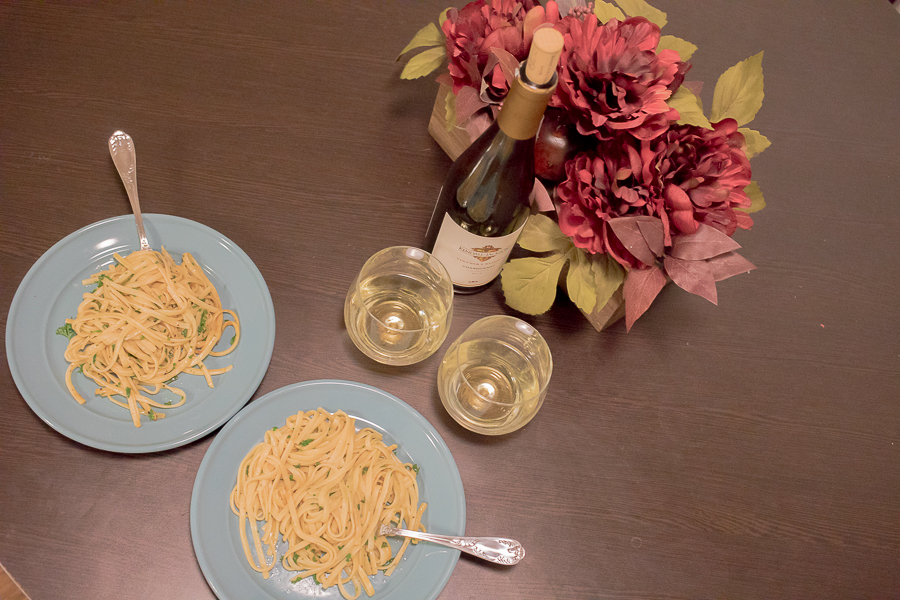
A Valentine’s Day Meal

Whether attached at the hip or partnerless, this meal leads to the impossible: Valentine’s Day enjoyment.

That’s right, Valentine’s Day is just around the corner once again. For some, this Hallmark holiday is a time to lament the lack of a relationship, and yet for those in relationships, it can prove to be just as vexing to try and meet the expectations of your partner. Either way, it seems we can’t win — but what we can do is make a potentially troublesome evening into a fun and delicious one. Here is a four-course dinner to rescue your lonely night or, better yet, wow your lover.

To begin we have Tuna Tartare. Tartare, ceviche, carpaccio, whatever you want to call it, this dish has all the elements of an incredible Valentine’s Day meal. Not only is it tasty, but it’s also elegant and easy. There’s no cooking involved in this dish, just high quantities of lime juice. The acidity of the lime “cooks” the raw tuna, creating a stunning texture and unforgettable taste. Martha Rose Shulman’s New York Times recipe covers all the bases, and all that’s left for you to do is toast some thin slices of baguette and pile the bread crisps high with the tartare as you start your evening with a bang.

After the tartare, we have David Lebovitz’s Winter Salad. Topped with pecans, pears and gorgonzola cheese, this recipe is unsurprisingly perfect for the winter season. Toasting the pecans provides a satisfying crunch and a smoky-sweet aftertaste, which is nicely followed by the salty blue cheese and sweet pears. Needless to say, this simple salad will take your tastebuds on a pleasing roller coaster that neither you nor your partner will soon forget.

For the all-important main course, it has to be something delicious and unforgettable. Ribeye easily meets this criteria. This incredible cut of meat has plenty of sought-after fat marbling as well as an incredible texture when cooked rare or medium rare. With ribeye being on the pricier side, any steak can be used for the entrée. However, if you really want to spoil your Valentine, this cut is for you. Mark Bittman’s sauces in this recipe are optional — and in my opinion, overkill. But what you should be serving with this steak is a nice bottle of red wine. That will have your night headed toward perfection.

With the main course behind you, your night is winding down and your belly is full of delicious food and drink — what could possibly make this dinner better?

Chocolate. Chocolate Mousse to be exact. It is Valentine’s day after all, and there aren’t many foods on this earth sexier than chocolate. Not only is it an aphrodisiac, but it’s simply delectable as well. If you pull this out of your hat, then you’ve truly won the evening. Layered with air bubbles, Matty Matheson’s velvety recipe is surprisingly easy to whip up and sure to impress. With this exclamation point on your evening, you can be assured that you won’t dread another Valentine’s Day ever again. In fact, you just might begin to relish them.


Written by: Rowan O’Connell-Gates — arts@theaggie.org