58.7 F
Davis

Davis, California

Sunday, December 21, 2025
Home Blog Page 558

Police Logs

NICKI PADAR / AGGIE

What a week

Jan. 13

“Subjects broke reporting party’s porchlight.”

“Intoxicated male knocking on doors in common area.”


Jan. 14

“Male was trying to get in at the front door, now appears to be passed out.”

“Arriving home to find the front door unlocked, required unit to check interior, unknown if roommate home — not getting a response.”
“Complaint of tent set up in the middle of the bike tunnel.”


Jan. 15

“Female who is being discharged trying to fight staff in the ER.”


Jan. 16

“Fenceline next to business, subjects starting a campfire.”


Jan. 17

“Dog in parking lot — large in size and intimidating.”

“Aggressive solicitor — demanded money from the reporting party, stated it was for his family.”


Jan. 18

“East training room — movement and whistling heard in background.”

“Reporting party here to turn in bow and arrows.”


Jan. 19

“Male wearing red ski mask driving slowly through the neighborhood.”

“Transient male currently in the laundry room — unknown what he is doing in there — reporting party advised ongoing problem and requested officer advise subject to move along.”

“Large pile of nails in the roadway.”

 

A First-Timer’s Guide to Philz Coffee

ZOË REINHARDT / AGGIE

What to Expect at Davis’ Newest Coffee Spot

Calling all caffeine connoisseurs — Philz Coffee has finally made its way into downtown Davis. Having begun as a local coffee brand of the Bay Area, Philz has recently gathered great success in Davis as many students have not had the unique Philz experience before. Founded by Phil Jaber, Philz is dedicated to the craft of coffee, with each cup tailored to meet the tastes and desires of the customer. So the question is this: How does this NorCal cult favorite fare against the well-established stores already embedded in the coffee culture of downtown Davis? For all the Philz first-timers out there, here’s what to expect.

The Experience

Upon walking into Philz for the first time, customers are immediately welcomed by the attentive staff behind the counter. And unlike most coffee shops, patrons order their drink and food prior to paying it for it.

Depending on the time of day, Philz can get busy, as the shop has quickly garnered a significant level of popularity around town. On a Thursday morning, with nearly every table occupied and a sizable line to order, an employee walked around the shop handing out stickers to customers, thanking them for their patience. But beyond the stellar customer service, the shop also offers a spunky and eclectic vibe with lots of windows, tons of open space and available room to study.

“When I heard that Philz was coming to Davis, I was insanely hyped,” said Pareesa Darafshi, a third-year international relations major. “Everyone that works there is always so nice, and I think Davis needs a positive study space like that.”

The Coffee

When it comes to coffee, Philz takes it “one cup at a time” — literally. Each barista carefully crafts a personal blend of flavors in each cup according to the customer’s desired tastes. Although this made-to-order style sometimes results in a longer wait, many of Philz’s dedicated customers savor the unique freshness behind a non-espresso cup of coffee.

In addition to its unique selection of light, medium and dark coffee blends, Philz baristas also allow for personal customization of any drink. The Philz drink menu offers teas and a few specialty drinks, both hot and iced. A popular favorite is the Mint Mojito, a sweet and creamy iced coffee garnished with tons of mint leaves.

“I was loyal to the Mint Mojito for years, but I’ve recently switched to Philtered Soul because it has the perfect hazelnut flavor that never gets old,” said Sarah Jensen, a long-time Philz customer and fourth-year sociology and economics double major.

The Food

One of the most unique aspects of Philz as a coffee shop has to be its brunch-style menu of snacks. Rather than the typical array of muffins, croissants, bagels and pre-made lunches found at most coffee shops, Philz food items are made-to-order, just like their drinks.

“Philz offers foods other than baked goods, like their toasts and energy bowls, which I’d rather eat when I do work there,” said Farah Sevareid, a first-year genetics major.

From avocado toast to cream cheese bagels, the diverse menu offers something for every craving. For those looking for something more sweet rather than savory, a popular choice would be the almond butter and banana toast topped with honey and sea salt.


Written by: Sydney Odman — arts@theaggie.org

Super Bowl 2018 Snacks

KYLA ROUNDS / AGGIE

Unconventional food choices sure to score on your Super Bowl Sunday

This coming Sunday, Feb. 4, is the National Football League’s final Sunday of the year. Super Bowl LII, for those of us in need of a review on Roman numerals, is the 52nd big game. And while the athletes participating likely have dietary restrictions, the audience does not. Super Bowl parties are a time to crack open a cold one and pair it with exceedingly unhealthy and delicious food. I’m going to show you how to kick your snack choices up a notch with easy alternatives to the classics.

First up we have Spanish ham croquettes or croquetas de jamón, a food so greasy and delicious it’s hard to believe it has yet to become a favorite among sporting event snacks. Croquettes are adored throughout Europe, but this recipe from The Spruce is made in the Spanish style. Fried bechamel logs dotted with chunks of ham or bacon, these treats will replace mozzarella sticks as your guests’ new favorite fried sports snack. These tapas are heavy by themselves, so be sure you have plenty of beverages handy.

Next we have rillettes, specifically salmon rillettes. Traditionally, they are made by cooking meat in large quantities of fat. Generally, the meat of choice is pork; after cooking, the fat and meat combination is allowed to cool, and you are left with a harmony of fat and meat that is spreadable on crackers and bread at room temperature. While it may sound strange, France is famous for it, and it’s one of the more delicious things the country has offered cuisine. Salmon rillettes, or any fish rillettes for that matter, are a small departure from that process. The fish is cooked separately from the fat, and the fat is generally not animal fat. In David Lebovitz’s adapted recipe from Susan Loomis, butter and olive oil serve as a bonding agent. And while the process is quite different, the result is just as delicious, if not more. Spread the salmon rillettes on crackers, chips, bread — you name it. After all’s said and done, you’ll have a new party snack that’s sure to please.

Next there’s nuts. To be specific, The Grill Bitch’s bar nuts. In the recipe, famed chef and entertainer Anthony Bourdain describes the origins of his former co-worker Beth Aretsky’s bar nuts. Nut mixes are a staple of the American bar scene; they can be the perfect pairing with a cocktail or even just a midday snack. Aretsky’s concoction calls for candying the nuts in a sugar and egg white mixture, after which the nuts are baked until crispy brown. Having tried the nuts myself, I can attest to Bourdain’s admission that they really are addictive.

Lastly, we have pretzels. No self-respecting, beer-filled sports party would be complete without the traditional German drinking companion. As an ode to the German pretzel fanatics, I’ve opted for Julia Moskin’s Bavarian pretzel recipe. While this snack is a bit more of an undertaking than the previous three, it’s extremely rewarding. Nothing beats fresh breads, and pretzels are no exception. Fresh out of the oven, dipped in mustard with a chilled beverage close by — that’s a Super Bowl win we can all get behind.


Written by: Rowan O’Connell-Gates — arts@theaggie.org

There’s no such thing as going off the grid

MIREYA LOPEZ / AGGIE

And if there were such a thing, it’d be bad for the environment

If you kayak up the Mokelumne River from Lodi Lake, you will pass a section near the railroad trestle which is like a village. There are tents of transients and vagrants. You will see laundry lines, bicycles and a dog tied to a tent.

Without electricity or fossil fuel vehicles, the village may appear “environmentally sustainable” — if you ignore the litter or human waste that ends up in the river. It perhaps doesn’t add to environmental problems like pollution, or so it seems.

It’s easy to fantasize about a minimal, carefree existence — one that’s good for the environment and far from the rest of the world. I’ve been guilty of this fantasy, too. In my fantasy, I live in an Ewok treehouse, far from overpriced t-shirts, mirror selfies and loud trucks. There’s a certain freedom that comes from the statement: I don’t need you, World.

I am a rock. I am an island.

But the village and similar fantasies do not provide solutions to environmental problems.

Off-the-grid communities attract environmentalists and outdoor enthusiasts with the promise of freedom and a smaller carbon footprint when, in reality, they can never really be off the grid. They only offer a fantasy, opposite to consumerism, which makes achievable environmental sustainability seem impossible.

Kathryn Schulz, writing in The New Yorker, called Henry David Thoreau’s “Walden” “a fantasy about escaping the entanglements and responsibilities of living among other people.”

“Walden Pond in 1845 was scarcely more off the grid, relative to contemporaneous society, than Prospect Park is today,” Schulz said. “Thoreau could stroll from his cabin to his family home, in Concord, in twenty minutes […] He made that walk several times a week, lured by his mother’s cookies or the chance to dine with friends.”

I felt similarly skeptical when I read a recent story about a community of people in Wildroots, North Carolina. The off-the-gridders in Wildroots strive to live off the land and without technology as much as possible. But they haven’t abandoned modern civilization completely.

“To live without technology can be freeing, but it also is isolating. Once a week, several group members take a truck into a nearby town to use the computers at a public library to email family or read the news,” said Daniel Stone, senior editor for National Geographic magazine. “[Wildroots] now has a website and welcomes visitors.”

Wildroots calls the community a “‘work in progress” since they “are still to an extent dependent on the system, in many ways.”

Going off the grid does not just make people seem like hypocrites. It’s bad for the environment because it allows people to neglect the real problems that they’ve already contributed to. It’s the equivalent of starting a fire and walking away because the flames are too irritating, and the screaming people, who seem too concerned about saving their own skin to even notice you, act really annoying when they’re on fire.

Going off the grid does nothing to help the people who are left behind. It doesn’t stop big problems like global warming or modern slavery.

More importantly, going off the grid discourages ordinary people from choosing to live sustainably. I’ve heard frightened skeptics complain about the composting toilets in tiny houses, and I can imagine that it takes a special type of person to survive off of stew made from deer eyes — like the members of Wildroots.

I like the idea of living with balance. I like the idea of taking responsibility for the mess we’ve created and trying to make things better.

“Learning to honor the wild […] means striving for critical self-consciousness in all of our actions,” said William Cronon, an environmental historian. “It means never imagining that we can flee into a mythical wilderness to escape history and the obligation to take responsibility for our own actions that history inescapably entails.”

I used electricity to write this article on my laptop, but maybe after college I can invest in solar panels and give back to the grid. I can’t influence everyone to recycle their yogurt containers or believe in global warming, but I can do my small part. Maybe someone else can do their part, too, and together we can make progress.


Written by: Jess Driver — jmdriver@ucdavis.edu

Disclaimer: The views and opinions expressed by individual columnists belong to the columnists alone and do not necessarily indicate the views and opinions held by The California Aggie.

Humor: Ted Cruz spotted at UC Davis eating baby’s back ribs

A nonfiction autobiographical noir piece

A keen observer smelled the scent of barbecue. Noting that there’s no good barbecue in Davis except for maybe Dickie’s, which is always out of everything, that keen observer knew something was up. They approached the quad and maneuvered through burning crosses, making their way past the chubby squirrels burying nuts in the dessicated corpses of students who couldn’t make it past week two. Some religious man off to the side told the observer that he would burn in Hell. This was Hell. This whole place was Hell. And I am that observer.

It was Jan. 19 and I had just performed some stand-up comedy in Wellman. Having been stood up by a girl named Franny the night before, I had intentionally set no plans and intended to have a fun weekend by myself. Alas, here I was, having thought I’d escaped the wrath of the university, only to find myself in the same shithole I’d been in for the past four years.

The campus was well lit, as it always is at night. Despite being known as the green beacon of progressive eco-friendliness, they leave all the lights on all f—ing night. They’re like the personification of a fearful child who’s afraid of the dark. Are they trying to prevent students from being hurt? A good way to not get hurt is to not stay out past your bedtime, chumps.   

Here I was. 9 p.m. Leaving Wellman and heading back to my 1999 Ford Escort that was stowed away in the parking garage. I vividly remembered bitching about the outrageous parking permit prices and how the real criminals are often those with acronyms for names. Someone told me that I should be more appreciative and that I’m lucky I even have a car. I told them that I inherited that car from my dead grandma, and that, quite frankly, I would have preferred having a grandma. You don’t often hear about Used Grandma Salesmen.

My nose, which notoriously can’t smell anything unless it’s terrible, picked up the scent of barbecue. Nearby. On the quad. I had just noticed the 74 different burning crosses that formed some sort of emblem. I used my tunnel vision to get a bird’s eye view and look down from above the quad: It was either the Aries symbol or a crude representation of a uterus.

Being an Aries, I naturally walked towards the quad. Of my own volition, of course. Corpses everywhere. A strange figure dancing robotically, silhouetted by the smoke of a crudely designed fire pit. Freshmen on skewers being roasted in the center. I can’t say I wasn’t intrigued.

“Have you ever heard of a self-fulfilling prophecy?” the strange figure in the center asked inquisitively, as he danced on the corpses of scorpios, virgos and tauruses. He turned slowly, raising his head up after taking a bite of baby’s back ribs. It was a fully naked Ted Cruz, covered in barbecue sauce and infant guts. I had just come face to face with the Zodiac Killer.

To be continued…


Written by: Drew Hanson — andhanson@ucdavis.edu

(This article is humor and/or satire, and its content is purely fictional. The story and the names of “sources” are fictionalized.)

UC Davis Coaches Show

0

Men’s, women’s basketball, gymnastics join broadcast at Woodstock’s Pizza

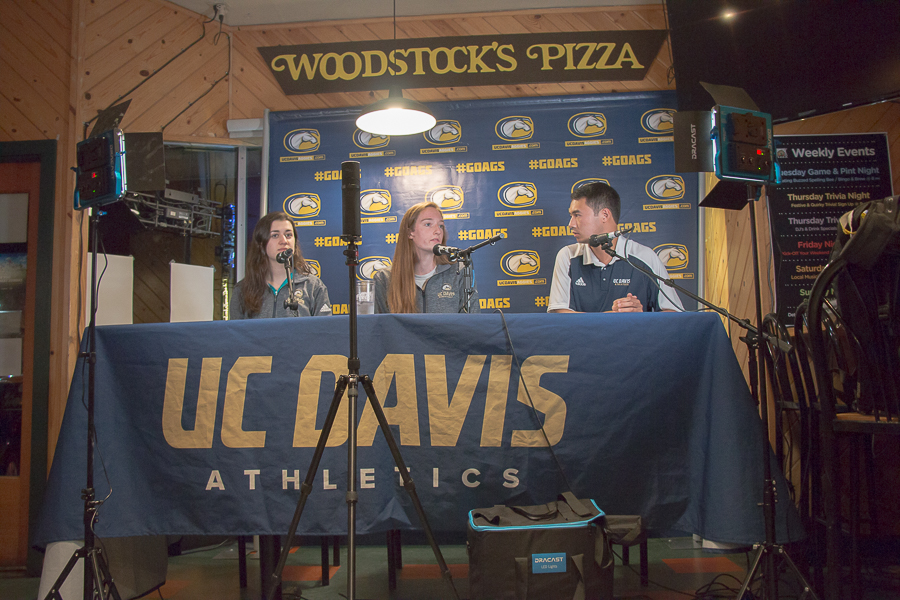
In its first installment of 2018, the UC Davis Coaches Show was hosted at the ever-popular downtown eatery Woodstock’s Pizza, where fans and members of the athletics community gathered last Tuesday evening to satisfy their cravings for pizza and for UC Davis sports.

This fun and insightful talk show is held regularly throughout each athletic season and features commentary from the university’s many student-athletes and coaches. This month’s show –– which was streamed live via the UC Davis Athletics Facebook page –– was broadcasted last Tuesday night amidst a jovial and familial atmosphere. Host Greg Wong sat down with members of the men’s basketball, women’s basketball and gymnastics teams.


Men’s Basketball

Entering last Tuesday’s broadcast, the UC Davis men’s basketball team stood at 12-7 overall –– including 3-2 in conference –– and were fresh off an unsuccessful trip to the Hawai’ian islands where the team fell to the Hawai’i Rainbow Wahine 77-72. The first guest of the evening was Head Coach Jim Les, who expressed his thoughts about how his team is faring in his seventh season at the helm.

Les believes that there is “great parity” in the Big West Conference, with several teams suffering one or two losses and no single team dominating the competition. The Aggies share a two-loss conference record with three other Big West teams, which means that they are hitting a crucial point in their regular season schedule. With the potential to either pull ahead or fall flat in the standings, Les said that it was imperative for the team to keep “the integrity of our practices.”

“I feel like we haven’t scratched the surface in terms of our potential,” Les said during the show. “And that’s our goal, come late February and March, is to be playing our best basketball. I think this team, with their continued work ethic, is going to get there and be a force to be reckoned with.”

For now, the Aggies must work on battling through a tough pool of conference teams that are all out to play their best basketball against the defending conference champions. Les admitted that the Aggies are “getting everybody’s best shot,” which has translated into the team getting off to some slow starts in several games, especially on the road. If this UC Davis team wants to solidify a high seed going into the Big West tournament, it will have to learn to match the intensity of teams when playing away from the Pavilion.

Within the friendly confines of the Aggies’ home building, however, the Aggies have rarely stumbled. In fact, the team has rattled off 19 straight wins at the Pavilion, where the Aggies seem to play with a noticeably elevated level of aggressiveness. Even in games where the team has struggled, Les praised the fans for always bringing energy and enthusiasm that has given the Aggies the confidence to succeed. And speaking of Les’ players, junior guard TJ Shorts and junior forward AJ John joined the broadcast later in the evening and gave their opinions about the formidable win streak.

“It’s a different level of intensity,” Shorts said in the show. As the starting point guard who leads the team in assists and steals, Shorts also noted that the squad takes pride in defending the home court and making sure it gives each opposing team a “tough 40 minutes.”

“We don’t lose in those white jerseys,” John said. At his forward position, John plays key minutes for the Aggies off the bench and is second only to starting forward Chima Moneke in rebounds and blocks.

The home win streak certainly adds even more hype to this season of Aggie basketball. With a deep and talented roster committed to playing gritty defense and using its athleticism to its advantage, the Aggies are hoping that they end the season on par with their high expectations.

So far since the show, the Aggies have delivered. As mentioned earlier, the program’s home winning streak was stretched to 19 games when UC Davis ground out a victory against Cal State Northridge last Thursday night and then blew by Cal Poly on Saturday. With a 5-2 conference record, the Aggie men are now tied for second in the Big West.


Women’s Basketball

The Aggie women, meanwhile, have a streak of their own. Head Coach Jennifer Gross’ team has not lost a single one of its seven conference games this season. The team has been on a tear, sporting a 17-3 overall record and averaging just under 74 points per game. Gross joined the broadcast and shared her observations on what has been a successful season to this point.

Even with all of the victories, Gross acknowledged that the scores of several of the conference games have been close down the stretch –– “dog fight[s],” as she called them in the broadcast. But with a team chock-full of veteran standouts, Gross retains a sense of calm knowing how poised and confident her squad is compared to most. And much like the men’s team, the women’s program is just as proud of its ability to defend.

“I’ve coached a lot of teams that get energy from [the] offense,” Gross said. “But this group has really bought into the defensive gameplan. We go into each game and we know, no matter what, we can always rely on our defense to get stops.”

Thanks to Gross’ system and defensive anchors like junior forward Morgan Bertsch, this Aggie team leads the conference in defensive field goal percentage and points allowed per game. Bertsch is the team leader in blocks and points per game, a dual-threat ballplayer who can get the job done on both sides of the floor. Bertsch, along with senior teammate Dani Nafekh, also made an appearance on the show.

“We’ve had such a culture at this program of family,” Bertsch said during the show. “This team as a whole has really accepted [that]. And that’s going to help us be really successful this year.”

Nafekh shared a similar feeling, expanding on the idea of family by highlighting how much “fun the team has together” and how that closeness off the court shows up in the form of being unselfish offensively. Nafekh, who is tied for the team lead in assists this season, certainly knows how to share the ball.

At the time of the broadcast, the men’s and women’s basketball teams were both set to compete on Saturday in a double-header game night at the Pavilion. Gross was reminded of the double-header games she used to participate in back in her playing days. One thing that has not changed since then: each UC Davis athletics team shows up to cheer each other on, like one big family.

Following last Tuesday’s show, the Aggie women took care of business at home last Wednesday night against Cal State Fullerton, and again on Saturday against a tough UC Santa Barbara outfit. These two additional wins have extended the Aggies’ undefeated streak to seven conference wins on the year, placing them in first place atop the Big West standings.


Gymnastics

The final two guests of the broadcast belonged to the UC Davis gymnastics team: Head Coach John Lavallee and senior gymnast Amanda Presswood. Aggie gymnastics is coming off a pair of impressive performances in the team’s first meets of the season. In the Norcal Classic at Stanford on Jan. 8, the Aggies amassed a program record highest point total in a season-opening meet with a score of 194.400. The team followed up the historic start with a dual meet victory over Seattle Pacific University just four days later.

“We knew going into this season that we had a really talented team,” Lavallee explained during the show. “They showed up at Stanford, especially when you consider the fact that over half the spots in the lineup were freshman. That was really an amazing performance for them in their first meet.”

The youth of this team is indeed extraordinary; out of 18 roster spots, seven are true freshman and another three are redshirt freshman. On a team with so much inexperience at the college level, Lavallee praised his team’s senior leaders, like Presswood, who have helped the new faces acclimate to the team. Presswood explained that before graduating from high school, gymnast primarily compete individually. Once those athletes make it to a college program they often have to get used to the team environment.

“My very first college meet, I was first up on floor,” Presswood recalled during the program. “I fell […] I was so nervous. But after that I learned from it in the gym and feel what it felt like to be in a college meet and I’ve been fine ever since.”

Since that first meet, Presswood has shone as one of the best competitors on the squad. She is one of the best in the league in the floor routine and has been named an All-Mountain Pacific Sports Federation athlete twice, including first team honors in 2016.

As for Lavallee, he has been the head coach of the UC Davis gymnastics program for 12 seasons and is a six-time MPSF coach of the year honoree. Originally from the East Coast, Lavallee akins his journey to finding a coaching job at UC Davis to winning the lottery.

“I don’t have a job,” Lavallee chuckled to the host.

He considers his work as a coach something he is very lucky to do, especially when he has the opportunity to coach athletes who excel in all parts of life.

Looking ahead this season, the Aggie gymnastics team will host its next three meets in the Pavilion. The first of these was a meet against West Virginia and the University of Illinois at Chicago on Friday, where the special assistant coach for that evening was UC Davis football Head Coach Dan Hawkins. UC Davis placed second in the meet behind West Virginia and ahead of UIC with an overall score of 194.200.

Looking ahead, the Aggies will have home meets on each of the next two Fridays, including a meet tomorrow night against San Jose State and Seattle Pacific starting at 7 p.m. Lavallee, Presswood and the entire team encourage everyone to come out to any one of the competitions to take part in the fun and positive atmosphere.


Written by: Dominic Faria — sports@theaggie.org

Administrative panel held on Jan. 22 to discuss community issues

UC DAVIS STRATEGIC COMMUNICATIONS / COURTESY

Panel featured Chancellor, Provost, Vice Chancellor of Student Affairs

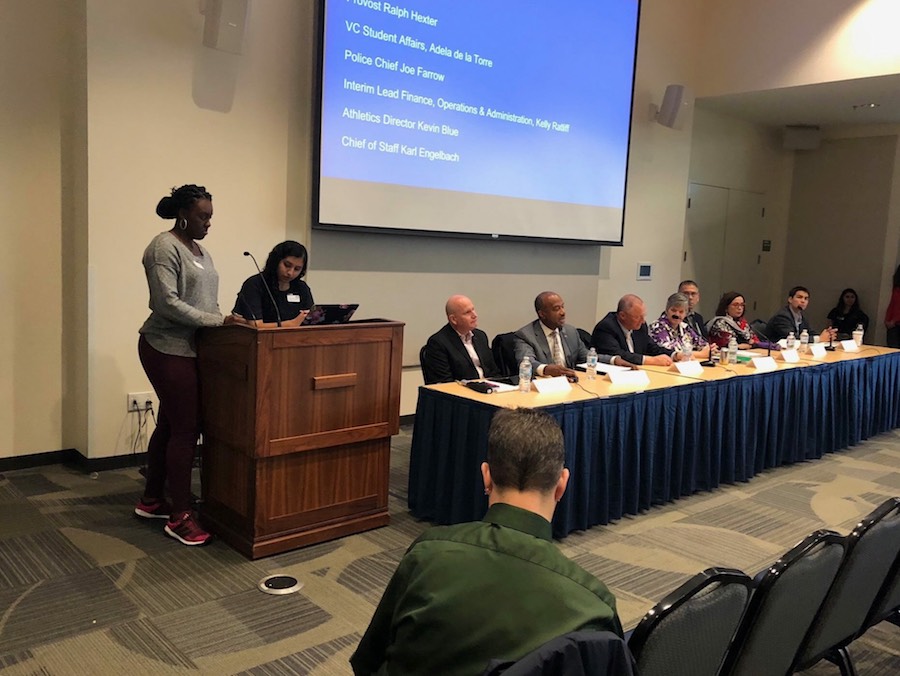
On Jan. 22, an administrative panel was held in the Multipurpose Room of the Student Community Center. The panel, titled “Building Bridges,” was an effort to bring about constructive dialogue and speak about campuswide concerns.

Panelists included Chancellor Gary May, Provost Ralph Hexter, Vice Chancellor of Student Affairs Adela de la Torre, Police Chief Joe Farrow, Interim Lead of Finance, Operations and Administration Kelly Ratliff, Athletics Director Kevin Blue and Chief of Staff Karl Engelbach.

Members of the community were given the chance to ask the panelists questions by raising their hands, passing questions up on index cards or emailing questions to sac@ucdavis.edu.

One of the first questions asked was on the issue of investment in student entrepreneurship and employment. The panelists responded that, in addition to the Student Internship and Career Center, the school has permanent funds of up to $100,000 for students to develop projects. There are also various clubs on campus for entrepreneurship.

The next question, asked to Blue, inquired about the progress on an earlier promise to increase the number of female athletic participation opportunities. Blue responded that there is a campus group working to advance the analysis process.

Next, a concerned audience member brought up that a large percent of students skip meals because of the high cost of housing and education and asked the panelists what the school can do to help.

De la Torre brought up the UC Davis Food Pantry, which has consistently worked to address food insecurity on campus. In addition, the school has been helping students get enrolled in CalFresh, partnering with student housing to provide student meals and involved with the UCOP Global Health Initiative.

Another audience member asked about the housing crisis currently facing Davis.

“[There is] a lot of progress currently made in Orchard Park and West Village for affordable houses,” Ratliff said. “We are moving forward with over 5,000 beds in that project.”

The next question was in regard to the “It’s Okay to Be White” posters found on campus last year.

According to Farrow, the university took the issue very seriously and had conducted an in-depth investigation. They learned that these messages had been around since 2001 and were intentionally put up in universities to get a reaction.

“It is important not to give provocateurs what they want,” May said. “Let’s not overreact.”

One of the last questions asked was about how to reduce class size, as the school plans to admit more students. Hexter replied that the school also plans to hire more faculty.

“Growth in students will slowly plateau as we continue to grow faculty,” Hexter said. “The goal is to return to the original student-to-faculty ratio.”


Written by: Clara Zhao — campus@theaggie.org


Davis Chorale receives Harmony in Our Lives Award

ALLYSON KO / AGGIE

Davis Chorale awarded for musical contribution to Davis community

The Davis School Arts Foundation presented the Harmony in Our Lives Award to the Davis Chorale on Jan. 20. The award recognizes contribution to musical enrichment in the Davis community.

The Davis Chorale celebrates its 40th anniversary this year and hopes that the award — as well as the anniversary — will enable it to gain a larger audience and connect with the community even more.

What we’re looking to do is to build a connection with the audience and with people who are looking for a connection with music that they might not have on a daily basis,” said Alison Skinner, the artistic director of the Davis Chorale. “We’re trying to do much more concerts in the community in different places, including public spaces and senior living spaces. We get a lot of feedback that people who are listening to those concerts really appreciate them.”

Skinner also voiced her excitement in winning the Harmony of Our Lives Award in light of the vocal prestige that accompanies it. According to Skinner, the list of previous winners of the award includes every major music teacher in town, many of whom she looked up to growing up due to “their profound impact on the lives of many people in the community.”

Lorraine Visher, the president of the Davis School Arts Foundation, explained that the main objective of the award is to recognize someone who’s made a lasting contribution to the Davis music community. The Davis Chorale fit all the criteria.

“The Davis Chorale received many, many nominations — more than any other group,” Visher said. “Not only do they do their own concerts, but they work with other groups and reach more people and offer more, making the music reach out even further.”

Groups that the Chorale has collaborated with include the UC Davis Chorus and Symphony, the Applegate Dance Studio, the Davis Children’s Chorale, the Camellia Symphony in Sacramento and the Davis Community Church.

“They’ve brought joy to an even larger portion of the community,” Visher said. “They’re a group that went from being very small to being a group with 80 members, and they’re in their 40th year. They bring people from all different places and different levels of music experience and create something wonderful for everyone in our community.”

Alice Provost, the choir manager of the Davis Chorale, explained her personal experience in the group and how she has witnessed their contribution to the community.

I love singing in the chorale,” Provost said. “It brings all sorts of people together. There’s different ages, including people who have been there all 40 years and younger people who come in and just want to create beautiful music. We’re involved in multiple levels, from the Children’s Chorale to local musicians. We bring all different levels of music from a community that we get to work with.”

The Davis Chorale looks forward to expanding its audience and being able to connect with even more people through its music.

“There’s this thing about singing as a way of expressing emotions or experiences everyone has,” Skinner said. “One of the things about singing that is so great compared to other artistic formats is that you get text. And text just on its own has meaning, but when you put it together with a composer’s idea of how to express it, it becomes really powerful.”

The Harmony Award brings attention to the importance of music in the community, as Visher explained, since she believes the power of music can both heal and unite people.

“Music can be such a healing source for children and adults, helping us to calm ourselves and feel less alone and feel more joy,” Visher said. “It’s a universal language that people understand the world over and brings us closer together and builds bridges with other people — which is something we need badly in the world right now — so it’s very, very important.”


Written By: Hadya Amin — city@theaggie.org

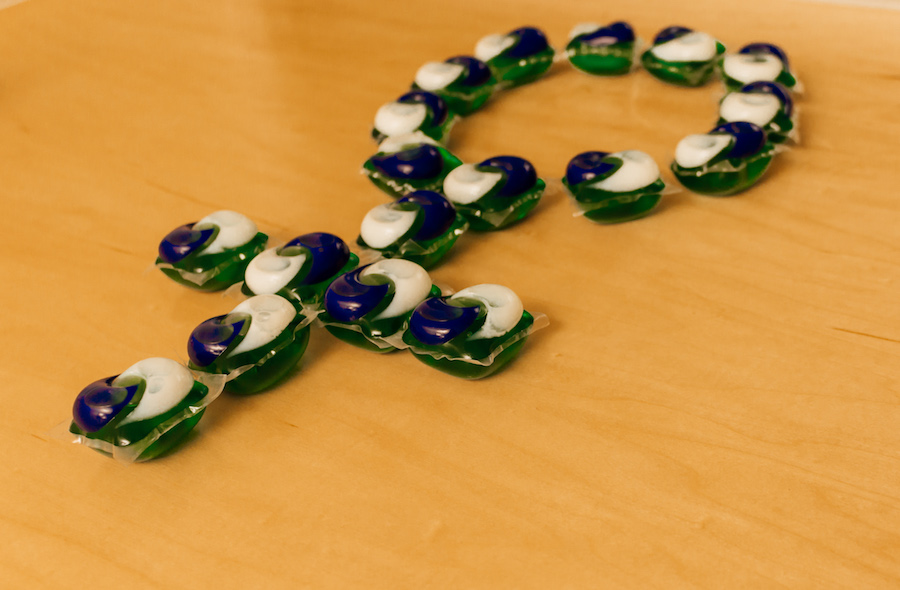
Humor: Is eating Tide Pods the new feminism?

DANIELLE MOFFAT / COURTESY

Spoiler: Yes

With the new craze of eating Tide Pods storming social media, a lot of people have been wondering what it all means. Is it just a meme? Is it a symbol? The answer to both of those is “no” because, as it turns out, eating Tide Pods is actually a movement for millennials. In fact, eating Tide Pods is eerily similar to one particular movement that women just can’t stop talking about for some reason: feminism.

So The California Aggie was curious and decided to ask the question that so many serious reporting media are afraid to ask: Could eating Tide Pods be the new feminism?

We compiled a comprehensive list of the similarities to find out.

Women don’t do laundry thanks to feminism, and neither do people who eat Tide Pods

As it turns out, feminists don’t do laundry because they feel it’s a sign that the patriarchy is oppressing them, and people who eat Tide Pods don’t do laundry because they do not want to waste their snack. It is for this reason that feminists always have dirty, unwashed clothes and that they will never find a husband. Clearly, eating Tide Pods must be the new feminism.

Eating Tide Pods will cause death, and so will being a feminist

Everybody knows that all feminists eventually have to part with this world, and so do people who eat Tide Pods. Both kinds of people die for equally respectable lifelong pursuits. Eating Tide Pods, however, involves demeaning fewer men.

Eating tide pods is an innocent phase, just like feminism

As we all know, feminism is just a phase. Similarly, eating Tide Pods is just a phase, because after trying it once you either die or are bleeding so much internally that you can never try it again. So, they’re basically the same thing.

Through our in-depth research, The Aggie proudly supports the notion that there are no differences between feminism and eating Tide Pods. Both capture mass appeal from millennials for the strong causes they support. So whether you die a Tide Pod eater or a feminist, you’re sure to wow your friends with your martyr status! So go on, eat a Tide Pod and throw feminism to the wind!


Written by: Lara Loptman — lrloptman@ucdavis.edu

(This article is humor and/or satire, and its content is purely fictional. The story and the names of “sources” are fictionalized.)

Starting from Square One

0
CHRISTIE NEO / AGGIE

Chancellor May takes first steps in creating tech hub for UC Davis

To kick off 2018, Chancellor Gary May welcomed the UC Davis community back with an email that listed some novel initiatives he had in store for the new year. One of these initiatives was to create a new technology and innovation hub called Aggie Square in Sacramento for UC Davis undergraduates.

“Aggie Square is an initiative to develop what I would call a live, learn, work, play innovation ecosystem that partners UC Davis with the City of Sacramento,” May said. “[It has] the purpose of innovating, taking our research from the laboratory to the marketplace and having our students have opportunities for internships, to do research, to start companies — and having the corporate partners be involved in hiring students of course.”

This idea is not entirely novel in its origin, however. It has been inspired by similar initiatives such as Technology Square at the Georgia Institute of Technology.

“So when I was at Georgia Tech […] in the early 2000’s we had a similar initiative which was called Technology Square,” May said. “They acquired some property that was not a part of the original University land, in an area that was very undeveloped — [someone] could have bought any service or substance you like in this area.”

The success of Technology Square has skyrocketed in recent years, with prominent companies like Mercedes-Benz moving to Atlanta, Georgia and transforming the local economy. The Aggie Square initiative was proposed with these same goals in mind. Sacramento could diversify its economy and add many more dimensions beyond its role as California’s capital city.

“The city and the region is looking to grow,” said Sacramento Mayor Darrell Steinberg, a UC Davis alumnus. “Our partnership [with UC Davis] will not only be a great thing for the University because it will connect the university to this aspiration of a growing region, but it will be great for the city and the region because we should take advantage of one of the leading universities in the country.”

Not only is Aggie Square meant to expand the region’s economy, but it’s also meant to serve as an access point to urban culture. Ideas for the building blocks of the tech hub include creating space for innovative companies, developing affordable housing, restaurants and entertainment centers, and even hotels and shopping centers.

“The thought is that young people — not all — but many young people want to be in urban environments, have a chance to socialize with each other,” May said. “And [also] have this live, learn, work, play [environment], this small geographic area. You can think of adding to that retail outlets and opportunities for the arts, and all those sorts of things in a walkable area.”

Mark Romney, the director of Research Development and Industry Alliances at UC Davis Health, is part of a working group established by May. He is working to help scout out potential academic programs along with research and translational activities to bring to Aggie Square. He is also working to identify other logistical needs for the facility, such as locations, business partnerships and transportation necessities.

“Everything I’m working on has the goal of bringing Aggie Square to life,” Romney said. “What began as a UC Davis Health initiative to build a two-million square-foot research park on the Sacramento Campus to meet the increasing needs of industry and potential partners has blossomed into Aggie Square. Thanks to the vision of Chancellor May, Aggie Square is becoming more than just a health system project near UC Davis Medical Center. It could involve every school and college on the Davis campus, including university training programs and the arts.”

To realize the fruition of this vision, May emphasized the importance of the undergraduate experience — Aggie Square will be most successful when that population of students gets on board with the idea of living in this type of urban environment and having access to possible internships and mentorships.

In addition, Mayor Steinberg sees Aggie Square as a viable opportunity to retain UC Davis graduates in the Sacramento area.

“The idea though, for me, is to create pathways for our UC Davis students to be able to make their lives in Sacramento,” Steinberg said. “Too many grads from UCD leave the area and we want to keep [them] in this area, and to do that we need more high wage job opportunities for Davis graduates. It’s also about a synergy [and giving] students as many real world employment experiences as possible even before they graduate.”

As part of the early stages of the initiative process, May and Steinberg have formed a bilateral working group made up of people from UC Davis and the mayor’s office. The committee has been tasked with three main goals: location, funding and transportation.

The first step is to find the best location for this hub, and then comes the challenge of transportation between the two cities. Ideas have rolled around about sustainable modes of transportation like a light rail, electric shuttles or autonomous vehicles, but nothing has been decided upon. May suspects the biggest challenge to this initiative will be the financing aspect, which will most likely be made up of public and private funds.

The first deadline for the working group is April 1, when a report with potential possibilities and recommendations will be submitted. What will follow will be an effort to gather student input.

“When we get to the point where we’re making decisions, we need the faculty Senate, we need student input, we need business input,” May said. “It makes no sense for me to say ‘charge’ and go by myself if nobody wants to go with me.”

The idea overall has been gaining a lot of traction, and the team is looking forward to involving the undergraduates that the initiative is being created for by seeking their input and feedback once the preliminary reports are established.

Last year, I might have said we were building a ‘health-focused’ academic hub,” Romney said. “Today, the opportunities and potential envisioned by Aggie Square are only limited by the breadth of UC Davis academics. In other words, it’s limitless!”

May and Steinberg reflected a similar attitude of excitement toward the milestone, and want to bring it to life as soon as possible.

Chancellor May and I have both sent the same message, which is we want this to happen and we want this to happen as quickly as possible,” Steinberg said. “We want to deliver something in calendar year 2018.”


Written by: Sahiti Vemula and Marlys Jeane — features@theaggie.org

Museum Education Interns in the Learning by Leading Program speak out

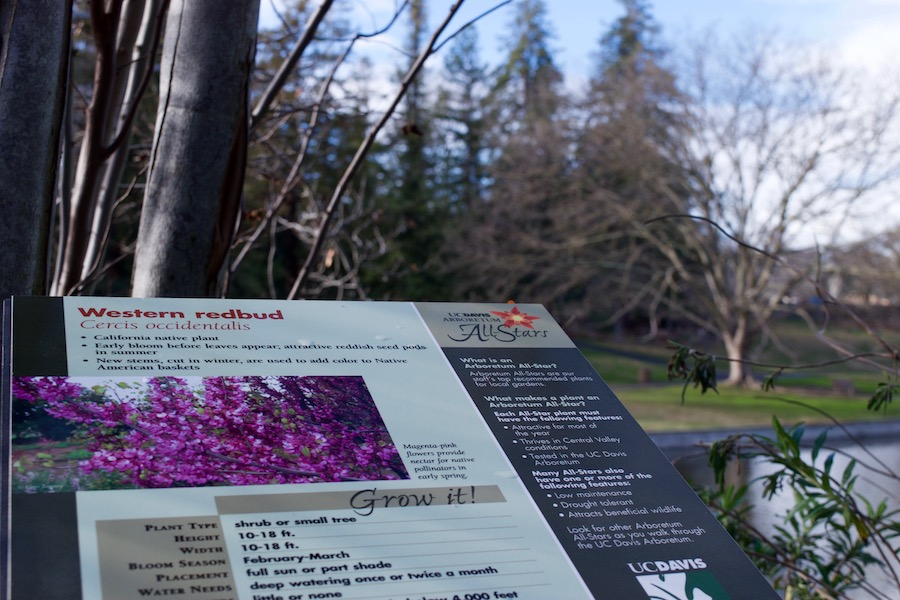
Updated Arboretum signage educates visitors. (ALEXA FONTANILLA / AGGIE)

Signage, interpretive exhibits and engagement

The Arboretum and Public Garden hosts 100 interns each year. If this figure sounds big, the Museum Education Learning by Leading team has a lot to share on the matter. The Arboretum and Public Garden are essential pieces of the UC Davis campus, and their staff members are an essential piece of the UC Davis community. Beginning in the fall of this academic year, the Museum Education Internship program began working to cultivate team spirit and create educational signage.

“The idea really came about because my job at the Arboretum is to interpret our collection for the public,” said Maya Makker, the Museum Education and Interpretative manager for the Arboretum and Public Garden.

Makker oversees all of the current Museum Education interns and is their go-to resource for inspiration and guidance. She explained that the Arboretum and Public Garden hosts regular events for the public, but recognized the need for educational engagement between those events.

“That’s why they work on educational signage, because their objective is to bring attention to the stories that would otherwise go unnoticed,” Makker said.

Exposing the rich history and stories that undergird the Arboretum and Public Garden is one imperative of the Museum Education team. However, the team also worries about addressing the needs of very regular subscribers.

“There are people who walk the Arboretum everyday and have been for 30 years,” Makker said. “My goal with these signs is to really invigorate the space for those people. I think what’s really exciting about these projects that my students are working on is that they’re creating an opportunity for visitor engagement for visitors that are very, very regular. Rarely does a regular museum have the same person come in everyday. But because our museum is changing […] I wanted to create that educational connection.”

The changes to which Makker alludes are unique to the space that the Arboretum and Public Garden inhabits. Being an outdoor, environmental museum, visitors enter at disparate locations and may not see the extent of the collections which are sometimes in flux. Thus, the current Museum Education interns are working to create temporary signage to address more temporal issues and to engage visitors who may have seen the permanent signs innumerable times. They are hoping to make the ever-changing beauty of the natural world so present in the Arboretum and Public Garden accessible to the public of all ages.

“What I believe is, a museum can spark something in someone that they never would have had the chance to see in themselves,” Makker said. “Our team’s goal is to take this content that may seem like it’s not relevant to their lives and make it accessible to them.”

Makker’s interns speak passionately about the potential of the public connecting with the space, but also about the unique opportunities this internship, situated within the Learning by Leading program, has provided to them.

“We’ve only been together as a team for one quarter,” said Ryan Gooch, a fourth-year international agricultural development major and a Museum Education Internship co-coordinator. “So we had those 10 weeks to start from being complete strangers who had never done anything involving signage ever, and now we’re kind of a coherent team that does things together and accomplishes tasks, and that’s kind of amazing.”

Gooch, along with Ella Groff, a third-year sustainable environmental design major, are the co-coordinators, and thus a peer leaders to the other Museum Education interns. He and Groff divide and direct the groups on their signage projects. Gooch recognizes how special it is to be a leader within a brand new project.

“We really have to rely on our own experiences being leaders in other places in our lives and bring it here,” Gooch said. “Whereas other people can draw directly on how their other internships have been lead in the past […] it’s a challenge but it also opens it up to the creativity portion. We’re not changing anything, we’re just doing it the way we want to do it.”

Groff notes the unique challenges that the Arboretum and Public Garden provide that speak to her personally.

“What I like to think about is the social sustainability of the Arboretum because for it to keep getting funding, for all these projects to be done, people need to come there,” Groff said. “With the signs we’re hoping to have everyone learn something when they come to the Arboretum.”

The Museum Education Internship gives students the opportunity to address real-world concerns in a professional setting and with professional capacities. Makker aims to give interns the skills to succeed in museum education jobs in their professional lives. The Arboretum and Public Garden itself offers a fertile location upon which students can learn about its history and its biology. Museum Education intern in the Learning by Leading program Anne Brunetto put words to the pertinent nature of her position.

The education about how to be a better educator and how to best make things available to the public is applicable anywhere,” Brunetto said. “It just creates this really positive space where […] there are a lot of opportunities for you to take charge with something.”

To recognize the hard work of the Arboretum and Public Garden’s many staff members and employees as well as to enjoy its biological diversity, Gooch and Groff recommend “Walk with Warren.” Warren is the superintendent emeritus of the Arboretum and Public Garden. His monthly tours allow the layperson a glimpse into the environmental wonder that is at once a permanent and changing feature of the Arboretum and Public Gardens.

Gooch and Groff also encourage students and community members to stop by the Arboretum Headquarters at Valley Oak Cottage, get a map and try to walk the whole stretch. Once there, visitors can see the student intern spotlights which acknowledge the hard work of students on the space, as well as the signage on the waterway. In the works are interactive experiences around the pollinator exhibits in the spring.

For those students interested in more than a visit, Makker nods toward the “ladder of engagement” which allows students to work as volunteers, interns or staff members with the Arboretum and Public Gardens. Those interested can look to the Learning by Leading page for opportunities.

Gooch and Groff, if through their enthusiastic words alone, merit increased attention to the internship programs and the rich history of the Arboretum and Public Garden.

Everytime I’m there, I appreciate being able to work there more and more,” Groff said. “When you meet the people who work at the Arboretum, and they all know so much, and you start to learn about the history of how it was created […] it’s just an amazing history that you have to appreciate.”

Gooch implores people to find out what the Arboretum and Public Garden is for them, because there is something for everyone.

“The Arboretum is something different for everybody, so you just need to go find out what it is for you,” Gooch said. “For one person it can be a wealth of botany and plant science, and for another person it can just be a place to meditate and enjoy nature.”


Written by: Stella Sappington — features@theaggie.org

When solitary creatures are social

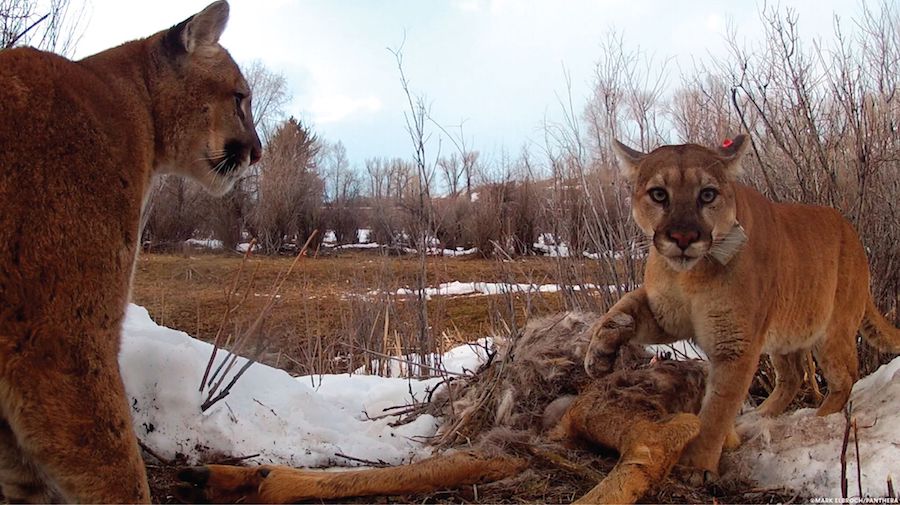
Collared female mountain lion and uncollared male mountain lion share food. (MARK ELBROCH / COURTESY)

Mountain lions have more complex social relationships than previously thought

Mountain lions have been known to be solitary creatures. Aside from a mother raising her young cubs, these big cats do not interact unless they want to mate or fight. However, this common knowledge may not be true at all.

Pumas, cougars and mountain lions are all the same species: Puma concolor. Known for their ability to take down large prey, mountain lions tend to not show themselves around humans. New technology has made this elusive cat easier to study, and mountain lions have a lot to show us.

A combination of GPS collars, motion triggered cameras, blood samples and analysis shows that mountain lions tolerate and share food with each other. Even more surprising, mountain lions usually share their kills with unrelated mountain lions.

“This is the first evidence of sociability in what people thought were solitary animals,” said Mark Lubell, a professor in the Department of Environmental Science and Policy at UC Davis.

Although never having worked with mountain lions before, Lubell co-authored a paper about mountain lions’ complex social lives. He advised on what data to get, looked at videos and analyzed patterns made by the mountain lions.

“I did the boring part,” Lubell said.

His analysis proves that, in the population of mountain lions studied in Wyoming, the interactions that the big cats made were not random.

Dr. Mark Elbroch, a lead scientist at Panthera, an organization dedicated to studying and protecting big cats, did most of the field work.

“He’s the Indiana Jones of field biology,” Lubell said.

To gather data, Elbroch would watch mountain lions with GPS collars on his laptop. When one would stay in the same area for four hours, Elbroch would go and investigate. If he found a kill site, an area where a mountain lion was eating its freshly killed prey, Elbroch would set up a motion-triggered camera.

In 2008, he first had the ability to visit a kill site while the mountain lions were still there. The advance in technology, especially GPS collars, allowed him to track the animals in real time. The cats would slip away while Elbroch set up the cameras, then return as soon as he left.

“They [mountain lions] want nothing to do with you,” Elbroch said, “I’m terrified of bobcats. Mountain lions don’t care.”

Elbroch’s initial study was concerned with how much mountain lions were eating and how much scavengers were mooching off the big cats. These cameras showed up to 39 different species feeding off mountain lions kills.

“I started to see things that didn’t make sense,” Elbroch said.

Mountain lions were not supposed to be social, but Elbroch kept seeing GPS-tracked mountain lions in close proximity. Even more shocking, he saw a video of two unrelated males sharing food. This started the study about mountain lions having social relationships.

To determine if mountain lions typically share food with their relatives, blood samples were taken at the beginning of the study while Elbroch collared the mountain lions. Dr. Anthony Caragiulo, the assistant director of Genomic Operations of Sackler Institute, then ran genetic tests on the blood samples.

Kinship, or relatedness between mountain lion individuals, could not explain the food-sharing habits. Female mountain lions were more likely to tolerate other mountain lions, while males seemed to benefit more from the interactions.

“There are other things we probably couldn’t measure,” Caragiulo said. “This was with resources we could measure.”

For future research, Lubell and Elbroch want to explore other mountain lion populations. Although a total of 16 mountain lions were collared, an estimated 85 percent of the population in that area, mountain lions usually live in more densely populated areas. To see if meal sharing is widespread, more studies need to be done with mountain lions.

“It’s doesn’t surprise me there is some sort of cooperation,” Caragiulo said. “It wouldn’t surprise me if it was found with other animals thought to be solitary.”


Written by: Rachel Paul — science@theaggie.org

Editor’s note: An earlier version of this article misstated that the name of the lead scientist and Panthera was Mark Elboch. It is Mark Elbroch. The article has been updated to reflect this correction. 

Review of the Darkest Hour

CAITLYN SAMPLEY / AGGIE

A WWII drama worth watching

It feels like every year births another high-stakes WWII drama. Given to us this year was Joe Wright’s “The Darkest Hour,” the simple question remaining: Is it worth watching? I’m arguing yes, it is, but depending on the motive for seeing the film. If I watched for historical purposes: yes, the movie deals with many of the hurdles leading to Operation Dynamo. If I watched for acting purposes: absolutely, based off Oldman’s performance I’d argue Churchill still lives, reprising his career as prime minister in this film. For flashy entertainment? No. The biggest fault of “The Darkest Hour” lies in its shot length.

Focusing first on the largest positive: Gary Oldman. Gary Oldman is an actor who rarely disappoints, with stunning performances in critically acclaimed films like “Tinker Tailor Soldier Spy.” Such expertise carries into “The Darkest Hour” and can be seen in his fine-tuning of even the smallest details, like how Churchill smokes his cigar. The commitment to mime even the minute details is testimony to Oldman’s extensive work on character, which pays off by assisting his outstanding performance.  

The largest misstep of “The Darkest Hour” is in the length of certain shots. For example, there are two shots of crowded British streets, bustling with cars and people. The shot is taken, both times, from Churchill’s car window view. The purpose of the shot is quite clear, achieving two things. Firstly, they humanize Churchill’s decisions. Made for the British, Churchill’s decisions are made for the everyday people of Britain, yet the people aren’t seen in Churchill’s war room. These shots show exactly what he aims to protect: the people.

Secondly, they humanize Churchill. In his war room, where much of the film occurs, Churchill deals constantly with humans represented as numbers, and this makes his difficult decisions, that put thousands at peril, come across as cold. The extended shot on the British people is meant to reflect Churchill’s powerful emotions towards his people, proven by his constant stare out the window. His contemplation of the status of the people is reflected by the time he views them from his car. Since thoughts cannot be filmed, they are implied through action.

These shots, while effective in what they wish to accomplish, are two examples of shots that end up beating a dead horse. The point has been made, so now move along. Yet the movie doesn’t, choosing to instead linger on the British people for an extra 10 or 20 seconds. While 10 to 20 seconds may not sound like anything to squabble over, these two shots are not the only ones that make “The Darkest Hour” drag along. They riddle the film with extended periods of dead space — unneeded time not beneficial to the plot or main characters. These shots of “dead space” clog the motion of plot, which makes the movie feel long. Relatively speaking, “The Darkest Hour” is not extremely long; two hours and five minutes rings off as a watchable length. The clogging effect that the “dead space” shots plague on the plot, drag what could be a shorter movie onto an unfair length. The story that wished to be told could have been done much more economically, had the long overdrawn shots been trimmed, expediting the journey to resolution.

Despite the dragging sensation, “The Darkest Hour” truly is one of 2017’s best films. Gary Oldman expertly tackles the challenge of playing such a prominent and decisive figure from recent history. Oldman may stand out as the film’s gem, yet the film is not shy of other merits. It also boasts impressive cosmetics (Oldman’s makeup proves such) and an enjoyable script as illuminated in Churchill’s sense of humor. Whether you watch this because it’s Oscar-nominated or because you wish for a historical drama, “The Darkest Hour” will prove to be an engrossing capture of Britain’s WWII political turmoil.


Written by: Nicolas Rago — arts@theaggie.org

What it takes to land on mars

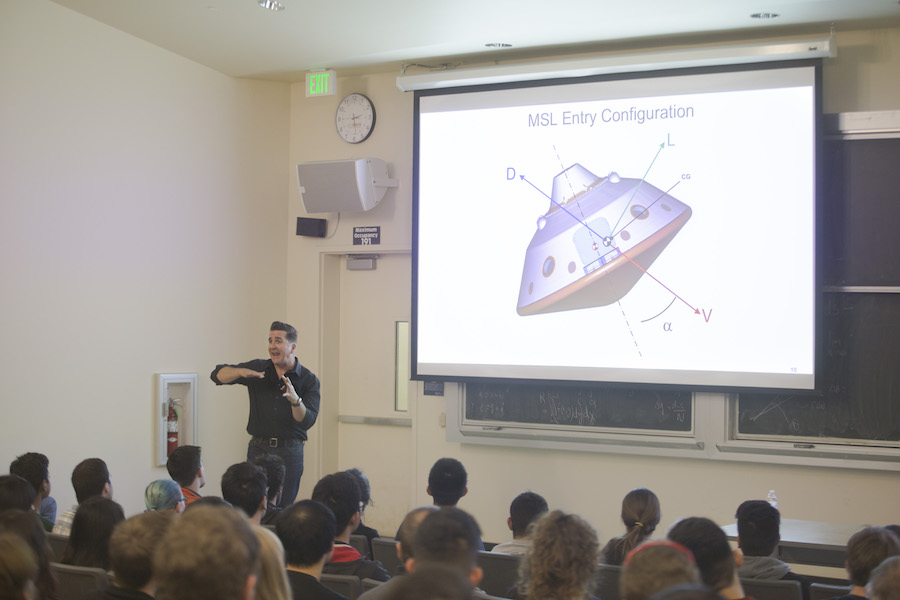
Aggie alumnus Adam Steltzer recounts story of the 2012 Mars mission and touches on plans for the upcoming 2020 mission. (DIANA LI / AGGIE)

UC Davis alumnus, Chief Engineer for the Mars 2020 mission, speaks to Aggies about what it takes to land on surface of another planet.

Over 185 undergraduates and professors gathered last week to hear Dr. Adam Stelztner, the chief engineer of the upcoming Mars 2020 mission, describe what it takes to make it to Mars. He spoke at a distinguished alumni seminar hosted by UC Davis’ College of Engineering. Steltzner was introduced by former astronaut Stephen K. Robinson, who serves as professor and chair of the Department of Mechanical and Aerospace Engineering at UC Davis.

Steltzner and his team invented a groundbreaking landing system called “the sky crane” that allowed the successful landing of Curiosity, the Mars 2012 rover.

“It was the right kind of crazy,” Steltzner said.

Steltzner is a proud Aggie alumnus. He received his bachelor’s degree in mechanical engineering in 1990 and later his master’s degree in applied mechanics at Caltech, topping it off with a Ph.D. in engineering physics at the University of Wisconsin, Madison. Steltzner was honored with the College of Engineering’s Distinguished Engineering Alumni Medal award and is now the chief engineer for the Mars 2020 mission at NASA’s Jet Propulsion Lab. More specifically, Steltzner leads the Entry, Descent, and Landing team for the Mars rovers.  

The sight of the Orion Constellation over San Francisco’s Golden Gate Bridge captivated Steltzner’s imagination at age 21.

“It took that spark of curiosity in the night sky […] and it turned into a fire of exploration,” Steltzner said.  

The Mars 2012 mission was sent to answer the question: Was ancient-wet Mars habitable?

“The answer is yes,” Steltzner said. “Three billion years ago, when life was just starting here on Earth, the conditions to support life were on the surface of Mars.”  

Curiosity landed on the surface of Mars on August 5, 2012 at 10:32 p.m. PDT. The entry, descent and landing process lasts a total of seven minutes –– from the top of the atmosphere to the planet’s surface. And it takes 14 minutes for the signal from the spacecraft to reach Earth. This seven-minute difference is known as the “Seven Minutes of Terror.” Steltzner spent eight-and-a-half years of his life on this project, and it all came down to those seven minutes.  

Entry. When the spacecraft enters the atmosphere, the heat shield glows like a plummeting asteroid traveling at 13,327 miles per hour at a temperature of 1,300ºF –– conditions that can melt or even vaporize most materials. In fact, the heat shield is intentionally shed after penetrating the planet’s atmosphere. The atmosphere of Mars is 100 times thinner than Earth’s and actually changes in density as a function of the planet’s seasons. This adds another layer of complexity to entry.  

Descent. Using the largest and strongest supersonic parachute known to man, the spacecraft decelerates to approximately 1,000 miles per hour upon initial drop. From 30 million miles away, the descent was carefully guided by Steltzner’s team, ensuring the rover would land safely on a flat terrain.

Landing. Touchdown engineering was one of the hardest challenges Steltzer’s team faced and took many years to develop a proper plan because the 2012 Curiosity rover is about the size of a Mini Cooper.

“Landing a rover like that, is a pain in the butt. She’s just so big,” Steltzner said.  

Previous Mars missions used an airbag technique to land the rovers. But the airbag approach would not sustain the Curiosity’s 900 kilograms. A new approach needed to be made. Steltzner and his team developed NASA’s first “soft landing” technique called “the sky crane maneuver.” Once the parachute is detached, steerable thrusters from the spacecraft finalize the descent and direct the vehicle toward flat terrain. It hovers 21 feet above the Martian surface before releasing Curiosity onto suspension ropes like a marionette.

“We considered [the sky crane] the least unacceptable solution,” Steltzner said.

The touchdown speed was less than 1/1,000,000 of 1 percent of the speed the spacecraft entered the atmosphere. Within seven minutes, the landing was a success. Curiosity determined that the conditions to support life on Mars did exist at some time, but there is still more to explore.   

In the upcoming 2020 mission, also led by Steltzner, NASA will gather tangible samples from the planet’s surface, place them in orbit, and bring them back to Earth.

“The Mars 2020 mission is a science fiction come true,” Robinson said.

The first portion of this mission will launch in — you guessed it — 2020.

“I’ve found since that, if I can keep my own curiosity alive, and if I can engender it with the people I work with, we can do better things together,” Steltzner said.  

UC Davis Aggies walked away from the seminar full of inspiration. Dorian Crutcher, a fifth-year mechanical engineering major said, “I learned that in order to grow as an engineer I have to take risks and continue to aspire to do things that haven’t been done.”


Written by: David Madey — science@theaggie.org

Editor’s note: An earlier version of this story stated that the name of the chief engineer of the upcoming Mars 2020 mission was Adam Steltzer. It is Adam Steltzner. The article has been updated to reflect this change.

Humor: “Since when were there so many women?” says man suddenly overwhelmed by women speaking

PUBLIC DOMAIN

I had no idea there were so many women

Dear Editor-In-Chief of The California Aggie,

I have one simple question for the folks who run your paper: Where did all of these women come from all of a sudden? I mean in the most literal sense. I had no idea there were more women than my mom, my sister and Stacy from my feminist studies class.

I’m not totally convinced that all the women speaking out in this latest far-fetched attempt to get “rights” actually have legitimate problems. Women can vote, right? The Civil Rights Act was passed in 1964. So what are we worried about? I for one am a bleeding-heart liberal, but I can’t wrap my mind around all these women coming out and making things up about men. What if the stories are wrong? What if there is a single story that may or may not be made up and is total doo-doo? And by doo-doo, I mean poo-poo, and if your story is poo-poo, I’m NOT listening!

My solution for all of this odd hearsay is to instead make every single woman and every single man who may have problems with one another play a game of squash, and we will believe whoever wins. This is because of the ancient laws of the Squash god, a 500-foot tall gender-nonconforming vegetable who happens to have a beloved sport named after them, and who also has a particular affinity for Backwoods and chilling with the boys on Saturday nights. If the woman really was telling the truth, then I’m sure she’d fight her hardest in a game of squash to prove she was honest and to protect her honor.

As someone who cares very deeply about progressive issues, I will donate my millions I’ve made as an actor to the right causes. (Lord knows I’ve donated millions to the only other public woman I’ve ever heard of, Hillary Clinton.) But come on guys, we gotta be careful about the way in which we approach this issue, because more likely these are men in disguise pretending to be women who are trying to get advancement in the world through illicit means. Remember, no poo-poo. We only want the true-true.

Sincerely,

George C. Clueney


Written by: Aaron Levins  — adlevins@ucdavis.edu

(This article is humor and/or satire, and its content is purely fictional. The story and the names of “sources” are fictionalized.)