
57 F
Davis

Davis, California

Monday, December 22, 2025
Home Blog Page 559

Questioning the banality of Trump’s Russia investigation

RYAN J REILLY [(CC BY 2.0)] / FLICKR
Interesting stories are out there — but this process isn’t one of them

If there’s one question that perfectly condensed the presidency of Donald Trump into a nutshell, it would be this: why? Head-scratching blunders, including the infamous “covfefe” tweet, are mixed with more pressing concerns like name-calling that increasingly erode the president’s credibility.

In the American open forum, we have a duty to ask why things are happening. For example, why would Trump tag members of his political consortium with names — including Sloppy Steve, Lyin’ Ted and Little Marco — recalling the worst days of middle school recess?

Rough-around-the-edges behavior is normal for Trump. So is the endless microscoping of his public and private life in the White House, which leads to another question:

Why is the Russia investigation still dominating our news cycle a year and some change after Donald Trump won the election?

Questions about Russian hacking, trolling and covert communications with Trump’s campaign team are as normal as burned tongues from McDonald’s coffee, and that’s saying something. The Russia investigation dominates talking points from the morning paper to the nightly debating circuit with Anderson Cooper. Hard to miss, no?

It’s also one of the most boring news topics in vogue. After school shootings, women’s marches, false missile alerts, immigration fights, government shutdowns and scandals over alleged affairs with porn stars, a slow-moving investigation about election meddling just won’t tickle the feet the same way.

The overall importance of this investigation should not be questioned. A foreign power attempted to interfere with the sanctity of American elections by a joint campaign of social media trolling and email hacking. Members of a presidential campaign repeatedly lied about contact with this foreign power, demonstrating contempt for the law and raising suspicions that there may be more than just an isolated Russia in play.

In the annals of history, the Russia investigation will attain the relevance of Watergate. The similarities are obvious — two presidents with a mean streak, a tendency to insult and lie, all culminating with coverups and illegal acts. Policy considerations based on Russia’s actions and Trump’s denials should remain at the forefront of conversation for a long time.

But the process is a snoozefest. The updates are incremental. Sometimes they falter in the spotlight of “information overload.” Amid every other scandal or poor decision by Mr. Trump, coverage of the Russia investigation adopts the mantle of an antique clock. Serviceable for now, and even interesting to look at from time to time, but its real value as a sellable antique will only be apparent later. The Russia investigation, additionally, suffers from a case of “too much boring Trump news” in the company of his flashier — and more entertaining — flaws.

Occasionally there are interesting developments. Michael Flynn’s resignation after a historically short three weeks as Trump’s national security advisor set off a chaotic White House staffing frenzy, replete with hirings and firings to the tune of “The Apprentice.”

James Comey’s sacking was certainly juicy, especially given the former FBI director’s role in Hillary Clinton’s trumped-up email fiasco. The legal hiccups involving Paul Manafort and George Papadopoulos, both former Trump campaign advisors, demonstrated to any impartial observer the depths presidential teams will go to gain an election advantage. (Indeed, Nixon may have company after all.)

If you actually thought ABC News anchor George Stephanopoulos pled guilty to charges of lying to the FBI about contacts with the Russians, don’t feel embarrassed. Wolf Blitzer over at CNN did too. In any case, it may have proven one of the more interesting parts of the Russia investigation. It’s almost a pity. Almost.


Written by: Nick Irvin — ntirvin@ucdavis.edu

Disclaimer: The views and opinions expressed by individual columnists belong to the columnists alone and do not necessarily indicate the views and opinions held by The California Aggie.
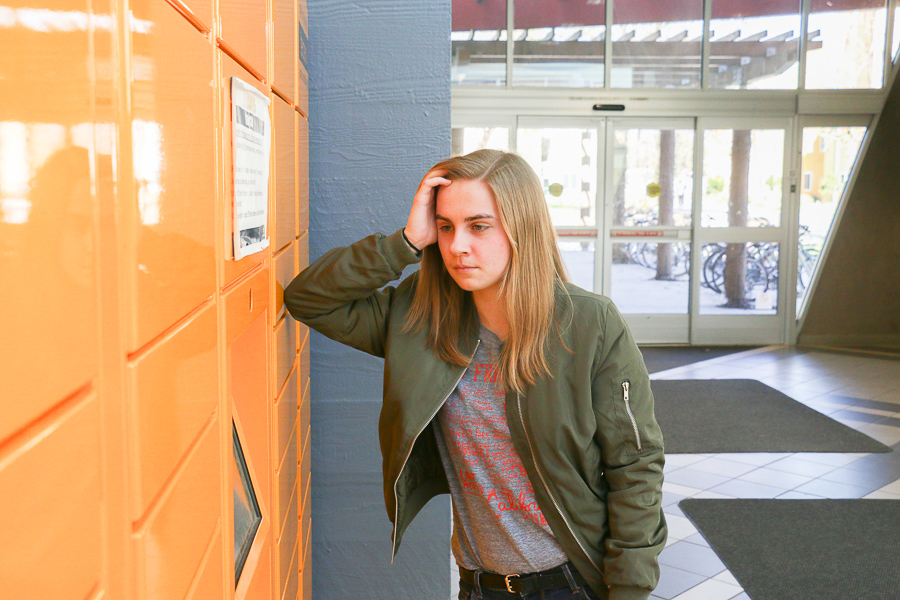
Humor: The hardest establishments to give up after you’ve decided you’re anti-establishment

MARINA OLNEY / AGGIE

You’re going to want to cut up your Starbucks gold member card after this one

I’m guessing by now you’ve probably learned about the dangers of capitalism, as I myself learned about briefly when I momentarily stopped online shopping at Urban Outfitters in class to listen to what my professor actually had to say. This recent education probably sent you down a spiral of confusion and conflict in which you realized you’ve been a conspicuous consumer your entire life. The solution to this? Stop contributing to this pattern of blatant exploitation and give up on your favorite establishments because they gave up on you a long time ago. So without further ado, I bring you the hardest establishments to give up after you’ve decided you’re anti-establishment.

The first establishment that I urge you to veer away from (as hard as it may be) is reusable water bottles. Most common folk might try to tell you that they are helping the environment with these products, failing to recognize that their Hydroflask or Nalgene is simply another brand that they’ve been coerced into supporting under the false pretenses of “helping the environment.” Please, if they wanted to help the environment they would be drinking out of a bowl that they made from earth clay.

It’s recently become a lot easier to forget your attachment to your Apple products being that they’ve already begun to slowly self-destruct. My thoughts? Tim Cook is actually on our side and is so disgusted by Apple that he has decided to sabotage the company from the inside in the name of liberating us from our devices.

Here’s something they don’t tell you (who’s “they?” I don’t know): Flavored coffee drinks were invented for the sole purpose of taking your money. I know, crazy right? And I will let you in on a little secret — it’s even worse at those small independent coffee shops that charge more because they aren’t owned by a corporation and sometimes even support fair trade (what’s an establishment again?). So honestly just keep doing what you’re doing and blow thousands of dollars a year on Starbucks, because at least your vanilla latte will get you through your day.

It’s hard to be conscious and aware when everything around you is just a different type of product placement ad from some corporation that’s too large for you to even understand how much they own. So the best you can do is say no to the things that are probably the best for you and give into this rampant consumerist culture.


Written by: Rosie Schwarz — rschwarz@ucdavis.edu

(This article is humor and/or satire, and its content is purely fictional. The story and the names of “sources” are fictionalized.)

Fight the Stigma Charity Showcase

BRIANA NGO / AGGIE FILE

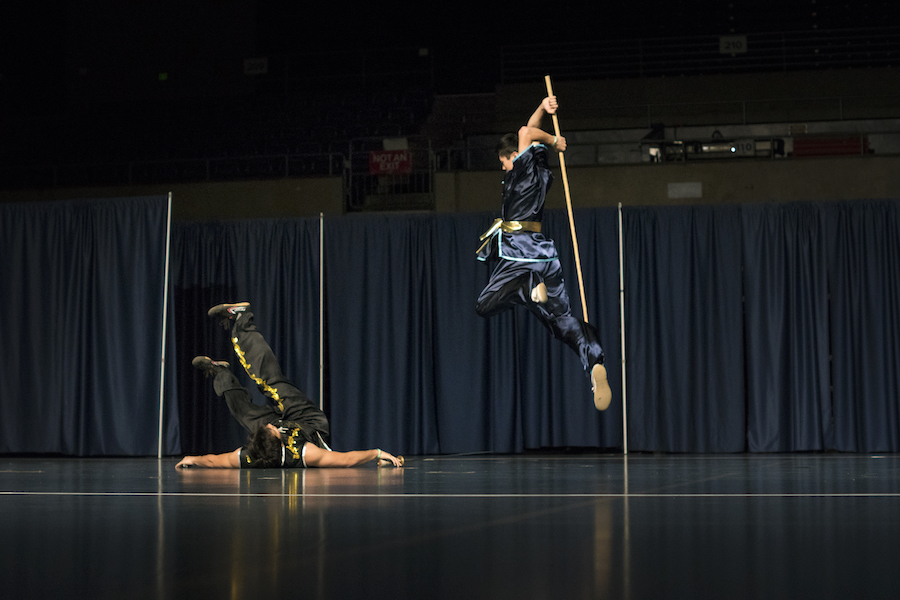
Davis Wushu hosts dance showcase to help mothers with postpartum depression

The expectation for new mothers is to be overjoyed by parenthood, but for many women, the unfortunate reality is suffering from postpartum depression. Davis Wushu, a Chinese martial arts dance group on campus, is hosting its first charity show to raise money for CONNECTED Clinic, with funds dedicated to breaking the stigma of maternity-related mental illnesses.

Emily Eijansantos, a fourth-year neurobiology, physiology, and behavior major, is currently in her third year with Wushu. She recognizes the lack of awareness surrounding mental health for pregnant and postpartum women.

“We were talking about the showcase and weren’t sure which cause we’d be doing it for, but we shared personal experiences between ourselves about women’s mental health, and it brought the topic of women’s mental health,” Eijansantos said. “I got to talk to a few moms that have experienced postpartum depression and realized that a lot of people disregard these symptoms. It’s viewed that mothers shouldn’t worry about their own mental health because they have someone else to take care of now and they should be excited.”

In fear of poor mental health becoming a reflection of bad parenting, mothers with depression and anxiety oftentimes ignore these symptoms. Wushu reached out to CONNECTED Clinic, which provides medical and psychiatric assistance for pregnant and postpartum women. There are few resources in the Sacramento area for maternal mental health, and the clinic provides education to break mental health and medication stigma.

“[CONNECTED Clinic] is a place where women can talk about their mental health but also talk about medication and actively seek help without harsh judgement, so they can become better mothers and the secure attachment they need to be for their child,” Eijansantos said.

Wushu incorporates traditional Chinese martial arts into its performances, hoping to bring the artform to light and raise further awareness on mental health after this show.

“We want to encourage more conversations about mental health that I think are really ignored, and another thing we should always try to do is expose traditional culture to people who haven’t seen it before. Sometime media portray martial arts in a way we don’t agree with, and we hope that we can bring more authenticity in our choreographs as well,” Eijansantos said.

Wushu is performing collaboratively with other campus dance groups: Davis Chinese Dance, Na Keiki ‘O Hawai’i, Unbound Dance Progression, SoNE1 and Elite Dance Company.

Zona Jin, a third-year clinical nutrition major, is participating in the showcase with Davis Chinese Dance, which won third place in the traditional category for the 2017 Davis Dance Revolution. Established in 2012, Davis Chinese Dance has taken a few years’ break and is now back and performing again. Jin believes dance is an expressive medium that can be used to reflect onto the audience.

“We’ve been putting a lot of effort into the practice, and we’re treating this performance the same way as we did with DDR. We even had someone who flew to China and brought back new costumes for the show. One of our missions is to spread the Chinese culture and to show the world how elegant Chinese dance is,” Jin said.

Recently, 27-year-old K-pop star Kim Jong-hyun, from the well-renowned group SHINee, committed suicide, raising questions on mental health in the K-pop industry. The Davis K-pop dance group SoNE1, also participating in the showcase, took the news to heart and continues to take mental health seriously with their own members.

Isabel Jones, a UC Davis linguistics alumna and the artistic director of SoNE1, which will also perform at Wushu’s event, acknowledged the importance of supporting the team’s wellbeing.

“A famous band member in the K-pop world recently committed suicide, and that left a big impact on us. We had to deal with that for a little bit and try to create a welcoming environment for everyone. While we aren’t too familiar with postpartum depression just because we aren’t mothers, we do think we can relate to anxiety, and we try to facilitate a supportive environment for the team,” Jones said.

SoNE1 has been working hard to bring in its talents, incorporating original content and breaking barriers.

“We’re becoming more a part of the Davis dance community as a recognized team, so we wanted to bring in original choreography and show what we’re able to do as opposed to the usual K-pop team dynamic and reapplying kpop music videos in our performances,” Jones said.


The showcase will be held on Feb. 3 at 9 p.m. at the Veterans Memorial Center. RSVP on the Aggie Life event page.


Written by: Becky Lee arts@theaggie.org

Posters of the 2018 Sacramento Women’s March

JESSE STESHENKO / AGGIE

Diversity of motivations, injustices reflected in art

An essential part to protests, including the recent Women’s March, is signs — many of which are artistic. The artist’s ability to deliver impactful, relevant messages in limited space where so many other posters are also trying to be considered is impressive. This bred signs to be laughed at, to be warmed by and to agree with. For those who missed it, the following is a small recap of some of those proudly raised pieces of art.

First up, second-year art studio major Thao Uyen Nguyen drew on her sign the profile of a woman with watercolor flowers on the top of her head that replaced her hair. Below the woman read, “Let equality bloom,” with the word “equality” on a multicolored ribbon and the word “bloom” in cursive. Nguyen’s talents shine through the poster, grabbing attention.

“Yeah there’s a couple that really liked it,” Nguyen said. “They come up and take pictures.”

She was inspired to do something not as politically affiliated and instead focused on creating a message that was uplifting.

“I was trying to find something that more empowered women instead of just making fun of Trump, so I searched up some Women’s March art,” Nguyen said. “I saw this one where it’s just a silhouette of a face […] and I really like flowers so from that I kinda just [did] my own thing.”

In colorful block letters, Joshua Mitchell, a marcher at the event, wrote “HATE IS NOT AN AMERICAN VALUE” and had glitter in splotches all around it with some plastic flowers and beads scattered at the bottom. He was inspired by the current presidential administration when creating his poster on a wine night with his friend, who also joined him at the march.

“We were trying to think […] what speaks to us,” Mitchell said. “‘Hate is not an American value’ — that is something I’ve been telling myself often. I feel that it [hate] is reflected a lot in the current administration, and that is why I am here to protest against hateful or bigoted policies.”

JESSE STESHENKO / AGGIE

First-year friends Chanapa Mann, a biological sciences major, and Andrea Gonzalez, a design major, bought their poster materials at the Memorial Union in preparation for their first protesting experience. Mann ended up creating a side profile of a woman in pink with the words “WOMEN’S RIGHTS ARE HUMAN RIGHTS” and the venus symbol in her hair. Gonzalez was motivated to positively twist the “Make America Great Again” slogan and decided to write “WE ARE WHAT MAKES AMERICA GREAT” in red letters on a pink background.

Denise Farinsky, an artist and former art teacher, made a two-sided poster. One side featured her own work — a black-and-white sketch of Princess Leia with the word “RESIST” layered on top of her on red paper. The other side featured a print-out by artist Shepard Fairey, which was offered for free, along with four others to choose from, to everyone participating in the march. The one Farinsky chose was of a Latina woman with a rose in her hair and the caption “WE THE PEOPLE DEFEND DIGNITY” because of Farinsky’s personal ties to the community.

“I’m a Mexican-American,” Farinsky said. “My mom’s Mexican, and I feel really strongly about all races not being discriminated against, but especially [a race] this close to my heart. I think it is ridiculous building a wall. Most recently, the father who got deported and was torn away from his family and children […] I think is horrible, so that’s why I picked this [Fairley’s art] for this side.”

As to her own display of Princess Leia, Farinsky’s inspiration stems from Carrie Fisher herself, Princess Leia representing, to her, a figure against the way Trump demeans women and makes them sexual objects.

“I always, as a young girl, thought Princess Leia was an awesome symbolic character in Star Wars because she was the first strong woman I ever saw on screen,” Farinsky said. “She’d take care of business without a guy. She didn’t need to be saved. She would tell Darth Vader what she thought. She didn’t really care.”


Written by: Cecilia Morales — arts@theaggie.org

Marching in Solidarity

Thousands gather in Sacramento at the second annual Women’s March. (RAUL MORALES / AGGIE)

UC Davis students, faculty attend Women’s March 2018 in Sacramento

On the morning of Jan. 20, though, there was a substantial change in the usually quiet weekend-morning scenery of downtown Sacramento. Seas of pink inundated the streets. An abundance of signs and posters, with quotes referencing anyone from the revolutionary Malala Yousafzai to the witty Leslie Knope, were held high in the air. Strolling through the streets of downtown Sacramento on the morning of Jan. 20 was the Women’s March.

Thousands of people joined the march toward gender equality, including many UC Davis students and faculty members. Savannah Wardle, a fourth-year anthropology major, remembered being overcome with a wave of emotions as she first arrived at the march.

“When I first arrived, we all met at a park, and it was really amazing to see so many people gathered together all in one place,” Wardle said. “The magnitude was overwhelming. […] It was just really cool to see everyone come together in solidarity. I felt really humbled and empowered.”

Wardle felt motivated to attend this year’s march because she feels that, now more than ever, it is crucial for women to empower one another in the pursuit of a common goal: to promote progress within society.

“Given the current political climate and the rise in sexual assault allegations in recent months, I feel like it’s important to show our politicians that we have voices, that we aren’t accepting the status quo and we are seeking change,” Wardle said.

Wardle believes that because she comes from a background of privilege, she must use that privilege to fight for those who have been marginalized by society.

“As a heterosexual white female, I understand that I’m marching not just for other women like me, but [for] all types of women with different sexual orientations, gender identities, race, religion, class, ability, etc.,” Wardle said. “I stand for the equality of every individual.”

Sevanna Reitter, a third-year political science major, strongly supports fighting for the equity of individuals with intersecting identities. Though Reitter did find empowerment through the march, she was slightly disappointed with the lack of inclusivity present.

“There was no mentioning of trans women or the LGBTQIA community in general,” Reitter said. “I think they tried a little bit to talk about women of color, but I don’t think it was enough.”

Reitter emphasized the need for women to stand together and fight against all inequalities imposed onto them, even ones that don’t directly pertain to them, because  according to her, feminism without intersectionality is white supremacy. Reitter believes that the feminist movement encompasses individuals from all walks of life.

“It’s important to include everyone,” Reitter said. “If you’re going to fight for yourself, you have to fight for others as well, otherwise you aren’t credible anymore. The march […] is a really good thing in itself, but I think there are [aspects] that can be improved upon.”

Negative sentiments regarding the march have also been circulating recently, with proponents arguing that many people decided to march this year only because it became a socially acceptable or “trendy” thing to do.

Francesca Iacono, a first-year gender, sexuality and women’s studies major, understands the foothold of this argument, but does not think that it is valid to discredit first-timers for attending the march.

“In a way, I do agree [with these sentiments], because something that I am very against is ‘femvertising,’ which is basically using feminism as a trend to promote capitalism or to promote product development,” Iacono said. “But at the same time, it’s not [about] if you didn’t march last year but did this year. For me personally, I really wanted to go, but I couldn’t. That doesn’t mean that my thoughts were not with the people there. And for some of the people who didn’t go [to last year’s march] but did go this year, I’m sure that’s how it worked out for them too.”

Iacono emphasized the need for individuals to educate themselves more on feminist principles so that they are truly able to understand the purpose behind attending momentous events like the Women’s March.

“There’s power in numbers, especially to the politicians that see these crowds — that’s what’s going to [stimulate] change,” Iacono said. “But I feel like a lot of the people that went weren’t educated enough to really voice their opinions because they didn’t know enough about it. I feel like the push for the ‘trend’ was more [due to] a lack of education. I’m not saying they have to read feminist theory or anything, but even just [reading] a few articles before the march would help.”


Written by: Emily Nguyen — features@theaggie.org

Developing tools for analyzing spoken vocal performance

0
MICHELLE GORE / AGGIE

NEH grant supports UC Davis humanities research

The National Endowment for the Humanities recently awarded a $75,000 Digital Humanities Advancement Grant to a project co-led by University Writing Program lecturer Marit MacArthur.

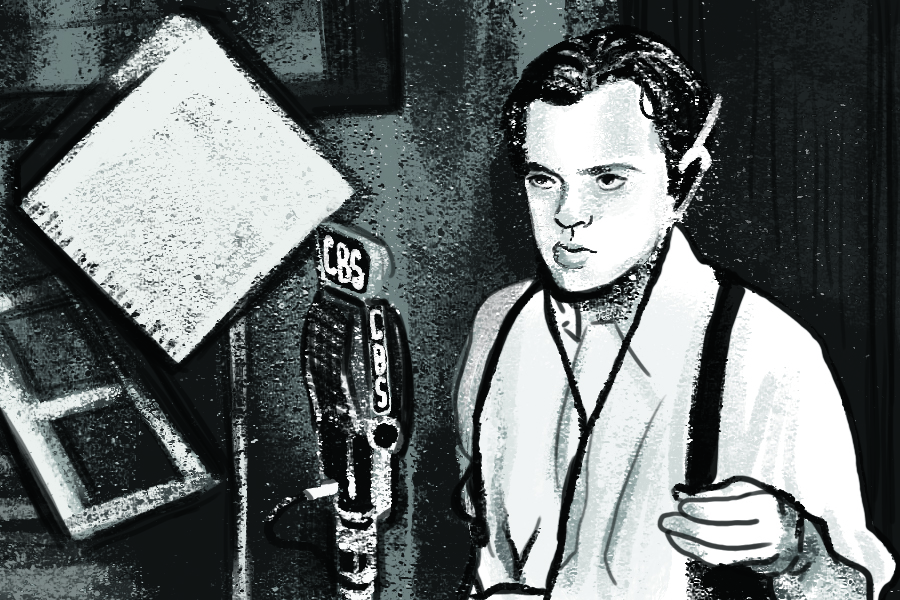
The aim of this project is to develop more advanced tools for analyzing sound recordings of spoken vocal performance, especially those by poets and the famous radio plays by Orson Welles. This research is occurring at several universities across the globe with the other co-leader, Professor Neil Verma of Northwestern University’s department of radio, television and film, focusing on Welles and MacArthur focusing on poetry readings.

“I returned to UC Davis in the 2014-15 school year on an [American Council of Learned Societies] digital innovation fellowship, so that started this current research,” MacArthur said. “I was interested in linguistic approaches to analyzing performance styles in poetry recordings so it took off from there, and then I started collaborating with other people here.”

MacArthur explained that while some of the tools have already been developed, this grant will help to make them easier to use and make their use more widespread so that the technology can be used to generate more knowledge and lead to more potential applications.

“Some of these tools I did already develop with the ACLS fellowship but not many people know about them or use them widely,” MacArthur said. “So, this grant will develop them further and disseminate them and train more humanities scholars to use them in their research on speech recordings.”

One main tool that MacArthur employs is called Gentle, which picks up on the linear aspects of someone’s speech patterns, meaning how the speed of a speaker’s rhythms and use of silence fall over a period of time.

“[Gentle] is a forced aligner that takes a media file and aligns it with a transcript so you get precise timing information, basically how quickly people are talking and how long their pauses are,” MacArthur said. “It uses speech recognition algorithms that were developed at Johns Hopkins. It’s pretty good at guessing what was said, as well, when a transcript isn’t available, and sometimes the few mistakes it makes can be very funny.”

The other main tool, Drift, also takes the horizontal aspects into account — how quickly the voice rises and falls in pitch over time.

“I use these tools to investigate performance styles because there are a lot of highly conventional ways of speaking from film, to broadcast news, to poetry readings, to stand up comedy, and we recognize them when we hear them,” MacArthur said. “But what exactly are the performers doing with their voices?”

These tools can collect many different types of data about the mathematical elements of a performer’s speech patterns, which can then be analyzed further to learn more about what certain types of speakers tend to do.

“These tools can generate a lot of data about pitch and timing, like pitch range,” MacArthur said. “A really expressive speaker might use two octaves. But pitch range alone doesn’t tell you everything. There’s also pitch speed and pitch acceleration; more expressive speakers seem to change their pitch more rapidly. Then there’s how long people pause. A really dramatic speaker might have longer pauses. Conversational speech, for instance, is typically characterized by a faster speaking rate.”

Because of how people change pitch, speed and rhythm and employ silence in unique ways while speaking, there are many similarities between how speech patterns and music can be analyzed. However, MacArthur pointed out a key difference that makes it more difficult to analyze speech.

“The tools that exist for studying the voice in music are much better and much more widely used, at least outside of linguistics,” MacArthur said. “This difference has to do with speech versus singing. When you sing, your vocal cords vibrate really regularly and it’s really easier to pick up the pitch, but in speech they vibrate irregularly and pitches are harder to track, especially in noisy, older recordings that humanists frequently want to study.”

Owen Marshall, a postdoctoral scholar of science and technology studies, is a user-tester for the project, meaning he will be testing the tools developed and providing feedback. He commented on his background studying sound and how this project’s approach differs from what he has done before.

“I study the history and sociology of sound technology, particularly technologies of the voice,” Marshall said. “For example, I’ve studied how signal processing tools like Auto-Tune changed recording engineering by making the voice legible in a new way. This project uses similar tools for pitch-time tracking but lets us apply it to archives of recorded voices instead of just analyzing them one at a time.”

Cindy Shen, an associate professor in the Department of Communication at UC Davis, is also a user-tester for this project. She also explained what she sees as a possible application of the tools.

“My academic background is in social media and games research,” Shen said. “I often use digital trace data (or ‘big data’) in my research. The tools developed might help my research on various social aspects of gaming, as we can gain more understanding of the content and context of gamer communications with each other.”

MacArthur explained how she became involved with studying sound recordings and why she finds it so fascinating to take an empirical approach to analyzing something that seems so subjective on the surface.

“I’m originally trained as a poetry scholar, and I’ve been to a ton of poetry readings,” MacArthur said. “I developed opinions about how people were reading, what was engaging and what was boring. We have a strong response to intonation patterns, apart from content. Like the voice of the Peanuts’ teacher. You can make something boring sound really interesting and make something interesting sound really boring, depending on the intonation, so I wanted to look at how we respond to the voice, musically in a way, but in speech.”


Written by: Benjamin Porter — features@theaggie.org

The 90th Academy Awards

Those I think will take home Oscars

The 90th Academy Awards are around the corner and will take place at the Dolby Theatre in the beautiful city of Hollywood, Los Angeles — as usual, hosted by a male comedian with a talk show. This year’s lineup of fantastic cinematic projects has worked up the greatest anticipation in Academy Awards history. Here are my winners for…

Best Picture: “The Shape of Water”

The big prize has never gone to a science fiction movie before. I feel that 2018 is the time. This film about loving monsters has received more nominations than any other film this Oscar season. It’s been my personal favorite. However, it’s hard to truly tell because of the amazing competition. “Call Me By Your Name” and “Phantom Thread” are also contenders to be on the lookout for across the board.

Best Actor: Daniel Day-Lewis

Allegedly, this will be Day-Lewis’ final performance on the big screen. He’s experienced immense success and received awards for his performances in the past, such as his leading role in “Lincoln.” I think it’s safe to say that his performance in “Phantom Thread” is no exception. Day-Lewis put us in awe with his character that portrays love and muse almost flawlessly.

Best Actress: Meryl Streep

The most awarded female actress in history might be adding another trophy to her collection considering her performance in “The Post.” Streep’s brilliant performance underlies the importance of the press and the role that it plays in our country. A strong female character as always, Streep stresses the importance of accountability in the face of criticism and resistance.

Best Director: Guillermo del Toro

Writer-director Del Toro put audiences at the edge of their seats in “The Shape of Water.” This is the second film that Del Toro has received nominations for, with “Pan’s Labyrinth” being the first. It is an amazing science fiction film that felt more like a drama. Del Toro’s vision for the film leaves no wonder as to why he’s a major contender this year. More often than not, the film with the most nominations wins best picture, but we will see.

Best Animated Feature Film: “Loving Vincent”

I’d like to believe this is the year Disney doesn’t win by default in this category. “Loving Vincent” is the first ever fully painted movie. It is a tribute to one of the most well-known artists of all time: Vincent van Gogh. I hope the Academy will praise the film for all that it has to offer.

Best Original Music Scores: “Dunkirk”

A suspenseful feeling of rising tension that strays from the typical war movie score, “Dunkirk” gives us an unusual mix of manufactured sounds that builds intensity for every scene. “Dunkirk” is set in the midst of WWII, but its modern score works surprisingly well.

Best Original Screenplay: “Lady Bird”

A film about coming of age and finding yourself is the perfect opportunity for a good screenplay. “Lady Bird” is heartfelt, relatable and uplifting — a great choice for the Academy. “Lady Bird” was one of the most unexpected films of the season, and this is a wonderful moment to fly above the radar.


The Academy Awards are no stranger to surprise and watching them in all their glamour and opulence is a surreal experience. The Academy Awards are scheduled to air March 4 on ABC at 5 p.m. PST — hosted by Jimmy Kimmel.


And the Oscar goes to…


Written by: Josh Madrid — arts@theaggie.org

HackDavis hosts 24-hour coding marathon

Students work through the night to get the code out. (NICHOLAS CHAN / AGGIE)

HackDavis spurs coding extravaganza to create apps for humanity

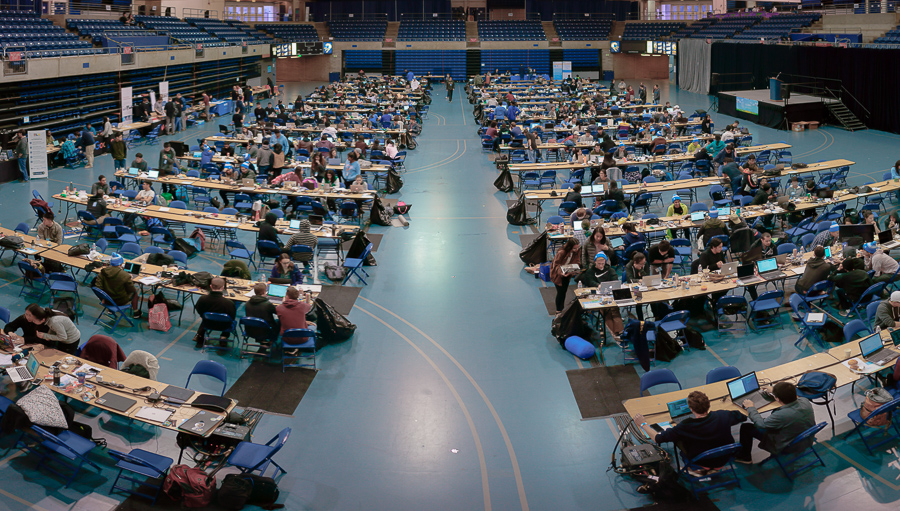
The third annual HackDavis was hosted at the UC Davis ARC Pavilion from Jan. 20 to 21. The 24-hour event gave students an opportunity to team up and create applications in three different tracks: health and wellness, environment and education.

Students and alumni from across California participated in the event.

Willy Enrique, a third-year computer engineering major from UC Davis, teamed up on the spot with Allan Huang, a second-year electrical engineering and computer science double major from UC Berkeley and formed project MatchBox.

On what he hoped to learn during HackDavis, Enrique said that he wanted “to have more experience, especially on coding and hardware and how to apply [them] for social good.”

Huang offered his insights on the collaboration.

“I am more of a backend person,” Huang said. “I don’t really know how to make things pretty. I guess this time we are going to look at some data sets and think of analyses and maybe some predictions and processes and [see] how well that goes, […because] it is all fairly new to all of us.”

Kyle O’Brien, a third-year computer science major from Santa Rosa Junior College, spoke about how creative project ideas come about during HackDavis.

“You come in with a vague idea,” O’Brien said. “My partner and I on the drive up brainstormed on what we are going to do [so] it was a bit last second.”

O’Brien’s teammate Oran Collins, a second-year computer science major from Santa Rosa Junior College, offered his thoughts on the creative process.

“I am really excited to get to fudge together a working prototype of an idea from inception, to building, to actually demo and the time pressure really pushes me and my teammates to really get stuff into gear,” Collins said. “The amount of work we do at the hackathon is enormous, and it is always a great opportunity for learning and pushing the boundaries of the developers. There is a management side [where] you have to keep the team communication to make a cohesive product at the end.”

O’Brien and Collins were members of project PolySent.

Janice Liu, the director of marketing for HackDavis and a fourth-year computer science major, spoke about managing the event.

“As director of marketing, I help my team make sure we are doing our [social media] posts and outreach to the campus and make sure they hear about our workshops in the Fall Quarter,” Liu said. “We also [find] sponsorships leading up to the event. Everyone focuses on something, because without the [sponsorship] money, we cannot afford to have the event.”

Rohit Tigga, the co-founder of HackDavis and a UC Davis alumnus, returned from New York City to attend this year’s event. Tigga explained the reasons he and his co-founder started HackDavis.

“We really wanted to bring the hackathon culture and community to our campus,” Tigga said. “However, there was no major […] hackathon at the time and that is why we started. One other thing that is really important to us is social good and a lot of hackathons you go to […] you make some sort of website or app. But after the event, what is the purpose of that app or what is the purpose of that website? What good does that technology do [and] what problem does it solve?”

When asked about how he felt about HackDavis today, Tigga said he was “very proud, more than proud.”

Mentors were on the floor during the event to help students with technical questions. Scott Kirkland, an application architect for the UC Davis College of Agricultural and Environmental Sciences and a UC Davis alumnus, volunteered as a mentor and spoke about the choices participants make during the event.

“People think they can get more done than they can,” Kirkland said. “You [have] to focus hard on one thing and work on it. I have been really impressed so far, almost everyone […] I went to talk to were asking about some basic getting started [questions] — what frameworks they should pick, […] what libraries would solve their problems. Now, as we get later in the day, people are in two camps. They have been working on something for a while and they are running into more advanced technical problems.”

On Sunday, Jan. 21, coding finished at 12 p.m. and the teams checked in their projects. Afterward, judging commenced and demonstration sessions began at 1 p.m. The closing ceremony was at 3 p.m., when the winners were announced.

In the end, 700 participants contributed over 100 applications. The following projects won the three main tracks: Discover.ai won the Best Health and Wellness Hack, GISt captured the Best Environment Hack and Classy was awarded Best Education Hack.

Huang described how he felt at the end of HackDavis.

“I am tired, really tired,” Huang said. “You do not really sleep much. That is what a hackathon is, and I am really happy with the way our project turned out. I am looking forward to our next hackathon experience.”


Written by: George Liao — campus@theaggie.org


Women’s March Sacramento

KYLA ROUNDS / AGGIE

Women stand together in fight for equal rights

The Women’s March in Sacramento on Jan. 20 was the second march for the city, and the numbers rose to more than 35,000 participants this year. The march started at Southside Park and ended at the Capitol Building, where the event held speakers who advocated for their beliefs on rights and equality.  

Angelique Ashby, a city councilmember for the city of Sacramento, described the march as a collective effort.

“The march was the largest that we know of in city history,” Ashby said. “With more than 35,000 participants, the event serves as a collaborative catalyst — bringing people together. It’s not isolated to Sacramento. Marchers came from all over the six county regions with a unifying message of hope and partnership for a better, more equal future.”

Ashby emphasized that together, women and those in support of women’s rights can bring underlying issues toward the surface.

“When elected officials see tens of thousands of women and their allies joined in a message of equality, it helps drive a dialogue through the media and the collective voice of an overwhelmingly large population,” Ashby said.

The march served as an outlet for women to come together to let their voices be heard.

“It’s rare and unique for so many people to gather,” Ashby said. “That matters. It has an undeniable impact on policy discussions.”

Ashby was also a speaker at the end of the march. As the only female councilmember of Sacramento, she rallied the crowd, addressing them as an army to reach for equality.

“Look around you — this is our army — our weapons are education, law, experience, talent and an unrelenting spirit driving us towards equality,” Ashby said.

Marianna Rivera, a march attendee, stated that she participated to advocate against all oppressions.

“We are here to be recognized and to have our rights recognized,” Rivera said. “We are here to fight against all oppressions, from sexism to racism. As women of color, we still have to fight racism. Part of our reality is dealing with all of those things. We’re marching for unity to show our strength and show our resistance.”

Xico Gonzalez, a political artist, gave out his art prints featuring different activist women, such as Angela Davis and Frida Kahlo, to participants at the march.

“I have been doing political art and graphics for the past 20 years,” Gonzalez said. “The main focus is to empower and to provide a voice for the voiceless through the arts. I feel good. I’m also a high school teacher, and I work right across Southside Park. I saw a very diverse crowd from just walking from there to here. Hopefully this is a really good march and we make a statement.”

Nicola Smith, another one of the women at the march, repeated that she is a fighter for equal rights.

“I’m fighting for equal rights for women, and I’m fighting for people rights,” Smith said. “I’m happy that there are so many women here and young women that are doing this as well.”

Deborah Jory, another participant, noted that she felt ready to continue doing more, even after the march.

“I came to the march today because I’ve been dissatisfied with what’s going on with our government for a long time,” Jory said. “I just want to show my support for all the women here. It’s energizing to know that you’re not alone. I do not think you get to a certain age as a woman and have not experienced some type of bias or abuse or discrimination. I feel more energized to do more.”

The Sacramento march was one of the 673 “sister marches” across the world.


Written by: Stella Tran — city@theaggie.org

UC Davis women’s water polo team prepared for tough season

0
Senior utility Paige Virgil winds up for a shot in last year’s 12-6 win over Bakersfield. (IAN JONES / AGGIE FILE)

Team looks to use time before conference to fix minor details in play

It is the start of a new women’s water polo season in the Big West Conference and the UC Davis Aggies are looking to come out strong and compete. Currently ranked No. 12 by the NCAA, the Aggies had an overall 16-18 and a 2-3 conference record for the 2016-17 season. Currently the Aggies sport a 2-3 overall record. In a tough conference, with half of the six teams in the Big West currently ranked in the top 15 by the NCAA, two of those in the top 10, UC Davis took advantage of the off season and is looking to come into this season strong.

“I thought we had a good younger base [last year] that has now matured,” Head Coach Jamey Wright said. “I think our fitness is a lot better and our depth is much better. I really like this year’s team.”

Wright is not the only member of the organization to express optimism for the new season. Senior centers Carla Tocchini and Greta Kohlmoos are as well.

“I think everyone is really hungry and motivated to make something happen which I haven’t seen from our team in a long time,” said Tocchini.

Kohlmoos commented on the fact that many players on the team are in their first two years at UC Davis, and their upbeat style of play is making everyone work harder.

“We have a lot of depth in our team this year which maybe in the past we haven’t had as much of,” Kohlmoos mentioned. “We have a lot of younger girls that are pushing us older players to do better just as much as we are pushing them.”

At the Lou Tully Memorial Invitational on the weekend of Jan. 20, the Aggies took a tough loss to first-ranked Stanford 15-3, an 11-8 win against the No. 16 San Jose State and a loss to China’s national team 17-5.

“I think that it is really cool to watch them [China’s national team],” Kohlmoos said. “I know that when we are playing we have to think this is just another team but at the end of the day they are a national team and playing against them, you can learn from that. You can learn so much that you can then apply when you play your conference opponents.”

Wright agrees that there are still some adjustments that UC Davis has to make before conference play begins in about a month and a half.

“I would say it [the goal] is to build strength within our depth because you can’t just depend on four of five people,” Wright said. “That allows the people who start or begin a game to go all out and not hold back. I think we are in as good a place as I would like us to be with still six weeks to go.”

From a player perspective, it is about being able to use these last six weeks to strengthen team relationships to play as one unit.

“I am looking forward to gain more experience as a group,” Tocchini said. “During practice we have all been competing against each other so much and now we are having the opportunity to be one and gel together. I think that this team will be successful this season.”

On a separate note from their current play and upcoming season, Wright, Kohlmoos and Tocchini are all pleased with the addition of a new women’s team being added on the UC Davis campus.

“I am pretty excited,” Wright said. “I think I am excited that we are going to get more opportunities for female athletes and I think that is a big push and our society is realizing ‘hey, women are good at sports and they want to compete and train hard and it is not just a male thing.’”

Kohlmoos expressed her enjoyment for better recognition for female athletes.

“I just think that an chance to celebrate female athletes is a good one so the fact that we are adding a women’s sports team here is really exciting and I am excited to see what sport they bring.”

Wright added one final note about the new women’s team.

“There is some freshman at some high school somewhere that doesn’t even know she is even going to come to UC Davis and play this sport and it is cool to know that it’s out there and happening,” Wright said.

The Aggies participated in the California Cup on Jan. 27, losing their first game to No. 2 Cal 15-6 and defeating No. 22 Fresno State 19-10. This brings their overall record to 2-3. UC Davis continues its non-conference play on the weekend of Feb. 3 at the Stanford Invitational and opens its conference play March 17 at home against Long Beach State at 12 p.m..


Written by: Ryan Bugsch — sports@theaggie.org

Grade-curving: The slippery slope of academic assessment

FARAH FARJOOD / AGGIE

It’s self-defeating and disadvantageous — but we still count on it every time

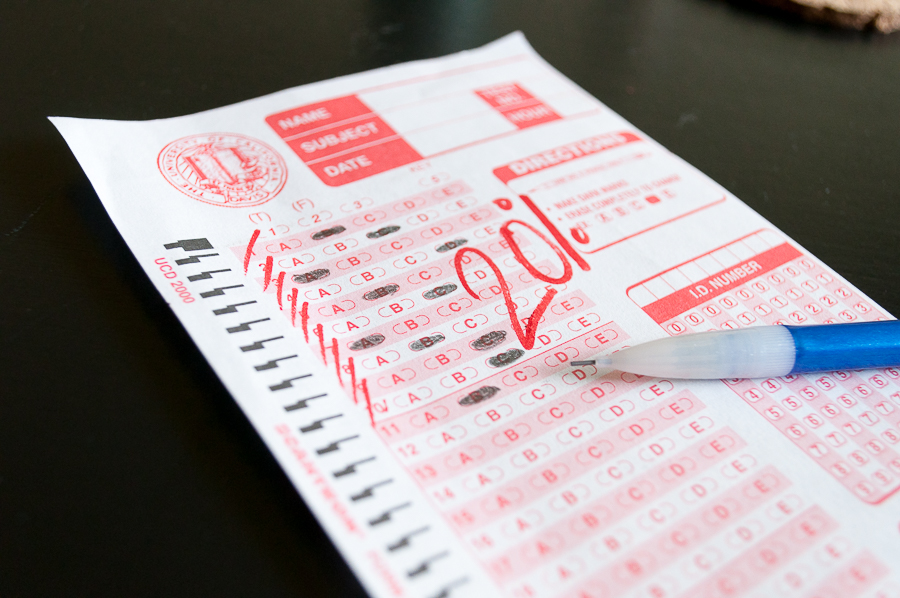
It’s midterms week and grade curving is at the forefront of many students’ minds. It’s common after a difficult exam to hear the sigh of a spent student and their silent (or maybe noisy) plea to the grade gods: “I hope there’s a fat curve on that one.” Since coming to college, I’ve learned that some things aren’t to be questioned — and if one is on the good side of the arbitrary mathematical equation that determines pass and fail, the mouth is best kept shut.

But there’s a certain ridiculousness to grade curving that must be addressed. In our daily lives, we evaluate things at face value. Let’s say we go to Trader Joe’s to buy some strawberries for our morning oatmeal. In most of the cartons, 50 percent of the strawberries are rotten. In some of the cartons, close to 70 percent are moldy and inedible. As hungry students, we don’t decide to buy the strawberries that are half-spoiled; we choose not to buy them at all. But apparently, when this analogy is transferred to academics, it suddenly makes sense that the standard of the average is the standard overall. Grade-curving is self-defeating at best — and downright disadvantageous at worst.

It’s the students who lose at the end of the day. To future institutions of study as well as employers, it appears that we know much more than we do. Our consolation is that no one appears to know as much as they know. That’s not a really great way to go about life. This dilemma is even more pronounced to students who enter the workforce immediately and must recall skills and concepts from their degrees.

And while most of us are quite thankful to see our grades rise, it’s not without some internal conflict. Students are sincere by nature, and it bothers them when they do poorly — even if their grades are adjusted at the end of the term.

“You begin to feel very conflicted about your accomplishments in the classroom,” said Neha Pullabhotla, a second-year computer science major. “Part of you stops and evaluates if you deserve to pass, while the other part insists that you’ve worked very hard and deserve not to fail.”

Pullabhotla brings up a good point: Students now have the added mental stress of deciding whether they warrant the grades they get. It used to be the numbers that said it all. We aren’t defined by our grades, but they are good indications of mastery and progress.

No one is implying that grade curves be abolished. I for one have benefited many a time from them and would be sad to see them go. Instead, there needs to be a reevaluation from the two parties who issue grades — students as well as the professors and TAs who instruct them. The teaching staff must write realistic forms of assessment, and students must be willing to be challenged in ways they haven’t been before. If tests aren’t doable, professors lose out on opportunities to reemphasize important concepts. Students lose interest, and as a system we aren’t able to fill the gaps that are created.

I’ll employ another analogy to illustrate this point. If students are just learning their ABCs, the form of assessment shouldn’t be participation at the Scripps National Spelling Bee, but rather spelling out some words that are a level or two higher than what they’ve interacted with before. In exchange, students should be willing to think about information in a different and critical way — maybe even for the first time on an exam. A middle ground exists, but at present neither party seems to want to give in.

My fear is that students are settling for less in this current system. There isn’t really a chance to raise the bar higher and push the envelope when the prevailing attitude is that one only needs to be better than the peer next to them. That’s a despicably low and overall lazy standard. The goal of education is to learn and be curious. And students craning their necks to see if their score is better than their neighbor’s isn’t the type of curiosity I’m referring to.


Written by: Samvardhini Sridharan — smsridharan@ucdavis.edu

Disclaimer: The views and opinions expressed by individual columnists belong to the columnists alone and do not necessarily indicate the views and opinions held by The California Aggie.
Sacramento Regional Transit experimenting with microtransit

SHEREEN LEE / AGGIE

Buses could soon be ordered to your front door

Starting this month, Sacramento Regional Transit will experiment with microtransit shuttles and vans in Citrus Heights.

Riders will be able to download an app onto their smartphone and call a ride directly to their front door, similar to rideshare services such as Uber and Lyft. Riders will also be able to book rides in advance and call SacRT’s dispatch to order a ride if they don’t have a smartphone.

Microtransit buses and shuttles will carry multiple riders at a time. SacRT plans to keep ride costs to $2.75 per ride, which is the same fare as Sacramento’s transit buses and light rail.

“This has a huge, huge potential to be a real game changer in communities where traditional fixed route [transit] hasn’t cut the mustard,” said Mark Lonergan, SacRT’s chief operating officer. “We will be able to look at this as a tool and see, can we expand elsewhere in the SacRT region?”

With this project, SacRT is aiming to help determine the feasibility of utilizing microtransit technology, improve services on existing routes, develop new services, improve connections to local bus and light rail service and increase ridership.

SacRT is partnering with TransLoc, a transit technology company, for the project. Transloc is partnered with many other cities throughout the U.S., helping them administer their own microtransit projects.

Citrus Heights Mayor Jeff Slowey sees potential in what microtransit can do for his city and other suburban cities.

“Suburbia is one of the biggest challenges for mass transit,” Slowey said. “I think we found something here.”

SacRT is spending $25,000 on software for the project and isn’t currently hiring any additional drivers or adding new vehicles. SacRT chose Citrus Heights due to its City Ride program that it currently runs in the city.

Giovanni Circella, a part-time researcher at the Institute of Transportation Studies at UC Davis, thinks SacRT’s microtransit project has a chance to be successful.

“If this experiment can prove that with microtransit you can increase ridership in transportation at an acceptable cost, it could potentially be a win-win for society,” Circella said. “Microtransit might prove to be too expensive with current technology. In the future, when driverless vehicles will become available, microtransit services could become an efficient way to expand the catchment area of public transit and increase ridership.”

Kevin Ebi, the managing editor at Smart Cities Council North America, thinks microtransit can have more accessibility and affordability compared to transit.

“Why do what the private sector is already doing,” Ebi wrote in an article for Smart Cities Council. “The answer is equity. Microtransit is useful for a wide range of people.”

Central Contra Costa Transit Authority, Los Angeles County Metropolitan Authority, Orange County Transit Authority and San Joaquin Regional Transit District have all recently experimented with microtransit programs of their own.

Recently, microtransit experiments in Kansas City and San Francisco have been unsuccessful due to a lack of ridership in Kansas City and a failure to comply with safety requirements in San Francisco. Both projects were based on private-public partnerships, similar to the partnership TransLoc and SacRT just agreed on.

SacRT’s ridership is down over 37 percent since 2009 and down 9.37 percent since last fiscal year. Despite the loss in ridership, average fare per rider has gone up from $1.10 in 2015 to $1.38 in 2017.

According to Lonergan, the six-month pilot program is scheduled to run through August — with the potential to run longer — depending on the success of the project.


Written by: Dylan Svoboda — city@theaggie.org


Time’s up, Woody Allen

RAFFI ASDOURIAN [CC BY 2.0] / FLICKR
In the era of #MeToo, the defense of the “artistic genius” no longer suffices

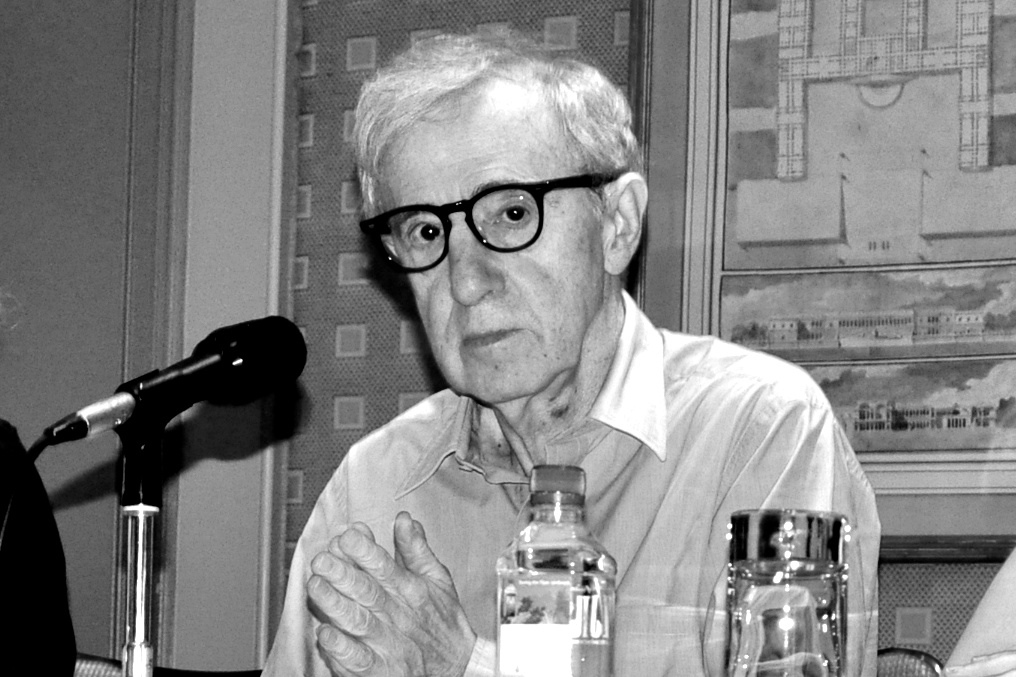
It’s been over 20 years since Woody Allen was accused by Dylan Farrow, his then-seven-year-old adopted daughter, of sexual abuse. Although Allen was never charged and has vehemently rejected the notion that he molested her, Farrow, now 32, has penned several op-eds throughout the past few years reaffirming her initial claims.

Allen has made at least one movie almost every year since the allegations came out in 1992 — many of which have either been nominated for or won numerous awards. The Golden Globes, where countless actors denounced the suppression of female voices and mistreatment of women last month, handed him the Lifetime Achievement Award in 2012.

It’s becoming increasingly apparent, however, that Allen will not emerge from the #MeToo movement unscathed. Over the past few weeks, individuals in Hollywood have begun distancing themselves from the director; actors have expressed regret over working with him and Goodspeed Musicals, a theater in Connecticut, announced that, “in light of the current dialogue on sexual harassment and misconduct,” it’s cutting ties with his musical “Bullets over Broadway.”

Until now, the “Annie Hall” director had spent his career thriving on the insistence by actors, audiences and critics on “separating the art from the artist” — on letting each work of art stand independent of an artist’s personal life, isolated from the knowledge of his or her actions. To factor in this outside information would be disrespectful, unfair and obstructive to the impact and value of art.

But art springs from the inner thoughts and questions plaguing a creator’s mind. And in the case of Woody Allen, there’s no question that his personal life leaks into his scripts, regardless of Farrow’s allegations. His work displays a decades-long pattern of misogyny and uncomfortable meditations on male-female relationships, according to writer Richard Morgan, who pored over 56 boxes of Allen’s notes from the past 50 years. Characters pursue romantic interests despite striking age discrepancies — always a much-older man with a much-younger woman, often a teenager. And most recently, his overwhelmingly panned “Wonder Wheel” includes a love triangle between a stepmother and daughter, to whom the father “has an unnatural attachment.” This closely mimics Allen’s own very public, very controversial marriage with his ex-girlfriend’s adopted daughter Soon-Yi Previn, who was 19 when the director, 54 at the time, initiated the affair. As film critic A.O. Scott notes, “The principal subject of Woody Allen’s work has always been Woody Allen.”

Yet there’s still an illusion that art belongs to a sacred realm that dare not be touched by our thoughts on the artist’s real life — an air of transcendence that further gets extended to the creators themselves. After all, they’re artists — geniuses, even. They have an understanding of the world that only a select few can access. There’s an otherworldly quality to their artistry that makes up for, obscures or simply annuls their moral responsibilities.

But art is necessarily, irrevocably human. It’s sculpted, penned and played by human hands, formulated by human minds, directed through human lenses. Works of art might reflect something higher, something intrinsically beautiful, but they’re manmade reflections nonetheless. And though art is extraordinarily important to humanity and culture, it should never become so conflated that we allow its creators to slide by without facing their wrongdoings.

We don’t have to cut Woody Allen out of the history of cinema, just as we don’t have to deny the significance of Bill Cosby to comedy or Richard Wagner to opera. But we shouldn’t turn a blind eye to the messy, sometimes heartbreaking connection between art and artists, either.

When a transgressor is actively churning out works, the ethical solution is simple: stop supporting their art to inhibit future abuses. The repercussions should be stern and tangible, as with artists like Louis C.K. and Kevin Spacey. But what’s the right way to interact with art from the past that has been deemed irreplaceable yet controversial?

There’s no underlying rule that says we must constantly deify certain artists because their contributions have been pivotal to their fields. Ceasing to impulsively glorify Allen’s movies does not erase their influence; it merely signifies that our appreciation of art also takes into account the highly flawed mind behind the work. When viewed in this light, Allen’s films can be dissected with a conscious eye for the ways in which they’re unethical. And through this — because none of his films are “sacred” — critics and audiences might find that other filmmakers, those with purer voices and more respectable stories to tell, are more worthy of study and praise.

The era of #MeToo is one of ripping up the floorboards and revealing the sins of those who have frequently shaped our thinking — not to publicly castigate wrongdoers but to rebuild a more equal environment for creative expression. Artists, especially men, have been allowed to operate and maintain their legacies under the defense that they’re artistic geniuses whose art is too important to be marred by their transgressions — a flimsy excuse that no longer suffices.


Written by: Taryn DeOilers — tldeoilers@ucdavis.edu

Disclaimer: The views and opinions expressed by individual columnists belong to the columnists alone and do not necessarily indicate the views and opinions held by The California Aggie.

Let’s stop shying away from talking about periods

VENOOS MOSHAYEDI / AGGIE

Menstruation continues to be a taboo topic — yet it’s central to women’s lives

We’ve all heard of “the little red friend,” “shark week,” “lady business” — but why do we shy away from properly addressing menstruation? After all, it occurs in approximately half of the world’s population. Despite our forward-thinking, incredibly liberal era, few are comfortable with speaking openly about periods. Society continues to enforce the misconception that menstruation makes a woman dirty, unclean or shameful, when in reality menstruation is a natural occurrence that shouldn’t embarrass anyone.

A period is a constant, empowering reminder to women that we reserve the potential to grow life. It’s therefore something that should be celebrated and appreciated as a natural and perhaps even powerful phenomenon.

I first began to reflect upon the deep-rooted misogyny of period stigma when I read about Instagram’s involvement in suppressing the expression of Rupi Kaur. Kaur is now recognized as one of the most influential, feminist, inspiring and talented poets today. In her poetry and photography, she delves deep beneath the surface of societal constraints placed on women, specifically minority women, in order to fight them. Almost three years ago, when Kaur posted a picture that happened to include her pants dotted with a smudge of period blood, Instagram removed the photo twice, inciting the young poet to publish a Facebook post that went viral. Thus, the menstrual movement began with her words, “Their misogyny is leaking. We will not be censored.”

We can categorize the societal issues regarding menstruation acknowledgment into two sections: the significant psychological and health-related impacts on financially secure women predominantly in developed countries and the horrific plight of impoverished women throughout the world, especially in underdeveloped nations.

Periods can’t be understood without recognizing the plethora of menstrual health issues that can occur, ranging from severe period cramps to toxic shock syndrome, a fatal bacterial infection. But women are largely ignored when they are concerned about their menstrual health and speak out about any related pain. A survey conducted for Australian women found that 75 percent of women said period pain has affected their ability to work, but only 36 percent of these women approached an employer to speak openly about it.

Another study conducted in the U.S. determined that 77 percent of women felt like their period was something they simply had to put up with, and 74 percent said that men have an advantage due to their lack of menstruation. 84 percent reported feeling moody, yet the mood change offset by Premenstrual Syndrome (PMS) is something mocked constantly, with many people pinning a woman’s disposition onto PMS, thus inciting her to feel ashamed of her own emotions.

It’s also important to realize, before truly understanding the struggles of many international female populations, that menstrual products are not always accessible, affordable or acceptable in specific areas. To remain hygienic, the average woman needs to change her pad four times a day, and the average period lasts five days. But in Afghanistan, a single menstrual pad costs $4 USD, which bills up to $80 for one period and $960 for one year — almost one grand spent on menstruation alone. 62 percent of Afghani schoolgirls use torn cloth as pads, a very dangerous and unhygienic substitute. Schoolgirls in Kenya miss, on average, 4.9 days of school every month due to their periods, adding up to about 20 percent of the school year when compounded over 12 months.

In Nepal, many women are banished from places of worship, farms, kitchens and their own homes to live in a secluded hut without access to food or water for the duration of their cycle, sometimes leading to death. Japan holds onto the belief that women can’t be sushi chefs because their sense of taste is apparently affected by menstruation. And in Pakistan, sexual education is banned, depriving girls of the chance to learn about and understand their own periods. The list of absolutely unacceptable behavior toward women on their periods goes on and on.

Women should be treated with respect and care when menstruating, not scorned with disgust and thrown out of their homes. Periods don’t make a woman unfit to be touched or be near, and they certainly need to be talked about to appropriately educate young women. Currently, we’re living at the peak of the menstrual movement. Innumerable organizations dedicated to educating young women and donating menstrual products to those who can’t afford them are popping up throughout the world. One significant organization chapter is right on the UC Davis campus: PERIOD, an organization dedicated to destroying the stigma of periods and donating menstrual hygiene products to populations in need. Several companies and regions are allowing women to take days off of work due to period pain, and the World Bank is working toward keeping girls in school by improving their menstrual hygiene.

Why are we so afraid to allow women to feel comfortable, confident and proud of their periods? Menstruation should be defined by the power it gives women and celebrated as a key component of femininity and womanhood, never something to hide or feel ashamed about. This is the time to start conversations about menstruation, to speak openly about the struggles faced by menstruating women everywhere in order to find solutions to preserve the hygiene of every female inhabitant of our world. It’s time to start taking women seriously when they discuss their needs. After all, who knows more about a woman’s health and needs than the actual woman herself? Let’s give her a voice for once.


Written by: Akshita Gandra — agandra@ucdavis.edu

Disclaimer: The views and opinions expressed by individual columnists belong to the columnists alone and do not necessarily indicate the views and opinions held by The California Aggie.
Humor: Man vastly prefers being called “one beefy boy” over “husky”

CAITLYN SAMPLEY / AGGIE

One bold student is sick of the fashion industry’s labels, is taking a stand

When I was a little girl, I was super round. I wasn’t the cute round, though; I was more so just the inconvenient, Augustus-Gloop-from-Willy-Wonka round. Every summer, my mom would order me a new one piece bathing suit from a sad catalog that would usually say something along the lines of “for chunky lil’ ladies everywhere.” But one time they put my swimsuit in the wrong bag and it was labeled — in all bold letters, might I add — ‘BOYS: HUSKY.’

What does husky even mean? It sounds like I will be embracing a beautiful winter dog but ends up being a dig at my love handles? Rude?

A brave student named Chad Tadswick is taking a stand against this weird label.

“On one hand, ‘husky’ is a dog,” Tadswick began. “On the other hand, it’s a raspy, sexy, delicious-sounding voice. You’re telling me there’s a third hand, and on that hand I’m a lil’ tubby-tub? I think not. Call me ‘one beefy boy’ or don’t call me at all.”

Tadswick walks around campus every day in a blinged-out leather jacket that reads, “One Beefy Boy” across the shoulders. He’s owning it and werking it.

“It’s not only women who need body positivity,” Tadswick said. “I want it, too, and it starts with a beefy boy revolution! Huzzah!”

Other “beefy boys” seem to be less-than-pleased with the new label.

“There I was, mackin’ with my new boo, and she tells me that she appreciates that I’m a quote ‘beefy boy’ unquote?” second-year Fred Plank said. “Do I look like a quarter pounder with cheese? No! Do not call me a beefy boy! If anything, I am a beefy man.”

With that notion, Plank flexed his manliness so hard that Donald Trump smiled for the first time since women gained the right to vote. You say he was not alive? False. He has lived forever, in our nightmares.

Even in the face of controversy, Tadswick persists.

“I am a beefy-licious king worthy of a beef-tastic name, and that beefing name is beefy boy, you butts!”

Professors, though impressed with Tadswick’s confidence, are less than confident whenever they have to call upon him during class, as he has refused to respond to anything other than “one beefy boy” or “his royal beefiness.”

“I just… it feels mean? But he wants me to call him that? Am I not up with the kids?” And with that, a professor slowly backed into a corner and combusted into a cloud of anxious smoke.

One thing is for sure: The age of the beefy boys is only just beginning. Look out, dad bods.


Written by: Olivia Luchini — ocluchini@ucdavis.edu

(This article is humor and/or satire, and its content is purely fictional. The story and the names of “sources” are fictionalized.)