55.4 F
Davis

Davis, California

Monday, December 22, 2025
Home Blog Page 560

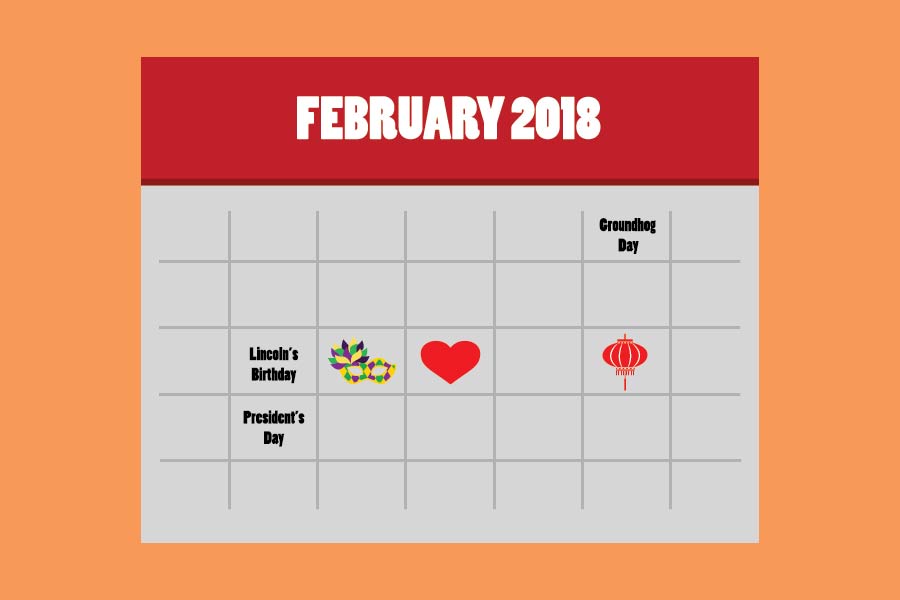
February event calendar

SHEREEN LEE / AGGIE

Get sticky: make bread or make art

February has a lot more to offer than avoiding or celebrating Valentine’s Day. This month is full of culture and creativity waiting for you to take advantage of it.


Davis Craft and Vintage Fair, Feb. 8

Where? Central Park

When? 11 a.m. to 4 p.m.

What is it? There will be live music, food and local vintage and handmade goods at this recurring Davis event, where you can support local art for free.


Bread Baking at Davis Food Co-op, Feb. 10

Where? Teaching Kitchen at the Davis Food Co-op

When? 2 to 5 p.m.

What is it? This is a class to learn how to bake at home. This particular event will be teaching you how to bake bread and everything that it entails.

The event is a 3-hour, hands-on class that is priced as follows:

DFC members: $36

Non-members: $40


Janet Mock, Feb. 5

Where? Mondavi Center

When? 8 to 10 p.m.

What is it?Janet Mock is a transgender rights activist, TV host and New York Times bestselling author of Redefining Realness: My Path to Womanhood, Identity, Love & So Much More. She takes the Jackson Hall stage to discuss her career in the keystone event of this year’s Campus Community Book Project,” says the Facebook event.


Art Studio Lab, Feb. 3, 10, 17, 24

Where? Manetti Shrem Museum

When? 2 to 4 p.m.

What is it? Saturday drop-in Art Studio Labs are designed for those want to get creative. All ages are invited to try out different materials to make new designs, which are prompted by weekly questions.


Cirque Eloize, Feb. 11

Where? Mondavi Center

When? 3 to 5 p.m.

What is it?Theater and circus rambunctiously collide in Saloon, the newest acrobatic creation from contemporary circus troupe Cirque Éloize. Set to live folk and fiddle music, this show combines story with original acrobatic choreography,” says the Facebook event.


Being Portraiture and Poetry, Feb. 8

Where? Basement Gallery

When? 6 to 9 p.m.

What is it? The Basement Gallery’s opening show will exhibit pieces from both artists and poets. There will also be karaoke at the show opening.


Written by: CaraJoy Kleinrock — arts@theaggie.org

A welcome increase in ASUCD candidates

CAITLYN SAMPLEY / AGGIE

The Editorial Board hopes for comparable increase in voter turnout

This past week, 32 people qualified as candidates for the upcoming 2018 ASUCD Winter Elections for various student government positions. This is a stark contrast to the 2017 Fall Elections, when six senatorial candidates ran unopposed. Four executive tickets and 24 senatorial candidates will be participating in the winter elections.

The Editorial Board commends the Elections Committee and all those who were involved in raising awareness for the Winter Elections, which are just over two weeks away. The increase in candidates seeking elected office is a reflection of a serious issue being addressed within the association. The problem is far from solved, but it’s a step in the right direction.

A year ago, 2,545 voters turned out for 10 Senate candidates during the 2017 Winter Elections. In Fall 2017, 1,289 people voted. With the larger selection of candidates, the Editorial Board hopes to see a significant increase in voter turnout.

The Elections Committee and ASUCD as a whole must not lose this momentum. They must utilize a high candidate turnout to garner more student involvement and voter participation.

Beyond good intentions, there was little incentive to reach out to the diverse communities on campus and listen to the students during the uncontested 2017 Fall Elections.

The Editorial Board hopes the sheer nature of competition will force candidates to develop their platforms by thoroughly considering what the student body values and then translating those values into realistic platforms. Votes will matter in this election, more than in the last one.

This round of candidates has the expected batch of political science and economics majors. The Elections Committee should next strive for an even distribution of candidates from the four colleges. Although it may seem the natural inclination of social science majors to gravitate toward student government, it does a disservice to the rest of the student body, a majority of which does not fall under the social sciences.

We need an informed student body that’s aware of what ASUCD has to offer. Even more importantly, we need an ASUCD that’s aware of all the diverse needs of our student body. The responsibility falls to both parties to communicate openly with one another.

For now, the best way to do that is to vote in the upcoming elections. Speak with the candidates and learn about their platforms, keeping in mind what’s important for the student body. Challenge them. Make them earn your votes.

We encourage you to vote in the 2018 Winter Elections, which will be held from Feb. 20 to 23.


Written by: The Editorial Board 

For Art’s Sake

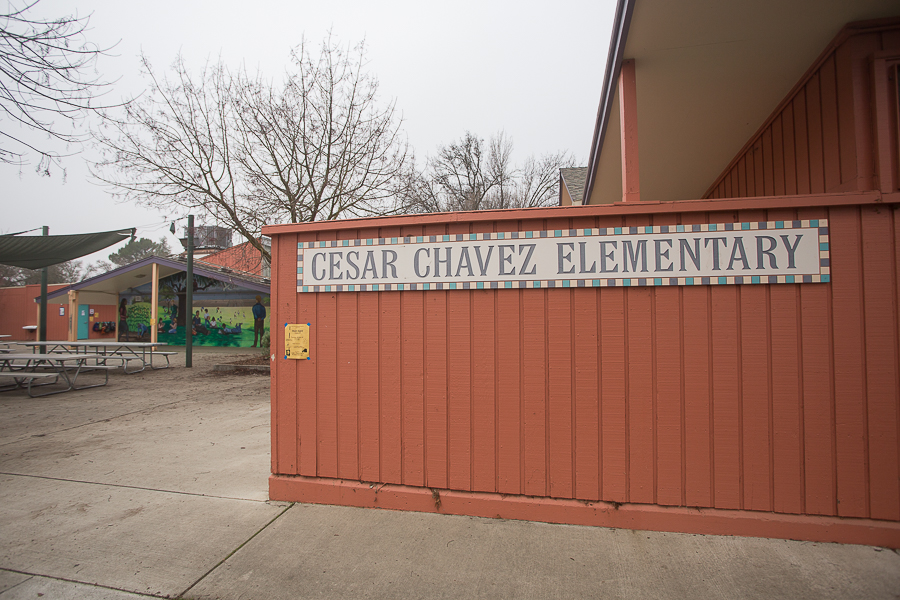
Cesar Chavez Elementary, part of the Davis Joint Unified School District. (NICHOLAS CHAN / AGGIE)

Arts Education in Davis Elementary Schools

This is the first of a two-part story about the arts curriculum and funding in the Davis Joint Unified School District.


Gigi Bugsch, a third-grade teacher at Cesar Chavez Elementary, and Marla Cook, a sixth-grade teacher at Robert E. Willet Elementary, couldn’t help but boast about their students’ artwork. When asked about the art they implement in their classrooms, each teacher roamed around their room adorned with student art, showing the various projects students had been working on, sharing comments about what the students made and the creative process behind it. They talked a little faster while sharing the displayed art, their voices a little higher out of excitement about what their students had produced.

“I wanted some deep colors in here. I wanted some contrasting colors,” Bugsch said. “I ask what do they see in pictures. I asked them what comes to mind when they think of fall.”

With the known lack of funding in California schools, the question arises: which programs are most affected? The arts are often the first to be impacted in education, and the elementary schools in the Davis Joint Unified School District seem to be no exception.

“There isn’t an arts curriculum, and unfortunately, when schools don’t have a lot of money, art is the first to go,” Cook said.

The California Department of Education decides how much funding each school district receives through the Local Control Funding Formula, which was enacted in 2013. DJUSD received a total of $62,269,963 from the state in the 2016-17 fiscal year, according to the district’s funding snapshot, to be used for the spending of all schools in the district.

“Funding is set based on your student population,” said Matt Duffy, the director of elementary schools for DJUSD. “The new state formula is that schools get a base amount of funding based on their student enrollment and attendance and Local Control Supplemental Funds, which is based off of unduplicated students who are low income, foster students, or homeless. So districts with a higher percentage of those students get a higher amount of funding. Davis is only about 26 percent unduplicated students, so we get a lower percentage.”

According to Koling Chang, the vice president of the Davis School Arts Fund, a nonprofit which fundraises to provide grant money for art projects in Davis schools, the Board of Trustees for the district ultimately votes upon the allocation of funds and to which programs funding will go.

“The Board decides everything,” Chang said. “The budget office of the district knows the amount of money they have. A lot of times the Board, even though they have voting power, they don’t always do what other people want.”

The DJUSD’s Board of Trustees declined an interview with The Aggie.

Before the use of the LCFF, the state dictated the amount of money that was allocated to each school subject.

“It used to be tied,” Cook said. “You had pots of money and programs would get a specific amount of money. And then we were going through a hard financial time about 10 to 15 years ago, and people didn’t want to be tied to it anymore, so the state untied it. Certain programs were gotten rid of; we couldn’t afford art. Although art was never required, as it is now, this district allocates really zero money to art.”

The California Department of Education outlines content standards for visual and performing arts into five guiding principles that apply to each discipline and mirror the expectations of each grade level: artistic perception, creative expression, historical and cultural context, aesthetic valuing and connections, relationships and applications. However, with the LCFF in place, there is no allotment of funds made specifically for these standards. Moreover, Common Core, the national education standards used in curriculum implementation, does not include visual and performing arts in its California State Standards.

According to Duffy, elementary schools in the district have a music program starting in fourth grade that they “are welcome to participate in during the school day.” The music program is funded through “a local parcel tax that makes up 11 percent of the general operating fund, and this is a parcel tax measure that was voted on by the voters of Davis.”

However, fine art opportunities vary by elementary school. According to Bugsch, there are no after-school programs or art classes required at Cesar Chavez. Rather, teachers can decide how to implement art in their classroom. Cook confirmed the same for Robert E. Willet.

DJUSD did not comment on how a visual and performing arts discipline is decided to be offered within the district.

Most art instruction is then reliant on teachers and how much art they decide or are able to implement in the classroom. However, funds for art instruction and supplies in the classroom are from each teacher’s own budget.

“We get a certain amount of money in our account, so that money can go towards supplies,” Bugsch said. “You can use the money that is in your account at your discretion. For a teacher who has been here a long time, like me — I’ve been here for 20 years — I have a lot of supplies that I have accumulated over the years, so I don’t need a lot of start up materials. For a new teacher, it would be more difficult to start new.”

Moreover, according to Cook, all other supplies needed for the classroom, like
“lined paper and photocopy paper,” must also come out of that budget.

The DSAF was created in 1978 after the passage of Proposition 13, which “forced the school district to make deep cuts in the art education budget” and “was set up as a matching funds organization with the district to keep art education alive in Davis public school,” according to its website. Through the DSAF, teachers can receive additional funding for art projects they want to hold in their classrooms.

“A classroom teacher wants to do a craft in the classroom, and we can fund the paper and the materials,” Chang said. “In the beginning of every school year, we open grant applications from teachers or parents to file for specific projects, and each grant will be associated with a teacher in the district. Including the matching budget from the district, we can give about 60k from the foundation. We can give $40,000 in a year, and the district can match about $20,000 — these numbers are rough estimates. We fund about 80 projects a year. But this is still not a big enough amount of money.”

However, according to Cook, while the DSAF is beneficial in helping to bring more art into the classroom, it supports “a project but not ongoing art.”

According to Duffy, how much money is allocated to the arts in elementary schools is a matter of balancing resources.

“I’m a big supporter of the arts, so it is by no means not valued by our administration or teachers,” Duffy said. “It’s deciding how to spend a limited amount of resources and knowing the core subjects of English, math, science and social studies are the things we need to make sure students are successful at.”

It must be noted that art is not the only subject impacted by limited funds.

“I don’t think the district puts any money into the high school robotics program, Citrus Circuits, other than the advisor’s salary,” Cook said. “It is not just arts that are being affected […] I have heard from parents, ‘Well if you have the money then arts are great, but you have to have extra money.’ To me it’s part of the fabric of learning. You can’t just take it out. There’s no subject that it doesn’t fit in and find some connections.”


Written by: Caroline Rutten — arts@theaggie.org


Women’s gymnastics falls just short to West Virginia in season home opener

0
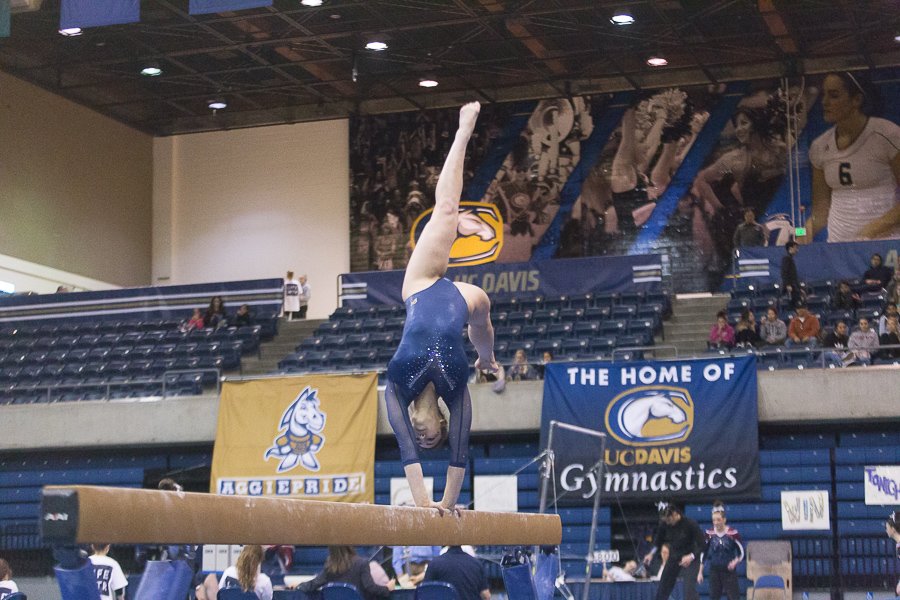
UC Davis stuns on balance beam, earning both 1st and 2nd place titles. (JORDAN KNOWLES / AGGIE)

Alexis Brown claims three first-place standings, all-around title

On Friday, Jan. 27, the UC Davis women’s gymnastics team resumed play after being on the road at the beginning of the month and enjoying a bye-weekend last week. The team entered its home gym with a 2-3 recording coming off of a first-place victory over Seattle Pacific on Jan. 12.

The Aggies finished second with an overall score of 194.200 right behind West Virginia with 195.050. UIC trailed behind UC Davis with 193.025.

Senior gymnast Alexis Brown performed exceptionally well, placing first on the balance beam with 9.850, tying for first on the uneven bars with 9.850, tying for second on the vault with 9.800 and claiming the all-around first place title with an overall score of 39.250 — breaking the 39-point record for the second time this season.

“I really just want to break as many records as I can,” the veteran Aggie from Huntington Beach said of her goals this season. “It’s my senior year, and I really want to make it the most memorable.”

Freshman gymnast Kelley Hebert also earned spotlight moments. Following a win on the balance beam against Seattle Pacific, she placed second on the balance beam just behind Brown with a score of 9.800 and captured third all-around with a career-high-tying 38.950.

In addition to Hebert, new Aggies make up more than half of the team’s spots.

“They’re really good, really talented,” Head Coach John Lavallee said of the freshmen class. “We know it’s going to take some to get this environment under control because it’s very different from the club environment they’re in when they’re in high school.”

Junior gymnasts Yasmine Yektaparast and Kara Jones were absent from the meet’s lineup.

“Missing [Yetaparast and Jones] in the lineup tonight really made a difference,” Lavallee said. “But it was a great opportunity for the freshmen to get some work in, get some experience, and show what the Aggies have to look forward to.”

Brown shared the same sentiments as Lavallee, using her experience to identify what she expects the team to accomplish this season.

“As a team, our goal has pretty much stayed the same since I’ve been here, and that’s to make it to regionals and show that we are capable of that,” Brown said. “The amount of talent that the freshmen and sophomore classes have brought just makes it so real […] We’ve only really had three meets so far, and that just means that we have to fix those little details, and, after that, it’s easy.”

The Aggies will stay in town this week to host San Jose State, Stanford and SPU on Feb. 2 at 7 p.m.


Written by: Kennedy Walker — sports@theaggie.org


Aggies still undefeated in Big West

KAILA MATTERA / AGGIE

UC Davis women’s basketball defended winning streak against Titans, Gauchos

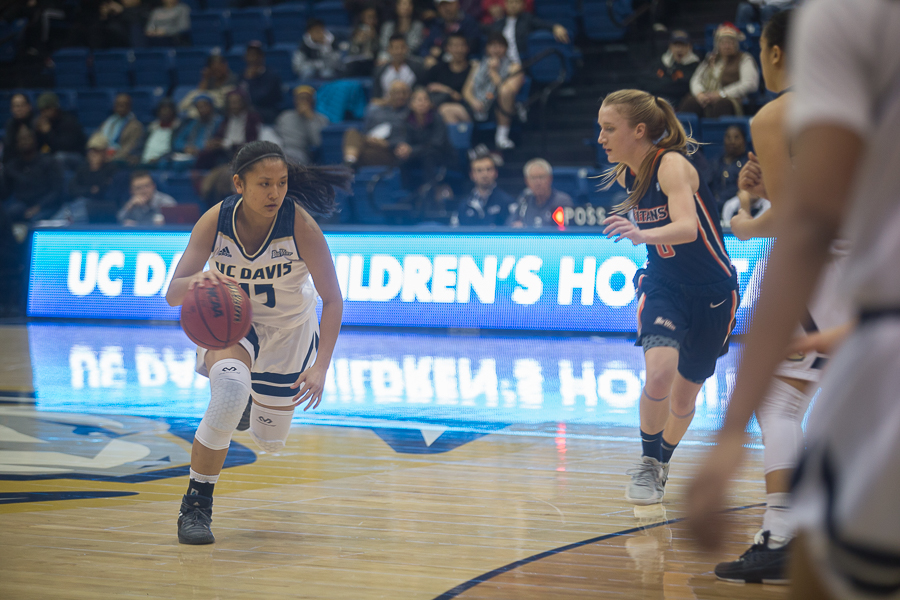
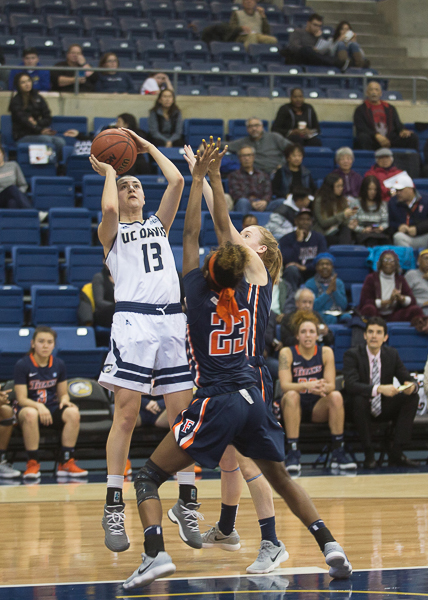
The UC Davis women’s basketball team is now 7-0 in the Big West Conference after a 67-53 victory over Cal State Fullerton on Wednesday Jan 24 and a 69-63 win over UC Santa Barbara on Saturday Jan. 27. These wins also brought the Aggies their 17th consecutive Big West Conference regular season victory. The Aggies entered the Pavilion coming off a 80-76 win over Cal Poly. Their last matchup against the Cal State Fullerton Titans was almost exactly a year prior, where they won 59-39.

On Wednesday, redshirt junior forward Morgan Bertsch had her 10th 20-point game of the year, finishing with a game-high 23 points. Bertsch’s four blocks also brought her career total to 123, placing her at third on the program’s all-time block list.

“A lot of the teams in the past throughout conference in the first five games have been very lurky, have been doubling, have been making sure that when I put the ball on the ground, they have their hands in there trying to tip it away,” Bertsch said. “But today, the key was pretty open for me, which was a nice change […] I had more space and didn’t have to worry about second defenders.”

The competition didn’t let up on the Aggies. At halftime, the Titans only trailed by five, with a score of 33-27, and with 2:33 remaining in the third quarter, were only three points away from breaking even with the Aggies.

“They’re a much-improved team, they are well-coached, they have really good energy about them,” said Head Coach Jennifer Gross. “They play really hard. We knew that coming in, that we were going to have to beat them, that we were going to have to fight for this one. They showed their resolve, but we showed ours as well.”

KAILA MATTERA / AGGIE

Senior forward Pele Gianotti finished the night with 21 points, making the game her first 20-point game of the season. Gianotti scored her 1000th career point last week on the road against UC Santa Barbara on Jan. 18, and this game lifted her total to 1040.

“She’s such a force. She has such good fundamentals,” Bertsch said of her teammate Gianotti. “[She is] pretty unstoppable, even when you’re guarding her in practice. You’re like ‘Oh, gosh,’ because you have to worry about her 3-point shooting and then she’s a real good driver.”

On Saturday, the first game of a double-header at the Pavilion, the Aggies won 69-63 over the UC Santa Barbara Gauchos. The Gauchos proved to be a tougher opponent than the Titans.  

Trailing at the halftime buzzer and only leading only by one point at the end of the third period, the Aggies rallied in the fourth quarter to secure their win.

The Aggies hit the road next week to defend their winning streak against Long Beach State and Cal State Northridge on Feb. 1 and Feb. 3.


Written by: Liz Jacobson — sports@theaggie.org

Aggies win 19th straight home game with blowout of Cal Poly

0
Senior forward Chima Moneke, who leads the team in scoring, dribbles towards the basket in Thursday’s 63-56 victory over CSU Northridge at the Pavilion. (NICHOLAS CHAN / AGGIE)

UC Davis men’s basketball explodes in first half, continues to protect home court

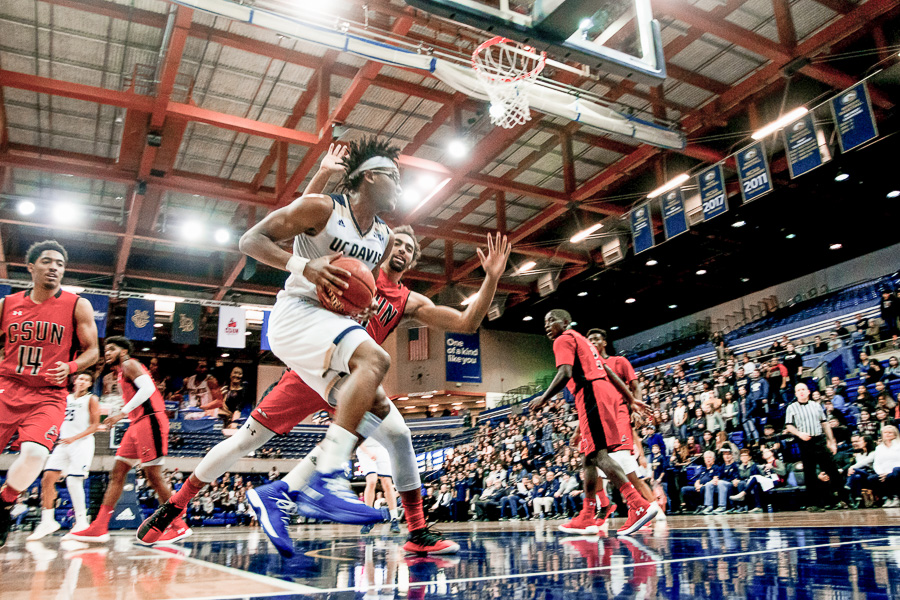
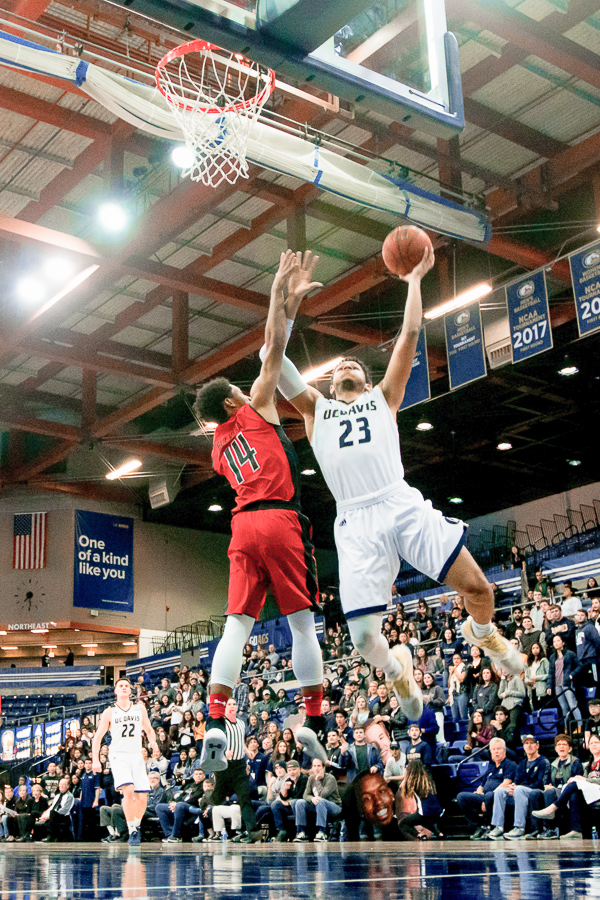
The UC Davis men’s basketball team extended its home winning streak at the Pavilion to 19 games with a 80-56 blowout win over visiting Cal Poly on Saturday night. The Aggies went on a trio of long scoring runs and shot a blistering 62 percent from the field in the first half, including a 6-for-7 mark from beyond the arc, to build up a 24-point halftime lead. The team was able to cruise in the second half and now sits in third place in the Big West standings, behind Long Beach State and UC Santa Barbara.

“We were talking before the game that we’re getting everybody’s best shot,” said Head Coach Jim Les. “It’s about time we gave our best shot, and let the chips fall where they may.”

UC Davis completely dominated the boards on both ends of the hardwood, finishing with a 27-17 advantage in rebounds and creating 18 second-chance points.

The Aggies scored 20 of their first 28 points from inside the paint, setting the tone that they were going to be the most physical, aggressive team on the court throughout the game. As the night progressed, more and more uncontested looks started to open up outside the key for UC Davis.

“One of the things we wanted to influence or emphasize as a staff was going inside,” Les said. “All of the sudden the paint starts collapsing and now we’re kicking it out and guys are getting wide open looks. The ball movement was really crisp and guys gave up a good shot to give their teammate a great shot.”

The Aggies really clamped down on defense for the second consecutive game by allowing just 56 points, which ties a season low. The team also forced 12 turnovers, which it turned into 18 points on the other end.

“I thought our defensive activity and pressure from the get-go was really disruptive,” Les said. “I think for the game we had 18 deflections, which tells me guys are engaged and getting after it.”

On average, UC Davis has given up the fewest amount of points per game, 66.1, to opponents in the Big West conference. In addition, the Aggies force an average of 16 turnovers per game, which also leads the league.

“When the defense is that active and creating turnovers and missed shots, this group is pretty impactful in the open court making plays,” Les said.

NICHOLAS CHAN / AGGIE

After a back-and-forth battle for the opening six minutes, UC Davis rattled off 10 consecutive points, including five from junior forward Garrison Goode, to jump out to a 19-7 lead. Following a three-pointer by Cal Poly, the Aggies tallied 10 more points in a row to grow the lead to 29-10.

UC Davis did not take its foot off the gas at the end of the half, rolling into the locker room on a 13-4 run.

Senior forward Chima Moneke paced the Aggies with a team-high 21 points on 9-for-11 shooting from the field. He brought the home crowd to its feet with a slam dunk at the start of the second half. He also turned heads by emphatically swatting away a Cal Poly shot attempt near the end of the first half.

Saturday night’s victory was truly an all-around team effort in every sense, as all 10 players that checked into the game for the home team scored at least one basket and grabbed at least one rebound. Sitting on a comfortable lead for the majority of the evening, UC Davis was able to let some of its bench players log a significant number of minutes on the floor.

“Those guys work their tail off every day and we have a lot of confidence in them,” Les said. “We’re going to need our bench down the stretch, if somebody turns an ankle or somebody gets in foul trouble or gets tired. Those guys coming in and playing with confidence and giving us contributions are huge.”

Junior forward AJ John came off the bench and provided a spark for the Aggies in the first half with eight points, knocking down a pair of three-pointers and scoring on a tip-in.

“AJ is playing at a high level,” Les said. “He spends extra time in the weight room and extra time conditioning. What you’re seeing is a by-product of all that extra work he does.”

In addition, sophomore guard Joe Mooney added a trio of three-pointers, two rebounds, and two assists in 26 minutes of playing time.

The Aggies will take a trip to southern California to play their next two games, facing CSU Northridge tonight and Long Beach State on Saturday afternoon. The team will return to action at the Pavilion on Thursday Feb. 8 against UC Santa Barbara.


Written by: Brendan Ogburn — sports@theaggie.org


Full-body PET scanning

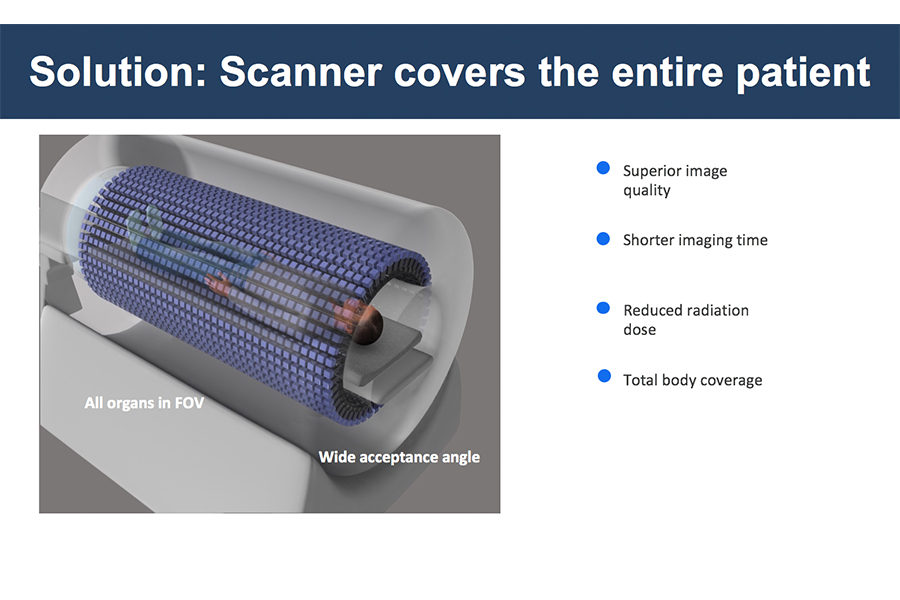
Full-body EXPLORER scanner has many advantages over traditional PET machines. (EXPLORER TEAM / COURTESY)

New device will be up to 40x more sensitive than standard scanners

A team of researchers at the UC Davis EXPLORER project are closing in on a goal over a decade in the making — the first PET scanner in the world that can scan the entire body at once rather than in 15 centimeter segments.

Simon Cherry, a distinguished professor of biomedical engineering, and Ramsey Badawi, an associate professor of radiology, first chatted about a possible total-body PET device in the mid-2000s. At the time, many of their colleagues in radiology and nuclear medicine considered such a project too unwieldy or expensive to be worthwhile. But grants from the National Cancer Institute’s Provocative Questions project and the UC Davis Research Investments in the Sciences & Engineering program allowed the team to produce promising prototype design plans. The National Institutes of Health Transformative Research Award — $15 million over five years — finally allowed the team to produce total-body PET scanners in two sizes.

“We’ve now built two prototypes — small-scale versions for scanning animals,” Badawi said. “The full human scanner should be finished in May of this year if all goes well.”

Positron emission tomography, also known as PET, is a sensitive medical imaging technique used in research and clinical settings. One of the most common uses for PET imaging today is for cancer diagnostics, although the team hopes to utilize the device in the future to examine systemic processes happening throughout the body in multiple organ systems.

“PET works by injecting a very small amount of a radioactively labeled compound into the body,” Cherry said. “For cancer imaging, the compound we use is an analogue of glucose. Glucose is a sugar, it’s used by the body to generate ATP as an energy source. Tumor cells are rapidly dividing, so they have high energy demands, and they’ll take up a lot of this radioactively labeled sugar. That’s how we get the contrast in our images where we can see these tumors very well.”

The total-body scanner will include all of the patient within its sensitive detectors, which collect energy emitted from the small doses of radiation injected into the patient.

“Most of the isotopes we use have a half-life between one to two minutes up to a few hours,” said Dr. Martin Judenhofer, an associate project scientist and an EXPLORER project manager. “FDG happens to have a half-life of two hours. After about ten half-lives, most of it is decayed.”

One benefit of the full-body scanner is the ability to use smaller amounts of radioactive tracers, such as fludeoxyglucose (FDG), to obtain quality images. FDG is a glucose compound tagged with radioactive fluorine. Lower doses of radionuclides will allow children and pregnant women to more safely use PET scanners for medical imaging.

“One of the interesting things we’ll be able to do is to look at signaling between different organs, which is not something we’ve been easily able to do before,” Badawi said.

Collecting much more of the emitted radiation will allow researchers and clinicians to generate images nearly 40 times more sensitive. A newfound flexibility in their procedures will follow.

“We have a choice,” Cherry said. “We can either get the image much more quickly — a 20-minute scan could be done in 30 seconds — or we can still scan for 20 minutes and get much higher-quality data.”


The MINI EXPLORER installed at the National California Primate Research Center has all of the components of the full-size scanner in a smaller package and has been used for research on animals including rhesus macaque monkeys. A second MINI scanner intended for the UC Davis veterinary school to be used with companion animals will be delivered in February 2018. The human scanner should arrive at the UC Davis Medical Center in Sacramento by 2019 and will be the crowning achievement for the EXPLORER team.


Written by: George Ugartemendia — science@theaggie.org

Editor’s note: An earlier version of this story stated that the human scanner would be finished in May of next year. It will be finished in May of this year. The article has been updated to reflect this change.

Applying virtual and augmented reality

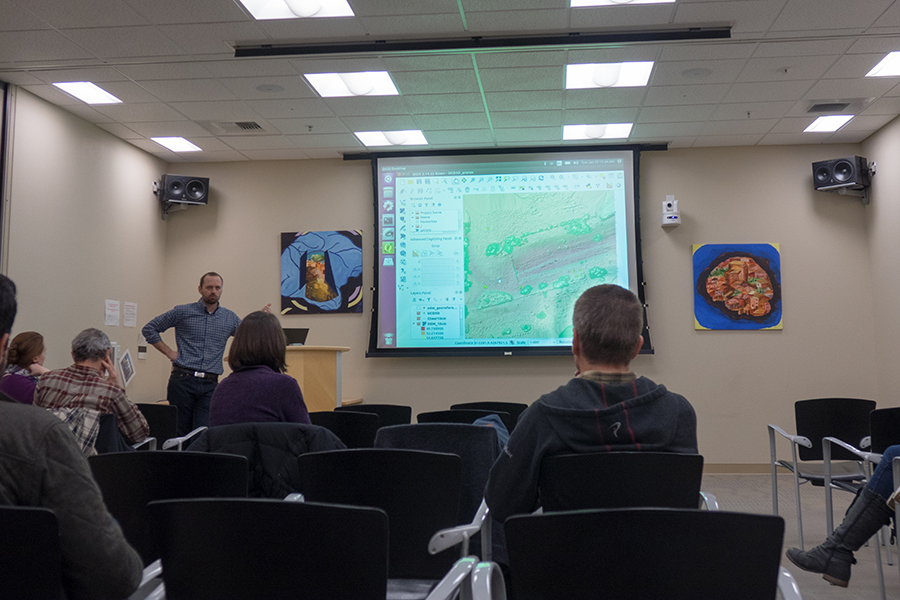
Dr. Randy Haas, assistant professor of Anthropology at UC Davis, presenting on high accuracy, low cost landscape 3D modeling with examples from Archaeology. (JORDAN CHOW / AGGIE FILE)

How 3-D technology is being adopted by researchers in different fields

The UC Davis Center for Mind and Brain hosted a research symposium this week detailing the functionality of 3-D technology in different fields. 3-D technology has been growing in popularity, power and functionality in the last decade, and, like other forms of computer technology, is expected to keep growing exponentially in the near future. Although it is not a foreign concept in terms of its applicability in video games, there’s a lot more to 3-D technology than entertainment. Finding strong applications in fields such as anthropology, engineering, and sociology, it is continuing to change the way researchers conduct their studies.

Mayowa Adegboyega, a graduate student of paleoanthropology in the UC Davis anthropology department’s evolutionary wing, applies 3-D technology to the virtual reconstruction of hominid fossils such as Neanderthals.

“We need to be able to have that type of visualization, that type of operating tool, when we are trying to do something like a reconstruction or trying to understand Nanderthals,” Adegboyega said. “At the end of the day, it’s not necessarily that we want to know what the Neanderthals look like, but more of how what they looked like affects us. We try to use virtual reality to find out how the adaptive differences among our closest hominin relatives can help us better understand ourselves.”

One very important aspect of applying 3-D technology in the study of hominid fossils is that there are only so many fossils that people have found, and, like artwork, many are in private collections or hard to request from university holdings. By using a platform that would allow researchers to get files from private institutions such as Harvard, further research could be done much faster.

“The stuff we are working with is rare,” Adegboyega said. “If you have to beg for access to something, it makes studying it very difficult. But if someone is able to share it in an open source database, anyone can have access to a reconstruction or the original cast file. Furthermore, it is also easier because the files can be 3-D-printed, which allows for different versions to be made and allows copies to be housed at different research facilities.”

Adegboyega focuses on how 3-D technology makes studying Neanderthal morphology, which is the study of bone structure, easier. For example, the pelvis directly influences a person’s gait, stance, and childbirth. These are all things that can be studied much easier by using 3-D technology. Consequently, studying bones and their structure allows research to be done about how early humans walked, and modifications can be made easily to measure for how minimal differences would alter stance and stature.

The great thing about having virtual files for research is the amount of times that an experiment can be conducted and altered. This is where some of the application of 3-D technology can be seen in different fields.

Jorge Peña, an associate professor in the Department of Communication at UC Davis, has applied 3-D technology to his research in virtual human interactions. He looked into whether archetypes about character held true in virtual environments such as the defensive reaction people generally have to people wearing dark clothing or the association with a team felt when seeing other people who look or dress like you.

Peña found that participants who played sports as avatars in virtual reality modified their performance based on the physical appearance of both their avatar and their opponent’s avatar. When both female and male participants played as obese avatars against thin avatars, the physical activity they put forth was recorded to be less than when their avatar was thin and they were playing against a thin avatar. Furthermore, when female participants played as thin avatars against obese avatars, their physical activity was also recorded to be less, whereas male participants in the same situation put in the same effort as if they were playing against a thin avatar.

“If the participant knows that they are roleplaying, then I think that the data becomes less interesting,” Peña said. “It is very important to control for the awareness of the participant. It might not factor in for some in the virtual reality field. My research relies on the hypothesis that avatar appearance affects personal dispositions.”

Weidong Guo, a software engineering researcher at UC Davis and a UC Davis alumnus, applies 3-D technology to his work in virtual and augmented reality. In association with other researchers, Guo is building video games that allow users to see the world from the perspective of a drone. The applications for this type of technology are vast, but Guo said that it will mainly be used by consumers in the video game industry for now.

“There are added virtual elements to the virtual reality that a player experiences,” Guo said. “For example, let’s say a missile is fired from the drone – it is a virtual missile that the player can direct towards a target on the field below them or in the air around them. What most drones use is GPS signals to locate the drone. But our system is different. It does not rely on GPS. We use a confined area which makes GPS not accurate enough, so we use image processing. Image processing is a system that implements the same cameras feeding images to the user to analyze markers at the boundaries of the game area to make sure that the drone knows not to get within a certain predetermined distance of the outer boundary. It is accurate to the order of centimeters.”

The game’s image processing is part of an open source software from a library called OpenCV which allows anyone to use and modify it for free. All users have to do is provide the parameters needed for whatever application they decide to use it for such as map size or how close the user wants the drone to get to an outer boundary.

Initially, Guo and his team were conducting their research academically. But now they have been undergoing the steps to commercialize their product. Although the other presenters at this year’s symposium are not necessarily in the position to commercialize their research, the functionality and interactivity of 3-D technology holds promising futures for fields across the board.


Written by: Jason Kelly — science@theaggie.org

Internal audit reveals steep decline in counselors, $250,000 worth of questionably allocated funds

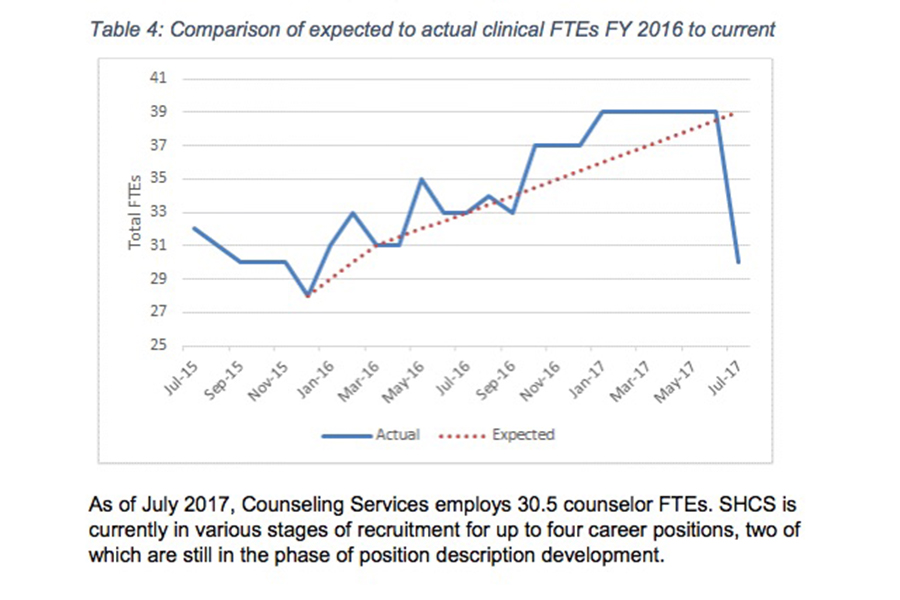
Counseling Services Audit and Management Advisory Services Project #17-67. (Performed by the University of California, Davis Audit and Management Advisory Services)

Audit was done two years into $18 million UC effort to expand counseling services

This article is the third in a three-part series examining issues that counseling psychologists in the UC system are currently facing, including under-market wages, understaffing and high demand leading to systemwide recruitment and retention issues.


The California Aggie recently obtained and verified a copy of an internal audit of UC Davis Counseling Services performed in December of 2017 by UC Davis Audit and Management Advisory Services. This audit was performed almost two years after the start of an $18 million UC-wide effort to hire additional clinicians throughout the UC system in order to “increase access to mental health services, reduce wait times for students, and complement outreach and prevention efforts.”

The audit states that the reported numbers of staff on campus have been inflated to misrepresent the actual number, and that $250,000 worth of mental health funds (MHF) was spent by UC Davis in a manner “inconsistent with non-binding guidance” provided by the UC Office of the President. Additionally, the audit includes a graph (see above) which depicts a steep decline in the total number of counseling psychologists on staff in 2017.

Vice Chancellor of Student Affairs Adela de la Torre requested the audit be done and said it provided “good feedback.”

“We don’t necessarily need to hire more counselors,” de la Torre said in response to the audit and its findings.

In UCOP’s announcement of its four-year initiative to hire “85 clinicians across the system” in 2016, the word “will,” used to explain what the UC will do, is used eight times in the original press release. De la Torre, however, objected to the word “mandate” being used to describe the UC’s plans. She said the four-year increase in student services fees for the hiring of new clinicians to bring campuses in line with nationally-recognized staff-to-student ratios “was guidance.”

Individual student contribution to the Mental Health fee was addressed in a joint response sent via email from Assistant Vice Chancellor for Divisional Resources of Student Affairs Cory Vu, Principal Budget Analyst Laurie Carney and Campus Life Content Provider for the UC Davis News and Media Relations team Julia Ann Easley.

“For Fiscal Year 2017-18, all students pay $1128 annually, of which $113 are paid by undergraduate and graduate professional students and $100 by graduate academic students towards the Mental Health fee,” the email stated.

When asked whether the hiring of new counselors with these fees as outlined in the UC press release is an obligation of the UC campuses or an aspirational goal, UC spokesperson Stephanie Beechem said the “collaborative effort […] is ongoing.” Beechem did not respond to requests for comment as to how, specifically, UCOP is implementing the initiative.

“The [UC] has not put the effort into trying to meet their own mental health initiatives that they put out,” said Jamie McDole, the vice president of the University Professional and Technical Employees, which represents counseling psychologists. “There’s been a lot of turnover to our staffing, they’re not even close to the mental health standards they’re supposed to be achieving — of a therapist available for every 1,000 to 1,200 students. They’re failing.”

The steep decline in counseling psychologists shown on the graph (see above) was due to the termination of contract staffers at UC Davis. The audit states that ten contract employees were hired “temporarily to satisfy general under-met student need” but “only one of the ten employment contracts was renewed past June 2017.”

UPTE is currently in negotiations with the UC over its healthcare contract.

Since the existing healthcare contract does not include any contract employees, who are at-will and may be terminated without explanation, several of the UC campuses transferred their contract employees to full-time positions during bargaining with UCOP. According to McDole, however, rather than transfer UC Davis’ contract employees to full-time positions, they were terminated — “they just laid them off instead of dealing with it.”

McDole said a charge of “unfair labor practice” has been filed against UC Davis. Nan Senzaki, a senior staff member of UC Davis counseling and psychological services, commented on the hiring of the 10 contract staff members.

“Last year (2016), several […] contract staff were suddenly hired with varying levels and kinds of experience,” Senzaki said via email interview. “Although, I believe this was done with good intentions, it did not feel to me that we were providing exponentially more services commensurate with the addition of staff. I’m not confident we were being as efficient or thoughtful in what seemed a rush to increase staffing. I appreciated the additional staff, but in my experience the distribution of clinical workload was not even.”

According to Margaret Walter, the director of health and wellness at UC Davis, “the decision to end the contracts early was related to budget.”

In discussion about the SHCS budget and the funding of mental health services, Walter, who came to UC Davis in June, said that “in looking at the budget,” she “found that a lot of folks here […] didn’t quite understand how our budget worked.” Asked if there is an issue with transparency regarding the budget, de la Torre said Walter could present informational materials to the staff — Walter replied, “we have been.”

Walter added that she hoped the staff “would trust that [the money from the initiative] was spent appropriately.” The audit, Walter said, “found the money was spent appropriately as it was supposed to be.”

The audit states that $250,000 has been allocated annually to Student Judicial Affairs and the Student Disability Center for case management positions.

“As a result, fewer funds are available for recruitment of Counseling Services counselor [full time employees] FTEs,” the audit states. “Guidance published by UCOP in 2015 indicates that the funds should be used in support of the Counseling Services department. We discussed this with leadership at UCOP, who suggest that though the guidance is not binding, it demonstrates an expectation of the UC students and Regents that the funds be spent in support of undifferentiated care from a central counseling unit to which all students have access.”

The joint response from Vu, Carney and Easley states that “Student Affairs and Budget and Institutional Analysis (BIA) will seek clarification from […] UCOP regarding the funding for the positions at Office of Student Support and Judicial Affairs (OSSJA) and the Student Disability Center (SDC). Student Affairs and BIA believe the current use of funds is appropriate.”

Both positions funded with the money, at the SDC and OSSJA, are clinical psychologist positions.

The audit states that counseling services employed 28 counselors in January of 2016 — “at that time the Provost documented an agreement with the Vice Chancellor for Student Affairs to add 11 new FTEs by the end of FY 2017.”

According to Walter, there are currently 28.5 counselors at UC Davis and several open positions. Walter was asked if she agrees with de la Torre’s claim that the university does not “necessarily need to hire more counselors.”

“We do need more mental health providers,” Walter said. “In turn, we will need more counselors as well, people providing more direct clinical service to students, especially as our student body grows.”

In October of 2016, plans were announced to move the Women’s Resource and Research Center out of North Hall so counseling services could expand into the first floor. The additional space would be needed to house the estimated 11 to 12 counselors UC Davis planned to hire through the UC-wide initiative. The WRRC currently remains in North Hall, and counseling services have not drastically expanded elsewhere on campus. Director of Student Health and Counseling Services Sarah Hahn said the university is “not yet in need of additional space for counselors.”

“They needed that space for 12 new counselors,” said Samantha Chiang, a fourth-year English major and the director of the UC Davis Mental Health Initiative. “But now, they haven’t gotten any new space. Where are the 12 counselors? Also, we haven’t had a net increase of 12 counselors. [… We’ve] potentially hired more than 12 counselors but because our retention rate is so bad due to poor pay, we haven’t increased by 12. That has really been obscured from the student body. We really need to mobilize in some way to ensure that we get our money’s worth. That was supposed to go to direct counseling services. They can’t say, ‘Oh, this was for [something else].’ No, that money was earmarked for direct counseling services.”

According to UCOP, the $18 million “will support hiring 85 mental health clinicians to include psychologists, psychiatrists, psychiatric nurse practitioners and case managers.” The statement from Vu, Carney and Easley states “UCOP was not prescriptive in how the Mental Health funds were to be used other than for mental health services.”

UC Davis currently employs 3.5 psychiatrists. The UCOP-recognized ratio is one psychiatrist per 6,500 students. There are “postdoctoral psychiatry fellows from the UCD Medical Center that see clients,” Walter said, stating the university is “aware that our ratio for psychiatry needs to be addressed, especially in light of increased enrollment in the future.” Additionally, including the postdoctoral fellows in the ratio would result, Walter said, in a “psychiatry provider-to-student ratio of approximately 1:7,500.”

Another issue addressed in the audit during talks with de la Torre, Vu and Walter — and brought up repeatedly by all three — concerns low levels of productivity. The audit shows that in 2017, clinical counselors had an average of 2.26 clinical sessions per day, data based on self-reported numbers. Walter emphasized this low number of reported sessions taking place in a workday.

“My experience working at other schools has always been to use the benchmarks they put in the audit to argue for more clinicians because staff were seeing seven, eight people a day,” Walter said. “That’s been my experience at some other schools. I’ve not been on the flipside ever before. This is really unusual. Of course, there’s days when a provider will see five or six, but there’s days when they’ll see none or one. It was shocking for me.”

Senzaki commented on the audit’s findings regarding productivity — she commented after being notified that The Aggie had already obtained a copy of the audit.

I am deeply concerned with the apparent misrepresentation of the [data] despite disclaimers in the audit report,” Senzaki said via email. “I fear it has the potential to be interpreted that we are all grossly underperforming and underutilized in all areas of service. This type of data continues to undermine morale, is misrepresentative and distracts from more meaningful and important conversations with how to provide competent mental health services which meets student/campus community needs. It does not address retention of staff and sustainable measures of performance and productivity. There are many components to this discussion. From my reality and experience, some staff provide way more direct clinical hours than other staff.”

De la Torre talked about a “productivity issue” which can be addressed by a “need to redistribute the workload.” Senzaki, however, who has just begun her 18th year working at UC Davis, said that how productivity is being measured is flawed.

“These low numbers have in the past, resulted in a pattern of management often directing pressure at North Hall clinical staff to pick up the pace (productivity) vs. looking at all the other apparent issues with utilization within various programs, management, the system and data,” Senzaki said via email. “In other words, if we are defining “apples” and more specifically, “MacIntosh apples” as one variety of an apple (representing direct counseling contact or sessions=clinical), you can’t also include all varieties of “apples” along with “oranges,” “pears” and “peaches” (representing all the other functions and duties one might include in mental health services) and then create a hybrid and assume you have a legitimate measure of standard productivity. It begins to minimize our sincere efforts and our diverse roles within supporting and providing various facets of mental health services.”

The university has plans to hire one additional counselor each year for the next three years. Asked if the university has, during the time of the four-year UC-wide initiative, hired significantly more counselors, de la Torre instead stressed the importance of diversity.

“I think there’s something more important that I have seen in the last few years and that is the diversity of counselors,” de la Torre said. “I can honestly say, as a faculty member for 15 years, the biggest complaint that was against counseling was quite frankly the lack of diversity of the counseling staff. We can talk about hiring more, it’s like hiring more faculty. But if it’s the same person, meaning the same demographic, that doesn’t address the fact that we need diverse ones. It’s a trade-off. Then the question becomes to the students, ‘Is it important for you to have that diversity?’ And that’s a really good question to ask, ‘Are you willing to give that up?’”

UC Davis does send monthly reports to UCOP concerning the university’s progress with additional hiring and the allocation of the mental health fund. The audit, however, addresses misinformation within UC Davis’ reports.

“Data are currently being reported with the intent to show how the new MHF funds are used, [which] does not take into account whether the funds are used to increase net counselor FTEs, but rather aims to show that the funds are not used elsewhere and are not being accumulated as reserves,” the audit states. “A conflicting interpretation is that the data are meant to show how many FTEs have been added using the new MHF funds. The most recent reports claim new counselor positions, several of which we found to have been existing positions, but whose funding sources had been shifted to the new MHF. We conclude that these reports do accurately report a new use of MHF funds, but that they do not satisfy the intended purpose of showing net increase in total counselor FTEs. Rather, they tend to suggest an inflated number of new positions added.”

In response to these findings, Walter said UCOP now “knows where people are.” Another issue in the audit addresses the fact that counseling services is currently “operating without a strategic plan.”

“One of the [needs] is a strategic plan — how would we start [one], especially in light [that] the chancellor doesn’t want us to have a strategic plan until his strategic plan is done,” Walter said. “We have to hold off on this as the greater UC Davis strategic plan is unfolding, but we could do some groundwork right now. It will help us not just preserve the things we’re doing well, but add things that we want and realize that we can lose some things.”

A spokesperson for Chancellor Gary May said that May’s chief of staff indicated that no such directive came from the Chancellor’s office.

Walter later said via email that “current strategic planning efforts of the Chancellor will not delay us, and I’m sure they will all align once complete.”

In January, Dr. Greg Eells, the director of counseling and psychological services at Cornell University, came to UC Davis to perform a needs assessment using the findings of the audit. Eells last performed a needs assessment for the university in 2013.

The Aggie obtained a copy of Eells’ findings in 2013. The assessment recommended additional hiring of staff to meet nationally-recognized ratios and student demand, the development of guidelines for clinical productivity as well as “relationship building […] to shift the culture of ‘they’ to one of ‘we’ where staff within CAPS and across the broader SHCS feel committed to the singular mission of providing integrated care to UC Davis students.”

In reference of the recommendations and findings of the 2013 Needs Assessment, Walter said she thinks “it’s interesting that things come up in the audit that were also true four years ago.”

A town hall on mental health is scheduled for Tuesday, Feb. 13 at the ARC Ballroom at 7 p.m.


Written by: Hannah Holzer — campus@theaggie.org


Interfaith Rotating Winter Shelter to be held in Davis

Councilmember Lucas Frerichs led the forum Addressing Homelessness at the Unitarian Universalist Church of Davis, where the Interfaith Rotating Winter Shelter would be held the following week. (ANH-TRAM BUI / AGGIE)

Community-based charity offers place to warm up in winter months

The Interfaith Rotating Winter Shelter (IRWS) was held at Davis’ Unitarian Universalist Church from Jan. 25 to 31.

According to the 2017 Yolo County Homeless count, 146 people on a given winter night are in shelters or living on the streets, with as many as 40 percent of those people sleeping outside. Winter nights in Davis can see the temperature drop to 38 degrees in December and January.

From Nov. 30 to Mar. 16, the IRWS offers anywhere from 25 to 50 beds at 16 locations in Woodland and Davis. The project serves individuals and families requiring housing and food from 6 p.m. until 6 a.m., then sends them off with a bagged lunch. Showers and hot beverages are also provided to guests. The IRWS, however, is not a clean and sober program.

During non-winter months, the shelters open some beds for emergency shelter. During the winter months, the shelters focus exclusively on providing transitional housing to encourage upward mobility and care for individuals for up to a week. As many as 83 people reside in shelters in Davis on a given night. The city also offers 1,800 units of affordable housing.

“These individuals want to be productive members of society,” said Martha Teeter, of Davis Opportunity Village and Davis Community Church, at a planning proposal meeting.

Mayor Robb Davis explained that caring for people living non-traditionally is a long process. Davis elaborated that, since the IRWS has been operating for more than 10 years, relationships between volunteers and members must be established and maintained.

“We need people that have the skillset and the ability to connect to the community,”  Davis said.

Volunteers are welcomed in November, after which they undergo an orientation that teaches them how to best serve citizens of Davis and Woodland. Positions are open for drivers, night crew, cooks and input volunteers. IRWS also provides internships for college students as well as high school leadership opportunities.

“We call it homelessness but it’s a syndrome of so many factors,” Davis said. “What you’re seeing is the end result.”

To combat the disparity between the number of people on the street and the number of beds provided, several social service groups have banded together. H Street housing, a temporary housing shelter, recently introduced Paul’s Place, a proposed construction project that would provide up to 90 beds for those in need.

At a homelessness forum on Jan. 21, Teeter expressed her concerns about how renovations to H Street might impact the lives of individuals living in temporary housing.

“We’re going to need the IRWS and transitional housing,” Teeter said.

Though the homeless count is decreasing in Yolo County as a whole, it is increasing in Davis, prompting IRWS organizers such as Bill Pride, the executive director of Davis Community Meals and Housing, to campaign for affordable housing in the city and county as a preventative measure.

“I cannot emphasize how the lack of affordable housing in Davis and in other communities is a crisis,” Pride said.


Written by: Genevieve Murphy-Skilling — city@theaggie.org

Sold-out Mental Health Conference featured keynotes from Sacramento mayor, UCSB shooting survivor

ANH-TRAM BUI / AGGIE

Conference included student panels, expert workshops, resource fair, healing space, art gallery

The second annual UC Davis Mental Health Conference was held at the Conference Center on Jan. 20 and 21. Programming included expert workshops, student and expert panels, a resource fair, a student gallery and a healing space as well as lunch and dinner. The aim of the conference was to promote mental illness de-stigmatization, education, self-reflection and healing through mental health care discourse.

According to the National Alliance on Mental Health, one out of five Americans suffer from mental illness — 43.8 million adults per year. Depression is the leading cause of disability worldwide and suicide is the third leading cause of death in people aged 10 to 24.

Samantha Chiang, the UC Davis Mental Health Initiative director and a fourth-year English major, explained her basis for the Mental Health Initiative, the UC Davis student organization that coordinates the conference. Chiang and other initiative members believe that their conference can be a representation of approachable, easily accessible mental health care information and resources amid rising student demand.

“Our initiative subscribes to the value ‘nothing about us without us’ — what’s really important about that is that our initiative is run by students,” Chiang said. “That makes it infinitely harder, but that also means our decisions we make directly apply to our community. It’s predominantly lead by folks who struggle with their mental health. I know for myself and for the  directors slated to take over next year, we all deal with mental health issues that interfere with our academics, our social life, with our emotional capacity and just our ability to exist.”

The tickets to attend the conference sold out over a month in advance and according to Chiang, there were an enormous amount of applications to the student panel, showing a willingness by students to share their own struggles.

“The student panels are all students and we could only take a third of the applicants,” Chiang said. “We didn’t have the capacity to take everyone. Because they took the time to apply, we gave everyone who reached out to apply fee waivers for lunch — our way of giving back.”

Providing food through food trucks and buffet-style lunch and dinner became an important part of the conference for Chiang. According to the director, food insecurity deeply intersects with mental health care.

“We realized that food insecurity is an issue very much intertwined with mental health, so we had $10 food vouchers for each of the students who needed it,” Chiang said. ”We got funding for that from the Aggie Food Connection, and they provided us with a $1,000 to purchase food vouchers for students. [On Saturday], our allocation of 50 actually ran out, so we had to spill over into [the next day’s] food vouchers.”

Chiang was most excited about the opening keynote speaker, Siavash Zohoori, a UC Santa Barbara alumnus who was a survivor of the 2014 Isla Vista shooting. According to Chiang, Zohoori’s work provided integral support and inspiration for her own process of creating UC Davis’ initiative.

“[Zohoori] currently works as someone who encourages other folks to use storytelling to share their experiences of trauma and marginalization in society,” Chiang said. “He developed post traumatic stress disorder — he was talking about how this affected the course of his life. He started the UC-wide mental health campaign that was elected for the UC students association for two years known as ‘How Are You.’ He was actually one of the people alongside Caroline Nguyen, the UC Irvine conference director, who inspired our community and me to start mental health advocacy work. That’s how we all got together and decided this was something that could benefit the Davis community. It’s amazing to see how it’s come full circle. I can only hope that our initiative inspires someone else the way he inspired me.”

Caroline Nguyen, a UC Irvine social ecology major, was one of the main creators of the UC Irvine Mental Health Conference. Two years ago, Nguyen and other Irvine students created the first UC mental health conference, which inspired Chiang to create UC Davis’ own conference. Nguyen discussed the direct correlation between the student mental health conference in lightening the burden on clinicians.

“Student demand for clinical services and therapy is outpacing the ability of clinicians to be able to meet that demand,” Nguyen said. “[Conferences] are a space where we can be helping hands in continuing to deliver the education and preventative care necessary to supplement the direct services from professional practitioners. It’s a very cost-effective way to be able to continue [to] build community and increase awareness without having to place any more strain on already overworked clinicians. It’s very supplemental and it’s not meant to replace formal therapy, but it provides a different kind of support network. It gives students a space to share, and get insight from like-minded peers and build networks on the basis of shared struggles and victories.”

According to Nguyen, while university counseling centers also offer valid help, open spaces providing inter-peer dialogue removed from faculty and administration are invaluable for students.

“Students can speak to each other and be candid in a way that students and administrators can’t,” Nguyen said. “There is value in that student administrator collaboration, but ‘by students for students’ is a very different kind of atmosphere that I think is very essential. People always stress the importance of seeking professional care, but they don’t think about the fact of students who don’t ever feel comfortable enough to take that step. Or what about when a student terminates therapy and they need some network or continuing educations? It’s spaces like these.”

Sofia Molodanof, the co-leader of the student mental health coalition and a fourth-year English major, also spoke about the power of mental health conferences.

“It is a great way to bring together the different mental health communities on campus who are working toward similar goals,” Molodanof said. “I especially appreciate how the conference allows a safe space for self-reflection for those who struggle with mental illnesses or may know someone who does.“

Milly Judd, a third-year animal science major and the deputy director of the initiative, will be one of the new deputies replacing Chiang in the next academic year. She spoke about what drew her to the initiative and how she has witnessed the conference open a healthy and necessary dialogue.

“I was initially drawn to the Mental Health Initiative because of my personal experiences with mental health disorders — my hope is to provide others in similar situations with resources, allies and inspiration so that I could help them in their journeys, even a little bit,” Judd said. “I feel that the Mental Health Conference is able to not only provide a healing space and resources for students struggling with mental health, but also educate others on mental health disorders and the importance of self-care for all folks. In addition, the Mental Health Conference helps to start the conversation to de-stigmatize mental health and mental health disorders.”

Sacramento Mayor Darrell Steinberg delivered a keynote speech that closed the conference on Jan. 21. Steinberg provided anecdotes which indicated America’s prioritization of physical health over mental health.

“If you have to miss school, or work, because you suffered from some illness and you come back, you will not hesitate to tell coworkers and supervisors that [you] missed worked because of a physical illness,” Steinberg said. “People are compassionate, of course, during the illness, and they will check in and make sure you’re ok. If you leave school, or have to leave work because of a psychiatric illness — bipolar, schizophrenia, anxiety, major depression — in most instances, when you come back to work or school, you will not tell people why you missed work or school. In the workplace, you’ll be afraid that if you tell somebody that they’ll hold that against you when it comes to a promotion or how you’re treated at the workplace.”

According to Steinberg, the fact that the mentally ill homeless population is categorically ignored further illuminates the tumultuous road ahead to changing accessibility to mental health care.

“[If you] walk down the street and see somebody talking to themselves in ways that make it clear they are not well, more often than not, because we’re busy, or because we don’t feel like there’s much we can do about it, we will walk by,” Steinberg said. “These examples are real life examples of how much work we have to do together to make mental health the public health priority that it really is if people are going to have a better chance to live better lives.”

Steinberg echoed sentiments heard across the two days of the conference from students: mental health care needs to be prioritized and fully committed to through advocacy-driven policy and money allocation.

“It takes incredible fortitude and incredible strength to tell your story,” Steinberg said.  “But that’s exactly what the mental health movement needs in our country. Willing to step up, stand up and assure your friends and your classmates and the world at large that they are not alone. In America, we don’t talk about it nearly enough. Mental health doesn’t have to be a life sentence of disconnection, incarceration [and] unhappiness. But because of the way many cultures look at issues of the brain, too many people suffer needlessly. It does not have to be that way.”


Written by: Aaron Liss — campus@theaggie.org


Beyond the Budget holds town hall in response to funding cut

ZOË REINHARDT / AGGIE FILE

List of demands to be presented to Division of Student Affairs

Members of the UC Davis Cross Cultural Center and other university students gathered on the night of Jan. 22 at the LGBTQIA Resource Center to discuss funding cuts to student centers on campus. The meeting was part of a movement called Beyond the Budget, which began in response to the recent $77,000 budget cut to the CCC’s funding. Beyond the Budget is unaffiliated with the student center. The intention of the discussion was to compose a set of demands regarding funding cuts to all student centers and communities to be presented to the Division of Student Affairs.

“[We want] to give students a voice, address community needs, and hold admin accountable by drafting a list of demands including but not limited to #fundtheccc,” reads a graphic for the town hall that was posted in the Beyond the Budget Facebook group.

At the beginning of the meeting, leaders of the event presented a timeline showing the date of the cut and the subsequent student responses to it. They attributed unsubstantial student activism to a lack of transparency on the part of administrators. Additionally, they noted that the timing of the budget cut, in the spring of 2017, might have been intended to take advantage of student burnout that persists as summer approaches.

In response to the presentation, audience members proposed various ways to combat administrative actions that might prove detrimental to on campus organizations. One student postulated that if student centers operated solely on student fees, it would be more difficult for administrators to control the centers’ autonomy.

Another attendee hypothesized that administrators might be monitoring the students that check in to different organizations. They noted that when students swipe in before entering student centers, their attendance data is collected by the administration, which might be used to correlate quantitative characteristics such as GPA to certain organizations.

Others argued that changing the administration’s relationship with student organizations required more than delivering a set of complaints and requests to the Division of Student Affairs.

Some were hesitant to believe that a compromise between student communities and administrators could ever be reached. There was frustration expressed with the lack of clarity and justification for administrative actions that impact student centers.

One student brought up the short-lived Brown Bag Initiative, a free lunch program that distributed local produce to students in need. According to the student, administrators shut down the program without citing the specific reasons for the termination.

Toward the end of the meeting, the attendees drafted a list of demands. One demand asked that administrators give “clear qualifications for programs” to avoid unclear termination of student organizations, such as the Brown Bag Initiative. Another demand requested that administrators be more transparent about how the budget is distributed to university programs. Many demands revolve around student autonomy and the ability to make most, if not all, of the decisions relevant to student organizations and centers.

A survey was shared with meeting attendees as a way for students to share stories of how administrative decisions have negatively affected students or student organizations. It also gave students the chance to add to the list of demands to present to the Division of Student Affairs.

“Feel free to use this form to bring forth your demands or narratives regarding how you, as a student, have been affected by decisions made by administrators in higher education,” the survey description reads.

While the survey was only supposed to be live for 24 hours after the end of the town hall meeting, it can still be taken online.

Certain leaders and members of the Beyond the Budget movement planned to attend the ASUCD Senate meeting on Jan. 25.

“We are trying to pass a resolution of support for our demands and movement [and] need as many [folks] there as possible,” read a post in the event group on Facebook by Abigail Wang, a coordinator of the town hall.


Written by: Jacqueline Moore — campus@theaggie.org

MLB benches Chief Wahoo

CAITLYN SAMPLEY / AGGIE

Other teams should follow suit in eliminating offensive mascots

Major League Baseball announced on Jan. 29 that, starting in 2019, Chief Wahoo, a buck-toothed caricature of Native Americans that doubles as the mascot for the Cleveland Indians, will cease to appear on the team’s uniforms. In a statement to The New York Times, Rob Manfred, the commissioner of baseball, deemed the symbol “no longer appropriate for on-field use” — a long-overdue but nonetheless welcome divorce from a logo that many have considered disrespectful, shameful and racist.

The Indians are just one of many athletic groups to draw criticism for using Native American representations as emblems for their teams. Hundreds of high schools and colleges have already taken the initiative to shift toward less racially disparaging imagery. Stanford dropped its “Indian” mascot in 1972 and the University of North Dakota became the Fighting Hawks instead of the Fighting Sioux in 2015.

But professional sports — which have the largest platform and most significant amount of influence — have lagged behind at an embarrassing rate. Teams like MLB’s Atlanta Braves, the National Football League’s Kansas City Chiefs and the National Hockey League’s Chicago Blackhawks have all failed to seek more appropriate substitutes despite coming under fire for years.

The Washington Redskins, perhaps the most egregiously offensive case, faces ongoing condemnation for stubbornly refusing to consider alternative names. Despite the historical use of “redskin” as a racial slur, Dan Snyder, the owner of the Redskins, has stated with stunning obstinance that he will never change his team’s name, even claiming that it honors and celebrates Native Americans.

Hopefully, MLB’s decision will increase the pressure on other sports teams to desert their own Native American insignias. As a cornerstone of American culture, MLB possesses the stature to make a strong political statement that reaches and challenges millions of people. The decision could begin transforming public sentiment and create momentum for similar changes in the future.

But the removal of Chief Wahoo isn’t the only step the Indians must take to foster “a culture of diversity and inclusion throughout the game,” as Manfred said. While the Wahoo mascot will be retired from uniforms, the Indians still intend to sell merchandise with the bright red caricature at several of their souvenir shops. They have also released no current plans to scrap the Indians’ team name, instead continuing for the foreseeable future to make a profit off of an ethnic stereotype. The present solution is evidently a compromise for fans, but one that nevertheless must fizzle out to demonstrate true respect for Native American peoples.

Regardless, MLB’s resolution showcases not only that the athletic industry can be a powerful force in enacting political progress, but also that this type of change is both possible and reasonable. Last year, the U.S. witnessed a swarm of Americans who tightened their grips on reprehensible pieces of national history, from schools named after prominent Confederate leaders to cities protecting Confederate statues. The Editorial Board hopes that, as a massive industry in America, MLB will lead the way toward eliminating distasteful tributes to the past.


Written By: The Editorial Board

Humor: Jesus Christ cancels resurrection due to protesters

CAITLYN SAMPLEY / AGGIE

Father and Son talk it out

A strange object descending from the sky was initially thought to be Jesus Christ, but after further investigation was determined to be an ICBM from North Korea headed straight toward the White House. While many people wish it would’ve hit successfully, others were concerned that the extreme radiation and nuclear winter would turn the majority of the politicians into super mutants, allowing true tyranny to form.

Of course all of this chaos was quickly swept up and hidden from public eye, especially after the revelation that Jesus Christ was supposed to be resurrected on Dec. 17. The resurrection date was announced by God on Facebook, which was met with criticism from many religious folk who felt that God was inept for choosing a dead social media platform that’s mostly infested with old people who reply by leaving a comment, rather than leaving a “reply” comment. Others were merely upset that God used over 280 characters, the Twitter standard, since many common folk cannot process that many characters at a given time.

“People are so f—ing pathetic,” God told atheist Drew Hanson through a magic conch shell. “I think what gets me the most is their stance on abortion. I love babies, so I’m pro-abortion. Heaven is mostly full of adults, and I’m just not into them. I already aborted Jesus twice, which people thought was their own free will, so I’m not against doing it a third time.”

The significance of the Dec. 17 resurrection date wasn’t explained, but from what we can infer it’s a tribute to the theatrical release of “The Dark Crystal,” one of the greatest films of all time that came out on that day in 1982.

Protesters gathered at the supposed resurrection spot, located near the Dakota Access Pipeline, with pickets reading, “Jesus please wait for Trump’s wall!” Those who feared that his resurrection meant the oncoming of the rapture held pickets reading things such as, “Jesus, can you please wait until Christmas so I can take the iPhone X my parents are getting me to Heaven? P.S. They are getting me one, right?”

Roman reenactors gathered at the scene, ready to crucify Jesus for a second time, or as some have called it, “double-cross him.”

“Dad, I don’t know if I want to go down there,” Jesus said. “Just like Bill Hicks said, they are still wearing crosses. Would you wear a scoped rifle necklace to a JFK memorial?”

“Jesus, Jesus,” God said. “I think I’m going to have to send a tsunami wave toward another reactor. This shit is unreal.”

“I just wanted to go down there to announce the third edition of the Bible, which will be exclusively digital and include in-app purchases. But here I am wanting to burn crosses,” Jesus said.

The other Bible update was to clarify that the blood of Jesus is a reference to him being a vampire, and consequently all of his followers must suck.

After extensive debating, the United States military decided to label everyone near the Dakota Access Pipeline a terrorist and kill them all to protect our freedom, although I think they really just wanted to kill all opposition to the pipeline.

Jesus canceled the resurrection, either due to humanity having learned nothing or in anticipation of the Dark Souls remaster coming to PS4 in May 2018.


Written by: Drew Hanson — andhanson@ucdavis.edu

(This article is humor and/or satire, and its content is purely fictional. The story and the names of “sources” are fictionalized.)

Mexican-American stereotypes in film

PUBLIC DOMAIN

How Hollywood has repeatedly circulated the same stereotypes and clichés

Movies are brilliant inventions, but because they tend to be depictions of reality, we as spectators also believe that they’re reflections of everyday life and people. For example, in the 1940s and ‘50s, when Hollywood directors first made films about Mexican people, they used stereotypes from different cultures in Mexico, grouped them together and said, ”Okay, this is Mexican culture.”

These stereotypes are reductive and simplify life in ways that are simply not true. For instance, the most classic stereotype of Mexican women in the media today is the role of the maid — that almost every Mexican woman is a maid on television or in real life. Examples can be found all over TV and movies, even in shows like “Family Guy,” in which the character Consuela is a maid with a heavy accent and all she does is clean.

The most prominent stereotypes of Latino/as in the media are the Latin lover, the hot-tempered Mexican female, the gangster, the gardener, the wild savage, the revolutionary, the rural worker and the drug lord.

Nevertheless, the craziest part is not why we have these stereotypes, but why they keep getting circulated with such popularity. Stereotypes generalize people, and the worst part is that they’re believable. Stereotypes repeat the same nonsense over and over again in harmful ways — and stereotypes about Mexicans ignore the rich and vast diversity that Mexico and its culture have to offer. In the United States, that diversity is not recognized. We are seen as a homogeneous people with the same “crazy” tendencies.

One popular example of someone who perpetuates these stereotypes is Donald Trump. Trump has gone on to say that Mexicans are, among other offensive terms, “drug dealers, criminals [and] rapists.” These are stereotypes that are all too present in the media.

And even when television does broadcast Mexican actors, it has been a tradition to cast fair-skinned Latino/as in lead roles. More often than not, they’re light-skinned, conventionally beautiful and have traces of European descent. Yet that is not always the case.

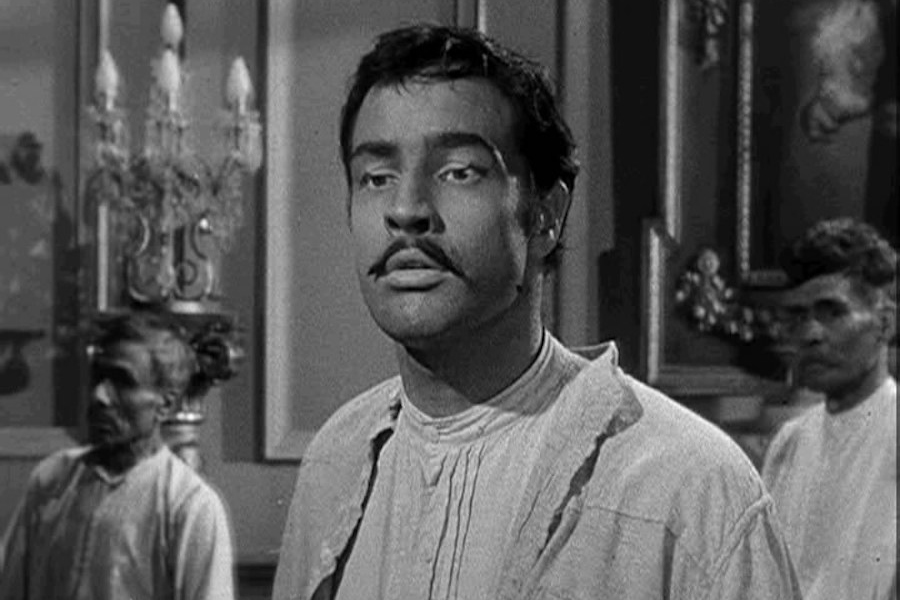
This can be seen in the movie “Viva Zapata” (1952), in which Marlon Brando did “brown-face” and played the revolutionary leader Emiliano Zapata. A white person played the lead role of a key figure in Mexican history — major uproar would occur if this movie aired in the present day. Albeit the film was made a while ago and things have “changed,” but we still see identical stereotypes from the 1950s in place today.

Danny Trejo, aka “Machete,” is an almost-perfect example. In the vast majority of movies he has been in, he plays the role of a crazy, bloodthirsty killer or a bad guy who seduces women and gets what he wants through violence. He’s a badass breaking the law in practically every role.

Above all, Hollywood has created stereotypes of Mexican-American communities as a whole. Urban movies depict poor Mexican neighborhoods riddled with crime where the youth are in gangs, struggle in school and always get in trouble with the law.

Other movies make statements about Mexican culture, such as depicting Latino/as as having huge, vehemently Catholic families. Moreover, many films depict Mexicans as “illegals” who only speak Spanish.

Why are there so many negative stereotypes in the media about Mexican-Americans? There are hardly any positive stereotypes of Mexicans in the media. The only ones that come to mind are that Mexican food is really good and that we love to dance, party and drink tequila.

Times are changing, but change has been slow. This past year, Eugenio Derbez and Salma Hayek starred in the film “How to be a Latin Lover.” The Latin lover stereotype has been distributed for years and years, while the circulation of positive stereotypes has been stagnant or nonexistent throughout history.

My biggest concern is that negative stereotypes about Mexican people are constantly spread, while progressive and affirmative stereotypes continue to be left in the dark. But my hope is that people are critical of the things they notice in shows and films because film distorts reality in ways that seem real but often fails to show the truth. More importantly, I want people to be aware of the negative effects that Mexican stereotypes have: they ignore diversity and show a lack of respect toward our culture.


Written by: Alejandro Lara — amlara@ucdavis.edu

Disclaimer: The views and opinions expressed by individual columnists belong to the columnists alone and do not necessarily indicate the views and opinions held by The California Aggie.