55.4 F
Davis

Davis, California

Monday, December 22, 2025
Home Blog Page 561

UC releases 150 year photo timeline

MEENA RUGH / AGGIE FILE

UC celebrates 150th anniversary with digital archive

On Jan. 8, the UC’s 150th Anniversary was celebrated with the release of a photography timeline that displays the university system’s rich history. Produced by the UC Office of the President, the site will be updated throughout the year, providing a unique live recording of history as it happens on campuses across California.

Founded in 1869, the System has only grown since then. An article released by the UCOP overviewed the UC system, stating that “today, the UC system includes more than 238,000 students and more than 190,000 faculty and staff, with more than 1.7 million alumni living and working around the world.”

The timeline covers everything from the original construction of the campuses to famous commencement speakers including President Barack Obama and the Dalai Lama.

UC Davis is highlighted multiple times throughout the timeline, beginning with iconic events like the first Picnic Day, the first Pajamarino and continuing on to more recent landmark moments such as the opening of the Bodega Marine Laboratory and the launch of the Betty Irene Moore School of Nursing.

In the UCOP article, UC President Janet Napolitano commented on the communal pride Californians should take in the UC System.

“Californians should feel tremendously proud of their public research university and all that it has accomplished over the last 150 years,” Napolitano said. “Since the very beginning, UC has done more than just help California prepare for the future — we’ve helped create it. And we have no intention of slowing down now.”

UC Board of Regents Chair George Kieffer was quoted in the same article stating that this timeline is a testament to the university system’s mission statement.

“This pivotal milestone is much more than an occasion to celebrate the founding of our great university,” Kieffer said. “It is a testament to the enduring and far-reaching value of the University of California to our state, nation and world. UC’s mission of education, research and public service is more vital than ever to meeting society’s challenges today and over the course of the next 150 years.”


Written by: Priyanka Shreedar — campus@theaggie.org
People Power of Davis group works to achieve greater transparency from UC Davis Police Department

MICHELLE GORE / AGGIE

Group hopes to improve reporting process

The ACLU People Power of Davis group is a local branch of a national grassroots movement that aims to uphold the constitution on a communal level. The movement was founded in light of the Trump administration and its perceived abuses of civil rights.

“By mobilizing in defense of our civil liberties, volunteers will build and strengthen local communities that affirm our American values of respect, equality, and solidarity,” the People Power website states.

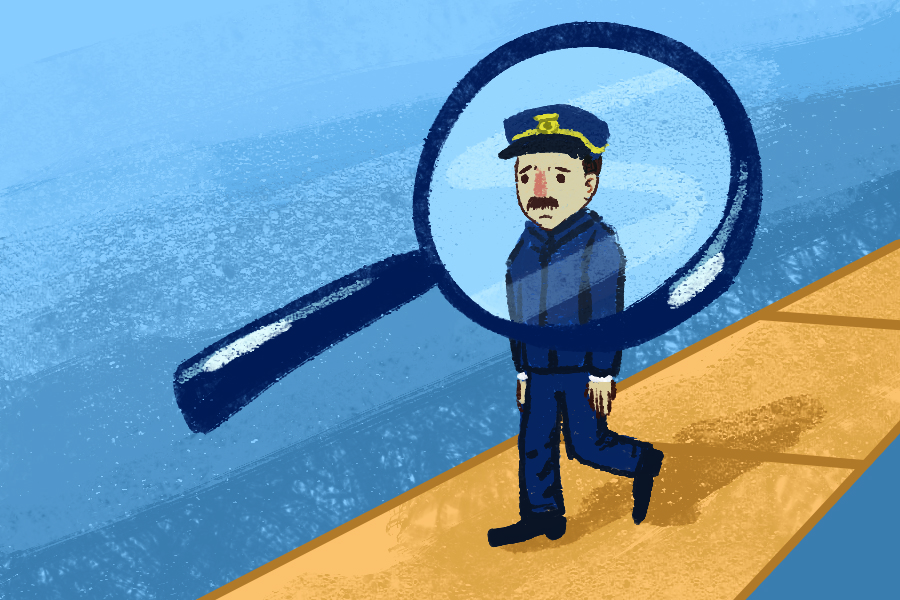
In the People Power of Davis group, students and civilians are uniting to take a closer look at the process of reporting officer misconduct to the UC Davis Police Department (UCDPD).

Currently, if students have a complaint regarding the conduct of a UC Davis police officer, they have a few options for reporting. Students can fill out a form at the UC Davis police station, or they can report the incident to the UC Davis Police Accountability Board. The PAB is made up of faculty and students and is completely independent of the UCDPD.

Complaints, once submitted, are filed through a complex chain of review. Complaints are first viewed by the Office of Compliance and Policy before they are reported to the Office of the Provost and Executive Vice Chancellor. Finally, reports are sent to the PAB, where they are investigated. The proceedings end with the PAB’s official report and recommendations, which are sent to the UC Davis Chief of Police.

“The current police accountability board does not have the authority to require any actions within the police department in response to a complaint or investigation,” said Caitlin French, a member of People Power of Davis and a Ph.D. candidate in nutritional biology. “The PAB can make recommendations, but the chief of police maintains the authority for disciplinary or any other action. I believe the process would be more effective in improving civilian-police interactions if the PAB had some say in what happens after an investigation, not only in terms of discipline of officers but also department-wide actions, such as policy changes and trainings.”

Furthermore, the chief of police is under no obligation to inform students or the PAB of any measures that have been taken in response to a report. PAB is also unable to process any anonymous complaints of misconduct, which may discourage students from reporting.

Daphne Carlson, a member of People Power of Davis and a graduate student in the School of Veterinary Medicine, also discussed the shortcomings of the reporting process on the UCDPD website.

“We found that the reporting form is missing a bunch of things,” Carlson said. “For people to report troubles they’ve had with the UC Davis police, one thing that they’re missing is sexual harassment.”

When reporting, students currently have the option to select one of several possible options for their report including discrimination and improper detention. The form currently lacks an area to report incidents of sexual misconduct.

The People Power of Davis group is conducting a campus-wide survey to gauge students’ opinions regarding the accessibility of reporting incidents of misconduct, whether students have ever used the site and what students feel they deserve to know about occurrences and reports filed against the UCDPD. People Power of Davis hopes to take its findings to the UCDPD and assist in implementing system-wide reforms to make the reporting process, and follow-up regarding investigation reports, more available to students.

Ray Holguin, a police officer and the outreach coordinator for the UC Davis Police Department, spoke about current partnerships the UCDPD has with student organizations and possible ways to strengthen transparency.

“We work closely with student groups to include Center for Student Involvement, Fraternity and Sorority Life, Student Recruitment and Retention, Veterans Affairs, Student Community Center and Student Housing,” Holguin said. “We are always looking at our communications at it relates to our campus community. We look at what is working [and] where we can improve and reevaluate our communications.”

Carlson spoke about students’ stake in the issue of police transparency.

“Apart from the real risk of maltreatment, this [lack of transparency] can fuel a culture of distrust and fear of police, which undermines the purpose of the police department of keeping people safe,” Carlson said.

Carlson and other members of the People Power of Davis group are quick to remind students that experiences with law enforcement officials are not universal.

“It is important to remember that one’s personal experience with police is not necessarily an accurate representation of how everyone is treated,” Carlson said. “It is critical to interrogate how one’s privilege and position in society may influence your experiences and relationship with police and how it’s likely very different for people of different backgrounds.”


Written by: Ally Russell — campus@theaggie.org

Guest: Dear Chancellor May — It’s time for ICA to stop playing games with student fees

IAN JONES / AGGIE FILE

Student fees continue to pay for sports that UC Davis doesn’t offer anymore

Dear Chancellor Gary May,

The news that UC Davis will once again offer a 15th women’s intercollegiate sport is welcome indeed. But there’s a history that must inform what ultimately will be your decision on which sport to add, why and whether or not that’s the end of it. Consider the following:

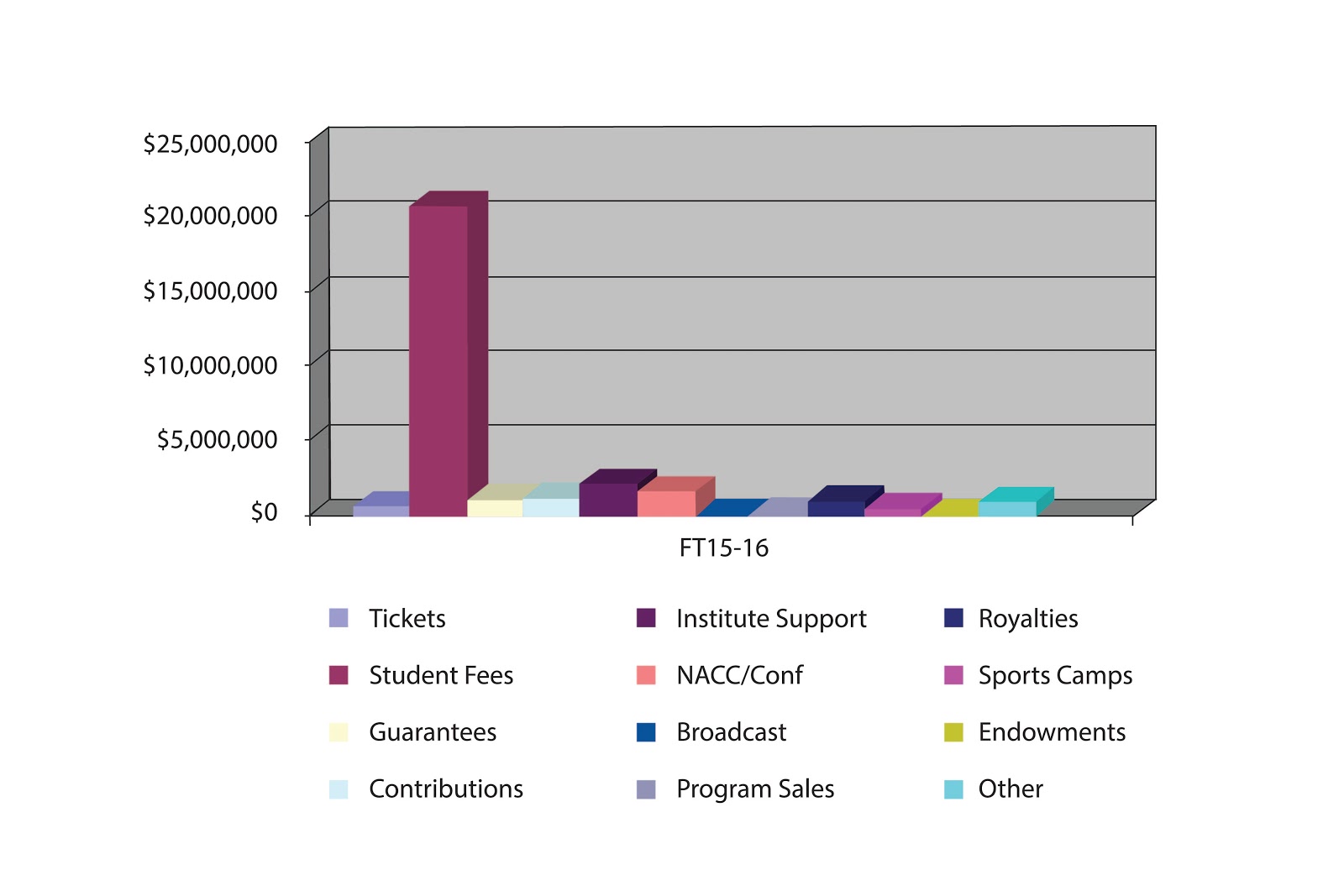
Since the early 1990s, the students of UC Davis have voluntarily contributed over $200 million to fund their Intercollegiate Athletics Program (ICA). Due to their Regent-approved fee initiatives, each undergraduate now pays over $700 per year, which adds up to well over $20 million per year — just for ICA alone. These fees cover fully two-thirds of ICA’s budget and are equivalent to a half-billion dollar endowment.

SHEREEN LEE / AGGIE

UC Davis student fees alongside all other sources of ICA program revenue for FY15-16, according to the university’s report to the NCAA.

There has never been, nor will there ever be, a more important “donor” to ICA than the students themselves. But that endowment didn’t come free for nothing. It came with conditions to which the UC Regents agreed. Yet somehow from 2009 until 2016, Linda Katehi, when she was forced to resign, didn’t give a damn about those conditions and even did her best to get rid of them. Why? Because, as one can glean from her own “dossier,” the only use Katehi ever had for Aggie sports was helping her enhance the university’s brand — and her own stature in the process. She wanted to get UC Davis football and men’s basketball games on TV, and she didn’t much care how.

Now, if it were her money or if the students’ money didn’t come with conditions, then whatever — that’s pretty much what just about every other school in NCAA D1 does. But at UC Davis, it is not her money, and the students’ money did come with conditions. And so as long as fees are collected in their names, it matters what those initiatives say, what the students understood and intended when they were passed and what the Regents agreed to. And, if I may remind you, when she breached the Campus Expansion Initiative (CEI) by eliminating four ICA sports in 2010, it was not only based on a bare-faced lie, but it also involved the confirmed misuse of $3 million of Student Activities and Services Initiative (SASI) fees.

I need to bring to your attention that ICA’s “FAQ” on this subject is both disingenuous and misleading. By omission it fails to acknowledge that, for their $20 million per year, the students are entitled to exactly the ICA program they voted for — no more and no less.  By omission it fails to include a selection criterion reflecting the university’s obligation to provide the 27 sports students have been paying for all this time — while only getting 23. By omission it fails explain that, when four sports were cut in 2010, the $1.8 million supposedly “saved” was instead doled out to the remaining sports with nearly half going to just two (can you guess which two?).  

If the Donner family has to live with its legacy, then how come ICA gets a hall pass?  Instead, ICA is bending over backwards to assure the donors to those other sports that their provincial interests won’t be harmed because this new women’s sport will be expected to pay for itself. Moreover, ICA asserts that it’s faultless. Sure it is — except for the fact that it was its own kowtowing recommendation in 2010 that led to the elimination of sports to begin with. And that by cutting sports, ICA would blow forever the university’s right to claim it was complying with Title IX under Prong 2 (a demonstrated history of adding sports). Or that with its five AD’s in the last eight years, ICA hasn’t been meeting its legal obligation concerning Title IX since 2012-13. And that every year ICA manages to spend over $6 million (fully 20 percent of its $30 million budget) to administer 23 sports, which is more than it costs Cal Poly and Sac State combined to administer all 41 of their sports — including two football teams. And that ICA pays the men’s basketball coach almost as much as the Regents pay you to run the entire university because no one else would take the job for less.

Very soon it will be up to you — and thereafter down to you. Please do not miss this opportunity to show us who you are and that you are cut from different cloth than your predecessor. Publicly vow to stop taking those Regent-approved fee initiatives for granted and start insisting that they be fully respected — or stop collecting the $20 million per year collected for ICA in their names. Recognize the university’s obligation to unconditionally restore sports, starting with women’s rowing and followed in successive years by men’s swimming and the rest.  Show UC Davis students how to own up to mistakes and set about responsibly fixing them.


Paul Medved graduated from UC Davis in 1978 with a B.S. in civil engineering. He has worked in transportation engineering in the Bay Area and Asia for nearly 40 years, now serving as the project manager of the BART Warm Springs Extension project.


Written by: Paul Medved

Disclaimer: The views and opinions expressed by individual columnists belong to the columnists alone and do not necessarily indicate the views and opinions held by The California Aggie.

Your next binge-watch

GLOBAL PANORAMA [(CC BY-SA 2.0)] / FLICKR
New Netflix series based off comic book series

By the looks of the Netflix ad and the seemingly excessive title, “The End of the F***ing World” may not seem like the next stop on your journey to occupy procrastination hours with. However, give it a short 20 minutes (about the length of one episode) and the premise will soon reel you in, making the “Next Episode” button very inviting. Accompanied by a beautiful, fitting soundtrack, the short series captivates viewers in its poignancy, relatability and charming nuance. Although it might not seem so at the start, its main characters, Alyssa and James, will stay with you way past their final moments on screen.

James, played by Alex Lawther, is the first character we are introduced to. His opening lines, “I’m James. I’m 17. And I’m pretty sure I’m a psychopath,” are spoken within the first 30 seconds. He goes on to explain why he thinks this, noting he kills animals and remembers them all. This is where his high school peer Alyssa, played by Jessica Barden, comes in. After permanently rejecting her phone-obsessed friends, she makes her way over to him across the cafeteria. In her mind, she clarifies, “I’m not saying he’s [James is] the answer, but he’s something.” In his mind, looking up at Alyssa as she reaches him, James thinks, “I was going to kill something bigger, much bigger.”

This is the initial hook  — will James kill Alyssa or won’t he? Well it’s easy to believe he is a psychopath. The monotonic, indifferent voice, the shortness of his conversations and his overall emotionless, unaffected aura point to something being suspicious. Given Alyssa’s childish, blunt, vulgar, careless and tantrum-prone personality, it appears she will annoy James enough to trigger her murder. Maybe Alyssa is just putting up a front though, and maybe James has something other than psychopathy lurking below the surface. That’s for you to find out. Beyond the intriguing premise there is much more that unfolds.

For one, the way the show captures the essence of teenage years. Hollywood tends to over-dramatize teenagers’ relationships with their parents, and “The End of the F***ing World” is no exception. Aside from that though, it displays with ease the rebellious, arrogant nature of teenagers. The dark humor mixed in also helps cut the heaviness, reminding us that even when things get hard, maybe the best thing to do is just laugh at it all.

Without giving away too much, the directing style of Jonathan Entwistle & Lucy Tcherniak complements the script well, especially given that the series is based off of a comic book. The short internal monologues Alyssa and James each have that are cut off or spurred by their realities reflect those we all have with ourselves as we encounter daily life. For example, when Alyssa and James dance with their eyes closed and Alyssa stops in the middle of it to look at him and say to herself, “I think he is properly beautiful,” James continues dancing.

At the end of the series, you realize the title is aptly named. Everything is the end of the world when you’re a teenager. Alyssa and James aren’t going on an apocalyptic adventure and their world isn’t ending, but it might as well be given what they go through and the impact their journey has on their lives.

I’m glad I got to experience the show before I turn 20 in April. Most likely, teenage tendencies will still hold well into the end of my 20s. Yet when the teenage years are long gone, I can hopefully rewatch this series and reminisce on the intricacies of young life and how everything was felt with such intensity.

“That was the day I learned that silence is really loud. Deafening,” says James. “When you have silence, it’s hard to keep stuff out. It’s all there. And you can’t get rid of it.”


Written by: Cecilia Morales — arts@theaggie.org

Police Logs

NICKI PADAR / AGGIE

Many unknowns

Jan. 9

“Heard only, muffled smashing of windows heard and followed by a car alarm in the area.”

“Unknown suspect damaged victim’s vehicle while parked at location.”

“Unknown male on reporting party’s property talking with reporting party’s mother and refusing to leave.”


Jan. 10

“Red truck with door open and nobody around.”

“Male transient loitering outside store with excessive belongings refusing [to] leave.”

“Occurred approximately one month ago — latch on sliding door has been broken and reporting party noticed things are being moved around in house.”


Jan. 11

“Reporting party’s ex-boyfriend has been taking her vehicle without permission and damaging the inside of the vehicle.”

“Unknown male sleeping on a couch on reporting party’s backyard patio.”


Jan. 12

“Occurred between 20 to 2100 hours. Reporting party and roommates came back from dinner and found the back door open and a sock in the hallway. Nothing appears to be taken.”

“Reporting party’s vehicle was hit and damaged by another car in the plot. Reporting party thinks he knows who the suspects are based off the sound of their car starting up.”

“Reporting party calling to complain that unknown subjects are purposefully driving their vehicles and causing noise, so she is unable to sleep at night.”

Humor: Jared Kushner saves legendary weed joke in Twitter drafts, waits for 4/20

CAITLYN SAMPLEY / AGGIE

Hell ya bro

“Bro, check out these socks,” Jared Kushner said to a New York Times reporter as he pointed to his socks. “They’re HUF socks. You see that? It’s weed. Well if my name ain’t KUSHner!” Jared said this as he winked heavily, indicating to the journalist that he was making an elaborate weed pun based on his last name. The White House staff in the room gave a collective sigh, as though they had heard this joke a million times.

“He seriously does not shut up about the weed thing. I kid you not, he makes a weed pun at least twice a day, more if Trump is around,” one anonymous White House staffer said. “Recently we were in a meeting talking about the whole Kim Jong-un situation, and out of nowhere, Jared interjected, ‘Why don’t we just smoke him out?’ referring to the NKPR leader. I said ‘What do you me-’ and he interrupted saying ‘I COULD JUST SMOKE HIM OUT IF MY NAME AIN’T JARED K U S H NER.’ Trump just started uncontrollably giggling at this joke. Then Trump and Kushner just started trading weed puns the entire time. They ended up making the meeting about weed puns instead of international policy.”

Kushner bragged to The Aggie that he had the absolute most amazing tweet lined up for April 20, an informal holiday for the infamous Mary Jane.

“My father-in-law, Trump, whom I also affectionately call ‘Daddy,’ will be very impressed with how funny and viral I am,” Kushner said. “I can’t wait to show him how amazing and funny I am and also prove to him that he should legally adopt me as his son. That would be nice.” Kushner’s voice trailed off as he started to stare out into space and tear up. He also oddly got an erection at the same time. The Aggie promptly ended its interview.

Kushner stood up, shouting “KUSH BABY,” as he exited the room.


Written by: Aaron Levins — adlevins@ucdavis.edu

(This article is humor and/or satire, and its content is purely fictional. The story and the names of “sources” are fictionalized.)

Humor: Study: Humans are not apex predators, but actually parasites

SIYAVULA EDUCATION [CC BY 2.0] / FLICKR
Planned Parenthood kicking it up a notch

The Center for Disease Control published a study last week revealing that humans are actually parasites rather than apex predators, as initially thought by many hypermasculine men, warmongering politicians and corporate maggots.

“We finally determined that humans are indeed parasites,” said John Mueller of the Division for Parasitic Diseases. “It’s not based in race, gender or anything like that. We’re all accountable. All I can say for sure is that tapeworms are posers.”

The official document from the study is hard to read after all of the words Trump redacted, but the gist of it is that human interaction with all lifeforms and material on the Earth is purely parasitic.

“Humans have existed for roughly 200,000 years,” Trump said, “mostly f—ing and murdering one another until civilizations arose in the past 6,000 years. The majority of damage to the Earth has been done in the past 200 years, though, so I’d say we’ve become much more efficient. ‘POTUS’ will now mean Parasite of the United States.”

Instead of telling women that they’re pregnant, doctors must now tell them that they have a parasite inside of them. I sat in on one of these conversations and interviewed the doctor to get deeper insight into the changes that will be made in the medical field.

“Hello ma’am, we wish to inform you that you have a parasite inside of you,” Dr. Buster Hyman said. “It will consume much of what you eat, contribute to substantial weight gain and, most importantly, give you the ability to sit in handicapped seating.”

“I was asked if I had a parasite inside me,” second-year Katherine Weaver said. “But I’m just fat. It was humiliating.”

The new season of “Monsters Inside Me” will focus entirely on child birth, according to Animal Planet representative Eric Shun.

“You see, once the parasite is birthed, it will continue to drain the host of money, energy and any form of pleasure,” Shun said. “We are advocating for what is now called post-natal abortion, which the White House conservatives surprisingly support.”

“If it’s inside of her, she can’t get rid of it,” President Trump said. “You have to let it be birthed, then we can kill it before it starts bleeding the welfare. That’s a respectful execution.”

Planned Parenthood will now be issuing large doses of antibiotics and wormwood as part of the parasite removal, or for those who are more masochistic, a very powerful kick to the stomach.

“We are hesitant to use antibiotics due to the potential development of a superbug,” said Planned Parenthood Aborter Edith McCrotch. “But seeing how things are going on this earth, who really gives a shit anymore. My job training has been squats and stretching in order to develop the most powerful kick. I might even buy spiked cleats.”

While humans are no longer apex predators, there are now “parasite predators” that prey on children and drain their innocence. This will be featured in the new “Predator” film, where the otherworldly villain will shoot dildos from a shoulder-mounted cannon and slay children with a Christian sceptre.


Written by: Drew Hanson — andhanson@ucdavis.edu

(This article is humor and/or satire, and its content is purely fictional. The story and the names of “sources” are fictionalized.)

Why are we still salting our roads?

BRIAN LANDRY / COURTESY

It’s time to ban road salt and make better anti-icing alternatives

Deer like salt. I found this out during my last trip to Yosemite after a deer ran across the road and forced the person driving to tap the brakes.

We slowed at every bend in the road after that, and we were surprised to see at least 10 more deer. They bounded across the highway or lingered with their heads bent to the asphalt. A huge stag with a rack of antlers stared at us unflinchingly. A doe watched our car, obviously insulted, as her fawn struggled out of the road. Something was drawing them into the road, endangering their lives and ours.

I wondered what the deer were up to, until I remembered stories that my uncle told about gigantic moose who wandered out of the woods to lick the salted roads in Maine.

Of course. They were eating salt.

“When ice is so thick and frozen that it cannot be cut with machinery, salting provides the ability to begin the breakdown of the ice,” said The Tuolumne County Community Resources Agency. “This process is very politically controversial and is used very sparingly throughout the county.”

Communities use salt to break up ice and give cars traction to drive, but the salt crystals sometimes attract deer and moose to roads, which increases their chances of being hit by cars.

“Road salt is kind of like potato chips for animals,” said Emilie Snell-Rood, an associate professor of ecology, evolution and behavior at the University of Minnesota.

Can you imagine the kind of sick trap we’re setting up for these deer?

When animals venture into roadways for salt, they’re also exposed to dangerous chemicals, such as car exhaust, spilled gas and metal shaving from brake pads.

“Approximately 15 million tons of deicing salt are used each year in the United States,” said Rena Silverman, a journalist for National Geographic. “Salt on snowy roads can reduce accidents by up to 88 percent, compared with untreated roads. But sodium chloride […] can harm aquatic life and vegetation when the ice-salt mix seeps into groundwater and streams, where it can remain for decades.”

Salt also threatens birds who ingest salt crystals, animals whose food sources and shelters become compromised and people on low-sodium diets whose drinking water has been contaminated.

“Many people assume that when you apply salt to the landscape it just gets washed away and disappears,” said Sujay Kaushal, a professor of geology at University of Minnesota Duluth. “But salt accumulates in soils and groundwater and takes decades to get flushed out.”

“The ‘freshwater salinization syndrome’ […] could be an issue for people with high blood pressure that require a low-sodium diet and patients who need kidney dialysis,” said Roni Dengler, a 2017 AAAS mass media science and engineering fellow.

Why are we still salting the roads if it’s bad for wildlife, the environment and people? Salting the roads may help prevent accidents today, but what will that cost us tomorrow? We need to ban the use of road salt and find a safe alternative — one that’s good for the environment, practical and affordable.

Thankfully, researchers and local governments in some places have already turned to salt alternatives.

Two counties in California use salt brine, which is reportedly more effective and better for the environment. A place in Wisconsin uses cheese brine — that’s right, Wisconsinites are using cheese — and Alaska and Colorado have switched from salt to magnesium chloride.

Weird anti-icing solutions abound.

“Unconventional sources of salt brines, such as pickle juice, beet juice, potato and cheese byproducts, are decreasing costs, lowering environmental impacts and are effective at temperatures well below zero,” said AccuWeather.

Even so, some researchers claim that salt alternatives will not solve the problem.

“The answer isn’t really in alternative salts but in less salt,” said Roy Rea, a biology and forestry instructor at the University of Northern British Columbia.

When communities salt in smaller amounts before a storm, most of the salt gets washed away, and less salt on the road means less salt in the waterways.

It’s a relief to know that we’re working toward a resolution and finding creative ways to approach the environmental issues surrounding the road salt problem. Whatever we do, I hope that we do it fast — and that the deer find it less tasty.


Written by: Jess Driver — jmdriver@ucdavis.edu

Disclaimer: The views and opinions expressed by individual columnists belong to the columnists alone and do not necessarily indicate the views and opinions held by The California Aggie.

Humor: Reasons why a diva like me would never survive on the Yolobus

VENOOS MOSHAYEDI / AGGIE

Yolobus ain’t *BLEEP* but hoes and tricks

A great philosopher once said, “A diva is a female version of a hustler.” But I happen to disagree. Contrary to popular belief, I think that a diva is actually a person who refuses to ride the Yolobus because of her own personal aversion to most public transportation in a city that has a very small tunnel for frogs. I also believe this definition encompasses more than just male or female hustlers. It may not be obvious, but I’m actually talking about myself.

There are many reasons I believe a person like myself would not be able to survive a treacherous escapade on the Yolobus™, and I’m happy to share just a few of the most glaringly obvious ones that will have you saying, “That makes sense.”

The Bus Moves

Not a great attribute of a bus. Everybody knows that divas don’t like motion, so this is a big problemo. If the bus moves, not only will my Chakras be misaligned right out of their respective places, but I’ll get motion sickness from the lightning-fast speed of the vehicle and be dizzy for days — maybe even weeks — after.

The Bus Lacks Personal Space

A diva needs her (OR HIS) personal space. If you deprive a diva of their personal space, they’ll die. Therefore, it’s very important you shut your mouth and give me and the diva community our space. If you’re wondering why we need so much space, it’s to make room for the tiny dogs we always have shoved away in our purses. Also, just because my dog is actually stuffed and the stuffing is Marc Jacobs receipts doesn’t mean he doesn’t need space like the rest of us.

The Bus is Off-Brand

The Yolobus ultimately lacks a brand presence, and for a diva that’s simply unacceptable for transportation. Everybody knows that Unitrans is an on-brand competitor with the Yolobus, and while I would rather roll up to school in my luxurious, to-die-for Honda Civic, it would really be devastating to my career to come to school on the Yolobus. Please take a minute to put yourself in my shoes and imagine how embarrassing it would be to come to school all dressed up in my usual Gucci and Givenchy attire and then step out of an off-brand bus. The social impact would ruin me.

Obviously, divas cannot survive on the Yolobus. If you see a diva on the Yolobus, help her (OR HIM), and forcibly remove them from the bus as soon as possible. It’s for the better, even if it might not seem like it in the moment. Always remember, divas are people just like the rest of us — we’re just a little more important and drive nicer Honda Civics.


Written by: Lara Loptman — lrloptman@ucdavis.edu

(This article is humor and/or satire, and its content is purely fictional. The story and the names of “sources” are fictionalized.)

Fighting climate change with diet

MORGAN TIEU / AGGIE

A decreased consumption in meat is thought to be better for the environment

It’s well-established that the food system is responsible for a quarter of global greenhouse gas emissions. One of the best ways to fight climate change then becomes a matter of personal choice, specifically what we choose to eat. For years, people from meatless diets have been advocating that a diet free of meat is the best for the environment. The documentary “Cowspiracy” made waves for advocating the vegan diet, going so far as to say that if you eat meat, you’re not an environmentalist.

As our film ‘Cowspiracy’ points out, eating animals goes far beyond just climate change…Virtually any issue you could care about in the environmental world, animal [agriculture] is the primary driver of destroying it,” said Keegan Kuhn, filmmaker and a co-director of “Cowspiracy. “If we honestly looked at the timelines we are facing with the 3 major threats facing the planet; Climate Change, Desertification & Species Extinction. Nothing short of a global shift to a vegan diet will work. The idea that we as a human population can continue to eat animals in any real capacity simply isn’t looking at the whole picture of global depletion.”

However, Benjamin Houlton, a professor, chancellor’s fellow and director of the UC Davis John Muir Institute of the Environment, tried to find a middle ground between the extremes of veganism and not moderating meat consumption at all.

There’s been a lot of discussion and controversy swirling around impact of diet on global warming pollution,” Houlton said. “We decided to apply our model and existing studies to examine the connection, and look for resolution among some extreme viewpoints out there. Some suggest that veganism is the only way to go; others are very sensitive to the idea of moderating meat intake. So we used the power of science and knowledge to address the question, and quickly discovered that diet doesn’t have to be a divisive issue. Instead,  there’s a symbiosis between people and the planet, that a healthy diet can go a long way toward reducing greenhouse gases.”

Their research has shown that a Mediterranean diet, a diet recommended by doctors as the healthiest, could reduce global warming by up to 15 percent if adopted by everyone by 2050.

Eating a Mediterranean diet still allows you to consume animal products, albeit in lower quantities, has a similar carbon footprint to that of a vegetarian diet, and at the same time is good for your health,” said Maya Almaraz, a National Science Foundation Postdoctoral Fellow working with Houlton. “So eating a diet that’s good for your health is also good for the health of the planet!”

PETA is hopeful that this finding will make it easier for people to go vegan.

[The findings make] it easy to digest why going vegan is the best way to help the environment: Animal agriculture is the largest contributor to greenhouse-gas emissions,” said the Executive Vice President of PETA, Tracy Reiman. “While reducing our meat intake is a step in the right direction, farmed animals produce massive amounts of harmful waste, eat many more calories in plants than they yield as meat, and end up being cruelly slaughtered — so the kindest and most environmentally-friendly choice is to reduce our consumption of meat, eggs, and dairy products to zero.”


Written by: Kriti Varghese — science@theaggie.org

Long-term mental effects of Prozac on primates

JAMIE CHEN / AGGIE

Chronic fluoxetine doses affect social interactions, attention abilities

An experiment at the National California Primate Research Center revealed genetics can play a role in how young primates respond to chronic doses of Prozac (fluoxetine). Eight papers have so far been published about the many results found in this project, which was funded by a five-year grant from the National Institutes of Health.

One-year-old rhesus macaque monkeys were given fluoxetine for two years, followed by a year of no doses. Cognitive and behavioral tests were performed periodically to measure metrics such as attention, impulsivity, social interactions and sleep.

“We discovered that monkeys treated with fluoxetine had increased social behavior with their buddy, increased impulsivity in a reward delay task, impaired sustained attention in CANTAB computer cognition tasks, and had more disturbed sleep than those not treated with fluoxetine,” said Alicia Bulleri, a staff research associate at the California National Primate Research Center.

Serotonin affects mood, cognitive function and social behavior. Fluoxetine functions as a selective serotonin reuptake inhibitor (SSRI), keeping serotonin active longer between cells. Monoamine oxidase A (MAOA) is one of the proteins that helps break down serotonin, keeping mood and social behavior in a stable chemical cycle. The most exciting experimental result involved differences in MAOA genes, which code for monoamine oxidase A enzymes.

“I think the most surprising discovery was the gene interactions,” said Dr. Mari Golub, a professor emeritus in the Department of Environmental Toxicology at UC Davis.  “We had two different genes we were looking at — the serotonin transporter and the MAOA gene. The serotonin transporter is where fluoxetine acts, so we anticipated all sorts of interactions with the serotonin transporter polymorphism. But we found basically nothing. Instead, we found interactions with the MAOA gene, which is involved in serotonin metabolism, but not directly affected by the drug.”

Fluoxetine is currently prescribed for a host of mood and psychological disorders, including anxiety, depression, autism, attention deficit hyperactivity disorder and obsessive-compulsive disorder. If different versions of the MAOA gene can influence how drugs like fluoxetine affect developing brains, better treatment plans can be developed by researchers and medical professionals.

“An important finding of this study was that some effects of fluoxetine administration interacted with genetics,” said Casey Hogrefe, a staff research associate at the California National Primate Research Center. “Variations in certain genes influenced the effect of fluoxetine on several outcome measures such as long bone growth, peer social interaction, sleep, and cognitive performance. Individual differences need to be taken into account when assessing the efficacy of fluoxetine administration in people, specifically in children.”

Based on the improved sociability of the monkeys in the experiment, fluoxetine may be able to significantly benefit anxious or depressed children. But if the decreased attention spans translates to human children, perhaps fluoxetine is not the best prescription to treat ADHD.

“If a healthy child is misdiagnosed, and they are treated with fluoxetine for an extended period of time, it could have detrimental effects on their attention,” said Edward Hackett, who served as a graduate student in pharmacology and toxicology during this experiment. “This can be extremely impactful in such a pivotal point in a child’s adolescence.”

The new discovery of genetic interactions with fluoxetine will help researchers better understand the serotonin systems in the brain and how MAOA gene expressions can affect responses to medications like fluoxetine.

“Sometimes, when people respond to drugs and it helps them or doesn’t help them, we may be able to predict that based on their genotype,” Golub said. “That’s a big advantage.”


Written by: George Ugartemendia — science@theaggie.org

Davis City Council debates aggressive-panhandling ordinance

MORGAN TIEU / AGGIE

Effect of potential ordinance on city of Davis

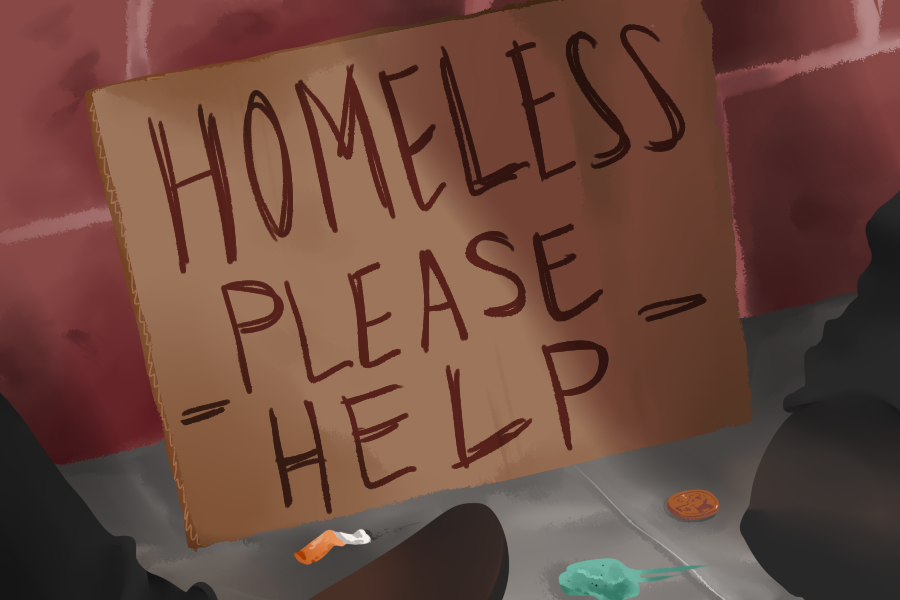
On Jan. 9, the Davis City Council discussed an ordinance that would ban aggressive panhandling and behavior.

The draft ordinance would prohibit solicitation within 15 feet of an ATM or bank; prohibit individuals from blocking traffic, sidewalks and doorways; allow police officers to confiscate unattended private property left in public spaces and ban activities on the median of roadways.

Davis Assistant City Manager Kelly Stachowicz stressed that this ordinance was not meant to target the homeless. Rather, she described it as being brought forth to combat troublesome behavior.

“This conversation gets wrapped up with conversations about homelessness,” Stachowicz said. “This is really about behaviors, no matter who commits them or who engages in them.”

Davis Mayor Pro Tempore Brett Lee also touched on the importance of behavior when discussing the ordinance.

“It’s [the ordinance] targeting behavior,” Lee said. “It doesn’t have to be the homeless. It could be a drunk college student who decides to sleep it off in front of your shop.”

A few guests who attended the City Council meeting saw the ordinance as an attack on the homeless.

“I urge you [City Council] to just completely reject this ordinance,” said an unnamed guest speaker at the City Council meeting. “It seems the only thing it would do is relieve police officers from the burden of making judgement calls in these situations and give them carte blanche to further criminalize homelessness.”

Gloria Partida, a Davis resident and founder of the Davis Phoenix Coalition, is concerned about what this ordinance would mean for the homeless and mentally ill population in Davis.

“I don’t want this to become criminalization of behaviors,” Partida said. “I think we need to think about this a little more.”

At the City Council meeting, Mayor Robb Davis offered his take on what the city should do in regards to the ordinance and the homeless.

“Let’s get the bathroom built,” Davis said. “Let’s find a place for possessions. Let’s let Ryan [Collins] train some community volunteers who will go out and talk about what acceptable and not acceptable behavior is. We have the resources to all of this without further criminalizing.”

Recently, in an attempt to combat homelessness, the City of Davis hired social worker Ryan Collins to be the city’s first homeless outreach coordinator, approved the Creekside Apartments affordable housing project and entered contracts with Davis Community Meals and Yolo Housing Authority to address homelessness in the community.

Davis’ homeless population has risen from 114 homeless individuals in 2009 to 146 in 2017, according to the Yolo County Homeless and Poverty Action Coalition.

In 2016, the State of California’s homeless rate was 30.1 people for every 10,000, according to the most recent study on homelessness conducted by the United States Interagency Council. In Yolo County’s most recent homeless count in 2017, Davis’ homeless rate was 21.4 people for every 10,000.

In November, the City of Sacramento passed an ordinance banning panhandling within 30 feet of an ATM, on medians, at transit stops and gas stations and near outdoor dining restaurants.

Although cities can go to lengths to ban certain behaviors and actions associated with panhandling — and panhandling itself in certain areas — panhandling is protected speech under the First Amendment.

The proposed ordinance grew out of a City Council meeting last January, in which council members discussed the panhandling issue in Davis.

The City of Davis has yet to announce when a decision will be made on the ordinance.


Written by: Dylan Svoboda — city@theaggie.org

Programs to provide aid for low-income residents

MORGAN TIEU / AGGIE

Grants to help with affordable housing, social services in Davis

The City of Davis is now able to provide around $800,000 to local groups that help with affordable housing and social services as part of a share with the federal Community Development Block Grant and Housing Investment Partnerships programs.

Kelly Stachowicz, the assistant city manager of Davis, explained that this has been an ongoing program.

The Federal Housing and Urban Development Department has the Community Development Block Grants and the HOME Investment Partnership grants,” Stachowicz said. “Davis has received both of these allocations for years, based [on] household income and population.”

The CDBG dollars will allow for better infrastructure within communities as well as assistance with low-income households.

“Up to 15 percent can be spent on public service — money to local nonprofits to help low-income people,” Stachowicz said. “10 percent is used on administration and the remainder goes to things like physical repairs or improvements at affordable housing communities, making ADA improvements to public facilities, etc.”

Additionally, the HOME grants will assist with affordable housing projects.

“The most recent project assisted by HOME dollars is Bartlett Commons, the affordable rental housing development in The Cannery,” Stachowicz said.

Lisa Baker, the chief executive officer for Yolo County Housing, said that they are still determining upcoming fund distributions.

“There is an application process for all those who are interested in applying,” Baker said. “The applicant must be a qualified legal entity, such as a nonprofit organization. The services they wish to provide need to align with the city’s adopted priority needs.”

After requests are received, the staff will determine eligibility.

“Proposals will then go to the Social Services Commission for their consideration — ultimately, the recommendations will go before the city council in a public hearing,” Baker said.

The process continues with a period for gaining approval.

“Once funding is adopted, the Annual Plan draft will also be available for a public comment period prior to final adoption,” Baker said. “The adopted plan and proposed funding will then be submitted to the federal Department of Housing and Urban Development for approval.”

Baker notes that this grant can affect those who have low incomes positively, as there are different people who can benefit from the agencies receiving grants.

“We are looking forward to receiving grant proposals from agencies who will be serving our high-priority, low-income residents,” Baker said. “This can include the elderly, homeless, low-income families and others. It is important to remember that, for CDBG, only 15 percent of the total anticipated grant can be expended for services.”

However, the CDBG and HOME programs have had declines in funds.

“Both programs were slated for elimination in the president’s initial budget, but both are included in both the House and Senate versions,” Baker said. “At this time, the United States has not yet adopted its final budget for the fiscal year that began on Oct. 1, 2017, so programs have continued under a federal Continuing Resolution. The City will not know its final budget amounts for either program until after Congress passes a budget or a year-long Continuing Resolution and the final is signed by the president.”

As funds are limited, Stachowitz notes that the application process will be competitive.

“The city has a competitive and public process to decide who receives funding,” Stachowitz said.

According to The Davis Enterprise, Mayor Robb Davis explained how the grants can serve those in need.

“These funds help local nonprofit agencies leverage resources to serve our lowest-income residents and address critical needs, such as hunger, housing and health care,” Davis said.

The application period is currently open. For more information, resources can be found on the City of Davis’ website.


Written by: Stella Tran — city@theaggie.org

Swim and dive team falls to Gauchos, splits final homestand

0
IAN JONES / AGGIE

Aggies fall to UC Santa Barbara, recover against San Jose State

The UC Davis women’s swim and dive team went into its final two home duals hoping to go into its final road game with momentum. With conference rival UC Santa Barbara coming in to its first game on Friday, Jan. 20 fresh off its first place finish at the UNLV Invitational, the Aggies had to come prepared for their first game on their home-stand. For head coach Barbara Jahn, the dual came at the perfect time, as her team had not gone head-to-head with another school since November and the conference tournament is right around the corner.


“You can’t prepare for the pressure in practice,” Jahn said. “You can ask them to swim fast, but you can’t create the same pressure that you feel. That you can’t duplicate, and having that experience is something you can build upon.”


It was not an easy dual for the Aggies, as the Gauchos stayed ahead for the majority of the competition. After tying the scoreboard up at 102, the Aggies didn’t break away from the Gauchos, eventually going into the final event, the 400 meter relay, trailing by only one point. That final race remained close throughout, but the Aggies fell 150-144 after a late, decisive push by the Gauchos that the Aggies were not able to overcome.
Junior swimmer Kristin Schumann, who finished first in the 200-meter breaststroke, noted that the team would not let a close loss such as this one inhibit the team from reaching its final goal of postseason success.


“We put in a lot of work, and a lot of girls did really well,” Schumann said. “It will give us a lot of confidence because they’re also in our conference, so when we see them again in February I think we’ll do really well.”


Despite the loss, the team got some very strong performances from its swimmers. Aside from Schumann, fellow swimmers junior Solie Laughlin, junior Eva Chung and senior Courtney Schultz as well as first-year diver Katie Truong all amassed at least one first place finish throughout the competition. Jahn was impressed by her team’s overall effort on the day, noting the team did not rely on one or two strong performances.


“I don’t think any one person stands out,” Jahn said. “It was a team effort. Someone didn’t win all three of their individual events. They may have won one and then got second, and then someone else stepped up.”


IAN JONES / AGGIE

Both Jahn and Schumann insisted that the the loss, however close it was, was not a backbreaker for team. According to Jahn, the team looks forward to using its final events to  correct whatever needs correcting and improve that which needs improving before the championship.


“This is a great preparation for the end of the season meet,” Jahn said. “So I look at this as a really good quiz. Final exam’s going to be when we’re down in Los Angeles.”


The team didn’t waste much time to hit the pool again. Just one day after its dual against Santa Barbara, the Aggies took the pool again in a battle against San Jose State, and according to Schumann the team would be ready for whatever its opponent would throw at it.


“I think close meets always get everyone’s energy up really high,” Schumann said. “There’s something about coming together as a team for really close meets, but I think we’ll do really well tomorrow.”


Schumann’s hopes became reality the following day when she took home victories in the 100 and 200 meter breast strokes en-route to the team’s 196-102 victory over San Jose State, bringing their overall record to 5-5 and their conference record to 1-1. The team will travel down to University of the Pacific on Saturday, Dec. 3 for its final match before the MPSF Championships in Los Angeles starting Friday, Feb. 23.


Written by: Bradley Geiser — sports@theaggie.org

Coachella 2018: Is it worth it?

TREVOR GOODMAN / AGGIE

Breaking the bank for Beyonce

The Coachella Valley Music and Arts Festival is a phenomenon that can only be truly understood by someone who has experienced it firsthand. And no, that doesn’t mean from viewing photos shared on Instagram or watching performances via a Snapchat story. There’s a reason music festivals have acquired a cult-like following since the days of Woodstock. The idea of a carefree weekend filled with wonderful music, dancing, relaxation and fun is reminiscent of something out of a utopian universe. But festivals aren’t exactly the same as they were in 1969.

Over the years, Coachella has evolved from a small indie-rock festival to a weekend-long, worldwide spectacle, now attracting high-profile headliners and celebrity guests. No longer simply a music festival, Coachella now upholds a certain level of cultural authority that exhibits status and taste. However, not only has the cultural magnitude of Coachella developed since the festival’s inception in 1999, but the musical lineup itself has also undergone major transformations. Along with that, prices have skyrocketed, cultivating a somewhat exclusive group of attendees in those who can manage to afford a coveted Coachella wristband.

Set in the windy desert of Southern California, Coachella takes place over the course of two consecutive weekends in April. In comparison to many of its other festival competitors that only offer one weekend of admission, this alone shows the level of popularity Coachella has attained. And even so, Coachella tickets sell out fast. This year, a wristband with shuttle pass ran face-value at $504, making the Coachella experience one of the most expensive among North American festivals, according to Forbes. Unfortunately for most, once wristbands sold out, second-hand ticket vendors spiked their prices upwards of $700. And that’s not to mention the price of a VIP wristband, $999 at face value. Over $500 later — not including expenses for housing, transportation, food and outfits — many bank accounts have taken a heavy hit. This poses the question of whether or not Coachella 2018 is really worth it in the end. Does the experience justify the investment?

To answer this question, let’s discuss the lineup. The music! The real reason that thousands of patrons flock to the Coachella Valley each year and the basis that music festivals are founded upon in the first place. Each year, music festival lineups are left up for interpretation by festival goers. While some may not know a single artist over the course of the weekend, another could love each and every band. While some may love the lineup, others may find it lacking. This year, many Coachella veterans took to Twitter and other various online forums to express their disappointment about the lineup, due to its movement away from the festival’s indie and folk rock roots and lack of musical diversity. In addition, there is significantly less electronic dance music than in previous years, this time being replaced by many R&B and rap artists. Headliners of the event include The Weeknd, Eminem and Beyonce, all extremely high-profile and mainstream performers.

So, is the lineup really worth it? That’s still up to personal preference. In comparison to its festival competitors, such as Outside Lands, Lollapalooza, Firefly, Governor’s Ball and Bonnaroo, the Coachella lineup is certainly moving in a different direction this year than it has in the past. But for those who aren’t the biggest fans of this year’s Coachella lineup, don’t worry just yet. There is sure to be other great artists performing at different festivals over the course of the year for a cheaper price.


Written by: Sydney Odman — arts@theaggie.org