57.2 F
Davis

Davis, California

Monday, December 22, 2025
Home Blog Page 602

Guest: Where do we draw the line between utility and addiction when cell phones dominate our lives?

0
JORDAN KNOWLES / AGGIE

Millennials are loosening their grip on technology to learn to live in the present

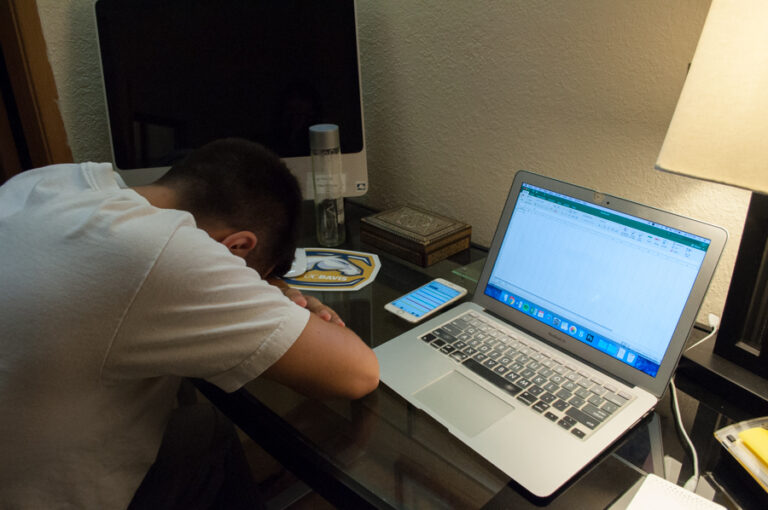
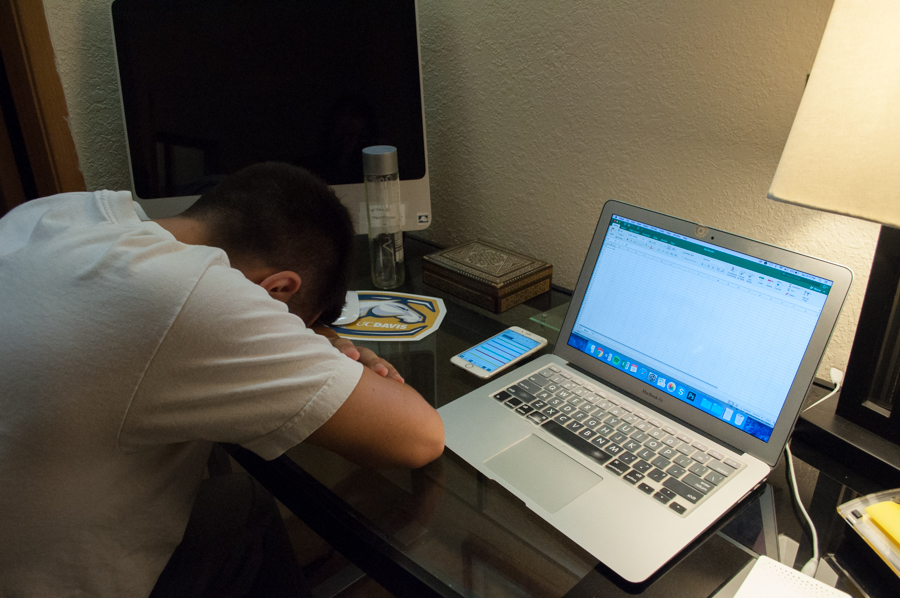
A few weeks ago, I got home from work only to realize that I had no plans for the rest of the day. Just as I began to reach for my cell phone to check social media, I paused for a moment and began to wonder how people passed the time before technology was an arm’s reach away. Television became popular in the 1950s, and, before that, the radio was a widespread source of entertainment. But what about before the radio? It’s impossible to imagine spending a day without Netflix, Twitter or Instagram — let alone a day without the internet altogether. Relying on technology oftentimes feels unhealthy and can take away from experiencing life in real time. Considering these facts, I was inspired to look into the new ways in which people are “unplugging” from their devices to embrace the present moment — a trend recently described to me as the “post-technology” attitude.

Through apps like Moment, people are becoming more mindful of their technology use. The app tracks daily screen time and sends the user a notification when they have exceeded a set amount of minutes. I downloaded the app as an experiment and found that I was on my phone for over two hours in a single day. While some of this time was used to coordinate plans, read the news or reply to emails, most of it was spent scrolling mindlessly through social media feeds.

In a podcast entitled “Hooked on Social Media,” Lynne Malcolm discusses how, on the one hand, cell phones and social media have made us smarter, more efficient and more interconnected. That being said, 24/7 access to technology can make us anxious — especially when it involves seeing how others are spending their time and making personal comparisons. By self-monitoring our screen time, we can take advantage of our phone’s efficiency while avoiding the FOMO that results from overuse.

“No phone” policies at certain events have also become more prominent. I attended a wedding earlier this summer where the couple requested a device-free ceremony. Guests turned off their phones completely so that everyone could enjoy the evening and not be distracted taking photos or reading messages. I later learned that my roommate’s brother had followed this same format at his wedding the previous week. It’s disappointing that our society has come to a place where this sort of request is even necessary. Shouldn’t putting your phone away at a wedding be a no-brainer? Nonetheless, it’s comforting to know that more people are becoming aware of cell phone addiction and that they are taking steps to refrain from being constantly distracted.

Digital detoxing has also made an appearance at the dinner table through the “phone stack” game. Players put their phones in a stack at the center of the table, and the first to reach for their device has to pay the entire bill. Parents, too, follow similar guidelines with their children, enforcing “no screen” policies during meals or on weekends. Most recently, I’ve noticed my friends leaving their phones at home when they go out to dinner or run errands, getting time away from the ongoing technological distractions.

Silicon Valley techies are even spreading awareness about technology’s potential toxicity. Tristan Harris, a former Google design ethicist, founded Time Well Spent, an organization dedicated to redesigning apps to make them less addictive. The Time Well Spent website outlines ways in which people can take control of their devices to keep them from being overly distracting. Harris suggests people turn off phone notifications that don’t come from actual people — it’s unnecessary to be notified every time someone comments on a post or likes an old photo. He also highlights the importance of keeping tools such as the alarm clock, GPS, weather, podcast and calendar apps in close reach while making social media apps more difficult to access by placing them on a separate page. These guidelines are about finding a balance between usefulness and mindfulness — we should take advantage of modern technology’s efficiency without falling prey to an addiction that can keep us from enjoying life’s simple pleasures.

After gaining exposure to the so called “post-technology” revival, I was motivated to formulate a cyber detoxing method of my own. Each day, I set a timer on my phone for 30 minutes and don’t allow myself to use my laptop or cell phone whatsoever. I quickly realized that I rely on these devices for virtually everything I do — writing, music, listening to podcasts, reading the news, homework, shopping and much more. However, I also learned that those 30 minutes are some of the most productive of my entire day. I’ve been able to cook, do laundry, catch up on reading, go for walks, paint my nails and have long (in-person) conversations with roommates and friends.

Although I believe that modern technology has the capacity to educate, enhance and connect our society, I also know from firsthand experience that overuse can be toxic. Sharing a meal, catching up with friends, taking a stroll, napping or even learning an entirely new skill can all be done without the use of a screen. Instagram can wait.


Written by: Olivia Rockeman — copy@theaggie.org

Disclaimer: The views and opinions expressed by individual columnists belong to the columnists alone and do not necessarily indicate the views and opinions held by The California Aggie.


Humor: Student writes Taylor Swift-style revenge song about CoHo barista who wronged her latte

0

EVA RINALDI [(CC BY-SA 2.0)] / FLICKR
Band-Aids don’t fix bullet holes or soy milk preferences for second-year Kimberly Timber

Kimberly Timber, a second-year chemical engineering major at UC Davis, has finally had it with all the haters in this cow town. After taking a 20-minute hiatus in the bathroom and wiping all her social media posts from this morning, Timber is back on the scene with some fresh content about her biggest hater yet, CoHo barista Scooter McMinnie.

“Last night, I watched the music video for ‘Look What You Made Me Do’ and it evoked nothing short of a spiritual reaction within my bones,” Timber said. “I’m done with taking bull, just like my queen, T-Swift, and I’m gonna one-up her by also not taking even slight mistakes.”

Timber had done what any saint would do. She sped through her order in a soft mumble while shuffling for her wallet and listening to music, making it impossible for McMinnie to have any questions whatsoever. As she waited for her drink, a chill swept through the CoHo. Timber’s drink was placed on the counter, she took a sip and her worst nightmare was right in front of her: whole milk.

“I totally agree that we messed up her order or whatever, but Kim didn’t even ask us to fix it,” McMinnie said. “She just dramatically crushed the cup in her hand really slowly, making a total flippin’ mess, and then ran to the bathroom.”

Timber emerged with the only true sign of rebellion and toughness: curly bangs. She suddenly had a troupe of ten dancers, one for every calorie she sacrificed to that sip of milk, and a song that was clearly hastily written on a used napkin.

“She just started listing things that she didn’t like about me in sort of a singing voice, but more so just talking,” McMinnie said. “She started with that she didn’t like my apron and snapback, but then she said she didn’t like that I ‘laugh when I lie,’ but I never laughed. It was nine in the morning.”

One barista had enough of this bologna and decided to just remake Timber’s drink, slide it onto the counter and call out ‘Kimberly’ so that Timber would put a stop to everything. It only got more confusing.

“She looked me dead in the eyes — like DEAD in the eyes — and said, ‘The old Kim can’t come to the counter right now,’ and then she waited in silence for like three seconds and then said, ‘Oh, why?’ — no one had asked why — and then said, ‘because she’s dead.’ And I just wasn’t ready for that kind of emo garbage this early,” barista Angelina Jolie said.

Because of this, the CoHo has been forced to ban Taylor Swift in fear that she will inspire more cases of lukewarm insanity on a sad, fall morning. Other students were a bit confused about this proclamation because they all had their headphones on during the incident, but none complained.

“Honestly, if you’re mad at me, just drop an f-bomb and let’s move on,” McMinnie said. But Timber was already getting a tattoo of a snake on her wrist, succumbing to the darkness that Taylor Swift brings to America.


Written by: Olivia Luchini — ocluchini@ucdavis.edu

(This article is humor and/or satire, and its content is purely fictional. The story and the names of “sources” are fictionalized.)

A Family Trip Through Europe

Aggie photographer Meena Rugh documents family summer trip through Europe


My family and I started off the summer by flying to Barcelona a day after my last final of Spring Quarter. We visited La Sagrada Familia, which was beautiful, and ate amazing food such as churros con chocolate. We stayed in Barcelona for a few days and then flew to Nice, France, where we immediately searched for a bakery and had croissants. The next few days in Nice consisted of swimming in the French Riviera, farmers markets and more baked goods. We ended the trip in Paris, which is now my favorite city. We visited the Eiffel Tower and the Louvre, of course, but my favorite part of the city was the architecture and fashion. Overall it was really nice to get out of Davis for a little and explore more of the world while also getting to spend some time with my family. 

I took this picture of my brother in Nice on one of the early days of our trip. It means a lot to me that I got to spend time with my family in such a beautiful city after not seeing them for months.
We took a day trip up to Monte Carlo where some James Bond scenes were filmed.

Photos by: Meena Rugh — photo@theaggie.org


Aztecs Conquer Aggies

0
DIANA LI / COURTESY

UC Davis football suffers road loss to San Diego State in season opener

The Dan Hawkins era of UC Davis football got off to a rough start, as the Aggies fell to San Diego State, 38-17, in front of a crowd of over 45,000 at Qualcomm Stadium on Saturday night.

UC Davis began the game with a flurry of energy, as sophomore quarterback Jake Maier completed a deep pass down the right sideline to junior wideout Keelan Doss for a gain of 41 yards. The Maier-Doss connection went on to become the theme for the Aggies offense for the night, as Doss led all receivers with eight catches for 181 yards.

Maier had some positive remarks about the duo’s obvious chemistry on the field, revealing that the two had worked arduously together over the summer to prepare for this season.

“He does his job very well,” Maier said. “And my job is to give him a chance — and give him the ball as much as I can. Tonight was just a start. [Doss] and I — and the entire offense — will continue to grow.”

But the offensive spark on this Aggie opening drive died out quickly. Just three plays later, a Maier pass was tipped at the line of scrimmage and intercepted by the Aztec secondary for the first turnover of the game. After the interception, SDSU mounted a 12-play drive that resulted in a 39-yard field goal that put the Aztecs up 3-0. The Aggie defense looked sharp on its first drive, bending but not breaking against the stout SDSU rushing attack.

But the floodgates began to burst open when the next UC Davis drive ended in a three-and-out. After the UC Davis punt, SDSU running back Rashaad Penny burst through the Aggie defense for a 61-yard score to give the Aztecs a 10-0 lead. Penny would end up with a monster night on the ground, racking up 197 yards and two touchdowns on 21 carries.

The next UC Davis drive benefited from two 15-yard penalties by the Aztec defense, allowing the Aggies to get on the board for the first time with a 23-yard field goal by sophomore kicker Max O’Rourke. For now the Aggies trailed just 10-3, but this would be the team’s only points until the fourth quarter. Maier’s next pass of the game was intercepted by the Aztecs for a second time, setting the SDSU offense up deep in Aggie territory. The Aztecs reached the end zone just a few plays later to extend their lead. The next UC Davis drive ended in a failed fourth down conversion, giving Penny the opportunity to slice through the Aggie defense to score his second touchdown of the night for the Aztecs. The score at the half was 24-3 in favor of SDSU.

The Aztecs would come out of the half on fire, reaching the end zone in both of their first two second-half drives, including a 99-yard drive that culminated in SDSU’s third rushing touchdown, making it a 35-point contest with 4:46 left to play in the third quarter. It seemed as if the Aggie defense was withering away against the Aztec onslaught.

“They were running through a lot of arm tackles,” head coach Dan Hawkins said. “You have to tip your cap to them. I thought our [defensive] plan was good, we were packing the box a ton. We didn’t give up a lot of shots over the top. But they just kind of laid on us.”

With most of the SDSU starters sitting out the final fifteen, the UC Davis offense sprung to life, scoring on both of its fourth-quarter drives. Maier connected with Doss on a pass out to the flat on second and 17, allowing Doss to evade several defenders on his way to the house. Maier then threw a seven-yard touchdown pass to freshman wideout Logan Montgomery for the final points of the contest.

Maier, despite two turnovers, overall looked impressive against the superiorly-sized Aztec defense. He completed 19 of his 24 passes, throwing for 258 yards and two touchdowns. He was also only sacked one time, a testament to how well the UC Davis offensive line, anchored by seniors Andrew Carriger and Julian Bertero, protected its quarterback from the talented Aztec defensive front.

“We’re hoping we carry that momentum for sure,” Maier said. “It was very positive to see [us score] and that just goes back to effort – playing a full 60 minutes. That’s our goal every night, to be able to start and finish the game the right way. We probably didn’t start the right way, but we definitely finished the right way [tonight], and we’ll take that into next week.”

UC Davis coaches and players alike acknowledged the game for what it was: a loss. Hawkins had some sobering thoughts on the night that got a little too far away from his team.

“When you play a team like [SDSU], your margin of error is very small,” explained Hawkins. “I was really proud of our guys’ effort. They battled, never quit. We knew they were a good running team, I don’t think we were able to tip the scales enough to get them out of there. They just pounded us. We had a few opportunities that we didn’t capitalize [on] — things we have to learn from.

The sour result, however, did not keep the Aggies from leaving the field hopeful with what they believe is to come of this season.

“Attitude was great, togetherness was great, work ethic was great,” continued Hawkins. “We can build on that. We have a chance to be a good football team, we just gotta hang together.”

The team’s star receiver also chimed in.

“As a team, we took away knowing that we can play with anybody,” Doss said. “It doesn’t matter who we play, it’s how we play. I think we demonstrated that tonight and we’ll get back to it next week and bounce back from this.”

Say all what you will that is negative about this UC Davis loss — and there are many negative points to make. But one thing is for certain: the team did not lose any confidence or excitement surrounding the season (and era, for that matter) of UC Davis football that is only just beginning.

The Aggies were back in Davis this past Saturday for the team’s home opener. UC Davis took on another team from the same city — the University of San Diego Toreros. Coverage of the game’s results will be published in an upcoming story.

Written by: Dominic Faria — sports@theaggie.org

Increase in demand for undocumented student legal services

VENOOS MOSHAYEDI / AGGIE FILE

While DACA hangs in limbo, some UC community members seek support

During the 2016-2017 academic year, there were an estimated 800 cases of students seeking legal immigration assistance from the California Immigrant Legal Services Center housed in the UC Davis School of Law in King Hall –– more than double the 362 cases from the previous year.

Rachel Ray, the Northern California managing lawyer for the UC Immigrant Legal Services Center, spoke about the burden of federal government laws on undocumented students becoming citizens. The UC Immigrant Legal Services Center represents the entire UC system except for Berkeley, which has an on-campus student immigrant legal clinic.

Ray said that the current legal and political atmosphere has a consequential impact on undocumented UC students. Pertaining to the climate of immigrant relations, Ray said she has witnessed a downtrend in government-sponsored immigrant assistance, forcing the need for more public and nonprofit institutions like the UC center as well as private practitioners who assist with such cases.

“In commenting on the change of tone between the summer of 2016 and now, there’s just a lot more anxiety and fear,” Ray said. “Something different happens every week that more likely than not negatively affects immigrants. It’s just a constant barrage — if it’s not terrible news, it’s less than ideal news. There’s certainly changes in the way I see the government adjudicating petitions and handling even just something as simple as immigration forms.”   

Within UC Immigrant Legal Services, the cases of undocumented immigrant students are taken on at a higher rate than those of international students, whom the AB540 and Undocumented Student Center represents. Ray said the majority of her clients are undocumented domestic students, not international students who may be affected by the federal travel ban. The higher caseload this year is partially due to an expansion in the number of staffed lawyers.

“We have more attorneys on staff now than we had the previous year,” Ray said. “I think, yes, after the election, we did see an increase in individuals who were interested in accessing our services, and certainly [from] individuals who hadn’t thought about our services prior to the election.”

Ray stated that the center is unique because it serves students as well as their immigrant family members. She also emphasized the power and importance of a support network for undocumented student.

“We have funding to serve not just students, but [also] their family members,” Ray said. “There are no nonprofit immigration legal service providers in Davis with the exception of us. I think, especially these days, every immigrant legal service provider is definitely all in this together. We work very collaboratively, and we tend to work closely with other private practitioners in the area.”

Ray also spoke about the number of undocumented students within the UC system and at Davis. There are an estimated 4,000 undocumented students within the UC system, but Ray explained that the published data may not accurately reflect the undocumented student population.  

“The way that some of those metrics are taken is based on students who apply for DREAM loans or for AB540 scholarships or funding,”  Ray said. “I think the number in the UC is larger than this because not every student who is not a US citizen is contemplated in that number. I believe it’s in the range of 400 to 500 [on the Davis campus].

Pressure is mounting on Congress to pass the Development, Relief, and Education for Alien Minors (DREAM) act after President Trump decided to end the Deferred Action for Childhood Arrival (DACA) program, which assists child immigrants of immigrant parents.  Eligible DACA children are those who were under 16 years of age when they moved to America, who must also be either enrolled in school or the Army as well as non-felons.

ASUCD President and fourth-year political science and economics major Josh Dalavai said he wants to see centers like the one at King Hall expanded and emphasized in a time that he views as difficult for immigrants in America.

“I think any proliferation in such services is not only timely and prudent but necessary in an era of intense fear for student immigrants,” Dalavai wrote via email.


Written by: Aaron Liss –– campus@theaggie.org

UC sues Trump administration over DACA elimination

Napolitano, lead founder of program, defends rights of DACA recipients in statement

On Sept. 8, the UC Office of the President announced in a press release that the University of California has filed a lawsuit against President Trump and his administration over the executive decision to end the Deferred Action for Childhood Arrivals (DACA) program.

“The Trump administration […] wrongly and unconstitutionally violat[ed] the rights of the University and its students by rescinding the Deferred Action for Childhood Arrivals (DACA) program on ‘nothing more than unreasoned executive whim,’” the press release reads. “As today’s legal action demonstrates, UC continues to take a leadership role in protecting its DACA and other undocumented students. The university is committed to using all available resources to support the thousands of Dreamers who are currently enrolled at UC campuses, as well as other undocumented students.”

According to the press release, the UC system is the first university system to file a

lawsuit against the executive branch over the elimination of the DACA program. Notably, UC President Janet Napolitano, who served as the Secretary of Homeland Security under President Obama, was a lead founder of the DACA program. According to The New York Times, Napolitano’s signature was used to confirm the creation of the program.

Since it was instituted in 2012, DACA has allowed nearly 800,000 young people to remain in the U.S. after being brought into the country under illegal circumstances.

“Neither I, nor the University of California, take the step of suing the federal government lightly, especially not the very agency that I led,” Napolitano stated in the press release. “It is imperative, however, that we stand up for these vital members of the UC community. They represent the best of who we are — hard working, resilient and motivated high achievers. To arbitrarily and capriciously end the DACA program, which benefits our country as a whole, is not only unlawful, it is contrary to our national values and bad policy.”

According to The New York Times, the lawsuit claims that the Trump administration violates the “constitutional due process rights of DACA enrollees.”

Gavin Newsom, California’s lieutenant governor as well as a UC regent, offered his support of the UC lawsuit via an official statement.

“I support this lawsuit on legal, moral, and economic grounds,” Newsom stated. “President Trump has arbitrarily and unlawfully manufactured a crisis in the lives of fellow Californians. The U.C.’s DREAMers and its staff are integral to the academic and intellectual fabric of our campuses, and it is paramount that the University protects the future workforce and families of California.”

According to the press release, over 4,000 students currently enrolled in the UC system are DACA recipients.


Written by: Hannah Holzer — campus@theaggie.org

Life in Hong Kong through Photos

Aggie photographer Nicholas Chan shows what it’s like to live in Hong Kong

The name 香港 (Hong Kong) means “Fragrant Harbor.” In reality, the harbor is anything but fragrant. It does, however, offer quite a view.


Almost one year ago, I left Hong Kong and travelled to Davis in pursuit of a university education. Having lived all my life in hyperactive Hong Kong, I had no concept of the style of living and pace of life outside the city. Throughout my year of study at Davis, and my year away from home, I have learned to appreciate the attributes of Hong Kong that make the city unique. I hope that through the following pictures I can share a few of these attributes.


One way to quickly summarize Hong Kong is with the Chinese phrase 人山人海, meaning volumes of people as great as the mountains and seas.


It is difficult to imagine that 7.3 million people call this city home, but the busy streets make this figure slightly more believable.


A massive population and lack of space combined poses a challenge for housing. Small apartments stacked like sardines in a can are a common sight across the city.


From an elevated perspective, the scale of the city becomes apparent. Skyscrapers reach high across the skyline.


Yet not far away from the hyper-developed city center are streets resembling a time now passed.


Travelling to these places feels more akin to going back in time.


As development in Hong Kong pushes the city toward the future, snippets of traditional architecture serve to retain parts of its history and atmosphere.


Sometimes among the commotion of the city, it becomes easy to lose sight of what actually keeps the city running: the people. Whether it be the people who keep the street stalls running,


Or the people that keep deliveries on time,
Or the people who keep food on the table.


Despite now having to spend the majority of my days away from Hong Kong, I will never forget the quirks and features of the place I call home. Through this journey I have learned to appreciate everything from the largest structures to the smallest details, since only after leaving Hong Kong did I begin to notice them.


Photos by: Nicholas Chan — photo@theaggie.org

Guest: Anti-Semitism: Social justice’s blind spot

DIANA LI / AGGIE

The Davis community failed to take a stand against an anti-Semitic hate crime

At 3:45 a.m. on the morning of Jan. 22, a heinous, racially-charged vandalism was committed against the Islamic Center of Davis, with bacon laid across the door handles. Several days later, tires of vehicles were slashed outside the center. The Davis community banded together to show its solidarity with the center, holding rallies and shows of support, while social media accounts of student and local leaders swiftly and righteously condemned the attacks.  

The Jewish community in particular — no stranger to hate crime, with 52 percent of all religious hate crimes committed against Jews — mobilized to support the Islamic Center. The Jewish sorority Sigma Alpha Epsilon Pi, for example, delivered baked goods to Epsilon Alpha Sigma, the Arab sorority, and Hillel at Davis and Sacramento, the main Jewish cultural organization on campus, delivered letters of support.

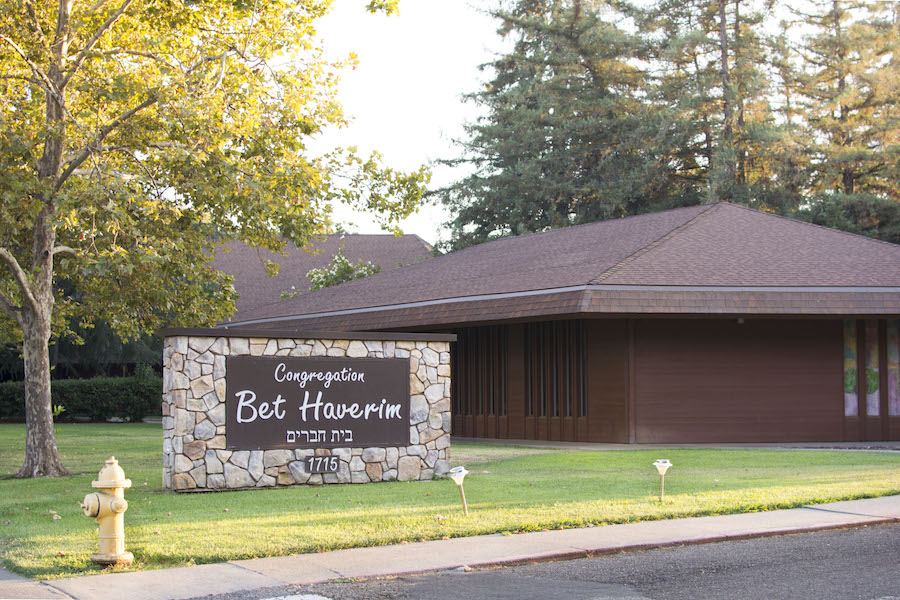
Six months later, in July, the Islamic Center invited the inflammatory Imam Ammar Shahin to give a sermon. In English, he spoke about the end times when Muslims will kill all Jews as inanimate hiding places like trees and houses reveal the Jews’ location. Then in Arabic, among other anti-Semitic attacks, Shahin called to “annihilate [the Jews] to the very last one. Do not spare any of them.”  

Unlike the response to the vandalism of the Islamic Center, the response to this vicious anti-Semitic hate crime was a muted one at best. The Chancellor’s office issued a cautious statement, as well as Congressman John Garamendi’s office — and that was largely it. Even after Shahin apologized for his statements, a group of Davis students continued to defend his words, attributing the hate to a Zionist or right-wing conspiracy intended to make the Islamic Center look anti-Semitic (forgetting that many of those same Zionist Jews across the political spectrum were at the mosque in solidarity just months earlier).  

In addition, many of those same students harassed Jewish students, many of whom are still dealing with the trauma and pain that the imam’s statements caused, calling them Islamophobic and further invalidating their trauma.

Arguments began circulating that the quotes were taken out of context and that the translation was not entirely accurate. Any and every other type of theory emerged as the Davis community collectively stuck their heads in the sand. They refused to acknowledge one of the longest-running and most deadly types of racism the modern world has seen: anti-Semitism. Today, in the progressive city of Davis, this form of racism receives a pass.

It’s easy for the typical progressive to condemn a neo-Nazi when they say, “death to the Jews.” Problems arise when extremist elements on the left begin uttering dog-whistle (and, in this case, very blatant) anti-Semitic rhetoric. The problem is when one of the most marginalized groups in the world is still largely kept outside of the intersectional umbrella and held to a different standard than any other marginalized group, with our struggles inherently not as important.

It really boils down to this: When the right wants to stir up anti-Semitism, white-passing Jews stop being white, becoming our own Jewish race.  But when the left wants to do the same, we become white, part of the oppressing class and therefore not subject to the sympathy and solidarity all other marginalized communities receive.  

This is what we see at modern Nazi rallies, when they chant, “blood and soil” and “death to the Jews.”  It’s what we see from the extreme left when symbols of Jewish pride are banned for fear that they may “offend” someone. We, the entire Davis community, must loudly and unequivocally stand up for every marginalized community. We must do so even when it’s uncomfortable, even when another historically marginalized community is the one being problematic and even when the victims are the sometimes white-passing Jews. Racism is racism and we cannot allow anti-Semitism to be driven into the blind spot of social justice with our inaction.


Written by: Michael Gofman

Disclaimer: The views and opinions expressed by individual columnists belong to the columnists alone and do not necessarily indicate the views and opinions held by The California Aggie.

UC Davis MIND Institute receives $1.4 million grant to improve effectiveness of evidence-based practices for individuals with autism spectrum disorders

LAURA LONG / AGGIE FILE

Research will be primarily conducted using an estimated 5,000 electronic surveys

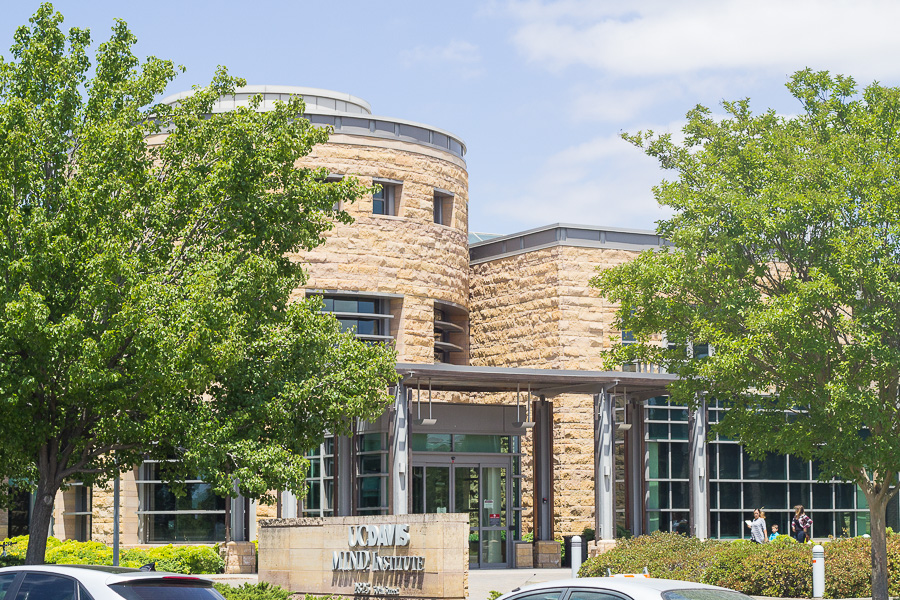
The UC Davis Medical Investigation of Neurodevelopmental Disorders (MIND) Institute was the recipient of a competitive $1.4 million grant which will be used to study how best to improve the implementation and effectiveness of evidence-based practices in schools statewide for individuals with autism spectrum disorders

According to Aubyn Stahmer, the director of community-based treatment research at the MIND Institute and the principal investigator for the project, evidence-based practices are often based on “behavior analysis or behavioral psychology.”

“It might be something as simple as using a picture schedule to help a student know how to make it through the classroom day […] without a behavior challenge,” Stahmer said. “There are different practices like that; there are about 18 of them for autism –– depending on the age of the student and the goal of [the] teachers –– […] that they know work.”

Though it varies on a case-by-case basis, Stahmer said effective uses of evidence-based practices have shown improvements in the language, reading, academic and social skills of individuals with autism spectrum disorders.

This project is a partnership between the UC Davis MIND Institute and San Diego State University. Jessica Suhrheinrich, a professor at SDSU, is the co-principal investigator. Suhrheinrich is also on the research board of the California Autism Professional Training and Information Network (CAPTAIN), which will conduct the research throughout the state of California.

Suhrheinrich explained that the project’s research will examine the effectiveness of CAPTAIN, which functions like a network throughout the state to circulate information about evidence-based practices.

We’re looking at factors that influence the effectiveness of a collaborative statewide network for sharing information about evidence-based practices,” Suhrheinrich said. “The idea would be, that if this is effective, we can identify factors that are related to the success of individual regions […and] then we could look towards replication in other states to support [the] dissemination of information.”

According to Stahmer, information about evidence-based practices is learned through district-sanctioned trainings.

“A couple of people from each of the districts […] come to the training and they basically agree to get trained in these practices we know work for kids with autism,” Stahmer said. “They take them back to their district and work with other teachers there to train them. We think that’s a really good start, but that people need support from their leadership, for example, to have time for training and time to go into the classrooms and do supervision. We’re trying to figure out what kind of infrastructure and leadership support the trainers and teachers need to make the techniques they’re learning really stick.”

The project will also examine how policies, from individual schools to the state level, impact the success of the trainings for evidence-based practices.

“For example, the state now has a policy that we have to use […] evidence-based practices, or practices that work and have research behind them,” Stahmer said. “But there isn’t really any way to track whether people are using those or how they get trained in those. One policy or change might be that teachers who are using evidence-based practices and using them well maybe get some kind of recognition for that –– […] so all this extra work that they’re doing is worth it for them.”

Data will be collected primarily through the use of electronic survey data –– an estimated 5,000 surveys will be distributed and collected virtually. Additionally, focus groups will also be set up.

“We will be asking for a variety of different types of information,” Suhrheinrich said. “For example, at the teacher level, [we will ask about] the types of training teachers receive or participate in [and] their feelings on the effectiveness of that training. We’ll also gather some information about what they’ve used in their classrooms, based on teacher report.  But then at the higher level, within the organization, we’re also looking at how organizations make decisions about adopting new programs. This will […] provide information about how that dissemination of practices currently happens and if the CAPTAIN network is playing a key role in that process.”

The three-year grant is scheduled to go into effect in September.

“Our goal is to be able to identify factors that support state-level implementation,” Suhrheinrich said. “We are hoping to –– by the end of the grant –– know more about factors that would be helpful in continuing to improve dissemination of evidence-based practices within the state of California. This is focused on services for autism, but we’re hoping that this model may be helpful for other statewide collaboration, focused on other needs for other groups, or focused on other disability services within our own state.”

Ultimately, Stahmer said, the goal of the research is to ensure that “students with autism do the best they can do in school.”


Written by: Hannah Holzer — campus@theaggie.org

Campus Center for the Environment removes Michael Gofman as adopted senator

ZOË REINHARDT / AGGIE FILE

Gofman abstained from voting on Environmental Justice for Underrepresented Communities’ resolution due to potentially polarizing language

On June 5, the Campus Center for Environment’s (CCE) former unit director Helen VanBeck sent an email to ASUCD Senator Michael Gofman stating that she would like him removed as CCE’s adopted senator. The basis for the removal stemmed from Senator Gofman’s decision to abstain from voting on the Environmental Justice for Underrepresented Communities (EJUC) resolution brought forward at the April 20 Senate meeting.

EJUC is a student organization that brings awareness to environmental injustices in underrepresented communities. The group was founded by students who recognized existing problematic issues within the Department of Environmental Science and Policy. EJUC has compiled a list of short-term and long-term demands for the department, such as the development of an environmental justice course, the creation of an environmental justice major and minor and the hiring of diverse faculty of color from underrepresented groups.

Furthermore, ASUCD Senators personally adopt ASUCD units which they, in theory, lobby for within the creation and passing of legislation.

VanBeck was surprised by Senator Gofman’s decision to abstain from voting on the EJUC resolution.

“My main concern is your lack of support for the EJUC resolution,” Vanbeck said in an email to Senator Gofman. “I remember specifically talking to you about the importance of that resolution the morning of that Thursday (April 20) and I was very surprised to hear that you did not support it.”

VanBeck said that Senator Gofman’s lack of support for the EJUC did not accurately reflect the mission and values of the CCE.

“There is no excuse for running on a platform of sustainability and unifying the environmental groups on campus and then not supporting movements that are centered on environmental justice,” VanBeck said in an email to Senator Gofman. “Especially in our current political climate, it is very important for those of us within the environmental movement to prioritize intersectionality.”

In the email, VanBeck also expressed disappointment in Senator Gofman’s stance against removing the legislation mandating the presence of the American flag where Senate meetings are held.

Senator Gofman believes his removal as adopted senator of CCE was not because he was in opposition to the mission and values of the CCE.

“‘Sustainability’ is a big tent, and […] I believed (and still believe) there are so many ways to live and promote this sort of eco-friendly lifestyle here on campus,” Gofman said via email. “I don’t think my votes on [the EJUC resolution and American flag legislation] are in opposition to the mission of the CCE and, knowing that from the beginning, I cast these votes confidently and I do not regret my votes on either.”

Senator Gofman said he decided to abstain because he had issues with the language of the resolution, specifically with regard to how the resolution appeared to single out agriculture students and companies and described the university as a “colonialist power.”

“I disagreed with the EJUC bill because there was language in it that I [and my constituents] saw as problematic,” Gofman said via email. “Furthermore, students in the college of agriculture felt singled-out by this resolution, and many agricultural companies […who] pay for agricultural and environmental science research, were also directly targeted and attacked head-on. The resolution incorporated language painting the university as a ‘colonialist power,’ insinuating that students were perpetrators of ‘environmental injustice’ and ‘imperialism’ merely by being present, which I took vehement issue with.”

Senator Gofman also said in his email that he discussed his decision with both his constituents, the CCE and the Environmental Policy and Planning commission before deciding to abstain from voting.

In VanBeck’s email to Senator Gofman, she said CCE staff would be open to collaborate on specific projects with him in the future. Senator Gofman shared a similar sentiment.

I look forward to working with the CCE going forward and remain committed to sustainability on campus,” Gofman said via email. “I plan on supporting spending and other bills they may bring forward and [helping] them in our mutual mission of making a more sustainable campus.”


Written by: Yvonne Leong — campus@theaggie.org

Update: An earlier version of this article did not explain the role of an adopted senator. The article has been updated with this information added. 

Humor: Hit comedy ‘Game of Thrones’ takes dark turn in its most recent seven seasons

TWIPZDEEAUXILIA [(CC BY-SA 2.0)] / FLICKR
Fans condemn show’s new embrace of bloodshed and death

After a successful run as the highest-rated and most critically acclaimed comedy show on daytime television, Game of Thrones is being criticized by viewers and non-viewers alike for abruptly transforming into a gloomy, heart-wrenching drama in 2011.

The show, which had previously been hailed by critic Roger Ebert’s step-niece as “like a spelunking adventure, but instead of spelunking you’re just chillin’,” has come under fire for unexpectedly ripping the hearts out of its viewers over the most recent seven seasons.

“When I first started watching Game of Thrones, I remember thinking, ‘If there were an Iron Throne for comedies, this one would probably be in the running,’” said Jeff Randall, an enthusiasm enthusiast. “But then it got so dark in the blink of an eye over the rapid span of six years. It felt like I was stabbed with Dragonglass — in the heart. And that’s a vital organ.”  

Showrunners David Benioff and Dan Weiss, nicknamed “D&D” after their Dungeon Family and Imagine Dragons mash-up tribute band “Dungeons & Dragons,” explained their thought process behind the sudden change in genre.

“See, we actually believe Thrones is at its peak comedic level — for us writers, at least,” said Benioff and Weiss simultaneously. “There’s an unbelievable rush in having the power to control our audience’s emotions like puppets. Oh, you all love this super kind character? Watch her take a knife to the pregnant belly, moron. Never thought you’d root for incest? Aw, that’s cute. It’s quite hilarious, really.”

Benioff and Weiss tried out a new form of comedy this past season — insult comedy, in which they insult their viewers with laughable plot points, absurdly implausible timelines and predictable “plot twists.”

“We realized the best way to torture fans is not by way of carnage and tears, but by giving them an underwhelming set of episodes — poor enough to frustrate them, but just okay enough to keep them watching,” said the two diagnosed sociopaths.

It was a comedy miracle made possible only by the truncated season. Luckily, Benioff and Weiss recently announced that they will employ similar tactics in the next season, cutting it down from an initial six episodes to a mere three — one to commemorate each figure in the show’s beloved “Holy Trinity,” the Sand Snakes.


Written by: Taryn DeOilers — tldeoilers@ucdavis.edu

(This article is humor and/or satire, and its content is purely fictional. The story and the names of “sources” are fictionalized.)

Guest: The tech industry needs to be more welcoming to women

BRIAN LANDRY / AGGIE

How the gender imbalance in tech hurts women and innovation

As a woman, I’ve met countless surprised expressions waiting outside my computer science classes after I confirm that, yes, I am indeed a computer science major. Even in the comfortable and accepting space of UC Davis, I’ve studied in a computer lab as the only woman in the room and experienced an overwhelming feeling of being out of place and unwelcome.

There’s an even bigger problem in the tech industry — my experiences are minor in comparison to those of other women, and it only gets much, much worse.

Although the percentage of women making up the United States workforce has dramatically increased, from 26.8 percent in 1948 to 46.8 percent in 2015, the percentage of women in technology positions has actually seen a significant decrease over time. The percentage of computing occupations held by women reached a high of 37 percent in 1991. Now, a mere 26 percent of computing occupations are held by women.

There’s no confusion as to why many women are discouraged from working in the tech industry. Bea Arthur, an entrepreneur, was working with an investor when he exposed himself to her. Arthur commented that the male investor would have seen a man as an “opportunity, a colleague, a peer, a mentor” — but he instead saw Arthur as a woman first and foremost.

In another example, Lindsay Meyer, a Silicon Valley entrepreneur, received various text messages from her investor Justin Caldbeck asking whether she was attracted to him and questioning why she would rather be with her boyfriend over him. Caldbeck ultimately groped and kissed her. Meyer said that she initially felt she had to tolerate this harassment because it’s “the cost of being a non-white female founder.”

Frighteningly, there are many more known stories of the harassment of women in male-dominated workplaces — as well as many stories that will go unheard.

There’s a massive imbalance of power and influence between women and men in tech, which continues to place women in uncomfortable situations (at its least severe) and deters women from pursuing a job in the industry.

It’s important to fix this problem to give women the fair treatment we deserve, and also because having more women involved in technology is an integral driving force in producing the greatest possible products. Having more diverse teams improves the process of creation by providing a wider range of opinions and thoughts. Companies can then refine and develop products that are more appealing to everyone.

If we want the technology industry to continue to grow and excel, we need both halves of the population to feel welcome to participate. The only way we can fix this issue is through the women in tech who continue to display their strength and stand tall in an environment that sometimes wants to reject them. By knowing our worth and embracing the passion and excitement of being a pioneer in the tech world, we can overcome any obstacles that come our way.


Written by: Amber Graham — ajgraham@ucdavis.edu

Disclaimer: The views and opinions expressed by individual columnists belong to the columnists alone and do not necessarily indicate the views and opinions held by The California Aggie.

Humor: Student who chews loudly in class subject to criminal trial

CAT TAYLOR / AGGIE

Proceedings to be held in The Hague

Timothy Sanderson, a third-year biology major at UC Davis, was arrested last Monday at his apartment in West Village on charges of being aggressively negligent with the way he chewed his Cool Ranch Doritos during an organic chemistry lecture.

The police became involved via another UC Davis student, who chose to remain anonymous during their interview with The Aggie and who gave us some more insight on the situation.

“I was just sitting in my organic chemistry class, when suddenly I heard an absolutely deafening noise coming from the seat next to me,” said the student. “This jerk decided that it’d be okay to pull out a bag of Doritos in the middle of class, crumple it a bunch and finally eat his chips loudly — and slowly. So I knew immediately that I needed to contact the police and put this miscreant on trial for his crimes against humanity.”

“Also, Cool Ranch is just a disgusting flavor of chips,” they added. “Why would you not go with the classic Nacho Cheese flavor? If my peer’s incessant, selfish chewing is not enough to convince a jury that he deserves to go to jail for the rest of his life, his choice of flavor definitely should be.”

Sanderson is currently being held at a maximum security prison, where he awaits transportation to the Netherlands. There, he will be put on trial in The Hague for his egregious crimes and taste in chips.


Written by: Aaron Levins — adlevins@ucdavis.edu

(This article is humor and/or satire, and its content is purely fictional. The story and the names of “sources” are fictionalized.)

Humor: Gary May accused of nepotism after granting daughters access to UC Davis Snapchat

ADAMPRZEZDZIEK [(CC BY-SA 2.0)] / FLICKR (left), IAN JONES / AGGIE FILE (right)
New chancellor already in hot water for social media gaffe
Newly-minted chancellor Gary May was accused of nepotism on Tuesday after granting his two daughters access to the official UC Davis Snapchat account. The charges against May are reminiscent of those leveled against former chancellor Linda Katehi, who, critics say, granted favorable treatment to her son and oversaw a pay increase for her daughter-in-law.

“In no way have I committed a conflict of interest,” May said in a statement provided to The Aggie. “While I respect the concerns of the community, I frankly can’t believe this is a matter of discussion. I love my daughters, and I love UC Davis. Those aren’t mutually exclusive.”

May’s supporters were also quick in their attempt to deflate the accusations. Jeb McAuliffe, a third-year English major, said it isn’t fair to equate access to a Snapchat account with a former administration he claims was characterized by “one ethical lapse after another.”

“It’s a farce,” he said. “No — it’s bigger than a farce. It’s a farce beyond belief.”

But many students were still concerned that May loved his own children more than he loved UC Davis — something they said would run counter to the interests of the broader student body.

“I like Gary May,” said Frida Montero, a fourth-year math major. “But when I think about all the students who would just like to show their pretty smiles through the UC Davis Snapchat account — and can’t, because they didn’t have the great fortune of being born to Gary May — that upsets me.”

Other students, like Wendel Ulrich, a second-year communications major, agreed with Montero.

“I agree,” Ulrich said.


Written by: Humor Writer Emeritus Eli Flesch

(This article is humor and/or satire, and its content is purely fictional. The story and the names of “sources” are fictionalized.)

UC system announces new procedures for better responses to alleged sexual misconduct by faculty, staff

MORGAN TIEU / AGGIE

New procedures to provide greater transparency, consistency, timeliness

On June 29, the University of California announced, in a press release, the new system-wide procedures for responding to alleged sexual misconduct by faculty and staff. Last year, the university instituted a similar model for students. The new procedures will provide “greater transparency” and “timeliness” during related investigations.

“Combined with our ongoing prevention strategies, these clearly-defined frameworks strengthen our procedures for handling sexual misconduct cases and furthering a culture of safety and respect at the University,” said UC President Janet Napolitano in the press release.

Important changes to the policies include defining the roles and responsibilities of any offices involved in the adjudication of cases, processes by which investigations may be concluded within 60 days and decisions may be made within the 40 days following –– allowing for communication with the decision-maker –– and permitting the chancellor or chancellor designee to review any discipline.

UC Davis has several resources for any persons affiliated with the university who have experienced sexual harassment, assault or violence. Wendi Delmendo, the chief compliance officer at UC Davis who works on the Ethics and Compliance Risk Committee of the Office of the Interim Provost and who also serves as UC Davis’ Title IX officer and lead discrimination officer, clarified that the university’s response to allegations of sexual harassment or violence is the same regardless of the subject of the alleged behavior.

“Under the UC Sexual Violence and Sexual Harassment (SVSH) policy, allegations are resolved through either alternative resolution or formal investigation,” Delmendo said via email. “Allegations of sexual violence (which includes sexual assault, dating violence, domestic violence and stalking) are typically resolved through formal investigation so long as the [university] has sufficient information to commence an investigation.”

Delmendo also explained that allegations can be resolved through alternative resolution and that, if a complainant requests that the university not investigate a report, the university considers several factors before making a decision on a case-by-case basis. If the accused is a student, sanctions are imposed by the student adjudication policies, whereas discipline is imposed under different policies if the accused is a faculty or staff member.

“The new procedures for faculty and staff are intended to build a consistent process for responding to complaints against faculty and staff across all of the UC campuses,” Delmendo said. “With respect to the investigation guidelines contained within the new processes, UC Davis was already conducting investigations consistent with these guidelines. The biggest change the new processes bring for UC Davis relates to the disciplinary process.”

Delmendo hopes that the new process will result in more prompt and consistent decision-making about discipline and ensures that all complainants will be informed of the disciplinary action taken as a result of their complaint.

In contrast to Student Judicial Affairs and the Title IX Office, students can also utilize the Center for Advocacy, Resources and Education (CARE) — a confidential resource for those who have experienced sexual harassment, sexual assault, dating or domestic violence and/or stalking.

“We are most different from SJA and Title IX with regard to our confidential nature, meaning that a victim of sexual harassment or sexual violence (i.e. SA, DV, stalking), can receive services from CARE without putting the campus on-notice or initiating a report,” said Sarah Meredith, the director of CARE at UC Davis, via email. “CARE does not disclose the identity of its clients without a signed Release of Information. CARE is not a part of any reporting or investigative unit; we do not assist in the investigation, determination of outcomes or decisions about sanctions.”

According to Meredith, CARE ensures that victims of sexual harassment and sexual violence receive information about all of their rights and options as well as offering crisis intervention, safety planning and support and advocacy through any reporting system. CARE is a resource available to any person affiliated with UC Davis, including its students, staff and faculty.

Written by: Jayashri Padmanabhan — campus@theaggie.org