57 F
Davis

Davis, California

Monday, December 22, 2025
Home Blog Page 605

What they don’t tell us: the complexities of pig behavior

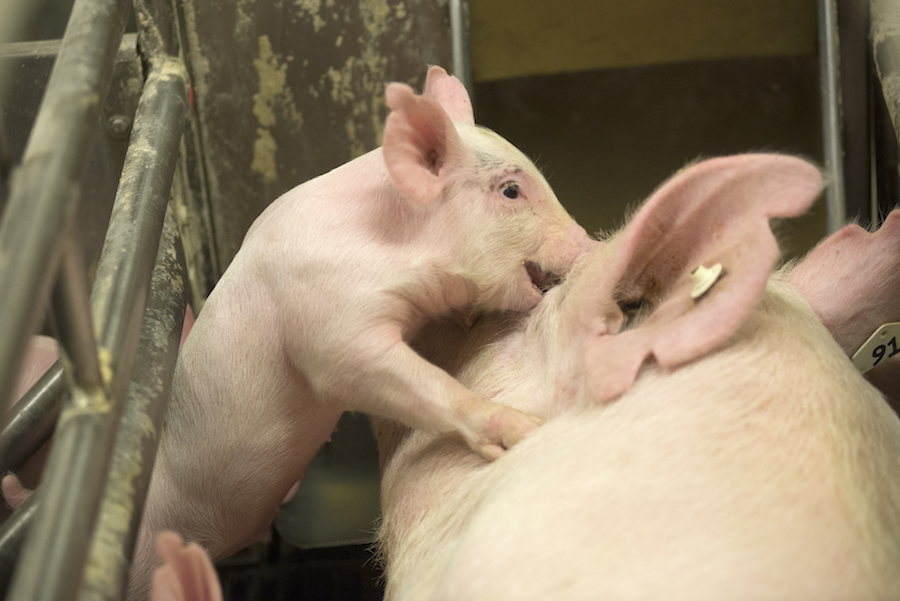
GREGORY URQUIAGA / COURTESY

UC Davis researcher studies ways to improve pig welfare through personality typing

Kristina Horback, an assistant professor in the Animal Science Department, is researching psychology and communication in swine. She previously studied the behavior of wild species, like elephants and prairie dogs, before coming to UC Davis in September of 2016.

Her interest has always been the psychology of animals, but swine research is her newest project. Previously, Horback worked at the University of Pennsylvania for post-doc research, where she was first introduced to the study of domesticated farm animals.

“The theme of my work is to use noninvasive measurements to understand how the animal is expressing their internal state,” Horback said. “I’m really trying to do my best to guess what the animal is experiencing.”

An animal’s experience can, to some degree, be compared to how humans respond to stimuli in everyday life.

“Essentially, it’s understanding the flight-fright freeze response and how the threshold for each individual is different,” Horback said. “Your threshold when you hear your car backfire could be different than mine. It’s understanding that [response] could accumulate over a lifetime to result in a difference in the strength of the immunity of the animal or their relationship with others in their social group.”

Horback said that emotional states influence how people process information. If a person hears their car backfire while in a positive state, such as happiness or excitement, they will usually react differently than when in a negative state, such as depression or anxiety.

Horback is taking this idea and testing to see if it can also apply to swine.

“That’s what I’m [studying] right now with pigs,” Horback said. “I’ve been looking at different personality traits with pigs — if it’s throughout their lives, if it influences whether or not they get sick or if they are more successful than others. That’s important in the swine industry.”

Internationally, the pork industry is changing drastically from use of individual gestation crates to group pens. Gestation crates stopped sows from getting into fights resulting from the social hierarchy and also provided enough feed for each pig. About 35 years ago, this style of housing was popular and ensured that farmers would have physically healthy livestock. The drawback was that the enclosures were so small that these pigs could not freely move.

“Through today’s lenses, the fact that they chose to put these animals into an enclosure that was two feet by seven looks like a bad decision,” said Dr. Thomas D. Parsons, the director of the swine teaching and research department at University of Pennsylvania’s School of Veterinary Medicine. “At the time, it was actually a welfare breakthrough in improvement, and you could really take care of these animals better. But, of course, what we’ve learned is that when it’s only two [feet] by seven, that precludes the animal from doing a number of natural behaviors, including something as simple as turning around. I think more and more people today would find that not acceptable.”

Parsons also stated the importance of an animal’s psychological welfare, something that was not considered as important as an animal’s physical well being when gestation stalls were first implemented. For him, the biggest changes came within the past five years, as he noticed ordinary citizens’ gradually growing concern about an animal’s mental state. Horback noticed this development as well.

“I think that our country is unique in that we have a lot of public or consumer-raised interests in how our food animals are raised, like Prop 2 in California [also known as “Cage Free California”],” Horback said. “I would think that it would be really helpful for anyone in the public to know my research is trying to address those really difficult questions, like when people ask, ‘Is the chicken happy?’ And many times, we’d say, ‘Oh, we don’t know’. I don’t think I’ll ever be able to say for certain, but just know that UC Davis is trying to answer those types of questions.”

In other countries, including the U.K., Canada, Brazil and Australia, gestation crates are in the process of being banned or are already banned on the basis of animal abuse. However, in America, the federal government is not involved, though some states, including California, have banned use of these stalls. Horback explained that the large pork retailers are the ones who are asking farmers to change the way they house their swine.

“Different pockets of farmers are being asked to renovate all of their farms or housing systems so it’s a challenge, especially because it could be done poorly,” Horback said. “Sows do fight, so there’s a need to understand more about the behavior and natural instincts of the species and how we can work with the species. The issue of personality traits is important because there is a complex environment and social world they need to navigate through.”

Maintaining the social hierarchy of pigs while also ensuring their physical and psychological welfare is the main reason why both Parsons and Horback find these studies to be a crucial step. In comparison to the depth of research in human personality, research of animal personalities is fairly new.

Jason V. Watters is the the vice president of wellness and animal behavior at the San Francisco Zoo and an adjunct professor in UC Davis’ Animal Science Department. He studies a variety of species to understand how animals are similar to create general solutions for their wellbeing.  

“I think we’re learning more about how animals tell us, with their behavior, how they feel, rather than looking at what we’ve given them and deciding that they’re fine,” Watters said. “There’s really interesting stuff coming out about this. Some of it is what Horback’s doing with cognitive bias testing — understanding how the behavior of animals reflects their own inner state. In a sense, how they perceive that they are doing.”

Since researchers cannot directly ask animals how they feel, data has to be collected in more creative approaches tailored to test their personality traits. Researchers have run into problems describing what an animal experiences without making them seem too anthropomorphic.

“A lot of times we end up when we’re looking at animal personalities we try to overlay our experience with humans, and that may or may not be the best way to look at it,” Parsons said. “In other words, what’s behaviorally relevant with humans may not be behaviorally relevant for pigs.”

Horback also stated the importance of swine in relation to people, since they have been a species that has evolved alongside humans, just as horses and dogs have.

“Pigs give a lot more eye contact than other animals I’ve worked with,” Horback said. “I think it’s because they have evolved with us just like dogs. Eye contact is important for all our species because we’re primates, but it’s not important for [pigs]. I spend a lot of hours with pigs, training them to use, for example, a touch screen with their snouts as a pointer. They often will look at me to try to get clues as to what I’m staring at. That was my ‘eureka moment’ — there’s a lot more going on in that mind than we gave them credit for.”

Internationally, the findings are relatively consistent to what Horback observes.

“A lot of the research that I do is also conducted in the U.K. and the rest of Europe, but not very much at all in the U.S.,” Horback said. “There are trends and traits across pigs, tendencies in how they interact with each other, how they interact with humans and how they interact with their environment. That’s what we’re trying to look more into — what are these trends and why do they exist? Does it really mean anything? Or does it not impact health? We don’t know.”

Watters sees this young but growing field as an important milestone in creating better conditions for all animals.

“That’s really the future of animal welfare research: understanding [the animal’s behaviors], rather than looking simply at the resources we’ve given them and deciding based on the checksheet,” Watters said. “Being able to ‘ask’ individual animals how they’re doing is what I see as the big, interesting shift in the way that we’re thinking about animal welfare.”

Since Horback’s work is still in its early stages, there are no definite answers on which personality traits are considered more desirable for raising on a farm.

“I can’t say that aggressive sows are great mothers or nonaggressive sows are better,” Horback said. “I don’t think any small changes in the personality would be strong enough [evidence] because of the way that they’ve been selected for so many years.”

Others at UC Davis and elsewhere are working on similar research, and Horback hopes that her research can aid others in the field.

“I’m planning to continue [this research], and hopefully it’ll be useful to the other animal welfare researchers here in the [animal science] department,” Horback said. “To use the tools I have to understand animals in a certain emotional state with research that is a bit more practical, like understanding the pain that a calf goes through when they are dehorned, or a chicken that has cracks in her main chest bone. Does that hurt her or does that not? Trying to understand pain or fear, I think that’s what, or at least I hope, will come next for me and for the more practical research here.”

Horback has high hopes for her research.

“I’m not trying to reinvent the wheel, and I’m not trying to be controversial against any industry because it’s certainly not my goal at all,” Horback said. “I think it’s possible to change how we raise our animals just a little bit to increase their quality of life on the farm.”


Written by: Jack Carrillo Concordia — science@theaggie.org
Admissions data released for new school year

LUCY KNOWLES / AGGIE FILE

UC Davis admits most international students of any UC, increases demographic diversity

On July 6, the UC Office of the President released news that over 130,000 incoming freshmen and transfer students were offered admittance to a UC school for the fall of 2017. According to a UC Davis news release, the university itself has offered admission to over 41,000 incoming freshmen and transfer students after receiving almost 80,000 applications, a record-breaking number.

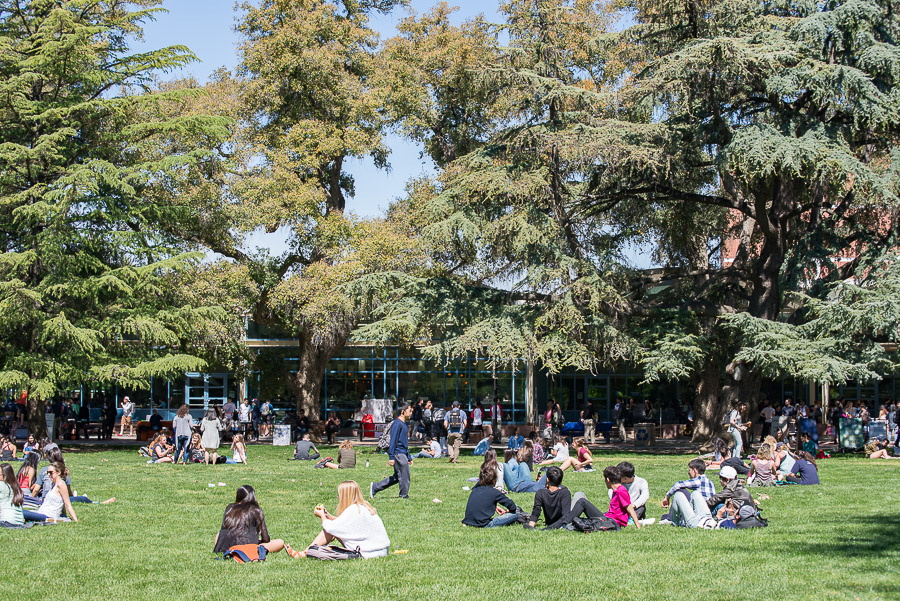
Although final enrollment numbers are not released until the second week of October, Associate Vice Chancellor Walter Robinson said what he finds most noteworthy about the admissions data is the diversity, accomplishments and backgrounds of the students accepted. With regard to diversity, 30 percent of California students admitted to the university are members of historically underrepresented groups –– African American, Native American and Chicanx/Latinx populations –– according to the news release.

“As an engine of social mobility, the University of California, Davis has an obligation to make sure that it’s providing access and opportunity to a world-class education to the cross-sections and the demographics that make up the state’s population,” Robinson said. “We happen to be in a state that’s extremely diverse, so whenever we see the distribution of enrollment across the many different [demographics], especially historically underrepresented populations, we’re making steps in the right direction.”

The university currently has three strategic retention centers set up –– one for African American students, one for Native American students and one for Chicanx/Latinx students. Additionally, according to Robinson, a campus-wide retention center will move to a permanent space next year.

The university increased admissions for students from low-income families by 2.5 percent.

UC Davis also made significant advancements toward receiving the status of and becoming a Hispanic-Serving Institute (HSI). To become an HSI, the undergraduate student population must be at least 25 percent Hispanic students, a reality Robinson said is feasible within the next year or two.

UC Davis is one of the five UC schools that has to cap undergraduate enrollment of nonresidents at 18 percent or below, due to a decision made by the UC Board of Regents earlier this year. According to Robinson, 4,300 California residents are projected to make up the anticipated incoming freshmen class of around 5,800. However, UC Davis did admit more international students this year than any other UC school.

“We do realize that there’s an 18 percent cap, and we are below that cap,” Robinson said. “Once we achieve that cap, we will do everything we can to stay at or below it.”

According to The Sacramento Bee, the admission rate for international applicants was around 60 percent while, for California residents, the admission rate was around 36 percent. Robinson cited a number of reasons for higher rate of admission among international students.

“We do know that the yield rate of international students, as well as national students, aren’t as high as Californians,” Robinson said. “For example, we have a 24 percent yield rate for California freshmen, but we have a 14 percent yield rate that comes from students outside of the state of California. As we think about the ultimate enrollment goal, we have to think about how making offers […] will result in what outcome.”

Incoming first-year mechanical engineering major Adarsh Umarani, an international student from Abu Dhabi, said in an email interview that being accepted to UC Davis was a great feeling.

“I was not aware of the enrollment cap,” Umarani said. “Given that UCs are meant to be primarily for California residents, it makes sense that the local students will be given more preference than out-of-state students.”

Regarding transfer students, over 9,600 of the total 10,300 transfer students admitted are from California community colleges. Robinson himself attended community college and later transferred to a four-year university.

“UC Davis, for over the last decade, has had more transfer students enrolled than any other UC campus,” Robinson said. “We have a Transfer Admissions Guarantee agreement with all 113 California Community Colleges. I’d say that easily a third of our transfer students that are coming from a California Community College are coming from the Transfer Admissions Guarantee program. I’m a strong believer of the transfer pathway.”

Robinson said that he couldn’t be happier with the commitment he sees at every level of the university to ensuring the best possible experience for every student.

“I’ve seen very few universities who try to get it right every time for every student the way that UC Davis does,” Robinson said.


Written by: Hannah Holzer — campus@theaggie.org

Guest: The two different worlds of transfer students and four-year students

ANH-TRAM BUI / AGGIE FILE

The academic paths of students may differ, but the need to intermingle remains

“What year are you?” is undeniably a common question asked by students at UC Davis. But it ignores the diversity of our student population. So let’s examine this question a bit further to better understand how the life of a transfer student compares to the life of a student who has not previously attended another university. When we look at the stark differences between the two, we can see an ever-growing divide that may reach a point of no return if student demographics do not effectively intermingle.

If you pose the question “What year are you?” to a transfer student, more often than not you will get a bewildered look. Transfer students come from all walks of life: a wide range of ages, ethnicities, classes and backgrounds. In terms of age, the youngest student in the transfer class of 2018 is 14 years old, while the oldest is in their 70s. So these transfer students find themselves unable to answer the question of their “year” without some ambiguity.

Some transfer students attended junior college for two years straight after high school, then went to a four-year university. For these students, the question isn’t that difficult to answer. However, this does not represent the majority of transfer students. Some are re-entry (returning) students who decided to take a break from their education, whether it was a single gap year or several years. Others are veterans and have served this country in the most admirable way possible. Many transfer students are single mothers or mothers who have returned from maternity leave. And, believe it or not, some transfer students are former convicts who have served their time in prison and are now pursuing a better life.

What about the culture and student demographics of transfer students? Evidence suggests that junior colleges are much more diverse than four-year universities in terms of race and background. Transfer students are therefore responsible for “balancing” student demographics across the country, and universities would be far less diverse if not for their transfer students.

What about four-year students, those who follow the standard educational course after high school? Research tells us that, apart from international students, four-year students are much more involved in the campus community as well as the local community. For the most part, these students spend nearly half a decade one location, dedicating a significant portion of their youth to a certain university. They are also often risking more with their education since four-year first-year students are less prepared and motivated to re-enter an academic path if they drop out.

Yet they have an opportunity to grow in an environment with dependable support systems. Moving away from home at such a young age takes resilience and uncharted strength. Unlike transfer students, four-years have a substantial amount of time to connect and thrive among different cultures, clubs and associations, both on and off campus. This provides each university and, more importantly, its corresponding community with a vital amount of community service, involvement, residency and reciprocation. Even though four-year students are generally limited to the age group of 18 to 22, they contribute to a community that’s far different from their own, resulting in more fluid personal growth.

Students of every shape, color, size and background contribute greatly to this country —  and to every university, for that matter. The important thing to remember here is that we must bridge the gap growing between transfer students and four-year students. No longer should transfer students be lingering in the shadows for their comparatively shorter time at a university. No longer should four-year students isolate themselves from the transfer student community. Especially in times like these, let us connect rather than divide. Let us reach out and relate to one another, not shun ourselves from everyone who might be a little different from us. Let us simply communicate. And the next time you ask that age-old but slightly misguided question “What year are you?” maybe start with “Are you a transfer or four-year student?” instead.

Written by: Brody Fernandez — bwfernandez@ucdavis.edu


Disclaimer: The views and opinions expressed by individual columnists belong to the columnists alone and do not necessarily indicate the views and opinions held by The California Aggie.

Humor: School out for two weeks and I already forgot how to spell resteront

Temporary knowledge learned for exams has left me unable to spell basic words, remember Founding Fathers

Summer has barely started for we quarter system schmucks, and my scholarly ways are already escaping my cranium like bats out of hell. That’s right. As a consequence of trying to get some “well-deserved” me-time, I’ve found myself lacking basic literacy, reading at a second-grade level and needing some Hooked on Phonics books — or, at the very least, the episode of Blues Clues in which we learn about anatomy through some weird cartoons on a computer that strangely isn’t alive like all of the other pieces of furniture in Steve’s house. Is it dead? Is technology not alive in Steve’s house? Is this a statement on how artificial intelligence is already more woke than we are? What does it all mean, Blue?!

Fun fact: There was once a children’s television show in 1974 called Bagpuss. That isn’t relevant to losing all the knowledge I gained during my second year at Davis, but man-oh-man it is a jolly little tidbit of knowledge.

Anywho. It hasn’t even been a full month of summer, yet I’ve lost the basic knowledge that I need to function, converse and, most importantly, make witty tweets so that I can gain approval from peers to whom I’d never speak in person. It’s an art form.

Most recently, I attempted to ask my mom if we could dine at a new eatery. She said she knew of a hip new joint that had fun quesadillas. I wished to ask the her name of the establishment that partook in the selling of these cheese-carb-wheels-of-fun, but alas, my knowledge had already flown out the window like Peter Pan and left me asking, “What’s the name of the food house?”

Is it restorant? Resterant? I think there’s a “u” in there, but that seems preposterous. (Then again, what part of the English language does make sense? Zing!)

Due to my constant scrolling through social media that occupies these summer days and summer nights, I’ve lost the ability to form coherent statements beyond the average length of an Instagram caption. The problem is that kids don’t want to look like they care about captions these days, so I basically can only say “#nofilterneeded” or “sunflower emoji,” which makes no sense because, typically, it’s a picture of a pool that has not a sunflower in sight! WHAT IS THIS MADNESS, FELLOW YOUTHS?

I hope to see you all in the fall, and I will need you to quiz me on my vowels, odd numbers and primary colors.

Written by: Olivia Luchini — ocluchini@ucdavis.edu

(This article is humor and/or satire, and its content is purely fictional. The story and the names of “sources” are fictionalized.)

Bacteria and Yeast Diversity in Flower Nectar Can Increase with Greater Dispersal

MIFUYU NAKAJIMA / COURTESY

Research from UC Davis scientist challenges a traditional ecology theory

A recent study published in Ecology Letters and led in part by UC Davis entomology and nematology professor Rachel Vanette could change scientists’ understanding of how microbes are dispersed in nature.

Mimulus aurantiacus, commonly called Sticky Monkeyflower, is a flowering plant found along the West Coast of the United States. The flower is bright in appearance and can be seen growing and blooming in the UC Davis Arboretum.

Rachel Vannette is an assistant professor in the Department of Entomology and Nematology at UC Davis. Vannette is the lead author of the research paper “Dispersal enhances beta diversity in nectar microbes.”

“We chose Sticky Monkeyflower because it was abundant at the field site we were working at,” Vannette said. “It produces a lot of floral nectar, which is a handy trait for the experiment we were looking at. We know that it has a lot of microbes in its nectar, which was probably its most important trait.”

Tadashi Fukami, an associate professor in the Department of Biology at Stanford University, is the senior author of the research paper.

“As a bird pollinator, Mimulus aurantiacus tends to produce much more nectar than other flowers,” Fukami said.

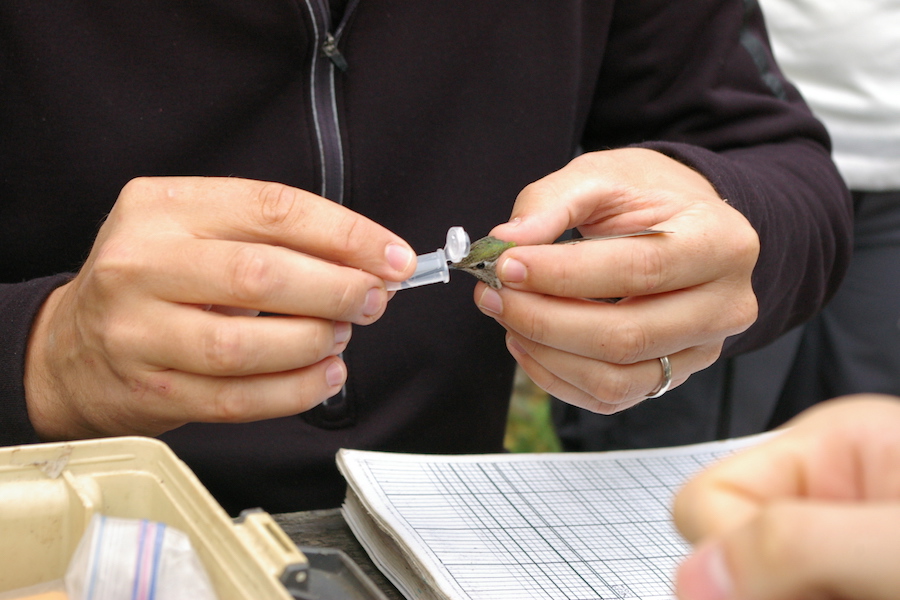
Calypte anna, commonly called Anna’s hummingbird, is the main pollinator of the Sticky Monkeyflower and the primary vehicle for yeast and bacteria transfer between plants. The birds are attracted to the sweet nectar in the flowers. Both microbes and pollen stick to the hummingbirds’ bills as the birds visit plants during the day.

Jonathan Eisen is a professor at the UC Davis Genome Center who was not involved with the research in Ecology Letters. His work involves the evolutionary process of microbial communities with a wholesome focus on science communication.

“If you want to calculate a diversity metric, most of those metrics relate to either presence and absence of species, or some measure of their relatedness among the organisms in the sample,” Eisen said. “One is called taxonomic diversity — that’s presence and absence of species. If you look at the relatedness of organisms — that’s called phylogenetic diversity, [or] evolutionary diversity. You can also try to do things like look at traits — or functional diversity.”

Each Mimulus flower contains millions of bacteria and yeast feeding from the sugary nectar. The flower serves as a home habitat for microbes, which adjust the chemistry of the nectar as they grow and develop. Flowers rich in Acetobacter bacteria will convert ethanol into acetic acid, creating a nectar environment which is unsuitable to certain other microbes and distasteful to unsuspecting pollinators.

“For each of these [diversity metrics], you can measure them within a community — that’s ‘alpha diversity’; or compare them between communities — and that’s usually called ‘beta diversity’,” Eisen said.

Measuring the beta diversity between the microbial communities living within Sticky Monkeyflowers meant comparing the rates of pollinator dispersal and counting the varied bacteria and yeast communities found in the flowers.

The fieldwork was completed at Jasper Ridge Biological Preserve in the Santa Cruz Mountains. Sticky Monkeyflower tends to stay close to the sunny paths of the hiking trails. Collecting flowers could therefore be done without straying too far into the trees.

“We wanted to minimize damaging the chaparral and forest habitats,” Fukami said.

Mimulus flowers were separated into three experimental groups. Samples were collected during the spring and early summer, while the flowers were blooming.

“We went to the field and blocked dispersal of microbes using simple methods,” Fukami said. “Basically, we did two things to different flowers. We bagged some flowers. By doing that, we denied access to flowers by pollinators. We [also] had a cage with some mesh much coarser than the bag, so small insects would have no trouble accessing the flowers. The purpose was to not let hummingbirds access the flowers, but let the bees in.”

Another group of flowers was left uncovered. All pollinators could access this third group of flowers as desired. Though a prominent ecological theory suggests that the more dispersal occurring in a community, the lower the diversity of organisms will be, Vannette’s observations provide evidence suggesting the opposite.

“When you compare the microbial communities among flowers, we thought that those flowers that had more dispersal should look more similar to each other, right?” Vannette said. “Because they had been connected, and the microbes have presumably been moved from one to the other, so they should look the same. But that’s actually not what we found.”

Vannette’s research may have found different results from previous ecology experiments due to the implementation of a thoughtful, natural design. Birds that pollinate the Sticky Monkeyflower and transfer bacteria and yeast between flowers were observed performing these duties realistically in Vannette’s experiment. Previous experiments used flowers in laboratories, with pipettes serving as the pollinator.

“We found that those flowers that had been visited more often, or that were available to be visited more often, actually had the most divergent communities compared to those that had limited dispersal,” Vannette said. “From some of our previous work, we think that one mechanism for that could be priority effects, or basically resource preemption, by some of the microbes which get there first.”

Improvements in molecular biology have allowed scientists to compile genetic libraries of microbes to begin creating bacterial field guides, such as the ones wildlife specialists use to identify birds.

“Historically, most studies of the principles of ecology have come from studying macroorganisms that you can easily observe without a microscope or without some alternative technology,” Eisen said. “[Vannette and Fukami are] taking advantage of DNA technology to include microbes as part of an ecological study.”

Vannette and Fukami were assisted in their work by an undergraduate field study course at Stanford University. Students helped collect hundreds of Mimulus flowers to be analyzed by Vannette’s team on group hikes to Jasper Ridge. Over a hundred students meaningfully aided the research team with their time and labor.

“Our results are robust and not dependent on a few flowers,” Fukami said. “The large dataset makes this study strong.”

The new research from Vannette’s group improves the collective understanding of the ecological community. However, a concrete, long-standing theory of how pollinator dispersal affects microbial community diversity requires more fine-tuning in light of improved experimental techniques.

“We know very little about the dispersal of microbes across landscapes,” Eisen said. “This, to me, is a really interesting system for asking and answering questions about how communities of microbes get dispersed in a natural landscape.”

Written by: George Ugartemendia — science@theaggie.org
UC Davis summer sports camps give back to the community

CAT TAYLOR / AGGIE

Local campers receive guidance from former, current UC Davis athletes

With the majority of Davis’ 35,415 students currently on summer break, the sprawling 5,300-acre campus appears remarkably calm. That is, until you come across one of the many UC Davis sports camps taking place at the university. Cries of excitement from local kids replace the churning of bike gears and the banter of undergraduates.

However, the campus is deceivingly empty. The city of Davis and its residents remain intertwined with the university during the summer.

“I know that a lot of kids that come here are from Davis. I know that a couple of them, their parents are professors here at the university,” said UC Davis alumnus and catcher Elijah Ontiveros. “It definitely brings the campus, the baseball team and the community as a whole together.”

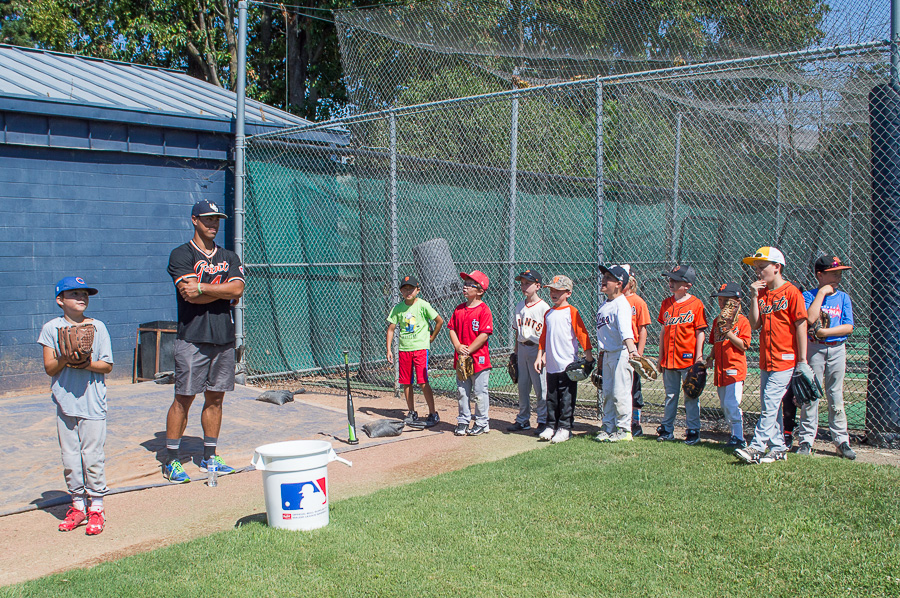
UC Davis volunteer assistant baseball coach and baseball camps director Ben Cordy was quick to point out that the sports camps aim to impact all of the northern California community.

“We get kids from all over,” Cordy said. “They just like being out and learning the game, playing a little extra baseball after the little league season.”

The baseball camp, which takes place at the Aggies home field, Dobbins Stadium, offers five one-week sessions for campers between the ages of 6 and 15.

“[With] the younger kids, the biggest thing we’re trying to teach them is not to be afraid of the ball,” Cordy said. “Whereas the older kids it’s really more teaching them the unique skills of the game.”

The UC Davis sports camps represent 12 of the university’s 22 Division I teams. The camps consist of gymnastics, baseball, softball, volleyball, basketball, lacrosse, soccer and more.

Many of the coaches interacting with and teaching the kids on a daily basis are current or former UC Davis athletes. Ontiveros is in the midst of his third summer coaching at the sports camps.

“I think the coolest thing is I that I get to share my same love and passion for the game,” Ontiveros said. “I enjoyed it when I was a little kid, so I want them to enjoy it just as much.”

Given UC Davis’ athletic success this past year and the recent recruiting of two UC Davis pitchers in June’s Major League Baseball draft, current campers are dreaming big about their own athletic futures. But for now they will focus on battling the Davis heat while making summer memories.

Written By: Rowan O’Connell-Gates — sports@theaggie.org

4th of July in Photos

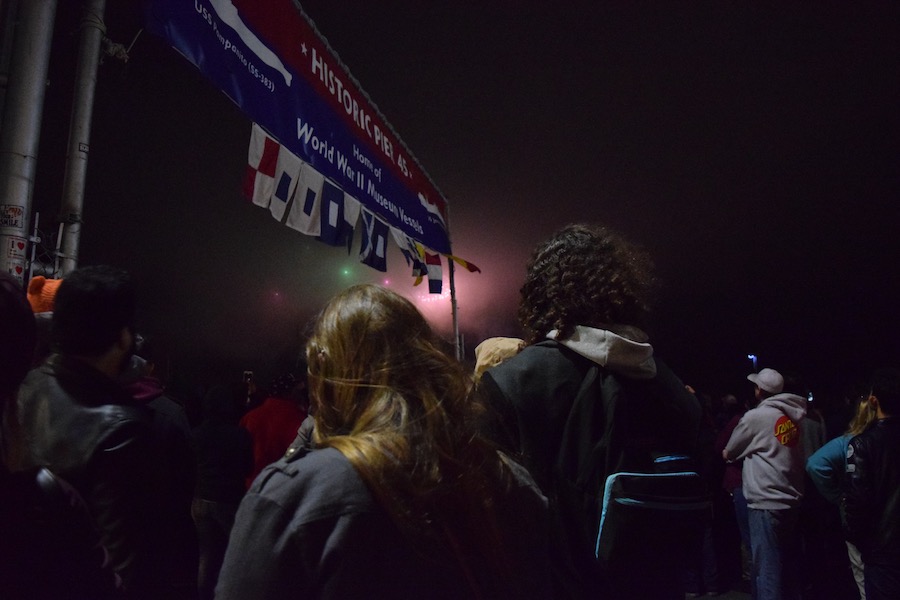
San Francisco under the colorful and foggy night sky. (ALEXA FONTANILLA)
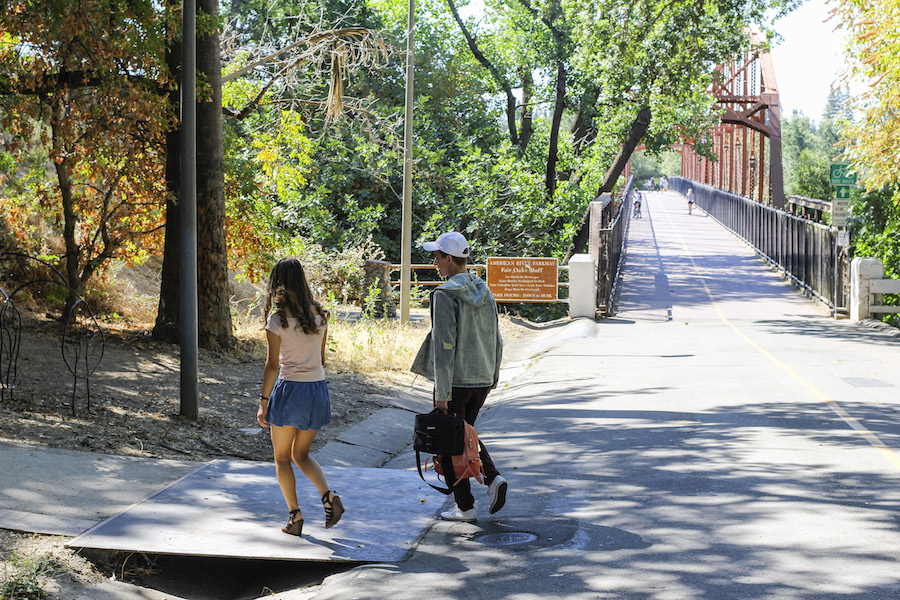
A spontaneous morning photoshoot with friends to start off the Fourth of July. (JERO REAL)
Long exposure of a lit lake. (JORDAN KNOWLES)
You can never go wrong with a poolside barbecue and old friends. (RAUL MORALES)
What is the Fourth of July without swimming? (ZOË REINHARDT)
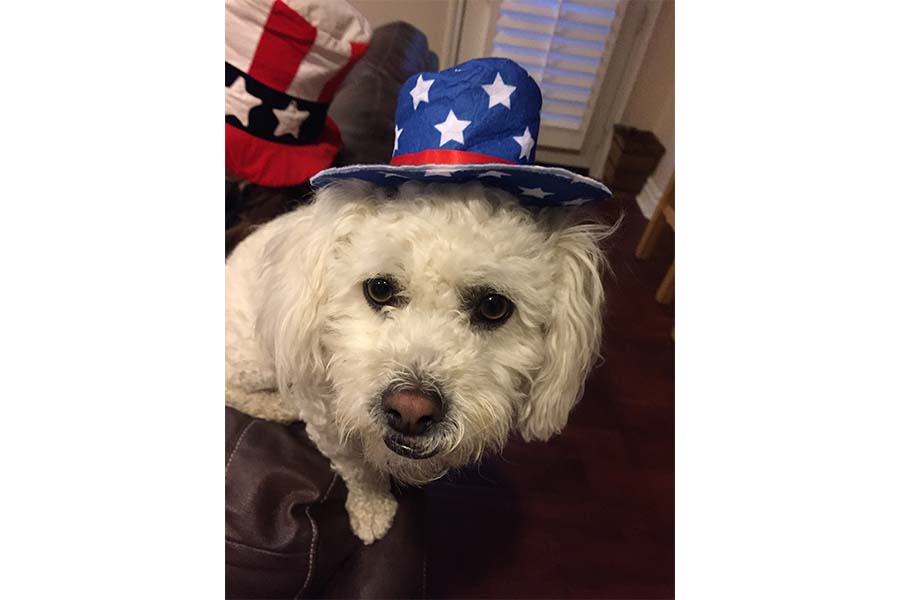
Celebrating Fourth of July and my 2-year-old dog’s birthday. (FARAH FARJOOD)

Compiled by: The California Aggie Photo Desk — photo@theaggie.org

Second hate crime hits Davis Islamic Center

NATHAN CHAN / AGGIE FILE

Torn pieces of Quran thrown at local masjid during Ramadan prayer

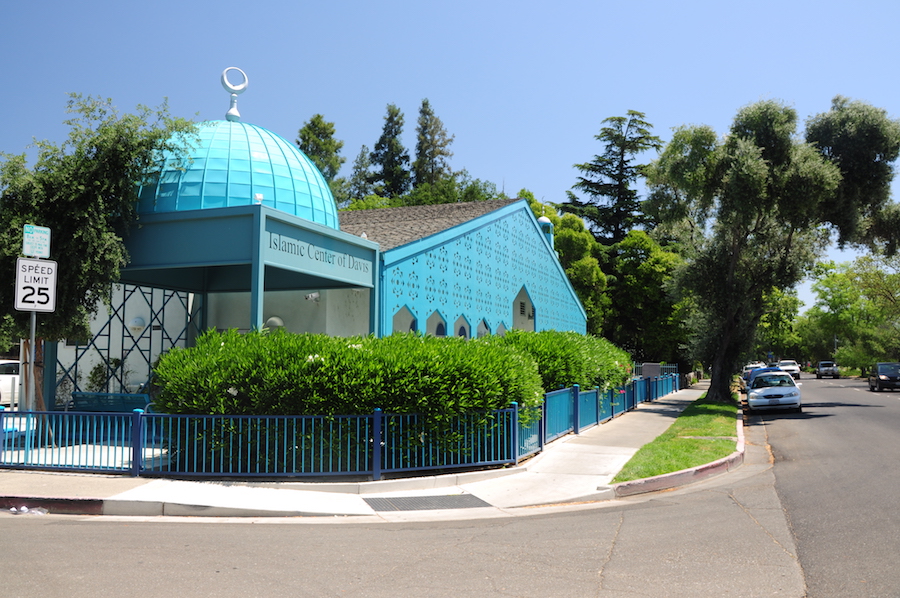
On the evening of June 23, torn pages of the Quran were thrown at the Davis Islamic Center during a Ramadan prayer. This most recent act of vandalism marks the second hate crime to occur at the masjid, or mosque, in the past six months.

According to The Davis Enterprise, the Davis Police Department (DPD) suspects that the torn pages were thrown at the masjid from a moving vehicle around 11 p.m.. The pieces of paper were identified as computer-printed texts from the Quran that were subsequently shredded and thrown at the masjid. Bikes parked at the Islamic Center were later slashed by an unknown vandal the following Saturday afternoon.

Davis Police Sgt. Dan Powell stated in The Davis Enterprise that the vandalism incident will be treated as a hate crime. The DPD is using surveillance video to identify potential perpetrators.

Afreen Latheef, a third-year civil engineering student and a member of the UC Davis Muslim Student Association, denounced this most recent act of vandalism and expressed her apprehension for the security of the local Muslim community.

“The Muslim community is concerned and worried, given that there is an increase in the amount of crimes targeted towards Muslims,” Latheef said. “Unfortunately, the reality still sets that the attacks are increasing. The only way to make sure that these attacks are not a trend is by educating those unsure about Islam and its values and eradicating ignorance in the process.”

Education and tolerance are becoming increasingly necessary, as hostility toward Muslims continues to rise both nationally and locally. This most recent vandalism incident comes just one week after the sentencing of Lauren Kirk-Coehlo, who was given five years of probation for committing a hate crime at the Davis Islamic Center earlier this year. Kirk-Coehlo was tried for smashing windows, damaging bikes and wrapping bacon around the door handle of the masjid.

The occurrence of these hate crimes sparks concern not only within the local Muslim community, but also among friends and allies of the Davis Islamic Center.

Josh Dalavai, the ASUCD President, shared his reaction to the most recent incident and conveyed his fear for members of the Muslim community.

“I was absolutely disgusted,” Dalavai said. “Not only was the center robbed of justice in the beyond-light sentencing of the woman who smashed their windows and left bacon on the [door], they now got hit with another hate crime. I fear for their physical safety.”

While Dalavai asserted that the vandalism attests to the flaws of the community, he also reiterated that various groups and organizations in Davis have been exceptionally supportive of the local Muslim community during this time of political and religious conflict.

“I’d like to emphasize how wonderful the other faith communities of Davis –– particularly the Christian groups –– have been in support of Muslims,” Dalavai said. “It is great to see such collaboration and empathy.”

Latheef, like Dalavai, also communicated her gratitude toward other community members who have shown encouragement and kindness towards the local Muslim community.

“The response from the community […] has been wonderful,” Latheef said. “For every attack, there has immediately been an overwhelming response of good, saying that we Muslims are valued, allowing me to be optimistic for the future.”


Written by: Eliana Sisneros — city@theaggie.org

25th Annual Production Sale raises close to $50,000

DUSTIN WILLS / COURTESY

17 animals bred and raised by students sold

On June 24, the 25th Annual Production Sale auctioned off 17 animals 15 horses and two mules which were bred and raised by UC Davis students. The students were accepted into one of two six-month horse-based management internships. With around 200 people in attendance at the auction, in addition to bids that had been placed over the phone, the sale raised close to $50,000, a record-breaking total.

The money raised will support and maintain the UC Davis Equine Teaching Program. Dan Sehnert, the facilities coordinator for the Animal Science Department, helped organize the first horse sale 25 years ago and has remained involved in the subsequent auctions. Sehnert said the money raised from the sale is vital to the maintenance of the UC Davis Horse Barn, which hosted the sale.

“Something that a lot of people don’t know is that […] the only funding we receive to operate [the Horse Barn] is for the salary of the barn manager,” Sehnert said. “We don’t receive any money whatsoever for feed, for veterinary care, for bedding [or] for supplies. The money raised in this sale helps offset those costs.”

The day’s events included a preview of the animals, a dinner  which served top sirloin steak courtesy of the Meat Lab and the auction itself. During the preview, the student-interns answered questions about the animals they had worked with over the past two quarters.

“A big thing in the horse world is pedigree — we had to learn those bloodlines,” said Alyssa Atilano, a UC Davis alumna and one of the nine foal managers.  “Mostly, as we found out, people wanted to see how they moved. In the horse world, if people don’t buy your horse, it’s most likely going to go into an auction and you have to make him or her look good.”

Dr. Amy McLean, the equine operations supervisor, also helped to promote and organize the auction. McLean worked with the students throughout the courses of their internships.

“The students have been here, some of them, from the time the horse was literally conceived they were responsible for breeding,” McLean said. “They were there when it was born, and they spent the last six months of a lot of these horses’ lives preparing for the auction. It’s really amazing to […] go from the very beginning of the process to when they’re then trained and ready to find a new home.”

Atilano said that as part of the internship, one or two students were assigned to a yearling and two to three people were assigned a pregnant mare; her yearling was a Quarter Horse.

“He was a perfect gentleman by the time the auction came, he really showed off,” Atilano said. “He didn’t act up at all during the auction. Ultimately, he was bought by someone who wants to use him for trail riding in Oregon. I’m really happy with how that turned out, I think that he will be happy over there.”

Deanna Overton, another one of the foal managers and a UC Davis alumna, said that watching the sale of her yearling was bittersweet.

According to McLean, the average sale price per animal was around $2,822. The animal sold for the highest bid was the Andalusian weanling, which sold for $8,600. The third highest-selling horse was bought by the father of one of the interns.

“She did an outstanding job training this horse,” McLean said. “I thought that was really nice to see one of the students directly involved in the program having her family’s support and giving back to the program.”

Dan Macon, the assistant specialist for rangeland science and management in the Department of Plant Sciences, who has served as auctioneer for 24 of the production sales, conducted the auction again this year. Compared to the very first year of the sale, Macon said the quality of the breeding has improved immensely.

“They’ve all been successful,” Macon said. “But this one really set the mark.”


Written by: Hannah Holzer — campus@theaggie.org

More Students, More Food: Changes to Expect in Fall 2017

JORDAN KNOWLES / AGGIE

New dining options, lecture hall, housing on campus

With the number of admitted undergraduates increased by 1,100 students in 2016, UC Davis has worked to accommodate the influx and improve student life by updating the campus’ offerings. In addition to the Memorial Union, which was reopened in the spring, students can look forward to changes in campus dining options, new residence halls and the construction of a large lecture hall.

Many of the changes revolve around the Silo, the newly-renovated campus food hub where most businesses are about to be replaced with new ones. Starbucks, Carl’s Jr., Taco Bell and Pizza Hut, which were previously contracted by the third-party food management company Sodexo, will be replaced by Peet’s Coffee, a University-run burger venue called Spokes, an expanded La Crepe and additional seating. The change in businesses is related to the university’s switch from third-party to university-run food management, which allows UC Davis to better respond to students’ preferences.

Many students, such as Maggie He, a first-year design major, felt that the Silo’s previous fast-food options did not match many students’ tastes.

“I mainly went toward the food trucks rather than what was inside the Silo,” He said. “I don’t really like fast food restaurants or support [them].”

Anticipating the switch to university-run food management as an opportunity to better cater to students’ palates, UC Davis conducted focus groups last year to determine which food businesses students would prefer in the Silo.

“What we heard from students is that they had an appreciation for local sources and food venues,” said Emily Galindo, the executive director of UC Davis Dining Services. “We’ve expanded our food trucks from two to four and they’ll be rotating in the Silo area.”

According to Galindo, the food trucks that come to campus will rotate in response to student feedback. Other current local venues, like Gunrock Pub, will receive updates to their building exteriors and menus to increase student appeal.

“What we heard is that a lot of students didn’t even know [Gunrock Pub] was a place they could eat at,” Galindo said. “We want to give our students as many options as possible as they move around the campus on a day-to-day basis.”

Scrubs Cafe, located in the veterinary medicine area of campus and newly opened in April, expanded options for students attending classes in the underserviced area. The restaurant and coffee bar features affordable breakfasts with a menu that rotates on a daily basis. Next month, the new Silo Market will open to further broaden grab-and-go food options for busy students. Its products will include fresh pizza, sandwiches and salads.

Meanwhile, meal plans for the University Dining Commons will also see changes in order to accommodate students’ schedules. Starting this fall, the Dining Commons will stay open from opening to closing time and offer only unlimited meal plans.

“I’m just really interested […] to see how that dining plan change is going to affect the freshmen,” said Julia Lemak, a first-year biological sciences major. “Are they going to like it because it makes everything simpler, or is it going to be more expensive for students on average because you aren’t able to choose a lower meal option?”

Though students on meal plans would have less latitude in choosing where they want to eat, some appreciate the university’s efforts to make dining more accessible to busy schedules.

“I think having these new food options […] will make it easier for students to get food in between classes,” He said. “[The DC] gives a bigger chance for people to get breakfast, lunch and dinner in between classes because sometimes the only time that they’re free is when the DC is closed and they have to find other options and they’re more limited.”

Students often are forced to forego meals in the rush of a packed school day.

“More than anything, with a growing student body, we want to be sure that we’re also increasing the food venues for our students,” Galindo said.

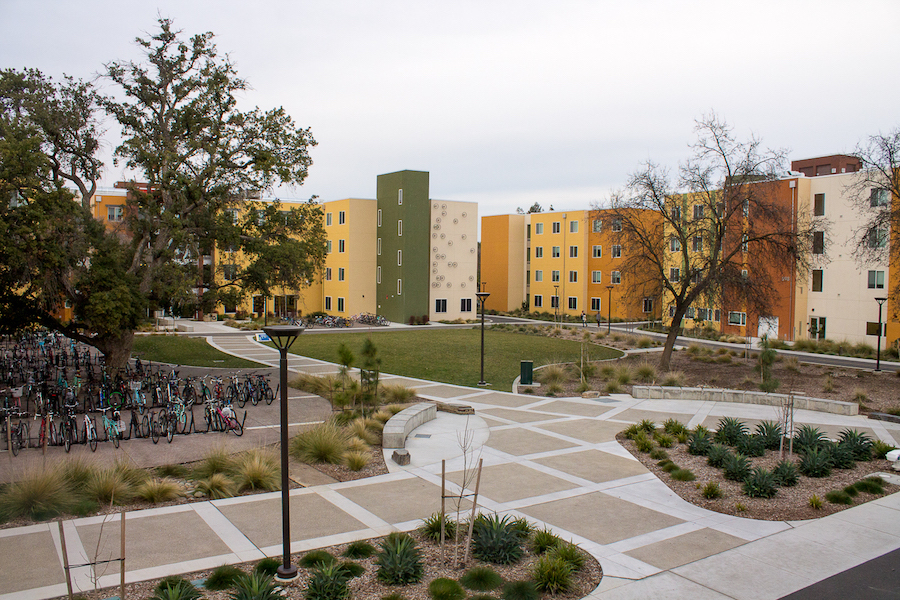
New building construction is also underway in an effort to accommodate a larger student population. Three new Tercero residence halls will open this fall, adding 506 beds for incoming freshmen and housing a large community pavilion, music room, recreation room for gaming, wellness/meditation room, community kitchen and meeting/study rooms for the use of the entire Tercero community.

Meanwhile, students may notice the construction site of a new 600-seat lecture hall between Hutchinson Hall and California Avenue, expected to be completed in January 2018. This will be the first new lecture hall built in over a decade at UC Davis and will feature large skylights, projection screens with anti-glare coatings and study spaces.

“I think it’d be nice to put study spaces near a lecture hall because sometimes you have classes where you only have an hour break between classes and if you’re coming right out of lecture you can just go straight to the study hall,” Lemak said.

All these exciting changes await students’ return to campus in the fall, thanks to the university’s ever-increasing population. However, some are wary of the growth, as many improvements have yet to be made for the current student body.

“There are issues that […] are probably still going to be there when more students come in,” He said. “As much as they’re spending time to expand to accommodate more students, they should also spend time accommodating more of the students that they already have.”


Written by: Kristen Leung — features@theaggie.org

Guest: International students need a bridge to mental health counseling

CHARLES MIIN / AGGIE FILE

The university must make counseling services more visible to international students

Studying abroad is an exciting experience, but it can also be a stressful one, especially for international students studying in the United States.

Long-term travel, nostalgia, culture shock, language barriers, heavy workloads — the life of an international student can be weighted by fear of failure and a sense of isolation. As an exchange student from China who just completed a year of study at UC Davis, I know most of us try to work through these issues on our own. And that struggle can be exhausting.

Our campus offers an array of support services for student mental health and wellness, including individual counseling, peer support and therapy groups. But for all the focus on attracting international students to UC campuses, these services are not well integrated into our experience, particularly among students for whom English is a second language. Twelve percent of UC Davis enrollment is made up of foreign students — with approximately 2,000 undergraduate students from China alone — representing a strong tuition stream and constituting a sizable block of students who don’t always feel included in these critical health care services.

Across the U.S., suicide is now the second-highest cause of death among college students. In California, 200 college students take their lives each year. The majority of those who die by suicide are dealing with depression that has gone untreated. All my friends reported they have experienced some level of depression or anxiety during their study at UC Davis, yet they are hesitant to see a counselor.

No doubt, the reluctance to access mental health services is partly cultural in nature. In my home country, there is still tremendous stigma surrounding mental illness. People regard symptoms of mental illness as threatening, and students who admit having mental health problems potentially face exclusion or discrimination. The fear of being segregated by fellow students and the suspicion that doctors providing counseling will not keep those services confidential can lead to delays or refusal to seek treatment.

At UC Davis, the confidentiality rules surrounding health services are strictly enforced. But there can be other barriers for international students. I’ve talked to friends and acquaintances from China who acknowledge going through difficult times and feeling they could have used the support of a counselor. But none have made use of campus services. Most had no idea such services existed. And those who did know worried about trying to discuss intimate feelings in a second language.

“I don’t know how to elaborate on my conditions,” one friend said. “And what if I cannot understand what the counselor says?”

The UC Davis Student Health and Counseling Services (SHCS) does make accommodations for language — staff can contact an interpreter service or make a referral to a counselor who speaks the client’s language if available. As for cultural barriers, counselors at UC Davis have received training on working with clients who come from different backgrounds and strive to be culturally competent as clinicians.

It may be that the university’s services would prove sufficient for most international students — if students were aware of where and how to access them. But there needs to be a more high-profile and concerted effort, whether through online forums or international student organizations, to target international students with information about mental health services, and to promote frank, stigma-busting discussion about mental strain and mental illness.

Dr. Paul Kim, the director of multicultural services at SHCS, said that the university is working actively to provide mental health services to an array of student communities, including international students. He noted that the department has a diverse, multilingual staff and provides outreach programs for international students, including orientation sessions regarding cultural adjustment, mental health programs at the International Community Retreat and services through the Community Advising Network Program, which strives to increase access to mental health services for students from marginalized and underserved communities.  

Tianbo Gu, the vice president of the Chinese Graduate and Postdoctoral Scholars Association at UC Davis, said his group would be willing to assist in these outreach efforts, providing an online platform for information on counseling services.

We need these bridges and more. I have been interning this spring at the Steinberg Institute, a Sacramento-based nonprofit public policy institute dedicated to raising awareness and inspiring leadership on mental health issues. One of our mantras is we won’t rest until issues of the brain are treated as readily and comprehensively as issues of the body. It is neither ethical nor wise to leave international students out of this equation.


Zihan Yu was enrolled as an exchange student at UC Davis for the 2016-17 school year. Her home school is Renmin University in Beijing, where she is pursuing a bachelor’s degree in Chinese literature.

Humor: Student imagines a wonderful summer of travel and friendship fully knowing that nothing will happen

ALEXA FONTANILLA / AGGIE

Expectations versus reality

Summer is a wonderful escape from the stresses of school. After finals week, essays and other super relatable things that you’ll appreciate and find funny, students look to summer as the bastion of hope for saving their mental health.

But guess what! Summer is mostly the same futile existence they had during school —  it’s just at a different time of the year.

Timothy McSmoldic, a third-year computer science major, made the critical error of thinking his life could suddenly become interesting.

“Originally I thought summer would roll around and I would be picking up babes at the beach and going through formative sexual experiences that would give me insecurities I would never escape for the rest of my life,” McSmoldic said. “But instead I got a summer job, and now all I do is hate my life in the same way I did the rest of the year. Too bad!”

It’s common for students to mistakenly believe that summer will make them feel better after having to go through multiple relatable student things that you definitely know and that would make you click the like button on this article. But unfortunately, summer is no such escape. Sometimes being home sucks. Summer jobs suck. Being bored sucks. Having too much time to think about the soul-crushing weight of existence and the insignificance of everything you do sucks.

But hey, at least it’s not finals week or some other relatable student thing that makes you chortle! Because we all know that those student things are just simply the worst. Please share this article.


Written by: Aaron Levins — adlevins@ucdavis.edu

How to Stay Entertained While Traveling

BRIAN LANDRY / AGGIE

Whether it’s by plane, bus, train, or car — try these

As I stare out the window of a packed plane headed toward London, hovering 35,000 feet in the air, I think about how I can entertain myself for the next 10 hours. Between my time in the air and a two-hour layover, there is plenty of time for me to occupy. In theory, I could spend that time miserable and bored, but I could also take the time to be productive and engage in several artistic and self-improving activities. And with that, here are the things I’ve been doing — and that you can do too — to entertain yourself on those long summer journeys.

  1. Listen to a podcast

        As a self-proclaimed podcast connoisseur, a long journey is the perfect way to catch up on all my favorite shows. From politics to technology to business to health to society, there are endless amounts of audio content to keep me from going crazy in my confined seat. It’s like having little friends in your ears — ones that will both entertain and sustain me throughout a long journey.

Some noteworthy podcasts include the following: “The Daily,” a political podcast from the New York Times; “Still Processing,” which addresses the arts, society and culture; “S-Town,” a part of Serial Productions, a new company founded by the creators of the groundbreaking crime podcast “SERIAL.”

  1. Make (and listen to) a music playlist

        Spotify Premium completely saved my life this traveling season. With a subscription, you can download your favorite songs to your phone and sort them into playlists: one for sleeping, one for pump-up songs — and maybe even a collection of oldies. I personally like to go through the entire Hamilton cast album, though this can be tricky to not sing along to in a public space — you’ve been warned.

  1. Journal

        I find this to be my personal favorite. When else can you find large amounts of free time to delve deep into your thoughts, and then write them out? They can be simple, too, just by describing your surroundings or your nerves about flying alone. Journaling also helps to preserve memories in a way that other mediums like photos and videos cannot. It not only entertains but also helps you to remember your special trip.

  1. Draw or Color

        Maybe you don’t have the greatest free-hand drawing skills, but if you can stay in the lines, adult coloring books are the way to go. They are super cheap at stores like Target or Walmart and make for a very therapeutic activity.

  1. Watch a movie or television show

        The Netflix app completely changed my flying experience. From the new season of Orange is the New Black to Nick Kroll and John Mulaney’s Broadway series Oh Hello, I was entertained with sadness and laughter for hours. If you’re traveling alone via plane, most airlines provide in-flight entertainment such as movies or TV shows. Some of the films can be pretty dated though, so definitely try and download a few of your personal favorites beforehand if possible.

  1. Games

        Sure, Candy Crush and Temple Run are classics, but since you’re traveling, you can also spend some time playing instructive games like Duolingo to sharpen those language skills — especially if you’re traveling abroad. Where is That? is a map game that tests you on geography all over the world. That way you actually know the area you will be visiting!

  1. Sleep

        Okay, I take number three back; this is definitely my favorite activity. It can be hard for some people to fall asleep, but if you can find a comfortable position, I would recommend it. Between time changes and nervously not sleeping the night before, your internal clock can get completely messed up. Try to stay on track by slipping in a little nap on the plane. Bring one of those little neck pillows, and some airlines even give you blankets — go Air Canada!


        If you try all of these and still have time, try sparking up a conversation with the person next to you. People are generally pretty friendly and love to talk about their own personal journeys. Traveling is a great learning experience, and there’s no better way to kick off your journey than with trying new things!


Written by: Myah Daniels — arts@theaggie.org 

Guest: Withdrawing from the Paris Agreement endangers Californians and other nations

EVAN GUEST [(CC BY 2.0)] / FLICKR
The fight against climate change now falls on state legislators

On June 1, President Donald Trump made the wrong decision for our health and the planet by pulling the United States out of the Paris Climate Agreement. Climate change threatens our health with dirtier air, more extreme weather and spreading disease. The United States is the nation most responsible for global warming, and now we’re leaving other countries to clean up our mess or suffer the consequences. We’re telling the world that our nation is willing to risk all of our futures just for the sake of a few polluting industries. The United States should be the leading nation in fighting climate change and promoting clean renewable energy.

But losing Paris won’t only compromise our nation’s position in the international arena. Casting aside our emissions goals could have serious consequences right here in California.

To highlight some effects, a report produced by CALmatters found that California’s coastal sea level will actually rise 30 to 40 times faster — up to 10 feet in just 70 years — if nothing is done to address climate change. During California’s 2015 drought, the most severe dry period in over 450 years, over 20,000 agricultural jobs were lost. Furthermore, the American Lung Association reports that eight of the top 10 U.S. cities with the most particulate air pollution are in California.

If Washington won’t lead, we all need to step up. It’s time for our state legislators to lead California to a 10 percent renewable energy future. It’s time for Governor Jerry Brown and Senate President Pro Tempore Kevin de León to stand up and defend important climate-friendly measures like the clean car standards that will clean our air and conserve oil.

Written by: Shanti Ezrine

UC Davis students launch new social media app

MARBLE / COURTESY

Marble app aims to create a new way for UC Davis students to connect

Update: Since the publication of this article, Marble has been used by over 700 students as well as over 70 student organizations. According to its Facebook page, the creators of the app are currently working on implementing new features so that they can continue to create connections among UC Davis students.


For a group of six UC Davis students, two years of hard work and dedication recently came to fruition as their social media app, Marble, hit the app store on Thursday, March 30.

Marble, which is currently available on iOS for students with UC Davis email accounts, started with UC Davis student Will Finch, a fifth-year managerial economics major, who set out to create an app that would make finding and connecting to groups and events easier and more efficient. Finch found that current social media platforms still lacked some vital components.

“I was inspired to make this app when I realized that there wasn’t a good way to share large amounts of photos and video on a mobile device in a format that was both enjoyable to look at and told a story,” Finch said in an email interview.

After showing some simple mockups of the app to friends and students around campus, Finch realized that Marble would be perfectly suited for Davis students.

“I decided to make the app UC Davis exclusive and cater to student groups since it was a niche I thought the app would be well suited for and other people weren’t catering to,” Finch said.

Ted Mumford, a fifth-year community and regional development major and co-founder of Marble, was intrigued by the idea of the app as soon as Finch showed him the basic concepts and page layouts. Like Finch, Mumford realized that it could provide a much-needed service to UC Davis students in particular, as the immense size of both UC Davis and its student population often led to on campus clubs being less accessible.

“As a Davis student (especially as a freshman), it was unfortunately very common to hear students groaning about Davis being boring and nothing going on,” Mumford said via email. “As you probably experienced just as I did, the longer you’re at UCD and the more people you meet, the more events and groups doing cool stuff you discover. Then, you walk outside the CoHo and you see 15 clubs all looking for new members or trying to tell people about their upcoming performance. We saw a problem we thought we could fix: groups need more members and event attendees, and students want to know what’s going on around campus and how to get involved.”

Along with a friend who helped develop the app and three friends who helped with marketing, Finch and Mumford set out to make their idea a reality. Described by Finch as a hybrid between Instagram and Snapchat, the main goal of Marble is to create a platform through which people can locate and discover groups and events that might appeal to them. Its unique approach to covering social groups and events make it potentially appealing to numerous students who feel frustrated by other social media platforms. Noah Diamant, a second-year political science major and a Marble beta tester, can attest to the convenience and accessibility Marble provides.

“When I was a freshman I spent hours searching on Facebook for the cross country club,” Diamant said via email. “I knew I wanted to be on a cross country team but I didn’t know anyone on the team or their exact name on on Facebook. On Marble all someone has to do is go to the sports category and all the sports clubs will be there for you to view the profiles of […] The ease of access is astonishing and exactly what incoming freshman, as well as current students looking to get more involved, need.”

Marble incorporates a mosaic design which allows group members, event organizers and attendees to post pictures, videos and text to their group’s mosaic in order to show what their group did that day. The photos and videos posted to mosaics disappear after 24 hours in order to encourage a constant stream of content and ensure that students can see the most up to date happenings of specific groups. The mosaic design also serves to expand the scope of what students can see on the app.

“The main advantage for students is the scalability of the mosaic or in other words how many groups they can follow and view posts from,” Finch said. “UC Davis is a huge school with many groups. The mosaic allows a student to view hundreds of photos and videos quickly without swiping or tapping for long periods of time.”

Another main function of the app is to help groups gain exposure. This is achieved through a discovery screen which offers three additional platforms to the user. The “suggested groups” tab shows specifically tailored groups to students based on elements of their personal profile information such as major and year. The “categories” tab allows students to sift through different types of college groups such as academic, cultural and Greek, and the promotion tab allows student organizations to have their mosaics prominently featured on users’ feeds on specific days.

The Marble team is constantly looking toward the future of Marble’s long term usability and scope, and hope that the app can become an integral part of UC Davis social and recreational life.

“We’re hoping Marble will become a virtual campus hub and an indispensable tool for every UC Davis student,” Mumford said.

While it remains too early to project Marble’s success in the distant future, many have high hopes.  

“I honestly think Marble will catch on,” Diamant said. “It is essentially free advertising for clubs and a much easier platform for finding clubs compared to anything students had access to in the past. The app also feels and looks great, making it fun to use and see what other people and groups are doing even if you aren’t necessarily searching for a new group to join at the moment.”

Finch and Mumford hope to start spreading the app to other college campuses as well.

“Eventually, I would like to open it to the public and use it as a platform for viewing large amounts of ephemeral photos and photos from events, people and groups around the world,” Finch said. “So for example, you could look up a sporting event or concert and view all the photos and videos taken at the event.”

Mumford believes that Marble has the potential to make it big in the social media world.

“We’re hoping to hit the jackpot with Marble,” Mumford said. “We really believe we’ve got something special. We’re trying to take it slow and steady at the beginning to make sure Marble can grow sustainably without any critical flaws, but we hope to eventually knock Snapchat off their throne. This is a long way out, but it could happen.”


Written by: Eddy Zhu — campus@theaggie.org