53.7 F
Davis

Davis, California

Saturday, December 20, 2025
Home Blog Page 618

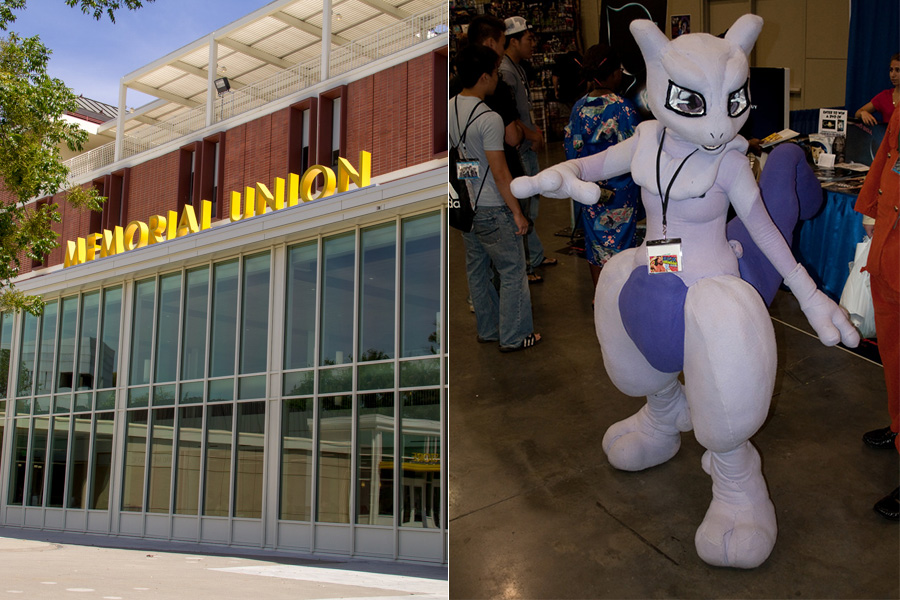
Humor: Pokémon sues UC Davis after MU II sounds too much like popular character

LAURA LONG / AGGIE (left), LEE BURTON [(CC BY-NC 2.0)] / FLICKR (right)
Similarities with Mewtwo, MU II lead to legal battle between unlikely foes

After the completion of the Memorial Union’s renovations earlier this month, UC Davis has decided to rename the student center. The MU II, as it is now called, was retrofitted and received a bit of a makeover from the last time it was open nearly four years ago. While many students have taken exception to the pleather furniture and tables that are either too low or too high, but never just right, the real battle has come from an unexpected source.

The Pokémon Company took notice of the name MU II, which sounds a lot like one of the most respected characters in the series. Mewtwo, arguably the most strong and rare character in the game, draws a very similar audio sound to MU II. Because of this, The Pokémon Company is suing UC Davis for $5 million, claiming copyright infringement.

UC Davis officials clearly knew that this was a possible outcome. The school has recently profited off of shirts of Gunrock wearing Pokémon’s Mewtwo outfit that simply have “MU II” written across the chest.

“We thought it was a good marketing campaign,” said Ashley Cought Emall, the head of MU II’s development team. “This was the perfect inadvertent decision that we seem to have taken too far. When we named it MU II, I don’t think any of us recognized this. Once it was brought to our attention, it made sense to use it to our advantage.”

Students, on the other hand, have been delighted by the school’s play on words. Sales for Davis gear have been at an all-time high this year as a result of the men’s basketball team’s NCAA tournament run and now this recent marketing campaign.

“I don’t care that we are getting sued,” said third-year English major Fran Bluth. “These shirts are dope and this realistically won’t do anything to my tuition. Plus, the school gets sued all the time. Realistically, the only reason this is in the news is because it’s pretty hilarious.”

The school has not yet announced a plan to recover the money that it is being sued for, although an inside source told The California Aggie early last week that there will be a settlement out of court. There is no expectation for student fees to rise to cover the cost of the lawsuit given that this was a mistake from the administration.

While Pokémon and UC Davis sort out their issues, there has been an online competition to find a new name. Submissions will be taken through the end of the year, and a voting competition will run through summer. The plan is to have the class of 2021 be welcomed with a newly named Memorial Union their first week on campus in the Fall — perhaps simply “Memorial Union” will do.
Written by: Ethan Victor — ejvictor@ucdavis.edu

How to be an Agvocate

NICOLE WASHINGTON / AGGIE

A basic guide to agricultural advocacy
Agricultural advocacy is as broad as it is specific, as vague as it is complex. It comes in many different forms, which is probably why it’s so hard to recognize. What you may do to conserve energy or be conscious about the products you consume could be considered agricultural advocacy, but until there’s a standardized concept of what exactly that term means, “agvocation” may continue to be accidentally practiced rather than consciously practiced, as it should be.

The very nature of agricultural advocacy is multifaceted and may even be too dynamic to be defined. The one aspect that remains undisputed is that agriculture is important, but it’s hard to explain why. It’s similar to how most of life’s processes and enigmas can be explained by science, but sometimes the science is hard to understand. Agriculture affects every aspect of life in the way science does. I’ve compiled many sources, both factual and opinionated, that inform the following definitions I feel are the essentials you can apply to your own life.

When you Google agricultural advocacy, the first source to pop up will most likely be Agriculture More Than Ever, an online archive of Canadian agriculture. Though it’s undetermined where the term “agvocate” was originally coined, this group is known for using it like a brand to define themselves and what they do to promote a positive image of agriculture — especially conventional practices commonly vilified in mainstream media. I was surprised that the first result was Canadian given that the United States is the top producer of agricultural products in this region and also because the American farmer is a staple identity in this country.

What does this say about America’s ability to communicate about this essential, life-sustaining industry? Are American agriculturists more concerned with production than communicating the importance of that production for every citizen, and if so, from where can this belief be derived? In asking these kinds of questions, we can better understand the dilemma of insufficient agricultural literacy in this country. Whatever the American case may be, a point on which I will elaborate later, it seems Canadian agriculture already has a lot to say about being agriculturally literate with a wealth of sources available on this site, like a webinar about learning how to speak up for ag.

Throughout the hour-long video, Dr. Camille Ryan, the social sciences lead for Monsanto, explains her strategies on having thoughtful conversations about food systems. Dr. Ryan first outlines the human thought process from a sociological perspective before detailing steps to take to start having your own mindful conversations. She does this by drawing from her professional and personal knowledge in having difficult conversations about the ag industry.

“Ag has developed a public image problem because there is no one way or prescription to have a conversation,” Dr. Ryan explains in the video. “North Americans are generationally and geographically removed from the farm about four generations and yet people feel inclined to weigh in on the subject with limited knowledge.”

She partly attributes this problem to the “fear industry,” which has been framing GMOs as “frankenfoods” since 1991. As an aspiring agricultural journalist, I hope to help fix the media’s fearmongering problem insofar as writers are not being blamed for misconceptions — or at least to help the media start owning up to and correcting their errors. Dr. Ryan’s tips to start a meaningful dialogue are to determine where the person you’re talking to is on a “perspective continuum,” and figure out who you’re talking to and what they’re passionate about. Lead with narrative to foster connection before laying down the knowledge. This becomes easier when you engage frequently and ask questions.

Next, if a dispute arises, as would be expected, you should diffuse and deflect. Determine what emotion or political motivation is causing someone to be reactionary in a heated debate. Get people to seek reliable sources if the way you’re explaining the topic isn’t well understood or received. Use personal experience to filter truth and then dialogue.  Dr. Ryan quotes Michele Payn-Knoper, a professional agriculturalist, to drive home the point: “The goal is not to change hearts and minds as much as it is to change the point of reference.” People want a story more than they want to process facts.

What are some ways you can apply these tips to your life? You can start by informing yourself via any aforementioned resource, or conduct your own search. Volunteer at the Student Farm for hands-on experience if you like seeing the tangible fruits of your labor. Take any class related to agriculture as a GE or extracurricular at least once. Please use this institution, the leading school in agriculture, to your advantage. And just think how awesome it will be when you’re able to reminisce on your college days and tell your colleagues at cocktail parties that you learned how to make wine, write environmental policy, produce dairy or design the landscape around your own home.


Written by: Camille Chargois — cachargois@ucdavis.edu

With Liberty and Justice for All: UC Davis pre-law students

BRIANA NGO / AGGIE

Pre-Law stories, paths, organizations on campus

A series of different conversations, exchanges and choices often converge to create what students call a career path. After having traveled very different paths, Alejandra Roman, Brittney Samuels and Jennifer Wilson all arrived at the decision to pursue pre-law undergraduate degrees.

Alejandra Roman suffered a tragic loss in seventh grade; she lost her sister in a car accident, and when her family tried to get justice for her death, the case was closed as a fatal accident. The driver responsible for her death walked free, and Roman’s family was stripped of justice for their daughter.

“It’s [this] personal experience that made me take the pre-law route route,” Roman said. “I come from a low-income family, [and we] couldn’t afford a lawyer, so we were assigned lawyers, [and they] weren’t effective to my sister’s case. [It] was labeled as a fatal accident when it wasn’t her fault.”

Roman believes that her family’s inability to afford a lawyer placed them at a disadvantage in achieving the justice her sister deserved. The pain and anger from this loss has manifested itself as an inner drive and passion to become a public defender and to give back to the community that supported her family through this time.

“I know how much it means to people to at least have closure — to know that your family got justice,” Roman said. “Every person deserves an effective lawyer. When my family was going through such a tragic moment, my community was always there for me. I […] want to give back for all the help I received when I need it the most.”

Roman believes joining the La Raza Pre-Law Student Association has been one of her best decisions, allowing her to find a safe space of people with whom she shares the same ambitions. The group, geared toward increasing the number of Chicanxs and Latinxs in the profession helps its members through the process of getting into law school; students often share internships and beneficial opportunities with each other.

“La Raza, I guess in a sense means ‘our people,’ [in that] my people are coming together and trying to excel in life together,” Roman said.

Another organization on campus that also strives to create a space for pre-law students is the Pre-Law Association. Brittney Samuels, a third-year sociology and African American and African studies double major and co-vice president of the organization, has wanted to pursue law since she was 7 years old.

“When I was in elementary school, I used to come home everyday and my aunt would be watching Law and Order,” Samuels said. “So I’d be watching that [too] until my mom came and picked me up. And I thought, ‘oh my God this is perfect!’”

Upon hearing her speak, people would ask young Samuels if she hoped to be an attorney someday, as she was not afraid to ask questions and challenge what was true and just.

“When I was 9 [years old], I called Sprint customer service, and [argued] about a charge on my bill,” Samuels said. “I saw the bill on the table and [realized] it wasn’t right, because I didn’t do this and if my parents found out I’d get in trouble. So called them and I handled it myself.”

Samuels’ active and confrontational personality enable her to approach contentious  situations fearlessly and seek a solution, never acting solely as a bystander.

“I probably call places […] almost every two weeks,” Samuels said. “If something isn’t right I never just sit there and say ‘it’s okay, next time.’ No. I don’t do that. I’m gonna get my justice.”

Jennifer Wilson, a fourth-year psychology and communication double major, has recently accepted an offer from the University of Southern California’s Gould School of Law. A former member of UC Davis’ Pre-Law Association, Wilson is now a success story and someone her community can look to for advice.

“I didn’t come into Davis thinking that I wanted to do law school,” Wilson said. “I kind of just came in. I decided to take a legal writing course here to try to see if there was something that I was interested in, and ended up really liking. The next quarter I took an investigative journalism class — that’s the best class I’ve ever taken here. It was so rewarding. That’s when I kind of decided law school is for me.”

After navigating through different courses and interests, Wilson discovered a passion in law. However, she admits that this journey is not without its tests — quite literally.

“I took the LSAT prep course. That really sucked. [The whole journey] sounds really jumbled up, but [there] was a lot more crying and confusion between there,” Wilson said. “But I really have to say, when I toured law schools last year, whenever I sat in a law school, I just feel it in myself. I feel like I belong there, and it’s just somewhere I want to be.”

Many pre-law students pursue bachelor’s degrees in philosophy, english, history or even economics. However, Wilson and Roman both chose to major in psychology.

“A lot of people go the traditional route with studying political science, history or English,” Wilson said. “Honestly, I didn’t do any of the pre-law things that they say to do. I majored in what I wanted to do.”

Roman believes that studying psychology will give her an edge in understanding the human psyche, motives people have behind their actions and, most importantly, whether or not someone is lying. This mindset is an example of how UC Davis students mold their unique backgrounds to complement their individual career goals and set themselves apart from the “typical” pre-law student.

“The biggest thing is knowing if your client or someone else is lying to you,” Roman said. “I feel that through psychology, you are able to detect [and] start to learn the techniques of why people act the way they do. That’d be a very good advantage to have as a lawyer.”

Wilson aspires to practice entertainment law, Samuels aspires to practice sports law and Roman aspires to become a public defender.

“I want to do this to empower my community, to empower my people,” Roman said. “And to show people that even though life gets hard, there’s still hope. We are the change and we are the future.”
Written by: Sahiti Vemula — features@theaggie.org

Long-distance relationships, far away from worries

NICKI PADAR / AGGIE

Students share what makes their long-distance relationships work

It was her junior year at Davis High School when Jenna Farboud and her current partner had chemistry — that is, AP Chemistry.

“Actually when we were really young we went to preschool together, apparently,”
Farboud said. “But I didn’t really know him so that doesn’t count as when we first met.”

Junior year rolled into senior year and Farboud and her boyfriend received acceptance letters from the colleges of their choice. He flew off to Montana while Farboud stayed in Davis where she is now a fourth-year neurobiology, physiology and behavior major, but that didn’t stop the two from staying in a relationship.

“We weren’t going to base our decisions on ‘Oh, I’m going to follow you.’ We wanted to do what was best for ourselves and our majors,” Farboud said. “The summer went really well and we decided ‘let’s give it a try,’ but the first year was definitely really hard.”

Despite the distance, Farboud and her boyfriend celebrated their five year anniversary in April. The toughest challenge they face now is deciding what they want to do after college.

“I’m planning on taking some more classes in the summer and he’s going to be working here […], but after that I’m planning on applying to nursing school, and he’s thinking about going to paramedic school,” Farboud said. “We’re trying to make that work, but it’s hard to plan. We’ve definitely talked about how it’s like Grey’s Anatomy, he’s the paramedic and I’m the nurse.”

Farboud said taking their long-distance relationship one step at a time, alongside trust, is the glue that keeps their relationship strong.

“I think the most important thing about a long-distance relationship is being able to trust each other because if you’re not feeling very confident about the strength of your relationship, that can make it really stressful,” Farboud said.

Trust is a vital component to most relationships, but especially ones where opportunities to see one’s partner in person are few and far between. Savannah Vandenbos, a third-year nutrition science major, said that she’s learned a lot about trust since starting her long-distance relationship with her girlfriend who lives in Santa Cruz.

“What I hear from a lot of people is that they’re afraid to be in a long-distance relationship because they’re not sure what the other person would be doing or thinking,” Vandenbos said. “[Since] I’ve started out in a long distance relationship, […] I don’t have the worry that anything is going to happen or that [anything] isn’t going to be communicated or transparent between us. I think you need a higher level of willingness to trust when it comes to long distance.”

Finding the time to do anything between schoolwork, jobs and internships can be challenging in college, especially on the quarter system. Vanderbos sees her partner roughly once every six weeks, but to fill the time they spend apart they often communicate via classic Skype calls, daily text messages and, more thoughtfully, through mail.

“We decided on sending each other letters a lot,” Vanderbos said. “I don’t think either of us went into it thinking it would be super challenging because I think if you just go into it with excitement that you can feel close to someone without being physically next to them, it can totally work out.”

Vanderbos and her girlfriend try to call each other when they have random breaks in their days, and they don’t have any particular structure to the amount of time they talk to each other. This works for some in long-distance relationships, but for others, it’s easier to manage time with partners through scheduled one-on-one time.

Monica Doyle, a fourth-year statistics major, met her partner in high school and faced a situation similar to Farboud. While she came to Davis, her boyfriend went to UC Santa Barbara. Although at first she was nervous coupling a first-time move away from home with a first-time long-distance relationship, she has since decided that long-distance relationships are definitely doable.

“You can’t see them all the time, […] it takes a toll on you because their support is not directly there,” Doyle said. “But I think as long as you set aside time to talk to each other you can still stay connected. For me personally, I like to Skype, so we make sure to set aside one day the week that we would always skype and have something regular to stay connected.”

After quickly discovering how easy it can be to become distracted with schoolwork and other responsibilities during casual Skype calls, Jill Marzolino, a fourth-year plant biology and English double major, likes to schedule phone calls and Skype calls with her long-distance girlfriend too.

“It’s really easy to be like ‘yeah I’m talking to you but I’m reading this article, I’m taking a quiz, I’m working on my paper,’” Marzolino said. “In the beginning [of our relationship] we would be talking to each other [via Skype], but after awhile we’d just be working next to each other — which is great — but when one person is trying to talk and one person is trying to work, it doesn’t work. It’s real bad.”

With long distance comes the understanding that each person in the relationship is going to be busy and has their own lives to worry about.

“I think if you can handle juggling a lot of things, you can be better at a long-distance relationship,” Marzolino said. “If you have a full life of your own, that’s always really good, but also you either have to already be really solid [with your partner] or you have to figure it the f— out.”

Marzolino’s girlfriend lives in Berkeley, and the shuttle that runs between her school and UC Davis is a great way for the two of them to visit each other. Although they’ve each forged their own lives with their own communities and friends, time together back home in southern California is invaluable. Whether that means running around on a fun adventure in a big city or cooking a meal and watching TV on the couch, Marzolino doesn’t take a moment for granted.

“When I’m home for vacation there’s always that feeling that you need to do everything, that it has to be perfect and you have to have fun every single second you’re together, [but] it’s good to have normal time,” Marzolino said. “It can still be a little special and a little normal. [When we] just sit together and chill, I’m always like ‘oh no but we need to be doing something epic right now!’ but then taking a deep breath and being like ‘no we don’t, this is good, let’s just be happy.’”

Whether it’s going off to college for the first time, going into the real world or just going back home for the summer many miles away, long-distance relationships don’t have to be scary. Instead, with the right attitude, they can be exciting and fun.

“I would say [approach a long-distance relationship] with the idea that it doesn’t have to be sad,” Vanderbos said. “I think it can be super fun and super cute, even though you don’t get to see the person on a daily or weekly — or sometimes even monthly — basis. You can still be spontaneous or fun and have a good time even if you’re long distance.”
Written by Marlys Jeane — features@theaggie.org

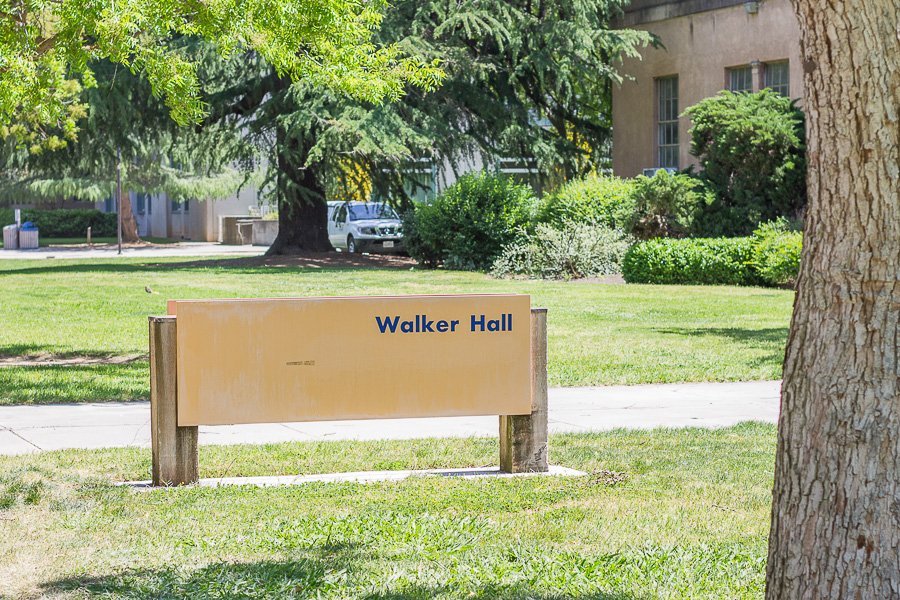
Walker Hall: a rich past and an exciting future

MEENA RUGH / AGGIE

Historic building will become a new home for graduate, professional students

On the “UC Davis Memes for Edgey Teens” Facebook group, Carter Johnson, a second-year applied math graduate student, posted a well-known meme template: “what we really want” listing the much-anticipated opening of the Memorial Union’s Games Area, and  “what administrators think students want” listing a sketch of the design for the Walker Hall redevelopment. Scheduled to open in 2019, Walker Hall will soon be home to the Graduate and Professional Student Center, which Johnson said he is genuinely excited for.

“I’ve been wondering when they were going to do something about the most dilapidated central building on campus,” Johnson said. “If anything, I wish it had been prioritized sooner. In my opinion, the school needs to focus more on the needs of the students it already has before trying to attract a larger population.”

Housing the Graduate and Professional Student Center will be the third repurposing of Walker Hall. Originally built in 1927 for the Agricultural Engineering Department, the building last housed Design and Landscape Architecture facilities. Walker Hall has been closed since 2011 due to insufficient seismic preparedness.

According to the 2012 proposal for UC Davis’ now-approved Graduate and Professional Student Center presented to then-Chancellor Linda Katehi, a push for such a center began in 2003. However, Carlos Ruvalcaba, the chair of the Graduate Student Association (GSA) and a fourth-year in the Mechanical and Aerospace Engineering Ph.D. program, said support for such a center stems from as early back as 1992.

“Other campuses actually already have graduate student centers,” Ruvalcaba said. “Their rationale is […] if graduate students are more aware of their resources and have space that is outside their lab, then, in theory, they should be more effective educators.”

Currently, there is no designated physical space specifically for graduate students or postdoctoral scholars. Marjannie Eloi Akintunde, the Senior Career Advisor for Career Services for Graduate and Postdoctoral Scholars at the Internship and Career Center who received her Ph.D. in immunology from UC Davis, had access to a lab and a professor while she worked on completing her degree. However, she said there was no designated working space while her husband worked on his Ph.D. in geography.

“A lot of grad students don’t have a home or a place [on campus],” Eloi Akintunde said. “Grad students end up floating around. Especially with all of the social science and humanities grad students, after they pass their qualifying exam, they don’t come back to campus sometimes […] so they’ll lose that community. A lot of them start to feel isolated and that can develop into […losing] your motivation.”

Michael Lairmore, the dean of the School of Veterinary Medicine who works with mostly graduate and professional students, said the center will serve as an important space to promote both social and work-based networking.

“We pride ourselves on interdisciplinary graduate programs at UC Davis [and] one way to promote that […] is to have a space and environment that encourages [the] cross-hybridization of ideas,” Lairmore said. “They really are the workforce that drives the research part of the mission of the university. I think it’s important to show them the respect that they need.”

Presently, overgrown trees have partially hidden the “Engineering” lettering at the front entrance to Walker Hall — named after H.B. Walker, a former chair of the Agricultural Engineering Department — and cobwebs cover the sloping door handles at the front entrance.

Amanda Steidlmayer, the strategic initiatives coordinator for Graduate Studies who also serves on the project’s advisory committee, has the blueprints and early sketches of the planned Walker Hall exterior thumbtacked to the walls of her cubicle. According to Steidlmayer, the front side of the building, which faces Hart Hall, will be retained while a wood facade with additional lighting will be added to the back side, which faces Everson Hall.

“The idea is to keep the historic front,” Steidlmayer said. “Inside, it is getting gutted — just because it’s had so many lives. As you’re going by from the Silo to the library you’ll be able to come in and there’s going to be a big courtyard and a walking path.”

According to Steidlmayer, the center will eventually include features such as large classrooms, a multipurpose room, a childcare room and a lactation room. Resources on campus such as the Office of Graduate Studies and the GSA will be relocated to the center.

“We have three graduate preparatory programs — the McNair Scholars Program, the Guardian Professions Program and UC LEADS,” said Elizabeth Lambert, the marketing and communications manager for Graduate Studies. “Right now, they’re all dispersed through different areas on campus, but we’re going to centralize them within the Graduate and Professional Student Center. It’s not just giving the students a home, it’s giving these programs a home too.”

Both Eloi Akintunde and Ruvalcaba managed to stay socially active during their time as graduate students. However, both said they feel that graduate students at UC Davis struggle to find a community.

“Having a graduate center specifically designated to grad students can really help some of the students who don’t have a home place,” Eloi Akintunde said. “It would really help students feel like they have a sense of community and, in turn, I think it will help students enjoy their Ph.D. experience more.”
Written by: Hannah Holzer – features@theaggie.org

Humor: Twitter is, above all, my own personal garbage can

SAHAR FOROUZANFAR / AGGIE

My opinions have to go somewhere

A good friend once told me that “the only people that I know who have a Twitter are Donald Trump, Nihilist Arby’s and you.” Though I’m flattered to be associated with such an elite group of accounts, I have to argue that my Twitter has a little more to offer than that of a talking orange and a cynical sandwich.

A lot of people think Twitter is a dying form of communication, and they may be right in some ways. You can’t effectively communicate all aspects of your day in 140 characters, for instance. However, nobody really cares about all aspects of your day. So in that sense, Twitter censors you in a way that your cowardly friends simply can’t.

Twitter’s character limit makes it so that every story you tell has to be concise and captivating — if not a completely random string of words.

I’d also argue Twitter is alive and thriving because of the way it lets people max out their use of the First Amendment. On no other website would I be able to say exactly what I’m thinking without being judged. For example, I recently spilled an entire tub of ranch dressing in my backpack. Naturally, I went to Twitter, because I will die if I don’t tell someone about literally everything that happens to me throughout the day.

If you think Facebook is the kind of place you can talk about spilling ranch dressing in your backpack and still get a positive response, you are mistaken. Only on Twitter can my ranch-filled despair feel like an accomplishment.

Twitter is also the superior form of social media because it keeps me so much more politically informed than Facebook or Snapchat. Without Twitter, I would have no idea that White House Press Secretary Sean Spicer has a longstanding feud with the iconic American brand Dippin’ Dots. These are the kinds of things that I need to know.

So, from all of this very convincing and unbiased evidence, you can see that Twitter is truly one of the great garbage cans of the Internet — a place where opinions are just waiting to be dumped. But it’s my garbage can, and I care for it so deeply.


Written by: Lara Loptman — lrloptman@ucdavis.edu Twitter: @lllawra

Last Week in Senate

HANNAH LEE / AGGIE

Last Week in Senate

ASUCD Vice President Adilla Jamaludin called the May 4 ASUCD Senate meeting to order at 6:14 p.m. 11 senators were present. President Josh Dalavai and Senator Khadeja Ibrahim were absent. Senator Yajaira Ramirez Sigala was late.

Senator Samantha Chiang nominated Senator Julie Jung as interim pro tempore. Jung was elected as interim pro temp unanimously with Ibrahim abstaining due to her absence.

Creative Media gave its unit report explaining operations over the last two quarters. A presentation on the app Pocket Points was given. Members of the Greek fraternity Zeta Beta Tau gave a presentation and requested ASUCD’s support for Green Light Go!, a sexual awareness and education event. Nick Campbell was confirmed as the returning unit director for the Experimental Community Garden. A unit report was given on the Aggie Reuse Store. Two candidates were confirmed to positions on the Academic Affairs Commission. Both were confirmed unanimously with Ibrahim abstaining due to her absence. Eric Gudz gave a presentation from ASUCD City Relations. The Dream Committee gave a report. KDVS presented its unit report.

During public discussion, Senator Daniel Nagey discussed attending a private meeting in Oakland with UC President Janet Napolitano and representatives from other UC campuses. The meeting discussed a systemwide referendum on having a UC-wide fee for all schools to be a part of the University of California Student Association. There was also discussion of administration helping with voter registration, a proposal to raise the minimum wage to $15 on UC campuses and allowing graduate students the right to collective bargaining. Nagey also discussed attending a budget hearing in Sacramento regarding the $175 million held in University of California Office of the President (UCOP) reserves. Napolitano clarified that $85 million was restricted funds, such as for labs and research programs, and $87 million was unrestricted funds, including one time funds and grants. Napolitano said that she would take into account 33 recommendations made by the UC Academic Senate. Nagey also said that the UCOP agreed to fund cultural competency training for student leaders.  

After a 10-minute break, Senate returned to order. Chiang, who had left the first half of the meeting during the final unit reports, was absent for portions of the second half of the meeting as well, including all votes on legislation.

ASUCD will be introducing four new bills to committees next week: to remove the position of ASUCD historian, to allocate $27 to purchase an ASUCD Senate Meeting Procedure poster, to allocate $297 for the Startup and Innovation Panel held on May 28 in the UC Davis Conference Center and to replace all mentions in the ASUCD bylaws of “Internet and Networking Committee” with “Technology, Internet and Networking Committee.”

Next, the Senate discussed Senate Bill #86, a bill to clarify the process to reserve a room through the Student Government Administrative Office (SGAO). Since there was no process codified in the ASUCD Bylaws to book rooms through the SGAO, the bill was agreed upon. The bill was called into question and SB #86 passed 10-0-2.

The Senate then discussed SB #76, a bill to amend Bylaws section 1410, to not require the American flag to be flown during meetings. The bill was originally passed 7-2-3 and then vetoed by President Josh Dalavai. Dalavai sent back an amendment to replace Clause B with “it shall be on the imperative of any individual senator to bring and erect the flag at any ASUCD meeting.” The change was accepted by the Senate and author Itamar Waksman. The bill passed with the president’s amendments with nine in the affirmative, zero against, and Senator Matthew Yamaguchi abstaining. Two abstentions were recorded for Ibrahim and Chiang’s absences.

Ex-officio reports and Elected Officer reports were given. Previous meeting’s minutes from April 13, 20 and 27 were approved, 10-0-2.

Jamaludin adjourned the meeting at 9:40 p.m.
Written by: Jayashri Padmanabhan — campus@theaggie.org

A glimpse into the lives of Millennial parents

MICHAEL [(CC BY-NC 2.0)] / FLICKR
Millennial parents question traditional values of their parents
Were you spanked as a child? Have you ever been terrified at the sight of a wooden spoon or, heaven forbid, a belt?

Different tendencies, principals and attitudes about parenting have been passed down from mom to daughter and father to son for decades. However, like spanking and the occasional soap in the mouth for cursing, not all parenting techniques make it through to be passed on from generation to generation. Research indicates that only 50 percent of Millennials are raising their kids in the way that their parents raised them. With about half of the advice, behaviors and techniques left behind, for better or for worse, what new parenting knowledge will replace the other 50 percent and become the staples of Millennial parenting?

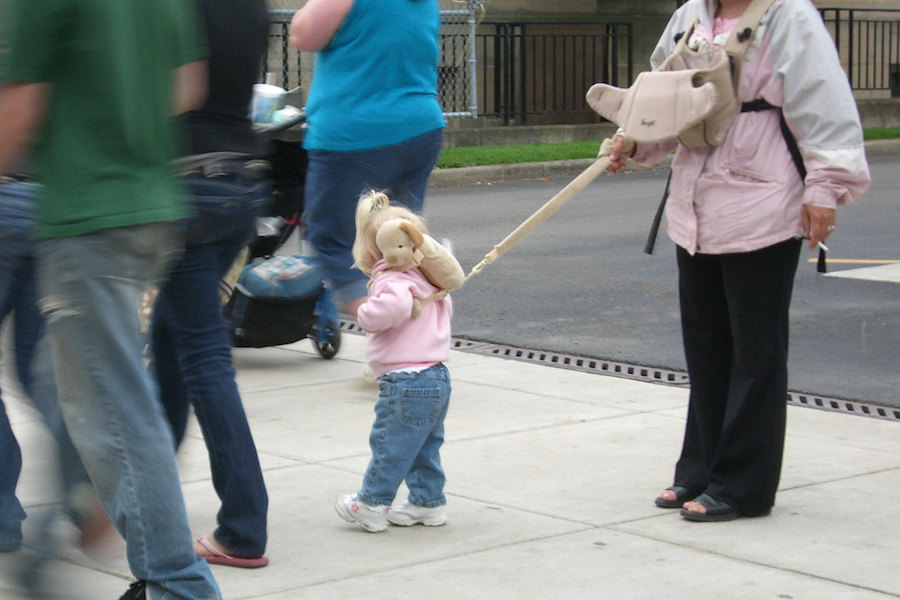
Most Millennials are now in their mid-twenties, which means many of them are already parents themselves. Putting their children on leashes while they Skype with their business associates in the park is a fair assumption to make about the typical Millennial parent. However, evidence suggests that Millennial parents are actually among the most accepting, adaptable and innovative set of parents the world has ever seen. For example, the Boomer generation only considered two genders: men and women. Sexuality was also easier: heterosexual and homosexual were the only two in the imagination of parents of that time. With queer, transgender and gender-nonconforming individuals being added to the conversation, the complexity of parenting has increased. Today’s young parents are conditioned to treat all types of sex, gender and expression as carefully as possible. This is a product of what we have seen the world become, and parents of today’s generation have adapted to changes that the parents of the past might not have anticipated. But we’re talking about Millennials —  they can adapt, accept and achieve more than most.

What about vaccines, talking to strangers in large white vans or drugs and alcohol? Today’s young parents more than ever are investing time and energy into reading every article surrounding a question or concern they have regarding their children. These parents themselves were raised in an environment where information was becoming more accessible and faster to acquire as an essential resource. Millennial parents are cautious and very apprehensive about the decisions they make for their kids. Millennials, unlike former generations, aren’t so eager to adopt the easygoing mantra of “what doesn’t kill them, makes them stronger” for their children.

Only time will tell whether giving your child a tablet at age three and then leashing them to a big oak tree will make them somewhat anti-social. Going to the mall with your parents when you were young might turn into “Amazon family fun time” when the family sits around the dinner table and shops while eating a gluten free non-GMO based dessert. Or instead of punishing your children in a more “traditional way,” there might be an app where one can inflict a non-fatal shock to the child’s brain through a microchip planted in the kid’s head after birth.  

Amid these uncertainties, one fact still remains: the food many Millennial parents are giving their children is a lot healthier and well-balanced than what they were served as kids. With the farm-to-fork frenzies and the “burn Monsanto at the cross” sentiment, young parents are gathering more and more information about what goes into their children in terms of food, medicine and vaccinations. Some theorize that it’s a direct link between how distrustful Millennials have become with the government and big business among the food industry. But I’m more inclined to believe that this generation is simply more circumspect and mindful of the decisions they make as parents. I cursed like a sailor when I was a toddler, and low and behold: massive amounts of Dove soap in my mouth turned out not to kill me.


Written by: Brody Wayne Fernandez — bwfernandez@ucdavis.edu


Humor: Hidden UC money found under large mattress

AARON KEOKHAM / AGGIE

Shameful moment for the UC system was merely a moment of sheer laziness

Headlines buzzed in early May when it was discovered that the UC system had been hiding $175 million in reserves, creating an uproar among UC students. However, the whole thing has since been discovered to simply be a big “whoopsie” when one representative came forward to tell us that this money wasn’t actually hidden at all.

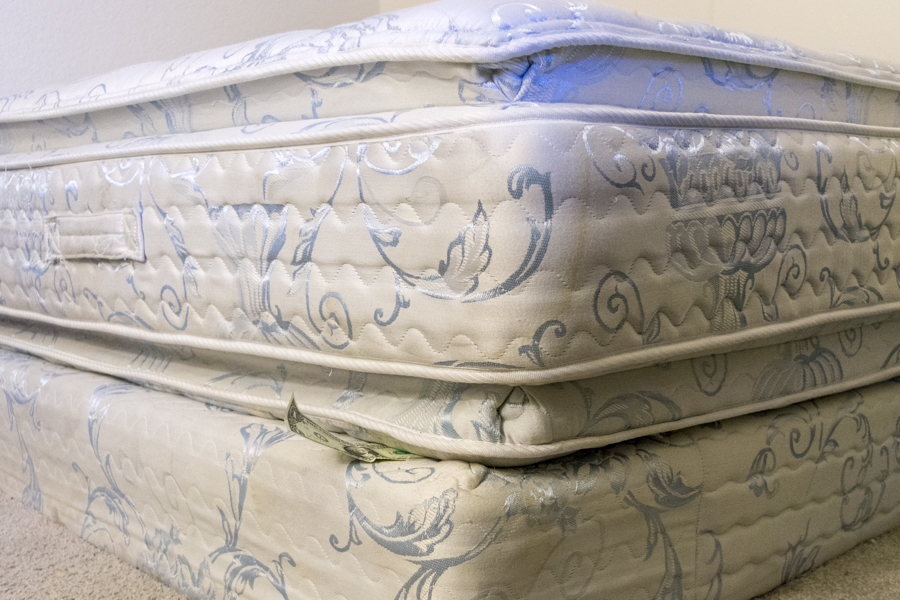
“Eh,” said UC representative Danny Devito (no relation to the actor). “I had it all stuffed in my mattress, so it wasn’t really hidden. I was gonna take it to the bank — it was on my list — but then I just kept getting so tired, and it became one of those ‘I’ll do it later’ things. Oops!”

UC President Janet Napolitano and Devito shared a hearty laugh about the whole thing while students looked astonished. Could they really be this nonchalant about so much money?

“$175 million?” asked Napolitano. “I use that amount of money as tissues during Spring Quarter. Curse these allergies! Ha! It’s really no big deal!”

Yes, she really does use the money to blow her nose, according to the very credible source called MyImagination Weekly. Students still can’t fathom how there isn’t more of an uproar over this info.

“I sold both of my kidneys to pay for my tuition this year,” student Jerry Plum said. “Now, I just have two Ziploc bags trying their hardest to filter my body. They’re not even Ziploc. I couldn’t afford name brand, so I have two generic brand baggies where my kidneys should be.”

Other students were equally as shocked. One even spit out their coffee, but then had to drink it off of the table because they live on $4 a week.

“Look,” Devito said. “I’m taking the mattress to the bank real soon. I have the next two weeks off, and then I’ll take it. Well, maybe. I don’t know. I might want to go golfing or something… We’ll see!”

Students have been told not to worry about the money, which Devito said is in the safe caress of a Tempurpedic mattress.

“It’s like Napolitano doesn’t even know how many pantsuits she could buy with that kind of dough,” Jerry Plum said as he walked with a metal detector around the Quad, trying to find some dimes.
Written by: Olivia Luchini — ocluchini@ucdavis.edu

(This article is humor and/or satire, and its content is purely fictional. The story and the names of “sources” are fictionalized.)

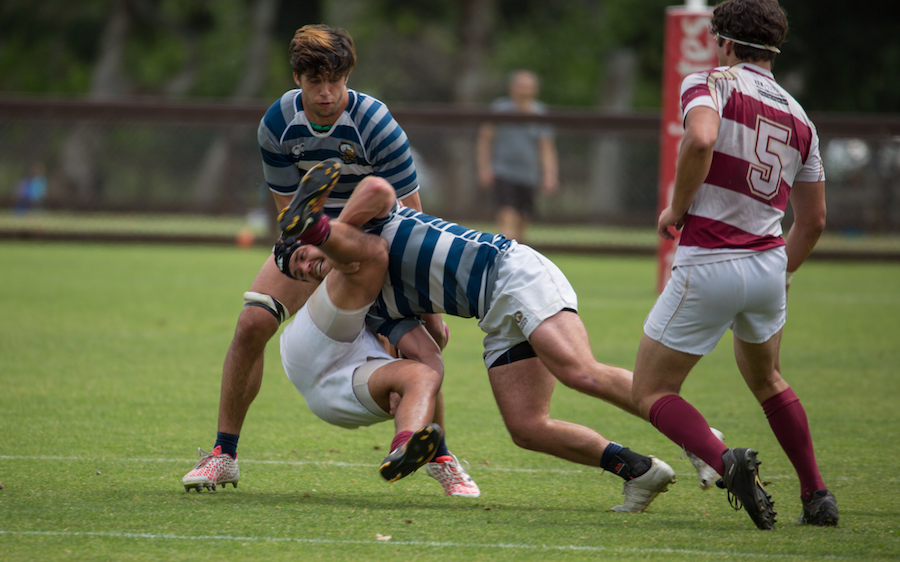
UC Davis club rugby teams make it to National Championships

SOPHIE LONSKY / COURTESY

UC Davis women’s club rugby back-to-back national champions, men’s rugby falls to Notre Dame College

The UC Davis club rugby teams have once again impressed on the national stage, this time at the Club Rugby National Championships in Marietta, Ga. on May 6. The women’s rugby team are now back-to-back champions after winning the College Women’s Division I Spring Championships against Notre Dame College. The men’s rugby team entered the competition  looking for a three-peat championship, but ultimately walked away with second place for Division I-AA championship against Notre Dame College.

The women’s rugby team beat the Notre Dame College Falcons 27-19. In the final seconds of the game, the Aggies narrowly added another try to cement the win. Captain Sydnee Watanabe, a fifth-year civil engineering major, was named the Most Valuable Player and credits their victory to the support from home, the team’s alumni and the UC Davis community.

“It was so cool being in Georgia,” Watanabe said. “[…] Being away from home, it was just so cool. We have a Facebook page and it was just exploding with people and they were so excited and everyone was posting videos and Snapchats. It was just really cool to have that support from home.”

The men’s rugby team, however, fell to the Falcons 26-13. The Aggies trailed behind the Falcons the entire game, unable to take the lead.

“Obviously coming off the past two years, we’ve been pretty successful,” said Harrison Morrow, team captain and a third-year wildlife, fish and conservation biology major. “The hard part about that is not getting complacent and keeping the drive and wanting to continue to improve, as well as getting back to where we have been. You learn the most from the losses.”

Both rugby teams are sport club teams, meaning they are managed by the athletes themselves. They also each participate in both the 7s and 15s seasons, which are two different forms of rugby. Both programs include an A-side and a B-side team and practice three times per week, not including conditioning workouts. Each team is open to players of all skill levels.

“We accept anyone with an interest,” Morrow said. “That being said, we live in Northern California, so there’re a lot of kids who come in and know a little bit about rugby and a lot of kids who are actually really good players. We started three freshmen this year, […] like one of the freshmen that started for us had never played before. He just fell in love with rugby.”

Watanabe, who discovered rugby her sophomore year at The BUZZ, learned everything she knows from fall training and skill camps hosted by the team.

“In the Fall Quarter, we really focus on teaching the new players how to play rugby,” Watanabe said. “So we go over the basics again: what rugby is, how to pass, how to tackle safely, how to fall safely. It’s a good refresher for the returning players. So every year, they start from the bottom up again.”

Coming off a win in the 15s Championships, the women’s rugby team will be playing for the 7s National Championship in Colorado in a few weeks.

“I think rugby has been the best thing I’ve done in college,” Watanabe said. “It’s probably why I’m still in college, to be honest. It’s an amazing sport that changes the way you think about everything. And you meet these amazing girls who become like your family.”

The men’s rugby team is already looking forward to next season and is hoping to move up from Division I-AA to Division I-A, which hosts club rugby powerhouses like UC Berkeley and Stanford. In order to prepare, the Aggies plan to challenge themselves early on in the season.

“We play a lot of teams that are a lot better than us in pre-season,” Morrow said. “So we lose a lot of games in the pre-season, but that’s how you learn. […] We’re going to have to make some adjustments as a team. We’re going to try and increase commitment and increase our numbers, as well. That’s how you build for the future.”

Both teams are hoping to continue building their programs in the future.

“I think everyone is just kind of stoked and they’re really excited for next year,” Watanabe said. “They’re like, we gotta keep it going.”


Written by: Liz Jacobson — sports@theaggie.org


Mojo’s Lounge & Bar hosts fifth series of old car shows

HANNAH LEE / AGGIE

Woodland to showcase food, music, cars at Hot Summer Nights Show and Shine

Woodland is gearing up for a summer filled with stellar showcases of cars. To complement the warm summer nights, Mojo’s Lounge & Bar will be hosting its 5th year of Hot Summer Nights Show and Shine. Hot Summer Nights Show and Shine is a car show held on the third Thursday of each month starting with May and ending in September, displaying cars older than 1978.

“We started about four years ago,” said Christy Hayes, an owner of Mojo’s Lounge & Bar. “It was after our first year — a couple of the car club guys approached me and wanted to see if maybe I would be interested in putting on this kind of cruise-in, show and shine car show once a month […] We went to the city and talked to the city of Woodland. I was the first business ever to request for street closures downtown. So we were kind of in uncharted waters as we started the event.”

Hayes said the bar members have been working with a local Woodland club to put on the event.

“I worked with the Woodland Street Cruisers car club and they helped me promote it and find enough cars to come down,” Hayes said.

The Woodland Street Cruisers is a relaxing club for car enthusiasts, according to its website.

“The Woodland Street Cruisers Club meets on the second Wednesday of every month and hosts an annual car show every May or June,” according to the website. “The annual Hot Rod Club Reunion features vintage hot rods––1978 and older––and motorcycles of all years.”

The event itself features around 50 cars now, yet it started with a much smaller collection.

“The first one started out pretty small,” Hayes said. “We would only have about twenty cars show up sometimes. […] This year we built a little bit more on it and more and more cars come; people know about it and stuff.”

The cars usually arrive anytime after 5 p.m., but the spectators usually come when the band starts about half an hour later.

“It’s just a cruise in, cruise out — cars come stay for an hour or two, have drinks [and] appetizers and leave when they want to,” Hayes said. “Some cars show up later […] They don’t roll in until 6:30 to 7 o’clock. And then it kind of all finishes up by about 8:30.”  

The event has plenty to eat for those who come hungry.

“Mojo’s puts it on, so we are kind of an American casual farm to fork cuisine restaurant,” Hayes said. “So we have the bar side and then we have our full service restaurant side, 428, and that’s a little bit more upscale from casual dining.”

Jonathan Long, a long time car enthusiast, is a frequenter of similar car events.

“I’ve always liked them,” Long said. “Ever since I was a kid I’ve always liked them. I know nearby there was this neighborhood guy who had a gathering of old cars in his yard and I went over to watch. I was probably––I don’t know––10 or 12 […] I thought, ‘Woah those are so cool!’ I’ve just always liked them.”

Long’s favorite era of cars are pre-war.

“The really old ones are cool,” Long said. “I guess for some weird reason, I like the Edsels because they were kind of the underdog. And a lot of people made fun of them when they were new because they were kind of funny looking.”

Mojo’s Show and Shine will continue throughout the summer. More information on the event can be found on its website.


Written by: Nicolas Rago — city@theaggie.org

Best On Campus Animal: Tercero Cows

BRIAN LANDRY / AGGIE

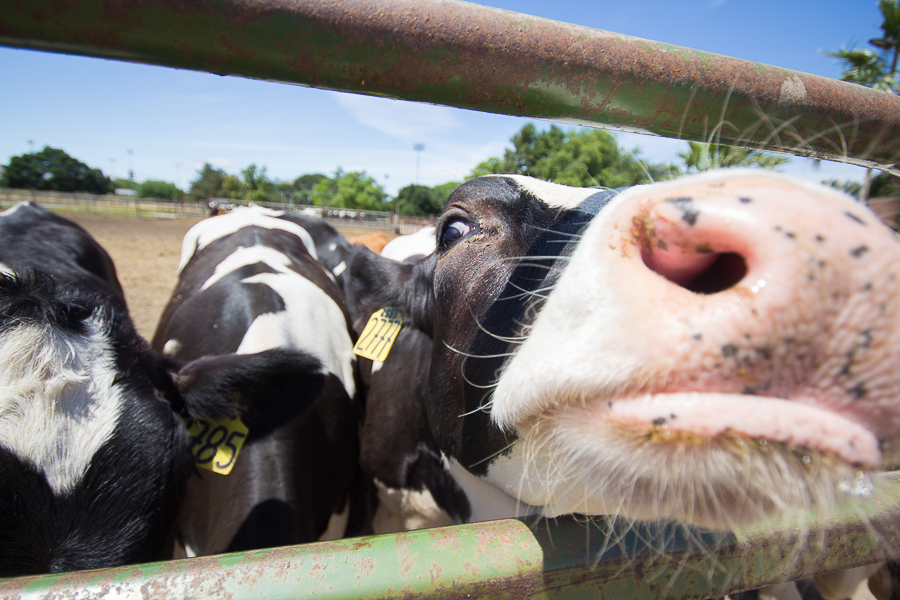
Any student at UC Davis can confirm the mixed emotions that come with attending a cowtown university. How would you describe the experience of being able to see cows from your dorm window? Although people find Davis’ farmland reputation somewhat laughable, it is undeniable that our campus cows are the epitome of UC Davis’ unique persona.

“I think the cows are a really defining feature of UC Davis,” said Alice Kuang, a first-year design major. “When you think of UC Davis, you really think of the cows. Even though in the mornings — especially when it’s hot — you really do smell the cows, I think it adds to the UC Davis feel and experience.”

Aside from serving as a second mascot for UC Davis and the town of Davis alike, the Tercero herd — which consists of Holsteins, Jerseys, Milking Shorthorns and Brown Swiss cows — provides hands-on training for Animal Science majors looking to acquire valuable skills in dealing with livestock.

Though closely followed by the Physics Building cats and the otters found in the Arboretum, it’s no question why the mooing residents of Dairy Road claim the favorite animal crown year after year — their gentle nature, captivating cuteness and undeniably ripe scent have made them a staple of the Davis landscape. Students love the cows because they are a great attribute to the university, but mostly because they are cute and approachable.


Written by: Becky Lee and Alex Arechiga — features@theaggie.org

Best Dessert: Yoloberry

CIERA PASTUREL / AGGIE

Students and community residents have always known that frozen yogurt is a go-to choice in Davis, and with the hotter days of summer fast-approaching, there has never been a better time to head to downtown for a quick cup. That’s why it comes as no surprise that voters were quick to pick Yoloberry Yogurt as their favorite place to get the best dessert in the city of Davis.

Lee Pflugrath, who grew up in Davis and has run Yoloberry Yogurt for almost a decade, said that running a shop in the city he was raised has been a rewarding experience.

“As the owner of YoloBerry Yogurt, I consider myself fortunate that I decided to establish my business in my hometown,” Pflugrath said via e-mail. “The residents of Davis are extremely loyal to local businesses, and this is certainly evident at YoloBerry.”

Yoloberry Yogurt hosts a number of contests and competitions throughout the year, and on any given day, a variety of people can be seen enjoying frozen yogurt on Yoloberry’s own front lawn. Pflugrath said that students even frequent the shop long after graduation.

“We love the UC Davis community, the faculty, the staff and above all, the students,” Pflugrath said. “The students bring such energy and enthusiasm to YoloBerry. It is impossible not to love them.”

Yoloberry is located on C Street, across from Central Park, and is open from 11 a.m. to 11:30 p.m. every weeknight, and until 12 a.m. on weekends.


Written by: Ivan Valenzuela — features@theaggie.org

Best Campus Event: Picnic Day

CIERA PASTUREL / AGGIE FILE

For many UC Davis students, April signifies a clean slate after the rough Winter Quarter, the revival of our bright and beautiful town and the largest student-run event in the nation: Picnic Day.

Voted as best Davis event by a landslide, this free, family-friendly event celebrated its 103rd birthday this past April. Year after year, Picnic Day continues to embody the lively spirit of the city and its university in events such as the annual frisbee dog contests, Battle of the Bands, music and dance events, various demonstrations and lectures and the famous Doxie Derby. As one of our most treasured and highly-anticipated traditions, Picnic Day never fails to entertain and intoxicate, with some students rising before 8 a.m. to commence their festivities.

“For me, the most interesting part is seeing everyone around,” said Charles Mak, a fourth-year design major. “It is kind of overwhelming, especially since Picnic Day is notorious for everyone being wasted in the morning, but there is so much activity on the Quad, the districts and even the dorms.”

Aside from the booze, however, Picnic Day also serves as a UC Davis open house for prospective students and a venue for current students to showcase their studies. As generations of UC Davis students come and go, Picnic Day has and always will be the event that brings all Aggies back together.


Written By: Bianca Antunez – features@theaggie.org

Best Place to Exercise: The ARC

NICHOLAS CHAN / AGGIE

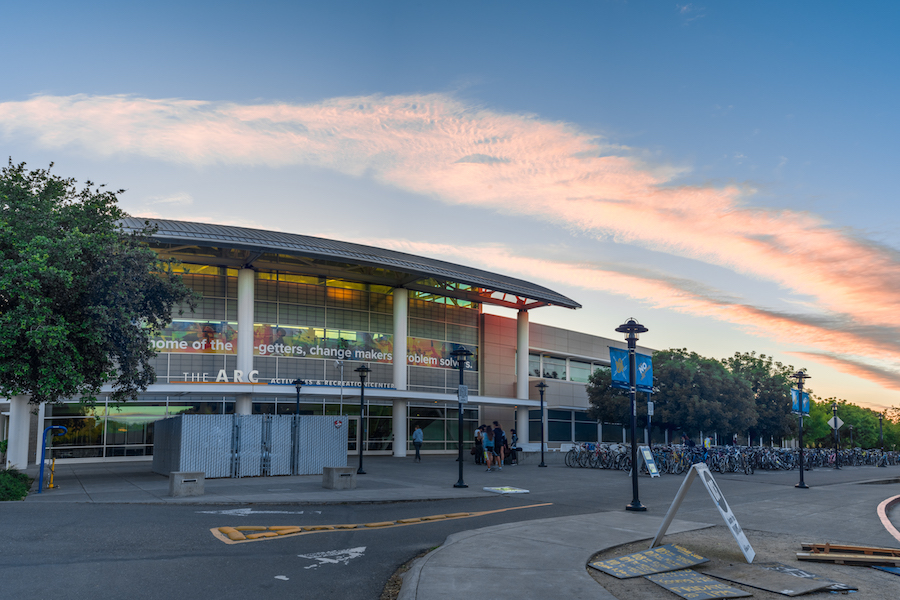
A Thursday night at the Activities and Recreation Center (ARC) is a flurry of commotion and excitement. A swarm of students buzz around the equipment in the weight room while, down the hall, the squeak of sneakers echoes from the basketball courts, the continuous thud of a punching bag sounds in the distance and harnessed rock climbers swing from rock to rock.

“There [are] always people to meet,” said Curtis Garrett, a second-year environmental science and management major. “I met a lot of people just playing basketball.”

Garrett has worked at the ARC as a member services attendant since Fall Quarter and also enjoys working out there about three times a week. Located on campus, the ARC is easily accessible for students.

A few of the services offered at the ARC include a climbing wall, classes for salsa dancing and candlelit yin yoga, an activities court for hockey or soccer and rows of equipment in the weight room. It is a hub of social activity from 5 a.m. to 1 a.m. daily, and students like Garrett thoroughly enjoy the atmosphere.

“You can always walk onto any of the courts and play,” Garrett said. “With equipment, there’s always people you can ask. People are pretty open to help you.”


Written by: Hannah Holzer – features@theaggie.org