53.7 F
Davis

Davis, California

Saturday, December 20, 2025
Home Blog Page 619

Best Place to Study: Shields Library

DIANA LI / AGGIE

UC Davis has multiple libraries ranked among the top 100 academic research libraries in North America. For this year’s Best of Davis, however, Shields Library won the top spot for best place to study on campus.

There are over 10 million items in its collection available for UC Davis students, staff and faculty. Even with the vast number of resources, if there are still materials students or faculty need, Shields offers an interlibrary loan system with other UC campus libraries as well as remote resources through a VPN using their UCD LoginID.

“I think Shields is the best study spot because it’s a very convenient location on campus. It’s right next to a lot of classrooms, as well as places like the CoHo and MU,” said Serena Uppal, a third-year economics and math double major.

Shields Library offers a 24-hour room with wireless access, private study rooms and a printing room. The main reading room on the second floor includes a high ceiling with many paintings, ample lighting and an abundance of outlets. If graduate and Ph.D. students would like, they may wait-list for the carrels — cages with desks, chairs, light and ethernet cables — which line the second floor for a more personal study space.

“I personally like the main reading room because of the amount of space and sunlight that it has,” Uppal said.

Shields offers various tools and study aids for check-out, including individual charging lockers and battery packs, whiteboards and markers, headphones, power squids and subject-specific equipment such as atomic structure kits. It also has a computer room that provides computers for printing, scanning and reference.

Shields Library is open Monday to Thursday from 7:30 a.m. to 12 a.m., Friday from 7:30 a.m. to 6 p.m., Saturday from noon to 6 p.m. and Sunday from noon to midnight.
Written by: Yvonne Leong and Lara Loptman — features@theaggie.org
Best Breakfast: Crepeville

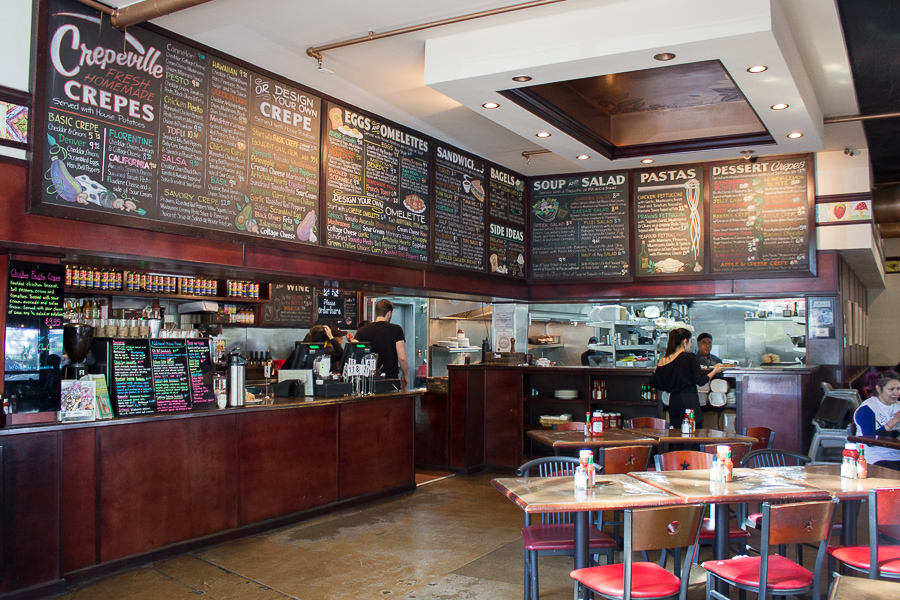
VENOOS MOSHAYEDI / AGGIE

Crepeville, located near the UC Davis campus on 3rd Street, now holds the honor of UC Davis’ favorite breakfast place. Crepeville’s success at its first location in San Francisco in 1990 “ignited a trend that spread quickly throughout the Bay Area,” as described on it website. In 2002, the family owners of Crepeville moved to Sacramento, founding the place we now know and love conveniently located downtown and very close to campus. They have been serving students and community members ever since.

Junhyuk Kwon, a first-year managerial economics major, was satisfied with the establishment’s customer service and enjoyed his order of the eggs benedict with potatoes.

“I was recommended [to go there] by [my] RA,” Kwon said. “It was pretty good actually.”

Their menu has a wide assortment of crepes, from savory crepes with a side of house style potatoes to dessert crepes served with whipped cream. For their non-crepe-loving customers, the restaurant offers options such as eggs, omelettes, sandwiches, bagels, soups, salads and pastas, even providing coffee with free refills.

“It’s kind of vintage because the menu is written on the chalkboard,” Kwon said.  “It looked very friendly, just like one of those restaurants in Davis.”


Written by: Sahiti Vemula — features@theaggie.org

Best Burrito: Taqueria Guadalajara

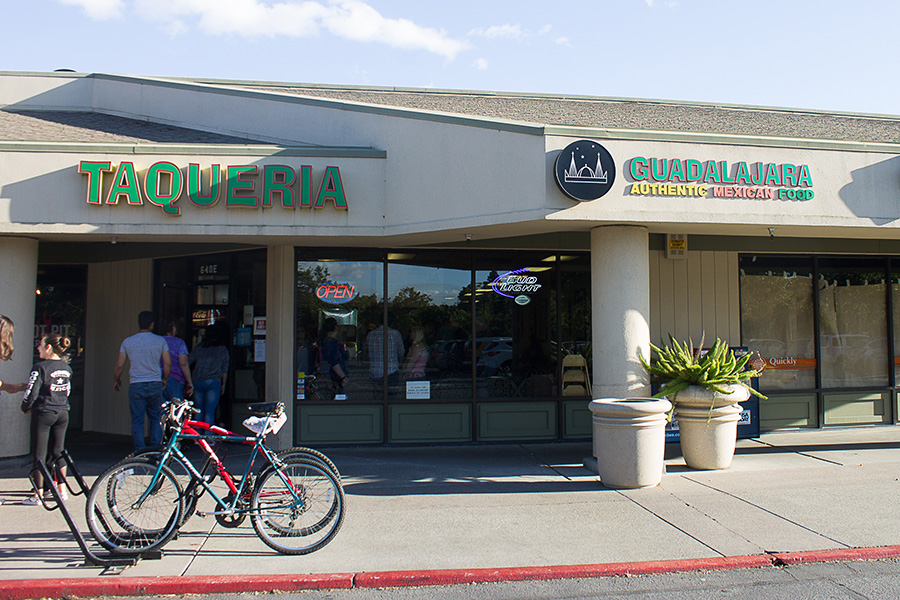
SAHAR FOROUZANFAR / AGGIE

There’s never a bad time for a burrito. Whether it’s 8 a.m. or 9 p.m., Taqueria Guadalajara — commonly referred to as “Guads” — is the place to go for burritos in Davis. For the third year in a row, Guads has won best burrito. Not only that, but the restaurant also has a 4.2 out of five star rating on Google reviews and four stars on Yelp with over 500 reviews.

It may be easy to overlook Guadalajara since it’s not downtown like most popular Davis restaurants, but the trip out to North Davis will not disappoint. Since Taqueria Guadalajara is in Anderson Plaza, it is conveniently next to stops on the G, J and Q bus lines.

“There’s a few other great burrito places in Davis, but Guads stands out because it is just a solid, tight and clean burrito,” said Ryan Tomasi, a fifth-year mechanical engineering major and Guads regular. “Way too many burritos are loose and sloppy but Guads gives burritos the structure they deserve.”

Other options on the menu include nachos, tortas, tacos, tostadas and quesadillas.  With regular and veggie burritos starting at under $7, affordable prices are one of the many reasons why Taqueria Guadalajara reigns as a “Best” of Davis.


Written by: Brian Landry — features@theaggie.org

Best Bike Shop: Bike Barn

AARON KEOKHAM / AGGIE

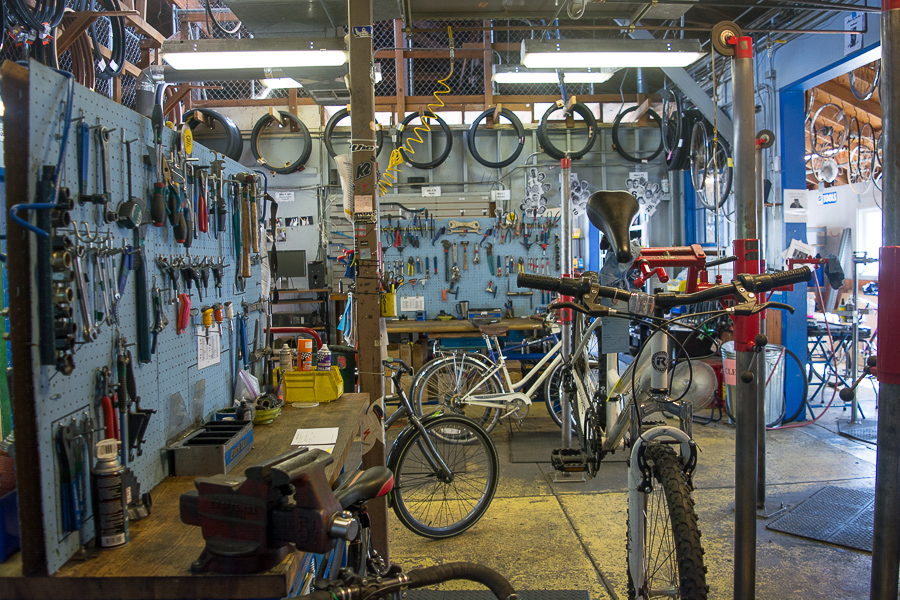
Since the 1960s, Davis has been known as the bike capital of America, a nickname embraced by both students and locals. The town is home to 10 bike shops in its 9.9 square mile area, but the on-campus Bike Barn has been voted the best bike shop in Davis yet again.

Though it started as just a repair shop in 1971, over the years the Bike Barn has added a store for gear and accessories, as well as a rental hub, and it’s convenient Silo location keeps it busy with customers.

“We’re geared towards serving students primarily, so we work on all types of bikes to maintain them,” said Christa Hoffman, a Bike Barn mechanic and second-year environmental science and economics double major.

The Bike Barn is unique compared to the other bike shops in town because it is completely student-run and focused on serving the campus community. Hoffman, who has worked at the Bike Barn since fall 2016, also noted that the Bike Barn is distinctive due to its involvement with programs like Aggie Bike Buy and the Helmet Hair Don’t Care campaign. Aggie Bike Buy helps incoming students buy and customize a bike for the start of the school year so they don’t have to transport one when moving onto campus, while Helmet Hair Don’t Care is a campaign that encourages Davis bikers to wear helmets.

Hoffman said that the work environment is beneficial for student employees and patrons alike.

“We employ almost entirely students, which allows for people to gain experience while working,” Hoffman said. “It’s a great, student-centered atmosphere.”


Written by: Noah Pflueger-Peters & Lindsay Floyd —  features@theaggie.org

Best Method of Transportation: Biking

LAURA LONG / AGGIE

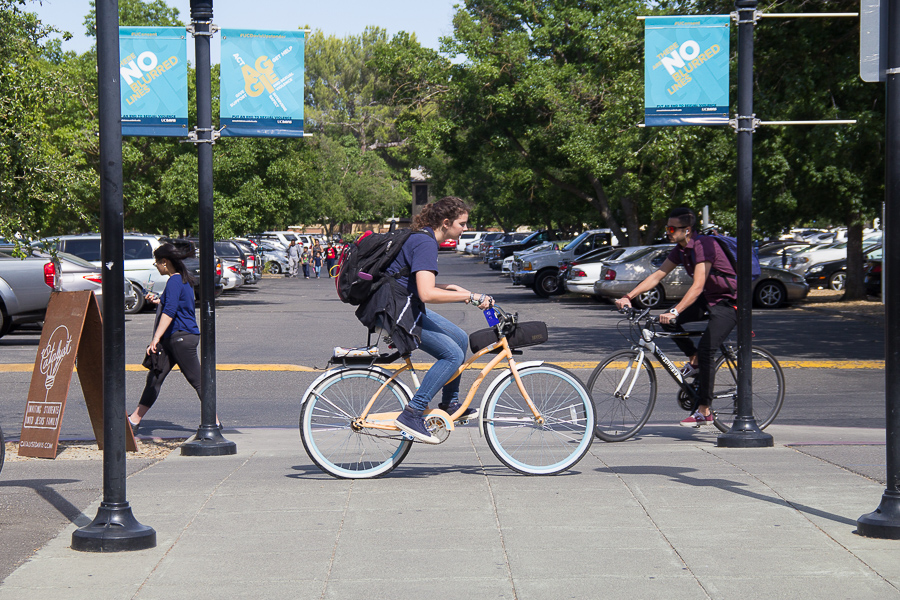
In a classic underdog upset, bikes have been voted Davis’ best mode of transportation.

It may come as no surprise that the first city to have bike paths, as well as a Bicycling Hall of Fame, chose biking as its preferred mode of transportation. The quick nature of bikes make them far more preferable than walking, waiting for Unitrans or buying an expensive pass for on-campus parking.

“I’d say for our geography here — it’s faster, it’s cheaper, it’s more fun,” said Johnny Campbell, a second-year graduate student and associate instructor in the Horticulture and Agronomy Program. “What other reasons could there be? It’s exercise.”

Biking to campus doesn’t always have to be about being cheaper or faster. Some students just enjoy the ride. Though pesky pedestrians, chaotic bike circles and fights for the nearest bike rack can be a pain, biking has blossomed into an Aggie tradition. With their low environmental impact and speedy capabilities, it is a no-brainer that biking won best mode of transportation for 2017.


Written by: Myah Daniels and Liz Jacobson — features@theaggie.org

Best Late-Night Snack: In-n-Out

RAUL MORALES / AGGIE

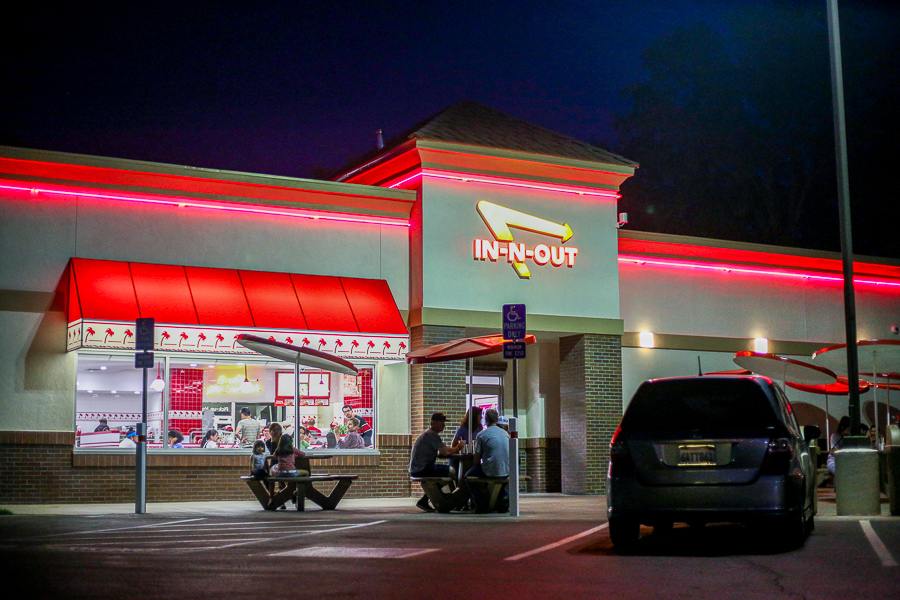
Late into a night of grueling studying, working or partying, sometimes, students just need a snack. In-n-Out is always there in those late hours, its golden arrow glowing in the darkness, a bastion of good eats.

In-n-Out’s simple menu only offers burgers, fries, drinks and shakes available for purchase. If a particular patron does not find something for themselves on the menu, there are also plenty of options on the “secret menu” such as fries or burgers “animal style” with cheese, grilled onions and In-n-Out’s special spread, “protein style,” with lettuce instead of burger buns, and grilled cheese for vegetarian customers. This way, people with all kinds of diets can enjoy In-n-Out’s great food.

Cesar Corrales, a second-year environmental toxicology major and In-n-Out fanatic, has a particular favorite meal at In-n-Out.

“The double-double with animal style fries and a Neapolitan shake, with extra spread on the side,” Corrales said.

In-n-Out of course leaves plenty of room for personalization and even allows patrons to customize the number of patties and slices of cheese to put on a burger — all the way up to 100×100. Indeed, In-n-Out serves to please.

In-n-Out stays open until 1 a.m. on weeknights and 1:30 a.m. on Fridays and Saturdays for all who wish to satisfy a late-night craving.


Written by: Aaron Levins and Gillian Allen — features@theaggie.org

Best Chinese Food: Dumpling House

NICOLE WASHINGTON / AGGIE

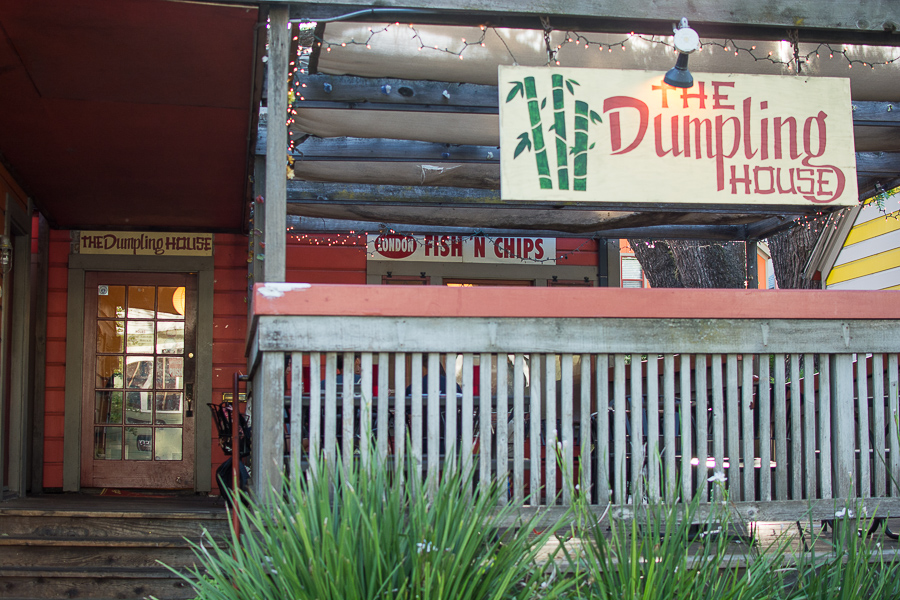
Dumpling House is locally renowned for its savory dumplings, served pan-fried, in soup broth or steamed with a special house recipe sauce.

The dumplings themselves are handmade in the restaurant near the register, where customers can take a sneak peek at their food. Each dumpling is filled and folded individually before being sent to the kitchen for cooking.

“I enjoy watching the workers,” said Andrew Jackson, a third-year mathematics major. “It is interesting to watch [them] make the food right there in front of you.”

Though the freshly-made dumplings are the restaurant’s most popular dish, Dumpling House also serves potstickers, rice bowls, wontons and, for a change of pace, fish and chips. For sides, customers can order steamed veggies or appetizers such as egg rolls or a mouth-watering plate of fried green onion bread. Dumpling House is also vegetarian-friendly — non-meat eaters can order vegetable dumplings as well as tofu or veggie bowls.

Regardless of the dish, all of the food is well-priced, well-proportioned and prepared quickly — great for busy college students. At peak hours, Dumpling House is often packed with students and Davis citizens alike, but its bustling nature is appealing to customers.

“The atmosphere was busy, but not unfriendly,” Jackson said.

Inexpensive and delicious, Dumpling House is a classic choice for Chinese food. So swing by its location on E Street in Downtown Davis, pick up your chopsticks and dig in!


Written by: Allyson Tsuji & Marisol Beas — features@theaggie.org

Best Egghead: Bookhead

LUCY KNOWLES / AGGIE

This year’s favorite egghead sculpture, the “Bookhead,” welcomes visitors to UC Davis’ Peter J. Shields Library with its head literally buried in a book.

Renowned UC Davis Art Department professor and artist Robert Arneson, a lauded sculptor whose work can be found in many museum collections, created “Bookhead” as well as the other four sculptures of The Egghead Series. The painted bronze “Bookhead” piece was installed in October 1991 as the first of the series, and it is differentiated from the other eggheads by its light blue coating.

Arneson, who passed away in 1992, established the ceramic sculpture program for the UC Davis Art Department in 1962, which was controversial at the time because ceramics was considered to be outside of the fine arts sphere. Today, Arneson’s work allows students to reflect on their own time at UC Davis.

“It reminds me of how I feel about studying,” said Jasnoor Kaur, a third-year neurobiology, physiology and behavior major and library assistant.

For Kaur, the sculpture symbolizes the academic process of immersing oneself in literature and absorbing the text. In the midst of midterms and finals weeks, students have been known to kiss or rub “Bookhead’s” bald skull. Even during less stressful times, the disembodied head nestled face-first in an open book still captures the attention of students and other passersby.


Written by: Aaron Liss — features@theaggie.org  

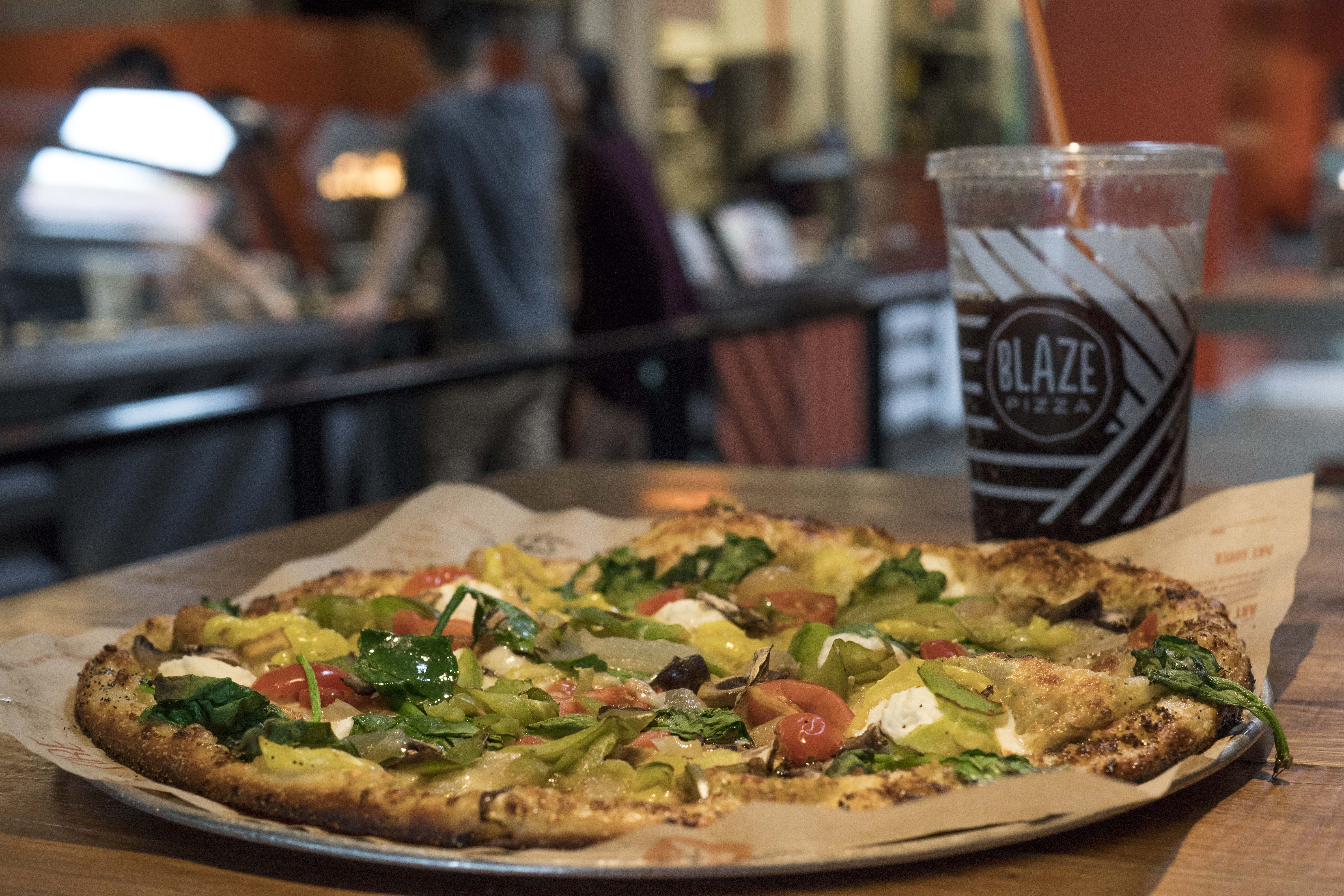
Best Pizza: Blaze Fast-Fire’d Pizza

BRIANA NGO / AGGIE

Customizable toppings, artisanal ingredients, fast service and reasonable prices come together at Blaze Fast-Fire’d Pizza, a franchise pizza joint serving up personal-sized thin-crust pizzas cooked in a unique, open-stove fast-firing technique. At around $8 per pizza, Blaze offers a large selection of high-quality, creative toppings and sauces all for fairly affordable prices, and allows customers to choose from a menu of signature pizzas or to fully customize their own.

Blaze’s build-your-own pizza model and counter-served setup makes it stand out from other pizzerias and earns it the title of “Best Pizza in Davis,” usurping four-year previous winner Woodstock’s Pizza.

“I love how you can build your own,” said Madelin Cartoscelli, a Blaze regular. “I’ve had it so many times and it tastes delicious […] especially when they put parmesan cheese on it, oh yeah!”  

Customers follow their pizzas down an assembly line of workers who deftly add toppings per customers’ requests, see their pizza fast-fired right before them and enjoy it either to-go or sitting down at trendy aluminum tables and patio seating.

Though the shop specializes in delivering a straightforward menu that allows for limitless combinations of toppings, it has a selection of crowd-pleasing drinks and desserts: s’more pies, sea salt chocolate chip cookies, olive oil brownies, beer, wine, agua fresca, lemonade and free refill fountain drinks. The shop also features gluten-free dough and vegan selections, such as tofu popcorn chick’n, vegan cheese and salads. Reviewers rave about Blaze’s blood orange lemonade, which is included as one of their free-refill items and draws some savvy students to dine in just for the limitless supply.


Written by: Kristen Leung — features@theaggie.org

Photo of the Week: 5/17/2017

As the Chinese phrase goes: People mountain people sea. (NICHOLAS CHAN)

Students for a Democratic Society rallies against Napolitano following release of audit

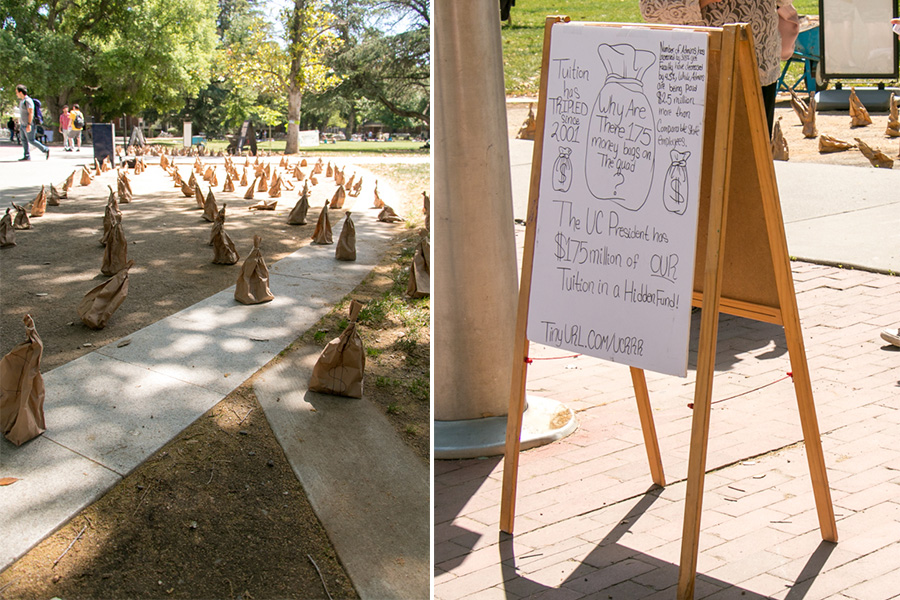
TAYLOR RUNNELLS / AGGIE

Students protest alleged UC corruption

Members of the Students for a Democratic Society (SDS) stood on the Quad handing out pamphlets and conversing with students on May 9 and 11. On the ground next to them were 175 individually assorted paper bags. The bags were marked with dollar signs, each one representing $1 million dollars of the $175 million current UC President Janet Napolitano allegedly stashed in secret reserves before the tuition hike.

The outrage against Napolitano and other UC administrators has been steadily growing, and the recent SDS demonstration was one of many examples of UC students taking a stand against corruption of the UC administration. Parker Spadaro, a first-year political science major and member of SDS, explained that main goal of the protest was to inform as many students as possible.

“We want to raise awareness of how UC officers of the present UC system blatantly waste money by holding it in hidden funds and then demanding tuition raises,” Spadaro said. “They held thousands of dollars for dinners, spent a large amount of money on Napolitano’s apartment and altered audit responses among other things.”

The allegedly corrupt practices of Napolitano and her colleagues were first revealed in a massive statewide audit, which uncovered discrepancies in UC budget reports and exorbitant spending practices of UC officials. Over the past two weeks, many UC students have called for Napolitano’s resignation in hopes of inciting widescale changes to the current UC system.

“We want to roll back tuition costs, redistribute funds to underpaid workers and restructure the UC to be more democratic and accountable to students and workers,” Spadaro said.

The protest was organized by a coalition of UC Davis student groups such as SDS, the Office of Advocacy and Student Representation and the UC Student-Worker Union UAW 2865. This display was only one of many started by student groups all across UC campuses. The student groups have set up an online petition in an attempt to gain exposure for their campaign and express their outrage in a unified manner.

“Tuesday we gave out over 200 pamphlets,” Spadaro said. “Today we have over 400 pamphlets and we’re gonna hand those all out too. We also have other plans and demonstrations in store. Ultimately, we’re trying to use this spreading of knowledge to push for real reform.”
Written by: Eddy Zhu — campus@theaggie.org

17th Annual Film Festival to feature eclectic student films

NICKI PADAR / AGGIE

Festival provides meaningful outlet for aspiring filmmakers

For those interested in film in Davis, there are plenty of opportunities available: the Davis Filmmaking Society, the Davis Feminist Film Festival and, the latest event, the 17th annual Film Festival at UC Davis (FFUCD).

“What I love about going to see a film is that it can spark so much conversation about anything that happens in it, whether it’s the subject, the director, the actors or how it’s shot,” said Courtnie Voet, a fourth-year English major and one of the three co-producers for FFUCD as well as the festival’s social media outreach coordinator. “There are so many different levels that can be talked about, and if someone goes to see any of the event for one night, they can still see all of the amazing films. And if that sparks a debate and gets them to talk about what these films are trying to get people to see, then we’ve succeeded.”

The film festival interns are excited to showcase and celebrate local artistic talent through 26 short, UC Davis student-produced films during the two-day festival.

Li-Wei Chu, a third-year cinema and digital media major who worked as a co-producer  and was in charge of creating the trailer for the festival, feels that “film festivals in general are an essential part of any university campus.”

This year we’ve got a real eclectic mix of films,” Chu said. “There’s everything from narrative to very experimental films, wide variety of issues that they cover. Every year I’m amazed at what students are able to come up with, and this year is no different. I encourage everyone to come out and see what your fellow students have created! Who knows, maybe you’ll be watching the debut of the next great director.”

The departments of art, design, drama, theater and dance and more help fund the festival and to cover the fee necessary to rent out the Varsity Theater space. Voet noted that since a lot of faculty advisors and participants are from different departments, the festival sets a tone for having a “broader artistic background.”

Sinead Santich, a third-year cinema and digital media major, believes it’s important to have the film festival in Davis.

“[This event is] an outlet for raw student perspective and expression, outside of campus,” Santich said. “I think that it is important that the event takes place in downtown Davis at the Varsity Theater, as it provides a more authentic and meaningful experience both for the audience member and the filmmaker. Finally, in a time when people are watching so many videos and films online, I think it is important to see the work which is created by our own peers and neighbors.”

As always, anyone is welcome to participate in creating a film for the festival, and being a humanities student is not a necessity.

“Even though Davis is such a research and science-based school, one of the things that attracted me to Davis was how broad its subjects are, and even though research is what it’s known for, even its other colleges and majors are all still amazing,” Voet said. “I feel like having this type of festival showcases that because it showcases that the arts are still as important as science and research and how Davis recognizes that.”

The festival is seeking new student interns for the positions such as publicity, technical producer, assistant producers and head producer — and any major is welcome. Voet noted that “It’s not just a festival; it’s continuing a tradition that has been going on. I think it’s really cool that it’s not just the faculty that’s interviewing, but also the past crew members, it’s kind of like passing on to the next generation of people who are interested in film.”

The 17th annual film festival will be held at the Varsity Theater on May 17 to 18 from 9:30 a.m. to 11 p.m. One-night and two-night tickets can be purchased online.


Written by: Pari Sagafi — arts@theaggie.org


When hazing turns deadly

HANNAH LEE / AGGIE

Hazing deaths are avoidable but all too common

No parent should have to bury their child. But after a fraternity hazing ritual turned deadly, Jim and Evelyn Piazza found themselves having to do just that. The Piazzas are the parents of Timothy Piazza, a second-year engineering major at Penn State who died on Feb. 4. The night he died, Piazza, along with other Beta Theta Pi initiates, had just run “the gauntlet,” a hazing ritual during which pledges had to run to various stations and chug vodka, wine and beer. Piazza, who had a blood alcohol level between 0.28 and 0.36 (over three times the legal driving limit), fell down the stairs head-first.

The series of events that followed demonstrate a serious lack of judgment on the part of the Beta Theta Pi members. The fraternity members decided to place an unconscious Piazza on a couch. They splashed water on his face, they punched him in the abdomen and they placed a backpack full of books on him to prevent him from rolling on his back. At no point in the night did they call an ambulance or seek professional medical care. Finally, at around 11 a.m on Feb. 3., the fraternity members called 911. Piazza was taken to a local hospital, where he was found to have a fractured skull and a lacerated spleen, and pronounced dead the next morning.

Perhaps the most tragic and infuriating aspect of the Piazza story is how easily it might have been prevented. If one member of the fraternity had spoken up against the barbaric hazing ritual that the pledges were enduring, Piazza might still be alive. If someone had called 911 as soon as he witnessed a fellow brother falling head-first down a flight of stairs, Piazza might still be alive. Instead, there are signs that they actually attempted to cover up their actions. In a text recovered by police, one brother wrote, “If need be, just tell them what I told you guys, found him behind [a bar] the next morning at around 10 a.m., and he was freezing-cold, but we decided to call 911 instantly, because the kid’s health was paramount.”

Piazza’s parents have pressed charges, which include counts of involuntary manslaughter, aggravated assault and tampering with evidence, against Beta Theta Pi and 18 Penn State students. The Editorial Board supports this lawsuit wholeheartedly. Unsafe hazing practices in the Greek community have been allowed to continue for far too long and will continue to occur if actions like these go unpunished. There is far too much hazing and excessive drinking in Greek life and not enough education about being an effective and proactive bystander in cases of alcohol poisoning. All university students, especially those in Greek life, should be required to attend alcohol bystander intervention trainings to prevent something like this from happening again.

And to all of the UC Davis students who will participate in Houseboats this upcoming Memorial Day weekend: please learn from the senseless tragedy at Penn State. Drinking to excess may seem fun in the moment, but the consequences may be deadly serious. If you see someone who is unconscious or is displaying other signs of alcohol poisoning, don’t just stand there. Speak up and call for help — even if other people seem ambivalent. It could very well be the difference between life and death.

UC Davis baseball secures fourth Big West series win

IAN JONES / AGGIE

Sophomore Ryan Anderson extends hitting streak to 15 games

72 degrees and sunny skies over Phil Swimley Field set the stage on Sunday for an unfortunate loss by the UC Davis baseball team to the UC Riverside Highlanders, 11-6. Despite the loss, the Aggies still captured the three-game weekend series 2-1. Going into Sunday’s game, UC Davis had already clinched the series, making this its second consecutive Big West series win and fourth overall since the start of the season.

Starting on Friday, the weekend series began with an extra-inning walk-off single by sophomore right fielder Ryan Anderson into deep right-center field to top UC Riverside 4-3. This was his third game-winning hit of the year and extended his hitting streak to 13 games. Senior designated hitter Cameron Olson went yard for his seventh home run of the season along with a clutch pinch-hit by senior left fielder Mark Cardinalli to tie up the score and force extra innings.

Friday’s game was followed by another UC Davis win in shutout fashion, led by senior right-handed pitcher Justin Mullins. The final score was 2-0. Mullins allowed only four hits through eight innings, striking out seven Highlanders and giving up just four walks before junior right-handed pitcher Zach Stone took the mound to close out the game. Scoreless through seven, a key double by senior shortstop Jacob Thomas and a single by Anderson drove in one run — continuing his hitting streak to 14 games — and senior catcher Elijah Ontiveros hit an RBI for a 2-0 final score after nine innings.

On Sunday, UC Davis’ sophomore left-handed pitcher Robert Garcia (2-5), named Big West Pitcher of the Week after his three-hit shutout against UC Santa Barbara last week, faced off against UC Riverside’s junior right-handed pitcher Richard Delgado (0-2) to wrap up the series. While closing out the top of the first in three-up-three-down fashion, the Aggies were unable to respond at bat through the fifth inning.

The scoreless game finally broke open at the top of the fifth as UC Riverside ripped three doubles and a single to bring in four runs, sending the Aggies to the bottom of the fifth inning in a 4-0 deficit.

IAN JONES / AGGIE

The Aggies answered back in the bottom of the fifth as a walk to first by freshman right-handed pitcher Andreas Lara and a double down the infield line by Cardinalli put two runners in scoring position. Next at bat was sophomore second baseman Cameron Briggs, who ripped a single right up the middle to score Lara and Cardinalli and give UC Davis two runs. After a sacrifice bunt by senior first baseman Mason Novak and an infield ground out by Ontiveros, Briggs advanced to third base. With the Aggies just 90 feet away from a crucial run, junior center fielder Alex Aguiar struck out swinging to end the inning.

In the top of the sixth, the Highlanders tacked on one more run with the score of 5-2 remaining until after the seventh-inning stretch. After a wild pitch in the bottom of the seventh gave Cardinalli a free ride to second base, putting him in crucial scoring position, Ontiveros was able to drive a single to third base, scoring Cardinalli and bringing the score to 5-3.

Anderson extended his hitting streak to 15 games in the bottom of the eighth with a single to left field, placing him in the number five spot on the UC Davis Division I-era all-time list, four games shy of a UC Davis franchise record.  

“I try not to think about [the hitting streak],” Anderson said. “I just want to focus on the ball and making contact […] game by game.”

Going into the top of the ninth inning, the close-scoring game was blown wide open by UC Riverside as it rallied six runs, in part due to two costly errors by UC Davis. An intentional walk to junior right-handed pitcher Blake Peters to force the fielder’s choice backfired as two singles and a double by the Highlanders ended the inning with a comfortable 11-3 lead going into the bottom of the ninth. A late-game rally began to form as a double by Novak and single by Aguiar yielded three runs for the Aggies, but after freshman shortstop Jacob Thomas struck out looking, the game’s final score was UC Riverside 11, UC Davis 6.

The errors made on Sunday by the Aggies were hard to take in but need to be understood in order to wrap up the final eight games of the season, including one more Big West series down south at UC Irvine.

IAN JONES / AGGIE

“It’s the end of a long weekend,” said head coach Matt Vaughn. “The team that comes out on Sunday and wants it more, focuses more will win the game. Towards the end [of the game] we had two errors that opened the door for them to make it a runaway game. We didn’t give ourselves a chance with the defense.”

Anderson remained optimistic despite the third-game loss.

“There were a lot of things that could have been done better in [Sunday’s] game for a different outcome,” Anderson said. “Overall, we won the series, so that’s good.”

Vaughn is looking forward for the team to learn from Sunday’s loss and apply it in the latter games of the season.

“It was a disappointing performance after how we played the last two days,” Vaughn said. “We’d have liked to do better. We weren’t good enough in any aspect of the game today, that’s something we’ve got to work on going forward. Hopefully they take the positive of the series win and move forward.”

UC Davis will have another opportunity to improve its ball handling this week when the Aggies host Grand Canyon University for another three-game homestand at Phil Swimley Field.


Written by: Ian Jones — sports@theaggie.org


Early ozone exposure may lead to lung disease in adulthood

NICKI PADAR / AGGIE

Study looks at lung remodeling in response to ozone exposure

Air quality in California is significantly poor, with over 70 percent of Californians living in areas with unhealthy, polluted air. The state’s central valley region represents a highly impacted area of ozone air pollution due to its geography, vehicle exhaust and hot, stagnant air.

A study awarded as a grant recipient of the UC Davis Environmental Health Science Center seeks to understand the mechanisms of how ozone exposure affects the lungs during critical time periods of development.

High ozone in the atmosphere represents one of the biggest public health impacts, with potential to disrupt lung development, change lung structure and exacerbate respiratory diseases such as asthma.

“Summer ozone in California’s San Joaquin Valley (SJV) is especially bad because of hot and sunny days with stagnant air, lots of driving and the mountains that ring the SJV, hindering the dispersal of ozone and its precursors,” said Cort Anastasio of the UC Davis Department of Land, Air & Water Resources in an email interview.

Ozone is a gas that occurs both in the Earth’s upper atmosphere and at ground level. The protective ozone layer occurs higher up in the stratosphere, whereas the ground level ozone in the troposphere is an air pollutant harmful to breathe.

This gas is one of the main ingredients in smog, and can damage lungs, exacerbate asthma and in some cases lead to death. There is a worsening of asthma and respiratory symptoms on particular days of high ozone warnings.

“It is helpful for students to be aware of high ozone concentrations during the summer so they can plan to exercise outside during the morning when concentrations are lower,” said Ann Dillner, an associate research scientist at the UC Davis Air Quality Research Center.

The formation of ozone does not occur by emission but rather it is formed in the atmosphere by a chemical reaction.

“There are three ingredients needed to make ground-level ozone: nitrogen oxides (which come from vehicles, power generation and other combustion processes), volatile organic compounds (which come from plants as well as vehicles and solvent use) and sunlight,” Anastasio said via email.

Ozone’s biggest effect is seen in children, specifically in exacerbating asthma.

Laura Van Winkle, a professor of respiratory toxicology and principal investigator of the study, hopes to better understand the mechanisms and effects of lung remodeling in response to ozone exposure during lung development.

This information is necessary in order to develop strategies that minimize the effects of harmful lung maturation for children exposed to ozone.

Lung development occurs prenatally, while a baby is inside the womb. However, much lung maturation occurs postnatally, as a child is growing as a child into his or her early adulthood. Around young adulthood, humans achieve peak lung function, and that is the best function ever to be reached throughout one’s lifetime.

“As you age and lose lung function capacity, it impacts one’s ability to resist disease and recover from colds,” Van Winkle said. “People with lower peak function in young adulthood have harder time later in life.”

Previously, ozone-induced lung structural change had been an understudied area in regards to ozone research. The main event that prompted interest for this study was the human epidemiology study on UC Berkeley freshman.

In a sample population of Berkeley students, results showed students who grew up in more polluted environments had significantly reduced lung function compared to students who did not grow up in such a polluted environment.

“What’s concerning about the study on Berkeley students, is it shows that air pollution reduced the peak lung function during the critical lung maturation time period,” Van Winkle said. “The reduced lung function is less normal and is the best they will ever have in their lifetimes.”

The study intends to specifically study the effect of ozone on alveolar growth in the lung. Alveoli are tiny air sacs that allow for gas exchange between the lungs and bloodstream.

Growth of alveoli may be disrupted by ozone exposure by remodeling the expression of key genes and proteins involved in lung growth. In addition, altered alveoli may impact the amount of oxygen provided to the body.

“We hope to get a better understanding of what time frame [of lung development] is most susceptible, how structural change of the lung is affected and the biological mechanisms behind ozone exposure,” Van Winkle said.

Van Winkle hopes to be able to apply her research to the community level and outreach to people in areas most susceptible to high ozone exposure.

“I am in collaboration with the American Lung Association as well as partnering with stakeholder groups in the SJV to educate people about why it’s important to stay indoors when air pollution is bad,” Van Winkle said.

Further information about air quality in California can be found on the American Lung Association website, with detailed statistics about prevalence of smog in local areas as well as updates on air-pollution regulations both for the state and federal level.

“Students with compromised lungs should be especially careful to monitor air pollution conditions,” Dillner said.

Looking for better ways to advise susceptible populations on when to be most careful in high ozone environments is the first step into preventing and managing possible health effects.


Written by: Shivani Kamal – science@theaggie.org