61.7 F
Davis

Davis, California

Sunday, December 21, 2025
Home Blog Page 636

Camped Streetwear Club to present night of hip-hop entertainment

JAY GELVEZON / AGGIE

Event will host variety of music and dance, including local and Bay Area performers

Simply put, the Camped Streetwear Club fills a niche on the UC Davis campus. With several renowned a cappella groups, talented instrumentalists and local garage rock bands dominating the Davis music scene, this UC Davis club is bringing an already-established hip-hop community to the forefront of students’ attention.

“It’s the first of its kind here at Davis,” said Brandan Nhan, a third-year managerial economics major and a co-founder of the club. “There’s multiple artists coming out, from students to local artists. We wanted to do a show that, one, has not been done here in Davis before, and two, changes the image of streetwear.”

Camped will be hosting their first hip-hop show on Saturday, April 15. The event, “Campsite: Hip-Hop Performance,” is primarily a celebration of hip-hop culture. With performances by campus favorites like the Liquid Hotplates and MK Modern, the event has booked over ten performers.

Corey Wolff, a first-year graduate student in the design department, is the face behind hip-hop violin project Crywolffs Violin. As a performer for the Campsite event, Wolff prepares by catering his set list to events’ hip-hop focus.

“I’m thinking [I’ll perform] Drake, maybe Rihanna,” Wolff said. “I don’t know how many people listen to the oldies, because one of my favorite hip-hop songs is ‘No Diggity.’ I’m definitely going to be playing a song by a group called Nuttin’ But Stringz, who won [third place] in America’s Got Talent […] the song is called ‘Thunder.’ It’s a great hip-hop violin song, not my own, but it’s a cover song.”

As a classically-trained violinist, Wolff believes violin can be adapted to any genre or culture; his music is exemplary of the kind of genre-bending ideals Camped Streetwear will be showcasing.

“Violin fits everywhere,” Wolff said. “That’s one of the things about violin. You can look at almost every culture in the world, and they have taken violin and made it somehow authentically their own — from Indian, Irish, Chinese, Japanese — everywhere. So, it’s not that it fits, it’s how I decide to use it. How I decide to use it is to replace the vocals. And then I produce the track around that. I’m classically trained […] so what I do is much more straightforward, not as flashy.”

Crywollfs Violin is one of the many other musicians and artists performing at the Campsite event — though certainly the only classically-trained hip-hop violinist.

Nhan emphasized that the purpose of the event is to give the audience a well-rounded perspective of hip-hop art and culture.

“Since we have such a variety of performers coming, we hope the audience will just get the whole shebang — an MC, a DJ, breakdancing — and along with breakdancing comes dancing — and rap,” Nahn said. “We want it to be an outlet for hip-hop culture.”

Though a primarily new club, Camped Streetwear has lofty goals for its future on the UC Davis campus. Initially inspired by the documentary “Fresh Dressed,” the club began as an embodiment of street fashion and overall hip-hop culture. It was only recently that its members decided to host a performance show in an attempt to revitalize their status on campus and to encourage new and old members to become more engaged.

“The first [meeting] turnout was pretty good, and we liked the feedback we got,” Nhan said. “It started trailing off towards the end of Fall and middle of Winter Quarter because everyone got really busy. We weren’t very active, in a sense. But Nikko [Alegre] brought in the great idea of, ‘Let’s bring this back. Let’s do a hip-hop performance show.’”

Nikko Alegre, a fourth-year communication major, is described by Nhan as the brains behind the operation. Alegre hopes that Camped will evolve into a more permanent part of UC Davis  — and ideally the Davis community as a whole.

“I think we’re just an outlet for people that are into fashion and hip-hop, if anything,” Alegre said. “A lot of our general members and board members listen to hip-hop, and some of us are hip-hop dancers, so Camped is definitely a way to share this common interest with others […] we’ve also tried to assign significance behind famous brands such as Nike or Adidas. We want people to appreciate streetwear and hip-hop by understanding what they represent, and not just because Kanye or Justin Bieber [are] into it.”

In terms of their Campsite event, Alegre hopes students involved in streetwear and hip-hop will use this event as a means of expression and that the event will serve as a greater outlet for the local hip-hop and streetwear community.

“This is the inaugural year for Campsite, so there have been a few bumps in the road, but nonetheless we’ve worked extremely hard to put together this event for the community,” Alegre said. “Hip-hop and streetwear have started to become more visible throughout the years, so I think a lot of people can appreciate what we’re doing with Campsite, regardless of if you’re into streetwear or not. I just hope that this event changes the perspective of how others perceive the streetwear community.”

The Campsite event will run from 7 to 9 p.m., and tickets for the event can be purchased online for $8 or at the door for $12.


Written by: Ally Overbay — arts@theaggie.org

End of April Events Calendar

JAY GELVEZON / AGGIE

Spring activities in the Davis area

It’s said that April showers bring May flowers, but Davis community members can also expect tons of exciting events this month.


Campsite: Hip-Hop Performance Show

Where? Wright Theatre

When? Saturday, April 15, 7 to 9 p.m.

What is it? Campsite is the first hip-hop performance show hosted by Camped Streetwear Club, a club that strives to cultivate a community that educates students about streetwear. There will be several different types of performances, including dance, poetry and music. Doors open at 6:30 p.m. Pre-sale tickets are $8 and tickets at the door will be $12.


Third Thursday Manetti Shrem Museum

Where? Manetti Shrem Museum

When? Thursday, April 20, 5 to 9 p.m.

What is it? On the third Thursday of each month, the Manetti Shrem Museum hosts an exhibition featuring different artists. This month, audiences can expect spoken word and music from KDVS DJs as well as exhibits on social justice, the postwar world and creating your own cultural flag. You can find more information on the Manetti Shrem website.


HellaCappella

Where? Mondavi Center

When? Friday, April 21, 7:30 p.m.

What is it? Interested in a variety of music and dancing? Come and see college groups from all over the West Coast perform at Northern California’s 13th Annual A Cappella Showcase. Hosted by UC Davis’ very own The Spokes, it is the most highly anticipated a cappella concert of the year. The event will feature several other a cappella groups from UC Davis as well as groups from other campuses. Tickets can be purchased on the Mondavi website.


Picnic Day

Where? UC Davis Campus

When? Saturday, April 22, 9 a.m.

What is it? Picnic Day is an annual event at UC Davis that welcomes family and friends to participate in a day full of exhibits, shows, competitions, animals, athletic events, food and more. This year’s theme is “Growing Together.” With over 200 events, there is something for everybody to enjoy.


Chance The Rapper Concert

Where? Sacramento Golden 1 Center

When? Thursday, April 27, 8 p.m.

What is it? Grammy award-winning musician Chance The Rapper will be performing in Sacramento for his Spring tour. Audiences should expect some changes from last year’s  Magnificent Coloring World Tour. Sacramento will be the third stop of the tour, which lasts all the way until June.


Written by: Myah Daniels — arts@theaggie.org

Lengthy negotiations over UC labor contract completed

MORGAN TIEU / AGGIE2030

Teamsters to vote on tentative agreement

The University of California (UC) announced on March 23 that it has reached a provisional agreement with the Teamsters Union regarding a potential new labor contract. The contract covers several thousand clerical employees and will be voted on by the union on April 19.

Negotiations between the two organizations started in April 2016, a full four months before the original contract expired. These negotiations did not occur smoothly, as both sides converged with conflicting standards.

“Negotiations were tough as we fought tooth and nail to achieve the tentative agreement that our members are now voting to ratify,” said Christian Castro, the Teamster communications director, via email.

One of the main issues that was debated during the negotiations was between the UC-supported merit-based wage increases and the Teamster-supported guaranteed wage increases.

“Originally [the UC] had proposed a small increase of 1 percent and what is called step increases, which are only given to those with a satisfactory personal review,” Castro said. “Many bosses and managers can then exploit that by doing favoritism […] We wanted guaranteed raises for everyone, across the board, no ifs, ands or buts.”

After continued unsatisfactory offers and an organized labor strike performed by the Teamsters, the two parties reached an agreement. According to a press release, the new contract, if implemented, will include an annual three percent wage increase for every covered employee; a $1,200 bonus per clerical employee, paid upon contract ratification; a $25 limit on any rate increases to the Kaiser and Health Net Blue and Gold health insurance plans and retirement options for employees hired on or after July 1, 2016.

Although the process was long, Lani Richardson, a Teamster Bargaining Team representative, believes that without the initiative and hard work of its members, the two parties would never have reached this final deal.

“I truly feel this process would’ve dragged out much longer had it not been for our campaign we built on the ground, which empowered our activists to take actions and show strength at the workplace,” Richardson said via email. “When dealing with the UC, one can have the most competent people at the table, with the most compelling arguments and facts on their side — which we did — but ultimately talk doesn’t move the University — Teamster Member Power does.”

Starting on April 10, in-person balloting will occur at each location across the UC system. These votes will then be checked for eligibility and counted on Wednesday, April 19 at the Teamsters Local 2010 Office in Oakland.

Both Castro and Richardson expect positive results from the voting process.

Castro based his reasoning on the encouragement of the Teamster bargaining team and executive board to vote in favor of the contract.

“Our bargaining team and Executive board have both recommended a ‘yes’ vote on the contract and we believe that this is the best possible deal under the circumstances,” Castro said via email.

Richardson believes the contract will be ratified due to similar contracts passing in the past.

“The feedback I’ve personally been receiving has been positive,” Richardson said via email. “This contract is the third our local has just settled, and is patterned the same as the other two. The other two agreements for skilled trades workers at UCSD and UCLA passed overwhelmingly with 98% and 91% of members voting to ratify, respectively. So based on this and the feedback from members, I believe that the agreement will be ratified.”

Dwaine B. Duckett, the UC vice president for systemwide human resources, said the UC views the outcome of the negotiations as positive.

“We are pleased to have reached an agreement that maintains competitive wages and benefits for our clerical colleagues and recognizes the important role they play in keeping our campuses and medical centers running smoothly,” Duckett said in a UC press release.

Although the Teamster’s main goal will be completed if the potential contract is implemented, the Teamsters will continue to press forward, focusing on various issues that were not dealt with during contract negotiations.

“Going forward, we will be enforcing our new agreement, plus building campaigns to address the issues which, were left at the table,” Richardson said via email. “We continue to have a few issues, such a misclassification of workers and protection of our bargaining unit work, that face our membership. In the coming months and years, we will make sure that the University sees and feels our most important concerns, as problems for them too.”
Written by: Emily Shintani — campus@theaggie.org

Hawai’i edges UC Davis 7-6 in Big West showdown

RAUL MORALES / AGGIE

Aggies score two late goals, cannot complete comeback

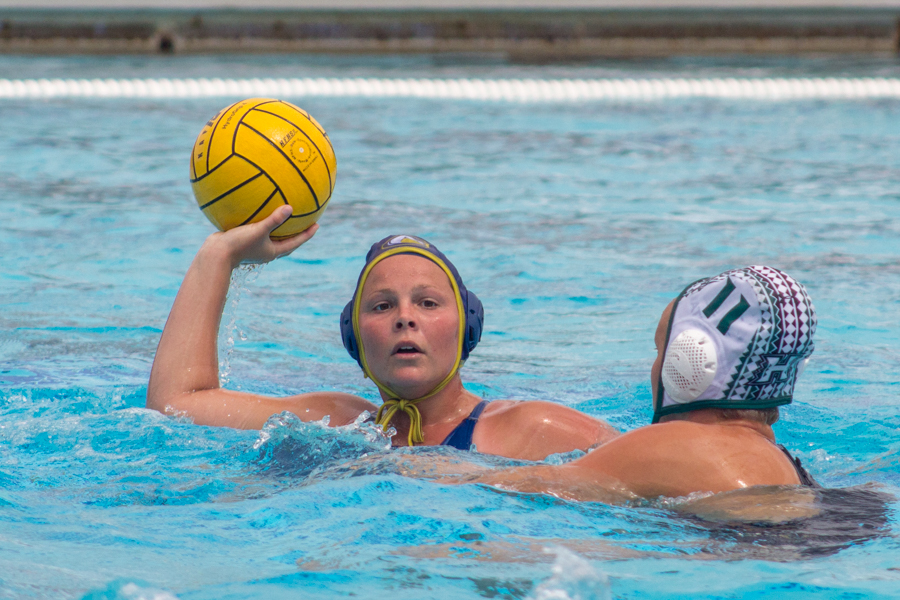
The UC Davis women’s water polo team, ranked 12th nationally, spent Saturday afternoon hosting the Hawai’i Rainbow Wahine. Coming off a recent loss to Long Beach State, the Aggies had their work cut out for them. Two weeks prior, eighth-ranked Hawai’i nearly upset the top-ranked University of Southern California. The Aggies battled throughout the game but ultimately came up just short of the upset, falling 7-6.

The two teams struggled to find the net for the first five minutes of the opening quarter. UC Davis opened the scoring at the 3:13 mark with a goal from junior center Greta Kohlmoos. The goal gave Kohlmoos 58 goals on the season, moving her into sole possession of seventh place in the Aggies single-season scoring records. The Aggie lead would not last long, though, as Hawai’i answered moments later with a goal of its own.

The Rainbow Wahine held a 4-2 lead over the Aggies at the half, largely due to their ability to keep rotating fresh athletes into the game.

RAUL MORALES / AGGIE

“[The Wahine are] good all around, they have six great players that [start] and another great three or four [players] that come off the bench, so they’re [really] stacked,” junior utility Paige Virgil said.

In the third quarter the Aggie offense came alive. Goals by senior utility Hannah Harvey and Virgil put the Aggies at an even 4-4 against the Rainbow Wahine. However, Hawai’i once again rose to the challenge and retook the lead 5-4 before the end of the third period.

In the final quarter, the Rainbow Wahine scored two quick goals to take a commanding 7-4 lead over the Aggies. But the Aggies would not go down without a fight, as Virgil added two more goals to bring her total to three on the day and 56 on the season. The first of Virgil’s two goals in the quarter was a swift behind-the-back no-look screamer that the Hawai’i goalie had no chance of saving.

“My team [contributed to my performance], we were so positive, we kept pumped up,” Virgil said. “[Even when] we [got] down 7-4, we came back, set up a play and executed it well.”

Despite Virgil’s stellar performance, the Aggies simply ran out of time, and the clock expired with Hawai’i playing keep-away from UC Davis. In the end, Hawai’i squeaked by with a 7-6 victory.

Despite the loss, UC Davis head coach Jamey Wright was proud of his team’s performance.

“[Hawai’i is] very skilled and I was so proud of how we kept it together, that’s a team that lost to USC by one about 10 days ago and [U]SC is the number one team in the nation,” Wright said.

RAUL MORALES / AGGIE

The thriller dropped the Aggies to 14-15 overall and 2-2 in the Big West conference. When asked about next week’s matchup against the sixth-ranked UC Irvine Anteaters, Wright recognized the differences between Hawai’i and Irvine.

“[UC Irvine] present a lot of problems, but different problems than Hawai’i, so we’ve got our work cut out for us,” Wright said. “[UC Irvine is] really good. We’ll be there and we’ll be ready to go.”

The UC Davis women’s water polo team will matchup against UC Irvine on Saturday, April 15 at 12 p.m. in Irvine, Calif.
Written by: Rowan O’Connell-Gates — sports@theaggie.org

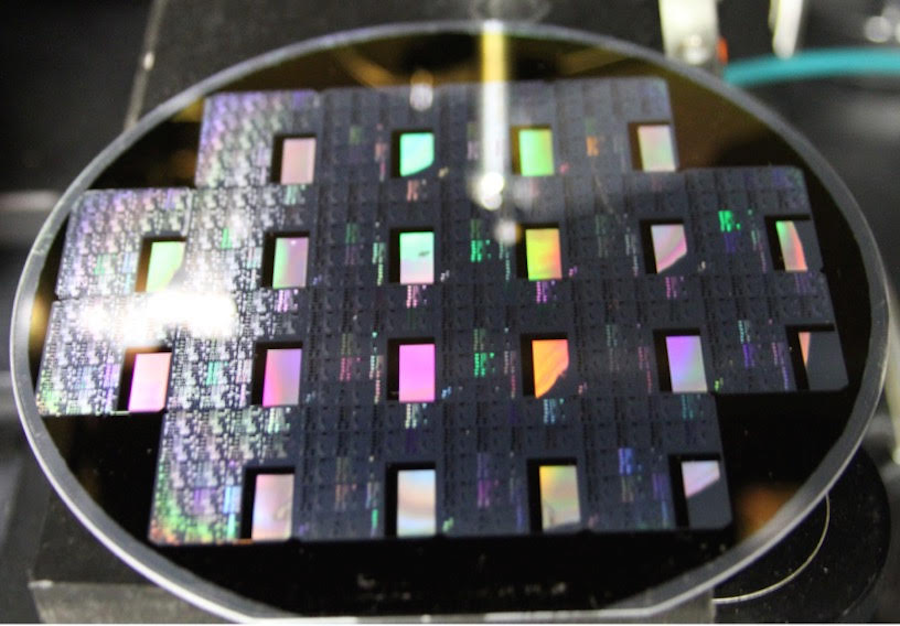
Pattern of tiny black holes enables fastest data conversion reported for a photodetector

M. SAIF ISLAM / COURTESY

Innovative silicon wafer technology serves as game-changer for high speed connections at data centers

The immense growth of data centers powering the internet cloud has brought with it a demand to move large quantities of data faster and farther. Newly developed silicon wafer technology with tiny black holes, developed by UC Davis electrical engineers, acts a photodetector to move massive amounts of data worldwide at a cheaper cost.

Saif Islam of the UC Davis Department of Electrical and Computer Engineering collaborated with the Silicon Valley startup company W&W Sens Devices Inc., to develop this technology. The research was recently published in the online journal, Nature Photonics.

“Big data is what everyone talks about these days,” said Yang Gao, a postdoctoral scholar in Islam’s group. “The need for faster optical communication and the demand for higher bandwidth cloud computing are growing exponentially.”

The eminent  “cloud,” is a metaphor for the internet. Cloud computing means storing and accessing information and programs over the internet instead of on a computer hard drive.

The main application of new silicon wafer technology is for data centers. A central issue of optics for data communication in the centers is the expensive cost for the data transfer rate, which is currently about $10 per gigabit per second.

“We believe this technology will help to further reduce the cost to single digit dollar per Gb/s,” said postdoctoral scholar Hilal Cansizoglu of the UC Davis Integrated Nanodevices and Nanosystems Lab.

The most striking feature of this new technology is the pattern of tiny black holes tapered in the silicon, only about 1 micrometer in size.

These holes essentially trap photons, which are tiny quantized particles of light, and divert them sideways which allows for high-speed data connections.

“A large number of simulations, experimental attempts and combined approaches helped us narrow-down our design window [for the optimal pattern of tapered holes],” Islam said.

After two long years of experimentation, the researchers concluded on a pattern of holes that taper toward the bottom of the wafer.

Traditionally, silicon is not considered a good material for a photodetector to use in data communication applications because very thick layers are needed to absorb light efficiently. Thick layers prevent the detector from having a fast speed and therefore produce a low data transmission. However, the new silicon wafer technology simultaneously has features of high data collection efficiency and high data transmission rate.

“Our designs use very thin silicon layers with photon-trapping holes, and the light coming into the photodetector is bent sideways so that it can be absorbed efficiently,” Gao said. “At the same time, the thin active region results in the data conversion rate of 25 gigabits per second and higher.”

Currently, when computer engineers want to move large quantities of data at a fast rate, the use of fiber-optic cables are employed. These cables transmit the data as pulses of light, and at the receiving end of the transmission is a detector that converts these signals to electronic pulses.

Unfortunately, in order to capture the all the data and be efficient as possible, the downside is a slow rate. In these situations, materials such as gallium arsenide can be used to increase speed and efficiency about, 10 times more, but it is significantly more expensive.

“This new [silicon wafer] technology [with tapered holes] and many others can make the optical communication more affordable, more efficient and ultimately improves the user experience that benefits everyone,” Gao said.

The ability for electrical engineers at UC Davis to collaborate with other engineers and scientists both within the UC system and other laboratories has contributed to the success of an experimental photodetector and solar cell using the new technology.

“UC Davis is luckily backed by a wide spectrum of available microfabrication tools and facilities both at Davis and in UC system,” Gao said. “We have access to several of national leading nanofabrication research facilities including Center of Nano-MicroManufacturing (CNM2) at UC Davis, and Marvell Nanofabrication Laboratory at UC Berkeley.”

High speed connections are increasingly vital at data centers, and the silicon wafer technology can be a game changer for how data is transmitted.

“The publication of this technological breakthrough has the potential to spark new design ideas and impact academic and industrial research toward the development of higher efficiency photodetectors,” Gao said.
Written by: Shivani Kamal — science@theaggie.org

The most interconnected yet disconnected generation

LUCY KNOWLES / AGGIE

Millennials are the most stressed-out, sleep-deprived and preoccupied generation in history
How human beings connect with one another is what sets us apart from the rest of the animal kingdom. However, there is enough evidence to suggest that humans are heading in the wrong direction when it comes to interpersonal communication, and it’s solely the Millennial generation that may be to blame.

The most influential, prominent, successful and domineering generation may be the most socially inept of all. This isn’t a surprise. The world has watched as this young generation has become more and more zombified through smartphones, tablets, laptops and television. The baby boomers would be disappointed in a generation that holds the key to the world’s future, yet at the same time, stops to take a picture of the key for their Snapchat story (which will disappear 24 hours later).

It’s incredibly ironic, really, that a generation that essentially created its own country in Silicon Valley founded on wealth, technology and intelligence finds itself unable to organically create romantic relationships, or even friendships, as well as preceding generations. Those who masterfully pioneered the country’s World Wide Web and the networks administering them can’t even pick up a newspaper, or strike up a conversation with the opposite sex or a stranger. Facebook, Instagram, Snapchat, Bumble, Tinder, OkCupid, Myspace, Spotify and several other social media apps have severely stifled a natural skill vital for everyday life: the human connection.

We live in a world today where college students have to monitor and caution themselves against pedestrian traffic. Yes, I said “pedestrian traffic” — mainly because there are those individuals so focused on the next text message, Facebook post, Snapchat story or recent Instagram picture that they are completely oblivious to the world around them. They expect their surroundings to adapt to them and for people to weave around them on the sidewalk because their order from Amazon just arrived. Millennials have a lot of strengths, and surely much to be proud of, but it’s the embarrassing and very evident weakness of their human connections that should frighten them about their future.

Only in the 21st century are we discussing what screen addiction is and how to combat it. Previous generations may have had to deal with post-traumatic stress syndrome after World War II, the addiction to narcotics and hallucinogens in the ‘60s and ‘70s, but Millennials today have difficulty connecting with one another face to face because they’re battling “screen addiction.”

We must begin to ask ourselves if the Millennial generation has reached a point of no return, if they’ve drifted too far into the realm of their own virtual reality. Some argue that it’s not too late for the Silicon Valley kids to make a change for the better. Lessons can be learned from older generations if we analyze how they spend their free time vs. how Millennials spend their free time — and any other points of separation.

What about college students? The hot bed for sex, drugs and rock n’ roll, right? Not so fast — we’re talking about the most stressed-out, sleep-deprived and preoccupied generation in history. Sure, all that fun stuff is still happening on college campuses, but not nearly as much as prior generations. Some would ask, “Isn’t that a good thing?” Not quite. We already know that most college students are enjoying themselves and having fun when they drink, smoke or have sex in a responsible and safe manner. Those things are expected simply because they lower stress levels, allow students to relax and, most importantly, allow students to connect with each other in natural, organic ways, which this generation seems to have almost lost.

What’s the solution to this dilemma? How does this young generation get back on its feet and get their eyes off the screen? Put down the tablet, and pick up a book. Instead of exploring Yosemite National Park in the newest version of virtual reality, plan a weekend trip with some friends and drive down there. Stop crafting your resume, and start writing a personal journal. Maybe even write a letter on actual paper. Don’t worry — the trees will be fine. Millennials must find a way to break their bad habits and get out in the world and make a difference by engaging in the oldest form of communication: human to human interaction.


Written by: Brody Fernandez — bwfernandez@ucdavis.edu

Disclaimer: The views and opinions expressed by individual columnists belong to the columnists alone and do not necessarily indicate the views and opinions held by The California Aggie.

Humor: UC Davis cows to be featured in Animal Planet reality show on cows

CAT TAYLOR / AGGIE

Local animals take nation by storm in new tell-all show
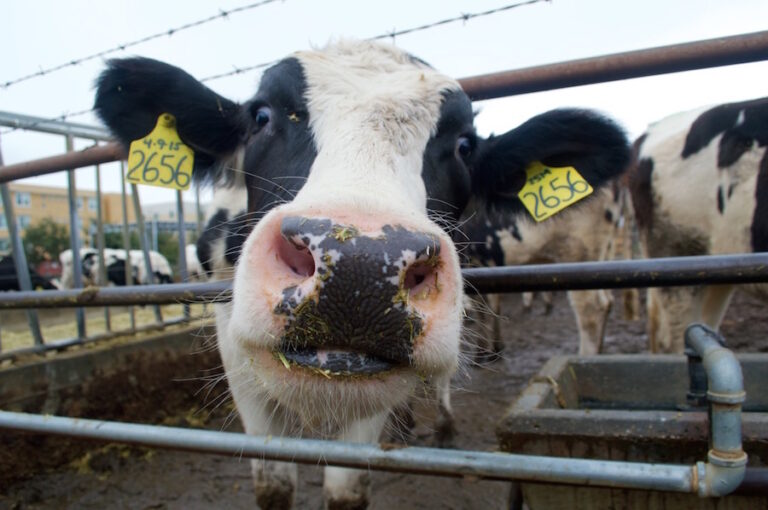
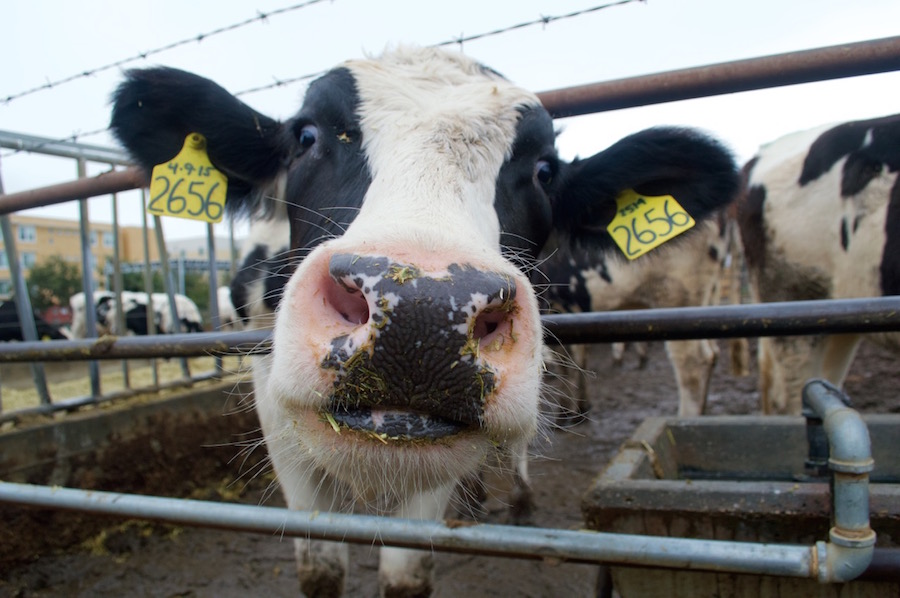
Once seen nearly solely on the UC Davis website, Instagram and Facebook feeds, the UC Davis cows are hitting the small screen. Animal Planet has decided that it wishes to get involved in Davis’ local cow obsession. Located near Tercero, the UC Davis cows have become something of a novelty — a idiosyncratic quirk listed as something new students must check out.

Animal Planet announced that it will begin shooting Lord of the Cows in the first week of May. The new show will follow the UC Davis cows to see how animals interact with one another and the social systems that come into play when living in a confined space. Similar concepts have been done with humans, but the new animal subjects have raised many questions that only the TV show can answer. Which Tercero cow will be most dominant?

After a test run, two cows emerged as favorites to run the space. Animal Planet released an initial trailer showing Cowabunga and Coward overpowering the other cows in daily life.

“This is an awesome way to publicize the school and show off what the school can offer in terms of resources for our animal science program,” said Beau Vines, a spokesperson for the animal science program at UC Davis.

Lord of the Cows will feature a small human presence. Animal behavior experts will explain the intentions of the cows, but persons appearing on-screen will be kept to a minimum. The new show hopes to increase understanding of animal behavior and the similarities that can be drawn to humans. Such an idea has prompted questions concerning social climbing and the allegiances that may or may not be made in the process of completing various tasks.

Animal Planet has announced that the show will consist of twelve one-hour episodes that will also feature various shots of campus. One episode will be centered around how the students and surrounding Davis community interact with the animals. Advertising and announcements will be posted shortly for the exact date and time of shooting.
Written by: Ethan Victor — ejvictor@ucdavis.edu

(This article is humor and/or satire, and its content is purely fictional. The story and the names of “sources” are fictionalized.)

Executive office term review: Alex Lee and Abhay Sandhu

HANNAH WODRICH / AGGIE FILE

Executive office term review: Alex Lee and Abhay Sandhu

A full year since their election as president and vice president, respectively, during the Winter 2016 elections, Alex Lee and Abhay Sandhu saw their term come to an end at the end of the Winter Quarter 2017.

“My term was characterized more by the controversies and scandals each quarter [such as former chancellor Linda P.B. Katehi’s resignation and the Milo Yiannopoulos protests] that popped up,” Lee said. “I’m hopeful that we created a better financial state and better foundation for best practices.”

In Winter 2016, Lee and Sandhu ran for the Summit slate on platforms that encompassed five bases — clubs, academics, advocacy, jobs and ASUCD reform. While the executives made headway on causes in all areas, there were few tangible outcomes of their terms. Lee noted that the Senate rejected some of his platforms, such as changing the structure of ASUCD to make it “more efficient,” which was rejected on a partisan vote by the Senate, and the bills thereafter died.

Instead, Lee and Sandhu worked to lay foundations for future student leaders to make improvements to campus.

“A lot of it is kind of hard to say that it’s definitely mine, but I’m hopeful that I laid a lot of foundations for future leaders and governments to utilize especially,” Lee said.

The 2016-17 executives did establish an executive cabinet, which was part of their platform under the umbrella of ASUCD reform. Lee also worked toward enabling students to gain credit for AP and IB credits. Additionally, headway was made on addressing the lack of affordable housing available in Davis for students.

“I think with the meeting that I had with [Interim] Chancellor Hexter and administration and the city to get the city and campus to finally put in writing that housing students is a joint responsibility,” Lee said. “There’s still some of that resentment there, but I think we made the first steps to heal that kind of rift.”

Another aspect of Lee’s presidency included ASUCD’s involvement in units’ decision-making with regard to topics such as wages.

“I tried to learn their concerns as much as possible and really know the units to best make decisions,” Lee said. “In many cases in my position, I make decisions for units or between units.”

According to Senator Samantha Chiang, who was active during Lee’s presidency and was also re-elected during the Winter 2016 election, Lee’s presidency was plagued by an inherent disengagement between the branches and even within the executive branch itself.

“I think during Alex’s term there was a distinct disconnect between the senate and executive branch,” Chiang said. “It has been very difficult additionally, from a financial perspective due to the fact that once the presidential budget, once given to them has little to no oversight on the part of the senate, which is why they were able to spend an exorbitant amount of money on their farewells at the end of the year. I think that [Lee] has done many great things in terms of individual projects such as the student ID card, but with building interpersonal and interdepartmental relationships, I believe that this next presidency will be able to do a more representative and well-thought-out job.”

Chiang also noted that she observed a lack of communication between Lee and Sandhu.

“I think [Sandhu] did the best he could with the cards he was dealt,” Chiang said. “But, for a large portion, [Sandhu] was largely sidelined in the executive office. He was a great presiding officer in the senate, he always knew how to communicate with us. That being said, Alex never communicated with [Sandhu] […] He knew just a little as the Senate did a lot of times. Abhay was never fully brought into the vice president role.”

As president, Lee used his veto power a total of five times, although two of his vetoes were overturned. Additionally, Lee penned eight senate bills between 2015 and 2017, but he noted that once elected into the executive office, he wrote far fewer bills, and instead assisted in writing more. Sandhu did not write any senate bills as vice president and did not vote on any senate bills, as there were no voting ties during his term.

Current ASUCD President Josh Dalavai said that he thought Lee and Sandhu were successful professional figures for ASUCD during his term.

“They were definitely very professional and poised,” Dalavai said. “They presented a strong face to the external bodies they interacted with.”

Dalavai also noted that he and ASUCD Vice President Adilla Jamaludin will have a comparatively different approach during their term due to differences in personalities. However, both executive terms share an emphasis on solving the growing housing crisis in Davis. Lee noted that he had hoped to create more bonds with the City of Davis in hopes of remediating the housing shortage, a feat that Dalavai and Jamaludin will continue.

Sandhu did not respond to The Aggie’s multiple requests for comment.
Written by: Lindsay Floyd  — campus@theaggie.org

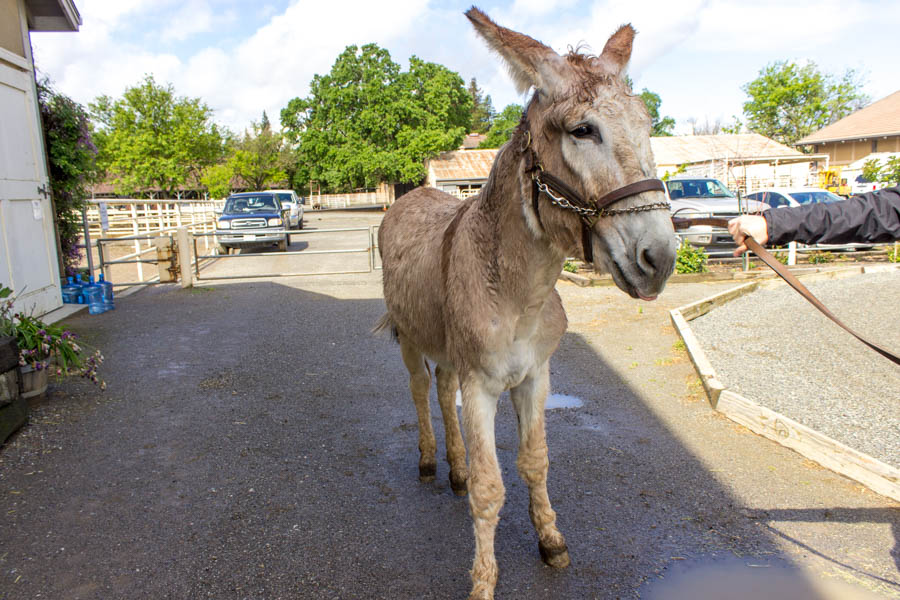
Humor: Donkey put in isolation at Animal Science stables after being a total ass

VENOOS MOSHAYEDI / AGGIE

Donkey Jack Ascot forcefully removed from presence of other animals after causing a scene

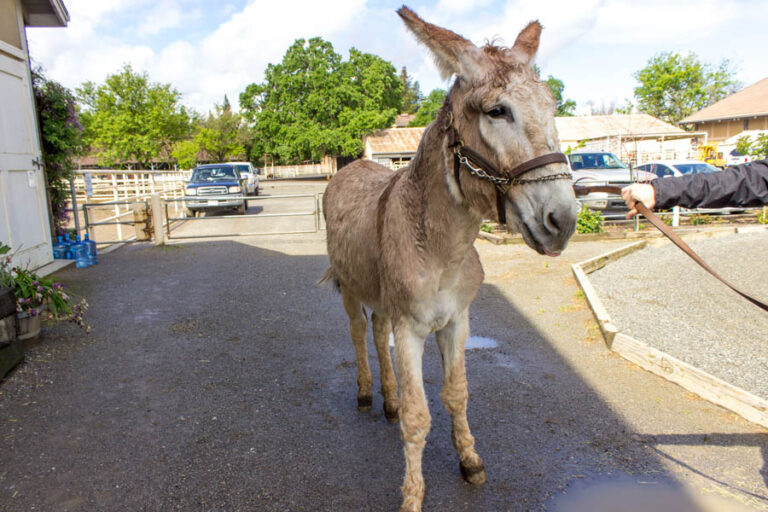
The stables used by the Animal Science department are often quaint and quiet, full of animals who live near each other in harmony. However, donkey Jack Ascot has always felt that he’d do better in the theatre and dance department, so he rocked the boat (or should I say ark, if we’re talking animals) this week.

“Jack just likes to stir the tea,” sheep Marco Nunes said. “He had dreams of being on The Real Housewives of Davis, but then he found out we don’t even have real housewives. Now he’s started this elaborate scheme to try and prove that he’s worthy of quality television, or at least Bravo!”

Jack rolls into the pasture late every day, wearing large Gucci sunglasses and texting on two Blackberries. No one knows how he texts, since he has no thumbs, but the point is still clear: he doesn’t have time for your bull (and he doesn’t have time for the bulls either).

“These peasants aren’t worth the soiled hay around our hooves,” Ascot said. “I’m a hero for putting up with their mundane lives.”

Animal science students soon realized that Jack was being both terribly rude to the other animals as well as a total buzzkill. They quickly decided to move him to his own corral, but he didn’t go out without a fight.

“It was really weird,” cow Burt Utters said. “All of a sudden this really weird dramatic music played and then Jack, like, threw a glass of champagne on one of the students. Security had to come drag him out, but it took a while because they had to run from Tercero, where security is actually useful.”

Jack Ascot now lives alone, but he’ll hopefully make a comeback with an appearance on Dancing with the Stars. He’ll occasionally tweet something passive about his old life, but he seems to still be caught up in his rude antics. The other animals weren’t shocked.

“I mean, he’s an ass, so he’s an ass,” horse Barbara Hoofstater said. “I just wish he was more like that donkey in Shrek who just likes waffles, whatever his name was.”
Written by: Olivia Luchini — ocluchini@ucdavis.edu

(This article is humor and/or satire, and its content is purely fictional. The story and the names of “sources” are fictionalized.)

Meet Chancellor-designate Gary May

HANNAH LEE / AGGIE

Future chancellor visits campus to engage with students

Earlier this year, the Editorial Board wrote about how Gary May was a promising choice to be UC Davis’ next chancellor. We remain optimistic as the Aug. 1 start date for his tenure approaches.

May is holding available hours on the Memorial Union patio from 11:30 a.m. to 1:30 p.m. on Friday, April 14, as an opportunity to get to know the student body. The Editorial Board has compiled points that we believe are important for May to clarify.

With the fallout from former Chancellor Linda P.B. Katehi serving on the board of two for-profit companies, there remains a deep distrust within campus sentiment of income not tied solely to the university. It was surprising, then, when it was revealed by The Sacramento Bee that May himself sits on multiple boards. Although the University of California says that his involvement is not a conflict of interest and will benefit the university, we would like to know the extent of his involvement with these boards and how — or if — his participation in them will affect his style of leadership and his administration.

At Georgia Tech, May led diversity initiatives to enroll a larger number of minority and international students within the College of Electrical and Computer Engineering. The Editorial Board would be interested to hear of how he specifically plans on increasing the diversity to underserved populations of campus at such a large research institution like UC Davis.

As the dean of Georgia Tech’s College of Engineering, May brings a wealth of STEM knowledge to the university, as did his predecessor. May has written about how arts should not be fully integrated within the STEM fields of study, writing that combining arts with the sciences “dilutes the essential need and focus for STEM.” Collaboration between arts and the various disciplines of the sciences would not detract from the focus of STEM and would only serve to put these subjects into a broader historical, societal and global context. It would complement and not devalue the knowledge of those fields. The Editorial Board wants to know how May’s philosophy regarding STEM fields will affect the on-campus interdisciplinary relationship.

UC President Janet Napolitano wanted a chancellor who would be able to increase and strengthen the reach of UC Davis in Sacramento. May should be able to express his priorities for Sacramento and his plans for extending the influence of UC Davis into the area. How will his time and efforts be divided between maintaining and improving a world-class institution and expanding regional influence?

Most importantly, the Editorial Board encourages students to take advantage of this opportunity to meet with their future chancellor and share with him the expectations that the community holds.

The Editorial Board urges the incoming chancellor to continue open dialogue and community engagement. A transparent approach to leading a large public university like UC Davis is essential for a safe and strong campus community.

UC Davis students protest American intervention in Syrian Civil War with die-in

JAY GELVEZON / AGGIE

Students mourn Syrian civilian deaths

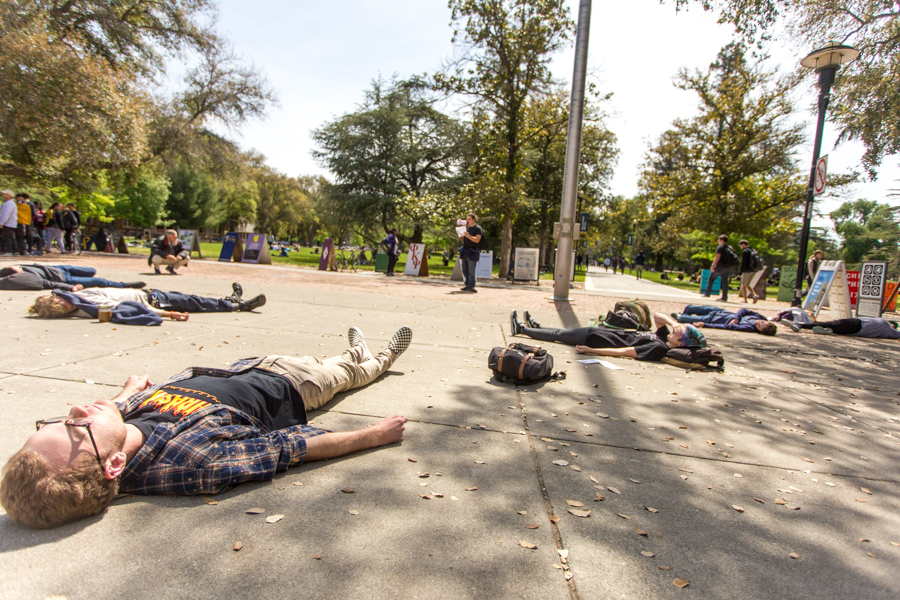
Students gathered on the Quad on April 10 to protest American intervention in the Syrian Civil War. The protest opened with a statement from the event creator, Chase Caligiuri, a second-year history major, and was followed by chants rallying against the American military industrial complex, a march around the Quad and a six minute “die-in.”

During the die-in, the protest members laid on the ground in silence to represent the deaths occurring since the United States first mobilized against Syria in 2011, catalyzed by the Arab Spring. The students were specifically responding to President Donald Trump’s Syrian missile attack on April 6. This most recent act against Syria by the U.S. was prompted by Syrian President Bashar al-Assad regime’s chemical warfare attack on April 4. In response to these incurred deaths, President Trump ordered 59 missiles to be launched at the Syrian Air Force’s Shayrat airbase on April 6.

The protesting students argued that the U.S. has fueled destabilization in Syria and the Middle East through military attacks, funding insurgents and mercenaries, regime changes and imposing Syrian economic sanctions. They also asserted that through an intense American effort to overthrow Syrian government, the forced regime changes, the funding of rebels, attacks and economic sanctions have created a refugee and humanitarian crisis.

Caligiuri, who led the event, voiced his outrage at American military involvement in the Syrian civil war.

“I’m really angry about the Syrian Civil War and that this is how America responds to it,” Caligiuri said. “Honestly, it’s a disaster. It’s disgusting, and now they’re trying to use the deaths of children to justify more bombing.”

The protest went from approximately 12:10 to 1:00 p.m., beginning in front of the Memorial Union with about eight people. Caligiuri opened the protest with statements asserting that U.S. influence, occupation and manipulation in Syria and the Middle East has further accelerated conflict and political instability.

The group of protesters chanted “No justice, no peace, US out of the Middle East,” “No war, no wall, Donald Trump must fall” and “When Syrians are under attack, what do we do? Fight back!”

Mario Jimenez, a fourth-year international relations major, joined the protest because he believes that the recent U.S. military attacks in Syria are potentially harmful for both Americans and Syrians.

“I’m here because I think what the U.S. government is doing in Syria is wrong,” Jimenez said. “The attack on the air base will lead to escalation with Russia that lessens the world’s security, and puts the American people at risk.”

This protest became a joint effort after Caligiuri initially created the Facebook event — he partnered with the Students for a Democratic Society at Davis (SDS).

SDS members distributed pamphlets with information about U.S. foreign policy and militarism within the Middle East which stated that there have been “over 4 million deaths due to US in Middle East since 1991.” The fliers also stated that “US is responsible for 1,000 civilian deaths in Iraq and Syria since Trump took office.” Additionally, the pamphlets put forth four demands of the U.S. government, such as “end[ing] the aggression against Syria, including illegal airstrikes and troops, and commitment to political resolution.”

Thomas Jara, a first-year biotechnology major and a member of SDS, believes the Syrian situation is being fueled by U.S. money and weapons.

“Knowing that Assad is backed by Russia, and by Iran, and the US has backed rebels leading to Isis and others,” Jara said. “We [the US] have been doing the same thing — which is the military industrial complex, just giving money and giving weapons. We’re not doing anything to solve war, we’re just doing stuff to keep it moving.”

Jara noted the impact of protests as an arm of progress and recalled the legacy of American protest in the face of injustice.

“Protesting is huge for me, as a part of Students for a Democratic Society,” Jara said. “Protests do matter, and I can look through history: at Malcolm X, the Black Panthers, the civil rights era, even Booker T. Washington and Frederick Douglas. If you truly believe in something, you can do something to fix it.”
Written by: Aaron Liss — campus@theaggie.org

Appreciating the many quirks of Passover

JERO REAL / AGGIE

Features reporter Hannah Holzer gives her take on a traditional Jewish holiday

As the sun goes down and the first night of Passover begins, Jewish people everywhere try to convince themselves that the next eight days will not be as terrible as they remember. For the next eight days bread, cake, cookies, pasta, etc. will be banished in place of literal cardboard (aka matzoh). From someone who has partaken in seemingly-endless Passover seders and opened countless boxes of matzoh for 18 years, here are a few semi-annoying yet endearing quirks that make Passover, Passover.


  1. Consuming the tears of our ancestors


Like any comparative literature class, Passover is overwhelmed with an abundance of symbolism. During Passover, we remember the enslavement of the Jews under the Pharaoh in Egypt and the totally historically accurate events that occurred — the plagues, the parting of the sea, the burning bush and so on. According to Scripture, the Jews were enslaved in Egypt for about 400 years, which is roughly the length of how one Seder feels. In the Seder, the foods we are allowed to eat are representative. We dip parsley — that green, throw-away garnish — into salt water to represent the bitterness of the conditions and the tears of our ancestors, and then we eat it. Another classic combination is a Hillel sandwich — two pieces of matzah filled with charoset — an apple and nut mixture —  and horseradish. The taste may not be anywhere close to enjoyable, but the sandwich symbolizes the bitterness of oppression and the sweetness of freedom.


  1. Matzoh is the worst


When I was younger, I would bring my matzoh PB&J sandwiches to school and everyone around me would demand to try my enticing, exotic new food. Without fail, every sampler would make the comment, “This isn’t so bad.” I would watch my friends try the smallest nibble and then return to their sandwiches, made with real bread, and shake my head. And after eating matzoh for eight days, clothes become covered in a thin coat of matzoh crumbs. The only possible solution to avoid the hailstorm of crumbs is to eat it over the sink — yum, sink matzoh. I am convinced that the only way to make matzoh edible is by drowning it in caramel and chocolate. Without any of this matzoh roca on hand, dessert options are narrowed down to compressed coconut ball – macarons – or the colored, gelatinous semi-circles known as the infamous jelly fruit slices.


  1. The inedible gefilte fish


Without fail, as the food is finally brought out for Seder, there will come a beautiful ceramic dish only used for special occasions upon which slimy patties of mystery fish slide and slither to and fro. I could write many odes about my hatred of gefilte fish. It does not have an appealing look and at first glance it appears to be a kind of dumpling or bread (but wait, it’s Passover, we can’t eat bread!). Only by looking at the ingredients do you realize that this is indeed fish — gefilte fish is sold in large jars of a mysterious, murky liquid, and is always plated with carrot slices to signify that yes, this is indeed meant to be edible. I would contend that gefilte fish could very well qualify as the 11th plague. It is, simply put, a cold lump of gummy fish parts.


  1. Passing over the troubling parts


The aspects of the Passover story that are either unbelievable or completely horrifying are often quickly passed over. For example, the 10 plagues are a range of graphic and gruesome nuisances and terrors. The more traditional plagues range from disease to wild animals to darkness and dramatic weather, and become a little more creative with lice, boils, locusts, frogs and, of course, the classic death of the first-born son. The water supply turning into blood is just plain disturbing. Thankfully, we are not forced to eat foods symbolizing each of the plagues — instead, to recognize the plagues, we quickly dip our finger in grape juice or wine and mark our plate for each of the 10 plagues. If we really consider the Passover story, not only did the Jews in ancient Egypt have to deal with enslavement, but also tons of frogs falling from the sky and bloody water. The Jewish people likely became pretty nonchalant with the endless bouts of seemingly random plagues that, by the time they left Egypt and the sea magically parted, it didn’t seem like anything out of the ordinary.


  1. Down with the patriarchy


Many older Haggadahs – the guide used for the Passover Seder – use strictly male pronouns in the retelling of the story of Passover. During my family’s Seder, my Mom will always make a point of adding in female pronouns because, surprise, women were also very much present in the schlep out of Egypt. During a Seder, a door is left open and a cup of wine is left out for Elijah; more progressive Seders leave out a cup of water for Miriam, an empowering female figure in the Passover story. Additionally, a less traditional finding on the Seder plate is an orange. Some believe the story of the orange has to do with the denouncement of women in Judaism, but the real story behind the orange has to do with the denouncement of lesbians and gay men in Judaism; therefore, the inclusion of the orange represents inclusion in the Jewish faith. Additionally, spitting out the seeds of the orange is said to represent spitting out the seeds of intolerance.


With food that is both crummy and crumb-y, Passover is by no means an extremely enjoyable holiday — but it is an important holiday. The Passover story is about freedom from an oppressive regime. This Passover, I will be thinking about presently oppressed people around the world and what actions I can take to raise their voices.

Written by: Hannah Holzer – features@theaggie.org

Photo of the Week: 4/12/2017

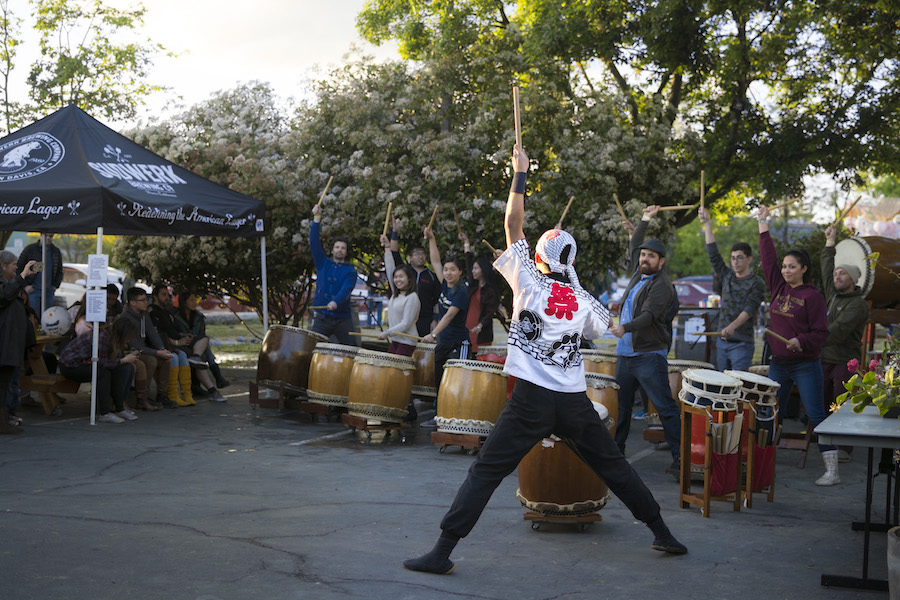
A member of Bakuhatsu Taiko Dan leads a hands-on drumming session at the Davis Cherry Blossom Festival. (DIANA LI)

Academy Day prompts discussion between researchers and community

KRISTA HAAPANEN / COURTESY

UC Davis Environmental Health Science Center hosts collaboration event to examine water safety, toxicity in Central Valley

The first ever UC Davis Environmental Health Science (EHS) Academy Day on March 21 brought together multi-disciplinary researchers and community organizations to better address and discuss concerns of environmental health impacts, specifically those centered around water safety and contamination issues in the Central Valley.

In California, about 20 percent of all groundwater is contaminated, impacting safe drinking water, as well as water for agriculture and recreational purposes. Contamination can come from pesticides, toxic metals, chemicals in personal care products or a change in climate.

There are a variety of human health issues prevalent in the Central Valley including infant death syndrome, blue baby syndrome, a syndrome associated with nitrates from drinking water decreasing the body’s capacity to carry oxygen, developmental cancer and immunological problems. However, they have not been scientifically proven to correlate with exposure to environmental risks.

“People don’t know how to decide if their water is safe to drink, and the lack of information can cause fear and concern that feeds the rumor mill on health impacts,” said Ryan Jensen, a community water solutions manager at the Community Water Center (CWC).

Attendants of the event included researchers with pilot projects at the center to community stakeholders and outreach organizations such as CWC and the Environmental Justice Coalition for Water.

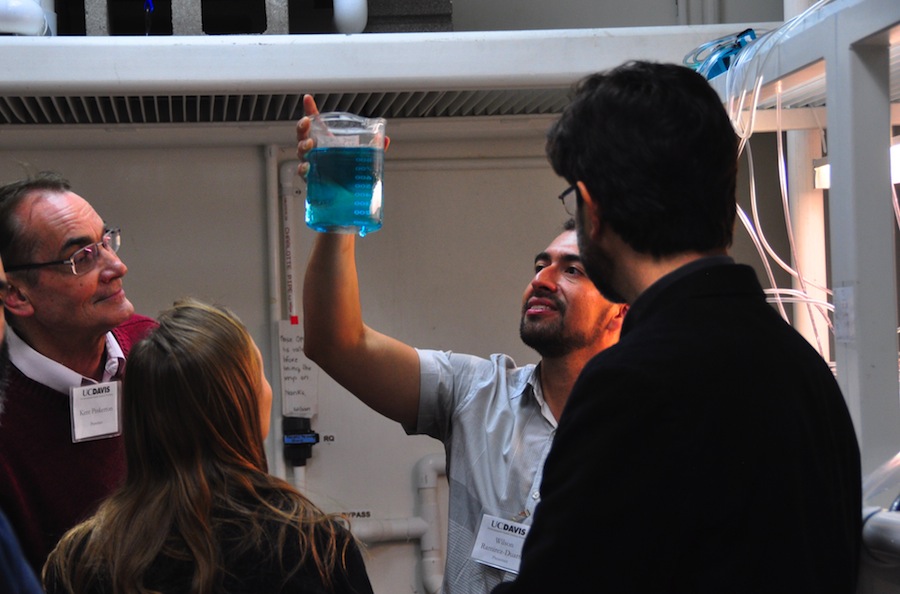
The goal of EHS Academy Day was to bring together researchers in the field of environmental health and community outreach members to create an open dialogue about concerns specific to Sacramento and the San Joaquin Valley. In addition, all members were invited to a field trip to Vet Med Sciences 3B to see the fish facility that supplies models for research about impacts of water contamination on health.

“The questions we want to pose include: how can researchers engage with communities and make it culturally relevant, what’s the public health impact of certain chemicals that cause latent health effects and how do scientists go about proving or associating certain chemicals with human health impacts,” said Jonathan London, an associate professor of human ecology and community and regional development at UC Davis.

Community members were able to voice their concerns about the lack of access to safe drinking water for rural, farming and underserved populations.

Researchers at the Environmental Health Science Center (EHSC) presented the history and importance of using fish model systems to study environmental health.

Studying adverse effects of contaminants in aquatic environments and fish models in the Sacramento River and San Francisco Estuary can be applied to humans as well because of our exposure to the same water.

After an experiment observing the embryos of fish placed in specific sites along the San Francisco Estuary, concerning findings suggested something in the water is inhibiting proper growth and development of the fish. Genetic and hormonal factors were affected, as some fish had a lack of body development in embryos. In one case, immature eggs were found in testes of male fish.

Academy Day presented the science behind pilot projects as well as generated questions for an environmental health scientist. The aim was to get individuals thinking about how scientists may engage in community related issues and how community issues can generate questions about science and policy.

Environmental health is associated with public health, just more broadly defined. It is associated with how the environment influences human health and disease. Humans can be exposed to risk factors in their home, community and workplaces. Examples include air pollution, chemicals from pesticides and inadequate water and poor sanitation.

“Our mission is to promote and protect the wellbeing of all species and their environments,” said Swee Teh, the director of the Aquatic Health Program and an adjunct professor in the UC Davis Department of Anatomy, Physiology and Cell Biology.

Teh highlighted important ongoing projects including researching natural toxic algal blooms in the water as well as the impact of plastic debris infiltration of aquatic habits globally.

“The first toxic algae sighting was in 1999, and has become increasing in size and frequency in Delta and Bay region over the years,” Teh said.

These sites can shift due to water level and climate, especially cycles in drought and rain. Factors that contribute to toxic algae include water level and temperature. The study of plastic debris infiltration on aquatic habitats globally is significant because various plastics are ingested by hundreds of species.

“Large plastics cause strangulation of aquatic organisms,” Teh said. “Micro-plastics, plastic chemicals, are toxic in aquatic life and can affect development and behavior.”

The ingestion of large plastics can cause a bird or fish to think it is full. Since plastic doesn’t degrade easily and stays in the stomach, the animal dies of starvation.

Academy Day opened the doors for communication between researchers and community outreach groups. In addition, the researchers were able to hear the needs and concerns within the environmental health community.

“Notice that many questions generated from different groups can be applied to short term and long term time scale,” London said. “For example, the same issue such as pesticides association with human health may be immediate for scientists but long term for policy.”

Groups such as the CWC perform community outreach, such as community meetings, encouraging people to participate in policy in Sacramento, and bringing people to communities impacted from these factors, specifically those lacking safe and affordable drinking water.

“We provide state-wide advocacy to insure that everyone has basic access to safe water because often decision makers are not responsible to the needs of communities like farmers and low income families,” Jensen said.

Written by Shivani Kamal — science@theaggie.org

“Bamboo”zled by pandas’ colors no more

HANNAH LEE / AGGIE

UC Davis, CSU Long Beach scientists discover why pandas are black and white

Pandas, while charismatic and fascinating, have tantalized humankind with one age-old question: why are they black and white? A new study conducted by scientists at UC Davis and CSU Long Beach has presented us with the answer to this enigma.

“We started by breaking down a general mammalian carnivore body into 13 regions and a general face into 12 regions,” said Theodore Stankowich, co-author of the study and an assistant professor at CSU Long Beach. “We then gathered about 2,500 photos of animals covering 195 species of mammalian carnivores, and gave each body region a color score in every picture. We compared these colors to the environmental factors, like snowfall, temperature, habitat type that each species experienced, as well as the type of social system they live in.”

According to the researchers, examining each region of the panda’s body independently was a major asset in the success of this study. Using this approach, researchers could assign different functions to different regions of the panda body by comparing them to those of related species.  

“If one tries to find similar species to the great panda, there are virtually none,” said Tim Caro, the lead author of the paper and a professor in the UC Davis Department of Wildlife, Fish and Conservation Biology. “But if one breaks up the body into regions — say white backs, black legs — there are many carnivores with similar coloration in those areas. Now one can ask what biological factors are associated with darks legs and white backs across carnivores.”  

The scientists found that the panda’s face, stomach, neck and hind were white so the the panda could camouflage in the snow. The arms and legs were black so that it could hide from predators in the shade.

This combination of black and white coloration is due to an interesting handicap of the great panda. Because the great panda consumes a very low-quality diet of bamboo, it cannot hibernate and must remain active all year. To get a sufficient amount of bamboo, it lives in both shady and snowy habitats throughout the year and therefore requires the dual coat coloration to hide from predators in both environments.

“Their body coloration is really a compromise between those two habitats to be camouflaged from potential predators during the entire year,” Stankowich said.

That still leaves the question of the panda’s endearing black eye patches and dark ears. The scientists determined that these regions of the panda’s head signified the function of communication. The dark eye patches help pandas recognize one another or signal aggression towards competitors, while the dark ears serve as a warning for predators.

“Now when someone wonders ‘why does a panda look like that?’ they actually have an answer,” said Zoe Rossman, another co-author of the paper. “It’s an easy way to introduce or expand on knowledge of evolution and animal behavior from kids to adults, and the more people know about these topics, the more people will hopefully care about protecting animals and the environment.”
Written by: Harnoor Gill — science@theaggie.org