58.7 F
Davis

Davis, California

Sunday, December 21, 2025
Home Blog Page 637

UC Davis students launch new social media app

MARBLE / COURTESY

“Marble” aims to create a new way for UC Davis students to connect

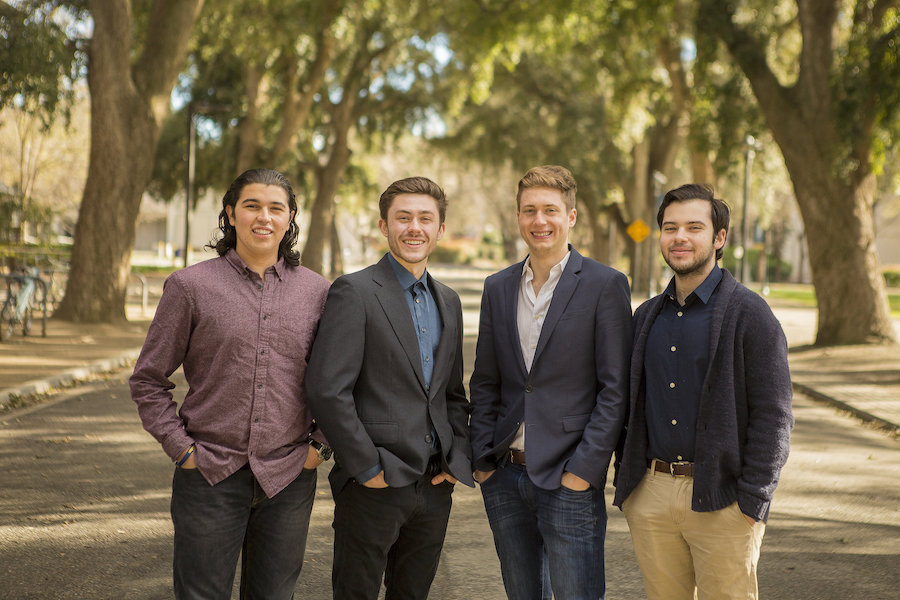
For a group of six UC Davis students, two years of hard work and dedication recently came to fruition as their social media app, “Marble,” hit the app store on Thursday, March 30.

Marble, which is currently available on iOS for students with UC Davis email accounts, started as an idea of UC Davis student Will Finch, a fifth-year managerial economics major, who set out to create an app that would make finding and connecting to groups and events easier and more efficient. Finch found that current social media platforms still lacked some vital components.

“I was inspired to make this app when I realized that there wasn’t a good way to share large amounts of photos and video on a mobile device in a format that was both enjoyable to look at and told a story,” Finch said in an email interview.

After showing some simple mockups of the app to friends and students around campus, Finch realized that Marble would be perfectly suited for Davis students.

“I decided to make the app UC Davis exclusive and cater to student groups since it was a niche I thought the app would be well suited for and other people weren’t catering to,” Finch said.

Ted Mumford, a fifth-year community and regional development major and co-founder of Marble, was intrigued by the idea of the app as soon as Finch showed him the basic concepts and page layouts. Like Finch, Mumford realized that it could provide a much-needed service to UC Davis students in particular, as the immense size of both UC Davis and its student population often led to on campus clubs being less accessible.

“As a Davis student (especially as a freshman), it was unfortunately very common to hear students groaning about Davis being boring and nothing going on,” Mumford said via email. “As you probably experienced just as I did, the longer you’re at UCD and the more people you meet, the more events and groups doing cool stuff you discover. Then, you walk outside the CoHo and you see 15 clubs all looking for new members or trying to tell people about their upcoming performance. We saw a problem we thought we could fix: groups need more members and event attendees, and students want to know what’s going on around campus and how to get involved.”

Along with a friend who helped develop the app and three friends who helped with marketing, Finch and Mumford set out to make their idea a reality. Described by Finch as a hybrid between Instagram and Snapchat, the main goal of Marble is to create a platform through which people can locate and discover groups and events that might appeal to them. Its unique approach to covering social groups and events make it potentially appealing to numerous students who feel frustrated by other social media platforms. Noah Diamant, a second-year political science major and Marble beta tester, can attest to the convenience and accessibility Marble provides.

“When I was a freshman I spent hours searching on Facebook for the cross country club,” Diamant said via email. “I knew I wanted to be on a cross country team but I didn’t know anyone on the team or their exact name on on Facebook. On Marble all someone has to do is go to the sports category and all the sports clubs will be there for you to view the profiles of […] The ease of access is astonishing and exactly what incoming freshman, as well as current students looking to get more involved, need.”

Marble incorporates a mosaic design which allows group members, event organizers and attendees to post pictures, videos and text to their group’s mosaic in order to show what their group did that day. The photos and videos posted to mosaics disappear after 24 hours in order to encourage a constant stream of content and ensure that students can see the most up to date happenings of specific groups. The mosaic design also serves to expand the scope of what students can see on the app.

“The main advantage for students is the scalability of the mosaic or in other words how many groups they can follow and view posts from,” Finch said. “UC Davis is a huge school with many groups. The mosaic allows a student to view hundreds of photos and videos quickly without swiping or tapping for long periods of time.”

Another main function of the app is to help groups gain exposure. This is achieved through a discovery screen which offers three additional platforms to the user. The “suggested groups” tab shows specifically tailored groups to students based on elements of their personal profile information such as major and year. The “categories” tab allows students to sift through different types of college groups such as academic, cultural and Greek, and the promotion tab allows student organizations to have their mosaics prominently featured on users’ feeds on specific days.

The Marble team is constantly looking toward the future of Marble’s long term usability and scope, and hope that the app can become an integral part of UC Davis social and recreational life.

“We’re hoping Marble will become a virtual campus hub and an indispensable tool for every UC Davis student,” Mumford said.

While it remains too early to project Marble’s success in the distant future, many have high hopes.  

“I honestly think Marble will catch on,” Diamant said. “It is essentially free advertising for clubs and a much easier platform for finding clubs compared to anything students had access to in the past. The app also feels and looks great, making it fun to use and see what other people and groups are doing even if you aren’t necessarily searching for a new group to join at the moment.”

Finch and Mumford hope to start spreading the app to other college campuses as well.

“Eventually, I would like to open it to the public and use it as a platform for viewing large amounts of ephemeral photos and photos from events, people and groups around the world,” Finch said. “So for example, you could look up a sporting event or concert and view all the photos and videos taken at the event.”

Mumford believes that Marble has the potential to make it big in the social media world.

“We’re hoping to hit the jackpot with Marble,” Mumford said. “We really believe we’ve got something special. We’re trying to take it slow and steady at the beginning to make sure Marble can grow sustainably without any critical flaws, but we hope to eventually knock Snapchat off their throne. This is a long way out, but it could happen.”


Written by: Eddy Zhu — campus@theaggie.org
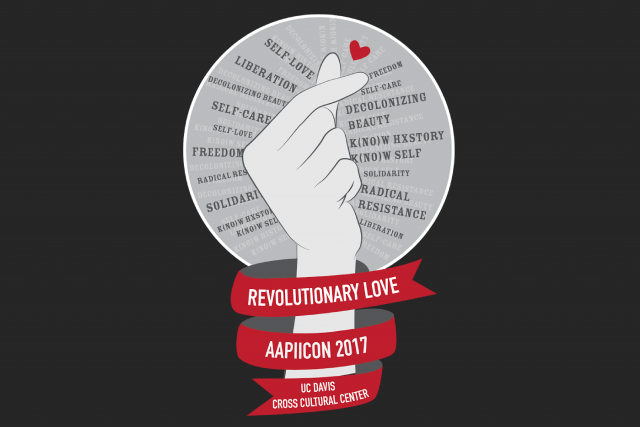
Asian American and Pacific Islander Issues Conference to be held on April 30

AAPII / COURTESY

Students to discuss issues, activism for Asian Pacific Islander community

The Cross Cultural Center (CCC) will be hosting the Asian American and Pacific Islander Issues Conference (AAPIICON) on April 30 from 9 a.m. to 6 p.m. The conference began in 2013 as the Asian Pacific Islander Issues Conference and was held annually except in 2016.

Sabrina Lee, a third-year film studies and community and regional development double major, chose to bring back the conference this year. Lee felt there was a divide between the South Asian, Middle Eastern and Pacific Islander communities and reached out to people across campus who were interested in similar work to help organize the conference.

“I created a committee in Fall Quarter, and they were the driving force for the theme, how things were going to work and the different issues they wanted to talk about,” Lee said.

Lee works as the Asian Pacific Islander Community Coordinator at the CCC. She used the budget from her position to fund the conference and also asked senior and student staff for extra funds. The conference, which will address the different issues faced by the Asian American Pacific Islander (AAPI) community, will include a panel, six workshops, short educational talks and a keynote speaker. Some workshop topics include media, beauty standards, domestic violence and abuse, mental health, student community activism and settler colonialism. The keynote speaker will be Colin Masashi Ehara, a word artist and community organizer from the Bay Area. Ehara is part Japanese, white and indigenous. Ehara was chosen to address working together in solidarity and the resistance between the communities of people of color along with the conference theme of revolutionary love.  

“The issues that created the current political climate have been alive and well for a long period of time,” Lee said. “Because of the way things are right now, it caused me to change a lot of ways I was planning this conference.”

Lee felt it was important to include the Middle Eastern and South Asian communities in order to create support and solidarity within the Asian and Pacific Islander (API) community. She hopes to start conversations to critically discuss the status and future of the AAPI community.

Jinni Pradhan, a Middle Eastern and South Asian Student Affairs officer, attended UC Davis as a graduate student and attended and hosted a workshop at a previous conference. Pradhan now serves to support and connect Middle Eastern and South Asian students to resources, ensuring that students feel supported through an advisory capacity as well as programming. She is also on the conference committee and assists Lee and her colleagues with logistics, issues addressed at the conference and general programming.

“We need to be talking about ways in which specifically the API community can be more engaged, to see ourselves represented and have issues addressed,” Pradhan said. “Asian Americans are portrayed as a model minority […] but that masks a lot of the actual issues and hurdles that people in our community have to overcome. Not everyone has a lot of privilege or has a lot of access, and I think discussing that and actually talking about the complexity of the API community is really important.”

Pradhan believes it is important to bring the awareness of issues to both people who are and are not a part of the API community. She feels that while students are creating spaces to address API issues and make students feel welcome, there are students who do not feel respected due to diverse backgrounds and the complexity of issues.  

Jade Wolansky, a fourth-year political science and international relations double major, got involved by going to the API leadership retreat in January and becoming interested in API activism. Wolansky felt that a lot of API community programming was not inclusive to adoptees and wanted to give a presence to Asian American adoptees on the UC Davis campus.

“It’s important for people of color to come together in solidarity, and we should be ourselves within the hierarchy that white people have created for us,” Wolansky said.

“History repeats itself and we’re trying to remind people that we’re not so different.”

Heather Nguyen, a fourth-year psychobiology major, learned about the conference through Facebook. Nguyen is on a committee about mental health in the API community and will be holding a workshop to teach about the ways different people express mental health experiences through art. Nguyen feels that not all communities are equally accepted, a belief that stems from her personal experiences. She hopes that people will gain a better understanding of diverse experiences and engage in dialogue that is more healing than hurtful.

“Many communities that fall under API do not feel like one unit,” Nguyen said. “It is important to have an AAPIICON to emphasize similarities in our narratives but also differences that make us unique and challenge the idea that API means everyone is homogenous, because we have very diverse experiences in history.”


Written by: Jayashri Padmanabhan — campus@theaggie.org


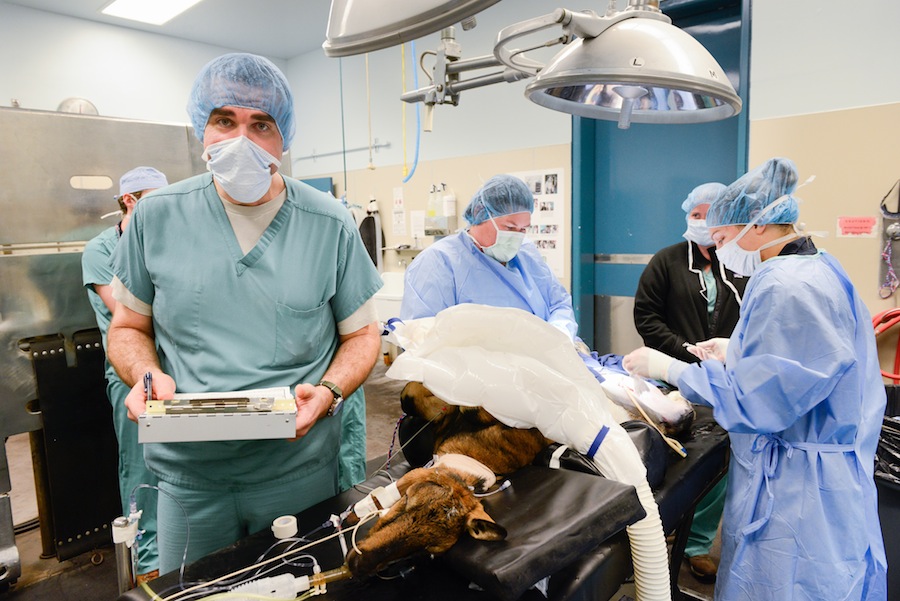
UC Davis veterinary science ranks first in the world

DON PREISLER / UC DAVIS SCHOOL OF VETERINARY MEDICINE

QS World University Rankings lists university as second in agriculture and forestry

QS World University Rankings ranked UC Davis’ School of Veterinary Medicine first for the second year in a row on March 7. QS rankings are based on reputational surveys and research citations. This year, QS evaluated 4,438 universities, then qualified 3,098 and ranked 1,117 institutions. For the fifth consecutive year UC Davis has also ranked second as a top university in agriculture and forestry.

UC Davis has held the top spot in QS World University Rankings since the inclusion of the veterinary sciences field in 2015.

“The energy, passion, knowledge and skills that the UC Davis veterinary medicine community brings to their jobs every day is the secret to our success,” said Michael Lairmore, the dean of the UC Davis School of Veterinary Medicine, via a press release. “Our future, supported in part by generous philanthropic partners, will be shaped by our combined efforts as we push the boundaries of research discoveries, provide innovative educational opportunities for our students, bring advanced clinical services to our animal patients, and serve our communities by advancing the health of animals, people and the environment.”

The veterinary program, which is also ranked first by U.S. News and World Report, houses a prolific research program. Last year alone, the research program totaled nearly $76 million in research funds.

We have ranked first mostly because of the success of our faculty in getting research funding, more than most of our competitors,” said Alan Conley, the chairperson of the population, health and reproduction department within the UC Davis School of Veterinary Medicine, via email.

With the enormous research funding UC Davis receives, the school annually treats more than 50,000 animal patients in 34 specialty clinical services. UC Davis also serves as a strong leader in veterinary medical education with a curriculum built on sound educational theory designed and delivered by prominent faculty members annually.

Samantha Fousse, a Ph.D./DVM student in the Veterinary Scientist Training Program (VSTP) in the Integrative Genetics and Genomics graduate group, and a recipient of the 2017 AVMA/AVMF 2nd Opportunity Summer Research Scholarship, believes UC Davis’ veterinary medicine education provides both optimal research and a well-rounded curriculum.

I believe that UC Davis veterinary medicine consistently​ ranks first because it is a program focused on conducting research to better the lives of animals and the people that interact with them,” Fousse said via email. “Additionally the program provides hands on training, community outreach opportunities, and a well-rounded curriculum that is consistently seeks feedback from its students.”

As a student in VTSP, Fousse believes that the veterinary medicine program helped to identify and support her research goals.

“The VSTP program helped me to succeed because it provided multiple networking opportunities, research rotations, and workshops that helped me identify a research project that I am interested in pursuing further,” Fousse said. “It is a program full of supportive mentors that want the best for their students.”

Conley emphasized how UC Davis fully supports the research and teaching of the high ranking veterinary sciences program.

“Faculty are recruited to an environment that attracts the best and the brightest,” Conley said. “No one can stay on top without a teaching program that ranks with the best, and that attracts the best and brightest students. Ours does. Our administration supports these efforts, both research and teaching and we would not continue to be successful without that support.”

Additionally, QS World University Rankings ranked UC Davis highly in other subjects: 13th in environmental sciences, 27th in biological sciences, 28th in anatomy and physiology, 29th in earth and marine sciences and 47th in development studies.

“Whether or not we are in fact the very best vet school in the world, the faculty in the School together with a raft of fantastic faculty across this campus, the DVM and graduate students, our residents and the administration that supports the entire enterprise, make it a place to want to be,” Conley said via email.
Written by: Yvonne Leong — campus@theaggie.org

Three documentaries to break your TV rut

JAY GELVEZON / AGGIE

Titles that entertain and educate

After binge-watching Parks and Recreation for the third time on Netflix, I decided it was time for me to move onto watching some new content. I delved into the documentary section of Netflix and was pleasantly surprised. These are not the stuffy documentaries of your tortured middle-school science class days. Netflix offers an array of impressive titles with a dynamic range of topics perfect to overcome any entertainment rut. Here are my top three picks.


13th:

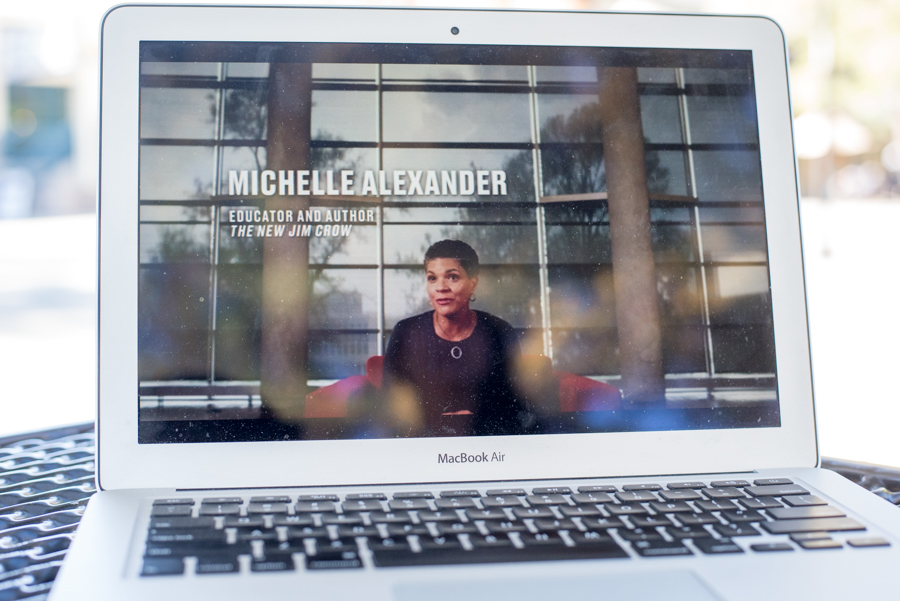
Named for the 13th Amendment, which abolished slavery except as punishment for a crime, this documentary explores how this amendment utilizes the U.S. prison system to function as a modern slavery. The film presents shocking statistics, telling that although the United States makes up 5 percent of the world’s population, 25 percent of the global prison population is incarcerated in the United States. It sheds light on a lot of hidden history and analyzes systematic issues that have plagued the United States since the earliest days of the country’s existence. This history is presented in conjunction with old film and photography as well as in-depth interviews with some of the civil rights movement’s most prominent figures, including Angela Davis.

I enjoyed the documentary’s thought-provoking dialogue, as it discusses a subject that continues to develop and persist in our society. This is definitely a great documentary to watch with others interested in unpacking civil injustices, or even just those who are totally clueless and are looking to learn more. Although it is a heavy subject, director Ava DuVernay presents the information in a way that is both informative and inspiring.


Hip-Hop Evolution:

Definitely more of a light pick that introduces viewers to some amazing music, Hip-Hop Evolution is a four-part documentary series that does exactly what the title suggests. The film travels back in time with each part focusing on a different era of hip-hop, from the very beginning to the present day.

MC and travel journalist Shad Kabango interviews some of hip-hop’s greats to explore its climb in the music industry. The documentary features people from the hip-hop community and showcases their amazing, funny and heartwarming stories. The soundtrack is incredible, and the documentary offers a perfect balance between history, music and personal insight.

It is a great pick for those who are newbies to the documentary world as the storyline is easily followed and deeply engaging throughout.


Twinsters:

It’s a story we’ve all probably read on Daily Mail but never quite believed: two identical twins separated at birth, who grew up in different countries, discover one another by chance online. This is the basic storyline for Twinsters as it follows Anaïs and Samantha, who begin chatting online after Anaïs sees a YouTube video featuring Samantha.The film is sweet and demonstrates the power of the online world. The style of the documentary is very relaxed and does not follow the traditional interview style of most in this genre. This gives it an almost “home-video” feel, which might have been director Samantha Futerman’s intention, as the story is especially personal.

The documentary also uncovers larger themes of the adoption process, transnational identity and the implications this presents. Overall, the story is touching and sometimes humorous as viewers get a glimpse into two women’s intertwined lives and their developing relationship as they discover more about one another.
Written by: Abigail Wang — arts@theaggie.org

The road to post-grad success

GENESIA TING / AGGIE

The Class of 2017’s post-degree plans

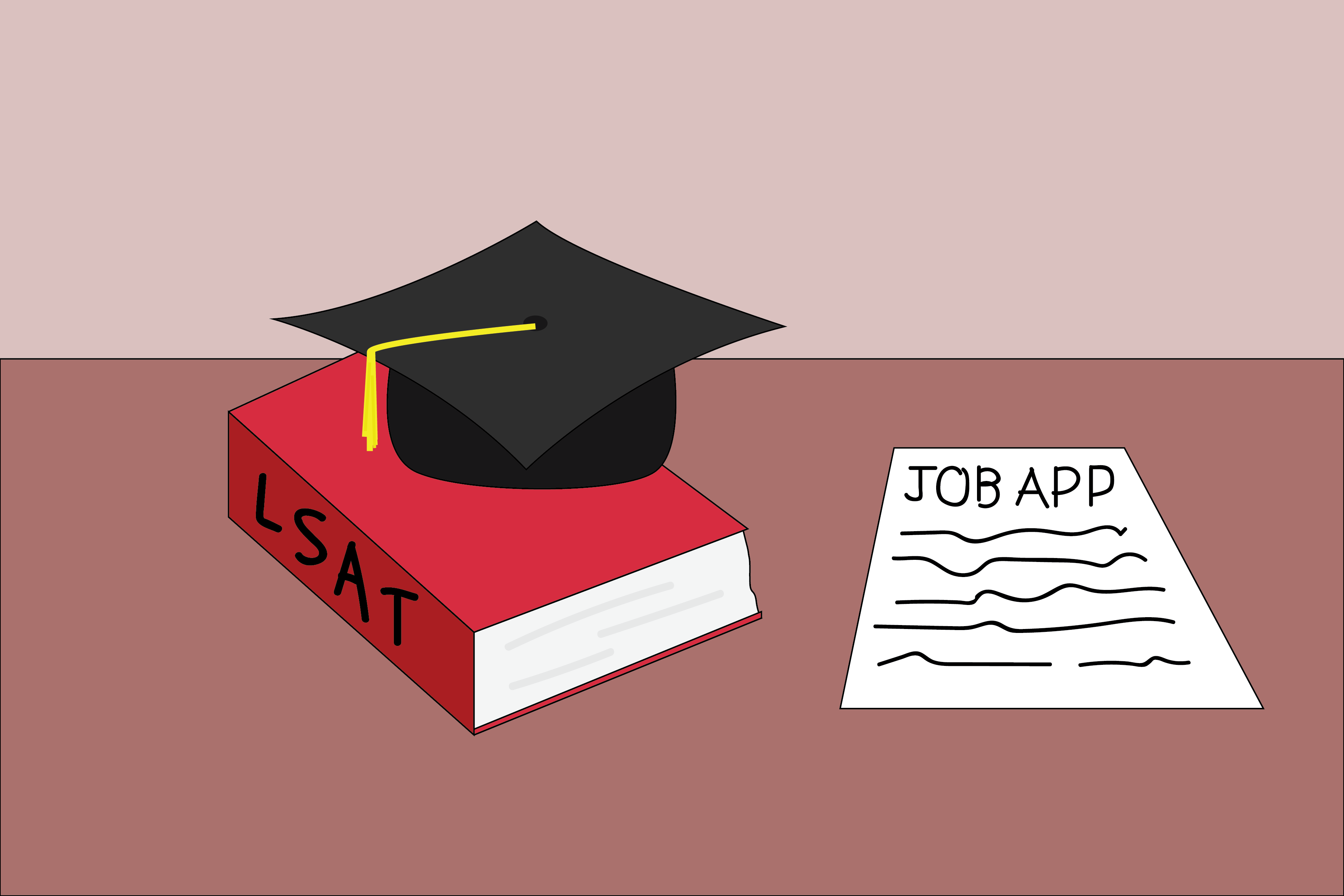
The excitement of post-graduation careers and schooling comes with many challenges for the UC Davis graduating class of 2017. With less than three months left in the school year, seniors’ plans for the future are shaping up through a whirlwind of interviews, applications and last stretches of required units.

After applying to nine different graduate school programs and interviewing with four of them, Amanda Robinson, a fourth-year microbiology major, ultimately chose to study structural biology and immunology at the Biological Sciences and Chemistry Research Center at Scripps Research Institute, where she plans on pursuing a Ph.D. degree.

“[Applying to graduate school] was pretty exhausting, but it was a great experience,” Robinson said. “You got to meet people who were currently in the program, people who had been in the program and the potential faculty that you would want to work for when you were there.”

Robinson represents one of the 63 percent of UC Davis seniors who choose to go on to graduate school or start employment immediately after getting their diploma. Like many of these seniors, Robinson went through an application process that included giving up many weekends to interview at graduate schools as far as Dartmouth College in Hanover, New Hampshire.

“It was a very intense interview process,” Robinson said. “With time zones and flying and traveling and then being up at 7 a.m. on the West Coast — which is 4 a.m. here — and then coming back and having a midterm that Tuesday, it was a very intense quarter.”

According to Robinson, a typical weekend of interviewing began with an early flight on Thursday and an introductory dinner that evening. Fridays would generally consist of a full day of interviews, and Saturdays would end the trip with presentations on research as well as fun activities to explore the town surrounding the school, such as hikes, brewery tours and kayaking.

Unlike Robinson, many other seniors plan on diving right into the workforce after graduation and have experienced the challenging application process while job hunting.

“I applied to lots of jobs […] where you go online on a job board and mass apply,” said Jennifer Chao, a fourth-year biochemical engineering major. “For me, that wasn’t fruitful at all. I think that [it] was not necessarily that my resume [and] portfolio wasn’t good enough, but it was that the connection wasn’t personal enough.”

Like Robinson, Chao went through a series of interviews during the hiring process. After a 30-minute on campus interview, Chao was invited to a company’s plant where she spent a full day touring, testing, interviewing and interacting with her future co-workers.

“Generally, if you’re at the plant for a full day, you gotta be on it for the full day,” Chao said. “Even if you go for lunch, that’s a full interview. It’s super important that when you go […] on a plant tour, you […] let yourself be natural and ask tons of questions, because otherwise how are they supposed to know you’re interested?”

Though the mass applications did not advance her career, through networking and connections, Chao secured a position at a large manufacturing company.

“For a full-time position, [large corporations] usually hire people they’ve had as interns,” Chao said. “I have a pretty special case. I networked a lot. Since freshman year, I would go to [on-campus career] events and talk to [the company that hired me], and it was always the same people.”

Statistics from the UC Davis Internship and Career Center (ICC) confirm that over half of the graduates from 2012 through 2014 reported that they secured jobs through networking or previous employment. According to ICC Director Marie Kirk-Holland, the biggest obstacle of finding jobs is prioritizing the job search.

“This is the time of year that people are balancing grades [and] saying goodbye to some of their friends,” Kirk-Holland said. “I also think that it’s really daunting if you haven’t been through a job search process before, and most people haven’t. Most UC Davis students go straight from high school into college and they’ve never had to look for a career position so […] the uncertainty makes it hard to prioritize. Students know how to study, but they don’t know how to do it for a career job.”

The ICC helps students fill the gaps in their experience through an array of programs including job and resume workshops, career advising, company information sessions and quarterly career fairs that bring to campus 120 to 175 companies that specifically seek UC Davis students.

“People can go to a career fair,” Kirk-Holland said. “They can meet a company rep [and] learn about a company and the positions they have available. And we’ve just set up a system where many companies interview immediately following the career fair in the ARC ballroom. From there, students can go to a second interview.”

However, according to Chao, jobs are not mainly secured through interviews.

“What I hear from a lot of recruiters is that by the time they accept your resume and give you an interview, they [already] know you’re qualified,” Chao said. “At that point they just want to know if your personality would fit in with the company culture. “

Robinson reported a similar case for the graduate school application process.

“Once you get the interview, it was very much more they were trying to convince you to come to their program, it wasn’t that you had to prove yourself anymore,” Robinson said. “You put in all this work into undergrad. Having the validation that someone thinks you can do it is awesome.”

Despite the confusion and challenges of the road to life after graduation, the lessons gained are worth the struggle for UC Davis seniors, especially fourth-year design major Tara Parker-Essig.

“I have much more of a can-do attitude now,” Parker-Essig said. “I came up with this phrase to motivate myself whenever I’m anxious. It’s ‘do it, despite’ — despite whatever anxiety you have, despite thinking that you don’t have the skills, despite somebody telling you that you don’t have the skills. Just try and do whatever it is that you’re interested in despite all obstacles and you’ll end up learning a lot.”

Written by: Kristen Leung & Allyson Tsuji — features@theaggie.org

A quarter of concerts

COMMSCOPE [CC BY 2.0] / FLICKR
From throwback music to one of rap’s biggest names

It’s Spring Quarter, meaning it’s finally time to have some fun. The Golden1 Center, conveniently located in Sacramento, is holding plenty of concerts over the next few weeks to choose from. To kick off the quarter, here are a few concerts that might provide recovery from those Winter Quarter blues.


Chance the Rapper Spring Tour

If you missed his stop at UC Davis this past fall, fret no more. Chance the Rapper will be holding his first-ever arena headlining tour, and one of the stops is at Golden 1 Center on April 27 at 8 p.m. Tickets are on sale now.


The Chainsmokers’ Memories: Do Not Open Tour

The Chainsmokers are embarking on their biggest tour to date, covering 40 cities. Their Sacramento concert will be held on May 4 at 7 p.m., and Kiiara will join them as a special guest for all dates. Tickets are on sale now, starting at around $40, and all tickets purchased online will include a copy of the Chainsmokers’ debut album, which is coming out later this year.


The Total Package Tour: NKOTB with Paula Abdul and Boyz II Men

For all of you who want a little throwback this quarter, this is the concert for you. It will be held on June 3, which will be a nice little treat before the final stretch of Spring Quarter. Tickets are on sale now for $96.95.


Enrique Iglesias and Pitbull with CNCO

Grab your dancing shoes and make your way over on June 8 at 7:30 p.m. for the Sacramento date of this 16-city tour. A duo like Enrique Iglesias and Mr. Worldwide will surely deliver what promises to be a fun and energetic show. Tickets are on sale now.


Visit the Golden1 Center website for a full calendar of events.


Written by: CaraJoy Kleinrock — arts@theaggie.org

Staying true to a doctor’s oath

GENESIA TING / AGGIE

Alternative medicine, lifestyle changes supplement biomedicine, maintain health

Some doctors view reaching a dead end in treatment options as an opportunity to look into alternative forms of medicine and therapy.

The Integrative Medicine program, founded in 2010 under the Institute for Population Health Improvement, focuses on educating the UC Davis community and larger global audience on the value of everyday lifestyle changes in preventing disease and maintaining health.

The focus has been education, [and] we’ve been very successful with that,” said Dr. Rosane Oliveira, the director of Integrative Medicine. “We started a blog and we post articles every week — we had more than three million people visit the website and read the articles and in the past two years.”

Although the program doesn’t directly see and treat patients, it still teaches readers how to adopt a healthy lifestyle. Every year they run the ‘’21 Day Food Day Challenge’’ and coach people online to adopt a completely plant-based diet for three weeks. Last year, they had over 25,000 participants.

Oliveira’s background in nutritional genomics — the study of how diet can affect gene expression — influenced her proposition to create this program at UC Davis.

“The food we eat changes gene expression and may cause diseases or prevent diseases such as obesity, type-two diabetes, cancer or cardiovascular disease,” Oliveira said.

Integrative medicine emphasizes the role of daily choices in one’s health, reminding patients that they have agency over our bodies.

“The focus is on more definable lifestyle factors that are under control by each individual, which I think is very liberating for most patients,” Oliveira said. “If you do your best, your chances of preventing one of those disease are very, very high.”

Health consciousness is for everyone; the earlier we begin to adopt these healthy habits, the better assimilated they will become into our daily lives.

“Making better lifestyle choices every single day starts when we are very young because […] most of the things we do on a daily basis are based on habit,” Oliveira said. “Making sure we adopt healthier habits when we are young is going to pay off when we are older.”

Having formed just two quarters ago, the Naturopathic Exploration Club (NEC) works to raise awareness about alternative medicine disciplines, such as naturopathic medicine and acupuncture.

“I have an international background coming from an eastern country, so we have a lot of alternative treatment in my culture’s background,” said Sunny Zhang, a third-year neurobiology, physiology and behavior major and NEC president. “When I came to America I noticed the difference and I noticed this part missing in our healthcare system so I thought it we needed to raise awareness, letting future doctors know about the existence of these [alternative] treatments.”

To offer the best treatment they can, doctors need to be aware of all possible options available.

“It’s even more important for students who are planning to go the conventional way for medicine to widen their horizons and know [about] these unique aspects of medicine to keep an open mind,” Zhang said.

The club has brought in professionals to speak about their paths in order to break stereotypes and dispel misconceptions.

“We want to keep it really professional and educational instead of just promoting something,” Zhang said. “I know right now there are so many misunderstanding of alternative medical treatments, especially in the U.S. I think people need to just talk and be more informed.”

Alternative medicine faces a lot of skepticism in western society, where the dominant discourse revolves around biomedicine, shunning most everything that is not “scientifically proven.”

“I encountered people with very skeptical views or very much just disliked this entire idea of naturopathic medicine,” Zhang said. “They don’t think it’s medicine — they think it’s pseudoscience — and I think that’s exactly why we want to bring actual professional doctors with licenses and a medical school education. I can’t say whether or not it’s pseudoscience, but I would like to know more about it. That’s our goal.”

Other forms of treatment, such as art therapy as a form of psychotherapy, can promote wellness for those who seek it. This option is employed by therapists who use the art process as a means for communication and self-expression.

“Its essentially beneficial for people that don’t typically communicate verbally or are looking for another way to express themselves,” said Katie Lorain, an art therapist at UC Davis’ Children’s Hospital. “[It allows them] to have a therapeutic relationship that is not the typical one.”

Lorain was inspired to pursue this unique path when witnessing the power that art has in unifying children with disabilities by providing them with a language that allowed them to interact in a different way.

“My first internship was at the VA [Veteran’s Association] in the Bronx working in a nursing home,” Lorain said. “I was able to do a lot of video therapy, documentaries and autobiographical documentaries where some of our patients were able to tell war stories [or] just document their lives for their children and grandchildren. They were typically nearing end of life, so it was a way of [creating] something permanent for them and their families [to] hold on to.”

Lorain was able to work at the California Medical Facility prison in Vacaville to provide psychiatric patients with this necessary outlet.

“We had incarcerated males that were acutely psychotic or needed inpatient psychiatric help, so they would come to our prison from all over California for stabilization and art therapy, music therapy, or recreational therapy,” Lorain said. “We helped them find different coping tactics to use.”

In the viewpoints of people such as Oliveira and Lorain, doctors and patients would limit their resources by disregarding alternative medicine such as art therapy, naturopathic medicine or other forms of integrative medicine.

“It’s never too early to start learning how to take care of yourself,” Oliveira said. “Sometimes change starting with us will touch the lives of those we love.”
Written by: Sahiti Vemula — features@theaggie.org

New Dining Commons meal plan to allow students unlimited access all day

JAY GELVEZON / AGGIE

Dining Commons to get rid of swipes starting this fall

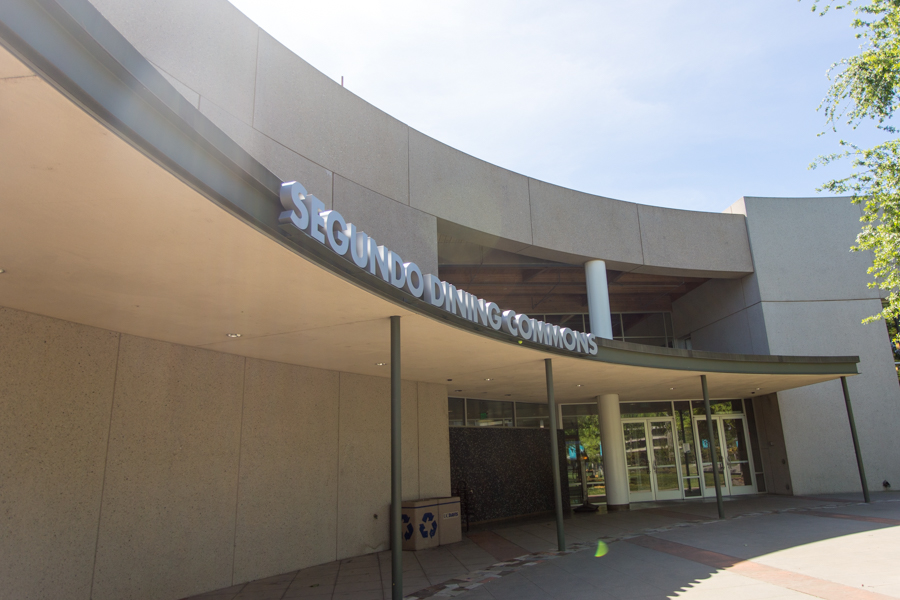
In an effort to make the Dining Commons (DC) more accommodating to students’ busy schedules, UC Davis will introduce a new meal plan option during Fall Quarter of 2017 that will give students unlimited access to the three DC’s all day.

In July, UC Davis will gravitate away from its 40-year management contract with Sodexo and move toward self-operation of the DC’s. Though students will not see much of a change in the management of the DC, there will be significant changes to the meal plan structure.

The new design offers a seven or five-day plan from either Sunday through Thursday or Monday through Friday. Kraig Brady, the director of Hospitality and Dining Services, said new DC hours will make meal plans more flexible for students.

The DCs will each be open Monday through Thursday from 7 a.m. to midnight and Friday from 7 a.m. to 7:30 p.m. Additionally, Segundo and Tercero will have weekend hours from 9:30 a.m. to 7 p.m. on Saturdays and 9:30 a.m. to 8 p.m. on Sundays. Cuarto will be open on Saturday from 12 to 7 p.m. and Sunday from 12 to 8 p.m.

These changes cater to student meal time preferences as they won’t be restricted by established serving periods.

“It basically makes our dining facilities like our students’ kitchen at home,” said Brandon Petitt, the director of Student Development. “It allows them to come in and out, grab something from the ‘refrigerator’ and be able to eat [at] any time without what we would perceive to be regular breakfast, lunch and dinner meal times.”

In the past few years, Petitt said the DC management has been working with consultants and student focus groups to review the plans and provide feedback. Though there are no finalized rates yet, the projected meal plan prices for 2017-2018 residence hall students are similar to the price of the 150 swipes plan, but students will automatically be allotted $200 in Aggie Cash. This gives students a greater value for their money since the plan will have unlimited access to the DC.

“Students wanted more flexibility using their Dining Commons, and they didn’t want to be charged for the amount of times that they went, but rather the amount of days that they used the DC,” Brady said via email.

Rather than living an unhealthy lifestyle by stuffing themselves to get their money’s worth, students can simply grab a quick snack or bigger meal at their convenience without being concerned about their swipe balance. Thus, the plan aims to remove the stress of whether students will have enough swipes to get through the quarter.

“It keeps it more casual so [students] can focus more on their studies versus what their meal balances are,” Petitt said.

Brady said faculty as well as incoming, transfer and returning students will be able to purchase a plan. Instead of swipes, students can use Aggie Cash to admit their family or friends to the DC, buy meals at the convenience stores and purchase items from the food trucks. The plan for students in the residence halls will not roll over into sequential quarters; however, students, staff and facility can purchase meal block plans that will roll over until depleted.

Petitt hopes to show parents of prospective students that their kids will be well fed as they can access the DC as frequently as they wish. During non-typical meal hours, Petitt ensured that there will always be hot meals available, and the weekly traffic will be assessed to determine a routine for providing more food items at certain times. Nevertheless, the DC will always have a rotating salad bar, soups, pizza and a specialty item.

Similar to the current rules, students will be permitted to leave the DC with an ice cream cone, baked good, fruit or a filled student housing water bottle. However, the food to go program will no longer exist at the DC.

“The switch really accommodates the student’s lifestyle and supports their eating patterns,” Brady said. “The new model will allow a student to eat lunch when they want to, or come into the DC to grab just a banana or a quick snack before class.”

Stephanie Low, a second-year biology major, attends the DC every day on a 150-swipe plan and intends to switch over to the new plan next year.

I don’t plan on seeing too many changes,” Low said. “If you find your worth in it, then I guess it [works].”

The 2017-2018 meal plan rates will be reviewed by the UC Regents for approval in May.
Written by: Jeanna Totah — campus@theaggie.org

UC Davis participates in sexual assault awareness month

HANNAH LEE / AGGIE

Events to create dialogue surrounding sexual violence on campus

Throughout April, campus organizations will host events to commemorate Sexual Assault Awareness Month. These events will raise awareness of sexual assault on college campuses, inform students of available resources and get students involved in efforts to make UC Davis a safer campus.

Events planned include the Dear Survivor Photo Project on April 6, a screening of the documentary The Hunting Ground on April 13 and the Take Back the Night event on April 12. These events aim to create a dialogue regarding sexual assault with students on campus.

Sam Alavi, a fourth-year sociology and education major, is the student director of ASUCD’s Sexual Assault, Awareness and Advocacy Committee (SAAAC) and creator of the Dear Survivor Photo Project.

“The campus supports survivors; you’re loved, you’re supported and we believe you,” Alavi said. “It’s a really simple message that a lot of survivors don’t get.”

Over the past few months, Alavi has photographed survivors and allies and overlaid stylized versions of letters written to themselves, friends or other survivors. She plans to post digital versions of these posters online during April and eventually convert them into banners that will hang around campus. On April 6, from 4 to 6 p.m., the Women’s Resources and Research Center (WRRC) will host an event in which students can participate in the project themselves by having their photos taken and writing letters to friends or other survivors.

Lily Karim, a first-year biomedical engineering major and member of the SAAAC, is working to organize a screening of The Hunting Ground with the help of other SAAAC members. The documentary describes the prevalence of rape culture on college campuses across the nation through the stories of survivors. The screening will take place on April 13 at 7:30 p.m. in Sciences Lecture Hall.

“My goal is to raise awareness for sexual assault on campus and the reporting process. It needs to be more transparent so survivors are not silenced,” Karim said.

UC Davis’ Center for Advocacy, Resources, and Education (CARE) is organizing Take Back the Night, which, according to the event’s Facebook page, is “an annual event which aims to raise awareness about sexual assault, support survivors and promote action within the community to end sexual and gender-based violence.” At the Student Community Center on April 12 starting at 7 p.m., students can participate in art projects, listen to spoken word, hear live music and attend a resource fair as a way to support survivors and create a larger community of students informed and committed to ending sexual assault on the UC Davis campus.

CARE Outreach Student Assistant Allyanna Pittman, a fourth-year psychology and economics double major, is working to coordinate the event.

“Our aim is to create a campus culture that is intolerant of sexual assault, while simultaneously empowering survivors,” Pittman said via email.

Resources for students interested in learning more can be found at UC Davis’ Sexual Violence Prevention and Response website, the WRRC and CARE.
Written by: Ally Russell — campus@theaggie.org

Hidden artistic talents of the UC Davis men’s basketball team

JAY GELVEZON / AGGIE FILE

Players rap, film, write poetry and more

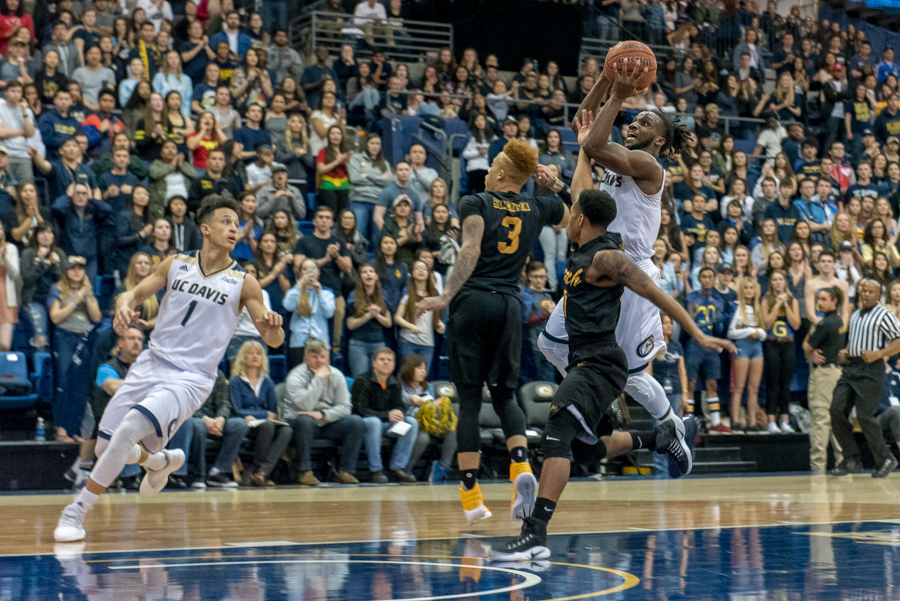
The UC Davis men’s basketball team has some serious skills on the court. However, many may be unaware of the various artistic talents these players also possess. This year’s NCAA Tournament competitors don’t just play ball — they rap, film videos, edit photos, host fashion blogs, crack jokes and write poetry.

“My hidden passion is fashion,” said Garrison Goode, a second-year economics major. “I always grew up loving accessories and putting random pieces of clothing together and making cool outfits.”

The 6’7” forward takes fashion inspiration from several sources, ranging from musicians to people he finds on social media.

“Kanye West is really stylish,” Goode said. “Honestly, anybody in the hip-hop industry inspires me. Especially NBA athletes too. You can just see them walking into the stadium wearing really cool things […] I find a lot of inspiration on Instagram and Tumblr too.”

Goode has put his passion into fruition by collaborating with teammate Georgi Funtarov, a fourth-year communication major, to start an Instagram account featuring photos of art, fashion and nature.

“It is called double.g.lifestyle,” Goode said. “It’s our thing.”

Funtarov, a forward on the team, also enjoys photography and shooting videos in addition to being a member of double.g.lifestyle.

“I love taking photos, making videos and editing them to tell a story,” Funtarov said. “I do everything from filming, editing, audio, color grading, visuals and music.”

Funtarov takes inspiration from family and friends and has found time in his schedule to learn how to use cameras and editing software. He has done projects ranging from recording the basketball team in Costa Rica to shooting a music video for his hip-hop class, and has recently created a blog to showcase his work.

“My mom has been an interior designer for over 20 years, so I have always been about the visuals since I was little, ” Funtarov said. “I learned everything online. I started with iMovie, and little by little I started using professional programs.”

Other members of the team, such as Chima Moneke and Brynton Lemar, also have some artistic passions up their sleeves.

“If you are talking about hidden talents, I can rap and beatbox too,” said Moneke, a third-year communication major. “I write about whatever is on my mind. I wrote about a breakup, being doubted, even about hating basketball at one point.”

The Australian-raised forward is influenced by his brothers as well as popular rap and hip-hop artists.

“I have five older brothers, and two of them were in a rap group back in Australia,” Moneke said. “I took after them because I thought they were dope […] J. Cole is my favorite artist by far. Every game day I listen to him, and every Wednesday on Twitter I post a J. Cole lyric.”

Moneke has posted some of his rap online, including his “So Gone” beat challenge on Twitter. Lemar, a fourth-year communication major, enjoys rapping as well.

“I made a mixtape my freshman year and that is when I started writing lyrics,” said Lemar, a guard on the team. “It’s not like we did this professionally, we just did it for fun. We didn’t do it in the studio or anything.”

Lemar has put out his work online and is working on new material for this upcoming season.

“I have one single where we got a real rapper and everything which is on Soundcloud,” Lemar said. “For the most part I rap to myself and write alone in my room, but I am working on some stuff for this spring, and I ask my friends for their honest opinions.”

Friends, family and authority figures all seem to be huge influencers in the players’ lives. AJ John, a third-year sociology major, takes inspiration from several sources in his poetry.

“One of my teachers in high school inspired me to do more with my writing,” said John, a forward for the Aggies. “I write a lot about my grandfather. One of the things we talked about was this affinity he had for flying […] he believed that when you die, your spirit can do all of the things your body couldn’t do in life, so I wrote a poem about it. “

John believes poetry is a great way to get out emotions and loves to hear other’s poetic works as well.

“I’m not some master poet, but I really do like poetry,” John said. “I have been to a few open mic nights here at Davis. It is cool to experience other people’s stuff and put yourself out there.”
Written by: Myah Daniels — arts@theaggie.org

Agricultural advocacy as told by an urban farmgirl

DIANA LI / AGGIE

Agriculture demands more attention for its significant impact on daily life
With the rise of a rather health-conscious generation comes debate and scandal around GMOs, factory farms, food-borne illnesses, companies like Monsanto and the institutions and policies that produce and regulate agriculture. But excepting extreme cases, agriculture tends not to be a topic of mass public opinion, though its effects can be quite newsworthy.

Unfortunately, stories about recalled chicken and sick individuals tend to be the only representations of agriculture in mainstream media. By advocating for agriculture and discussing its benefits more in-depth, I believe more people will become interested in agricultural issues.

My association with the Future Farmers of America in my hometown of Houston, Texas sparked my interest in agricultural advocacy. I raised cattle, became a local and district-level officer and dedicated myself to being an advocate for the future of agriculture. The unity and diversity of the organization and its teachings are amazing, bridging contemporary life and traditional means of sustenance no longer widely practiced in this country. The exposure I had to urban and rural aspects of farming will stay with me for life and I will undoubtedly apply the skills I learned in this column. I was opened to new perspectives of American life and the importance of innovations to feed, clothe and shelter humanity. There is no limit to what can be done in the field if there were more agricultural advocacy, not only done by organized national and state representatives in policy, but also by each individual who benefits from agriculture — meaning the everyday citizen and not just the urban farm girl who proclaims herself a mild agricultural advocacy enthusiast.

In high school, I had many ideas as far as advocating for agriculture, mainly through the promotion of education presented in increments. I would have loved to have worked with the Texas Farm Bureau and their Mobile Ag Barn. Many young adults also love learning about how to help others in need, how to be healthy and how to care for the planet. This is why I took interest in getting involved, and involving others in volunteer programs to aid Kids Against Hunger, Urban Harvest, local parks and arboretums and many more worthy causes in order to promote sustainable living and to provide sustenance to those sorely in need.

Those causes I wanted to support back home in Houston have their counterparts in Davis, Sacramento and Woodland. Organizations here could benefit from increased exposure to and appreciation by their respective communities. More people would be helped as a result. Agriculture and the way it is advocated for have a symbiotic relationship and mutual benefits for the betterment of the societies we are working on making more sustainable. Knowing what to stand for and how to get involved are the first steps towards accomplishing such a feat.

I look forward to helping provide information about the local agricultural scene for this purpose. I hope to instill curiosity as to how The Pantry runs, where sources of fun and educational ag-centered programs are located and what experts and student specialists are talking about. For me, following the latest happenings is like tuning into a Netflix series one cannot help but get hooked on. But even if you are not directly interested in agricultural advocacy, it still has an inherently quotidian quality that makes it vital to every person who cherishes food in variety, housing, clothing, a ritual morning cup of coffee and anything else produced by agriculture.

Life as we know it would not be possible without the innovations and legislation affecting agriculture, which is why holding it in conversation is a vital portion of advocacy. You may not think you have an opinion on agriculture, but every time you think about saving the bees or how to improve the nutritional standards of your diet, you are doing just that. What I hope to accomplish this quarter is to raise consciousness in as many people as I can reach through this column about the need to be involved in agricultural advocacy.
Written by: Camille Chargois — cachargois@ucdavis.edu

Disclaimer: The views and opinions expressed by individual columnists belong to the columnists alone and do not necessarily indicate the views and opinions held by The California Aggie.

Transitioning to upper division classes

HANNAH LEE / AGGIE

Managing the transition from lower division to upper division courses

It is the natural progression of a student’s academic plan to begin with lower division courses and then continue their studies into more narrow subjects provided in upper division courses. While all strive for success, according to experienced students, the transition is easy for some but quite difficult for others.

Maya Barak, a first-year communication major, took an upper division class earlier in her college career than she had expected.

“I didn’t really think about it as a different [type of] class going into it,” Barak said. “I just kind of thought of it as like another history class because like I really like history so I didn’t really think about the fact that it was upper-[division class] until [the professor] started talking on the first day about how much work we were actually [going to] do.”

Unlike Barak, Robin Strasser, a fourth-year managerial economics major, had a more difficult time in her first upper-division class her sophomore year at UC Davis.

“I think it was [Economics] 101: [Intermediate Macro Theory], [and] I was a sophomore,” Strasser said. “It was super hard but my counselor warned me it was going to be super hard […] so I was prepared for it but it was still a lot of work.”

In some majors, the transition to upper-division courses is more difficult due to heavier workloads or hard concepts.

“Yeah I was definitely nervous going into [Intermediate Macro Theory],” Strasser said.  “My teacher was super nice, but it was still really hard. I was still nervous for it the entire class because of how much work it was. I think I definitely had to spend a lot more time on homework than I was used to.”

From Strasser’s first upper-division class her sophomore year to her final quarter at UC Davis, she has greatly improved her studying skills.

“[My] time management is much better. Procrastination, I have learned, is a very bad thing,” Strasser said. “I definitely learned to stop procrastinating as much because it gave me more time if I had a problem and didn’t understand something it gave me a lot more time to figure it out and ask for help for that.”

Unlike Strasser and Barak, some students go into their first year ready for upper-division courses.

“I actually took an upper-[division course] fall quarter freshman year,” said Maddie Thomas, a second-year political science and philosophy major. “I had, like, no expectations.”

At first, Thomas did not realize that most students do not take any upper division classes their first quarter at UC Davis, as some courses require a good amount of prerequisites. Without understanding the difference between the two types of classes, Thomas had signed up for both.

“It was super weird being in an upper division class at that time,” Thomas said. “I mean obviously there was a bunch of stuff that people already knew going in because they were like pretty specific classes with stuff I definitely didn’t know. It wasn’t unmanageable but other people were definitely more familiar than I was.”

Most UC Davis students learn how important time management skills are early in their college careers but it becomes even more important throughout a student’s transition to taking primarily upper division courses.

“[I have improved] mostly in terms of time management,” Thomas said. “I became used to upper [division courses] really early since I didn’t know what I was doing in the beginning. I’ve kind of been able to figure it out quicker than some people I guess because I’ve been doing them longer.”

While time management is important, it is not the only skill students found useful for success in upper-division courses. Thomas also found building relationships with her TAs and professors to be very important.

“Over the last two quarters I’ve definitely gotten to know TAs and professors pretty closely,” Thomas said. “The material is harder in a lot of cases and I always have more questions, so definitely I’ve noticed those relationships in upper [division courses] way more than lower [division courses].”

Like Thomas, Barak found building relationships with her professors and TAs was important for understanding the material.

“I would just tell myself to take more advantage of the fact that the teacher is there to help me [and] take more advantage of having that personal relationship with the teacher rather than just trying to do it by myself,” Barak said.

Thomas explained that not only is having a personal relationship with the professor or TA helpful for doing well in the class, but the connection is also important for receiving letters of recommendation.

“As I’m thinking about internships, […] having relationships with these people is really important for just like the knowledge and expertise they have,” Thomas said. “I wish I would have started those relationships with people I met last year.”

Taking an upper division course for the first time can be more difficult than expected, so Strasser offered advice for students approaching their first upper division course.

“Go all-out until the first midterm so that you know that what you are doing is good enough,” Strasser said. “That way you won’t be poorly surprised. Some classes you’ll go in and you’ll be like, ‘oh, this class doesn’t seem like it takes a lot of work or needs a lot of studying’ and then you’ll get your first midterm back and be like, ‘oh that was a mistake.’”

While many upper division courses may indeed be more difficult, they often have smaller class sizes, creating a more interactive learning environment for students.

“Another thing that was really different about [my first upper division class] was that the class size was relatively small,” Barak said. “It gave the class more of a chance for discussion and actual debate rather than just listening to the lecturer talk.”

Going into upper division courses for the first time may seem daunting, but all UC Davis students who plan to graduate will eventually encounter them.

“I think it’s important to take [General Education classes] and have the big lecture hall,” Barak said. “But [it is] cool to be able to take smaller classes at such a big school that are geared toward the specialties that you want to study.”
Written by: Elizabeth Marin — features@theaggie.org

University of California proposes 20 percent enrollment cap on out-of-state students

ANH-TRAM BUI / AGGIE

Proposal set to give Californians top priority in UC admissions process

University of California (UC) officials proposed a 20 percent enrollment cap on out-of-state undergraduates on March 6.

The proposal is the first of its kind and is currently being debated by the UC Board of Regents. The regents, who met in San Francisco, initially planned to vote on the proposal on March 16. However, they have decided to continue discussing the matter over the next two months in order to vote in May. If approved, the proposal will be effective starting fall 2017.

According to UC spokesperson Dianne Klein, the proposed policy balances the needs of California students with the benefits those outside students bring — diverse perspectives as well as millions in additional tuition revenue, which added up to nearly $550 million in 2016-17.

Klein stated that the extra revenue from nonresident students — who pay about $27,000 more in annual tuition than in-staters — has helped campuses recruit and retain faculty, add courses, lower overall class sizes and purchase new educational materials. The nonresident revenue has also allowed the UC system to increase financial aid for in-state students by an average of $700 per student.

Despite these benefits, however, there have been calls against the increase in out-of-state student enrollment. Approximately a year ago, lawmakers threatened to withhold $18.5 million in funds if the public university system did not limit the number of students from outside California. In the same year, a state audit was released accusing the UC system of favoring out-of-state students at the expense of in-state students.

UC President Janet Napolitano deemed the state audit as “unfair and unwarranted,” according to UC Santa Barbara’s The Bottom Line. Nonetheless, in recent years, many Californian students and their families have expressed dismay at failing to get into their desired UC campuses despite stellar grades and accomplishments, attributing this at least in part to the increase in the number of out-of-state students.

I believe in-state students should have priority when it comes to applying for their respective in-state schools,” said Mattie Fritz, an in-state first-year biological science major. “Often parents pay taxes that fund public schools with the intention and hope that their own children can attend those schools.”

       On the other hand, there is evidence to suggest in-state applicants already have priority over out-of-state students in the UC admissions process, with 71 percent accepted to at least one campus of their choice, compared with 55 percent for nonresidents, according to the Los Angeles Times.

UC Davis’ website states that the university’s scholarship requirement is satisfied when in-state applicants earn a GPA of 3.0 or better in “A-G” courses taken during the tenth and eleventh grades. Applicants who are not California residents, on the other hand, must earn a GPA of 3.4 or better.

The proposal is seen as worrisome by many faculty and students. In an interview with the Daily Californian, Associated Students of University of California (ASUC) President Will Morrow said the proposal is “counter to the values” of the university and puts at risk the longstanding value of the UC system of “accepting students of the highest caliber and considering other factors later.”

Although around 90 percent of all current UC undergraduates are California residents, the proportion of out-of-state students at certain campuses is much higher than the average, with 24.4 percent at UC Berkeley, 22.9 percent at UC San Diego and 22.8 percent at UCLA. If passed, the enrollment cap could have a larger impact on these campuses.


Written by: Clara Zhao — campus@theaggie.org

Meme Facebook page inspires group screaming event

HANNAH LEE / AGGIE

Students de-stress before finals

A group of over 100 students congregated on the Quad on March 20 to join together and scream in order to let off steam before their impending Winter Quarter final exams.

The event began as a joke, created by a UC Davis student who runs the UC Davis Memes Facebook page. After almost 2,000 students responded that they would be coming to the event, the creator of the page decided to actually organize it.

Students were encouraged to take a break from studying, bring their own deteriorating mental health, and participate in the event to take their minds off of finals, according to the event’s Facebook page.

“I totally thought it was going to be a joke, I think a lot of people thought that at first,” said Victoria Susman, a second-year wildlife, fish and conservation biology major who attended the event with friends.

Immediately after the event, Susman went back to locking herself in the library’s 24-hour study room.

“It was just nice to let go of so much pent up energy and stress with people who were also equally stressed as you,” Susman said. “Something that really struck me was how friendly everyone was. I think we were all united in a mutual pain of finals week.”

The creator of the UC Davis Memes page usually posts jokes and content uniquely catered to students at UC Davis. Meme topics range from the lack of forks at the Dining Commons to students’ daily, near-death encounters in the bike circles. During the weeks leading up to finals, the creator tailored content to the stress rising around campus as students anxiously prepared for final exams.

The creator of the popular Facebook page hopes these jokes, beyond being occasional distractions for students, can actually bring people together.

“I really want people to be able to laugh about all the crap they have to deal with in school and hopefully through humor feel a bit better about themselves,” said the creator of the memes page, a second-year student who preferred to remain anonymous. “It felt really good to have this community event where we all acknowledged we were suffering during finals and that we were kind of in it together.”

Andrew Kielak, a second-year agricultural business major, attended the event and embraced the humor of being one of more than 100 students gathered together to scream. Kielak was impressed by the number of students who showed up for the event.

“People actually went to an event created by a meme page,” Kielak said.

When asked if the event would continue as a quarterly tradition, Kielak said, “Davis does plenty of weird things already, might as well add one more.”

Behind the scenes of the synchronized screaming heard around the UC Davis campus was second-year animal science major Jamie Burns. Burns worked closely with her friend, the creator of the UC Davis Memes Facebook page, to act as the event’s coordinator.

“In order to keep my friend’s name a secret I tried to help lead the event and get a countdown to scream at the same time,” Burns said. “It was a fun, weird experience and hopefully it remains a quarterly tradition.”

After the successful turnout, Burns looks forward to organizing a Spring Quarter screaming event before finals and hopes the event continues as a new, quirky UC Davis tradition.
Written by: Ally Russell — campus@theaggie.org

Police Logs

NICKI PADAR / AGGIE

Welcome back, Aggies

March 24

“Unknown subject cut down city tree in front yard.”


“Unknown subjects running around the complex with Safeway shopping carts.”


March 25

“LP has one in custody for theft of burrito.”


March 26

“Male was writing in marker on a concrete post.”


“8-10 inch alligator lizard in the kitchen of the apt. — RP requesting officer assistance with getting it out.”


March 29

“Male subject was at the drive thru stating ‘let me have, let me have, let me have’ for over 7 minutes.”


March 30

“Female breaking down signs and tearing up plants, yelling at people.”


April 1

“Two squirrels fighting in Amtrak plot.”


“Neighbors having loud intercourse with the windows open.”


Written by: Sam Solomon — city@theaggie.org