59.3 F
Davis

Davis, California

Sunday, December 21, 2025
Home Blog Page 635

UC Davis prepares for Picnic Day with Pre-Week

HANNAH LEE / AGGIE

Students can participate in activities the week leading up to Picnic Day

Picnic Day Pre-Week is happening this week, from April 17 to April 21.

Monday, April 17, from 12 to 1 p.m. at the MU Patio was “Pitch Pie-fect,” the annual pie-eating competition. The Aggie Band-uh! and campus a capella groups provided entertainment during setup and clean-up.

Tuesday, April 18, from 12 to 1 p.m. on the Quad will be “Plants and Recreation,” a plant sale to support the UC Davis Botanical Conservatory. There will also be two performers performing throughout the hour.

Wednesday, April 19, from 12 to 1 p.m. on the Quad is “Cowchella,” an opportunity for students to play and take photos with cows, puppies and Bunrock the bunny. A photo booth will also be provided and DJ Karnazion played music.

Thursday, April 20, from 11 a.m. to 1 p.m. “Spring Into Involvement” will be hosted at the Segundo Services Center, an involvement fair for student organizations to promote events and recruit new members. 50 clubs are tabling throughout the hour and there is also a photo booth. The event is a collaboration with the UC Davis Center for Student Involvement and UC Davis Student Housing.

Friday, April 21, from 1 to 3 p.m. on the Quad will be “Games with Greeks,” an afternoon of food, games and fun hosted by the Davis Greek Councils. The event is intended to promote the positive well-being of the Greek community. There will be a food-eating contest, banner-making competition, volleyball and tabling by various sororities and fraternities.

Picnic Day director of Special Events Grace Cheng, a fourth-year managerial economics major, said that the purpose of Pre-Week is to promote Picnic Day to students. Cheng started planning Pre-Week in September and brought together a team of 10 people to work on the events. The events of Pre-Week depend on each year’s special events director. Cheng wanted fun events that would encourage people to come out and also go along with the Picnic Day theme of “growing together.”

Manda Lam, a fourth-year managerial economics major, started working on Pre-Week in January.

“Working on Pre-Week has been a very unique experience because we have a committee of about 10 students that are trying to brainstorm and come up with events to spread the word of the nation’s largest student run event,” Lam said via email. “The tasks that I personally worked on was finalizing the events that are occurring throughout the week, and ensured that all the appropriate groups were contacted so that the events throughout Pre-Week can run smoothly. In addition, I contacted student organizations to see whether they would be interested in tabling in the quad so students can also gain awareness about the different organizations that are on campus.”

This is the first year that the Greek councils are holding a single day of events to include members of all Greek chapters, as opposed to the Greek Week that took place in previous years. Representatives of all six Greek councils have been meeting since the beginning of Winter Quarter to create an event that will have a greater attendance and increase excitement for both Greek life and Picnic Day.

“The council representatives that have been [planning Games with Greeks] have been meeting with members of the Picnic Day committee to involve our event as a part of Pre-Week,” said Lindsey Shrout, a third-year managerial economics major. “Our joint goal has been to increase the Greek community’s involvement in Picnic Day and the Pre-Week events.”

Lam explained that, since Picnic Day is the nation’s largest student-run event, with a board of around 90 students working to ensure its success, Pre-Week is an important part of promotion. Cheng agreed and explained some new features of Pre-Week this year.

“Something new that we’re doing this year is the prizes that I’m giving out,” Cheng said. “If you go to three of the pre-week events, people can get a small prize. That can be a Picnic Day button, ice cream gift cards or old Picnic Day gear. If you go to four events, you can get a Picnic Day fast pass. If you get a fast pass, you can go the front of the line or however the exhibit agrees to do it. The four exhibits that agreed to do that this year are Davis Dance Revolution, Doxie Derby, the plant giveaway and the Aspire fashion show.”

Stamp cards are being given out Monday through Wednesday and prizes will be given out starting Wednesday. Anyone who attends all five days can contact the Pre-Week board for a special prize. Picnic Day will be held on Saturday, April 22.


Written by: Jayashri Padmanabhan — campus@theaggie.org
Letter: Thanking the UC Davis students who helped faculty injured by fallen tree

JAY GELVEZON / AGGIE FILE

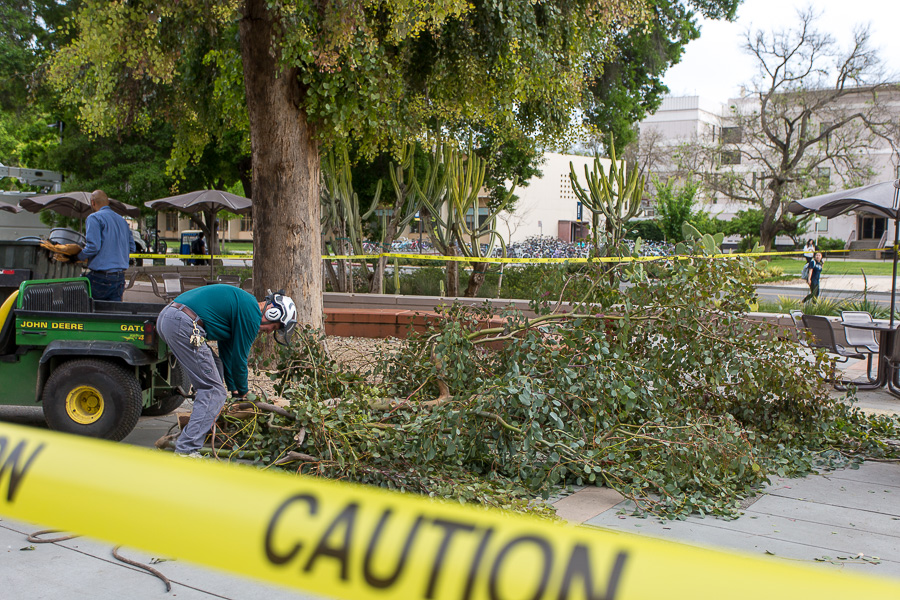
A tree branch struck four UC Davis faculty members earlier this month

Dear UC Davis Students,


As faculty in the University Writing Program, the four of us have long felt that UC Davis students are the most talented group of young people we’ve had the privilege to work with. However, after the events of last Wednesday, April 5, we now are certain that you are not only talented, but you are also incredibly compassionate and courageous. When a large tree branch fell from 40 feet onto our table in front of the Student Community Center and sent three of us to the ER with head injuries, many of you seated outside and many who were inside the SCC rushed to our aide.


Some of you called 911.

Some of you hoisted the tree branch off of one of us.

Some of you removed the metal umbrella that was pinning two of us to the table.

Some of you calmed us and assured us we would be okay.

Some of you gave us medical attention before the first responders arrived.

All of you had our best interests at heart.


For all of this and more, we thank you. You gave us comfort during a very difficult time. As your teachers, we are proud of your actions. As fellow members of the Aggie community, we thank you all for everything you did.


Thank you.
Written by: Dr. Katie Arosteguy, Dr. Alison Bright, Dr. Liz Constable and Dr. Brenda Rinard

Spring cleaning: Avoiding health hazards

MORGAN TIEU / AGGIE

Six ways to clean out dorm rooms

Does your bed look like your closet threw up all over it? Did you throw up all over it? Either way, it’s about time to clear the bed and wash those sheets — it’s time for some spring cleaning. Here are six methods that any resident can adopt in order to start Spring Quarter neat and tidy.


  1. Maintain your personal hygiene


The first thing students should do for spring cleaning is to keep themselves clean. Springtime can get real hot, real fast in the Sacramento Valley, which means our bodies are working extra hard to maintain their internal temperatures, often by excreting sweat and body odor. Out of respect for yourself and your roommates’ olfactory senses, you may want to start taking showers more frequently than you did in Winter Quarter.


  1. Take out the trash


Old papers and miscellaneous pieces of trash pile up quickly in a space as small as a dorm room, especially when it’s shared by two or three people. The worst sort of garbage, however, is food waste. With the heat of the spring, your previously inanimate food can become a breeding ground that comes alive with mold and fungi. To avoid this unwanted company, work out a schedule with your roommates to throw out the trash every week — and toss out your food waste immediately.


  1. Dust


Do you wake yourself up in the middle of the night coughing, even when it isn’t cold and flu season? For the many people who struggle with spring allergies, dusting furniture can help keep a room clean and avoid irritating your already enraged nostrils. You can either purchase a duster or borrow one from your RA. This way you can avoid, or at least somewhat remediate, the sneezing fit that greets you every morning.


  1. Vacuum


Remember to take a look at the floor of your dorm room every now and then. Past the sticky notes, dry pens and forgotten Grab-n-Go salad containers, if you dig deep enough, you can find carpeting which, especially for long-haired girls, will be covered with hair. Before you have a carpet of hairballs, plan out a cleaning schedule with your roomies to take turns using the floor’s vacuum — it’s a necessity.


  1. Turn off the lights and open those windows


As hot as it gets here in Davis, the season’s bright sun rays do provide us with free light and can power us through the week. It is so much easier to wake up when you are tickled by the sun’s rays gushing through your window. Try to switch off the fluorescents and enjoy the natural light when you can — it saves energy and can literally brighten your day.


  1. Upgrade your wardrobe


Last quarter we had to stock up on North Face jackets, beanies and fleece sweaters. These hefty items can take up a lot of space in our already cramped dorm closets. Consider replacing them with your spring attire. Bring in the shorts, dresses, T-shirts, crop tops and whatever else would work well for the inevitably hot Picnic Day!
After a quarter of wind and rain, waking up to the sunshine and walking through our rejuvenated green campus is something we should all cherish. With these suggestions for tidiness, hopefully you will be ready to welcome the new quarter.

Written by: Sahiti Vemula — features@theaggie.org

Police Logs

NICKI PADAR / AGGIE

Is that a house fire? Or just someone mowing their lawn?

April 2

“RP advised last night subjects threw eggs and dumped cereal in the yard.”

“Son broke the door down because he was too hot inside the residence.”


April 4

Two subjects “look like tweekers.”


April 5

“RP thought he saw a fire but it was someone mowing the lawn.”


April 7

“Abandoned call […] RP states he used calling 911 as a ruse to get his teenager to get ready for school.”

“RP complaining of young adults in the street playing ball […] RP admits there’s no crime but wanted the subjects to know ‘the police are in the area’.”


Written by: Sam Solomon — city@theaggie.org

Student Sounds: Lo & the Mix

LO & THE MIX / COURTESY

Local Davis band talks funky outfits, importance of change

Some of the specifics of Davis band Lo & the Mix’s history could not be recalled by those in the band themselves, even the original band members. What followed was a comical span of stuttered and confused recounts of the band’s past.

“He was definitely there. Maybe?”

“No, remember he had left by then.”

“This particular project has been through so many changes in personnel, style, genre and where we play,” said Bennett Hannon, UC Davis alumnus from the Class of 2016 and guitarist and singer. “The one we were in before this was called the Sunday Slippers, which had [Stuart Sugar, 2016 UC Davis alumnus and guitarist] and me in it. We had two other singers and a sax player, a totally different lineup. Before that [Lo & the Mix band member Jacob Dorn] and I were in a band called Sleazy Beats. All of these led up to Lo & the Mix, which started a year ago.”

Lo & the Mix currently has seven members: Bennett Hannan, Jacob Dorn, Stuart Suger, Caleb Sanders, Evan Daly, Micah Marmorstein, and a new drummer who joined a month ago.

“I think that fluidity is what makes the title,” Hannan said. “‘Lo’ is the formation and roots of the songs and ‘the Mix’ is everything that has changed with personnel and style and place. This band is like a blooming bud in the spring, where it is far enough into spring in that it is a fully formed bud but not to where it has exploded. We are actually getting a recording done within the month of our new four-song EP, which will come out the beginning of summer. When it goes out online, that’s the moment. It makes this band legitimate; it makes the bud explode.”

The band’s sound mirrors the eclectic group of members — their sound is a well-composed jumble of influences from classic rock to jazz to even hints of reggae and funk. On paper, it seems unorthodox. Yet the professionalism of the band crosses the fine line between chaotic and purely creative.

“You grow up and if you’re someone who is passionate about music, you learn how to be keen to sounds that your ears like,” Suger said. “Over the years, you copy that in your own music. There is a phrase that ‘it’s not about copying music it’s about copying it and covering your tracks,’ or something to that effect. Everything that you’re going to play is a reflection of your creativity which is only a reflection of what you’ve heard before.”

For Bennett, the “components of music are so old that they encompass what is original” and how you tweak the fundamentals is how their creative sound comes into being.

“It will be like I want a beat from this type of drum, and I want a sound from this period of music,” Sugar said. “It’s about playing, fooling around and tweaking different sounds with each other.”

The band is able to create such a distinct and cohesive sound due to the musical experiences of each band member.

“Your music is a reflection of your creativity and what you heard, right, and we all had pretty different musical backgrounds,” said Micah Marmorstein, the band’s trumpet player and a third-year biochemical engineer major.  “My dad writes a lot of folk music and gospel. He put the whole Book of Psalms to music — it is hours and hours of just music. It has definitely influenced my playing style; jazz music has been my base. I think that now we have developed as musicians and have listened to a lot of different genres, it’s not hard to work with different genres.”

Such variety of experience has made the creative process of Lo & the Mix resemble that of one big jam sesh. Indeed, according to Suger, by the time he joined and until recently, most of what the band played was Hannan’s past music, yet “has morphed from the previous bands he worked with.”

Indeed, altering the nature of the band has added diversity into the mix, allowing the songs to not stay stagnant.

“It’s the whole concept of Lo & the Mix again,” Hannan said, “While we have a solid frame of new stuff we have done together, we have been playing a lot of the songs I wrote when I was 19 — the ‘Lo.’ But who you play with and how you play it is how it has changed over the years — the ‘Mix.’”

Many of Lo & the Mix’s songs have been about development and change. With enthusiasm in their voice, the band recounted a gig they did at Sophia’s Thai Kitchen in October. Marmorstein knew the song lineup by heart.

“Everything went perfectly,” Hannan said. “It was this clean sound, and a bunch of people showed up. They had a back room and when the other members would play, I would sneak off undetected and change my outfit into these different, vibrant, flaring outfits.”

Hannan noted there was no reason for the costume change: “It was just fun, I’m sure you could make some meaning out of it if you wanted to.”

That show’s song lineup was intentionally done in chronological order based on the the emotions of when each song was written. As Hannan put it, “this tells a story because that’s how life goes.”

“The older lyrics were a lot about me going from high school to junior college and then transferring to Davis,” Hannan said. “A lot of the lyrics were the emotions a young person goes through as big as university.”

Heavier topics inevitably started the show with darker vibes.

“We played ‘Comfortably Numb’ by Pink Floyd at that show, and [Suger] killed the guitar solo; it’s a pretty dark song but it was beautiful. Then we played ‘Back Brace’ which is pretty heavy too.”

The song “Back Brace” is a hallmark song for the band and has a personal connection to Lo & the Mix, specifically for Hannan.

“The song is about my graduation night,” Hannan said. “One of my friends did a bunch of coke, got really drunk and actually wrapped himself around a tree. And it was a really harsh time for a year and every graduation time after that is pretty hard. But with the horns, the jiving bass and happy drums, it ironically seems like a good, happy song. It went through a similar process of development from its original meaning.”

Inspiration for changing “Back Brace” came from jam sessions, borrowing a horn line from “Sky’s the Limit” by Rebelution and turning it into a fun, hip-hop beat, according to Marmorstein. While the other band members may not have felt the same immediate emotions for “Back Brace,” a well-composed and emotional song can transcend such physical boundary.

“The first time I heard [Hannan] play that song with his full emotion I wanted to cry,” Marmorstein said. “He has this lyric ‘hurts most when I hear his mother cry and his father sigh.’”

Hannan clarified that many of the new songs have a “party vibe” to them — the old emotions have passed in their immediacy. Lo & the Mix seems to be an ever-changing entity; it is raw, it is real, welcoming with open arms the concept of change and development.


Written by: Caroline Rutten — arts@theaggie.org

Senator term review: Samantha Chiang

ARIEL ROBBINS / AGGIE FILE

Senator Samantha Chiang was elected in the spring of 2016 as the top-vote getter in the ASUCD election. Now, she has been elected to serve as a senator for a second term and was recently elected as the Senate Pro-Tempore.

Chiang received an endorsement from The California Aggie both times she ran for Senate. For her second term, this paper endorsed her for her ability to achieve her platforms. In an interview with The Aggie, Chiang explained that her two key platforms were mental health and getting academic accommodations for students with mental health disorders during her first term.

“In a sense I did accomplish all of my platforms and you could also say the more specific tenants I didn’t,” Chiang said. “What I managed to accomplish was — my overarching thing was mental health — so I was able to create a mental health conference. Now I am working on the [mental health] awareness month.”

Chiang did admit to not fulfilling a project that she did campaign on, however.

“All the broader things, like the themes, got accomplished in one shape or another, but some of the more specific things weren’t able to be accomplished per se, but they weren’t really my platforms, they weren’t how I sold myself during elections,” Chiang said. “[…] One of the ones that I did not accomplish, I wouldn’t call it a platform but a small project I wanted to work on, was creating a letter [of] recommendation request system via Oasis or Canvas. Then I found out later on through talking to students that no one voted for me because of that and that no one was interested in this project at all.”

While touching on the academic accommodations aspect of her platform during the interview, Chiang focused heavily on her work on mental health awareness. The crux of her work during her first term was the establishment of a one day mental health conference at UC Davis. Commending her event as a success, she is working on expanding it.

“I’m working on the mental health initiative which is to encompass the conference and a mental health awareness month where we work with multiple different [organizations] to put on different events,” Chiang said. “Because our conference went so well, Student Affairs is actually currently helping us to make a proposal to get an annual income of $20,000 so we never have to worry about our finances concerning the mental health initiative again.”

One of the stumbling blocks Chiang encountered during her term was the bureaucracy of the UC Davis Division of the Academic Senate (AS).

“One of my other parts of the platform, I guess you could say, was getting professors to work more with mental health and I am still working on that because it’s just an ongoing process,” Chiang said. “I am currently working with the UC Office of the President as well as our Academic Senate, which is extremely difficult to work with.”

In evaluating Chiang’s work, former ASUCD President Alex Lee corroborated Chiang’s experiences with the AS.

“When I was engaging with the Academic Senate, some of her projects and things were kind of in the periphery but I don’t think it made any more progress than I ever got because of the Faculty Senate,” Lee said. “Same challenges, but I think the effort has been there, not sure just what results have been there yet.”

Lee also noted what he saw as a lack of effort toward institutionalizing Chiang’s mental health conference.

“The only thing I’ve yet to see is her institutionalizing it,” Lee said. “I know she wants it to do it for 2018, though, and she’s doing it still through the senator office. I don’t know how she’s going to institutionalize it to outlast her […] I think that has yet to be decided upon from her.”

This push toward institutionalization is clearly visible in Chiang’s current work in securing annual funding for the conference.

One of the greatest struggles that Chiang faced during her first term as senator was learning how to navigate ASUCD and its inner workings.

“One of the biggest challenges was coming in and trying to navigate the institutional knowledge of the association because we don’t have a lot of documents to pass down,” Chiang said. “It’s really difficult for new senators to figure out what they are supposed to be doing, outside of just attending meetings and making office hours.”

Apart from challenges, Chiang discussed some of the things that made her a strong senator, especially compared to her colleagues.

“I think as a senator, one of my greatest strengths was my ability to navigate a system that wasn’t built for me,” Chiang said. “I think that, yes, it took twice as much effort, but eventually I was able to get my voice on the table heard. And I do think that as a senator I was one of the people that was able to accomplish the most. I was able to found a conference that will institutionally live on. It wasn’t just a one-off kind of thing.”

Lee, when asked to give Chiang a letter grade for her term, gave her a B. He justified this grade with what he saw as some of her strengths and weaknesses.

“Definitely very, very strong-willed and sometimes stubborn about things,” Lee said. […] Overall, she produced a lot, which I think a lot of students are impressed by, and that works to her advantage a lot of times.”

Chiang has served as an adoptive senator for five units during her term: Cal Aggie Camp (which is no longer a part of ASUCD as it moved to Campus Recreations and Unions), Creative Media, the Experimental College, Entertainment Council (EC) and The Office of Advocacy and Student Representation (OASR).

“Sam is the epitome of what an adopted senator should be,” said Georgia Savage, the director of OASR, via email. “She is extremely involved in our unit and has been the ideal liaison and advocate for OASR to senate. Sam is an extremely hard worker and her efforts to be inclusive and intersectional in her approach to mental health, which is a priority of this office, is unparalleled.”

Chiang resigned as adoptive senator for EC early on in Myers’s term. However, EC Director Rachel Myers declined comment for the interview. The unit directors for Cal Aggie Camp, Creative Media and the Experimental College did not respond for comment.
Written by: Kenton Goldsby — campus@theaggie.org

Humor: Breaking — ARC gets wifi

JAY GELVEZON / AGGIE

Fifteen-year battle with internet finally resolved with weight room wifi
The UC Davis Activities and Recreation Center (ARC), which for years boasted zero cell phone service and absurdly long lines for squat racks, has finally installed a router in the weight room that will allow students to access the internet. Nearly 15 years after the ARC’s inception, the campus’ main workout space will now provide its students with an option to stream music and videos during a workout.

Students in the past have been forced to listen to their music offline, avoiding live-streaming applications such as Pandora and YouTube due to the large amount of data required. Now, with the purchase of the new router, students have opened themselves up to endless listening and watching opportunities.

“This changes everything. I can use social media and listen to music in between sets,” said Luke Benson, a third-year statistics major who claims that his 1,100 followers on Instagram are all real. “I wouldn’t say it discouraged people from going to the ARC, but it makes life here easier.”

The router will be on display for the first week, behind the treadmills in the southeast corner of the weight room. A campus supervisor will guard the tower until it is ultimately put in the rafters above the bench presses.

The administration is encouraging students to take photos with the router and use the hashtag “#FinallyConnected” when capturing the ARC’s newest addition. The move is designed to bring back students who may have lost hope about their internet desires in one of campus’ most important places.

“It’s about time. There’s a lecture hall [MAC 138] and countless study spaces and rooms,” said Russell Ruzzi, a first-year chemistry major and avid deadlifter. “The only parts of the ARC that don’t have wifi seem to be strategically placed — the weight room and the upstairs treadmills. It’s weird. I’m glad the school is adjusting to the times.”

Students originally had to go the northwest corner near the Starbucks to stream properly and then walk back to their desired position. This took time and created a logjam near the western-most weights, the five-pound dumbbells.

A formal ceremony for the uncovering of the router is set to take place next Monday. It will be left on display for the remainder of the week. The provider of the router is yet to be announced, but the rumor going around campus from officials is that the wifi and ethernet lights will be blue and gold to show as much Aggie pride as possible — a nice touch from the university given how long the process has taken.


Written by: Ethan Victor — ejvictor@ucdavis.edu

(This article is humor and/or satire, and its content is purely fictional. The story and the names of “sources” are fictionalized.)

The Real Co-opers of UC Davis

BRIAN LANDRY / AGGIE

Co-op life as discussed by UC Davis Tri Co-opers

Generalizations of co-ops and their occupants create false impressions that co-opers are anti-establishment and that this is a negative thing. But most co-opers, especially the ones I have talked to, wouldn’t even consider labeling themselves as such. Instead, they will gladly tell you their ideas about reforming flawed but functional systems. Neil Singh, a third-year transfer and ecological management and restoration major, said, “You can’t just knock something down that’s doing good things. You can criticize it for the bad things but understand that it’s ultimately trying to provide something good for folks.”

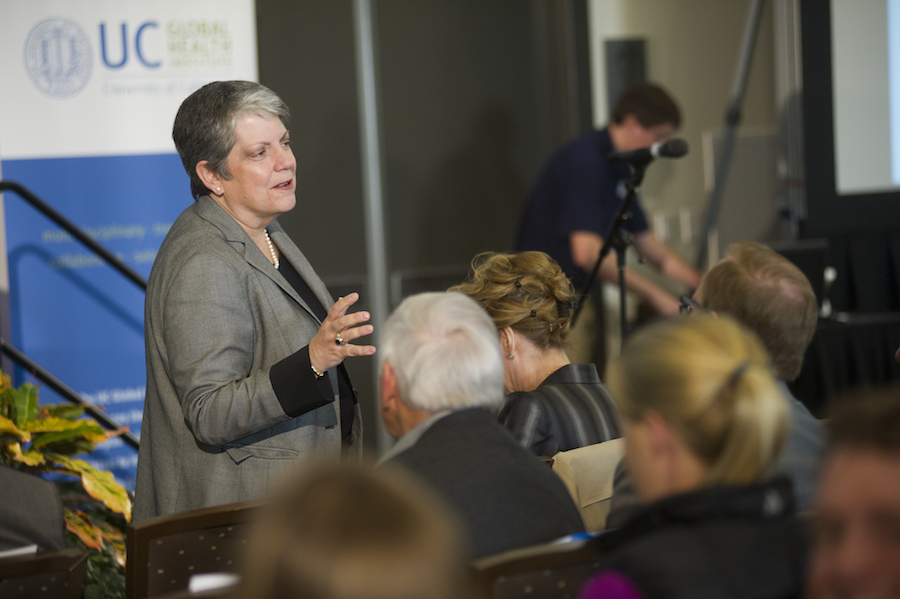
The Pierce co-opers talk about sustainability in a way that advocates heavily for agriculture.

“This is like every first-week lecture being in sustainable ag and food systems,” said Kaitlin Oki, a fifth-year sustainable agriculture and food systems major. “Any time you take a class that has the word sustainability in the title, the first slide is like ‘What is sustainability anyway?’ My favorite outcome of these conversations is always that you cannot define sustainability. It is, one, a buzzword and should be treated as such. Two, trying to define sustainability is like drawing a map. Zoom out and it makes a lot of sense, in broad, abstract terms. But on a map, if you’re looking at a border of a country, you zoom in on it and the less accurate it becomes and it has to get more detailed. The same goes with sustainability. You could abstractly say holistic sustainability is socially, environmentally and economically sustainable but if you’re going to zoom in on that you are going to have to define that in more specific terms. Like what is environmental sustainability? Well, it promotes biodiversity and it conserves water. But you can’t quite get it all the way zoomed in and it starts to lose its meaning as you zoom in more.”

The Davis Tri Co-ops try to tackle the intersections of social, economic and environmental sustainability by putting on many spectacular programs run by co-opers such as their new seminar, PLS 198, for which they get paid to both promote sustainable living education and support their residents financially. They also protect native plant species and wildlife, host garden parties, have community dinners Sunday through Thursday at 7 p.m. each week. From April 14 to 16, they will host WestCo, a conference for co-opers across the West Coast to come together and exchange resources and ideas.

I was personally surprised when Oki mentioned that when The Aggie stopped by in years past that co-opers were either misrepresented or underrepresented in pieces. Given the rich and lengthy history of the Davis Tri Co-ops prior to my recent arrival and how long the co-opers have been here waiting for someone to accurately tell their stories regarding co-op life, I expected there to have already been a wealth of articles authored by The Aggie and other Davis media outlets. Because the true opinions of co-opers are often overlooked or simply unheard of, I asked them if there was one thing they would want the general student body to know about their way of living.

Leland Howard, a fourth-year biomedical engineering major, said that co-opers are “like a family with a mission.” Neil Singh added, “It’s important to remember where everything comes from” and to “understand issues arise from a lot of things being interconnected under oppressive systems.”

“I swear I’ve learned 100 times more about life, how to be a good, compassionate person and how to navigate the world living in this co-op for three years than I’ve learned at UC Davis in classes and lecture,” said Oki. “You want some real education? Come live at the co-ops or hang out here at the very least. You want to apply the badass social justice shit you’re learning in your classes? Come do it here! We like to play hard.” She then proceeded to recite the Solar Community Housing Association mission statement verbatim.

Fellow sustainable agriculture and food systems major Peter Varas concluded, “come eat dinner with us,” a sentiment that embodies the essence of co-op life.
Written by: Camille Chargois — cachargois@ucdavis.edu

Disclaimer: The views and opinions expressed by individual columnists belong to the columnists alone and do not necessarily indicate the views and opinions held by The California Aggie.

Christian Pulisic is on track to become an American Legend

18-year-old wonderkid takes American soccer by storm

At 18, most of us were seniors in high school, completely checked out of our last year of school and ready to embark on the college journey. We felt a looming sense of independence with our departures to college imminent, but we were still kids. At 18, I would go home after my fifth period reprographics class, a course I dedicated to beating my best friend’s high score in Fruit Ninja, only to eat leftovers out of the fridge and binge watch reruns of “The Office” and “How I Met Your Mother.” At age 18, Christian Pulisic has already been deemed “The Savior of American Soccer,” and he is starting for one of the most revered European clubs in Germany, Borussia Dortmund.

Pulisic, at 17, was the youngest American to score a goal in a World Cup qualifying match, just after becoming the youngest foreigner to score a goal in the German Bundesliga. Whether that’s more impressive than my Fruit Ninja high score of 957 is for you to judge, but Pulisic is the present — and the future — of American Soccer. The 5-foot-8 winger out of Hershey, Pennsylvania was raised by George Mason University soccer players Mark and Kelley Pulisic. While he spent most of his childhood in Hershey, he spent some time in Michigan and England as well.

Despite his age, Christian Pulisic has an incredible amount of composure. He never drops his head, and he has yet to seem noticeably phased by the spotlight.

“I’m sick of people saying, ‘He’s only 17.’” Pulisic told ESPN FC back in September. “It doesn’t really matter to me. I feel like I can make an impact. That’s it.”

Bruce Arena, the U.S. Men’s National Team head coach, has stated that Pulisic “has a long way to go before he gets to stand next to Landon [Donovan],” and, while this comment is relatively benign, it completely understates just how exceptional a player Pulisic actually is. Obviously, Landon Donovan is the gold standard of players when it comes to American soccer, but there is a clear consensus that Pulisic is miles ahead of where Donovan was at his age, a sentiment that Donovan has stated himself. The expectations for Pulisic are so high that it would be underwhelming if he ends up being only as good as Landon Donovan was at the prime of his career, which is saying something. The wonderkid has the tools and demeanor to grow into a global superstar, as Carsten Cramer, Borussia Dortmund’s marketing executive, put it. Arena was most likely trying to temper expectations for the 18-year-old amidst a flurry of attention that has come Pulisic’s way, as well as give some love to Donovan, who the previous head coach, Jurgen Klinsmann, had a falling out with. Nonetheless, it simply is not an apt comparison. Americans should revel; we may finally have that generational talent that has been absent in our soccer world.

Those currently engaged with American soccer already know what I’m talking about with Christian Pulisic. But for the pseudo-soccer fan who’s knowledge of the sport is limited to their knowledge of FIFA 17 ratings, for those of you who show up every four years for the World Cup and buy the newest kit after John Brook’s 85th minute header against Ghana (okay fine, that one was me), you should be excited. We got ourselves quite the gem, and if you aren’t like me and have no qualms with sporting the gear of an athlete who is younger than you, I suggest you go out and grab yourself his jersey — the name is only going to get bigger.


Written by: Michael Wexler — sports@theaggie.org

$10 million in funding given to UC-Mexico joint energy efficiency projects

UC DAVIS

UC President Napolitano, Mexican Secretary of Energy Joaquin continue partnership

University of California (UC) President Janet Napolitano met with Mexican Secretary of Energy Pedro Joaquín Coldwell in Mexico City on March 30 to announce the $10 million raised for energy efficiency projects. These projects will be jointly led between Mexican research institutes and UC researchers. According to Napolitano, these projects are a way of bolstering a partnership between the nations through reaching shared energy goals and combating climate change.  

The UC-Mexico initiative was first launched in 2014, creating academic UC programs in Mexico and coordinating student and researcher exchanges between the two countries, as well as to foster answers to shared problems like pollution and climate change. On March 30, Joaquin officially solidified the proposal requests for $10 million U.S. dollars from the Mexican Ministry of Energy SENER-CONACYT Energy Sustainability Fund (FSE) to fund Mexico’s clean energy projects. UC researchers will actively participate in the research.

This initiative and funded project confront a new presidential administration which has called global warming “a hoax”, proposed ending the Environmental Protection Agency (EPA) and removed the climate change data from the EPA’s website.

Napolitano, however, has long been an advocate for clean energy, creating a goal of UC-wide carbon neutrality by 2025 through the UC Carbon Neutrality Initiative, established in 2013. Since 2013, the UC system has saved an estimated $28 million in energy costs.

Napolitano made clear that regardless of executive decisions to restrict physical or academic access between Mexico and the United States, the UC-Mexico initiative will continue.

“Regardless of what is happening federally, the University of California remains open to academic partnerships with Mexico,” Napolitano said to the Los Angeles Times on March 22.

Stephanie Beechem, a member of media relations for the UC Office of the President, relayed the same message of scientific, academic and social cooperation between UC and Mexico.

“UC believes that it is critically important to maintain a robust and enduring relationship with Mexico through student and faculty exchanges, the celebration of our shared heritage and populations, and research and scholarly activity that solves problems and advances shared knowledge,” Beechem said via email.

Beechem reiterated Napolitano’s assurance that the initiative between the two countries will continue.

“The UC-Mexico initiative will continue to focus on key areas of interest to both California and Mexico, as well as the United States,” Beechem said. “Energy, environment, education, health, arts and culture.”

The initiative was started by UC Riverside, but is a UC-wide program. According to the UC-Mexico Initiative website, the initiative aims to identify shared problems and catalyze shared solutions.

“Led by the University of California Riverside, the UC-Mexico Initiative brings together scholars and leaders from the University of California with those from distinguished sister institutions in Mexico to consider innovative ways to broaden and deepen our connections for the benefit of all,” the website read. “The goal of the UC-Mexico Initiative is to identify shared problems, bring shared resources and effort to bear toward a shared solution and to share in the impact that those efforts produce.”

Beechem spoke of UC Davis’ role in the initiative and how UC Davis provided academic fodder through workshops and other mediums.

“UC Davis faculty and researchers have been actively involved in President Napolitano’s UC-Mexico initiative, including playing a significant role in the Energy Working Group,” Beechem said. ”The UC Davis Office of Research and the Energy Efficiency Center hosted a workshop on Energy Efficiency Collaborations on the Davis campus in March 2016, which involved over a dozen Mexican institutions and researchers from across UC and the national labs.”

Kimberly Hale, the interim director of News and Media Relations for UC Davis, said via email that “the university [Davis] supports President Napolitano’s vision and efforts.”

UC Davis and other UC researchers’ involvement in the UC-Mexico initiative can be found in the UC-Mexico faculty registry.

In a UC press release, Joaquin highlighted his support of the UC-Mexico initiative.

“The promotion of science and the development of talent and human capital is key for the transformation and modernization of Mexico’s energy sector,” Joaquin said. “I want to reiterate my appreciation and recognition of President Janet Napolitano for her leadership and contribution to the prosperity of the North American region. Her work is having a significant contribution to the formation of specialized human capital and in the field of clean energy in California and Mexico.”

Thomas Jara, a first-year biotechnology major, voiced concern over Trump’s lack of alignment with Napolitano’s clean-energy ventures, criticizing Trump’s counter-actions and continual fossil-fuel support.

“Trump has been rude to a lot of allies — especially Mexico,” Jara said. “Oil is finite — it’s a finite thing. We’re going to run out of it. It is not cost-effective or sane to invest so much in oil. It doesn’t make any sense that Trump’s doing that and with his EPA actions, he shows no evidence of anything and it makes no sense why he’s cutting down on these regulations.”
Written by: Aaron Liss — campus@theaggie.org

NBA first round playoff predictions

KEITH ALLISON [CC BY-SA 2.0] / FLICKR
Sports columnist Michael Wexler’s start-of-playoffs predictions

The NBA Playoffs are back, meaning the NBA regular season is over and the real stuff begins. I, along with many other basketball fans, have complained in the past about the elongated format of of the NBA playoffs, but instead of ranting like a senseless fool, I’m just going to dole out my round-by-round predictions.


Eastern Conference


Boston Celtics (1) vs. Chicago Bulls (8): Boston in 6

At first glance this series looks like it should be an easy one for Boston, as Chicago has had an incredibly underwhelming and disappointing season, but the Bulls have actually played relatively well over their past 10 games (7-3). Despite its talent, Boston is not a true 1 seed, and the Bull’s star power and playoff experience with the likes of Rajon Rondo, Dwyane Wade and Jimmy Butler should make this series interesting.

Cleveland Cavaliers (2) vs. Indiana Pacers (7): Cleveland in 6

Cleveland has looked wildly inconsistent in the final stretch of the regular season and hopefuls believe that, like always, they will turn on “the switch” once the playoffs roll around. I am a little skeptical this time. The switch turns on more willingly when LeBron is well-rested, but that is not the case; he has averaged 37.8 minutes per game this season, the most since his return to Cleveland. Indiana is riding a five-game winning streak — including wins over the Raptors, Bucks and Hawks — to close the season and Paul George has been playing out of his mind in March and April, so I anticipate a closer series than expected here as well.

Toronto Raptors (3) vs. Milwaukee Bucks (6): Toronto in 5

I love Milwaukee’s core with Antetokounmpo, Middleton, Brogdon, Maker and a healthy Jabari Parker, but it is not their turn yet. Toronto, on the other hand, has a very balanced and deep roster capable of making a big playoff run with the return of star point guard Kyle Lowry.  

Washington Wizards (4) vs. Atlanta Hawks (5): Washington in 6

Never trust the Atlanta Hawks in the playoffs. It’s hard to bet against the likes of John Wall and Bradley Beal, one of the most exciting young backcourts in the NBA. While Atlanta’s solid defense has kept the team afloat, its offensive woes have continued and Washington has been one of the better teams in the NBA since its slow start.


Western Conference


Golden State Warriors (1) vs. Portland Trail Blazers (8): Golden State in 4

I would’ve given Portland some love had mid-season acquisition and godsend Jusuf Nurkic remained healthy, but a fractured fibula has kept him sidelined since March 30. Nurkic may or may not get the green light to play in the opening round, so his questionable health is reason enough to choose a completely healthy and dominant Golden State in a quick sweep. Sorry Dame.

San Antonio Spurs (2) vs. Memphis Grizzlies (7): San Antonio in 5

This is a pretty uninspiring series with the nature of Memphis and San Antonio’s play styles, so this matchup may not get a lot of fanfare. Memphis has given San Antonio some trouble in the past (an upset in 2011), but this Memphis team just isn’t the same and has lost seven of its last 10.

Houston Rockets (3) vs. Oklahoma City (6): Oklahoma City in 7

First upset alert! This is primed to be the best matchup of the first round. Harden vs. Westbrook makes for some incredible entertainment, as the two have been pretty much pitted against each other in the MVP debate. I never like betting against Russell Westbrook, and OKC’s physicality, mental fortitude and playoff experience will give them the narrow edge against Houston.

Los Angeles Clippers (4) vs. Utah Jazz (5): Clippers in 7

I like the Jazz so much more than the Clippers, who always seem to falter come the second round of the playoffs. But, in this case, I’m going with the Clippers, the team that has been to the playoffs every year since the 2011-2012 season. This young Jazz team has yet to see playoffs since that very same season under very different pretenses. The Clippers will endure, but don’t expect it to last.


Stay tuned for second round predictions.


Written by: Michael Wexler — sports@theaggie.org

Protests erupt at incoming Chancellor Gary May’s first public meeting with UC Davis students

JAY GELVEZON / AGGIE

Protests in light of May’s involvement on two defense technology companies

Incoming Chancellor Gary May held his first public meeting with the UC Davis community at an event on April 14 titled “Pack the Patio,” which drew protestors from the group Students for a Democratic Society at Davis (SDS) as well as UC Davis students and faculty.

Shortly after the announcement of May as UC President Janet Napolitano’s pick for UC Davis’ chancellor, information came to light regarding May’s board seats. May received $288,280 in 2015 from the Virginia-based defense and technology company Leidos and $37,500 from the defense, technology and medicine lab Charles Stark Draper Laboratory. In light of the recent missile strike in Syria that was ordered by President Donald Trump on April 6, students from SDS showed up at May’s event to protest May’s investments in Leidos and the Charles Stark Draper Laboratory and the possible financial gain he would receive if the United States went to war.

“Gary May is involved in two different board seats, each of them defense companies that get more than 70 percent of their profits from wars so Gary May is directly profiting off these Middle East wars,” said Dexter Hampton, a second-year environmental science and management major.

Students at the protest held signs, handed out pamphlets to bystanders who expressed their disdain for May’s involvement in defense technology-related companies and chanted phrases such as, “No war profiteers are welcome here!”

May responded to the protests with a hope to clarify what he perceived as a misconception and the willingness to listen to what the students were protesting.

“I spoke to some of the student leaders of the protest this morning,” May said. “I just wanted to hear their position and try to sh

JAY GELVEZON / AGGIE

are my position. I understand they are very passionate about what t

hey feel, and I appreciate that, I like the fact that the students are conscientious about a cause. We don’t necessarily agree right now, but I’m hopeful that we can find some common ground. That’s what being a student is all about — learning, taking positions, knowing what’s going on in world events and I respect that.”

Aside from the protests, the Pack the Patio event carried on as planned, with free giveaways, a performance from the Band-uh! and a group photo of May with the UC Davis community. May also made himself available for photos with students and various sports teams.
Written by: Lindsay Floyd  — campus@theaggie.org

‘Tis the Season: Davis spring pastimes

KELSEY GREGGE / AGGIE

Finding ways to get outside, pass time without commute

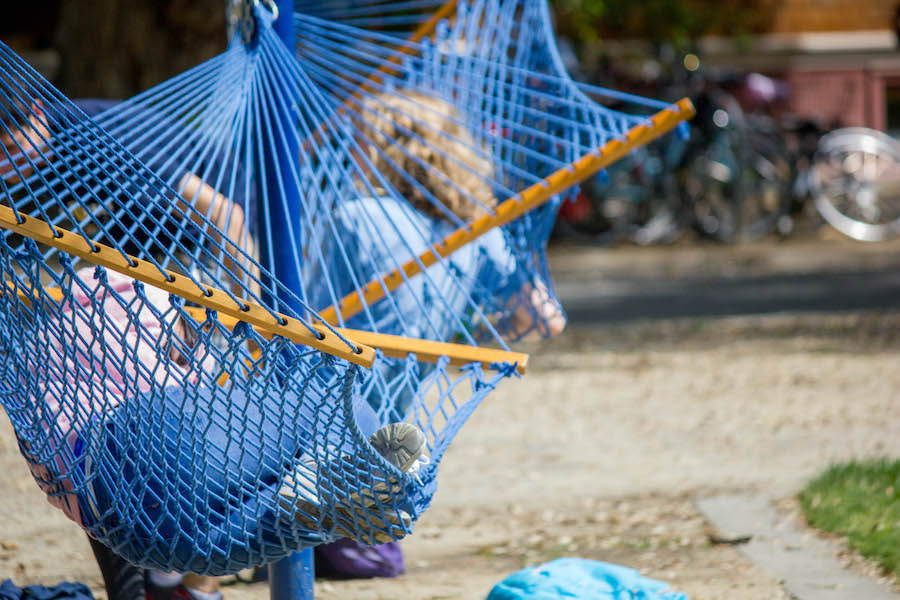
White snow carpeted the ground and trees, sparkling in the sun like diamonds. UC Davis students Cielle Watjen Brown and Ruby Baruth sat in their hammocks, accompanied by friends and enjoying the oddly warm day after a hike in the El Dorado Hills. It was in this moment when they realized that what they were doing was not only beautiful and peaceful, but it was also fun — the kind of thing they believed everyone should have the opportunity to enjoy. They figured there had to be others at UC Davis who held shared similar interests.

“I feel like a lot of it people are intimidated to join big outdoor clubs because they’re not really good at skiing or water skiing or whatever […] so we wanted to make a very inclusive club that anyone could join,” said Watjen Brown, a second-year human development major.

And so came the creation of the Hammock Club at UC Davis, through which people could come together in different places around Davis and relax in their hammocks. In addition to  leisure opportunities, the club also facilitates activities and games to spark an interest in hammocking itself as well as a sense of community. Earlier this year, Watjen Brown and co-president Baruth put on a scavenger hunt for their members.

“[It] was really, really fun,” Watjen Brown said. “We’re planning on having a lot more events this Spring Quarter because this is more like the season for hammocking and going outside.”

For members of the Hammock Club, UC Davis is great because of the prime location: not too far from the city, the beach or the mountains. But people who live in nearby don’t have to venture all the way to El Dorado Hills to fit in a good hammock session for a fun outdoor activity. Watjen Brown points out there are a number of places to hammock or get outside in town and even on campus.

“I definitely feel like the most popular place [to hammock] is the Arboretum in the redwood forest, [which is] beautiful and you can stack your hammocks,” Watjen Brown said. “Rock climbing is really awesome here [too], […] and even just taking bike rides out towards Berryessa. Just spending time outside here, there’s more than you would expect. We have Putah Creek, which is really cool, there’s a rope swing and you can go swimming. There’s so many fun things to do in Davis, I think you just have to […] find the groups that are on campus.”

One student who is no stranger to taking trips outside of Davis is Matt Finkle, a third-year environmental policy analysis and planning major. Finkle loves to go backpacking, camping, skiing, rafting and, like Watjen Brown, rock climbing.

But Finkle doesn’t spend all of his time in regions outside of the town of Davis. To rock climb, he will often grab a friend and show up at the local rock climbing gym, Rocknasium. But when the weather becomes pleasant he can sometimes be found outdoors, either on the Quad or other parts of campus walking across piece of flat webbing that resembles a tight-rope — something that’s actually called a slackline.

“There are different types of slacklining,” Finkle said. “There’s tricklining, which is kind of what I like doing, or there’s highlining, which is slacklining really, really high between trees. Even at Whole Earth [Festival], people come out with their one inch webbing and they string it really high between trees but it’s super loose, so it bends down in a giant ‘v.’”

Finkle believes slacklining is like riding a bike: Once your muscles learn how to do it, the memory never totally fades. He can get on a slackline after months of being away from one and still do tricks like butt bounces, flips and 360s.

Both hammocking and slacklining are great pastimes in a community like Davis, fashioned with it’s flat landscapes and an abundance of sturdy trees. Not only are these activities relaxing and fun, but they can be done in a group or independently. One that offers all these benefits but without the requirement of specific gear, though, is considered a little less leisure and a little more active: parkour.  

“For me, I wasn’t really committed to doing parkour when I first started,” said David Cherney, a lecturer in the Mathematics Department. “For years I was training a lot. A couple of times a week I would go out and train, but I had no idea what any of the names or moves I was doing were or whether or not I was using ‘proper technique,’ but that doesn’t matter. [Parkour is] playtime, it’s fun, it’s loitering, it’s a combination of social time and treating the world as if it’s your playground.”

Parkour is a nebulous discipline that doesn’t lend itself well to competition. According to Cherney, “having the right technique” isn’t the point. Cherney said that having to explain why he likes parkour is like having to explain why he likes to have fun.

“We go to public spaces, parks, campus, just some places with cool hand railings […] and just goof around there,” Cherney said. “A lot of it is social, just being silly and joking around with each other like kids would, and part of it is very physical when we go out into a public place and we’re jumping around. [When] other people see us, a lot of people stop and give indicators that they wish they were doing it too. It seems like everybody wants to play and have fun.”

Cherney often trains for parkour with others, regardless of whether they are students, locals from the community, people from out of town or even kids — whoever wants to join is welcome to participate. Occasionally he can be found around campus or town with a scaffolding set-up for himself and others to train on. He also uses it to set an example for passersby that parkour is not just doing backflips off of two-storied buildings like it’s often depicted on YouTube.

“[Parkour is] all sorts of tiny fun movements,” Cherney said. “I like to be in public for part of my training to help normalize it and generally give people the impression that they can do whatever they want, they can expand their horizons of all the stuff around them. Hand railings don’t have to be just to help you get down the stairs, they can also be a playground.”

UC Davis is conveniently close to places like Point Reyes and Tahoe, but there is a plethora of fun activities in which students have the opportunity to engage every day right here at school. People often find unconventional ways to spend their time outside and make friends while they’re at it.

“Of course there’s the mountains and the ocean really close by, but it’s awesome that you can do things in Davis,” Watjen Brown said. “There’s a lot to do here as well, which has been really fun to discover.”
Written by Marlys Jeane — features@theaggie.org

A traditional picnic with a philanthropic twist

HANNAH LEE / AGGIE

Picnic Day to be paired with first-ever UC Davis day of giving

As students hurry about their days debating whether or not to forgo another dinner and instead spend money going out with friends, it can be hard to think about donating cash to charity efforts around campus. However, organizations such as We Are Aggie Pride and the Telephone Outreach Program (TOP) allow students to donate their time and unique talents to various philanthropic efforts benefitting fellow Aggies in lieu of money.

While some students may not have time throughout the year to dedicate to these operations, all students are invited to volunteer at UC Davis’ first-ever Give Day and gather support from donors and alumni for their favorite areas on campus that might not have enough funding. Give Day begins at noon on Friday, April 21 and will run overnight until 5 p.m. on Picnic Day, allowing 29 hours to showcase the positive impact philanthropy has on UC Davis.

“Hosting Give Day in conjunction with Picnic Day is a wonderful opportunity for UC Davis to bring our campus community, friends and alumni [in] from all over the world who know and love Davis while increasing awareness for our university,” said Michelle Poesy, the senior director of annual and special gifts for the Office of University Development.

UC Davis has a long tradition of receiving donations and support from alumni and friends of the university, but Give Day is an effort to recruit donors’ support for every aspect of the university in a widely publicized and organized manner. By hosting the event in conjunction with Picnic Day, Poesy hopes this will rally enthusiasm and raise awareness about everything from athletics to undergraduate research on campus.

“Donors are going to be able to give to any of the 30 participating groups of their choice,” Poesy said. “We want people to learn more about UC Davis and support the areas they’re most passionate about. Not everybody’s going to be passionate about the same thing, so we are encouraging donors to support whatever it is they find the most special about UC Davis.”

Give Day is not only for the benefit of UC Davis students — it is also made possible by students. Student callers for the Telephone Outreach Program (TOP) raise awareness for the event by calling donors and alumni to keep them updated leading up to the event. Students can also get involved with facilitating Give Day by running information booths, handing out free Aggie gear and participating in the Picnic Day Parade.

“Perhaps the most important way students can get involved is by becoming social ambassadors for Give Day and sharing the word about UC Davis through their social networks,” Poesy said. “This is a great way for students to use their social media skills to volunteer for the event because by sharing photos and Tweeting, we can grow and increase the awareness around the world.”

According to Jason Wohlman, the associate vice chancellor for University Development, Give Day will engage and energize the campus and make it known how important philanthropic support is to running UC Davis. Most importantly, he hopes it will create a culture of philanthropy so when students become alumni, they are more likely to give back to UC Davis, having seen and experienced that culture.

“The physical resources are helpful, but philanthropic support is important for a sense of cohesiveness, pride and connectivity to the institution that comes along with giving,” Wohlman said. “Aggie Pride is real beyond just the football field and the basketball court. It can be found in all of our classrooms and library, and it very much resonates with our alumni as well.”

Footprints of philanthropy are found all over campus, from Maurice Gallagher’s $10 million gift that is now the Graduate School of Management to the Mondavi family’s unwavering support for wine and food studies. Beyond these, thousands of students receive scholarships and it is important to understand that this financial support is backed by individual donors who believe in the educational mission of UC Davis.  

“People aren’t giving because there’s a need,” Wohlman said. “People are giving because they have a passion for what’s being done here and they believe in the work of our campus and the future of our student body. Some might be giving because of the quality of research that’s being done here, while others are grateful clients or patients.”

While it might not be financially feasible to donate monetarily as a college student, Wohlman and Poesy encourage students to donate their time and talents to the parts of campus they feel most passionate about on Give Day and throughout their time at UC Davis.  

Odisea Macias, a fourth-year communication major and managerial economics minor is using her marketing and sales talents to give back and thank UC Davis for all of its support throughout her undergraduate career. Starting out as a student caller for TOP, Macias gained experience building relationships with donors and alumni and now has a marketing internship with the Office of University Development.

“I’ve been really blessed by coming to UC Davis, and the university has been very generous to me and my family,” Macias said. “Right now I can’t financially help support another person or help students with their tuition, but if I can find ways to get a donor to contribute and see the amazing things that are happening here, then the possibilities for other students to get support will increase too.”

In addition to reaching out to prospective donors in order to give back to future Aggies who may need financial support, Macias has been planning and working out the details of Give Day since early February.

“On Give Day itself, we will start to see the actual impact of these contributions, but many effects may not take place until way down the road when current students have graduated,” Macias said. “Future Aggies will be able to see the effects of each Give Day and will experience even better results. Getting more students involved in enhancing our campus and making a difference would benefit everybody who comes to UC Davis.”

Macias is creating the precise culture and community of philanthropy that Wohlman argued is so important.

“If I can help people be informed and become passionate about the things we have here at UC Davis, then I’m creating a big networking game of giving back,” Macias said. “Donors to UC Davis were able to help me through financial means and I’m not able to do that right now, but if we can find creative solutions to that same problem then this will benefit everybody down the line.”


Written by: Gillian Allen — features@theaggie.org

Bathrooms and beyond: ensuring trans and non-binary inclusion

GENESIA TING / AGGIE

Creating a comfortable environment for all

While waiting outside of an occupied gender-neutral restroom, Iris Bloomfield, a fourth-year English major and transgender woman, was accompanied by another transgender student who looked at her and said, “You too, huh?”

“Sometimes I use the gender-neutral bathroom when I am feeling particularly anxious or self-conscious about my appearance, or if there’s really not any other choice,” Bloomfield said. “Particularly earlier on in my transition, gender-neutral bathrooms were fantastic because […] it affords one a relative amount of safety and less scrutiny in the bathroom. Or we could sidestep the issue all together, at least for me, [with] people not freaking out at my presence in the women’s room.”

Currently, UC Davis appears to have about 160 gender-neutral restrooms located across campus. Bloomfield and Naveen Bhat, a third-year cinema and digital media and theatre and dance double major who identifies as a “queer, brown, non-binary trans person,” both said there are not enough gender-neutral restrooms on campus.

“As someone who doesn’t feel comfortable in gendered bathrooms, [gender-neutral restrooms have] definitely helped me, as well as a lot of other folks I know,” Bhat said. “There are many areas on campus that are nowhere near the vicinity of a gender-neutral bathroom. A lot of these bathrooms are inaccessible, hard to find, out of order and are in remote locations. Ideally, I think that all buildings should have gender neutral bathrooms, whether that means converting gendered restrooms into non-gendered restrooms or creating more restrooms.”

Older buildings, such as Wellman Hall and Olson Hall, hold many classes for all fields of study, yet they lack gender-neutral facilities. However, according to elizabeth coté, director of the Lesbian Gay Bisexual Transgender Queer Intersex Asexual (LGBTQIA) Resource Center, the center will continue to collaborate with campus departments and facilities staff to “continue the expansion of gender-inclusive restrooms” in areas that lack such facilities.

For Bloomfield, the inclusion of gender-neutral restrooms on campus is about “social inclusion” and “not feeling like a second-class citizen.” According to Alison Tam, a fourth-year English major and commissioner of the ASUCD Gender and Sexuality Commission (GASC), gender-neutral restrooms on campus are more than utilitarian.

“It’s not just about having bathrooms that people can get to,” Tam said. “It’s about whether or not students are safe on this campus.”

In addition to increasing the number of gender-neutral restrooms on campus, a recent GASC meeting brainstormed areas of improvement on the UC Davis campus to increase and ensure the safety and inclusion of transgender and non-binary individuals. Ideas included promoting consciousness of intersectionality on campus, publicizing Hate and Bias Reports and respecting and promoting the usage of preferred gender pronouns on forms and Canvas portals.

In 2016, Constance Fuller, a project manager in the Information & Education Technology Project Management Office, started a petition calling for the addition of gender pronouns in the profile pages of students on Canvas. Fuller, a parent in the Davis community, said that she and her child often ruminate on the UC Davis Principles of Community to address situations of discrimination or exclusion at the local schools.

“When I attended a student meeting to present information regarding UC Davis Canvas, […] I observed the student placards not only with their names and roles, but also with their pronouns hand-written,” Fuller said. “Feeling that need from both our current students and our future students, I saw an opportunity to request an update to the Canvas profile that would fill this void in the learning environment. The response from the community, both at UC Davis and amongst other major institutions, was predominantly positive.”

According to Fuller, although the petition received double the votes needed to pass, the request ultimately failed, likely due to “resource limitations.” However, coté said it is important that transgender and non-binary students, in particular, see their identities reflected in aspects of academic life such as Canvas.

In terms of mindfulness regarding the needs of transgender and non-binary individuals on campus, Bhat said administrators do not factor in such needs in the decision-making process.

“Whatever change is happening is the result of long periods of hard work and a lot of labor from student activists,” Bhat said. “It has taken a lot to get the administration to make the tiniest of changes, which says a lot about how much the administration really cares about us.”

Both Bloomfield and Becca Nelson, a third-year psychology and Spanish double major and commissioner in GASC, recounted a transphobic incident that occurred on campus during the Fire Katehi movement that they both felt was particularly telling. While occupying the fifth floor of Mrak Hall, student protesters converted the male and female restrooms into gender-neutral facilities with signs that were subsequently torn down by either administration or faculty members.

“[They tore] down the signs and explicitly [said], ‘I really don’t care about trans people,’” Bloomfield said. “[They] were so upset over the making of these bathrooms gender-neutral [and] completely ignorant of the broader, ideological push for firing Katehi, which included […] more trans-inclusivity and fair treatment on campus.”

For reporting complaints or concerns about faculty or staff members, Tam specifically recommends the Hate and Bias Report. Fortunately, Bloomfield said, she has never reached the point where she felt a Hate and Bias Report would be necessary. However, she also said she has experienced ignorance and feelings of discomfort and annoyance.

“Treat people like human beings, love your neighbor [and] acknowledge the irreconcilable otherness of your neighbor,” Bloomfield said. “I feel like it just comes down to relational ethics — […] respecting difference without erasing difference. Don’t stare at people. It’s really basic, standard ethics.”
Written by: Hannah Holzer – features@theaggie.org