


A look at Mrak
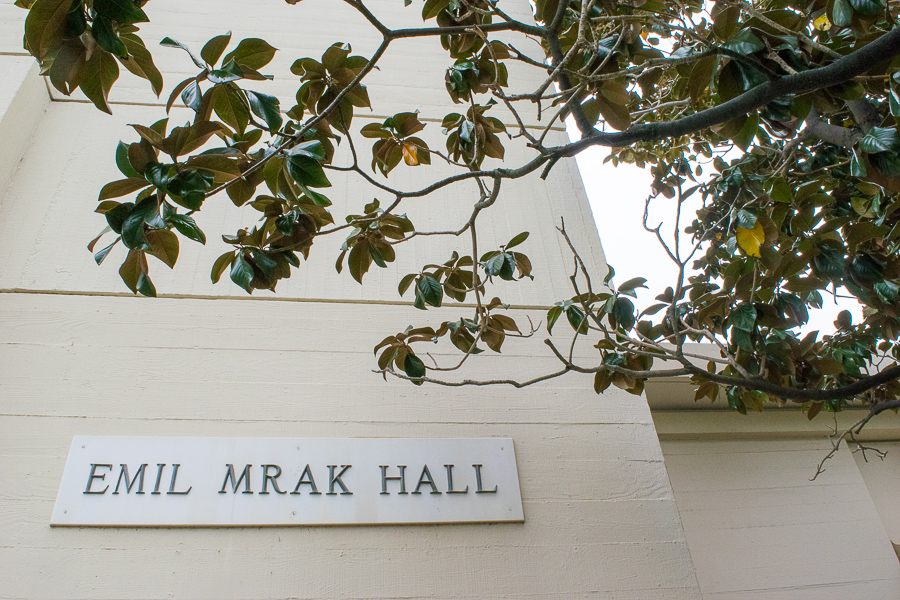
Students appreciate Mrak Hall for aesthetic qualities, though rarely enter building
Between two parallel walkways leading up to Mrak Hall stands an upside down egghead facing away from the building with an eye on its back. According to Cole Caceres, a fourth-year environmental science major, this egghead was carefully placed and has symbolic significance.
“The egghead is called ‘Eye on Mrak’,” Caceres said. “It was created by Professor Robert Arneson. There’s an eye that faces Mrak so […] it’s supposed to symbolize how students keep an eye on the administration. [The students are] making sure [the administration is] making decisions in our best interests, that’s what that stands for […] which I think is pretty cool.”
Built in 1969, Mrak Hall was named after Emil Mrak, the second chancellor of UC Davis. The building stands south of Shields Library and west of the Arboretum on campus.
Mrak Hall is typically one of the first buildings prospective students see while touring the campus. It was created for the school’s administration, including undergraduate admissions, vice chancellors, the chancellor and other administrative staff.
“It’s definitely one of the nicer parts of campus being that a lot of administration works there,” said Nicole Garcia, a third-year communication major. “The area is really well tended to and it’s […] a really nice background for […] portrait photos.”
While Mrak Hall holds historical significance on campus, it is not typically a building in which students spend very much time. Nonetheless, many UC Davis students choose to have their senior portraits taken in front of Mrak. According to Garcia, students and photographers choose that location for portraits because of the aesthetics that the building and surrounding area provide.
Madison Williams, a fourth-year political science major, believes that the area around Mrak provides a snapshot of the UC Davis campus.
“I actually really like the walkway at Mrak because of all the trees,” Williams said. “I think it’s really beautiful and kind of […] like a postcard of what the rest of the campus looks like.”
Coming from inside of campus, the parallel walkways leading up to Mrak Hall are surrounded by stretches of grass and trees.
“It’s one of the eggheads that’s much easier to photograph,” Garcia said. “Being that it’s right in front of the actual building […] as opposed to some others which are angled […] certain ways.”
Williams was drawn to Mrak Hall on one of her first visits to UC Davis before she became a student.
“Actually one of the first photos I ever took at Davis was at Mrak Hall,” Williams said. “When I visited for Picnic Day I took a photo on the steps.”
What Williams thought was just a photograph to remember one of her first visits to Davis now has significant meaning after discovering more about Mrak Hall.
“I didn’t know, at the time that it was the Dean’s office,” Williams said. “I just happened to stumble across what I thought was a really pretty building, but […] I’m pretty sure that’s where they approve your acceptance, […] so I was like ‘oh, it’s a good symbol’.”
Mrak Hall is located on campus specifically so that the administration is accessible to students. According to Williams, it is important that more students know the history and significance of Mrak Hall.
“I think people don’t realize what a significant part of our history Mrak hall is,” Williams said. “That’s where our chancellor’s office is and that’s where some major events have happened.”
Emil Mrak himself believed that student voices should be heard by the administration. He believed the the success of UC Davis came through the success of the students, once saying, “the students are the end, the goal and the very purpose of our university.”
According to Williams, many student-led movements have happened within or outside of Mrak Hall because it is the access point for students to reach the UC Davis administration and this adds to its significance.
“There was a sit in to get Katehi fired [and] there was a Black Lives Matter forum held last year,” Williams said. “There’s just been a variety of very pivotal events that happened there because people essentially lobby for the attention of the chancellor. I really think more students should know where Mrak is. A lot of the historical events that have occurred in UC Davis have been centered at Mrak.”
Written by: Elizabeth Marin — features@theaggie.org
Senator term review: Sofia Molodanof
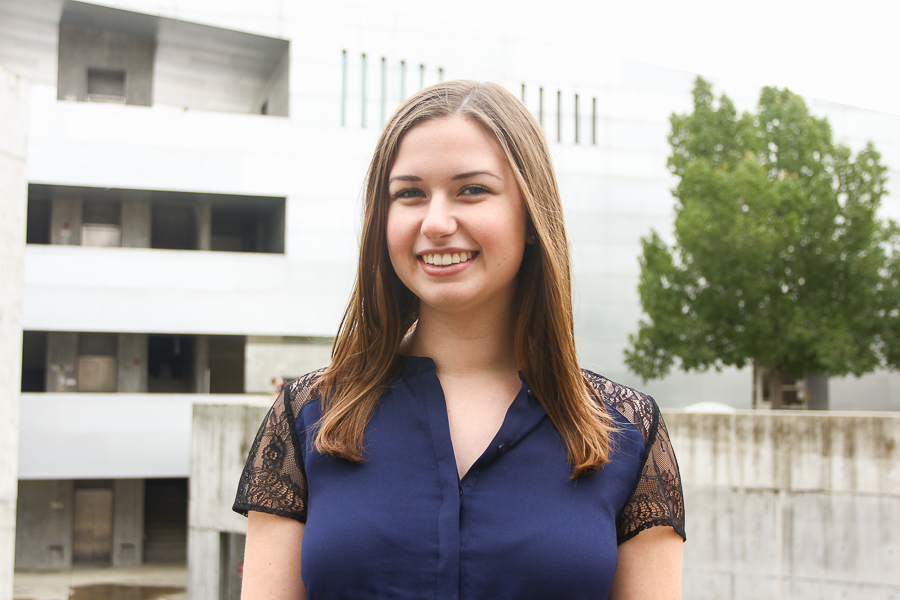
ASUCD Senator Sofia Molodanof’s term ended at the end of Winter Quarter 2017 after a year in the association. She ended her time as senator with a senate voting record of 69 yes votes, 3 no votes and 14 abstentions.
“Being on Senate was such an amazing experience for me,” Molodanof said via email. “I learned so much more about the incredible units, commissioners, and individuals who make up ASUCD and grew so much as a person. Being a Senator has truly made my time at UC Davis unique and unforgettable. I would like to thank everyone who elected me and supported me throughout my time in Senate.”
Molodanof, a third-year English major, ran on platforms related to mental health advocacy, efforts to display nutritional information in the CoHo and increasing amenities on campus.
During her term, Molodanof helped to organize a Student Mental Health and Wellness Fair, worked with the CoHo’s food services director in trying to provide nutritional information and was able to secure an additional microwave for the CoHo as well as a hydration station on the first floor of Wellman Hall.
Molodanof also authored Senate Bill 85 in Spring 2015 and Senate Bill 3 in 2016, and she co-authored and introduced Senate Bill 34.
ASUCD President Josh Dalavai, who served two terms in Senate with Molodanof, said that Molodanof showed persistence toward the issues she cared about.
“She was very dedicated to her platforms and to the mental health community,” Dalavai said. “I think she put her best foot forward in achieving her platforms and she was good at what she did. She was never afraid to voice her opinion, and it was good to have very vocal people on the table like herself, offering various viewpoints.”
On senate resolutions, Molodanof retains a record of 12 yes votes, 0 no votes and 0 abstentions. Regarding her platform, Molodanof said that she was pleased to have followed through with most of her promises, and she said that she will continue working to complete some of them.
“I’m happy that I was able to accomplish most of my platforms,” Molodanof said. “A few are still in the works, but I know that with a little time, students will hopefully be able to benefit from them. Through my experience as a Senator, I learned that things don’t change overnight and it takes time to make real progress. Although my term as a Senator has ended, I am committed to making sure that I implement all the changes I ran on.”
Maria Wong, a fourth-year pharmaceutical chemistry major and unit director of The Pantry, one of the units that Molodanof adopted during her term, said that Molodanof was supportive when it came to a number of issues.
“I do remember one instance during budget season that she was very supportive of the Pantry, and she supported us all the way even though the Senate wanted to make really big cuts,” Wong said. “She stood by our side all throughout. That was one of the main things that I remember about her as a senator.”
During her term, Molodanof was absent for three meetings and arrived late for one. These instances led to most of her abstentions, including five on May 5, 2016, when she arrived at 9:41 p.m., four on Dec. 1, when she was absent and three on Feb. 2, when she was absent.
Molodanof also authored a constitutional amendment during her term. Constitutional amendment #48, which passed with a vote of 10-0-1, changed the ASUCD constitution to allow the Chief Justice of the ASUCD Court to replace an Elections Committee chairperson as a member of the Interviewing Committee for ASUCD Court members.
Most notably, Molodanof was the only “no” vote on two other constitutional amendments, #49 and #50. Constitutional Amendment #49, which passed with a vote of 10-1-0 and moved to abolish the Judicial Branch, was approved during the Fall 2016 elections. Constitutional Amendment #50, which passed with a vote of 9-1-1 and moved to create a replacement for the Judicial Branch, was subsequently vetoed by former President Alex Lee.
“Sofia was a wonderful Senator,” Lee said. “She was always courageous and spoke her mind, even when it wasn’t popular with the Senate. She voted her conscience and did not follow like sheep during most topics/votes — not something I can say of most senators. She pursued her goals diligently, despite even being mocked for her platforms during the election. Overall I would say she admirably represented students and was reliably open minded.”
Molodanof said that she is grateful to have served as a senator for ASUCD.
“It has truly been an incredible experience serving as one of your ASUCD Senators,” Molodanof said. “Thank you again to all those who supported me and were there for me the entire journey.”
Editor’s note: Molodanof also served as an adopted senator for The California Aggie during her senate term.
Written by: Ivan Valenzuela — campus@theaggie.org
Senator term review: Irveen Grewal
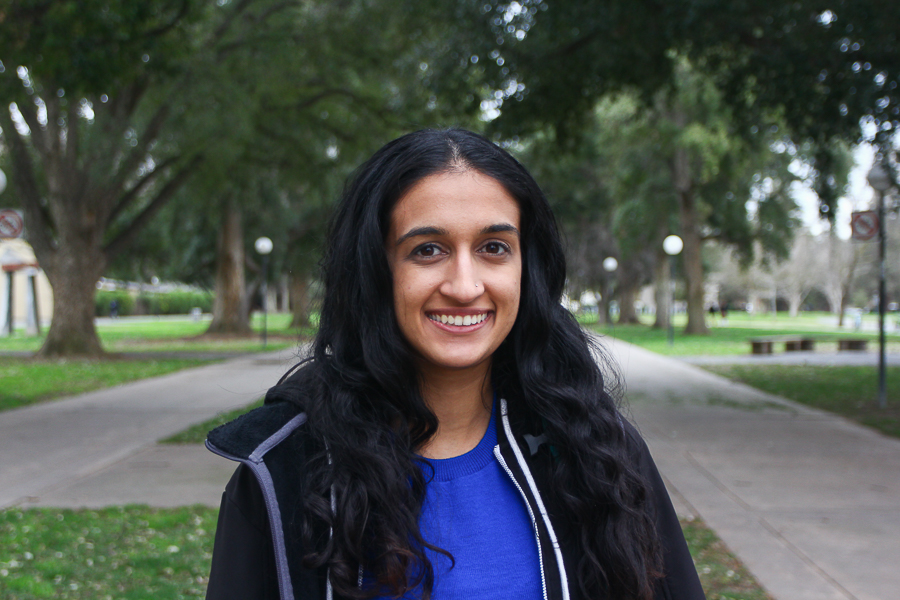
Irveen Grewal, a third-year political science major, is one of six ASUCD senators whose terms have come to an end. Grewal ran on the Summit slate with a platform promising to provide student resources. This included plans to increase the number of nap areas on campus, provide more 24-hour study rooms, increase safety on campus by working with the UC Davis Police Department as well as Specialized Transportation and Tipsy Taxi — which was one of her adopted units along with Housing Advising for Undergraduate Students — sexual assault advocacy, improving cultural awareness and improving campus visibility.
Grewal confirmed that she did make progress in implementing her platforms. As for cultural awareness, she started the initiative for Punjabi classes to be offered; however, she stated that this process “takes years to complete.” Grewal added that she “worked closely with the library committee to develop plans for what students would like and what facilities they want.”
Grewal also sponsored 10 to 15 bills that she said mainly targeted “the courts and my units or if it was for the committee I was assigned to.”
In hindsight, Grewal wishes she had a “better understanding of how all the committees work and also have better collaborations with the units,” as she felt she was properly prepared for some things, but not others.
In addition to her position as senator, Grewal was elected as pro tempore of the Senate by other ASUCD senators.
“My role as pro-temp [was] very administrative,” Grewal said. “I worked a lot on hiring new commissioners, unit directors and committee members. Also, I worked with elections along with working closely with admin.”
She went on to add that “it feels good to be elected by my fellow peers, as I am able to work closely with [the] majority of the senators.”
With regard to Grewal’s position as pro tempore, former Senator Shaitaj Dhaliwal of the Based slate commented, “Irveen took her role as pro tempore very seriously. She was always present at meetings and ready to go. In terms of my experience with her, it has always been pleasant.
According to Senate recordings, Grewal only missed one meeting in her term, during which Senator Julie Jung acted as temporary pro tempore.
When asked to comment on Grewal’s effectiveness as a senator, former ASUCD President Alex Lee commented that he does not believe Grewal achieved her full potential; however, “few people can say that they do.”
Lee went on to add that the executive office did most of the reform on Grewal’s adopted unit, Tipsy Taxi. He said that Grewal and a few other senators were invited to collaborate on the reform project; however, they did not do so. Lee’s take on Grewal’s role as pro tempore is that she could have displayed better leadership and “capitalized on that opportunity.”
He concluded that Grewal was “not a bad senator, but she was not remarkable.”
With Grewal’s term coming to an end, so has her involvement in ASUCD.
“I will be focusing on law school, so I will not be continuing ASUCD,” Grewal said.
However, she added that she will continue to work on her platforms and “will offer my help in any way I can.”
Grewal advised new senators “to make sure to organize your time effectively” and “help units through bills and various projects.”
Written by: Kimia Akbari — campus@theaggie.org
Senator term review: Michael Chan
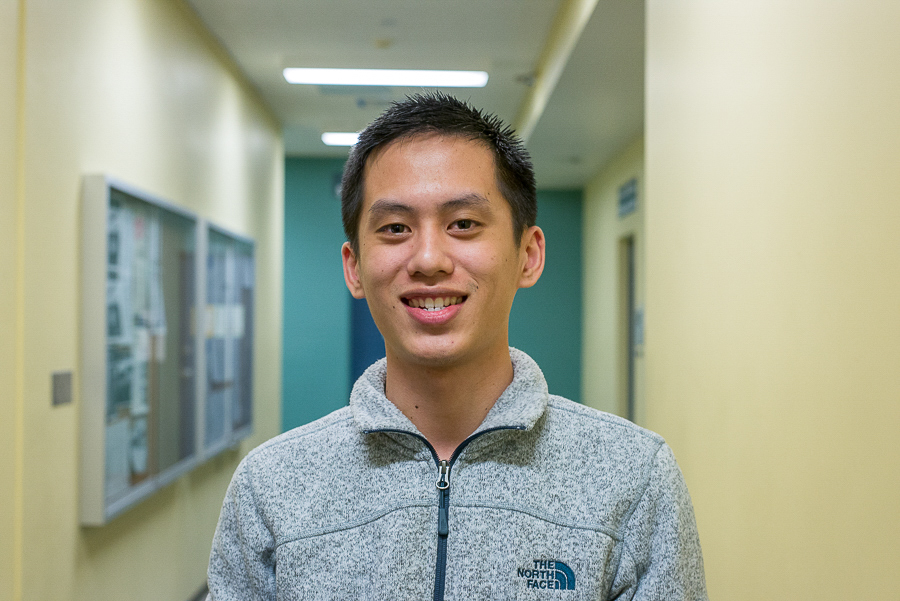
Michael Chan, a fourth-year computer science major, was sworn in as an interim ASUCD senator on Feb. 9 to replace Senator Sam Park, who resigned on Jan. 19.
During his time as interim senator for ASUCD, Chan had perfect attendance during Senate meetings. In his one-month tenure, he never adopted any units, nor did he sponsor any bills for ASUCD.
“Michael was often an enigma to other people on the table, and it took him a while to adjust to ASUCD,” said Senator Samantha Chiang via email. “Yet once he did, he offered keen insight and showed us a different perspective that many of us entrenched in the association would have failed to see otherwise.”
Former Senator Shaitaj Dhaliwal shared the same sentiments on Chan’s insightfulness during Senate meetings.
“Chan was a senator for a one quarter term,” Dhaliwal said. “During that time, he took his role very seriously and always added wonderful insight and comment during Senate meetings.”
Alex Lee, former ASUCD president, highly praised Chan and wishes he could extend his term.
“Chan helped write a few bills with me, was always critical-minded and voiced his opinions despite them perhaps not being popular with the Senate,” Lee said. “He was brave not to follow like sheep, which most senators easily and happily do. He knew the value of his vote and did not give it easily. I only wish his term were longer than an interim basis, as I believe he would make an effective senator. Unlike most interim seats, he demonstrated a great capability to be effective inside ASUCD and perhaps then go on to bigger campus projects.”
Chan emphasized that he never had a specific platform he worked for during his time as interim senator.
“I joined Senate less so on any specific platform and more with the intent to add a more representative and equitable voice and thought process to the table,” Chan said. “Discussions went from being relatively one-sided when my term began to having a bit more thoughtfulness for groups of different backgrounds by the time my term ended.”
At the start of Chan’s term, he mentioned that he would like to provide students of all backgrounds access to quality and affordable education. Chan believes access to affordable education begins with access to affordable housing in Davis.
“We’ve seen widespread housing issues for our students, which has only been getting worse over recent years,” Chan said via email. “Because the root of these problems lies, in part, due to a disconnect between the City of Davis and the UC Davis students, one of the things we’ve been working on is re-establishing the roles and responsibilities of a joint UC Davis-City of Davis work force that aims to coordinate common efforts and discuss issues and concerns.”
Although Chan will be ending his tenure with ASUCD, he will continue his efforts outside of the Senate.
“As ASUCD continues to bolster these efforts, I’ll continue separate efforts off of the Senate table, specifically with an initiative that seeks to encourage students to register to vote within Davis and Yolo County, and participate regularly in local elections,” Chan said via email.
Chan wished that he could have reached out more to the computer science department and students during his term.
“This department has been facing issues, both large and small, at least over the past year, if not longer,” Chan said via email. “These issues range from facilities management and cleaning issues to a liberal use of baseless academic dishonesty referrals to Student Judicial Affairs.”
Chan’s advice for incoming senators is to keep up with the fast-paced quarter system and to have an open mind.
“I wish the newly elected Senators the best of luck over the course of the next year,” Chan said via email. “UC Davis quarters go by fast, so once you have your agenda, start working towards it as soon as possible. Always keep your ears open for new voices and perspectives, not only from those on the Senate, but also those in the student body. With thousands of students in various groups across campus, working towards representing each of them is a daunting task, but keep trying and don’t let impossibilities get in your way.”
Written by: Yvonne Leong — campus@theaggie.org
Senator term review: Ricardo Martinez
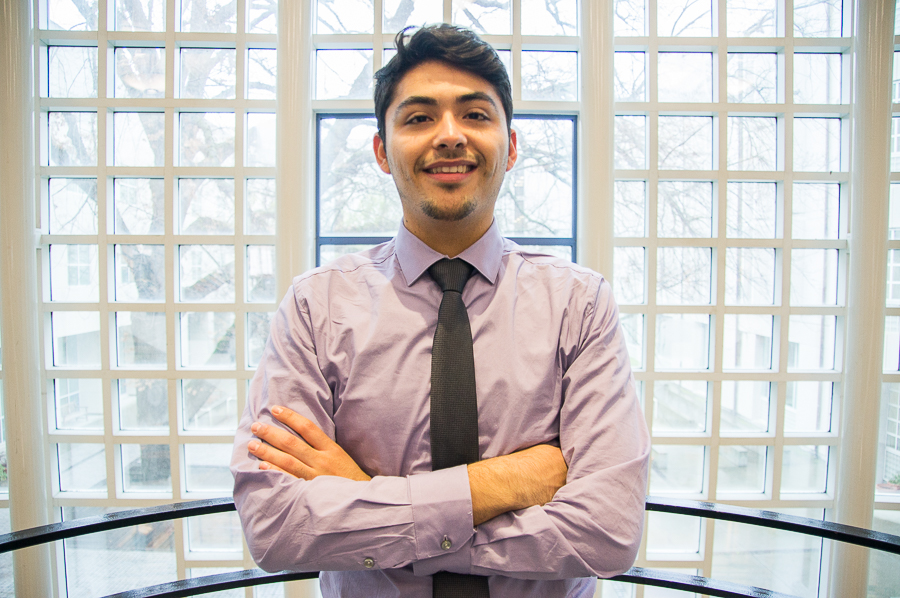
Ricardo Martinez, a fourth-year political science-public service and philosophy double major, has completed his year-long term as an ASUCD senator. During his campaign, Martinez promised to expand Chicanx/Latinx retention and recruitment, renovate the Aggie Job Link (AJL) and expand the availability of Community Advising Network (CAN) counselors.
Martinez predominantly focused on bringing together the underrepresented Chicanx/Latinx community.
“He definitely wanted a voice for his community, which I don’t think has very much representation right now,” former ASUCD President Alex Lee said.
Martinez managed to develop a Chicanx/Latinx Student Council during Winter Quarter to bridge the gap within the general Hispanic community by inviting multiple clubs, organizations and on campus centers. In general, Martinez hoped to create better understanding and communication between ASUCD and the community of color.
“It takes a long time for something like that to work,” Martinez said. “I’m hopeful in the future there will […] eventually be a solid foundation for the Chicanx/Latinx community.”
He also met with the Internship and Career Center (ICC) to make the AJL, which was updated during Fall Quarter, more accessible.
Martinez said he struggled to bring more CAN counselors to the Student Health and Counseling Services on campus due to insufficient funds from the UC. Instead, Martinez put his efforts toward creating mental health workshops by partnering with the Cross Cultural Center, Center for Student Involvement, the AB540 Center and other organizations.
Additionally, Martinez adopted Unitrans and Picnic Day as his units. Unitrans unit director Anthony Palmere said Martinez often attended Unitrans advisory committee meetings and helped address any issues that arose. Pamere said he was helpful and accessible and that he cared about the students.
“We didn’t need a lot of assistance, but when we needed it he was there,” Palmere said. “He brought concerns to us that we otherwise would not have been aware of.”
Likewise, Picnic Day unit director Chelsea Hernandez said that Martinez was useful in various situations as an advocate for Picnic Day.
“He listened to the concerns we had and really did consider the issues we brought up that perhaps a lot of people miss and think [are] really simple in putting on this day,” Hernandez said.
Lee said Martinez worked well on the projects he took on but could have better used his position to make progress in the UC Davis community. However, Lee said he was empathetic and took many ideas into consideration.
With the intention of having a higher voter turnout for the senate elections last quarter, Martinez led efforts to reach out to the UC Davis community through Snapchat. The UC Davis Snapchat story received over 4,000 views.
Martinez thinks he was successful in what he hoped to do as a senator: reorganize the Chicanx/Latinx community, update the AJL and improve mental health resources. Additionally, he was absent from one Senate meeting this academic year.
“I’m proud of the work I did in terms of laying the foundation and getting things started,” Martinez said.
However, Martinez said there is still much more to be done and hopes newly-elected Senators Marcos Rodriguez and Yajaira Ramirez will be able to carry on his work. He helped prepare Marcos and Ramirez for their terms and provided them with useful information on how ASUCD operates before they began.
“They are very capable of performing [and] are going to be good representatives,” Martinez said. “They’re going to be continuing what I wanted to do.”
Martinez advises that current and future senators shadow a senator for a couple of weeks to prepare for the position.
“Ask them directly […] what exactly ASUCD is in terms of the inside [and outside] operations of it and how a senator approached both of those issues,” Martinez said.
Martinez is currently in the UCDC program in Washington D.C. and will graduate this June.
Written by: Jeanna Totah — campus@theaggie.org
How to master the FarMar

From live music to tasty food
The Davis Farmers Market is the place to be during Spring Quarter. There’s always live music playing on Wednesdays, fresh food to eat and the guarantee of running into people you know. Below are a few tips on how to master the farmers market!
Bring a blanket to sit on, because the grass might be wet and most likely all the benches and tables will be taken. Bring a jacket for later, because, even though it’s springtime, once the sun goes down, so does the temperature.
On Wednesdays there is always live music, all performed by local bands and ranging from blues to jazz to surf music. There will always be at least five little kids dancing and some older folks who most likely went to Woodstock in the ’60s.
There is an abundant number of food options. All the different food stands make it easy to meet up with a big group of people because everyone can pay separately, and people don’t have to worry about the hassle of splitting the check like you would at a restaraunt. The tamales are always a big hit and so are the corndogs. At the Saturday farmers market, the breakfast sandwiches are sure to cure any morning blues. Visitors should make sure to bring cash, because many vendors do not accept credit cards. There is an ATM located at the park, but generally there is a long line to access it.
Check out all the different produce vendors before you buy. The apple juice is one of the best things about the farmers market, so make sure to try some. Also, most vendors give samples if you ask. All of the produce is either grown or made by the seller. Finally, don’t forget to look at all the interesting crafts people make.
The magic of the FarMar during Spring Quarter can be felt with the mere sight of Central Park covered with people, from college students to families all mixing together. This is a great place to take pictures, laugh with friends and soak up the sun.
The Wednesday farmers market hours are from 4:30 to 8:30 p.m., and the Saturday hours are 8 a.m. to 1 p.m.
Written by: CaraJoy Kleinrock — arts@theaggie.org
Senator term review: Shaitaj Dhaliwal
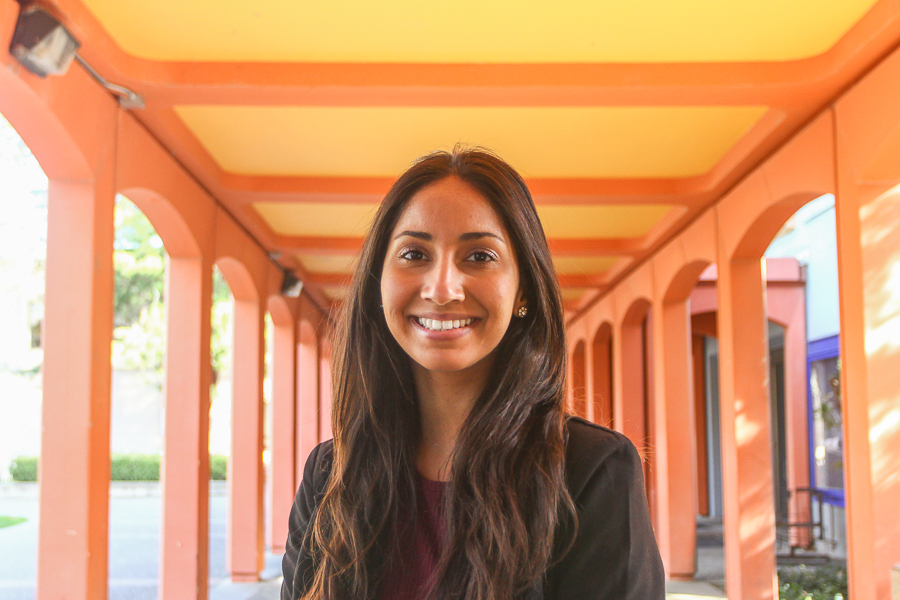
At the end of the Winter Quarter, Shaitaj Dhaliwal’s one-year term as an ASUCD senator came to a close.
Dhaliwal spent four years in ASUCD. She served as an ASUCD staffer her freshmen year, worked on the Office of Advocacy and Student Representation board and became chief of staff for the executive office as a sophomore. She then was elected senator in the Winter Quarter 2016 elections.
Her platforms in 2016 included starting a student-based music festival, offering healthier food choices at the Silo and creating temporary lounge spaces within Shields Library. According to Dhaliwal, these platforms were thwarted following the resignation of former Chancellor Linda P.B. Katehi, as all required the signature of the chancellor to allocate the necessary funds for each project.
During her time in Senate, Dhaliwal, along with former ASUCD President Alex Lee, was invited by Interim Vice Chancellor Ralph J. Hexter to participate in UC Davis’ decision in the switch from food vendor Sodexo when the contract expires at the end of this year. By agreeing to a new contract with the University Managed Food Service, healthier food options would be made available in the Silo. Dhaliwal’s involvement in this process included reviewing the potential options for new food vendors to make sure they aligned with her vision of providing students with healthy food options.
Dhaliwal also had the chance to meet with contractor Koby Learner to discuss student lounging spaces in Shields Library. During her campaign, Dhaliwal heard student opinions on what should be included in a library renovation and participated in the open forums as part of The University Library Space Planning Project to gain knowledge on the student body’s opinion regarding the library’s future. She took these ideas to Learner during her meeting with him and, in return, received a promise from the contracting company that they would implement the desired aspects in the future construction.
“I’m happy to know that whatever they do end up doing with the library isn’t just what the consultants think is right, but is actually what student input suggests,” Dhaliwal said.
Dhaliwal was unable to fulfill her platform of establishing a student music festival. UC Davis currently has the highest student government fees, which are imposed on all students, in the entire UC system. Dhaliwal was hesitant to increase the ASUCD student fees, which would be a necessary step for the prospect of a music festival.
“[Alex Lee] was in the works of getting the fee referendum with the Entertainment Council [for the music festival], which is essentially another student fee that students would be paying for in order to fund, which I was really against,” Dhaliwal said. “I already know [UC Davis is at] the top of the list […] for the highest tuition and fees of all the UCs.”
Instead, a tentative music festival is scheduled for fall 2017. The event is a collaboration of Dhaliwal, Senator Jose Meneses and possibly the executive branch and will showcase student talent on a stage that UC Davis already owns for use during the Whole Earth Festival. The event would be student-run and completely ASUCD funded.
In addition to working on her platforms, Dhaliwal was able to establish UC Davis as the first college to host a Silver Ribbon Campaign, an event that promotes women’s reproductive health and rights. Dhaliwal hopes that with help from new Senator Rahi Suryawanshi, the campaign will become an annual event on campus. Also during the 2016-17 year, Dhaliwal worked with the ASUCD Entrepreneurship Fund and the club Start Up Hub to organize the first UC Davis conference for business and entrepreneurship. The event is slated to be held May 28 this year.
KDVS and Picnic Day were Dhaliwal’s adopted units — units that she felt were sufficiently self-reliant. Her involvement within these units consisted mostly of assisting with bureaucratic processes and scheduling quarterly check-ins.
“We did not have a lot going on while she was our adopted senator, so we did not do much one-on-one,” KDVS general manager Olivia Henderson said. “Our major stuff wasn’t major. It didn’t require her to get down and dirty. She was a supportive senator and a great person.”
As a senator, Dhaliwal sponsored five bills and had a staff of six, two of whom, Meneses and Suryawanshi, are now current senators. According to Lee, Dhaliwal voted “occasionally” during Senate and had a lack of noteworthy achievements during her term.
“Aside from the Silver Ribbon Campaign, I cannot think of any other remarkable feats,” Lee said. “I am not too sure about the remarkableness of her term.”
Lee also noted that this lack of term accomplishments was common in Senate and attributed it partially to lack of accountability enforced from the student body and little competition during elections.
To future senators, Dhaliwal gave the advice to find a work-life balance. She noted that often senators deal with copious amounts of criticism and stress.
“I would definitely say a work-life balance is really important,” Dhaliwal said. “If you just see [senators] at senate meetings, the reasons why they get so upset over minor things are because they are really stressed out over everything else that’s going on […] Senate I would say is more stressful than exec, and that’s just because you’re criticized so much more whereas exec you can always fall behind your office, close those doors and just take some time.”
Written by: Lindsay Floyd — campus@theaggie.org
Native American Academic Student Success Center opens on campus
Center strives to empower, retain Native American scholars
The Native American Academic Student Success Center (NAASSC) held its grand opening on Monday, April 10.
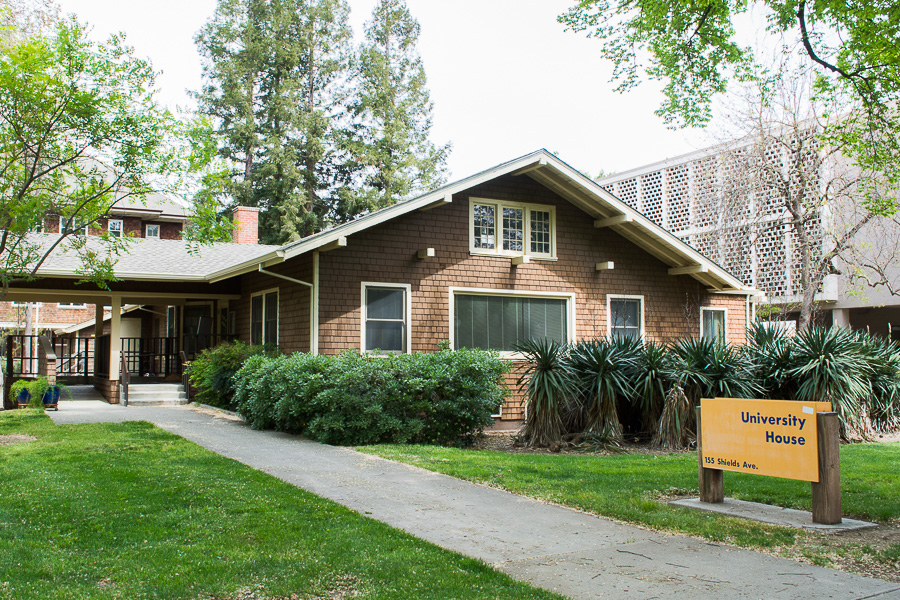
Located at the University House, the center is part of the three retention initiatives developed by Student Affairs, which includes the African American Diaspora Center and the Chicano and Latino Academic Success Center. The NAASSC revolves around Native American retention, matriculation and graduation.
According to the UC Davis website, the center allows Native American students to “connect with resources, facilities and programming that enhance their academic success” and gain “a sense of belonging […] in a culturally appropriate way.”
Kayton Carter, the director of the African American Diaspora Center, worked with Vice Chancellor Adela de la Torre to develop the concept for the center. Students have been using the space since Sept. 1, although the official opening was on April 10.
According to Michelle Villegas Frazier, director of the NAASSC, the center strives to give Native American students “a home away from home.” Frazier pointed out that Native American students are smaller in number compared to other ethnic groups at UC Davis.
“Sometimes you go across campus and you don’t see anyone who looks like you,” Frazier said. “And you want to feel connected.”
The center offers a space for Native American students to meet and get together with other students.
“It’s cool to bring the little community into one center and we can all freak out over things we have in common,” said Celeste Joaquin, a third-year English and communication double major who has been involved with the center since last year.
The NAASSC is partnered with the Educational Opportunity Program at UC Davis to provide one-on-one academic advising for students, especially for those struggling with difficulties like academic probation.
Additionally, the NAASSC works with Native American Studies and partners with the residence hall Learning Living Community program to provide a Native American Learning-Living Community in residence areas.
In terms of academics, Frazier said that the NAASSC holds a First-Year Aggie Connection to help students adjust to college life. The center also works with the Student Academic Success Center and holds an academic workshop every week, such as “What to do after a test.”
Cultural gatherings are also organized through the center; last quarter the center’s staff held a spaghetti and bingo night for students. Although the center focuses on Native American students, Frazier said that all students are welcome to participate.
“Oftentimes in college we just focus on getting [students] to graduate but we also need to provide them resources and tools to get students to the next step,” Frazier said. “Because these students will be our future doctors [and] leaders.”
Frazier hopes that the center will build strong students who can then go back to their communities and help more native Americans graduate from high school, and in turn empower the Native American community.
Written by: Clara Zhao — campus@theaggie.org
What’s in a walk-up song?

Before at-bats, baseball players choose songs to prepare them for competition
Before a batter steps up to the plate and his name is announced, a ten-second snippet of a song blasts from the speakers. Every player’s walk-up song is different, with the genres ranging from country to R&B to chart-topping pop hits. The Aggie sat down with the UC Davis baseball team’s captains to talk about their walk-up songs and some of the traditions behind them.
Redshirt junior pitcher Zach Stone has Kid Cudi’s “Dat New ‘New’” but that wasn’t always the case. Per team tradition, newcomers to the team don’t always have the luxury of choosing their own song. For Stone’s first year on the team, his walk-up song was “Blow” by Ke$ha, which he stresses that he did not pick for himself, but rather the team picked for him.
“The fans liked it,” Stone said. “You could see some of the them singing along every once in awhile.”
A walk-up song can have a big affect on a player’s psyche, and players will often change their song if they’re not hitting well. Senior first baseman Cameron Olson recently changed his walk-up song to “Country in My Soul” by Florida Georgia Line.
“I had to change up the mojo,” Olson said. “I just try to pick a song that I enjoy.”
Redshirt senior first baseman Mason Novak, whose walk-up song is “Danger” by Mystikal, knows that a walk-up song can really set the tone for a solid at-bat.
“I picked it because it’s kind of funny,” Novak said. “It kind of starts out goofy because it just yells ‘Danger!’ and I think it’s kind of funny. I’m not a big guy on getting charged up, so it’s all about staying loose.”
His teammate Stone agrees.
“I didn’t want something that was too aggressive,” Stone said. “I just want to stay calm out there. In the past, I’ve had a little bit faster paced stuff and this year, I just wanted something that was a little more mellow and [to] try and stay relaxed.”
Dobbins Baseball Complex has been the host to some rather unusual walk-up songs, but if they work, they work. Most memorably, a few seasons ago, former redshirt senior infielder Nick Lynch had “The Circle of Life” from the Lion King as his walk-up song.
Walk-ups songs, regardless of which song the player chooses, are an integral part of the game, and they’re beloved by both fans and players.
“I love having a walk-up song,” Novak said. “I think it’s part of the game [and] I think it’s kind of funny seeing different guys and what they like. I don’t think any song will get you too charged up because it’s only ten seconds long, so it’s kind of just a fun part of the game.”
Written by: Liz Jacobson — sports@theaggie.org
Community Day of Service underway

City of Davis needs volunteers for community projects
The City of Davis will host the Community Day of Service on April 29. The Community Day of Service, an event the city has put on for the past three years, is designed to bring together the people of Davis through a day of constructive volunteer work.
The day begins with a breakfast that is sponsored by the Davis Police Department and is run by volunteers. Carrie Dyer, an administrative analyst at the Davis Manager’s Office, explained the kickoff breakfast and what volunteers should expect.
“We provide a breakfast, a kick off breakfast,” Dyer said. “So, we are looking for volunteers to help set up, cook and clean up from that […] The Davis Police Officer’s Association contributes funds for it and they sponsor the breakfast. And then we have volunteers who actually do the setup and the cooking and the cleanup, which is great.”
After the breakfast, volunteers will travel to their project areas. As Dyer explained, the projects themselves take place all over Davis and Yolo County, involving volunteers in different and varied work.
“At North Davis Elementary they’re doing a school garden clean up,” Dyer said. “At Da Vinci [Charter Academy] it looks like they are doing the same, also a weed and garden clean up. The Center for Land Based Learning is farming related activities […] The [Yolo County Library] project will be likely moving books around, making sure books are in order, maybe some dusting, that sort of thing. [The library] is a great project for people who really would like to do something that’s inside, instead of outside.”
Along with these projects, the City of Davis has also posted about an additional two projects online, one of which is park maintenance.
“Volunteers will help prune native trees along the path at our Wildhorse Agricultural Buffer,” the description reads online. “The trees need to be pruned for health, safety and visibility for trail users. All volunteers will receive a brief pruning tutorial and will work in small groups.”
Nicodemus Ford, the Cannery Farm coordinator, further explained that there will be three areas of work that will be concentrated on during the Community Day of Service.
“One, we have an actual herb garden that sits adjacent to our barn,” Ford said. “I purchased twenty or thirty strawberry plants that need to go in the ground. And since the rains have stopped we will be doing direct planting […] The second project that we have is the entryway into our barn […] The third area that we will be working on is in our orchards.”
Ford mentioned that there were some potential bumps in the planting, but maintained that volunteers would be able to help sort out these issues.
“Many of the trees are kind of growing straight up and so we will need to kind of place spacers in the branches, so the trees are kind of growing in more of a U shape, which allows proper yield on each one of the trees,” Ford said.
The City of Davis is still in need of volunteers for the projects. Sign-ups can be found at http://www.signupgenius.com/go/5080c4ca9a729a5f58-davis.
Written by: Nicolas Rago – city@theaggie.org
Trump sells out Americans on internet privacy


 Republicans put corporations over constituents in repeal of FCC regulation
President Trump and Republican lawmakers recently demonstrated that when it comes to internet privacy, they intend on satisfying corporate interests rather than safeguarding the personal information of the American people.
Trump signed a resolution earlier this month that overturned a spearheading privacy regulation developed last October by the Federal Communications Commission (FCC) during the Obama administration. The rule would have reigned in the level of authority broadband providers maintain over customers’ online data, prohibiting massive telecommunication companies from compiling and selling internet users’ activities to advertisers and other buyers.
By revoking the resolution, however, Congress is allowing internet service providers (ISPs) like Comcast Corp., AT&T Inc. and Verizon Communications Corp. to continue to turn a profit from their customers’ browsing histories, shopping habits, app usage and recorded locations — whether they consent or not. Most alarmingly, the new measure also obstructs legislators from adopting similar privacy regulations in the future, shattering the possibility of progress for internet privacy advocates.
The Republicans’ explanations for repealing these regulations are — as expected — nonsensical, transparently corrupt and insulting to those they’ve been elected to represent. Ajit Pai, the new chairman of the FCC, claimed that the rule would give social media websites and search engines, which are permitted to sell internet users’ private data, an unfair advantage in advertising over phone and cable companies. Other Republican politicians argued that rescinding the regulation therefore levels the playing field, allowing both types of companies to generate ad revenue from their customers. Just as with websites, they asserted, consumers who are rightfully appalled at corporations making money off their search histories and sensitive information can simply switch to an ISP that promises better privacy. The market, proponents of the anti-privacy law proclaimed, will then adjust itself accordingly.
But drawing comparisons between website and broadband marketplaces is a deceitful and half-hearted attempt at justifying the destruction of shields that guard consumers from hungry corporations. Unlike social networks and other sites, the telecommunications industry is not a free market. Local governments and public utilities ensure that the barriers of entry for broadband companies remain staggeringly high, rendering competition within the ISP sector practically nonexistent. Many Americans have few to no alternatives to their current home broadband provider, chaining them to a company whose privacy policies they may not agree with whatsoever — especially in rural areas. With access to the Internet becoming increasingly vital to life in the 21st century, Americans essentially have no choice but to pay for an ISP that can be — and most likely will be — utilized for their private information and financial gain.
On the other hand, citizens aren’t forced to pay for services like Facebook and Google, and they can easily opt out of using certain social media sites and search engines if they are dissatisfied with their privacy practices. These websites consequently maintain an incentive to listen to their customers, while government-regulated broadband companies simply do not. Although high-speed Internet providers have sworn to respect consumer privacy in the days following the repeal, what’s truly motivating them to shy away from nefarious business practices? To add even more salt to the gaping wound that is this ruling, consumers already pay for ISPs, shelling out considerable amounts of money to have their sensitive information sold to the highest bidder.
Even beyond the flimsy reasons for backing this law, Republicans must answer to a swarming sea of frustrated Americans — both liberal and conservative — who have consistently and bipartisanly prioritized internet privacy. With conservatives valuing liberty and liberals wishing to protect everyday citizens from corporate interests, individual privacy is an increasingly rare issue that both the far right and far left agree on. So the rhetorical question looms over the majority party: how can lawmakers believe that Americans really want less digital privacy?
The answer is, of course, they don’t. Congress’s decision to undermine their constituents’ overwhelming concerns about privacy, as well as the thousands — and sometimes hundreds of thousands — of lobbying dollars funneled into politicians’ campaigns from the interest group 21st Century Privacy Coalition, shows that the repeal serves only to benefit broadband behemoths and politicians.
To combat this resolution, Americans should begin turning to virtual private networks (VPNs) and encryption services to protect their browsing information, while state governments need to strengthen local internet privacy. Red and blue states like Montana, Minnesota and Illinois are already taking additional steps to preserve their residents’ data in response to the federal law. These state regulations will be crucial in the fight for consumer rights, especially if Republicans continue their streak of harmfully backtracking for the sake of party politics.
Written by: Taryn DeOilers — tldeoilers@ucdavis.edu
Disclaimer: The views and opinions expressed by individual columnists belong to the columnists alone and do not necessarily indicate the views and opinions held by The California Aggie.
Newly-released books to read during spring quarter
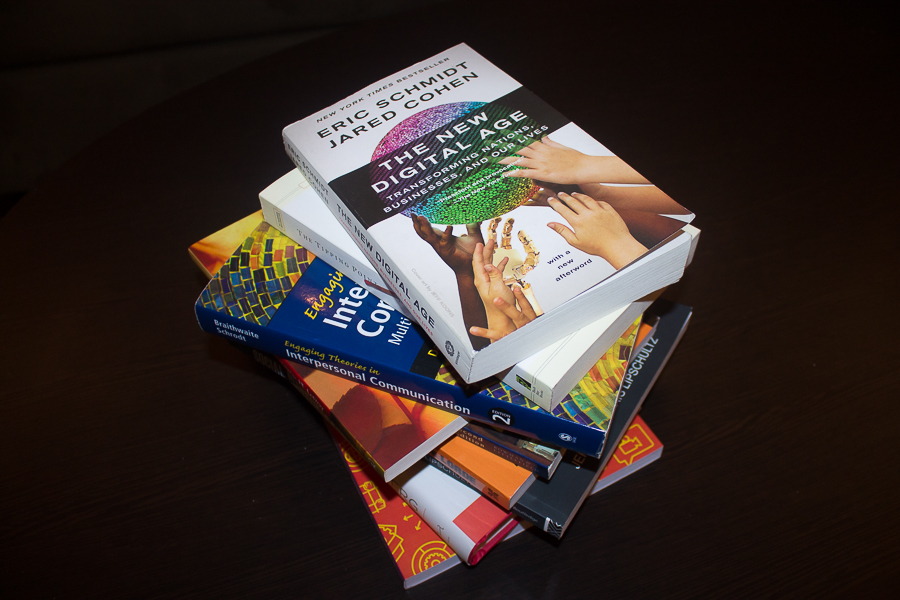
Spring reads and sunny days on the Quad — the perfect pairing
Spring Quarter is here, and with it comes the slow but inevitable approach of the disgusting Davis heat, the bittersweet ending of the school year and the opportunity to finally relax in the Quad and soak up some sunshine. So if you’ve found your coveted spot in the grass, sit down, relax and enjoy some spring reads.
Non-Fiction: Universal: A Guide to the Cosmos by Brian Cox and Jeff Forshaw (Da Capo Press)
Given the current stress-inducing political climate, it can be refreshing to take a step back for a moment and to dive into the mysterious wonders of our universe to help put everything into perspective. Acclaimed physicists and bestselling authors Brian Cox and Jeff Forshaw reintroduce us to questions that we might have pondered as kids and have long forgotten about — how old is the universe? How big is it? And how exactly do scientists go about collecting the data that leads them to their conclusions? The authors explore the scientific process and the answers to these questions in a way that is understandable and fascinating to the average reader. As The Guardian writer John Crace described, “….what this book is going to do is allow you to answer some of the big cosmic questions while lying down in your back garden after having a few drinks” — you might as well do this in the Quad, sipping on an iced coffee.
Short Stories: What Is Not Yours Is Not Yours by Helen Oyeyemi (Riverhead Books)
Oyeyemi invites us into the lives of her characters, who are searching and longing for human connection and who are all linked to each other in some way by the constant re-emergence of key connections throughout the short stories. The author does an excellent job of blurring the lines between reality and imagination, sprinkling elements of magic and secrets into the plot that’ll have you impatiently flipping to the next page to see what happens next. The stories are crafted so uniquely, with weird and vivid descriptions, that they create a certain darkness that is intriguing and exciting — if not a bit ominous at times. This eccentric and heavily-praised book is the perfect storyteller to put you into an almost dream-like state, so be careful not to miss your next class.
Fiction: Lincoln in the Bardo by George Saunders (Penguin Random House)
Celebrated author George Saunders, perhaps best known for his acclaimed short stories, has released his first full-length novel about a father and son, focusing on none other than Abraham Lincoln and his deceased 11-year-old son, Willie. Publisher Penguin Random House may sum the novel up best: “Formally daring, generous in spirit, deeply concerned with matters of the heart, it is a testament to fiction’s ability to speak honestly and powerfully to the things that really matter to us. Saunders has invented a thrilling new form that deploys a kaleidoscopic, theatrical panorama of voices to ask a timeless, profound question: how do we live and love when we know that everything we love must end?”
Humor: It’s All Absolutely Fine by Ruby Elliot (Orion)
If you’re looking for a light read while you’re soaking up the sun in between classes, check out Elliot’s book that features cartoon drawings with text that have garnered her massive online fan base. Her spot-on and witty style captures the basic struggles of young adults and can be best described as “an honest and unapologetic account of day-to-day life as a groaning, crying, laughing sentient potato being for whom things are often absolutely not fine.” The 22-year-old London-based illustrator captures the difficulty of a variety of relatable struggles, from the general “adult-ing” to mental illness and anxiety, in a brutally honest and amusing way that reminds us that everything is going to be ok, even if it’s not always “all absolutely fine.”
Written by: Pari Sagafi — arts@theaggie.org
100 years of progressive tradition
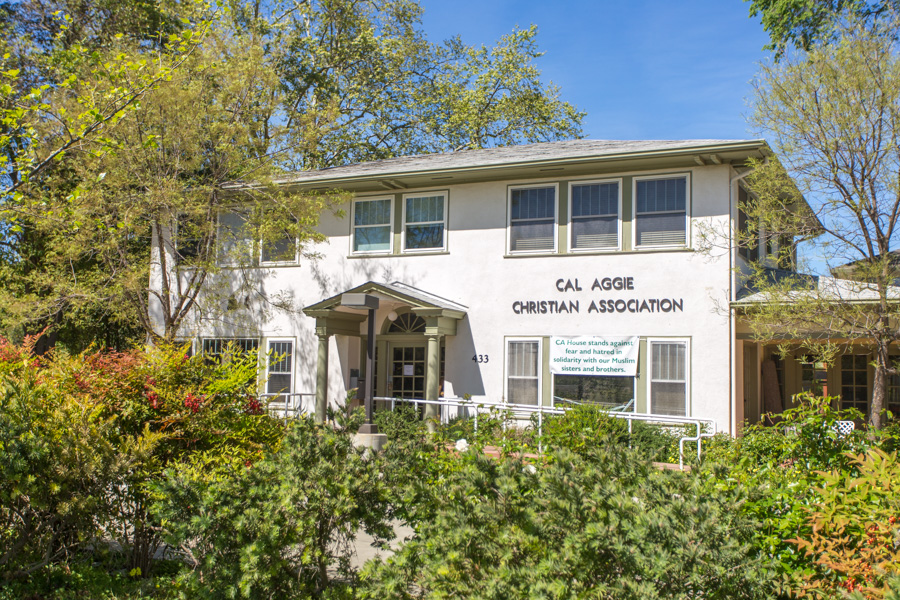
The Cal Aggie Christian Association celebrates its 100th anniversary
The Cal Aggie Christian Association (CA House) is a multi-faith living community that celebrated its 100th Anniversary on April 8. Over the last 100 years, the CA House has maintained a platform of support for all UC Davis students.
To celebrate its legacy, the CA House held its event “Walk Through History” on April 8 to provide discussions about the community and programs the CA House offers, along with tours and refreshments. The CA House was founded before the university in 1916, and has served as a pioneer to campus groups such as the Women’s Studies Center.
“[The CA House holds] respect for individual cultural and religious tradition,” said Jim Cramer, the chair of the Cal Aggie Christian Association Board.
By the 1960s, the association quickly became a place of counseling and guidance for students facing the draft during the Vietnam War.
“Kids were in transition with issues that were very complicated around world affairs such as Vietnam,” said Reverend Clay Ballard of the CA House. “[We] tried to help college kids who were being drafted into Vietnam […] with the fundamentals of conscious objection.”
As the years continued, the CA House became known for its willingness to take in any and every student seeking a family in Davis. During the 1970s and 1980s, the CA House pushed for research regarding women’s health and gender support for all sexual orientations. This led to the establishment of the Alternatives in Birth Control led by a campus minister adviser, which has now evolved into the Women’s Resources and Research Center and the LGBTQIA Center. The CA House formally announced its living community as an available home for students of all gender affiliations by the late 1980s, expanding its living community on their property.
Yet, what has kept the CA House successful and growing over the last century has been its dedication to the needs and concerns of students in the context of Christian faith.
“[The association has] tried to live out progressive social justice values,” said Joe Archer, the acting executive board member.
The CA House has accomplished this by being involved with major political events such as the farm worker’s movement, voting rights movement, civil rights in the 1960s and current events such as the recent 2016 election.
Multi-faith intern and resident Fathima Mujahed, a second-year biochemistry and molecular biology double major, maintained that the CA House remains successful both outside and within the living community.
“[We] attain to all faiths and religions, even those who don’t necessarily believe in a faith,” Mujahed said.
Written by: Madison Lyznick – city@theaggie.org
Guest: Women, Interrupted — A lesson in persistence from my philosophy professor
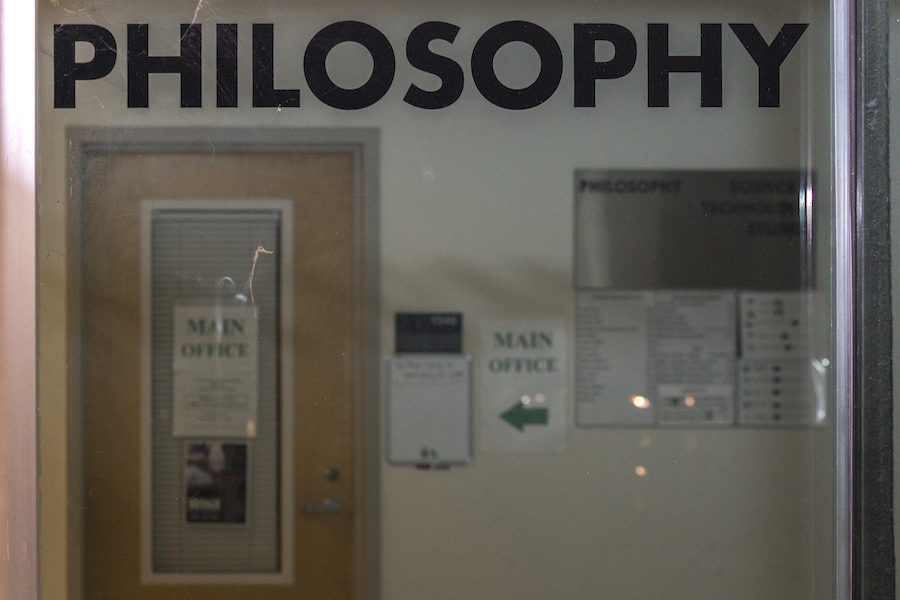
I’ve been so accustomed to hearing women being talked over that it shocked me to hear it disrupted
“Excuse me, wait until I’m finished speaking.”
I’ve heard my philosophy professor direct this statement and its variants multiple times at young men in the classroom. She isn’t sexist. Given the opportunity, I have no doubt she would say the same to a woman. But the girls in my classes simply don’t interrupt. The boys do.
Over the course of nearly six months in her classes I’ve watched my professor interrupt the interrupters regularly and without hesitation. She’s defended her own speech and the voices of other women, but in every case the story is the same. Someone is speaking, another person starts to respond or comment, and she tells them to hold their thoughts until the speaker is done.
I was uncomfortable the first time I witnessed my professor do this, but not for the right reasons. In fact, I was completely startled when it happened because I hadn’t even noticed she was being talked over. I think the disruptive student was just as stunned — mortified, even — that he had done such a thing (to an ethics specialist, of all people). I remember he approached her after class to apologize, and I left the room trying to make sense of what happened. Did he really interrupt? Were they simply engaging in discourse, and she misread? And even if he did interrupt, was her response too abrasive?
All of these questions are, of course, ridiculous. It took longer than it should have for me to recognize these incidences as interruptions and realize she was doing exactly what she should in response to them.
It’s no secret that women (and any group deviating from white men) have had to demand a seat at the seminar table. Academic philosophy has a serious diversity problem, and we are still figuring out how to solve it. A recent study found that in the U.S., women compose only 25 percent of the faculty in philosophy departments. There’s no question that this gap has influenced how women in philosophy are treated and how their work is received — or not received. As a fourth-year philosophy major, I find it pretty depressing that I’ve read more papers written by women in three classes taught by women than in all of my other philosophy courses combined.
I don’t know if students I’ve seen interrupt women are part of this deep institutional problem in philosophy, but I do think our lack of exposure to women or other minorities in academia starts early and shapes our expectations and perhaps the classroom dynamic. This isn’t to say male philosophers or my male classmates are malicious agents with agendas to keep minorities out of philosophy. But recognizing the circumstances under which marginalized philosophers are conducting their work is important.
Philosophy majors are among some of the most well-meaning students on campus, second only to the heroes majoring in enology. We discuss the existence of G-d, abortion, infanticide — virtually all topics of passion unsuitable for light conversation — but I have yet to see a debate become uncivil. Being charitable and respectful are necessary to be a good philosopher, and our professors never fail to remind us of this. So why is it that at least once a week I hear my ethics professor remind my mostly-thoughtful peers to let her finish her sentences?
I don’t think the interrupting students are intentionally trying to derail women from speaking. I don’t think they notice when they do it, and this is why it’s so dangerous — too many of us don’t notice.
The cases we do notice are the obvious ones. When Senator Elizabeth Warren of Massachusetts was silenced on the Senate floor in February, it ignited a firestorm. The hashtag-worthy stories get attention, and they certainly deserve it, but the fact is that anywhere women choose to speak we are faced with threats of interruption or silencing. Eliminating the more apparent injustices requires that we give equal and perhaps more diligent attention to the commonplace interactions conserving them.
And so I hope anyone who has heard someone stop an interrupter has been made uncomfortable. We should all be uncomfortable that women have to remind people to listen when we speak. We should be uncomfortable that our culture favors women’s silence and passivity. We should also be moved by our discomfort to do better by our peers and ourselves by being more conscious of the way we communicate.
As a more reserved student, consistently hearing someone I admire defend her own voice and the voices of others reminds me that when I do choose to speak, my voice is valued.
So I want to thank my professor for defending women’s voices. These moments don’t go unnoticed, and they have meaning.
Written by: Gabrielle Mark-Bachoua