57 F
Davis

Davis, California

Monday, December 22, 2025
Home Blog Page 653

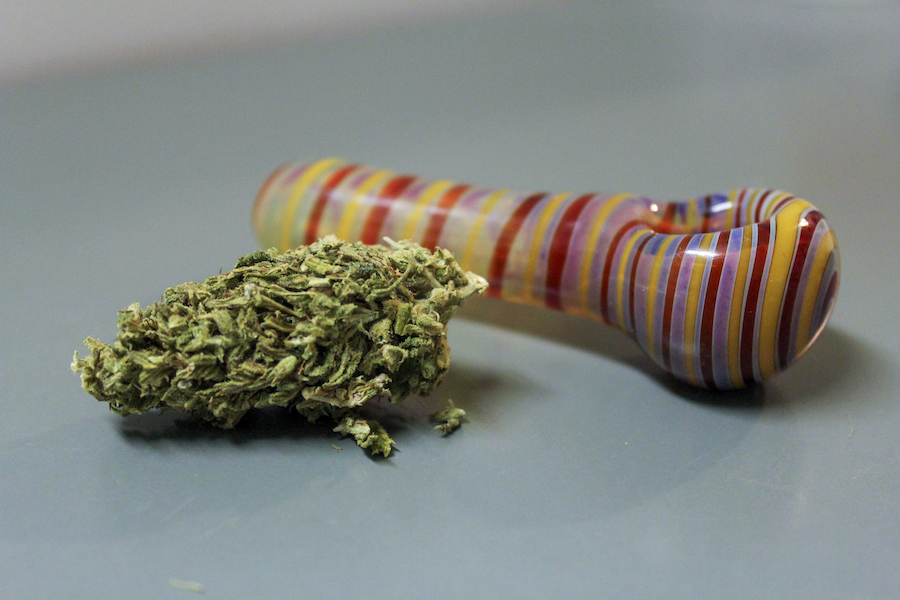
UC Davis offers scientific marijuana course for undergraduate students

ELI FLESCH / AGGIE FILE

Class to explore medical, physiological benefits, risks of cannabis, cannabinoids

UC Davis undergraduate students can now enroll in a new science course that examines the physiological effects of cannabis on major organ systems in humans. Physiology of Cannabis (HPH 115) will provide students with an intensive overview of the health benefits and risks associated with medical and recreational marijuana usage.

The UC Davis School of Medicine faculty designed the course with the intention of educating biology, physiology or pre-med students on the effects of cannabis on the human body.

“The goal of the class is to give all of the students a very detailed understanding of how cannabis send signals in the nervous system and how they control cardiac and respiratory systems,” said Luis Fernando-Santana, the chair of the Department of Physiology and Membrane Biology at the UC Davis School of Medicine. “By understanding how that works, students will have a better understanding of how cannabis as a medical or recreational drug will impact our lives.”

Cannabis is often used to treat chronic pain and alleviate the effects of chemotherapy, according to Santana. However, the plant is often regulated and not easily accessible in every state. Medical use of marijuana is currently legal in 28 states, and recreational use is legal in eight states, including the District of Columbia.

Following the ratification of Proposition 64 in November 2016, which legalized recreational use of marijuana in California, the UC Davis School of Medicine faculty members pushed the notion of designing a class centered on the study of cannabis.

“With marijuana being approved for medical purposes in multiple states and recently with the vote in California that approved the use of marijuana for recreational purposes, we felt that it was imperative that we train our students and eventually offer courses to the general public,” Satana said.

Students enrolled in Physiology of Cannabis will analyze cannabinoids such as tetrahydrocannabinol (THC), chemical compounds secreted by cannabis plants that alleviate pain, nausea and inflammation. The class will also explore the natural cannabinoids produced by human bodies (endocannabinoids) and dangerous, man-made chemical analogs that mirror the effects of cannabis (synthetic cannabinoids).

Yu-Fung Lin, an associate professor at the UC Davis School of Medicine and the course instructor, hopes that the class will enhance students’ scientific perspectives on cannabis.

“I think it is important that we provide the opportunity to educate students about what cannabis and cannabinoids are in terms of their mechanisms and evaluate the current literature on the potential risks associated with it,” Lin said.

The Department of Physiology and Membrane Biology is currently in the works of designing a cannabis class for UC Davis medical school students, which will have a stronger emphasis on the plant’s medical relevance. In upcoming years, faculty at the School of Medicine hope to design a cannabis course intended for students of any major.

Carson Moss, a fourth-year neurobiology, physiology and behavior major, commended the School of Medicine for providing undergraduates with the opportunity to explore more focused interests.

“Ideas about the recreational and medical purposes of marijuana should be formed around facts,” Moss said. “I think educating people on topics such as this is one of the best approaches we have for these controversial topics. […] Perhaps something like this would lead to better research in the future, as well.”

Physiology of Cannabis is one of the only undergraduate courses in the nation that will intensively emphasize the study of cannabis and cannabinoids, according to Santana. As medical and recreational marijuana laws continue to adjust over time, other universities may follow in UC Davis’ footsteps.

“It’s very likely that medical and recreational marijuana will expand their presences in the United States,” Santana said. “We need to prepare professionals for it.”
Written by: Emma Sadlowski — science@theaggie.org
Arboretum waterway restoration project underway

VENOOS MOSHAYEDI / AGGIE

Collaborative project will provide a cleaner, healthier Arboretum

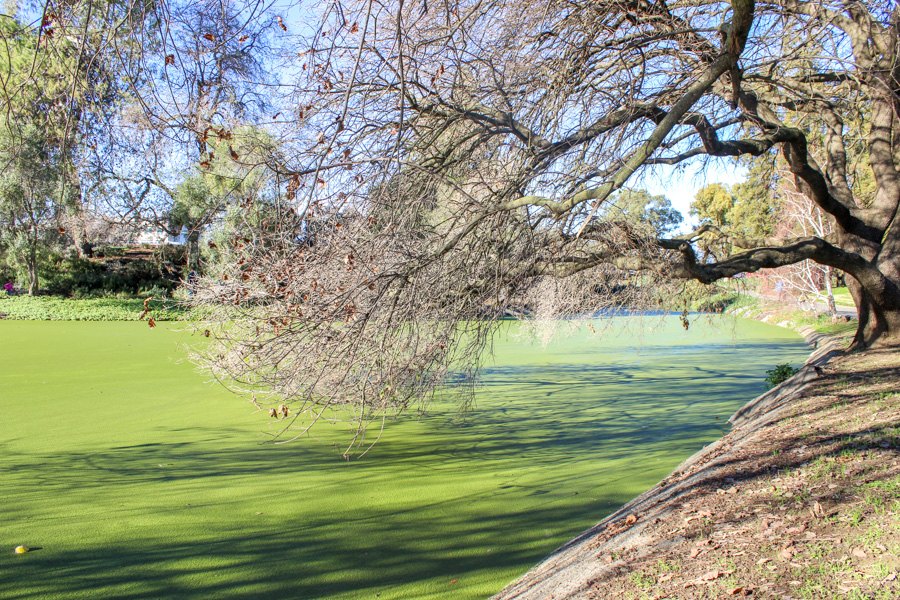
The thick, green Arboretum waterway is a thing of the past thanks to UC Davis professors and Arboretum staff who are launching exciting new programs to improve water health.

Andrew Fulks, the assistant director of the UC Davis Arboretum and Public Garden, is in charge of a program that will launch Feb. 27. According to Fulks, the Arboretum waterway is used as a campus stormwater drainage system and has been maintained in that sense, but not with regard to water health.

“The waterway historically has not had anybody taking care of it from a biological standpoint,” Fulks said.

The Arboretum waterway is naturally inclined to have the infamous green appearance due to environmental factors.

“In terms of how the system functions, its functioning exactly how we would expect when you have [a body of water with] solar exposure in the central valley that is stagnant,” Fulks said. “It is going to naturally grow algae.”

However, Fulks and his team have devised a plan to create a waterway that is healthy and clean.

“We needed to be able to move that water, the input source, all the way to the east end,” Fulks said. “And in order to create flow we had to have elevation change, so the elevation change is going to be these new concrete weirs and they will provide a small drop, enough to keep the water flowing.”

Their vision for the waterway would not only make the water flow, but also change the functionality of the waterway, hopefully garnering more public engagement and making it more wildlife-friendly.

There are also plans to hire an overseer and to change the banks to encourage more biodiversity. The project is expected to be completed over the course of four years in four phases, but that may change as the project advances.

Fulk encourages students to get involved, whether by coming out to watch the construction scheduled to start at the end of this month, or by getting involved in internships offered through the Arboretum.

“We are going to have a student internship […] those students will be working on designing and implementing the restoration of the banks in between the weirs,” Fulks said.

Working with Fulks is Randy Dahlgren, a distinguished professor of soil science who strives to connect the worlds of science research and education. Dahlgren has put together a group of UC Davis undergraduate interns.

“We are learning about water quality, we are learning real world skills that are important in the job, we are learning something of international important because we have waterways like this all over the developing world and in many developed areas,” Dahlgren said.

Dahlgren has worked on similar waterways in China, where he still conducts research.

“One of the things I have been doing for several years in China is looking at these nasty waterways that have no oxygen in them, life if very limited,” Dahlgren said. “[…] One of the things we starting working on there was doing a wetland restoration […] and once we got it done I went, ‘Wow, that’s the same as the Arboretum at UC Davis that I can sample on my bicycle in 30 minutes,’ so it came together for me.”

Dahlgren ran a group internship in Fall Quarter, and will offer one again in the spring in which students collect samples that provide Fulks’ team with feedback on their progress with the waterway.

“This is an opportunity for us to provide information to the restoration people on whether what they’re doing is having any value, so that’s something you often don’t know for quite a few years after you do restoration,” Dahlgren said.

Dahlgren believes that this is crucial for connecting what students learn in the classroom to real life experiences, and he hopes to have many more of these kinds of internships all over campus.

Sue Eebler, the associate dean for undergraduate academic programs in the College of Agriculture and Environmental Science and a professor of viticulture and enology, believes the project is important to the students and campus.

“It’s an experience that we value,” Eebler said. “Students are not only able to get that hands on experience, but see that right away that things that they do have an impact on their community and their surroundings.”

With the launch of this project, the Arboretum waterway that meanders through the campus has now become a symbol of UC Davis professors, students and campus staffs’ ingenuity.

“This campus is student-run and this [project] is just an extension of that,” Fulks said.
Written by: Emma Askea — science@theaggie.org

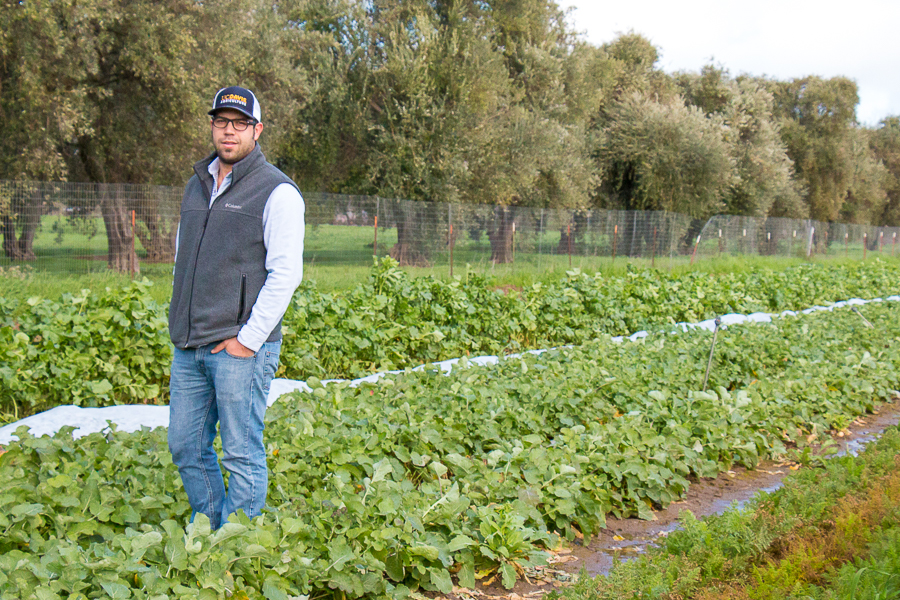
It’s a farmer’s life for me

0
TAYLOR RUNNELLS / AGGIE

Students from diverse backgrounds pursue agriculture

With four undergraduate colleges and over 100 majors to choose from, many students leave UC Davis without ever scratching the surface of the agricultural sciences. However, agricultural science is the backbone of education for the 7,491 students in the College of Agricultural and Environmental Sciences (CAES).

Geoff Koch, a fourth-year sustainable agriculture and food systems major, attributes his budding interest in agriculture to growing up in a rural town in Southern California, where his family owned a couple of acres of land, horses and chickens.

Throughout his life, Koch watched his friends participate in Future Farmers of America (FFA) and the 4-H organization. FFA is a national organization for American youth that promotes and supports agricultural education through classes and contests. 4-H is based in agricultural education but also allows students to explore a broader range of topics such as public speaking and computer science.

“After high school, I explored different jobs working in construction, on a fishing boat and largely in food service, but none of these were professionally interesting to me,” Koch said. “I learned I was interested in working with food, but I wanted to move up the supply chain. UC Davis attracted me for its sustainable agriculture and food systems program and its emphasis on agricultural science with a social science context.”

Growing up in a family that raised its own chickens and eggs, Koch said that he naturally gravitated toward agriculture and was especially interested in where food comes from. Koch currently works for Next Generation Foods, a successful rice farming company operating out of West Sacramento that supplies to local industries and universities, including the UC Davis Dining Commons.
“I’m interested in sustainable design in agriculture, on-farm design and how it can affect agricultural-ecological concerns,” Koch said. “This job has introduced me to nutrient management, ecosystem services and how design can affect and improve those situations on the farm. Agriculture is all about how you can make small changes that can have big impacts.”

After graduation, Koch hopes to continue working for Next Generation Foods, which has offered him a full-time position and salary. While Koch is grateful for this opportunity, his ultimate goal is to attend graduate school and eventually start his own business.

“My business idea will probably take on a lot of different forms,” Koch said. “I want to explain and uncover a lot of things that are misunderstood about agriculture and help it do a better job of representing itself. When agriculture is better communicated to the world, a lot of the public’s concerns about it will sort themselves out.”

Besides public concerns about the agricultural industry, Koch has a personal mission to learn more about the control of large sectors of the economy by a few players, and he questions what these players will do with the power they have. Koch stressed that consumers should let industries know what the public expects of agriculture because, with more knowledge on the subject and the natural changes that come along with progress, peoples’ concerns will continue to be addressed.

“There are really promising ideas and technologies that will improve workers’ safety and will make agriculture be able to feed more people, but also enable it to be a sustainable model that will improve environmental conditions and reduce negative impacts,” Koch said. “I’m excited for the potential of what myself and others can do in agriculture but it is an ongoing process. I would encourage people to look at agriculture, be critical and find sources of information that are credible.”

Gabby Franke, a third-year managerial economics major, with an emphasis on agriculture, grew up spending time on her grandfather’s egg ranch in California. Franke first became interested in agriculture through her pre-college involvement in FFA and 4-H.

“I raised goats for the fair in high school and actually worked on a farm during one summer which was a huge part of what made me appreciate agriculture,” Franke said. “Through FFA I got a lot of experience in different parts of agriculture and even went to Foster Farms. I saw big, corporate agriculture but we would go to family farms too so I got a good taste of California agriculture.”

Franke is now giving back to FFA by working as a student events assistant for UC Davis’ 41st annual Field Day. The CAES hosts Field Day to provide high school students with the opportunity to visit Davis and celebrate their knowledge of agriculture. The students perform in contests ranging from livestock judging to agriculture computer applications.

While Franke is proud to be involved in the university’s largest agricultural event, she knows that this opportunity would not be possible without UC Davis’ ties to the agricultural industry and its strong extension programs.

“If you’re an agriculture student you kind of have an advantage in the classroom because most of the professors are doing their work in agriculture research,” Franke said. “These professors also bring their students into the research fold and give them hands-on experience. My [agricultural] background has helped me relate and understand curriculum on a deeper level compared to people who may not have this background.”

Due to the prestige of CAES, the college receives immense financial funding and  support from the industry itself, as many alumni who become successful in the industry donate their time and money back to UC Davis. For this reason, Franke feels fortunate to study in this field and encourages other students to do the same.

“There’s this idea of corporate agriculture being evil, and I don’t have a lot of opinions on that, but actual farmers and people who do the work are hardworking and trustworthy,” Franke said. “Agriculture is always innovating itself, growing and flexing to serve and help people. It’s a great thing to study because there are always opportunities to do something to help change and improve our culture.”

Agriculture is rooted in tradition, but it has seen beneficial additions and updates, just as Field Day has. Jamie Dehn, events coordinator for the Student Activities and Outreach of the CAES, is head coordinator of Field Day for the second year now.

“Something really cool that a lot of people might not realize about Field Day is that a lot of [high school] students who come to visit Davis wouldn’t necessarily to be able to afford to come see it were it not for FFA,” Dehn said. “In our Field Day class [AED 190] right now, about 75 percent of the students taking the class participated in Field Day when they were in high school and said that it was actually why they chose to come to Davis. It’s great to see young students here because many of them find themselves attending UC Davis and coordinating Field Day from the other end. It was such a big part of their lives and now it’s their way of giving back.”

Dehn does not come from an agricultural background, but, after meeting students through planning Field Day, she has a newfound respect for those who pursue agriculture.

“The amount of knowledge that these students have to know is amazing, and on the day of [the event], they come in and knock it out of the park,” Dehn said. “These kids really care about agriculture and a lot of them have plans to pursue it in college and make a difference, whether on their family farm or in the government […], they’re going places.”

The industry is very human-focused, Dehn noted, and everyone in the field has a unique story as to what motivates them to succeed. UC Davis agriculture students use those unique backgrounds as fuel for innovation that will make feeding the world possible despite various obstacles.

“It’s a ton more than just wanting to go to school to be a farmer,” Koch said. “Agriculture touches every industry — technology, construction, engineering, biotechnology, chemistry, but there are [also] so many social aspects having to deal with workers’ safety and immigration. I came back to what I grew up with, and I’m never going to stop being interested in food and where it comes from and how important that is.”
Written by: Gillian Allen — features@theaggie.org

Photo of the Week: 2/22/2017

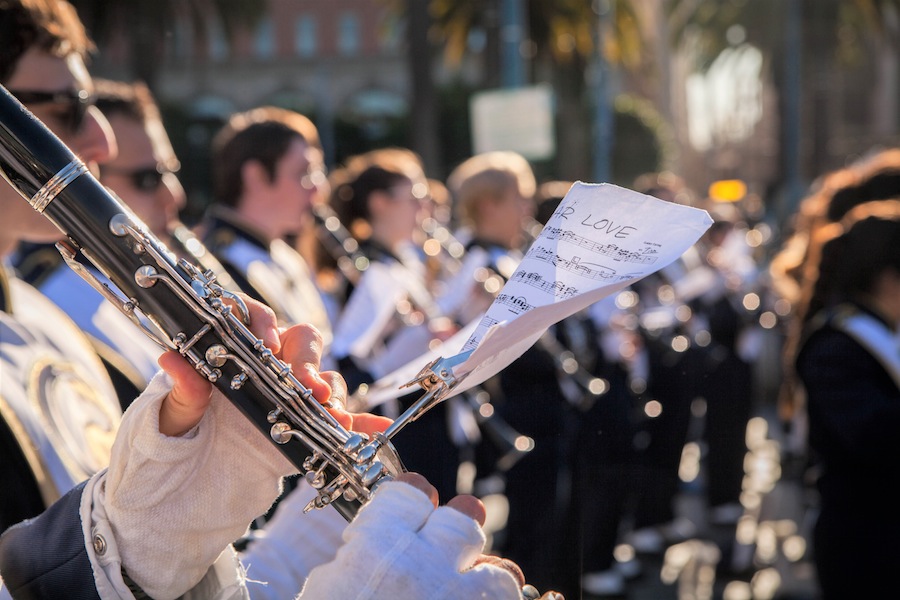
The Band-Uh! clarinets play loud and proud for the Battle of the Bands in San Francisco (12/11/17). (KELSEY GREGGE)

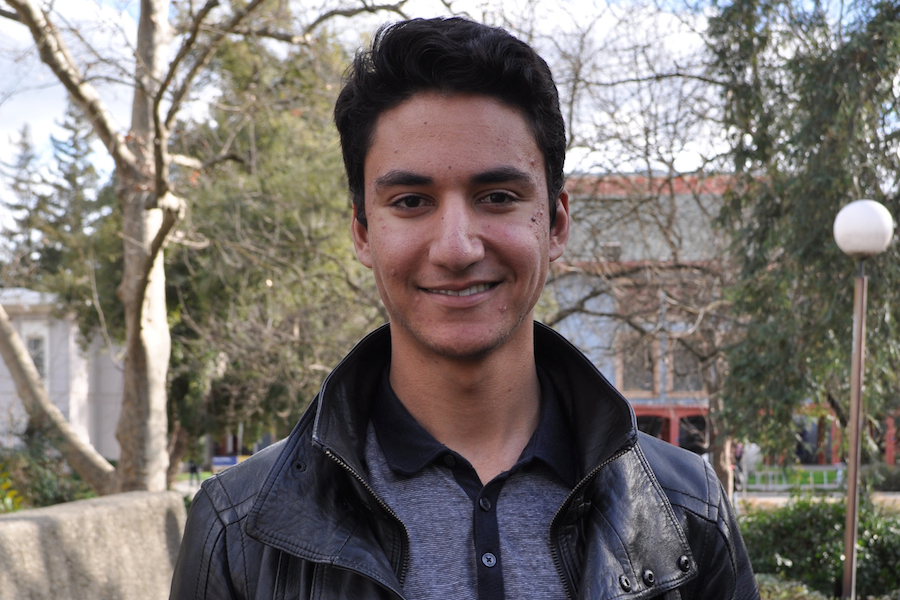
Senate candidate Zaki Shaheen withdraws from race

FARAH FARJOOD / AGGIE

Shaheen’s name to remain on ballot, his votes will not be counted

Senate candidate Zaki Shaheen chose to publicly withdraw from the race during the ASUCD debate on Feb. 21. After one of the debate moderators asked a question regarding one of his platforms, Shaheen spoke briefly about why students run for Senate and how he plans to become more involved with campus issues.

“Why do people run for Senate?,” Shaheen said. “I think that that answer isn’t always very clear when you think about what you can also achieve as just an individual student in the process of learning more about ASUCD and about how this school works and preparing yourself to become a better candidate in the future and I just decided that that’s what I want to do. I’m going to withdraw myself, and I implore all of you to please pass your votes to these other candidates. I intend to spend the next several months learning more about ASUCD, learning more about this school, networking with people so hopefully I can become a candidate that you deserve better in the future. I love this school, I love all of its students, I love all of you and I hope to talk with you more. I’ll be around.”

Shaheen then left the debate.

According to ASUCD Elections Chair Sevan Nahabedian, Shaheen did not withdraw in time for his name to be removed from the ballot, but Shaheen’s votes will not be considered in the final count.

Students can currently vote online at elections.ucdavis.edu until Feb. 24 at 8 a.m.


Written by: Alyssa Vandenberg  — campus@theaggie.org

Lecturers, associates and assistants: what is a professor?

0
HANNAH LEE / AGGIE

UC Davis professors break down official titles, tenure qualifications

Sitting in the lecture hall during her first class of the day, Aristea Bountouvas realized she knew little to nothing about the person standing in front of her — her professor.

Like most students, Bountouvas, a first-year biological sciences major, does not often think about what her professor does aside from teaching. In fact, many students aren’t aware of the major differences between their instructors’ official titles.

“I don’t really think about it,” Bountouvas said. “It’d be interesting to know [the difference between faculty], but I don’t know at all.”

Faculty at UC Davis includes lecturers, lecturers with potential security of employment and lecturers with security of employment. Security of employment is equal to tenure for those on the tenure track, which includes faculty like assistant professors, associate professors, full professors and distinguished professors.

“[There’s] a ladder to promotion,” said Nicholas Palomares, an associate professor in the Department of Communication. “You start out as an assistant, then you move to associate, then you move to full.”

Palomares came to UC Davis in the fall of 2004, and worked for five years as an assistant professor. In his fifth year, he was given tenure. Tenure is security of employment and at UC Davis, is also associated with associate professors and above.

Promotions, at least in the UC system, are considered an advancement from one level to the next level […]  but there are also steps within [each of the levels] [and] the steps within are not considered promotions,” Palomares said. “They are advancements but not significant advancements to the next level.”

What it means to make the cut is different depending on each level. According to Palomares, an assistant professor at a research institution mainly focuses on teaching and research.

“[For the] assistant professor, […] we want to make sure you’re a good teacher,” Palomares said. “You want to be good at having a trajectory toward great teaching because it takes a while to get better as a teacher. [For] research, however, we want you to be an excellent researcher. The standards are a little bit more high for research, although the standards are very high for both.”

Once a faculty member overcomes the hurdle from assistant to associate professor, they receive tenure. With that tenure, however, comes the added responsibility of service. Services to the university, a department or a discipline can include serving on different committees for a department.

“Assistant professors have a little bit of service but we try to reduce the amount of service because the hurdle for tenure is so great,” Palomares said. “[…] We want people to succeed. He or she can focus on research and teaching and making those things excellent.”

The jump from associate professor to full professor includes more research and much more service.

Dr. Emily Albu is a full professor of classics at UC Davis, starting as a lecturer in 1994 and was eventually getting hired as an assistant professor. After authoring several books over a number of years, Albu stands tenured as a full professor. At a research institution there is high standard for research, but according to Albu, the standard for teaching is also rising at all levels.

“I think there’s been a real recognition here of rewarding quality teaching and rewarding it at every level,” Albu said. “[For] example, I am on a committee that’s just been formed in Letters and Sciences to think about create teaching prizes. We do this with the thought that this would be an encouragement and just another sign that teaching is really valued at this university. [We want the prizes to] serve as an incentive for excellent teaching at every level.”

For Albu, students not being able to distinguish between professors is a good thing.

“I think in our program, in classics, we really minimize those differences,” Albu said. “We don’t advertise to students […] because in [the classics department’s] culture […] we are all colleagues on the same mission.”

Written by: Fatima Siddiqui  – features@theaggie.org

Davis stands with Muslim residents

0
MORGAN TIEU / AGGIE

Davis residents show solidarity in wake of travel ban, vandalism

On his seventh day in office, when President Trump signed his thirteenth executive order which imposes an immigration ban on seven predominantly Muslim nations, Muslims and non-Muslims alike across the U.S. cried out against the order.

Of the 37 percent of Davis residents that consider themselves religious, roughly 2.3 percent of permanent residents are of the Islamic faith, in addition to the large portion of Muslim students attending UC Davis. As a result of the diversity at UC Davis beyond the considerable Muslim population, a long-standing tradition of activism on campus and around the community has developed. The recent election has already had an effect on students and residents of Davis, who seem to have readied themselves for the new administration’s list of policies by vocalizing possible concerns that may arise in the next four years.

In light of the Executive Order barring residents of Iraq, Syria, Iran, Libya, Somalia, Sudan and Yemen, Davis has responded with solidarity which speaks volumes.  

“I have noticed an outpour of support for the Muslim community,” said Noreen Mansuri, a third-year neurology, physiology and behavior major and a Muslim student and activist.

In the wake of a hate crime at the Islamic Center of Davis, hundreds of members of the Davis community gathered in Central Park to show their support of the Muslim community. Signs and banners have been hung in front of the Islamic Center, covered in signatures from numerous members of the community and reading “we support you.”

“I do not think there is as much detachment as there has been before,” Mansuri said. “There is no longer this predominating attitude that, ‘well, it does not directly affect me, so I do not really have an opinion’.”

Almost $20,000 was donated to the Islamic Center via an online Kickstarter to help compensate for broken windows, destroyed bicycles and door handles wrapped in raw bacon. Several organizations have offered rewards of over $1,000 in return for the identity of the vandal.

Interim Chancellor Ralph J. Hexter released a joint statement responding to the incident with Mayor Robb Davis and Student Affairs Vice Chancellor Adela de la Torre which stated, “UC Davis and the City of Davis are home to people of the Muslim faith from around the world. Each one enriches our lives and brings new perspectives to our community. We will continue our work to support and protect them and to stand against those seeking to sow fear.”

Although support for the Muslim community continues, there is still no shortage of negativity, according to Mansuri.

“There is still a lot of hateful sentiment,” Mansuri said. “This weekend I received an alert that a box of pork tenderloins was left outside of an apartment known to be home to Muslim students.”

On Feb. 3, a federal judge issued a suspension on the order after the Attorney General in Washington state challenged the order. A request to reinstate the travel ban was blocked twice within a week afterward in San Francisco and Washington State. President Trump responded in a series of tweets and Facebook statements criticizing the appeals.

“The opinion of this so-called judge, which essentially takes law-enforcement away from our country, is ridiculous and will be overturned,” Trump tweeted, following the initial freeze of the travel ban.

On Feb. 10, the president was also quoted saying that he plans to file a new executive order with “very little changes.”

Despite the actions taken by the President, students and residents urge each other to remain informed and ready to support those affected by new developments. Mansuri urges nonmuslims to reach out to their muslim friends in this time of need.

“After you reach out, get involved,” Mansuri said. “Attend events, talks, panels, protests, and educate yourself. There is no shortage of people to talk to. Do not be shy. Be open minded and open hearted.”
Written by: Caitlyn Sampley — city@theaggie.org

Looking for life on other planets

MORGAN TIEU / AGGIE23

NASA scientists conduct research at McLaughlin Natural Reserve

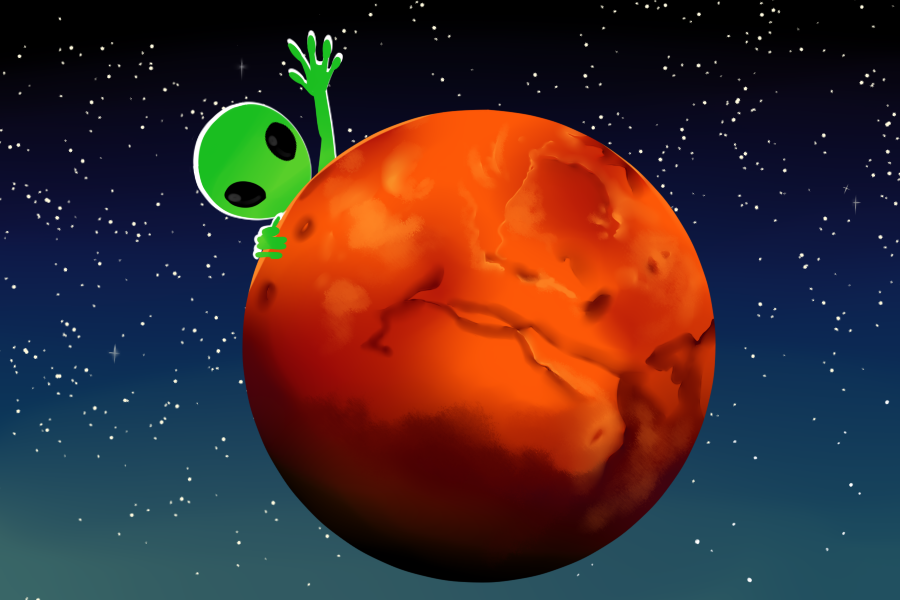
Since the beginning of modern astronomical research, the possibility of life on other planets has been a topic of peak interest. With the goal of looking into the processes that make life possible on our planet, a group of NASA scientists have been working on a research project at the McLaughlin Natural Reserve.

The McLaughlin Natural Reserve, operated under UC Davis, is one of the 39 reserves that exist under the UC Natural Reserve System.

“The UC Natural Reserve System is a network of natural areas around California that have been set aside and protected so that people can do research, learn about natural systems and help address environmental issues,” said Kathleen Wong, principal publications coordinator at the UC Natural Reserve System.

The UC Natural Reserve system consists of a wide range of natural areas including the Bodega Marine Reserve, the Jepson Prairie Reserve, McLaughlin Natural Reserve and many more. Within these reserves, a variety of people from different institutions and universities come together to participate in various research projects.

“[The reserves] are a library of ecosystems that the University of California makes available to both students and faculty, but also the general public,” Wong said.

While McLaughlin Natural Reserve and other reserves in California are primarily utilized for research projects, one of the UC Natural Reserve System’s goals is to educate the public about nature and the world around them.

At McLaughlin Natural Reserve specifically, there are around 50 ongoing research projects. One of the most notable projects is the hunt for conditions on Earth that can be comparable to those on other planets in our solar system.

A group of NASA scientists, including Tori Hoehler, a research scientist at NASA Ames Research Center, have taken advantage of the rich serpentine soils in McLaughlin to study the types of organisms that grow there.

“The rocks [at McLaughlin Natural Reserve] undergo a process called serpentinization: a reaction between the rocks and water. This same process of serpentinization yields fluids that are rich in things like hydrogen that represent the potential for microorganisms,” Hoehler said.

Through the process of serpentinization, organisms have access to hydrogen, a compound that many microorganisms need to survive. Serpentinization also creates a highly alkaline environment that allows specific microorganisms, such as the ones living in McLaughlin, to thrive.

The amount of hydrogen and the specific environment that is formed depends on a multitude of factors, including the composition and temperature of soils.

“The specific reason why NASA is interested in this, is that this process that rocks like our mantle rocks give rise to is widespread throughout our solar system,” Hoehler said. “So this process has the potential of occurring all over the place.”

By looking at the process of serpentinization that occurs within McLaughlin Natural Reserve, scientists are able to see what conditions make life possible on Earth and apply that knowledge to other planets in the solar system.

Knowing that serpentine-like minerals do exist on planets like Mars, NASA scientists are interested in the possibility of this process occurring on other planets. This curiosity is especially sparked by the fact that many other planets in our solar system do not have easy access to sunlight. Because of this, there is a higher chance of serpentinization being a major energy source on these planets, compared to sunlight being the major energy source on Earth.

By analyzing the processes that microorganisms undergo and their interactions among each other in McLaughlin, scientists will be able to apply their gained knowledge from Earth to other planets.

Currently, research is still honing in on the microbiological aspects of McLaughlin Natural Reserve. With this research, McLaughlin now serves as a model for microbial communities that live in alkaline and serpentine-rich conditions.   

There are also many other research projects that are currently ongoing within the natural reserve system. Students and non-students have the opportunity to pose questions and conduct research within these natural reserves. The UC Natural Reserve System gives the public the opportunity to ask questions and get involved.

“All of the reserves would welcome talking to undergrads who are thinking of doing independent studies and help them figure out if doing their research in a natural landscape, such as a reserve would be something that would be rewarding to them,” said Catherine Koehler, resident director at McLaughlin Natural Reserve.

As research continues at this reserve, scientists will continue to get one step closer to figuring out the probability of life on other planets.
Written by: Molina Hauv — science@theaggie.org

UC Davis experiences several recent hate-based crimes

JAY GELVEZON / AGGIE FILE

Students receive email warnings from UC Davis police

The UC Davis community recently received two crime alerts from the UC Davis Police Department (UCDPD) labelled as “suspicious circumstances vandalism/hate incident” and “campus timely warning/hate incident.”

On Jan. 30, the letters “KKK” were found graffitied on the inside of a Memorial Union women’s bathroom stall in blue ink, six inches tall and 12 inches in length. School personnel removed the etching prior to the police arriving at the scene.

Later that week, a piece of pork tenderloin was left on the doorstep of Muslim students at 416 Russell Park between the dates of Feb. 3 and Feb. 5.

Sergeant Max Thomas of the UCDPD explained the Russell Park incident.

“The people who live at the residence came home after being gone for a while and noticed that a piece of meat was lying out in front of their doorway,” Thomas said. “The three residents happen to be Muslim. Their concern was that it may be referencing the incident at the mosque on Russell Boulevard. We’re still investigating — what we’re finding out now is that it may have been done by an animal, because there may have been a nearby trash bag tore or scratched open.”

The incident Thomas is referring to, the vandalism in which windows were broken, bikes were destroyed and pieces of bacon were laid on the mosque’s door handles, happened in the early hours of Jan. 22. In a university-wide email sent the following day, Chancellor Ralph J. Hexter stated that the crime has caused fear and distress among Davis Muslim community members.

“Acts and words of hatred directed toward Muslims as a group is an urgent and growing problem across our society,” Hexter said in the email.

The police department is still unsure if the two on campus incidents are related.

“In this political climate, you tend to find a variety of different acts of vandalism,” Thomas said. “These small acts can become bigger in these sensitive times, and people can react a lot stronger than they would normally.”

Andy Fell, associate director of news and media relations at UC Davis, said that the UCDPD has not identified any suspects.

“There are no suspects for either incident,” Fell said. ”They are still being investigated.”

Fell said that the theory of an animal dragging and dropping the pork tenderloin is a possibility, but that the investigation is still ensuing.

“That would be a benign explanation,” Fell said. “We’re not able to say anything conclusively at this point. The crime alert we sent out was classified as a hate incident based on the presence of pork outside Muslim students’ residence.”

Dinar Kurji, a second-year religious studies major, believes that the Russell Park incident was targeted towards Muslims to intentionally disparage the community.

“I think that act was committed to humiliate a particular sect and to show disrespect,” Kurji said.”They don’t understand that we didn’t consume it and that it is not unholy to touch or clean it up. It was done out of ignorance [and] hate and wasn’t a positive message.”

Written by: Aaron Liss  — campus@theaggie.org

What are your thoughts on UC Davis athletics?

0
ASHLEY LUGO / AGGIE

The Aggie asked students about their on-campus sports teams

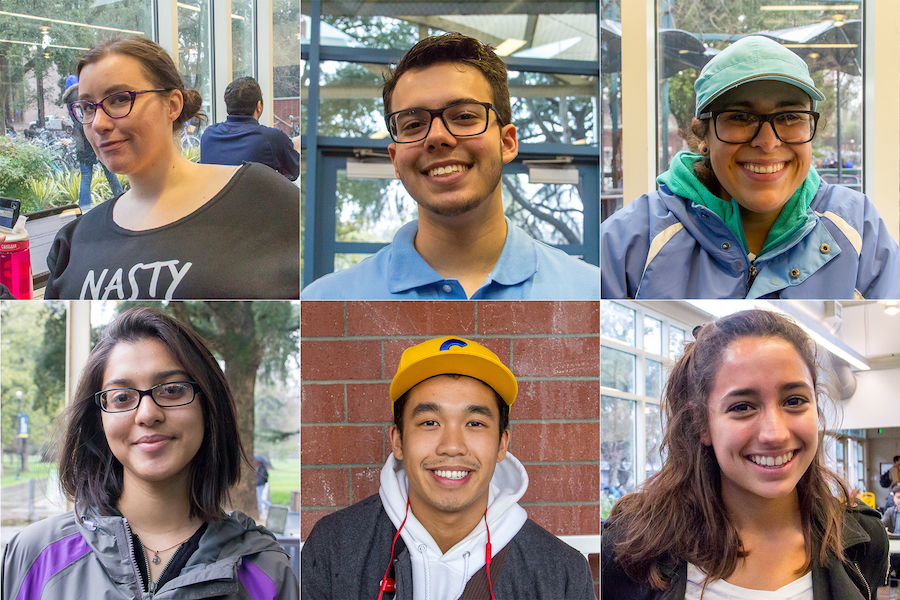
UC Davis is often regarded as a prestigious research university that puts a large focus on the academic success of its population, but a completely different facet is its athletic prowess as a NCAA Division I competitor. With over twenty teams participating in the Big West Conference, The Aggie asked how interested UC Davis students are in the university’s sports programs and what could be done to promote their participation in attending sporting events.


Shawn Geronimo, a fourth-year sociology major

I haven’t attended this year but I used to work with the football team last year so I attended all those games. I went to the ESPN game for basketball last year too. I haven’t [gone] this year, I’ve been busy. I would say [giveaways and events] are enticing to attend more games, but I feel like if we had a bigger sports program in general, that would bring a lot more people in. If we keep on getting better, I’m sure more people would attend. Hopefully in the next year or two, attendance will be really good.

Luca Cerny Oliveira, a first-year undeclared major

I’m a huge sports fan. I really love soccer and went to all the games this year, and a couple other games too. It was a lot of fun and we have great teams. I feel a lot of Aggie pride when I go.


Jenn Taylor, a fourth-year psychology major

I don’t attend mostly because I need to study. I’m an older student, so I don’t care about giveaways. If I want something I’ll just buy it. I don’t really know if there’s anything that would make me attend. Actually, I was going to go to a football game last year, but it was so hot outside. And I was thinking, do I want to do that or do I want to get a margarita? If you’re going to do giveaways give something relevant to [the atmosphere] of the game. So for that football game I would’ve wanted a little fan or something.


William, a fourth-year managerial economics major
I’m aware of the sports on campus, I go to [a game] like once a year. It’s just time constraints that keep me from going.


Mariah, a fourth-year psychology major

I know about them but I don’t watch them. I love baseball. I would attend more if school somehow magically stopped! It’s just studying and projects, and making sure I do that before I go out to a game.


Franco Ramses, a fourth-year economics major

Today we are going to the basketball game! We are [studying abroad] here, and I’m really interested in learning how to participate more, and where to go to find out more about the teams.
Written by: Alex Arechiga — sports@theaggie.org

Serious health effects linked to Agent Orange exposure

PUBLIC DOMAIN

Updated report cites sufficient evidence for various cancers, genetic health problems

The infamous and controversial chemical Agent Orange, used as a war tactic during the Vietnam War, may not seem familiar to students and youth of our current generation. However, its impact on human health can still be observed in today’s society.

The UC Davis Cancer Center published a 2008 study in a scientific journal entitled Cancer, with results showing that Vietnam War veterans exposed to Agent Orange have an increased risk of prostate cancer compared to those not exposed. In addition, individuals exposed developed the disease at a younger age and had more aggressive forms of the disease.

More recently, Veterans and Agent Orange: Update 2014 was released last year by The Institute of Medicine and The National Academies of Science Engineering and Medicine. The report links the toxic chemical to even more diseases such as bladder cancer and other various cancers.

“All committee members [of the updated 2014 report] are responsible for writing, reviewing and approving the papers. Our task was to evaluate if exposure could lead to cancer and if there is sufficient evidence, we can assign cause and effect,” said Erin Bell, associate professor of environmental health sciences at the University at Albany and committee member of the updated 2014 Veterans and Agent Orange report.

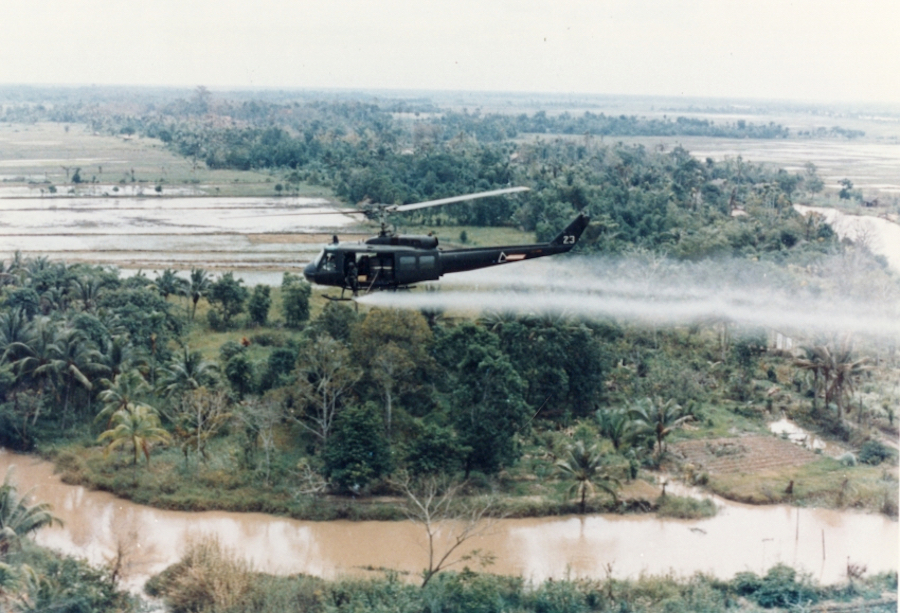
During the 1960s Vietnam War period, Agent Orange was the most common defoliant, used to destroy thick and dense forests in order to expose the enemy and their hiding grounds.

The notorious name came from the color of the striped barrel the chemical was shipped in. A combination of two synthetic compounds, it was contaminated during manufacture with dioxin tetrachlorodibenzo-para-dioxin (TCDD).

The International Agency for Research on Cancer classifies TCDD as a group 1 carcinogen, indicating exposure is carcinogenic and therefore capable of causing cancer. The defoliant was banned in 1970 after researchers found evidence of birth defects in lab animals exposed to it.

“When exposed to certain forms of dioxin, serious types of acne of face and skin can occur, called chloracne. This condition occurred within a shorter time period after exposure,” Bell said.

The 2008 UC Davis Cancer Center study looked at thousands of male war veterans in their sixties and reported the incidence of prostate cancer.

“Looking at prostate cancer, it is hard to study because it is so common in older men. [Linking exposure and risk is] hard to detect because you need a very large study. There was evidence for small risk, but it was consistent,” said Professor Irva Hertz-Picciotto, director of UC Davis Environmental Health Sciences Center and a professor in the Department of Health Sciences.

This study revealed that between 1988 and 2006, twice as many men exposed to Agent Orange had prostate cancer and were four times more likely to have the disease than individuals not exposed.

“The population is still affected, and there is a risk of developing diseases from an exposure that happens many years ago,” said Maarten Bosland, a professor at the University of Illinois at Chicago and committee member of the updated 2014 Veterans and Agent Orange report.

From 1962 to 1971, an estimated 20 million gallons of chemicals were sprayed over the southern half of Vietnam, contaminating the ground, all of the troops and civilian populations that were present at the time.

Upon the soldiers returning from war, many veteran advocate groups called for research and government help after noticing numerous cancer-related health issues.

“With any type of exposure, one of challenges of public health is that it that change doesn’t happen very quickly,” Bell said.

A strong push from the public and the discovery of more evidence linking Agent Orange to various diseases eventually brought change to both healthcare and environmental policy.

“These studies led to a turning point because we noticed a wide range of outcomes that were not immediately obvious from when a soldier returns from war. It prompted coverage of veterans for some long term and chronic effects,” Hertz-Picciotto said.

The congressionally mandated Veterans and Agent Orange Updates has produced significant results in assigning linkage between the chemical and human health issues.

One example is soft tissue sarcoma, a cancer that can begin in the muscles, fat, nerves and blood vessels of the body. Other diseases linked to Agent Orange include Hodgkin’s lymphoma, a cancer of the immune system affecting the white blood cells that impact the body’s ability to fight off infection, and non-Hodgkin lymphoma, where the body produces too many abnormal white blood cells.

The final and most recent update of Veterans and Agent Orange has cited suggestive evidence for bladder cancer and hypothyroidism, a condition where the body does not produce adequate amounts of thyroid hormone, impacting metabolism.

Hertz-Picciotto has chaired the National Academy of Sciences and Institute of Medicine panels on Agent Orange and Vietnam Veterans. The committee series began in 1994 and was put in place by congressional legislation that aimed to address the health effects of Vietnam War veterans exposed to Agent Orange.

“First, we have a public hearing to hear what veteran groups want to say and the issues they want to address. Then we organize how we want to proceed,” Hertz-Picciotto said.

However, veterans are not the only group of people who have been exposed to this  chemical.

“I have heard testimonies of people who handled the shipping of Agent Orange barrels, but still got exposed on the military base, not from combat,” Bosland said.

There is large portion of individuals exposed to the chemical who are often overlooked within the civilian and veteran population of Vietnam, Cambodia and Laos, where the chemical was sprayed years ago. In those areas, dioxins still remain in the soil and the population is in turn being affected to this day.

Even children born to exposed parents today are at risk for birth defects and malformations. Some children die from these unfortunate complications.

Although there is not strong evidence to link these specific disorders to Agent Orange, common issues seen are abnormal neurological and physical development, congenital heart conditions and cancerous tumors.

“We need more information for unique populations [civilians of Vietnam, Cambodia and Laos] to more fully understand how exposures may impact their health,” Bell said.

The health impacts of Agent Orange can still be seen in today’s society, not just in U.S. veterans, but to all those exposed.

“Awareness allows us to ask questions and consider all impacts when we do have these exposures,” Bell said. “It [allows] us to make decisions to minimize negative health effects.”
Written by: Shivani Kamal — science@theaggie.org

Late-night eats in Davis

ANH-TRAM BUI / AGGIE

Places to go to satisfy midnight cravings

It’s 1 a.m. on a Friday night and you’re with friends, wandering the streets of  downtown Davis. Although it may sound appealing to go home and get in bed, the only thing you really want at this very moment is warm, delicious and greasy food that you will undoubtedly regret eating in the morning. This is Davis nightlife in a nutshell.

Whether you spend your Friday and Saturday nights at the bars downtown, dancing the night away at a party or simply hanging with friends, we’ve all been there. Davis, being the college town that it is, is home to numerous late-night eateries available to satisfy your late-night cravings.


Burgers and Brew

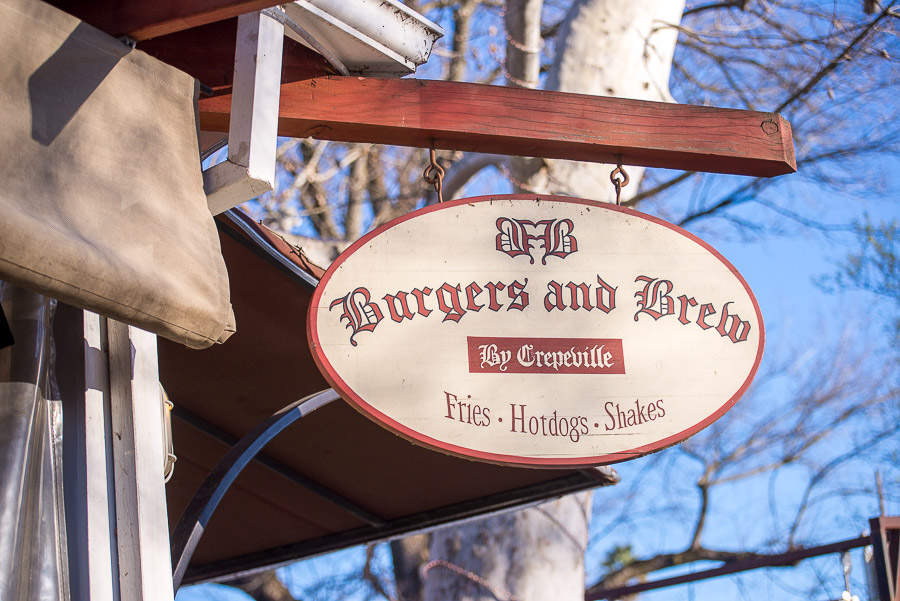
To kick off the list, Burgers and Brew is a classic. This burger joint is praised by Davis residents as delicious during the day as well as in the wee hours. What sets Burgers and Brew apart from other burger places in Davis, besides their addictive curly fries, is the fact that it is open until 3 a.m. on Thursdays, Fridays and Saturdays. Burgers and Brew also has a delicious selection of different desserts and milkshakes for when that food craving quickly turns into an untamable sweet tooth.

“They have these alcoholic milkshakes at Burgers and Brew that are really good,” said Mary Grafilo, a fourth-year neurology, physiology and biology major.

Burgers and Brew is located at 403 3rd St.


Taquería El Burrito

More commonly known as El Burrito, this authentic Mexican taquería is the real deal. The portion sizes are huge, and trying out their carne asada cheese fries is a must, especially to share with friends in the late hours of the night.

“[My friends and I] would always go in a big group after going out to the bars, and somehow we always ended up at El Burrito for the carne asada fries,” said Emma Batmazian, a fourth-year neurology, physiology and biology major.

Taqueria El Burrito is located at 223 F Street and is open until 3 a.m. on weekends.


Woodstock’s Pizza

After a long night out, you can never go wrong with a slice (or more) of pizza. Woodstock’s is famous among Davis residents for having some of the best pies in town. Woodstock’s is open until 2 a.m. and, most importantly, they deliver! So, when the late-night cravings hit, you won’t even have to leave the comfort of your own bed.

Woodstock’s is located at 219 G St.


Sno-Crave

Although Sno-Crave is only open until midnight, this dessert and drink tea house deserves a shout-out due to its close proximity to campus and its delicious selection of boba and sweets. Sno-Crave has it all, from their unique shaved ice to their special honey toast. Kevin Din, a second-year neurology, physiology and biology major, loves Sno-Crave’s more unconventional menu items.  

“At Sno-Crave, I definitely go for the crepes and the chicken!” Din said.

Sno-Crave is located in the University Mall at 825 Russell Blvd.
Written by: Sydney Odman  — arts@theaggie.org

2017 Oscar Nominations and Predictions

GENESIA TING / AGGIE

La La Land expected to continue dominating awards season

I look forward to the Academy Awards every year; the glitz and the glamour, the moving speeches and that special feeling of watching something universal, knowing that people all around the world are tuning in. But I admit that I also watch it for the awkwardness that comes with combining celebrities with rambling speeches, terrible jokes, hurt egos — and the hilarious memes that these moments will produce. But I also believe that it’s a serious and beautiful event that celebrates the art of film, and we should never dismiss the impact that cinema has on our daily lives and opinions. Given the much-warranted backlash of last year’s #OscarsSoWhite, I’m happy to see people of color being given better roles and earning nominations. With my predictions below, I tried to keep in mind the politics of Hollywood, given the importance of promotion, current events, who the Academy Award voters are and what they historically have preferred.

1. Best Picture: La La Land

This year’s best picture nominations feature such amazing and vastly different films that it makes me cringe to watch them compete. There’s the heartbreaking Manchester by the Sea, the hair-raising excitement of Arrival and the empowering Hidden Figures, but I believe that it’s going to be a close race between Moonlight and La La Land. Both have received astounding critical acclaim, and although I feel that Moonlight should win for its groundbreaking and intense portrayal of a modern African American character, I have a strong feeling that La La Land will win instead for its revival of a bygone film genre, much like when the silent film The Artist won Best Picture in 2012.


  1. Actor in a Leading Role: Casey Affleck


Casey Affleck’s quietly understated yet riveting performance in Manchester by the Sea has been consistently raved about, and he’s considered to be a serious contender for the Oscar. However, there’s been much controversy surrounding the sexual assault allegations against Affleck, which raises the question of whether the public is willing to separate the artist from their craft, and whether the Academy of Motion Picture Arts and Sciences will take this into consideration as well. Hopefully we have moved past ignoring alarming personal information about the people we watch on screen, but Affleck’s string of recent awards — including a Golden Globe — seem to hint at him winning the Oscar as well.


  1. Actress in a Leading Role: Emma Stone


I’m personally offended that Oscars sweetheart Amy Adams was snubbed for her work in Arrival, so with her out of the race, there is a close competition between Natalie Portman’s performance as Jackie Kennedy and Emma Stone’s performance in La La Land. I’m not a huge fan of either, and although Hollywood loves biopics, I believe that Emma Stone will win for Best Actress given the overall popularity of the film and the vague consensus that it may be “her time.”

4. Actor in a Supporting Role: Mahershala Ali

I hope that Mahershala Ali wins for his incredible performance in Moonlight, where his character takes on the role of a fill-in father for the movie’s main character, providing emotional comfort and acceptance. Ali portrays all the vulnerability that we want to see in this character, and since I don’t believe the other contenders to be too strong (except maybe the young Lucas Hedges), Ali seems a shoo-in.

  1. Actress in a Supporting Role: Michelle Williams

I found Michelle Williams’ performance in Manchester by the Sea to be incredibly moving, and very Michelle Williams-esque: reserved, yet appropriately and genuinely emotional when need be. Although she doesn’t get much screen time, she is powerful and heartbreaking when we do see her, leading me to assume that she will win in this category.

  1. Foreign Language Film: The Salesman

There’s been much international buzz for Iranian director Asghar Farhadi’s The Salesman, and initially, it seemed almost a given that the film would win this category, as the director’s A Separation won the Oscar for Foreign Language Film in 2012. However, since Trump’s executive “travel ban” order, all participants in the film, including the main actors, have decided to boycott the Oscars. I hope that if the film does win in the category, the director will tune in via Skype, but as of now, everything is up in the air.


  1. Directing: Arrival

This category’s a tough one, since La La Land’s director has been praised for his creativity with tackling a unique category, and Kenneth Lonergan is also a strong contender for Manchester by the Sea. However, I can only hope that Arrival wins, as the film portrayed sci-fi in an unexpected and compassionate way that we haven’t seen in a long time.

  1. Music (Original Song): Anything from La La Land

I am willing to bet all of my meager life savings on at least one of the two nominated La La Land songs winning this category, which would be much deserved. Considering that they are up against that unbearable Justin Timberlake song from Trolls, I would not be surprised in the slightest. However, if Lin-Manuel Miranda’s “How Far I’ll Go” from the animated movie Moana wins, he would be the youngest EGOT (Emmy, Grammy, Oscar and Tony) winner in history.


  1. Writing (Original Screenplay): Manchester by the Sea

Once again, given all of the buzz for La La Land, I can’t help but be almost certain that it will win in this category. A close second — and a more deserving winner, in my opinion — would be Kenneth Lonergan’s Manchester by the Sea for capturing an ordinary scenario and making it genuine, believable and touching.


  1. Cinematography: Arrival


Moonlight’s strong contrasts and beautiful indigo-and-violet palette shine throughout the movie, and La La Land stands out with its bold, happy colors, yet Arrival’s cinematography in my opinion best captures the film’s world. The cold uncertainty of the movie is portrayed with its foggy and sleepy tones, steely greys and darkness that allow only a few, quick moments of light. We’d normally call it muted, yet in this context, it is startling, which is why I think that Arrival will take home the award for this category.
Written by: Pari Sagafi — arts@theaggie.org

Humor: Memes are the only viable filler for the hole in my soul

HANNAH LEE / AGGIE

The woes of a 21st-century gal who hates life and loves relatable pictures about it

This decade has been a one-way ticket to crazy town with the crazy train teetering on one half of the crazy rails. Occasionally, God steps in with something nice like an Oscar for Leo or a video of a lion pulling a Dirty Dancing move with its previous owner in the wild. However, these past seven years have generally been awful.

Instead of persevering with our lives or making heart-wrenching art like the humans before us, the world has adopted a self-deprecating sense of humor that pokes fun at our struggles and hides our inner misery in the wake of the Facebook era.

Let’s get one thing straight: Memes are not those pictures with some unrelated caption written in giant, white, impact letters. I don’t know what those are, but I’ll call them Mom Memes… Momes… Momos… I don’t know — but what I do know is they’re the fake news of meme culture. True memes are things like #saltbae, a true hero to the culinary world who throws salt on a steak to give it a little extra flair. It’s the equivalent of me throwing the word “ultimately” in before I conclude an essay to let the reader know that it’s about to go down.

I don’t know why, but memes are becoming the new puns for me. I need them, but I hate them. For every #saltbae or Evil Kermit I can find, there’s some tool still talking about Harambe, which is the equivalent of making a “Yo Mama” joke except we are not in the fourth grade, so there is no teacher to give me Wednesday Addams eyes to keep me from getting feisty.

Davis memes are essential to the functioning of this university. You cannot put me in the middle of cows, pepper spray, turkeys, squirrels, buses and the five parking spots shared by 30,000 students and expect me not to look for some oddball, self-deprecating image to fill me with school pride. The point is that (cue inspirational, astronaut-themed music) I think we all have some holes in our souls, whether they were put there by the economy, the overwhelming rate of bee deaths or even the nonexistent MU Games area — and maybe memes bring us together so we can talk about our feelings. Maybe memes are the key to world peace — nay, universal peace.

Memes are so important to modern communication that I don’t think I’m asking for much when I say I believe we should officially open a “Meme Studies” major so that we can find the answers to our problems, and find that part of life that is just a little sweeter.
Written by: Olivia Luchini — ocluchini@ucdavis.edu

Gary May a promising pick for chancellor

HANNAH LEE / AGGIE

Napolitano ushers in new era for UC Davis

Gary May, University of California (UC) President Janet Napolitano’s pick for the next chancellor of UC Davis, marks a welcome change for a university plagued in recent years by careless leadership and avoidable controversies.

May, who earned master’s and doctorate degrees from UC Berkeley, and who currently serves as the dean of Georgia Tech’s College of Engineering, will start his tenure as chancellor on Aug. 1, provided the UC Regents vote to approve him on Thursday.

Like former chancellor Linda Katehi, who resigned last year amid backlash surrounding her moonlighting activities on the boards of for-profit universities, May will likely bring to UC Davis a special focus on STEM fields: science, technology, engineering and mathematics. He will also be responsible for ensuring that as UC Davis’ student body grows, and as its campus becomes more prominent in Sacramento, that it does so in a sustainable and effective way.

“[May] was chosen from an extraordinarily talented pool of candidates because I believe he’s the right person to guide UC Davis to even greater heights, advancing academic and research initiatives, building a stronger community with students, faculty, and staff, and furthering relations with the larger Davis and Sacramento area,” Napolitano said in a statement.

May has cited his experiences as a Black man in the sciences to highlight the need for and benefits of more inclusive academic environments. May spearheaded initiatives to enroll more minorities and international students in the College of Electrical and Computer Engineering at Georgia Tech. He has notably argued that diversity should play a larger role in how universities are ranked by the U.S. News & World Report.

Such leadership is long overdue at UC Davis, where African Americans only made up 3.5 percent of the student body in 2016. May would become UC Davis’ first African American chancellor, and the only one to currently serve in the UC system.

By picking May, Napolitano signaled that she wants to keep attention centered on developing UC Davis’ already-strong STEM programs. It’s a noble goal, but she and May must understand the importance of liberal arts to a public university’s mission.

May has written on the need to keep the arts separated from STEM fields. While his point that combining the humanities with the sciences “dilutes the essential need and focus for STEM” is reasonable, that argument does not necessarily preclude the fact that the sciences don’t exist in a vacuum. It would benefit students of such disciplines to further understand the ethical, historical and sociological implications of their studies — especially in a political environment that seems to value objective facts less and less.

This political environment has also made college campuses — and especially UCs — hotbeds of protests, activism and all the tensions that can arise as a result. May remains largely untested in dealing with these issues, and he would be well-advised to treat demonstrators with respect while simultaneously fostering a commitment to freedom of expression.

There are positive signs he will. In an email to students at Georgia Tech after President Trump’s immigration ban, he wrote, “the College [of Engineering] remains committed to diversity and inclusion, and we continue to value the intellect and talents of scholars from around the world.”

But May still must take immediate steps to hold himself to higher standards of accountability and transparency than Katehi, whose tenure was marred by efforts to scrub the internet of pepper-spray references, allegations of nepotism and a host of other ethical questions.

If he does follow through, the Editorial Board is fully confident in May’s ability to take the pragmatic and responsible approach to higher education that UC Davis students deserve.