55.7 F
Davis

Davis, California

Monday, December 22, 2025
Home Blog Page 700

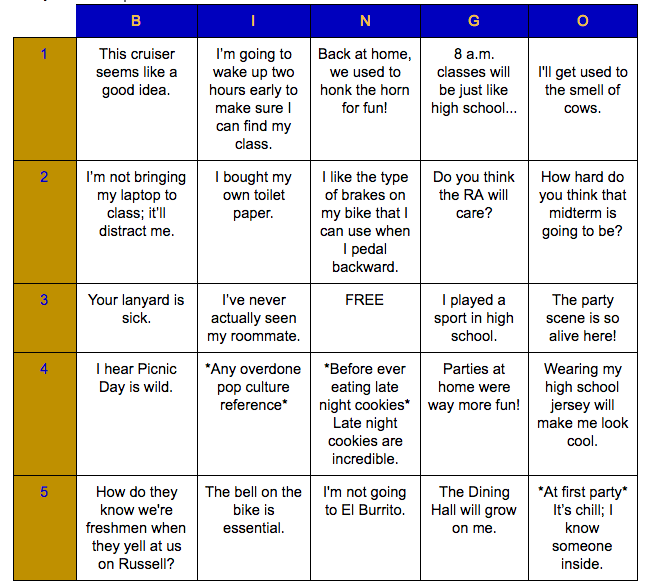
HUMOR: First-year bingo

0

Get five in a row to win a free lanyard

With the beginning of the new year now underway, here is a BINGO card of some things you should expect to hear freshmen saying around campus. Feel free to print one out and play along with your friends!
screen-shot-2016-09-29-at-6-37-37-pm


Written by: ETHAN VICTOR — ejvictor@ucdavis.edu
The Minority Report

0
JAY GELVEZON / AGGIE

Fragile masculinity is a byproduct of the social construction of gender

Masculinity is more fragile than it’s ever been.

The tendency now by some men to overcompensate for perceived slights and threats to masculinity has invited a wide range of responses, from the sarcastic #MasculinitySoFragile to products like grenade-shaped bath bombs. “Masculine” Q-tips, advertised as a multi-tool for detailing, cleaning and building, have hit the shelves.

While the hashtag in particular uses humor to question the state of masculinity, there is an underlying issue here — some men really do believe that expressions of tender emotion and floral-scented soaps pose an existential threat to manhood and masculinity.

This is a ridiculous notion. Gender is a social construct, a made-up grouping that we have allowed to hold meaning in society. And with our conception of gender comes gender roles — the behaviors, emotions and personality traits we deem appropriate for each gender to exhibit.

This means that masculinity and the attributes usually associated with it strength, heterosexuality, inability to feel pain are also made up. The same goes for femininity. There is no real reason a man is supposed to be the head of a household and a woman is expected to be more domestic. These are views based not on biology or anthropological fact but in traditions and stereotypes. No one is born to behave in masculine or feminine ways at least not in the ways we have to come to define the terms. Rather, we are socialized from birth to believe in these constructs and behave according to them.

The question is this: if masculinity means being strong and tough and unafraid, why do some men seem to be easily threatened by the mere notion of anything even vaguely feminine?

Frankly, it’s sad that some young men immediately default to defensive cries of “no homo” after expressing affection for another man. This is as if to suggest only gay men are affectionate or that being gay is unmanly, or that expressing affection and love for one’s friends is effeminate and therefore degrading for a man to do. This is one reason our current definitions of femininity and masculinity are harmful.

Expectations restrict people. They leave little room for variation, though they leave plenty of room for ostracism and judgement. Moreover, expectations imply that gender is fixed and binary, when in reality it exists on a spectrum. This means gender is not solely based on sex or gender identity but also on gender expression and how one chooses to behave and present themselves to others.

There shouldn’t be any limitations or expectations on how we express ourselves, and yet our current definition of masculinity restricts young boys and affects how men see themselves in relation to women. Gender roles can pigeonhole them into being emotionless, “tough” men who do not show weakness or vulnerability.

But the truth is that men do cry, and sometimes they might even want to talk about their feelings. Men are, despite gendered expectations, people capable of feeling the full range of human emotions. And they should not feel threatened by stereotypically feminine behaviors. Being feminine does not mean being weaker. Femininity is not the opposite of masculinity, and it is definitely not lesser than masculinity. Men should be allowed to like flowers and hug their friends without fear of social ostracization or having their gender or identity insulted or called into question. No one should feel pressured or forced to conform to a gender assigned role.

To do so, we need to stop generalizing and stereotyping those around us based on their perceived gender. There is no way to determine behavior based on gender, nor can we use gender to excuse, restrict or dictate behavior.  

So instead of focusing on traditional definitions of masculinity and femininity, we should focus more on being decent and respectful human beings to one another.

And if being decent isn’t a good enough reason, consider this: The American Foundation for Suicide Prevention reported that men are 3.5 times more likely to die by suicide than women.

When boys are taught to hide their emotions, it can become more difficult to discuss depression as adults. There is already stigma that comes with getting help for mental health issues. Social enforcement of gender roles that punish men for being emotional and vulnerable, or admitting to hurt and asking for help, make the stigma that much worse. Mental health issues are serious, and while there are certainly other factors involved, it’s likely that fragile masculinity and pressure to conform do play a role. No matter how small that role may be, the risk is far too great not to give it the attention it deserves.

Written by: Jeanette Yue — jyyue@ucdavis.edu

The Final Year of Vin

0

DENNIS RATULIN[CC BY 2.0] / FLICKR
Beloved Dodgers’ play-by-play broadcaster enters final weeks of legendary career

Sixty-seven years. Think about that. It’s pretty much an entire lifetime that Vin Scully has been the voice of Los Angeles. Vinny has been doing play-by-play broadcasting for the Dodgers since the young age of 22, and now at 88 years old, this is his final season. I tear up just thinking about it.

Chipper Jones, Derek Jeter, Mariano Rivera and David Ortiz are the prominent athletes of the past few years to have received farewell tours full of gifts and fanfare. The absence of Vin, however, will be different. In the lively and continually changing city of Los Angeles, Vin has been the constant. While the aforementioned athletes have had incredible impacts on their respective cities and the sport of baseball all around, Vin’s impact spans generations. His absence will feel as inconceivable to my 69 year-old father as it is to me.  

Growing up an avid Dodger fan, I have grown accustomed to hearing Vin’s magnificent voice permeate through my household six months out of the year. His stories are calming. His tangents are poetic. His slip-ups (which now frequently occur due to old age) are welcomed. How else would we get funny nicknames like Zenkey, when Vin commonly and unintentionally combined the first and last name of former Dodgers star Zack Greinke.

Giants fans, don’t even try to hide it, you know you love him too. You’ve grown fond of his omnipresence. Most rival fan bases would attempt to degrade the legendary face of a rival organization, but how could you when he is so incredibly objective? Vinny loves his Dodgers, but he would never instill bias in his words. It is why he is the ultimate professional.

We will lament his absence, but in no way will this man be forgotten. His legendary calls will live on forever. From no-hitters to perfect games, World Series clinchers and walk-off home runs, Vin Scully’s transcendent voice is embedded in the American pastime.


Written by: Michael Wexler — sports@theaggie.org

How gun violence creates collective psychological trauma and social divides

0

MATTHRONO [CC BY 2.0] / FLICKR
Incessant media coverage ingrains biases, fosters a paranoid, mistrustful society

After decades of international peace and a domestic sense of invulnerability, the terrorist attacks of Sept. 11, 2001 left Americans feeling shattered and helpless — their very psyche deeply wounded. Since then, the same sense of vulnerability that came with the fall of the Twin Towers is creeping in with the onslaught of harrowing, yet almost routine, mass shootings that plague our nation.

This time, however, the enemy may not be an overseas terrorist with radical religious beliefs, but rather our own people — the neighbor you saw every morning walking his dog, the quiet guy in your math class, the person who sat next to you getting a haircut. The American psyche’s wounds are being opened once more and we are grimacing in pain.

Mass shootings have affected the dynamic of American public life in two important ways. The first deals with the collective psychological trauma inflicted on the masses. The second explores the subtle yet ubiquitous cultural, religious and social divides that these mass shootings have created.

Dr. Laura Miller, a social worker and psychotherapist, explained in a CBSDC interview last year that the collective trauma many Americans experience has perpetuated a daily defense mechanism that “can resemble the post-traumatic response of actual trauma survivors […] many people become more hyper-vigilant, less trusting of strangers and […] more paranoid in spaces they once associated with safety.”

Instead of being a safe place where refugees seek asylum, America has become a land filled with people who are distrusting, defensive and paranoid, giving way to a deeply flawed collective attitude. Dr. Miller goes on to state that those with anxious or depressive tendencies also tend to be vulnerable to the psychological impact of mass shootings, with the shootings reaffirming their pre-existing notions that the world is a dangerous or cruel place.

According to one survey, 41.6 percent of college students list anxiety as their top concern and 36.4 percent list depression. College students dealing with pre-existing mental health conditions — conditions compounded by the recent increase in media coverage of gun violence — are bound to have feelings of hopelessness, stress and paranoia, all of which take an indescribable toll on an individual’s psychological well-being.

The incessant and often sensationalized media coverage of gun violence has a profound impact on the cultural, religious and social relationships that exist between the American people, especially between those color and those not. Linking race and criminality has been identified in a study conducted by Color of Change as a neurological process related to the rapid firing of neurons.

Every time a news report portrays a person of color associated with a crime or as a violent criminal — which it does much more often than it does a white person — the neurons in the brain that associate race with criminality fire. And the more often these news reports air, the more the link is triggered, and the more often these neurons fire. Thus, prejudices against

people of color are born. This can potentially lead to an inherent mistrust between people of color and white people.

Think of the tension between white police officers and the black communities they patrol. Following the tragic shooting of Alton Sterling in Baton Rouge, President Barack Obama reminded the American public that when racial disparities exist within the criminal justice system, trust between law enforcement and the communities they serve break down.

It is important, however, to remember that this mistrust originally stems from that traumatized psyche, which attempts to defend itself by clinging to what it knows. Communities band together, shunning and viewing other communities, cultures and religions with a distrustful eye in an effort to preserve their own safety. Although a unification of those with common characteristics may seem effective, it is superficial and undermines the diversity America has worked so hard to protect. It fosters a cultural divisiveness that must be prevented.

This is not to say that communities must give up their cultural, religious or social identities, but, as Americans, we must strive to learn about and remain open-minded to the multitudes of cultures that surround us. Only then can the walls of mistrust start to come down and our psyche begin to heal.


Few contemporary problems strike a chord among college students like that of gun violence. Tamanna Ahluwalia, a second-year neurobiology, physiology and behavior major, wants to take a critical, nuanced approach to an issue which often sees flaming rhetoric dominating the conversation. She will consider the role this nation’s lack of gun control regulation plays in creating a culture of violence, misogyny and instant gratification. Her column is the latest to weigh in on a topic that requires more urgency since the gun-related tragedies in Sandy Hook, Dallas and Orlando.

Written by: Tamanna Ahluwalia — tahluwalia@ucdavis.edu

Keep the buddy-buddy relationship between science and the humanities alive

0
PUBLIC DOMAIN
PUBLIC DOMAIN

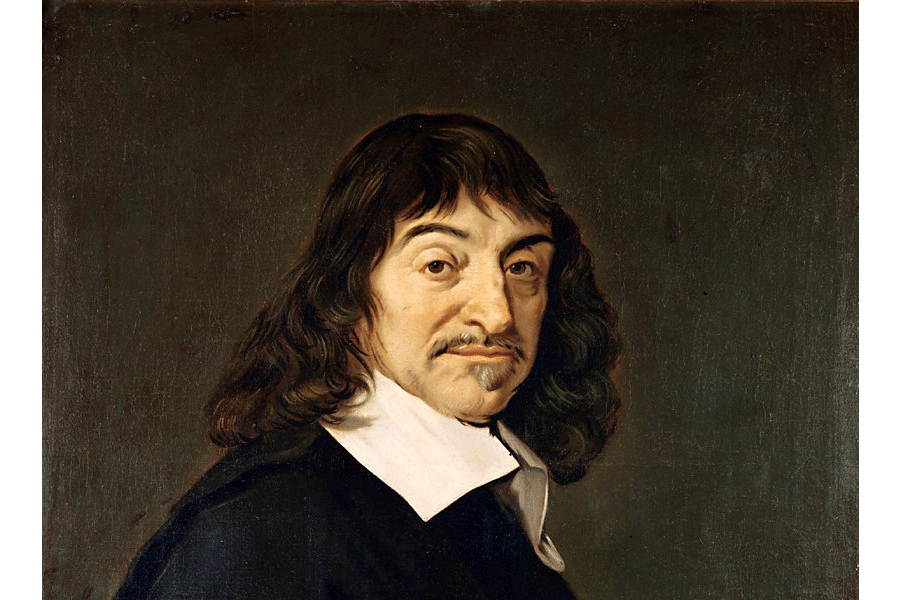
René Descartes shows the importance of studying across disciplines

Growing up, I never excelled in STEM classes or even wanted to be a scientist. My burning passion for science never extended beyond the time I accidentally set an entire Bunsen burner on fire. Still, I felt chained to the notion of engineering. After all, I had to keep in mind the job market, my future salary and, most importantly, the sweet, prestigious title gained from being an engineer.

In the past two years, I went from confidently wanting to be an engineer, to questionably wanting to be an engineer, to finally realizing the global chaos I would unleash if I actually became an engineer. After months of existential deliberation and turmoil, I ultimately settled my issue with the only sensible solution: I started studying Comparative Literature. I know, I know. Now I can both read and adopt the title of Dostoevsky’s The Idiot.

So what exactly is driving me to pursue a so-called useless humanities degree?

Our era cherishes STEM degrees for good reason: we’re in the midst of a technological age, and science plays an intrinsic role in humankind’s advancement. More now than ever, there’s a pressing need for STEM workers that isn’t going away any time soon. Unfortunately, this increasing emphasis on scientific disciplines seems to be resulting in a decline in the number of individuals seeking humanities degrees. And for some, a degree in the humanities just isn’t taken very seriously.

In defense of the humanities’ importance, I’d like to take the time to discuss someone who is, well, timeless: René Descartes.

Let’s start with his impact on philosophy, since this will be one of the only times philosophy gets prioritized over math. An independent thinker, Descartes unapologetically divorced his work from all formerly-established philosophical ideas. He nullified all preconceptions about philosophy, discredited his own senses and trusted only undeniable facts. During a time of severe conformity and stagnation within philosophy circles, Descartes kindled a radical movement toward skepticism that continues to influence philosophy today.

He eventually resolved his metaphysical inquiries by concentrating on science. The inventor of the Cartesian coordinate system and standard algebraic notation, Descartes developed many integral (pun intended) components of calculus and math analysis. Perhaps he sounds villainous to most students, but contemporary math would be unrecognizable without his contributions.

Believing that all truths were entwined together, he successfully used mathematical facts to unspool philosophical ambiguities. By weaving together two independent subjects, he simultaneously pioneered essential scientific and metaphysical processes — hence being dubbed the Father of Modern Philosophy and Father of Analytic Geometry. He almost has as many titles as a character from Game of Thrones: “René Descartes, First of His Name, Protector of the Two-Dimensional Plane, Breaker of Logic Chains.”

Now, Descartes was obviously a genius in several subjects, whereas most of us are just lucky to be somewhat talented in anything at all. We can still learn a lot about discovery through Descartes’ work, though.

Innovation almost always blossoms at the crossroads of science and art. (I think my former government teacher said that — thanks, Mr. Adams!) We need science’s momentum, rationality and practicality in order to cure diseases, prevent and alleviate environmental damage and create electronics that we rely on every day. But we also need the humanities’ balancing contemplation, empathy, and imagination to teach justice and morality, challenge established beliefs and help us appreciate our differences in cultures, religions and political affiliations. Therefore, science and the humanities aren’t just intertwined; when balanced perfectly, they bring out the best in one another.

That’s why I’ve come to terms with not being an engineer. If our goal is the advancement of mankind, and if advancement is often rooted in interdisciplinary collaboration, we shouldn’t neglect our personal skill sets. They could respectively help push humanity forward, even in the most microscopic way.

I still want that prestigious title, though.

Written by: Taryn DeOilers — tldeoilers@ucdavis.edu

Humor: Eager student accidentally arrives to first lecture 12 hours early

0
AMY HOANG / AGGIE
AMY HOANG / AGGIE

The story of an eager freshman who didn’t exactly have an ideal start to his time at UC Davis.

First-year students are often prone to embarrassment when starting at UC Davis. Between learning (or at least trying to learn) how to bike on campus correctly and trying to find their way around our large campus (with many buildings named after mysterious men), starting college can be a difficult time.

Michael Podd, an incoming first-year chemistry major and medieval studies minor, hoped that he could get through his first day of college without any major problems. Nice try, Michael.

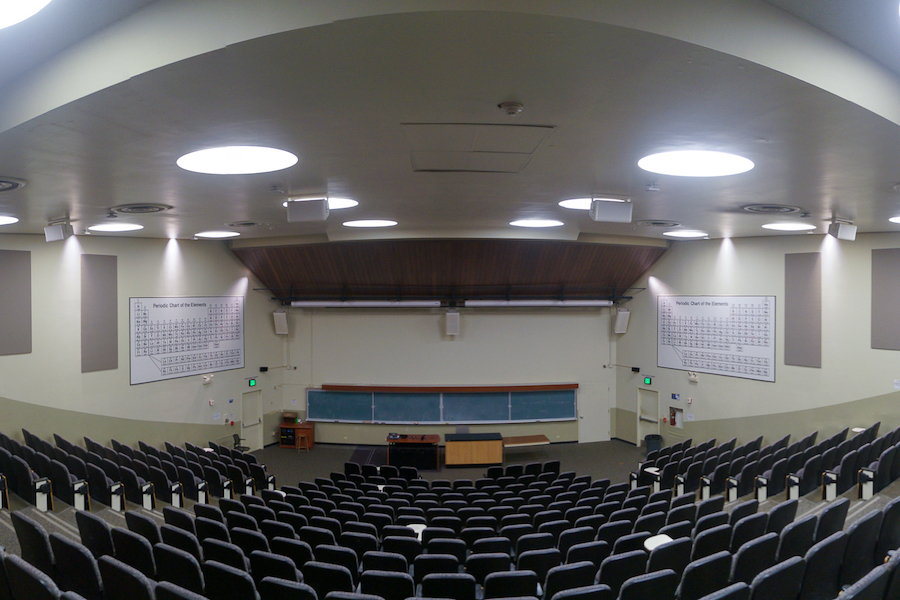
“What happened was that I took an evening nap and woke up at 8 o’clock. I thought that it was 8 o’clock the next morning, but it was actually just 8 o’clock the same evening. Don’t ask me how I didn’t realize that it was still dark outside,” Podd said. “Thinking I was going to be late for my first college class, I rushed to the Sciences Lecture Hall via the hoverboard that my mom bought me to get around campus. So when I arrived, I thought that I was just the first one to get there. I sat down in the front row of course and got ready for class. I waited for a long time, thinking that everyone was just running late. Turns out I was just an entire 12 hours early for class and by the time it actually started, I had fallen asleep and missed the whole thing. There’s always tomorrow,” Podd told The Aggie, not realizing that today was Friday.

Podd was joined by several dozen other first-years who were naturally attracted to the scent of a fellow first-year — explaining why these new students often travel in large, roving packs across campus.

Written by: Brian Landry — bjlandry@ucdavis.edu

Anti-Katehi rhetoric echoes Trump supporters

2
PUBLIC DOMAIN / JAY GELVEZON

Accusations against Linda Katehi are unfounded and irresponsible

Following UC Davis Chancellor Linda Katehi’s struggle with the student body last year, her resignation in August should come as no surprise. And who can blame her? The ceaseless attacks on her character and leadership decisions would knock down even the strongest of leaders. But the chaos surrounding her fall from grace underscores a more sinister trend. Similarities between Katehi’s denouncers and Donald Trump’s pocket cronies abound, with worrying implications for the United States.

Many Trump enthusiasts don’t seem to care that bullying and thuggery — like the kind that takes place at his rallies — have no place in civilized society. Though not through violent means, the #FireKatehi protesters in Mrak Hall showed similar disdain for civil discourse. A letter penned by a graduate student identified “sexist and racist behaviors, threatening and bullying of staff, students and faculty” carried out by the protesters. Video surfaced of protesters ridiculing Katehi’s smile and refusing to sit down in a cordial dialogue. Vandals defaced the beloved Eggheads for lack of a more mature response to Katehi’s moonlighting activities.

Behaviors like this sound familiar, although carried out by a group on the opposite end of the political spectrum. Violence and intimidation at Trump rallies has been ubiquitous. One supporter was charged with assault after sucker-punching a protester in Tucson. Katehi’s more extreme detractors ironically failed to distance themselves from tactics which their political demographic often condemns in others.

Bullying aside, the accusations against Katehi only grew worse as media attention increased. The investigation acquitted Katehi from five of the seven charges, with the remaining two charges falling under a category of miscommunication and not complete fabrication. An independent investigation found that “Chancellor Katehi honored the letter and spirit of the near relative policies […] and she has not exercised improper influence over or offered favorable treatment” to her family. Regarding the outlandish accusations over budget manipulation, the report states that “Chancellor Katehi did not appear to have any involvement in this [improper use of student revenues] line-level budgetary decision.”

In terms of the internet “scrubbing” scandal, the report does admit that “Chancellor Katehi minimized her knowledge of and role in certain social media and strategic communications contacts.” Minimized knowledge, while not completely acceptable, still confers an idea of miscommunication and not outright deceit. But why are we so quick to jump on Katehi for trying to improve our university’s reputation? While the pepper-spray incident was unfortunate, Katehi was not directly responsible for the actions of Lt. Pike, and though her choice not to disclose that a PR firm was hired was a lapse in judgement, she should be credited with taking steps to enhance UC Davis’ image. Better job prospects for graduates and more substantial recruitment are just a few of the benefits given by a school viewed by the public in a positive light.  

Katehi notably helped bridge the gender gap in STEM at Davis, raised around $1.13 billion in donations at a time when public university funding is low and oversaw the initial expansion of the university to remain competitive in an increasingly globalized world.

But the now-moot accusations leveled against her — which were tantamount to character assassination — are reminiscent of those that Donald Trump and his posse go after Hillary Clinton with. Conspiracy theories about Clinton’s health issues abound, with no basis in reality. Remember Benghazi? Despite bundles of evidence and testimony acquitting Clinton of any major wrongdoing, Trump’s supporters still use the murder of ambassador Chris Stevens in blitzkrieg one-liners about her character. Katehi in the end was regarded as little more than a careless, neoliberal chancellor. I would hope her most vocal critics avoid this behavior in the future.

The #FireKatehi protesters failed to realize the potential damage caused by demonizing a powerful woman with the capacity for good, but being dealt a variety of misfortunes, like pepper-spray, was driven to make good intentioned, but opaque decisions. Let’s hope America doesn’t make the same mistake.

Written by: Nick Irvin — ntirvin@ucdavis.edu

How to spend your free ticket at the Mondavi Center

DEBPARNA PRATIHER / AGGIE

Don’t let this go to waste

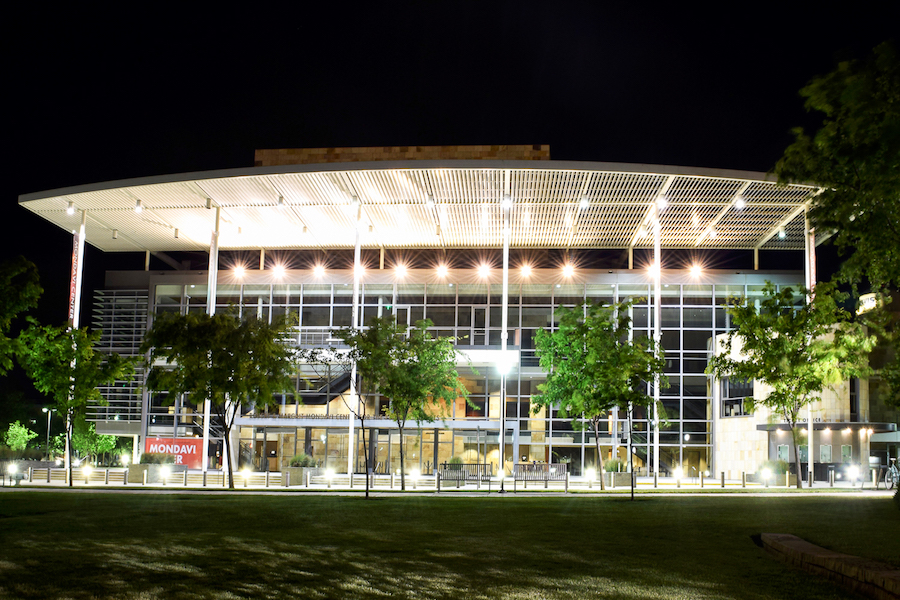
To those UC Davis students who have yet to see a show at the Mondavi Center, you now have the opportunity to attend one show for free!

Here’s how it works: in order to receive your free ticket, students will need to either call the Mondavi Center at (530) 754-2787 or visit the Mondavi Center Ticket Office directly. Make sure to inform the ticket office of the student free ticket offer, and have your UC Davis ID ready. The offer is only valid for one price level two ticket.

Not sure what performance you’d like to spend your free ticket on? We’ve got that covered for you, too.

Of the Mondavi Center’s variety of performances, Bumper Jacksons is certainly one of the most unique. Running from Oct. 5 to 8 at 8 p.m. in the Vanderhoef Studio Theatre, the band tells America’s story from New Orleans Storyville to the Appalachian hollers. The show pays homage to America’s rich music tradition but also adds its own DIY style. Unlike other performances, the music will include a pedal steel and trombone to round out the sound. This show is guaranteed to have you up on your feet dancing!  

SFJAZZ Collective: The Music of Miles Davis and Original Compositions on Oct. 14 at 8 p.m. in Jackson Hall is another great way to redeem the free ticket. This group of eight performers and composers brings to life new arrangements of Davis’ compositions, as well as some original pieces by the collective. This variety of new and old sound will certainly convert the audience into jazz lovers.  

On Oct. 15 at 8 p.m. in Jackson Hall, George Takei will share his story with the Davis community  — and this man covers it all. Best known for his role in Star Trek, and for being a prominent advocate for LGBTQ rights, Takei will share his story during An Evening with George Takei. During his talk, he will discuss growing up with his family in Japanese internment camps during WWII, his rise to stardom as a sci-fi icon and his remarkable media power in his fight for LGBTQ rights in America. There will also be a Q&A session, providing the audience with an opportunity to ask this incredible man about his story.

Alan Cumming Sings Sappy Songs is the best show for any musical theater nerd. Alan Cumming, a well-known theater performer who has earned his stripes, will perform live on March 30 at 8 p.m. in Jackson Hall. His set will include reinterpretations of pop songs, stage classics and the sharing of entertaining and intimate stories. He will also be joined onstage by longtime collaborator Lance Horne.

Release The Hounds: An Evening with Julian Lage and Chris Eldridge | Aoife O’Donovan will be shown April 23 at 7 p.m. in Jackson Hall. This show features two artists with extraordinary talent and a complimentary sound. O’Donovan, who takes the stage with just her voice and guitar, is a mesmerizing performer. Lage and Eldridge follow her performance with acoustic sounds that push the envelope of traditional folk, bluegrass and jazz. At the end of the concert, the three musicians will join talents and sing in harmony.

Written by: CaraJoy — arts@theaggie.org

Humor: First-week accidents decline as UC Davis bans skateboards, cruisers, bikes

0
JAY GELVEZON / AGGIE

Number of crashes in and around bike circles sees greatest decrease

Davis updated its transportation laws early September after a recent study by TAPS showed that Welcome Week bike accidents decreased 46 percent when skateboards, cruisers and some bikes were banned.

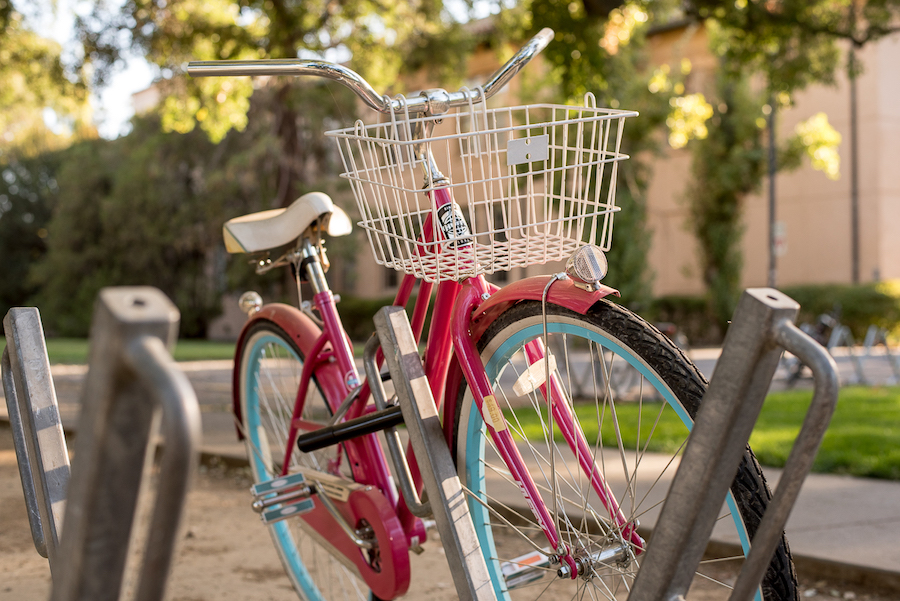
The city changed its laws to forbid “four-wheel objects, such as skateboards and golf carts” (Section 3.1.81e) on the UC Davis campus. The new amendment also lists “cruisers and bikes that do not have a second and third speed option” (Section 3.1.81g) as dangerous and prohibited. UC Davis’ mobility assistance shuttles will be protected amid concerns that medical services would be hurt by the new ordinances.

“We are excited in the new, faster direction our campus is moving,” said David Landis, director of TAPS. “We felt that single-speed cruisers were actually slowing down the flow of traffic, which, as any experienced driver can tell you, is a danger to those on the road.”

While the move makes sense in terms of decreasing time on the road, there are economic and health concerns that surround the new change. Students who currently have cruisers and bikes will now mainly have to resort to walking. Bike shops say they will now be faced with a surplus of bicycles that have no function.

“While I understand the move, I don’t appreciate what it has done to my cruiser business,” said Tim Lillard, owner of Doug’s Bike Shop. “Many students choose to go with the cruiser for its safer features.”

Accidents are expected to increase if students reject the law, which has become an increasingly likely prospect for such a bike-centric campus.

“The law was a knee-jerk reaction,” said a UC Davis biker who spoke under the condition of anonymity. “Just get off your phone and ride faster. Pay attention to the roads. Welcome Week is always a nightmare. Students don’t know how to ride here, especially the new ones.”

Freshmen and transfers will have a difficult time adjusting to the fast-paced life that Davis now brings, but they are expected to spend less time on bikes than prior classes. For now, although the current state of transportation seems to be uncertain, once adjustments are made, students are expected to get to class in a safer and in less time.

As much as he didn’t want a change like this to occur, it’s something that Landis and TAPS said was “necessary for growth.”

Written by: Ethan Victor — ejvictor@ucdavis.edu

Davis Farmers’ Market hits the stands for its 40th year

0
VENOOS MOSHAYEDI / AGGIE

City of Davis’ downtown farmers’ market continues to bring feel-good food

The Davis Farmers’ Market (DFM), which was one of the first four California Department of Food and Agriculture (CFDA) certified markets in the state, is celebrating 40 years of weekly fresh food and fun.

The market is held year-round, rain or shine — thanks to the uniquely covered Pavilion located at Central Park — and includes the traditional farmers’ market offerings of fresh produce as well as bread, cheese, meat and local food trucks.

A few recent UC Davis graduates, including Martin Barnes, Jeff and Annie Main, Henry Esbenshade and Ann Evans, came together to form the DFM back in 1976.

“Today, the Davis Farmers’ Market runs two markets in Central Park, as well as the UC Davis Farmers’ Market, and since June 2011, the Sutter Davis Hospital Farmers’ Market,” Evans said in “Story of the Davis Farmers’ Market.” “Over 70 percent of the vendors come from within a one-hour hour drive of the market, and 50 percent stay year-round.”

The DFM collectively draws an estimated 10,000 visitors weekly.

“I went a few times [to Picnic at the Park] last year, which was actually my first year ever going,” said Elissa Diep, a second-year biological sciences major. “It was really fun to hang out with friends and also get a chance to try food from local farmers and bakeries. As a freshman, it was a great way to get away from food at the [dining commons].”

The Central Park Farmers’ Market location has a year-round morning market on Saturdays from 8 a.m. to 1 p.m. There is also a Picnic in the Park event on Wednesdays from 4:30 to 8:30 p.m., featuring music, local restaurants and regular farmers’ market vendors at Central Park.

“We’re going to stay, and I think we figured out [a] plan [of] what students like,” said market manager Randii MacNear. “We sell ‘market dollars’ and students can also use Aggie Cash [in exchange for market dollars].”

This is especially convenient for freshmen who receive Aggie Cash as part of their dining plan. MacNear went on to explain that first-year students can also receive a voucher through the dining commons and the UC Davis Student Health and Wellness Center for a free fruit or vegetable at the market.

The DFM comes to the UC Davis Quad area (in front of the ASUCD Coffee House) on Wednesdays before Picnic at the Park during Fall and Spring Quarters. There is also a smaller market at the Sutter Davis Hospital on Thursdays from 10 a.m. to 1 p.m.

Written by: Bianca Antunez — city@theaggie.org

Are you a STEM student? Join the club!

AMY HOANG / AGGIE
AMY HOANG / AGGIE

UC Davis’ STEM-related clubs offer students academic, social support

UC Davis offers a wide variety of majors in science, technology, engineering and mathematics (STEM), but large class sizes and limited office hours in these heavily impacted majors can make it difficult to find academic help or study partners. Luckily, UC Davis’ wide array of STEM-related clubs provide an opportunity for academic support and preparation for graduate schooling for STEM students.

In addition, these clubs give students opportunities to socialize in smaller, more comfortable group settings and develop skills to help apply their classroom knowledge to real-life settings.

We have a number of resources to help students with career development,” said Chelsey Souza, Chemistry Club vice president and third-year pharmaceutical chemistry major. “These resources range from company visits from AMPAC Fine Chemicals & Cosmetic chemists [and] visiting companies like Genentech, the Department of Justice and E&J Gallo Winery.”

In March, Chemistry Club organizes its Annual Career Conference in Chemistry to further students’ career development.

Jamie Allen, a UC Davis alumna, is now the student activities coordinator at the Center for Student Involvement (CSI). Allen assists club officers with registration requests, fundraising applications and answering questions about campus policies.

“More and more, Registered Student Organizations (RSO) are reaching out to their alumni networks, working with recruiters or planning career fairs,” Allen said. “[RSOs] are really becoming a place where members can find support to become successful students at UC Davis and successful professionals after graduation.”

Other STEM clubs emphasize the integration of classroom knowledge into real world applications.

For example, Adam Zufall, a fourth-year aerospace and mechanical engineering major and president of the Space and Satellite Systems (SSS) club, will be leading the team in the 2017 design competition known as CanSat.

“The competition, sponsored by the American Astronomical Society, American Institute of Aeronautics and Astronautics and NASA, judges teams on their design and execution of the project, taking into account factors like prelaunch calculations, structural integrity, budget planning and ultimately the degree to which the actual mission succeeds or fails,” Zufall said.

SSS club provides students an opportunity to work in teams to succeed.

“Fall Quarter is typically spent on research and preliminary designs, winter on final designs and prototyping, then spring on final building and testing,” Zufall said.

Students in the club can explore aspects of the project that particularly engage their interests.

“Since the project encompasses many different technical fields namely aeronautical, electrical, mechanical and computer engineering the members of the club are likewise varied in their interests,” Zufall said.

Going on their second year in the CanSat competition, SSS club eagerly awaits the chance to prove themselves against this year’s challenge.

The Association for Women in Mathematics (AWM) Student Chapter is another STEM-related club at UC Davis. Their goal is to help women overcome negative stereotypes and the perceived limitations that females in mathematics may feel.

“[The AWM Student Chapter] promotes a greater understanding of the impact women have in the mathematical sciences, and encourages women as they prepare for careers in the field,” said Soo Lee, a third-year mathematics student and officer for the club.

AMW not only provides social support, but academic support as well. The club is open to all students regardless of gender or major.

“It’s interesting because a good number of our members are graduate students so they are able to provide insightful advice to undergraduates,” Lee said.

New STEM-related clubs establish themselves frequently at UC Davis, ensuring there is something for everybody.

The Chicano and Latino Engineers and Scientists Society, Black Community of Science: Unifying Blacks in Biological Sciences, Davis Robotics Club and Molecular and Cell Biology Club are only a few others that are a valuable resource to STEM students.

Oftentimes, joining a STEM organization can help new students at UC Davis feel right at home with their fellow Aggies.

“There is so much talent, passion and intelligence on campus,” Allen said. I am lucky I get to help students as they work to achieve their goals.”

The UC Davis OrgSync Search Tool is available on the CSI website to obtain more information about on-campus clubs and organizations.


Written by: Shivani Kamal — science@theaggie.com


The Aggie tackles new year of UC Davis athletics

0
JAY GELVEZON / AGGIE

A sports column from the editor of The California Aggie sports desk

In the time since The Aggie last adjourned, UC Davis has seen a huge amount of change. A new athletics director has stepped in, ending the interim term of his predecessor. A handful of UC Davis alumni competed in the Rio 2016 Olympics, from running to rowing. The UC Davis men’s water polo team was polled as a favorite for the upcoming season, both cross country teams whooped Sac State in the annual Aggie Open races and our football team played against the University of Oregon to kick off our season. It’s been a busy few months.

But that’s all behind us now. This column is to look forward, at the year we have in front of us. The Aggie sports desk will be at every game and major sports development on campus and will branch out to club sports and intramurals whenever possible. But our coverage won’t just stick to games. If it’s even tangentially related to the field of athletics, you’ll see us there.

As for my personal involvement in the community, I will try to take a somewhat different approach. Preliminary talks with the Athletics Department have been promising, and I have made it a goal to practice or observe firsthand as many UC Davis sports teams as I can. This will only happen with the blessings of individual coaches and the support of the teams themselves, but I hope to show the larger UC Davis student population exactly how hard these athletes work every single day through the eyes of a (subjectively) overworked writer who struggles to make it to the gym once a month.

This is what the sports desk will aim to achieve this coming year. We want to be more involved with the UC Davis community, and will work tirelessly to make this a reality with thoughtful and quality journalism.


Written by: Bryan Sykes – sports@theaggie.org

Free speech, comedy on today’s college campus

0

LARRY DARLING [CC BY-NC 2.0] / FLICKR
Does there need to be an underlying message in “offensive” humor?

On campuses big and small throughout the United States, invited speakers are protested, teachers are penalized and presidents are stepping down because of the content of their speech.

While the country embraces speech freedoms more completely than ever, there is a simultaneous and increasing demand for sensitivity. All speech, when heard by a broad audience, has the potential to effect serious change. College students in particular are demanding more respectful, more politically correct and more aware speech.  

When Wesleyan University nearly shuttered its oldest campus publication after it published a student op-ed criticizing the Black Lives Matter movement, when the president of Claremont McKenna College stepped down after backlash for an email saying that a low-income Latina student has trouble fitting into the mold of the school’s typical student and when Yale students called for for two educators to step down after they questioned whether or not administration should lecture students on the potential cultural insensitivity of Halloween costumes — one should stop and wonder whether this kind of outrage really does contribute to the making of a more peaceful world.

This conflict, in which many who speak out against the restriction of speech are attacked, is riddled with irony. Students call for increased dialogue on controversial issues while silencing the people who may make disagreeable comments. Students abridge speech against those with unpopular opinions on topics like LGBT+ rights, affirmative action and immigration as they become the majority, even though it was free speech that allowed those movements to become part of popular opinion. There is even irony in the way some students protest the speech they dislike. These students are not of the opinion that right speech can trump false speech — they look to administration to take down those who speak against the issues they hold dear.

Comedians face the some of the most stringent sanctions on their speech if their material can be seen as offensive to any group.

Some comics are now forced to make the decision to either censor their acts or not join the lucrative college circuit at all. Students at the National Association for Student Activities “wanted comedy that was 100 percent risk-free, comedy that could not trigger or upset or mildly trouble a single student,” according to writer and social critic Caitlin Flanagan. Not only do students condemn the comedians whose jokes are in poor taste, but the comedians feel similarly negative about the students. Although many individuals new to comedy rely on the exposure and compensation that colleges and universities can offer, comedians are increasingly unwilling to abide by what they view as unnecessarily strict standards of political correctness.

Chris Rock and Jerry Seinfeld have both said that playing on campuses is not as fun as it used to be, because many students have grown so sensitive. On whether or not a joke ultimately has an important message, Rock says that, “You can’t even be incorrect on your way to being correct.”

But some comedians are unphased by the climate on college campuses. After a comment by Bill Maher during his talk show in which he compared Muslims to the Mafia, students at UC Berkeley protested his presence on campus, but he showed up regardless. Maher told students that hearing things that are hurtful, offensive and wrong may not be comfortable or even “the right thing to do” — but can be funny and informative nevertheless. Often the things that make us laugh do so because they are shocking, absurd, unacceptable or frightening. When Maher makes broad statements about Muslims, the public laughs because we know we shouldn’t make those sorts of generalizations — that they are untrue, ridiculous and a little shocking.

Students will no longer tolerate comedy that is crude for the sake of shocking the audience or getting a laugh. One student writing to Jerry Seinfeld said, “[I] believe there is a responsibility, especially when a well-known comic is talking about sensitive topics like race and gender politics, to have an underlying message to be said.”

College students live in an era in which the things they say and post may cast a shadow over them eternally. Social media perpetuates the life of words, and makes the stand up acts of comedians accessible at any time and by anyone. People can argue that comedians use stereotypes just for the sake of comedy, and that there is value and humor in the absurd and inappropriate. But in our increasingly educated, connected and globalized community, the next generation of leaders seems to be saying that humor at the expense of others must do more than make us laugh — it must also make us think.
There are few genres of art that can strike a nerve as profoundly as comedy at its best. That’s what Stella Sappington, a first-year undeclared student, hopes to examine in her column on the role that comedy plays in the current political and social climate. Students have notably tried to disinvite guest speakers like the sharp-tongued Bill Maher from campus for what they perceive as threatening speech. How to reconcile words that may be offensive with principles of free speech is among many topics Sappington hopes to address head on.

Written by: Stella Sappington — sasappington@ucdavis.edu

HUMOR: First-year actually thinks he’s grabbing a hammock this quarter

0
JAY GELVEZON / AGGIE

Naivete underscores problem of delays and lines in hammock system

First-year Darrell Nusbaum expressed optimism Wednesday that he would actually be able to grab a hammock on a the Quad at some point this quarter. His confidence comes despite previous studies of the hammocks showing that they’re only available to lay down in when you’re not anywhere near them.

“The thing that struck me about Davis when I was looking at schools was how friendly the people are,” Nusbaum said. “I’m sure people are aware of how long they’ve been using a hammock and would be more than willing to give up a spot if they saw someone else waiting.”

Research has shown that when access to the hammocks is limited, people experience a 37 percent decline in ‘good vibes’ and an even steeper 78 percent decrease in stretching out and contentedly saying ‘ahhh.’ One solution — to squeeze two people onto one hammock — seems to be working for some students, but remains relatively uncommon, with sources citing the discomfort that comes with close proximity to another human.

The hammocks were installed on campus several years ago amid increasing demand for spaces where students could take a break from skipping class, waking up past noon and a life of unprecedented freedom from home and the strictures of professional life.

But the need for hammocks quickly exceeded the number actually available for use — six for both the west and east sides of the Quad. Long lines and delays are common and angry students say the whole system is failing.

“Like everybody on this campus, we keep a very vigorous schedule,” said one of the hammocks. “But we weren’t designed to accommodate thirty-thousand students. This is our reality.”

Despite problems, students still ranked the hammocks as the best place to take a nap in the Best of Davis 2016. The hammocks narrowly beat out the Quad, the Arboretum and former Chancellor Linda Katehi’s office.

Nusbaum personally plans to lay watch over the hammocks by sitting nearby and making his move when a space becomes available. As of press time Thursday, he was still waiting.

Written by: Eli Flesch – ekflesch@ucdavis.edu