57.9 F
Davis

Davis, California

Monday, December 22, 2025
Home Blog Page 701

No farms, no food

0
ANH-TRAM BUI / AGGIE

The fight to produce food

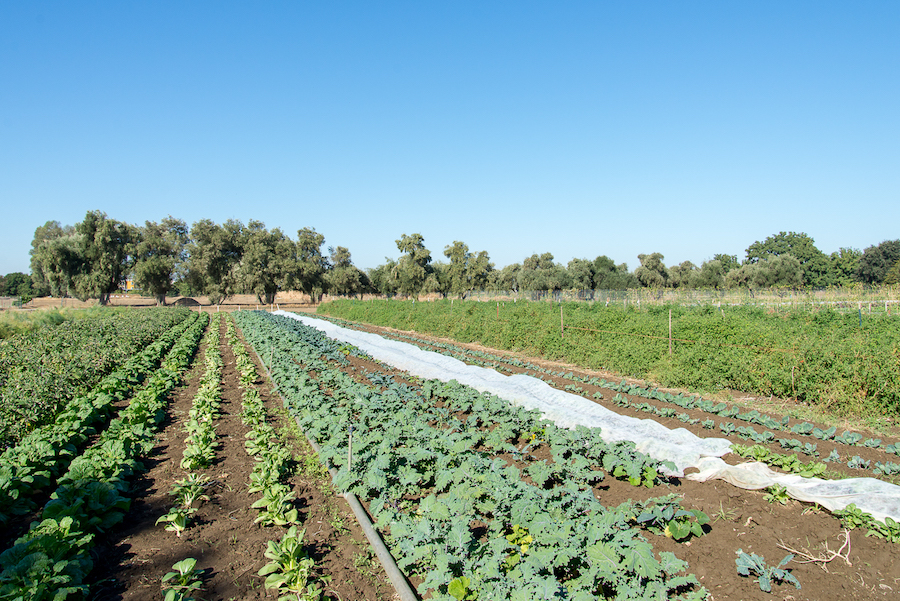
On one of my recent six-hour drives to Davis through Central California, I noticed two things at the center of this state’s environmental condition. One, that the entire state is dry and without water. Thousands of acres of grapevines, almond trees and all types of crops are struggling to stay alive under the plague of an ongoing drought. Despite some heavy rains this last winter, California still has a mandate to save water.

The second most noticeable part of my drive were the countless signs lining the side of the interstate, most of which read “No Water = Higher Food Cost!” The signs come from Families Protecting the Valley (FPV), an organized group of farmers and locals who have been voicing their concerns about the state’s ongoing water shortage. Farmers have been hit the hardest by the drought, losing natural water supplies, reservoirs and livelihoods. But farmers have been fighting an uphill battle even before the drought, and are constantly blamed for resource depletion.

People forget that without farmers, we would have no food. In areas like the one surrounding Fresno, which is considered one of the largest producers of agriculture in the United States, almost a quarter of the population is going hungry. California’s agriculture business is responsible for 400 different edible and inedible commodities through the entire nation. In 2014, there were 1.9 percent less farms operating than in 2013. Since many of these farms produce over $100,000 in sales, which is 20 percent greater than the national average, the decrease in farms is alarming. A lack of water and the constant adversity faced by farmers play no small role in this decrease. People are going hungry across the US and not because we aren’t producing enough food, but because we aren’t distributing our resources correctly. We have the means to feed everyone, but when retailers don’t sell imperfect foods, like bruised fruits, some figures suggest over 30 percent of produce goes to waste.

In order to fill the gap between food produced and actually consumed — which is created when Americans don’t buy and eat imperfect foods — farmers need even more water so they can produce more food. This would yield a greater percentage of foods that Americans would find palatable.

Yet in areas like California, which is responsible for two-thirds of the fruits and vegetables consumed in the US, we are running low on usable water. Less than one half of one percent of fresh water on the entire planet is available for us to grow food with and only on the first three feet of soil on one thirty-second of the planet’s surface.

This limits our resources a lot. So why are we fighting against the people trying to make our food instead of seeking out means to aid them and our growing population?

This country and the world depends on the food coming out of California even if the state is in turmoil and trying to keep up production in the middle of a drought. Farmers, like those in the FPV, want to draw consumer attention to the many problems they’re facing. They need water and we need to be willing to make sacrifices for ourselves in order to give them the means to keep the rest of us alive. Personal gardens grown in backyards won’t sustain an entire country, or the nearly 800 million people on Earth who do not. The old models of food production, devised in the 1950’s won’t hold up anymore. Farmers are fighting the oldest and most controversial battle history has ever seen and they are losing. With that in mind, we have to ask ourselves: Do we want to live in a future where we don’t have food? Because that’s the way we’re heading.

Davis wouldn’t be Davis without a strong focus on agriculture. Alice Rocha, a third-year animal science major, will bring that focus to the Aggie with a column on sustainable animal agriculture and how it impacts the food system today. This paper ran a column last year on ethical consumption, which was partly concerned with the potential downsides of our eating habits. Rocha will expand upon those concerns, using her own experience working in a lab to inform her takes on some of the most pressing issues we need to start working through today, including how to feed nine billion people by 2050.

Written by: Alice Rocha — asrocha@ucdavis.edu

Michael Clogston Abroad

0

SHANNON HOBBS [CC BY 2.0] / FLICKR
Concluding Japan, starting Australia

Nine weeks have passed since I began my working here in Sendai, Japan, through UC Davis’ Japanese Children’s Home Internship Program (JCHIP). The program has given me the opportunity to work, play, cook and learn with over 30 kids at Komatsushima Kodomo no Ie — a children’s home. I’ve spent over 290 hours with these kids so far, and I still have a week to go.

The entire time that I have been here, I’ve learned more about Japanese living, customs and the differences between these kids’ lifestyles and my own than I could have imagined. These children do not have the same opportunities as most of the other kids in Japan. Due to specific and unique circumstances, each of them has been placed in a children’s home, which is something similar to an orphanage, but it actually does not have an equivalent in America.

As a summer intern this year, my objective was to provide the children with a new friend and someone who could make their summer just as memorable — even if they don’t have access to the same resources that others may take for granted. I tried to provide this service the only way that I can: by letting them do what they wanted. They were given the freedom to make mistakes; I did what I could to entertain them.

There are things that I made sure I never did when I interacted with them: I never got mad at them, I always made sure to explain why something was wrong and I made sure they were having fun.

Something else that I learned that I didn’t necessarily expect was the amount of effort it takes to raise a child. I thought this retrospective look at child-rearing came up at a pretty pivotal time for me as a fourth-year who will graduate soon and head out into the “real world.” This made me consider my own experience and where I’ve come from in my almost 21 years of existence.

Raising a kid is hard. It takes a lot of resources, time and effort. Every time I go to work, I see the staff hard at work not only making food, but making sure that the kids are learning everything they need to do to survive in life outside of school. The staff makes sure they know how to make a few dishes, how to clean up after themselves and others and how to do their own laundry. All of this in addition to making sure the kids aren’t misbehaving and that they are getting along well enough.

They teach pretty much everything that I, as a kid who was determined to leave my hometown for college, was taught by my mother and grandmother and got me to UC Davis in the first place. It makes me appreciate everything that they’ve done for me up to this point that has allowed me to grow and flourish into the person I am today. My appreciation for my upbringing is also enhanced by the fact that I was even able to come to Japan for this internship and use these valuable life skills to go to Kyoto, London and, this coming fall, Sydney, Australia.

Though I’m sad to have to leave these kids soon, I’m sure that the memories I’ve made will be with me for a lifetime, not to mention the skills I’ve picked up here at this children’s home. Learning how to better interact with kids from so many different and unique situations, how to plan out meals and make food for over 30 people, and how to take the little victories as they come has been invaluable.

I will be going to Australia this Fall Quarter as part of the internship offered by the University Writing Program. I’ll be taking 18 units, six of which will be from an internship with Holman and Webb Lawyers, a firm with offices throughout Australia. I don’t expect this program to be easy. I have never expected any study abroad program to be easy. What I do expect though, is to be challenged both intellectually and as a person. To really make me think about the way I think and what I believe in — and maybe even change me in more ways than one. And I will certainly cherish the little memories and victories that come everyday, just like I’ve done here in Sendai, Japan.

Michael Clogston will be the Aggie’s foreign correspondent this quarter. Writing from Sydney, Australia, he plans on redefining the study abroad column as something that can be used a tool for both students interested in travel and not. An Aggie veteran, Clogston previously wrote a column on the role of the superhero in modern society. He’s going to parlay that experience to effectively communicate what it means to be an American student abroad today.

Written by: Michael Clogston — mlclogston@ucdavis.edu

Fall Quarter columnists to take on subjects from sustainable agriculture to gun control

0
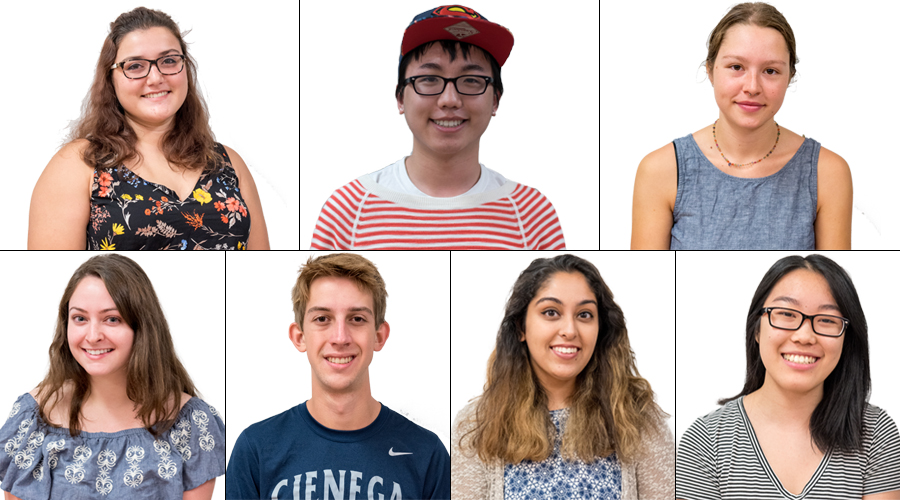
Top, from left to right: Alice Rocha, Michael Clogston and Stella Sappington Bottom, from left to right: Taryn DeOilers, Nick Irvin, Tamanna Ahluwalia, and Jeanette Yue (JAY GELVEZON / AGGIE)
Top, from left to right: Alice Rocha, Michael Clogston and Stella Sappington
Bottom, from left to right: Taryn DeOilers, Nick Irvin, Tamanna Ahluwalia, and Jeanette Yue
(JAY GELVEZON / AGGIE)

Welcome back to school, everybody. It’s an exciting time to be alive and you’re in college to experience it. What luck! So get involved. Join a club, get politically active or — and this is the big one — pick up a (print!) copy of the Aggie. Particularly for the opinion section.


Entering my fourth year on the opinion desk, I can say with complete objectivity that this quarter has the deepest bench of opinion columnists in at least that many years. The Aggie hired seven writers with voices that are uniquely their own. With an eye for both national and local trends, they are informed on their unique subjects, which range from study abroad to the role of comedy in social and political discourse. It’s an exciting time to be alive and these writers exemplify why.


As a note: Columnists alone do not determine the quality of an opinion section. That depends on editorials, cartoons, humor and, most importantly, guest opinions. We want to hear from you, the community, on issues that are personal to you and that you find important. We want letters. If the press is to remain an essential part of democracy, it requires the active participation of readers.


To submit a guest opinion, email opinion@theaggie.org. For a letter to the editor, email editor@theaggie.org. We welcome any and all submissions for consideration.


Here are your Fall Quarter Columnists:


Alice Rocha


Davis wouldn’t be Davis without a strong focus on agriculture. Alice Rocha, a third-year animal science major, will bring that focus to the Aggie with a column on sustainable animal agriculture and how it impacts the food system today. This paper ran a column last year on ethical consumption, which was partly concerned with the potential downsides of our eating habits. Rocha will expand upon those concerns, using her own experience working in a lab to inform her takes on some of the most pressing issues we need to start working through today, including how to feed nine billion people by 2050.


Michael Clogston


Michael Clogston will be the Aggie’s foreign correspondent this quarter. Writing from Sydney, Australia, he plans on redefining the study abroad column as something that can be used a tool for both students interested in travel and not. An Aggie veteran, Clogston previously wrote a column on the role of the superhero in modern society. He’s going to parlay that experience to effectively communicate what it means to be an American student abroad today.


Stella Sappington


There are few genres of art that can strike a nerve as profoundly as comedy at its best. That’s what Stella Sappington, a first-year undeclared student, hopes to examine in her column on the role that comedy plays in the current political and social climate. Students have notably tried to disinvite guest speakers like the sharp-tongued Bill Maher from campus for what they perceive as threatening speech. How to reconcile words that may be offensive with principles of free speech is among many topics Sappington hopes to address head on.


Taryn DeOilers


Finding the intersection between the sciences and the humanities has long been an aim of academics and professionals alike. Taryn DeOilers, a second-year comparative literature and political science double major, plans to interrogate how these two fields have inspired, challenged and uplifted one another — using examples as unlikely as Iceland’s perennial singer-songwriter Björk. At a time when it’s not enough to consider an issue through the lens of just one discipline, DeOilers’ column carries a special weight.


Nick Irvin


UC Davis is just about as liberal as college campuses come. It’s hard to find a single student who doesn’t stake their political beliefs somewhere left of center. We found one in Nick Irvin, a second-year international relations major, who plans to go against the grain here at Davis and offer moderate to conservative opinions on the matters most pressing to the campus and the country at large. From the fallout of Linda Katehi’s resignation as Chancellor to the rise of Trump, no topic will be off the table for Irvin.


Tamanna Ahluwalia


Few contemporary problems strike a chord among college students like that of gun violence. Tamanna Ahluwalia, a second-year neurobiology, physiology and behavior major, wants to take a critical, nuanced approach to an issue which often sees flaming rhetoric dominating the conversation. She will consider the role this nation’s lack of gun control regulation plays in creating a culture of violence, misogyny and instant gratification. Her column is the latest to weigh in on a topic that requires more urgency since the gun-related tragedies in Sandy Hook, Dallas and Orlando.


Jeanette Yue
Understanding that when minority groups are put at a disadvantage, we are all affected, third-year communications and psychology double major Jeanette Yue will be taking a hard look at issues affecting minorities today. From privilege to poverty, Yue hopes to show that issues affecting disadvantaged communities are not as black and white as often portrayed in the news and even in everyday discussion. Look for her column, titled “The Minority Report,” to bring otherwise ignored problems to light.

Linda Katehi timeline

0
JAY GELVEZON / AGGIE

On August 9, 2016 Katehi resigned as UC Davis Chancellor

  • May 7, 2009 – Linda Katehi appointed Chancellor of University of California, Davis (UC Davis).
  • November 18, 2011 – Katehi requested Occupy movement protesters at UC Davis Quad to remove tents. Non-compliant protesters pepper-sprayed by campus police officers.
  • February, 2016 – Accepts board position with DeVry Education Group in Florida.
  • March 1, 2016 – Resigns from DeVry board position. DeVry board members earn $70,000 annually with stocks estimating $100,000 additionally.
  • March 3, 2016 Katehi found to have received $420,000 from John Wiley & Sons, a textbook publisher. Served on the board from 2012-2014.
  • March 4, 2016 – Katehi apologizes, pledges her $200,000 textbook stock to a UC Davis student scholarship fund.
  • March 9, 2016 – Napolitano steps in, says Katehi made mistakes but insists she should stay despite those mistakes.
  • March 11, 2016 – Mrak Hall sit-in begins. Protesters call for Katehi’s resignation.
  • April 1, 2016 – Fire Katehi walkout occurs at the Quad, hundreds of UC Davis students, staff and faculty walk out of class in support of the university firing Katehi.
  • April 13, 2016 – The Sacramento Bee acquires documents establishing that UC Davis spent at least $175,000 to rid online references of November 2011 pepper-spray incident, to improve Katehi’s and the university’s reputations.
  • April 15, 2016 – Mrak sit-in ends peacefully.
  • April 25, 2016 – Napolitano requests Katehi’s resignation.
  • April 27, 2016 – Katehi placed on paid investigative administrative leave.
  • April 27, 2016 – Ralph Hexter appointed Acting Chancellor of UC Davis.
  • April 27, 2016 – UC President Napolitano sends out Katehi’s suspension letter. Details of the letter questions her daughter-in-law’s employment and her misuse of public funds.
  • August 9, 2016 – Katehi resigns as UC Davis Chancellor.
  • August 10, 2016 – Katehi receives $424,360 with retirement and health benefits. Per her contract, she plans to be a UC Davis engineering professor after one year.


Compiled by: Yvonne Leong — campus@theaggie.org

UC Davis’ STEM survival guide

NADIA DORIS / AGGIE
NADIA DORIS / AGGIE

How to successfully navigate a STEM undergraduate career; advice from STEM major advisors

Freshman year can be notoriously overwhelming, but, luckily, for first-years in need of advice, there are plenty of resources available. Emma Martinez, Lori Bergum, Kate Creveling and Natasha Coulter, four of the many science, technology, engineering and math (STEM) major advisors at UC Davis, sat down with The Aggie to offer their best advice to freshman and others in the undergraduate STEM major realm at UC Davis.

Emma Martinez, staff advisor for animal science majors, urges freshman and transfer students to take their first quarter slow by limiting themselves to two science courses and 12 to 13 units.

“It’s really great for freshman at the end of the quarter to go away being like ‘Yeah I did it! I got straight A’s, I feel really good about it,’ rather that walking away being like ‘I’m on academic probation,’” Martinez said. “It’s really hard to recover emotionally from the latter. When you end on a good note, you want to come back and continue it.”

In addition to starting off slowly, Martinez advises freshman to take advantage of the resources that UC Davis has as both a research institution and as home to the top-ranked veterinary school in the world.

“[The Veterinary school] offers internships […] They allow students to intern in specific areas at the veterinary hospital. They can do things like cardiology, radiology, small animal surgery [and] large animal surgery,” Martinez said.

Martinez also recommended Animal Science 49: Animal Management Practices, a two unit Pass/No Pass course that allows students to work at different animal facilities on campus.

“A lot of times that can be used as a segue into a more hands-off, management-style internship,” Martinez said.

That internship opportunity could be key for a student when he or she is looking for a job later on, but exactly how important it is depends on what career the student wants.

“If someone is considering veterinary school, the number one thing we tell them to focus on is their GPA. Veterinary school [acceptances] average around a 3.6 GPA, which is roughly an A- to a B+,” Martinez said. “If they’re thinking graduate school […] we would tell them focus on the grades but be sure to include research. But for a student who is looking to enter into the career world, we tell them to really explore […] go do internships.”

Along with animal science, biology also comprises a large part of the STEM student body. Although most students enter the major hoping to go into a medical profession, Lori Bergum, academic advisor for biochemistry and biology, urges them to follow non-major related passions while keeping up with schoolwork, partially for the sake of their careers.

“There’s kind of a misconception about ‘I’m studying science and I can just do science,’” Bergum said. “A lot of employers, specifically admissions for master’s programs and healthcare professional programs, are looking for a well-rounded student — [one] getting experience, developing relationships in labs or internships […] even study abroad or doing volunteer work.”

The life sciences make up only a small part of all STEM majors. Undergraduate program advisor for computer science Natasha Coulter urges students to get experience outside of the classroom, especially because computer science majors can add to their resumes by doing projects on their own.

“I think the largest thing that you can do to show your tenacity and determination for computer science is to show your interest in it in building whatever you’re interested in,” Coulter said. “If you want to do apps, just build an app.”

Theoretically, because a student could work in solitude, the computer sciences can be misconstrued by some as a “lonely” major. Coulter maintains that UC Davis fosters a special community for the people in computer sciences.

“There’s a really strong computer science club that handles tutoring for lower division courses as well as organizing the hackathon and [other] fun gaming events for everyone to relax [at],” Coulter said. “Because it is a high-stress major and it takes a lot of time to do this degree, […] being able to balance that and enjoy your college time is really important, and the students in this major make that a priority.”

Computer science is just one of many aspects of engineering. Kate Creveling, academic advisor for electrical engineering and computer engineering majors, believes that UC Davis offers engineering majors unique opportunities, especially when it comes to getting a job after graduation.

“Companies want our students. We have, at the College of Engineering, an entire corporate donor relations side,” Creveling said. “People in [the] industry donate to our college because they want first dibs on our students because they’re proven to be competent, successful contributors in the workforce. We have, as a college, great relationships with corporate and industry companies that have hired Davis students who want more of them.”

Creveling also urges students not to panic if they feel academically behind.

“There’s so much available to [engineering students] on campus, whether it’s through tutoring or programs, or clubs or research or career fairs. Everything they need to be successful is here,” Creveling said. “It’s really about them having the initiative to get out and get connected to it, and if they’re having trouble navigating or finding where to start, they should always see their academic advisor.”


Written by: Meral Basit — science@theaggie.org


A network of support

ALEXA FONTANILLA / AGGIE

Nontraditional students seek social network at new school

Every year, UC Davis greets a wave of eager 18-year-olds running straight from high school into college. But among the masses are students who are often older, a little more mature and have more experience under their belts. Luckily for transfer, reentry and veteran students, UC Davis offers a wealth of resources to assist them.

“I’m lucky enough to have several friends that already study at Davis, but I am still a little apprehensive about joining social circles at school,” Disha Bahl, a second-year genetics and genomics major and incoming transfer student said. “Of course I’m excited to be part of this community. But really, I want to make friends beyond the ones I already know.”

Bahl has already found a number of back-to-school events, such as the Involvement Fair on Oct. 5, to help her make connections in her new home. Bahl hopes that interactions with the peers at the fair will eventually blossom into friendships, as does Megan Hosking, a third-year biology major and another incoming transfer.

“I’m really looking forward to joining a club. As a transfer student, I want to be able to meet new people that are interested in the same subjects that I am,” Hosking said. “I want to become a dentist, so I know that I am definitely going to join the pre-dental club.”

Hosking also plans to utilize First-Year Aggie Connections (FYAC), a program for new students.

“I learned that FYAC was available to students during my orientation,” Hosking said. “[The program] makes it possible to find people with the same interests as you, and you learn interesting facts about other subjects and school.”

FYAC members collect in groups united by a shared purpose or interest. They meet regularly throughout a quarter, along with staff and faculty who facilitate discussions about transitioning into life at a new school, and introduce details about campus culture and traditions.

At orientation, Hosking also learned of the Student Academic Success Center (SASC) and believes that the tutors at SASC are the first people she’ll turn to when she runs into academic challenges. However, Bahl wishes that her orientation had offered even more in the realm of academic resources.

“I felt lost in terms of registering for my classes, and in making sure all my units transferred over and lined up,” Bahl said. “I know that I have major advisers in the College of Biological Sciences and I feel like I’ve been proactive myself in seeking those advisers out, but I really wish that orientation leaders would have spent more time talking one-on-one with transfer students about their worries.”

According to Ryan Downer, fourth-year English major and chair of ASUCD’s Transfer, Reentry & Veteran Committee (TRAVC), as a transfer student himself, the first thing he would tell a nontraditional student that had concerns about their academics would be to visit the Transfer, Reentry and Veteran (TRV) Center on campus in Dutton Hall.

“TRV is like a specialized counseling unit,” Downer said. “The people that are staffed there were or are transfer, reentry or veteran students themselves, and can be really helpful in addressing specific doubts and concerns about their experiences at UC Davis.”

Still, Downer feels that above all, what most transfer, reentry and veteran students are looking for is a support network. The first year at UC Davis can be difficult for students who don’t feel as though they are well-integrated within the campus. According to Downer, veteran students especially feel alienated on campus. He and his colleague, fourth-year managerial economics major and TRAVC vice chair Salvador Cruz, collaborate on efforts to involve non-traditional students in the campus social scene.

“The mission of TRAVC is to promote awareness for, and provide services to, TRV students in order to help them academically and socially have the best experience possible for their time here at UC Davis,” Cruz said.

To succeed in their mission, TRAVC conducts a survey in which they interact with as many non-traditional students — especially veterans — as possible in order to represent them and their interests accurately. Cruz and Downer have also conducted video interviews with such students to get a better idea of what they are looking for at school.

“Another one of the things we’re doing this year are events that cater specifically to TRV students and provide a platform to interact and enjoy themselves,” Downer said. “It could be something as simple as Tuesday discount movie nights or meeting in the quad to play a sport. We want to build a social calendar throughout this year. Nothing too difficult to organize, but meaningful for the people that come.”

The center already hosts Transfer Coffee Tuesdays, where TRAVC routinely holds unofficial office hours. Additionally, there are plans to ramp up their interaction with the TRV community by pushing their Facebook presence and tabling at the Memorial Union at least once a week. Students like Hosking are grateful for UC Davis students’ willingness to introduce their peers to as many resources as possible.

“The people I met at UC Davis were so nice — the orientation leader was really helpful and I got to see a glimpse of what going to school was going to be like,” Hosking said. “It made me really excited for the upcoming school year.”


Written by: Anjali Bhat — features@theaggie.org

Kim Conley: Aggie turned Olympian

0
DREW WARTENBERG / COURTESY

UC Davis alum heads to the Olympics in Rio de Janiero, Brazil, but falls short in 5,000m heat

It is the greatest sports competition in the world where athletes from across the globe compete in pursuit of being crowned the greatest in their field. This year, the Olympic Games made their way to Rio De Janeiro, Brazil, and so did UC Davis alum Kim Conley.

So, who is this athlete that made it to the 2016 Olympics?

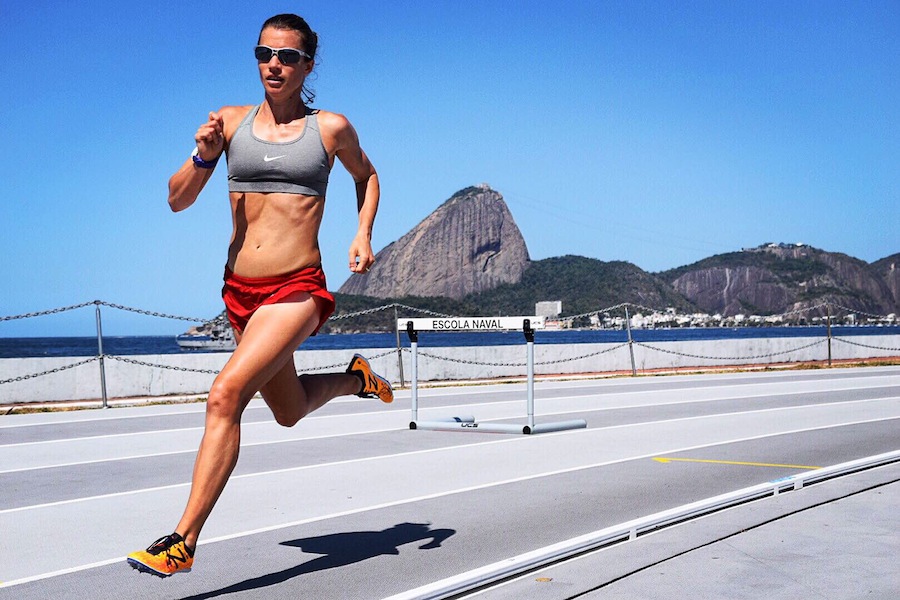
Conley grew up in Santa Rosa, California, and began running at UC Davis in 2004. She was one of the first Aggies to qualify for the NCAA Division I Championship, earning all-conference honors three times. She was Division I Independent champion twice in addition to All-West Region, and in 2008 she received All-Big West Conference accolades.

Her time of 16:17:51 at the NCAA Track and Field West Regional in the 5,000m in 2008 is a current school record, and she ranks number two on the UC Davis all-time ledger. She is ninth in the outdoor 800 (2:10.73) and 3,000 meters (9:45.85) and holds the indoor record for the 3000m (9:19.16).

“She’s definitely a leader, you want to follow her,” said Lorin Scott, a former teammate of Conley’s at UC Davis.

Conley began her professional running career with SRA Elite in Sacramento. Before A graduating in 2009 with a degree in exercise biology, she decided to run professionally during her fourth year at UC Davis when she saw a fellow competitor from Stanford do the same.

Conley is coached by Drew Wartenburg, a former UC Davis track and cross country coach who is now director of Track and Field and Cross Country at the university.  

“It was clear she had a determined sense of pursuing goals,” Wartenburg said. “There was a piece of her determined to succeed. She used it to drive herself.”

In 2011, Conly placed eighth at the USA Cross Country Championships and 10th in the 5,000m at the USA Outdoor Track and Field Championships. She has also set personal best times in the 5K (15:38.13) and the 1,500m (4:12.05).

Conley made her first Olympic team in June 2012, when she finished third in the 5,000m Track and Field Trials.

“In 2012, she was a surprise to make that Olympic team,” Wartenburg said. “All the preparation she had done put her in a place to contend. While we were excited, it was still a surprise.”

When she reached the 2012 London Olympics, she set a personal record of 15.14.48, coming in twelfth in her heat.

“I was so happy to be there in 2012 — it was very exciting,” Conley said. “I enjoyed the moment but took it seriously and set a personal record [and] I was excited for what the future may hold.”

After London, she competed in the 2013 IAAAF World Cross Country Championships in Poland and the IAAAF World Track and Field Championships in Moscow, finishing 12th in the 5,000m.

At the the Olympic Trials this year in Eugene, Oregon, Conley came in third with a time of 15:10.62, earning her a spot on Team USA.

“I was so happy. I wanted to make it in the 10K but someone stepped on my shoe and I had to stop to put it back on,” Conley said. “I turned my attention to the 5K. There was definitely a feeling of relief.”

That relief was not only felt by Conley, but also her family and friends who supported her throughout the trials.

“I’m so amazed at how far she has come and how hard she has pushed herself. She has really taken it to that next level,” Scott said. “It makes me really proud to know I got to run with her for a little while.”

In Rio, Conley ended her trip at 12th place in the 5,000m heat (15:36:00), which was not quite enough to advance to finals. The 2020 Olympic Games in Tokyo are still a possibility for Conley.

“I intend to be competing in 2020 and hope to be contending for a spot on the team,” Conley said. “I am running my first marathon this fall, [so] I could be back on the track in 2020 or competing in the marathon.”

Nobody sounded more excited to add to Conley’s comments about the future than Wartenburg.

I think [Conley] has a tireless will to prepare, which makes a huge difference,” Wartenburg said. “Part of the fun is the unknown of where the end game will be. […] In the sense of longevity, in 2020 at age 34, who knows. I think this [running] is such an environment that she thrives in. In 2016, she is nowhere near thinking about any kind of swan song, so it’s full steam ahead for the immediate future.”


Written by: Ryan Bugsch – sports@theaggie.org

Research disproves gender-biased gamer myth

LUCY KNOWLES / AGGIE

UC Davis professor Cindy Shen disproves gender bias myth in videogames

With a research-backed coup de grace, Cuihua “Cindy” Shen, associate professor in the UC Davis Department of Communication, delivered a powerful “GAME OVER” to the myth that men perform better than women in video games.

Shen conducted a study that utilized data from over 9,000 players of the American online multiplayer game EverQuest II and 2,000 players of the Chinese online multiplayer game Chevaliers’ Romance III to compare the performance of men and women.

“[Using two games] gave us the opportunity to test the same question in two different cultures,” Shen said.

One of the catalysts to Shen’s research was an incident called Gamergate that occurred in 2014, when a female game designer was attacked and harassed online by the gamer community. This controversy lifted the seal on the deep-rooted misogyny and sexism within the realm of videogames and opened the floor up for researchers like Shen to lay out the facts.

“In terms of numbers, women are a very important demographic [in the gamer community], almost making half of all gamers,” Shen said. “Because of this Gamergate incident, my colleagues and I started to question: is the prevailing stereotype that women make worse gamers than men really true?”

Taking the study out of the lab and into a real world context, Shen and her colleagues used controlled variables such as skill level, character choice and playing time to prove that, in both the U.S. and China, there is no performance gap between male and female videogame players

The origins that laid foundation for these biases to form manifested themselves within the early game industry, said Colin Milburn, director of ModLab and professor at UC Davis in the English, Science and Technology and Cinema and Digital Media Departments.

“The video game industry, from its very origins, was focused on a young male consumer as its idealized image,” Milburn said. “The U.S. in particular, [had] the young, white male as the predominant consumer of video games.”

Despite evidence of a radically changing consumer base, that image of the white, male consumer has persisted, and the mainstream industry continues to perpetuate and cater to the fiction of an idealized male consumer, Milburn said.

Amanda Phillips, English professor at Georgetown University and former IMMERSe postdoctoral fellow at UC Davis’ ModLab, is a gamer herself whose experience has been limited due to the expectation of harassment from hostile male gamers.

“I have actually avoided a lot of multiplayer games for that reason,” Phillips said. “I make sure [when I do play multiplayer games] that I’m only playing with people I know.”

The animosity in gamer culture comes out of the fact the world is already racist, sexist and homophobic by nature it uncovers the fact that it’s not a problem with gamer culture, but with culture itself, Phillips said.

Shen’s field of research begins to chip away at the heavily biased backbone of the gamer world.

“[Shen’s] research is helpful because one of the first steps to getting rid of these biases is to accept the fact that women play games,” Phillips said. “People of color play games, queer people play games they’re all part of the online gamer community.”

Looking beyond the seemingly ever-present biases and antagonism in the video game community, there are feats such as Shen’s that are changing the gamer world.

“Many independent videogame developers are helping to diversify the field and change the scope of what games are and what they can do,” Milburn said. “We see games changing, the field of games as well as the players changing.”

Milburn hopes that the industry aims for more conscious efforts towards diversity in hiring, as well as changing the gaming industry’s marketing practices to be more responsive to its real existing player base.

Shen sees progress stemming from within the videogame designer community as well.

“It would be really nice if we could get more female game designers,” Shen said. “A lot of these problems manifest themselves when it’s a male gamer designing a game for men to play. If we can get more females in a designer position, I think games will start changing.”

In many cases, people who play games as young people become inspired to pursue careers in science and technology, and Shen’s research helps to produce a better, more equitable future, according to Milburn.

“Games have been becoming the dominant entertainment medium of this century. Games are shaping our culture. They tell stories about us as a culture,” Milburn said. “Addressing negative and inaccurate stereotypes is really important when it comes from such an influential cultural medium.”

For anyone interested in learning more about videogames and culture or getting involved in videogame related research, check out UC Davis’ Department of Communication and UC Davis’ ModLab.


Written by: Ariel Robbins – science@theaggie.org

Mini Best of Davis 2016

0
CHRISTIE NEO / AGGIE

The Aggie revisits last spring’s “Best of Davis 2016” polls

Need some ideas for delicious snack spots and fun activities during Welcome Week? Look no further — The California Aggie has the answers right here!

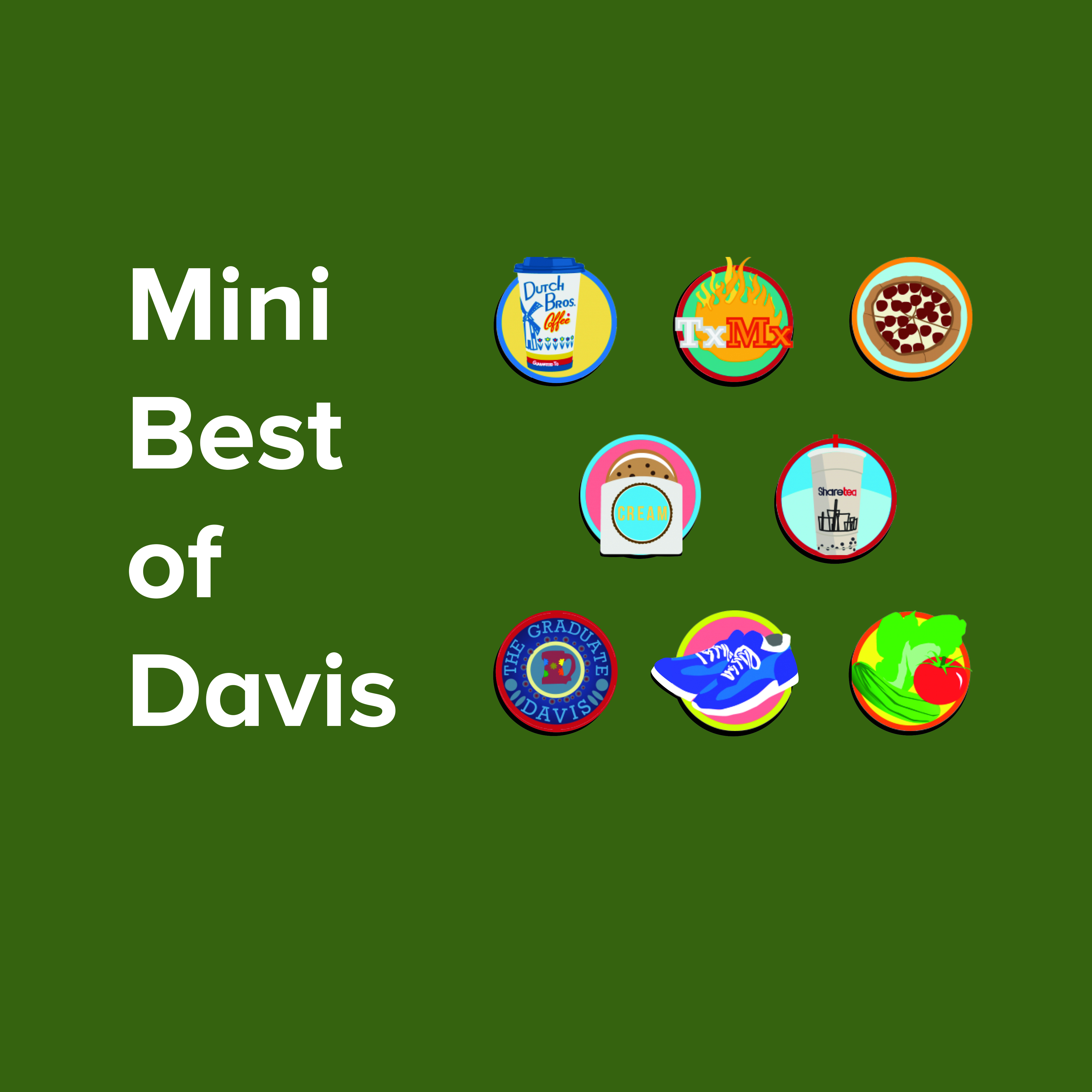
Last Spring Quarter, The Aggie distributed polls to determine the “bests” in the city of Davis, from “Best Pizza” to “Best Place to Dance.” Below are some notable winners from The California Aggie’s 2016 “Best of Davis.”


Best Coffee: Dutch Bros


Located in South Davis, Dutch Bros is a drive-through cafe that provides coffee for commuters, bikers and pedestrians 24 hours a day. Not only does the cafe offer a wide variety of sweet, tasty coffee drinks like the “Kicker” and the “Caramelizer,” its staff is also known to be very friendly, welcoming and sociable.

“Whenever people come here, it’s not just about the coffee; it’s about the experience,” said Jimmy Gibbs, a Dutch Bros employee. “When someone pulls up to the window, it’s our job to make sure that that person is leaving with a better day than they had when they got here.”


Best Coho Food: TxMx Grill


The ASUCD Coffee House, better known as “the CoHo,” is a prominent eatery on campus located by the Quad. The CoHo marketplace is comprised of stations that serve diverse foods ranging from quiche to pho. The station that stands out for the “Best CoHo Food,” however, is TxMx Grill.

TxMx Grill serves a wide variety of Mexican-American dishes including taco salads, burritos and quesadillas. Its proximity to dorms and classrooms, inexpensive prices and delectable foods make it one of the most popular on-campus lunch spots for students.

    “The Coho is my favorite place for food on campus because of the variety it offers, and I eat at TxMx most often,” said Kendall Larson, a fourth-year English and classics double major, in an email interview. “My life would not be the same without their taco salads: they are delicious, and only $3 without meat, which is perfect for a student on a budget!”


Best Pizza: Woodstock’s


If you’re hungry for some fresh-baked pizza, Woodstock’s Pizza in Downtown Davis is the place to go! The company opened its first pizza parlor in Corvallis, Oregon in 1977. Since then, Woodstock’s has opened restaurants in seven cities throughout California, including Davis.

Its secret sauce recipe and sauce-filled crust makes Woodstock’s pizza a unique, delightful dining experience. In addition to savory combos like “Kickin’ Carnitas” and “Pesto Primavera,” a signature dessert pizza, “CinnaBread,” is also offered on the menu. Additionally, in 2014, Woodstock’s was listed in PizzaToday’s “Top Five Independent Pizzeria” chains in the nation.


Best Dessert: CREAM


Cookies Rule Everything Around Me, or CREAM, first opened in Davis in September 2013. The dessert chain, which originated in Berkeley, California, is best known for its ice cream cookie sandwiches. Customers choose from a menu of ice cream flavors and freshly baked cookies to customize the sandwiches to their personal preferences.

CREAM is located downtown on 1st and F Street. Only a short walk away from restaurants like Thai Canteen and Paesano’s, and also located right across the street from Regal Cinemas Davis Holiday 6, CREAM is the perfect dessert spot for anyone enjoying a dinner or movie night downtown.

“CREAM is the best dessert in Davis because of its cookies, sandwiches and more,” said Marianna Shaw, an employee at CREAM, “[And the shop is] open late for you.”


Best Boba: Sharetea


Originating in Taiwan, boba tea has become a trending drink among Davis students and residents, with numerous boba shops opening in the city over the past few years. Sharetea, a worldwide boba chain, recently opened a Davis location in October 2015 — and since then, it has already won the title of Davis’ best boba.

Sharetea is located diagonal to the Social Sciences and Humanities Building on 3rd Street, making it a great place for students to grab a cup of cool, sweet boba tea during breaks between classes. The shop’s menu includes drinks such as Hokkaido pearl milk tea, Oreo milk tea and passion fruit green tea.


Best Place to Dance: The Davis Graduate


By day, The Davis Graduate, or “The Grad,” is a restaurant and sports bar that serves classic pub grub, including pizza, burgers and hot wings. But by night, it becomes a lively dance club, complete with colorful lights and a large dance floor.

Conveniently located near campus in the University Mall plaza, The Grad is open every day of the week from morning until late at night. On certain days of the week, The Grad hosts themed dance nights and lessons: country dancing takes place on Mondays, Fridays and Saturdays, while salsa nights occur on Tuesdays and Thursdays.


Best Place to Exercise: The ARC


Do you wish for a convenient place to go for a jog or play basketball with some friends? Students voted the UC Davis Activities and Recreation Center (ARC), conveniently located next to the Segundo Dining Commons, as the best place to exercise in 2016.

In addition to having over 200 exercise machines, the ARC also includes features such as an indoor track, basketball courts and a rock-climbing wall. Moreover, it is open every day of the week, operating 20 hours a day Monday through Thursday. Best of all, entry into the ARC is free for students with a valid UC Davis student ID.

“The ARC is the best place to work out because the hours are really student-focused and the equipment is always new,” said David Berrios, a third-year biochemistry major and ARC employee.


Best Place to Take Your Family: Davis Farmers Market


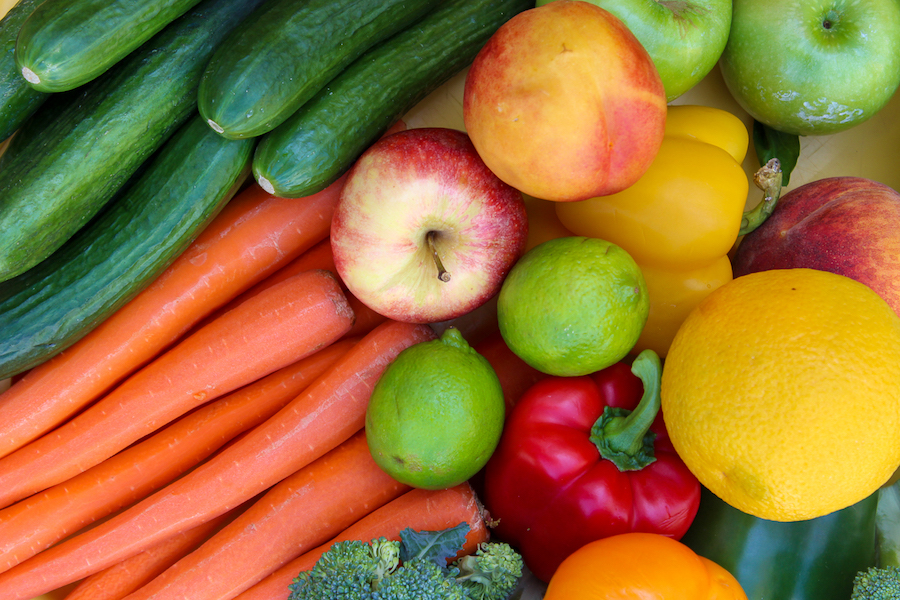
One can enjoy countless fruits and vegetable stands at Davis’ widely acclaimed farmers’ market, which takes place every Saturday morning and Wednesday evening at Central Park in Downtown Davis.

Providing farm-fresh produce to thousands of visitors every week, the Davis Farmers Market is one of the city’s biggest community events. Vendors selling foods like hot dogs and tamales, and local bands performing live music also make the farmers’ market a relaxing lunch spot. Overall, the Davis Farmers Market presents a cheerful, friendly atmosphere that welcomes all visiting families.


The full “Best of Davis 2016” article can be found on The Aggie’s official website.
Written by Jennie Chang — features@theaggie.org

UC creates plan to address food insecurity across campuses

0
VENOOS MOSHAYEDI / AGGIE

Initiative comes after UC survey indicated students dealing with lack of access to food, nutrition

On July 11, University of California (UC) President Janet Napolitano approved a $3.3 million plan to increase access to food resources across all 10 UC campuses. The initiative comes after an online survey administered by the UC found that a large percentage of UC students suffered from some form of food insecurity.

“The funding, which includes $151,000 for each of UC’s 10 campuses, is in addition to the $75,000 per campus that Napolitano allocated in 2015 to address the immediate challenges of ensuring that students have ready access to nutritious food, and reflects the UC Global Food Initiative goal of promoting a nutritious, sustainable food supply,” said the UC Office of the President in a press release.

Of the 66,000 students who were given the survey, 9,000 of them completed it — a 14 percent response rate. The UC Nutrition Policy Institute (NPI), which evaluated the surveys, found that 19 percent of all UC students marked their food security as “very low,” which the USDA defines as “reports of multiple indications of disrupted eating patterns and reduced food intake.” Another 23 percent described their food insecurity as “low.”

“While we found that food-insecure students reported having to choose between food and living expenses more so than students who were food-secure, we also found that half of students wanted to receive more information on things like how to cook inexpensive yet healthy meals on a budget,” said Suzanna Martinez, an assistant researcher for NPI, in an email interview. “This prevalence was slightly higher among food-insecure students. We also know that transportation to markets was an issue among nearly half of students and this was higher among food-insecure students as well.”

The initiative includes a plan for the UC to coordinate with each campus to address their individual needs. Goals for the plan include increased food pantry storage and access, increasing student registration for California’s nutrition assistance program CalFresh and establishing and expanding awareness campaigns for student support services and food access. Also on the list is to increase both the Swipe Out Hunger programs and communication about financial aid regarding housing and food costs, as well as to integrate food preparation and secure storage space into new student housing design and construction.

ASUCD Senator Ricardo Martinez, a fourth-year political science and philosophy double major, talked about how food insecurity has affected UC Davis students.

Food insecurity in Davis has been growing over the past years, and it’s no coincidence it transpired at the same time when there has been a rise in tuition fees, living expenses and more,” Martinez said in an email interview. “Many students are struggling financially, and as a consequence, they decide to either skip a meal or eat less than their daily intake. That should have never been the case; every student at Davis and other UC should be able to have healthy food at their disposal.”

These new objectives add on to the goals created in 2014, when Napolitano and the UC’s 10 chancellors created the UC Global Food Initiative. Since then, the universities have worked with students and staff to create new programs, including access to food pantries and emergency relief.

Claire Doan, a representative for UC Davis, explained that each campus ultimately decides what its students need to address concerns of food access.

“Students are away from home and managing their own food and finances for the first time,” Doan said in an email interview. “They may lack the experience, knowledge and skills to efficiently manage a budget. Individual campuses decide what works best for their students and needs when it comes to food access. Overall, UC’s plan includes increasing food pantry storage and access, improving awareness for student support services, and enhancing financial aid communications to help with student budgeting.”

When asked about what UC Davis can do in helping improve food access, Martinez discussed his hopes for the administration to better work with its student body to find a solution.

“Specifically for UC Davis, I hope the current and imminent new administration works with students and the city of Davis to create a plan to end food insecurity as soon as possible,” Martinez said. “A meal a student cannot afford should not be a hurdle to their dreams. We need to do better.”


Written by: Ivan Valenzuela – campus@theaggie.org

Your First Day, Told Through Song: A Fall Quarter Playlist

Amy Ye / THE AGGIE
AMY YE / AGGIE

The built-in soundtrack to your first day back on campus.

For once, your life does have a built-in soundtrack.

7:30 a.m.: “Sleepwalker” by Emily King

Monday morning, as you chase your bus down the street, frantically dodging cars while jaywalking through a major intersection, take the time to dance around in your untied shoes (still balancing that coffee with the unscrewed lid) to the words of Emily King, the 2016 queen of 90’s R&B: “I feel my body move without me again / Like a sleepwalker, getting closer to you.”


9:50 a.m.: “Clanky Love” by Royce Wood Junior

When your class gets out an hour early, and the most taxing part of the period was pretending to read the syllabus in sync with your professor (while actually texting your friend, “Class out early. Lunch?”), celebrate with this upbeat track by blues/alt-rock/funk artist Royce Wood Junior. It includes all the necessaries for a make-you-smile track: quirky keyboard intros, background “ooh’s” and “ah’s” and a chorus that tempts incorporating the word “clanky” into your daily vocabulary.

Check out Junior’s track, “Honeydripper,” for a funkier sound and an applaud-worthy use of synth.


1:00 p.m.: “Queso” by Pell

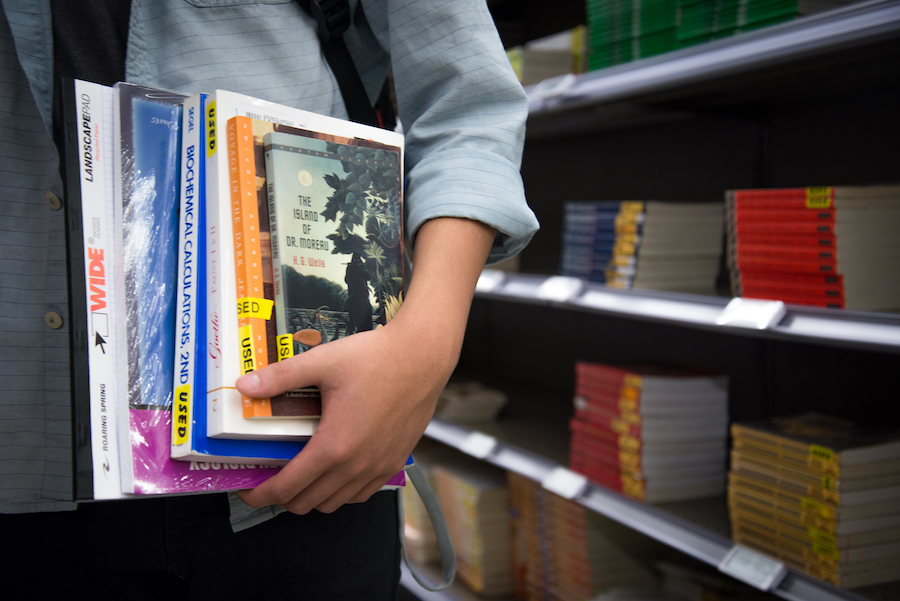
There are few sentences more dreaded than “This book is mandatory.” And yet, if after searching Amazon, the “Free and For Sale” Facebook page and your standard black-market websites, there is still no hope of a matching ISBN, an equally awful sense of doom ensues.

You find yourself in the Bookstore. And so, while waiting in a line that loops around campus, touches one of Saturn’s rings and then circles around the store at least four more times, turn to NOLA based rapper Pell for some comic relief. Described by Okay Player as “a distinctive mixture of rap and southern singjaying — over an equally distinctive mixture of trap and dubby trip-pop that forms the rhythmic bed for his “post-Drake flow,” few other artists could remedy the chaos around you.

Better yet, every .28 seconds when a cashier asks, “Are you in the rewards program?” all you’ll be hearing is the sweet choral repetition of, “I got that mullah, mullah, mullah, mullah / Queso, queso, queso, queso.”


3:00 p.m.: “$150/Roll Widdit” by Healy

Leaving class early is a seemingly fair trade-off for the tedious reading of class policies and your professor’s semi-believable attempts to scare away potential students. But, nevertheless, around your fourth syllabus readthrough, midterm dates and grading policies tend to blur together, and you really wish you bought that discounted pocket planner from Target.

Such stresses were, I’m certain, the inspiration for song “$150/Roll Widdit” by electronic/hip-hop artist Healy. Examples of its applicability:

“I have never curved a class in my thirty years of teaching.” Just roll widdit.

“Your third midterm is on week 10, and your first one is tomorrow.” Just roll widdit.

“It’s a $50, ten page, for-purchase-only, loose-leaf textbook. But the material is relevant, organized and concise. I would know, I wrote it myself.” Just roll widdit.


7:00 p.m.: “Emotions and Math” by Margaret Glaspy

You’ve already eaten three of your weekly meal preps, and you burned the pizza bagels you found in the freezer from finals week of Spring Quarter. Mom’s cooking sounds great, and the homesickness kicks in.

Fortunately, with the combination of Glaspy’s growling vocals and imagery-infused lyricism, the frustration of long distance relationships, heartbreak and nostalgia itself never sounded so eerily beautiful: “Counting all the days till you’re back / Shivering in an ice cold bath / Of emotions and math.” Glaspy (who will make an appearance at San Francisco’s free Hardly Strictly Bluegrass Festival at the end of this month) released her debut full-length album earlier this summer. The album, also titled “Emotions and Math,” is deserving of your immediate attention.


11:00 p.m.: any track from Frank Ocean’s newly released content

Just to serve as a reminder that anything, including your GPA, can make a comeback after a four-year hiatus.


Written by: Ally Overbay – arts@theaggie.org

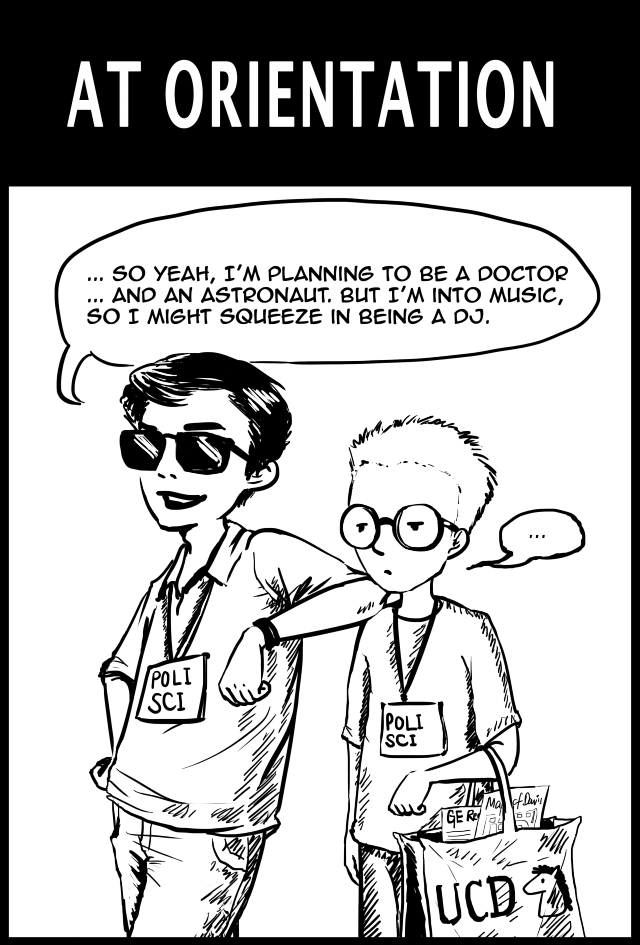
At Orientation

0
Shuyi Qi / THE AGGIE
SHUYI QI / AGGIE

The future of STEM is female

UC DAVIS C-STEM CENTER / COURTESY

UC Davis hosts C-STEM GIRL Camp, teaches young girls programming, robotics, leadership skills

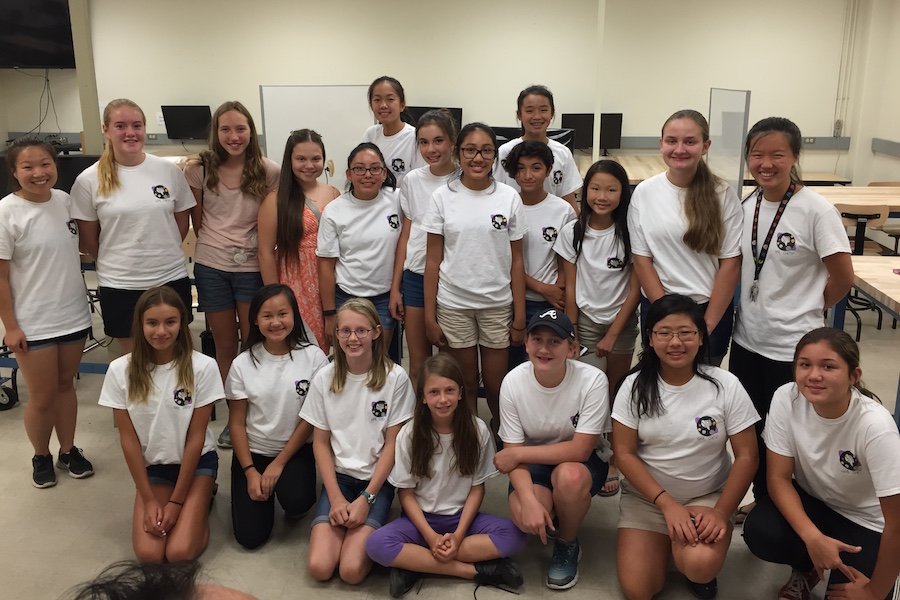
The UC Davis College of Engineering hosted its fourth annual C-STEM Girls in Robotics Leadership (GIRL) Camp this summer. The GIRL Camp is a week-long program that teaches 7th and 8th grade girls the principles of engineering and technology through problem-solving activities.

The campers learn about programming in the Ch language, a user-friendly C/C++ interpreter and by using Linkbots, a modular robotic platform created as an introduction to robotics for young engineers.

Participants are given a real-life problem, such as marine pollution, and must brainstorm how their robots can find a solution. The camp also strengthens the girls’ leadership and public speaking skills by having them display their solutions in a video presentation.

The GIRL Camp was founded by UC Davis engineering professor Harry Cheng in hopes of giving young girls a head start in C-STEM education.

“The GIRL Camp is geared towards the girls solving a problem, such as a problem of global impact and presenting [their solutions] using video,” Cheng said. “The girls learn about robotics, the basics of engineering and computer programming. They also learn about women in C-STEM and improve their confidence by taking on leadership roles and working in teams.”

Since kickstarting in 2013, the program — free for those accepted — has seen an increase in interest and applications. The GIRL Camp has also expanded to different locations in northern California, including Woodland, Sacramento, Mt. Diablo and Benicia.

“This year, we really wanted to work with the school districts to bring the camp to them and make it convenient for the students,” Cheng said. “We wanted to give girls an opportunity over the summer to create a background of technology to bring back to their classrooms during the academic school years.”

The campers begin the week with little to no coding knowledge, and are taught the Ch language as they learn to control the Linkbots. The girls use teamwork, creativity and determination to figure out how to solve their assigned problem. According to Cheng, by the end of the week the girls are noticeably more confident in their programming and leadership abilities as they present their solutions to the other campers.

Muntaha Samad, a fourth-year computer science major and statewide director of the GIRL Camp, recalled a camper who was inspired by her experience at the camp to work on developing her own app.

“It was really amazing to me because we didn’t even teach [the campers] how to build apps,” Samad said. “It’s just the confidence of ‘I know I can do this!’ that was instilled in her went beyond the programming we taught at camp. It was really great.”

In addition to team building exercises and public speaking practice, the GIRL Camp also has women in C-STEM careers present empowering lectures to the young girls.

Samad was motivated to get involved with the GIRL Camp after noticing a lack of female students in her college engineering classes.

“Looking around my classrooms, I didn’t see the ratio of women to men that I would have liked to see,” Samad said. “That’s why I wanted to get involved with the GIRL Camp I wanted to combat that problem.”

At UC Davis’ GIRL Camp, the campers also have the opportunity to explore campus and imagine themselves as college engineering students. Cheng hopes that this will encourage the campers to pursue higher education and C-STEM degrees in the future.

“I think it’s really important to start the students off young and implant that idea of what it’s like to be an engineer,” said Ada Liu, a third-year mechanical engineer major and UC Davis GIRL Camp coach. “The idea of engineering can be really abstract and almost scary, and I think this camp is a really fun way of introducing [engineering] to them.”

Cheng hopes that the GIRL Camp will continue to expand to different school districts in the future.

“We really hope that through this program the girls will pursue engineering majors and careers in the future,” Cheng said. “The GIRL Camp is only the beginning of C-STEM enrichment. It’s not just a one-week program; it looks into the bigger picture of the C-STEM program.”


Written by: Emma Sadlowski – science@theaggie.org

Buzzing with excitement

JAY GELVEZON / UC DAVIS CAMPUS RECREATION AND UNIONS

Kick off the new school year with bungee jumping, dance battles, jousting and much more

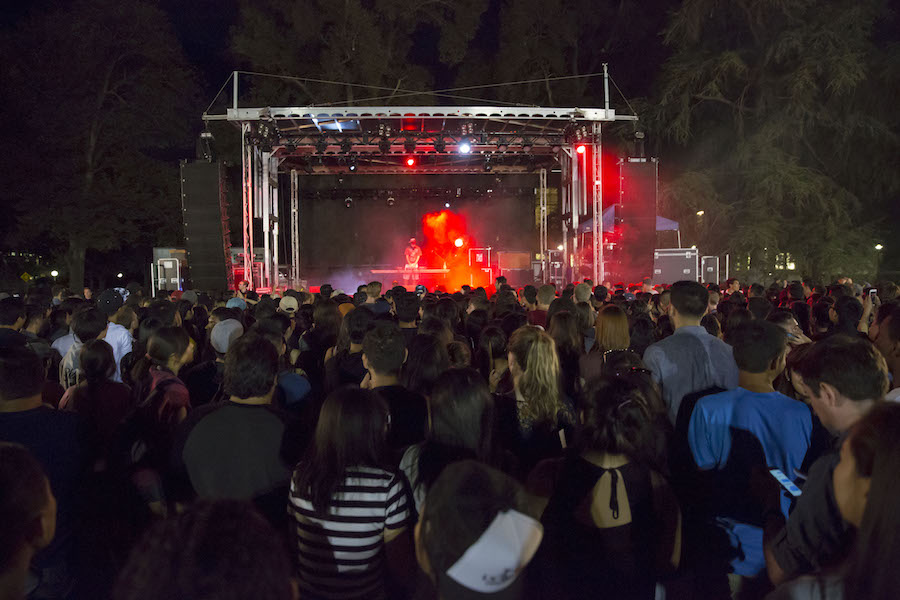
Every year, students come together on The Quad to socialize and celebrate the beginning of the new school year. This event, known as The Buzz, will be held Friday, Sept. 23 from 6:00 to 10:00 p.m. and is a great way for incoming first-year students to acclimate to life at Davis.

The Buzz is put on by various campus departments, including the Center for Student Involvement, Campus Recreation and Unions and Student Housing. Each department provides a host of dedicated volunteers who spend hours making the event the best it can possibly be.

The Buzz is well known as a lively event with a variety of activities including bungee jumping and live performances. In previous years, The Buzz has hosted famous acts like The Cataracts and Natural Roots. Though there are no such planned performances this year, the evening will still showcase student performances, plus food from Woodstock’s and Open Rice Kitchen to keep attendees’ hunger sated.

Second-year psychology major Jay Chan attended The Buzz as a first-year, but, this year, he plans to work as a volunteer.

“I think it’s a cool event to go to because there are all these activities and free stuff,” Chan said. “I also really enjoyed being able to socialize with my friends and others. It was a good way to get a feel for what UC Davis is about and I think a lot of freshmen will have fun.”

Julie Rainier, a third-year community and regional development major, helped organize The Buzz in previous years, and will continue to do so this year.

“[Last year was] pretty stressful […] there are so many things happening and so many people to keep in touch with, but it’s definitely a labor of love,” Rainier said. “I just feel it is so important to get involved on campus early on. I know a lot of freshmen are a little reluctant to throw themselves into the fray, but once you do, you’ll be able to meet so many people and you’ll be glad that you took that step.”

To incentivize student attendance, coordinators have planned the events based on feedback from last year’s event; student volunteers have taken those critiques to heart.

“Some people wanted better food to be served and more lighting, among other things. So we intend on making [these] aspects of The Buzz even better,” Chan said.

Second-year managerial economics major A.J. Patel said that he is looking forward to The Buzz, despite having been less engaged in school events in the past.

“I’ve never really liked going to stuff like that, but last year a ton of my friends went, while I stayed in the dorms twiddling my thumbs,” Patel said. “So yeah, I’m going this year for sure.”


Written by: Krishan Mithal – arts@theaggie.org


The essentials: from bike gear to shower caps

0
ANH-TRAM BUI / AGGIE

Six essentials you need to bring to Davis and six places to find them if you forgot them at home

From the frantically-shove-heaps-of-belongings-into-the-car on move-in day students to those with overly organized packing-list spreadsheets, there’s usually at least one (often essential) item everyone forgets when moving to college. Luckily, the City of Davis is home to many businesses that provide all kinds of essentials for busy students.


Bike lights


To keep safe during late-night bike rides to Dutch Bros or In-N-Out Burger, a bike light is a must. UC Davis Transportation and Parking Services (TAPS), as well as the UC Davis Police Department, offer free bike lights at their locations on campus.

“I got my bike light [at TAPS] the first week of school and my life has forever changed for the better,” said  Rosalia Park, a second-year clinical nutrition major. “I was […] in and out of TAPS in two minutes. [Now] I don’t have to worry about Davis cops pulling me over and I don’t have to […] use my cell phone [light] anymore.”

For more specific quality lights, stores such as B&L Bike Shop provide other selections.


Snacks


Whether you’re a regular at the UC Davis Dining Commons or a home chef at your own apartment, keeping a variety of snacks in the pantry is always a good idea. Students often stock their cabinets with chips, granola bars and other goodies from the Trader Joe’s located in the University Mall. Another place to find munchies is the Davis Farmer’s Market, open every Wednesday night and Saturday morning at Central Park.

“They have […] the fancy popsicles you can get,” Park said. “[They also sell] fruits and vegetables […] and apple juice. They also have great hats!”

Another local Davis shop is Ikeda’s California Country Market, located on Mace Blvd. in East Davis. Though Ikeda’s may be far for bikers, the Unitrans bus system can easily take students (for free) to the location to purchase a plethora of fruit or other goods.

“If you want any seasonal fresh fruit, [Ikeda’s] is a really great place to go,” said Keiko Fong, an Ikeda’s employee and fourth-year biochemical engineering major at UC Davis. “[It’s also good] if you need snacks for studying or if you need to get a gift for someone. Or if you want pie. Like, so much pie.”

Ikeda’s also sells tamales and, in the summer, a popular fruit freeze similar to a sorbet.


Trendy clothes


A flattering outfit for the first day of class is always handy to have. Davis has various boutiques that are popular among students for an array of casual to vintage clothing. Especially popular is ShopCuffs, a boutique that opened this year.

“I didn’t really know about [ShopCuffs] at the beginning of the year,” said Alexandra Nicolopoulos, a third-year civil engineering major. “Once I found out about it, I went a bunch because they have really cute stuff and it’s inexpensive too.”

ShopCuffs sells everything from rompers to vintage hats.

“They [have] a bunch of cute summery clothes that [are] really good for Davis […] when it’s hot out,” Nicolopoulos said.

Other thrift stores and boutiques close to campus include Pinkadot, Boheme Hip Used Clothing and the Aggie Reuse Store, which sells clothing and other recycled items.


Athletic Gear


If getting your picture on the Activities and Recreation Center Intramural Wall is on your bucket list, getting yourself the proper gear is a must. Soccer & Lifestyle is located downtown on 2nd Street, and serves over fifty club teams in northern California. The shop sells soccer gear as well as other sports accessories, from rugby cleats to World Cup jerseys.


Bike fenders


Though seemingly unnecessary, fenders will come in handy when rain storms hit and avoiding the infamous “freshman stripe” becomes a top priority. As home to many bikers, Davis is also naturally home to many bike shops. Located at 610 3rd St in downtown, the previously mentioned B&L Bike Shop sells fenders, among other bicycle products, to aid in a number of weather struggles. Another popular place for bike gear is T&M Bike Shop in the University Mall across from Segundo Residence Halls.

“[T&M] is really good,” Fong said. “They’re […] fast and usually a lot less busy than the Bike Barn [on campus].”

Local bike shops are always there for for students at their muddiest.


Shower cap


Use it for your hair if you want, but in Davis, shower caps are also handy as a bike seat covers in rainy weather. Shower caps can be found at at Target, Rite Aid and other convenience stores around town. Don’t take this recommendation too lightly, though. This is your opportunity to be trendy, economical, and – most importantly – dry!

With these weapons under your belt, tackling the 2016-2017 UC Davis school year should be a breeze. Happy shopping!