52.4 F
Davis

Davis, California

Tuesday, December 23, 2025
Home Blog Page 708

Inside the Game with Michaela Mundt

UC DAVIS ATHLETICS / COURTESY

Mundt strives to shatter records at Regionals

This week, The California Aggie sat down with UC Davis track and field’s hammer-throwing star Michaela Mundt. A third-year genetics and history double major, Mundt has already made her mark in the record books with the second-longest hammer throw in UC Davis history. She was named the Big West Athlete of the Week after finishing fifth at the Sacramento State Open, and is currently ranked fifth in the Big West for her event and is heading to Kansas to compete in Regionals this week.


How did you first get into hammer-throwing?

I threw shotput and discus in high school and then I had a walk-on spot here at UC Davis. Before my current coach, the coach was like, “Oh you’re pretty tall. Let’s see if you’re good at hammer,” and I actually kind of picked it up really fast. I don’t know, it just felt really easy for me and the movements made sense so I got into it freshman year and that’s actually all I throw now. I don’t throw shotput or discus anymore; I just focus on hammer.


So is it safe to say you like hammer the best now?

Yes. It’s my favorite throw now, but I mean, I’m pretty biased.


What does your daily schedule look like?

Okay so I generally wake up by like 7 a.m. I have practice either at 9 or 10 a.m., depending on the day. That’s hammer practice, which is like an hour to an hour and a half. I go to class for a couple of hours, I generally go to work for a couple of hours, and then we have an afternoon workout whether that’s like, weightlifting or a circuit — med ball, hurdle, something along those lines. Then I go home, eat dinner, then go to sleep.


How do you balance school and work along with practice and travel time?

I’m really good at organizing my day. I make it a point to get like nine to 10 hours of sleep every night. Last night I only got seven and a half and feeling kind of tired right now.


Especially as a double major, I can imagine how packed your schedule is and how much time management goes into your day.

Yeah, it’s mostly about making time for everything.


How do you prepare mentally before you step into the ring?

Hammer is a really relaxed throw so if you tense up or freak out, then you’re not gonna throw very far. You’re not going to be able to do the movement. So it’s really important to stay relaxed, stay calm. So personally, before I got into the ring, I take a couple of really deep breaths, I smile to myself like, “You got this,” and then I start the throw. At this point, it’s just become second nature to me. Even before I do practice throws, I take deep breaths and I don’t even think about it anymore, it kind of just happens.


What’s your career-best throw?

189-11. That’s 57.88 meters. I’m number two all-time at UC Davis. I want to be number one. That’s the goal.


Track and field is a team sport, but each of you do your events individually. How does team support play into your individual performance?

We’re definitely an individual sport in the sense that we do our own events, but we still support each other. Like, we hang out with the sprinters and the jumpers and the distance people and we’re all very close and tight-knit. And as a team, the women’s team won conference. I personally did not win conference. I didn’t win the hammer throw, but as a team I contributed points to that. So even if you don’t necessarily win your heat or your race, you still feel like you’ve accomplished something for the team. And at the end of the day, I’d rather see the team succeed as a whole.


If you could do one event on the track, which one would you do?

The steeple is really fun to watch, but I wouldn’t want to do it. Or one of the relays, maybe. No, probably the steeple.


What’s next for you right now?

We’re leaving for Regionals in Kansas tomorrow morning and then I throw on Thursday. I’m just going to give it everything I have and see what happens for it. I’m not ranked extremely high, but on the day, a lot of things can happen. A lot of factors can change. You know, I’m hoping to sneak in there, and who knows? Maybe go to Nationals.


You’ve got one year left. What are your personal goals as an athlete?

My goals for next year. I want to hit 65 meters for track. I want to go to Nationals for sure. If I hit 65 meters, then I beat the school record so just add that in there. I’m going to graduate next year with both degrees. Yeah, I just want to finish strong and go out on a high note.


Written by: Nicolette Sarmiento – sports@theaggie.org

From happy Instagrams to sad Facetimes: friendships in college

NICHOLAS YOON / AGGIE

I’m graduating next year. I used to be terrified of the idea of leaving this amazing bubble of customizable schedules, biking to anything you want or need and Baba’s burritos for every meal. I’ve come to terms with moving on from all those perks, but there’s one element of college that I don’t think I’ll ever have an easy time leaving behind.

The people.

I wake up every day with my best friends. I see people I enjoy at the CoHo or on the Quad daily. I can go out every night of the weekend and spend time with a different circle of people. And right now, I can walk to my friends’ places, and they’re in the same boat as me. We can talk about the same people and we have similar, easy reference points in our lives. That’s so damn hard for me to let go.

I’ve been thinking a lot about the friends I’ve made, and I’m imagining now how my relationships will evolve after college. Some people I’ll probably rarely talk to ever again (and that’s okay). Some people I’ll probably see every day of my life (also okay). Some people I think I’ll keep in great touch with, but I can see our friendship sort of fading away. And others I may only sort of talk to now, but who knows? Maybe we’ll be in the same city— in the same circles again— and we’ll deepen our bond.

And that lead me to think about which elements of our friendships lead to these different outcomes. I’ve realized that I have three different kinds of friends in college — three different levels, or layers, of friendships.


“Mutual Give-A-****” Friends

Mutually gaf’ing (as the youths say, and as my editor won’t let me say) is that first layer, both in the sequence that friendships progress and in the level of affinity you can have for someone. This is why the most common advice for making friends in college is to join a club or a group. If I meet someone at a party, and they know every word to Famous by Kanye West, or we strike up a conversation and they have an opinion about Views, the Life of Pablo and Coloring Book, I’m instantly a fan. Because you can only care about so many things, if someone has spent as much time as I have caring about that one weird random thing I like— that’s an easy connection.

And it doesn’t have to be a hobby or interest — it could also be a shared career path or a shared religious or cultural background. We’re not that unique but we’re also not that alike. We’re tribal. So these surface-level interactions, one where both parties can gush over their favorite sets at Coachella or how much they love Young Thug, have an important place in college. These friends are important because they’ll color your day-to-day, giving you a chance to feel like a happy busy-bee when you walk to class with someone who totally gets you when it comes to the Bachelorette.

Maybe you can invite them to watch the Warriors game with you, which will show you if they’re…


“Back-And-Forth Vibes” Friends

If you think about this chronologically, now that y’all established the fact that you’re both from the same town and hate the same people, the next layer is chemistry. I have friends that can make me bust up laughing by just a look — no words shared — because I know exactly what inside joke they’re applying to the situation we’re in. You need some inside jokes, some rapport, some chemistry for this. It’s not just having the same interests, it’s having similar or compatible styles. If two people are sarcastic, twisted misanthropes, they’ll hit it off way better than one Dark Prince and another ray of sunshine. Or not — maybe Ms. Positivity and Mr. I Hate Everything find a weird yin-yang that makes them both laugh.

These kind of friendships are the ones that can evolve from catching up at the CoHo in the middle of the day to actually going out at night together, or taking trips on the weekends. You like them enough that you’ll set aside social time for them, not just fit them in your in-between time during the middle of the week. These friends are important because they’re fun — they’ll take your mind off what’s stressing you, they’ll make the weeks fly by, and they’ll give you the time of your life.

As you get closer and closer to graduation, you realize that some of these friends are joyful, happy, indulgent… and others are integral, a part of your life, because they’re…


“Take A Bullet For You” Friends

In the real world, no one cares about your feelings. No one is obligated to relate to your struggle and no one is responsible for whether you overcome your obstacles or not. You’re on your own. So when you have friends that do care about your feelings, that are invested in your happiness, that would put their own energy into seeing you succeed — you have this kind of friendship. They have no obligation to anyone else’s happiness, but here they are.

These friendships are forged through shared experiences. There’s no way to know otherwise, because you only know the depths of your friend’s loyalty through actions and real life examples. This is why fraternities have a tough pledge process, because a tough process shows the pledges that they can rely on each other. The idea behind putting a group of individuals through artificial adversity is to push them to make real connections with each other, connections that are based in, “Remember that time when I almost got kicked out for doing something stupid but you covered my ass and took the fall?” and in “Remember when I had only three hours of sleep, just broke up with my girlfriend, and had two midterms to study for so you did the pledge project for me?” and not, “Yeah, he’s chill I guess.”

In general, I think it does take some uncomfortable situations, some moments of tension and some uneasy decisions to figure out that you have this kind of friend. Life isn’t just happy Instagram posts that get 300 likes. Life is also the awful events, the nights you fall asleep just waiting to get your day over with only to wake up with the same amount of self-doubt you already had. It’s the hard phone calls and the soul-crushing rejection emails and texts. Your other friends likely won’t know about all that. These friends are part of the reason you end up figuring it out, so you can get to those happy Instagrams. And, of course, those friends will be front and center in those posts, commenting heart-face emojis while texting you that you couldn’t have picked a worse picture of them.

And not every friend you’ll meet is the third type. That’s asking too much out of too many people. And that’s totally okay. You’ll also need the first two in your life. The majority of misunderstandings that I’ve had in my social life came because one of us thought the other was at a different level of friendship. And sometimes it got ugly. Ex-best friends are a thousand times worse than ex-girlfriends or ex-boyfriends. I’ve learned to simply be conscious and aware of where I’m at with my friends, and if I notice that some of them have blossomed into the next level, I’d be elated.

It’s not that just “placing” my friends, as if I was organizing my desk, that has made me happier. What’s really made me happier has been realizing where those friends are and then expressing gratitude for what they offer to me from their level. It’s when I give back to them — whether it’s having those endless conversations about why the Warriors are the best basketball team of all time, spending hours talking about nothing and enjoying every minute of it or actually just being there for them — that makes me realize that I can’t imagine college without them.

Because a year from now, I’ll be stuck in a cubicle wistfully scrolling back on my group chats, reliving every roast I’ve had to endure. And I’ll think back to college. And to this article. And cry. Good luck to the Class of 2016!
You can reach YINON RAVIV at ravivyinon@gmail.com

Superhero Now: Superhero Feuds, Part II

PAT LOIKA (IRON MAN) [CC BY 2.0] / WIKIMEDIA COMMONS
In my column yesterday, I noted the sudden interest in traditionally good superheroes going toe to toe against each other to provide a thrilling, hyped-up battle, only to disappoint audiences everywhere. And I pretty much called out the superhero industry for forcing us to pick a side between our beloved protagonists. Or at least that’s the general idea with all of these superhero flicks featuring our favorite costumed fictional characters bashing each other’s’ heads into the ground.

But now, I thought that I would explore this idea more in this article specifically involving Captain America: Civil War, released earlier this month, along with the implications I saw both in the film and a general trend among superheroes today with special attention to superhero feuds. Captain America, after forcing the audience to choose a side for most of the movie, ends relatively unresolved.

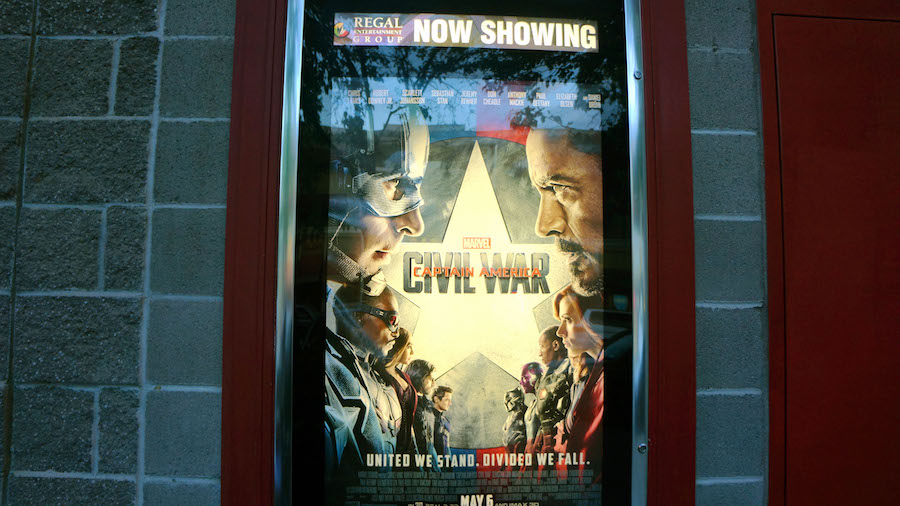
So. The marketing for this film basically invited the audience and the consumer to pick a side. Just look at the poster. There they are: two of the biggest Marvel characters facing each other, glaring endlessly into each other’s eyes. Each hero had their motives. Team Iron Man wanted to allow government regulation of superhero powers, and Team Captain America wanted the opposite. After watching the movie, and even during it too, I had to wonder: how persuasive were their arguments for each side? I knew I had a favorite (I’m team Captain America all the way), but even I couldn’t explain why I chose that side beyond my complete adoration of everything Captain America related. I even tried siding with Iron Man’s perspective and came to the  same conclusion: that I had no reasonable defense for either side.

I know that both characters are stubborn and that they constantly believe that they are in the right and have the best intentions. There’s nothing surprising about that. Those are some of the aspects I even love about their characters. But their mere stubbornness, which seems to be a prevalent theme in all superhero feuds, gets pretty boring and repetitive after a while. And it gets annoying when that’s all I see. The lack of creativity on the part of superhero writers, in regards to their inability to come up with a compelling argument for either side, stems from the fact that these feuds are marketable and typically commercially successful.

I guess it would make sense that the superhero industry would want us to pick a side based on our own preferences. We do all the work for them that way, getting into more arguments with our friends and fellow fans than the superheroes actually do in the movies and the comic books.

Similarly, this seems to be the case in Captain America: Civil War — the characters pick sides based on their own personal friendships and ties rather than whether they really support the government’s regulation over their powers or not.

The characters’ biases are the heaviest and most important factors in their decision, it seems. This interjection of our personal feelings over a professional and important decision sounds familiar. It sounds a lot like our American political system, doesn’t it? It makes sense that today’s media accurately reflects our current situation, even if that situation isn’t great. While politics isn’t our main focus, it is important to note its relation to comics because they are intrinsically tied to history and politics.

These topics seem to be just a handful of the various problems that the superhero industry faces by choosing to tackle the issue of feuds. But as an audience member, I’m personally insulted when the writers are unable to come up with a plot driven by more than a character’s stubbornness. Without three-dimensional characters, superhero feuds lack the emotional kick that I crave from movies.

You can reach MICHAEL CLOGSTON at mlclogston@ucdavis.edu.

City plans to root out substandard rental properties

LUCY KNOWLES / AGGIE

Davis City Council votes 0-5 to move forward with new housing inspection program

On May 17, the Davis City Council unanimously voted to pursue the implementation of a new rental housing inspection program that would be part of a new renters ordinance, making it easier for the city to inspect substandard properties as well as ensure that both landlords and tenants understand their rights and responsibilities.

The Davis City Council believes that renters feel increasingly pressured into leasing substandard properties, which often violate health and safety regulations in order to save money. According to the 2015 Apartment Vacancy and Rental Rate Survey presented by UC Davis Student Housing, the vacancy rate for apartments was just 0.2 percent. Additionally, the advent of mini-dorms, in which landlords add walls to housing units to create more bedrooms, led the council to take action.

Stacey Winton, a media and communications officer for the City of Davis who is spearheading the Rental Housing Inspection Program, notes that this is an issue the city has wanted to address for many years.

“This topic has been discussed for the past 10 years.  Recent events of a single family house being converted to a mini-dorm brought the topic back,” Winton said in an email interview.

Winton also emphasizes that while renters can already complain to the city if they feel that their housing quality impinges on their health and safety, most renters do not know this and are afraid to speak out and risk their landlord terminating their lease.

Furthermore, Winton points out that the plan, which is due to be launched this fall, has received positive feedback from the public. But she admits that a monthly fee, less than $3 for a single home, will be necessary to finance the program and some landlords may express concern.

One of the biggest proponents of creating a fairer housing market in Davis is councilmember Brett Lee. Lee strongly supports the program and sees the implementation of a mediation initiative between tenants and landlords as an effective way to insure that both parties can settle their disputes outside court.

Despite this, Lee concedes that the proposal has faced opposition from property management companies and landlords, not just over the fee, but over the regulation that it introduces, such as the city’s plan to introduce random inspections of rental properties. The proposal would also require landlords to appoint someone who lives within 60 miles of the rented property to act on the landlord’s behalf if they do not live near the property themselves, in case tenants require assistance.

“Landlords don’t like it because right now there is very little regulation […] The tenants like [the program], because it’s not just an inspection program, it’s part of a renter’s ordinance [which] would track complaints against landlords. The city would [also] provide information about tenant rights and responsibilities on a website and there would be a kiosk in City Hall so renters would know their legal rights,” Lee said.

While some property management companies oppose the idea, Eugene Chang, a broker for College Town Realty, is positive about the program and highlights that it makes it easier for both landlords and tenants to be on the same page.

“We think it could be something beneficial to everyone. [College Town Realty] manages over 300 units, everything we have has permits and we don’t have anything like [mini-dorms]. We’ve heard of some people saying that some houses are worrying and some of the houses close to the university, [as well as] some neighborhoods, may have problems, but personally we don’t have any units like that,” Chang said.

With many worrying that the city is unable to keep up with its growing student population, this program aims to maintain housing quality. While the proposal will regulate and expose the unethical practices that are increasingly common in this high-demand market, equally important is the proposal’s focus on ensuring that both tenants and landlords understand what is required of them.

Written by: JUNO BHARDWAJ-SHAH — city@theaggie.org

Sacramento Music Festival is back with over 100 performers

DEBPARNA PRATIHER / AGGIE

Memorial Day weekend music festival celebrates with performers, food, dancing

The 43rd annual Sacramento Music Festival will be back this Memorial Day weekend, featuring live music with over 100 performers as well as parades, street dancing and food. The festival will take place on the streets of Old Sacramento from May 27 to 31.

Weekend passes are $125 for adults and $55 for youth ages 13 to 20; children 12 and under are admitted for free. Single-day passes are also available and can be purchased on the festival website.

Music will be playing on the streets as well as at 15 other sites within the Old Sacramento area. Venue sizes vary, with seating capacities ranging from 100 to 3,500 people. Among the venues are three of Sacramento’s luxury hotels: the Delta King, Holiday Express and Embassy Suites.

The event also includes next-generation venues where youth bands come to perform on stage. These performances are free of charge to the general public.

According to Tom Duff, Sacramento Music Festival executive director, the youth stages are a way to help new musicians develop.

Duff explains that the music festival has been growing in popularity each year since it began in 1974, and attracts attendees from all over. The festival originally  showcased primarily jazz before growing to include blues and rock ‘n’ roll. Now, a wealth of styles are represented at the festival. Some of the featured performers are Queen Nation, Super Huey and Pablo Cruise.

“[The festival] attracts somewhere between 20,000 and 30,000 people and we have talent from all over the country and world,” Duff said.

Past attendee Robert Perez explains that the event is great for families. Aside from the great music, the festival offers fun for all ages, especially because it is located in the heart of Sacramento.

“My entire family came last time and we had a blast,” Perez said. “Literally every single day there was something to do and great people all around.”

The music festival will showcase local and regional, national and international performers. One of the local performers this weekend is Jacám Manricks, a music professor at UC Davis and a professional jazz musician.

“[I look forward] to the chance to play and connect with the audience and make some good music,” Manricks said.

Written by: Mashal Ayobi – city@theaggie.org

Photo of the Week: 5/25/2016

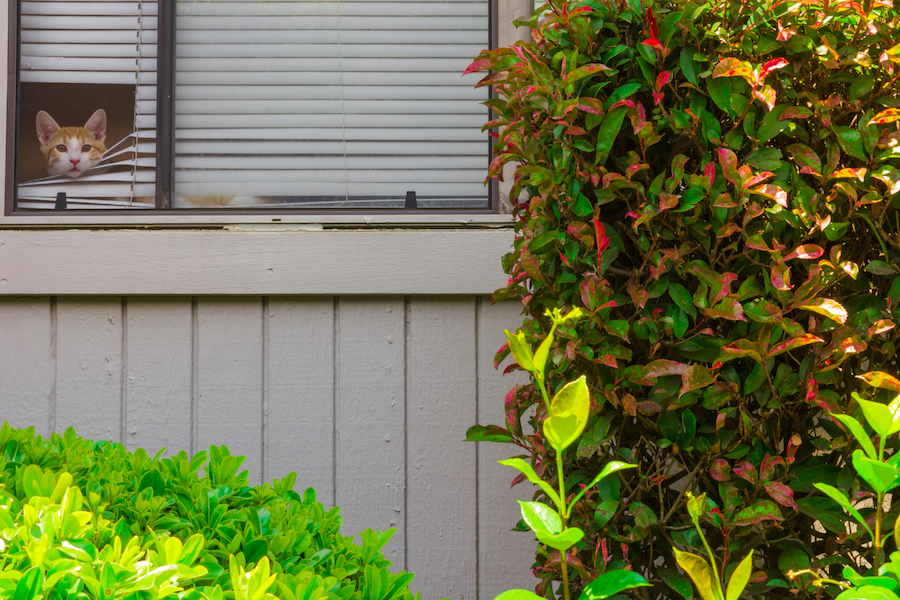
Meow Meow. (CHELBERT DAI / AGGIE)

New club-seeking app prepares for Davis release

PREMEER APP / COURTESY

Premeer app makes splash on Snapchat geofilters on Picnic Day

UC Davis students and young professionals in the Davis area will soon have a new tool to use on a Saturday night. Premeer, a new phone app out for release in the near future, seeks to solve a problem that millennials tend to find themselves in on the weekend: where to go to.

The app, which marketed itself through custom Snapchat geofilters on Picnic Day, is designed to use geofilters to find the night’s hotspot in real time. People on the app will be able to upload videos and photos of their experience at clubs, bars and lounges that they’re currently at, and other users will have the ability to see those stories and decide which club, bar or lounge best fits what they are looking for.

The hotspots will be located by pins on a map, and the pins will have different colors based on the ratings from other people. More mellow lounges and bars will receive a blue pin while more populated and loud lounges and bars will receive a red pin.

Brian Walker, CEO and co-founder of Premeer, said that the app uses similar geofiltering technology to that of Snapchat to provide people with information of the nightlife scene in their area.

“On Snapchat, if you’re in Los Angeles, you can see the Los Angeles story or in San Francisco, the San Francisco story,” Walker said. “Well, think of Premeer like that. All the people in that location can post those stories to that locational story, so that is how Premeer works. We’re just doing that in a more scaled version.”

Premeer currently has nine staff members. Its co-founders include Brian Walker, Ethan Schatzline and Colton Beavers. The idea for the app came to the founders, Walker and Beavers, at a restaurant on a Saturday night when they were trying to figure out what to do.

Jesse Singh, a UC Davis alum and the marketing director of Premeer, has been working on getting the app off to a solid start in the Davis area. On Picnic Day this year, Premeer used the Snapchat geo custom filter on certain locations throughout the day, which allowed them to hit over 2,000 views as a part of their pre-launch strategy.

“The goal is to focus on the NorCal and Bay Area. We want to know the community and then streamline the app,” Singh said. “After that, we want to shift into Los Angeles and that region and really saturate the market and then expand into key metropolitan areas like New York, Miami, Dallas. And there’s a secondary market, which is to spread this across all colleges across the country like UC Davis, UC Berkeley and Stanford.”

Nathan Antolin, a first-year human development student, said that he believes that the app sounds promising.

“I’m not sure if I would ever use that app because I don’t see myself as someone who goes to nightclubs and whatnot, but I bet it is something that is going to be interesting to other people,” Antolin said. “I do think it will be useful for people who want to hang out at night, though. It’s perfect for them.”

Premeer is planning on launching its app on the market in June. All information on the app and updates can be found on their website.

Written by: Sangeetha Ramamurthy – campus@theaggie.org

Swing dancing the night away

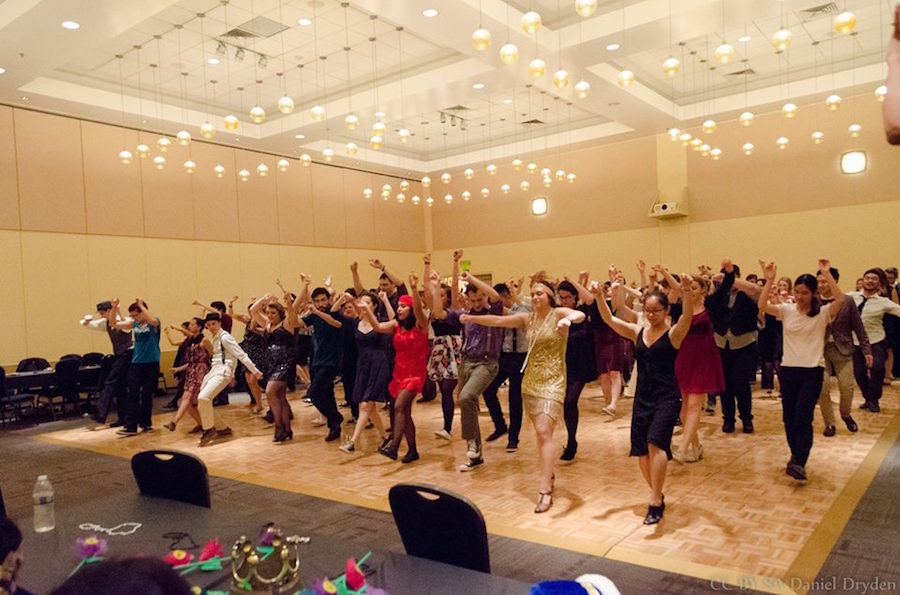
DANIEL DRYDEN / COURTESY

Davis Swing Dancers keep the beat on campus

The Davis Swing Dancers (DSD) have spent many afternoons over the past ten years dancing into the hearts and minds of passing students on the Quad.

“I was drawn to swing dancing because of YouTube,” said Michele Daniele, third-year clinical nutrition major and DSD event coordinator. “I saw a video of a swing dance competition and thought it looked like a lot of fun, […] so when I saw a flier for DSD my freshman year, I jumped at the chance.”

Every week, the group takes over a room in Giedt Hall and teaches swing dancing skills to new and experienced dancers. While not everyone has the time to devote to regular swing dancing, the group makes sure that students can always pick up from where they left off.

There are two classes: the drop-in introductory class and the intermediate class, which teaches Lindy hop and line dancing.

Once students build skills and confidence throughout the classes, they can join the rest of the team on the Quad. DSD refers to their dance moves on the Quad as their “Lindy Bombs.”

“We do it to help promote our club and events,” Daniele said. “We hope to draw people’s attention and make them think ‘Oh! That looks cool and fun’ and want to join us.”

Laurel Spack, fourth-year neurobiology, physiology and behavior major and DSD president said she looks forward to the Lindy Bombs on the Quad. Spack loves to see how members change from when they first start out to feeling good about their dancing.

“I think people normally consider the dancing [on the Quad] to be a bit intimidating, [but] we find [that it] attracts a lot of attention, ” Spack said. “ We like being very visible and talking about [how] everyone can try out and love it as much we do.”

While it can be a rarity to find students so interested in a dance that spans decades, the swing dancing lifestyle has expanded its reach throughout California, faring well in places like Davis and Sacramento, where Midtown Stomp helps host events for groups such as DSD.

“College Lindy hop and swing dancing here in California is actually well and alive,” said Teresa Gonzalez, third-year biological sciences major and publicity coordinator for the group. “There’s big programs in Berkeley and San Luis Obispo.”

Every student has a reason for why they were drawn to the intricacies and standout moves of swing dancing. Whether it’s to learn a new dancing style, get ready for a big dance, or even just try to meet new people, DSD has seen it all.

“As to why [I joined DSD], I feel there’s this vintage, hipster part of me that thinks […] it’s the cool thing not a lot of people do,” Gonzalez said. “But once you’re intrigued and do it, you fall in love. It seems kind of nerdy on the outside, but once you dance, you stick with it.”

For those like Daniele, swing dancing allowed her to open up and share an experience with people that no other kind of performing could.

“I think what draws people to swing dancing is that it looks so freeing,” Daniele said. “It’s not a sexy dance by a long shot, so they’re no expectation when you ask someone to dance.  You also get to have a connection with someone — even complete strangers — for three to four minutes and make some really great friends before you even know their name. It’s strange, but it really is a fun way to make friends.”

After the end of a year full of new moves, new people and new experiences, DSD members look back to moments of dancing that they shared, and can only help but smile.

“It has that kind connection that not only is it a dance that encourages smiling and having a lot of fun — it has a whole bunch of different tie-ins with history,” Spack said. “It doesn’t take itself too seriously; the better you get, the more you learn to goof around.”

Written by: Alan Castillo —  features@theaggie.org

Behind the scenes with the UC Davis women’s volleyball team

JAY GELVEZON / AGGIE

Explore the ins and outs of the recruitment process for incoming Aggies

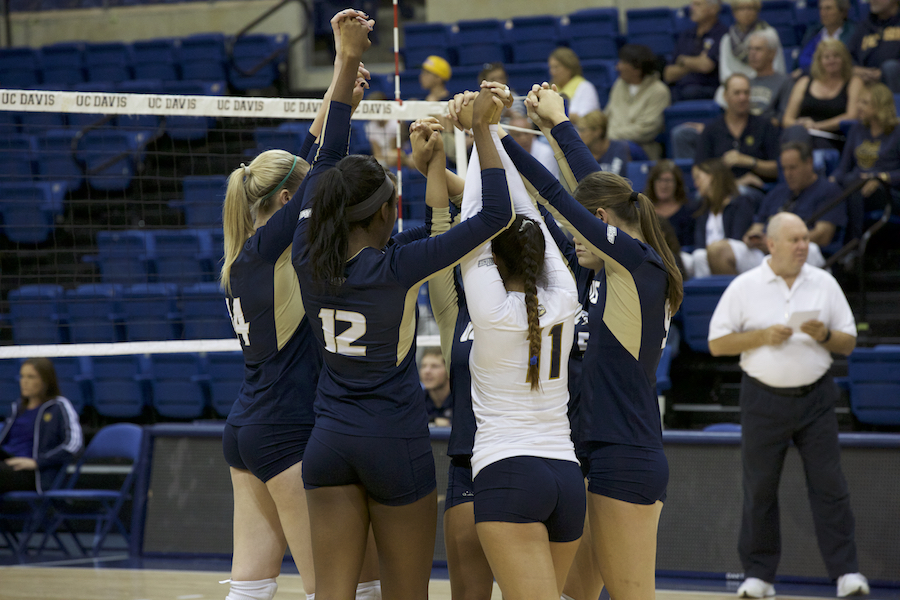
Inside the UC Davis’ Athletics Annex is a room dedicated to women’s volleyball. On a wall hangs a dry-erase board fit for a classroom. Lists of names dominate this board, with each list under a heading from 2016 to 2019. Under the leftmost column, marked 2016, are four names: Kristen Johansson, Lauren Matias, Jackie Graves and Ally Reyes.

There are about 432,000 high school women’s volleyball athletes. Only 1.2 percent of these players will continue on to play at the National Collegiate Athletics Association (NCAA) Division I level. Next year, those four names will be within that 1.2 percent, newly recruited to the Aggie women’s volleyball team.

This board, and the names on it, represents a new trend in the high-velocity sport of volleyball.

“In volleyball, it’s gone to early recruiting,” said Dan Conners, head coach of the UC Davis women’s volleyball team. “Minnesota right now has a verbal commitment from an eighth grader.”

Conners and his staff are similarly forced to hunt down potential recruits early, lest other schools get there first.

“If you’re not early recruiting, then you are missing out on opportunity to recruit a kid, because they have gone somewhere else,” Conners said.

Recruiters are actively targeting younger and younger players in a cycle that pushes all DI programs out of fear of losing out to competitors. This cycle poses hard questions regarding how and when coaches should be reaching out to players, questions that often lack answers.

“This [early recruiting] is totally an arms race,” Conners said.

This race starts in January, after the regular collegiate volleyball season ends, pursuant to NCAA guidelines. The whole affair lasts until May, with intermittent quiet periods and dead periods throughout. During quiet periods, players cannot be invited to schools, nor can coaches go out and visit.

Division I volleyball coaches rely on Amateur Athletic Union (AAU) tournaments and traveling volleyball club teams as sources for potential athletes. These coaches need to go to all of these tournaments simply to be competitive with all of the other coaches.

“These are three day tournaments over a weekend,” Conners said. “Basically, there are never under 4,000 kids at one of these tournaments.”

The locations of these tournaments along with early recruiting practices have severely regionalized the sport of volleyball in the United States. The Midwest is a region that stresses early recruitment, and has seen massive gains in popularity and skill level within its demographics.

Being an athlete at the Division I level takes serious commitment and requires a lot of hard work. Furthermore, most programs look for a mixture of both athletically gifted players and good sportsmen. There is a specific culture that pervades Aggie Athletics, and often times academic strengths go hand-in-hand with what UC Davis looks for. Furthermore, these recruiting practices have made it so any high school players with the skill required to play will be recruited, making walk-ons rare. But with the encroachment of early recruitment comes the possibility of burnout.

“What I tell our kids is that it is a lot, and it’s going to be overwhelming, and there are going to be times where you want to quit,” Conners said. “Because it is really hard, and that’s just the nature of what it is.”

Conners and his staff seek to bridge the issue of early recruitment while still doing justice to potential recruits via transparency.

“If I wasn’t transparent about what we are, in the recruiting process, then it’s not fair for me to hold them to something that we didn’t agree to,” Conners said.

Part of this transparency is a long sit-down where recruits spend time with the current members of the Aggie team. The coaching staff encourages their players to tell their stories and share their experiences with the recruits, in the hopes that the recruits learn more about what they want.

“I tell my players, ‘I want you guys to be completely honest with the good and the bad of what this is,’” Conners said.

The main focus of Conners and his staff is to expose the athletes to the processes that they should be experiencing at other schools. Coaches face a fine moral line between providing what is best for the players and generating results to keep their jobs. Currently, NCAA and the athletics community as a whole do not have the answers for how recruitment should go.

Regardless of the results of the conversation between players, coaches and the NCAA, Conners and his staff are doing exactly what they feel is right: providing possible recruits all of the information they can.


Written by: Aaron Sellers – sports@theaggie.org

Hello, Please Watch this Movie

ROADSIDE ATTRACTIONS

‘Hello, My Name is Doris’: A 60 year-old woman’s coming-of-age story

Everyone agrees that Sally Field can do no wrong, and she proves this once again in the romantic comedy Hello, My Name Is Doris, where she plays a 60-something-year-old woman who develops a huge crush on her handsome (and much younger) 30-something-year-old coworker John (Max Greenfield). The two meet in a tightly packed elevator, where John is trying to diffuse the awkwardness that comes with being an inch away from a stranger’s face, and compliments her crooked glasses, sweetly re-adjusts them for her and walks out like nothing has happened. But a lot has happened for Doris someone has noticed her, and her life turns upside down as she falls out of her usual routine to pursue him.

Sally Field plays Doris as “quirky” to say the least; not the kind of Zooey Deschanel, ukulele-playing, vintage-loving quirky that people fawn over, but the kind that usually leaves the people in Doris’ life believing that she is strange, and  better off left alone. And that is exactly how Doris has lived her life. Having grown up very sheltered after becoming the sole caretaker of her elderly hoarder mother, she has had few experiences and this new, exciting person in her life is now driving her to take risks and live a little. This leads to many hilarious scenes, like making a fake Facebook account with her friend’s 13-year-old granddaughter, and going to an electronic music concert wearing a neon jumpsuit.

Nothing is overdone here, and Sally Field as a big bow-sporting, daydreaming, older woman is entirely lovable and believable. The rest of the cast delivers as well, with Max Greenfield playing the young and charming John with sincerity and kindness. Tyne Daly, who plays Roz, Doris’ best friend, provides a witty and bold contrast to Doris’ sweet and innocent character. 

You may be wondering if this is a story about a “cougar” pursuing a younger man with her sexual prowess and charm — the film is anything but that. This low-budget indie movie tells the story of an older woman falling crazy in love, a topic that is very rarely touched on in Hollywood, and it does so beautifully. And as funny as this romantic comedy is, it also has many moving and tender scenes. One of the most powerful scenes comes when Doris has an emotional confrontation with her brother, and opens up to him about her complicated feelings toward having supported their mentally ill mother all by herself. This scene is just one of many that explores the pain of being an outsider and feeling like one has “missed out” on life.  Director Michael Showalter said in an interview that he “wanted to tell a funny story that also had really sad moments, and sweet moments, and moments that moved you in a different way.”

Hello, My Name Is Doris does just that that with the help of a talented cast and a great script. It’s up to you to watch this movie, but just know that Sally Field would want you to do it.


Written by: Pari Sagafi – arts@theaggie.org

Superhero Now: Superhero Feuds, Part I

NICKI PADAR / AGGIE
NICKI PADAR / AGGIE

Friends fight; that’s an undeniable fact. And superheroes, it seems, are no different than the rest of us in this respect. Batman v Superman and Captain America: Civil War are the latest examples of films in which the feuds are between superheroes as opposed to villains. Feuds between superheroes are usually just more intense and more powerful, and may end up causing millions of dollars in damage to their respective fictional cities. While these two films have gotten a lot of hype because they’re the most recent examples of superheroes fighting each other, and on the big screen no less, superheroes have been duking it out in the printed universe for a while now. The Fantastic Four fought Spiderman, Iron Man and Captain America went up against Thor and, recently on television, Daredevil went head to head with The Punisher. But why are these fights between superheroes interesting to us now?

The public seems to enjoy these superheroes basically punching each other in the face and making each other endure some form of suffering (I’m looking at you, Batman). One would think that it’s easier to have two established heroes fight rather than having to think of new villains and opposing forces. Thinking up a new character both in storyline and physical appearance is a lot of work. Another reason is that when superheroes are pitted against each other, they break the typical routine of the all-powerful hero versus the stereotypical villain in which the hero usually triumphs at the end of the day.

But what makes superhero feuds more interesting is the attachment to each of the characters and the interesting situation we face when two or more of our beloved superheroes go head-to-head in battle over what is often some form of moral quandary. The question is no longer when the hero will triumph over the villain, but rather when the fight will end. Because both parties usually have their own comic book series that have been extensively developed, the executives are extremely unlikely to kill them off in most situations. The fact is that all of the superheroes involved need to be shown to be just as powerful as the other and all of them need to be given moments when we can see said strengths and what makes them a true hero capable of battling an equal-footed opponent.

I should feel really bad and extremely torn at the fact that two or more of my favorite superheroes want to basically destroy each other. And I am. Kind of. I have found there is often some form of very unresolved aspect to superhero feuds: the ending or the resolution or lack thereof. Typically, plots have somewhat satisfying endings where the evil-doer is defeated and then sent to jail or killed. But because superheroes are far less likely to kill each other, their conflicts will usually arise from misunderstandings, mind control or disagreements over specific issues. But what often happens is that one bit of info will come out later in the plot and somehow miraculously fixes all their problems. This is a problem if you enjoy a good plot. The fact that two people who were basically about to kill each other team up in a matter of seconds makes me feel that the ending is at least just a little bit anticlimactic.

But where does this leave us now? I brought up the fact that superheroes fight each other on a few occasions and in various ways. I tried to explain why I found them to be at least somewhat interesting. And I talked about how the hype for their fight is far larger than their actual fight. So what’s the verdict on my first question? Maybe this is just what the superhero industry has given us. Or maybe this is just the superhero industry forcing us to make a decision for them.

You can reach MICHAEL CLOGSTON at mlclogston@ucdavis.edu.

Are the Dubs in trouble?

KEITH ALLISON [CC BY 2.0] / WIKIMEDIA COMMONS
Low blows and high expectations to occur in NBA finals

For the first time in what seems like forever, the Golden State Warriors are in trouble. This squad has yet to face adversity of this severity in the playoffs thus far, but the Oklahoma City Thunder fired on all cylinders in their 133-105 defeat of the reigning champs. Kevin Durant shot an incredibly efficient 10-15 with 33 points and was a perfect 12-12 from the free throw line in 32 minutes. Additionally, Durant only had one TO which was a huge improvement from Game 2 in which he turned the ball over eight times.

The Thunder began to break away in the second quarter and didn’t look back as their relentless defense translated to the other end of the court and sparked an offensive flurry. The Thunder capitalized on Golden State misses by running out and scoring points in transition. Their ability to control the tempo of the game led to an easy win, and, for the first time since the 2015 NBA finals, the Dubs have found themselves in a little bit of a hole. This clearly isn’t the end of the 2015-2016 Warriors, not even close, but this OKC team looks like they are actually a formidable challenger to potentially boot the Dubs from their throne. Making matters worse is the prospect of a Draymond Green suspension for Game 4 after he once again tried to take a shot at the private parts of Steven Adams. That was a low blow, Draymond.

The Thunder is a team that has been regarded as a step below the first tier contenders. Their play throughout the regular season was relatively inconsistent in their first year under Billy Donovan, but what ultimately matters is the health of Russell Westbrook and Kevin Durant. These two superstars have the ability to accelerate their levels of play when called upon because they have an unreal desire to win. While they have yet to capture the elusive championship that has been within arm’s reach in the past, these two stars should be respected for their ability to overcome adversity. It seems as if neither of them have been fully healthy at the same exact time in recent memory, and that has been their achilles heel. But now here they are: healthy, unafraid and ready to take the next step. This is the type of playoff basketball that we have all been waiting for. The last two games might’ve been blowouts, but it will be fascinating to watch the rest of this series. One should never take for granted the opportunity to watch five of the best players in the NBA dueling it out on one of the biggest stages in sports.


Written by: Michael Wexler — sports@theaggie.org

Our lovely study spots

Aggie photographers disclose their favorite study spots

The CoHo is one of those study spots you go to when you don’t have that much homework or a midterm because it can get distracting with all the beautiful people, great food, and upbeat environment. (VENOOS MOSHAYEDI)
One word to describe this place: bougie. I come here to grab an awesome bowl of ramen, boba, brick toast and edit hundreds of photos at a time. If you need a fancy place to set the mood, West Village is the place to be. (NICHOLAS YOON)
Most of my studying gets done right outside my dorm building. It’s convenient and relaxing, and I get a tan! #multitasking (HANNAH WODRICH)
One of the most serene and quiet places to study on campus is under the redwood trees in the Arboretum. This is the perfect place to breathe in fresh air, watch some squirrels run by and get your work done. In all cheesiness, the spot is simply magical. (DANIEL TAK)
My favorite study spot is in the dorms, especially in Potter Hall (Tercero) because it is cozy and feels like home. Since it is where I live, I always find buddies to study with here. (DEBPARNA PRATIHER)
My favorite spot to study is in Mishka’s Cafe downtown. It’s super cute and comfy, although it is hard to find a seat sometimes. I always like to enjoy an iced latte and banana bread while I study. (NICKI PADAR)
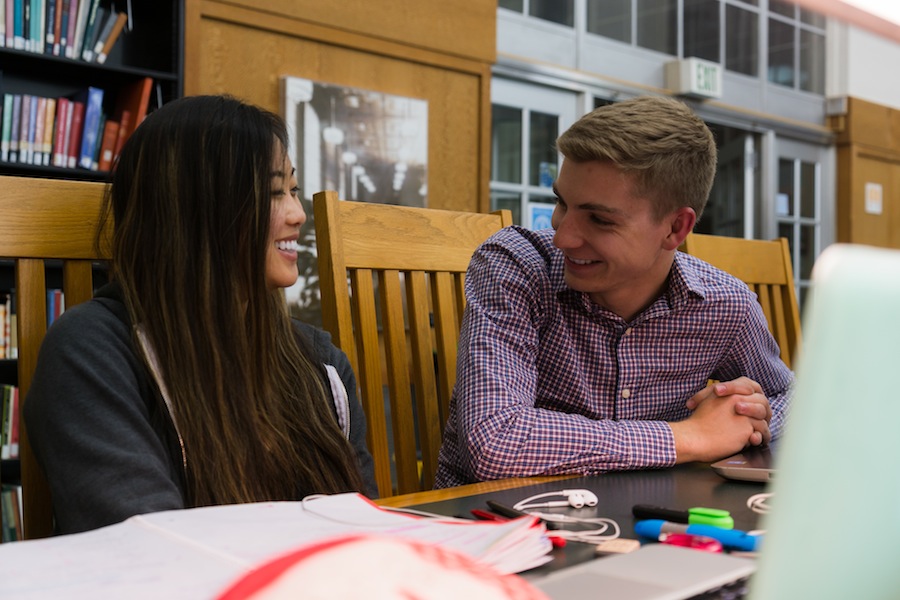
One of my favorite study spots is the Art Building. If you’ve ever been in the Art Building before, you would know that not only does it have studios, like the one pictured above, but it also has regular classrooms. Both types of rooms are great for individual and group study times. The building is open from 8 a.m. to 10 p.m. daily and most of the classes are done by early afternoon, meaning these classrooms are free for use from then on. But please note, art students do get priority over the rooms; just make sure you’re nice about using their space. (BRIANA NGO)
There’s just something about the lack of sunlight and the loss of cell signal that forces you to study in this magical place. Hearing other people chat away about synthesis reactions and the meaning of life helps to motivate you to get going with your own studies. Only the bravest of souls are willing to see how deep the studying goes at night at Shields Library. (CHARLES MIIN)
My cozy bed is the best study spot, until the comfort overpowers and I fall asleep. (ASHLEY LUGO)
There’s nothing like cramming for a midterm while you’re on the Unitrans heading to class. (DIANA LI)
Not your typical spot to study in the library. If you can deal with not having a chair to sit in or a table to work on, then this is the spot for you. It may be uncomfortable but at least it looks cool. (BRIAN LANDRY)
Studying in front of the circulation desk on the first floor of Shields is great if you like the hustle and bustle of a library. (AMY HOANG)
I thought about not revealing this one because I’d love to keep it to myself, but I decided others should be able to use it too. There’s an old picnic table on the side of Hoagland Hall where it’s shaded and quiet with a pretty view. It’s especially nice coming here in the spring. (NADIA DORIS)
Why stay indoors when the Quad provides the perfect opportunity to mingle with squirrels as you cram in some last-minute studying? (ANH-TRAM BUI)

Compiled by The California Aggie Photo Desk – photo@theaggie.org

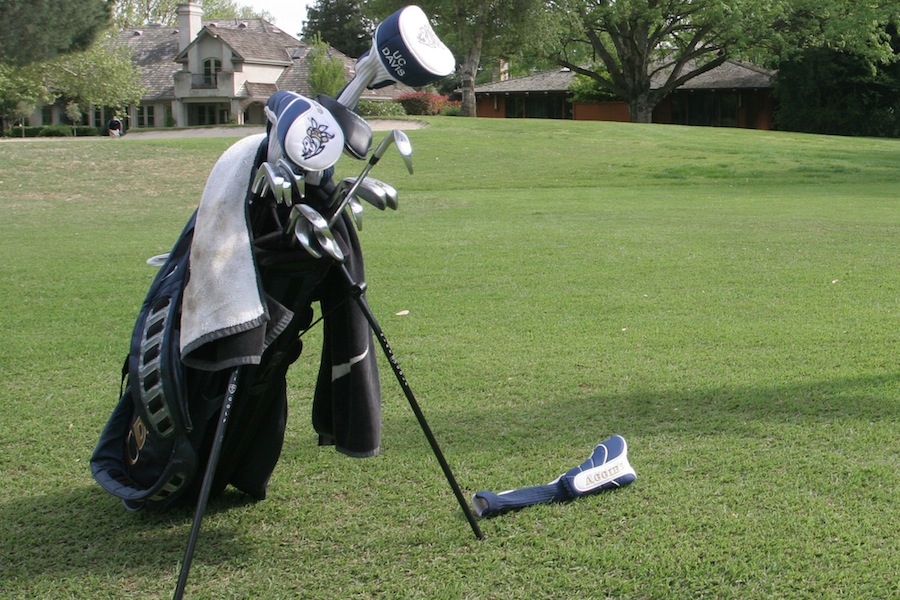
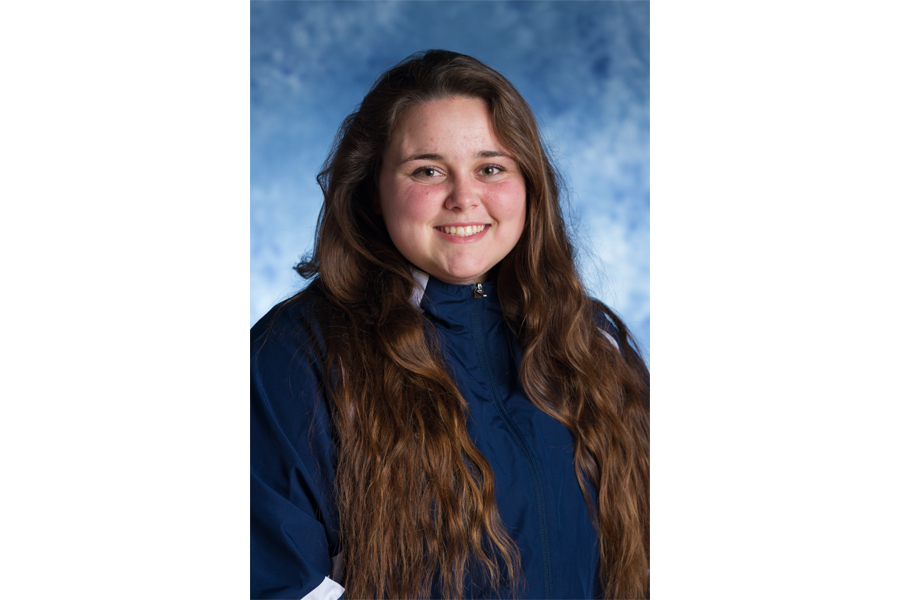
Andrea Wong and Paige Lee of women’s golf

AGGIE FILE
AGGIE FILE

Two athletes who have left an outstanding mark on the UC Davis golf program

Andrea Wong and Paige Lee of the UC Davis women’s golf team have been making their mark on the program the past couple of years. They share a passion for golf that has led to many accomplishments at the Division I level, including six Big West first team honors between the two of them and one Big West Champion title apiece. No matter how much they accomplish, both student-athletes are always putting in long hours at the El Macero Country Club, a 10 minute drive outside of Davis, to work on improving their strokes and keeping their skills sharp.

Wong, a senior majoring in American Studies, started playing golf when she was six years old. Her father owned a custom-fitting golf shop in Concord, and would allow her and her twin sister to play with their clubs while he was practicing on the range. She started entering tournaments at 11 years old, and had to choose between golf and dance at 12. She decided to pursue golf full on, and has not looked back since.

Recruited to play for UC Davis in 2012, Wong was third on the team in scoring with a 74.9 average and was named Big West Freshman of the Year in 2013. She then placed second in her first Big West Championship ever with a 1-over 219 score. She went on to win the Big West Championship her junior year with an 8-under 208 at El Macero Country Club.

This season, Wong qualified for the 2016 NCAA Division I Women’s Golf Stanford Regional as an individual along with teammate Lee. On the third and final day of competition, she shot eight birdies and scored a 6-under 65, which gave her a tie for first place in the tournament and also secured her spot in the NCAA Finals in Eugene, Oregon, held later this month.

“I thought that Andrea hit the ball really well the entire week and was very committed to her shot selections,” said head coach Anna Temple. “This was probably her best ever tournament, from the first hole to the last hole.”

Wong hopes to keep improving her technique leading up to the finals.

“I am working on some sand shots, continuing to hone in on my swing and paying attention to the details in my game,” Wong said.

On the first day of competition at the NCAA finals, Wong scored a 5-over-77 and tied for 101st place. The second day saw her move up to 94th place with a score of 2-over 74. A great performance on the third round of competition increased her standing in the competition by almost 70 spots. She had a round of 67 and moved into the top 30 spot, allowing her to compete in the final round of competition.

She finished off her golf career as an Aggie with a 4-over 76 on Monday and tied for 49th placed by the end of the competition.

To top off her 2016 season, she was named All-Region Team by the Women’s Golf Coach Association for her first place finish at regionals.

Lee, a junior psychology major, first held a golf club around the age of three. A San Jose native for nine years, she moved to Folsom in 2004. During her time in San Jose, she travelled to Sacramento in the summer and played golf with her grandfather. Soon, her mother was entering her into local tournaments. At the age of twelve, she started to play in junior tournaments and went on to have a successful career at Granite Bay High School, where she played in the California Interscholastic Federation NorCal Championship and the CIF Championship three times.

After being recruited by UC Davis, Lee made big waves the summer after her first year by qualifying for the 2014 U.S. Women’s Open. The following season, Lee was Big West Player of the Year, made All-Big West first team and was named All-America Honorable Mention by the Women’s Golf Coaches Association. Lee also placed first in the Peg Barnard Invitational at Stanford, beating out 62 players in the process.

This year, Lee won her first Big West Championship with 4-over 220 and helped the Aggies place third overall. On her last shot, she made an uphill, 15-16 foot putt that went into the hole and won her the title.

“I just told myself: ‘just trust yourself and whatever happens happens.’ Fortunately I made [the putt] and that got me to win the Big West,” she said.

Both Wong and Lee have their sights set on turning professional in the future. Wong, who graduates this year, plans on pursuing a professional at the end of the summer and attending qualifying school for the LPGA tour in August.

“First stage is at the end of August, and stage two and three are in the following three months,” she said.

Lee, on the other hand, has one more year of college left but is also planning on going on the LPGA tour.

“The plan has always been to join the tour,” she said.

“Our team and student athletes aspire to really big goals,” Temple said. “These are all players who are competing at the highest level of the sport and demand excellence from themselves.”

With their work ethics and determination to succeed, it is clear that for Wong and Lee, their careers in golf have only just begun.


Written by: Julia Wu – sports@theaggie.org