55.9 F
Davis

Davis, California

Tuesday, December 23, 2025
Home Blog Page 709

Aggies swept by 49ers in last home series of the weekend

DANIEL TAK / AGGIE
DANIEL TAK / AGGIE

UC Davis baseball team had some tough losses, but honored their graduating seniors well

In their final three home games of the season from May 20 to 22, the Aggies faced off against the Long Beach State 49ers.

Coming into the weekend, the Aggies had dropped four straight games, while the 49ers were number two in the Big West Conference standings. This weekend, Long Beach proved why they are just below Cal State Fullerton in the standings.

In Friday’s contest, redshirt freshman Robert Garcia got the start and threw six solid innings. Garcia only allowed two earned runs on five hits in his outing, but unfortunately errors cost Garcia big time as he gave up five runs in total.  

After Garcia came out of the game, UC Davis was able to get a run on the board in the sixth inning as senior designated hitter Cameron Olson hit a homerun to right field. The Ags added two more in the seventh, but it would not be enough. Long Beach State pushed another run across the plate in the top of the ninth to defeat UC Davis, 6-3 in the series opener.

Garcia fell to 3-4 on the season and although the Aggies were able to out hit their opponents, eight hits to seven, they still came up short.

Olson finished the game with two hits, while senior outfielder Tanner Bily extended his hitting streak to seven games.

In Saturday’s game, the 49ers’ offense struck quickly. The visiting team scored a run in the first inning and then scored five more in the top of the second with senior Spencer Henderson on the mound.

Henderson was pulled before he could even finish the second inning, giving up six runs on four hits along with five costly walks. Down 6-0 very early in the game, the Ags hoped to try to get some momentum. The team could not get much going as they only scored one run in the game.

The run came in the fourth inning as redshirt sophomore right fielder Ryan Hooper hit a double to score freshman catcher Logan Denholm.

After the home team scored their lone run in the fourth, Long Beach scored two runs in four consecutive innings. When it was all said and done, the 49ers finished with 19 hits to defeat the Aggies yet again, 14-1. Henderson took the loss for a record of 1-5 on the year.

DANIEL TAK / AGGIE
DANIEL TAK / AGGIE

Bily went two-for-four in the game to push his hitting streak to eight games.

Although the Aggies had lost the series, Sunday was a day of celebration. Three seniors, Nat Hamby, Henderson and Bily had their numbers spray painted behind home plate to honor their final home game.

“This group means everything to us,” said head coach Matt Vaughn. “They’ve put in their time here over four years and every one of them has shown up every day ready to play.”

Hamby got the start in his final home game and he pitched well, although a few errors cost the home team. Hamby allowed just three earned runs in five and two thirds innings but gave up seven runs in total. Long Beach’s offense was once again incredible as they were able to score 10 runs through just six innings.

UC Davis was able to score a run in the bottom of the sixth off a Henderson double. While the team tried to show some offensive life, the 49ers were too much for the Ags.

The seniors were all taken out before the end of the game and each of them earned a well deserved round of applause from the crowd.

“This program has meant a lot to me,” Bily said. “These last four years have been some of the best of my life. I thank my coaches and all my teammates for making it such a great experience.”

The final score of the game was 11-1 and Hamby took the loss for a record of 3-6 on the year.

Bily did get a hit in the game to extend his hitting streak to nine games with a single up the middle in the bottom of the third. Bily had a solid weekend in his final three games at Dobbins Stadium.

“I’ve been sticking with the same thing all year, just try to hit the ball hard up the middle,” Bily said. “Recently, it’s just been dropping, that’s how baseball is.”

The Aggies will head to Cal Poly where they will take on the Mustangs in a three game series starting on Thursday for the final games of the regular season.

“I just want to see us compete for three games and finish the season strong,” Vaughn said. “And for the young guys to just keep their heads up going into the future.”


Written by: Michael Martinez — sports@theaggie.org

‘Mr. Burns, A Post-Electric Play’

UC DAVIS THEATRE AND DANCE DEPARTMENT / COURTESY

Survival, storytelling and overconsumption create the foundation for this dark humored, post-apocalyptic play

A story about a group of survivors after an apocalyptic event may seem familiar and cliché, but the UC Davis production of Mr. Burns, A Post-Electric Play intends to introduce a unique twist to this plot with dynamic characters, dark humor and thoughtful themes.

In the play, a global catastrophe leads to a group of survivors gathering together and recalling the classic 1993 episode of The Simpsons, “Cape Feare.” Their recollections of this episode serve as the foundation for the rest of the play, as they assemble an acting troupe where they reenact The Simpsons episodes. However, the play is not about The Simpsons, but rather how these survivors and society in general cope with the loss of everyday luxuries. New York-based playwright Anne Washburn created and wrote the play, which premiered in May 2012 at the Woolly Mammoth Theater Company in Washington D.C. It went on to become an off-Broadway hit from August 2013 through October 2013 at Playwrights Horizon in New York City.

Mindy Cooper is the one making this production possible here on campus. She has an extensive repertoire, having directed, choreographed and performed in a number of Broadway and off-Broadway shows. She believes the messages from this play are messages students can deeply relate to.

“How society is changing, how we carry stories forward in time, how communication informs we need stories. [They] makes us feel human and connect us deeply to one another,” Cooper said.

One of the main characters, Matt, is a Simpsons fan who plays Homer in the third act of the play. Third-year dramatic arts major Matt Skinner, who plays Matt and Homer, acknowledges the seemingly peculiar storyline.

“I’ve never done a show like this. It’s a very strange show in the best possible way […] The first two acts are set seven years apart and the third act takes place 75 years later,” Skinner said. “I’ve never done a show that so heavily references pop culture, let alone a cartoon like The Simpsons […] It’s funny and sad at the same time, the way real life is.”

Fourth-year theatre and dance major Rose Kim, who plays Maria in the first two acts and Marge in the third, explains that this format allows for certain themes to be poignantly displayed.

“This play is set in the aftermath of our over consumption and over-exhaustion of the thing we as a species have decided to rely on for human advancement, electricity. This play grapples with not only what’s in us that made such a future possible, but also what’s in us that gives us strength, hope, and the ability to live on without giving up,” Kim said.

Both Kim and Skinner mention that storytelling is a prominent theme throughout the play. At the beginning, the survivors utilize storytelling as a means to cope with their lose of everyday luxuries. Toward the end, the play shows how stories can become altered and adjusted over time.

Cooper affirms that this production (and art as a whole) has great importance in our world.

“I believe the arts are an integral part of society, the need for being transported, being entertained, being enlightened and this play embraces this deeply,” Cooper said.

Both actors, as well as the rest of the cast and crew, have been working tirelessly with Cooper, to perfect their roles so that the show is presented with the brilliance it is widely known for. That being said, this production will offer much in comedy and drama and will present a host of themes that will force audiences to contemplate about human nature, storytelling and society’s impact on our artistic expressions.  

Though the concept of Mr. Burns may seem a bit confusing, all those involved reassure that it is not a production to be missed.

“It’s not all rainbows and unicorns but it’s life and life is never all bad, all good it’s why living is interesting and worth staying alive for, I think. That’s what this play says to me anyway,” Kim said.

The production started May 19 and will run until May 29 at the Wright Hall Main Stage Theater. Tickets are now on sale with general admission costing $15 and student/senior tickets $10. Tickets can be purchased at the box office. For more information please visit the theatre and dance department website or the Facebook event page.


Written by: Krishan Mithal – arts@theaggie.org

Humor: Smartsite maintenance to be halfway completed by fall 2020

BRIAN LANDRY / AGGIE

A tragic update to the Smartsite outage rocks the Davis community

It is now the fourth bleak day of Smartsite maintenance and a new announcement has just been released regarding the fate of our most treasured dumb website.

Following the super informative update that read, “Update…we will post notices hourly with status updates,” a new statement has been released:

“Although we said that Smartsite would be back up and running by 9 a.m. on Monday, May 23, in order to make sure we get this maintenance right, we are now estimating that the changes will be halfway completed by Fall Quarter of 2020. We have no estimates for when the fixes might actually be finished. Oh well. It’s not like many students rely on this website anyway,” the statement read.

Many people have been asking what is taking so long for the website to be get back up and running. The answer is complicated.

“What we’re doing is a little technical and I don’t want to get into too much detail,” a “smart” site representative told The Aggie. “We’re doing an entire re-branding effort to make the site more aesthetically pleasing. Specifically, we’re changing the font.”


You can reach BRIAN LANDRY at bjlandry@ucdavis.edu

Shuyi Qi Cartoon

SHUYI QI / AGGIE
SHUYI QI / AGGIE

Clinton (vs. Sanders) versus Trump


Smartphone versus dumbphone

ARIEL ROBBINS / AGGIE

Students discuss the positive and negative aspects of smartphones.

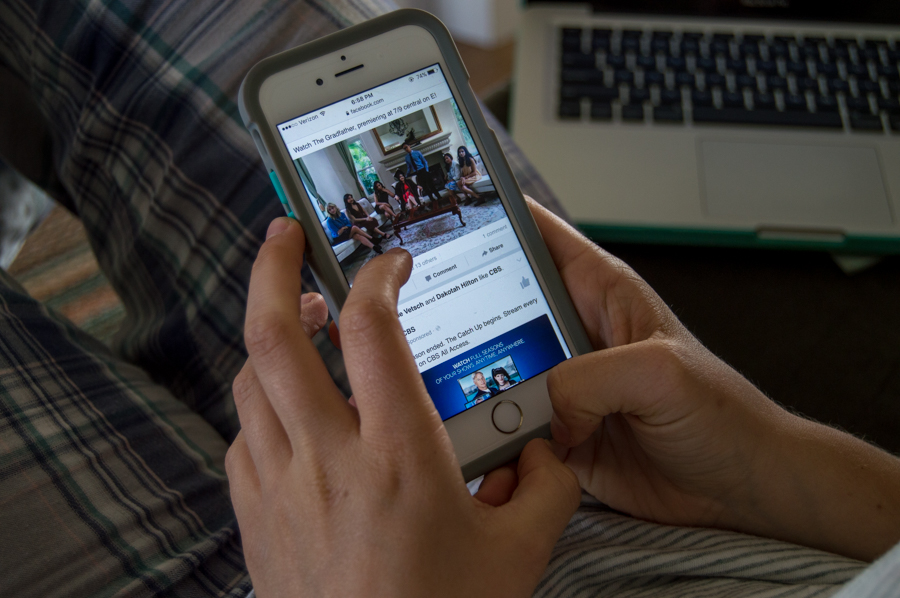
Smartphones have the power to be everything from a morning alarm to a worldwide navigational system, and for most college students, they’re never farther than an arm’s reach away. As the ownership of smartphones has spread to an entire generation, students are becoming increasingly more reliant on these tiny technological devices.

“[With a smartphone], you’re essentially connected to most people around the world in some way through social media,” said Alonso Medina, a first-year sociology major. “[Also], an unlimited array of information is available at your fingertips.”

In particular, the constant Internet access is a helpful resource that many use for school-related work.

“It’s like having a computer you can hold in your hand,” said Joseph Melkonian, a first-year international relations major. “There’s a lot of really useful apps — weather, news, that kind of thing.”

Melkonian currently owns a flip phone, or “dumbphone,” which he acquired this year as his first phone.

“I chose to have a […] ‘dumbphone’ as opposed to a smartphone because I’ve seen the amount of distraction that smartphones have on people,” Melkonian said. “I see there’s a lot of benefits with [having a smartphone], but […] I’d prefer to hinder [myself] so that all I can do is text and call people as opposed to [having] the internet at my fingertips at any instant.”

As an observer of people who do have such immediate internet access, Melkonian is no stranger to the common scenario of phones at the dinner table.

“There’s […] definitely a lot of good things [about smartphones], but I think it does kind of hinder relationships […] or even just talking,” Melkonian said. “I’m at a table with three of my friends, and one of them [is] looking at Tumblr and then showing [it] to other people at the table. Everyone’s on their phone, as opposed to actually talking.”

However, according to Melkonian, this kind of attachment is prevalent even with non-smartphone owners.

“There’s still an attachment, even though this is just a ‘dumbphone,’” Melkonian said. “I’ll find myself putting my hand in my pocket, just around it, which is weird. It’s as if it’s like […] Linus and his blanket [from Charlie Brown]. It almost becomes a reflex.”

Ashley Nola, a fourth-year neurobiology, physiology and behavior major, also owned a “dumbphone” up until her second-year of college, when she finally made the switch to a smartphone.

“I had to plan things a lot more because I didn’t have things readily at my disposal with my non-smartphone,” Nola said. “[Unlike a smartphone], I could leave it in my backpack at school and it wouldn’t run out of battery for a couple days.”

Despite the prevalent usage of smartphones amongst young adults, most seem to believe that while it may have its benefits, the constant usage is often detrimental.

“Even though you can essentially talk to anybody […], it alienates you from the […] environment you’re in physically,” Medina said. “It’s a very harmful distraction.”

Nola agrees that smartphones can be unhealthy in terms of lifestyle.

“I think that it’s really cool that we have this technology [because] in a lot of ways, these advances really help us,” Nola said. “But I also feel like people need to pay attention. More people are getting depressed, [and] people are not truly being in the moment.”

Despite acknowledging the distraction of smartphones, students still struggle to disconnect from the virtual world.

“I do notice that people spend a whole lot of time on their phones,” Melkonian said. “It’s kind of discouraging, that what’s on a [small] screen is more important than everything else around you. Even if it’s just five seconds [on your phone], it’s five seconds every minute.”

Because of the quick Internet access, smartphones often act as classroom tools. With apps for anything ranging from calculators to flashcards, smartphones provide students with a simple way to keep everything they need in one convenient, portable device.

“I think society is getting to a point where people expect you to have a smartphone,” Nola said. “Even professors assume you have ready Internet access. I think that might be a requirement of being a student.”

Although smartphones in the classroom can act as a resource, they can also be a distraction.

“What’s interesting is how there’s not really any limit to where cell phones can be used or can’t be used,” Melkonian said. “Even in the classroom, people are still using it [for recreation].”

Some students seem hard-pressed to find a solution for the cell phone attachment that smartphone culture embodies.

“On the one hand, you [could] say just get rid of cell phones,” Melkonian said. “But I don’t think that’s very realistic right now, given […] how many smartphones everyone has. I’d say if you’re not going to go to a ‘dumbphone,’ […] it’s just [about] making a conscious decision [to engage in] the people that you’re around or the situation you’re in over whatever’s going on in the digital world.”

Both Medina and Nola agree that acknowledging the prevalence of smartphone attachment is an important step towards fixing the issue.

“I don’t think we’ll ever find a foolproof solution to the downsides that technology can bring, but regardless, the most logical thing [to do] is to be educated on the negative aspects and work on an individual level to fix these problems,” Medina said.

Despite the unavoidable future of advancing technology, students remain hopeful that progress can bring beneficial change if treated with the right attitude.

“[Self-control] means a little less communication with people outside of face-to-face communication,” Melkonian said. “When it’s a face-to-face conversation, I love that.”

Written by: Allyson Tsuji — features@theaggie.org

The Humans of Davis

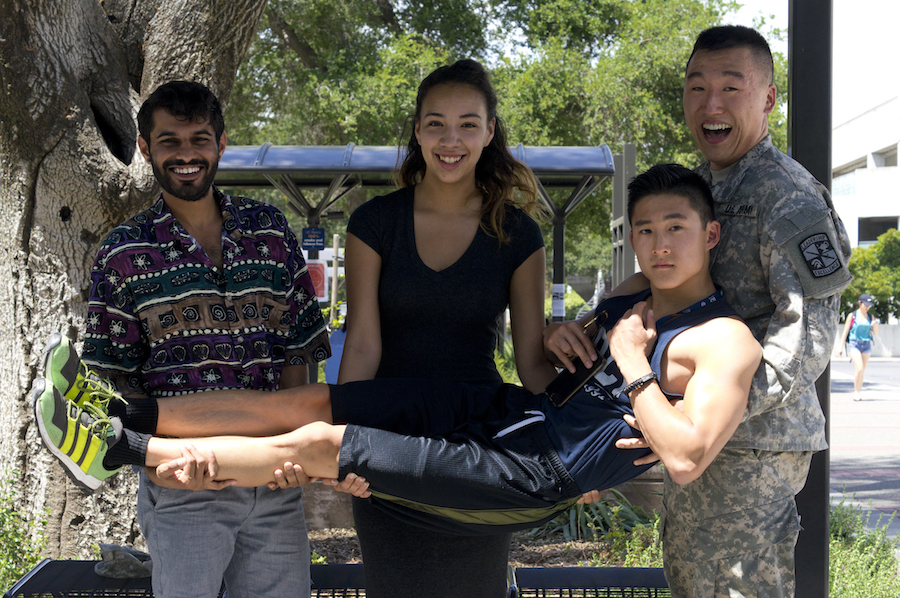
From left to right: Parteek Singh, Emily Loredo, Ed Ju and Charles Miin (BRIANA NGO / AGGIE)

UC Davis students work to share stories of people in Davis through “Humans of Davis” Facebook page.

On Picnic Day in 2014, UC Davis alumna Jen Nguyen saw an opportunity in the thousands of diverse people traipsing around Davis. She roamed around campus, took some photos and created a Facebook page full of people’s portraits, along with their stories. She called it “Humans of Davis,” after the well-known photographer Brandon Stanton’s Humans of New York (HONY).

Currently, Humans of Davis (HOD) is run by third-year managerial economics major Parteek Singh, who took over the page during Fall Quarter when he noticed it was becoming stagnant.

“[Jen Nguyen] actually interviewed me for the page, and we ended up becoming really good friends,” Singh said. “I think it plays a great role in our Davis community. I saw what it could do, what it has done and where it could go.”

Along with Singh, three photographers help run the HOD page: fourth-year managerial economics major Ed Ju, second-year undeclared major Emily Loredo and third-year microbiology major Charles Miin. Each member takes a different approach on the photos they post to the page.

“My goal with [HOD] is to bring light to social justice and start the conversation on issues that people don’t really usually talk about, and [also] bring light to a side of people that they don’t see,” Singh said. “Each editor of the page has a different perspective of the page.”

Ju started working for HOD a couple months ago, after being asked by a page administrator to showcase some pictures from one of his photo projects, 100 Strangers, on the page.

The project is a very similar to HOD, with his goal being to approach 100 Strangers and gather their stories. Ju has been working on 100 Strangers for four years, and now has dozens more portraits than his initial 100 people mark. Ju initially started the project because “it challenged [him] to do something he was terrified of.”

“Picking someone [to take a photo of involves] a lot of waiting until I get enough courage. I’m not really looking for a particular look, it just happens,” Ju said. “The most powerful moments for me are when I’m just a fellow human asking them questions and it becomes less of a project and more of a conversation.”

The page often collaborates with other organizations on campus that hope to use HOD as a platform for outreach. Currently, Miin, who started working for HOD in 2015, is shooting photos for the Student Health and Wellness Center. During interviews, Miin has participants write out what they want featured under their photo.

Loredo, who joined the team this quarter, collaborated with members of the “Let’s Talk about Sex” campaign on campus to release an album of photos posted on HOD to broadcast sexual assault awareness.

“[Doing the sexual assault campaign pictures] was very interesting to me because I’ve been a photographer for a few years and I was always drawn to the idea of taking pictures of people and having them present their stories,” Loredo said.  “Being able to take a picture of someone and really capture the essence of who they are […] is something that — if you can do it, and do it well — is really a gift.”

In the future, the HOD team hopes to start taking videos in which people tell their stories verbally, rather than in pictures.

“[HOD] makes people realize that they do have a voice in this community and they’re being noticed,” Loredo said. “It opens the door for a conversation.”


Written by: Fatima Siddiqui — features@theaggie.org

Davis Senior Center takes part in National Senior Health and Fitness Day

ZHEN LU / AGGIE
ZHEN LU / AGGIE

Center offers programs, promotes fitness and sociality for better quality of life

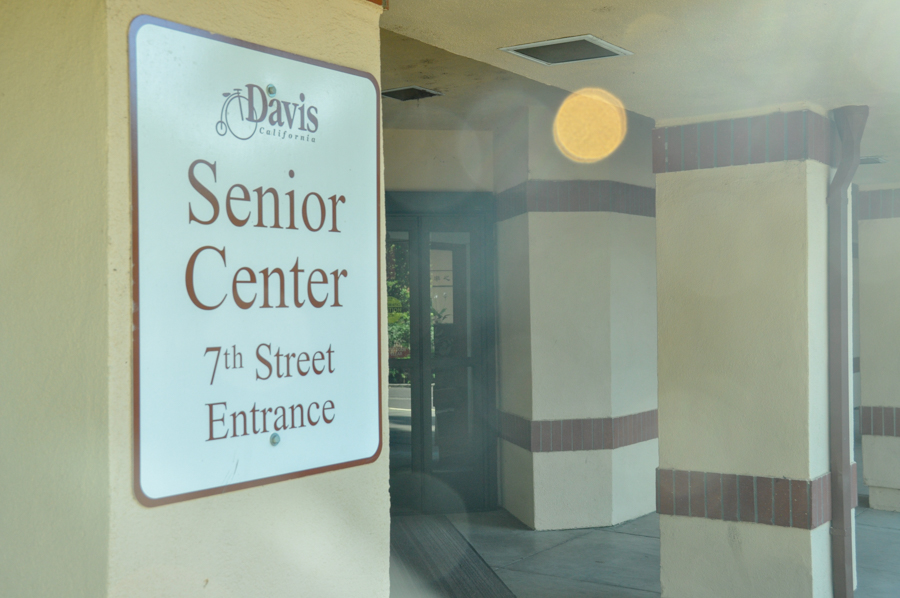
On Wednesday, May 25 the Davis Senior Center (DSC) will participate in the 23rd annual National Senior Health and Fitness Day, celebrating the theme “improve yourself for a better self.” The event is celebrated nationwide by more than 100,000 people with the purpose of encouraging older Americans to stay healthy and fit by emphasizing the importance of physical activity.

“[The fitness walk] ends up giving visibility to people out in the community that senior citizens are active and they’re involved and that they’re a part of the community,” said Dana Welch, program coordinator at DSC.

Registration is open for people of all ages; it costs $5 and includes breakfast and a t-shirt.

Participants will begin with a quick warm-up at 8:45 a.m. before embarking on a one-mile walk with the Cal Aggie Marching Band.

A complimentary breakfast will be provided at the center followed by a talk from keynote speaker and local chef Julie Cross. Cross will share her knowledge about the best foods to help keep a healthy body.

According to the City of Davis, Davis is home to more than 11,000 adults who are over the age of 55. The DSC is dedicated to promoting a variety of programs that provide physical, mental and economic well-being for older adults and seniors. The center provides more than 80 services and programs, for free or at a low cost, to serve the community.

The DSC offers computer tutoring, fitness programs, watercolor painting classes, sing-along and dance sessions with live music and bingo games. Bingo takes place from noon to 3 p.m. every Thursday.

“I love going to Bingo, people are always friendly and it gives me something to do on Thursdays,” said Greg Morris.

Seniors can also participate in the Connections Cafe which takes place every first and third Monday of the month. Welch explains that seniors come with questions on how to create Facebook accounts or how to upload or send photos. She adds that it is often easier for young people to learn these skills. Residents receive assistance on how to operate computers and smartphones from volunteers, including UC Davis students.

“That’s one of the reasons it’s called Connections Cafe, it’s an opportunity for a senior to learn something from a young person and they make a connection,” Welch said.

The center offers 14 fitness classes ranging from aerobics and yoga to zumba and hula. Welch explains that these activities help build a community at DSC. She adds that these classes are a way for people socialize and connect outside their homes while also exercising.

“I take a walk every morning and it has really helped my legs, I don’t feel so much [foot] pain,” said Deborah Johnson, who visits the senior center once in awhile.

Although Johnson hasn’t taken a class at the center, she has heard how helpful they have been for many others.

“[The senior center strives to be] a place where you are welcome, a place where you find stimulating activities and a place where you can have some ownership,” Welch said.

These programs promote lifelong learning, encourage inclusiveness and provide support systems while also offering a fun social environment for seniors.

People with unique skills interested in volunteering or teaching a class can contact Dana Welch at dwelch@cityofdavis.org or call the center at (530) 757-5696.


Written By: CARLA ARANGOcity@theaggie.org

Wind causes hot air balloon accident

JOSH G. / FLICKR
JOSH G. / FLICKR

One injured at Yolo County Airport, circumstances still unknown

A hot air balloon mishap occurred at the Yolo County Airport on May 14 around 8:30 a.m. The Yolo County Sheriff’s Department (YCSD) is still investigating the accident, but not many details are known yet. The accident occurred on a commercial flight with the private ballooning company, Balloons Above the Valley, which uses the Yolo County Airport for balloon takeoffs and landings.

“They were loading the balloon for takeoff and a strong gust of wind knocked [the basket] over,” said Yolo County Deputy Sheriff Robert Harbaugh in a statement.

Fortunately, the YCSD reports only one woman was injured, although the circumstances of the injury are still being investigated.

“One person was transported to the hospital. That person’s current condition is unknown,” said Sergeant Matthew Davis of the YCSD in a statement.

Gusts of wind seem to be a relatively common cause of accidents involving hot air balloon travel. According to statistics gathered from the United States and the United Kingdom during the period of June 1985 to June 2009, weather accounts for 23 percent of hot air balloon accidents.

However, air balloon accidents are relatively uncommon and air balloon travel is relatively safe. The Federal Aviation Administration inspects the balloons used for commercial ventures after every 100 hours of flight time or at least once a year.

“People have been flying hot air balloons safely since 1783 to be exact, long before the Wright Brothers’ first successful powered flight in 1903,” said Australian air safety expert, Carl Holden, in a statement after a 2012 air balloon accident in New Zealand.

Before the May 14 incident, Balloons Above the Valley had no reported accidents involving their air balloons in over 20 years. The company was also recently awarded the TripAdvisor 2015 Certificate of Excellence.

“[The company] had launched a few balloons and it was a breezy morning and the balloon that hurt the lady either became untethered or got loose in the wind, it was a pretty large basket and it went about 100 yards and I’m hearing that it struck her,” said Gary Pelfrey from the Aviation Advisory Committee for Yolo County Airport. “I’m not sure if there were people in the basket or not.”

Pelfrey explains that this is the type of incident that the committee will review in one of their quarterly meetings in order to better understand what safety measures need to be taken to prevent future accidents such as this one.

“We talk, you know, about best practices or should something be done or was this an accident, was it a pilot error,” Pelfrey said. “I think what we’re looking at typically is, is there a series of events that need to be changed.”


Written by: Samantha Solomon – city@theaggie.org

Community helps create new cat sculpture

ROSIE SCHWARZ / AGGIE

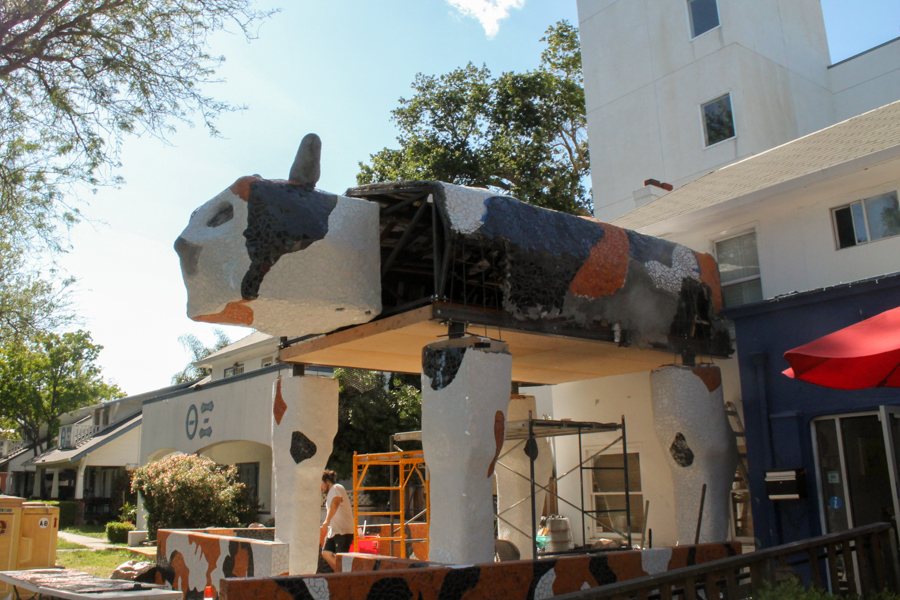
New Calico Cat sculpture being built next to Roy the Dog in Downtown Davis

John Natsoulas, local artist and owner of the John Natsoulas Art Gallery, located at 521 First St. in Downtown Davis, has helped create over 40 pieces of artwork across Davis and is an avid supporter of its art scene. Natsoulas is perhaps best known for helping create the Roy the Dog sculpture which is located outside the gallery, and is now embarking on an ambitious project to create a neighboring Calico Cat sculpture.

Natsoulas’ art projects are based around community building and are part of a larger project of creating the Davis Transmedia Art Walk, the world’s first interactive art walk. Each art piece has a chip inside it and, using Near Field Technology (NFC), visitors can watch videos about the construction of the art work by placing their phone near it.

Fusing art and technology, Natsoulas is passionate about making art more accessible and bringing it to a younger audience. His tactic seems to be working and his gallery has over 16,000 likes on Facebook, more than the Arboretum and the Davis Farmers Market. Natsoulas also points out that the Transmedia Art Walk has become one of Davis’ top attractions for visitors. The artist is also keen to involve the local community, and the Calico Cat will be no exception.

“What’s different about what we’re doing is that we invite anybody to come; we don’t care if you have any skill, no skill, on all of our art. On Saturday, we’ll have some high school kids, some college kids and they’ll come and they’ll help us and […] it’s not even close to being done. These are all projects that we did at no cost to anybody in the community, these [pieces are all] community projects that were done with our community [and] with our team,” Natsoulas said.

The concept for the sculpture came about as a tribute to Natsoulas’ mentor and Natsoulas has been happy to cover its costs due to its community building benefits.

“When you’re doing something organic, you just let it happen you don’t say ‘I don’t want to do this,’ you say, ‘do it’ […] I had a father and a son, maybe 9 years old, they worked on a piece of [the cat] and they came back and they said ‘we did that’. It’s rewarding,” Natsoulas said.

Like all art, the Calico Cat and Roy the Dog sculptures are subjective and Dimitri Degtyarev, a first year computer science and engineering student at UC Davis, is not a fan of either.

“I think [the dog statue] looks stupid, I think it’s too colorful and kind of out of place. [The cat statue] is also not that good,” Degtyarev said.

However, many do not share Degtyarev’s opinion and Brie Cavalli, a visiting high school student from Napa High School, thinks that the sculptures add to Davis’ charm and she appreciates them.

“I think [building the cat] would be a good idea, I like cats and dogs and I think it would look cool there, [the sculpture] looks really nice,” Cavalli said.

While Natsoulas is extremely passionate about all the art projects that he embarks on, involving the local community is paramount to his vision. He feels that art has become too consumerist and he is intent in making sure that everyone is able to participate in the new creation.  

While Calico Cat remains under construction, it can be seen outside the John Natsoulas Gallery and to help with construction, visit the gallery Saturdays from 12:00-5:00 p.m. to help create the statue. To find out more about the Davis Transmedia Art Walk visit http://davisartwalk.com/ and for more information on the John Natsoulas Gallery visit http://natsoulas.com/.

Written by: Juno Bhardwaj-Shah — city@theaggie.org

UC president allocates $8.4 million for undocumented student support

BRIANA NGO / AGGIE
BRIANA NGO / AGGIE

Money to go toward loans, legal support, student services for undocumented students

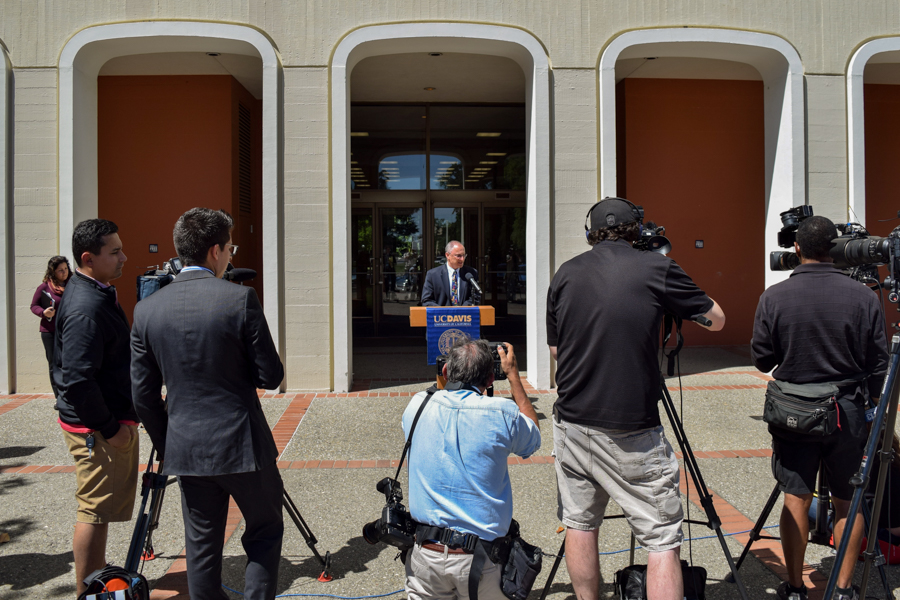
On May 11, UC President Janet Napolitano released details on a plan to provide $8.4 million in funding each year through the 2018-19 school year to support services for undocumented students in the UC system.

The money, which is to be split three ways, will be used to further the Undocumented Students Initiative that President Napolitano had previously launched.

“The initiative that President Napolitano launched provided momentum for an umbrella of programs, including DREAM Loans and UC’s Undocumented Legal Services Center,” said Claire Doan, UC spokesperson, via email.

The aforementioned DREAM Loans will receive $5 million per year in funding for at least three years. The Undocumented Legal Services Center, which is part of the UC Davis School of Law, will receive $900,000 per year. Remaining funds in the amount of $2.5 million per year will go toward other student support services, such as support staff and monetary aid for textbooks.

“This funding will further strengthen the university’s undocumented student initiative, and help ensure that these students receive the support and resources they need to succeed,” Napolitano said in a statement.

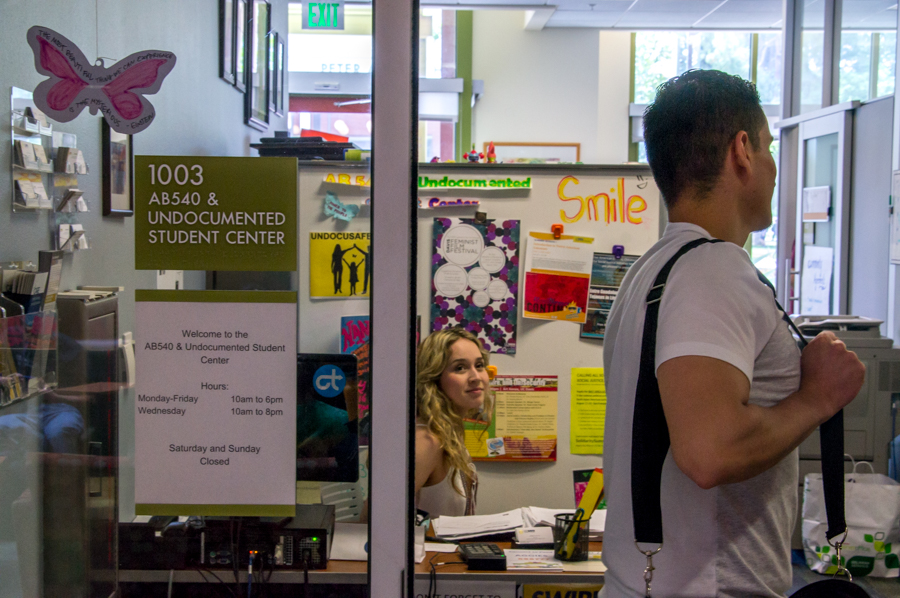
Andrea Gaytan, director of the AB540 and Undocumented Student Center at UC Davis, spoke about how the money that UC Davis will receive is not delegated yet.

“Each campus that receives funds will be able to designate how the funds will be used,” Gaytan said. “Here at Davis, since we don’t have an exact amount yet of those big pools of money, I cannot start really making too many plans. I am thinking that if it were similar to previous years, the funding that we would use for the center would go directly to students.”

Gaytan stressed that any money the center received will be used to benefit students and outlined what services the center currently provides.

“Right now, we have several programs. We have some scholarships for AB540 students that are merit-based,” Gaytan said. “We also have travel grants to support students who are studying abroad who are AB540 as well as an emergency grant, maximum $500 per year, available same day, for any sort of emergency situation. […] We also have stipend for students who participate in our mentorship program and in our speaker’s bureau.”

The largest allocation of the funding is toward DREAM Loans. This program is designed to fill some of the gap in financial aid that undocumented students face.

“These loans are very important to undocumented students,” Doan said. “Their status disqualifies them from receiving financial aid, which severely limits their access to student loans. And they have difficulty accessing private loans. This is one way UC is reducing barriers for undocumented students, so they can focus on pursuing their college degree.”

However, there is some controversy about the loan program.

“The one component that is semi-controversial in the funding is that many undocumented students are not precisely happy about having a loan program,” Gaytan said. “Students are still reluctant to take out loans if they do not have work authorization because they do not know how they are supposed to pay them back after graduation. For many of our students, even though loans are available, they are not choosing to take it.”

The meaning behind the program is what excites ASUCD Senator Ricardo Martinez. He does worry, though, about the permanency of the program.

“[The program] is a good thing for undocumented students on campus who often do not have the resources that traditional students do have,” Martinez said. “Yet I am worried though that it is only going to be a temporary amount — it’s only going to be given for three years. Maybe making it permanent would be beneficial for the UC system as a whole.”


Written by: Kenton Goldsby – campus@theaggie.org

UC ranked highest university worldwide for investment in combatting climate change

DANIEL TAK / AGGIE
DANIEL TAK / AGGIE

UC ranked 17th best worldwide investor in the AODP Climate 500 Index

On May 2, for the second year in a row, Asset Owners Disclosure Project (AODP) ranked the University of California as the highest among all universities worldwide in incorporating climate change risks in its investment decision-making. The UC retirement system ranked 17th best amongst other investors.

The AODP Global Climate Index ranks stakeholders on how each major asset owner manages climate risk. The goal is to encourage climate change integration into the stakeholders’ investment strategies across the investment sector.

The “Global Climate 500 Index” survey comprises 41 questions which rank individual stakeholders on their transparency and disclosure of information, as well as how effectively asset owners are managing, monitoring and measuring climate risks in their projects and their involvement in low carbon investments.

AODP CEO Julian Poulter commends the UC combatting against global warming and its influence on the rest of the industry.

“Leadership in the AODP Index is critical to identifying what measures can be taken to manage climate risk and how funds compare with their peers. As UC shows, this leadership is achievable with no discernible impact on returns — and will raise the bar for the rest of the industry,” Poulter said in the UC press release.

Spokesperson for UC Office of the President Claire Doan agrees with Poulter.

“[The ranking] shows UC is a global leader in the area of climate change solutions,” Doan said via email. “We hope, by leading the charge when it comes to sustainability, we can influence others to also make forward-thinking decisions that prioritize the environment.”

Students such as Hannah Ulansey, fourth-year environmental science and management major and the unit director for the Campus Center for the Environment, believes UC Davis reflects the AODP ranking with its achievements in sustainability.

“I would say that UC Davis reflects this commitment to climate change,” Ulansey said via email. “We recently constructed a 62-acre solar farm in the south campus that will produce energy for campus use. Additionally, UC Davis recently partnered with an anaerobic biodigestor. All pre-consumer food waste from the dining commons are now composted.”

According to the UC press release, the University is a signatory to the Paris Pledge and has thus committed to investing $1 billion in global warming solutions for the next five years. UC is also working with Bill Gates and the Breakthrough Energy Coalition to boost innovative energy development, government research and technologies to build a network of investors to support climate change solutions.

Written by: Yvonne Leong – campus@theaggie.org

UC Davis hosts third annual One Cup Challenge throughout May

ASHLEY LUGO / AGGIE
ASHLEY LUGO / AGGIE

Campaign focuses on reducing consumer waste and encouraging students to use their own reusable cups

The third annual “One Cup Challenge” was organized this month to reduce consumer waste on campus and to inspire social innovation through a fun and interactive experience. The event was put on by Miriam Wyatt and Shaina Forsman, waste reduction coordinators for UC Davis Dining Services, alongside interns who strive to minimize excess waste.

The challenge, which takes place throughout May, encourages community members to bring their own reusable cup or mug when drinking their favorite beverage. Students can go to the challenge’s website or stop by the weekly farmers market on campus to pledge to bring their own cup as a way to participate in the challenge and receive newsletters, updates and other information. Students can also receive items like mason jars and coupons at the farmers market.

The campaign is inspired by UC San Diego’s successful “Kill the Cup” campaign, and has been hosted at UC Davis for two years now. This year there will also be events and workshops with many rewards and prizes in order to educate students as to why it is important to reduce disposable cup usage.

Students can win prizes by participating in weekly challenges that teach how to lessen the negative impact of disposable cup usage. Those who are spotted with a reusable mug may be handed a Spot a Mug coupon, good for one free 16 oz. coffee or fountain drink at Swirlz at the ASUCD Coffee House, CoHo South, Activities and Recreation Center Starbucks, Silo Starbucks, BioBrew and Scrubs. Students can also be rewarded with a farmers’ market voucher, which they can use to buy fresh produce at the UC Davis Farmers Market.

Third-year neurobiology, physiology and behavior major Deepa Patel has always used a reusable water bottle and is excited to know that there is now an opportunity to be rewarded for that.

“I don’t like knowing I’m creating more trash, so I’ve always just used my reusable water bottle or when I’m buying coffee just bring my thermis,” Patel said.

The east wing UC Davis Student Store is supporting the challenge by discounting all UC Davis imprinted mugs and water bottles by $1 during the month of May. The Coffee House will also be participating by giving students a pre-punched loyalty card for a free drink when students use UC Davis imprinted mugs and bottles.

The One Cup Challenge supports UC Davis’ zero waste by 2020 goal by helping reduce the amount of cup waste on campus. The challenge calls for continued action to help change students’ relationship with campus purchases and create sustainable behaviors.

Second-year environmental science and management major and intern for the waste reduction program Bilegt Baatar believes that this challenge will not only help UC Davis achieve its goal, but will also help students live a more environmentally conscious life after their years in Davis.

“It’s a simple change in people’s lifestyle that will be applicable to them beyond college,” Baatar said.

Coordinator Shaina Forsman believes a program like this is important because disposables cause greater damage than we think, and this campaign can help spread awareness on the issue.

“As most of us know, the campus has committed to reaching zero waste by 2020,” Forsman said. “Reducing disposable cup use on campus will be huge for reaching this goal. Aside from our university goals, it is imperative that students begin to feel more obligated and internally motivated to reduce their environmental impact in general. The implications of disposables go beyond increasing landfill.”

To join the campaign, students can visit the One Cup Challenge website.

Written by: Demi Caceres–campus@theaggie.org

Fun and education at the Arboretum

ASHLEY LUGO / AGGIE
ASHLEY LUGO / AGGIE

The Arboretum Ambassadors organize engaging, educational public events for the Davis community.

The UC Davis Arboretum is well-known for its breathtaking natural scenery and peaceful environment, and is a popular destination among the Davis community for hiking, picnicking or just simply relaxing in between classes. However, there is much more to this area along Putah Creek than just rest and relaxation.

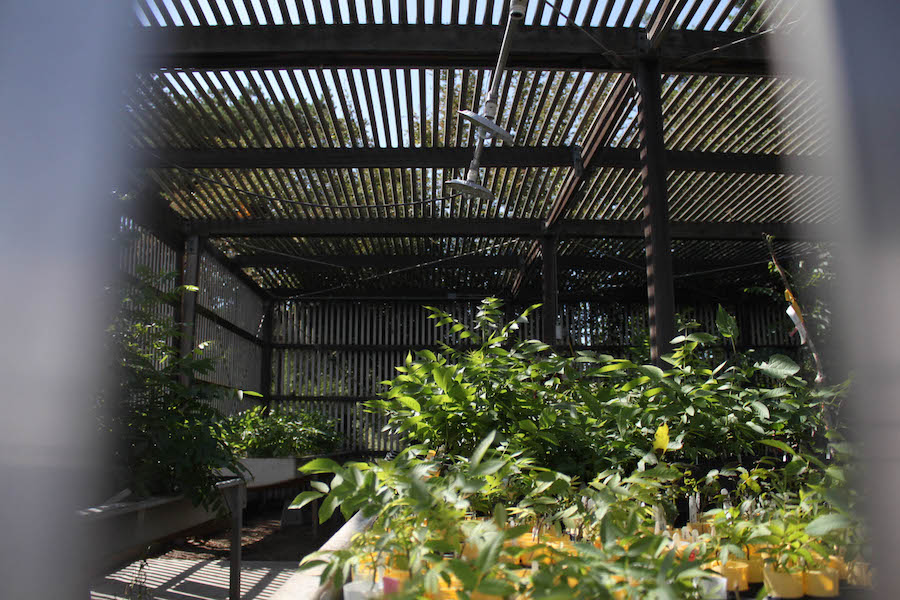
The Arboretum is also home to many unique educational and cultural events hosted by the Arboretum Ambassadors. The Arboretum Ambassadors are a group of UC Davis student interns who work together to plan and organize community events that take place at the Arboretum. The interns hold weekly meetings to plan these events, which aim to increase public engagement with the Arboretum.

“The Arboretum Ambassadors are the environmental leadership interns here at the Arboretum and Public Garden,” said Elaine Fingerett, academic coordinator of the UC Davis Arboretum and Public Garden. “Sustainability is very much a part of our mission, as well as conservation, and they do a lot of community outreach and education to work with the public to learn about a whole variety of issues. I do think that education is certainly a big focus.”

Throughout this school year, the Arboretum Ambassadors have coordinated a wide variety of events, including a Native Californian elderberry flute-making workshop with cultural interpreter Antonio Florez and, more recently, the first-ever Arboretum Photo Scavenger Hunt from April 25 to May 9.

“One feasible goal [of these events] is helping people in the community realize how valuable the Arboretum is. It’s like a free park [or] a plant zoo,” said Kaili Brande, a fourth-year environmental science and management major and Arboretum Ambassador intern. “It’s also educational, too — just learning more in a fun way.”

The ambassadors often collaborate with other student organizations as well. Last month, the interns worked with Birdstrike Theatre comedy improv group to host an improv workshop at the Arboretum’s Wyatt Deck. A couple of weeks ago, a nighttime stargazing event was organized in collaboration with the UC Davis Astronomy Club, and was held in the Arboretum gazebo.

“This is our second year doing the stargazing event. A lot of people are really excited to be in the Arboretum at night time,” said Sukhmani Brar, a third-year environmental policy analysis and planning major and Arboretum Ambassadors co-coordinator. “And it’s nice because it’s one of our events that brings out all ages, so you’ll see professors, [teaching assistants and] graduate students there; you’ll also see families and a lot of students come out.”

Last Winter Quarter, the Arboretum Ambassadors hosted a cultural event in January in celebration of Lunar New Year, titled “Climbing the Gingko Tree.” The interns invited students from the Taiwanese American Organization, the Japanese American Student Society and the Golden Turtle Lion Dance Association of UC Davis to share information about the cultures of Asia through various activities and performances.

It was really cool to see the network of a bunch of different student groups for that event,” said Vanessa Martinez, a second-year environmental policy analysis and planning major and Arboretum Ambassadors intern. “All the organizations were able to come together in the Arboretum for the same cause, and everyone had a really great time, from kids to students.”

All events organized by the interns are original ideas developed during weekly meetings. Through their volunteer work, the interns are able to share their creativity and passions with the Davis community as they coordinate and host public events.

“This is my first year being a co-coordinator. Last year I was an intern, [and] I got to experience more creativity — you get to come up with your own events and implement them,” Brar said. “But I also like the co-coordinator aspect. It’s cool encouraging others to come up with their own events and helping bring all their ideas together.”

This is the third year that the Arboretum Ambassadors team has received the Gold-Level Community Service Award by the UC Davis Community Service Resource Center. For the last two years, the team also received the federal President’s Volunteer Service Award. Together, the Arboretum Ambassadors continue to successfully accomplish their goal of connecting with and educating the public about environmental issues.

“I come […] feeling energized that I get to work with a wonderful group of really bright and talented young people who really want to make a difference in the world,” Fingerett said. “I am never surprised by their creativity and innovation, and it gives me a lot of hope for the future. I’m working with young people who really want to be part of a solution.”

Written by: Jennie Chang — features@theaggie.org

ASHLEY LUGO / AGGIE
ASHLEY LUGO / AGGIE

Humor: UC Davis chancellor position to be filled on a weekly basis

BRIAN LANDRY / AGGIE

The move ensures controversial figures don’t stay in power long

After having made what appears to be two hiring mistakes in leadership over the past couple of weeks, the UC Regents have asked new interim chancellor Ralph J. Hexter to step down. The decision comes not long after Chancellor Linda Katehi was placed on investigatory leave in order to further delve into her actions that nearly doubled her salary through roles in privatized businesses.

Hexter, the former chancellor of Hampshire College, was accused of embezzling money when leading the small private school in the northeast.

“I just don’t understand it. We think we put someone honorable in place, and we seem to be wrong. Twice, now, in two weeks,” said Andrew Twain, an oil baron and California Regent. “A new person comes in and something is wrong with them.”

The Regents have decided to go with a chancellor-by-committee process until they can properly screen all of the candidates. Every week, the potential heads of the school will come in and run the school for a week, rotating until all 26 targets have had a chance to lead the institution. In this 26-week span, the university will screen all of the applicants to ensure that no controversy surrounds them. This decision will ensure that even attempts to clean up the Internet will not go unnoticed.

“I get it,” said Bill Sogard, one of the contenders for the job. “I don’t think I have dirty laundry, but, just to be safe, hopefully my friends keep their mouths shut.”

The coming weeks are bound to be full of surprises. It is unclear who will make the cut, but leadership roles will continue to rotate on a merry-go-round basis that only makes the university look like a bigger circus than it already is.

You can reach ETHAN VICTOR blah blah blah email blah blah blah ejvictor@ucdavis.edu and blah blah blah Twitter @thejvictor.

Chengdu Style Review

NICHOLAS YOON / AGGIE

Beware of the toothpicks

When I walked into Chengdu Style, I was expecting to just order some crispy beef, egg rolls, rice and some kind of vegetable. However, the menu was much more complicated than that, and is probably better suited for people who know more about authentic Chinese food.

I wanted to try the best food from each section of the menu, so I asked our server for recommendations. Our server suggested three dishes: a lamb dish, a vegetable dish and a rice dish. At first, when we ordered the rice dish, we thought we were ordering noodles but our server misunderstood. In fact, our server misunderstood a lot of what we were saying. I cannot fathom the idea that the lamb dish he served us was one of their most popular dishes. The dish consisted of small, individual pieces of lamb on toothpicks with hot pepper sprinkled all over them, but a lot of the pieces were fatty and it was a little too spicy for my taste.

Nick, my adventurous eating companion, ended up eating most of it as my body could not handle all the different things happening in my mouth. The vegetable dish we ordered was water spinach with garlic, and I would recommend this dish because it was very light and a good balance to the heavy meat dishes. The last dish we had was fried rice with chicken, the most standard dish. It wasn’t a particularly exciting dish but it was tasty nonetheless.

I would rate the service a B+ because they were not as attentive as I would have liked. When we first arrived, there weren’t that many people inside, but at 6 p.m. it was packed. Our server was really helpful at first, bringing us tea immediately and helping us decide what to order. However, I noticed that as the restaurant became busier, it became harder to track the server down and we had to ask them to bring us water, which I feel like should have been provided as soon as we sat down.

Overall, I had an interesting experience at Chengdu Style. I feel that I would have enjoyed it more if I ordered different food, but generally it was good. If you’re in the mood to try authentic Chinese cuisine, and are up for a bit of a culinary adventure, Chengdu Style promises to surprise you.

Chengdu Style is located on 737 Russell Blvd. in the University Mall. They are open from 11 a.m. to 10 p.m. For more information about the restaurant, visit their website and online menu.

Written by: CaraJoy Kleinrock – arts@theaggie.org