55.7 F
Davis

Davis, California

Monday, December 22, 2025
Home Blog Page 733

Aggie Style Watch

BRIANA NGO / AGGIE
BRIANA NGO / AGGIE

Thrifter for life

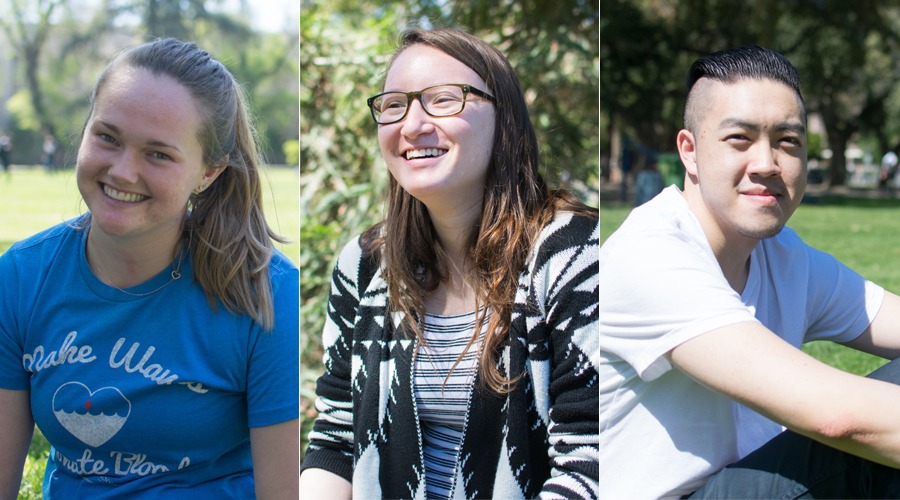
Emma Cao, a second-year human development major, has a fresh and unique style. She finds her inspiration all around her. One of her favorite hobbies is thrifting, a pastime that helps her find a lot of her fashion inspiration. Her style depends on her mood of the day and allows her to express herself. Cao is ready for spring so she can show off her unique style.


ASW: What is your style inspiration?

BRIANA NGO / AGGIE
BRIANA NGO / AGGIE

Cao: I get my style inspiration from everywhere. At school, I see how people dress and I look on Tumblr and Instagram. Even little things like how

I feel [influence my fashion]. For example, if it’s a happy day, I’ll wear a dress.


ASW: Do you have any role models that you look up to in fashion?

Cao: Not really. Whatever I like I try to incorporate it in how I dress. How I dress is a form of expression for me. Something I live by is, “if you look good, then you feel good, then you do good.”


ASW: What style advice do you have?

Cao: Be yourself and stay true to yourself. Don’t be scared to try new things. Just wear what you want and what makes you happy because at the end of the day that’s all that matters it’s what you’re wearing, not what anyone else is wearing.

 

BRIANA NGO / AGGIE
BRIANA NGO / AGGIE

ASW: Do you have any favorite brands?

Cao: I don’t really shop by brands, I just buy whatever I like. I’m really into thrifting, it’s a fun hobby.


ASW: Do you have a go-to outfit?

Cao: Just a simple shorts and a T-shirt when I’m running late for class or something.


ASW: Where did you get your clothes from?

Cao: My hat is from Forever 21, my dress is from a thrift store, and my shoes are from Charlotte Russe.


WRITTEN BY: CaraJoy Kleinrock – arts@theaggie.org
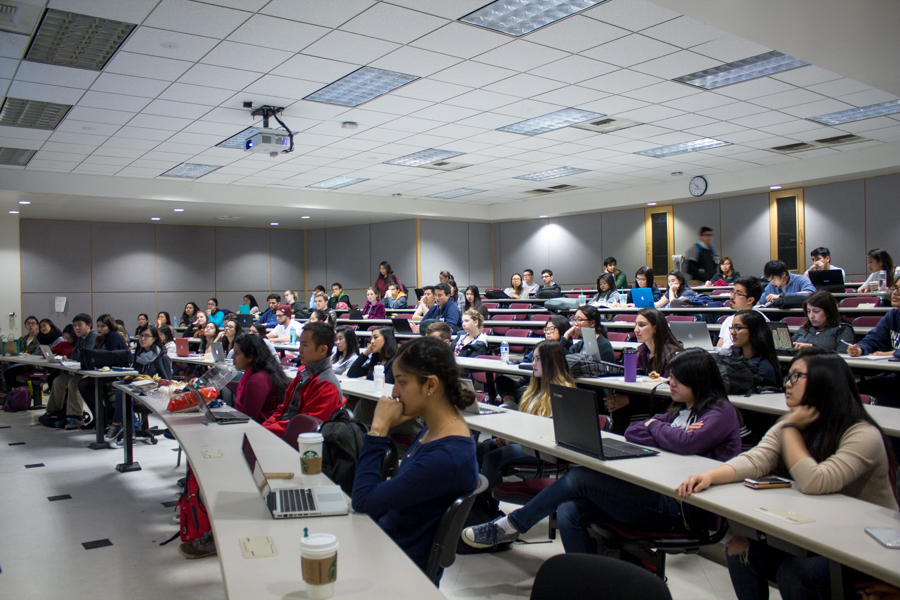
Six seminars to spice up your schedule

0
DIANA LI / AGGIE
DIANA LI / AGGIE

UC Davis First-Year Seminar program offers wide variety of classes.

From romance to cheddar cheese to zombies, the UC Davis First-Year Seminar program has it all. Students can choose from up to 200 seminars each year, with topics ranging from Japanese art to Davis culture to earthquakes to the NFL. Each seminar has an enrollment of up to 19 students and is led by UC Davis faculty.


Zombies

Taught by English and economics professor Sean McDonnell, Zombies is a seminar that studies the culture, history and values behind an array of zombie films, such as “White Zombie” and “Night of the Living Dead.” Each week, the class focuses on a different film to discuss its connection with various topics such as consciousness, societal stability, gender, race and humanity.

“After the first week, […] the students really take over [the discussion],” McDonnell said. “They [come] up with stuff that I [have] never heard of or thought of before.”

The class is driven by student participation and requires students to complete short readings and writings about the weekly film in preparation for the discussion. Students also engage in film criticism and theory, and learn to look at popular culture through an intellectual perspective.


Experimental Magic

Another available seminar topic is the art of magic. Co-instructed by psychology professor Eve Isham and magician Rick Hill, the seminar is a hybrid class focusing on both cognitive psychology and magic. The class encourages students who are interested in magic to investigate the scientific process involved in the art. Experimental Magic focuses on a variety of concepts, including close-up magic, which involves card tricks and similar magic tricks for smaller audiences.

“When you’re doing close up magic, you’re really relying on hard work to get you [the desired effect],” Isham said. “It’s definitely something that [you] could […] appreciate once you learn what it’s all about.”

The class covers experimental designs and demonstrations of tricks, some of which are taught to students over the course of the quarter.


What Makes Airplanes Fly?

Mechanical and aerospace engineering professor Mohamed Hafez teaches one seminar each quarter: How Satellites Work in Fall Quarter, Rocket Science in Winter Quarter and What Makes Airplanes Fly? in Spring Quarter. All classes cover the science of aerodynamic engineering using both remote- and robot-controlled models.

“The idea is to introduce to the students — in an informal setting — the concepts of flight,” Hafez said.

Students do not need any specific background to take the class. While some are interested in aerospace engineering, others are simply curious. According to Hafez, the course explores both science and communication skills through presentations, discussions and group projects in which students collaborate to make models.


Psychology of Love

Love might be blind, but not according to science. The Psychology of Love is a class designed to look into a field of social psychology that studies close relationships, particularly in the romantic sector. This quarter, psychology professor Cynthia Pickett dove into her first ever freshman seminar, bringing a class she has taught at the graduate level into the hands of first-year students. The seminar covers the topics of initial attraction, dating and break-ups through non-reading assignments like logging onto OkCupid.com and comparing dating profiles.

“What’s interesting is we all have our own intuitions on how love works because we all have our own relationships and we’ve seen people in relationships,” Pickett said. “The goal of the class is to compare students’ intuitions with what the science is.”


Life After Cheddar

Say cheese! Life After Cheddar is a freshman seminar dedicated completely to the anthropology linked with the food that was never meant to be produced in the first place: cheese. The class is taught by a professor in the Department of Food Science and Technology, Moshe Rosenberg, who has been studying the popular dairy product for over 40 years. A combination of a discussion about cheeses from around the world and a project on European cheese tourism makes for a unique curriculum.

“I believe that there is no pardon to cheese in food, as it is a fascinating and multidisciplinary topic,” Rosenberg said. “And it is really tasty.”

Special bonus for students: cheese tasting is included.


Cultural Offerings in Davis

Exploring digitized Davis through the Davis LocalWiki page, investigating cafe culture at Mishka’s cafe or speaking to the offices of local city council members are all things that students in the Cultural Offerings in Davis freshman seminar might experience this spring. The two-unit class is taught by professor Andy Jones, UC Davis’ poet laureate and chair of the City of Davis’ Cultural Arts and Entertainment Committee.

“Most of the social energy is on campus and there are great opportunities on campus,” Jones said. “But I think there is a missed opportunity as well if students don’t go investigate what the city itself offers.”

This class encourages students to go beyond the classroom by venturing out and observing the local and quaint culture of Davis.


Written by Allie Tsuji and Austin Carroll – features@theaggie.org

Bentley’s Bowtique featured on CNN

0
MARIAN ZINGARO / COURTESY

Davis seventh-grader impresses community with entrepreneurial spirit

On Thursday, March 31, those watching CNN’s “Daily Share” segment on entrepreneurs caught a glimpse of Maya Zingaro, a seventh-grader at Holmes Junior High School in Davis. Maya Zingara owns an Etsy store, Bentley’s Bowtique, which opened on Sept. 11, 2015.

The online store features accessories for pets, inspired by Maya’s dog, Bentley, a West Highland white terrier. The pet apparel offered includes collars, bow ties, bandannas and double-layered flowers that can attach to a pet’s collar — all in various fabrics and patterns. Each accessory is not only handmade by Maya, but also designed by her as well.

“I started making accessories for Bentley in August of 2015,” Maya said. “I think up the designs by looking over fabrics at the fabric store and imagining what products would look good with those fabrics.”

The online store boasts five-star reviews, 20 in total, and high praise from customers. Many commend Maya’s excellent craftsmanship and sewing capabilities, which are well-refined for someone so young. So far, Maya has received 52 sales and counting, and ships all over the United States. She has even shipped products to the United Kingdom and to Finland.

“I started sewing when I was seven years old and in second grade. For Christmas, my mom gave me a sewing machine and that is when I first began to sew,” Maya said.

Dr. Marian Zingaro, a local chiropractor and Maya’s mother, explains that although Maya is only in seventh grade, she runs the store virtually on her own.

“I only help Maya by driving her to the fabric store and taking her orders to the post office,” Marian said.

With the CNN interview wrapped up and a potential influx of orders following the airing of the show, Marian is delighted by her daughter’s success.

“I am very proud of Maya, especially because she has created every aspect of her business independently,” Marian said.

The CNN interview came into fruition through a CNN producer who took interest in a story in The Davis Enterprise about Bentley’s Bowtique. The interview took over three hours to complete and the episode was featured in a new business segment called “Breaking the Mold.”

“It was exciting to meet the CNN photojournalist and be interviewed by the producer,” Maya said.

Holmes Junior High School counselor and UC Davis alumna Marci Montanari is impressed by Maya’s success. As a customer herself, Montanari also applauds Maya’s online business, praising her workmanship and attention to detail.

“I am proud of Maya and her entrepreneurial spirit. I look forward to watching her company grow in the future. I’m happy to call her a Holmes Patriot,” Montanari said. “When I discovered [Maya’s] business I ordered one of her flowers for my cat and I was amazed at the expert craftsmanship. Maya is clearly a very skilled, detail-oriented seamstress.”

Maya hopes her business will continue to grow. In the meantime, she is always happy to give advice to other young entrepreneurs like herself.  

“I think a young entrepreneur should have fun with their business and use it as a learning experience,” Maya said.
Written By: Samantha Solomon – city@theaggie.org

Spring Festival celebrates Berryessa Snow National Monument

NICKI PADAR / AGGIE
NICKI PADAR / AGGIE

Local communities spread knowledge, appreciation for land, biodiversity

On March 19, a Spring Festival was held at Cowboy Camp near Williams, Calif. to celebrate the new Berryessa Snow Mountain National Monument (BSMNM), a region that stretches from northeast Napa County into the Mendocino National Forest. The event was held by the United States Bureau of Land Management, which controls the land, and the Mendocino National Forest, as well as Tuleyome, the organization that spearheaded the designation of the national monument.

The monument was created on July 10, 2015, when President Obama signed a proclamation protecting the land. BSMNM consists of over 330,000 acres and is home to a variety of plants and animals. The new national monument will preserve the natural environment, providing people with access to the land for years to come.

According to Bob Schneider, the senior policy director for Tuleyome, the value of the land lies in its biodiversity, rich history and convenient location.  It is one of the only national monuments so easily accessible to residents of the Bay Area, Davis and Sacramento.

“The national monument was based on the geology, which is probably the best example, and most accessible area to learn about plate tectonics and see it. And partly as a result of that, it has incredible biological diversity, many types of plants and animals. It has a very rich cultural history with original Native Americans in the region dating back to 12,000 years ago,” Schneider said.  

The land is one of the greatest concentrations of biodiversity in California, and is home to threatened and endangered plant and wildlife species including northern spotted owls and chinook salmon.

According to David Christy, a spokesman for the Bureau of Land Management, the Spring Festival was a definite success, with a much bigger turnout than expected. The event included different activities and many groups participated, including conservationists, the equestrian community and hiking groups.

“It was excellent. We had about 1,000 people, which was a big turnout, more than what we expected, but we were very happy to have that many people showing up to enjoy the place and help celebrate it,” Christy said. “We had nature hikes for the public who attended. We had booths from groups like the mountain hikers, off highway vehicle groups, native plant society, all the way from environmental to recreation. We had a fire booth there, we had horseback camping demonstrations, nature photography and painting, just to name a few.”

Schneider explains that he was pleased with the diversity of people who attended and participated in the Spring Festival. He believes that the diversity demonstrates people’s growing appreciation for the outdoors and for the preservation of the land.

“Lots of people helped make this happen. It was a very large, diverse partnership. I mean, how many times do you see such different groups working together in a partnership to understand this is an incredibly important place?” Schneider said. “We all care about the land here and together we are going to make this happen and together we are going to secure these lands for the future.”

Cecilia Aguiar-Curry, the mayor of Winters, said that young people were overwhelmingly present at the event and showed enthusiasm for the new national monument.

“It was very touching, and it was so great seeing young people come out. I remember one young person coming up to me and saying, ‘it was so beautiful, it looked like wallpaper,’” Aguiar-Curry said.

Overall, many thought the event was a success and that the influx of youth present emphasized the festival’s ability to capture a wide range of interests.

“I think what’s important is that people in our region are really beginning to appreciate what’s in our backyard and what that represents,” Schneider said. “People come now throughout the U.S. and the world to see this place.”


Written By: HADYA AMIN- city@theaggie.org

UC Regents approve report condemning anti-Semitism on UC campuses

DEVIN McHUGH / AGGIE

Revision of UC’s “Principles Against Intolerance” follow string of anti-Semitic incidents on UC campuses

The University of California Board of Regents unanimously approved a report on March 24 condemning anti-Semitism and anti-Semitic forms of anti-Zionism. As a result of the statement, the UC is the first public university system to condemn anti-Semitism since the emergence of the boycott, divest and sanction movement on college campuses.

The report provided background and reasoning to a revision made to the UC’s “Principles Against Intolerance,” which was revised to include anti-Semitism as a form of discrimination.

“Anti-Semitism, anti-Semitic forms of anti-Zionism and other forms of discrimination have no place at the University of California,” the report states.

Eight individuals, including several UC Regents, UC Davis Chancellor Linda P. B. Katehi, Academic Council Chair Daniel Hare and UC Vice Provost Yvette Gullatt, worked for approximately six months to draft the revised report.

“The report and principles do not, by themselves, provide a basis for enforcement or sanctions,” said Rebecca Trounson, a media relations officer for the UC Office of the President via email. “There are no additional steps [to combat anti-Semitism] being considered at this time.”

While Diane L. Wolf, a UC Davis professor of sociology and director of the Jewish studies program, disapproves of anti-Semitism, she worries about categorizing speech against Israel and its policies as anti-Zionism.

“I feel that overall, it is a strong statement about the unacceptable nature of any kind of discrimination or prejudice against any group,” Wolf said. “I do not feel that it was necessary to single out and focus on anti-Semitism […] Many of us do not feel that criticism of Israel is synonymous with anti-Semitism, because there are many Israeli Jews and American Jews who are critical of Israeli policies and of the occupation.”

The release of the statement follows a recent study which places five UC campuses in the top 10 most anti-Semitic schools in the nation, with UC Davis in fourth.

“I wholeheartedly support the resolution, and the UC’s condemnation of anti-Semitic forms of anti-Zionism,” said ASUCD senator Mikaela Tenner via email.“I have been involved with the pro-Israel movement on campus for over two years, and what I and many of my peers have experienced because of our views on Israel has been nothing short of discrimination. Particularly in my capacity as a senator, both members of the senate and senate candidates have refused to work with me because of my views on Israel.”

In Wolf’s experience, concerns about anti-Semitism extend off campus and into the lives of students, prospective students and their parents.

“I get emails from Jewish parents in California asking me whether it is safe to send their child to UC Davis. My response is that […] UC Davis is a 100 percent safe space for Jewish students, without question,” Wolf said. “On the issue of campus climate or safety, we are not hearing from the vast majority of Jewish students at UC Davis […] That suggests to me that they are feeling relatively fine and integrated.”

The statement follows several anti-Semitic incidents on UC campuses, including the spray-painting of a swastika on the Alpha Epsilon Pi fraternity house in UC Davis in January 2015 and the etching of a swastika on cars at The Colleges in UC Davis in October of last year.

“Over the past 14 months, there have been four anti-Semitic incidents at UC Davis, and I hope this resolution becomes a turning point for our school,” Tenner said.

In the end, resolutions like this are not the only technique that faculty is using to improve discourse on Jewish issues.

“The Jewish Studies program has collaborated a lot with Middle Eastern/South Asia [studies] (ME/SA),” Wolf said. “We have collaborated with the ME/SA program in the past and we will continue to do so […] In some universities, those two departments do not even speak to each other. We have excellent personal and professional relationships with ME/SA.”

Written by: Kenton Goldsby – campus@theaggie.org

Anti-Semitic fliers appear on UC Davis printers

ROSA LEE SCHWARZ / AGGIE

National neo-Nazi group sends discriminatory fliers to universities across the nation

On March 25, several networked UC Davis campus printers received anti-Semitic fliers by The Daily Stormer, an international neo-Nazi group. Many other universities throughout the country, including Brown University; Princeton University; Smith College; University of Southern California; University of Massachusetts, Amherst and University of Wisconsin, Milwaukee, were affected as well.

“White man are you sick and tired of the Jews destroying your country through mass immigration and degeneracy? Join us in the struggle for global white supremacy at The Daily Stormer,” the fliers read, accompanied by two swastikas.

Dewight Kramer, an information and technology security consultant, stated that because UC Davis has no campuswide firewall, departments with unprotected or weak firewalls were easily targeted.

The university assures that its Information Security Office is engaged with departments to better protect their printers.

“I do not think his real intent was to expose printers, but to offend and anger people,” said Cheryl Washington, UC Davis’ chief information security officer, in UC Davis Dateline. “Our firewalls are not inherently vulnerable. However, infrastructure is vulnerable if safeguards like our firewalls are not properly hardened.”

Following the incident, Chancellor Linda P. B. Katehi condemned the anti-Semitic and racist fliers in a campuswide email.

“We condemn this latest affront to our community in the strongest terms possible. As we are all painfully aware, bigotry and hate are plagues experienced around the world,” Katehi said in the email. “As Friday’s incident reminds us, we must be ever vigilant in striving for a society where everyone feels safe and welcome. I deeply regret that anyone was exposed to such ugliness, and pledge to you that we will work with our peer institutions and authorities on campus and off to determine its origins and take appropriate actions.”

A similar sentiment from Chancellor Kumble Subbaswamy of UMass Amherst also criticized the racist fliers.

“This despicable incident reminds us that we must not be complacent as we continue to strive for a society that embraces diversity, inclusion and equity — a society where everyone feels safe and welcome,” Subbaswamy said in a campuswide email to UMass Amherst.

Zachary Nelson, president of Aggies for Israel, claims that, according to a Hillel donor who is a Holocaust survivor, the fliers are word-for-word copies of other anti-Semitic propaganda he saw in Nazi Germany.

“It goes to show that it’s not original and it was simply to create attention for themselves. Although It’s still very shocking and luckily students were not on campus when this was happening,” Nelson said.

A recent study published by AMCHA Initiative listed UC Davis as the fourth most anti-Semitic campus in the country. Nelson noted how the UC Davis Jewish community has been targeted multiple times in the past year: swastikas drawn at Alpha Epsilon Pi and elsewhere surrounding campus, incidents of hate speeches and the recent fliers.

The fliers appeared at UC Davis two days after the UC Board of Regents passed a statement revising its Principles Against Intolerance, which specifically condemns anti-Semitism as a form of intolerance.

“Anti-Semitism, anti-Semitic forms of anti-Zionism and other forms of discrimination have no place at the University of California,” the statement reads.

Mikaela Tenner, an ASUCD senator and a member of Aggies for Israel and Hillel, believes the study’s results are indicative of UC Davis’ campus environment.

“As a tour guide on campus, I have seen the concerns that prospective Jewish students and their families have had in regard to increases in anti-Israel activity and anti-Semitic incidents at UC Davis and other UC campuses,” Tenner said. “If things do not improve soon, I foresee that the UC schools risk having a rapid decrease in Jewish students over the next few years.”


Written by: Yvonne Leong – campus@theaggie.org

Photo of the Week: 4/6/2016

“Keep your face to the sun and you will never see the shadows." ―Helen Keller (CHARLES MIIN / AGGIE)
“Keep your face to the sun and you will never see the shadows.” ―Helen Keller (CHARLES MIIN / AGGIE)

Ladyprov II: Return of the Feminist

BIRDSTRIKE / COURTESY

Birdstrike Theatre to host feminist improv show

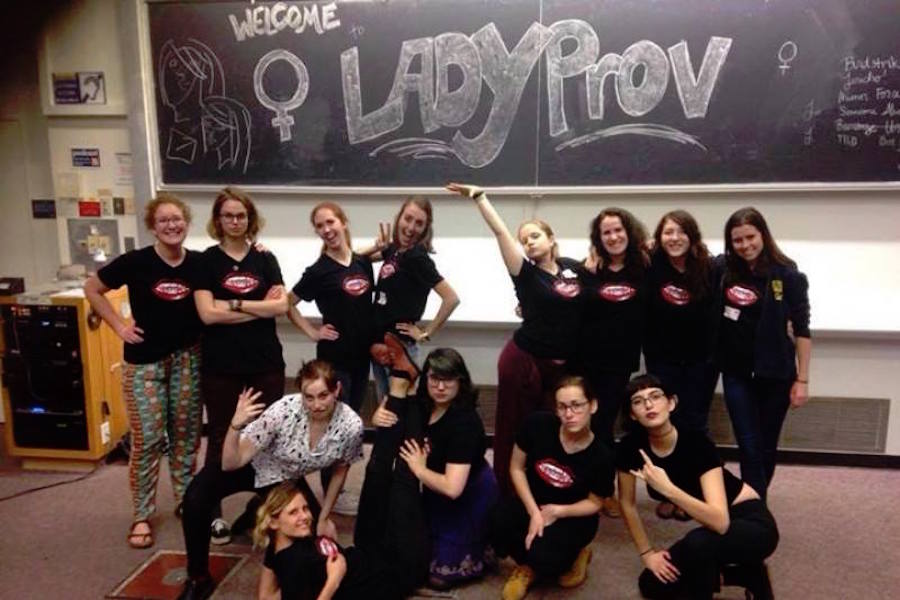
In Birdstrike’s next improv show, Ladyprov II: Return of the Feminist, female-identified improv performers from all over California will crush the patriarchy, rescue their friends from Douchebag the Frat, restore freedom to the galaxy and, obviously, make the audience laugh. This improv show will be held on Saturday, April 9, as part of the day-long Ladyprov festival.

“The style of improv that we do is long-form,” said Sarah Lloyd, a fourth-year chemistry major and self-proclaimed supreme matriarch of Birdstrike. “The humor is based more on characters and relationships and settings rather than sitcom-y jokes.”

Improv performers from other universities and from the Sacramento Comedy Spot will also be performing.

“It’ll be a really interesting show,” said Jess Tierney, a third-year environmental science and management major and treasurer of Birdstrike. “All of these people haven’t performed together before, so it’ll be a very new, exciting dynamic.”

The festival will begin with the improv performers attending workshops to learn how to prevent discrimination in their respective groups. Then, at 8 p.m., all the festival attendees will put on an improv show. Lloyd came up with the idea about a year ago when a group of female improv performers took what they called the “Ladyprov picture” after an improv festival.

“I wanted to do an improv festival that was specifically for women and femmes in the improv community because we are traditionally an underrepresented group in improv,” Lloyd said. “[In the workshops] we’ll be talking about what it’s like to be a woman in comedy and how to combat sexism on stage and make sure that misogyny and sexism don’t make their way into our scenes.”

Brandon Norris, a former Birdstrike member and a class of 2014 graduate from the UC Davis creative writing master’s program, believes that this event is important because it brings attention to the problem of sexism in improv.

“I’ve had so many female friends and partners in improv and I’ve seen horrible, devastating effects of people getting pigeonholed into roles of sisters and mothers and wives,” Norris said. “Women often get pushed into these roles that are following, even onstage, in this medium that’s supposed to be about listening to other people and sharing the stage.”

The show will be held at 8 p.m. in Kleiber Hall. Tickets are a five dollar suggested donation and can be purchased at the door. For more information about Ladyprov and Birdstrike, check the event on Facebook and like Ladyprov’s page.
WRITTEN BY: Sofie Bates — arts@theaggie.org

Analyzing DNA at UC Davis’ Sequencing Facility

0
BRIAN LANDRY / AGGIE

UC Davis DNA Sequencing Facility provides services for researchers.

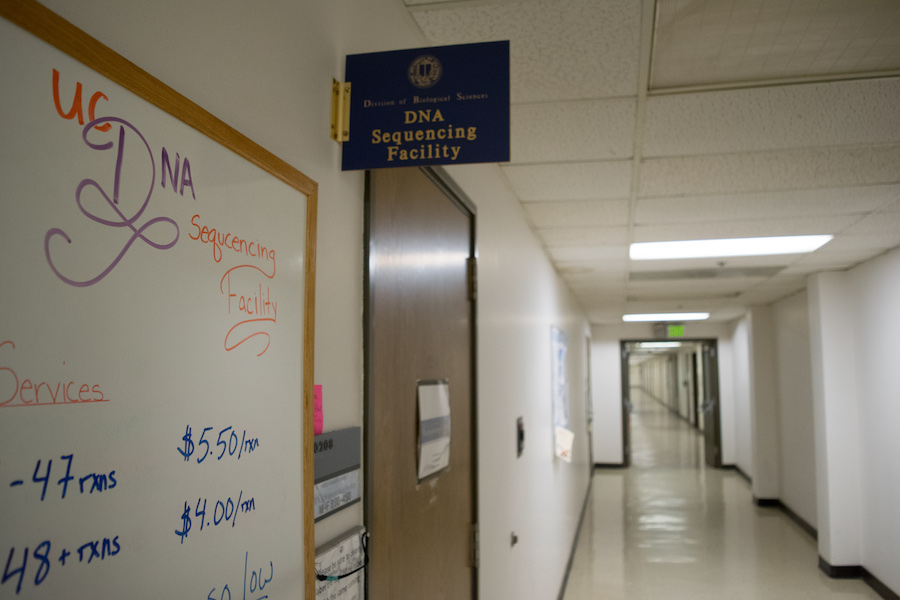
When researchers in Davis need DNA analyzed, they need not go far. UC Davis’ College of Biological Sciences has its very own UC DNA Sequencing Facility to get the job done.

“[The facility] facilitates the researchers’ work here and [tries] to give them a local place that they can drop off and get results back for DNA sequencing as fast as possible,” said Sheryl Bernauer, the manager of the UC DNA Sequencing Facility Lab.

According to its website, the facility is committed to providing quality sequencing and service to all UC campus research facilities.

“We try to really make their quality the best and make sure we also give them feedback because some of them have not done this before,” Bernauer said. “If we see something that they can improve, we actually include notes with all of their reactions and results.”

Shelley Williams, a UC DNA Sequencing Facility research associate, believes that customer service is what makes them stand out from other sequencing facilities.

“We really try to go the extra mile for people and a lot of sequencing companies won’t do that,” Williams said. “You give them money, they sequence your DNA and give you back your results. We troubleshoot, we have 20-plus years of experience in troubleshooting and that’s what sets us apart from other companies.”

The facility offers two different types of services: DNA sequencing and fragment analysis. Fragment analysis is seen more commonly in forensics, in which bands are analyzed to predict the size of the DNA.

According to Bernauer, the facility does not run into many problems; however, many do not understand the time and patience it takes to sequence DNA. It usually takes one business day for DNA to be sequenced and returned, but sometimes customers have different preconceived notions.

“There [are] always different sorts of expectations that people have,” Bernauer said. “They think we can turn stuff around in one afternoon but that doesn’t happen.”

The facility always makes sure that their product turns out as good as possible. When people offer very strong or very weak DNA, it can unbalance the reaction that takes place during the procedure. An equilibrium allows for the longest read possible.

“There are certain organisms that are more challenging to sequence than others by nature of the content of their DNA,” Williams said. “There [are] a bunch of different things that could attribute to something being difficult to sequence. We get so many different types of DNA, and not only that, but we get different researchers doing different protocols on prepping their DNA.”

Therefore, Williams said that they have no control of what comes through their doors.

“The challenge is to make as much as we can — with our hundreds of customers — work the best we can,” Williams said. “We do a really good job at that; that’s why we have so many customers that keep coming back to us.”

The facility is self-supporting, meaning that the business that customers bring in pays for everything, including salaries. The facility also employs students and interns as lab assistants. Typically, students are hired as sophomores and stay at the facility until they graduate. This long-term position allows for the development of close relationships amongst the students themselves.

“We kind of adopt them; they know they can drop in anytime,” Bernauer said. “They sometimes use this place as a study place if they need to get away and have a quiet place. And almost always, it’s kind of synergistic in how they get these other good habits, good studying and hints and tips from other students as well during their career here.”

Fourth-year genetics and genomics major and senior lab assistant Janel Merkel has been a lab assistant since the summer after her first year at UC Davis. She considers the facility her “home base.”

“It’s my rock,” Merkel said. “As everything changes throughout these four years, this has always been my place, my people.”

What Merkel enjoys most about working at the facility is the ability to work with DNA and to truly understand what the sequencing means.

“Just knowing that DNA is suspended in a tiny little drop of water and putting it in a tiny well on a plate and we’re going to sequence it and out comes this amazing genetic data,” Merkel said. “It has really helped me with my science communication skills.”

For over three decades, the UC DNA Sequencing Facility’s business has been going strong due to the quality of their DNA sequencing and customer service, and it hopes to continue serving the community for years to come.

Written by: Jacqueline Chufeatures@theaggie.org

App helps victims find shelter faster

0
ASHLEY LUGO / AGGIE
ASHLEY LUGO / AGGIE

Sacramento nonprofit agency implements Safenight app

Opening Doors Inc., a Sacramento nonprofit dedicated to assisting underserved populations in finding economic and social opportunities, recently signed up with the Safenight app and uses it as a resource for local human trafficking and domestic violence victims in need of a safe shelter.

Safenight was launched in April 2014 through TechSoup Global. The app currently has 33 participating organizations with 848 registered donors. So far, it is active in California, Colorado, Texas, Iowa, Massachusetts and New Jersey.

“[Safenight] is designed to be able to find more shelter faster for human trafficking and domestic violence survivors,” said Marnie Webb, CEO of Caravan Studios, a division of TechSoup Global.

The app allows organizations to send notifications to registered users, requesting donations to cover the cost of shelter for survivors.

“When there is no shelter available, organizations that are participating in the program can send out a request that goes to the Safenight app, allowing regular people, people like you and I […] to get a notification and pay for a hotel room for a person who is in need for a safe place to stay,” Webb said.   

Opening Doors Inc. uses the app in the same way, sending requests for donations when a survivor is in need of shelter.

“Frequently, shelters are full or a shelter that maybe has room, we can’t place the trafficking survivor there because maybe it is near where their trafficking situation was,” said Michele Beyer, communications and development specialist at Opening Doors Inc.

Leilani Kupo, director of the Women’s Resources and Research Center at UC Davis, said that Opening Doors Inc. is continuously doing great work for survivors, but there is more to be done in terms of outreach.

“These organizations do a phenomenal job in advertising and getting the word out and community outreach and yet there are still people who don’t know,” Kupo said.   

Innovations such as Safenight and the organizations that work with survivors are leading the fight against human trafficking and domestic violence. For more information on how to download the Safenight app, visit their website.


Written By: Mashal Ayobi – city@theaggie.org

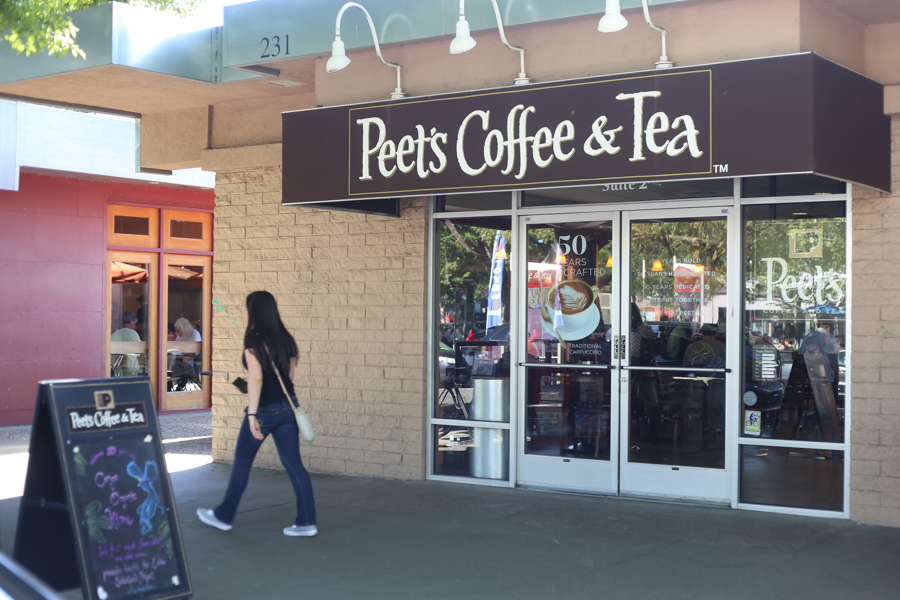
Starbucks and Peet’s locations vandalized

CHARLES MIIN / AGGIE

Vandal threw bricks into windows of five Davis coffeehouse locations

The Davis Police Department (DPD) is conducting an investigation on a series of vandalisms that occurred at five Davis Peet’s and Starbucks locations around 3 a.m. on March 22. At each location, the vandal threw small bricks into the windows of the shops, causing shattered glass to fall into seating areas.

According to an employee at the downtown Peet’s location who chose to remain anonymous, glass shattered through the store as far as the condiment bar toward the back of the store. However, no employees were in the building when the incident occurred.

According to Fox 40 Sacramento, the vandal targeted three Starbucks locations and two Peet’s locations within a span of about five hours. The Peet’s on Covell Blvd. was the first shop to report the incident, calling the DPD at 3:08 a.m., according to a crime report released by the DPD.

“It’s uncommon that we have that many vandalisms against one type of target. It affected private business, and we don’t want to see that happen, and we don’t tolerate this in our community,” said Lieutenant Tom Waltz of the DPD in the Fox 40 report.

The two Starbucks locations on the UC Davis main campus were not targeted.

The DPD is asking anyone with information on the incidents to report it to the department at (530)747-5400.

Written By: CAROLINE STAUDENRAUS – city@theaggie.org   

Chemical linked to depression therapy discovered at UC Davis

0
Professor Bruce Hammock (KATHY KEATLEY GARVEY / UC DAVIS)

Experiments focus on inhibitor of soluble epoxide TPPU, which reduces inflammation and neuropathic pain linked to depression

Bruce Hammock, a professor within the entomology department at the UC Davis Comprehensive Cancer Center, recently discovered in his laboratory a chemical that can help control the chronic disease of depression.

The research was published on March 14 in Proceedings of the National Academy of Sciences, and it involves the studies of an inhibitor of soluble epoxide hydrolase (sEH) in rodents. SEH is the chemical working as a therapeutic target acting on a number of inflammatory or inflammation-linked diseases.

“The research in animal models of depression suggests that sEH plays a key role in modulating inflammation, which is involved in depression,” Hammock said in an article for The Davis Enterprise. “Inhibitors of sEH protect natural lipids in the brain that reduce inflammation and neuropathic pain. Thus, these inhibitors could be potential therapeutic drugs for depression.”

Researchers from Hammock’s laboratory collaborated with depression expert Kenji Hashimoto and colleagues at the Chiba University Center for Forensic Mental Health in Japan, and together examined the role of the potent TPPU in a rodent model of depression classified under “social defeat.” The social defeat model caused the rodents social stress.

The researchers found that TPPU displayed rapid effects in both inflammation and social-defeat-stress models of depression and that expression of sEH protein was higher in key brain regions of chronically stressed mice than in control mice.

In the experiment, pre-treatment with TPPU prevented the onset of depression-like behaviors in mice after induced inflammation or repeated social-defeat stress. Mice lacking the sEH gene did not show depression-like behavior after repeated social-defeat-stress.

These are significant findings because researchers have discovered that postmortem brain samples of patients with psychiatric diseases such as bipolar disorder, depression and schizophrenia have shown a higher expression of sEH than in control groups.

Karen Wagner, a researcher at Dr. Hammock’s lab, believes these findings are important because of the chemical’s rapid effects on the experimental mice.

“These results were pretty quick,” Wagner said. “Current antidepressants take weeks to have full effects, but the sEH inhibitor was pretty rapid.”

Christopher Morisseau, another researcher who worked with Hammock in his lab, believes this new approach can be successful.

“It was a 1+1 solution,” Morisseau said. “Right now, when people take depression drugs, they expect neurons to talk to each other. Here we try a different approach. Because the current approach doesn’t work, we believe changing it can help.”

Researchers in Hammock’s lab plan to continue researching this discovery by performing more experiments and focusing on models of depression.  
Written by: Demi Caceres – campus@theaggie.org

Gymnasts compete in Regionals

CIERA PASTUREL / AGGIE

Three Aggies represent UC Davis at the NCAA regionals held in Utah

On Saturday, April 2, three athletes from the UC Davis gymnastics team traveled to the University of Utah to compete in the NCAA Salt Lake City Regionals. Senior Stephanie Stamates, junior Katy Nogaki and sophomore Alexis Brown faced off against competitors from UCLA, Sacramento State, Utah State, University of Utah and many more.

Held at a school where the average attendance for each gymnastics meet is 14,000 people, the competition and the atmosphere of Regional Championships were guaranteed to be exceptional.

“Feeding off the energy of the crowd and competing for the last time will be awesome,” Stamates said.

Stamates closes out her career at UC Davis with one of her best seasons to date. Besides being named All-MPSF on the balance beam with her score of 9.865 and on the floor with a 9.875, she also tied for sixth place in the West region with her beam score and tied for eighth place on floor. She was named MPSF Specialist of the Week five times throughout the season while being the senior co-captain.

“She has really been one of the standout performers in UC Davis gymnastics,” said head coach John Lavallee. “Obviously scoring more 9.8’s in competition than any other Aggie speaks for itself [but] this year as team captain […] she has done an amazing job not only taking care of her own gymnastics, but [also] providing that leadership to the team.”

At Regionals, Stamates competed in the floor and beam events. She performed a 9.875 on floor, giving her a tie for seventh place in that event. With a 9.775 on beam, she was placed in a seven-way tie for twentieth place. With these performances, she concluded her career with 56 scores of 9.8 or higher.

Nogaki has competed at Regionals since her freshman year, making her one of only six Aggies in the program’s history to attend Regionals three times. She also claimed the title of MPSF Specialist of the Week twice this year, having scored a career high of  9.875 on the balance beam this season and reached a score of 9.8 or higher on the vault seven times.

“[Being one of six athletes] is definitely really cool and such a privilege,” Nogaki said. “I feel like I have put in the work and [gymnastics] is something I am really passionate about, so it’s definitely really rewarding.”

Qualifying for the vault at Regionals, Nogaki scored a 9.675 to put her in 34th place.

Just coming off of a win at the MPSF Championships on uneven bars with a score of 9.825, Brown competed in the bars and beam events at Regionals. She was tied for both 26th place on bars and for 17th place on beam in the West. She was also MPSF first team on bars and second team on vault with a score of 9.780.

During the competition, Brown was deducted points from deviating in both of her routines due to errors. She finished the competition with a 9.100 on beam and 9.325 on bars.

Taking first place in the meet was the University of Utah, which finished with a 197.125 team score. UCLA placed second with a 196.375, and both schools will be heading off to the NCAA Nationals held in Fort Worth, Texas from April 15 to 16.

Written by Julia Wu – sports@theaggie.org

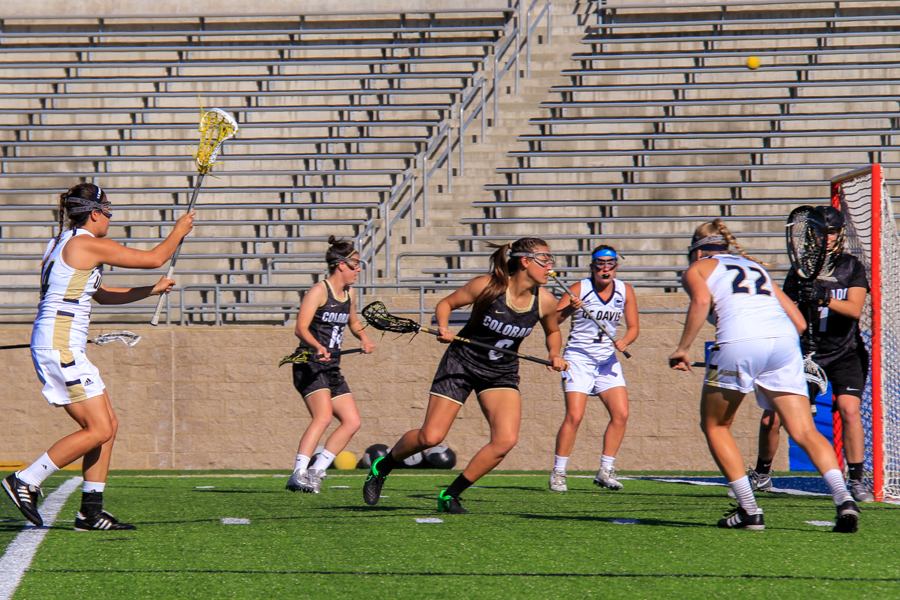
Buffs stampede UC Davis women’s lacrosse

MONICA CHAN / AGGIE
MONICA CHAN / AGGIE

Aggies fall 14-3 to the Colorado Buffaloes in Friday home game

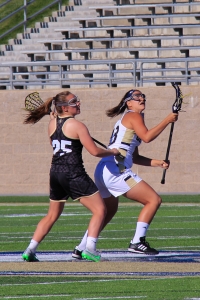
Despite an explosive offensive start in front of a home crowd at Aggie Stadium on Friday afternoon, UC Davis women’s lacrosse lost their early momentum by a barrage of Colorado shooting, and they fell 14-3 to the Buffaloes, dropping to 1-1 in conference.

MONICA CHAN / AGGIE
MONICA CHAN / AGGIE

The Buffs pelted sophomore goalie Lauren Ali with 35 shots over the course of the contest, finishing the game on a 12 goal run. However, Ali had a career high day, saving 17 shots and tying for eighth on the all-time UC Davis single-game saves list.

Senior midfielder Courtney Neff started things off for the Aggies with a goal on a free possession shot, just one minute and 10 seconds into the game. Senior midfielder Mary Doyle connected on a rebound and put back a shot just two minutes later, jumping the Ags out to a quick 2-0 lead. After the Buffs leveled the score at two apiece, freshman midfielder Shannon Cross returned the UC Davis lead with a goal off an assist from senior attacker Ellie Delich.

In the final minute of the first half, Colorado intercepted an attempted UC Davis transition and returned it for a goal with 39 seconds remaining, followed by another goal at the buzzer. The two last-minute goals proved to be the turning point of the game for the Buffs, who went on to score nine second-half goals while completely shutting down the Aggie offense.

“The last two goals [of the first half] turned out to be the biggest swing of the game,” said head coach Tee Ladouceur. “But we’re looking to clean up those tiny little mistakes so that they don’t affect us throughout the game. Those are going to be things we look at on film and then come back to and hopefully fix.”

UC Davis managed only five second-half shots and were unable to get any past Colorado goalie Paige Soenksen. Offensively, the Ags failed to convert three eight-meter attempts while the other half of the field surrendered four of eight free-position shots to the Buffaloes.

MONICA CHAN / AGGIE
MONICA CHAN / AGGIE

With only one day of rest before their Sunday game against Denver, the Aggies shifted their attention to their third league matchup of the season.

“I think that we just need to rest our legs a bit and re-focus and take the good with the bad with this one,” Ladouceur said. “In conference play, we still control our own destiny, so that is our main focus moving forward.”

The women’s lacrosse team took down Denver 13-6, bringing their conference record to 2-1, and will stay at home to face UC Berkeley on Wednesday at 5 p.m.
Written by George McConnell – sports@theaggie.org

A day in someone else’s shoes

BRIAN LANDRY / AGGIE

UC Davis students share who they would switch places with for a day.

If you could switch places with anyone in the world for one day, who would you switch places with and why?


Ian_Sophie_rovingreporter_fe_LandryIan Sophie, third-year biological psychology and dance double major
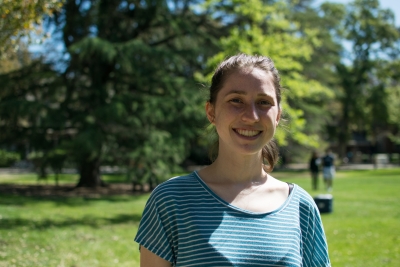
“I’d want to switch places with Ginger Rogers, spending a day on the set with Fred Astaire, dancing.”


Christina_Scott_rovingreporter_fe_LandryChristina Scott, third-year wildlife, fish and conservation biology major
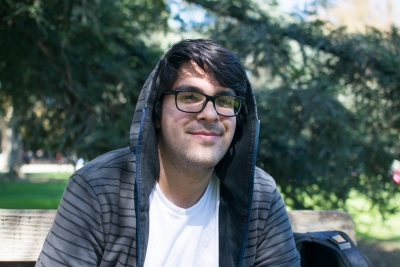
“I would say Jane Goodall just because she’s been one of my heroes when I was little and I think it would be really cool to do something that she would do.”


Andrew_Garcia_rovingreporter_fe_LandryAndrew Garcia, fourth-year biological anthropology major
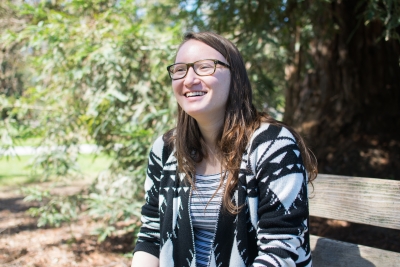
“I would say Michio Kaku. He’s a physicist and it would be really interesting to see what he gets to see every day.”


Jessica_Liaudat_rovingreporter_fe_LandryJessica Liaudat, fourth-year biological sciences major
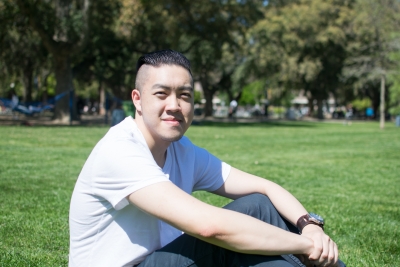
“I don’t think I’d want to switch places with anyone, really. I’m pretty okay with where I am. Also, it sounds like a lot of pressure to pretend to be [someone.]”


Kevin_Nguyen_rovingreporter_fe_LandryKevin Nguyen, fourth-year civil engineering major
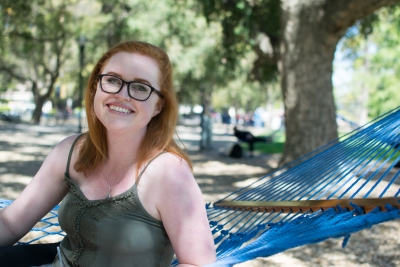
“I would say Elon Musk just to see how it feels to be so smart and get a good feel for what kind of effect he has on the world on a daily basis.”


Megan_Dickson_rovingreporter_fe_LandryMegan Dickson, third-year microbiology major
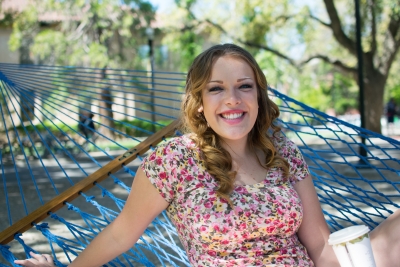
“Honestly, probably someone in the profession I would like to do just to see what they do with their life. I want to work with infectious disease so it’d be cool to switch places with someone who works in a type 4 lab in the [World Health Organization] or [Centers for Disease Control and Prevention] or something just to experience a day in the life.”


Emily_Eddy_rovingreporter_fe_LandryEmily Eddy, third-year biological sciences major
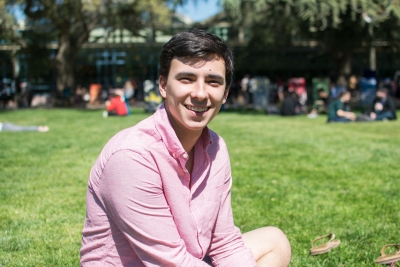
“Trump; I would say I was just kidding about everything. That’s what I would do.”


Jackson_Gardner_rovingreporter_fe_LandryJackson Gardner, fourth-year biological systems engineering major
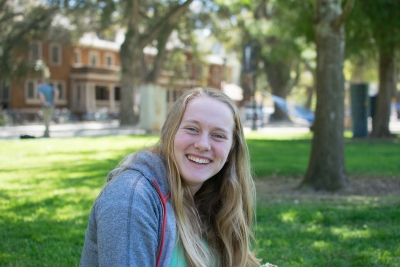
“Maybe Donald Trump to see if he’s really just a smart person putting on an act or if he’s actually that insane.”


Alyssa_Lauryznaur_rovingreporter_fe_LandryAlyssa Laury, second-year mechanical engineering major
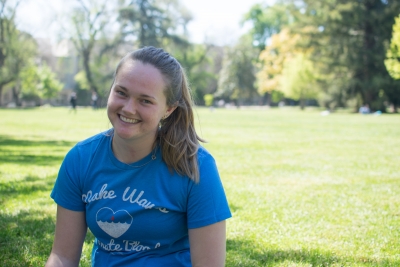
“Tobin Heath – she’s a women’s national soccer player so that would be really cool.”


Savannah_Woods_rovingreporter_fe_LandrySavannah Woods, second-year human development major

“Yo-Yo Ma. I think that’d be really cool to just see his world and all the amazing cello things he’s doing.”


Written by: Fatima Siddiqui – features@theaggie.org