57.1 F
Davis

Davis, California

Monday, December 22, 2025
Home Blog Page 760

Food: How you could be doing the Davis Classics better

0
JENNIFER WU/ AGGIE
JENNIFER WU/ AGGIE

versman_opRaise your hand if you went to Burgers and Brew with your parents when they came to visit you. This is one symptom of what I like to call the “Davis Classics” syndrome. A group of four or five restaurants soak up a huge portion of your prime time dinner dollars. I like to call these restaurants — the aforementioned Burgers and Brew, Crepeville, Dos Coyotes, Thai Canteen, El Toro Bravo and a few others — the Davis Classics. And as important as it is to show face at El Toro Bravo for Taco Tuesdays, you may be missing out on tastier, cheaper or healthier alternatives (a side note about Taco Tuesday: getting your food to-go is ok, but if you’re caught eating alone on Tuesday, you might as well be social tofu). I don’t mean to call out these restaurants. They’re popular for a reason: the food’s certainly good, the atmosphere’s fun. All I’m saying is, depending on the circumstances, there may be a better option out there for you. And in the world of eating out, it’s always best to have as many options as possible.

So, without further ado, let me help cure your Davis Classics syndrome.


Crepeville: Whether it’s your favorite Sunday brunch place, or (like me), your go-to breakfast-for-dinner spot, Crepeville deserves to be on the list of Davis essentials. Looking up at their color-coded hand-drawn menu, it’s not hard to find something you want to eat. But Crepeville is so safe. It’s very generic in a way and, at least for me, can get old very easily. That’s why I recommend Delta of Venus the next time you think about Crepeville. For the same price as Crepeville (if not cheaper), DeltaV (hence referred to as) has great food and a more interesting atmosphere. Not only do they often host live music, poetry and more, but their home-fry breakfast potatoes will absolutely obliterate Crepeville’s, guaranteed. DeltaV’s décor is original and interesting, while Crepeville’s seems more like a by-the-book breakfast place I’ve been in before.


Burgers and Brew: Davis’ burger game is pretty weak in my opinion. Here are your options. Burgers and Brew makes a good burger. Froggy’s makes pretty comparable burgers at pretty comparable prices. Redrum Burger is another Davis Classic. And then In-N-Out is In-N-Out. (Purposely left out The Habit). (Purposely didn’t bold The Habit). With an impressive amount of interesting burger choices and an equally impressive amount of beers on tap, Burgers and Brew is probably the best burger place in Davis (although it certainly reeks of grad student in there, doesn’t it?) It is expensive though, so if you’re looking for something cheaper but similar, why not check out Mr. Pickles Sandwich Shop? No burgers, but they have really good hot (and cold) sandwiches that offer a change of pace from B&B. Also, each sandwich comes with a cookie and a lollipop. Neat-o!


Thai Canteen/Ketmoree: Every night I say a prayer, thanking the heavens above that Davis has above-average Thai food choices. Thai Canteen is a hip and modern Thai restaurant geared at attracting college students. It’s also one of the most underrated drunchie (drunk munchies) destinations in Davis (open till 2 a.m. from Tuesday to Saturday). Ketmoree is Thai Canteen’s sophisticated, more career-oriented older brother. They both have great service and great food. That being said, you aren’t sacrificing much in the way of taste or atmosphere by going to Taste of Thai on G Street. I like their red curry better than both Thai Canteen and Ketmo (order it thai-spicy if you like drinking water). It’s cheaper than Ketmoree and less in-your-face than Thai Canteen. Sophia’s Thai Kitchen provides a delicious alternative to Ketmoree. My point here is that I like all four of these places. Each has its own nuance. I just wouldn’t confine yourself to Thai Canteen and Ketmo, because you might be surprised at what other Davis Thai has to offer.


Dos Coyotes: I could talk to you about Mexican food for hours, if you want to talk to me about Mexican food for hours, shoot me an email, jiversman@ucdavis.edu. Dos Coyotes is a Davis staple, with great wet burritos and even greater pulled pork nachos. Their salsa bar is undoubtedly the best salsa bar in Davis (with La Piñata picking up second place because of their killer habanero salsa). One salsa bar related complaint for Dos — the mango salsa is fantastic, but the serving spoon they give you for it is absurdly small. It takes eight or nine concerted scoops to fill up a ramekin. And obviously I’m filling up five or six. But I digress.

Good Mexican food goes far beyond the salsa bar. Taqueria Guadalajara and Taqueria Davis make tastier Mexican cuisine than Dos, and for less dinero. Taqueria Guadalajara (or Guads) has some of the best tasting meat of any restaurant in Davis. I personally order Adobada meat, but anything there’s good. They open early and have good breakfast specials. Taqueria Davis, on the other hand, has really good vegan burritos with zucchini, and they have whole wheat, spinach and tomato tortillas, which are fun. I really enjoyed their Al Pastor burrito as well.

At the end of the day, the Davis Classics play an important role in Davis food culture. These restaurants serve as home base when it comes to easy, thoughtless dining decisions with large groups of people. After giving this article a read, I hope you think for a while before deciding to go to a Davis Classic. Just make sure you’re putting some thought into where you go — the freedom to choose where you get to eat out should never be taken for granted.

Remember, now you’ve got a friend in the dinin’ business.


You can reach JONAH VERSMAN at jiversman@ucdavis.edu

A beer for a butterfly

0
DEVIN McHUGH / AGGIE

Contest raises public involvement in science.

UC Davis is home to traditions that range from Pajamarino to kissing Eggheads on campus before finals, but possibly the most interesting one yet is set to begin this month. Once a year for the last 44 years, the Department of Evolution and Ecology has found a unique way of bringing together beer and science in the hopes of projecting future life cycles of insects.

Dr. Arthur Shapiro, entomologist and professor in the Department of Evolution and Ecology, created the Beer for a Butterfly Contest in 1972. Shapiro conducts extensive research on insects and has been studying butterfly populations for the past 35 years.

As a pioneer of public science, Shapiro aims to increase public involvement in scientific research, especially by means of simple field observation. One way he has achieved that goal is through his annual Beer for a Butterfly contest at UC Davis, which begins every year in January and includes the Yolo, Sacramento and Solano counties.

The butterfly chosen for this contest is the cabbage white butterfly, which can be distinguished by several black dots on its wings and its lack of a black band on the tip of the forewings. The first person who brings the butterfly alive to the Department of Evolution and Ecology, and gets it verified, wins the contest and a pitcher of their choice of beer.

“The cabbage white butterfly is not a native species; it’s an introduced pest from Europe,” Shapiro said. “It’s extremely common and more often found around cities and gardens so you don’t have to live in the wilderness to observe it.”

“I monitor the entire butterfly fauna […] across California,” Shapiro said. “All the butterfly data is matched with climatological data so we can figure out how climate is affecting the life cycles.”

With that life cycle data, Shapiro hopes to harness the tools needed to predict butterflies’ reactions to climate change in the future. He reasons that if humans can figure out the quantitative changes in the climate and understand how butterflies react in certain weather, then it should be relatively simple to project how they will respond based on past observations.

Apart from Shapiro’s team, there are only a few other data sets in existence. The only other data set that matches the size of Shapiro’s data is in Great Britain. There are few researchers involved in the work of butterfly life cycles, and a relatively small amount of the public are aware of the research. Lynn Kimsey, head of the Bohart Museum of Entomology and a UC Davis entomologist, has worked with Shapiro and closely followed his work over the years.

“With that kind of data set you can see patterns,” Kimsey said. “You know if you just have a couple of years [of data], who knows what kinds of differences you’re really seeing. And most people don’t collect data sets like that.”

Greg Kareofelas, a local butterfly expert and research associate at the Bohart Museum, says that the life cycle of the cabbage white butterfly works perfectly with the time of year.

“It doesn’t over-wither as an adult, so they can peak,” Kareofelas said. “It guarantees that there will be notoriety and that it gets people aware of what’s happening. So it’s wise to choose a butterfly that is noticeable as it brings awareness to what [Shapiro] doing and gets people talking about it.”

Shapiro and his team are hoping that the contest will help people recognize the different climate trends as of late. Recently, the cabbage white butterfly has appeared earlier each year depending on the weather. Ideally, the butterfly will appear as it gets warmer, especially in areas of high solar radiation and warm temperatures. This year, however, the early rain has brought into question the timing for the contest.

“The butterflies are kind of hanging out waiting for it to get warm enough and cold,” Kimsey said. “Wet conditions will increase the odds that you’ll die before you come out of your chrysalis. Last year we probably had close to 100 percent survival, but the colder and nastier it is, the lower your odds are.”

This year, temperatures during the day are in the 50s, compared to the 60s last year. Due to these colder temperatures, Shapiro has estimated that the first white cabbage butterfly of the new year will not start flying until at least Jan. 15.

Although the beer does grab some students’ attention, the contest is mostly designed to get people involved in research without needing to be an expert.

“I’ve been engaging members of the general public in my research to help for 40 years,” Shapiro said. “The idea, which is now actively promoted by the National Science Foundation, is to get the general public interested in and enthusiastic about science by getting them involved in some way. They can be enlisted to do field observations and provide data to us.”

Since the start of the Beer for a Butterfly contest, Shapiro has won the event 41 out of 44 times. Despite his advantage in knowing all of the butterfly microhabitats in relevant counties, students have not been discouraged from continuing to participate.

“The students are always trying to figure out how to get there first,” Kimsey said. “People know what his record is on this so it’s sort of a challenge, ‘Oh we’re gonna get Art this year.’”

The pitcher of beer is a reward for the students, and the simple act of going out, observing and catching the butterfly is a win for the scientific community.

The involvement in the Beer for a Butterfly contest makes it easier for Shapiro to keep track of when the butterflies emerge over the years and how the weather conditions are changing. It will then hopefully inspire others to pursue science.

“[Shapiro] is kind of an iconic character on campus, so his students look out where he goes and scoop him,” Kimsey said. “It’s something to look forward to every winter.”
Written by: Alan Castillo and Lisa Wong – features@theaggie.org

Davis community event educates public on refugees and migrants

ETHAN ELLSTRAND / COURTESY

Davis Phoenix Coalition, Yolo Interfaith Immigration Network separate fear from facts.

The Davis Phoenix Coalition (DPC) and the Yolo Interfaith Immigration Network (YIIN) hosted a free forum titled “Separating Fear from Facts: A Forum on Immigration and Refugees” at the Davis Community Church (DCC) on Jan. 6. The forum was an effort to educate the Davis community on current events and the laws which affect refugees and migrants entering the country.

Nathan Ellstrand, a YIIN board member and member of DCC, was influenced to organize the forum with DPC president Gloria Partida after hearing more about the refugee crisis and how the 2016 presidential candidates were responding to xenophobia in the news.

“We thought it was really necessary to have some kind of forum so the public knows what the presidential candidates are saying and what you

ANH-TRAM BUI / AGGIE

are hearing on the news is true or not,” Ellstrand said. “The nice thing about being in a community like Davis is that there are a lot of folks who are aware or are wanting to learn awareness about a lot of these issues and YIIN puts on a lot of educational forums.”

The forum began with a captivating documentary titled “A Refugee’s Welcome,”  directed by Loyola Marymount University film student Antonio De Loera-Brust. The documentary highlighted the horrific hardships refugees from Pakistan, Iraq and Egypt face in the Greek island of Kos and across Germany, where De Loera-Brust spent time abroad.

“I think this [film] can give people the opportunity to look at the issue of refugees in different ways than how they do when they see it on television or reading it online or in the newspaper,” said Joanne Haller, a Davis resident and member of DCC.

During the second part of the forum, the panelists answered questions many of the Davis community members were unsure about. The panelist consisted of Holly Cooper, Barbara Miltner and Rachel Ray from UC Davis School of Law, and Kristina McKibben from the California Rural Legal Assistance Foundation.

Many audience members asked questions regarding the legal definition of refugee and asylum and were curious about the legality of refugees entering the country. Other questions focused on the credibility of the media’s negative portrayal of refugees.  All four panelists shed light on the hardships refugees face.

Panelist and UC Davis Law professor Barbara Miltner believes that the 75 Davis residents who attended the forum all seemed to be asking the right questions.

“I found the audience to be extremely receptive, empathetic and curious about learning more about the situation,” Miltner said. “[They were] trying to get a better understanding behind the laws and the rules that they are hearing in the news.”

Written by: SHIREEN AFKARI – city@theaggie.org

UC transfer application extension draws criticism from initial applicants

CIERA PASTUREL / AGGIE

Applicants criticize extension for providing extra time to late applicants.

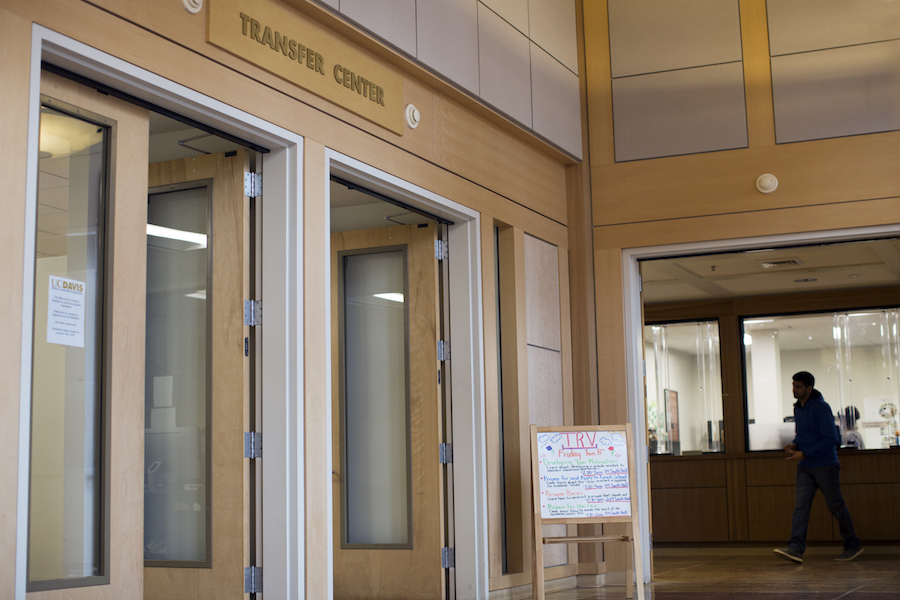
On Nov. 29, the original deadline for University of California (UC) applications, most transfer students who were planning on attending a UC had submitted their applications to their prospective schools only to find out three days later via email that the deadline had been extended until Jan. 4.

According to Rebecca Trounson, a media specialist for UC, the decision came after the UC Board of Regents decided in late November to increase the number of California students at UC schools by 5,000 students within 2016 and then an additional 5,000 students by 2018.

Extending the deadline allowed more students within California to fill those seats. According to the California Master Plan for Higher Education, the goal is to have one transfer student enrolled for every two freshmen students. Since the number of transfer applicants has fallen over the past few years, the UC application was extended for transfer applicants due to a majority of transfer students being in-state students.

However, this extension drew criticism from applicants who submitted their applications early. According to Trounson, critics said that transfer students, who had submitted their applications by the original deadline, did not have a chance to resubmit.

“It just wasn’t possible [to give transfer applicants a chance to resubmit] for our system. It’s something that just didn’t work. My understanding is that this was for technical reasons […] I can understand the frustration,” Trounson said. “But this year all students, freshmen students and transfer applicants, had an extra two months to work on their application because we began the process on both of the applications on Aug. 1 instead of Oct. 1.”

Anas Tresh, an ASUCD senator and first-year transfer student majoring in neurobiology, physiology and behavior, had a positive reaction toward the extension while also understanding the complaints from certain transfer applicants.

“I like the idea. I know what a lot of these students are going through […]They usually have a lot on their plate […] Usually community college students are busy juggling multiple jobs, so it’s nice to know that they have the extended deadline,” Tresh said. “At the same time, it is unfortunate for the students that maybe could have spent a little bit more time on their application to put together a more competitive selling point on why they would be great for whatever UC they were applying to.”

Leilah Lockett, a second-year chemical engineering major at University of Nevada, Reno, applied to a few UCs, including UC Davis. She expressed similar sentiments, saying that while she was upset that she could have had more time, there were also huge positives to the decision that she believed outweighed the negatives.

“I can see how it could make other people upset, but for me, I know that I turned my application in early, and if I’m going to get in, I’m going to get in,” Lockett said. “I understand that it might give other people a second chance, and that’s good for them. But for me, it really didn’t affect me. It just allowed me to add more schools if I wanted to. ”

Written by: Sangeetha Ramamurthy – campus@theaggie.org

Protect animal welfare

0
HANNAH LEE / AGGIE
HANNAH LEE / AGGIE

Recent incidences of animal abuse require more transparency.

In 2015, UC Davis’ School of Veterinary Medicine was named the top veterinary graduate school in the nation by U.S. News & World Report. In the same year, UC Davis achieved several incredible feats in animal science, from discovering a cure to a rare form of ear tumors in foxes to nursing over 50 animals injured in the Valley and Butte fires.

With cattle farms steps away from residence halls and new beekeeping courses coming to the school, it’s undeniable that UC Davis is a prominent force in animal science. However, beneath the significant breakthroughs in veterinary medicine, UC Davis has recently become notorious for its mistreatment of animals and lack of transparency concerning animal negligence on the campus.

In 2014, a small lamb was killed after it was crushed by its mother while being transported in a crate from a UC Davis research facility. The incident, which was originally recorded by the U.S. Department of Agriculture (USDA), wasn’t publicly uncovered until a year later when an animal interest group unearthed the report and exposed UC Davis for its disregard concerning animal safety. Furthermore, UC Davis and USDA have been criticized for burying the incident at the end of the department’s inspection report under the category “Miscellaneous.”

Additionally, UC Davis has been under fire for years for widespread rumors regarding the mistreatment of monkeys at the university’s primate center. Though little to no information is confirmed concerning rumors of escaped monkeys, deceased primates and abused animals, activist groups have been protesting the center regularly for its alleged negligence. The center recently raised suspicion with its decision to search for a public relations firm to represent the organization. Several critics suspect this to be an effort to rehabilitate the center’s reputation following a string of damaging allegations.

As a university that houses thousands of live animals and a leading campus in animal research, UC Davis should have greater transparency when incidents of animal negligence occur. With thousands of students attending UC Davis for its prestige in animal research, it is both unfair and unjust for the university to hide incidents of animal abuse while still publicly celebrating accolades for its strides in animal science.

While a large portion of blame should also be placed on USDA, who monitored and oversaw both incidents, UC Davis should not be excused for failing to consistently protect the welfare of animals. With greater transparency comes greater accountability, and with greater accountability from the public comes potentially fewer instances of animal neglect.

Though, like the primate center defends, violations are bound to occur at every animal research center, there still needs to be a value placed on making these violations known to the public. Because there’s no way around it – animals were harmed and people should know about it.

Running for success

0
DIANNE KWAN / AGGIE
DIANNE KWAN / AGGIE

Cross Country and Track Club team wins National Championship race.

Before 2014, the Cross Country and Track Club team at UC Davis was just an idea.  But heading into 2016, the team holds the title for the 2015 National Intercollegiate Running Club Association (NIRCA) XC National Championships.

The idea started back in 2014, with four freshmen that came from different California high schools.  Third-year biochemistry and molecular biology major, Nathan Kwan and third-year neurobiology, physiology and behavior majors, Eric Jones, Blake Zufall and Jon Horvath exchanged contact information through an old running club.  For these four, a running club was not enough.  They took the initiative to create opportunities for others and have watched it prosper in a short amount of time.

“We just wanted to put something together where it’s like, the stuff you did in high school just carries on into college for those who didn’t make the [school] team,” said President Nathan Kwan.

However, the growth did not just happen overnight.

In their first year of existence, about 15 people showed up to practice every day. Although there was a good turn out, the founders were not satisfied.  The club decided to table over the summer and at freshmen orientation, which helped them get 20 to 25 people at practice every day this school year. Summer was also very important in preparation for the 2015 NIRCA meet.

“The best way to prepare for the national meet is to start over summer and train consistently,” Horvath said.

And preparation was key to the team’s success.  With Nationals as the main goal, extensive planning was necessary. The team participated in a week long camp in Mammoth to get some elevation training while also creating memories with teammates, old and new.

On the weekdays, teammates meet up at the Woody Wilson Track around 4 p.m.  They get some stretching in, take a lap around the track, do a couple basic drills and head off campus for their run.

“5 to 8 miles is a typical day,” Horvath said.

If the team has a free weekend, teammates will meet up on either Saturday or Sunday and go for a 10 to 12 mile run in the morning.

The hard work carried over to the races, and the team won the Pacific Region in Belmont, Calif. on Oct. 24 in both the men’s and women’s division.  The men’s team averaged a time of 26:53 in the 8k race, which is about five miles, while the women’s team averaged a time of 24:19 in the 6k race, roughly 3.75 miles.  The women’s team average was a minute and 32 seconds faster than second place finisher, Cal Poly.

With the wins at Regional, the team gained confidence but still held that underdog mentality.  The team continued to stay motivated as they got ready to head off to Lexington, Ky.

On Nov. 12, the runners flew out to Lexington.  The following day, the team started their focus on the race and scoped the course, an equestrian park with rolling hills.

“There was a lot of nervous energy and excitement,” said Vice President Zufall.

The team knew that all the time, energy and effort expended was worth it as they looked forward to competing against the nation’s best, such as Penn State, Michigan and Texas, with over 1,500 runners participating.

Ranked 10 heading into the meet, the men’s team pulled off an upset that shocked everyone.  Kwan led the team running the course in 25:37, a top ten finish.  Adam Cobert, first-year graduate student in the food science department, Clancy McConnell, fourth-year environmental science and management major and Horvath finished within 20 seconds and nine places of one another. McConnell finished 22 with a time of 26:05.  The Aggies finished with a 25:58 average time, good enough for a first place finish in their first time at Nationals.

The women’s team finished in 11th place with a time average time of 24:28.34, which was a positive for the Aggies.  Venus Shabgahi, fourth-year biological sciences major, finished 34th overall for a team best of 23:38.9.

“I didn’t really believe it at first,” said Chris Meyers, a second-year art studio major.

But the first place finish was real as the men’s team took the stage and held up their prize.

“I enjoyed seeing the trophy,” said Kwan, which was his favorite part of Kentucky.

In a short time, the Cross Country and Track Club team has become successful and looks forward to competing in next year’s championship with the ultimate goal of repeating as champs.

While competition is important, the team isn’t just about running. Everyone gets along well; they socialize while stretching and they will go grab a bite to eat after practice, usually at Raja’s Tandoor to fill up after all the calories they burnt off. The club creates an outlet to meet new people, manage responsibilities and create memories that will last these students a lifetime while enjoying the sport they love.

But then again, hoisting up the NIRCA championship trophy on stage and living out a Cinderella story is a nice bonus.

Written by Michael Martinez – sports@theaggie.org

Hawai’i? More like Ha-BYE’i

0
Senior forward Alyson Doherty goes for a layup against the Rainbow Wahine. (BRIAN LANDRY / AGGIE)

Bertsch leads Aggies to victory over Rainbow Wahine.

If you are searching for a college sport to get excited about, try UC Davis women’s basketball. The Aggies provided a season’s worth of excitement in their conference home opener, defeating the Hawai’i Rainbow Wahine, 60-58, in dramatic come from behind fashion.

“To me, this felt like a playoff game,” said Head Coach Jennifer Gross. “It was a playoff atmosphere, the refs were letting us play a little bit, and we brought a playoff type of effort”.

Game time temperature was a frigid 51° F, but the Aggies lit up The Pavilion on Saturday, Jan. 9, shooting 48 percent from the field on the day, and 60 percent in the second half. After making a 6-0 run to end the second quarter, UC Davis entered the locker room at halftime deadlocked with Hawai’i at 27 apiece.

Hawai’i jumped out to an early lead to start the second half, hitting five of six three pointers. With 3:09 left in the third quarter Hawai’i opened up its largest lead of the game on a three ball from sophomore Briana Harris, extending the lead to 11. But UC Davis quickly answered back with their first deep ball of the game at the hands of senior forward Celia Marfone, shifting the momentum in favor of the Ags.

The fourth quarter belonged to the Aggies, which outscored Hawai’i 19-10 to pull off a thrilling 60-58 comeback win over the reigning regular season champions. Marfone hit her second trey of the game to pull UC Davis within four points of the lead, 48-44.

BRIAN LANDRY / AGGIE

“Hawai’i was able to take away the three for the most part in the first half,” Marfone said. “But in the second half it started to open up and we were able to make the shots.”

UC Davis took its first lead of the game with 4:05 left in the fourth quarter off a jumper by redshirt freshman forward Morgan Bertsch, making the score 52-51. Bertsch had a career game with a personal best 21 points, six rebounds and two assists.

From there, the lead changed four more times before senior forward Alyson Dougherty laid one in to give UC Davis a 56-55 advantage, a lead it never relinquished.

With a minute left in the game, and the Aggies with a three point lead, the referees called a loose ball out of bounds on the Aggies, awarding the ball to Hawai’i. But after a replay review, the call was reversed and the Aggies regained possession. With 33.4 seconds left in the game, Bertsch was fouled hard, visibly shaken up after hitting the court hard on her way down from a layup. Despite the contact, she was able to convert one of two free throws to give the Aggies a comfortable four point lead, making it a two possession game.

On the subsequent possession, Hawai’i drew a foul and converted both free throws to put them within two points of the lead. Hawai’i committed an immediate foul, putting Bertsch back on the line with another chance to ice the game. Bertsch made the first shot but missed the second, giving Hawai’i one final opportunity.

Hawai’i’s Olivia Crawford attempted the game tying three pointer with 1.3 seconds left but was fouled, giving her three free throw shots and a chance to send the game into overtime. After drilling the first shot, Crawford missed the second, in large part due to the distraction provided by the UC Davis Band-Uh! behind the hoop. Crawford again failed to convert her third free throw, allowing time to expire with UC Davis clinging to a 60-58 victory.

The Aggies have high hopes, and for good reason, for the remainder of the season.

“We want a Big West Championship,” Bertsch said. “And I think after the energy we saw today, after this win, I think we’ll be able to carry that throughout the season.”

The Aggies continue conference play on Thursday, Jan. 14 at 5:30 p.m. against UC Irvine in The Pavilion as the first part of a doubleheader, before the UC Davis men’s team hosts CSUN at 7:30 p.m.

Written by George McConnell – sports@theaggie.org

Davis alumna Adelle Yeung to give reading at the Avid Reader

0
ANGELICA DAYANDANTE / AGGIE
AVID READER / AGGIE
AVID READER / AGGIE

UC Davis graduate reads from her debut novel, The Cycle of the Six Moons: The Starriest Summer.

On Jan. 24, the Avid Reader will be hosting a former UC Davis student as a guest reader. Adelle Yeung will be introducing her first novel, The Cycle of the Six Moons: The Starriest Summer.

The Starriest Summer is the first book in Yeung’s young adult (YA) fantasy-adventure series The Cycle of the Six Moons. The novel centers around fifteen-year-old Michelle’s enthusiasm for video games, which lands her in a virtual reality where she must save a lovable prince from his arch nemesis.

The series is aimed mainly at young adults, who even in their older age seek a sense of adventure similar to those of former years.

“The Cycle is a set of trials cursing the world of Starrs for one man’s mistake of trying to tip the balance of the universe in his favor,” Yeung said. “[Michelle] literally falls into the world of Starrs and her appearance sets the Cycle of the Six Moons into motion. Each month, a different trial devastates the world and at the end of six months, the universe is doomed […] unless Michelle can stop the Cycle.”

Yeung mentioned that she started writing The Cycle of the Six Moons at age 13 and overhauled it after graduating from college. Since she already knew what to write about, the writing process went by quickly. The Starriest Summer was completed in less than two months.

Video games play an essential role in Yeung’s series and proved to be one of her main inspirations when writing. Yeung is fascinated by the ability of video games to engross players in an environment that embraces adventure and individuality. Her story delves into how we can all find our worth in a sometimes overwhelming world and how we do not always have to conform to societal norms.

Meredith Sweet, publicity and event manager at the Avid Reader, explains why having a local author as a guest reader is so important.

“Any events featuring local authors, including UC Davis graduates, are always of interest and importance to the community,” Sweet said. “They demonstrate that the arts community here in Davis is alive and well and can be easily found just down the street from the campus.”

Students like second-year neurobiology, physiology and behavior major Emily Nguyen think that presenting Yeung’s book will be an example of the talent UC Davis nourishes.

“I think this is a great opportunity for people to witness how talented and creative many students here [at UC Davis] are,” Nguyen said. “I think [The Starriest Summer] is something a lot of people our age can relate to.”

Relating to young adults is perhaps the biggest goal Yeung wants to achieve through her writing.

“I want to create a fun, magical world that readers will enjoy as an escape. I wrote the characters of CSM in such a way that they don’t all conform to what is expected of them, and I’d like readers to know that their lives are their own,” Yeung said.

The Cycle of the Six Moons: The Starriest Summer is bound to make an impact on young adults everywhere. Even those who are not fond of playing video games can still experience the magic and adventure through her writing.

The reading will be held on Sunday, Jan. 24 at 2 p.m. at the Avid Reader, located on 617 2nd Street, Davis. For more information, please contact Meredith Sweet at publicity@avidreaderbooks.com or visit the Avid Reader website.

WRITTEN BY: Krishan Mithal – arts@theaggie.org

Aggie Style Watch: Rainy Days

0
ARIEL ROBBINS / AGGIE

Staying fashionable amidst the gloom.

The rain and the gloom that have been plaguing Davis don’t seem conducive to high fashion. It’s tempting — and let’s be honest here, we all do it — to throw on a sweater, some leggings, a pair of rainboots and call it a day.

However, some students at Davis are determined to keep looking good despite what the weather throws at them. One of these students is first-year sociology and psychology double major Ehul Miles Davis, who put his own spin on rainy weather fashion.

ASW: How would you describe your personal style?

ARIEL ROBBINS / AGGIE

Davis: It really depends on the weather. Any other day I would be wearing sweats. [My style is] fly by the earth. Spontaneous. My go-to’s are a beanie, sweats and running shoes.

ASW: Has the rain in Davis majorly affected what you wear?

Davis: Big-time. I had to buy a bunch of other clothes I would otherwise never wear. I’m so used to L.A., where it’s hot. I would usually wear shorts, ripped jeans and baseball hats. I had to switch to beanies because it’s so cold when I’m riding on my bike.

ASW: Do you choose comfort over style?

Davis: In this weather, yes. I’m trying to be cozy here.

ASW: Do you have any style inspirations?

Davis: Almost every rapper I’ve ever seen. Of course Kanye. Big Sean. Travis Scott. I also like going on fashion sites like Zara, Topshop. I go to H&M for the cheaper stuff.

ASW: Are there any trends that you’ve been into?

Davis: I’m lowkey digging floppy hats. The kind of hat that Future wears. I’m getting into scarves, turtlenecks and a lot of le

ARIEL ROBBINS / AGGIE

ather. Bombers are nice — they’re going to get played out a lot but I like it. I’m trying to get away from joggers.

ASW: Are there any trends that you absolutely hate?

Davis: Those little eskimo hats. I can’t stand those. Bandanas too, but they were cool for a little bit. I can’t see them on a regular person, but

maybe a celebrity. I think man buns can actually be pretty cool. I cut hair and when I see it tapered right — that’s dope.

ASW: What do you feel most like yourself in?

Davis: It’s weird because I don’t [dress up] often but I’m really most comfortable dressing up [formally]. I don’t have the energy to do it every day. I like the way it looks and everything but I can’t do it and I would look like a doofus walking around like that every day.

ASW: Do you have any advice for someone trying to build their own sense of style?

Davis: I want to say be comfortable and be yourself. I’d say take normal stuff and make it yours. Don’t just take someone else’s look. Put your own taste on it.

Written by: Dimitra Loumiotis – arts@theaggie.org

Humor: The Squirrel-Duck War of 1998

0
MONICA CHAN / AGGIE
MONICA CHAN / AGGIE

A retrospective on campus history.

Edwin Starr, the performer, once asked, “War! What is it good for?” Absolutely nothing. But that hasn’t stopped mankind from causing the most violent events to ever occur on Earth, including the Crusades, World War I, World War II, the Cold War, The Expendables movies, Grand Theft Auto and partisan Youtube comments. However, there was one event that took place at UC Davis that suggests not only are we not the most warlike species on the planet, but we’re not the most warlike on this campus.

March 2, 1998. Biology professor Roger Lee was told by an Arboretum gardener that the local squirrels and ducks had become increasingly aggressive. He also added that lawns surrounding the creek were littered with furs and feathers. The professor didn’t think anything of it at first, but after a week of observation in the Arboretum, he came to a controversial conclusion. The ducks and squirrels had declared War.

Lee delivered his report to the University Chancellor in a 200-page file that was written hastily over a two-day period. In it, he included pictures, statistics, written witness statements from students and even pieces of weapon grade acorns the squirrels were developing in secret tree caches. One section of the report gave a vivid description of how violent the conflict eventually became.

The following notes are from Prof. Lee’s report on the day of April 3, 1998:

“12:30 p.m. – A large squad of up to 20-30 squirrels have taken residence in two trees outside Wright Hall. One of the squirrels is loudly squeaking and waving his tail. The rest seem to be watching his moves in a submissive yet disciplined manner. He might be the leader of this warband.

12:34 p.m. – Six mallards have entered the premises. They have landed outside the tree and are unaware of the squirrels’ presence. Several of the squirrels have launched acorns on the ducks. One was hit on the neck and has run away into the creek.

12:37 p.m. – The rest of the ducks flew away after a bombardment from the squirrels. The tree is loud with a high-pitched screeching that I now believe is the squirrel victory cheer.

12:51 p.m. – A large flotilla of ducks, up to 200 in strength, has landed and surrounded the trees. They are collectively making a loud quacking noise that is too loud for my audio recorder to pick up. Squads of them are making attack runs by flying into the trees and knocking the squirrels down to the ground. Picnicking students in the area have evacuated for cover from the noise and threat of being pecked to death.

12:54 p.m. – I am now being attacked by ducks who may have mistaken me for a giant squirrel. Ending observation log of 04/03/98. If anyone finds this, please tell my family I love them and tell my children to stay away from the Beatrix Potter books.”

Lee was later rescued from the Arboretum in time to heal from his injuries, finish his report and have a relatively late lunch seven minutes later.

Following Lee’s observations, the entire Arboretum was sealed off to student access. Refugee animals were denied access to resettle in the greater campus area. Protesters demanded that the Chancellor bring an end to the violence. Peace came on June 19, a little over two months after the conflict started. When the Chancellor announced that the Arboretum was once again open to the public, few students knew about the ultimate fate of the warring animals. What they did notice was a suspiciously large surplus of mystery meat being served in cafeterias and that there were far less animals in the Arboretum than before.

As for Professor Roger Lee, the event gave him such a mental shock that he moved to Baghdad to conduct study abroad programs. As of early 2003, he believed this was the right decision for him.

“I came here to get away from the damn violence,” he said, responding to questions on the Squirrel-Duck War of 1998.  “Every time I read about a war happening in some corner of the world, my mind goes back to the horror of the squeaking and quacking. Then more squeaking and quacking. Then more, and more, and…”

He ended the interview to continue staring off into the horizon.
You can reach EVAN LILLEY at etlilley@ucdavis.edu


Humor: El Chapo’s daily schedule since the escape

0
ANTONY STANLEY / FLICKR

On July 11, 2015, notorious drug trafficker Joaquín Guzmán, also known as “El Chapo,” or “The Shorty,” escaped from a maximum security prison in Mexico. Following his arrest last week, authorities discovered this schedule, obtained by The California Aggie, detailing his daily activities since the escape.

5 a.m.: El Chapo awakens in a cold sweat. Tears are in his eyes. He has been dreaming of The Tunnel again.

6 a.m.: Unable to return to sleep, he prepares his breakfast. When you are the most wanted drug dealer in the world, this is not so simple. For example, to buy his morning produce, he has to build a tunnel that ends directly under the egg aisle.

7 a.m.: Time for a shower. El Chapo laments knowing that no matter how nice of a shower it is, it will never be his favorite shower.

8 a.m.: Time to hit the road. While on the run, El Chapo sees a bridge and gets inspiration for his next, even more daring prison escape.

9 a.m.: Work. El Chapo opens a rehab center for cattle and sheep with heroin addictions in hopes that it will attract a 15-minute “VICE” segment.

11 a.m.:  Uh-oh. El Chapo realizes he left a personal effect in his prison cell. He makes a quick detour to retrieve it.

Noon:  Lunchtime. Despite being on the lam, El Chapo likes dining at fine restaurants, and, by taking certain safety precautions like taking fellow diners’ cell phones, is able to do so on a regular basis. For the reason of taking their cell phones, El Chapo is one of the most despised criminals among bored women trying to get out of their dates.

2 p.m.: Work. It’s hard to run an international drug syndicate while running from the authorities. El Chapo does it by using MailChimp. MailChimp: Send Better Email.

3 p.m.: A pleasant mid-afternoon of people watching and napping at The Zócalo, Mexico City’s main square.

4 p.m.: Long-term planning. El Chapo doesn’t always want to be on the run. He needs to settle down some place safe and off the map. Some place where even the residents generally agree they’re in the middle of nowhere. UC Davis.

5 p.m.: El Chapo leaves the office for his home in the suburbs. He sits in his driveway for five minutes before forcing himself out of the car. Just another nine-to-five day in this ruined life. This hell is not what he envisioned when he graduated from Rutgers.

6:30 p.m.: Dinnertime. El Chapo is also known for always picking up the entire tab for a restaurant he takes over. Patrons are frequently upset that he doesn’t let them take care of the check for a change. It’s just rude.

8 p.m.: “Girls.” El Chapo doesn’t think Hannah could have gotten into Iowa in real life.

9 p.m.: El Chapo wonders if anything can be done to prevent Luis Guzmán from playing him in “Short but Big: The El Chapo Story.” He doesn’t want the drivel that’s been coming out of Hollywood’s big studios. He wants art. Subtlety. Sean Penn.

10 p.m.: El Chapo returns to his bed to go to sleep. As part of his pre-sleep ritual, and to ensure his safety, a member of the Federal Police tucks him in.

2:41 a.m.: Maybe El Chapo didn’t need to build a tunnel and crawl through it to escape. Maybe the answer was inside him all along.


Written by: Eli Flesch – opinions@theaggie.com

Cal Aggie Camp provides summer home for kids

CAL AGGIE CAMP / COURTESY

Camp allows underprivileged youth to experience a week-long getaway in the wilderness.

Each year, UC Davis students, alumni and underprivileged youth come together during the summer for two weeks for a camp getaway.

Founded in 1961, Cal Aggie Camp is one of two Associated Students of the University of California (ASUCD) philanthropic units at Davis. Its mission is to provide opportunities for undergraduates from UC Davis to gain work experience and develop interpersonal team-building skills at a camp that serves underprivileged kids in Davis and surrounding communities.

“It’s pretty special because it’s the only time these kids get to have stability,” said fourth-year human development major and Cal Aggie Camp Director Seanne Louvet. “Because they’re moving from house to house and group home to group home, and Cal Aggie Camp is there every summer and they look forward to it. It’s a safe place for them.”

For many of the children, this is the only vacation they get all year.

“We just want to have a week for them to get to be kids,” said third-year communication and psychology double major and Camp Counselor and Fundraising Event Co-Coordinator Alexandra Rios. “A lot of them are young and go through things even you or I have not and will not go through. It’s kind of rough for them and we’re just trying to take care of the kids in our community.”

The camp is split into two one-week sessions. The first week is for kids ages five to 12 and the second week is for kids between the ages of 13 to 16. To start off a typical day at camp, kids are woken up at 6:30 a.m. for an activity called the “Polar Bear Swim.”

“We take them down to the pool and they jump in,” Rios said. “It’s a really good way to wake them up and they sing the ‘Polar Bear Song.’ If the kids do it every day for the week, they get a treat at the end of the week.”

After the swim, campers return to their cabins to change and eat breakfast before completing a small chore. The camp offers kids many activities to choose from such as basketball, pool-time, dodgeball and arts and crafts. Each night, the counselors put on a different event ranging from a carnival to a camp-fire to a talent show.

One of the most meaningful events for both the counselors and the kids happens at the end of the week. During the event, called “Wish Logs,” each cabin gets their own log for kids to write their wishes on. At the camp fire, each cabin takes a turn to bring their log to the middle and light them on fire, sending their wish off into the sky.

“It’s pretty sentimental, especially for the older kids who have been coming to camp year after year,” Louvet said. “Sixteen is their last year at camp so it’s pretty sentimental for them after coming to camp for so many years.”

In Rios’ opinion, one of the most rewarding aspects is the relationships that are created between the kids and counselors, and between the kids themselves

“Some of the kids know each other and they come back from year to year. They come back to camp and are like, ‘Hi, I haven’t seen you in a whole year’ and they’re so excited.” Rios said. “[Kids] will find their favorite counselors and be like, ‘Oh my God, I missed you so much!’ For the counselors […] it’s the best group of friends. We all [get] pretty close pretty fast.”

Cal Aggie Camp receives partial funding from ASUCD and student fees, receiving the rest of their money from fundraisers. However, due to a drastic budget cut last year, Cal Aggie Camp is working harder to reach out to donors and organizations, and holding more fundraisers to make up for the deficit.

Last quarter, the camp held a benefit show called CAChella that featured various acapella groups. Along with a booth at the Whole Earth Festival in May, the camp is planning to hold a gala sometime this quarter.

With less funding and more restrictions from the school, it is getting harder to hold a camp that supports the 200 kids and 40 to 50 counselors.

“To run a camp that we do […] it’s remarkable what it means to the kids,” said UC Davis alumni and Cal Aggie Camp Counselor Phillip Roliz. “I know some people look at it as numbers. They say, ‘it’s costing us this much and we need to take away this much from them.’ But how do you measure it? You can’t measure in dollars and signs when you’re talking about watching a six year-old going to camp for 11 years [who] wants to come back to work as a lifeguard.”

Roliz stressed that any child’s success at Cal Aggie Camp is immeasurable.

“You can’t measure their experience other than hearing their voices, other than being there, other than knowing that it’s worked for 60 years,” Roliz said.

Roliz first joined Cal Aggie Camp as a counselor back in 2000 but graduated from UC Davis in 2003. For the past fifteen years, he has been a counselor for the camp every summer. Over the course of these fifteen years, he said he has seen the camp grow immensely.

“Cal Aggie Camp is a little more dynamic for me just because being there throughout the last fifteen years, I’ve learned to approach it from a different way,” Roliz said. “It’s always about the kids and making sure that the wellbeing of kids is intact. I see a lot of growth in the returning counselors that come back and learn at camp.”

Besides focusing on fundraisers, Cal Aggie Camp is currently focusing on increasing their presence at UC Davis and getting more of the student community involved.

“Getting our name out there and having people recognize the importance of Cal Aggie Camp [is important],” Louvet said. “Not that many people are super aware of it.”

According to Rios, the camp’s organizers would like to include more college prep for the older kids.

“When the younger kids are doing arts and crafts and things like that, we want to do more things [for the older kids] like college prep, or how to make a resume, how to do interviews — more real-life preparation,” Rios said.

Although at first glance the camp seems mostly for the kids, counselors said they gain just as much as those who attend.

“It’s really rewarding,” Louvet said. “It’s cool becoming a family with everyone, not just the kids but with the counselors too. And we have alumni that come back year after year that have been doing camp for 15 to 20 years. Obviously they care about camp and it’s impacted them and they impact the kids’ lives so much that they want to keep doing it.”

Those involved with the camp agree that although the it lasts for only two weeks, the experiences and relationships created at Cal Aggie Camp will last a lifetime.

“It’s cool to have that two weeks where nothing matters except us, the kids, and the camp,” Louvet said. “It’s pretty special — one of a kind thing.”

Written by: Jacqueline Chu – features@theaggie.org

Davis Residents Report Fraudulent Door-to-Door Solicitation

VENOOS MOSHAYEDI / AGGIE

Residents take steps to protect themselves against fraud and theft.

In December 2015, Davis residents reported that solicitors approached their doors with the possible intent of assessing apartments for future break-ins and thefts. The city has dealt with fraudulent solicitors in the past several years from multiple agencies.

In August 2013, the Davis Police Department (DPD) reported on Facebook that solicitors working under the organization Urban Development Solutions (UDS) went door-to-door in Davis asking for donations to serve underprivileged youth. Residents reported giving checks to the organization then having the donation amount changed without their consent. In the statement, the DPD reminded residents to check for a valid ID and city permit before donating, both of which are required by the City of Davis to solicit donations.

“We were studying for finals and playing Wii U at my girlfriend’s apartment right before break when someone came to the door. I had read warnings about the solicitors on the ‘Free and For Sale’ Facebook group. [The solicitor] was trying to look into our apartment and look past me, so I became uncomfortable, especially since we had our TV and Wii in the living room. We ended up calling the police, who took information about what happened,” said Wesley Lu, fourth-year clinical nutrition major who was at the Sorrento apartments in South Davis when the incident occurred.

Google and Better Business Bureau searches of UDS yield a multitude of complaints from around the country about amounts being increased on issued checks, problems with order delivery and frequently changed business phone numbers. Police departments in Fairfield, Connecticut and Ann Arbor, Michigan warned about the organization’s practices in September 2012.

The UDS website states that the organization “was formed with one primary goal in mind: to enhance the lives of young adults by teaching them to help themselves through an education that builds communication skills and self-confidence.”

On Dec. 23, 2015, the DPD again issued a warning about false solicitors under a group called Second Chance Football, a program claiming to be affiliated with the City of Davis. The warning reminded residents that the city neither solicits door-to-door donations nor sponsors any football programs.

“I answered the door at 9 p.m., and there was a guy standing there. I seemed a little shocked when I opened the door because I thought it was going to be my roommate who had just taken out the trash, so he told me to not be scared. He was from an organization with some flyers selling magazines in order to give people who had bad life circumstances second chances. I was uncomfortable because he was looking into my apartment edging closer to me. I told him we didn’t have extra money to buy magazines, so he took the flyer back and ran away,” said Kaeli Tully, third-year neurobiology, physiology and behavior major who lives in Avalon Apartments in South Davis.

The City of Davis requires that solicitors and vendors obtain a valid permit from City Hall. The permit includes the name and a photo of the solicitor and must be visible in the form of a badge or ID card while going door-to-door. If solicitors do not carry it, they can be cited for a code violation. Davis city code allows permitted solicitors and vendors to go door-to-door, but it bans solicitors from homes with “no solicitors” signs and prohibits them from entering homes unless explicitly invited. Additionally, solicitors cannot go door-to-door before 8 a.m. or after 8 p.m. under city ordinance.

Officer Nick Gillette of the DPD reminds residents to take steps to protect themselves against fraudulent solicitors and explains how to identify them.

“Always ask to see their ID, but if you aren’t comfortable, just ask the solicitor to leave. You never have to answer the door, and call the police department if you see suspicious behavior,” Gillette said. “Often people don’t call because they think someone else will, but legitimate salesmen will carry their badge and never look into doors and windows.”

Written by: CAROLINE STAUDENRAUS – city@theaggie.org

UC Davis scientists contribute to discovering cure for fox tumors

MEGAN MORIATRY / UC DAVIS

Catalina Island fox population recover from ear tumor infestation caused by ear mites.

Over the past few years, scientists from the UC Davis Veterinary School of Medicine (UCDVSM) have helped an endangered island fox species on California’s Catalina Island recover from a prevalence of ear tumors unique to that population.

The tumors, which developed from an inflammation caused by ear mites, were found in half of all adult foxes studied on the island from 2001 to 2008, with two-thirds of them being malignant, according to the UC Davis study.

Winston Vickers, an associate veterinarian with the UC Davis Wildlife Health Center at UCDVSM, is the lead author of the study, which identified the ubiquity of the tumors and spent years studying the prevalence of the cancer on the islands.

“Over time, I examined hundreds and hundreds of foxes over all six of the islands and determined at the time that the only place I was seeing these tumors was on Catalina,” Vickers said. “It was pretty quickly apparent that Catalina Island was unique, or their foxes were unique in this regard, and we wondered why.”

Megan Moriarty, who was a graduate student at UC Davis when she worked on the study, said that there is something unique to the prevalence of cancer in this species of Catalina Island foxes, considering the presence of ear mites in other species of animals in the surrounding area.

“Several other Channel Island foxes have ear mite infestations, but we haven’t found any ear tumors on any of the other species so it’s definitely interesting,” Moriarty said. “There’s something specific to the Catalina foxes that we have not yet uncovered.”

In 2009, treatment with acaricide, a common chemical agent used to treat ear mites in dogs and cats, was found to dramatically reduce the prevalence of ear mites in treated foxes from 98 percent to 10 percent during a six-month period.

With help from the Catalina Island Conservancy and the Institute for Wildlife Studies, scientists continue to administer the ear treatment, especially in adult foxes, who seem to transfer the ear mites to their pups. Before the treatment started in 2009, 90 percent of all pups examined had ear mites, but by 2015, the number dropped to 10 percent of all new pups.

The population of the foxes has grown significantly as well. Their numbers have grown to 1,717, compared to the approximately 150 endangered foxes that were left in 1999.

As Dr. Vickers notes, the cancer hasn’t had any effect in the foxes ability to reproduce.

“It turned out that the cancer, because it would tend to strike the animals in their mid-years and later, does not appear to have a big effect on their reproductive capacity and the population is recovering nicely,” Vickers said. “It’s a pretty pleasing outcome in the end.”

Scientists have yet to determine why the prevalence of ear mites has led to the high rate of ear tumors in these specific foxes, but as the genetics testing begins, Moriarty hopes that scientists on the Island can find an answer.

“That’s one piece of information that we really hope to get from the genetics work that is being initiated right now,” Moriarty said. “The ear mites are certainly one part of the story, but we think there might also be a genetic predisposition to these foxes getting tumors.”

Kat Kerlin, a spokesperson for UC Davis, finds the work done on Catalina Island to be a great example of the university’s commitment to these animals.

“I find it to be a very hopeful story,” Kerlin said. “It’s a great example of how UC Davis veterinarians can look for problems, think of solutions and try to act on them, and in this case, so far it appears to be working quite well.”

As the treatment continues to be administered, Moriarty said she is satisfied with what scientists have been able to do for the population of foxes.

“Certainly the fact that it was a successful study is also really gratifying,” Moriarty said of the field work. “All around we just feel very good that we are able to do something concrete and positive for the population and it was a collaborative effort. A lot of people really care about these animals.”

Written by: IVAN VALENZUELA – campus@theaggie.org

UC Davis professor invests $1.3 million of own earnings into research of mass shootings, gun violence

AARON BURBANK / AGGIE

Research looks to find solution to national epidemic of firearm violence.

In 2015, UC Davis School of Medicine professor Garen Wintemute donated approximately $1.3 million of his own money toward gun violence research. Wintemute, who also works as the director of the violence prevention research program at UC Davis, noted that his research looks not only at mass shootings, but firearm violence in general.

Firearm violence through Wintemute’s research has shown facts and statistics that debunk certain theories about those who initiate in homicidal acts. According to Wintemute’s research, the male sex, youth, alcohol abuse and a history of prior violence are all risk factors for violence in individuals, especially for the mentally ill.

“Alcohol abuse is a huge risk factor for violence, including specifically firearm violence,” Wintemute said. “Mental illness accounts for less than 5 percent of interpersonal violence, but it accounts for 45 to 75 percent of suicides. The best way to stop mass shootings is to prevent firearm violence generally. Public mass shootings account for well under one percent of firearm deaths.”

Sho Mendoza, a third-year English major, commented on how he felt this donation would be beneficial due to the needed research within the field.

“That’s amazing, and something I could never do, but in terms of mass shootings, this is a step toward progress,” Mendoza said. “Since the Second Amendment is important to a lot of people, and Congress not wanting to amend it for that exact reason, researching the cause behind these shootings is the best step.”

While Wintemute said that he knows that his research is valuable in preventing future firearm violence in America, he also pointed out that Congress should engage with the firearm regulations as the population sees necessary.

“I think we’re well beyond that breaking point, the people who are ready for change think that Congress will act, but the change that people need to make is to change Congress,” Wintemute said.

While guns and violence go hand-in-hand, Wintemute made the point of saying that America is not an alarmingly violent country statistically.

“We are not an inherently violent society; our rates of assaultive violence among the industrialized nations are relatively low,” Wintemute said. “Where we stand out is we have a homicide rate that’s almost off the charts and the reason is we have access to a technology, the firearm, that changes the outcome of violence.”

Matthew Carmichael, the UC Davis police chief, commented on how the university has ensured that the student body remains safe amidst an alarming number of mass shootings throughout America, some of which have occurred on the campuses of fellow universities, including UC Merced and UC Santa Barbara.

“At the UC’s, we’re far ahead of the game; one of the common failures is the inability to connect the dots. We saw this at Virginia Tech,” Carmichael said. “At the UC’s and UC Davis, police talk to mental health and mental health talks to [the] student council. What this does is allow all the players at the table to talk.”

According to Carmichael, shootings such as the event at Virginia Tech presented red flags before the incident occurred; studying these tragedies helps the UC Davis police department to prevent future shootings.

“We watch events like these that happen and study them after they occur,” Carmichael said. “We’ve made a lot of changes over the past seven years [and] a substantial amount of change over the past four years.”

It was mentioned that the university’s police force works to incorporate the proper amount of on-duty staff, technology and accommodations to encompass a holistic approach to campus security. New call boxes with modern technology and a full fleet of safe rides vehicles are both in the plans for the university in the near future.

“We have 130 student security guards, which is probably one the largest student-run security programs in the United States,” Carmichael said. “On the law enforcement side, I think that we’re in a good place, we have the right amount of police staff, we have the appropriate types of firearms and we have a robust security program.”

Written by: Nick Griffen – campus@theaggie.org