56.1 F
Davis

Davis, California

Thursday, December 25, 2025
Home Blog Page 332

Culture Corner with Itzelth Gamboa

The Arts Desks’ weekly picks for movies, books, music and television shows

Movie: “The Half Of It” dir. Alice Wu 

Wallflower Ellie Chu spends her high school days writing papers for her peers in exchange for some extra cash. When a dim jock with a heart of gold, Paul Munsky, offers Ellie $50 to write a love letter, she initially refuses. But with enough persistence, she agrees, and the two set out to make Aster Flores fall in love with Paul. However, the pair quickly become aware that they need more than just love letters. Cue the montage of lessons on writing, poetry, conversation and love. I hate using the word underrated, but nothing describes this movie more. It’s not getting the praise it deserves. I also just love the dumb-jock-with-a-kind-heart trope. But I think the best part was that the movie branded as a romance wasn’t solely about a romance. The movie was perfect, and I fell in love with every character they gave me. It made my heart melt in a small time span, and I only wish I could erase my memory so I could watch it again for the first time. 

Book: “Go Ask Alice” by Beatrice Sparks

I always appreciate a book in diary form. The 1971 fiction focuses on a teenage girl’s life as she turns to drugs and runs away from home. The language makes you feel like you’re walking in unannounced, seeing things you shouldn’t have. It is also a widely banned book in the U.S. and as we all know, we need to read banned books

Music: Dove Cameron 

Dove Cameron is not only an Emmy Award-winning actress but also a Broadway singer. Her new singles such as “Remember Me,” featuring rapper BIA, dives into her potential as an adult, leaving behind the Disney scene. She’s on her way to finding her own voice through music and an exploration of stories she couldn’t delve into as a Disney actress. With her recent upsurge of singles, the 24-year-old actress continues to surprise me with her new music, giving me something I never knew I needed. 

TV Show: “Dickinson” 

Dickinson is a historical comedy-drama series based on the life of Emily Dickinson. Staring Hailee Steinfeld as Dickinson, she takes on the character that lived unapologetically through her poems. The series touches on the possibility of what Dickinson’s life could have been like as she faced gender and family impositions. With the use of her poems as the main narrative, the show portrays a clever take on her life. “Dickinson” has a new spin on the historical narrative and the language we use now. It brings a fresh perspective for Dickinson fans and the everyday viewer. I love historical fiction, but my favorite ones are those that make the story relatable to what we live in now. “Dickinson” provides everything I wanted in this kind of genre and I was surprised I loved it as much as I did. 

Written By: Itzelth Gamboa — arts@theaggie.org

Humor: “My doctor said the hospital lacked the resources to test/treat me for coronavirus, so I cut out his tongue!”

Today’s “Rant and Rave” column

RANT: To all the doctors. Doctors these days, am I right? What’s the deal with them, anyway? I went to the hospital recently to see if they could check out these symptoms I’ve been having that have been driving me crazy for a week or so now. My doctor was worried I might have that covioid thing that’s been goin’ round, but she said that the hospital lacked the resources to test me for the virus, and that even if I did have it, they didn’t have the necessary medical supplies to treat me for it anyway. This really pissed me off. No, no, no — not the information that she was telling me — just the fact that she was saying it. Having to listen to that BS really pissed me off. So I zoned out for a bit. I stared out the window of the exam room while she rambled on and on, making up scary stories to try to scare me. I think I may have even fallen asleep for a sec because as I was looking out the window into the hospital’s parking lot, I think I dreamt that there were medical professionals transporting dozens of bodies into a large truck outside. Yeah, I was definitely asleep and having a weird dream because there is no way that there would actually be truckloads full of dead bodies everywhere. That couldn’t happen in America, the greatest country in the world! The doctor snapped her fingers to make sure I was still listening to her. She reiterated that there are extreme medical supply shortages, so I asked for a different doctor. A second doctor came in and said the same thing, adding that the United States risks facing its “darkest winter in modern history” if it doesn’t step up its response to the pandemic. I asked for a third opinion. A third doctor came in, repeated all of those same lame concerns, and added, “I’m a scientist, a physician and a public health official. I give advice, according to the best scientific evidence.” I asked the doctor if I could just go back to work already, and he said this could cause “needless suffering and death.” I told him that this warning was “not acceptable.” The doctor kept pretending to sound reasonable while arrogantly trying to play all sides of the equation, so I decided that I just couldn’t take listening to this anymore. I had to shut that doctor up. So you know what I did? I took out my Swiss Army knife and I cut out his tongue! He won’t be scaring anybody with all this alarmism anymore! Then I just calmly walked out of there and nobody seemed to care. How could everyone in the hospital be so busy that they wouldn’t notice a tongue on the ground? Boy, do they need to step it up…

RAVE: To the coronavirus! I still don’t have it! At least I don’t think I do. I mean, how would anybody know something like that for sure, anyway?

Submitted by California Aggie reader Frank Leonid E. Ottikaz-Hatte. Please submit your Rants and Raves for next week to bbporter@ucdavis.edu!

Written by: Benjamin Porter— bbporter@ucdavis.edu 

(This article is humor and/or satire, and its content is purely fictional. The story and the names of “sources” are fictionalized.)

Local organization will help low-income renters with back pay once local eviction moratorium expires

Short Term Emergency Aid Committee extends its renter-assistance services to help with late payments

As the COVID-19 crisis continues, the Short Term Emergency Aid Committee (STEAC) in Davis is preparing to financially help renters when the local eviction moratorium expires. 

The Davis City Council’s briefing of the moratorium outlines that tenants still have an obligation to pay what they can and that full rental payments will eventually be due. 

“The tenant shall pay the portion of the rent the tenant is able to pay,” the website reads. “The tenant is not relieved of liability for unpaid rent, which the landlord may seek after the expiration of the local emergency. The tenant must pay back rent within six months of the expiration of the local emergency.”

As of May 14, Davis is still in a state of emergency and has extended its stay-at-home order to May 31. 

STEAC Executive Director Liane Moody said that although the moratoriums are helpful, the backed-up rent payments will be due at some point and affected individuals will still have difficulties paying them. 

“While it’s been wonderful that the governor and the city have passed moratoriums, as soon as those moratoriums are up, we expect there to be a huge amount of eviction notices,” Moody said. “So we’re getting ready so that we can provide as much support as possible and keep as many people from becoming homeless as possible.”

Councilmember Lucas Frerichs echoed a similar sentiment in a statement included in the briefing. He explains that assisting renters is important because they could otherwise be evicted from their properties, which would leave the city empty. 

“During this unprecedented time, it is imperative for us to attempt to help those — both commercial and residential tenants — that will most need assistance so that we don’t end up with additional vacant storefronts, empty houses and apartments throughout Davis,” Frerichs said.

Although there is uncertainty around when Davis will lift its state of emergency declaration, Moody said she expects to receive more appeals for aid in rental payments in a few months. 

“Our current thinking is that it’s going to be near the end of the summer, but things seem to change every day — we’re just trying to make sure that we have the resources available to keep as many people housed as possible,” Moody said. 

The STEAC website states that one of the organization’s goals is to “help Yolo County’s low-income residents through an emergency in order to keep them from joining the rank of the homeless.”

Moody explained that the STEAC has helped renters facing eviction to pay back late rent even before the crisis. 

“We do a lot in terms of preventing evictions,” Moody said. “We help low-income families and individuals who have an eviction notice pay off that rent so that they can stay housed and not become homeless.”

After requesting donations from the Davis community, the STEAC posted on Facebook that the money will be put towards its resources for helping renters.

“During this COVID-19 crisis, STEAC is continuing to […] provide food and support for rent, utilities, and other needs to help struggling families make ends meet,” the post reads. “We are now preparing for a large increase in need for help with rent and utilities, and donations received today will be an important resource for meeting those needs.”

The STEAC was able to raise nearly $60,000 from this fundraiser. Moody explained that although this crisis has been filled with hardships, she’s grateful for the support of the Davis community. 

“It’s been difficult, but we’re lucky in that we’re an organization that’s very well supported by the community,” Moody said. “And when work like this ramps up — that’s what we’re here for, so we’re happy to do that.”

Written by: Eden Winniford –– city@theaggie.org

The Joy of…

The Editorial Board shares one small thing that makes them happy

Inspired by the recent article in The New York Times titled “14 Ways We’re Finding Joy (in Spite of Everything),” the members of The California Aggie’s Editorial Board each shared one small thing that brings them joy.

Kaelyn Tuermer-Lee, Editor-in-Chief — The Joy of Letter Writing

I’d have to say I’m a sucker for many things that are becoming more and more obsolete (sadly), like typewriters, print newspapers and handwritten letters. To me, there’s something much more genuine and personal in a handwritten letter than could ever be conveyed over text or email. I love putting time and detail into letters and cards and take joy in watching people read them.

Hannah Holzer, Managing Editor — The Joy of An Empty Inbox

I have a love/hate relationship with messages. Sometimes new messages feel like a fun surprise, and other times they feel like a burden — especially when they pile up, and boy have they been piling up. So for me, clearing my texts and my email inbox is a triumph. For one sacred moment, I know pure joy… until the next inevitable new message comes in.

Kenton Goldsby, Campus News Editor — The Joy of a Perfectly Sized Coffee Mug

25 grams of beans, 375 grams of water. “Drip, drop,” says the coffee as it brews through the Hario V60 and into the carafe. Three minutes go by and the drawdown finishes; time to drink! But first I need to find a mug… No, too small… No, I don’t like that pattern… YES! This one works! Let’s hope the milk and sugar fit, too…

Stella Tran, City News Editor — The Joy of a Puppy’s Eyes

As I am ready to take my first bite of food, I hear a scurry of footsteps coming. Fluffy, warm fur brushes past my toes. I look down to see my puppy’s eyes, staring right back up at mine. Those eyes get me every time. I end up sharing my food with him, and my heart fills with joy. 

Hanadi Jordan, Opinion Editor — The Joy of FaceTiming Friends 

I am notoriously bad at texting when it comes to my friends, and in quarantine it’s somehow even more difficult for me to be responsive. But every now and then, I’ll FaceTime with my best friends and remember why I miss them. No one can make me laugh harder, even if it’s through a screen and even if there’s not much going on in our lives. They make it so easy to smile.  

Claire Dodd, Features Editor — The Joy of Baking Mediocre Cookies

In high school, I was that girl who would bring baked goods to her friends at least once a week. Not to brag, but I’d like to think I was a pretty seasoned cookie maker. Apparently this special talent of mine has disappeared throughout college, but this hasn’t discouraged me from trying new recipes several times a week. Shout-out to my roommates for their patience and candor.

Liz Jacobson, Arts & Culture Editor — The Joy of a Song Recommendation

“I think you would really like this.” Followed by a Spotify link, this text message is a frequent one I both receive and send to close friends. And regardless of whether I don’t particularly care for the song or it’s my new favorite, there is something so deeply personal about sharing music — about hearing a song and thinking, my friend would love this.

Dominic Faria, Sports Editor — The Joy of Walking With Your Best Friends

I’ve developed a pretty standard routine back at home now, one that includes starting each day by walking my dogs. They know the word “walk” when they hear it — a word that means they’ll be making another exciting journey outside the house. No matter how many times, I still love how animated and happy they get when I ask them if they “want to go on a walk.”

Cecilia Morales, Science Editor — The Joy of Listening and Watching Out the Window 

I fall asleep to the train sounding its horn between H and J streets. On Saturday nights, I marvel at the worker power washing the strip mall 500 feet away. With their door open to our shared alleyway, a small family plays. The trees have not stopped responding to the breeze. A world continues! Sometimes it’s easy to forget, but my window has been here to remind me.

Written by: The Editorial Board

Pablo Reguerín appointed as new vice chancellor of Student Affairs

 Reguerín plans to focus on listening to students while highlighting social, educational inequities

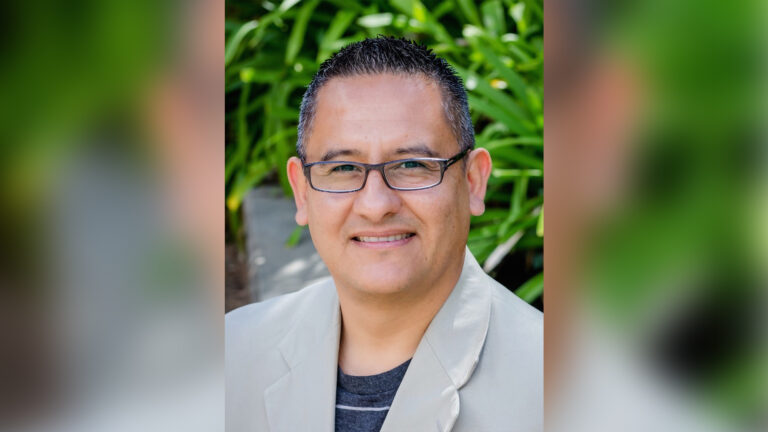
Pablo Guillermo Reguerín was selected as the new vice chancellor of Student Affairs, effective on July 20. Reguerín is currently the associate vice chancellor of Student Achievement & Equity Innovation at UC Santa Cruz. 

His appointment was announced in a press release from UC Davis News on Wednesday. He will take over from Emily Galindo, who has been interim vice chancellor since March of 2018.

Chancellor Gary May said the UC Davis community was eager to welcome Reguerín given his long-standing commitment to supporting student success and his history working with Hispanic Serving Institutions (HSIs). UC Davis was projected to receive HSI designation by the end of 2019, 11 years after it set its goal to become an HSI.  

“As we begin a new decade of challenges and opportunities, Pablo’s commitment to equity and inclusion will have a very positive impact on our students and their needs,” Chancellor Gary May said in the release.

Reguerín is also a principal investigator on three U.S. Department of Education HSI Title III and Title V grants, managing a wide breadth of funds within the UC system. 

He graduated from UC Santa Cruz with a bachelor’s degree in Latino and Latin American studies and from Columbia University with a master’s degree in educational leadership. He earned his doctorate of education from UC Davis School of Education in 2017, with his dissertation titled “Graduating Students of Color: An Analysis of Public Four-Year HSI and Non-HSI in California.” 

Reguerín said he is excited to join the UC Davis team and that he plans to partner with, listen to and learn from students through campus.

“More than ever, we need to work together to overcome the pandemic and the impacts which are felt across all communities and highlighting social and educational inequities,” he said via email. “We need internal and external resources/ideas to improve outcomes across communities and I look forward to rolling up my sleeves and serving the student and campus community.”

Written by: Janelle Marie Salanga campus@theaggie.org 

Senate fails to fill Judicial Council vacancy for third consecutive week

Controversial closed session called over appointment

Editor’s Note: At the time this article was written, the May 14 ASUCD Senate Meeting had not taken place. At that meeting, Jenna DiCarlo was confirmed as a member of the ASUCD Judicial Council, and the ASUCD Senate was able to conduct regular business.

The May 7 ASUCD Senate meeting was called to order at 6:11 p.m. on May 7 by Vice President Akhila Kandaswamy. 

The Senate had not met for the previous two weeks due to a vacancy on the Judicial Council (JC). Senate President Pro Tempore Samantha Boudaie began the meeting by introducing the recommended candidate, Jenna DiCarlo, a second-year international relations major, to fill the vacancy.

After her introduction, controller Kevin Rotenkolber, who arrived late, motioned to move the Senate into a closed session that included DiCarlo. The motion was seconded by Kandaswamy.

The closed session lasted more than an hour. DiCarlo was not appointed during the closed session, so the meeting was forced to end early. Under the ASUCD Bylaws, the Senate cannot meet if a vacancy exists on the JC for more than four weeks.

The closed session concerned DiCarlo’s appointment to the JC. According to Senator JB Martinez, the closed session focused on DiCarlo’s alleged partisanship, as she previously ran for Senate on the Thrive slate, and whether or not the Senate should be able to meet with all applicants directly to choose a candidate for the vacancy.

Interview committees usually meet with potential applicants before selecting the candidate that best fits the position requirements. This candidate is then introduced to the Senate where a public hearing takes place, and the Senate votes on whether or not to confirm the candidate.

“I personally believe the incident was politicized,” DiCarlo said. “I was discriminated against because of my personal political leanings that have nothing to do with my ability to be fair and impartial on [the] Judicial Council.”

Kandaswamy said the closed session was called in accordance with section 2105.(C)(2) of the Bylaws. 

According to this section, however, “the ASUCD senate must motion for a closed session regarding personal matters, investment matters, or litigation matters. That motion must be seconded and approved by a majority of voting members of the ASUCD Senate. At this time, a closed session will be placed on the agenda of the next regularly scheduled meeting of the ASUCD Senate, unless otherwise specified in the motion.”

While the closed session was moved and seconded, there was no approval by the majority of voting members of the Senate. The session was also not planned in advance and, therefore, not scheduled in the agenda.

Kandaswamy said there were no objections raised to the closed session. According to Boudaie and DiCarlo, however, neither Rotenkolber nor Kandaswamy asked if there were any objections before moving into a closed session. They also said the reason for motioning for a closed session was unclear at the time. As a result, the senators did not vote on whether to move into a closed session, nor was there an opportunity to raise objections.

“The closed session was not a ‘planned closed session’ and was therefore not a part of the agenda,” Kandaswamy said via email. “That being said, the agenda did include ‘closed session’ as one of its items and was released over 48 hours in advance, so that was satisfied.”

The closed session that was on the agenda was meant to handle a different subject matter according to Kandaswamy, so it is unclear whether that section of the bylaws was satisfied as Kandaswamy claimed it was.

According to Boudaie, Kandaswamy’s claims that the closed session was released beforehand are also incorrect. 

“The closed session was not announced 48 hours ahead of time, and without the general reasoning for holding the closed session also made public,” Boudaie said. 

DiCarlo was also not informed that she had the right to a public hearing, according to Boudaie, Kandaswamy and DiCarlo.

Bylaw section 2105(C)(3) states that “the appointee or employee shall be given written notice of their right to have a public hearing. This notice shall be delivered either in-person or via email at least forty-eight hours before the closed session to the appointee.”

“I definitely was not notified 48 hours in advance,” DiCarlo said.

According to Bylaw section 2105(C)(4), “if notice is not given, any disciplinary or other action taken against any appointee or employee at the closed session shall be null and void.” 

As of the time of writing, the issue has been sent to the Judicial Council for review, and as of the time this article went to press, the ruling was not available on ASUCD’s website.

Written by: Ally Russell — campus@theaggie.org 

Correction: A previous version of this article stated that Jenna DiCarlo previously ran for Senate on the UNITE slate. That is incorrect. DiCarlo ran on the Thrive slate. The article has been updated to reflect this change. The Aggie regrets the error.

ASUCD Senate faces a transparency crisis

Students deserve to see their government conduct business in the open, not behind closed doors

Journalists fight for transparency as part of their ethical code. Good journalists demand that governments do business in the open so that the public can hold elected and appointed officials accountable. During the COVID-19 pandemic, transparency is more essential than ever — but more and more, both professional and student journalists alike are facing difficulties accessing public meetings and public records.

That’s why recent actions of the ASUCD Senate are so alarming to the members of The California Aggie’s Editorial Board. We have repeatedly demanded that the ASUCD government conduct its business fairly, transparently and in ways that do not disenfranchise voters. After all, governments derive their power from the consent of the governed — in this case, the undergraduate students on our campus.

Our main concern is the use of closed sessions, which is directly related to the government’s failure to appoint and confirm someone to the ASUCD Judicial Council (JC) within the timeframe set by the bylaws. The vacant seat, created when Maria Martinez was elected as external affairs vice president during Winter Quarter, should have been acknowledged by the incoming administration and filled immediately. Instead, four weeks into this quarter, our ASUCD government came to a grinding halt as no one had been appointed to fill Martinez’s JC seat. 

The Senate did not meet for two weeks because of this vacancy.

When it convened again during Week 7, it moved immediately into a closed session to consider appointing Jenna DiCarlo to the open JC seat. Normally, confirmations are held during open sessions of the Senate. Instead of conducting business in the open, the Senate retreated behind a Zoom waiting room screen, keeping an Aggie journalist and a handful of ASUCD unit directors waiting, not knowing when they would be allowed back into the meeting.

The closed session, which lasted for over an hour, ended without DiCarlo’s confirmation, forcing the Senate to adjourn without conducting business for a third week in a row. Some senators asked to be able to choose from the whole pool of JC candidates, flouting the Senate’s normal procedure of considering only one candidate per each vacancy in the association. And, though an item called “close session” was placed on the agenda, the reason for the closed session was not made public, as required by the ASUCD Bylaws. Some senators have gone on the record saying that they didn’t know why they were moving into a closed session during the meeting.

The Aggie reporter assigned to cover that week’s Senate meeting tried to clarify what had happened with ASUCD Vice President Akhila Kandaswamy, who admitted that the closed session “was not planned” nor placed on the agenda 48 hours in advance, as seemingly required by the bylaws — and, “The closed session on the agenda was for a different subject matter.” She said the closed session was justified because it was about “potentially sensitive litigation,” when the common use of “litigation” under California’s Brown Act regards litigation being pursued by or against a public entity, not litigation that could come before something like the JC. Kandaswamy also tried to justify the closed session because the ASUCD Bylaws allow a closed session “if discussion in an open session concerning [litigation] matters would adversely affect the position of, or be detrimental to, ASUCD’s interest.” This is not enough of a reason to hold a closed session, according to the League of California Cities, which says, “It is not enough that a subject is sensitive, embarrassing, or controversial,” to hold a closed session. 

Additionally, The Aggie’s campus news editor requested an interview with Kandaswamy over the Senate’s use of closed sessions over a week ago, and, after three emails, has still not received a response from her.

This week, the Senate has another closed session on the agenda. It has again failed to state on the agenda the broad reason as to why the closed session is being held, as required by the bylaws. This could be as simple as “personnel matters,” but the public has again been left in the dark.

We know that times are difficult during the COVID-19 pandemic. Nonetheless, we are deeply disappointed in how the ASUCD government has conducted itself over the course of this quarter. When a government retreats behind closed doors, every member of the public loses. We ask that the the Senate strongly consider these action items so that it can prevent transparency issues from arising again in the future:

  1. We ask that the ASUCD Senate comply completely with California’s open meeting laws, especially the Brown Act. The Senate did adjust some procedures earlier this year to comply with the law, including publishing its agendas 72 hours before any meeting, but it could do better. Namely, it must publish the reason for each closed session and also only hold closed sessions for Brown Act-allowed reasons.
  2. The rules around closed sessions are currently confusing at best and undecipherable at worst. The Senate must commit itself to amending the bylaws to make the rules around closed sessions more concise and contained to a few, clear sections. As they read now, the bylaws are difficult to understand and remind us of a previous editorial in which we said that the “bylaws [were] made incomprehensible after years of legislative tinkering,” specifically in regard to the presidential recall process. The same seems to have happened with the bylaws concerning closed sessions.
  3. The Senate should maintain its current use of Robert’s Rules of Order. The rules were already subsidiary to any rules in the ASUCD Bylaws, but recent legislation to further reduce their importance is concerning. Robert’s Rules, though not as widely known by our generation as previous ones, allow anyone with knowledge of them to understand common procedures at public meetings. Their importance should not be discounted just because senators find them “impractical.”
  4. Members of ASUCD’s government must take their responsibility to speak to the media seriously. The Aggie’s role on this campus is to make sure that students are informed about what their government is doing. To ignore requests for interviews is a refusal to engage with the student body that elected them and whom they have voluntarily chosen to represent.

Written by: The Editorial Board

Best Student Resource Center: Student Community Center

SCC houses LGBTQIA Resource Center, Cross Cultural Center, among others

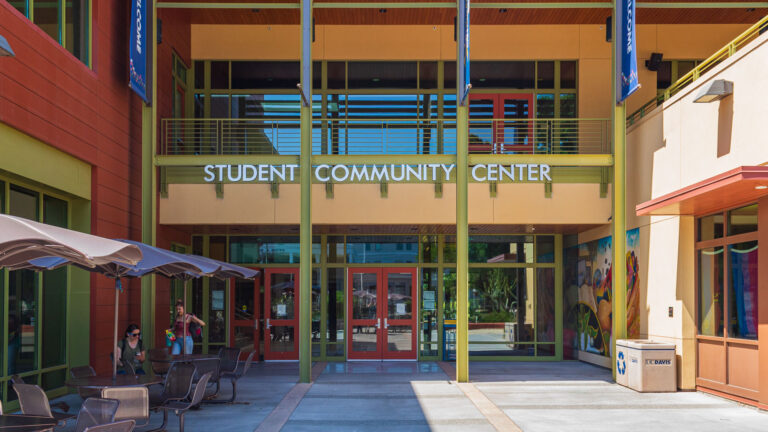
The Student Community Center (SCC) is a valuable asset to the UC Davis campus and home to several student resource centers that provide a safe space for anybody looking to express themselves and meet new people. 

The SCC features many different centers, such as the LGBTQIA Resource Center and the Cross Cultural Center, among others — all of which aim to educate and empower students from various communities.

Third-year Spanish and gender, sexuality and women’s studies major Maggie Luque is appreciative of the SCC and each of the different services its centers provide. 

“They all host social and educational events for people to further connect with their communities, make friends and learn,” Luque said. “I think that all of the community centers are indispensable and they all do important work to assess and address student needs.”

With two floors of seating and the CoHo South Cafe on the first floor, the SCC also serves as a good place to study, especially for anyone who prefers to have food options available or some background noise while working. 

The SCC also has several meeting rooms that are available for reservation by students, along with a computer room, which gives students access to computing and printing services. 

Senior psychology major Brianna De Anda reflected on how the SCC can be a helpful resource. 

“As a transfer student, it was a great place besides the transfer center to meet new people,” De Anda said. “I loved that in one building there were places to study, eat, relax and that there were easily accessible resources like the LGBT+ center, the undergraduate research center and the women’s resource center. It really made the transition to living in Davis so much easier.”

Written by: Rain Yekikian — features@theaggie.org

Correction: A previous version of this article stated that the Student Community Center featured the Women’s Resources and Research Center. That is incorrect. While the Women’s Resources and Research Center has an outreach office there, it is not where students are hosted or where programming takes place. The article has since been updated. The Aggie regrets the error.

Best Food Truck: Shah’s Halal

Middle Eastern cuisine is a fan favorite

To the students who have been wandering around campus, searching endlessly for the mouth-watering scent of Middle Eastern cuisine that tends to drift around during lunchtime: It’s likely you find yourself in front of Shah’s Halal food truck. The local, family-run business has been a top food truck pick for students thanks to its variety of flavorful entrees geared toward both meat-eaters and vegetarians. 

Shah’s is known far and wide for its two most popular entrees: gyros and rice platters with a choice of falafel, chicken or lamb. These dishes are lathered in spicy sauce and yogurt and topped with shredded lettuce. The line for Shah’s becomes notoriously long around 12pm, but third-year biochemistry major Kritika Sharma guarantees it’s worth the wait. Sharma is a regular at Shah’s Halal and often finds herself enjoying her hearty meal in the arboretum aftering picking up her order. 

“Falafel over rice spicy is my go to order,” Sharma said. “It’s my favorite thing to eat, especially during Winter Quarter, because the combination of spice and flavor keeps me warm. I also find it harder to find savory vegetarian food, and Shah’s is one of the few eateries on campus that doesn’t just serve bland, steamed vegetables.” 

The chicken gyro is third-year biochemistry major Venkat Uppalapati’s go-to order, especially after midterms. 

“I usually get Shah’s after midterms as a sort of reward,” Uppalapti said. “It’s nice because Shah’s is pretty affordable plus it comes with a drink so I definitely feel like I’m getting my money’s worth. Plus I feel like in Davis it’s hard to find good restaurants that fill my craving for spicy food, but I feel like Shah’s is definitely one of the few places that does.”

He also noted that even if patrons are opposed to spice, Shah’s will definitely leave you satisfied. Customers can customize spice to their liking, and even the most mild-food lovers will walk away feeling satiated. 

Though food trucks on campus are currently closed due to COVID-19, those interested in trying the infamous Middle Eastern cuisine can find one of the joint’s trucks often parked in the University Mall parking lot, right next to Trader Joe’s.

Written by Sneha Ramachandran — features@theaggie.org 

Best Dispensary: F Street Dispensary

F Street Dispensary has implemented many changes in response to COVID-19

From excellent customer service to their large array of products and deals, F Street Dispensary has earned its place as the Best Dispensary of Davis.

Since Yolo County’s shelter-in-place ordinance took effect, the dispensary has had to change its policies in order to allow community members a safe and precautionary method of transaction. Masks are required for entry and there is a limited capacity of people allowed in the store at a time. The rest of the customers queue outside using tape markers to ensure social-distancing.

Due to the unprecedented loss of customer retention, however, F Street has undergone financial and employment difficulties. The dispensary is solely owned by two brothers raised in Davis, and they have had to make difficult decisions because of the pandemic’s impact. 

“It’s been rough financially, but what I really miss is the vibrancy of the community with the students around,” said Rob Reed, an F Street Dispensary owner. “I love Davis and I am excited to see everyone back.” 

Since the legalization of recreational marijuana in California, there has been an increase in accessibility and usage within the Davis community. In the past year alone, six new dispensaries opened in Davis — the closest store to campus is only a few blocks away.

F Street Dispensary was one of the first to pop up within the community. It opened in 2018, with others following suit. Now, the market for cannabis dispensaries has become highly competitive as businesses strive to provide the best prices and services to the Davis community.

F Street Dispensary is currently open for adjusted hours Wednesday through Sunday from 11 a.m. to 6 p.m.

Written by: Mariah Candelaria — features@theaggie.org


Best Picnic Spot and Best Romantic Location: Arboretum

UC Davis Arboretum claims two titles in this year’s Best of Davis issue

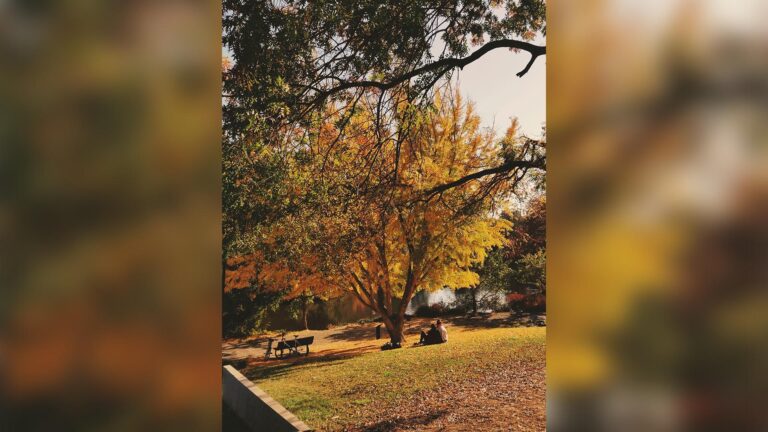
With its serene and earthy atmosphere, filled with a plethora of nature and wildlife, the Arboretum shines through as a favorite spot on campus. Voted as both Best Picnic Spot and Best Romantic Location this year, the Arboretum is a place of relaxation for many, and an escape from the hustle of campus life. Here, you can sit on the grass, admire the beautiful water and friendly ducks and truly let go.

Naomi Rivas, a first-year history major, notes that, as a picnic spot, the Arboretum provides a place with shade where she can read a book or work on an assignment. At the same time, Rivas also enjoys going to the Arboretum with others. Rivas shared her experience at the Arboretum with a significant other, a happy memory that has stood the test of time. 

“The first time I visited Davis with my boyfriend, we sat down on a bench in the Arboretum and watched a family of ducks swim by in the water,” Rivas said. “Even though it’s been almost a year since we visited together, he still remembers how nice it was — and the family of ducks.”

What makes the Arboretum so special to students is the way it differs from the rest of campus. According to Bailey Cohen, a first-year animal science major, unlike the other bike-filled, noisy spots on campus, there is a feeling of tranquility at the Arboretum. 

“I love the Arboretum because it’s such a peaceful area,” Cohen said. “You can go there to clear your mind, study or just hang out with friends. It’s nice to see nature so close by. There’s not as many people walking or biking and you can just sit by the water and look at the ducks and fish.”

Due to COVID-19, nature areas like the Arboretum have become more popular as an escape from quarantine and an opportunity for fresh air while social distancing. In a message posted in April, the Arboretum’s director Kathleen Socolofsky emphasized that while the Arboretum remains open, all visitors must follow social distancing guidelines. 

Whether it’s to picnic or spend time with a significant other, the Arboretum provides a natural escape. For students like Rivas, it is an essential spot on campus. 

“The trees and the little river make me feel like I’m in a different world,” Rivas said. “I like to think of it as a small escape from whatever I have going on where I can just enjoy nature, even if it’s only for a moment. It’s definitely part of the Aggie experience.”

Written by: Nora Farahdel — features@theaggie.org

Best Thrift Store: Bohème

Owner, employee of buy-sell-trade clothing store Bohème talk about why they love serving the community

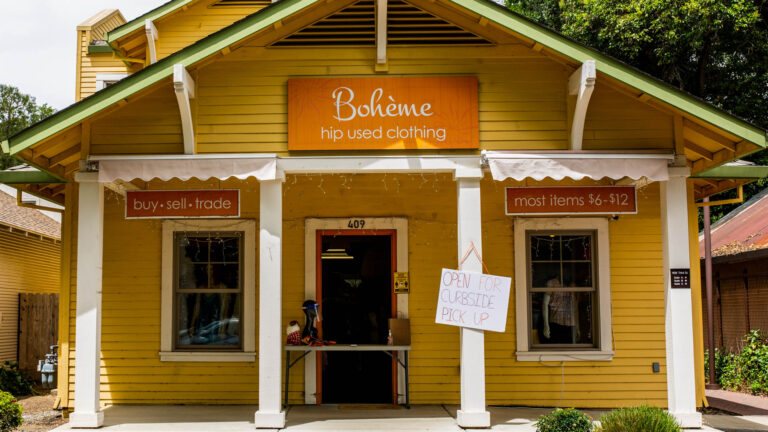
The used clothing store Bohème in Downtown Davis often has residents and visitors ogling at its storefront, which is complete with shocking patterns, a vibrant outdoor display of tutus and Snoop Dogg prayer candles. The store sells most of its unique items for $6 to $12 and goes by the slogan “The Happiest Store in Davis.” 

Bohème, located on 409 Third St., was started in the summer of 2012 by former owner Dawn Donahue, who noticed that Davis lacked a clothing store that followed the buy-sell-trade model. A few years later, the store was sold to the current owner, Yelena Ivashchenko, who was inspired by the idea of giving clothing a new life and crafted her own up-cycled additions to the store’s massively diverse selection. 

Ivashchenko discussed how she currently operates her store while the curbside pickup rule is in effect.

“If you need something, just let me know, you can call the store, you can message me, or you can just come by and say, ‘Hey, it’s getting hot, I need some shorts, I need size this, I [prefer these] colors,’” Ivashchenko said. “In the past, I looked through my inventory, I pulled out a few items, and as they came [up] I said ‘Hey, this will fit you, this will fit you, what would you like?’ And then we did it all distantly, and then she picked up two pairs of shorts and then processed the payment right there, and it’s done. So if people are willing to do that, that works great.”

Audrey Salbacka, a Bohème employee and recent UC Davis graduate, said there is new difficulty in helping customers find the fashion they otherwise would have been able to try on for themselves. 

“We’ve been lucky enough to have a few sales through Instagram and Facebook, but it’s really hard to work with people to find something that they’ll actually enjoy when all you can do is send them pictures,” Salbacka said. “We can’t watch people try things on and see how excited they get when they’re putting the clothing on and they look great and they found something new. I really just miss being able to see people happy about their clothing, it’s very distant right now.”

Ivashchenko said she primarily misses the people who contributed to the store’s regular activity.  

“We do have a lot of regular customers, and just like, that whole aspect of seeing familiar faces and just seeing people happy, leaving the store happy — because I love helping dress up people, it’s just my favorite thing to do,” Ivashchenko said. “Just human interaction, that’s my first most important thing I miss.”

Salbacka believes that what the store offers has a different significance than everyday essential items simply picked up as a chore.  

“Clothing is something that you need, but it’s also something you can choose and feel a little bit more leisurely about,” she said. “I definitely feel like it’s very important to [self-interpret] and things like that.”

At Bohème, self-interpretation is not limited. Their Instagram showcases some of their one-of-a-kind items, such as their floaty Hawaiian shirts and atypical hats. More can be found on their site.

“I would say 80% of my customers are students,” Ivashchenko said. “My store is gearing toward the students. I try to have a variety of clothes and different things, but I depend heavily on students. So if they could reach out in any way […] — if they let me know what they are looking for — I ship items, I deliver if they’re not too far away in this area, just stay in touch, even if it’s a small comment on Instagram. I appreciate it.”

With no current store activity due to it not being an essential business, Ivashchenko has taken to utilizing her upcycling talents in her spare time by modifying some of the clothing items in the inventory. She said cravings for hot chocolate and wine have helped drive some of her creative decisions. 

“I decided to tie-dye a lot of items that sometimes come to the store and they have a little stain, or the colors have washed out, so I call it self-therapy quarantine tie-dye madness,” Ivashchenko said. “I have a whole rack that’s slowly scaling up, and I’m afraid by the end of this, my store would be bursting with colors. I have this craving for hot chocolate, so I tie-dye clothes with a color called ‘hot chocolate.’ The same thing for the wine color.”

Written by: Lyra Farrell —  features@theaggie.org 

Best Getaway: Lake Tahoe

Why Lake Tahoe remains champion for the best place for a weekend excursion

Lake Tahoe, the most versatile getaway destination, won the title of Best Getaway from Davis with a 48.6% majority, beating out runner-up San Francisco. Known for its clear water and mountainous terrain, this two-million-year-old lake harbors some of the most beautiful shorelines. In addition, its contrasting winter and summer seasons make it a desirable vacation spot for both skiers and beach-goers. About two hours away from UC Davis, it makes an easy day trip as well.

“My favorite thing to do is go boating all day to cool jumping rock like Rooster’s Rock,” said Frankie Vererka, a second-year human development and science and technology studies double major. “Another really cool place is Emerald Bay. The water is an unreal color. I love being on the boat all day and stopping at some of the best restaurants on the lake in the middle of the day such as Gar Woods, Sunnyside and Chambers Landing.”

Nina Steinkemper, a second-year design and communication major, said winter activities in Tahoe offer a different but equally enjoyable experience.

“[I] mainly went to ski and go snow hiking with friends and family,” she said. “Hiking at the lake is so beautiful but definitely too cold to swim in the winter. Now at UC Davis, I’m on the Ski and Snowboarding team. We have a cabin all winter close to Squaw and Alpine for great skiing.”

Tahoe’s shifting landscape allows for its historic cobalt waters to be a constant appeal for UC Davis students, as the multifaceted experiences that it provides makes it an unparalleled location for nature lovers. 

“I think going to Lake Tahoe during spring quarter is the best time,” said fourth-year biological sciences major Saira Singh. “It’s sunny out, but there’s still snow on the ground if you like snow activities.”

On the weekends, after the final Friday class has been let out, Tahoe remains the dreamy destination for wandering UC Davis students, an exciting place to see and do a variety of things. 

 Written by: Athena Aghighi — features@theaggie.org


Best Farmers Market vendor: The Dumpling House

Handmade, high-quality dumplings beloved by community

On a Saturday morning in Downtown Davis, it’s hard to miss the large white tents and long aisle of stalls adjacent to Central Park. The Farmers Market, a beloved City of Davis institution established over 40 years ago, is normally frequented by university students and locals alike. Although many students have returned home, the market continues to provide fresh produce, hand-crafted treats, home-baked goods and more. 

According to Randii MacNear, the executive director of the Davis Farmers Market, staying open is essential, as the market functions as more than just a source of food for the community.

“The Farmers Market is like family to people,” MacNear said. “We’re really happy to be open, not just because the food is so amazing but because I think it really nourishes people at this time, both emotionally and physically.”

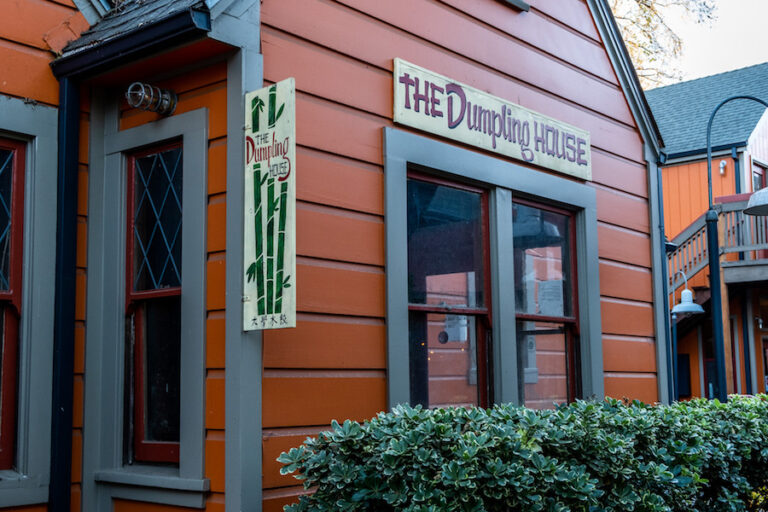
For UC Davis students, a particular favorite of the market is The Dumpling House. The establishment started as a local restaurant, serving customers for eight years, until it closed for repairs in 2018. That same year, they began offering dumplings at their new Farmers Market booth. 

“They have a huge following and people were really happy that they could find them at the market,” MacNear said.

Linda Liu, the owner of The Dumping House, enjoys selling at the market because it provides greater community interaction.

“We like it because we meet a lot of local people,” Liu said. “People like the hand-wrapped dumplings.”

The high-quality dumplings are made with a special recipe and source ingredients for their fillings from the Farmers Market. The Dumpling House also sells dumplings both fresh and frozen with UC Davis students in mind.

“We sell frozen dumplings for students that don’t have time,” Liu said. “They can cook at home.”

Whether she’s making them for the Farmers Market or a holiday with her family, Liu’s love of dumplings started at a young age when she learned to cook from her grandmother. Now a grandmother herself, she makes dumplings for her six grandchildren. 

“I make dumplings at home that I bring to my grandkids,” Liu said. “They all love my dumplings.”

Although The Dumpling House, like many other businesses, has been struggling due to the pandemic, Liu is hopeful and looks forward to the students returning to campus.

“We hope we can open as soon as we can to serve dumplings to the UC Davis students,” Liu said.

Written by: Sophie Dewees — features@theaggie.org

Best Breakfast Burrito and Best Hangover Food: Ali Baba

Popular Middle Eastern fusion eatery wins two titles in this year’s “Best of Davis” issue

A debate practically as old as time in the Davis community: the fight over the best breakfast burrito. While there are more than a few contenders in the town, the real battle comes down to two establishments: Ali Baba’s and 3rd and U Cafe. 

These two restaurants have close to a cult following when it comes to their respective customer bases, and I personally have experienced more than a few passionate debates over the subject. Thus, to settle the debate, The California Aggie asked readers their opinions and

Davis patrons have spoken: Ali Baba received 82.2% of votes, with 3rd and U taking 17.8% of the vote. This isn’t the first time the Middle Eastern fusion restaurant has won the title of best breakfast burrito in 2018 it was also named the winner. 

Ali Baba has been serving the Davis community since 1986, and it is widely regarded as a staple among both UC Davis students and Davis residents. Its menu offers customers two selections for breakfast burrito: regular and vegetarian.

The ingredients the establishment uses aren’t necessarily typical — the regular burrito features eggs, bacon, beef gyro, cheese, french fries, honey and tapatio. The veggie option includes eggs, onions, tomatoes, mushrooms, avocado, french fries, honey and tapatio. 

Ali Moghaddam, who took over ownership of the restaurant in June of 2008, emphasized his love and gratitude for the Davis community — especially in a time where the COVID-19 pandemic has hurt local businesses practically everywhere.

“We are thankful for the people in Davis who have voted us number one, and as far as these days — everybody is suffering,” Moghaddam said. “I’m really thankful for our customers for still keeping us afloat.”

The burritos are not only a fan favorite because of their unique flavors — the servings are also hearty, and the service remains unmatched. Courtney VanWinkle, a fourth-year environmental policy analysis and planning major, said she supports Ali Baba for myriad reasons. 

“It’s really about the whole experience,” VanWinkle said. “The people are so nice, the portions are generous and it’s just a classic Davis staple.” 

It’s no surprise that the eatery that won “Best Breakfast Burrito” also won the title of “Best Hangover Food.” Ali Baba won the title with 33% of votes, with Crepeville and and Black Bear Diner coming in at a close second and third, earning 26.7% and 21.4% of votes, respectively.

Despite the current pandemic, Ali Baba is still open for takeout. Hungry customers looking for a taste of the “Best Breakfast Burrito” in town can call the restaurant at (530) 758-2251 or place an order on its website

Written by: Claire Dodd — features@theaggie.org