57.9 F
Davis

Davis, California

Monday, December 22, 2025
Home Blog Page 477

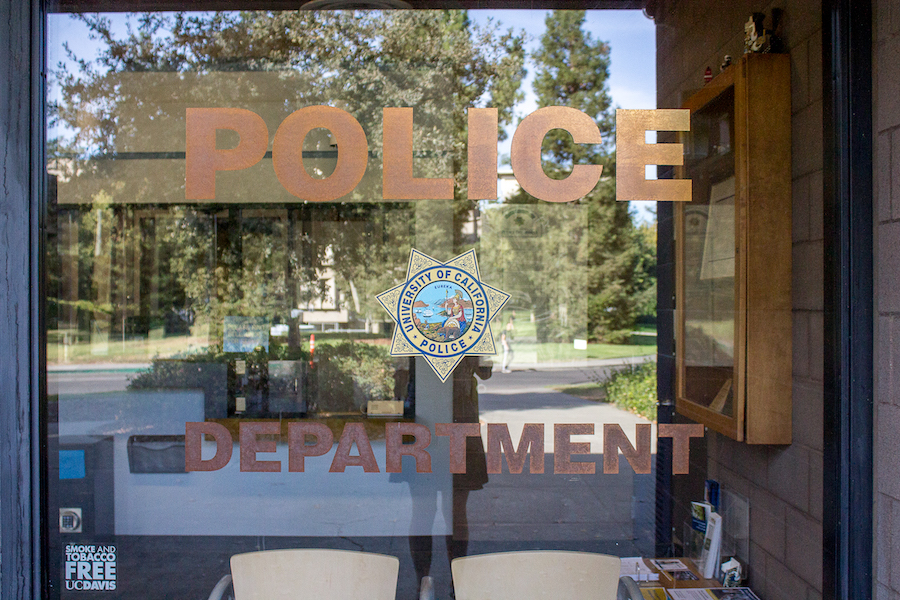
Police Department Offers Cadet Program for Students

LUCY KNOWLES / AGGIE FILE

UC Davis Police Department offers two cadet programs for UC Davis students, staff, faculty, community members

The UC Davis Police Department offers its cadet program for students interested in law enforcement. The program has been offered to students for the past five years and was created by UC Davis Police Officer Ray Holguin and former UC Davis Police Chief Matt Carmichael in order to connect with students interested in law enforcement.

The cadet program is free to all students as long as they meet the minimum eligibility requirements. According to the UC Davis Police Department website, the cadet program begins on January 12, 2019 and runs until April 20, 2019.

“We thought we’d focus on this academy being in addition to students’ education not instead of, so we focused on seniors who were graduating and/or grad students,” Holguin said. “We opened it up to only take 25 of the top cadets.”

Holguin added that the program is scholarship-based, meaning at the end of the program, the top one or two cadets are sent to real police academies within California.

“Right now, we’re using Sacramento Police Department Academy and Napa Valley Academy,” he said.

Holguin also mentioned that two students, who were part of the graduating class of 2018 and the cadet program, were actually hired by the UC Davis Police Department to become police officers by the end of this year.

The cadet program has a number of minimum qualifications that UC Davis students need to meet.

“You have to be a senior in good standing with the university, graduating no later than June of the year,” Holguin said. “The cadets that are coming in this year have to be graduating by June of 2019. With that being said, if they didn’t pass a class or they have to take an extra quarter, we’re not going to kick them out of our academy, we just can’t sponsor them into a police academy. We want them to get their four-year degree first — that’s their priority.”

Holguin also explained the process potential cadets will go through, which includes an interview assessing a candidate’s level of interest in law enforcement and reason for applying to the cadet academy.

“We want to make sure that their commitment to time is there,” Holguin said. “We preliminary accept them if we feel it’s a good fit for both of us. Then we have them get fingerprinted, which we pay for. They have to pass a simple fingerprint background check. If they pass that, then we bring them on to be a cadet.”

The cadets will meet for an hour of physical fitness on Tuesday and two hours of either physical fitness or classroom work on Thursdays. They will also need to commit to meeting from 9 a.m. to 4 p.m. on Saturdays.

Holguin described the program as a “pre-police academy” and linked the program to actual police academies.

“Police academies are run by POST, which is police officer standing and training,” Holguin said. “We take those learning domains that they’ve learned in the police academy, and we apply it here. We bring in different instructors who are experts in their fields throughout the academy. For example, when we do search and seizures and laws of arrest, we bring in the district attorney’s office from Yolo county to come in and present that. We introduce them to pepper spray and taser and all the laws.”

According to Holguin, the cadets that participate in this program are involved in lots of community outreach.

“Throughout the year, the campus community invites us to help them out with different events that the cadets will be part of,” Holguin said. “Last year, we got asked by a student who was doing a cigarette butt abatement. They needed to do some surveys to see what the next direction is on the zero tolerance on cigarettes, so our cadets went around and collected cigarettes throughout the year so they could do some statistical stuff.”

A community outreach event that Holguin implemented a few years ago involves the cadets going to Fourth & Hope, a homeless shelter in Woodland.

“We feed the homeless,” Holguin said. “[But] I take it a step further: I make the cadets figure out what the menu is going to be, how we’re going to create the menu, we’re going to cook it, we’re going to set it up, then we’re going to feed them and go out there and sit with the homeless population and talk and communicate with them. We really engage in our community.”

Addressing students who may be unsure about applying to the cadet program, Holguin said the program is a great opportunity to learn what the police do and build a bridge with the police department.

“They can get a better understanding of why we do what we do and how we do what we do,” he said. “It’s also a great opportunity if you have any insecurities or confidence issues — this will help build that. We’re going to teach you self-confidence in the physical fitness part. We’re going to test you to test yourself. You’re going to see self-improvements.”

Holguin emphasized that people from all different backgrounds should consider applying to the cadet program.

“We really want everyone in this program to be from people who are interested in being a police officer to people that are in forensics to people that are anthropology majors who are interested in what we do and know that it will give them some insight,” he said.

Another program run by the UC Davis police department is the Police Community Academy, which is scheduled to start Jan. 16, 2019 and ends on March 13, 2019. The police department described this academy as a “nine-week course” that is “open to all UC Davis students, staff, faculty, as well as citizens in the community.”

“It’s more like a seminar,” Holguin said. “There’s no homework, but every week we introduce a new topic. We bring in the district attorney, we do a tour of the jail, we bring in our canine, we talk about search and seizure, use of force. It’s a great opportunity, no homework, and we give you two units for it.”

Students can apply for the cadet program through an application posted online and can also register for the community academy online.


Written By: Sabrina Habchi — campus@theaggie.org
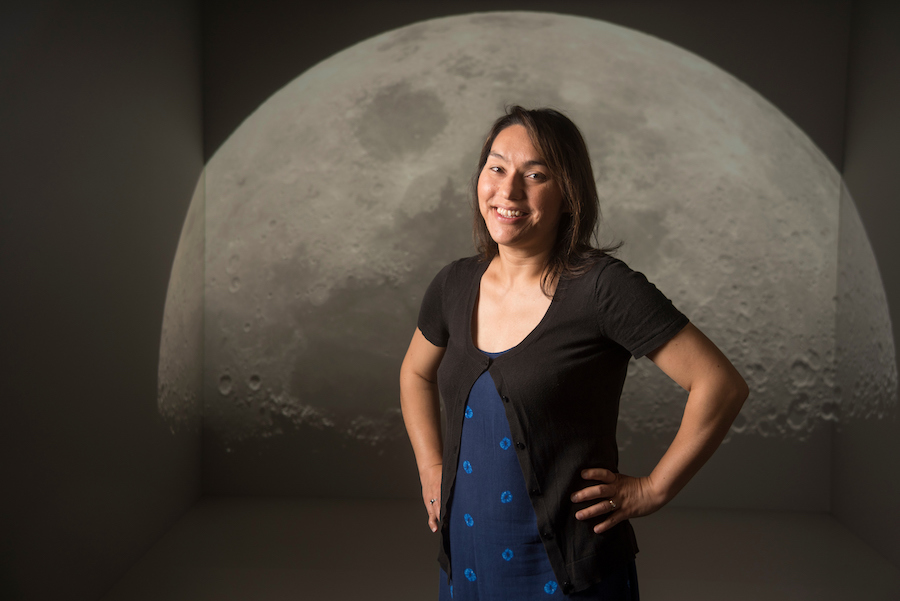
 

UC Davis Professor Sarah Stewart wins Genius Grant

UC DAVIS / COURTESY

Professor Stewart recognized for contributions to planetary science, including new theory of moon formation.

Sarah Stewart, a professor of planetary science at UC Davis, won a MacArthur Fellowship, also known as a Genius Grant, last month for her work on planetary collisions and her new ideas about the formation of the moon. Stewart, who was a professor at Harvard University before moving to UC Davis, has challenged many established assumptions about the way celestial bodies collide throughout her career. She is best known for her paper proposing a completely new theory for how the moon formed.

Before her research, scientists thought that the moon was created when a Mars-sized object called Theia struck the Earth and broke apart to form a disc of debris around our home planet. They thought the moon formed when some of this debris began to coalesce and orbit Earth. The theory, which scientists call the canonical model of moon formation, seemed to fit with most of the physical evidence. However, it could not explain why rocks from the Earth and moon have nearly identical isotopic signatures.

To address this inconsistency, Stewart proposed that the Earth and moon are similar because they were made from the same mixture. She argued, in a paper published last year with Simon Lock, a postdoctoral researcher at the California Institute of Technology, that Theia struck the Earth with enough energy to vaporize most of our home planet. In this new model, the rock vapor from both Earth and Theia mixes together to form a new celestial body that Stewart and Lock call a synestia. According to this theory, the moon forms inside the synestia as the system begins to cool, and the Earth reforms as the rock vapor condenses around the synestia’s high pressure core.

“In a synestia the material will mix, everything is vaporized and the moon would form within the vapor of the synestia,” Stewart said. “The fundamental difference in our model is that the moon forms within this vaporized object, and that’s why it has the same isotopic signature of the Earth.”

Scientists will never be certain about moon formation because they can’t go back and watch the impact. Nevertheless, Stewart and Lock’s theory is now one of the leading explanations for the formation of the moon.

To reach such a monumental development, Stewart and her research team took an interesting road to discovery. Stewart did not start her research by specifically attacking the moon formation problem but instead started by studying the topic of planetary collisions.

“So most of the time, we are looking at rather general problems, so the moon work came out of trying to understand collisions in general,” Stewart said.

While Stewart and her team were studying planetary collisions more broadly, they started to notice that some of the established assumptions about the moon’s formation were wrong. In 2012, Stewart, alongside Matija Ćuk, a postdoctoral fellow at Harvard at the time,  published a paper in Science which demonstrated how the Earth could have been spinning much faster at the time of impact than previously assumed. According to Ćuk, who now works as a research scientist at the SETI Institute, the research allowed more moon formation models to be proposed because the increased speed at time of impact meant the collision could have have occured with much higher energy than initially predicted.

“It kind of opened up the field of lunar formation to many new ideas,” Ćuk said.

One of these new ideas Stewart herself developed when she and her team questioned a key assumption in the canonical model. According to Lock, researchers in the field had a fixed idea that after the impact, there was a distinct Earth and a distinct moon. However, as Stewart and Lock looked carefully at the data from their computer simulations they noticed the data from their models did not support this idea.

“You were not getting a disc and a planet,” Lock said. “What you were getting is this one massive structure which we termed a synestia.”

According to Stewart, it is possible that many computers at laboratories across the country had developed the data to create the synestia theory. For Stewart and Lock, the difference was that they listened to the data and ignored the scientific assumption to uncover a better solution.

Stewart will have to carry these lesson into her future projects because there is still a lot of work to be done. Now that that basic synestia theory has been defined, Stewart and her research group are busy fleshing out the details, testing the model against increasing complex permutations and comparing it to new physical evidence from the Earth and moon.

Stewart also wants to continue to work broadly. At UC Davis she runs the shock compression lab, shooting objects at each other to gather more data about how planetary collisions might work. She wants to know more about the Earth after the giant collision as well as the formation of other planets. Stewart’s MacArthur fellowship will help provide funds and institutional support to help her answer some of these questions. Stewart will also be able to draw from her experiences developing the Synestia theory. She said the project had a lasting impact on how she approaches scientific assumptions.

“Things I had accepted before I will sit and think about a little longer and wonder, ‘should I still think that today?’” Stewart said.


Written by: Peter Smith — science@theaggie.org


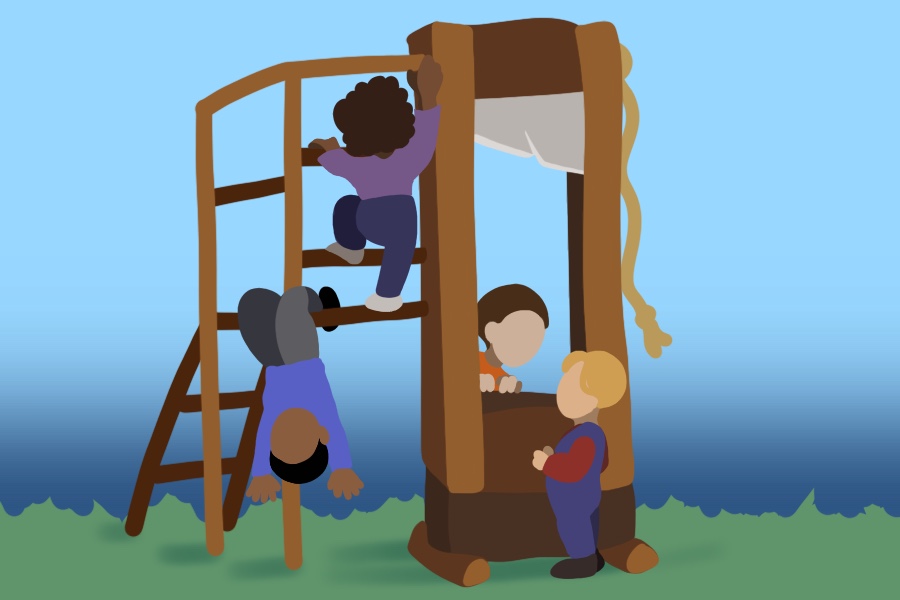
Humor: Playground installs another “toy” for kids to hurt themselves on

CAITLYN SAMPLEY / AGGIE

“It worked for the French revolutionaries, not sure why it won’t work here”

Most people look at the city council’s recent decision with disgust. And I ask you: why? Is it because of your preconceived notions about what counts as childhood “play?” If we are to train our next generation of soldier-good-boys properly, we must introduce them to weapons: from toy guns to life-sized functioning toy guillotines.

If our children are to be prepared for the leftist Red Menace that will undoubtedly take over our country (I see them crawling out of their communist foxholes in the Bay), then we must introduce them to the tools of revolution to prepare them to fight. The guillotine has been used most famously by the insurrectionaries of France, and I’m sure the leftists just love France.

So erect that guillotine. Perhaps even allow the children to fight one another, to learn about what it means to be in combat and win a civil war or revolution. Give them the toy guns and John Wayne movies, and teach them about our fundamental values: kill or be killed, marriage is between Adam and Eve not Adam and Steve, and of course, always praise Our Great Leader the President under all circumstances. Also, if you’ve never joined the military then you have a micropenis.

So don’t talk to me about “dangerous” playground toys. The greatest danger our children face is the growing leftist mob that is gestating right underneath our feet.

If a few kids die, then so what? We have to do what we gotta do to protect the homeland and our families. BUILD THE GUILLOTINE.


Written by: Aaron Levins  — adlevins@ucdavis.edu


Students reflect on going home

JEREMY DANG / AGGIE

How opportunities in Davis compare to home

Already well into November, Fall Quarter seems to be flying by. For many Aggies, it’s been several months since they last visited home and feelings of homesickness are common, especially as the weather grows colder and midterm season approaches finals season. No matter how charming and diverse Davis is, it naturally lacks the appeal of being home. Students look forward to going home for Thanksgiving not only for the turkey, but to enjoy favorite local spots such as restaurants and cafes.

Lana Alamamreh, a first-year biological sciences major from American Canyon, Calif., said her favorite food place back home is Sol Food.

“They don’t have a lot of choices in American Canyon,” Alamamreh said. “I go to my cousin’s house a lot, which is in Marin, and I love Sol Food. They don’t have Sol Food [in Davis].”

Despite its small size, Davis has a variety of food options that rival hometown favorites.

“My go-to food place is Gotta Eatta Pita at home,” said Samarth Sandeep, a second-year materials engineering major from Pleasanton, Calif. “Davis has many good alternatives, such as Ali Baba, Sam’s, and The Halal Guys.”

The taste of homemade cooking, however, is impossible to substitute.

“My go-to food are my mother’s homemade traditional meatballs, called chiftele, which are so good, and mashed potatoes,” said Monique Rusu, a second-year economics major from Bucharest, Romania.

New restaurants in Davis open frequently as the town expands, offering access to a wide array of flavors and food types. According to some students, however, recreational and cultural opportunities are still lacking.

“I wish Davis had more actual space for startups, for research projects, and for art exhibitions open to students,” Sandeep said. “I feel like there isn’t enough space for students to express themselves, which prompts many to go to big cities and leave Davis post graduation.”

Nearby cities such as San Francisco are attractive due to the vast number of career opportunities, museums, restaurants and nightlife venues. Bigger cities simply have more happening at any given moment than smaller cities. Davis is definitely on the slower side, but not all students seem to mind.

“I actually love the whole Davis college town,” Rusu said. “I grew up in the city all my life, so this is a nice change of pace. Of course I would love if they had some Romanian food, but the way Davis is right now I would not change anything actually. The small coffee shops in downtown, the farmer’s market, the different bars, the animals walking around Davis like turkeys, the students bustling around the campus and town are what make the whole Davis atmosphere special.”

Unfortunately, Rusu isn’t able to travel home for Thanksgiving break. She plans to stay at a friend’s house and experience the American holiday to its fullest.

“I am excited most about the pecan pie because it is the most delicious thing I ever ate and they don’t have this back home,” Rusu said.

Other students look forward to going home this Thanksgiving break.

“[I’m excited for] food and seeing family because I see my cousins and people that I haven’t seen in a long time,” Alamamreh said.

Even if going home is not an option, Thanksgiving is a welcome break from school as well as an excuse to eat good food. Students who have the luxury of heading home may splurge on their favorite foods, whether home cooked or not, and spend time with loved ones.


Written by: Cheyenne Wiseman — arts@theaggie.org


Training the leaders of tomorrow

0

ROTC cadets reflect on experience as college students training to become officers in U.S. military

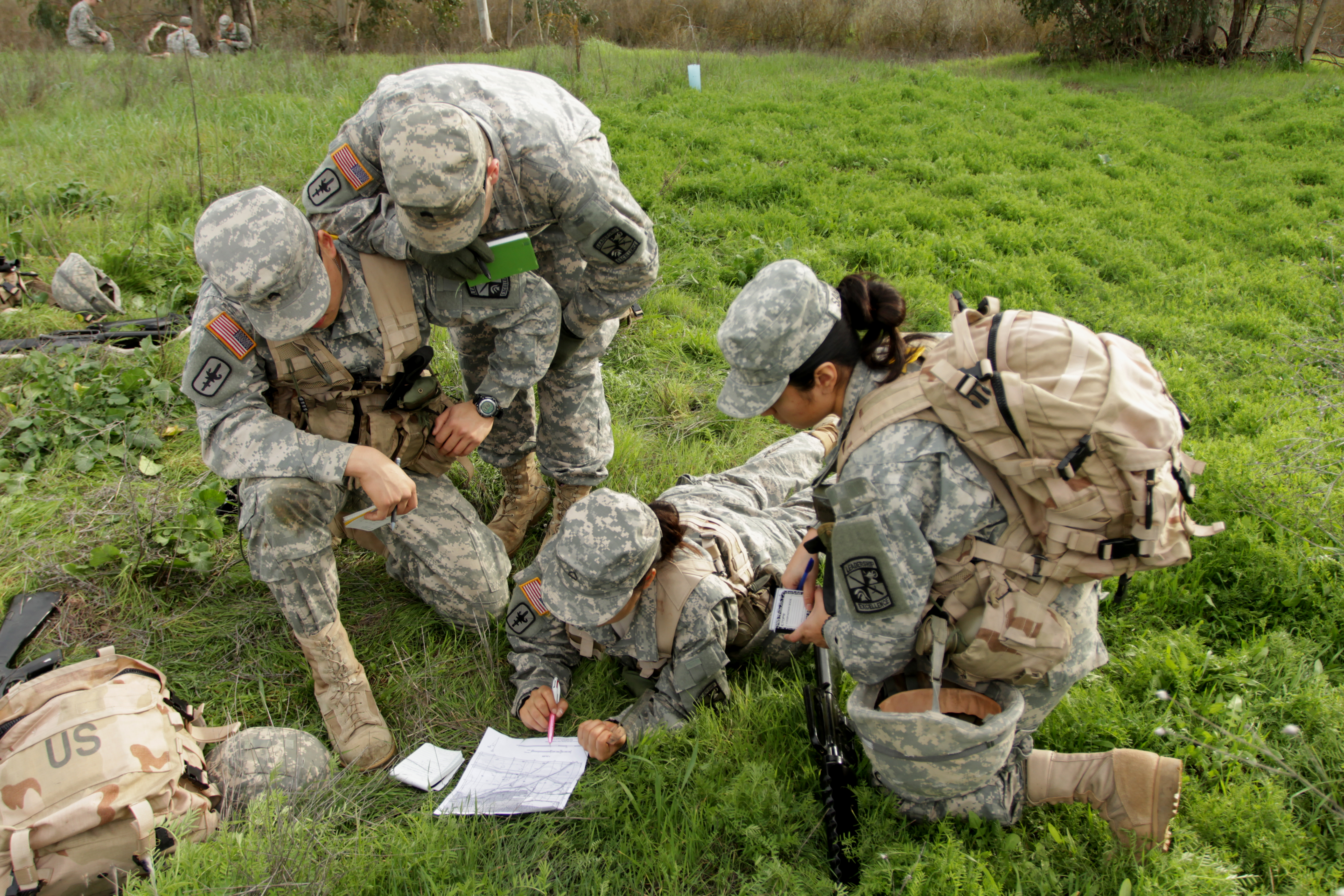
The Reserve Officers’ Training Corps (ROTC) is a program implemented in universities that trains college students to become commissioned officers in the U.S. Military. The Army ROTC is known to be one of the most successful national leadership programs and is offered at UC Davis.

Active duty army officer Lt. Col. Ryan Burket is a professor of military science at UC Davis and has been the department chair for the program for 15 months now. Lt. Col. Burket has been in the Army for 18 years and was trained as an aviation officer pilot. Burket explained the general purpose of the ROTC.

“ROTC is a four-year leadership program,” Burket said. “What we really teach and focus on is leadership that produces Army officers. If one continues to go on with the program the end products out of ROTC is the same end product that West Point produces, so after graduation cadets are commissioned as second lieutenants in the army whether that is the National Guard, Army Reserves or active duty full time Army officer.”

In total there are 275 ROTC programs across the country, which produce about 6,000 officers every year. Lt. Col. Burket detailed that Davis has 65 of those 6,000 officers, and each year about 15 of those officers graduate.

“The way ROTC is traditionally set up is kind of a ‘crawl, walk, run’ program,” Burket said. “So as freshman we really try to focus on teaching the basic fundamentals of the Army and how to be good followers […] we also teach the Army values and ethics as well as some basic hands-on Army skills like how to use a map and compass and other traditional tactics.”

Lt. Col. Burket explained how during a cadet’s sophomore year the lesson plan entails more leadership and decision-making on a basic level. During this time, sophomores are also given leadership positions by coaching freshman through the basics. During a cadet’s junior year, the program primarily focuses on tactical and leadership skills. Following their junior year, cadets are faced with one of the most important summers as ROTC members.

“The capstone event in a cadet’s ROTC career is after their junior year,” Burket said. “Every cadet across the country goes to Fort Knox, Kentucky for a month. This month is both an evaluation and a baseline teaching experience so that we know that all ROTC cadets that come out of the program have at least a 30 day experience similar. So it allows us to evaluate all 6,000 cadets in that cohort against the same standard.”

As a senior, the program allots for a transition period so that students can transition their focus from being a cadet to becoming an Army officer who leads over 40 soldiers, Burket said. During class, senior cadets are taught how to plan for the long term and work on team building skills, decision making, critical thinking, risk management and ethics.

“During this time we dive a little more in depth and introduce [cadets] to the concept of emotional intelligence and empathy and things like that,” Burket said. “We’re really focused on being future leaders, specifically Army leaders, but we can apply that to any skill set whether that means being a National Guard and leading in corporate America or going full time into the Army.”

Whether one chooses to go into the Army full time or part time, cadets are set up for success on both paths, Lt. Col. Burket explained.

“It’s something kind of unique about Davis,” Burket said. “About 50 percent of our graduating officers go into the National Guard and back into the California workforce and the other half go into the Army full time.”

During their senior year, cadets are faced with the decision of which path to pursue.

“It’s really based on what they want to do,” Burket said. “‘What do I want to do with my life and which direction do I see my life going in,’ either way we set them up for Army leadership skills, but also the foundation of leadership and management skills as well.”

For students who express an interest in the program later than their freshman year, joining ROTC is still possible. For those curious about the army Lt. Col. Burket recommended signing up for a class.

“We want to make sure it is a good fit for the student,” Burket said. “We are not trying to trick anyone into the Army [or] into a contract, we want what is best in their interest and sometimes it’s ROTC and sometimes it’s not.”

The ROTC program also offers a multitude of scholarships for cadets who exhibit excellent leadership and involvement as well as do well in their academics. One of these scholarships is offered on a national level for high school graduates and awards its recipients with four years of tuition covered at whichever school a cadet desires. However, if a student does not receive a scholarship before starting college, the ROTC program also offers scholarships to cadets. The campus based scholarships also cover full tuition and fees and add a $5,200 stipend, but if a cadet chooses to accept that offer they must commit to time in the Army in exchange.

Kyle Dennis, a first-year aerospace engineering major, is a four-year national scholarship recipient. Less than a quarter into his first year, Dennis explains why he wanted to join ROTC in college.

“My father is in the Army and has been for a number of years now so that played a large role in why I wanted to join ROTC,” Dennis said. “He has never actually said, ‘Hey I want you to join the Army,’ but the structure is really good for me, and I feel like it has made me a better person having that background […] that coupled with the fact that I think everyone should do a part for their country.”

Dennis was a part of the JROTC program in his high school for all 4 years. Dennis explained how vastly different his experience in ROTC has been to his experience in high school.

“I would definitely say that ROTC is a type of fraternity,” Dennis said. “It’s co-ed but it’s definitely a feeling of brotherhood because everyone is helping each other out. I enjoy the people so I definitely spend a lot of time in the ROTC building because they are my friends. It’s a large part of my college life, but that’s because I enjoy it so much.”

Kaytlin Quijas, a third-year cognitive science major, explained what made her want to join ROTC.

“My junior year of highschool […] my best friend died in a car accident and it turned my world upside down,” Quijas said. “I am a firm believer that everyone has a purpose in this world and at the time I felt as though I hadn’t lived a life of purpose thus far. So I re-evaluated my life and wanted to do something that is filled with purpose. I want to make a difference and impact the lives of others.”

Quijas explained how she balances her life with academics, ROTC and as captain of the rugby team.

“Being a student itself is hard, so being a cadet on top of being a student is even harder,” Quijas said. “Having a social life is something that I value because I feel the friendships and connections I make at school are going to last longer than anything else I gain from school. And plus, I’m here for the memories. I am a special case and am a cadet, student-athlete.”

Quijas encourages students interested in ROTC to join a class. Quijas said that ROTC teaches students a multitude of important life skills such as time management, leadership, camaraderie, confidence and determination.

“What I tell people is ‘making a difference within yourself and you’ll make a difference in the world,’ it’s about bettering yourself,” Quijas said.

Students interested in the ROTC program can visit the military science website and contact faculty or visit the department in 127 Hickey Gym for more information.


Written by: Sneha Ramachandran — features@theaggie.org

Teaching assistant: The first step to a larger profession

0
MELINDA CHEN / AGGIE

Campus TAs weigh in on the value of their experiences

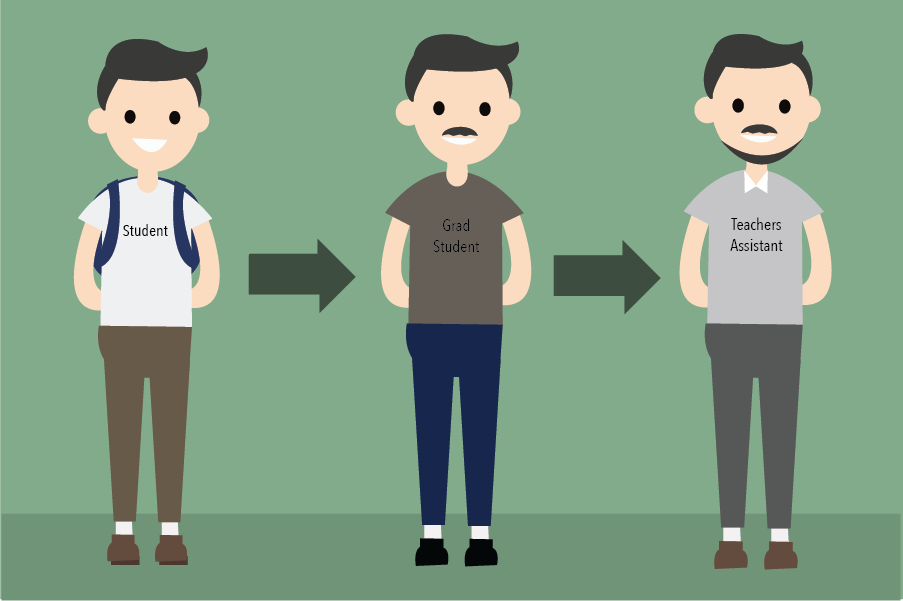
The teaching assistant (TA) in a classroom can play a large role in student success. These individuals are resources for students who may not be ready to approach a professor for one-on-one help, and teaching assistants often hold discussion sessions with smaller portions of classes to create a more personalized environment. Becoming a teaching assistant is a common way to get started in the field of education since it gives basic classroom experience.  

With such a large student body and a need for new voices in the classroom, becoming a teaching assistant is a position of huge significance. Two teaching assistants, Abbey Berghaus and Liza Wood, spoke about their experiences and how they approach this unique opportunity that impacts the lives of college students.

Abbey Berghaus is entering her third year in the Ph.D. program of the sociology department and has been a teaching assistant for three years. During her undergraduate studies at the University of Georgia, she explained the role her teaching assistants played in her learning.

“Our TAs were a lot less involved than they are here,” Berghaus said. “They were more responsible for grading, and they didn’t really have office hours.”

As a TA for UC Davis, the shift from having TAs being not as involved in student learning to being one of the core components of a class is something Berghaus has embraced and taken on with great care and meticulous study. Part of her experience has been assisting for both undergraduate and graduate classes, which she says differ.  

“The experience really differs based on who the instructor is,” Berghaus said. “My first year as a TA, I worked with a lot of instructors who were very hands-off, so I created a lot of my own curriculum. Last year, I mostly did upper level classes where I didn’t have sections, so I was just grading.”

Participating in discussion sections is a key aspect of undergraduate learning, where students can work with their TAs and receive the personalized help they may not receive during the lecture portion of class. Working with different ideas and a unique group of students can help a TA think about a critical concept differently and how to approach such a concept in future sections. Berghaus also acknowledged how the different relationships TAs have with professors can impact their personal growth and their ability to reach out with ideas or tips.

“Right now I’m [assisting] for my major professor, who is the head of the committee on my various steps throughout my program,” Berghaus said. “That’s different because I know her really well, and that gives me the opportunity to see how the person that I admire the most teaches their classes.”

The exposure to different teaching styles and personalities gives TAs the opportunity to see what works in one classroom setting and what may not work in another. Berghaus also detailed her reliance upon studying how a professor teaches. She takes careful note of what methods a professor uses and how a professor keeps his/her students engaged during a lecture.

Eventually, Berghaus may find herself in her own classroom as the professor of her own subject, as she noted, “Being in a TA position does excite me about the thought of teaching.”

Liza Wood, another TA who is in her first year of her Ph.D. program within the ecology graduate group, shared her experience of working as a teaching assistant as well. While her undergraduate studies were filled with phases of personal growth and discovery, she found two mentors along the way that pushed her to take the next step in becoming a TA.

“As an undergraduate student, I had two really great mentors who helped me a lot with my research and were women that I really looked up to,” Wood said.

Wood used the knowledge and expertise of these women to take up a peer facilitating role as an undergraduate. From there, she took on supplemental instruction in chemistry. With this experience, Wood later taught at a university designing courses on food systems. This gave her much greater freedom in determining how the learning in the class would take shape. Wood spoke on the differences between teaching her own class and now being a teaching assistant.

“As a TA, coming from having complete power over a classroom to being more responsive is the difference,” Wood said. “The idea is still there: whenever I’m reading or learning or listening to content that is being taught, my brain is constantly saying, ‘Where is the cool conversation in there?’”

Her primary focus is taking a concept and making it appeal to students by allowing them to make connections and draw conclusions, though she is always open to “asking a random question and seeing what happens,” as she appreciates open input. Even with having prior teaching experience, she still finds herself growing and learning more about the complexities of learning and dealing with students in a variety of ways.

“Number one is the humility of not knowing everything,” Wood said. “Especially teaching in a field that’s a little bit out of [my] comfort zone, making sure that I can facilitate conversations where students aren’t walking away with the wrong idea.”

As Wood continues to grow and find balance within the TA experience, she explained on why she is a teaching assistant and reinforced her ultimate goals and beliefs.

“I’m doing it because I really love facilitating discussions, and I think I learn a lot from being in classrooms with different opinions,” Wood said. “As someone new to the Davis campus, it helps me get to know a little bit more about the undergrad population and the diversity of classes.”

As Liza Wood continues along her journey of being a teaching assistant and refining her teaching skills, she may very well be on the path to the fulfilling career choice she desires.

Written by: Vincent Sanchez  –  features@theaggie.org


Humor: Student mistakes my “ethnic food” for foul-smelling feet

CAITLYN SAMPLEY / AGGIE

Toe jam or rice and stew?

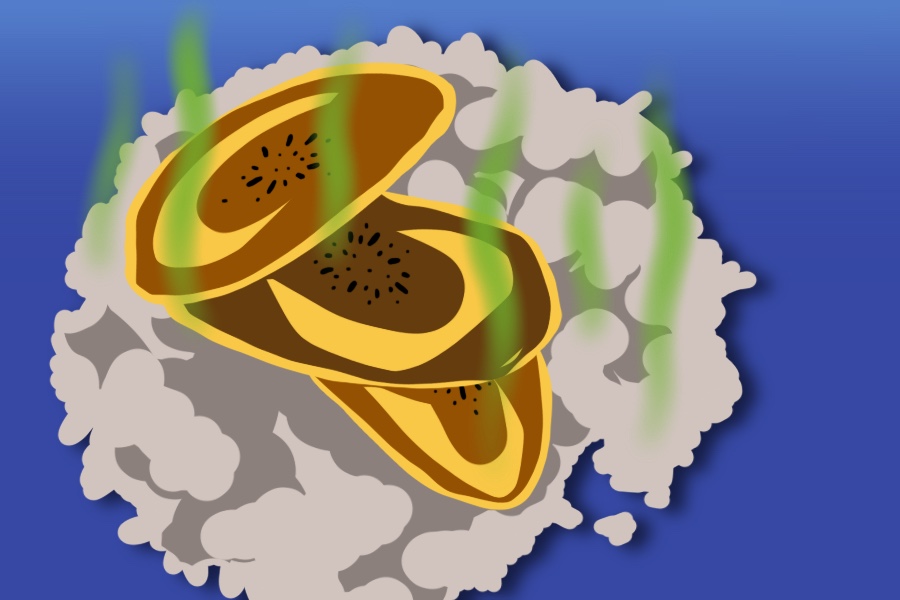
From Japanese cuisine to Indian delicacies, pungent odor seems to be the common issue for Americans — dare I say white people — when they walk past a meal that smells like pure struggle. Though delicious, Americans often judge the foods of immigrants as stinky with a bucket-load of seasoning.

Unfortunately, I experienced a flustering situation a couple weeks back that had to do with my Nigerian food. Now, I know you’re wondering: “Africa isn’t a country?” No, you silly goose, it’s a continent.

To continue, when I’m craving comfort food, I’ll make some red palm oil stew and white rice with a side of plantain, if I’m feeling fancy. I didn’t mind the smells growing up because I wasn’t aware of them — that is, until I decided to bring my precious food into the harsh confines of the CoHo.

As I was reviving my mouth-watering plate of rice and stew in the microwave, I started to notice harsh eyes glare at me then down to the microwave. I tried to put it off and thought the stares were a result of the dandy fit that I had on at the time.

I quickly realized, however, that the stares were due to my delectable meal when I heard someone say, “Yo, who took off their shoes?! It smells like a soiled sock in here.” That comment clung to me like the smell brewing in the CoHo. I wasn’t embarrassed; I was simply shocked that someone would say that comment so boldly in such a public setting.

After my food was hot and ready for me to devour, I decided to sit in the area where I heard that comment and leisurely eat my rice and stew, knowing that the lingering smell was clinging to every fiber of their beings until it seeped into their pores.


Written by: Hilary Ojinnaka — hiojinnaka@ucdavis.edu

(This article is humor and/or satire, and its content is purely fictional. The story and the names of “sources” are fictionalized.)

Humor: I am UC Davis’ preeminent keyboard warrior

ANDREA GONZALEZ / AGGIE

My comprehension skills are off the charts

I’m the number-one keyboard warrior at UC Davis. I earned this distinction after years of hunting my poor, sniveling victims on social media. It’s impossible to defeat my carefully crafted evidence for why you suck. Don’t be fooled — I’m a fantastic student with tons of hobbies and friends, and I’m incredibly fun to be around. But that’s only when I’m not rubbing my cerebral abilities in your face.

What’s the rub, you ask? I have many skills: I can read and write better than you because I took English 10 and got a B-plus on my first paper. I know the ins and outs of the English language, my theirs from my thees, my thous from my come-hithers. I know the difference between Gloria Steinem and John Steinbeck. I scheduled 14 units and an extra yoga class for intellectual stimulation. I can ride a bike without holding any handlebars. I can recite four lines of “Hamlet” and describe Virginia Woolf’s subconscious in detail. I took nine AP classes in high school and my favorite teacher once gave me a silent snap after I checked my privilege at the front office.

I know what Faulkner is saying even if he didn’t. I can count the spaces between a period and a capital letter and formulate a complex argument on the nature of the universe from the resulting chaos without appearing too long-winded. I always remember to cross my t’s and dot my i’s. I can type esoteric syllogisms without looking at my keyboard. I will expose your innate hypocrisy without revealing my own. I put “Knowledge of Excel” on my resume. After I got seven retweets last year, I smoked a blunt in the Arboretum — but please don’t tell my AP teachers.
I hope you aren’t bothered by my soliloquizing, but I don’t spare problematic feelings. The vapid masses should understand my point of view and deal with it. I’m a grown-up, not a child, with a lifetime of academic rochambeau under my belt. Where others rant, I rave. The only tool I need is an iPhone 8 Plus with a PopSocket.

Please don’t get offended if I use ad hominems to grind you down. I have a right — no, a duty — to spread my knowledge-seed around the internet waves. My insightful commentary can actually cure your cerebral darkness. While low-lifes toil in easy classes, I drink CoHo lattes and do thumb workouts. I eat oatmeal raisin cookies and shop at Trader Joe’s to fuel my invectives.
You can’t hide from my intellect. Fortune favors me because I own social media. I’d like to add you to the waitlist for becoming my friend, but I’m worried about your reputation for original thinking. It’s too much sometimes. I’d rather go full duello on you with my online wordplay. I’m a lot smarter than you, so I have no chance of losing. Don’t believe me? Just check my Facebook commenting history.


Written by: Nick Irvin — ntirvin@ucdavis.edu

(This article is humor and/or satire, and its content is purely fictional. The story and the names of “sources” are fictionalized.)

Humor: After being fired by The Aggie, I apologize for the deeply offensive article I recently wrote

I’m beyond repentant

Five weeks ago, I wrote an extremely offensive article. Due to the intense backlash to the Article, The Aggie promptly fired me.

In fact, you could say I was actually fired at the very moment I had the idea to write the Article. The Thought Police were on me like THAT, and as soon as the article was published, they collaborated with the PC Police to pressure The Aggie to let me go.

I was told by The Aggie that they had previously failed to realize what a horrible person I am, and they did not think it would be appropriate to give a platform to someone with opinions that are so “out there,” and by “out there” I mean expressed.

First of all, I warned you. I clearly explained throughout the entire article that you wouldn’t be able to handle it, but you went ahead and read it anyway.

But I can’t be totally mad at you, because this is primarily my fault. I had the audacity to express some ideas in a nuanced, unique way that may have gone over your head and offended you instead, and for that I’m sorry.

The Aggie received unprecedented levels of comments saying that I should be fired because I said things they disagreed with, thought were offensive or, worst of all, challenged their previously held beliefs.

I’ve been informed by The Aggie’s website manager that the article offended 100 percent of the people who read it. That does not include the large number of horrible people who agreed with the ideas I put forth in that article, because I don’t think we can even consider them to be people. How on earth could I possibly humanize anyone who would agree with those ideas? Society should shun them, and me.

However, I still may have been fired without the “unprecedented number of angry comments” because all The Aggie needed to know was that “the Internet” was angry. When the Internet gets angry, you know you’ve gone too far. The Internet is a touchy beast, and I poked the lion.

I now realize that I should never write anything that has the slightest chance of making people not not think. In my future writing opportunities (if I can even have future opportunities thanks to this smudge on my resume), I will try as a writer to hold back and not share, explain or justify my ideas. Writers shouldn’t do that.

I was wrong to write what I wrote, but you were also wrong to read it. Instead of blindly believing whatever I tell you is offensive, let yourself out of the padded room you’ve created to shelter your precious little mind. This door is to remain open during business hours.


Written by: Benjamin Porter — bbporter@ucdavis.edu

(This article is humor and/or satire, and its content is purely fictional. The story and the names of “sources” are fictionalized.)

Anti-social social media

MELINDA CHEN / AGGIE

From India to the U.S., social media limits face-to-face interaction and human connection

Growing up between the mid-1990s and early 2000s, the thought of a connected world where people could FaceTime and communicate with anyone across the globe through various platforms never crossed my mind. I spent most of my childhood in a rural town called Baramulla (Kashmir, India), where even cell phones didn’t start to appear until the mid-2000s. Even getting a black and white television in the ’90s was considered a checkmark on one’s bucket list.

But a few very smart people thought differently, and those who did created Facebook, Myspace, Orkut and all of the other early social networking platforms. And by the time I was a teenager, internet had finally arrived in my life. That sound of dial-up internet gives me goosebumps to this day. Even at that time, my only mode of communication through internet was Yahoo Messenger, and one emoticon or “hello” from a friend was considered to be a mission accomplished, even if we were next-door neighbors.

In 2009, every person with an internet connection in my town had a Facebook account. What I had learned from the users was that you create an account and manage a profile, which can be viewed by anyone, no matter where they’re from, as long as they have a Facebook account as well. Being an ambivert with more inclination toward being an introvert, I wasn’t able to digest the idea of being watched or followed by strangers, and this thought made me resist the Facebook craze for nearly two years. The moment of truth came in 2011, when I finally made a Facebook account (or rather was forced to by a friend). By that time, being a high schooler and not having a Facebook account was considered abnormal even in a small town like mine, let alone in developed nations.

Soon, group meetings and gatherings were transformed into group chats; hanging out became texting for hours; showing support for some cause changed to a mere thumbs-up. Smartphones arrived soon after, and it looked as if everyone had been transported to a new world — a virtual world, which was, in many ways, less social than our real world.

I moved to the United States in 2016, and it was pretty evident to me that the epidemic of social media had taken over not only my town, but pretty much every other place here — and to a much greater extent than expected. Everyone is glued to his or her smartphone and checking what’s new. By this I mean scrolling over Instagram and Facebook profiles, wondering, “Why can’t I have such a life?” It’s a rarity to find a young person reading on a train or bus; this group of people, to some extent, are endangered in today’s world ruled by social media applications.

People nowadays prefer social media more than face-to-face meetings and believe that their friends are having a better life based off their posts, according to a recent study by Kaspersky Lab. Excessive use of social media adversely affects users’ well beings, who are more likely to report poor mental health, including depression and anxiety. This may be caused by constantly comparing oneself to a friend’s daily life, leading to further jealousy and unhealthy competition.

Widespread social media addiction is evident — and I am in no way claiming to be immune to it or that I have some kind of antidote. Yet, social media can be made social again by using it as a platform to actually socialize with others, rather than just following someone or swiping left or right. Good steps include making group chats that actually result in meeting up with friends, or even Snapchatting while still remaining conscious of the given moment. Although there have been miscalculations on our part regarding the impact of social media, it’s time that we limit our time in the virtual world and start living more in the moment.


Written by: Kanwaljit Singh — kjssingh@ucdavis.edu

Disclaimer: The views and opinions expressed by individual columnists belong to the columnists alone and do not necessarily indicate the views and opinions held by The California Aggie.

Real ID to take effect in 2020

0
JAMIECHEN / AGGIE

Real ID will be needed to enter federal facilities, board flights

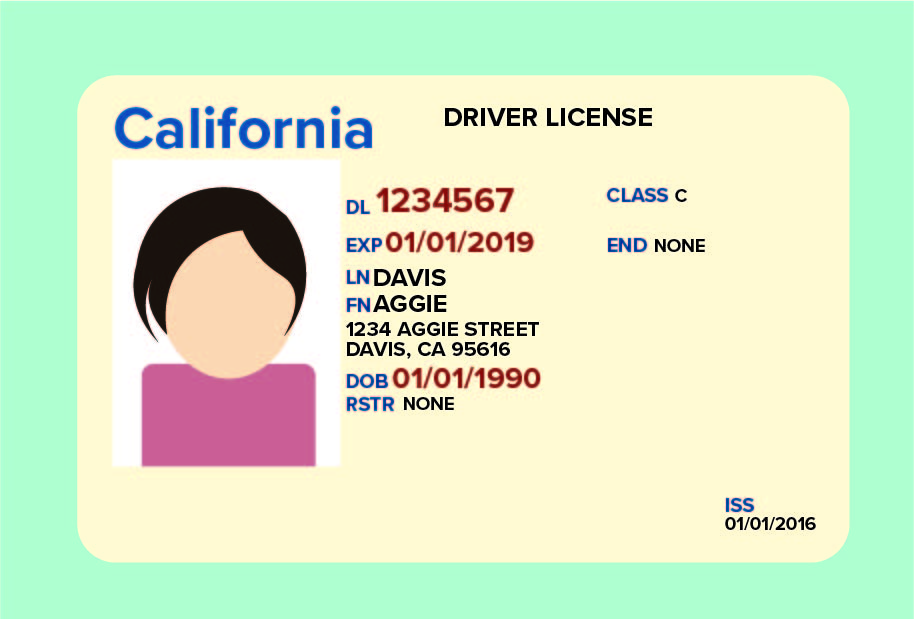
Currently, people may use their California ID or a passport to travel domestically. However, that is about to change with the introduction of the REAL ID. Starting in October 2020, passengers will either need a REAL ID or passport to travel domestically or to enter certain federal facilities.

Roman Peregrino, a first-year government major at Georgetown University, is a California resident studying outside the state and hoping to return for the Thanksgiving holiday.

“As a California student living out-of-state, I can see a time where this matters for myself and other out-of-state students who find it difficult to return home because of a REAL ID,” Peregrino said. “I have not heard much about this law. It would be nice if we could be educated about the ID, as it would be problematic down the road when we have to get our REAL ID.”

By October 2020, every state and territory resident will be required to present a REAL ID if they wish to access federal facilities, enter nuclear power plants or board commercial aircrafts for both domestic and international flights.

The act requiring REAL ID was passed by Congress in 2005. The purpose of this act was to “set standards for the insurance of sources of identification, such as a drivers licenses.” This act has prohibited federal agencies from accepting official purpose licenses and identification cards from states that do not meet federal standards.

Currently, residences of all states and territories within the U.S. may continue to visit these facilities if that state or territory has been granted an extension by the federal government. California has been granted an extension.

If an individual does not have a REAL ID, they will have to present a U.S. passport. Yet it will not be required for an individual to present the REAL ID when entering federal facilities that don’t currently ask for identification, such as the Smithsonian Museum.

Though a REAL ID is required to travel and enter federal facilities, it may not be needed. According to Homeland Security, a REAL ID will not apply for: voting or registering to vote, applying or receiving federal benefits, being licenced by a state to drive, accessing health or life-preserving services, law enforcement or constitutionally protected activities (such as access to public defendants) and participating in law enforcement proceedings or investigations.

Jaime Garza, a member of the Office of Public Affairs for the Department of Motorized Vehicles, emphasized the importance of the optional ID.

“That [a REAL ID] would be an individual choice,” Garza said via email. “If you want to continue to use your driver license or ID card as your identification to board a domestic flight or enter secure federal facilities or military bases, you will need a REAL ID.  It may be more convenient. Remember, you can still use a valid passport or other federally approved document if you don’t want a REAL ID.”

The California DMV is currently issuing REAL IDs, but as more citizens flock to apply for this ID, wait times continue to increase. According to the California Department of Motorized Vehicles Public Affairs Department, the best time to apply for a REAL ID is when a driver’s license is up for renewal. It is encouraged to apply 60 days within the expiration date and make an appointment 90 days in advance. If the driver’s license does not need renewal before 2020, it is suggested that a person apply for a REAL ID before the federal deadline.

“I do not have a driver’s license, but I am planning to get one soon,” Peregrino said. “It will be relatively easy for me to get my REAL ID. However, for anyone who has gotten their government ID recently — who has to go back just a few years later — it’s more trouble than it’s worth.”

The DMV in Sacramento is attempting to cut down waiting times. In 2018, Sacramento DMVs hired over 500 new employees and added Saturday services to over 60 offices. In addition to these services, extended hours have also been added to offices.

The DMV is also piloting a new text notification system that will notify customers shortly before their service number is called. Certain DMVs have added a self-check-in kiosk, bypassing the “Start Here” window to directly receive a service number.

Another way to reduce wait time is to come prepared with all necessary documents for a Real ID.

“Remember that you will need original or certified copies of your birth certificate and name change documents,” Garza wrote via email. “Residency documents, such as utility bill or rental agreement must be printed out, no electronic version; we need a paper copy. Make an appointment, but plan ahead. Don’t wait until the last minute to try to schedule an appointment. They are popular.”

Written by: John Regidor — city@theaggie.org

FARM Davis fundraises to support sustainable farming

0
TIMOTHY LI / AGGIE

Dunloe Brewing hosts event featuring homebrewed beer, raffle

Local organization FARM Davis hosted its annual fundraiser at Dunloe Brewing on Saturday, Nov. 10. The event raised awareness for FARM Davis’ sustainable farming and community engagement philosophies, as well as financed its mission to provide for local nonprofits.

To fundraise, the event provided a tostada bar with a pay-what-you-want discipline, as well as a raffle featuring various handmade and kitchen-related goods.

“Our goal is to build community around growing food to give away,” said Robyn Waxman, the founder of FARM Davis. “We have a fundraiser once a year. We don’t sell anything, so the way we have to make money is to rely on the generosity of the community.”

In addition to donations, a portion of Dunloe Brewing’s profits from that night went toward FARM Davis. Brennan Fleming, the owner of Dunloe Brewing, commented on the fundraiser.

“Everybody wins when we do these events,” Fleming said. “We do a lot of them — not as much as last year — but so far this year, it has been every once or twice a month that we have people in here doing something.”

The majority of volunteers were UC Davis students, according to Waxman, although the fundraiser was open to all community members. Fleming reflected on the new customers that visited the brewery for the fundraiser.

“It’s been a pretty good crowd, a lot of good people, definitely a different crowd than what we normally have,” Fleming said. “That’s the goal of these things to get new people in and get them to try the beer and hopefully they come again.”

The FARM Davis project began in San Francisco as part of Waxman’s graduate research thesis. Now, the organization boasts three plots of land across Davis, farming thousands of pounds of food to donate to local nonprofits such as Davis Community Meals, Empower Yolo and STEAC as well as to low-income housing facilities, according to their website.

“We started with a farm and the idea was to grow food and give it away and that it was a very slow way of protesting, but that it was a more productive and effective way,” Waxman said. “People could see the results of their work — maybe over a longer period of time — but that there were direct tangible results harvesting the food that we grow and giving to people who can’t afford it. It’s just an amazing feeling that you’ve accomplished, that you’ve done work to accomplish.”

Emily Shea, a second-year graduate student in agricultural and environmental chemistry at UC Davis, has volunteered at FARM Davis nearly every other week for the past two years. She typically helps with the heavy lifting, structural work and composting around the farms, in addition to harvesting and planting. Shea expressed her feelings of responsibility to provide for the Davis community.

“As students, we’re considered guests in the city of Davis and I think it’s important to try to give back to our community while we live here, even if it’s for a small amount time,” Shea said. “So I think that it’s important to build those connections with community organizations and low income people who might be benefitting from the organization.”

Ultimately, FARM Davis aims to create community through the act of farming and sharing their harvests.

“People became interested in this piece of land and the success of this piece of land,” Waxman said. “I think a good community project has agency, control, decision-making and investment in it, so it’s not someone else’s project, it’s not my project — it’s all of our project.”


Written by: Renee Hoh – city@theaggie.org


Police Logs

0
SHEREEN LEE / AGGIE

No skinning chickens in the kitchen

November 7

“Reporting party concerned that subjects are living in the parking lot and thinks it’s ‘creepy.’”

“Reporting party lost cat.”


November 8

“Two males made entry to the south garage and propped door open.”

“Neighbor putting wood near reporting party’s front door. Reporting party thinks he may have also nailed something onto her porch.”


November 9

“Female approached several people inside the front lobby, advised she was a nurse and starting touching/examining people.”


November 10

“Transient laying on floor of elevator.”


November 11

“Male subject laying down by street sign.”


November 12

“Male subject loitering in the area, flailing his arms and pulling his pants down intentionally and possible intoxication.”


November 13

“No emergency was taking shower unknown how phone dialed.”


November 14

“Prior issues with roommate skinning chickens in the kitchen was asked not to, today she brought home a rabbit and killed it in the bathtub.”


UC payroll service tripled in projected cost, significantly delayed

OLIVIA KOTLAREK / AGGIE

Staff, student workers voice frustration with streamlined system

Seven years ago, the UC system introduced UCPath as a program to unify the payrolls of all the UC campuses through an online interface. When the system was proposed in 2011 with a price tag of $306 million, it had a projected completion date of 2014. A 2017 state audit, however, found the cost to the taxpayers will be $942 million, and the system has also had multiple roll-out delays since 2014, with a new projected completion date of 2019.

Currently, four campuses use UCPath and other five campuses are expected to begin using the system by the end of 2018. UC Davis is expected to begin instituting UCPath campuswide in March of 2019.

Sergio Sanchez, a stationary engineer with the facilities management team at UCLA, found that the consolidation of UC payrolls into one website adds confusion. He said that UCLA has found multiple issues with online checks being inaccurate or late and that people miss the previous direct deposit checking system.

“Calling UCPath a mess is an understatement,” Sanchez said. “The process has been botched from the beginning, and the least employees deserve is to be paid for their hard work.”

Claire Doan, the director of media relations for the UC Office of the President, replied to these concerns, claiming that the vast majority of UC employees have been paid accurately.

“Ninety-nine percent of UC employees have been paid accurately and on time with UCPath,” Doan said. “With each campus transition to this new system, we plan for unforeseen issues by maintaining extra support staff to stay on following implementation. The additional staff and resources at UCLA and UC Santa Barbara will be there at least through the end of the year to help address problems.”

Sanchez explained how the “new system restricts our local payroll departments from viewing or adding in our payroll information, thereby rendering them unable to answer any questions or to resolve our concerns.”

“I had been receiving direct deposits for 11 years without a problem via UCLA’s previous payroll system,” Sanchez said. “Employees were told it would be an easy transition to UCPath: If we didn’t have any changes and our direct deposit was not changed, we wouldn’t have to do anything and our direct deposit would be uninterrupted.”

The “UCPath Student Demands Sign-On” petition, brought to the last UC Board of Regents meeting, restated the issues with UCPath, including late or inaccurate pay due to troubleshooting problems on the UCPath website.

“Under this new system, many students have faced issues with being paid late or not at all,” the petition states. “Checks that are received often are for the wrong amount. With the number of students who rely on being paid on time to pay rent, buy groceries, or pay student fees to enroll in their classes this is unacceptable.”

Doan referenced the presence of a dedicated team for “troubleshooting any technical glitches and looking at ways to alleviate the impact on students.”


Written by: Aaron Liss — campus@theaggie.org

Handling Human Remains

RACHEL PAUL / COURTESY

Part five of a continuing series about experiences on an archaeological dig in Poland

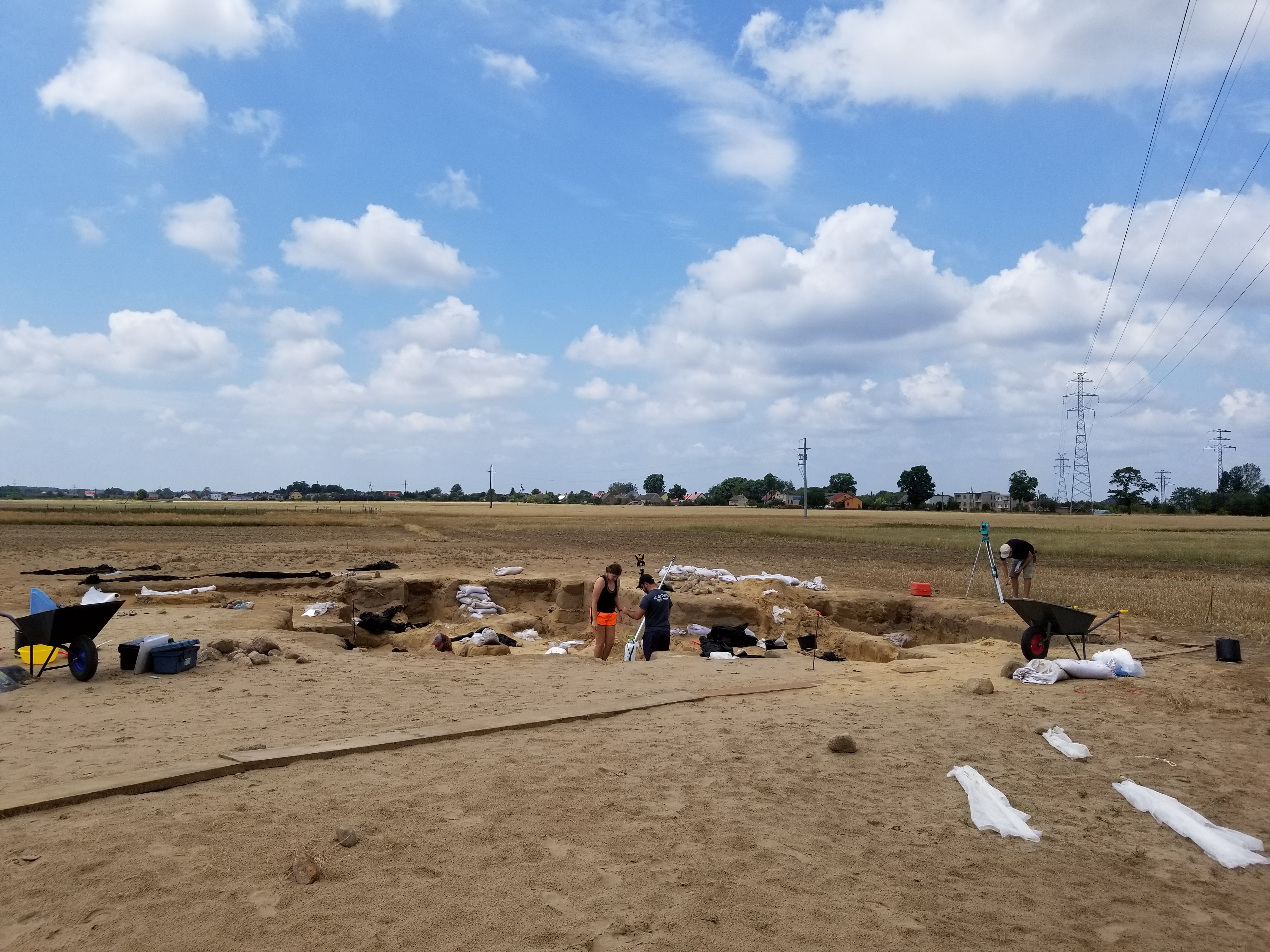
It was mid-June when I found myself in the middle of Poland signed up to participate in Slavia Foundation’s archaeological field school. The site had both Bronze Age (IV and V Period) cremations and Early Modern (16th -18th century) coffin burials. On the first day, the instructors taught us how to say hello in Polish (dzień dobry) and made sure we knew the rules about taking pictures at the site.

Taking photos in archaeology can quickly become problematic. There is a fine line between showing the hard work archaeologists do and being disrespectful to the human remains we handle. Pictures taken of us working at the excavation site was not the problem; it was how we posed with the remains that required more discernment.

“Like what we told you guys on the first day, always be respectful. Don’t make funny faces with them because this was once a living, breathing person who had people who loved them,” said Ashley Stewart, an archaeology instructor on the site. “And you know, they should be treated with care and respect […] It’s not like it’s an animal or a rock, you know, it’s very different handling human remains than any other kind of archaeology. And that’s why we’re so strict about photos. Working with them [the remains] is fine and just examining them is fine, but if you treat them even slightly flippantly, it looks really bad for you professionally and it’s just really disrespectful.”

Even when these rules are followed, people can still get upset. Victoria Swenson, the osteology instructor, said that a few years ago a student uploaded a few professional-looking photos of herself working at the site. However, her family became very upset upon seeing the images.

“It’s just whatever you think is okay, some people might not. And you just have to understand that,” Swenson said.

A lot of information can be found from excavations. For example, the coffin burials from the Poland site have excellent preservation, so nearly whole skeletons that are a few hundred years old were uncovered. This can tell us who lived in the area at the time, the health of the population, what people died from and many other fascinating things. But no matter how much information a bone can tell us, archaeologists have a primary responsibility to consistently show respect for the human remains.

Even when being very careful, mistakes can happen. During the summer, a student accidentally broke an urn that had cremated human remains from the Bronze Age.

“I felt so disrespectful towards those remains, and I actually started crying because like there was a human being in that urn […] and it just broke my heart,” said Lucia Valerio, a student in the field school. “I think with human bones you have to be respectful because they were once living, and they were humans.”

Although the urns only held burned and fragmented remains, Valerio pointed out how archaeologists always need to be careful with handling human remains. Even when archaeologists are extremely careful and do not make mistakes in the field, their online presence can be a problem. A few times now, the archaeology instructors through the Slavia Foundation have had to ask their students to take down inappropriate pictures. Still, while social media can be problematic, it is necessary for outreach.

“I think using [social media] in a certain way is appropriate to get people’s interest because otherwise our discipline will just disappear, and we won’t get any funding,” Swenson said. “But then again, it’s like what is the balance between posting photos or not posting photos? I think educating both sides, like us listening, and also explain ‘well, we’re trying to get more outreach’ is ideal.”


Written by: Rachel Paul— science@theaggie.org