55.7 F
Davis

Davis, California

Monday, December 22, 2025
Home Blog Page 478

Sacramento City Council approves funding for I Street bridge

0

New bridge will connect Sacramento Railyards with West Sacramento

On Oct. 30, the Sacramento City Council approved funding for the first phase of the new I Street bridge construction. While the city council approved $320,695 for this phase, the total cost was recently projected to be around $172 million, which is double what it was when the project began planning in 2014.

The new bridge was proposed after the City of Sacramento conducted the Sacramento River Crossings Alternative Study, which concluded that there was a need for a new bridge across the Sacramento River.

“[A] new bridge, located upstream of the existing I Street Bridge, will provide better access for bicycles and pedestrians and will serve motorists more efficiently,” according to a report published by the City of Sacramento.

The new bridge will connect the Sacramento Railyards and the West Sacramento Washington developments near C Street in Sacramento. It will replace the existing I Street bridge, which is currently over 100 years old. This is the first bridge to be built across the Sacramento River in over 50 years.

The study conducted in 2011 found that the current bridge should be replaced for several reasons. The bridge itself is too narrow for buses, there are no bike lanes on the bridge and the pedestrian walkways are inaccessible.

“It is very difficult if you’re not on a train to really traverse [the bridge],” said Vice Mayor Steve Hansen to the Sacramento Bee. “If you’re [on] a bike, you take your life in to your hands. If you’re a pedestrian, you can’t figure out how to get from one side to another. And with all the swooping ramps and everything, it’s really cut off so much opportunity on the waterfront.”

When the new bridge is built, the former bridge will be used solely for railroad crossings. The viaducts near the bridge, however, will be demolished, leading to better water flow on both sides of the bridge.

At the beginning of the year, the City of Sacramento developed and implemented a design competition to find an architect for the project.

In October, the City of Sacramento elected a new architect from T.Y Lin International. This company is known for designing the eastern half of the Bay Bridge, which connects San Francisco and Oakland. The lead architect is Noel Shamble.

“Here we have an incredible opportunity to make more than just a bridge, I think we can do more than just a sculpture or icon as well,” Shamble said to Fox40 news. “This can really truly be a multipurpose, signature bridge.”

Although the projected cost of the bridge was originally around $70 million, this estimate has nearly doubled after a consultation with the Sacramento Coast Guard. The coast guard requires a gap of 272 feet for barges to pass through when the bridge lifts up. This gap is 100 feet wider than the current bridge, but this modification has doubled the projected cost.

The federal government is paying for 88 percent of the bridge costs. Additionally, the city is seeking two grants: a $22 million grant from the U.S. Department of Transportation and a $7 million grant from the Sacramento Area Council of Governments. This will still leave an estimated $3 to 4 million for the city to pay.

Currently, the city hopes to begin construction in 2020 and have the bridge completed by 2022.


Written by: Hannan Waliullah — city@theaggie.org
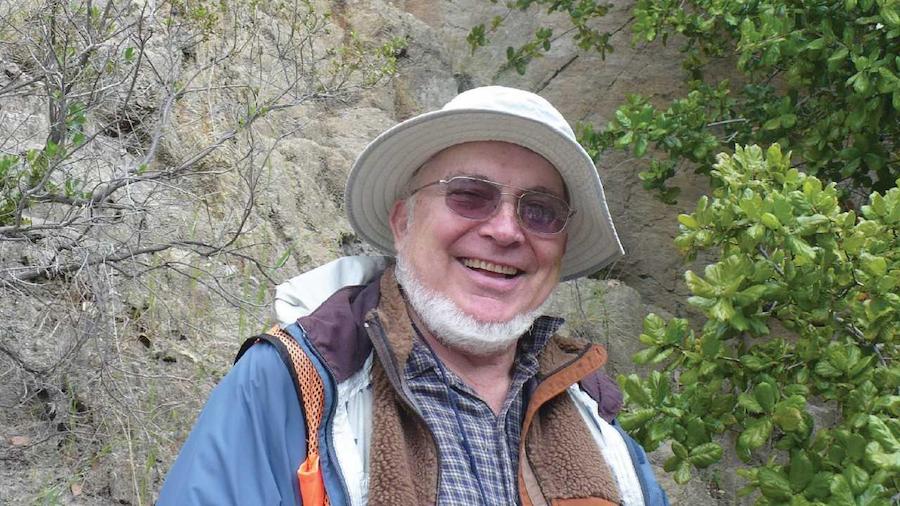
 

In memoriam: Eldridge Moores

JULIA ANN EASLEY / COURTESY

Geology professor remembered for caring spirit, diverse passions

Eldridge Moores, a distinguished professor emeritus in the Earth and Planetary Sciences Department, died unexpectedly at the age of 80 in late October during a geology field trip.

Moores first arrived at UC Davis in 1966. He helped establish the Geology Department, now called the Earth and Planetary Sciences Department. In a statement to the community, Chancellor Gary S. May noted how “Eldridge’s accomplishments as a geologist are well known,” as Moores had over 130 articles published along with two textbooks.

“[Moores] embodied all that we are proud of here at UC Davis,” May said. “We are devastated over this loss but grateful to have known him.”

Moores’ passions were not exclusive to geology — he was also part of the UC Davis Symphony Orchestra, where he played the cello for 28 years. During his time in the orchestra, he met fellow musician Cynthia Bates, who has played violin for the orchestra since 1972 and spent a lot of time with Moores.

“Much of our time together was spent rehearsing and performing music,” Bates said. “This in itself forges a powerful bond, especially over 28 years. But we also had opportunities to talk during rehearsal break or after rehearsal, and the conversation almost always focused on geology […] He had a way of making any science topic accessible and fascinating.”

Bates said Eldridge had a certain presence, and it’s one that won’t be forgotten.

“He genuinely cared about the lives of others,” she said. “I think it would be impossible to find someone who has given more to the university and community as a musician, scientist, teacher and human being than Eldridge has.”

The many friendships and connections Moore created through music left lasting impacts, as the opening concert for the symphony orchestra’s 60th season on Nov. 18 was dedicated to him.


Christian Baldini, the music director of the UC Davis Symphony, said a few words to the audience before the performance began, speaking to the difficulties the poor air conditions had caused in the rehearsal process which ultimately led to some changes in the schedule for the concert.

The biggest change was a rearranging of the order of pieces — the symphony would now start off with Mahler’s Fifth Symphony. But Baldini said it couldn’t have worked out any better for the occasion — “it’s fitting because it begins with a funeral march […] we dedicate tonight’s concert to him.”

“[Moores] was one of the gentlest and most generous men I’ve ever met,” a statement in a program distributed at the event and authored by Baldini read. “He gifted us with all his contagious joy and smile at every opportunity.”

Written by: Deana Medina — campus@theaggie.org

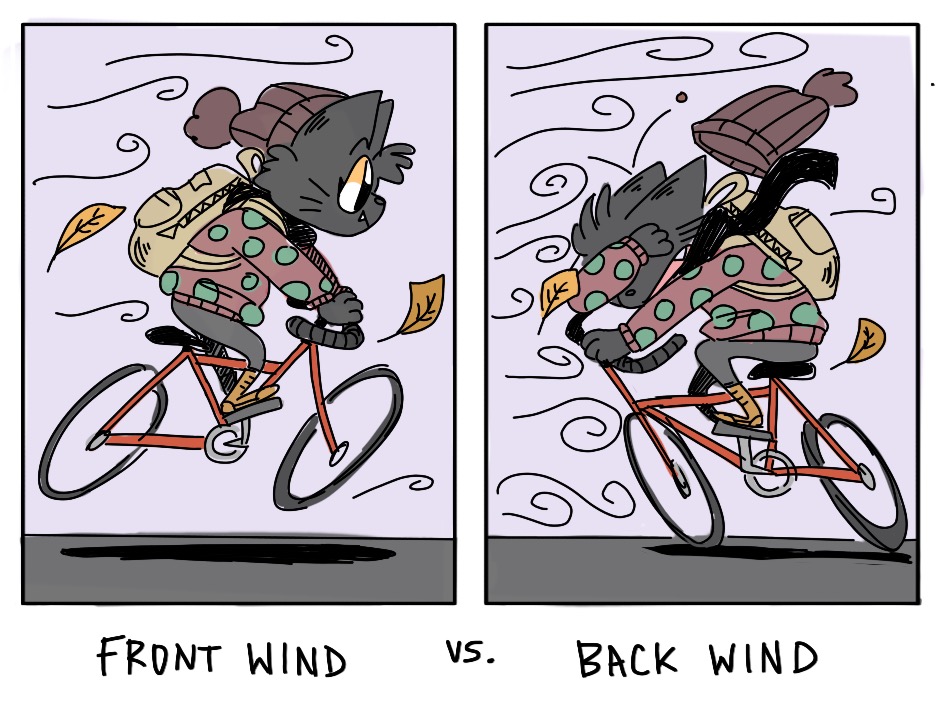
Cartoon: Windy Days

DIANA OLIVARES / AGGIE

By DIANA OLIVARES — deolivaresvalencia@ucdavis.edu


Humor: “Communism would be easy to implement” says student who has only ever lived in capitalist society

CAITLYN SAMPLEY / AGGIE

Student writes this and other radical statements in personal manifesto-turned-livestream

This week, an anonymous manifesto was released and distributed across the UC Davis campus in support of “the complete and unabashed removal of capitalism” and “the total implementation of communism” in American society. Just this morning, the anonymous writer has revealed herself as first-year Diana Leninsky in a Facebook livestream.

At around 8 a.m., Leninsky began the livestream, but instead of starting immediately, she stared blankly at the screen for around four hours until exactly 1917 people were viewing. She then put down her fourth Leninade, the only food or drink she consumed during the livestream, and proceeded with a monologue.

“My fellow Davis students,” she lamented, “I wanted to wait until the number of viewers matched the original year of the Bolshevik’s triumphant and peaceful uprising against the Russian government. Capitalism is a plague on our society and we need to remove it immediately. I know that sounds difficult, but trust me, the process will be super simple.”

Leninsky continued the livestream for another four hours, only pausing her speech to grab another Leninade from the large fridge in her room. The speech included several references to the “capitalist-gentrified” city Davis is becoming. Jump Bikes were called a “means of enslaving the poor through transportation” and Leninsky called for their “immediate burning regardless of the environmental impact.”

She also focused on housing in Davis, calling for a restructuring of the housing system that would be fair to everyone. This made nearly perfect sense until she stated her full plan, which involved forcing students, faculty and administrators to all live in cooperative living situations with shared farming as the only food source and no personal computers, vehicles or shampoo.

“If we put these cooperative situations in place, eventually everyone will need to comply and readily accept that this is better for them,” Leninsky stated. “Everyone will be happier knowing they’re no longer supporting capitalist institutions by buying into massive food corporations or oppressive industries. Why buy chicken instantly from the store when you can wait several months to raise one? Why should everyone have an iPhone when we can get by with one for every ten people? It’s just that simple.”

At hour nine into the livestream, Leninsky left to restock her fridge with warm Leninades. Her room revealed a swath of expensive material possessions, such as a 55-inch 4K television, a closet full of designer clothes, a handbag collection and a kombucha vending machine. Leninsky returned guzzling another Leninade.

“So yeah, communism would be really easy. I know we’re all used to capitalism, but people will part with a lot if we just nudge them in the right direction. And it’s a learning process. Like, I just learned about communism myself in my global humanities class this quarter.”


Written by: Conner Shaw — cjshaw@ucdavis.edu

(This article is humor and/or satire, and its content is purely fictional. The story and the names of “sources” are fictionalized.)

America’s silent epidemic: How the U.S. fails to address opioid addiction in indigenous communities

JAMIECHEN / AGGIE

Local governments must work with Native Americans to set up rehabilitation programs that honor tribal traditions and tackle the opioid crisis

Lost in much of today’s rhetoric about America’s opioid epidemic is an important discussion on one demographic group that has been hit the hardest — Native Americans.

While a great deal of attention has been paid to just how hard the epidemic has struck middle America’s working class, little mainstream dialogue has addressed the direct concerns of the Native American community. Statistically speaking, this demographic has been among the most deeply affected. American Indians/Alaskan Natives saw a 519 percent increase in overdose deaths from 1999 to 2015, according to a 2017 Centers for Disease Control report. Deaths related to heroin alone increased 236 percent among Natives from 2010 to 2014.

Given the delicate demographic nature of many Native American tribes, this crisis is having disproportionately profound effects upon their communities. With many tribal communities being particularly small in size, federal funding is short to come by and is progressively being directed towards increased law enforcement and away from social services. Additionally, the compact, insular nature of many of these societies means that, when one family is struck with substance abuse, oftentimes the whole community is directly affected.

Meanwhile, drug abuse continues and these communities’ children remain the most impacted. Overdose deaths are most prevalent among those aged 25 to 34, forcing many children into foster care. According to the Cherokee Nation’s deputy general Chrissi Ross Nimmo, so many Cherokee children are being born with drug dependency and there are not enough members in the community to care for them while their parents recover. This consequently forces them to put these children into foster care by the non-Cherokee. The crisis is now no longer just physical, but also culturally existential. Jonathan Nez, Vice President of the Navajo Nation, warns that, if further steps are not taken to curtail opioid abuse in his community,  “a generation of children are going to grow up without their parents.”

Tackling opioid abuse in this community will require a series of unique solutions that can both immediately address drug dependency as well as confront the underlying issues that drive people towards abuse. One strategy utilized by the Yurok tribe of Northern California is their Wellness Court, a joint program with the Superior Courts of Del Norte and Humboldt counties that addresses cases related to substance abuse among tribal members. The program allows, largely on a case-by-case basis, members of the Yurok tribe to undergo tribal rehabilitation programs instead of normal entry into the criminal justice system. More recently, the Yurok tribe has set up “wellness villages,” which are sober houses that combine modern rehabilitation techniques with elements of traditional Yurok culture to help reintegrate former addicts into society.

Local governments with substantial indigenous communities affected by the opioid crisis should seek to establish this type of formal relationship with their constituents. Joint rehabilitation programs like the Wellness Court allow local law enforcement to help combat substance abuse in a manner that both respects tribal tradition and autonomy while also preventing many Native Americans from becoming caught up in America’s problematic criminal justice system. Additionally, federal funding aimed at combating the drug abuse in the indigenous community should increasingly be allocated towards tribal-specific approaches at rehabilitation and not just towards standard, cut-and-dry attempts at drug enforcement.

Native Americans are a foundation of this country, whose spirits are filled with a long and complex history that spans the continental U.S. and transcends our country’s own colonial history. As Americans, we owe it to them that their voices are heard and that their traditions are able to continue well into the future.


Written by: Brandon Jetter — brjetter@ucdavis.edu

Disclaimer: The views and opinions expressed by individual columnists belong to the columnists alone and do not necessarily indicate the views and opinions held by The California Aggie.

From Farm to Lab

ALEXIS URENO / COURTESY

UC Davis students work alongside Knights Landing Community members to address health concerns step-by-step

Often while driving on Sacramento highways, large diesel-fuel trucks carrying loads of tomatoes can be seen. But these tomato trucks and agricultural machinery leave the Knights Landing community with more than produce. Residents have raised a growing number of health concerns, from the pesticides sprayed blocks away from their homes to high cancer rates. UC Davis researchers aim to address these concerns to aid the community’s efforts to make Knights Landing a healthier place to live.

Skye Kelty, a fifth-year pharmacology and toxicology Ph.D. candidate, investigates lung cancer association with air pollutants. Naphthalene, a volatile organic compound produced by combustion, a solvent in pesticide sprays and an active ingredient in mothballs, presents a risk for farm workers exposed to diesel-fuel trucks and farming equipment such as tractors and agricultural burning. Kelty works with lung and liver cell cultures to model human interactions with naphthalene exposure, searching for impaired signaling pathways leading to cancer.

“It’s like surveying arsenic in water,” Kelty said. “We know that arsenic is a toxic metal found within other communities. Here, we want to see if naphthalene is present or not present in community spaces. The data from our lab will help determine how the EPA and California regulate chemicals for safety thresholds and how we apply them to agricultural communities.”

Community members encounter crop dusters and tractors spraying pesticides across agricultural fields blocks away from their homes. Daniel Moher, an environmental toxicology researcher, and Tiffany Jow, a fifth-year neurobiology, physiology and behavior undergraduate researcher, measured pesticide usage in Knights Landing in comparison to other agricultural regions.

“Crop dusters go up without warning,” Moher said. “One lady described that you get very worried when you see an airplane spraying chemicals into the sky. A lot of the public data available is not user-friendly, so it’s difficult to find out information about what chemicals are spread around this community.”

Moher and Jow found that Knights Landing was exposed to four times as much total pesticide pounds and eight times as much carcinogenic pesticides compared to organic agricultural regions such as Capay Valley.

“Our MPH students found sixty-two percent of residents live near a farm field, running the risk of pesticide drift where pesticides blow over to people’s houses and they have no control over what is happening,” Jow said.

One significant pesticide identified in their study was chlorpyrifos.

“Chlorpyrifos is also potentially carcinogenic pesticide,” Jow said. “It is known to have neurotoxic and developmental effects on infants and fetuses.”

From 2011 to 2015, over 5,000 pounds of chlorpyrifos were applied each year onto fields. The Knights Landing elementary school stands two blocks away from the fields.

Knights Landing is losing trust in its water supply. A community member survey conducted by Promotoras, a passionate female community of leaders and advocates, found sixty-six percent of community members use bottled water out of fear of contaminated public water systems.

Another component of Kelty’s research lies in environmental sampling, through dust and water collection within homes with the help of Promotoras.

Kelty, her research team and the Promotoras encountered sensitive social barriers while engaging the Knights Landing community in their research study, including home ownership, mental health and chronic health conditions. They were challenged to design a comprehensive health survey for rural communities to assess and monitor their health.

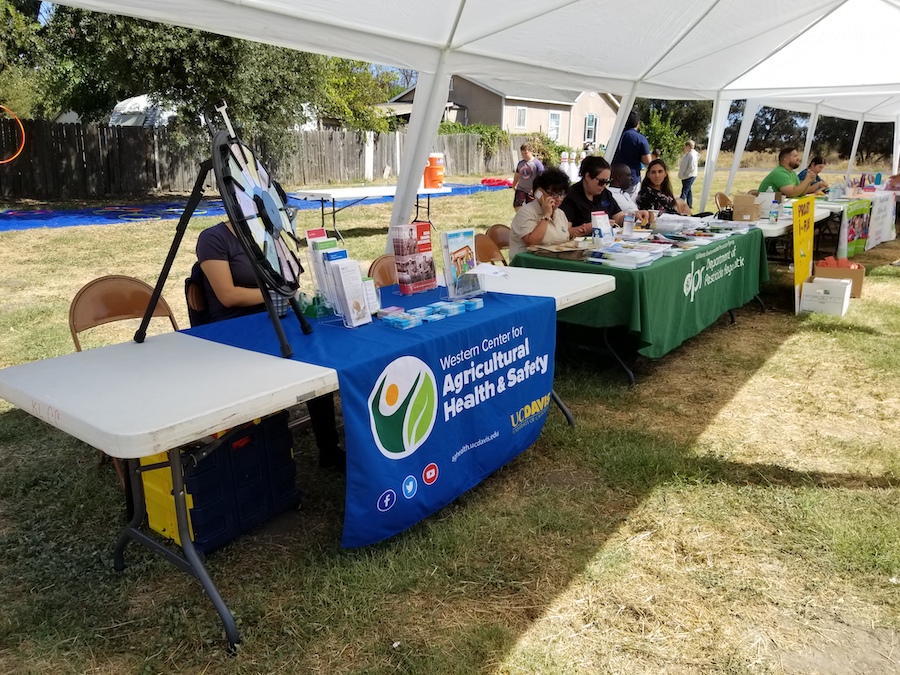
Kelty and her research team collaborated with Knights Landing One Health Center to host festivals to create spaces to share ideas, stories and research findings to improve overall health.

“We are committed to leaving long-term resources by building a community garden and other projects,” Kelty said. “We’re working on county and nonprofit partnerships to put our general data and public health survey in the hands of people that can implement solutions for this community. We also want to use Knights Landing as a model for what other rural communities may be facing — to inspire action about environmental pollution. We are developing tools on our website, including how to get a researcher out to rural communities, to let them know that we hear their experiences and we’re here to validate them.”


Written by: Foxy Robinson—science@theaggie.org


Music to invoke the voter

ALLYSON KO / AGGIE

Music and politics go hand-in-hand in 2018

Toni Morrison, the American novelist, once said, “The best art is political and you ought to be able to make it unquestionably political and irrevocably beautiful at the same time.”

Music and politics have perpetually lived hand-in-hand, just as musicians have been involved in politics outside their music. Some may be able to recollect the “Rock the Vote” era, where Red Hot Chilli Peppers and a multitude of other performers were cast in commercials that implored young people to flex their political power during voting season. Those commercials rest in peace within a 1990’s time vault, but musicians today are attempting the same feat, proving the nexus between art and politics to be alive and well 2018.

The political climate has called some of the biggest names in music Willie Nelson, Travis Scott, Kanye West and Jim James to compose unforgettable masterpieces that express their political discomfort and their will to see it change. All of these musicians are headlining in the world of music and found unique ways to campaign during the midterm election.

Willie Nelson released a new single titled “Vote ‘Em Out,” which challenges voters to take action if they are unsatisfied with their government. He serenades with guitar in hand, “If you don’t like who’s in there, vote ’em out / that’s what Election Day is all about / the biggest gun we’ve got is called the ballot box / if you don’t like who’s in there, vote ’em out.”

Nelson premiered this tune during a concert for Texas Senate candidate Beto O’Rourke, who attempted to unseat Ted Cruz during the midterms but came up short in the results.

On stage and alongside his sons Lukas and Micah, Nelson performed with Leon Bridges, Carrie Rodriguez, Tameca Jones, Joe Ely and even O’Rourke himself.

Nelson, O’Rourke and the rest of the band during the performance painted an admirable picture. If you didn’t know that a major political candidate was behind the guitar and mic, the picture would lack all politics; it would be just a band of friendly faces lost in the music. Their message may be politically driven, but in that moment there was no division, only balance in the weight of the music.

The response to this song, much like the Senate race, has been roughly split down the middle. Right wing websites hosted comments from ex-Nelson fans saying, “I adored you – but no more” and “I always thought you were a patriot.”

In an interview with Rolling Stone, the 85-year-old cowboy broke out an old saying, “Opinions are like a**holes, everybody’s got one.”

“I’ve endorsed a lot of people: Jimmy Carter, Dennis Kucinich, and Hillary and Bill, Obama,” Nelson commented. “A lot of people seem surprised that I’m backing a candidate, but it ain’t my first rodeo.”

Willie Nelson was not the only big name to get on stage for O’Rourke. Travis Scott made an appearance at an event for O’Rourke at the Bayland Community Center in Houston during an October rally.

Scott, now relocated to Los Angeles, remains a proud supporter of Texas. His most recent album, “Astroworld,” released in August, is named after a departed Houston theme park.

“They tore down AstroWorld to build more apartment space,” Scott told GQ magazine before the album’s release. “We want it back. We want the building back. That’s why I’m doing it. It took the fun out of the city.”

In a 2015 interview with Hot New Hip Hop, Scott said, “I don’t really get too involved in the whole political sh*t, that sh*t is like all too weird to me.”

But the time for Scott’s political complacency has long-since passed, as he preached last month with a megaphone in hand and O’Rourke by his side, “All the kids, we’ve just got to go out and hit these polls. From 18 and up, we can change the world.”

Travis Scott found solace in O’Rourke’s campaign.

Catch a flight from Texas to Chicago, and you’ll have found Kanye West busy in his support of Democratic Chicago mayoral candidate Amara Enyia.

Politics have wiggled their way into West’s music since his 2004 album “The College Dropout,” but one of the most famous lines that still echoes in the recesses of every millennial’s brain is one that appeared on the 2016 “The Life of Pablo” album. West rapped, “On the field I’m over-reckless on my Odell Beckham / 2020 I’mma run the whole election.”

It’s unsure whether America can expect a Kanye West ticket in 2020, but they can expect West to vocalize his political dispositions on the regular and show face on the campaign trail.

West appeared at a November sidewalk rally and left the speaking to the mayoral candidate, Enyia.

“I also have to give a shoutout and kudos to Ye [Kanye West], who is from the South Side and is invested and committed to giving back to our city,” Enyia said over a megaphone.

West went on to donate $200,000 to her campaign.

Following the rally, West spoke to his 28.8 million followers in a tweet.

“I support creating jobs and opportunities for people who need them the most, I support prison reform, I support common-sense gun laws that will make our world safer. I support those who risk their lives to serve and protect us and I support holding people who misuse their power accountable. I believe in love and compassion for people seeking asylum and parents who are fighting to protect their children from violence and war.”

Through song, speech or tweet, the platform to be heard exists. The voice of My Morning Jacket’s frontman Jim James flows through all mediums and weaves a communal message for all.

Jim James dedicated an entire album, “Eternally Even,” as an existential response to the last primary election. Released on Nov. 4 2016, it acted as a final sentiment for the United States before voters headed to the polls.

The themes within the album address issues of religion, politics and life, but certain songs stand out from the crowd and give meaning to the mystery. His song “Same Old Lie” has gained massive popularity and acts as a memento for the inquisitive voter. It goes, “It’s the same old lie you been readin’ ’bout / Bleedin’ out, now who’s getting cheated out? / You best believe it’s the silent majority / If you don’t vote it’s on you not me.”

In an interview with Monster Children, James was asked if the message behind the song dictated the rest of the album.

“It was triggered by recent events — by all the killing and hatred in the world, and from our terrible political system […],” James said. “I’m just sick of the lies, sick of the hate, sick of watching good people get lost in the shuffle […] Govern in the name of peace and equality for all.”

James has been far from silent since his album released in 2016. Releasing four albums since then, they all share the same political and humanistic vigor.

In a concluding statement with Monster Children, James said, “People can’t sit silent. They need to vote. They need to get up off the couch and say that they believe in love and peace.”

During the midterm elections, James conducted his tour “The Future is Voting.” Commencing in Austin, Tex. (narrowly missing the company of Willie Nelson and Travis Scott) and concluded in Urbana, Illinois, James hit the road and the stage and hosted a number of politically charged concerts with the intent to invoke the voter.

In an era where political silence and complacency grows extinct, these musicians have dedicated their time to bring life to their works of art in hopes of inspiring Americans to vote. Some may listen to these artists and find inspiration to make their way down to a polling center next election, and some may not. But the music cannot be ignored for long, especially when they sing the same tune.

Written by: Clay Allen Rogers — arts@theaggie.org

Actors as Directors

TESSA KOGA / AGGIE

Directorial debuts that extend beyond the screen

There is a unique feeling of excitement that accompanies walking into the theatre to watch a movie you have been eagerly waiting to see. Usually, by the time the movie comes out, the pressure is so high that it either ends up exceeding or disappointing whatever expectations you had.

With directorial debuts, the pressure is even higher. This year has seen a lot of excellent new movies interspersed with many blockbusters, remakes, and awaited sequels. Familiar names have arrived with a large amount of directorial debuts that seemed to gain more attention than other films.

This special attention comes from the excitement of seeing someone new choose how they want to portray and present their own vision of a story. It’s often unexpected and unique. There are many interesting choices and style implementations that fall within expected directorial conventions, while also experimenting and attempting to create a director’s own style. Occasionally this experimentation goes too far, and the audience, who watch with a more critical eye, are careful to notice when a new director might be trying too hard. However, when done well, the audience is even more fulfilled as the movie has validated the exciting potential of many more movies from this new director.

Adding to the already rising pressure, this year introduced many directorial debuts from actors and figures that people were already familiar with. Movies like “Eighth Grade,” directed and written by Bo Burnham, “Mid90s,” directed and written by Jonah Hill, “Wildlife,” directed and written by Paul Dano and “A Star is Born,” directed and written by Bradley Cooper, provided insight into the creative vision of actors beyond their onscreen roles.

Moving behind the camera, it is clear that these movies reflect each actor’s personalities in a more introspective way than their performing ever could. The audience, who watched Bo Burnham’s stand-up, followed Jonah Hill since “Superbad,” respected Paul Dano for his performance in “There Will Be Blood” (or better yet as Dwayne in “Little Miss Sunshine”) and admired Bradley Cooper as a critically-acclaimed actor and People’s Sexiest Man Alive in 2011, already had expectations for these new directors before their movies debuted. For these new directors, their movies are more personal, because they show the audience what they were never able to show while playing another role.

Bo Burnham, whose movie features an eighth-grade girl to depict his own experiences with anxiety and adolescence, discussed his personal connection to the story with Rolling Stone:

“My experience, the way I describe it, is that my nervous system is like a bull and I’m riding it […] and I just have to hold on to it and not get thrown off and break my neck,” Burnham said. “Being in the world with anxiety is like riding that bull and looking around and everyone’s an equestrian. Kayla doesn’t even say the word anxiety. She thinks, I’m the only one feeling the way that I’m feeling.”

As the audience watches eighth-grader Kayla struggle with anxiety, they also come to understand the anxiety that Burnham has struggled with his entire life. The movie is more than an exploration into modern day adolescence, but an insight into Burnham’s relationship with the world around him.

In “Mid90’s,” Hill beautifully portrays L.A. skate culture of the 90’s. He wrote about the importance of this film in his “Inner Children” issue with A24:

“I really believe everyone has a snapshot of themselves from a time when they were young that they’re ashamed of,” Hill wrote. “For me, it’s that 14-year-old overweight and unattractive kid who felt ugly to the world, who listened to hip-hop and wanted so badly to be accepted by this group of skaters.”

“Mid90s” is a direct insight into the psyche of Hill and his childhood insecurities and experiences. While Hill never skateboarded himself, he found solace in the fashion, music and attitude of skating culture. The movie reflects almost a fantasy of Hill’s in which he gets to live out his childhood dreams of being accepted into the skateboarding community by depicting the friendship and camaraderie of a group of skaters. If the movie had been directed by anyone else, it could have told a similar story, but it would have lacked Hill’s own vulnerable expressions of insecurity and isolation.

For Dano, who has always been respected as a serious and esteemed actor, his directorial debut came with different expectations than the comedic characters who follow Burnham and Hill. In his interview with Independent. Co, Paul Dano expressed his preference for directing over acting.

“So much of your work you do before you arrive,” Dano said. “So when you come to set, you might be carrying that spirit with you, and even though I’m engaged with a great actor across from me, and we’re doing a scene and we’re collaborating, we’re communicating […] I don’t know, it’s just different” Dano said. “Directing is like playing in a band […] You’re in concert with everybody, and it’s so collaborative, and you’re really trying to get the best out of everybody. You’re being a bit of a parent almost.”

As the story of “Wildlife” unfolds, Dano’s attention to colors, detail and camera angles is shown in a manner that confirms his serious consideration for every moment of the film. This movie echoes the thoughtful, emotional and understated persona that Dano has, but it is done in a manner that only Dano himself could have presented. It is an embodiment of Paul Dano. There is no mask. It’s as if Dano has chosen to direct a film he would have been cast for, but this time he used his directorial authority to make the decisions and choices that he would have made for himself in other roles if given the chance.

For Cooper, “A Star is Born” received immediate attention and mainstream acceptance because of his name and his casting of Lady Gaga. However, the film served as a much deeper and personal project for Cooper about addiction, fame and family.

In terms of this story being personal, a lot of it has to do with my father […] there’s a lot of things in the movie that no one else would know, but they were little things that I did, created, in order to keep my father close,” Cooper said in an interview with NPR.  

In many ways, Cooper articulates what most of these actors have been trying to explain. These movies are personal, often in ways that the audience will never be able to fully understand.

Although every director inserts themselves into their movies in the same way that these actors have expressed, the difference is these debuts challenge and attempt to exceed the expectations and classifications of personality and persona that they have accumulated through their fame as actors. These films are both for the audience and for the actors themselves as they try to define and understand themselves apart from the identities already assigned to them.

Written by: Rosie Schwarz — arts@theaggie.org

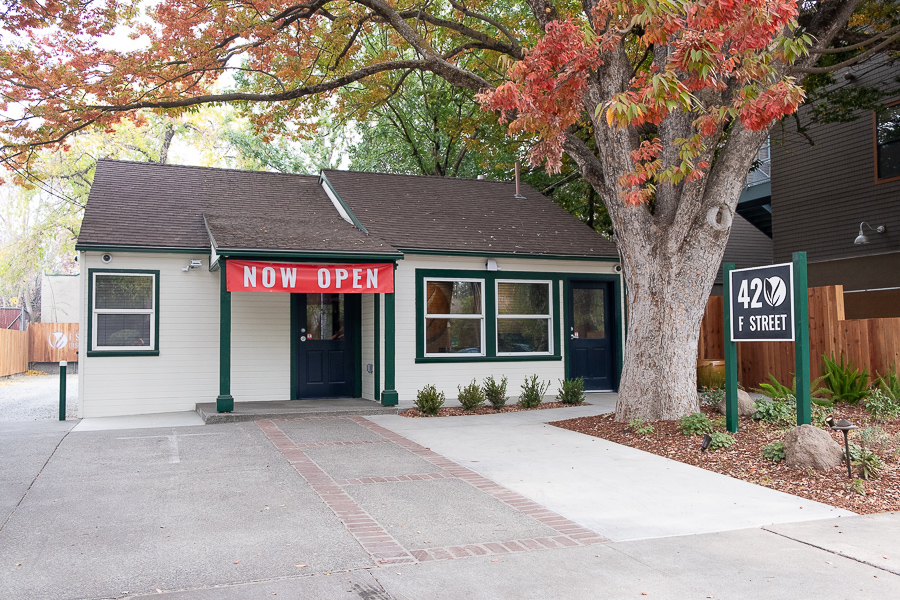
First downtown cannabis dispensary opens at 420 F Street

0
TIMOTHY LI / AGGIE

F Street Dispensary is locally owned, operated

Local brothers Rob and Mike Read have opened F Street Dispensary, Davis’ first downtown cannabis dispensary. The dispensary has been open for a month and hosted its grand opening from Nov. 17 to 18.

F Street Dispensary underwent a yearlong application process prior to city approval, competing with 13 other dispensaries for five conditional use permits. It is currently the only dispensary located downtown.

“[The reception has] been really good,” Rob Read said. “People are excited that there’s finally a downtown dispensary open and they’re excited about the product we have.”

During the application process, Rob Read began working with Consult Your Community, a UC Davis student-run, nonprofit organization that provides consulting to local businesses.

Devika Watave, a second-year economics and history double major, joined Consult Your Community during Spring Quarter of last year and has since worked among a team of four students to help Rob and the dispensary.

“Regardless of what [city council’s] decision was, we wanted to put our best foot forward and try to help him in any way that we could,” Watave said.

Now that F Street Dispensary has been chosen and the dispensary has opened, Consult Your Community’s work has transitioned to helping the dispensary navigate UC Davis policies and find effective ways to appropriately engage with students.

Rob Read talked about the importance of working with the UC Davis community.

“We are excited to serve students and we know there’s an opportunity there, but we don’t just want to do it in a way that is against how the university feels we should,” Rob Read said.

University policy has affected the dispensaries approach to marketing, as all businesses must adhere to university advertising rules. For example, flyers are prohibited unless they advertise nonprofits. Also, the dispensary cannot partner with clubs that receive funding from ASUCD, as those clubs are subject to federal law.

In addition to mutual support with Consult Your Community to find appropriate advertising solutions that follow these university guidelines as well as state and federal laws, the dispensary has also worked with King Hall Cannabis Law Society and the National Cannabis Bar Association. Rob Read spoke at their Cannabis Careers Panel and Networking Event, a weeklong panel that allowed cannabis industry practitioners to talk to students about the legal challenges a dispensary faces.

“We are very grateful to be in a college town that my brother and I love very much,” Rob Read said. “Even though neither of us attended UC Davis — we went elsewhere — we wanted to get out of our hometown. We love the university [and] we’re big supporters.”

Watave noted that another challenge the dispensary has faced is worries from neighbors about how the dispensary will affect their own businesses.

“During the application process, there were a lot of people who spoke out about not wanting a dispensary opening near their businesses because it might affect their customers,” Watave said.

Rob Read claimed some neighbors had unrealistic expectations for the dispensary.

“The neighbors’ biggest concern is parking,” he said. “That and, you know, worrying about people lighting up pre-rolled joints right as they’ve left, and we told them the whole time that that’s not what we expect to happen. That’s not what happens at other dispensaries, and we’re not seeing those things come to a reality.”

Rob and Mike Read have had a long relationship with the neighborhood.

“We’ve owned the property with another family for 23 years, so we’re not new to the neighborhood or the town, and we have a vested interest in making sure that cannabis sales are done in a professional, legal way that reflects the values of the community,” Rob Read said. “That’s very important to us.”

F Street Dispensary manager Jonathyn Newson said he appreciates the opportunity to be part of building the business from the ground up and to right some of the wrongs he’s seen in the cannabis industry.

“I’m coming from a place that’s been around for a while — they’re kind of in their ways,” Newson said. “I like that [F Street Dispensary is] open to doing what’s right for the customer.”

According to Newson, the first month of operation has been a success.

“I’ve seen everybody from all walks of life, every demographic here,” Newson said. “Everybody seems to have a smile on their face, so [it] seems good.”


Written by: Anne Fey — city@theaggie.org


Davis completes largest capital improvement project

0
JEREMY DANG / AGGIE

Ribbon ceremony held to celebrate opening of upgraded wastewater facility

On Oct. 24, the City of Davis completed the Wastewater Treatment Plant Tertiary Upgrade project, which took four years to finish and stands as the largest capital improvement in Davis. Within the budget of $95 million and projected time of completion, the upgrade was considered a success.

The project started in 2001 when the city received a new wastewater discharge permit by the Central Valley Regional Water Quality Board to address wastewater in Davis and other needed improvements. Davis City Council then decided to support the master plan. In October of 2007, the water quality board discharged a permit, this time, requiring an upgrade in the wastewater treatment. The process of devising the plan was ongoing from roughly 2005 to 2009. Once completed, a target date for compliance was set in October of 2015.

Once costs were initially considered, starting at an estimated $219 million in February of 2009,  the staff requested additional years for construction in hopes of developing the most successful team and design possible. The team was assembled with the help of two UC Davis professors, Dr. George Tchobanoglous and Ed Schroeder. Schroeder and Tchobanoglous worked with city staff and AECOM/WM Lyles as the design-build team.

On June 24, 2014, the Council gave permission to “AECOM/WM Lyles a Joint Venture” as the design-build team, and the plan was set in motion.

“My brother graduated the year before I came, and I remember, while going to school here, he would keep me updated with the construction of this facility upgrade,” said Kathryn Zuercher, a second-year neurobiology, physiology, and behavior major. “His water quality class that he took at Davis allowed him to learn a lot more about wastewater treatment and how important it is — hence, his interest in the plant. It was just really cool to actually hear it is finished, especially in my time here at UC Davis.”

This new facility is more time efficient with an activated sludge process, compared to the previous overland flow treatment. Rather than taking up to 40 days to treat the water, this sludge system takes an average of 23 hours, handling 4.5 million gallons per day.

“We now have a modern, efficient plant that produces the highest quality water effluent required in California and will serve the city for many years,” said Davis Mayor Brett Lee.

The final goals included meeting state and federal discharge requirements found in the National Pollutant Discharge Elimination System and providing an energy conservative plant that uses solar panels to monitor energy.

The upgraded plant also includes tertiary filtration advanced treatment facilities, a disinfection system and other modern equipment to guarantee the efficiency and success of the project. With the time, effort and money that was put into this upgrade, the facility earned the Envision Silver Award from the Institute for Sustainable Infrastructure.

“It was a very satisfying feeling to see the ribbon being cut on this extremely important project that accomplished the state’s, as well as the city’s, desire to improve water quality and promote environmental sustainability,” said John Alexander, the wastewater manager for the City of Davis.

Written by: Lauren Tropio — city@theaggie.org

Davis Cannabis Town Hall addresses community concerns

ZOË REINHARDT / AGGIE

UC Davis Student Health and Counseling Services teams up with City of Davis to host informational meeting

A “Davis Cannabis Town Hall” was hosted on Nov. 8 at the Veteran’s Memorial Theater to discuss the growing presence of cannabis in the community. Around 140 residents were in attendance and six speakers covered a variety of issues.

The discussion panel included Stephanie Lake, a UC Davis Alcohol, Tobacco and Other Drugs Intervention Services Coordinator; Officer Ronald Trn from the City of Davis Police Department; Doctor Karen Mo, a UC Davis physician; Mayra Miranda, from the California Department of Public Health and Patrick Ward and Myra Casillas, two young adults who discussed their experiences with cannabis.  

UC Davis Student Health and Counseling Services partnered with the City of Davis to organize the event, taking initiative to educate Davis residents and students about this increasingly relevant topic.

“Since the legalization of recreational marijuana is new, not a lot of folks are aware of what the legal aspects of it are, or what medicinal use versus recreational use really means,” said Supraja Sarabanakunar, an Alcohol, Tobacco and Other Drugs student coordinator at UC Davis. “They’re not really sure how harmful or how beneficial it is, so the point of this town hall is to let the community of Davis, including both residents and UC Davis students, understand matters regarding the legalization of marijuana.”

With the legalization of marijuana, many have questions about how it will affect the Davis community. This event didn’t take place as a result of complaints from the community, but rather as a preventative measure as the presence of cannabis becomes more common in the Davis community.

The university and city both felt it was important that members of the community had a clear understanding of what cannabis is and what its future in Davis looks like.

Officer Ronald Trn is currently assigned to cannabis regulation for the entire city and addressed many of the logistics that came with the legalization of marijuana. He started with the basics, telling the audience about the passage of Proposition 64 in 2016, which allows recreational cannabis use at 21 years of age.

“As far as police departments go, we don’t even necessarily look in terms of enforcement,” he said, also commenting on his predictions for dispensaries in Davis. “We have one delivery service with two more that are coming soon […] In my estimation, we will get another 10 or 15 cannabis businesses in the next year.”

Trn ended the discussion with a message to the audience: “Our main goal is to educate people, so they are are able to make the right choices.”

The remaining panelists covered topics such as different types of cannabis, where individuals can grow and use the drug, as well as different health logistics. Mo, who felt the forum was “stacked” against cannabis, gave her professional medical opinion regarding the benefits of the drug for medicinal use.

“I do believe cannabis has a role in medical use and that’s really different than recreational use,” Mo said. “It is an alternative to help people’s chronic pain, and I am doing that.”

Carla and Tom Mahoney, a Davis couple, explained their reasoning for attending the town hall from a parenting perspective.

“For me, I’m here as a parent,” Carla Mahoney said. “I have two kids, and I just want to know what we’re dealing with so we can talk about it at home.”

Tom Mahoney was more worried about the prevalence of the drug.

“This is my concern — I haven’t heard of any prevention and treatment, because with the increase in dispensaries there’s going to be more people addicted to the drug,” Tom Mahoney said. “How are we going to address that in society?”


Written by: Claire Dodd — campus@theaggie.org

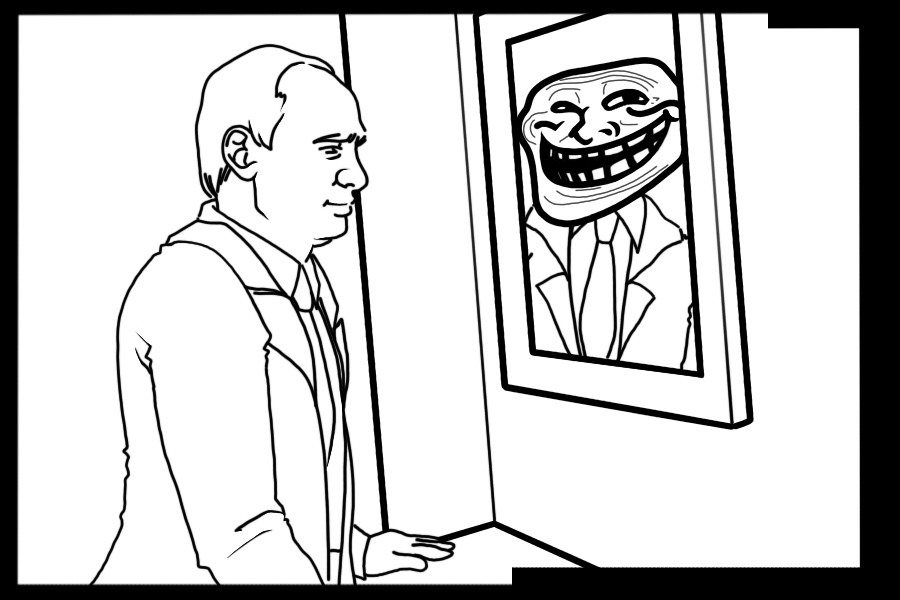
Humor: Tips and tricks to get through the day as a paid Russian troll


CAITLYN SAMPLEY / AGGIE

You’re scrolling through Twitter all day anyway

Perhaps your day job at McDonalds has gotten a little tiresome, and you find the act of angering people online fun. Well, have I got a job for you!

Putin is paying minimum wage for you to go online and just make people mad or scared. All you have to do is make stuff up. Sound good? Well then, here are a few things you should know before you start filling up your drafts with photoshopped pictures of Hillary Clinton burning the American flag.

First, you should always keep a sword with you. This is considered a part of “cyberwarfare.” At any point in time, you run the risk of being sucked into the digital sphere by the CIA (exactly like the movie “Tron”). There, if you aren’t already armed, you’re just hosed. Ya gotta have a sword. The bigger the better. If nothing else, it simply feels good to have a sword on you at all times — both as a phallic symbol and just something badass to have around.

Next, you should probably have a picture of Putin in your room. Could be on your mirror, door, etc. It obviously must have some kind of latent sex appeal (what picture of Putin doesn’t have sex appeal, though?), so you’ll probably wanna pick the one where he’s riding a bear while shirtless. That’s a good one. A very, very good one… mmm…

Okay, I’m back. So I think the final thing you should be aware of is that you don’t really have to try that hard. It’s super easy to make people really mad. Matter of fact, all you have to do is say “Trump” and I guarantee there’ll be a least a couple of folks ready to duke it out in the mentions. It’s not even that people have principles; it’s just that it’s fun to be really mad all the time.

Alright, well, that should get ya started at least. Remember: All you were gonna do is scroll through Twitter anyways. Why not make money doing it?

Written by: Aaron Levins  — adlevins@ucdavis.edu

(This article is humor and/or satire, and its content is purely fictional. The story and the names of “sources” are fictionalized.)

Democrats shouldn’t focus their efforts on impeachment

TESSA KOGA / AGGIE

With impeachment currently doomed to fail, Democrats need to look toward finding ways to compromise with Republicans

While the results of the most recent midterm elections proved to be in accordance with election predictions — Democrats won the House and key swing state governorships, and Republicans expanded their Senate majority — the months and years to follow remain unpredictable. Nevertheless, impeachment is on the minds of Democrats.

Exit polls from this month’s elections found that more than three-quarters of self-identified Democratic voters support the impeachment of President Trump. Nancy Pelosi, currently in position to once again be named the Speaker of the House, has eased up on talks of impeachment in favor of perhaps cooperating with the Republicans. However, statements from other Democrats imply that Pelosi’s sentiments aren’t universal among her party.

Representative Jerrold Nadler, a Democrat from New York, told CNN anchor Jake Tapper that Trump’s alleged hush-money payments to women during the 2016 presidential election “may be an impeachable offense if it goes to the question of the president procuring his office through corrupt means.” Nadler is poised to become the chairman of the House Judiciary Committee, customarily responsible for impeachment hearings. In an interview with The Washington Post following the White House’s rescinding of Jim Acosta’s press pass, California Representative Adam B. Schiff suggested that Democrats would investigate Trump’s reprisals against certain media sources as misuses of instruments of power. It’s notable that Schiff is primed to take control of the House Intelligence Committee.  

Even if House Democrats successfully move to impeach, the Senate is unlikely to garner the necessary two-thirds vote to deliver a guilty verdict. Historically speaking, the basic conditions of impeachment — being deemed unfit for office — has not once been satisfactory in getting the Senate to remove a president. With Republicans composing a majority of the Senate during a time of rigid polarization, the likelihood of impeachment dwindles further.  

Moving to impeach the president, absent of what some would deem “smoking gun” evidence of clear-cut treason against the U.S. in favor of Russia, is likely to fail. This is a condition under which gridlock is guaranteed and, consequently, Americans’ faith in government is plagued with ambivalence. The latter result may prove especially harmful to Democrats — the traditional proponents of active government in the lives of citizens.   

The impact of gridlock on Americans’ confidence in government is damaging, to say the least. Adversely, confidence in government is what Democrats need if they expect to win over more voters. Within this context, Republicans have less to lose from a dysfunctional government — if anything, it bolsters their platform by evidencing their qualms that government is fundamentally incompetent and ineffective.

Given how Mitch McConnell declared his intentions to oppose everything President Barack Obama did, with added support from his Republican colleagues, some Democrats might see their majority in the House as means to exacting revenge —  a feat that would undermine Democrats in the long term and their agenda almost immediately. This is not to advocate for being the party of compromise, but rather to argue for acting effectively and strategically.

President Trump, setting a historically record-low approval rating during his first year in office in comparison to the preceding seven presidents, may be more willing to cooperate with Democrats. Furthermore, to the benefit of the Democrats, Trump is motivated by self-interest, not any real ideology, as evidenced by his willingness to abandon long-standing Republican party positions ranging from Russia to free trade. Combined, these factors may result in Trump’s inclination to salvage his administration’s legacy before his term is up, and there are two key issue areas in which both parties seem willing to cooperate.

U.S. infrastructure receives a D+ grade, according to the American Society of Civil Engineers’ 2017 Infrastructure Report Card. Studies show that outdated infrastructure hurts economic growth and presents safety risks. Although both parties disagree on matters of funding, both agree that it’s an important issue to tackle. Health care is another key area; both parties want to curb prices but deep divisions, specifically in regards to Obamacare, present a challenge to cooperation — a challenge likely to be further aggravated by impeachment attempts.

This isn’t an advocation of Michelle Obama’s admonition that “when they go low, we go high.” The political environment as it currently stands has established conditions in which attempts to impeach the president is guaranteed to fail. Consequently, gridlock is ensured under the Trump administration.

Democrats should abandon impeachment not just for the sake of what could be achieved through cooperation, but to avoid undermining their own agenda.


Written by: Hanadi Jordan — hajordan@ucdavis.edu

Disclaimer: The views and opinions expressed by individual columnists belong to the columnists alone and do not necessarily indicate the views and opinions held by The California Aggie.

The creators of Creator Crew

0
ANDREA GONZALEZ / AGGIE

Board members of Creator Crew talk about their new club

Students use YouTube for a variety of reasons: listening to specific songs they’re in the mood for, watching new music videos and even getting help with studies through services such as Khan Academy. Another predominant use of YouTube is watching vlogs. “Vlog” is a portmanteau of “video” and “blog,” and there are a variety of them. Second-year neurobiology, physiology and behavior major Josh Moy shared what he believes the main goal of vlogging is.

“There are many different types of vlogs: lifestyle vlogs, cinematic vlogs, inspirational vlogs and so on,” Moy said. “However, they all come to a similar idea: telling [or] sharing a story.”

Moy is the head of the “Creator” department of Creator Crew, a new club that is open to students interested in filmmaking. Moy describes it as an organization that consists of video production and workshops for newer members. The club is organized into three departments: create, workshops and socials. So far, the focus of the board has predominantly been setting up the club.

Moy first got into vlogging by watching Casey Neistat on YouTube. There were different parts of Neistat’s vlogs that seemed effortless, but by paying close attention, Moy discovered that they really required significant planning. This realization made Moy evaluate how he perceived his own life.

“The fact that [Neistat] made videos everyday made me think about how unique my life is, even if I saw it as boring,” Moy said. “Vlogging gave me the chance to look at my life through a different lens and let me share my life and create so many memories with friends.”

Third-year civil engineering major Stefenie Berzamina is responsible for social media for the club, and she sees vlogging as a great creative outlet. She loves sharing new experiences, especially while travelling, but she has faced challenges with the process.

“Vlogging is actually really hard,” Berzamina said. “You need the confidence to put a camera in your face in public and talk to it. I really struggled with the talking part. Editing is hard too. It takes a long time to make sure your video is just the way you want it.”

Second-year communication major Tiffany Yang shares that same sentiment. Yang is the socials coordinator, and she started vlogging after her senior year of high school when she was looking for something to fill her time. Yang had always enjoyed watching videos on YouTube, and when her family took a trip to Taiwan, she decided she would vlog it on her iPhone. She says that being a vlogger has pushed her to step out of her comfort zone.

“I get weird stares from people, but I’m used to it now,” Yang said, “[Vlogging] also forces me to do something interesting in my life. I love the other creators in Creator Crew, hella good vibes and people.”

The social aspect is something that Moy also values, along with vlog production. Alongside the people that he spends time with, he has found himself further motivated to produce.    

“My favorite part of vlogging is being able to capture memories and create a fun, memorable video,” Moy said. “My favorite part of Creator Crew is meeting other creators with a similar interest in YouTube. There are not a lot of people I know who are interested in filmmaking, much less cameras in general, so it was cool to meet other creators, which pushed me to create more videos.”

Berzamina, Moy and Yang all talked about their favorite vlogs they have produced — for Berzamina, it was her time in the Philippines, For Moy, it was a blindfolded photography challenge with a friend and for Yang, it was the vlogs she produced with her friends at UC Davis.

“To make the video more interesting, we had to come up with different ways to film each other,” Moy said. “I had to […] keep the viewer interested so they could continue to watch. Besides that, it was really fun to collaborate with other people with similar interests.”

For these board members, vlogging doesn’t require a significant amount of planning. Generally when the idea strikes, they just film. Berzamina uses her iPhone, whereas Moy uses a Sony a5100 camera and a tripod and Yang uses a Canon T3i Rebel or her iPhone.

“Anyone can [vlog], and you don’t need a camera for it,” Yang said, “I was just a girl who binge-watched YouTube videos and had an iPhone.”


Written by: Anjini Venugopal features@theaggie.org


The path to law school

0
JEREMY DANG / AGGIE

How to navigate the pre-law journey  

Virtually all pre-law students can attest to the fact that preparing for law school can be a strenuous and stress-inducing process. What with prepping for the LSAT, securing letters of recommendation from professors, being on the hunt for internship opportunities and writing and polishing their personal statements, many pre-law students find themselves engulfed in a never-ending pool of obligations with no relief in sight.

Thankfully, there are a multitude of campus resources and organizations specifically designed to make the journey to law school less overwhelming for students. For example, Mock Trial Club at UC Davis gives students a hands-on approach to learning the process of criminal procedure. The knowledge that they gain from their experiences in Mock Trial will follow them throughout their law school application processes and beyond.

“We are basically a pre-law club in which our members get to learn the federal rules of evidence and take on roles, such as attorneys or witnesses, in a real courtroom setting,” said Ariel Mendlin, a third-year history major and president of Mock Trial Club. “We get a fake case pattern every year, and we compete against other universities. If [we] make it to the national competition, we get a brand new case and we have about three weeks to prepare.”

Mendlin said that her time in Mock Trial Club has not only solidified her career goals but also given her invaluable insights on how to achieve them.

“[Mock Trial Club] definitely gave me the idea that I want to go to law school,” Mendlin said. “I joined Mock Trial because I did mock trial in high school for four years and I really enjoyed it. [Mock Trial] gives me the foundational knowledge of the rules of evidence, which is an entire course in law school.”

Most, if not all, pre-law students would agree that without some form of guidance, the road to law school can be plagued with uncertainty — this is especially true for students who have never been exposed to the vigor of the law school application process. The Black Pre-Law Student Association is an organization dedicated to ensuring that black students are equipped with the necessary resources to ensure that they are prepared for law school.

“Our goal is to connect pre-law students who identify with the African Diaspora,” said Joelle Barnard, a fourth-year anthropology major and president of the Black Pre-Law Student Association. “We believe primarily in equity, being that most law students are not of African descent. We try to connect students professionally, academically as well as socially. We have a lot of academic stuff planned as well. Earlier this quarter, we got the chance to do a mentorship program with the Black Law Students Association at King Hall.”

The organization stresses accessibility among many other principles because it understands that some of its members may not have the means and capacity to obtain these various resources on their own. The Black Pre-Law Student Association wants to make sure that its members have as smooth of a transition from undergrad to graduate school as is possible.

“We have open membership, so there are no requirements to be a member,” Barnard said. “We don’t require any membership dues or anything like that, because we believe in making ourselves as available as possible. For me personally, Black Pre-Law was appealing because [it] actually understands my story and what my needs are.”

Operating with the same principles in mind is La Raza Pre-Law Student Association at UC Davis, a pre-law organization that strives to provide individuals in the Chicanx and Latinx communities with the tools and skills that they need to successfully apply to law school.

“We hold meetings every week, where we have different workshops that are related to the field of law,” said Alejandra Roman, a fourth-year psychology and Spanish double major and current co-chair of the La Raza Pre-Law Student Association. “Basically our meetings aim to provide our members with resources and information, and it’s a way to allow them to start networking.”

Aside from providing its members with the technical resources for applying to law school, the organization also focuses its efforts on fostering a sense of community. According to Roman, La Raza Pre-Law tries to support and uplift its members, many of whom come from underserved communities.

“We also have socials, which are meant to allow members to get to know each other,” Roman said. “The org [sic] is also set up to build a family for our members. We strive to build relationships and bonds; we want people to feel comfortable and welcome among us. Most importantly, [we try] to help one another, since a lot of us are minorities, and a lot of us don’t have that many resources — the organization strives to help those who come from marginalized communities.”

Roman advised all pre-law students to find some source of inspiration that will motivate them to continue working hard because, amid all the stress and uncertainty, that is what will propel them forward.

“Always remember why you’re choosing to do what you want to do,” Roman said. “Whenever I feel stressed or I feel like I can’t keep going, I go back to my source of motivation. One of the biggest things that I’ve been told is to know why you want to do what you want to do before you enter law school. At the end of the day, you want to know that [pursuing a career in law] is something you’re passionate about.”


Written by: Emily Nguyen — features@theaggie.org