57 F
Davis

Davis, California

Monday, December 22, 2025
Home Blog Page 485

Cannabis out for delivery

0
RAEL HANUS / AGGIE

Davis City Council considering moratorium for delivery-only cannabis services

The Davis City Council has approved more delivery-only cannabis businesses; however, it will consider calling for a moratorium. Currently, there is a limit on cannabis storefront retailers, and the delivery-only option may soon be capped as well.

Brett Lee, the mayor of Davis, elaborated on the process it takes for cannabis businesses to be approved.

“[Businesses] go through a fairly long application process where they have to submit a lot of information to the city,” Lee said. “And that’s information reviewed by staff. And then in terms of the actual approval, it will go before the planning commission. The planning commission makes the recommendation. The city council then gets the information in terms of what the planning commission decides — ultimately, it’s the city council that gives the final approval.”

Gloria Partida, the mayor pro tempore of Davis, stated that there are specific rules that cannabis businesses must follow to be approved. She noted that The People’s Kush and The Good People Farms are the two businesses that have been approved so far.

“There were guidelines for what the cannabis businesses had to follow,” Partida said. “They were the only two that came forward at that particular time and so because they met the guidelines, we approved them. We then realized that this could start a run-on delivery businesses, because we placed a limit on the storefront types of businesses. This could really be a way for cannabis businesses to expand and really throw a number.”

The Good People Farms also previously applied for conditional use permits to open dispensaries; however, it was chosen for delivery-only service.

“The Good People Farms is a cannabis agriculture and dispensary company… TGPF is applying to open a dispensary at this location to serve the medical needs of patients and sell cannabis products to adults 21 years of age and older,” according to the Cannabis Dispensary Application. “The dispensary will offer mobile delivery service and will phase this service in after the dispensary is up and running smoothly (3-6 months). The company intends to hire 90% of its staff from the local Davis community.”

Partida hopes that the new businesses, like The Good People Farms, will be able to generate revenue for Davis as they intend on hiring locals as well.

“I’m hoping that they are successful because this is a good revenue string for the city,” Partida said. “I think that it’s a business that could really be successful and would help alleviate a lot of other problems that we might have.”

Since there has been a limitation on storefront dispensaries, the city council is considering a moratorium for the delivery only services as well.

“We haven’t officially issued a moratorium yet, but what we talked about the last meeting was that we have five retail cannabis locations that we approved,” Lee said. “One of them has been opened so far, and I believe three or four of them have a delivery component as well. We have those three to four businesses planning to do delivery — we have now approved three additional delivery-only locations. It’s my sense that we have to see how things go before we keep approving delivery businesses. It’s a new area for the city of Davis and it’s relatively new for California. We want to make sure that it works out as we anticipate.”

Partida also indicated that the city is quite unsure about the effects of the newly-approved dispensaries.

Even so, Lee noted that there are many things to consider when approving either retail or delivery-only businesses.

“On the retail side, we need to make sure that it’s an appropriate location so that people can come and go to,” Lee said. “We don’t want it to be next to an elementary school or something like that. For the delivery side, the criteria is really more about the impacts in terms of delivery vans coming and going. We prohibit that activity in our downtown, it’s more meant to be on the outskirts of downtown or in the commercial or industrial-zoned areas.”

So far, a new delivery-only application is undergoing review.

“There’s one other delivery-only application that has been submitted, and it’s working its way through the process,” Lee said. “My belief is that city council will say that we need to take a break and see how the businesses that were approved and see how they do. Once we feel comfortable, then we will reopen the applications for both retail and delivery. We just need to see how they work out.”


Written by: Stella Tran – city@theaggie.org
 

How AFSCME’s strike impacted classes

JOSHUA MOY / AGGIE

Three-day strike prompts class cancellation, relocation across departments

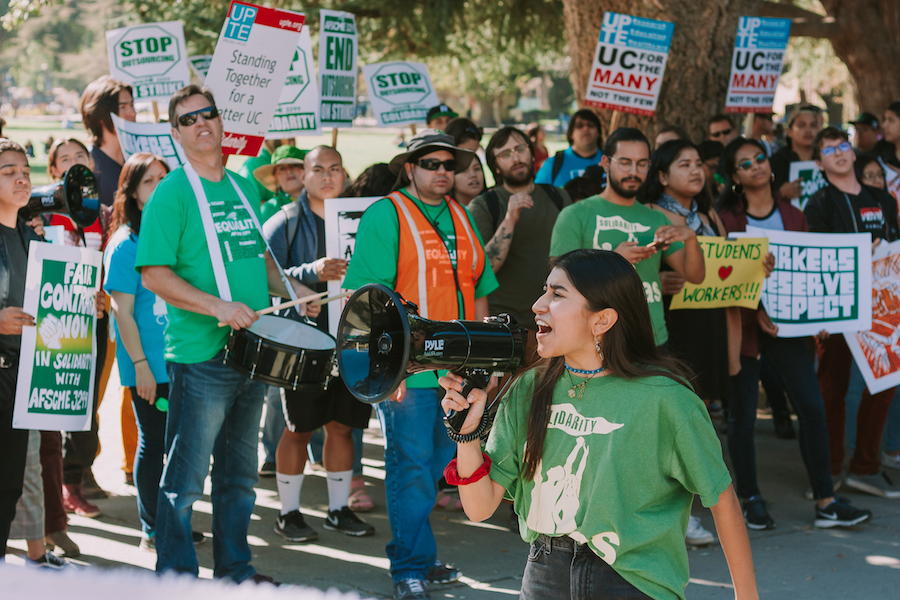
A three-day strike took place in late October across the University of California system on behalf of American Federation of State, County and Municipal Employees 3299, the UC’s largest employee union. While professors and teaching assistants are not included in this union, a number of them altered their schedules around the strike.

Workers participated in the strike to address issues such as healthcare premium increases, flattening wages, risky 401(k) plans and the outsourcing of jobs within the UC system.

Several classes, discussion sections and even office hours were cancelled or moved to a alternate locations off-campus while other professors held tight to their strict 10-week plans and continued lecturing.

Though the professors and teaching assistants who cancelled or relocated classes don’t belong to the union, changing their schedules was a show of support for fellow colleagues who feel they are not being given what they deserve. Po-Chun Huang, a Ph.D. candidate in the Department of Sociology, discussed his reasoning for cancelling his classes.

“I simply want to support the union that is working hard on negotiating a fair contract for all the UC workers who provide services to support our teaching and research functions,” Huang said.

A look at his syllabus shows that a midterm was scheduled for the following week after the strike. When asked whether or not this will affect students’ performance, Huang replied that he did not anticipate any consequences and was able to effectively combine two lectures into one.

Other classes were made optional including Dr. Scott Shershaw’s clerical theory course. The English professor sent out an announcement that any student who did not want to cross the picket line would be excused, and students who did attend lecture were taught about strikes and labor unions. Coincidentally, the lecture topic for that Wednesday was the relationship between labor and education.

“I feel strongly about balancing my support for the strike and not wanting to cross the picket line, while also keeping my obligations to the students,” Shershaw said in regard to his explanation for the decision.

He also said that he felt that the strike should not hinder students’ opportunities to learn but instead teach them something.

Some other professors chose to get creative, and many found ways to hold class without setting foot on campus and crossing the picket line. This included Dr. Eva Mroczek, a professor in the Department of Religious Studies. Mroczek opted to hold class in Central Park and did not go onto campus during the strike.

“While I am fortunate to have good benefits and job security, that doesn’t go for everyone who works here, and we’re all in this together,” Mroczek said. “Knowing if the people who take care of our health, maintain our campus and make our food every day are being treated fairly definitely affects our ability to learn and teach.”

She reported that students were relieved that they did not have to choose between supporting workers and attending class, and nearly everyone was present at the session in the park. Mroczek also felt that the reason behind the strike impacted the students ability to learn.

Students had a variety of reactions to the altered schedule during the week of the strike. Several students were grateful for the cancellation, because it allowed them more time to study and slowed the quarter-system pace down.

Second-year animal science major Bianca Burkhart said that the cancellation of her three-hour chemistry lab came as a relief.

“We will be cutting the class one lab short and not making it up,” Burkhart said. “It took a lot of stress off of my plate, and as for the material we missed, we will just be learning about it in lecture and not acting on it in lab.”

While some students were glad their professors cancelled classes, others were relieved when their schedules remained unchanged. No two classes are the same, and while some courses have room for one or two missed sessions, others are on stricter schedule and instructors are unable to drop a whole lecture from the syllabus.

“I’m honestly grateful that my sections weren’t cancelled or moved, because that would’ve led to a lot of unwanted stress for me,” said fourth-year managerial economics major Ryan Donat. “I understand wanting to respect the strike and not cross the picket line, but I also think that my main priority at Davis is to learn and I need the help of my TA’s and professors to do so.”

Written by: Claire Dodd — campus@theaggie.org

Is UC Davis still a safe school for students?

0
LUIS LOPEZ / AGGIE

Students reflect on campus safety after recent crime increase

Many parents send their children to UC Davis with the expectation that it is a safe and nurturing college town for students to flourish. With what seems like weekly crime alert notifications, however, students are left to question their sense of safety and security walking around campus. Since Sept. 7, there have been 10 crime alerts sent out via email, the majority being robberies or residential burglaries and one being a homicide in the greater city of Davis.

Bill Beerman, the patrol supervisor of the UC Davis Campus Police Department, believes that Davis crime rates have spiked in the past several months.

“It is very rare for us to have two robberies in a row so having two back-to-back is very suspicious in my mind,” Beermann said.

He argues however, that these statistics may be skewed, because the UC Davis Police Department and the City of Davis Police Department are two separate entities. The UC Davis Police Department simply chooses to release crime alerts for crimes committed off campus. Therefore, students may receive a crime alert for a crime committed miles away from campus and mistake it for an on-campus crime.

“When there is a crime adjacent to the campus, we put out an alert to make them aware that there is an issue going on and make themselves safe” Beermann said. “Crime reports sent out by the city of Davis often get linked to us because students have the misconception that the crime occurred on campus.”

Beermann maintains the belief that Davis is still a safe place for all students.

“I believe the UC Davis campus is a safe place,” Beermann said. “I have a daughter that just graduated from UC Davis. If I thought it was an unsafe place I would not have had her attend here.”

One area that has been a repeated target for theft is Parkway Circle, a complex located across from the Student Health and Wellness Center. Of the 10 crime alerts, two of them were reported to have occured in Parkway Circle. Grant Matheson, a resident of the complex, has felt the effects of campus crime first hand.

“Several of my friends have had their cars vandalised and the speakers were stolen from inside our house,” Matheson said.

As a fifth-year, Matheson is struggling to reconsider his idea of Davis as being a safe, small town.

“This is never something I had to worry about until the last couple of months, and now I feel like I have to triple check that everything is locked,” Matheson said.

In addition to household robberies, thieves at coffee shops have been stealing laptops directly from the hands of customers. Two separate incidents have occurred at different coffee shops – one at Peet’s Coffee & Tea and one at Temple Coffee Roasters, both located in downtown Davis. Bill Beerman argued that these attacks have become a “trendy thing to do” which has resulted in a copycat effect. Matheson believes that the earlier crimes committed “may have given cover for more people to commit crimes, because they notice that these crimes go unsolved and they think ‘maybe I can do that too.’”

According to Beerman, these incidences are “hard to command” and he emphasized that “where one puts themselves in a coffee shop combined with being aware of one’s surroundings can be very helpful.”

Third-year civil engineering major Emma Yenerich lives off of Russell Boulevard and has encountered numerous safety concerns this academic year.

“We have had people try and get our door open while we are inside, we have had someone in the backyard and people lingering on our front lawn which does not make me feel safe at all,” Yenerich said.

Yenerich also worries that the UC Davis Police Department is not doing all it can to protect students. Only after several requests to send someone to patrol the area around her house did the police department send a car.

“As a student who is feeling threatened or unsafe, knowing that law enforcement is reluctant to send an officer is kinda disappointing.” Yenerich said.

She too struggled to adjust to this change in safety, and feels that the spike in crime this year has taken a toll on her sense of safety on campus.

“I have never really felt so nervous or on-edge just being at home before” Yenerich said.

Beerman believes there are certain actions and precautions that students can take to better protect themselves against crime.

“The reason we notify students of campus crimes is so they can better prepare themselves,” Beerman said.

Beerman also heavily emphasized being aware of your surroundings, regardless of location or time of day. One tip Beerman offered is whenever a crime is committed, “be a good observer and get a good idea or what a suspect or a car may look like and try and take down plates.”

“There are people out there who are looking to make a quick dollar and for crimes of opportunity, so it is important to look out not only for ourselves but for one another,” Beerman said.


Written by Miki Wayne – features@theaggie.org

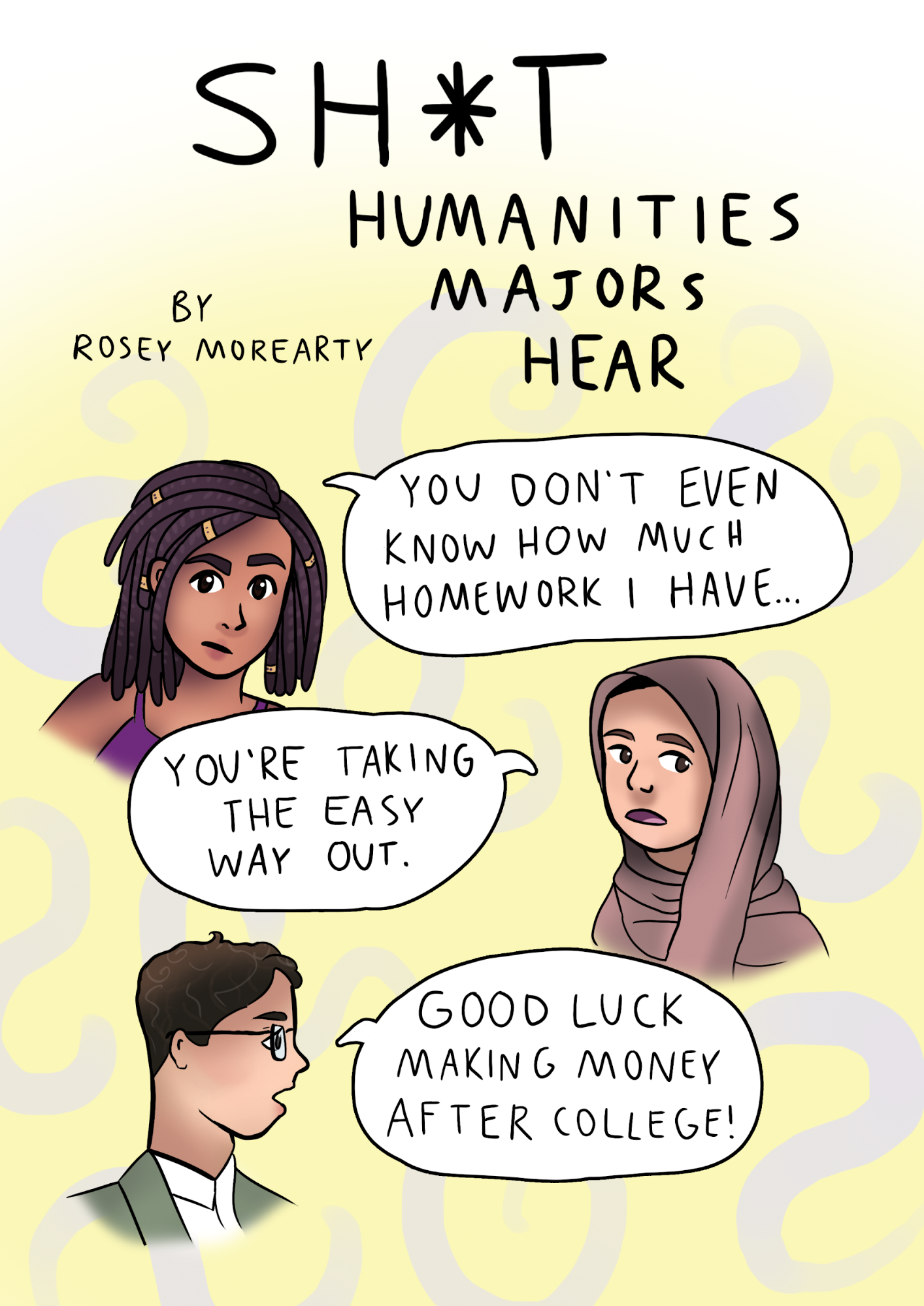
Cartoon: Sh*t Humanities Majors Hear

ROSEY MOREARTY / AGGIE

By ROSEY MOREARTY — rosey@morearty.org


You voted. Now what?

CAITLYN SAMPLEY / AGGIE

Voting can’t be the extent of political engagement

Democrats won big on Tuesday, picking up enough seats to take control of the House of Representatives. For those who were hoping to see a Democratic victory and one-party rule in Washington broken, this midterm election is cause for celebration. Across the country, a wave of notable firsts rightfully sparked praise as candidates from myriad marginalized communities gained seats of political power that were far overdue to them.

The number of flipped seats and the shift in power –– in some cases against long odds –– is a bright spot in a dark political moment. It’s worth it to take a moment to breathe and feel good about this change.

But this election and its welcome results can’t be the end of political action.

Democratic control of the House is a positive change in the current political climate. It’s possible that a Democratic House will ease or at least counter, in some ways, the dictates of the Trump administration and the Republican Party. But those who have spent the past two years or longer marching, agitating and resisting in other ways shouldn’t be fooled into complacency by a liberal victory.

The most pressing issues of the moment won’t be fixed if the be-all and end-all of political engagement is voting in midterm elections. Making the kinds of radical changes that will be necessary to preserve life on this planet will require doing more than visiting the ballot box and calling it a day.

The most recent report from the United Nations’ Intergovernmental Panel on Climate Change states that the world economy must be completely transformed in just a few years in order to avoid catastrophic climate collapse. The total economic transformation that will be necessary to save us from an extinction event is going to require more sustained and vigorous political action than just voting. It’s going to require, at a minimum, continuing to aggressively lobby elected officials –– even the ones you voted for –– to do what needs to be done. It’s going to require taking action at various levels of political hierarchy. And yes, it’s going to require strikes, protests, marches and direct action no matter which political party is in power.

Climate change is just one of the issues that’s going to require more work than voting to fix. Immigration and migrant detention, police violence, mass incarceration, reproductive injustice, pervasive institutionalized racism, gun violence, systemic homophobia and transphobia, rising white nationalism and neo-Nazism –– the list goes on. Such social problems aren’t going to be fixed if we assume a small group of elected officials will resolve these complex issues without pressure from the people.

None of this is to say that those who are able to vote shouldn’t. Voting is one of many strategies to make change, and the results of elections have material effects on people’s lives. Change requires a diversity of tactics, and we should use all the tactics we have at our disposal.

But if you want to see change –– if you’re upset at the state of the world –– don’t let the new House make you feel like your work is done. Don’t put down your picket sign just yet.

Written by: The Editorial Board

Jewish student leaders meet with chancellor to discuss future outcomes when addressing anti-Semitic incidents

MICHAEL GOFMAN / COURTESY

Moving forward, ADL will host training workshops, administration will provide more efficient communications after targeted attacks

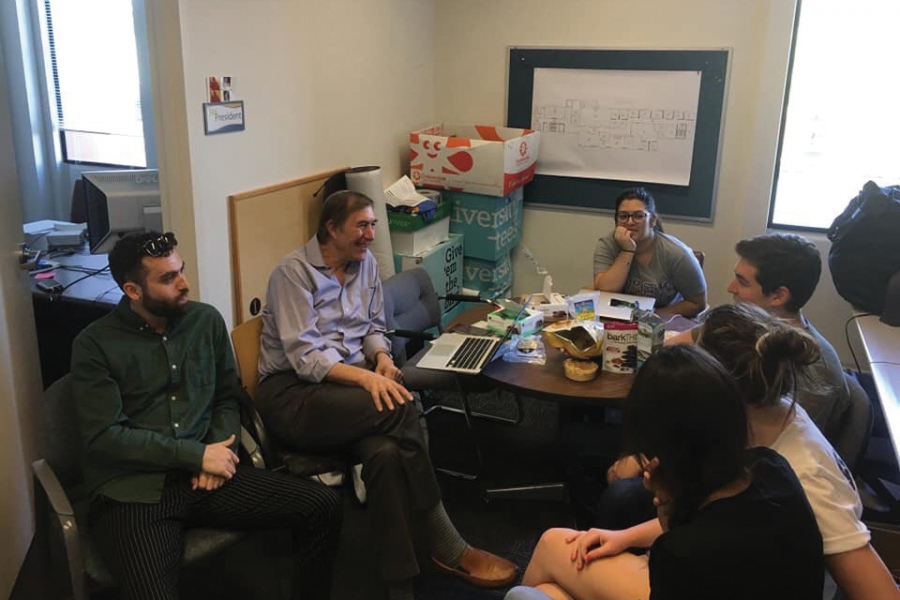
Jewish student leaders on campus met with Chancellor Gary May on Friday, Oct. 19, to discuss how the university can proactively address issues regarding anti-Semitism at UC Davis. The meeting was sparked by anti-Semitic fliers that were distributed throughout campus on Monday, Oct. 9 by a local chapter of the neo-Nazi website, the Daily Stormer.

Students who were present at the meeting included ASUCD President Michael Gofman, Dana Benavi, the president of Jewish-interest sorority Sigma Alpha Epsilon Pi; Arielle Zoken, vice president of Sigma Alpha Epsilon Pi; Noah Pearl, commissioner in the ASUCD Internal Affairs Commission and president of Alpha Epsilon Pi, a Jewish-interest fraternity and Ali Soleimani, the president of the Jewish Student Union at UC Davis.

Zoken, a third-year economics major, described her experience as a Jewish student at UC Davis.

“We’re white when it’s convenient and Jewish when it’s not, so a lot of us at UC Davis, we’re Caucasian so we’re not seen as a minority, [and it’s not seen] that we need protection or sensitivity,” Zoken said. “I’ve experienced anti-Semitism on campus. My freshman year, I was asked where my horns were. I’ve been asked, when I was speaking Hebrew, if I was ‘speaking terrorist.’ Somebody said it as a joke. […]  I think the main issue that we have at Davis is that there’s not really a space on campus [where we feel welcome]. Off-campus, Hillel, Chabad, that’s where we go, but as of now the goal here is to make it so that the classroom is a welcoming space for us.”

Benavi, a fourth-year communication major, also spoke about the need to make the campus a more welcoming place for Jewish students.

During the college application process, Benavi hesitated to attend UC Davis due to a incident in which swastikas were painted on the walls of the AEPi fraternity. Realizing that excluding Jews from UC Davis was probably the culprit’s mission, Benavi decided to attend the university and become involved in Jewish student life.

According to Benavi, the meeting with Chancellor May was successful and proactive, and May referenced the meeting as the start of a long-term partnership between the Jewish community and the administration.

 Pearl, a third-year statistics and political science double major, was also present at the meeting and said that he initially felt the university’s response to the fliers was “a little bit inadequate.” However, Pearl stated that after Jewish students wrote to May expressing their concerns and offering constructive ways of addressing similar incidents in the future, the administration took action.

Through the meeting, Pearl said the group learned more about the formal process for addressing hate-related incidents, and he noted that the chancellor does not have direct control over what occurs on campus.

As some individuals found out about the fliers via social media, they were upset that they hadn’t been notified first by the university. Pearl expressed concern about how UC Davis could alert the Jewish community in the future should another incident like this occur.

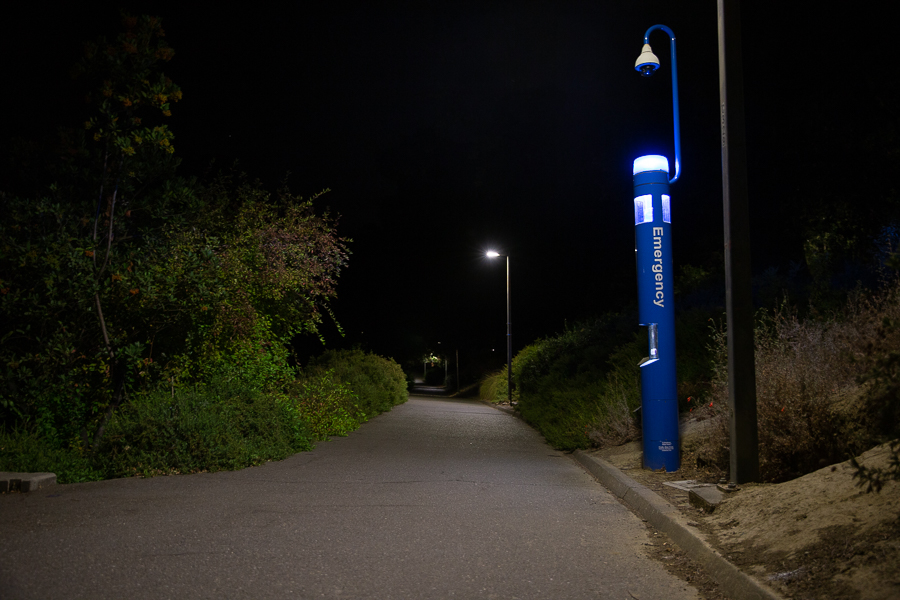
As Pearl learned, because UC Davis is a public institution it is illegal to maintain a record of its students’ religions, so it isn’t possible for the college to immediately contact Jewish students when these kinds of events happen. Other suggested measures, such as installing more security cameras on campus, have been taken into consideration, especially since the identity of the flier distributor remains unknown.

Additionally, Zoken said the Anti-Defamation league will run a series of workshops “with professors, administrators and student leaders” to talk about the rise of “minority hatred” in the United States. She also said that the school has been proactive in helping coordinate this.

In terms of making the university a more culturally welcoming place for Jewish students, the individuals present at the meeting are working with the campus dining commons to make more Kosher options available. Zoken mentioned a friend of hers who found themselves having to eat frozen meals at the on-campus dining commons because of the lack of dietary options, an experience iterated by some of Pearl’s friends during their first years, which became especially difficult during Jewish holidays like Passover.

At the meeting, Soleimani presented the idea of having a Jewish advocacy officer present at the university or expand the role of the Middle Eastern/South Asian student affairs officer so that Jewish students could find support.

Some feel uncomfortable seeking help there due to what Pearl described as the “heated issue” of Zionism on campus, a struggle reflected in demonstrations that happened at UC Davis in the spring of 2018.

Moreover, Zoken, Benavi and Pearl all stressed the importance of Jewish students feeling comfortable enough to approach university officials about their community’s needs in reaction to anti-Semitic hate crimes on campus. Because mental health professionals on campus were not notified about the incident initially, there was no specialized help or treatment available for students who felt threatened or afraid due to the content of the fliers.

That being said, Pearl feels that there is now an “open line of communication” between Jewish student leaders and the administration.  

As Dana Topousis, chief marketing and communications officer at the university, noted in an email, Chancellor May found that there were “positive outcomes and agreements on several next actions.”

And as Sheri Atkinson, vice chancellor of Student Affairs, said in an email, “It is all of our responsibility to work to build an inclusive campus environment.”  

“When there are breaches, it is important for us to respond, evaluate ways we can continue to collectively work together to address issues, and provide education,” Atkinson said. “We are also committed to addressing all forms of discrimination and anyone can file a report at reporthateandbias.ucdavis.edu when something occurs.”


Written by: Rebecca Bihn-Wallace — campus@theaggie.org

Editor’s note: An earlier version of this article did not include the name of the student whose idea it was to create a Jewish advocacy officer or expand the role of the Middle Eastern/South Asian student affairs officer. Their name and position as the president of the Jewish Student Union at UC Davis has been added to the article. 

2018 ASUCD Fall Election — Meet the Candidates

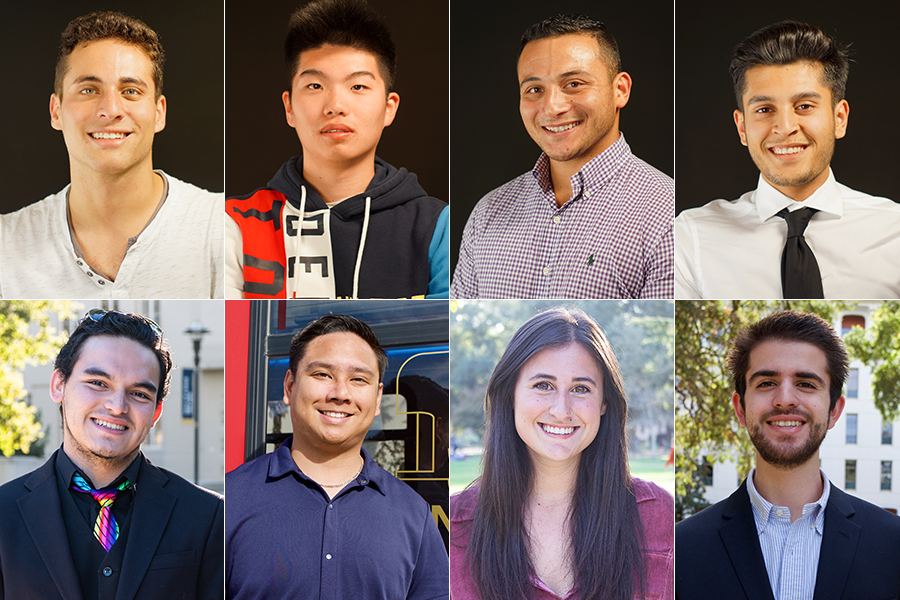
from top left to bottom left: ALEXIS RAMIREZ (AGGIE STUDIOS / COURTESY), PEIYUAN (TONY) CHEN (AGGIE STUDIOS / COURTESY), RICHARDO ZAPARDIEL (AGGIE STUDIOS / COURTESY), SEAN KUMAR (AGGIE STUDIOS / COURTESY), NOAH PEARL (ALEXA FONTANILLA / AGGIE), MAYA BARAK (VENOOS MOSHAYEDI / AGGIE), KEVIN BUTT (ALEXA FONTANILLA / AGGIE), FRANCISCO LOPEZ MONTANO (TIMOTHY LI / AGGIE)

Eight candidates running for six Senate positions

The following eight candidates are running for six senatorial positions in the upcoming 2018 ASUCD Fall Election. The candidates are running either independently or on one of two slates: Unite! and BASED. The Senate Debate will be held on Nov. 13, with voting beginning the same day and ending Nov. 15.


Peiyuan (Tony) Chen — BASED slate

Third-year undeclared major Peiyuan (Tony) Chen is running on the BASED slate and has three main platforms: relocating the parking structure to expand access to student parking, partnering international students with the study abroad program and creating an all-encompassing international student committee to represent the voices and needs of international students.

As an international student himself, Chen feels that the international students do not have representation on the Senate table even though this demographic of students makes up nearly 20 percent of the undergraduate population.

Most international students go to class and then home, so they do not have much of a social life and interactions between international and domestic students are limited, Chen said. But he hopes to change this state of affairs by creating a bridge via student government between domestic and international students.

He also brought up concerns with voter turnout in ASUCD elections and noted that past elections have yielded votes from less than 10 percent of the student population. Chen also has experience working at the Peet’s in the ARC and is interested in working with the CoHo, if elected.


Richardo (Ricky) Zapardiel — Unite!

Richardo (Ricky) Zapardiel is a fourth-year political science — public service major and candidate for the Unite! slate. Zapardiel’s platform is three-pronged, consisting of food security, first-generation students and bicycle security.

The food security platform is based off of the Global Food Initiative and surveys that have been issued during the past few years. He particularly mentioned his interest in The Pantry.

Zapardiel plans to work with The Pantry and the Mental Health Initiative if elected — he identifies himself “as someone who has undergone certain mental health roadblocks.”

He is also a first-generation student and a veteran of the Marine Corps.

“I have talked to other first-generation students and with our campus being more than 44 percent first-generation students, I feel like connecting them to those resources that go unused [is important],” he said. “I’m a veteran myself of the Marine Corps and it was a little bit troubling being a transfer and a first-generation student because of some of the resources I was not connected with.”

With bicycle security, he explained that he feels there are ways “to implement higher tech means of security, like security cameras.”

As a fourth-year student, Zapardiel is unsure at this time whether or not he would be able to fulfill the entirety of his term if elected.


Noah Pearl — Unite!

Third-year statistics and political science double major Noah Pearl is a current member of the Internal Affairs Commission (IAC) and is running on the Unite! Slate. Pearl has been a member of the IAC since the fall of 2017, and has looks over and edits virtually every piece of legislation before it reaches the Senate table. He has three platforms: improving transportation services, improving the long-range plans of every ASUCD unit and planning communal meals for students who remain on campus during holiday breaks.

To improve means of public transportation in and around campus, Pearl has plans to advocate for more rental bikes, as there are currently only 60 on campus, and look into a partnership with a rideshare company such as Uber or Lyft to provide discounted rides on weekend nights.

If elected, Pearl plans to improve ASUCD’s long-range plans, which every unit has.

“Currently, they’re not given enough attention and they’re not done in a thorough way,” he said. “If we distributed the work among all seven ASUCD commissions … they’d be able to put more effort into each plan, which would cross over and help each unit year-by-year with their institutional memory and in training new hires.”

As an out-of-state student, Pearl said he was stuck in the dorms during breaks. He believes ASUCD has the resources to sponsor community meals during these breaks for students who remain on campus.

If elected, Pearl is interested in adopting Unitrans and utilizing the expertise of unit officials to bring his plans of improving public transportation into fruition.


Alexis Ramirez — BASED

Fourth-year political science major Alexis Ramirez is running on the BASED slate, with a focus on three main platforms: holding administration accountable, promoting and supplying a nutritionally-balanced Pantry and ensuring ASUCD is run effectively.

A minority student himself, Ramirez chose to run on the BASED slate because he agrees with the slate’s mission to represent minority communities.

If elected, he has plans to partner with ASUCD’s Office of Advocacy and Student Representation to send out a survey to students to assess campus-wide confidence in student government, make sure all ASUCD committees and commissions are properly staffed and work with the Yolo Food Bank on behalf of The Pantry to supply students with nutritional food items.

Ramirez does plan to graduate in the spring and would not be able to fulfill the entirety of his year-long term if elected.


Sean Kumar — Unite!

Second-year neurobiology, physiology and behavior major Sean Kumar is running with the Unite! Slate and has three platforms: expanding on-campus mental health services to keep up with student needs, expanding STEM representation on Senate and placing more compost and recycling bins around high-trafficked areas like the MU to keep up with the UC’s zero-waste initiative.

Kumar served as current Senator Jesse Kullar’s chief of staff. Following an increase in STEM representation on the Senate table after the Winter Elections, Kumar saw a difference in the discussions being had at Senate meetings. Kumar hopes to provide additional representation for STEM students on the Senate table and to implement more STEM workshops for students.

Kumar also addressed concerns with the availability of on-campus mental health resources for students. He hopes to ensure students have sufficient access to counseling appointments.

If elected, he is interested in adopting KDVS.


Francisco López-Montaño

Third-year political science and economics double major Francisco López-Montaño is running with the Unite! slate with platforms of united student advocacy and increasing the efficacy of student representation through student involvement and club representation.

López-Montaño has been thinking of running for Senate since their freshman year and has been to a number of Senate meeting. If elected, they have plans for ASUCD to directly partner with student clubs and organizations — such as a partnership between the Asexual Club and ASUCD’s Gender and Sexuality Commission — so as to more effectively serve as a representative voice for as many student groups as possible.

“We need to make sure these lines of communication are not just visible but that they’re direct and accessible which means that they don’t just work for ASUCD and their purposes but also for the clubs, their purposes and what they need,” López-Montaño said. “I think the best way to reach out to students is through clubs and organizations.”

López-Montaño also mentioned ASUCD’s deficit and said the association should begin to address the issue by looking into its history and seeing what has worked and what has not.

With regard to increasing voter turnout, López-Montaño discussed reserving computers in computer labs around campus specifically for voting purposes. If elected, López-Montaño said they are interested in adopting Unitrans and working with the unit to ensure students get to campus as efficiently as possible, especially during midterm and finals.


Maya Barak — Unite!

Maya Barak is a third-year international relations major running on the Unite! slate. Her platforms include ASUCD resource awareness, minority advocacy and Greek relations with the campus.

Above all things, Barak is hoping to work toward a campus in which students are aware of what ASUCD is truly responsible for, whether that’s ASUCD’s ability to ignite change within the community or simply the resources that it provides. She firmly believes that ASUCD is meant to be a student representative group, and for this to properly work the campus as a whole ought to know how to get involved.

Barak supports a constitutional amendment that would establish a new position called “student advocate,” a position that already exists within other UC campuses like Berkeley and San Diego. The position would work to help students in areas that ASUCD hasn’t helped them with before, according to Barak. This student advocate would be an expert in financial aid, student housing and student judicial affairs.

Barak believes that her platform of resource awareness is representative of her desire to run for office. She admits that she still has much to learn about how ASUCD operates, but believes that this desire to know and do more is what makes her a driven candidate. Her priority is to act as a liaison between ASUCD and communities that don’t hold as strong of a voice within the university population.


Written by: Hannah Holzer, Kenton Goldsby and Olivia Luchini — campus@theaggie.org, features@theaggie.org


City News Editor Kaelyn Tuermer-Lee contributed reporting.


Giving coral reefs a second chance

UC Davis study demonstrates success in rehabilitating damaged coral reefs

With the help of collaborative efforts between UC Davis, Mars Symbioscience, Hasanuddin University and Indonesian scientists, coral reefs in Indonesia that were once destroyed by blast fishing have shown signs of recovery. Through the implementation of “spider” structures within the region, researchers facilitated rehabilitation for the coral reefs that resulted in approximately 60 percent live coral coverage on the structures compared to the previous 10 percent.

Jay Stachowicz, the department chair of the Department of Ecology and Evolutionary biology at UC Davis, explained that there are two main approaches within coral reef restorations: planting the corals or facilitating their natural growth.

While physically planting the corals does have the benefit of increasing the probability that the corals would grow, this method could potentially harm other reefs when extracting the coral fragments to plant. A research study conducted by Susan Williams, a former professor of the College of Ecology and Evolutionary Biology and Bodega Marine Laboratory at UC Davis, used the latter method, implementing structures that would create an encouraging environment for the coral larvae to settle while protecting them during their younger stages. This method presents the advantages of leaving healthy coral reefs unharmed along with the ability to implement the strategy over a large area.

“I think that with reefs, the structure that’s formed on reefs by the coral organisms themselves is what harbors, what attracts most of the biodiversity to reefs,” Stachowicz said. “The idea with these kind of restorations is that restoring the base, the foundation of an ecosystem, will allow you to attract and restore essentially the populations of all the other organisms that use that environment.”

However, this technique still is susceptible to some uncertainty. According to Stachowicz, if there are not enough adults to produce the larvae the chances of restoring the coral reef decreases. In addition, the “spiders” are more likely to attract fast-growing corals which may only be a subset of the population needed to facilitate a healthy coral reef in the long run, as ideally multiple species of corals are required to fulfill various ecological roles within the ecosystem.

Despite these potential drawbacks, Stachowicz believes that this technique reveals the prospect of helping rehabilitation within remote or hard to reach areas where physical plantations are impossible.

“There’s obviously […] a huge amount of success in a short amount of time,” Stachowicz said. “Then I think the question is what becomes of that? What happens over the longer run? But it’s a really promising start for sure.”

Jordan Hollarsmith, an author of the study and a Ph.D. candidate in the graduate group of ecology at UC Davis, explained that the objective of this research was to give reefs a second chance after they had been destroyed. She explained that when, despite an act of destruction, the reef is still growing, the power of rehabilitation is important to recreate a reef system where the corals can adapt to the changing conditions around them. Hollarsmith described how actually seeing the reefs was a large inspiration for working on the project.

“Diving over those reefs which are impacted by high temperatures, by nutrient runoffs from the islands, from over fishing, from all stressors that are causing declines of coral reefs worldwide, and yet those reefs were among the most vibrant I’ve ever seen, just truly spectacular coral reefs that just really demonstrated the resiliency of the system in the face of all of these human changes,” Hollarsmith said. “So that was a big motivation to use the spider technique to repair the parts of the reef that had been destroyed by blast fishing because it was otherwise such a resilient system.”

Although Hollarsmith had prior exposure to working with coral reefs through her experience with coral reef restoration projects, Williams’ academic approach presented Hollarsmith with an interesting and exciting opportunity. Hollarsmith’s main role within the project was assisting Williams in Indonesia along with data analysis and collection and then taking over as the lead of the research paper through revision after Williams’ passing.

Although, there were many difficulties while working in Indonesia, such as health threats posed by the water, Hollarsmith explained that one of the major difficulties was the communication and balancing between the multitude of perspectives coming from Hasanuddin University, other Indonesian scientists, Mars Symbioscience and UC Davis. She said that Williams played a large part in making sure that the university and Indonesian scientists were participating within the study, as she had been an ardent supporter of making science inclusive and collaborative.

“[One] really inspiring [experience] was working with the Indonesian graduate students and just recognizing that despite huge differences in language and culture and religion and upbringing and everything, we were all still motivated by understanding the natural world together and that just overcame all of those other boundaries,” Hollarsmith said.

Although restoration is only one aspect required to ensure the health of coral reefs, Hollarsmith stated that this study presented another possible option for future rehabilitation efforts.

“With something so difficult as reef rehabilitation, the more options that are available, it will just be much more powerful,” Hollarsmith said.


Written by: Michelle Wong — science@theaggie.org


How to train your donkey

QUINN SPOONER / AGGIE

UC Davis sparks a global discussion to improve the quality of life and social status for donkeys everywhere

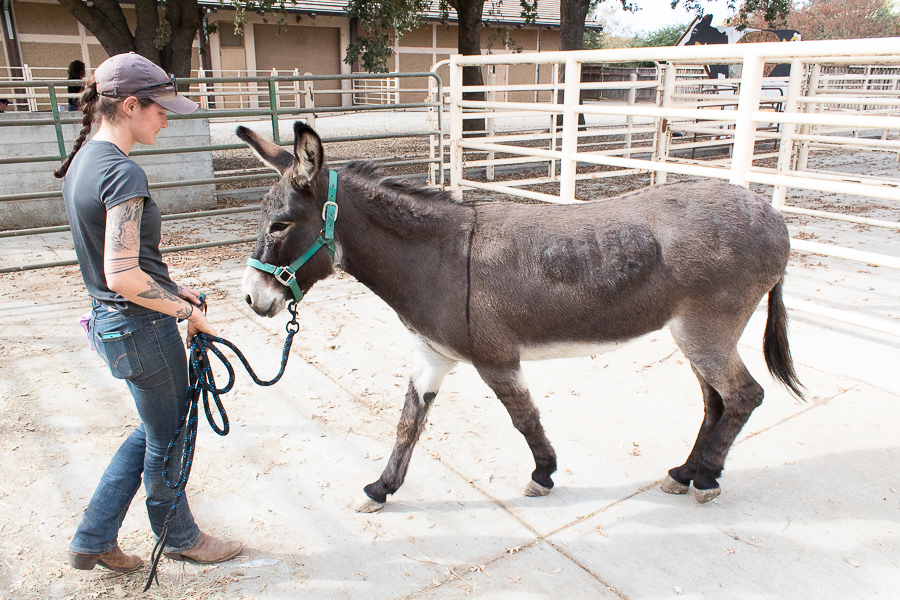
For six years, the annual Donkey Welfare Symposium has brought donkey researchers, equine experts, veterinarians, enthusiasts, undergraduate and veterinary graduate students and companions together for a three-day experience highlighting the donkey’s importance for communities across the world. This year’s symposium was organized by Eric Davis, a veterinarian at the UC Davis School of Veterinary Medicine International Animal Welfare Training Institute, his wife Cindy Davis and Amy McLean, an equine lecturer at the UC Davis animal science department, UC Davis Global Affairs and the non-profit Donkey Sanctuary.

When most people think of donkeys, they think of Donkey from “Shrek”– a hyper, talkative and annoying animal companion.

“Eddie Murphy’s character in Shrek is not a donkey character,” Eric Davis said. “Actually, most donkeys have the complete opposite behavior.”

While donkeys generally don’t get a lot of respect, they are vital to human well-being across several national and international communities. In countries like Mali and Tanzania, donkeys are important for carrying water and for the well-being of families. They have social and economic impacts on many communities.

Researchers came from over 14 countries through the UC Davis Global Affairs “Global Education for All Initiative” to create a space for global curiosity and opportunity for animal welfare.

“There aren’t that many veterinary-skilled people that look after the welfare of donkeys, an important animal particularly in Africa and other areas across the world,” said Ermias Kebreab, the associate vice provost of Academic Programs Global Affairs. “Being exposed to the Donkey Welfare Symposium could create opportunities for vet students who would want to have a career in animal welfare as an intern for future Summer or Quarter Abroad programs.”

Attendees came with a variety of donkey needs they wanted to address in donkey sanctuaries, donkey rescue spaces and in their own personal encounters with donkeys. Some concerns included how to maintain behavior after buying a donkey from another trainer or how to design engaging programs and environments for donkeys with different individual expression habits.

The first day of the symposium was dedicated to understanding behavior science and shaping donkey behavior, providing strategies to train, handle and become a donkey companion. Donkeys have their own individual personalities and perspectives shaped by experiences beyond their character and species, including previous interaction, environment, pain and medical conditions, genetics and evolution. As a result, long-term training must be thoughtfully adjusted to meet each individual donkey’s needs in a way that meets the trainer’s personal principles.

“Most apply strategies to training horses to the way they train donkeys,” said Donkey Sanctuary Equine Expert Ben Hart who led the behavior and training discussions on the first day of the symposium. “Donkeys are not small horses with big ears.” Better donkey training starts by understanding their behavior as a tool for problem-solving their needs.

The second day of the symposium involved two separate tracks for enthusiasts and veterinarians. For enthusiasts, the day was filled with strategies and discussion to change attitudes and perspectives of donkeys in communities, while veterinary-focused attendees addressed medical needs such as hoof lesions, cognition and ophthalmology.

“You feel the energy and vibes from the guests’ participation,” McLean said. “It’s one of the few conferences where you have veterinarians, researchers, people from academia, people involved in rescue and donkey enthusiasts participating in wet labs and training demonstrations.”

The third day hosted a series of demonstrations including trimming donkey feet and freezing donkey semen. Although there are diverse donkey species across the world, several donkey species are at risk of going extinct. The symposium provided a space to preserve gene pools and information of at-risk species.

“Some of the biggest issues that we have, climate change or animal welfare, is not something that one country can solve for itself,” Kebreab said. “If we join forces, then you can come up with solutions that work for everybody and the impact is much greater than if you work with one university.”

During the symposium, all of the speakers were invited on tours to show guests donkeys in nature and where they evolved in the desert. On one day, speakers and symposium organizers went up to Susanville, California with Amy Dumus, the manager of the Bureau of Land Management-California Wild Horse and Burro Program, to visit donkeys in their natural habitat. The visit was the first for many guests from Mali, Pakistan, Egypt, Spain, Italy and Tanzania who had never seen donkeys in the wild before.

Another tour involved seeing the first mule and donkey industry at a farm in Lincoln, California. At the farm, speakers saw mules used for racing and cloned mules worth over $130,000.

“They got to see mules and donkeys in a completely different perspective in place of animal abuse, dairy production or an animal that is kept as a pet or companion,” McLean said.

The Bureau of Land Management and UC Davis have a student-learning project where donkeys are gathered from the wild, placed into holding facilities and trained by UC Davis students. Domesticating the donkeys improves their welfare, shapes students’ perspectives about donkeys and improves students’ equine knowledge. At the end of the Donkey Welfare Symposium, attendees were able to see the progress of the UC Davis student-learning project through a donkey adoption event.

Eight donkeys were directly adopted at the Donkey Welfare Symposium, while eight more donkeys wait for the completion of their adoption process before they are transferred to a better home with new adventures to come.

“My favorite part is working with the donkeys, but also we’ve had people who’ve been coming every year for six years from Canada and many different places,” Cindy Davis said. “I always enjoy visiting with them and asking them about their donkeys. They come back because they learn so much and as do I.”

Next year, there will more donkeys to learn from and more experiences to share.


Written by: Foxy Robinson — science@theaggie.org


Red Sox beat Dodgers, take home World Series Championship

ANDREA GONZALEZ / AGGIE

Los Angeles loses at home two years in a row, this time to Boston Red Sox in five games

Following in the footsteps of the other recent championship matchups, the 2018 World Series did not disappoint. It included the longest game in World Series history, frequent pitching changes and faithful fans rooting from each coast. The big two market teams –– the Boston Red Sox and the Los Angeles Dodgers –– collided in a clash-of-the-titans type match.

The first two games of the series took place in Boston’s famous Fenway Park, where the east coast’s chilly winds appeared to get the best of the California team. Each team’s ace, Boston’s Chris Sale and L.A.’s Clayton Kershaw, started off the series. Game one quickly swung in favor of Sale and the Red Sox, as they took over to beat three-time National League Cy Young Award winner, Kershaw.

Boston outfielder Andrew Benintendi recorded four hits in five at-bats and scored three runs while fan-favorite J.D. Martinez drove home two runs early in the contest. On the Dodgers’ side, long time veterans Matt Kemp and Justin Turner stood out. Kemp hit a home run over the Green Monster, and Turner had three hits on the night. Shortstop Manny Machado knocked in three runs for L.A. and tied the game in the fifth inning on a sacrifice groundout.

Pinch-hitting for the Sox in the seventh inning was Eduardo Nunez who tacked on a three-run homer to seal the Dodgers’ game one fate, 8-4 Red Sox. The Dodgers struggled to overcome defensive errors and the two clubs ended up using a combined 12 pitchers.

Game two proved to be just as challenging for Los Angeles as temperatures dropped even lower, and Red Sox leftie David Price redeemed himself for his second postseason win. Price was previously winless in his first 10 postseason starts. His victories with Boston were the first of his playoff career.

The Red Sox struck first, as second baseman Ian Kinsler drove shortstop Xander Bogaerts home on a line drive single in the second inning. Though Price kept the Dodgers hitless through the first three innings, he wavered in the fourth and gave L.A. a 2-1 lead after loading the bases.

Price’s Red Sox came to his aid though, loading up the bases for themselves in the fifth inning. First baseman Steve Pearce was walked home for Boston’s second run, and Martinez lived up to the hype as he broke the fifth-inning tie with a two-run single –– the defining hit that rocketed the Sox to an important second victory of the series.

The longest game in World Series history proved to be just what the Dodgers needed to steal a game back from Boston when the team returned home to L.A. The 18-inning Game three started off slowly — only one run was scored in seven innings. Dodgers rookie pitcher Walker Buehler was the star of the night for L.A. on defense, as he shut out the Sox through a full seven.

Center fielder Jackie Bradley Jr. tied the game with a solo home run off Dodgers closer Kenley Jansen in the eighth inning. The game remained knotted until Boston pulled ahead with a run in the thirtieth. The glory was short-lived however, as the boys in blue responded with a run of their own at the bottom of that same inning.

Exhausting their rosters, both teams were forced to use unusual rotations deep into the night. The Red Sox put catcher Christian Vazquez at first base and the Dodgers even utilized Kershaw to pinch-hit. Ultimately, Max Muncy was the hero for L.A. His walk-off home run finally ended Game three in the bottom of the 18th inning — after seven and a half hours of play.

Though Game three ended early in the morning of the same day that game four was set to start, Los Angeles’ joy did not carry over to that night.

The Dodgers’ bats were on full display as they struck for four runs in the bottom of the sixth inning. Reigning NL Rookie of the Year Cody Bellinger stepped up to the plate with the bases loaded and hit a ground ball to the first baseman. L.A.’s Enrique Hernandez was thrown out at home base, but an error by Vasquez, Boston’s catcher, allowed Turner to score for the first run of the game. Dodgers right fielder Yasiel Puig capitalized on the two men left on base by clobbering a three-run home run to put his team up to 4-0.

Boston responded two innings later with a pinch-hit, three-run homer of its own by Mitch Moreland, cutting the Dodgers’ lead down to one run. The Sox continued the slug-fest with a solo homer by Pearce in the eighth and by a massive five-run inning in the top of the ninth. The Dodgers came up with two more runs in the bottom of the ninth but were unable to catch their opponents.

Boston finalized its dominant postseason run in game five by winning their fourth championship title since 2004, making it the first MLB club to collect four rings in 15 seasons. The Red Sox faced Kershaw for the second time, and once again got the better of L.A.’s ace. Each of Boston’s five runs came off home runs: Pearce’s two-run drive in the first inning, Mookie Betts’ solo in the sixth, Martinez’s single shot in the seventh and Pearce’s second of the night in the eighth. The Dodgers were only able to tack one run on the board with a solo home run by third baseman David Freese. Boston’s manager, Alex Cora, also made history as the first Puerto Rican manager to win a World Series title and the fifth rookie manager with a title under his belt.

Now that the kings of the 2018 MLB season have been officially crowned, let the countdown to 2019 Spring Training begin –– only 97 days until pitchers and catchers report.


Written by: Kennedy Walker — sports@theaggie.org


Aggies gear up for 2018-19 season

OLIVIA KOTLAREK / AGGIE

Men’s, women’s basketball motivated to build on previous sens of success

Men’s Basketball

UC Davis men’s basketball started off its 2018-19 season with an exhibition game victory, 87-59, against Dominican University at The Pavilion last Thursday.

Although the Aggies ended the 2017-18 season as back to back Big West conference champions, Cal State Fullerton dashed UC Davis’ postseason hopes of a NCAA tournament berth in the Big West tournament semifinals. Fullerton went on to the NCAA tournament but lost in the first round to Purdue.

“We still have that bad taste in our mouth from last year,” said senior forward Garrison Goode. “It was a good year, but it definitely wasn’t where we wanted to be. It’s always a good thing, just trying to get better, so we’re definitely trying to make it to the [NCAA] tournament again, and it starts right now, just taking it day by day.”

As the team transitions from preseason practices to regular games, Head Coach Jim Les said he liked how the team’s defense was shaping up. The Aggies held opponents to .425 from the field last year, and held Big West opponents to .433, fourth in the Big West.

Les noted that team defense will be a priority as the Aggies move forward into the season.

“Just continuing to build on our defense,” Les said. “We have a group that has  athleticism and versatility […] when we get those five guys on the floor engaged and working in sync with each other, it’s pretty impactful. We have some good team speed, a good mix of shooters and now we can get out in the open floor and play offense off of our defense.”

In UC Davis’ exhibition on Thursday, the Aggies recorded 13 steals against Dominican. The Aggies averaged 7.1 steals per game last year.

After senior forward Chima Moneke, who was putting up an impressive 18.4 points per game, was suspended indefinitely, the path was clear for the then junior point guard and 2017-18 Big West Player of the year TJ Shorts II to lead the Aggies throughout the rest of the season. Shorts, whose head coach described him as a natural leader, averaged 14.8 points per game and in the last four weeks of conference play averaged 5.8 steals per game.

The Aggies lost senior guards Michael Onyebalu and Arell Hennings after the two graduated in the Spring, as well as Moneke who went on to play professionally in France for Rouen Metropole.

This season’s roster features an experienced squad with five seniors: guards Shorts and Siler Schneider and forwards Goode, A.J. John and Colin Fuller.

“Siler and Garrison, who have been here, have had really impactful roles for three years,” Les said. “Those guys set a good example every day for the work ethic that’s needed, they’re a group that really understands how we want to play, they spread the message better than [the coaches] do.”

The matchup against Dominican gave some of the newcomers on the team a chance to get on the court. Most notably, junior guard Stefan Gonzalez, who transferred to UC Davis from Saint Mary’s, played 22 minutes in his debut against Dominican. He thinks that even though it’s his first year playing for the Aggies, he brings experience that could be valuable on the court.

“I feel like I bring a lot of leadership to this team,” Gonzalez said. “There’s a lot of guys that lead this team, but I think I could bring by voice and my energy on and off the court.”

Redshirt freshman guard Gio Nelson and freshman guards Damion Squire, Caleb Fuller, B.J. Shaw and Cameron Ba all got some playing time as well.

Although their role is unclear at this point in the season, Goode thinks the young players are on the right track.

“We got some great freshman, Damion, Caleb, B.J. and Cameron,” Goode said. “You saw them coming in fearless and getting their shots up, they’re very comfortable.”.

Goode noted that the freshman came into practices comfortable and with a fiery mentality without the older players needing to teach them.

Matt Neufeld, a junior center transfer from Saint Louis, did not play. Les told the Davis Enterprise that he expects Neufeld and Gonzalez to play an important role on the team.

After the Aggies make a quick trip across the Causeway to the Golden 1 Center in Sacramento for a game against Sacramento State, they’re looking at a monster schedule at The Hardwood Showcase. UC Davis is set to take on premier college basketball teams like Indiana, University of Arizona and USC.

Before then, the Aggies take on San Diego at the Pavilion on Friday.

With this being a good chunk of the team’s last year to make it to the NCAA tournament, Goode hopes to build on previous success. It should provide The Pavilion with some entertaining Big West basketball.

“We’re definitely going to play our hearts out, it’s our last year here and we definitely want to leave with a bang.”


Women’s Basketball

The UC Davis Women’s Basketball team kicked off the 2018-2019 season at home against Cal State East Bay in an exhibition game, winning by a whopping score of 94-41. The Aggies returned from a season in which they took home first place in the Big West and made a quarterfinals run in the Women’s National Invitation Tournament.

Head Coach and UC Davis alumnus Jennifer Gross entered her eighth season as the leader of the Aggies, looking to lead her team to another year of home dominance. Last season, the team only lost a single game inside the Pavilion, boasting a home record of 14-1.

This season’s first exhibition game began Thursday evening with a bang, as sophomore forward Cierra Hall controlled the first five minutes. After scoring the first basket of the game, Hall hit two more shots and contributed a steal, pushing the Aggies to a quick eight point lead.

The remainder of the first half was centered around last year’s lead scorer and redshirt senior forward/center Morgan Bertsch, who had full command over the offensive and defensive paint. After leading the Aggies much of last year, Bertsch took full control over their first game of the season. At the half, UC Davis led Cal State East Bay, 52-18.

The second half of play featured sharpshooting junior forward Nina Bessolo, who finished the contest with a team-high of 21 points and six made threes. Bessolo also added in a block in the second half, further bolstering her team’s strong defensive performance.

The senior twin duo of Kourtney and Karley Eaton led the way in handling the ball on offense throughout the game, contributing 11 out of the team’s 24 assists.

Gross was pleased with the “energy and effort” her team displayed in its first performance of the season, after winning the game 92-36.

“Sometimes [you can be] so juiced up and emotional and excited and sometimes that works a little bit against you but this group came out pretty focused, played with energy, but played pretty smart basketball through the remainder of the game,” Gross said.

In this coming year, Gross is hoping to establish consistency “from [all] different players.”

“We lost some seniors to graduation who provided that consistent energy and play, and I thought we got that tonight from players like Nina Bessolo, Cierra Hall and Karley Eaton, players who are now going into starting roles,” Gross said. “If you look at the stat sheet, everyone contributed, and that’s what this team’s going to be about.”


Written by: Bobby John and AJ Seymour — sports@theaggie.org


More than just a cafe

RAUL MORALES / AGGIE

Delta of Venus’ Halloween show was anything but scary

While Delta of Venus offers great coffee, scrambles and sandwiches, anyone who has spent time there can testify that it’s more than just a cafe. According to its website, Delta of Venus was founded in 1993 with the goal of “providing a comfortable space for the creative and active downtown Davis community to meet up and relax peacefully, eat and drink good food, and inspire each other to love, laugh and live together.” Since then, Delta of Venus has provided a space for a multiplicity of creative events and artistic mediums.

A space that encourages creativity and expression, Delta of Venus is located on B Street right across from campus. It welcomes passersby with its bright yellow entrance, generously sized front patio and cottage-like appearance. With events almost every week, Delta of Venus transforms from a cozy study hub to a lively atmosphere inviting all people to celebrate and appreciate the art and creativity that is being shared.

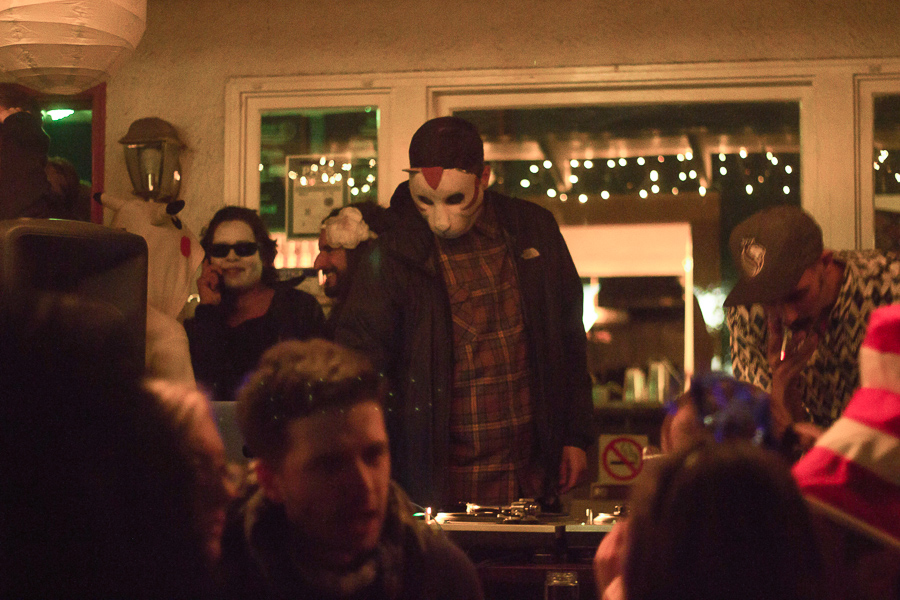
This Halloween, Delta of Venus hosted an event called “Geist: Halloween Party” that took place from 8 p.m. to 12 a.m. in which resident D.J. OrthoJax performed for an audience of students and Davis locals. On Facebook, 655 guests marked going to this event, and while there were not as many people there the night of, the number of people interested reflects Delta of Venus’ reputation within the Davis community as a space where people can come together. In addition, the Facebook event invited those attending to dress up and partake in their costume contest. However, it was included that “costumes are encouraged but not mandatory,” thus inviting creativity from its audience but not forcing or expecting it.

Sofia Meola, a fourth-year psychology major, who had only been to Delta of Venus during regular business hours, enjoyed seeing the transformation of the cafe.

“There were a lot of different types of people here; there was a big range in age and because of how wide the music selection was, it seemed to attract many different music tastes as well,” Meola said. “I saw some really good homemade costumes that you could tell were close to people’s hearts. You could really see what they were interested in from the detail and creativity in their costumes. In general it seemed that there was a lot of appreciation of creativity.”

Anyone passing Delta of Venus on Halloween would have seen the large crowd of people standing outside, chatting, smoking cigarettes or simply stopping by to listen to the music. The atmosphere of Delta of Venus was so contagious that even those who didn’t feel like dancing or partaking still sat outside of the restaurant to observe and enjoy the entertainment. On the other side of the yellow entrance, those who wanted to dance to DJ OrthoJax’s set stood in the courtyard close to the DJ booth, while those who wanted to chat with their pals or nod their heads to the beat stood in various places throughout the courtyard. Inside, the cafe was darker with house music blaring from its speakers, a scene that was different from the one outside but still contributed to an atmosphere of celebration and friendship over a shared appreciation of the arts.

Chris Alam, a second-year English major who had never been to Delta of Venus before, enjoyed the wide range of music that was played.

“It’s a very relaxed vibe,” Alam said. “They played a pretty eclectic set, with some older hip-hip and halloween classics it was definitely a more retro Halloween vibe that you wouldn’t hear on the radio. I think if you are looking for a scene that has a lot of different types of people to enjoy music in, this is the perfect one.”

As a space that prides itself on appreciating creativity, Delta of Venus ensures that all creativity and varying expressions of it are welcomed. While the Halloween party advertised live music, Delta of Venus’ consideration and efforts in providing a space that was positive for everyone extended beyond a typical concert.

Nicolas Dinito, a second-year environmental policy major, had been to one other Delta of Venus concert before the Halloween show.

“I really like these settings with music because it always attracts a cool, chill group of people from Davis that you can come and meet, it’s awesome,” Dinito said. “This time there are a lot more people, which is nice, but it’s definitely similar vibes in terms of cafes and business that you can go to to support local music.”

Overall, the genuine appreciation and respect for the arts that Delta of Venus was founded on echoed through its diverse and comprehensive music selections, its consideration in creating different ambiances both inside and outside of the house and its general atmosphere of comfort that people felt when interacting with each other. Unlike most places, Delta of Venus creates a genuine space for people to meet and converse, welcoming all ages and people to comfortably appreciate the arts.


Written by: Rosie Schwarzarts@theaggie.org


Review: Mid90s

ALLYSON KO / AGGIE

Jonah Hill’s “Mid90s” an emotional homage to golden era of skateboarding

Raw, gritty and powerful are three words that come to mind when describing Jonah Hill’s debut film “Mid90s.” The film stars Sunny Suljic, Lucas Hedges, Na-kel Smith and Olan Prenatta as a group of teenagers who embark on a skateboarders’ odyssey through broken spirits, bones and boards.

Stevie, played by Suljic, is a young teenager growing up in Los Angeles during — you guessed it — the mid-90s. Raised by an absent mother and an abusive older brother, Stevie is left alone to confront an unwanted image of himself in a time of crucial development. Reaching his hand out for a role model, Stevie is taken in by a local team of skaters and shown the subterranean world of skateboarding and friendship.

Shot on a super 16mm camera and framed by a boxy 1.33:1 ratio, the vintage yet grainy photography sets the film’s old-school mood and resembles that of a classic ’90s skate film, both having the same granular effect which results in downright nostalgia.

Right out of the gate, the larger themes of this movie present themselves as dysfunctional relationships that are scattered throughout and demand most of the film’s dialogue. Brother to brother, friends versus family, skaters and their skateboards — all relationships are met on a rollercoaster, and some grow stronger while others fade. Some of the most memorable and heartbreaking moments of the film were the breaking and building of these relationships and watching those repercussions take shape in the actions of certain characters.

More than just a skateboarding flick, “Mid90s” touches on the unanswered and not so internal prejudices that were more than common in that era. The dialogue, being intentionally centered around the homophobic and blatantly racist terminology of the times, is quickly shut down by the older, “wiser” skaters in the group.

As the film plays on, the dialogue is placed over the serene yet ominous tones from the film score, composed by Trent Reznor from Nine Inch Nails. When the score is not present, the soundtrack soars. Packed full of classic ’90s hip-hop and alternative rock, from upbeat to down low, the soundtrack speaks volumes about the film’s overall mood. And unique to Hill’s production, a single scene will quickly cut from one song to another, as if someone accidentally pressed skip on their Walkman. This might sound unappealing, but when Big L’s “Put It On” is quickly followed up with some unplugged Nirvana, one cannot help but marvel at the film’s audiophilic initiative.

Though much like a classic skate film in its production, there is a surprising lack of actual skateboarding in the movie. Despite a few scenes that focus on the skating prowess of the group, the camera focuses more on facial expressions and the body language of those who ride. The film is more than just tre-flips and crook grinds as it focuses on what really drives the skater to that level of dedication.

But on the same note, this film is a skater’s dream. Many can reminisce on the subjective golden era of skateboarding, back in the mid-to-late ’90s when names like Eric Koston and Chad Muska were beginning to influence the skateboarding masses that still follow them today. Although these skaters are not featured in the film, their companies — Girl Skateboards, Shorties, Chocolate — are consistently displayed on the skateboards and clothing throughout the film.

This film is a nostalgic trip for not only those who pushed a skateboard in the 1990s, but also to anyone who spent even the smallest amount of their childhood in the twentieth-century. From the Wu-Tang Clan CDs to the hand-me-down FUBU, this film elicits nostalgia and lives up to the echo through its musical score, cast and setting.

As the film spends most of its time in the midst of bonding skate sessions, some of the scenes are shot in the most famous skate spots around the greater Los Angeles area. Many skaters in the audience can pick out the iconic concrete of the Hollywood High School and the black ledges of the West LA Courthouse Skate Plaza. Many of these locations are the setting for hundreds of classic skate films, and when the audience expects to get some shredding scenes in these locations, they are instead met with compelling conversations and heartfelt moments of friendship, which give an in-depth view into what makes the skater.

This movie may tell the tale of a young aspiring group of skaters, but it retells the stories of so many in the audience. Before the skating ensues, Stevie is found reading a “Big Brother” skateboard magazine which inevitably influences him to visit a local skate shop where he purchases the necessary aesthetics — clothing and posters — to gain the courage to approach his soon-to-be group of friends. For many of us, this is a walk through a time machine, a detailed account of our exact childhood mentality as we approached something new and exciting.

“I really believe that everyone has a snapshot of themselves from a time when they were young that they’re ashamed of,” Jonah Hill wrote on the A24 Films website. “For me, it’s that 14-year-old […] that felt ugly to the world, who listened to hip-hop and wanted so badly to be accepted by this community of skaters.”

The parallels between 14-year-old Jonah Hill and every single character from the film are innumerable. Each character struggles with self-doubt and anguish, hinging themselves on the emotional ties of their friend group, depending on the other when little value remains for the self. “Mid90s” teaches its audience that hope may be found in the face of despair, and for the characters in this film, that hope resides in a piece of wood and a set of wheels as well as in the love these friends hold for each other.

Written by: Clay Allen Rogers — arts@theaggie.org

The freshman transition: From pond to lake

0
ANDREA GONZALEZ / AGGIE

How freshmen find their footing at this point in the quarter

For many freshmen, making the transition from high school to college is a big step forward. Some are first-generation college goers, while others have a long history of college in their family. Regardless of the situation, it can be quite intimidating to step on to a college campus for the first time, but many students don’t allow this image to halt their progress.

Lawrence Tolentino, a first-year communication major, came from a small charter high school of only 630 students across all grade levels. In this small community, Tolentino was constantly searching for a way to find new people and make connections with them.

“I remember I would join clubs, go to a bunch of events, join swimming, travel a lot; just [trying to] meet new people,” Tolentino said.

Though only a handful of his friends from home came to UC Davis with him, he acknowledged how getting himself involved in high school has helped him find ways to meet people at a campus with a student body much larger than he has experienced. Tolentino also noted the difference between having a rigid high school schedule of an 8 a.m. to 4 p.m. day with seven classes to a more flexible environment, consisting of only three classes for his Fall Quarter.

“I’m starting off better in classes here than I did in high school,” Tolentino said. “In high school, you’re in class the whole time, all throughout the day. Here, it’s all spaced out. I don’t feel the urge to procrastinate as much; my motivation isn’t going down.”

With a wide range of classes to choose from, Tolentino found classes he enjoys to take instead of finding himself burned out in the middle of the day. While the quarter system lends itself to sneaky midterms creeping up on students by their third week, Tolentino found confidence, knowing his professors take the time necessary to walk through a midterm review session and assist the students in multiple ways. Aside from academics, Tolentino described his enjoyment in the many clubs around campus that allow him to meet others and stay engaged while focusing on schoolwork.

“Here, everyone is active and everyone is into [clubs],” Tolentino said. “The people in high school, a lot of them [joined clubs] just so they could get into college. The people that join clubs here, they’re joining because they want to.”

It is a refreshing scene for Tolentino, finding himself around like-minded individuals with the same motivation he carries with him.

Sven Kuhne, a computer science major, found himself in similar shoes as Lawrence Tolentino coming from a small charter school. While Kuhne knew everyone in his graduating class, he described the difficulty of meeting people outside of his high school.

“Because we were a charter school and we had students from all around the area, it was hard to hang out with other people,” Kuhne said. “You can’t just bike to them, it involves a lot of driving, or, if you are biking, it takes about 20 minutes.”

Now entering his first year at Davis, Kuhne has come to grips with the fact that it is quite difficult to try and meet all of his contemporaries.

“I’ve been dealing with [the transition] by accepting that I can’t get to know everyone,” Kuhne said. “I get to know mostly the people on my floor because I do spend most of my time studying. Also, people that are in my classes because I want to be able to form study groups with them later.”

Forming study groups is certainly essential to anyone who has never been introduced to the quarter system. Kuhne acknowledged how fast the quarter system can move after a few weeks of classes.

“[The quarter system] goes a lot faster,” Kuhne said. “For me, it’s not necessarily a problem. In fact, high school always felt a little bit slow to me. Right now, it’s actually pretty good. Even though in high school I had seven courses per year, I feel like the workload in the end is around the same. You have to be a lot more engaged with the material.”

In terms of socializing with others, Kuhne finds it much more convenient and easier to find others who have similar interests and goals in mind.

“I feel like the college atmosphere, social-wise, [allows you] to get to know a lot more people, and you can do more with them,” Kuhne said. “Because everyone is so close by, it’s easy to say ‘Hey, do you want to eat lunch with me?’ or ‘Oh, do you remember that math homework? Can we work on that together?’ That’s one of the cool things about college.”

Sriharish Bellamkonda, a first-year biochemistry major, attended a high school that emphasized academic proficiency for its students. Bellamkonda shed light on the academic rigor his high school implemented.

“[My school] was very academic oriented,” Bellamkonda said. “That meant a lot more focus into how to study, what to study, taking AP classes and trying to push yourself into the next level. It was that kind of high school where you went there and then you felt really [good] because you knew everyone around you, and it sure is a feeling that I miss right now.”

Bellamkonda is currently taking only 12 units, and has found that to be a pleasant surprise in terms of workload and down time.

“The workload is pretty nice,” Bellamkonda said. “It’s actually left me with more free time than I know what to do with. I’ve been warned of that, so I’ve been trying to find ways to fill that up as much as possible. If you’re there in your dorm and you’re not doing anything are you really in college, and are you really interacting with people?”

While Bellamkonda has experienced the same hurdle of trying to meet new people and getting comfortable with new surroundings, his decision to come to Davis was vested deeply in his confidence of finding lasting friendships.

“I chose Davis because I felt that I could come here and I could be certain that I would make some really good friends,” Bellamkonda said. “In that sense, Davis has been an amazing experience.”


Written by: Vincent Sanchez — features@theaggie.org


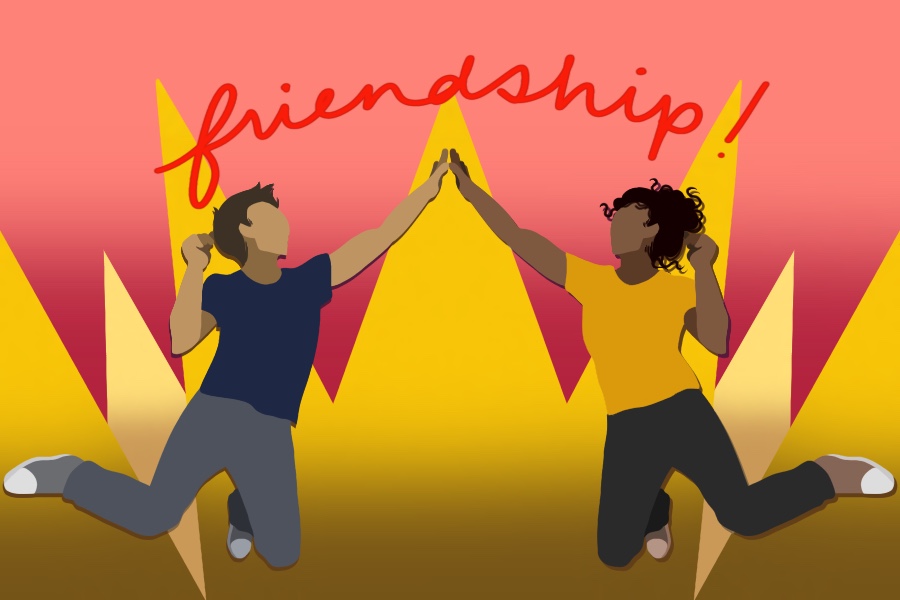
Social life in college — How important it is, how to maintain one

0
CAITLYN SAMPLEY / AGGIE

Students talk about what friendships mean to them, how they balance social lives with academic life

Getting a degree might be the reason that students go through the college application process and stay at their university of choice for another four years, but it’s not the only thing that counts by the end of a student’s college journey. One area of life that students particularly try to maintain in college is a social life.

Socializing means having a life apart from school and all the other ‘adulting’ aspects,’” said second-year computer engineering major Aman Vinayak. “Having friends or a social circle just makes life a tad bit easier.”

Tiffany Kwan, a third-year transfer student and a managerial economics major, had positive things to say about socializing as well.

“Socializing is connecting with other human beings,” Kwan said. “[Socializing] is pretty important to me, because it is a way to de-stress from the difficulties of this school. It is an integral part of college because you are just constantly around new people, and when you are struggling it’s better to talk to people rather than keep everything to yourself.”

In the day and age of Snapchat and Instagram when students can virtually stay in touch with their friends by watching their Instagram stories, students still manage to find ways to take time out of their busy schedules to cultivate friendships and socialize.

I have deleted most of my social media so it’s all now face-to-face therefore, I don’t spend any energy on my devices wasting time and not even socializing,” Vinayak said. “I host guests at my house, go to events and that’s how I save time from not being on my devices and focus on school.”

When it comes to meeting people, Kwan found those who fall naturally into her schedule to be suitable companions.

I socialize with people who are in the same class as I am, or I use socializing as a break from studying,” Kwan said.

Does partying count as socializing? Different students have different thoughts.

I used to like to party a lot but not anymore,” Vinayak said. “There’s nothing much to it, if you see it’s just blacking out and making snapchat stories. Therefore, I refrain. I like being in smaller groups now as I am getting older. I want to strengthen my relationships rather than having a bunch of people who just know my name, and I can’t have a real conversation with, and who don’t even know much about my life.”

Kwan had similar views on the topic of partying and making genuine connections.

I feel like partying is not the best way to really get to know people, but rather just a way to let loose,” Kwan said.” I feel like the only way to really connect with people is to be able to have a conversation one-on-one with a person. That is the only way to really get to know what makes a person who they are today. Most people aren’t as willing to open up in a larger group.”

Staying on top of school work, socializing and still prioritizing some “alone time” might be challenging for a lot of college students, but students try to focus on their health while also focusing on academics.

“I prioritize my health and well-being [over socializing].” Kwan said. “[Having alone time] is very important to me, as I am not one who is able to be social all the time.”

Vinayak talked about his health and well being as well.

I do take quite a bit of me time,” Vinayak said. “It’s unlike me, but this year I have started to focus more on my health and studies, so I socialize quite a bit but retreat as soon as it starts to get overwhelming. I get bored easily so I like being alone sometimes in my thoughts and relaxing.”

Kwan seemed to find that making casual friends versus achieving coveted best friendship were two very different things.

I feel like I do easily make friends, but it is harder to find really close friends,” Kwan said. “Friendship is having a person to count on when you need someone to talk to. Also not turning your back on someone even during dark times.”

Vinayak talked about what friendship means to him.

Friendship means having someone to talk to apart from family and discussing things that may not make sense to anyone else other than you and your friends,” Vinayak said. “A companion who you can share these experiences away from home.”

If socializing and making friends is this important, it is evident that there must be a strategy as to where to find friendships.

I would consider [rushing a sorority] just because it would be a good way to make friends,” Kwan said. “Don’t be afraid to just go out and find some organization to make friends, because it is likely that there are numerous other people who are having the problems as you.”

Vinayak talked about her college social experience being different than that of high school.

Keep your ego aside and just go out and meet people,” Vinayak said. “College is a huge, huge place where you are bound to meet people who share the same likes and dislikes as you. It’s essential that you make friends as college is a whole different ball game than high school. Shit gets real out here.”


Written by: Rabiya Oberoi — features@theaggie.org