

By GENEVIEVE RYAN — geryan@ucdavis.edu
By GENEVIEVE RYAN — geryan@ucdavis.edu
By GENEVIEVE RYAN — geryan@ucdavis.edu
By GENEVIEVE RYAN — geryan@ucdavis.edu


Our political environment is ripe with fear and laziness
At a recent rally in Texas, Trump declared himself a “nationalist,” embracing the title while ridiculing globalism, much to the pleasure of his supporters.
“You know what I am; I’m a nationalist. Use that word.”
Being an American and being a nationalist are not the same thing, and this rhetoric implies division beyond politics. The scope of polarization has reached the word “American,” muddling its meaning. Now we can add one more divisive issue onto the list: what it means to be an American.
American identity has varying interpretations. A survey conducted by The Associated Press – NORC Center for Public Affairs Research found that Republicans are far more likely to cite a culture grounded in Christian beliefs and the traditions of early European immigrants as essential to American identity. Democrats, on the other hand, are more likely to cite the United States’ history of diversity and tradition of offering refuge as central to that idea. Regardless of party affiliation, 70 percent of respondents said the country is losing that identity. Although we can’t agree on what makes us American, most would seemingly say that we’re losing the essence of our American identity.
These definitions of “American” are directly traceable to the answers cited when respondents were asked what they considered to be the greatest threat to the American way of life. Democrats cited the country’s political leaders, political polarization and economic inequality. Republicans cited illegal immigration. By fearing the impact of certain immigrant populations, Republicans seem to value the more traditional European concepts of culture –– like Christianity –– as central to the American identity.
The fears of Democrats and Republicans are geared toward fulfilling and maintaining that identity, which is why Trump’s rhetoric, and the subsequent violence we’ve observed in the past weeks, is cause for concern.
Both sides’ fears and distinct American identities only seem to be aggravating polarization. You cannot have a diverse nation if half the population views immigrants as posing the greatest threat to American life. Similarly, you cannot have a homogenous nation if the other half sees diversity as being quintessential to American identity.
These differences aren’t derived from the current political climate –– rather, they are exacerbated by it. While Republican fears and subsequent support for anti-immigration policies are misplaced, we should not discount how our transitioning economy has resulted in millions feeling left behind. The decline of the American coal industry, for example, has severely impacted the working class, especially increasing unemployment within this industry. At a surface level view, it’s not difficult to determine why Republicans fear the result of immigration — they fear its capacity to diminish their means of livelihood. However, these fears would be quelled with the conduction of basic research. For example, studies show that immigrants don’t take Americans’ jobs. Fear-mongering politicians are intent on winning as opposed to being factually correct. Fear is an easily exploited emotion.
The most recent example of this exploitation can be seen in Trump’s reaction to the caravan of Central American migrants heading towards the U.S.-Mexico border. The caravan is thousands of miles away, and migrants are traveling on foot. They are fleeing their homelands due to the threat of violence, and false claims by the president regarding the size and ethnic makeup of the caravan is intended to instigate fears based in bigotry.
Which group of people poses more of a threat: those seeking refuge from violence or those who, upon being riled-up by a hatred of immigrants, kill 11 Jewish worshippers in a synagogue?
Allowing politicians to control our fears affords them absolute power over policy once they’ve become acquainted with our qualms and desires; they can then exploit our emotions to the advantage of their political agenda. Perhaps our biggest issue, and the greatest threat to the American way of life, is mental laziness. We accept what is said as fact. We are drifting away from independent thought. We passively let our fears be exploited, and our country be divided, and then come to wonder why our identity feels as though it’s slipping away.
America has always been more than a people within a nation’s borders; America is a set of ideals, based principally in equality. We don’t have to search far for our identity. It’s in the second paragraph of the Constitution.
“We hold these truths to be self-evident, that all men were created equal, that they are endowed by their Creator with certain unalienable Rights, that among these are Life, Liberty and the Pursuit of Happiness.”
Written by: Hanadi Jordan — hajordan@ucdavis.edu
Disclaimer: The views and opinions expressed by individual columnists belong to the columnists alone and do not necessarily indicate the views and opinions held by The California Aggie.

Armadillo Music hosts benefit concert with Your Local Cemetery, Kelly Jean
Downtown record store Armadillo Music presented a Halloween-esque benefit show featuring live music from Your Local Cemetery and Kelly Jean on Oct. 26. The event raised awareness and money for the organization of Kids in Need of Defense (KIND).
Clad in a Han Solo ensemble, an inflatable dinosaur costume and an outfit inspired by Jim from the TV show “The Office,” the band members of Your Local Cemetery took the Armadillo Music stage after singer Kelly Jean’s opening performance. The band performed original songs and publicized that all donations and proceeds from their t-shirt sales would go toward KIND.
“Our goal is not only to raise money, it’s really to bring awareness and to provide a safe space for people to come to connect with each other and support each other openly,” said Chloe Breaker, Armadillo Music’s booking agent and fourth-year Spanish major. “It’s really just hoping to provide a platform or an environment that’s welcoming and secure for anybody.”
After a collaborative benefit show for the Transgender Law Center last year, Breaker reached out to Your Local Cemetery for another performance this fall. The band members decided on the organization KIND, which specifically works to provide legal representation to children appearing in immigration court in hopes of reuniting families separated at the border.
“We try and benefit organizations for people who need the help at that time,” said Jacob Sutherland, a singer and guitarist of Your Local Cemetery. “Last year, we did a benefit for the Transgender Law Center because after the Trump administration started kicking into effect, we felt like trans people’s rights were at stake and we wanted to do something. And then, over this last year with [Trump’s] policies on immigration and separated families at the border, we felt it was important to do something about that.”
In April of 2018, the Trump administration issued a “zero tolerance” policy, which referred adults for prosecution for crossing the border and, as a result, took their accompanying children away. While justified by supporters as protecting children from human trafficking, the policy was opposed by many and ultimately suspended; however, young individuals are still at a higher risk of deportation without legal representation. KIND trains pro bono attorneys and helps unaccompanied minors obtain green cards and other legal services.
“I think it’s a really honorable cause,” said Vanessa Bernal, a first-year economics major at UC Davis, who passed by the concert. “[The band is] doing it basically nonprofit and lending [their] time for a really important cause and current event that not a lot people are willing to take action for.”
Not all Armadillo Music shows serve a cause; in fact, most feature touring or local groups stopping by in the downtown nook. Your Local Cemetery challenges how music can influence and inspire the community.
“It’s nice to experience live music in a record shop because you’re surrounded by so much history and so much development in music, and you’re seeing it being created in front of your eyes,” Breaker said. “I think it’s definitely fair to say you can expect to feel a connection to people and hear some great music and see talented artists — maybe meet people and get more involved in the music scene here in Davis.”
Bernal noted the welcoming environment of Davis, expressing her excitement that a shop such as Armadillo Music hosted this event.
“I’ve only been here since September, but I can already tell that Davis is a really tight-knit community and everyone cares a lot about each other,” Bernal said. “Even in the storefronts, you see a lot of posters in support of immigrants. It creates solidarity.”
Your Local Cemetery planned for an easygoing and lively environment for the benefit show, encouraging event-goers to dress up and browse the store, which promoted their lasting message to be friendly and kind to one another.
“It’s very easy to get overwhelmed by everything that’s going on –– I know I do sometimes as well –– but all you can do is try and be good to people,” Sutherland said. “Even in your own everyday life, try to do that as much as possible.”
Written by: Renee Hoh – city@theaggie.org
Senate Bill to rename OASR tabled for third week in a row
The Oct. 25 ASUCD Senate meeting was called to order at 6:11 p.m. by Senator Alisha Hacker. President Michael Gofman was late. Vice President Shaniah Branson and Senator Brandon Clemons were absent.
Hacker, the senate pro tempore, filled in for Branson. An election was held to select a replacement pro tempore for this meeting only and Senator Sydney Hack was elected. Because Hacker acted as chair during the meeting, she did not have a vote. Hacker and Clemons were counted as abstentions in all votes.
The Senate first heard a quarterly report from Darin Schluep of UC Davis dining services who spoke about numerous happenings within the unit. This included the recent 50th anniversary of the Coffee House, the merging of the satellite staffs at the South CoHo and BioBrew and the choice of a new coffee vendor for the CoHo.
After Dec. 14, the CoHo will switch to serving ecoGrounds coffee after using Beantrees coffee for a decade. There are also plans for the CoHo to host a free, late-night breakfast for students on Dec. 11. The event was conceived of and advocated for by Chancellor Gary May.
The Senate then moved into public discussion to give time for Gofman to give a report about his meeting with the UC Council of Presidents. The council is composed of other UC student government presidents and UC President Janet Napolitano.
Gofman spoke about the body’s efforts toward standardizing police reporting procedures across all of the UCs and the advocacy the council is doing toward making sure that students’ basic needs are met. Gofman specifically mentioned an effort to have immigration attorneys available at all UC campuses; currently, the UC Davis School of Law is the host of the UC Immigrant Legal Services Center.
Stacey Wong, the unit director for The Experimental College, then gave a unit report. The main issues the unit is addressing this quarter are promoting publicity through social media and providing online waivers for classes. An introduction to electronic music production is a new class the unit is offering.
Emergency Legislation was then seen by the table. ASUCD Resolution #3 was authored by the ASUCD DREAM Committee. The resolution calls “for support from the Association and ASUCD President, Michael Gofman, to demand that UC Davis Administration immediately begin the active, open and nationwide listing for the position and hiring process of a full time permanent Director for the AB540 and Undocumented Student Center.” Edits were made to the bill to have it be directed, more explicitly, toward the UC Davis administration.
It was adopted without objection. Since that time, a full-time director has been appointed by UC Davis administration.
Members were then confirmed to the Business and Finance Commission, two members were confirmed to the Elections Committee and one member was confirmed to the Judicial Council.
The Senate then took up Senate Bill #X, another piece of emergency legislation. The bill would have allocated funds for the EC Gardens to purchase a new shed. A similar motion to this bill passed unanimously last year according to Helen VanBeck, who advocated for the new shed, because the current shed is falling apart and vulnerable to break-ins.
Senator Atanas Spasov was particularly critical of the bill and rejected the use of emergency legislation to fund this project. Spasov disapproved of the funding source chosen for the purchase of the shed. Ultimately, the bill was tabled without objection and the funding was not allocated.
A member from the University of California Student Association was introduced to the Senate by OASR Legislative Director Jake Sedgley for public comment. He spoke about being a resource for the table and advocated for Lobby Corps.
For the third week in a row, Senate Bill #11 was called into discussion. This week, OASR proposed changing its name not to the Office of the External Affairs Vice President, as had been previously proposed, but to the Office of Government and Community Affairs. Several senators were critical of this bill, including Spasov, Hacker and Ko Ser Lu Htoo.
“We have spent over an hour talking about this goddamn name change for the past two weeks,” Spasov said.
The bill was eventually tabled without objection.
Senate Resolution #2 was called before the Senate. The resolution recognized “the posting of anti-Semitic flyers on the University of California, Davis campus as a hate crime committed against students from the Jewish community.”
Senators engaged in a lengthy debate about this resolution, particularly about whether to amend an existing clause or add an additional clause that would acknowledge discrimination and attacks against people of other religious minorities. The addition of such a clause was first suggested by Environmental Policy and Planning Commission Chair Alice Beittel.
Ethnic and Cultural Affairs Commission Chair Rina Singh, Senator Jumoke Maraiyesa and Htoo were also in favor of adding such a clause. On a motion to divide the house to gauge support of adding such a clause, Maraiyesa and Htoo voted in favor. Seven senators voted against and Senator Jesse Kullar abstained.
Though there were other senators who had voiced agreement on having such a clause during debate, only Maraiyesa and Htoo voted in favor of adding one.
During debate, Hacker said, upon hearing feedback, she was unsure whether including an additional clause to acknowledge other religious minorities would be appropriate, and she stated that “we can pass another resolution on hate crimes in general.”
Singh referenced her Sikh identity as a reason for her support of adding such a clause.
“Is it too much to ask for another whereas clause?” Singh asked. “I feel like my community gets no representation.”
“A lot of things happen [in my community],” Singh said. “Hate crimes to the level that people get murdered […] I would personally think that it’s not too much to ask to just add that sentence that denotes inclusion.”
After the motion to divide the house, Singh objected the passage of the resolution.
“I am kind of disappointed because I feel like my community is also targeted a lot,” Singh said. “It’s not fair that you erase my realities and I’m feeling like that’s what’s happening right now.”
Maraiyesa supported such a clause because other resolutions had included similar clauses that condemned other types of discrimination. She also brought up that black students had also seen the fliers and had been affected by them.
“Other communities are also impacted by this kind of language,” Maraiyesa said. “There were black students who also saw the signs […] That is coming from a black student.”
In response, Spasov said the resolution “is against a very targeted attack on a specific community” and “if an attack on a specific community occurs we will write another resolution.”
Near the end of the debate, Maraiyesa said that she would be taking the issue back to her community.
External Affairs Commission Chair Nayzak Wali-Ali suggested finding “a middle ground.”
“I want to see both sides to this bill,” Wali-Ali said. “There have been hate crimes against my people. But if I feel that I wanted to be specific, then I can respect that. I understand where Gofman is coming from when he says that he wants it to be specific to Jewish students. I understand that. I think that if someone is advocating for the Jewish community and they feel that way, then we should also respect that […] I also understand it wanting to be inclusive.”
Senator Maria Martinez voiced her agreement with Wali-Ali.
“I feel like I agree with her on giving the attention to the Jewish community,” Martinez said. “I wouldn’t feel comfortable taking away from that […] I kind of agree with [that] train of thought, adding in another sentence or another clause to reach that middle ground. I wouldn’t want to step on anyone’s toes and diminish it I guess.”
Hack stopped discussion for a moment to acknowledge the absence of a senator.
“If you haven’t noticed, Daniella [Aloni] had to leave the room,” Hack said. “This has been a really upsetting conversation for her as a Jewish student. She understands where we are coming from with inclusivity, but she wants to respect the incident that happened to Jewish students.”
Hack said during debate that Aloni was potentially in favor of adding an additional whereas clause and not amending a current one.
Gofman then spoke for the Jewish students on the table.
“Most of the Jews that are in this room have already stated their opinion,” Gofman said.
Beittel then questioned the support of a change to the resolution, stating that she was unsure if “that support still stands”.
Internal Affairs Commission Chair Jacob Ganz, who had made a motion to pass the resolution, rescinded it after there were objections from Singh and Htoo.
“I totally get where you [Singh and Htoo] are coming from,” Ganz said. “As a Jewish student, it felt like other communities had been talked about and we had not. This is our moment in the sun. All communities should get their moment in the sun. Ko, you mentioned that we might need to pass 10 resolutions. Then let’s pass 10 resolutions. That might be the best resolution.”
Ganz then remade his motion, and Maraiyesa objected to its passage.
“Let me get personal here,” Maraiyesa said. “Black students always have to share their space. We are just asking you to be a little more inclusive. […] We are in solidarity with Jewish folks, but we’re tired of always having to share our spaces. We do include other ethnic and religious groups as well. I don’t understand why, because I know it’s not about the what-aboutisms, but it just doesn’t make sense to not put that clause in. I’m not saying we take out the clause that specifically says, ‘Jewish students,’ that is also fine, but adding another clause about having other religious groups feel safe — why not? Because I can point to not only a Senate Resolution, but also ‘It’s Okay to be White’ when Palestinian students came in as well. Why not this one? If anyone can please explain.”
Spasov countered Maraiyesa’s reference to the Senate Resolution in response to the “It’s Okay to be White” posters hung on campus last year.
“[Those] posters were a very generalized attack on any community that hasn’t been the standard white, Anglo-Saxon Protestant,” Spasov said. “It was an attack on […] everyone under the sun who isn’t white […] This was a very targeted attack on one community and one community only. It is my hope that we will pass this resolution and that if it comes to the point where another attack happens on a community on campus we can write a resolution to support that community in question.”
Maraiyesa responded, saying while these most recent anti-Semitic fliers were posted, “black students also saw the swastika signs” and mentioned “the quick response” the Jewish community received and “the amount of support the Jewish community got.”
“And then on top of that, this is why we added it should be the same manner for other groups on campus,” Maraiyesa said.
Before the final vote, Maraiyesa apologized before the Senate.
“First, I will apologize,” Maraiyesa said. “It does seem like what I am saying is taking away from [the Jewish community] and I don’t want that to happen. I came from a very sensitive and hurt position, and I understand for this resolution, I am not part of the community that was attacked […] I am just apologizing for my reaction […] and there’s members of the community at this table, so I will be respectful of that.”
Singh responded once more, saying she was unsure why the additional reference to all marginalized communities could not be included.
“It’s a very difficult topic, it is, for everyone, and I don’t want to take that away from Jewish folks,” Singh said. “I can’t even imagine what the whole situation has been like. And again, I definitely stand in solidarity, I just don’t understand why we can’t just add this one clause in which we just state — this happened, and we’re acknowledging it, we have been acknowledging it in so many different clauses, the whole resolution is dedicated and it is in solidarity with Jewish students.”
Singh then said that each community “doesn’t live in a bubble, we live together.”
“We’re affected by the same groups in the same manner,” she said. “I feel like my community doesn’t get representation at all in any discussion, I don’t think there has been a resolution condemning […] about what’s been happening with our Sikh community. I don’t want to take away the spotlight from — I just don’t understand.”
Academic Affairs Commision Chair Justin Hurst made one final comment on the resolution before it was put up to a vote.
“I obviously can’t speak for any minority community,” Hurst said. “Clearly the intent of the bill is to make the Jewish community feel better after the hate crime incident. So if this whole conversation that we are having is serving to be counter to that, and it seems like it is […] if the goal of this is to help the Jewish community, this conversation has had the opposite effect.”
On a voice vote, the motion passed with nine senators in favor and four abstaining, including Senators Bryan Perez and Simran Kaur.
New legislation was discussed. Spasov introduced legislation to outline the proper use of the Senate listserv and emergency legislation. Htoo responded to Spasov’s ideas of correct email usage.
“If you’re not comfortable receiving email […] I don’t think there’s anything I can do to stop that,” Htoo said.
Beittel suggested making a Google form to collect information on how senators wished to use different forms of communication and for what topics. Spasov liked the idea and welcomed the insight it would provide.
The minutes from the previous week’s meeting were approved.
The meeting adjourned at 10:33 p.m. Reports were shared via email.
Written by: Kenton Goldsby — campus@theaggie.org
Campus News Editor Hannah Holzer also contributed to this report.
University leaders affirm students’ rights, denounce proposal
A memo from the Department of Health and Human Affairs obtained by The New York Times in early October proposed changes to the concept and definition of gender in federal programs including education. The changes would “roll back recognition and protections of transgender people under federal civil rights law,” according to The New York Times.
The federal law of Title IX under the Education Amendments Act of 1972 states that: “No person in the United States shall, on the basis of sex, be excluded from participation in, be denied the benefits of, or be subjected to discrimination under any education program or activity receiving Federal financial assistance.”
The memo proposes defining gender “on a biological basis that is clear, grounded in science, objective and administrable” and lays out a plan to define persons as unchangeably male or female determined by an individual’s physical features.
UC Davis, as a public institution, receives federal funds. Wendi Delmendo, chief compliance officer of UC Davis Title IX, said that UC Davis won’t change discrimination policies that protect students based on gender expression.
“I’d like to reassure our students that, based on the information currently available, the University does not anticipate any changes in the way UC Davis handles complaints of discrimination or harassment,” Delmendo said. “Existing University policy prohibits discrimination based on sex, gender, gender expression and gender identity, among other legally protected characteristics such as race, religion and disability.”
According to The Williams Institute under UCLA’s School of Law, approximately 1.4 million individuals in the U.S identify as transgender. After The New York Times released the contents of the memo, a widespread wave of backlash followed on the basis that this federal recognition erasure would explicitly and implicitly further discrimination of trans, intersex and gender non-conforming individuals and remove their civil protections.
Following the memo, The Student Health and Counseling Center published an open letter to students, stressing that its policy hasn’t and won’t erase the value of trans, nonbinary and intersex people. The letter was signed by Cindy Schorzman, the center’s medical director, and Paul Kim, the center’s interim director.
“We see you,” the letter said. “You exist. You are our students, our friends, our coworkers, and our family. You cannot be erased; you are indelible. In these uncertain times, please know, with certainty, that you are intrinsically valuable as a human being. Nothing anyone else says, or does, or even passes into law, can ever change that fact.
The letter also stated that “Intersex, transgender, non-binary, agender, and gender nonconforming students are vital to our campus,” and deserve the same respect and consideration as any other student.
Monae Roberts, the interim director of UC Davis’ LGBTQIA+ Resource Center, recently published a letter addressed to students who are impacted by these potential changes in public policy.
“To the UC Davis Community, we understand that many of you are concerned by the Department of Health and Human Services’ most recent plan to establish a legal, binary definition of sex under Title IX,” the letter read. “Please know that we are also concerned about this decision, particularly what it means for our trans and intersex community members. The decision to legally define sex and gender under the law, as binary and static, overlooks the various truths of our intersex, trans, non-binary, agender and gender nonconforming community members. Please know that we are here to support you in every way possible and even in some ways that seem impossible.”
Roberts further discussed how the center can help trans, non-binary and intersex students take direct action, organize and community-build, adding that these students have a place at the LGBTQIARC and “in the greater UC Davis campus community.”
“California State has policies in place to protect people against discrimination and our UC Davis community is guided by these very policies, to ensure that every member is validated in their existence within our community,” Roberts said in the letter. “Please don’t hesitate to lean on us and utilize the resources we have to offer, now and throughout the academic year. At the center of our mission is to uplift the marginalized, by challenging all forms of oppression, even in the face of those with far-reaching power. Today and every day we celebrate YOU and applaud your very existence!”
Roberts provided resources for these students and reminded folks to “Remember that YOU define YOURSELF!”
On October 23, Chancellor Gary May addressed student concerns in a press release and identified UC policies in place to protect individuals against discrimination.
”While no policy decision has been made, we share concerns about what any action or decision might have on our trans and intersex community members,” the release stated. “The University of California has policies in place to protect people against discrimination. It is critical that every member of our campus community feels valued for who they are.”
Written by Aaron Liss — campus@theaggie.org
The Dumpling House still undergoing restoration, remodeling after fire damage
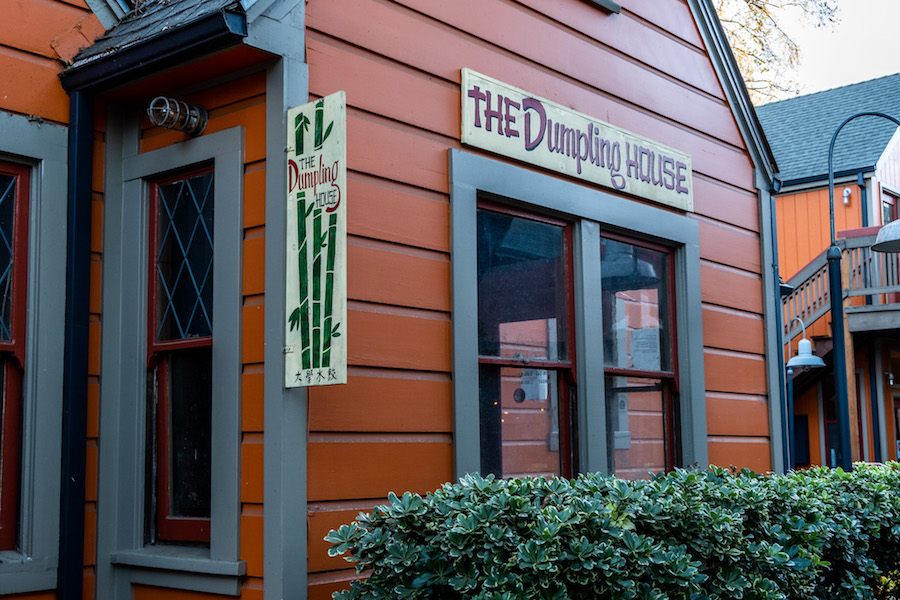
Six months after The Dumpling House was damaged by a fire, repairs are still underway. The source of the fire was the attic of 117 E Street, a property that is being developed into a restaurant by the owners of the Dumpling House. The fire was caused by electrical issues in the upcoming restaurant Little Bao Bao. Although no employees or customers were hurt during the fire, it forced the restaurant to close for restoration.
The Dumpling House is not slated to open for another three to six months, according to owner Linda Liu. The Dumpling House’s recorded phone message states that the Sacramento location is still open and that anyone who wishes to can place an order there.
Information found by a quick Google search, however, may be misleading. For the past couple of months, the Yelp page for the Dumpling House had posted a slated reopening date for Oct. 22. The Dumpling House location on E Street has a printed sheet of paper posted on the window stating that it is still closed.
“Just last week, my friend had heard that the Dumpling House had reopened and also I looked it up on Yelp and Google and it said they were open […] and on the way I had asked my friends to call because we wanted to order takeout,” said Simon Santos, a second-year cinema and digital media major at UC Davis. “But no one answered the phone, and it was just a woman who was saying that they were temporarily going under renovation, — please text us at this number at this Sacramento location — and we were very confused.”
Liu said that the construction is taking longer than originally planned because it is a slow process to receive permits from the city, which the Dumpling House needs in order to reopen. Liu anticipates that these permits will be acquired in approximately one month.
DH construction company has been working with the restaurant to make the grand reopening as smooth as possible, but Liu stated that the actual restoration can’t begin until the company receives the permit. While the total cost of repair and remodeling is estimated to be between $200,000 and $300,000, it will all be covered by insurance.
Meanwhile, food from the Dumpling House can be spotted every Wednesday at the Farmers Market under the restaurant’s white tent. There, one can find employees from the Sacramento location, along with former employees of the Davis location, cooking the dumplings.
According to Ivy Mai, an employee of the Dumpling House, working at the tent is no different from working at the store because the customers are the same.
“I think that we have so many customers that used to go to Dumpling House,” Mai said. “They are so happy that we are here.”
In the future, Liu plans to open a new restaurant next to the Dumpling House and London Fish n’ Chips which will serve bao — Chinese steamed buns. “Little Bao Bao” will be opening in the summer of 2019, around the same time as the reopening of the Dumpling House.
In the meantime, Liu is preparing and refining the restaurant’s existing recipes. Additionally, she’s looking at furniture and supplies for their new restaurant.
“We’d like to have a new place — where everything is brand new and clean — to serve Davis and the community and to do a better job,” Liu said. “And right now, I’m [doing] a lot of shopping to get all good recipes and to learn a lot. We will still have dumplings, but we’ll have something new on the menu.”
Liu also mentioned that students are welcome to apply to work at the new restaurant, once it opens.
“For [the] future, we like to give some students the opportunity for the jobs, and we also plan to help some of the students,” Liu said. “Some of the students really need help — we have help, we want to give something to the community and [UC Davis].”
Written by: Hannan Waliullah — city@theaggie.org

Room closed due to emergency sewer line repairs
The 24-Hour Study Room in Shields Library has been closed due to emergency sewer line repairs, library officials said in an email sent to The California Aggie around noon on Thursday.
“Restrooms in the northeast corner of the building on floors 2, 3 and 4 are also closed,” said Jessica Nusbaum, the director of communications and marketing at UC Davis Library, via email. “We do not yet know what the duration of the closure will be, as the contractor is still determining the time required for the cleanup and repair.”
At 2:10 p.m., the official Twitter account for the UC Davis Library tweeted: “We don’t yet know when the room will reopen, but keep checking our social media for updates!”
The rest of Shields Library remains open.
Nusbaum added students looking for a quiet study place during regular library hours “may want to check out the silent study areas on the fourth floor of Shields Library, or reserve one of the individual or small-group study rooms at Carlson Health Sciences Library.”
This story is developing. We will update it as we learn more.
By Hannah Holzer — campus@theaggie.org
Fire is now controlled, students, staff told to avoid area
An Aggie Alert sent to the UC Davis students and staff Thursday at 4:42 p.m. telling community members to “avoid the area of Hutchison Drive and County Road 98 due to Fire Department activity” was a response to a fire at a barn on private property, UC Davis officials said.
The barn fire, located at Russell and 98, was reported at 3:50 p.m., said Andy Fell, the public information representative for the UC Davis Police Department.
“The fire crossed the road to the south towards the Primate Center, burning in grass,” Fell wrote via email. “Staff were evacuated from the Center about 4.30 [p.m.]. Fire is now controlled, just dampening down.”
Fell said there was no damage to the Primate Center.
Fire agencies from UC Davis, Davis, Woodland, Dixon, West Sacramento, Winters and Plainfield Station collaborated in efforts to control the fire, Fell said, adding “the Veterinary Emergency Response Team from the Vet School responded to help with horses at the property where the fire started.” No horses were harmed.
By: Hannah Holzer — campus@theaggie.org

Davis Cemetery District hosts vibrant cultural event featuring traditional performances, rituals
The Dia de los Muertos ceremony was hosted by the Davis Cemetery District on Oct. 28 to connect community members of all backgrounds and experiences. The annual celebration included various decorations and performances true to its Mesoamerican roots.
“What people can expect when they go is a display, which is referred to as an altar — really colorful — with photos of different community members that people want to remember and honor,” said Melissa Moreno, the co-coordinator of the event.
While the holiday is typically observed by people of Mexican heritage, the event encouraged individuals of all descents to honor their ancestors on a collective altar. The goal of the event was to promote a sense of belonging in Davis’ multicultural community.
“[It’s] a tradition that invites everybody of different traditions and cultures to acknowledge their own ancestors and reflect and honor their own loved ones,” Moreno said. “So it is an opportunity for everybody across ethnic and culture groups that live in Davis.”
Performances featured indigenous dances by Mexica Aztec dancers, Mariachi music, poetry and various other artists, according to Moreno. Ross Hernandez, a second-year graduate student in comparative literature and the co-director of UC Davis’ Mariachi Cielito Lindo, spoke about his ensemble taking part in the celebration.
“I’m looking forward to being able to share some songs with everyone and I hope people join in singing,” Hernandez said. “Everybody has a different way of celebrating it. I’m happy that [the event] is open to everybody because everybody comes from a different background and there’s no one unified Mexican-American experience.”
The holiday originated to celebrate, rather than mourn, passed loved ones. The lively rituals include placing treats and drinks on the altar, as it is believed that for one night, the dead will return to earth.
“My childhood has been embedded that it’s a time to celebrate our past and people we have lost,” said Leilani Suarez Vega, a first-year biological sciences major. “So it’s a time to remember them and celebrate their life and have fun with it. I’m hoping to see a lot of things that I have seen when I celebrated [Day of the Dead].”
In past years, Day of the Dead has become increasingly present in mainstream media, sharing the tradition and popularizing the sugar skulls, vibrant attire and traditional cuisine of the holiday. Films such as “The Book of Life” and “Coco” capture and celebrate Latino culture through depictions of traditional rituals true to Day of the Dead. Moreno, a resident of the Sacramento Valley for many years, observed an increase in the number of Day of the Dead ceremonies occuring in Davis, Dixon and Woodland.
“This is the year that I have seen the most Day of the Dead events taking place in our valley,” Moreno said. “The celebrations have already started and they will be going until like mid- or past mid-November. It seems to me that it definitely will continue to raise awareness about the importance of community and family.”
The event allows people to pay respect to loved ones and, ultimately, fosters community in a time of tension between different cultures.
“Given the national climate of cultural assaults, cultural events like the Day of the Dead are opportunities for others to strengthen communities and really create forms of unity and solidarity […] and expressions of diversity,” Moreno said.
Written by: Renee Hoh – city@theaggie.org

The Editorial Board endorses four candidates for ASUCD Senate
In anticipation of ASUCD’s Fall Election, which begins on Nov. 13, the Editorial Board sat down with seven of the eight senatorial candidates to discuss their campaign platforms and attitudes toward ASUCD. One candidate, Alexis Ramirez, declined the Editorial Board’s request for an interview. While many of the candidates expressed enthusiasm for the position, the Editorial Board felt that the following four individuals gave concrete solutions to problems impacting the UC Davis student body. The Editorial Board ultimately chose not to endorse graduating seniors, as they won’t be able to fill the entirety of their terms, which will end in December of 2019.
Maya Barak — Unite! Slate
Third-year international relations major Maya Barak’s platforms include spreading ASCUD resource awareness and advocating for minorities. Barak hopes to connect students to tools that exist on campus but aren’t necessarily taken advantage of. Additionally, she plans to establish an interfaith floor in the dorms and provide Kosher and Halal options in the dining commons to serve minority communities. The Editorial Board feels that Barak’s willingness to work with people of differing opinions and accept constructive criticism would make her a positive addition to an often divided Senate table.
Peiyuan (Tony) Chen — BASED Slate
Peiyuan (Tony) Chen, a third-year undeclared major, impressed the Editorial Board with his motivation to bridge the gap between international and domestic students. An international student himself, Chen plans to develop an international student day to recognize those from different countries. He also wants to create a study abroad mentorship program in which students planning to study in different countries could meet with international students from that area to get a feel for the culture abroad. The Editorial Board was also interested in Chen’s plans to reorganize parking on campus, using data to open up more spots for students.
Francisco López-Montaño — Unite! Slate
Francisco López-Montaño, a third-year political science and economics double major, is running with the goal of increasing student involvement both on campus and within ASUCD. The Editorial Board supports their plans to establish partnerships between ASUCD and student clubs so that the Senate can get input from more student voices when crafting legislation and proposing resolutions. López-Moñtano also plans to create a more organized and timely ASUCD budget, helping to sustain the organization in the long term.
Noah Pearl — Unite! Slate
As a member of the Internal Affairs Commission, third-year statistics and political science double major Noah Pearl has experience with the ASUCD legislation process, which will make him a more informed senator. Pearl’s platforms emphasized affordability in a comprehensive manner, showing his understanding of issues important to students. The Editorial Board supports his plans to develop a partnership with a ride-sharing service to provide free rides to students on weekend nights, as well as his goal of providing meals to students who stay on campus during holiday breaks.
Written by: The Editorial Board
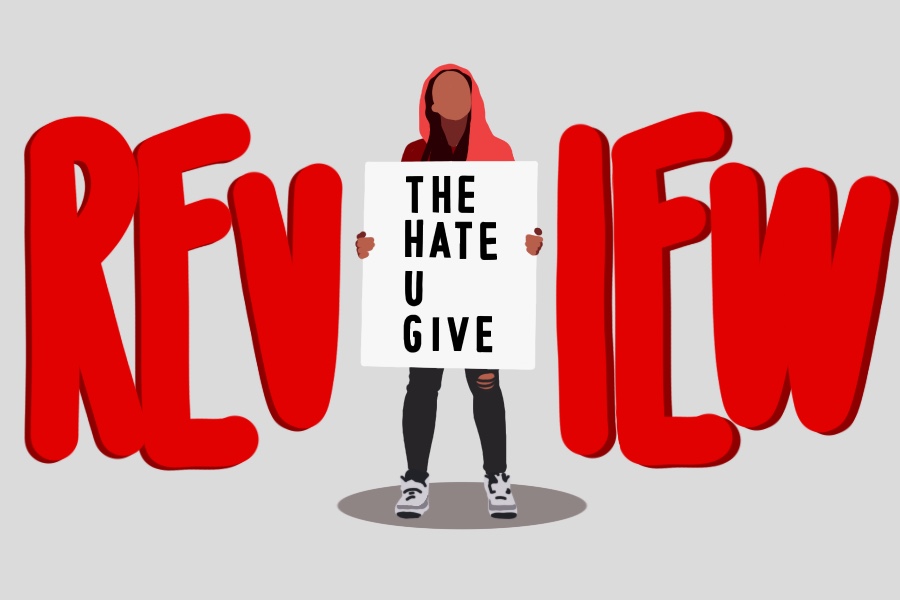
Amandla Stenberg movie focuses on self-love, racial politics
Amandla Stenberg, the actress from “The Hunger Games” and “Everything, Everything,” is back in theaters to teach about the hardships that marginalized communities face in their day-to-day lives. “The Hate U Give,” based on the novel by Angie Thomas, starts off with a family of five having the talk, but not the one with the birds and the bees. This talk was about what to do when a cop pulls you over, a conversation that many black households have to have in an increasingly polarized world. The movie started off strong and ended with a shocking twist.
“The Hate U Give” follows Starr Carter, played by Amandla Stenberg, who is caught between two worlds. But when Starr witnesses the unfortunate reality that far too many black families have had to face in this society, a ripple in her world is created. Starr is in the car with her childhood best friend Khalil, played by Algee Smith, when a white cop shoots him. This moment sparks a debate within Starr on whether or not she is strong enough to fight and speak up for her best friend, who can no longer speak up for himself.
Khalil’s death makes Starr doubt her day-to-day routine of code switching. Due to the drastic contrast between her two communities, Starr often employs code switching to fit in. Depending on who she’s with, Starr dresses differently, acts differently and uses different language. During one of Stenberg’s interviews, she addressed the reality of code switching in black communities.
“[Black kids] have to be so careful about the way they act and present themselves from such an early age because they understand that they are not afforded a childhood in the way their white counterparts are,” Stenberg told Trevor Noah during an interview on “The Daily Show.”
During the movie, Starr’s narrative represents the all-too-real struggle of stereotyping and double standards faced by marginalized communities. Slang that makes white people look cooler has the opposite effect on her and she is instead labeled “ghetto.” She is also careful to avoid any type of retaliation in fear of being labeled the angry black woman. Starr uses code switching in order to avoid the stereotype that is ultimately placed on her, just as it is placed on so many African Americans every day.
The movie sheds light on many different problems that the black community faces, problems which are relevant and need to be talked about. The most prevalent issues depicted were police brutality and the unjust legal system which disproportionately criminalizes African Americans and other marginalized communities. The movie expands on the definition of racism and explains that racism is ingrained so deeply into society that it is commonplace.
“The Hate U Give” repeatedly references Tupac’s song “THUG LIFE,” which stands for “the hate you give little infants f*** everybody.” This reference consistently ties into the movie’s theme. Starr comes to the conclusion that it isn’t the hate you give infants, but the love you show that is much more powerful.
Much like Starr, Amandla Stenberg is a profound activist that is currently using her platform on social media to encourage others to educate themselves on certain topics, such as racism and homophobia, that are currently affecting the country. Her acting allowed the audience to connect with these issues on a more emotional level.
When the original cast was announced, there was concern over whether or not Stenberg should play Starr due to the fact that she is a light-skinned black woman and the book cover showed a dark skinned black woman. Stenberg took a step back and evaluated whether or not the role was hers to play. The author of the novel, Angie Thomas, spoke on a panel at the 2018 Essence film festival and stated that Amandla was the person she pictured Starr to be, settling the issue.
“The Hate U Give” is a refreshing movie. It discusses heavy topics and provides a new perspective on systemic racism within our society. “The Hate U Give” is currently playing at Regal Davis Holiday 6.
Written by: Itzelth Gamboa — arts@theaggie.org

Audiobooks for every occasion
Audible, an Amazon company, has the world’s largest selection of audiobooks and is perfect for those who are constantly on the go. Available through the Audible website or app, the company provides over 150,000 titles as well as podcasts and audio series.
Audible content can be listened to anywhere, on any device. Customers enjoy listening while walking, commuting and completing chores, as well as utilizing the service for school work.
While Amazon Prime members receive access to podcast channels for free, Audible costs $14.95 per month regardless of Prime status. This seemingly steep price leaves many college students wondering: is it worth it? Audible offers its users one free credit per month — that is, one free download regardless of the title’s price. With the average audiobook costing more than Audible’s monthly charge, the service is ideal if you have required course reading or simply enjoy diving into a new novel.
“I have struggled with mild dyslexia ever since I was diagnosed in elementary school, so for me, reading things and understanding it took a lot of extra effort,” said Noah Stern, a second-year computer science major. “I found that by using Audible while reading along, I was able to retain the information and understand it much better the first time around.”
On the other hand, Fernanda Vega, a first-year sociology major, would not consider replacing physical course books with audiobooks.
“I feel like I could get too distracted and I can’t just sit there and listen to someone [talking], like I have to have the words right in front of me so that I can like comprehend what’s happening,” Vega said.
The quality of the narrator alters how story is interpreted — it has the power to change someone’s entire experience, an experience not applicable to reading silently. Audible hires celebrities, voice actors and even the authors themselves to record. The result is performances often so engaging that even “boring” classic novels are brought to life in a comprehensible way.
“I would be open to [trying Audible], it just depends on the reading. Like if it’s like hard to understand, I would listen to an audio, but [if] it’s not that difficult, I would want to read it,” said Karla Rubalcava, a second-year English major.
Both new releases and older literature can be purchased online. In addition to books, there are workout routines, language learning programs, meditation guides and other miscellaneous content available for purchase. Podcasts range from stand-up comedy and news channels to true crime series and anonymous TED Talks.
Audible offers a 30-day free trial and the first book is free. If, like many, you feel a bit guilty because you never have time to read anymore, then perhaps audiobooks are for you. Or if your GE humanities class dares to include a novel as required reading, chances are it’s available on Audible and can be listened to while walking or driving to class. Although nothing can beat the feeling of holding a book in your hands, sometimes you just need to go hands-free.
Written by: Cheyenne Wiseman — arts@theaggie.org
A comprehensive list on where to find free food on campus
Ah, food. Some love to eat it, but hate paying for it. For many students living on a college budget, it can be difficult to maintain a healthy diet without spending tons of money at the grocery store. Lucky for you, UC Davis and the local Davis community have a lot to offer in the way of free food, and here’s where you can find it.
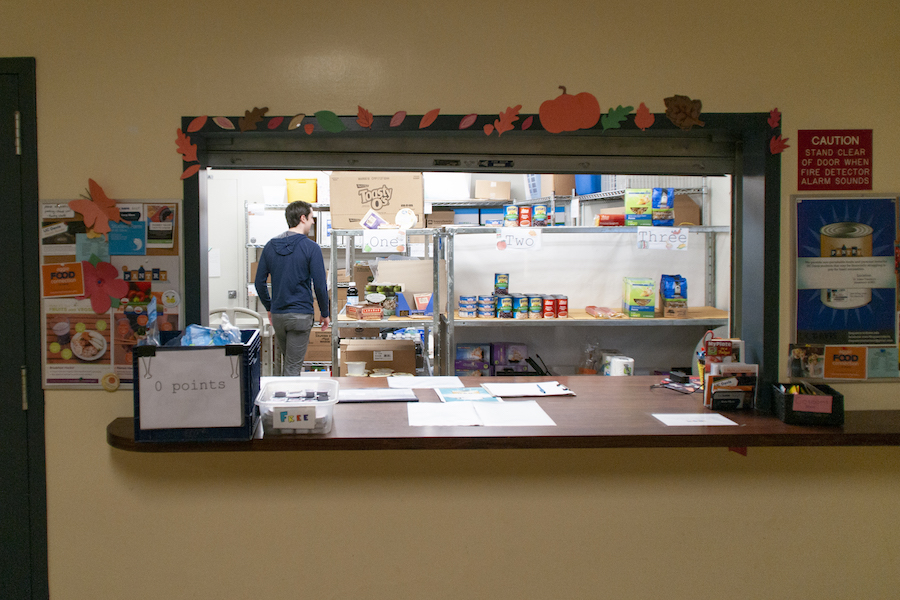
There are a variety of on-campus food options that, if you’re a UC Davis student, you’re lucky enough to have access to. One of the most simple and helpful options is The Pantry, located in Lower Freeborn, right behind the Memorial Union. The Pantry offers a variety of different food items ranging from snacks and treats to boxes of pasta and canned food. Each food item holds a different point value ranging from one to three, and as a student, you get three points to spend every day. The Pantry operates almost entirely on donations from the local community.
Second-year genetics and genomics major Mari Hoffman just recently found out about The Pantry.
“It’s a very good option for students to get cheap groceries throughout the year,” Hoffman said.
Hoffman was also shocked that so few students knew about it.
The Pantry also offers a variety of different toiletry items, as well as free condoms. It is open Monday through Thursday from 10 a.m. to 5 p.m. and Fridays from 10 a.m. to 1 p.m.
Second-year Benjamin Weslow, who has been working at The Pantry since 2017, feels that it needs more publicity and recognition in the campus community.
“I definitely think we need more publicity,” Weslow said. “We get pretty good numbers every day but if students need food it would help if they knew where to find it.”
For those who may need more assistance than just a few food items per day, there’s CalFresh. CalFresh operates through the nationwide, federally funded program called SNAP (Supplemental Nutrition Assistance Program). CalFresh provides students with a set monthly allotment of EBT credit that can be used at a variety of grocery stores around Davis, including all UC Davis Marketplaces on campus.
Max Vaca, a representative for CalFresh at Davis, explained that students can apply for CalFresh in person at Aggie Compass in the Memorial Union or online at getcalfresh.org. Then, students go through an interview process with a Yolo county representative in order to find out about their specific situation and what level of aid they require to fit their needs. Vaca is hoping that more students who are in need of aid can be reached in the near future.
“UC Davis has given us a great deal of help in promoting CalFresh to students,” Vaca said. “But we still need a lot of help in explaining to students what it actually is and how you can apply for it.”
For those looking for a less official and more risky option, there are a number of different fruit trees and berry bushes around the Davis area. This option is perfect if you’re an expert on the many varieties of wild fruits and berries. But for most people, this option is not always viable since there are many inedible and poisonous fruits and berries that can also be found in the area. Pick at your own risk!
If it’s sustainability you’re looking for, Freedge is the perfect free produce option for you. Freedge is a community refrigerator operation that aims to reduce food waste and build a stronger community through sharing. Restocked every Wednesday from local farms around Davis, it provides students, as well as residents, with a fridge full of free, sustainable and local produce that you can take at your leisure. There are two locations around the city of Davis, which can be found at freedge.org or on the Freedge website. The Facebook page advises that people do not take more than they need, but that all are welcome to use it.
Another option for free produce is Fruit and Veggie Up located at Aggie Compass. If you’re a Davis student, you get access to the free produce given out on Tuesdays and Thursdays from 11 a.m. to 12:45 p.m. each week. While the pantry has many staple items like pasta and canned goods, this option provides students with free access to fruits and vegetables that, more often than not, seem to be lacking in the average college student’s diet.
Second-year economics major Jasper Powell says that he has many friends who have gotten produce from Fruit and Veggie Up. On a few occasions, one friend has received enough produce from Fruit and Veggie Up that he was able to cook dinner for himself and his housemates.
“I’m looking for the best deal I can, especially when it comes to food,” Powell said, “So it helps a lot to have the ability to take advantage of the free options and plan my food around that.”
Davis has quite a lot to offer in the way of free food on and around campus. There are many students at Davis who may be in need of the free food services that are offered, but simply do not have the information to find it. For many students, free food options offer much-needed assistance in their daily lives and can help aid the cost of living in the pricey college town that we call home.
Written by: Nicholas Von Schlegell — features@theaggie.org

An inside look into how Davis is empowering women
Prytanean Women’s Honor Society has been the catalyst of change for many years and continues the tradition of giving women a platform to showcase their abilities and influence at UC Davis.
Lynda Jones, the advisor of the Prytanean Women’s Honor Society since 2004, discussed the history of the organization and its beginnings.
“It was founded in 1901 through UC Berkeley, and they started a chapter here in 1952,” Jones said.
As the oldest collegiate women’s honor society in the United States, this organization has dedicated its longevity to the upbringing and celebration of strong, independent women that exemplify the qualities needed for entry into the honor society. These requirements include meeting a GPA requirement and maintaining an involvement in community service.
Jones commented on the importance of the alumni group that oversees the new and emerging leaders that come out of the organization.
“They have a pretty strong alumni group and this alumni group, which is the exciting part for me because I tend to be a historian, is that a lot of the alum are original members,” Jones said. “One person that is still very involved graduated in 1956 as a Prytanean.”
These dedicated members continue to hold meetings and support the incoming members each and every year, sharing sage advice and keeping a close bond with the members.
The connection between active students and alumni students has created a community that is constantly growing off one another.
“I think our active students enjoy that historical perspective and some of the stories [the alum] tell about how campus was then versus now,” Jones said.
Speaking on her own experiences since 2004, Jones noted how women were already well on their way to building something special within their own community.
“In 2004, I think a lot of women students already had a sense of empowerment,” Jones said. “We’ve had more diversity, not only on campus, but in the organization as well.”
This diversity has allowed women of many backgrounds to come together and rely on one another as an essential part of their personal growth. Though Prytanean members focus heavily on projects that are designed for community betterment, Jones stressed the importance of combining both scholastic and social achievement. One way this is done is through the Susan Reagan Award.
“Our Susan Reagan Award is a scholarship we give to graduating senior women,” Jones said. “It is [given to] women who have made a difference through their leadership, their service on campus and their GPAs. It is a very prestigious award that we give, and we do that every spring quarter. The money was raised by Prytanean alum many years ago.”
This award not only demonstrates the change a Prytanean woman has created in her community, but it also recognizes her dedication to academics and the ability to balance both together and share those priorities equally.
Emerald Tse, a fourth-year communication and political science double major, is the current president of the Prytanean Women’s Honor Society. Joining in her second year, Emerald has seen the evolution of the society in only two short years and, as president, has high hopes for the future of Prytanean.
“I thought it was really fun my first year, especially my first quarter,” Tse said. “I definitely made an effort to meet people and ask questions, get advice about my career goals, and how to navigate being in Davis. I really liked being with a group of accomplished women, who are not only academically accomplished, but they are also leaders in the community.”
Tse also highlighted some of the activities that are available to Prytanean members, including “Dinner for Ten,” an opportunity Tse described as “a chance for our members to connect with professors, TA’s, mentors, anyone in the community they want to get to know better in a professional way, but in a non-professional setting.” The dinner, held potluck style, is a great space for Prytanean members to network with one another and find individuals that can have lasting impressions upon their college career.
Other events that Prytanean members lend their assistance to are the Arboretum plant sales and the Court Appointed Special Advocates, a program representing foster youth. Tse values her experience with these volunteer opportunities.
“I think it’s really fun because you can see that you’re working for a good cause,” Tse said. “You get to meet a lot of people who want to do the same thing, but you also meet a lot of Prytanean members.”
Through her years of service, Tse has seen incredible personal growth that she attributes not only to the women around her, but to the organization itself and the core values these women take pride in.
“We are very ambitious women, but we are here to support each other, not to bring each other down,” Tse said. “Being within that community in Prytanean has really helped me develop as a leader. When I took on a leadership role, I was able to learn how to collaborate with people. Trying to shape the goal of empowering women in the process, that’s something that speaks really close with me.”
Although these women share the commonality of finding themselves in an institution of higher education, they are well-aware that the challenges set by the surrounding world are real. It is this realization that drives these women to push one another and to stay connected no matter where their paths lead them.
“I think the goal of our organization is we are going to support you no matter what you choose to do. We can all still be ambitious and motivated and leaders,” Tse said.
In her officer position, Tse hopes to extend the reach of Prytanean to other groups on campus dedicated to women empowerment and representation. Groups like Her Campus and Women in STEM are only a few examples of groups that Tse would like to collaborate with to foster a greater community of women that are encouraged to accomplish their goals and follow their callings.
“Trying to reach out to [these groups], collaborate, see what ideas they have… You get more people involved and more invested in the community,” Tse said.
Written By: Vincent Sanchez – features@theaggie.org

The university finally enacts changes students want
Following complaints that the aesthetic of campus buildings does not do enough to honor the blue-collar workforce, UC Davis made a huge announcement this week.
Chancellor Gary May broke the news that the entire campus would adopt a construction-themed aesthetic in order to rectify the absolutely pathetic amount of construction equipment on school grounds.
“There are simply not enough chain-link fences on our campus,” May wrote on his personal Facebook page in a statement announcing the improvements. “When I became chancellor, I made a promise to myself that I would drastically increase the number of bulldozers on this campus, and I simply wouldn’t be able to live with myself if I didn’t fulfill that promise. This is who we are.”
Students seemed excited by the news.
“I’m excited by the news,” said Riley Oak, a fourth-year viticulture and enology major and part-time umbrella collector. “Currently only some of our sidewalks are completely unusable due to the construction. I want every single sidewalk on this campus to be blocked off by construction so that we have to walk either on crowded bike paths or dirt. I’m sick of being coddled.”
“We want to create the image that UC Davis is constantly changing and improving,” Chancellor May added. “This new campus design will give students the calming feeling of walking through a campus that is simply never not under construction. Plus, kids go absolutely crazy for neon vests and hard hats. Or at least I do.”
Written by: Brian Landry — bjlandry@ucdavis.edu

©2021, ASUCD. Designed by Creative Media.