57.7 F
Davis

Davis, California

Sunday, December 21, 2025
Home Blog Page 488

Coaching supports youth in more than just sports

0
MICHAEL LEAHY / AGGIE

Coaches look to bring youth sports culture to a positive place

From an early age, American youth are often inclined to view their coaches as a moral authority akin to teachers, preachers or even parents. Amateurs and professionals often forge relationships with coaches that last for years thereafter.

Every coach has their own style. Former NFL Head Coach Tony Dungy was known for his collected, clean-cut style. Former baseball manager Tommy Lasorda was known for a quickly-triggered, often amusing temper. San Antonio Spurs Head Coach Gregg Popovich has built a reputation for a sarcastic, occasionally profane, but righteously indignant brand of coaching, while former NCAA basketball Coach Bobby Knight, whose theatrical brand of anger included throwing chairs and accidentally head butting a player, has become more synonymous with his actions than his on-court successes.

Coaching can be a wildcard. A child’s experience with coaches can shape the way they view the occupation going forward. Diante Lee has been a football coach at Bonita Vista High School in Chula Vista, Calif. for the last three years as both the safeties coach for the varsity team, and the head coach of the junior varsity team. As the son of a former coach, Lee tries to instill the lessons that he learned growing up upon his players.

“A proper coach understands that teaching, communication and relationship maintenance is key to success,” Lee said. “My father was a coach on every team I played on, so my experience with coaching is an extension of the guidance I was receiving from home, and my view on coaches was colored by that perspective in a lot of ways.”

Like Lee, Nate James, who is currently in his ninth year as a football coach, was the son of a coach. James uses what his father taught him to make sure that his coaching goes beyond the X’s and O’s, the motivational speeches and the wins and losses, making sure that his impact can stretch far beyond the football field.

“[My father’s] definitely a big part of why I became a coach,” James said. “I don’t think I would be in it otherwise. He took the approach of being harder on me and making it more difficult for me to get opportunities, as opposed to spoon-feeding me stuff. He has always been the type to be extremely hard on his players and expect a lot of them, but he’s also been very involved in the lives of his players.”

Chris Kokell, who currently coaches at Jenson Beach High School in Florida, sees the potential long term effects that his actions could have on his kids. Over the past 12 years, Kokell has coached baseball, basketball, volleyball and football. He has learned to adjust his style to both fit the sports he’s coached, and make sure that his impact goes much further.

“Life lessons are what sports should be used to teach,” Kokell said. “The team is your family, what type of person will you become when the chips are down. Will you be a me person or the one that looks out for the rest of your family. You can learn a lot of these lessons in sports.”

In terms of adversity, every coach has different means of handling whichever situation may unfold. Though tempers can flare, and things won’t always go the way that players and coaches want them too, all three agree that it is up to the coach to set the example when these situations arise. In a world which often holds sports to a different standard of character than it would most other situations, Lee tries to display the same behavior on the field that he would off.

“One of the most important parts of this job is the way in which you present yourself to children, especially in times of distress and tests of one’s character. Much in the same way parents must learn as they raise their families, the kids are always watching you,” Lee said.

Tempers fly when things don’t go the way a team desires. A referee’s call, an opponent’s antics or a lapse in the team’s play can often bring things to an emotional boiling point. Here, a coach’s actions often dictate whether or not the event will be extinguished or enflamed. It is here where one can often see just what a coach’s intentions are. The line can often be blurred in the heat of the moment, and James sees this as the perfect time to show his players how to handle any adversity which is thrown their way.

“Sports can give all of us an opportunity to unchain our absolutely worst impulses,” James said. “Ideally we wouldn’t have higher expectations for ourselves than that. If we demonstrate for kids that compartmentalizing our behavior is both necessary and acceptable, we can easily find ourselves in Meyeresque situations where we’re excusing and perpetuating horrible things.”

At the end of it all, all three coaches acknowledge that it’s important  to remember who it is they’re coaching for.

“Too many [high school coaches are] trying to relive their own glory or a glory they never found,” Kokell said. ”It gets overstated, but it has to be about the kids!”

Many focus on the negative actions of coaches. The media is far more likely to cover those who are doing something wrong in lieu of those who are doing the best that they can. It takes coaches like James, Lee and Kokell to change the stigma that surrounds youth sports. A coach doesn’t always know what’s going on at home, but they can control what happens on the court. James sees this as the perfect opportunity to make a positive impact in the lives of the kids he coaches.

“We aren’t drill instructors, we’re not tacticians, we’re not a promotional team or salesmen,” James said. “We’re teaching and learning. All those approaches lead to kids getting caught up in the wash. They aren’t commodities, they’re people that probably need our help, and if they don’t get it from us, they might not get it all.”

Written by: Bradley Geiser — sports@theaggie.org

The Pawrlor: Davis’ First Cat Cafe

MARINA OLNEY / AGGIE

Cat cafe soon to arrive in Davis

The city of Davis has a lot to offer its residents, including restaurants, bars, coffeehouses, shops, paintball and a weekly farmers market — missing from this list is a cat cafe. A cat cafe is a place where people can enjoy the company of cats while indulging in a sweet treat and a cup of coffee. The first cat cafe called “Cat Flower Garden” opened in Taipei, Taiwan in 1998, and this unique concept has since spread throughout the world. Davis will soon be home to a cat cafe of its own called The Pawrlor, which will be located at 114 E St.

“It’s a great place to come and study, relax, unwind [and] decompress,” said Chiantel Sexauer, founder and owner of The Pawrlor. “Plus, I know that a lot of students can’t have animals where they live because they’re renting and so it’s a great place to connect with animals, especially if they have some at home that they miss.”

Owning pets seems to be quite uncommon for UC Davis students, and Jiawen Zhang, a second-year undeclared social sciences major, supports this idea of having a cat cafe as an alternative to owning pets.

“[I would be interested] because I really want to have a cat, but [I can’t] because I’m living with a roommate and my roommate doesn’t like cats,” Zhang said.

Sexauer first got the idea of opening a cat cafe when she saw the idea sprouting in Asia on Facebook and decided to work on opening one in Davis. She is partnering with Journey Coffee Co., which originated in Vacaville and offers organic, fair-trade in-house roasted coffee accompanied by freshly baked goods, teas, smoothies and more.

“We’re offering a different type of coffee,” Sexauer said. “I know that there’s a lot of coffee shops in Davis, so we’re bringing something different. It’s local, it’s organic, it’s fair trade, so it’s a different taste, [and] it’s another option.”

Sexauer also intends on pursuing a beer and wine license to offer even more variety to The Pawrlor’s menu.

Savanah Fernandez, a first-year student, supports the idea of a cat cafe coming to Davis.

“I love animals and I think that it would be important to have a cat cafe or something similar to it for students who are usually stressed out [so they can] relieve their stress and kind of relax and be around furry little friends,” Fernandez said.

The creation of The Pawrlor has not been an entirely smooth process. Although Sexuaer obtained a loan to cover expenses, it has not been enough to cover all that is needed. She is currently running a Kickstarter campaign to cover the remaining expenses required to open the shop, some of which include renovation, building permits, licenses, equipment, supplies and landscaping. The Kickstarter campaign ends on Nov. 4 and The Pawrlor will be hosting multiple fundraisers in the future. On Nov. 10, there will be a “Paint Night at the Pawrlor” where attendees can paint alongside feline friends. More information regarding the Kickstarter campaign and future fundraisers can be found on The Pawrlor’s website and Facebook page.

Sexauer is working with both the Yolo County Animal Services Shelter and Front Street Shelter to ensure all of the cats at The Pawrlor are fosters and available for adoption. Although originally slated to open in November, this cafe will tentatively open its doors to the public early next year.


Written by: Ethan Pearson — arts@theaggie.org


Long-distance romance — How to keep it alive?

0
CAITLYN SAMPLEY / AGGIE

Students talk about their experiences with long distance relationships

“Distance makes the heart grow fonder” or “out of sight, out of mind”?

Sustaining and nurturing a relationship in itself can be a difficult process for young adults, and when the one person you want to spend the most time with turns out to be the one you can’t physically be next to, a new dilemma is encountered.

Communication and cinema and digital media double major Lani Tice talked about her experience in her current long-distance relationship.

“They can be really difficult and scary,” Tice said. “Navigating relationships is difficult enough, and throwing in some hundred or thousands of miles doesn’t help the cause. However, if that person is someone you really want to keep in your life, you’ll keep them.”

While it can be easy for some people to talk and have real conversations over text and phone calls, others may not feel quite the same way.

“Honestly, in my relationship, we didn’t fit into each other’s schedules very well,” said Sophie Brubaker, second-year human development and theatre and dance double major. “I wish we would have scheduled a weekly phone call or FaceTime so we had something consistent. Texting is lovely and everything, but it’s not enough on its own.”

Second-year computer science major Eric Zhou thinks regular communication is definitely an important part of any long-distance romance.

“I think if I had to go long-distance, regular phone calls would definitely have to be a thing,” Zhou said. “That way, we could keep in contact and update each other on what’s been going on in our lives. I’d probably also try and go visit her via car or plane or whatever.”

It’s easy to keep the relationship exciting and alive when in the physical presence of a significant other, but what about when a person is miles away and the closest their partner gets to seeing them is on a Facetime call on their way to class?

Surprising them with sweet things in the mail or handwritten letters to give them something tangible,” said second-year English major Matthew Pimley.

Unlike Pimley, Tice relies more on using social media to keep her relationship alive and exciting.

“Lots and lots of cute puppy videos,” Tice said. “Especially Golden Retrievers, that gets him really excited.”

Brubaker encouraged more in-person quality time.

Schedule a few day-trips together,” Brubaker said.

Being away from the one person you would want to spend the most time with, if not all of your time with, does not seem appealing to a lot of people, which is why long-distance relationships may not be for everyone.

“LDR’s [Long Distance Relationships] lack appeal to a lot of people because instead of sharing life with someone, it’s filling each other in on what’s always happening,” Brubaker said. “I missed being in their physical presence, and experiencing the same things at the same time.”

For some, distance doesn’t really matter as much.

“I think it’d be cool to go into a long-distance relationship if you and your partner really love each other,” Zhou said. ”I think if that someone is really worth it, then distance really shouldn’t matter.”

But why are LDRs so hard? Is it because of individuals’ physical needs, a general lack of communication or both?

Obviously for many people sex is a huge part of a relationship, and also a strong human vice, so with long distance there is a big risk of people seeking sexual satisfaction from another source,” Pimley said. “If this is previously agreed upon, then it can be very painful for the person who gets cheated on. Also, togetherness is such an intrinsic part of a relationship that to be separate is a huge barrier to feeling valued and loved. It makes communication difficult. Like out of sight, out of mind, people in LDRs may find that they don’t give their partner the attention they deserve.”

For some couples however, long distance relationships might be just what they need.

“A lot of couples are so stuck together they stop becoming individuals,” Zhou said. ”That might sound nice to some people, but to me, that’s kind of terrifying— I’d want my own time and space, you know? So yeah, LDR might be good for that but hopefully there are a lot of other things you could do to avoid that.”

What people think they’re missing out on by being in a long distance relationship varies from person to person.

“Making out or just holding her hand, or getting to hug her from behind, or [observe] what she smells like. I don’t know, I’m cheesy like that,” Zhou said.

Physical touch and actions are important for quite a few people.

“Probably cuddling,” Pimley said. “Physical touch is one of my strongest love languages.”

For Tice, it’s spending quality time and just doing little, everyday things together that she misses the most.

“It’s always just the really simple things, like having someone to make dinner with or

watch a movie,” Tice said. “Especially for our relationship, because we are usually always traveling together and experiencing new things. So when we have a few days in one place where we can just cook and chill and go to the grocery store and act like we’re normal, we

really appreciate it in those moments.”

However, if LDRs are that hard to sustain and require so much effort and hard work, why do people stick around with it? Students believe it can be worth it.

Long-distance is worth it if you are both relatively low-maintenance romantic partners, and you are down for celebrating your partner’s experiences even if they aren’t always with you,” Brubaker said.

Others argued that geographical barriers were not enough to sway their love for their partner.

To me, long distance was worth it because I really invest in [those] relationships, they aren’t something [of which] I’m willing to let geography stand in the way,” Pimley said.

There are also some students who aren’t too sure about it, which is alright as well.

“I really don’t know if it is [worth it], but for right now I really enjoy the lives we have

together and separately, and I’m not looking to change that,” Tice said.

Written By: Rabiya Oberoi — features@theaggie.org


Super seniors reflect on their five years

0
MELINDA CHEN / AGGIE

Fifth-year students talk about their educational paths at UC Davis

With college being broken up into four years — freshman, sophomore, junior and senior — the undergraduate experience is often depicted as a four-year endeavor, despite the presence of students who take a longer or shorter amount of time to complete their degrees.

Nancy Nguyen, a fifth-year communication major who has changed her area of study three times, believes that students aren’t provided with adequate time and resources to explore their interests.

“I feel that our education system is set up in a poor way in that after going through high school and applying for college we’re expected to know what we want to major in,” Nguyen said. “I think a lot of people struggle with that concept — a lot of the topics and majors that are offered at colleges [are] not offered in high school or people aren’t even exposed to [them].”

Nguyen entered as a chemistry major based on how much she liked the subject in high school. Since then, she has switched to pharmaceutical chemistry, computer science and finally communication. She plans to graduate in June 2019 with a major in communication and a minor in computer science.  

Jean Cobar, a fifth-year managerial economics major, also switched her major. She started taking managerial economics coursework in her junior year, but she officially switched from pursuing a math major midway through her senior year.

“I really enjoyed being in the math major, but as I continued on in the course I felt like I couldn’t see myself doing it in the future, and for me, [managerial economics] is something that I can go into different fields that I think I would enjoy a lot,” Cobar said. “Right now it might seem like an extra year feels like forever, but in reality your career after is going to last much longer. I think taking an extra year to do something that you’ll enjoy more and that you find more rewarding just makes more sense to me.“

Cobar believes that there are other more important factors to consider than how long one takes to graduate.

“There’s nothing wrong with taking extra time or finishing early; it’s just dependent on the person,” Cobar said. “I don’t think it really matters when you go into the field because what it seems like matters are your skills and your ability and how sure you are of the subject you’re going into.”

Fifth-year Adriana Castillo entered as an animal biology major but ended up switching to animal science. She had a mental health emergency when her grandmother passed away in the Spring Quarter of her first year. She petitioned to drop a course after the drop deadline, pushing her below the full-time student unit requirement. She took community college courses, but she didn’t check in with advising, and the units didn’t add up to what she needed. In winter of her second year, she was told that as long as she passed her classes, she would be fine.


“I came in thinking, ‘Hey, I just had a really hard time. I feel like I should ease myself back into school again,’“ Castillo said. “I didn’t find out until winter week eight, when I was already failing organic chemistry, that I had to pass all my classes so that I could stay … I failed organic chemistry [that] winter and that was pretty much ‘You’re going to be kicked out for spring [quarter].’”

That spring and summer, Castillo took more community college classes in preparation for her readmission application and talked with an advisor about how she would work to improve from then on and what steps she took to not let it happen again. She also worked to improve her mental health.

“That second year once I got kicked out, it was a hard time for me. I went through a bit of depression and that was when I felt I was at my lowest,” Castillo said. “At the end once I finally got readmitted, I took all the resources that I needed and I began mental health counseling. I started kind of just talking to friends more, and getting their support, because … one thing that I should’ve done from the start was talk to people because I kept all my emotions bottled in which kind of led to the breakdown and failing in classes. Just — self care.”

Castillo still has mixed feelings about being a fifth-year.

“I’m not going to lie — I’ve had my ups and downs with being a fifth-year,” Castillo said. “I’ve had that closure but there’s also still that want to be out there, be working towards my future goals and there’s also that sadness —But there’s more to it. There’s no shame in taking a fifth year at all. If anything, I’m grateful for it because I feel like it’ll give me the chance to thrive and be able to focus on my studies and take all the opportunity I can get  … You definitely have to look at the bright side of it all.”

All three mentioned that they believe there is a stigma on those who take more than four years to graduate, yet they firmly believe there is nothing wrong with people taking however long is necessary for them.

“You definitely don’t need to graduate in four years, even though that’s the common thing, and there’s this huge stigma on people who take longer than four years to graduate. I think you should just disregard all of that,” Nguyen said. “I feel that the amount of time it takes for you to finish your study or major doesn’t define what you can do and potentially achieve in the future.”

Some fifth-year students, including Castillo and Cobar, occasionally refer to themselves as “super seniors.”

“I think the term’s kind of cute because it doesn’t have a bad connotation to it,” Cobar said. “I think of it like a superhero — you know more.”

Written by: Anjini Venugopal — features@theaggie.org


Davis housing crisis comes to the ballot box

JAMIE CHEN / AGGIE

A guide to housing props on midterm ballot

On Nov. 6, Californians will vote on 12 statewide propositions, four of which attempt to confront the state’s growing housing crisis. Davis voters will also decide on Measure L, a land development proposal that will impact housing within the city.

For Davis students and city residents, affordable and available housing is an even more pressing concern. Rental prices in Davis, according to a 2017 report, have gone up 6 percent. In addition, the current vacancy rate in Davis is 0.2 percent, which is well below the 4.2 percent statewide rate.

Though there’s widespread agreement among Californians about the severity of the problem, there’s less agreement on answers. These ballot measures represent solutions from different political camps, from those who support stronger government intervention in the housing market to those who believe the crisis is a product of strict housing regulations.

Here’s a quick rundown of what Davis voters will be confronting at the ballot box:


Proposition 1: Veteran and Affordable Housing Bonds Act of 2018

Proposition 1 seeks to expand public funds to house veterans and low-income families. If the measure passes, it will authorize the sale of up to $4 billion in bonds to fund housing-related projects.

Those who support the bill, including the California Democratic Party and the City of Davis, hope that the proposed measure will reduce pressure placed on those hit hardest by the crisis. Supporters believe that Prop. 1 is a step in the right direction, though most believe that further action is needed to tackle the housing crisis.

Opponents, such as The California Republican Party, however, claim the measure will dig the state into deeper, long-standing debt. Ryan Gardiner, the chairperson for Davis Campus Republicans, argued his party’s position on the measure.

“It’s just a band-aid bond to pay for government-subsidized housing without tackling the real problem, which is government over-regulation of the housing market,” Gardiner said.


Proposition 2: There’s No Place Like Home Act

Proposition 2 attempts to direct government funds to house another at-risk group: the homeless in need of mental health services. Unlike Prop. 1, it simply redirects funds already approved by voters. Because the bill redirects money set aside for services and programs into housing, the measure requires voter consent.

Supporters say that Prop. 2 is a no-brainer, and will be making use of funds that have been sitting unused since the passage of the 2004 “millionaire tax” to produce as many as 20,000 new homes for California’s growing homeless population. Detractors, however, argue that the money would be better spent on its original purpose of services and programs.


Proposition 5: Property Tax Transfer Initiative

Proposition 5 is an amendment to Proposition 13 put forward by the Realtors Association of California. Under Prop. 13, property taxes that would normally go up over time are limited to 1 percent — or up to 2 percent for inflation. This means that when people move, they often take on a much higher property tax rate than the limited rate they paid on their previous house.

Prop. 5 would allow disabled persons and those over 55 to transfer their old tax rate to their new home. Though it’s a small change, supporters argue that the savings could be significant enough to encourage seniors to move into a new home. This incentive could free up housing for younger generations and remove an unfair moving penalty placed on new homebuyers.

Opponents say the measure is likely to cost local governments billions of dollars in taxpayer revenue. They argue that the measure will take funds away from public services which would then go toward realtors and wealthy homeowners.


Proposition 10:Affordable Housing Act

Perhaps the most far-reaching, Proposition 10 is also one of the most hotly debated measures on this year’s ballot. Prop. 10 seeks to repeal the long-standing 1995 Costa Hawkins Rental Housing Act, which limits the rent control laws that cities can place on new apartments. It also exempts single-family homes and condos from rent control.

Supporters of Prop. 10 say that the measure will protect tenants from rising rent costs. Under Costa-Hawkins, landlords are free to increase rent on vacant apartments, rewarding them for evicting tenants and causing rent market rates to rise. Prop. 10 will also provide stability for renters and curb California’s skyrocketing rent prices.

Opponents argue that repealing Costa-Hawkins will do the exact opposite of its intended purpose, making rentals more expensive and harder to find. Gardiner spoke on his opposition to Prop 10.

“Rent control disincentivizes new development,” Gardiner said. “It’s contrary to what needs to occur to end the housing crisis. That’s why over 90 percents of economists say rent control is the wrong way to address the housing crisis.”


Measure L

For Davis residents, one of the most significant midterm ballot decisions will be Measure L. It would allow for the development of agricultural land just west of Sutter Hospital into the West Davis Active Adult Community. The new community will be targeted for senior living, with 80 percent of the units reserved for buyers and renters ages 55 and up.

In an argument on the City of Davis website, supporters of Measure L claim that the development provides housing for Davis’ large population of baby boomers near retirement age. Proponents also argue the new community will allow seniors to move out of existing homes in Davis, freeing up housing for “a new generation of Davis families.” Mayor Brett Lee, who signed the argument in favor, echoed this support in an interview.

“Measure L builds about 400 of houses and about 150 units of affordable apartments for seniors,” Lee said. “I think it will free up some space for people, faculty, staff, as well as students.”

The argument against the bill, however, claims that the WDAAC is “the worst example of suburban sprawl proposed in Davis in 25 years.” It argues that the project strongly favors wealthy seniors. Alan Pryor, the chair of the Yolano Chapter of the Sierra Club,  spoke out against Measure L.

“I don’t think it really meets the needs of seniors of ordinary means, and certainly doesn’t meet the huge demographic need we have in Davis for affordable workforce housing,” Pryor said.

Opponents also take issue with the WDAAC’s “Taking Care of Our Own — Davis-Based Buyer Program.” Of the new homes, 90 percent will go to buyers with pre-existing relationships to the Davis community: current residents, those with family here or those who have worked or attended school in Davis. This condition is the focus of a lawsuit filed against the city by civil rights Attorney Mark Merin, who claims the program violates the Federal Fair Housing Act.

“The problem with this is Davis is the whitest community by far in the region,”  Pryor said. “Mr. Merin’s lawsuit alleges that these buying restrictions — these illegal buying restrictions — will perpetuate this demographic imbalance in Davis and will serve to keep a predominantly white community predominantly white in the future.”

Written by: Tim Lalonde – city@theaggie.org

A future without beer pong tournaments and keg stands?

Climate change may have impact on beer production

When thinking about beer and its ingredients, barley is the first and most important ingredient that comes to mind. However, few know how the cultivation of barley can affect the taste and brewing of beer. Climate change could negatively affect beer production in the future due to the impacts it will have on the cultivation of barley, according to a recent study at UC Irvine.

The UC Irvine team researching this issue came up with various scenarios to gain insight into how the decline in barley farming might occur. Due to the burning of fossil fuels and carbon dioxide emissions, places where large amounts of barley are grown would be greatly affected. This could cause a drop in barley crop production anywhere from 3 to 17 percent.

Malting barley is already a very sensitive crop in that it fluctuates in quality from year to year, resulting in different levels of problematic proteins and complex carbohydrates,” said Dr. Charles Bamforth, a distinguished professor in the Department of Food, Science and Technology at UC Davis.The rigid specifications that the malting and brewing industries put on the specialized barley that they need mean that it is a tough crop for growers to deal with — and for some farmers, it is already easier and more economic[al] to turn to alternative things to grow. Even now, there is no vast surplus of good quality grain from which to make beer.”

Even the slightest rise in global temperatures could cause droughts in major regions, which will decrease the already small percent of total barley grown that can be used in the brewing process. Subsequently, with less barley available, beer won’t be the same.

With the unarguable reality of global warming, things will only get worse,” Bamforth said. “Any shortage of malt will lead to a price war and a scary likelihood of an increase in the price not only of beer but also of other products that use malted barley — notably, whiskey.”

The UCI study further outlines other issues associated with a barley shortage, including how much more beer will cost, especially in countries like Canada, Belgium, Denmark and Poland. This price increase could potentially limit many people from purchasing beer, especially during heat waves. The study, using the most severe climate change predictions, shows that a drop of about 16 percent of beer production is possible, which is currently the total amount of beer consumed in the United States.

“The obvious approach to avoiding this ‘Beer-pocalypse’ is to implement strict, short-term regulation on emissions while simultaneously allocating sufficient resources to the research and development of long-term solutions (i.e. clean energy sources, emission reduction practices, localized environment recover efforts, etc.),” said Jordan Beaver, an agricultural and environmental chemistry Ph.D. student, via email. “But if society decides to continue down its current path, there are still some options for mitigating a potential barley shortage.”

Not only will our future contain less beer for personal enjoyment, but also some workers in beer production may become unemployed with less supply and less demand. Students studying in fields such as food, science and technology might suffer the consequences if changes in beer production occur.

“As a senior who will be entering the workforce soon, it is a worrying position for industry to be in,” said Camron Clifton, a third-year food, science and technology major. “A lot of infrastructure will have to change and it could turn out to be a huge headache for current breweries, as well as ones trying to get their feet on the ground. Brewers tend to be very resourceful, so I think the industry will adapt, but they are also creatures of habit and like doing things the way they have traditionally been done.”

As the saying goes, no one can predict the future, but if that was possible, it wouldn’t look very bright for brewers and their brews.

Written by: Lauren Tropio — city@theaggie.org

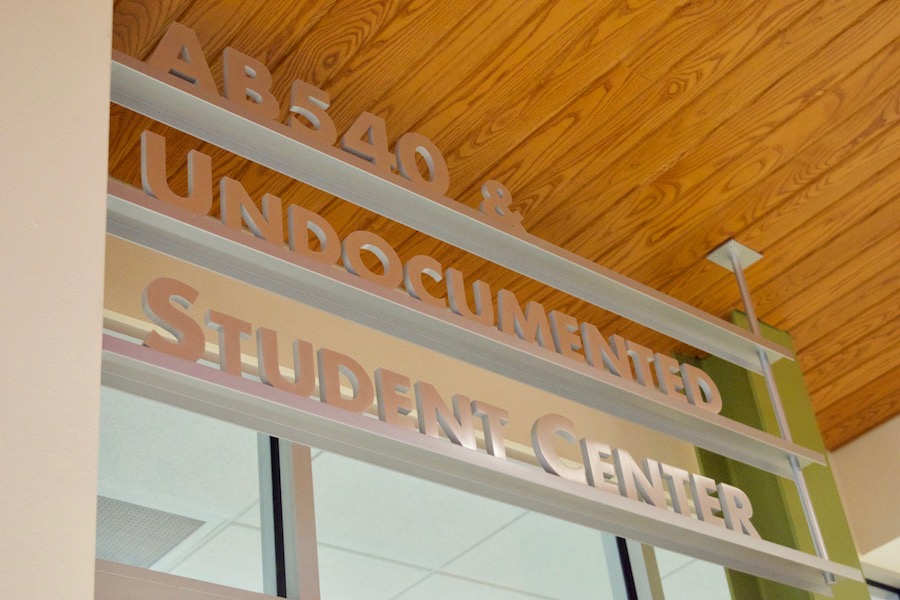
AB540 and Undocumented Student Center receives permanent director following faculty demands

ALEXA FONTANILLA / AGGIE

Emily Prieto-Tseregounis named director after 11 faculty members demand vacancy be filled

On Oct. 26, after six weeks without a full-time director, UC Davis News announced that the AB540 and Undocumented Student Center’s interim director, Emily Prieto-Tseregounis, will permanently fill the position.

The center’s previous director, Andrea Gaytan, resigned on Sept. 14 and now serves as a dean at Sacramento City College, Davis Center. Prieto-Tseregounis, then the assistant vice chancellor of student affairs, was appointed as interim director upon Gaytan’s departure.

Prieto-Tseregounis is the daughter-in-law of controversial former UC Davis Chancellor Linda P.B. Katehi.

The announcement followed demands from staff in the Chicana/o Studies Department and an ASUCD Senate Resolution authored by the ASUCD DREAM Committee that the UC Davis administration respond to the vacancy.

Eleven faculty members, including nine professors from the Chicana/o Studies department, signed and delivered an open letter to Chancellor Gary May on Oct. 10 demanding a full-time director be hired for the AB540 and Undocumented Student Center.

“We the Chicana/o Studies faculty and staff would like to see the position for the Director of the AB540 and Undocumented Center posted within a week,” the letter said. “In addition we would like to see the implementation of an interim plan that includes a dedicated full time staff member at the center for the duration of the recruitment.”

Senate Resolution #3 calls “for support from the Association and ASUCD President, Michael Gofman, to demand that UC Davis Administration immediately begin the active, open and nationwide listing for the position and hiring process of a full time permanent Director for the AB540 and Undocumented Student Center.”

Additionally, the resolution addressed a lack of transparency involved in the hiring process of a director and staff members. A minimum of two undocumented students and two alumni of Scholars Promoting Education and Awareness (SPEAK) — a subgroup within the center — were requested as representatives within the search and hiring process.

Criticism regarding how staff workloads were balanced during Prieto-Tseregounis’ time as interim director also arose.

“It is not the responsibility of student staff and volunteers to take on the workload of full-­time university employees without proper compensation,” the resolution said.

SPEAK organized a Facebook event on Oct. 29 to pack Vice Chancellor for Student Affairs Emily Galindo’s office. The event initially served as a demonstration to demand the vacancy be filled, but once news reached the group that Prieto-Tseregounis had been permanently appointed, a post on the event page criticized Galindo for making the decision without student input.

The center was established in 2014 as the first-of-its-kind on a college campus in the nation. It provides legal, financial and academic services to students and their families, if applicable.

Before Prieto-Tseregounis’ appointment as permanent director, she still held her position as an associate vice chancellor, essentially having two jobs within the university.

“In our view, she cannot have two full-time jobs and do them well,” Natalia Deeb-Sossa, an associate professor of Chicana/o Studies and one of the letter’s signers, said in reference to the interim posting. “Given that both positions are critical, that is not okay.”

On Oct. 16, UC Davis News released an article announcing that the AB540 and Undocumented Student Center would receive permanent funding from Student Affairs. The announcement stated that permanent funding would allow the center to hire additional staff members.

“We knew about it already in the summer so that they announced it last week is just a way to distract us because we already knew they had permanent funding even before Andrea Gaytan had resigned,” Deeb-Sossa said. “I really think we need a national search for a really good candidate and that’s why we wrote that letter which we don’t think is demanding much.”

When asked if the funding from Students Affairs would assist in the hiring of staff at the center, Prieto-Tseregounis replied in the affirmative, stating she hoped it would.

Student staffer at the center, Alondra Franco, a fifth-year neurobiology, physiology and behavior and Chicana/o studies double major, stressed the importance of having a well-staffed space for undocumented students on campus.

“Having a safe space to go to is very impactful,” Franco said. “You don’t know what kind of day someone has until you talk to them, and that’s why it’s important staff members be here.”

According to Prieto-Tseregounis, there are approximately 700 undocumented students at UC Davis. The largest demographic of those students is from the Asian/Pacific Islander community, with the second largest being the Latino/a community. The AB540 and Undocumented Student center has provided this community of students with grants up to $500, waivers for DACA applications and mentorship programs.

Prieto-Tseregounis was involved with the center’s conception in 2014 and oversaw Gaytan’s work during her time as director.

Prieto-Tseregounis plans to commence hiring for a new mentorship and development coordinating position under the title of assistant director in the upcoming days. She hopes that further hiring will commence in that amount of time, as well.

“The director position is a very collaborative role in terms of working with the community advocates, working with the volunteers,” Prieto-Tseregounis said. “I feel like it’s really important for the director to provide resources for the students that work here to ensure that there is resources for the community.”

When reached out to for comment, Galindo referred The Aggie to Prieto-Tseregounis.

Written by: Elizabeth Mercado — campus@theaggie.org

NCAA football season heating up as temperatures wind down

OLIVIA KOTLAREK / AGGIE

Final stretch of college football season is here, Aggies keep surging

As the old proverb goes: “The bigger, the better.” But is that really true? With the college football playoff system, it absolutely is. Although the attention of the masses is mainly directed at the Football Bowl Subdivision (FBS), or D1-A football, it is the Football Championship Subdivision (FCS), or D1-AA football, that has the much larger playoff football format.

Essentially, in FBS college football, a group of football experts, known as the selection committee, decides the fate of the two-game playoff by choosing who they consider to be the best four teams in the country. The criteria for ranking is based on an evaluation of the teams’ performance on the field, using conference championships won, strength of schedule, head-to-head results and comparison of results against common opponents to decide between comparable teams..

This sounds fair and legitimate, until the 2017 University of Central Florida football team, the only undefeated team in the country at the time, was not selected for one of the two semi-final playoff games. The fact that UCF did not earn a chance to compete in the playoffs has caused many analysts to criticize the flawed system.

Luckily for teams in the FCS, there is a 24 team, single elimination tournament that allows for a wider variety of teams to compete for glory. The 24 teams are comprised of 10 conference champions and 14 at-large bids given out by the Football Championship Committee, giving all the top teams in the FCS a chance to take home the crown.

Now that college football teams are trying to settle into a top spot in the rankings, the weather’s rapidly getting colder, and the thought of finals are entering many students’ minds. For avid college football fans, this can only mean one thing: playoffs are around the corner.

Leading into the last stretch of the FCS season, UC Davis continues to leave an unlikely impression on its fanbase, winning each of its last four games after a tough loss at Stanford. The team’s efforts have certainly been noticed after recently being ranked the sixth best team in the country, according to the STATS FCS poll. This is the highest ranking the UC Davis football program has achieved in school history.

The Aggies are representing the Big Sky in the top ten alongside teams that consistently dominate the FCS, such as North Dakota State, who remains undefeated, and other Big Sky contenders like Weber State and Eastern Washington. The Aggies boast a high octane offense which has averaged 42.5 points per game. This is the fifth highest total in all of the FCS, and with only four games remaining, the Aggies hope to keep surging straight into one of the 24 playoff spots.

On the other end of the college football spectrum, there are 130 FBS teams vying for the four spots in the playoff. Given that the first set of games are semifinals, it is clear that teams must play perfectly to get there. Through week nine (out of 15), the rankings are led by perennial powerhouse Alabama, followed by undefeated Clemson and Notre Dame, and topped  by LSU and their lockdown defense. Last week, Ohio State suffered a devastating loss to Purdue, dropping the program from No. 2 to No. 11. This is now the second week in a row that a second ranked team has lost, after Georgia lost to LSU the previous week.

This is probably just the beginning of the shake ups, as many key matchups have yet to take place, including Alabama playing both LSU and Georgia in weeks 10 and 14 respectively and a full week of gritty rivalry matches in week 14. Although the rankings still have much uncertainty to them, one thing fans can surely anticipate is an exciting end to the college football season.

Written by AJ SEYMOUR sports@theaggie.org

Humor: Trump blames “both sides” for death of Saudi journalist

DAVIS WHALEN / AGGIE

Khashoggi “came charging” at the government with criticism

President Donald Trump has come under fire from Democrats and Republicans alike for his response to the murder of journalist and Saudi government critic Jamal Khashoggi.

A reporter asked Mr. Trump to forcefully condemn the Saudis and Crown Prince Mohammed bin Salman for what looks increasingly like a brutal, premeditated “murder” of a “journalist.” However, keep in mind that we are only hearing about this because other “journalists” are telling us. Coincidence? Unlikely.

“I think there is blame on both sides,” Trump said. “You had a group on one side that was bad and you had a group on the other side that was also very violent.”

One particularly aggressive member of the Fake News Media, with no sense of irony whatsoever, asked Mr. Trump why he thinks the press is “very violent.”

“What about the fact that this Jafar Kashaggy came charging at the Saudi government with criticism, swinging ideas, does he have a problem?” Trump asked. “If you charge at someone with fake, made up stories, believe me, then you’re maybe to blame if there’s a violent reaction. Maybe if you people, the enemy of the people, didn’t do what you do, then nobody would respond violently to you, that I can tell you, but I’m not going to talk about that.”

When asked to expand upon his remarks, Mr. Trump provided much-needed clarity.

“I said what I said because I — and you know I’m right — say this very strongly, because I said I believe it, and it’s true, believe me,” Trump said. “Stupid question.”

In the face of journalistic hostility, Mr. Trump courageously stuck to his guns, ensuring that the Saudis will also stick to his guns (and to their bone saws), preserving a $110 billion arms deal with American defense contractors. If we had gotten too outraged about the murder of one journalist and cancelled the deal, we could have spurned this great opportunity to be complicit in sowing violence across the globe and murdering thousands more people, like in Saudi Arabia’s war in Yemen.

Mr. Trump has now slightly changed his tone, calling the incident the “worst cover-up,” while CIA Director Gina Haspel has reportedly briefed Trump on the audio recordings of the Saudis carrying out the murder. If Trump continues to change his rhetoric, could it potentially help heal his relationship with journalists and the Fake News Media, turning over a new —


***WE INTERRUPT THIS ARTICLE FOR AN IMPORTANT NEWS UPDATE***

Police have found pipe bombs addressed to several prominent critics of Donald Trump, including the Obamas, the Clintons, John Brennan, Joe Biden, Eric Holder, Debbie Wasserman Schultz, Cory Booker, James Clapper, Kamala Harris, Maxine Waters, George Soros and Robert De Niro.

After having caved to pressure and calling for “unity” like a weak little baby, Mr. Trump later found his spine.

“A very big part of the Anger we see today in our society is caused by the purposely false and inaccurate reporting of the Mainstream Media that I refer to as Fake News,” Mr. Trump tweeted.

As real Americans who care about protecting freedom of rich people to abuse power both at home and abroad, we should be thankful that our president will bravely, brilliantly and bigly condemn those who incite those who incite violence: the goddamn journalists.


Written by: Benjamin Porter — bbporter@ucdavis.edu

(This article is humor and/or satire, and its content is purely fictional. The story and the names of “sources” are fictionalized.)

A democracy that discourages voting

CAITLYN SAMPLEY / AGGIE

Under the nonexistent threat of voter fraud, Republicans suppress minority votes

Despite becoming president of the United States of America following the 2016 election, Donald Trump, and numerous other Republicans, cried voter fraud. They asserted that there was a widespread attempt on behalf of the Democrats to cheat on elections through illegal voting. With the midterms coming up in November, President Trump is warning Americans again, tweeting: “Cheat at your own peril. Violators will be subject to maximum penalties.”

This would be a statement of worthy consideration if voter fraud was an issue, but it isn’t. A study conducted in 2012 analyzed 2,068 cases of alleged election-fraud dating back to 2000 and found 10 cases of voter impersonation. During that time, there were 146 million registered voters in the United States, meaning voter fraud occurred once for every 15 million prospective voters. A follow-up study in 2016 looked into five states where politicians had voiced concerns over fraudulent voting and found zero successful prosecutions for voter fraud. A Dartmouth College study found no evidence of voter fraud in the 2016 election. It would appear to the objective observer that voter fraud does not exist, except in the mind of partisan Republicans.

And yet, a number of states have taken this illusionary threat of voter-fraud quite seriously. Many of the policies enacting stricter voting laws came before the 2016 election, though attempts at voter suppression are ongoing. In Shelby v. Holder (2013), the Voting Rights Act of 1965 — which outlawed the discriminatory practices of states once belonging to the Confederacy — was struck down by the Supreme Court, as it was deemed no longer necessary. Within hours of the Supreme Court’s decision, Texas announced a strict new voter-ID law, with Mississippi and Alabama shortly following suit. Last year, 99 bills intended to decrease voter access were introduced in 31 state legislatures. These measures, adopted by various states, entail cuts to early voting, restrictive voter ID laws, purges of voter rolls and delays in voter registration processing — an issue particularly relevant to Georgia.

Brian Kemp, Georgia’s Secretary of State, is currently being sued for suppressing minority votes after an investigation conducted by the Associated Press found that a month before November midterms, his office had not approved 53,000 voter registrations. This case, and suppressive voter laws in general, expose the biases behind exaggerated claims of voter fraudulence. While on paper these laws appear racially neutral, they disproportionately impact minorities — who tend to vote Democrat — as opposed to their white counterparts. In Georgia, of the 53,000 idle applications, 70 percent were African-American. It’s important to note that black people make up 32 percent of the Georgia population.

Over the past decade, states have made it harder to vote — particularly for minorities. In North Dakota, for example, Native Americans must now provide an ID that shows a street address, even though many of their homes do not have addresses by default. North Carolina had mass poll closures during the 2016 election in 40 counties with large black communities; citizens had 158 fewer early polling places. An MIT study found that on average, Hispanic voters spend one-and-a-half times as long in line, and African-Americans spend nearly twice as long as their white counterparts when voting.

It’s not only deep-red states attempting to suppress votes. Before the 2016 presidential primary, New York illegally removed over 120,000 people from its voter registration lists, which disproportionately impacted Hispanic voters. Ohio, Wisconsin, Indiana and Iowa have all been accused of voter suppression in the past year as well.

Multiple studies and court rulings indicate that racially biased election laws favored Republican candidates in 2016. To be clear, these Republicans are not suppressing votes due to racism but instead political strategy as these voters are more likely to vote for Democrats — a noteworthy distinction.

Our notoriously small voting population will only continue to dwindle as Republicans continue to “combat” voter fraud. The Republican Party has pushed the delusion of rampant voter fraud in order to enact restrictive voting laws, cutting the number of active voters until, coincidentally, the few voters left are most likely to vote Republican.  

Americans don’t vote — we’ve all been told this. Perhaps the reason for not voting isn’t a lack of interest, but rather, our country’s history of suppressing votes. Originally, you could only vote if you were a white man who owned property. The law expanded to include all white men, then eventually expanded to encompass black men and later women. Yet, even when these rights were imparted, they were also often suppressed by states. Jim Crow laws, poll taxes and other discriminatory methods have prevented African-Americans from voting. Now, states have found a less blatantly biased method for suppressing votes.

With elections approaching this November, I would advise that we all exercise our right to vote and elect into office those who would defend that right.


Written by: Hanadi Jordan — hajordan@ucdavis.edu

Disclaimer: The views and opinions expressed by individual columnists belong to the columnists alone and do not necessarily indicate the views and opinions held by The California Aggie.

Last Week in Senate

CAITLYN SAMPLEY / AGGIE

Police chief discusses robberies, scam emails, recent anti-Semitic posters

On Oct. 18, the ASUCD Senate convened for its weekly meeting in the Mee Room of the Memorial Union. Vice President Shaniah Branson was absent during roll call.

The meeting began with a presentation from UC Davis Police Chief Joseph Farrow. Farrow addressed a recent series of robberies, the scam emails/phone calls that have been circulating around the community and the recent anti-Semitic fliers posted around campus.

“For many years, law enforcement only dealt with physical security,” Farrow said. “I think it’s important for us to protect the emotional and psychological security. We have a moral obligation to try and engage and put these things to a stop.”

According to Farrow, campus cameras captured a picture of the suspect. The picture is available for identification on the police department’s website.

After several questions posed by senators to the police chief, the meeting moved on to Elections Committee members confirmation, followed by Academic Affairs Commission member confirmations and Ethnic and Cultural Affairs Commission (ECAC) member confirmations.

Next, the DREAM Committee gave its quarterly report. According to the presenters, the committee was able to lend about 50 books to students in the last three weeks through its Lending Library Project. The Lending Library lacks science and engineering books.

In addition, the committee members said they will be opening applications for a cap and gown project that will prioritize undocumented students.

Following the DREAM Committee’s report, the Academic Affairs Commision also delivered its quarterly report. A number of points were discussed during this segment, including making empty/underutilized courtyards into outdoor study spaces, increasing access to counseling services by moving appointment scheduling to an online system and establishing a Degree Map to help students plan out a four-year path to attain degrees.

The Senate then moved to Internal Affairs Commission member confirmations. Candidates were confirmed without objection.

After a short break, the meeting moved into a discussion of old and new legislation. New legislation was introduced which would recognize both the posting of anti-Semitic fliers on campus as a hate crime and the need for more transparency between administration, the UC Davis Police Department and on-campus resources when hate crimes occur on campus. Senate Resolution #2 was sent to ECAC.

After voting, Constitutional Amendments 55, 56 and 57 were passed. CA 55 restructured and clarified portions of the ASUCD constitution.

CA 56 will create the position of External Affairs Vice President and make the position an elected position. It will rename the Vice President position the Internal Vice President. After lengthy discussion, Senator Ko Ser Lu Htoo was the only no vote.

CA 57 established the Elections Committee as an independent group.

Senate Bill #3, which would establish a committee of senators to plan the quarterly town hall, passed as amended.

The meeting adjourned at 11:15 p.m.

Written by Clara Zhao — campus@theaggie.org

Rocking the vote

REBECCA CAMPBELL / AGGIE

Community members prepare for election with concert, registration drive

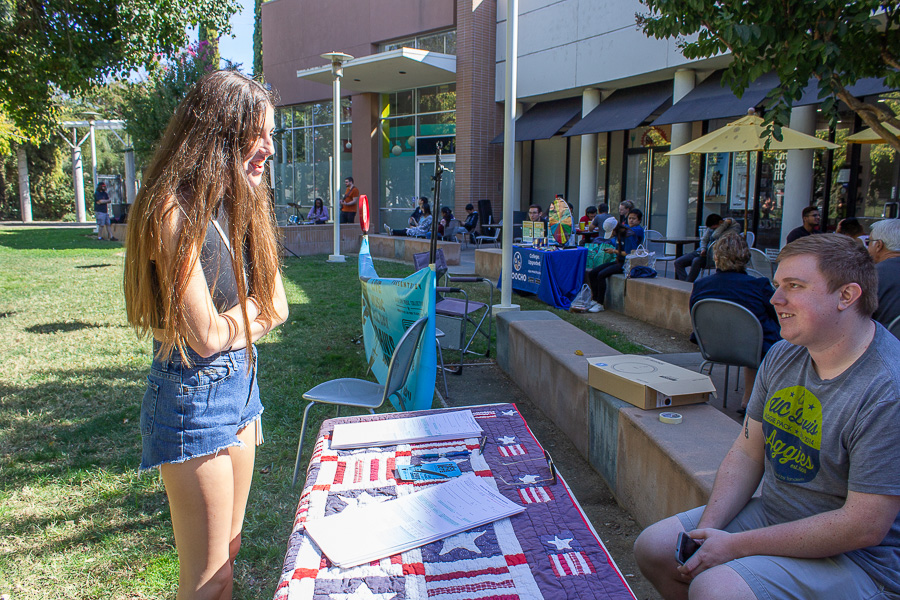
As the Nov. 6 midterm election approaches, Davis residents and students have gathered to remind and encourage voter turnout. Rock the Vote, a free all-day concert and voter registration drive, took place on Saturday, Oct. 20 at the Davis Commons. It was hosted by Davis Live Music Collective along with Solomon’s Delicatessen, Submerge Magazine and KDVS. Featured artists included King Dream, Black Yacht Club, Las Pulgas, Jessica Malone, Bomba Fried Rice and the Midnight Dip.

“We definitely spread a lot of awareness,” said Chris Preston, the event coordinator for Davis Live Collective. “Supporting the arts and supporting having a voice [are] I think two things we accomplished today.”

Rock the Vote volunteers helped 18 people register to vote in time for the Oct. 22 registration deadline. Voters who did not register before the deadline, however, can still vote using the conditional voter registration process. Registration volunteers included several workers within the K-12 school system, as well as members of Davis Alliance, the UC Davis chapter of the Harry Potter Alliance.

Attila Hegedus, a second-year aerospace science and engineering major, expressed an understanding of the dynamics that challenge youth voting. “Young people’s votes are underrepresented,” he said.

Eliana Bono, a second-year environmental policy analysis and planning major, spoke about the importance of student voting.

“I think it’s really hard for students because it’s an adjustment,” Bono said. “It’s your first time voting, and you’re away from home. But it’s really important to know you have an impact.”

Bono, along with Mary Payne, a second-year English major, advised students to do research about candidates through nonpartisan sites, like BallotReady, and to see what organizations are endorsing which candidates.

This election, California citizens will be choosing between two candidates for both the U.S. Senate and U.S. House of Representatives. They will also vote on nine state positions, four judicial positions and 12 propositions. Yolo County citizens will be voting for trustees on the Davis School Board and for members of the Yolo County Board of Education.

The races for the congressional houses have garnered much attention this year, as Republicans currently have control of both Senate and House. For Democrats to take control of the House, they need to win 23 seats and defend their current seats. In order to take control of the Senate, they need a net gain of two seats.

With regard to the House, Davis voters are in the third congressional district. This means choosing between Democrat John Garamendi — the incumbent — and Republican Charlie Schaupp. For Garamendi, key issues include school funding and student loan reform, farm-to-fork programs, construction of energy-wise transportation systems and comprehensive immigration reform. Schaupp’s platform includes forest and open area maintenance to prevent fires, better federal fiscal responsibility and preservation of social security through economic growth.

As for the senatorial race, voters will choose between two Democrats: Kevin de Leon and Dianne Feinstein. De Leon and Feinstein agree on most issues, including increasing federal gun restrictions, supporting immigrants and decriminalizing marijuana under the federal law.

These two federal races have the potential to influence party influence in Washington, which is one reason why these midterms have been so high-profile for students.

“[I’m] excited at the prospect that maybe things can turn around and go in a way that maybe is better for everyone,” Payne said. “I’m hoping that we get people in Congress and such [who] actually care about everyone who lives in the country.”


Written by: Anne Fey — city@theaggie.org


Flocking Isn’t Just For Birds

TESSA KOGA / AGGIE

UC Davis professor conducts research on how people are driven to flock

There’s an assumption that the tendency to flock comes from an animal’s basest instincts and that if humans were to put a little more thought into the decisions they make, those decisions would no longer be motivated by the need to impress other people. However, based on recent research conducted by UC Davis assistant professor of communication Seth Frey,  humans get caught up in a sort of “I-think-you-think-I-think” mentality even when using reasoning.

Frey studied this behavior by having subjects play games and studying their behavior during a game.

“We have a game and there’s a bunch of choices arranged in a circle and if you pick one and someone picks the one right ahead of you, they get a point,” Frey said. “It’s like a really big rock-paper-scissors.”

Researchers used three different games that involved different kinds of reasoning to see if the subtle differences would matter to players.

We wanted a simple situation to cleanly look at how much people think what other people are thinking about,” said professor Robert Goldstone in the Department of Psychological and Brain Sciences and Program in Cognitive Science at Indiana University. “In the standard game of rock-scissors-papers, it is hard to see how many levels of thinking about thinking people engage in. That’s why we came up with a 24-option variant of RSP.”

The subtle differences in the strategies of the three games used didn’t matter to the players, who got caught up in trying to one-up another player.

“The whole time, you’re chasing someone who’s trying to chase you,” Frey said. “So you end up being really close to each other in the choices you’re making. By trying to one-up each other, you end up doing this dance together around the circle. We call it flocking behavior because [in trying to one-up each other], we end up making choices that are close to each other…we’re stuck together and we’re moving together. Like a flock of birds. A flock of birds are not just aligned near each other in position, they’re also aligned near each other in velocity.”

The theory that humans flock even when using human reasoning processes shows that these processes could contribute to complex social dynamics that are normally considered to be based on emotional, reactive reasoning.

As a social species, our decisions often depend on our expectations about how other people will think and act,” said Robert Hawkins, a fifth-year Ph.D. student at Stanford University. “These experiments demonstrate that the complex dynamics of human groups may be driven by smarter and more sophisticated social representations than popular models give us credit for.”


Written by: Kriti Varghese — science@theaggie.org


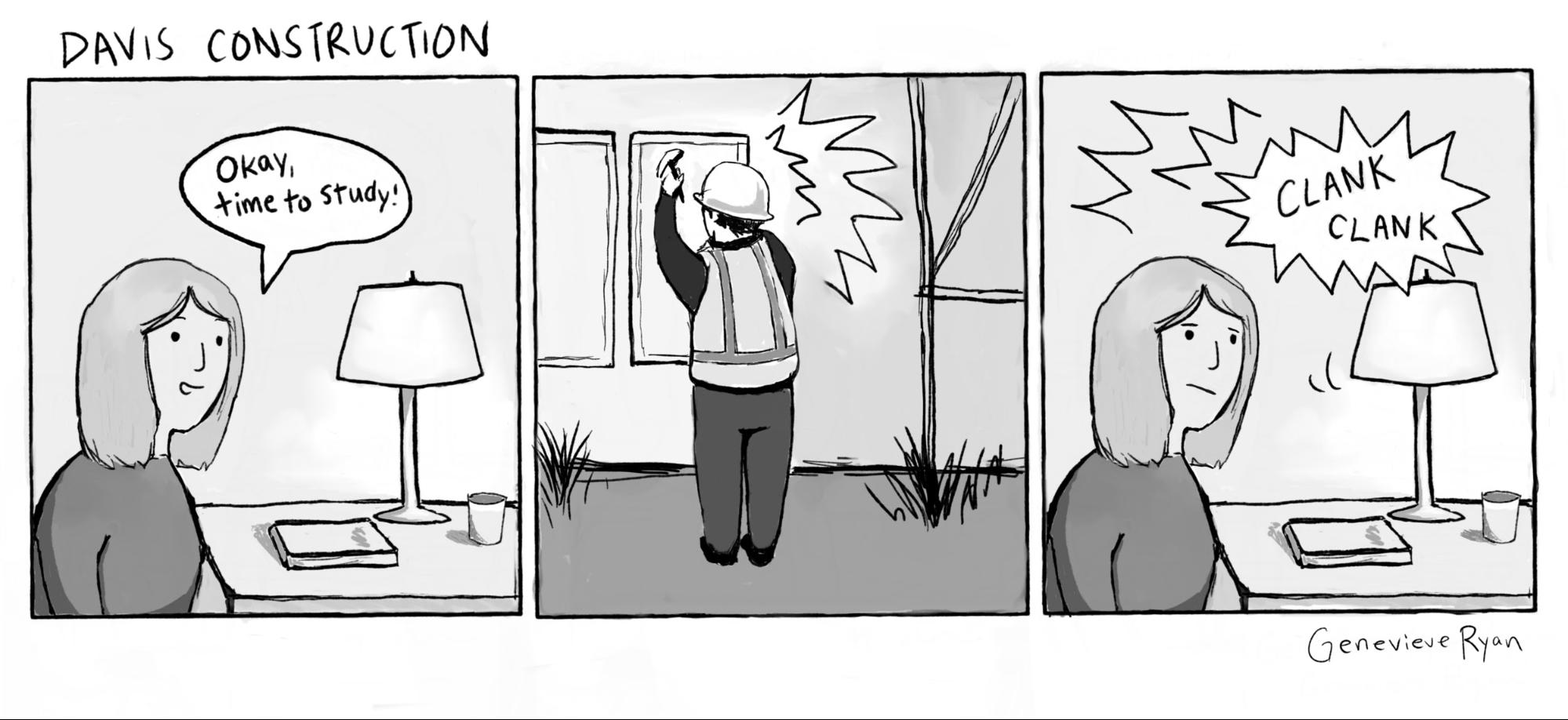
Cartoon: Davis Construction

GENEVIEVE RYAN / AGGIE

By GENEVIEVE RYAN — geryan@ucdavis.edu


Coming of Age

0
ALLYSON KO / AGGIE

Turning 21 opens new doors and opportunities for students to enjoy their time in Davis

For many students, turning 21 can reveal new experiences for fun and socialization. Ranging from attending the bars in downtown Davis or Sacramento, to taking advantage of the nearby Napa Valley, students find themselves open to much more opportunities upon turning 21.

Aeron Yim, a fourth-year managerial economics major, recalled feeling excited about turning 21 to join her friends that were already of age. The age gap, while small, means missing out on experiences with older friends and potential opportunities to make memories with each other in college for a lot of younger students.

“A lot of my friends were a year older than me so it was hard when all of them turned 21, and I was turning 20,” Yim said. “What I anticipated the most was to go to the bars and be able to finally go out with my friends. I just wanted to be legal! Now that I am 21, it’s nice that I have the option to go out to the bars even if I don’t necessarily want to. I also found that the experience of ‘grabbing a casual drink at a restaurant’ is nice. I actually started to enjoy alcohol more for the taste than just as a means of getting ‘turnt.’”

A 21st birthday is definitely notable and is an occasion to celebrate with friends and loved ones. Yim spoke about how she spent her 21st and how she celebrated her newfound adulthood.

“My 21st was on a Monday so I went to one bar that was open at 12 a.m. with a few other people,” Yim said. “We each bought a round of drinks, played a game of pool and then went home and ate jalapeño poppers.”

Claire Nakamura, a fourth-year psychology and history major, found that Davis’ proximity to the Bay Area offers more venue options. She noted that she mainly takes advantage of her adulthood when she goes home to San Francisco.

“Davis doesn’t have too many great bars, but when I go back to the Bay Area or I go home to San Francisco, I actually like going out to the bars,” Nakamura said. “I like to go to Polk Street a lot – there’s a line of bars down the street there so it’s fun going with my friends.”

Nakamura also enjoys Davis’ proximity to Napa, where individuals can visit vineyards or attend wine tastings on any given day.

“For my birthday, I went to Napa and that was really fun,” Nakamura said. “Two of my friends went and my mom was the designated driver, and she saw me drinking for the first time. It actually wasn’t too much of a weird experience drinking in front of my mom since my friends were there too. I love Napa and I love wine.”

Kelly Ko, a fourth-year managerial economics major, noted that being 21 offers her the availability to attend more events in the area that may have an age limit for attendees.

“There are a lot of events, like concerts, that happen in San Francisco that are limited to people that are 21 and up,” Ko said. “It’s really nice to have the freedom to go to those events instead of having to watch my friends that are 21 or older go to them without me. I also found that I really enjoy going out to the bars in downtown Davis with my friends on Thursdays, since it’s a really fun way to de-stress at the end of a long school week.”  

In terms of feeling different after hitting the big 2-1, students don’t feel too much different and actually find that they aren’t longing for parties as much as they were when they were younger.

“To be honest, being 21 doesn’t feel too different,” Ko said. “I actually think that going out is less enticing than it was when I was underage. Still, I think it’s really fun to have the option to go to bars or to more restricted events with my friends.”


Written by: Alyssa Hada — features@theaggie.org