54.2 F
Davis

Davis, California

Friday, December 19, 2025
Home Blog Page 519

UC Davis professors on intervention

SHEREEN LEE / AGGIE

U.S. missiles strike Syria

On April 14, the United States dropped bombs on Syria in cooperation with France and the United Kingdom. While Pentagon Chief Spokesperson Dana W. White said that France and the United Kingdom showed solidarity with American military actions, Sunaina Maira, a professor of Asian American studies at UC Davis and the co-director of the Comparative Border Studies Mellon Initiative, seeks the solidarity of countries on whom these missiles fall.

I think it’s up to them to call for solidarity,” Maira said about nations undergoing civil unrest, like Syria has been since 2011. “I think on the point of intervention specifically, […] I actually think that it’s really important to remember that communities have the right to self-determination.”

The phenomenon of intervention under humanitarian pretense, and of intervention by powerful western militaries begs the question of political motivation and neocolonial impulse. The military actions of the U.S. were in response to alleged chemical attacks by the government under Bashar al-Assad, Syria’s president, on Douma. Douma is located in Eastern Ghouta and is a remaining rebel force. Chemical attacks are contrary to international law of war, but this is not the first time that Syria has used chemical warfare against its people. The 2013 sarin gas attack by Assad on rebels did not invite airstrikes by the United States. In the context of the near post-Iraq War, military intervention can be unappealing and politically unpopular.

History professor Lorena Oropeza contextualized the roots of the situation in Syria alongside that of Iraq and makes a parallel to her own research focus. Oropeza recently completed a book on a 1960s social movement leader situated in New Mexico.

“It is hard to say what a good intervention looks like because so many have long-range, negative consequences,” Oropeza said via email. “In the case of Syria, for example, one root of the current humanitarian crisis is the spillover from U.S. intervention in Iraq after 9/11. That war was not quick and easy despite all promises to the contrary. Similarly, if we look at the caravan of migrants now at the U.S.-Mexico border, these are people trying to escape the poverty and violence of their home countries in Central America. And a lot of this violence is gang-related and these gangs were a U.S. import. Americans do not always connect these dots.”

History professor Baki Tezcan also made a significant allusion to the Iraq War. It foregrounds his emphasis on thoughtfulness and care in militarized cases of intervention. According to Tezcan, threats must be verified before they are addressed violently.

“In 2003 we invaded Iraq and at the time, at the time of the invasion we were led to believe that Iraq had a close connection with Al-Qaeda, the government of Iraq had a close connection with Al-Qaeda, which proved to be false,” Tezcan said. “We believed that the government of Iraq was involved in producing weapons of mass destruction which it was about to use and that also proved to be false. Nothing was found. And so the, that intervention led to so many things including, including, in a sense what has happened in Syria today by several steps. And not directly but indirectly. So that is why I am just trying to say that it is important to be cautious before intervention and making sure that there was need to intervene.”

Tezcan’s observation is relevant to the case of missile strikes on Syrian weapons development and storage, as these bombs fell hours before a team arrived to make an official investigation. To be confident of chemical attacks, samples must be taken and analyzed from the scene. The reports of chemical weapons use still have not been officially verified, as photo, video and personal testament still may not be cause for intervention.

While both Tezcan and Oropeza make reference to the seeds of resistance and violence sown by intervening forces in the Arab world which gave birth to the conflict in Syria as it exists today, Tezcan also sheds light on the complex political dynamics that made the Syrian political makeup untenable and led to rebellion.

“The government in Syria has mostly been a secular government in the last decades and yet it’s been controlled sort of in terms of its personnel, its recruitment,” Tezcan said. “And the Alawite Muslim minority was very well-represented which made some Sunni Muslims feel kind of disenfranchised, to a certain extent. So that I think might have been [one] of several things that happened in Syria, people wanted to have more representative governmental system at the time when the Arab Spring things were happening in different parts of the Middle East.”

The Arab Spring was a series of civil upheavals following an act of resistance in Tunisia. Many of these upheavals called for a change of government, though in Syria the people are still resisting for change. Meanwhile, Oropeza explained the material cause of violence. The arms available in Syria and some neighboring countries which have contributed to some of the violence within the transition can be traced back to the U.S.

“Even when the U.S. does not directly intervene, its military equipment is there,” Oropeza said. “In Syria, anti-Assad factions that have both been armed by the U.S. are now fighting each other. Nearby, Saudi Arabia has been bombing Yemen with arms purchased by the United States. The result is not only another major humanitarian crisis there but, for those people on the ground being bombed, another reason for anti-American sentiment.”

While conflicts outside of Syria are propelled by American arms, Syria is itself not an insular war. Maira noted its highly international nature and the self-interest of involved nations.

“It’s fair to say the Syrian people rose up against the dictatorship of Assad but the point is also that the U.S. has also been engaged in various wars and has left many dictators also untouched,” Maira said. “Clearly this is a proxy war with other countries with which the U.S. is engaged in a struggle for power in the region, notably […] in Iran. I think that clearly […] the great game is being played out on the Syrian battlefield between these other powers.”

U.S. political interests, in addition to motivating the financial/arms support of some rebel groups, may also be the basis for its military intervention. Referring to a longstanding tradition of invoking war to garner the support and faith of a disappointed or disgruntled public, Maira ponders Trump’s impulse toward military intervention.

“There were many Syrians who actually were calling for U.S. intervention openly and the U.S. has actually not been […] engaged,” Maira said. “Trump definitely wanted to distract from the numerous problems that are bedeviling him at home in the domestic arena […] and we hear the drumbeat of war to distract the population and kind of try to unify them against some evil threat overseas. It’s not new.”

In an official statement, President Donald Trump invoked the multilateral powers of the U.S., France and the UK including “all instruments of our national power: military, economic, and diplomatic.” Maira inquired into the forms of aid made possible by economics and diplomacy, which are seldom utilized.

I think if the U.S. cares so much about the Syrian people they would be resettling all Syrian refugees because they have the funding and the resources to do that,” Maira said. “Instead, Syrians are being housed in poor neighboring countries of Lebanon and Jordan and Turkey that are completely overwhelmed by the influx of Syrians.”

The discourse of humanitarianism that permeates discussions around intervention seems to have the potential to welcome and settle asylum-seekers and refugees.

“Humanitarianism has become a fig leaf to provide cover for western imperial intervention because it’s no longer possible or justifiable to just openly invade another country,” Maira said. “This began really with the wars in the Balkans and the Bosnian conflict when, under Clinton, we must remember it was not under a Republican regime, that the west engaged in the war in Serbia and Bosnia. It was done under the kind of notion of the responsibility to protect, R2P. And this doctrine is being used, invoked, by the international community, by certain […] countries to claim that it is their responsibility as global policemen who have annointed themselves with the responsibility to protect supposedly other, weaker populations and to invade them.”

R2P, or the Responsibility to Protect Doctrine, is signed by all members of the United Nations and commits them to prevent genocide, war crimes and other humanitarian violations. Being the legal doctrine of the phenomenon of humanitarian war, it has been used in cases of dubious intention.

“The idea of humanitarian war is one that has increasingly been used, particularly by powerful weaponized countries to invade and undermine the sovereignty of other countries,” Maira said. “The problem with it, the two problems, is one: it’s done highly selectively. There are numerous human rights and humanitarian abuses that are happening in different countries around the world, in the U.S. and European countries choose to intervene very selectively in some cases and not others. So, just take the Israeli occupation in Palestine. Israel has committed numerous illegal attacks and wars, it has used chemical weapons on the Palestinian population, it has done so repeatedly every two or three years there’s a war on Gaza in contravention of international law and the U.S. not only does not invade Israel or attack it, the U.S. actually supports Israel and funds it. So there’s a huge hypocrisy.”

It remains to be seen whether in this case, the Assad-led government used gas on its rebels. Although there may be a final answer to this question, that of intervention cannot be concluded with finality. The reality of displaced peoples in the Syrian conflict remains pertinent. Maira reminded the UC Davis community to think about what they can do for refugees and asylees who suffer the lived experience of civil unrest and U.S. intervention.

“I think the word conflict probably doesn’t do it justice because the […] country has been decimated,” Maira said. “You have billions of people who have been forced to leave and displaced […] the infrastructure has been destroyed, Syria doesn’t exist anymore as we know it.”


Written by: Stella Sappington — features@theaggie.org

ASUCD can’t even navigate its own bylaws

CAITLYN SAMPLEY / AGGIE

Bylaws made incomprehensible after years of legislative tinkering

When a student recently pursued the process to recall elected officials, ASUCD failed them. According to the Judicial Council’s opinion issued in the case Nelson v. ASUCD, the resulting process “was riddled with inconsistency, confusion, miscommunication, and amounted to a denial of the petitioners [sic] right to recall.” The right to recall, which is recognized by the Judicial Council as a “constitutionally guaranteed right,” was denied “as a result of a bureaucratic and administrative process so difficult to navigate that it makes the exercise of one’s rights impossible.”

The process to recall an elected official is outlined in the ASUCD Bylaws. Regardless of opinions over the ongoing attempt to recall the current executive team, it’s appalling that the ASUCD Bylaws are so incomprehensible that the people who are supposed to create and enforce them find them impossible to follow.

The Judicial Council’s opinion does not mince words. This is clearly labeled as a “failure” of institutions within the association. The Editorial Board believes that this case highlights a collective breakdown of ASUCD.

As the Judicial Council makes clear, “what would appear to be years of legislative tinkering has led to a mangled recall process that runs perpendicular to the ASUCD Constitution.”

This case illuminates the cracks, lack of transparency and communication and ongoing negligence in the association to an embarrassing degree. Highly concerning is the charge of “legislative tinkering,” which seems to suggest unnecessary changes to the governing document of the association. This wastes time and effort and shows a startling lack of credibility and accountability within the association as a whole.

The Judicial Council is not without its own faults — the council is tasked with the responsibility of reviewing legislation every week. The council, as well as the other two governing bodies of ASUCD, therefore should be wary and take issue with changes to the bylaws that seem questionable or, at the very least, nonessential.

Bylaws relating to the initiation and circumstances of and around a recall have not been immediately relevant for some time. Nonetheless, because the association recognizes the recall process as a constitutional right, it’s an unacceptable error.

More often than not, incoming ASUCD officials promise to ensure transparency within the association. The chaotic Winter Elections and its dramatic aftermath, with allegations of voter fraud as well as allegations of concerning and problematic behavior within the association, have only served to prove that transparency is not yet ensured by our elected officials.

Transparency should not be just a convenient sound bite to grab votes — if it was a priority then, it should be a priority now.


Written by: The Editorial Board 

Finding a niche

ANH-TRAM BUI / AGGIE

Students look to cultural clubs, religious organizations for peer solidarity

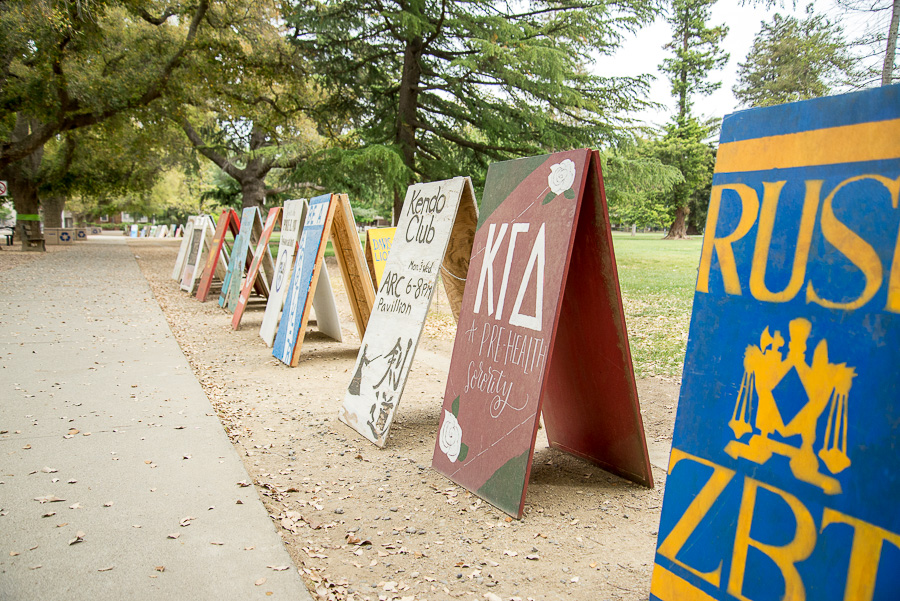
Throughout the years spent in college, individuals may find different groups that can eventually lead them to develop a sense of community. Students can take advantage of different peer groups, varying from classmates to neighbors, in order to make connections.

Organizations often provide the opportunity to bring together students of similar backgrounds or interests. Through these groups, individuals can find a community that they relate to and can quickly connect with. Brian Jahja, a second-year food science major, noted how the structure and supportive nature of on-campus organizations helps facilitate this feeling of community among students.

“To me, community is an active support system and a place to feel like you belong and I’ve found this sense of community in the various organizations on campus,” Jahja said. “I think that a lot of the organizations on campus are really good in their attempts to well-integrate you into their community.”

Organizations on campus provide a place for people of similar upbringings or circumstance to relate to one another and foster community through the bonds of mutual understanding and similar roots.

“As an international student from Indonesia, the Indonesian Club has definitely helped me find community,” Jahja said. “The club brings all the Indonesians on campus to one localized place and they hold tons of events throughout the year. You might not be able to see those people every day but that’s why the structure is in place, it gives you more of a reason to meet up. Membership isn’t mandatory, if anything it gives you an opportunity to get involved with a community.”

Other organizations, such as Christian fellowships, give students the opportunity to surround themselves with others of similar beliefs. Emily Trang, a third-year design major, recounted finding her main community through her fellowship during her first year, and how she maintained that community throughout her college experience.

“I found community through [Davis Christian Fellowship], my fellowship on campus,” Trang said. “They’re all people who support me and who I can go to with anything, whether it’s something happy or sad. We all have the same beliefs and they remind me about things when I need to be reminded. They support me through pretty much everything.”

Students can also look to find communities outside of structured on-campus organizations. Angel Fang, a third-year managerial economics major, noted how most of her current community stems from the initial relationships she made in the dorms during her freshman year.

“I didn’t necessarily find a sense of community through campus organizations like a lot of other people do,” Fang said. “I think I mostly found community through my current housemates who I initially met because of dorm life. It would usually start with one or two people I’ve met and just branch out from there. Usually people they know through things like clubs or organizations or classes somehow become incorporated into my friend group and my community.”

Fang explained how the structure of dorm life facilitates friendships and community in a way that’s difficult to replicate in another setting.

“Being forced to live with people you don’t know definitely forces you to open yourself up a little more,” Fang said. “My roommate in freshman year was completely random but I still live with and talk to her every day.”

While structured organizations or living communities may be effective ways to meet new people, students tend to agree that classes are a difficult source of foundation for a community.

“It’s definitely easier to find community through organizations than classes,” Trang said. “With classes you usually just show up for class and when it’s over you leave; organizations are always there.”

Other students tend to find that working with peers throughout the quarter is helpful purely while in the class and working toward a common goal. However, without the structure of the class in place, students often fall out of touch with one another.

“I haven’t found a strong, sustainable community from doing things like group projects or meeting people in classes,” Fang said. “I find that after the class is over, it’s really rare that you talk to them again after that.”


Written by: Alyssa Hada — features@theaggie.org

Humor: UC Davis, inspired by internet service providers, offers new bracketed tuition system

KAILA MATTERA / AGGIE

Citing the success of AT&T and Comcast, UC Davis begins tuition changes that model the current net neutrality environment

As more telecom and internet service providers announce altered pay brackets, the Northern California school UC Davis has decided to follow the trend. Starting in Fall 2019, UC Davis will integrate a new tuition collection system they believe will “make students, parents and especially Davis administrators happy,” according to an anonymous source.

Our source tells us that undergraduate tuition will maintain its in-state, out-of-state, and international status differences and split into three new options within each of those categories.  Those in the lowest bracket will pay $10,000 for in-state, $30,000 for out-of-state or $45,000 for international status respectively, and those in the highest will pay $20,000, $42,000 or $60,000.

Sounds logical enough, but here is where the system ditches the ISP model.

As our source informs us, to find out which bracket they fall into, students must take an extended written examination on “whether Chancellor Gary S. May looks like the lovechild of Danny Glover and Ben Carson.” UC Davis will provide students with three pictures of each man and require that students speak “honestly and openly, using analytical excellence expected from an Aggie.” Based on their responses, students will then be placed into their appropriate tuition bracket, although there is no clear indication as to which responses will receive the lowest or highest placement.

Students who believe this is not a fair assessment fortunately have another option. According to the same source, students who choose to opt out of the written exam must answer a simple questionnaire about their pornography consumption habits, including how often they watch, their most-used sites and what kind of pornography they enjoy. Again, it is unclear what responses will place students in higher or lower brackets, but our source tells us that this idea is in coordination with Comcast, Davis’ primary ISP, for unknown reasons.

We will keep you updated on this story as more details arise.


Written by: Conner Shaw — cjshaw@ucdavis.edu

(This article is humor and/or satire, and its content is purely fictional. The story and the names of “sources” are fictionalized.)

Style Watch

TAYLOR LAPOINT / AGGIE

Tomboy chic

Renee Handley, a second-year environmental science and management major, knows how to thrift like a pro. Her style has evolved from wearing boy shorts to wearing dresses — all of which she procured at thrift stores.


ASW: What’s your style?

Handley: I would say it’s pretty tomboy; I used to dress up in boy shorts when I was younger, and I think it escalated from there. Whatever is comfortable. I thrift a lot of my clothes, and I really like Eco Thrift in Sacramento.  


ASW: Where did you get your outfit?

Handley: My shoes I got in Philadelphia at a Doc Martens store. This dress I got at a Goodwill in Santa Barbara. And this long sleeve shirt I got at Buffalo Exchange in Ventura.


ASW: What advice do you have for people who are trying to be more stylish?

Handley: What deters me a lot from getting an article of clothing or wearing something is that it’s something I don’t see myself wearing but I want to wear. But I would say just go for it. You don’t have to put yourself in a box.


ASW: Where do you get your style inspiration?

Handley: From friends and people I see on campus. On Instagram, you see a lot of outfits you think about when you go shopping and think, “I kinda want that.”


ASW: When did you start getting into fashion?

Handley: Pretty late. I started to get into fashion in junior or senior year of high school.


ASW: What style do you regret the most?

Handley: I went through a lot of style phases to get to where I am. Looking back on pictures is kinda cringy. I used to be into tie dye for a second and I slightly regret that. It was a good time while it lasted. No hate on tie dye but yes.


ASW: How has your style changed?

Handley: I’m trying to wear more girly clothes, like more dresses and I’m trying to make more of an effort. But some days i’m looking pretty grungy and I’m wearing the same thing everyday. I definitely have a favorite pair of jeans and t-shirt.


ASW: What is your go-to outfit?

Handley: A really nice pair of blue jeans, like vintage Levi’s, and I really like this t-shirt I got in Australia when I was a kid. It fits me perfectly. I literally shop in the boys section because I’m like a kids size large or medium. It’s an embroidered shirt that says Sydney, Australia and it’s light blue. And just a pair of sneakers.


Written by: CaraJoy Kleinrock — arts@theaggie.org

Armadillo Music offers more than vinyl

DIANA LI / AGGIE

Local record store presents live, in-store shows

Armadillo Music is not only a mecca for record and CD collecting Davisites, but it also serves as a concert venue. Located on F Street in downtown Davis, the store has a small, makeshift stage in its front corner where local musicians perform for fans and browsing customers.

Third-year Spanish major Chloe Breaker has been in charge of booking in-store concerts since September 2017. She also took on the role of growing Armadillo Music’s publicity and community outreach with social media posting and features on websites like The Davis Dirt.

“Recently we have been getting a lot of [performance] requests because we have been advertising it more,” Breaker said. “I have been reaching out to other record shops in different areas; we send each other different bands. A lot of the times people inquire in the shop since they will see the stage.”

According to Breaker, many artists inquire about booking shows after they see the stage or hear other bands perform.

Kat Gallardo, a fourth-year mechanical engineering major and frontwoman of the musical project katgrüvs, performed at Armadillo Music with the intention of expanding her audience. For many musicians like Gallardo, the centrality of Armadillo Music to downtown and its support by the local community makes the gig a valuable opportunity.

“They are always looking for people to play in-store,” Gallardo said. “If you’re a musician who is looking for more exposure, they are open to having that available to musicians. I think that is really awesome.”

The show itself acts as its own advertising for musicians, targeting the city of Davis as an audience.

“It helps that Davis is a small town, and just having our poster up on Armadillo’s window allows people to recognize us and acts as a stepping stone for us,” said Jesus Rico, a third-year civil engineering major and member of local band Busy Lighthouse.

Especially for maturing UC Davis musicians, that expansion beyond on-campus shows is integral to future success.

“My first two or three years here, I have been just playing on campus events and occasionally have off campus,” Gallardo said. “But now that I’m a senior and looking to grow my fan base beyond UC Davis, I am starting to book more in downtown Davis and do more Davis community-oriented events.”

The venue itself is ideal for many musicians — its smaller stage prompts an intimate setting and interaction between viewer and musician.

“It was not as much of a formal venue with seating,” Gallardo said. “There is less pressure in that sense, you can get a feel for the audience. It’s perfect for being a one-woman band.”

The Armadillo in-store shows enable a symbiotic relationship based on publicity for both the store and performers alike. According to Rico, random people would come to browse items, but they would stay to listen to the performer.

“Generally people come when they are browsing, and I think it’s a good environment to have,” Breaker said. “People won’t expect it and it adds to the feel of being in an old school indie record shop.”

More information and a lineup of upcoming shows can be found on Armadillo Music’s website.


Written by: Caroline Rutten — arts@theaggie.org

Domestic terror is not as big of an issue as you may think

CAITLYN SAMPLEY / AGGIE

By playing on our fears, the media has inflated the threat of Islamist terrorism

From 1995 to 2014, 3,264 people died in the U.S. from acts of terrorism. From 1999 to 2015, 533,879 people died in the U.S. from gun violence. More Americans have been killed by guns since 1968 than in all U.S. wars combined, and yet Americans are far more afraid of Islamist terrorism than they are the Second Amendment.

A survey conducted in January 2017 revealed that on a “feeling thermometer” ranging from 0 (most negative feelings) to 100 (most positive feelings), on average, Americans gave Muslims a rating of 48. “Terrorist attack on nation” and “victim of terrorism” both rank among Americans’ top five greatest fears according to the 2016 edition of Chapman University’s survey of American fears. These views are very much attributable to American fears over Muslim capacity for violence, or more commonly spoken of as “terrorism.” This is directly traceable to the media and its penchant for overcoverage of Islamist terrorism.  

Media scholars have found that people construct their models of the world through the media they consume. In an analysis of network and cable news shows from 2008 to 2012, communication scholars found that just 6 percent of terrorist acts were committed by Muslims, while 81 percent of terrorists on the news were portrayed as Muslims. Given that attacks by a Muslim perpetrator get an average of 4.5 times more coverage than attacks perpetrated by non-Muslims, it’s not unreasonable that the availability heuristic for many Americans enables them to recall acts of Islamic terror far more readily than those by non-Muslims. In effect, the media has composed an unrealistic worldview of the threat of Muslims as terrorists, when in reality, radical Islamic terrorism is nowhere near as imminent a threat as some might think.

Much media, in an attempt to grow viewership and ratings, has successfully implemented fear-based news programming into much of the dialogue surrounding Islamic terrorism, creating a society with a deeply tainted perspective on danger. This instigation of mass fear would not pose as an issue if it did not yield consequences, but it does. Recent years have witnessed a spike in hate crimes against Muslims, reaching 9/11-era levels. Muslims have been shot execution-style and killed in their homes and outside of their mosques. They have been stabbed, beaten in stores, schools and streets, shot in cabs, punched while with their children, kicked off airplanes and far more.

The issue arises when society views the term “Muslim” as analogous to “terrorist,” which then affords hate crime perpetrators justification in their anti-Muslim attacks. Through the continued insistence of a faulty stereotype, hundreds of Muslims have suffered from what people assume they are, rather than what they are — which is average citizens, like any other non-Muslims.

Based simply on facts, the notion that Muslims inherently possess the capacity for terrorism based on their religious affiliation is completely and utterly unfounded. Muslims pose far less of a threat than gun violence and the existential threat of climate change. And yet the U.S. is seating a president who neither believes in climate change nor restrictive gun laws. Rather than make an effort to combat a weapon that has killed over half a million Americans in the past 16 years, Congress has allocated $44.1 billion in funds to Homeland Security to combat an issue that accounts for a death toll that is approximately 0.6 percent that of gun violence victims. It’s easy to point the finger at Muslims, but it’s harder, and vastly more consequential, to point a finger at the Second Amendment.

9/11 was one of the most horrific moments in U.S. history, but acts such as this did not persist in the U.S. in the same way that gun violence has — and will continue to do so if the media continues to undermine its threat in favor of overcovering Muslim terrorists. The threat of domestic terrorism has been inflated to the point in which far more pressing issues, like gun violence — which far more Americans have been subject to than terrorism — are ignored, both socially and politically. The word “terrorism” has been afforded so much power and gravity that, when used, it shifts our focus from more present dangers.  

The term “terrorism,” for far too many, has come to encompass a race despite the fact that the term is beholden to neither race nor religion. Islamic terrorism does not even account for the majority of domestic terror in the U.S. From 2008 to 2016, right-wing extremists were behind nearly twice as many incidents as terror acts associated with Islamist domestic terrorism. 76 percent of the Islamist terrorism was foiled by police, while only 35 percent of the right-wing extremist acts were derailed. As a result of the overcoverage of Muslim terrorists, not only do alternative issues go unnoticed by the public, but they also go unnoticed by law enforcement. So while the real issue continues to fester, Muslims continue to be arbitrarily stereotyped as terrorists — and suffer as such.

Responsible reporting is a vital tool in constructing an appropriate worldview for broader society; the news dictates what issues we’re exposed to and, therefore, what issues we care about. Continuing to overrepresent Muslims as terrorists in the media establishes a worldview that centers on misplaced fear. Rather than combating more threatening issues, we continue to distract ourselves while simultaneously and most unjustly typifying an entire religious group.


Written by: Hanadi Jordan — hajordan@ucdavis.edu

Disclaimer: The views and opinions expressed by individual columnists belong to the columnists alone and do not necessarily indicate the views and opinions held by The California Aggie.

Behind the scenes of assistant coaching

TAYLOR LAPOINT / AGGIE

With multiple facets to the job, assistant coaching is more than meets the eye

In most sports, especially at the university level, there are assistant coaches to help specific athletic programs. They show up for games, give input and try to help the team succeed. However, there are many facets attributed to assistant coaching that people may take for granted.

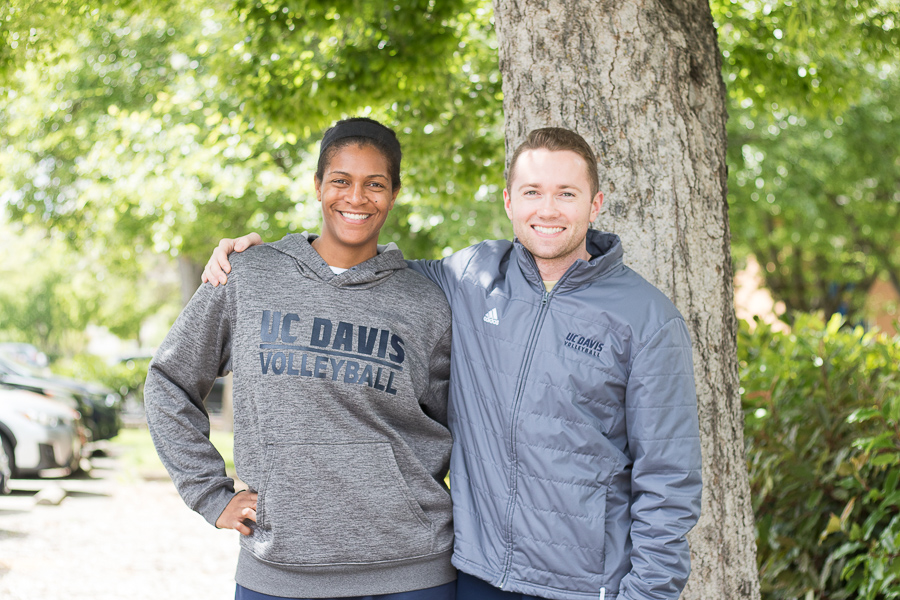
Some may wonder why assistant coaches for particular athletic teams are even necessary. Women’s volleyball assistant coach Bryce Williams, who has been coaching at the Division I level for seven years, three as an assistant, believes it is a chance to grow the program.

“I think the benefit of assistant coaches is that anytime you can have more support staff in a program you can do more special things with the group,” Williams says. “You are allowed to make more creative visits for recruits and divide the work up more.”

Women’s water polo associate head coach Kandace Waldthaler mentioned other aspects of the benefits of having assistant coaches and the sheer volume of responsibilities that come with running a university level team.

“The administrative parts and all the behind the scenes stuff, everyone thinks that stuff just magically happens and we magically have flights booked for away games, etc.,” Waldthaler said. “The [games] and all the production behind it is probably only about 60 percent of what we do, and the other 40 percent is recruiting, which is a huge part of your job because you are always having to think about the next thing.”

When first entering at a position of an assistant coach at the university level, there is a entire scope of new learning that must take place in order to eventually become a successful assistant coach.

“When you first get hired as an assistant, it is really about learning what the head coach’s style is, how best to give feedback and building trust with the head coach and players,” Williams said.

For Dan Conners, the women’s volleyball head coach, there is a lot of planning that goes into the process of hiring an assistant coach, stemming way before the first day of learning starts.

“I think that you want a balance of personalities,” Conners says. “I think that I like having a balance of personalities, some more social, some more analytical, etc. I think a balance of personalities is important because then different players can connect with different coach personalities.”

As far as why assistant coaches choose their careers, it usually stems from wanting to give back to the student-athletes and help them grow as players and people.

“I don’t know if I can ever do a cubicle job,” Williams said. “I am a super competitive individual and I like the flexibility of the schedule. I think it is a privilege to work with college athletes and form them into adults, while being a significant person in their life.”

Nicole Miller, an assistant coach and the recruiting coordinator for women’s volleyball who has had 10 years of assistant coaching experience, agreed with Williams.

“I tried the business world because I thought that is what I wanted to do and when I got there I knew it wasn’t for me,” Miller said. “Volleyball has always been a part of my life so I wanted to give back to the student-athlete experience. My personal experience was good in some ways and bad in some ways so I wanted to make sure if I was going to be involved it was a positive interaction.”

Not only do people that become assistant coaches have to be passionate about the career, but there are other qualities that individuals must possess in order to love their job.

“I think it is a part of the work ethic and if you want to be a part of the grind because if you do not want to be a part of the grind you aren’t going to like it,” Miller said. “It takes a lot of your time so if you aren’t passionate about it you are going to be miserable.”

Williams added to those comments, saying that work ethic is key to this job.

“You can’t hide behind a computer in this job because it is very active and if you aren’t working hard, people are going to notice,” Williams said.

Yurema Sabio, the assistant coach for the women’s water polo team, believes that the job of an assistant coach is to do whatever possible to help the team succeed.

“I am doing the workouts and helping the team out with whatever Jamey [Wright] needs,” Sabio said. “I enjoy the workouts the most, as well as the players. Every assistant coach has to do a different job. Maybe you have to support coach or maybe the workouts, the video, or administrative duties, it really depends.”

From a head coaching perspective, it is nice to always be able to learn new aspects of coaching that may work.

“[Sabio] is very experienced and not shy to be direct with players, which is refreshing a little bit because she talks straight and directly from the heart,” said Jamey Wright, the head coach of women’s water polo. “For myself, it has been good to see that maybe talking direct may be effective or even the best way to talk to keep certain people interested and involved, which I feel has been a positive impact this year.”

Being an assistant coach is challenging and hard work that requires maximum effort all of the time.

“You are like jack-of-all-trades and whatever needs to be done you have to be able to get it done,” Miller said. “There is always something that needs to be done so I think that as assistant you are always trying to finish a task, but there is always another one coming.”

Written by: Ryan Bugsch — sports@theaggie.org

Questioning articles and news outlets that are “recommended” for you

MELINDA CHEN / AGGIE

The recent inundation of fake news in emphasizes the need to be distrustful of targeted ads and certain news sources

2018 has been one of the most pivotal years for the American electorate due to revelations over issues including voter privacy, targeting by advertisements and social media safety. As Facebook has acknowledged its role in harvesting user data for third-party firm Cambridge Analytica, voters can and should have a healthy degree of skepticism regarding the advertisements and articles that appear on their Facebook feeds.

Although Cambridge Analytica abruptly shut down this week — even while actively denying the role it deliberately played in widespread data harvesting through social media — the battle is certainly not over for ordinary individuals who may have unwittingly provided useful information to such third-party firms. Although Cambridge Analytica continues to maintain that its employees’ actions were completely legal, the lasting damage it has done to the American and British electorates should certainly not be underestimated. The firm’s indifference to the effect it may have had on the Brexit movement in the United Kingdom and the 2016 presidential election in the United States speaks to an increasingly cavalier attitude that technology and data firms have toward the people they have targeted.

Even without the continued threat of data harvesting from Cambridge Analytica, voters are especially vulnerable today. The steady influx of fake news on social media sites, propagated by various troll farms that have recently emerged from the “dark web,” has the potential to be misleading, if not utterly untruthful. It’s not simply a question of taking online information with a grain of salt; it’s a question of identifying the source and determining whether it’s legitimate. This is not to say that people should cease to trust reliable and professional news sources but rather that they should consider, if not accept, the fact that certain news articles are being geared toward their search histories, subscriptions and product preferences, among other things. If individuals are only exposed to news sources that comply with their worldview, it could become quite easy for the electorate to remain as isolated and hermetically sealed as it is today. In this way, it could become easier for voters to remain entrenched in their opinions and ideas, which in turn could foster increased polarization in an already deeply divisive political climate.

As midterm elections draw nearer and the weakening moral backbone of Congress is called into question, some news sources have implied that America is due for a reckoning of sorts, a backlash to the triumph of Trump’s populism in the last two years. A non-populist movement, however, will only be possible if politicians and voters alike take a stand about their ideals instead of shrilly condemning President Trump’s every action, thus stooping to his level of discourse, as they currently do. The fine line between unproductive public vitriol toward Trump and a carefully planned and thought-out resistance to his political views and isolationist foreign policy may well be determined by how voters decide to perceive the news sources to which they’re exposed. Whatever is “trending” or “recommended for you,” after all, is only a fraction of the truth.


Written by: Rebecca Bihn-Wallace — rlbihnwallace@ucdavis.edu  

Disclaimer: The views and opinions expressed by individual columnists belong to the columnists alone and do not necessarily indicate the views and opinions held by The California Aggie.

Humor: Shrem Museum denies becoming haunted house

ZOË REINHARDT / AGGIE

Surprise — it really is

The Manetti Shrem has recently been experimenting with live performance art. Its current exhibition features a completely empty museum, with a person in each corner and at each entrance waiting to scare people. The featured piece is displayed prominently at the lobby desk: a man named Boo Radley who hides under the desk, pops out and shouts “Radley!”

“I mean, yeah, this is a permanent display,” Marie Radley said, shakily. “That doesn’t mean he isn’t going to get creative and surprise you, you know. It’s his art; trust that he knows what he’s doing.”

Some patrons reported that, as they wandered around the space, they were scared by a slew of recognizable characters. A person with a fedora and knives tied to a glove reportedly came crawling around a corner. Many people said they saw a puppet on a tricycle rolling around the museum, giving them cryptic riddles. Some said they observed a child playing with a doll in the corner, but upon a second glance there was just a lone doll sitting there “watching them.” Others were delighted to see a smiling bundle of clowns during the exhibit. Free pairs of pants are being handed out to customers upon exiting, so be sure to stop by the new Shrem House of Horror!


Written by: Beck Nava — rnavamcclellan@ucdavis.edu

(This article is humor and/or satire, and its content is purely fictional. The story and the names of “sources” are fictionalized.)

Chancellor announces UCDPD will focus on de-escalation, not everyone satisfied

IAN JONES / AGGIE FILE

Chancellor, police chief, students weigh in on de-escalation policies of campus police

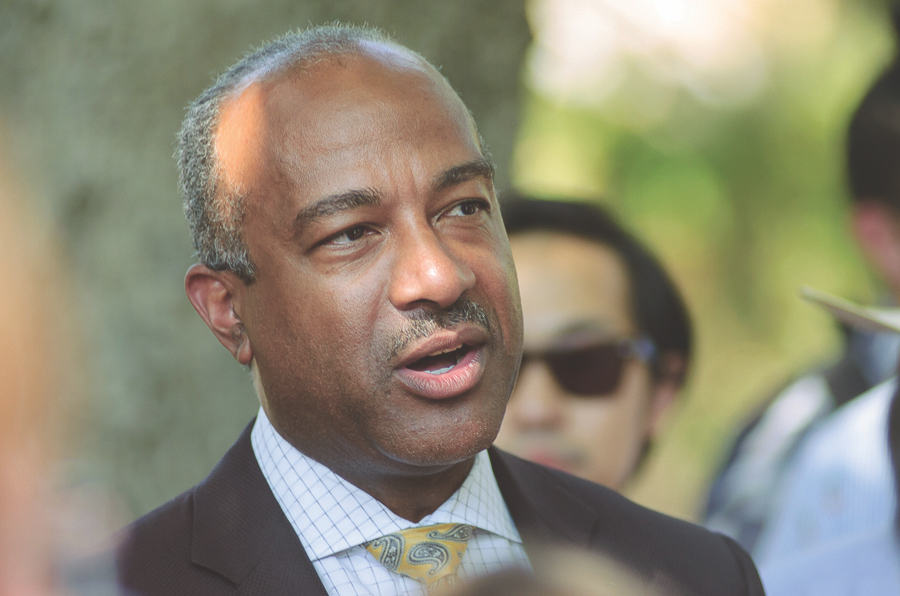
Following the March for Our Lives movement, nationwide marches that took place after the shooting at Marjory Stoneman Douglas High School in Florida, Chancellor Gary May released a statement on gun violence in which he described feeling disturbed “by the violence that continues to plague our society.” May said he is “encouraged that UC Davis Police Chief Joe Farrow has made de-escalation training a priority for his campus officers.”

UC Davis Chief of Police Joe Farrow gave his definition of de-escalation.

“De-escalation is part of the way policing looks at officer-citizen contacts and de-escalation really started on the way we dealt with people with mental illness,” Farrow said. “We look at what is truly important, what we are trying to do and how we can take the police officer and citizen contact and resolve it in a way that is as close to mutually beneficial as possible. How do we have the citizen walking away and say, ‘That is fair, the officer has done their job?’ De-escalation is all about how officers train in a way where they calm rather than heighten situations.”

May responded to questions regarding the importance of de-escalation as a focus of UC Davis Police Department via email.

“UC Davis police officers are in contact with members of the public every day,” May said. “Fortunately, ‘use of force’ incidents are rare for campus police, but officers have to be prepared for incidents that can be stressful, unpredictable, fast-moving or pose a risk to the subject, officer or members of the public. It’s important that every such contact has the best outcome possible and that’s why this philosophy of de-escalation is important in modern policing.”

The chancellor also mentioned steps he is taking in order to make de-escalation a reality.

“All UC Davis police officers complete eight hours of training in responding to people

with mental health issues,” May said. “The department has committed to have all officers go through Crisis Intervention Training, the national standard for working with people in crisis, far exceeding required state standards. Additionally, the department is training officers in cultural diversity and hate crimes, implicit bias and in the human factors that affect how people react under stress. I’m committed to supporting the Chief and the department in providing the best training in these areas.”

Amara Miller, a graduate student pursuing a Ph.D. in sociology at UC Davis and a member of the UC Student-Workers Union (UAW Local 2865), said that the chancellor’s message is not assurance enough for her.

“I think it’s still a little vague: de-escalation training is wonderful and great but if it’s not coupled with policies that actually mean de-escalation is the first thing that cops are supposed to do, it’s not a guarantee that they’ll actually use the de-escalation training that they are given,” Miller said. “Not to mention the fact that there are no clear guidelines in any of these conversations about when cops have to have de-escalation trainings […] once they’re hired. It’s not a guarantee that it’s going to get to people that need it.”

B.B. Buchanan, a sixth-year Ph.D. candidate in sociology and another UAW 2865 member, was also not completely assured by the chancellor’s message.

“It’s a first step,” Buchanan said. “The problem isn’t just that there is not the right training, but rather research shows that when you have a weapon on your person, you’re more likely to use it. For example, British cops don’t go around with handguns, which means they are forced to rely on de-escalation training. Cops in the United States have de-escalation training that they don’t often utilize because their first response is lethal force. The problem isn’t with the training, it’s with the organization as a whole and it’s with the fact that American police view lethal force as reasonable.”

Police Chief Farrow mentioned that simply requiring de-escalation training is not enough in his view either.

“Our de-escalation program started here last fall when I got here,” Farrow said. “It’s ongoing. It’s not as simple as you go to a class and you’re cured, it is an ongoing systematic change that is reinforced through training, policy [and] supervision, and it never ends. For example, most of our officers had a form of mental illness training before I got here. The state standard is eight hours. They’re all receiving 16, 24 and 40 hours of training, and de-escalation training is part of that.”

Farrow said officers will “be going through procedural justice” — a class he has both taken and taught before — and “de-escalation training is part of that course.” He also said the department has a “roadmap and a very ambitious plan over the next year” to incorporate values from these kinds of classes.

“[The incorporation of values] is also being reinforced by the way we operate through policies and through training and guidance and the way we supervise,” Farrow said. “I don’t want to paint the illusion that everything changes because we go to a class, it has to be reinforced, it has to be deep-rooted in the people here.”

Miller discussed why UAW 2865 is pushing for demilitarization and de-escalation of UCPD in current contract negotiations with the UC Office of the President.

“If you’re a graduate student who’s a person of color on our campus or you’re Sikh or something where you’re targeted or racialized as being an enemy combatant by a militarized police force — even just going to work or going into your teaching room where you’re educating students can be potentially endangering,” Miller said. “If you have police out and about on campus and you’re targeted as being a terrorist or a thug, you are not safe in your workplace.”

According to Miller, UAW 2865 is requesting a number of specific policies in order to ensure the safety of its members and other students and faculty on campus.

“We’re trying to get more required trainings with specific time requirements of when police have to have these trainings,” Miller said. “We want more than just de-escalation training. We want to ensure that [police] have training on how to deal with mental health crises, how to address certain populations. We’re trying to make it so that they can’t use lethal weapons unless it’s something like a mass shooting. On everyday use, [police] don’t need to have a gun on [their] persons.”

Farrow described a number of ways in which his department has been looking into de-escalation strategies, including the fact that the department is moving beyond state minimum standards and seeking national accreditation.

“National accreditation is where you try to figure out what everyone else is doing and you try to achieve that,” Farrow said. “In order to do that, there are 476 standards you have to look at and that’s what we’re doing right now. We’re going to look at every policy, the way we train, the way we guide our people, what procedures we have in place, what procedures we don’t even have in place and we’re going to try to bring them into our department.”

Recognizing that past incidents with UCDPD have caused students and workers to distrust UCDPD, Farrow said that he and his department are working hard to gain that trust back.

“There are people that still remember the day that we had the pepper-spray incident — that was a violation of people’s trust,” Farrow said. “You can look at it any way you want, but at the very end of the day, the incident of itself was bad and it has painted a cloud over an organization for a long time. We have done a lot of good things to try to re-identify who we are and what we do, but I think we’ll never forget that incident. We should always remember that incident because that incident defined us one day, and we lost the trust of a lot of people, and we wounded the people we were supposed to serve. Now, we’re trying to move forward and not forget, but learn from what that felt like.”

Farrow pointed to this year’s Picnic Day as an example of police on campus providing a helpful service and ensuring safety, rather than focusing on writing citations and making arrests.

“We had a really good Picnic Day and it was all about de-escalation and training,” Farrow said. “At the very end of the day, we had thousands of people here and it was safe, it was fun, and there were very few officer contacts. We provided a service, but at the same time, if something bad was to happen, we were ready. We create a vision for our officers and they’re expected to follow that.”

Farrow said that he is committed to listening to student concerns and having productive conversations that will hopefully lead to mutually beneficial results for students, workers and the campus police department.


Written by: Sabrina Habchi — campus@theaggie.org

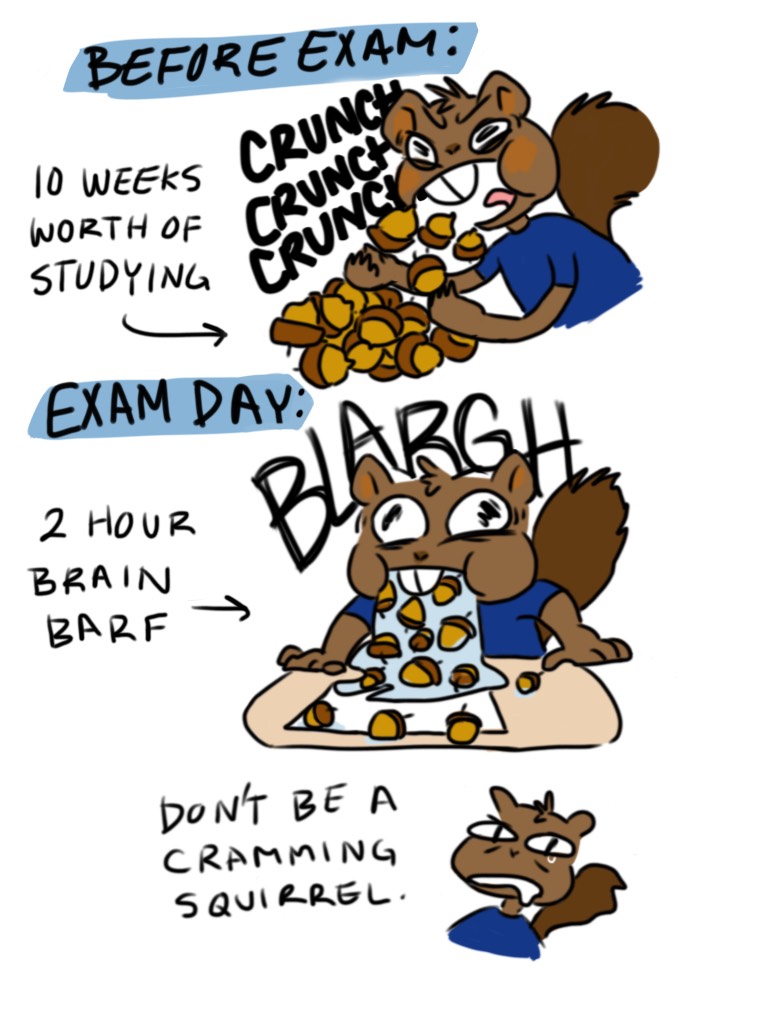
Cartoon: Stuart, the “Study” Squirrel

By: Diana Olivares — deolivaresvalencia@ucdavis.edu

Disclaimer: The views and opinions expressed by individual cartoonists belong to the cartoonists alone and do not necessarily indicate the views and opinions held by The California Aggie.

Police Logs

NICKI PADAR / AGGIE

Why did the goose family cross the road?

April 26

“Male with knife approached reporting party asking where his friends were at.”

“Subject throwing drinks and other items out of her vehicle and at reporting party’s vehicle while on the freeway and also flipping reporting party off.”


April 27

“Mother goose and her babies trying to cross the road just north of this location and vehicles are swerving to avoid them — reporting party concerned they will cause a traffic control and requests officer to assist with stopping traffic so they can cross the street.”


April 28

“Residents are having a house party with a live band. Reporting party advised male neighbor walked into home uninvited and complained about the music.”


April 29

“Met male on an online dating website. He has recorded conversations and now threatening to put reporting party’s name on university watch list to harm her chances of getting into college.”

“Reporting party heard ‘scraping noise’ on right side of residence. Not expecting anyone. Heard for five to 10 minutes […] Concerned someone in backyard.”


April 30

“Reporting party believes a vehicle in the area chronically parks without a valid permit and never gets ticketed.”

Guest: A day of remembrance for the 70th anniversary of Nakba

PUBLIC DOMAIN

Palestinians remember their displacement with the creation of Israel

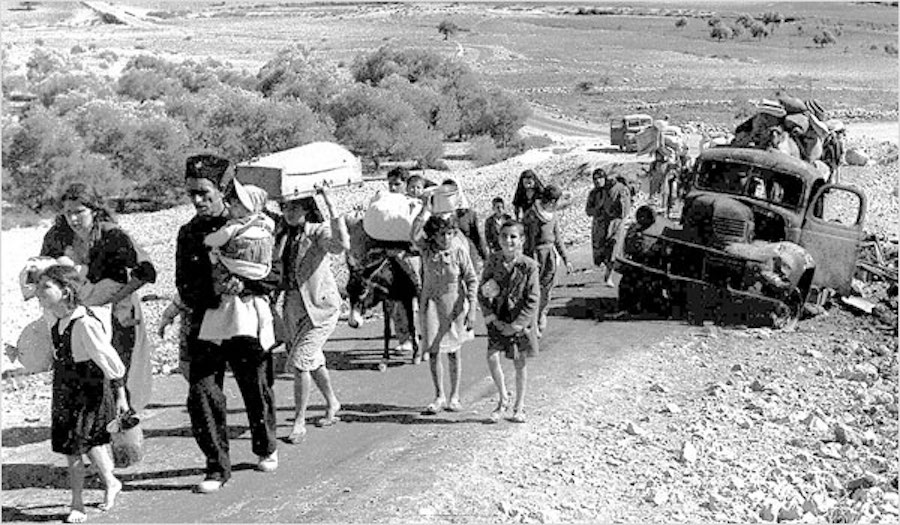
May 15 is a tragic day for Palestinians. Known as al-Nakba (the catastrophe), this day is one of mourning, when hundreds of thousands of Palestinians were displaced with the creation of the state of Israel in 1948. Carried out under “Plan D,” Zionist militias invaded, expelled and

forced the capitulation of thousands of Palestinians in its goal to establish a Jewish state.

One of the most significant events leading up to the Nakba is the massacre of Deir Yassin on April 9 of 1948. Located between Jerusalem and Tel al-Rabia (presently known as Tel Aviv), the residents of Deir Yassin were attacked by Irgun and Lehi, two Zionist militia groups. Over one hundred men, women and children were killed. Some who survived were paraded in trucks through Jewish settlements and then shot to death. The remaining residents fled to Jerusalem and neighboring Arab countries. Houses were blown up, the village cemetery was bulldozed and the village was eventually erased, reinhabited and renamed Givat Shaul Bet. This massacre is forever ingrained in Palestinian memory and is reflective of the systematic terror employed by Israel not only during the country’s creation, but today as well.

What happened in Deir Yassin was part of the larger Zionist strategy of ethnic cleansing leading up to the Nakba. Over 500 Palestinian villages were wiped out, renamed and reinhabited by Jewish settlers. The Nakba not only includes the demolition of villages, but also the ethnic cleansing of over 750,000 men, women and children, and the killing of over 15,000. For Palestinians living in exile, this means they can never return to their homes. Hundreds of

thousands have become refugees, and many remain living in poor conditions in camps. Families have become separated and torn away from their homes.

I come from a Palestinian village in the West Bank. The military occupation, complete with checkpoints, had been almost bizarrely normal to me. Water shortages, unreliable

electricity and constant anxiety that my brother might not live to see tomorrow was my everyday life. Despite our circumstances, we still felt lucky to not have experienced the horrors of

those in Deir Yassin and the hundreds of other Palestinian villages destroyed by Israel.

The destruction of Arab Palestine during the Nakba has shaped the notion of Palestinian identity forever. What remains abundantly important is the perseverance of this identity, which has been suppressed and forgotten by the rest of the world. Today marks the 70th year since the creation of Israel and the subsequent dislocation of millions of Palestinians. Our identity as

Palestinians rests upon exile, loss and suffering. It relies on the connection we hold to our

homeland and in the narratives we so valiantly work to protect.

Today, on May 15, the Students for Justice in Palestine will be hosting a “Day of Remembrance.” They will be sharing stories and poems and showcasing Palestinian art, literature and clothing. This event will take place on the Quad between 12 and 2 p.m. More information can be found here.


Written by: K. Ibrahim

Disclaimer: The views and opinions expressed by individual columnists belong to the columnists alone and do not necessarily indicate the views and opinions held by The California Aggie.

UC Davis Athletic Compliance

DIANA LI / AGGIE

An inside look at athletics compliance services

It is the binding force that holds the UC Davis athletic community together. It is the bridge that connects student-athletes with the university at large. Its staff of just four members is responsible for ensuring that each of the university’s 23 different NCAA affiliated athletic programs are operating within the law. Its existence is often overlooked by those not intimately familiar with the inner workings of collegiate athletics, yet it plays one of the most vital roles in keeping UC Davis athletics functioning.

This elusive, under-the-radar industry is known as UC Davis Intercollegiate Athletics Compliance Services. Its job, while not all that flashy, is to ensure that UC Davis athletics complies with the pages upon pages of rules and regulations set forth by the NCAA, the university and all of the subsequent levels of governing bodies. In doing so, Compliance Services must work alongside the university’s student-athletes, coaches and staff to ensure that these many rules and guidelines are being met.

As a member of the NCAA, UC Davis has agreed to follow and uphold all of the institution’s rules and can face punishment if these rules are violated. But according to Assistant Director of Compliance Services Lydia Sandlin, NCAA bylaws are just the tip of the iceberg when it comes to the layers of policy that compliance directors must constantly be aware of.

“Not only do we have the NCAA rule manual,” Sandlin said. “We have UC Davis policies, we have federal and state laws that impact what we do. And then we have six or seven different sport conferences who each can have their own nuances, too.”

The policies that dictate the dos and don’ts of collegiate athletics are plentiful in number and sometimes complex in nature. In many respects, working in the compliance office has a similar feel to working for a law firm. Compliance directors act as lawyers and trial judges, studying the laws that govern collegiate athletics and seeking to find the law’s correct interpretation.

According to Assistant Director of Compliance Services Ryan Qualls, the compliance office regularly fields questions from student-athletes and coaches pertaining to any and all aspects of eligibility and athletics operations. When confronted with a question that the office does not immediately know the answer to, compliance must dig through the hefty rulebook to find and interpret the specific bylaw to provide the proper response.

To aid in this search, the NCAA has an enormous online database, known as the Legislative Services Database –– LSDBi for short –– that provides various interpretations, violations, case studies and educational columns for every rule. Sandlin says that this is one of many tools available to the staff to help guide compliance toward a proper interpretation when the exact answer is unclear.

There is a fair amount of research and attention to detail involved in the job. The ability of the compliance office to take words written in a rulebook and correctly apply them to multi-dimensional, real-life situations is paramount to keeping UC Davis athletics in good standing with the NCAA. Not many know the ins and outs of this process better than Associate Athletic Director of Compliance and Intercollegiate Services and senior women administrator Katherine Zedonis, a veteran of college athletics compliance with more than a decade of experience in the industry.

“In terms of interpretations, it really comes down to the fact pattern,” Zedonis said. “If someone comes in with a question, we have to almost be like detectives and try to pull up more information based on the nature of the question the coach has.”

This additional information could be pulled from established precedent or past case studies. A final answer cannot be given until compliance cross-references the many jurisdictions that UC Davis athletics falls under to ensure that the action taken is not in violation with any of these guidelines.

This is all complicated stuff, but in the eyes of Zedonis, the role of compliance stretches far beyond simply being available for questions and interpreting rules. There are, in fact, three overarching components to working in compliance.

Education is one, and this involves “demystifying” and sharing the rules with student-athletes and coaching staff so that each party is aware of the guidelines. The second is monitoring, or making sure that all parties are actively following these guidelines and that no violations are committed. The final component is enforcement, where, if there is in fact a rules violation, compliance services is responsible for self-reporting this violation to the NCAA.

For an office of just four people, it is impressive that compliance has been able to handle providing thorough educational, monitoring and enforcement services for over 20 different teams.

“We are a one-stop shop for everyone that is under our umbrella,” Qualls said, referring to how compliance is there for every step of each student’s journey, from recruit to college athlete.

Zedonis jumped in to explain that for mid-major programs, compliance offices are usually shorter staffed than that of larger, power five conference programs. The four UC Davis compliance directors thus are trained to become “generalists” out of necessity; they are able to navigate the entire rulebook and handle a wider range of issues than the typical compliance director with a larger staff. This allows student athletes to come to compliance for nearly all of their needs rather than going to multiple different campus offices.

The fact that each of the four compliance officers handle everything from admissions, to housing, to financial aid and more for each student athlete-plays a key role in how compliance manages to do its job effectively. By being involved from day one, compliance facilitates a familiarity and a level of comfort between it and the student-athletes, making its job much easier in the long run.

“It’s being a face,” Sandlin said, discussing how compliance likes to be as available as possible for the athletes if they have any questions or need any help. “For me, getting out of the office and seeing practices, especially going to games, that’s like a reward. Because you do all this work, you make sure there’s a lot of eligibility points to hit and then you’re able to go to the games, and you’re like this is why we do what we do.”

Qualls expanded on this point, emphasizing the important role of human interaction involved in the compliance industry, where the focus is less on being “the bad guy” and more on providing a customer service-type experience for the entire athletics department. Qualls claims that each compliance director’s personal background and set of experiences has allowed this office to successfully build positive relationships with the student-athletes it serves.  

“[Senior Director of Compliance and Intercollegiate Services Tracy Cumming] has been here for a very long time, so obviously she’s a familiar face,” Qualls said. “[Zedonis] is a former student-athlete, [Sandlin] and I went to Davis, so student-athletes are real comfortable with us because we have been there before. We know the Davis experience and what they’re going through […] I think that makes our shop really special.”

Having a former student-athlete and two UC Davis alumni on staff has certainly allowed the compliance office to better relate to the large network of UC Davis student-athletes. But even more importantly, the approachability and openness of the compliance directors has allowed the office to overcome the negative stigma that commonly surrounds the compliance industry on campuses across the nation.

“There’s a negative stigma around compliance being the police,” Qualls said. “We’re not the police. We’re here to monitor and enforce the rules, but we’re also here as more of customer service for student-athletes and coaches. Obviously everyone sees the big stories, like what’s going on in [college] basketball right now, and [people] think compliance are the guys that you want to run from. But, mainly we’re the guys that’s trying to protect the institution, protect the student athletes and make sure that they are eligible to compete.”

It is difficult to completely rid the compliance industry of the “policing” stereotype, especially in today’s college athletics seemingly plagued with scandal. For the UC Davis compliance office, however, the directors are finding that the best way to combat the conventional way of thinking is to work with passion and to develop enduring professional relationships with the student-athletes they serve.


Written by: Dominic Faria — sports@theaggie.org