48.7 F
Davis

Davis, California

Saturday, December 27, 2025
Home Blog Page 535

Calculating Outrage: How Breitbart carefully crafts headlines that exploit emotion and stymie rationality

MICHAEL VADON [CC BY 2.0] / FLICKR
The far-right news site manipulates readers with outrageous headlines

From an ecological perspective, Breitbart News and President Donald Trump have enjoyed an extraordinarily healthy symbiotic relationship over the past several years.

Many people might argue that this is because “both are racist” or “both are sexist” or “both are homophobic.” With both Trump and Breitbart articles providing many questionable quotes on these matters, those arguments are certainly there to be made, but this is an oversimplification. I would instead like to focus on a more subtle aspect that is crucial to the publication’s strategy of sparking emotional or even angry reactions from readers: manipulative headlines that tell readers what to feel before even reading an article’s content.

I love reading The New York Times and BBC News, but I also expose myself to a variety of other sources so I can better understand how people across the political spectrum think about certain topics. After many months of observing Breitbart’s style, I’ve become fascinated by the site’s deeply cynical and bitter yet artfully crafted headlines. Each one seems scientifically calculated in order to maximize the reader’s emotional reaction and minimize their ability to make rational considerations before being overwhelmed by outrage or vindictiveness.

For example, Breitbart’s James Delingpole, a proud and prolific climate change skeptic, titled a recent article, “More Climate Scientists Rescued from Polar Ice: This Could be a Major Trend.” There is so much here: the headline casts doubt on the ideas of rising temperatures and melting ice and implies that needing rescue makes the climate scientists weak and unprepared. Suggesting that this is a trend gives the situation an element of farce, taking all seriousness away from the incident and from the importance of actually understanding how temperatures are impacting polar ice caps in different locations. But none of that is important when the story can be presented as a joke against climate alarmists who had it coming.

In one of Delingpole’s other articles, he disputes J.K. Rowling for announcing that Professor Dumbledore is gay with the headline, “If Professor Dumbledore is Gay, then Jaws is Vegetarian.” This headline accomplishes many negative goals — making the whole idea of gay characters seem absurd and mockingly giving the impression that Rowling just decided on a whim that Dumbledore is gay in an effort to appeal to gay rights supporters. A fan of the Potter books with homophobic inclinations might read this headline and quickly become angry at the idea of something they like being “needlessly politicized.” The inane comparison to a vegetarian Jaws makes it seem like there is absolutely no logical reason or explanation for his being gay and again reduces the conversation to a joke.

In the aftermath of the Parkland Shooting and the March for Our Lives, Breitbart has had plenty to say about guns and the students leading the protests, with headlines like “David Hogg: I’m Changing the World, but UC Schools Still Rejected Me.” This headline quotes (out of context, that is) one of the shooting survivors leading the protests in order to make him sound naive for thinking his efforts to catalyze change are meaningful as well as whiny and immature for commenting on college rejections. Hogg’s quote intends to show that college rejections mean little in comparison to the movement he and his classmates have started. Breitbart’s editors, however, are fully aware that that does not play to an audience that thinks Hogg is a paid crisis actor. Another article about the protests is headlined “Study: Only 10 percent of D.C. ‘March for Our Lives’ Protesters were Teenagers.” By playing down the inspiration of teenagers providing the impetus for a nationwide movement, Breitbart ironically contradicts the reaction of many on the right, like Tucker Carlson, who asked, “Why should [teenagers] be making my gun laws?”

There are many other headlines worth examining, such as “13-Year-Old Suspended for Drawing of Stick Figure Holding Gun,” “Planned Parenthood: We Need a Disney Princess with an Abortion,” and “Pro-Trump ‘Roseanne’ Reboot Thanks God for Making America Great Again,” but as Breitbart would say, I’ve cried enough liberal tears for one day. They might think I sound “triggered,” but I’d be surprised if they aren’t “triggered” when someone reminds them that their borderline-propaganda-manipulation-game is not that difficult to decode.


Written by: Benjamin Porter — bbporter@ucdavis.edu

Disclaimer: The views and opinions expressed by individual columnists belong to the columnists alone and do not necessarily indicate the views and opinions held by The California Aggie.


Blurred lines between two worlds

KYLA ROUNDS / AGGIE

Environmental Law Symposium highlights growing intersection between humans, environment

On March 9, authorities from a number of professional sectors filled the seats of the Kalmanovitz Appellate Courtroom at the UC Davis School of Law. This annual event is known as the Environmental Law Symposium and focuses on bringing people together to listen, learn and discuss environmental hot topics.

“Each year as a team we are in charge of picking the theme of the event, and traditionally the event will feature four panelists that are centered around the event,” said Bridget McDonald, a second-year student at the UC Davis School of Law. “The goal is essentially to bring together practitioners, policymakers, students, academics, [practicing attorneys], any sort of professional authority that is interested in learning more about the subject matter.”

In the past, the symposium’s themes have covered topics like climate change, the future of the California Environmental Quality Act, sustainability and agriculture and the changing California coastline. This year, McDonald and her co-organizers, second-year law students Ellen Simmons and Coral Walker, selected a theme that explored the growing intersection between humans and the world around us. The event was titled Humans and their Environment: Protecting our Planet and Its Inhabitants.

“In choosing the theme, we really wanted to broaden the scope to look at the ways that humans interact with the environment and the environmental crises actually impacting human communities,” said Ellen Simmons, a second-year student at the UC Davis School of Law and a co-organizer of the symposium. “It wasn’t completely narrowed down to environmental justice in particular, that’s just an important facet of the way that humans relate to the environment [and] the legal challenges that have been emerging in the last couple decades.”

The event featured four panels that addressed diverse topics, including public health effects in the era of climate change, environmental justice in the Central Valley, the lessons learned from the recent California wildfires and Native American land restoration.

Two of the panels were organized by the symposium’s co-sponsor, the Aoki Center for Critical Race and Nation Studies at King Hall. According to director Mary Louise Frampton, the multi-disciplinary research center partnered with the Environmental Law Society to provide programming related to environmental justice at the 2018 symposium. One of these panels was that for environmental justice in the Central Valley, whose low-income communities of color face environmental and health burdens as a result of agriculture, topography and politics.

“California’s San Joaquin Valley is a study in contrasts,” Frampton said. “It generates a great deal of wealth but is one of the poorest regions in the country. Its history is one of inequality and discrimination. It is also one of the most polluted regions in the country — it has the worst air quality, the most severe drinking water problems, and is home to the majority of the state’s prisons, hazardous waste dumps and garbage facilities. Not everyone in the CV experiences the effects of those environmental harms. Research shows that low-income communities of color are more likely to live near and be harmed by environmental pollution, with some studies indicating that low-income people of color die 20 years earlier than white people in the CV.”

According to Frampton, many decision makers and lawyers do not know about those inequalities and their racialized impacts. This symposium is one avenue for these pressing issues to come to the forefront of environmental conversations within the state.

The other panel organized by the Aoki Center concerned environmental justice for Native people, entitled “Restoring the Balance in Indian Country.” According to the student organizers, there are many legal implications tied to Native American affairs and other impoverished communities, including property rights, water rights, land-use rights and more, which is why it was important to include in this year’s symposium.

“My impression is that it really was important to focus on a group of people that doesn’t usually have their problems explored, in the media that’s not really a subject that gets a lot of attention,” Simmons said. “[The symposium was about] going to the deepest roots of how humans interact with their environment, it made a lot of sense to have a panel that looked at Natives, who have been interacting with the environment for a really long time, and had had the way that they did so completely changed by development and colonization, and just their struggles moving forward as they’re adjacent to completely different kinds of development.”

The law school has a number of avenues that aim to steer the conversation toward that of the human influence and impact on the integrity of the environment as well as related social justice issues. For example, the Aoki Center hosts a Seminar Series every Tuesday that brings scholars from across campus to discuss issues of racial and environmental justice. There are a number of other programs as well, according to Frampton. And on April 12, the Center will launch a Tribal Justice Project to enhance the sovereignty and capacity of tribes by training tribal court judges.

Another resource provided by the Aoki Center is the Water Justice clinic, the first of its kind in the country. The clinic aims to combine law, policy advocacy and research to aid in the security of clean, safe and affordable drinking water for low-income California communities.

“I’ve been participating in [the Water Justice Clinic] for the past year,” Simmons said. “It’s really a great opportunity to help disadvantaged communities use their technical assistance funding that they have received from the state to do water supply and quality projects. This is a new and substantial way the school is involved in environmental justice. It’s been awesome to be involved in it.”

The Environmental Law Society itself is a long-standing student organization that helps students pursue environmental matters, the symposium being one of several events the society hosts throughout the year that bring under-discussed topics to the forefront of political and scientific conversations. The 2018 Environmental Law Symposium was specifically designed to help bring attention to a number of relevant but under-discussed topics, ultimately with the intent to highlight the significance of the blurred lines between human activity and the natural world.

Now more than ever, we need to keep environmental justice at the forefront of our policy discussions,” Frampton said. “As the federal government abdicates its responsibility to protect the environment, it’s important for Californians to address environmental injustices. We hope that the symposium encouraged environmental lawyers, law students, and policy-makers to integrate racial justice into environmental conversations and helped them understand the serious impacts of environmental policies on vulnerable communities.”


Written by: Marlys Jeane — features@theaggie.org

Editor’s note: A previous version of this article did not include McDonald’s co-organizer Coral Walker. The article has been updated to reflect this change.

Farmer’s Market resumes live music, large produce spreads

CAITLYN SAMPLEY / AGGIE

Picnic at the Park returns to Davis for spring, summer, fall

The Davis farmers market welcomed back Picnic in the Park for the warmer season starting March 11. Fans of the smaller winter market can enjoy a broader selection of fruit, vegetables and fresh food from a bustling open marketplace. The event is held every Wednesday, year-round, except the winter months, and takes place in Central Park off of B St. in Davis. The music and vendors start at 4:30 p.m. and pack up around sunset.

Debbie Ramming, the assistant manager to the farmers market, said that during the summer when attendance is high, it seems as though all of Davis is out on the lawn.

“There’s many nights when you can’t even see the grass — there’s so many people,” Ramming said. “And it’s a lot of fun because you don’t have to think about cooking, it’s hot, you can sit and listen to some good music, the kids can play, there’s bounce houses, there’s pony rides. We provide a lot of stuff for people to do.”

A longstanding tradition in the city, Picnic in the Park can have up to 80 vendors and live music every week. Ramming explained that many of the vendors and staff have been here since the start of the tradition.

“The farmers that started the market are still vendors here, some of them have been selling for most of the 42 years,” Ramming said.

Though the first two weeks of the Picnic saw low attendance due to inclement weather, the season is looking up with the addition of new picnic tables under a shelter. During peak season, thousands of people flock to the central park of Davis to enjoy the sun and tasty treats.

Margaret Waterhouse is the owner and baker of W. Margaron, a macaron table at the farmers market. She began making macarons in high school and now runs a table at the Wednesday market, where she said she loves the family atmosphere.

“People come out here and take advantage of the gift that it is,” Waterhouse said. “You can let your kids run around and there’s a ton of quality dining options. During summer, I love to get the super ripe cherries — things that are truly local and in season. It makes a huge difference in the quality and taste.”

The lineup of music this year includes a range of genres, from bluegrass to indie rock bands. Musicians serenade picnickers from the lawn and encourage dancing on the grass.

Brad Gill, a vendor with Achadinha Cheese, said the greatest thing about Picnic in the Park was the ambiance.

“It has to be the music — it gets everyone pumped up,” Gill said. “They had a really good cover band one of the last nights I was here. They brought in a ton of people for us.”

On a good day, Gill can sell over $800 of cheese at the market. His company, Achadinha, is owned by Dave Pacheco and distributes across the state.

“I think we’re special because we’re the only company that do Portuguese cheese in the United States,” Gill said. “We also make a blend of goat and cow’s milk that’s rare to see.”

A longtime Picnic in the Park vendor and frequent vendor of the UC Davis campus farmers market is Riffat Ahmad. He can be seen selling boxes full of apples, plums and Asian pears. This is his 25th year at the market.

“Hopefully if the weather permits, it’s good times and there’s many more people here,” Ahmad said.


Written by: Genevieve Murphy-Skilling — city@theaggie.org


Making Sense of #MeToo

GGAADD [(CC BY-SA 2.0)] / FLICKR
Pushing beyond social media testimonials

I’m 19 years old, and I can’t stop talking about #MeToo. Understand, this is not a confession or a testimonial of any sort. The lines between right and wrong, between equality and sexism, are not drawn clearly, as they usually are. They’ve been blurred, erased, even redone, in the midst of internet rants, social media storms, public outrage and mockery.

A few months ago, the national dialogue about sexual assault and harassment and everything in between was sporadic at best and dismissive at worst. Following the revelation of Hollywood’s troubled history of sexual assault, however, some things have changed. But it’s not enough. Or perhaps it’s that the #MeToo approach — social media testimonials and the like — may not be beneficial in the long run.

Initially, the appalling stories recounted by men and women alike were empowering. Finally, people were talking about the ubiquity of sexual assault and harassment. Finally, victims were being taken seriously. It was a movement that began with the best of intentions.

And yet the fearless honesty and public confessing of hundreds of women over the past six months is backfiring. Instead of giving voice to women — as it very much intended to do — the #MeToo movement has rendered us voiceless, has othered us.  

I am fortunate enough never to have experienced sexual assault. I am one of the lucky ones. I am glad that women are finally telling their stories. And yet I fear that, because of their frequency, we will become inured to them. Frequency too often becomes acceptability in the public sphere. Isn’t there a sense of sexual satisfaction that stories like these offer to some people? Isn’t there a lingering sense of guilty pleasure over the confessional nature of the #MeToo movement, a public obsession that moves far beyond genuine outrage and into morbid fascination?

The other factor is that the stream of stories, while initially empowering, has unintentionally painted women as inherently delicate beings, as perpetual victims. While we are much more likely to be raped, to be harassed, to be passed over for promotions for unfair reasons including gender and physical appearance, the narrative of victimhood is a frightening regression to the female identity of yesteryear, in which women were portrayed as constant and helpless victims of the caprices of men.

I’d like to think — or at least to hope — that we have more power than that. Maybe we don’t. Maybe my expectations are too high. That said, I’ve never had a particularly rosy view of gender relations. But instead of passively nodding our heads as yet another headline about the devastating effects of sexual assault comes out, we need to do something. Let’s tell our stories, yes, but let’s also put theory into practice. Otherwise, the #MeToo movement will hardly change things for the brave women who spoke out and for those whose stories have yet to be told.


Written by: Rebecca Bihn-Wallace — rlbihnwallace@ucdavis.edu

Disclaimer: The views and opinions expressed by individual columnists belong to the columnists alone and do not necessarily indicate the views and opinions held by The California Aggie.

Humor: DMV loses race for the happiest place on earth, again

MICAH SITTIG [CC BY 2.0] / FLICKR
New Department of Motor Vehicles study leaves researchers flabbergasted

For the sixth year in a row, the Department of Motor Vehicles has failed to rank as highly as the Anaheim-based amusement park, Disneyland. A new study reveals a shocking 83 percent of people would rather go to Disneyland than visit their hometown’s DMV — or the slightly better DMV in the next town over.


A whopping 74 percent of people found that the DMV’s fluorescent lights, dingy cubicles and mysteriously sticky linoleum generally made them feel anxious, depressed and really edgy.

“Going to the DMV gives me heart palpitations and diarrhea,” said Ellen Funk, a student at UC Davis. “That never happens at Disneyland — even after I eat three giant turkey legs.”

What’s more perplexing, a mind-blowing 68 percent of people say that they would rather smell Disneyland’s vanilla-scented Mainstreet than the body odor of the guy standing in front of them at the DMV. Millions of people are dumbfounded.

“We really tried this year,” said Yvette Derp, a confused DMV employee. “We used to give customers the stink eye — a lot. It was kind of our thing. This year, we tried to increase customer satisfaction by switching to the blank stare, but people seem more infuriated than ever.”

Sadly, the study reports that most people were unsatisfied with their results of standing in line at the DMV. Ninety-seven percent of participants complained that the line did not conclude with a fifteen-minute thrill ride or a dole whip. The remaining three percent of the participants became trapped in a never-ending line and either gave up or set up camp to wait, building lean-to shelters constructed from the DMV’s plastic chairs and restroom toilet seat covers.

“I’ve been waiting for them to call number C42 for 36 hours,” said Phil Low, DMV customer, from the toilet-seat-cover porthole of his structure. “I could really use a churro right now.”

While it’s hard to say “what the hell is taking so long” at the DMV, this reporter did identify a group of DMV employees lounging in a partially hidden cubicle, toasting one another with soggy, microwave corn dogs. This reporter also can neither confirm nor deny that the employees stood smirking over trampled mouse ears.


Written by: Jess Driver — jmdriver@ucdavis.edu

(This article is humor and/or satire, and its content is purely fictional. The story and the names of “sources” are fictionalized.)

Jenn Im: 4.1 million and counting

ADAM RINDY / COURTESY

UC Davis alumnus and her life as successful content creator

Among the diverse list of notable, accomplished alumni from UC Davis, Jenn Im is a shining stand out. A Korean-American Youtube fashion, lifestyle and beauty vlogger, digital influencer, fashion designer, and collaborator, Im’s reach (and talent) is expansive and  continues to arrive at new heights.

Often, conflicts surrounding genuinity come into play with content creators and those with large followings on social media. Im attempts to break through that by really being as true to herself as she can be. This standard of authenticity she holds for herself characterizes everything she does, recommends, says and posts about while promoting a message of positivity at the root of it all.

It’s a simple wish — but I just hope that they [her followers] can get some type of positive influence from it,” Im said. “I try to keep my content as positive as possible, while still being realistic about my own emotions. A lot of people might see me as one-dimensional in the sense that the content I put out is always usually happy or uplifting, but I am just like any other person. I experience grief, pain, and loss — I just sometimes choose not to show that part of my life.”

Inherently, Im pushes a message of inclusivity, shifting societal norms on what is deemed beautiful or even acceptable.

Growing up, I never saw anyone in traditional media that looked like me,” Im said. “To be frank, I am a petite 5’1″ Asian girl and that is definitely not the norm in American society.”

According to Im, Youtube and the Internet at large were able to fill this role of giving her a free, welcoming platform from which her voice could be heard. In turn, she was given a chance to impact other people’s lives.

“I guess I retreated to YouTube and the Internet because it was there that I found representation,” Im said. “I’m happy now that girls can find my channel and my content and hopefully see a face that looks familiar. I’ve never felt treated differently because of my Korean identity, but I do find that in Korea, I am too American. And in America, I am too Korean. It’s this weird limbo where you don’t feel 100% accepted, but it’s something that I’ve learned to accept and grow with.”

Im’s channel, cleverly named “clothesencounters,” originally started off as a collaborative effort between her and a friend from her Los Angeles hometown. After about a year and a half, Im took the reigns and continued the channel alone while attending UC Davis. On how her channel has evolved over the years, Im notes the core of it hasn’t really been altered, but that other production and content related changes have occurred.

“I think the core of my channel has stayed the same — I’m introducing my genuine and authentic interests and passions (fashion, beauty, lifestyle) on a weekly basis,” Im said. “I love to share and make content that can uplift people’s day whether that’s through a vlog or inspiring someone through a lookbook. But of course, a lot has also changed […] My beauty skills have definitely improved over the years (haha) and the production level has increased a lot as well. I also have a graphic designer and my fiancé, Ben, as my videographer.”

Regarding her style evolution, Im gives credit to her surroundings as an influence. Her main approach when it comes to clothes, though, has always been having fun with it. Her greatest advice is prioritizing the garments that make you feel comfortable but, most importantly, ensure that you like yourself above all else.

“I think my style is always somewhat influenced by my surroundings,” Im said. “For example, in the bay, it was definitely more vintage and more about mixing high and low. But because Los Angeles is such a hub for fashion, I feel like I’ve refined my style here and in tune with trend forecasting.”

On creativity, the creative process and slumps, Im highlights the importance of just consistently practicing her craft all the time even when creativity seems to be at a low point.

“One of my favorite artists, James Jean said that the body was just a vessel,” Im said. “You can work at something every single day because it is your mind that is the driving force. Of course, like any creative, I find myself in slumps. But the most important thing for me is to keep going. Even when I don’t feel like the most creative, it is important for me to keep doing my craft and to keep applying myself.”

Although Im did not learn any technical skills that would apply well to her specific career, her whole experience at Davis helped develop a strong hardworking attitude. As four years of college tends to do for most, her time here also helped catapult her into adulthood.

“Studying at Davis definitely helped shape the work ethic I now have today,” Im said. “I work extremely well on deadlines and that’s what I pride myself [in]. Although, because the UCs are such research-based institutions, I can’t say that I learned too many practical skills for my channel as a Communication major, besides, well, of course, communicating. Because Davis is in a remote area, I felt like my only creative outlet was truly YouTube and that’s what made me focus on my channel even more. I’m grateful for that!”

As far as advice goes for students interested in a future beauty or fashion industry career, Im points to evaluating your motivations and passions.

“Make sure you really love it,” Im said. “Fashion, as many people know, is a cutthroat industry. And the beauty industry might seem glamorous, but at the end of the day, you’re working a job and like anything in life, it will take so much hard work and dedication. You have to make sure you’re here for the right reasons.”


Written by: Cecilia Morales — arts@theaggie.org

Spring Inspired Food

LIZ WEST [CC BY 2.0] / FLICKR
This April, cook dishes with springtime ingredients

Spring has arrived and, on the coattails of the much anticipated season, with it comes a myriad of exciting ingredients. From asparagus to rhubarb, spring is a time of delicious fresh produce. The Aggie is here to show you not only which spring produce to use, but how to use it.

Gone are the days of the hearty, stick to your ribs winter meals. As delicious as these can be, springtime invites food with the goal of maximizing your day in the sun rather than tiding you over in the frigid winter.

Asparagus is a quintessential spring vegetable. Along with being great for you, it’s incredibly versatile. Most of us simply grill or saute the green spears but that only scrapes the surface. Mark Bittman of The New York Times has developed a recipe for asparagus pesto. His take on the classic basil pesto is the perfect sauce for spring themed pasta dishes. It can even be used as a spread on toast or served with eggs. Regardless of your pesto usage, this recipe provides a nuanced way to infuse asparagus into your spring meals.

Leeks are another springtime vegetable. These large green stalks are packed with flavor, but often leave individuals stumped as to how to implement them in the kitchen. Look no further than Celia Barbour’s recipe from The New York Times. Her leek, mushroom, and goat cheese tart perfectly uses the vegetable. The dish is marked by its student friendly approach. Simply requiring store bought puff pastry, mushrooms, leeks and cheese. Only taking minutes to assemble, this tart will wow guests without any of the expected arduous kitchen work.

Lastly, we have frozen yogurt. After all, no meal list is complete without a dessert. Sherbet, sorbet, frozen yogurt and ice cream are all synonymous with warm spring or summer days. David Lebovitz spent his early years at famed Berkeley restaurant Chez Panisse, where he honed his skills as a cook. One of his main areas of knowledge lies within the realm of frozen desserts. His mango frozen yogurt provides the perfect example of the warm weather sweet we all crave. While mangoes aren’t known as a springtime fruit, there are many other fruits such as peaches, strawberries and apricots that could serve as delicious substitutes.

The beauty in springtime dishes is that they don’t have to be complex. In fact as the above recipes have shown, they are often times deceptively simple. Make an effort during these next months to seek out spring specific produce. Both you and your guests will thank you for it.


Written by: Rowan O’Connell-Gates — arts@theaggie.org


Day trips that won’t break the bank

REVERENDLUKEWARM [(CC BY-SA 2.0)] / FLICKR
Taking advantage of the great outdoors

Its central location is one of Davis’ best perks. Davis is 20 minutes from Sacramento, an hour and a half from San Francisco and 40 minutes from Napa — all of which are great places to take a day trip. The spring time in Norcal is best utilized by taking advantage of the outdoors, so here’s a list of a few lesser known places that won’t run your wallet dry.


Putah Creek

Part of Putah Creek runs through Davis as part of the arboretum, and also goes up to Lake Berryessa in Solano County. A great way to take advantage of this creek is to drive up through Winters where the creek has openings for people to jump in. Many people will be found floating along the river in tubes, enjoying the sunshine and laziness of the stream.


Berryessa Brewing Company

About 25 minutes west of Davis in the city of Winters, this brewery can be found filled with plenty of beer, food and music. Open Thursday through Sunday, it is a great escape from Davis. There are different food trucks each day and usually a live band starting in the afternoon. They also have giant jenga and plenty of seating and room for large groups. All ages are welcome but if you want to drink, you better be 21 and up!


Winters

This small town right outside of Davis has a quaint downtown — even smaller than Davis’, but with just as much character. Here you can find Putah Creek Cafe, which is great for brunch followed by an afternoon spent exploring Main Street.


Napa

Only 40 minutes away from Davis, Napa is the home of all things wine. It’s a great place to go wine tasting for the day or even to just explore the downtown area. They not only have amazing wineries, but also world class food. If you’re feeling adventurous, keep going North and stop in all the little towns that make up Napa County like St. Helena and Calistoga.


Lake Berryessa

Despite being home to one of the famous Zodiac killer’s murder spots, Lake Berryessa is full of pleasant surprises. This is one of the most common hikes Davis students partake in. It is the four mile loop around the lake with some of the most breathtaking views. (Some advice: go early in the morning before it gets hot, or pick a day on the cooler side because it’s a long hike). The whole thing is about a 40 minute drive, it but is well worth it. And while you’re there, make sure to check out the glory hole up Highway 128.


Written by: CaraJoy Kleinrock — arts@theaggie.org

Last Week in Senate

HANNAH LEE / AGGIE

Business and Finance Chair David Heifitz abruptly resigns, citing discomfort with intolerant executive

The newly sworn-in ASUCD Vice President Shaniah Branson called the last Senate meeting of Winter Quarter to order in the Mee Room of the Memorial Union on March 15 at 7:29 p.m. Amanda Bernal, the External Affairs Commission chair, was not present at the meeting.

Appointment of a new pro tempore was postponed for the first Senate meeting of Spring Quarter.

Bryan Sykes, the editor-in-chief of The California Aggie, delivered the unit’s quarterly report. Currently, 140 individuals work at The Aggie. Decisions for a new editor-in-chief are to be made in mid-April. The Aggie is entering its second phase of a redesign project to update newspaper distribution racks on campus in pursuit of The Aggie’s goal “to be integrated in campus presence.”

David Heifitz, the Business and Finance Commission chair, presented six individuals to be confirmed for membership to the commission. All six were appointed.

Disability Rights Advocacy Committee chair Andy Wu delivered the committee’s quarterly report. Four new members were hired over the course of Winter Quarter. Disability Awareness Week, which was held from Feb. 26 to March 2, was reported as a “great success.” Wu reported plans to communicate with other registered student organizations to increase the committee’s publicity as well as communicating with campus administrators to establish a position similar to a DRAC chair at UCSD.

Rodney Tompkins, a second-year psychology major and the Elections Committee vice chair, reported on the results of the ASUCD Winter Elections. Tompkins reported an election cycle reliant on social media for exposure and encouraged individual word of mouth from the table to publicize future elections.

“People know elections are happening,” Tompkins said. “They need to want to vote.”

He went on to address concerns brought up during what he described as a “contentious election.” He referenced allegations of bias in the elections committee and defended the committee’s courses of actions, which include the disqualifications of Unite! senatorial candidate Colin Heurlin, a third-year transfer student majoring in international relations and The Golden Slate’s executive ticket, Adam Hatefi, a third-year political science major, and Shreya Deshpande, a third-year cognitive science and sociology double major. Tompkins said the committee’s decision followed the bylaws, citing no official recusals for their actions.

Tompkins advised the table to maintain a level of professionalism and increase their communication with students, committees and the respective communities of senators. He discouraged petty discussion over social media regarding elections.

“Accountability shouldn’t have to be a platform,” Tompkins said. “It should be inherent that everyone shows up and does their job.”

Tompkins addressed Senator Andreas Godderis’ quote in a recent article published by The California Aggie regarding bias toward slates and candidates already involved in the association. Tompkins advised the table to “reach out to those who can make our words beneficial.”

Godderis asked Tompkins about his position on slates’ contribution to ASUCD elections, questioning their value. Tompkins said he is open to suggestions from Godderis and the table for stricter regulation on slates in the future.

When the meeting moved into public announcements, David Heifitz abruptly announced his resignation as Business and Finance Committee chair after only just being re-appointed as chair five weeks prior. He turned in his placard to Branson, scolded the Senate for failing to meet quorum at last week’s meeting and said he would not “serve on the same table as people who are racist, transphobic [or] homophobic.”

After the resignation, Nicole Garcia, the Aggie Reuse Store unit director, delivered the store’s Winter Quarter report. The store reportedly developed new committees including internal events, video, analytics and inventory. So far, it has raised a cumulative $6,073 this school year — $2,675 of that during Winter Quarter. Aggie Reuse is focusing on video production for its marketing and is planning its largest revenue stream from Picnic Day in the spring.

Claire Chevallier, a third-year psychology major, reported on behalf of the Sexual Assault Awareness Advocacy Committee. The committee is requiring risk management managers to go through training to handle sexual harassment cases. SAAAC is also planning a sexual harassment forum exclusively for Greek life. Chevallier and graduate student Jessa Rae Growing Thunder will represent UC Davis in a new UC Student Advisory Board for sexual violence prevention. They will both begin holding office hours next quarter.

Senators Jake Sedgley and Atanas Spasov were appointed as representative senators for the Council of Student Affairs and Fees.

A ten minute break was called. It ended at 8:53 p.m.

Senator Danny Halawi re-entered the meeting after roll call.

The schedule moved into consideration of old legislation. Because several authors were not present for consideration, ASUCD Resolution #2 and Senate Bills #48, #49, #50 and #51 were tabled until the next meeting.

SB #52, requiring “the ASUCD Ethnic and Cultural Affairs Commission (ECAC) Chairperson or Commissioner to advise the Whole Earth Festival (WEF) on issues of cultural appropriation” was passed.

There was lengthy discussion over SB #53, authored by Danny Halawi, calling for closer monitoring of attendance at Senate meetings. Time was spent debating what merits an excusable absence from meetings. Instead of three absences meritting a closed session, now only two will be permitted. If a senator notifies a presiding officer of an emergency less than 24 hours before a Senate meeting is called to order, the officer must notify them if they are excused before said meeting starts. SB #53 passed as amended.

SB #54, also authored by Halawi, requires adoptive senators of SAAAC to ensure that fraternities and sororities publicly display ASUCD-provided sexual assault awareness visuals. The bill passed as amended.

During public announcements, newly-elected ASUCD president Michael Gofman commented on the new table’s performance as the smoothest Senate transition he had seen.

Abby Edwards, the Academic Affairs Commission chair, stood before the table demanding improved attendance by senators at commission meetings. She cited “abysmal” records of attendance during Fall Quarter. Edwards reminded the table of their obligations to be present at a minimum number of commission meetings per quarter.

“It’s denying them respect they are bylawfully required,” Edwards said.

Ex officio reports were given, followed by elected official reports.

It was announced that Kelly Ratliff, the vice chancellor of finance, operations and administration, had cancelled her planned attendance at this Senate meeting.

Gofman announced that construction on the third floor of the MU will begin in August and will not conclude until next Fall Quarter. The Mee Room will be unavailable for Senate meetings during that time, and a search for a new venue is underway.

The meeting adjourned at 11:08 p.m.  


Written by: Elizabeth Mercado — campus@theaggie.org

What Cave Art Has to Say About Human Evolution

CAITLYN SAMPLEY / AGGIE

UC Davis study looks at human evolution through drawing ability

Neanderthals, unlike modern humans, have not been credited with artistic abilities, specifically because of the lack of cave art dated to when they existed. Richard Coss, a professor emeritus of psychology at UC Davis, authored a paper that proves his hypothesis that the lack of cave art by Neanderthals is connected to their ability to hunt. Coss conducted two studies to develop the hypothesis that humans experienced evolutionary changes due to an arms race with increasingly wary sub-Saharan African game.

The first study was a comparative study of wild horses and zebras with then-graduate student in psychology Alexali Brubaker, who is now research coordinator for the Third Millennium Alliance.. This study showed that wild horses in Nevada could be approached on foot more closely than zebras living near settlements in East Africa. However, both wild horses and zebras, when not exposed to humans, were much more wary when approached on foot. This finding showed that wild horses could adjust to humans sufficiently well for taming quickly, while zebras routinely exposed to humans retained considerable wariness, precluding their domesticability.

“The theoretical argument for this incomplete habituation is that human ancestors in sub-Saharan Africa hunted game relatively consistently for more than 1 million years,” Coss said. “As African game became progressively warier of ancestral humans, maintaining larger flight distances, ancestral humans compensated initially by throwing spears and later by adopting longer-range bow and arrow.”

The second was a study done with Vivek Thuppil, a doctoral graduate in the Animal Behavior Graduate Group at UC Davis, on ways to mitigate crop raiding in southern India. What they observed was that Asian elephants can be tamed relatively quickly for working, while African elephants were difficult to tame and remained dangerous. This observation led to the theory that African elephants are more naturally aggressive toward humans as a by-product of being hunted persistently for a long period by ancestral humans. This is in contrast to Asian elephants experiencing relatively recent hunting by modern humans after they left Africa.

Coss’ study proposes a causal relationship between an evolved ability of anatomically modern humans to throw spears accurately while hunting and their ability to draw representational images from working memory. Neanderthals did not have to hunt increasingly wary game like archaic and anatomically modern humans did, and therefore could use close-range thrusting spears. Archaic and anatomically modern humans in sub-Saharan Africa adopted longer-range hunting practices using hand-cast spears because they couldn’t get as close to the animals as Neanderthals could. This difference in hunting style led to progressive enlargement of the parietal cortex during human evolution, the part of the brain that integrates visual imagery and motor coordination.  Such enlargement is evident in the globular shape of the human cranium, whereas the Neanderthal cranium is flatter.

Soon after this paper was published, another paper, written by Dirk Hoffmann, a post-doctoral researcher at the Max Planck Institute for Evolutionary Anthropology, and his colleagues potentially disproved Coss’ argument.

Professor Coss wrote a brilliant article in which he tried to explain why the Neanderthals were not known to produce the well-known art seen in the caves of Southwestern Europe,” said Dean Simonton, a distinguished professor emeritus in the Department of Psychology at UC Davis. “This failure [to produce well-known art] is attributed to the different hunting practices of the Neanderthals in comparison to the modern humans who showed up later — and who had already started to produce such art in Africa before their migration. “

Simonton believes that the cave paintings referenced in Coss’ paper were incorrectly dated using the traditional radiocarbon technique; the relatively accurate uranium-thorium dating method puts the painting at about 20,000 years before the arrival of modern humans.

“By default, that means that the Neanderthals must have been very good artists after all, which throws an unanticipated monkey wrench in his argument,” Simonton said. “To be sure, he concentrates on a particular cave in France, whereas the [study by Hoffman] looks at three caves in Spain. But even if modern humans produced the former — the modern [uranium-thorium] dating has yet to be applied — they could not have created the latter.”

However, the paper may not completely invalidate Coss’ research. According to Nicolas Zwyns, an assistant professor in the Department of Anthropology at UC Davis, to invalidate Coss’ model, there would need to be proof that a significant portion of the Paleolithic figurative cave art was made by Neanderthals.

“The paintings [in Hoffman’s study] include a red painted speleothem, a hand stencil and some linear motives [and] would predate the first H. sapiens occupation in the region by thousands of years,” Zwyns said. “With the same method, the team dated a putative red pigment container at Cueva de los Aviones. This object would have been used for body painting activities pre-dating the oldest known example from South-African example. Consider as whole, these testimonies would suggest that Neanderthal would engage in esthetic and perhaps symbolic behaviors. Furthermore, the implications would only confirm a use of pigments or abstract drawings by other members of the genus Homo that is already suspected. It doesn’t demonstrate a non-H. sapiens production of figurative art and therefore, it would not invalidate Dr. Coss’s hypothesis.”

The debate about Neanderthals and cave art has been ongoing.

“Were Neanderthals thinking the way we do?” Zwyns said. “For a long time, a debate opposed scholars who consider Homo sapiens as an exception to those who suggest that Neanderthal and modern human cognitive skills were alike. Among the numerous and unambiguous material testimonies of H. sapiens symbolic thoughts documented for at least 40,000 years, is the spectacular cave art. In comparison to this rich record, the evidence for such behavior among Neanderthals and the other members of the genus Homo is scarce and often debatable.”


Written by: Kriti Varghese — science@theaggie.org

Hopeful Art for Youth in need

MORGAN TIEU / AGGIE

UC Davis YEP prepares art from local juvenile hall

Houses are sacred locations, meant to protect and foster families within. Yet, when that ideal is not achieved, homes can be dangerous and come with negative influences. Unfortunately, victims to these hardships are often children. Focusing on the Yolo County Juvenile Hall, The Youth Empowerment Program (YEP) at UC Davis aims to motivate such misguided youth onto better paths. On April 11, YEP will host its annual art show to promote YEP’s goal and share participants’ art. Vice President Daniela Chavez, a fourth-year Spanish, Chicana/o studies and sociology triple major, explained YEP’s ambition.

“[The kids in the program] come from broken families, group homes, abusive households and how many of the times, the kids just need someone to believe in them, someone to listen to them and someone to tell them they can be whatever they desire in life,” Chavez said. “To me, YEP’s purpose is to be the mentor, the friend, that person that gives the detained youth, some form of hope that will lead them to be successful in this twisted world we live in and help reduce the recidivism rates of kids that return to the facility.”

This goal clearly manifests itself through YEP’s lessons and YEP members’ determination.

“Besides the lesson plans we do with the youth in regards to professional attire for interviews, how to create a resume etc., we simply go in there and try our best to create relationships with the youth and let them know they are not alone,” Chavez said. “We have moments in which some kids are able to graduate high school while detained and they have thanked YEP for helping them, for motivating them and always believing in them. I think moments like these let us know that we are achieving our purpose.”

Marina Kananova, a third-year human development major, explained how YEP’s upcoming art show fits perfectly with their goals as an organization.

“The lesson plans we do with them in the facility — a lot of it is in artwork,” Kananova said. “A lot of the kids, while they’re in there, they like to write poetry, write raps, or draw.”

The art show itself isn’t strictly from the kids.

“A lot of the artwork is [the kids’] artwork that we will be showcasing, but it’s also the community’s pieces,” Kananova said. “We will be having performers that will be showing art. We actually do have students at Davis that used to be members and they were in the system. So, a lot of them will be showing off their work.”  

The President of UCD YEP, Arnie Vega-Palafox, fourth-year sociology and Chicano/a studies double major, sees Davis students as unique advocators for YEP’s goal.

“As a UC Davis student, we encounter a lot of physical and emotional bumps in our life, yet we’re still at UC Davis, a highly looked at institution,” Vega-Palafox said. “We always tell [the kids] we came from low income communities as well. We had our personal struggles. We had parents who fought. We were surrounded by drugs and alcohol and violence, yet we’re still pushing to better ourselves everyday.”

So, what should Davis students expect at this event? First off, an event with a unique theme.

“We always have a theme and this year the theme is ‘Beauty within the Struggle,” Kananova said. “We came up with a bunch of themes and we actually had [the kids from the facility] vote on it. […] ‘Beauty within the Struggle’, is something they chose themselves.”

The theme will emerge in the show itn different ways, including interactive exhibits. This manifests itself through both the YEP members, and their assistance in creating the event, and specifically the art shown by the kids.

“If I remember correctly, we’re going to have this piece that one of the members is working on it’s kind of like a 3D jail cell,” Kananova said. “We were trying to put artwork in there, so people can walk in and kind of experience the tight space. […] They can feel like they’re the kids.”

The form of an art show, according to Vega-Palafox, showcases aspects of the children that other forms of presentation can’t.

“It’s unfortunate that we can’t really showcase the kids themselves or showcase any pictures or any video footage of what goes on in the facility,” Vega-Palafox said. “Actually showing the society, UC Davis students, professors, and anyone else what goes on in the facility is one of our major challenges […]”

This type of art presents the kids’ world in a realistic way, though explicit and painful for some.  

“We’ll be showcasing a lot of real life struggles,” Vega-Palafox said. “Instead of showcasing artwork that is displayed in San Francisco museums about indigenous people or artwork that is culturally known. We’re going to be showcasing artwork that is not too recognized, such as: poverty, the struggles of living in a low income community, the struggles of having parents divorced, the struggles of having parents who are not around for much time, sometimes the struggles of not even having a family, real life struggles that these kids go through.”

YEP may focus on the youth in facilities, but its work also has an effect on the YEP members themselves. Often, members leave the experience with strong memories and a motivation to continue their work.

“Although my visits are amazing, I sometimes have to face the youth that unfortunately will not be out any time soon and it’s very challenging to be okay with what they are telling you in the moment and being able to respond to them in a matter [in which] they know you are still there for them,” Chavez said. “YEP has changed me and I hope to continue bettering our

organization alongside all the members because a board position does not make any of us better at helping the youth. At the end of the day they are our priority and the reason why I partake [in] a role in YEP.”

While the content is heavy, Vega-Palafox ensures that the takeaway, from both the program and the art show, is meant to be one of hope.

“[The kids] may be going through these struggles, yet they have a bright future ahead of them,” Vega-Palafox said. “Everyone has potential. You make one mistake, that does not define your life.”

As April 11 approaches, YEP prepares to present honest art — art that doesn’t necessarily apply to artistic movements; art that isn’t given a grade; but art that showcases these children’s harsh life and the hope YEP offers them. More can be found out about YEP on its Facebook page.


Written by: Nicolas Rago — arts@theaggie.org

The confusing phenomena of post-finals stress

SHEREEN LEE / AGGIE

Why spring break can be worse than finals week

Throughout the tireless slog of finals week, nothing sounds better than the idea of relaxing and doing nothing during spring break.

Students look for any excuse to distract themselves from their studies — they count the minutes until their last finals are over and fantasize about the relief of finally taking a seat on a plane headed home or to an exciting vacation location.

However, once free from the oppressive grip of that last final, the many students who don’t have fancy travel plans or jobs to keep them busy simply don’t know what to do with the nine days, or 777,600 seconds, of free time that has just been thrown into their laps.

Here is a look at why many students probably cannot wait to return to the pressure and strain of studying for midterms and finals.


The Value of Free Time

Students think about their free time as an economic good: when they don’t have much of it, its value skyrockets, and when they have it in abundance, it’s worthless because it simply can’t all be filled. In the midst of the chaotic finals-cramming sessions, a stressed out, sleep-deprived student with a sore back will find any number of reasons to take a break from hunching over their laptop and textbooks to move around. With only eight hours to go until their hardest final, a student might suddenly think it is a good idea to get groceries, do their laundry, repot a plant or watch a movie, just as a way to give their brain a rest and to temporarily break free from their academic obligations.

However, once the student has crossed into the promised land of spring break, they experience a psychological shift. What they previously saw as a needed, deserved study now becomes an unfathomable chore. The idea of getting up off of the couch to make a sandwich, to vacuum, or even to just use the restroom is unthinkable and requires an inordinate amount of effort. During the whirlwind of finals week, relaxing to watch a movie, check social media or just take a nap is thought of as being a great way to procrastinate and to escape, but when there are actually oceans of time to spend as one pleases, it seems too good to be true. If a student thinks about watching a movie over break, they might try talking themself out of it, because surely there is a better way they could spend their free time.

Luckily, with the start of Spring Quarter, free time will finally have value again because it can again be considered a distraction from something else.


Routine Adjustment

During finals week, many students are running on fumes, staying up until all hours of the night and consuming coffee at an alarming rate. It can be difficult to immediately switch back to a normal, healthy routine for a week, and many students do not.

Coffee is the equal and opposite force by which students prevent themselves from being crushed by the gravity-like force of school. When school is removed from the equation and the coffee is not, it is as if the student is suddenly sucked into the vacuum of space. They may find themselves waking up in the middle of the night, unable to sleep or craving three shots of espresso at midnight.

Over break, habits like these severely impact one’s ability to get a healthy amount of sleep and to interact with their family during what most people consider normal hours of the day. A student may feel alienated when they should feel happy back home amongst their family and friends.

Fortunately, the term is starting again, and insomniac, polyphasic sleepers who drink seven cups of coffee per day will no longer feel like outcasts. Sitting down in that 8 a.m. lecture or walking into the 24-hour study room in the middle of the night with a steaming cup coffee will bring an overwhelming sense of comfort and serenity.


Choices and Decision Making

At times of maximum stress and responsibility, survival instincts kick in and force students to make decisions quickly. Much of the time, there are only a few things to focus on and it is essential to just choose one and be as productive and efficient as possible. Choosing when, where and what to eat becomes a decision that is not worth dwelling on.

This limited choice of how to spend time can be quite comforting because everything else just falls away so one can focus on the task at hand, whether that’s catching a bus, finishing studying a certain amount before a final, meeting with a study group or grabbing lunch.

However, once on spring break, there is simply too much choice, too many ways to spend one’s time. The risk of not spending time efficiently is too great, so it is crucial to carefully consider all possible choices for how to spend time to ensure that the best possible option is taken. Friends home from college might fritter away a solid three hours driving around town trying to decide what to do. The act of deciding what movie to watch may end up taking more time than actually watching the movie.

Clearly, students are less happy when they have an abundance of choice and much prefer limiting their free will in order to stay busy and productive. As it happens, students suffering from any or all of these symptoms of post-finals stress are in luck because it is now time to head back into the war against the curve!


Written by: Benjamin Porter— features@theaggie.org

City Council approves motion to construct two downtown public bathrooms

KYLA ROUNDS / AGGIE

Public bathrooms on G, E streets will benefit homeless population

In a unanimous vote, the Davis City Council approved the construction of two downtown public bathrooms during its meeting on March 20. The public bathrooms will be open 24 hours a day and will primarily be for the homeless population of Davis. While the proposal was initially for a bathroom located on the G St. Plaza, the city council extended the motion to include a possible second bathroom near the E St. Plaza.

According to deputy innovation officer Sarah Worley, while the initiative for a new public bathroom in the city of Davis has been wanted for a couple of years, it truly came into being in 2017. The project is a part of the city’s Capital Improvement Project, which aims to improve the experience of downtown Davis.

Four public bathrooms already exist in the city of Davis, located in City Hall, the Bike Hall of Fame, the Amtrak Station and the north end of Central Park. However, none of these locations are open throughout the night. The Amtrak Station bathroom is open the longest, from 4:15 a.m. to 11:00 p.m. If a homeless person in Davis wanted to use the bathroom outside of those hours, they would have to resort to other options. In an online survey conducted by the Davis Chamber, 83 percent of 31 businesses located downtown had an incident near their business due to an absence of a public bathroom.

“The downtown is very important to the community and enhancing the downtown and undertaking the improvements that enhance its vitality are important to the city,” Worley said. “It had been brought to the attention of the council on more than one occasion that there was a need for a public restroom for the hours after business establishments were open — so after the bars closed.”

The team went through multiple designs before settling on their current design, dubbed as the “Portland Loo.” During the Town Hall meeting, chief innovation officer Diane Parro noted that the design was the most favored in their outreach. It was said to be secure, observable from the inside, modular, one piece and easy to install.

The team also looked at multiple locations to find the ideal spot to install the bathroom. While there were initially over 24 locations considered, the team eventually narrowed it down to five, which included South Central Park, the Depot building, E Street Plaza, the intersection of Second and H streets and the G St. Plaza.

There were many factors that were considered when looking for the ideal location. The team consulted Alta, a design engineering company, for more help and research. The bathroom needed to be on public property, be in a safe area, be clearly visible and be where it was most needed. After much deliberation, the G St. Plaza was found to be the location that best fit these requirements.

“At the beginning of outreach a number of comments were made about us making it hidden so it would not be an eyesore to the public and we’ve come completely away from that,” Parro said in a presentation to the city council. “It needs to be well-lit, it needs to be accessible and easily monitored.”

Each of the two Portland Loos is set to cost between $230,000 and $280,000. Since the project was only recently approved, the dates for the construction of the two bathrooms are still unclear. However, Worley hopes that the bathroom will be finished by the end of the calendar year.

“We have a large number of folks from all walks of life who need to have accessibility to a restroom — and it’s all through the day, it’s not just during business hours and it’s not just for folks in our community who are living without a roof,” said councilmember Rochelle Swanson during the City Hall meeting. “ It’s really been wanted by everyone in the community and I think that it’s been equitable to have it in both plazas so we’re not just saying here’s one location — both locations also warrant having [a bathroom].”


Written by: Hannan Waliullah — city@theaggie.org

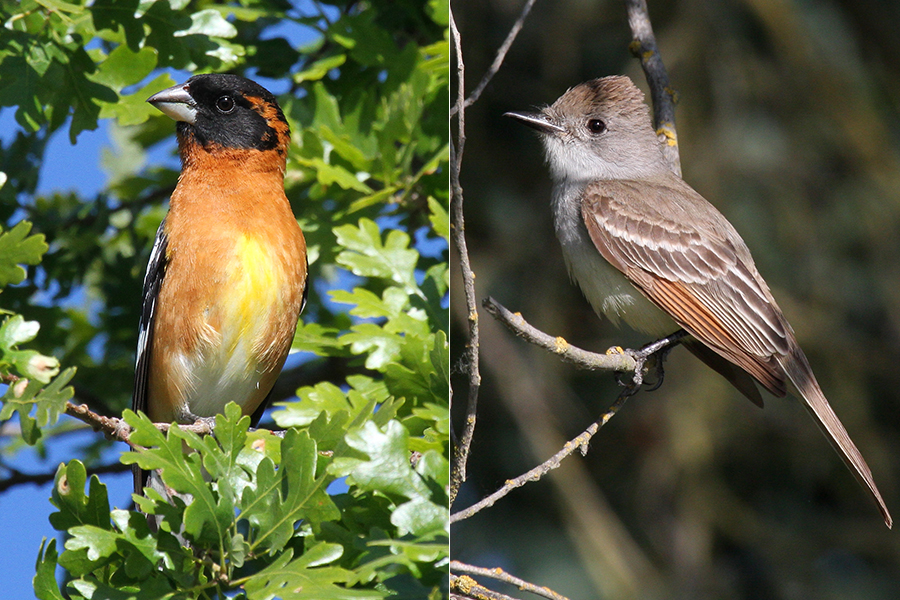
Birds Bounce Back in Putah Creek

ANDREW ENGILIS JR. / UC DAVIS MUSEUM OF WILDLIFE AND FISH BIOLOGY

Habitat restoration improved populations of 27 out of 41 bird species since 1999

The Putah Creek Riparian Reserve has rebounded significantly over the last 20 years since the Putah Creek Accord restored water flow to the area. A team of wildlife biologists publishing in the journal Ecological Restoration have shown that bird populations have more than doubled in that timeframe, with insects, fish, turtles and river otters also returning to the recovering ecosystem. Kristen Dybala analyzed much of this collected data as a postdoctoral scholar in the UC Davis Department of Wildlife, Fish and Conservation Biology.

“We hoped that we would see some growth in the riparian species,” said Dybala, the first author of the paper, who now serves as a senior research ecologist at the conservation nonprofit Point Blue. “We wanted to know that the efforts on the creek have been providing the specific habitats for the riparian bird species.”

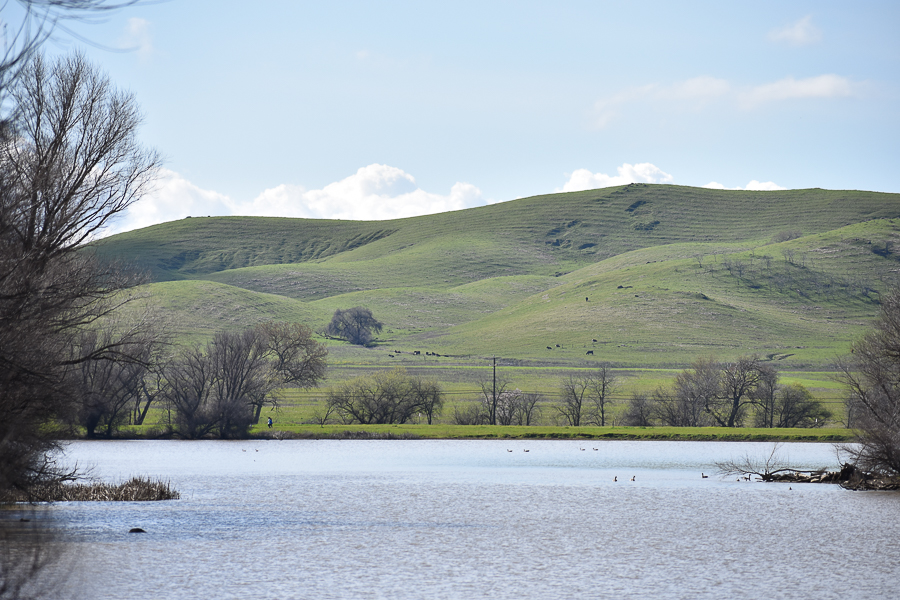
Members of the UC Davis Museum of Wildlife and Fish Biology have been collecting population data of more than 40 bird species along Putah Creek since 2000, when the annual flow to the creek was increased. The creek had suffered in the 1990s from droughts and low water levels, which caused population and wildlife loss. The creek’s flow was significantly altered by the creation in the 1950s of the Monticello Dam, which formed Lake Berryessa. Concerned citizens of Solano and Yolo Counties were able to force an agreement with the Solano County Water Agency to restore some flow from the dam to assist the native fishes.

To monitor how the creek was responding to cold water flowing into the ecosystem, 14 sites were chosen along nearly 25 miles of Putah Creek, from the outflow near Monticello Dam to where the creek spills in to the Yolo Bypass. Riparian birds, which flourish along the river, were counted along with woodland birds such as woodpeckers and synanthropic species such as crows, which live near human settlements.

“If you start at the upper part of the creek above Winters, the bird life there is influenced a lot by the surrounding landscape, lots of oak woodlands and chaparral in the upper canyon,” said Andrew Engilis, the curator of the UC Davis Museum of Wildlife and Fish Biology and one of the authors of the paper. “The bird life tends to be anchored by the woodland habitat. As you move down the creek toward Davis, you enter an agricultural landscape. The dynamics of the birds begin to change. By the time you get to the end of the creek, you get the more riparian-dependent species.”

To make accurate bird counts, staff and students ventured to the 14 sites along the creek and listened to the bird calls. Skilled bird watchers can identify birds by the notes in their songs, and the sight of a yellow warbler in a tree or an Anna’s hummingbird buzzing by the site serves as a visual confirmation.

“Some silent birds are too poorly seen to be identified and some notes heard cannot confidently be assigned to species,” said John Trochet, a research affiliate at the UC Davis Museum of Wildlife and Fish Biology and one of the authors of the paper, in an email interview. “But the repetition of the surveys in space and time leaves large, significant numbers of identified birds allowing for trend assessment.”

Nearly all the birds included in the study increased in population density between 1999 and 2012, including riparian, woodland and synanthropic species. Riparian birds weren’t the only species focused on during restoration efforts along the creek. Nest boxes were installed on trees in the reserve, creating homes for birds which use cavities in trees to nest and breed. Woodpeckers normally create these cavities when they are carving out holes in trees searching for food. The populations of birds which use cavities while nesting enormously improved during the study period. Multiple restoration efforts combined together created better outcomes.

“Restoration projects targeted both terrestrial and aquatic environments,” Trochet said. “Much of the creek below Monticello Dam is incised and confined by levees. In some places along the creek, however, the valley flats are set back enough to do some stream course modification. Logs were set in the stream to create deeper pools for anadromous fish (like chinook salmon) to hole up en route to spawning in the creek. A meandering stream course was engineered in a few places, better mimicking what the channel likely looked like before the dam was completed in the 1950s. Gravels were added in places as spawning beds, because with the dam in place, that was the end of natural migration of gravels from upstream of the dam site.”

Cold water from the dam creates habitat for California fish, which help keep the waterways healthy and lively. Fish serve as food for some species of birds, which then create nesting habitats for other types of birds. The complex ecosystem of the Putah Creek Riparian Reserve is improving because concerned citizens managed to turn the faucet back on almost 20 years ago.

“When you have more water in the habitat, you have changes in humidity, the vegetation gets affected and becomes lusher, insects become more plentiful, birds become more plentiful because the resources increase,” Engilis said. “It’s all related to the re-watering of the creek.”

Increasing water flow to the creek, installing nest boxes in trees, and improving the surrounding landscape of the Putah Creek Riparian Reserve has significantly strengthened the bird populations in the area. Future work will continue to ensure the whole ecosystem can thrive for years down the line. The Solano County Water Agency will be funding bird monitoring through the UC Davis Museum of Wildlife and Fish Biology until at least 2027.

“Ultimately, we want riparian bird populations in the Central Valley to be large enough that they’re going to be resilient and able to recover from the challenges in the future,” Dybala said. “We want riparian ecosystems throughout the valley that are capable of supporting these bird populations and other wildlife and ecosystems processes.”


Written by: George Ugartemendia — science@theaggie.org

A’s, Giants look to get back on track in 2018

TRAVIS WISE [CC BY 2.0] / FLICKR
Bay Area baseball teams face similar challenges to stay in contention this season

Both of the Bay Area’s baseball teams, the Oakland Athletics and San Francisco Giants, kicked off their seasons last Thursday afternoon with close victories over their in-state division rivals. The 2018 season marks a big anniversary for both clubs in their time on the West Coast. This year, the A’s will celebrate their 50th year in Oakland and the Giants will honor their 60th year in San Francisco.

The A’s enter the 2018 campaign with a renewed sense of optimism toward the future, after seeing some of the team’s top prospects make their big-league debuts last season and experience a good deal of success. In addition, Oakland stirred up some excitement with a red-hot September, winning 17 of their last 24 regular season games.

The team has finished in the cellar of the AL West for the last three consecutive years, so the only direction it can go is up. Despite last season’s struggles, the A’s still played an exciting brand of baseball, bashing the fourth-most home runs in the league with 234 and recording 11 walk-off wins.

Oakland should have no trouble scoring runs once again in 2018, rolling out quite a well-balanced and powerful lineup. They will undoubtedly depend on the long ball once again, but will really need to put the ball in play more if they hope to have sustained success at the plate. The team set a franchise record with 1,491 strikeouts in 2017.

No other player in Major League Baseball has hit more home runs over the last two seasons than left fielder Khris Davis, who has slugged 85 ever since being traded to the A’s in the winter of 2016. Oakland will depend on him to continue being the anchor in the middle of the lineup.

First baseman Matt Olson, who hit 24 home runs in a short stint of 59 games last year, will also look to prove that his early success was no fluke. The former first round draft pick has the potential to be a cornerstone player for the franchise for many years to come.

The biggest question mark for Oakland heading into 2018 is the starting rotation. Right hander Jharel Cotton, who was supposed to be the team’s third starter, suffered an elbow injury at the tail end of Spring Training and will be forced to undergo Tommy John surgery and miss the season. At the top of the rotation, opening day starter Kendall Graveman and lefty Sean Manaea are the only two arms on the staff that have a considerable amount of experience pitching in the big leagues. Oakland will hope to that each guy can deliver about 30 starts and give them a favorable chance to win every time out there.

The club will need to receive contributions from some less experienced arms like Daniel Mengden and Daniel Gossett in order to stay in contention throughout the summer.

Overall, the A’s face an uphill climb to compete in the AL West, going up against the defending World Series champion Houston Astros and talented teams on the cusp of contending like the Seattle Mariners and Los Angeles Angels. It is vital for Oakland to avoid the injury bug, especially in a starting rotation that lacks depth in the minor leagues. If the A’s can get a satisfactory performance from their starting pitchers everyday, they have a chance to win a lot of ball games with a greatly-improved bullpen and powerful lineup.

The Giants are looking to bounce back in 2018 after finishing last season with the worst record in the National League at 64-98. It was the the club’s first last-place finish in the NL West in exactly a decade.

Rather than tear down the roster and begin a complete rebuild like most teams do, the Giants opted to reload and give their core another chance to get back to the World Series, where they were victorious in 2010, 2012 and 2014.

After falling short in the Giancarlo Stanton sweepstakes, the Giants managed to trade for third baseman Evan Longoria from the Tampa Bay Rays and outfielder Andrew McCutchen from the Pittsburgh Pirates. Both are all-star players in their early 30s and are among the most consistent, dependable players in the game. Together, Longoria and McCutchen have missed a mere 53 games over the previous five seasons.

The Giants still have a extremely talented core of players on the infield with catcher Buster Posey, first baseman Brandon Belt, second baseman Joe Panik, and shortstop Brandon Crawford. The addition of Longoria only makes this an even better infield defensively.

San Francisco recognized the need to overhaul its outfield, after dealing with inconsistency and an overall lack of production in that area last season both defensively and offensively. The acquisition of McCutchen along with center fielder Austin Jackson, who was traded from the Cleveland Indians, should more than address those issues and provide some much-needed stability and athleticism.

Just like their cross-bay rivals, the Giants face some major concerns with their starting pitching, especially after the injuries to star left hander Madison Bumgarner and right hander Jeff Samardzija. Bumgarner fractured the pinkie on his throwing hand during a Spring Training outing and isn’t expected to return until sometime before the All-Star break, while Samardzija will be sidelined a few weeks with a pectoral strain.

Right-hander Johnny Cueto and opening day starter Ty Blach will be forced to carry some of the load early on in the season and ensure that the Giants are still in solid shape when their high-priced arms return to good health.

The Giants didn’t make many moves to upgrade their bullpen other than signing left handed specialist Tony Watson in free agency. The relief corps struggled mightily at times last season, even after the front office went out and signed closer Mark Melancon to a four-year deal worth $62 million. Melancon will begin this season on the disabled list due to an elbow injury.

In the meantime, San Francisco will have to depend on right handed flamethrower Hunter Strickland to record the final three outs in the ninth inning.

The Giants definitely have their work cut out for them, playing in the ultra-competitive NL West division that sent a total of three teams to the postseason in 2017. If the club can somehow survive and avoid further injuries until Bumgarner returns in the middle of the season, they could have a shot to make a run towards a postseason berth down the stretch. With all of the moves made in the offseason, the team’s ownership has made it clear that the Giants are still in “win-now” mode.


Written by: Brendan Ogburn — sports@theaggie.org