52.1 F
Davis

Davis, California

Saturday, December 27, 2025
Home Blog Page 536

Brewed by Aggies, for Aggies

SUDWERK BREWING CO. / COURTESY

Introducing Gunrock Lager, the official beer of UC Davis

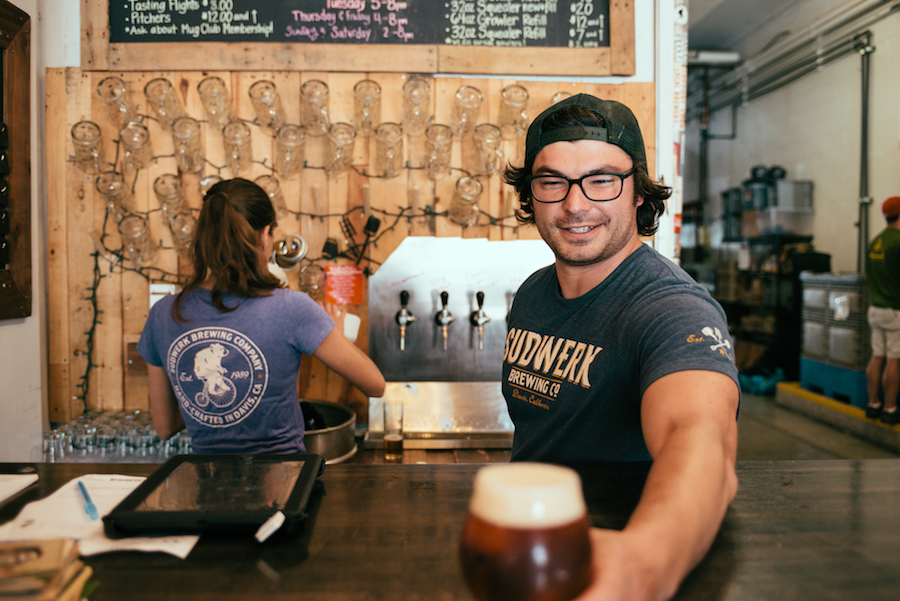
Just in time for the warm weather, UC Davis is introducing Gunrock Lager, the school’s own beer. Developed by the UC Davis Brewing Program and UC Davis athletics in partnership with Sudwerk Brewing Company, the beer will be served at athletic events, local restaurants and at the Sudwerk Dock Store in Davis starting this spring.

Trent Yackzan, the operations manager of Sudwerk Brewing company, has worked closely with the university in developing Gunrock Lager.

“We actually did a version of the beer a couple years ago, a limited release called Aggie Lager,” Yackzan said. “It was the first collegiate brewed beer in America, super successful, but we grew apart from making it. We wanted to bring it back with a new label and a new recipe.”

This project was a collaboration between Anheuser-Busch Endowed Professor of Malting and Brewing Sciences Charlie Bamforth, UC Davis alumni Doug Muhleman and Jack DeWit, UC Davis athletics and Sudwerk Brewing Company. Bamforth is currently out of the country and was unable to interview for this article.

Doug Muhleman, the former vice president of Anheuser-Busch brewing operations and technology, a Sudwerk partner and a UC Davis alumnus, formulated the recipe for Gunrock Lager.

“First, we wanted to come up with a beer that was refreshing, the kind of beer you think about when you go to a football game or a basketball game,” Muhleman said. “We wanted to make a beer that was appropriate for a sporting event.”

The main goals of Gunrock Lager were to develop a beer that gave back to the university and the community while sourcing local ingredients. Alumnus Jack DeWit, who is a local Yolo county rice farmer, donated the rice needed to brew the lager.

“We decided to make a classic American-style beer with the main ingredient, barley, and a small percentage of rice as part of the total recipe,” Muhleman said. “That produces a beer that’s a little lighter on the palate, great for refreshment for going to a game on a hot day, that kind of idea.”

Yackzan explained the reasoning behind choosing a lager for the university beer.

“The main two types of yeast beer are ales and lagers, [Sudwerk] focuses primarily on lager beers,” Yackzan said. “Lagers are generally fermented low and slow, lower temperature, slower fermentation time. From the day we brew to the day we package [it’s] upwards of like 35 days. Ales on the other side are a seven to 14-day beer and are fermented at a warmer temperature over a shorter period of time. Ales are bolder in flavor whereas lagers are more subtle, crisp and clean.”

Muhleman used his classic 15-gallon home brewery to test and develop the recipe.

“I utilized the yeast we use to make Sudwerk lager beers, a special strain of yeast, and I made several different batches until I was happy with the result,” Muhleman said. “The beer itself is made with North American malting barley, Yolo county rice and some classic German hop varieties. It’s a lager, so it’s aged in cold temperatures for several weeks before it’s filtered and packaged.”

Muhleman completed his undergraduate and graduate education at UC Davis before entering a career in brewing.

“I’ve been involved with UC Davis really since I left as a student,” Mulheman said. “It has been a lot of fun working on something like this and taking it back to campus. I don’t expect for Sudwerk, from a commercial standpoint, that this is a big money maker for us. It’s really more an opportunity to continue our collaboration with UC Davis and give back to the local community.”

Sudwerk has been in partnership with UC Davis’s brewing science department since 1995 with the creation of the world-renowned Master Brews Extension Program.

“The UC Davis master brewing course is held every year in the Sudwerk brewing complex,” Muhleman said. “So we work with the students at that level and then we collaborate with the folks on campus with brewery projects, and have been over the years.”

In addition to this educational partnership, Sudwerk and the DeWit family are giving back to the school in the form of an athletic scholarship.

“The value of the rice given by the DeWit family, means that instead of the brewer paying for that ingredient, they are giving the money to the school directly,” said Rocko DeLuca, the deputy director of athletics. “It’s pretty unique given that there are not many schools that have a branded beer out there. I think it speaks to the importance, to the value that we are trying to insure which is giving back to the school.”

Aside from differing recipes, the key difference between Aggie Lager and the new Gunrock Lager is the university branding, which includes the beloved mascot Gunrock.

“We wanted to start something sustainable, over the course of time, something to help build our brand,” DeLuca said. “We just wanted to make sure that we had the right partner and having ‘Go Ags’ and Gunrock our mascot associated with the beer.”

The lager had a soft roll out for basketball season, only being served in draft form. This will continue through baseball season with an official retail release scheduled for late spring, where it will also be sold at local restaurants and grocery stores.


Written by: Grace Simmons — features@theaggie.org
 

Sexual violence prevention extends beyond education into personal conduct

DANIELLE MOFFAT / AGGIE

UC Davis CARE representatives discuss sexual violence prevention

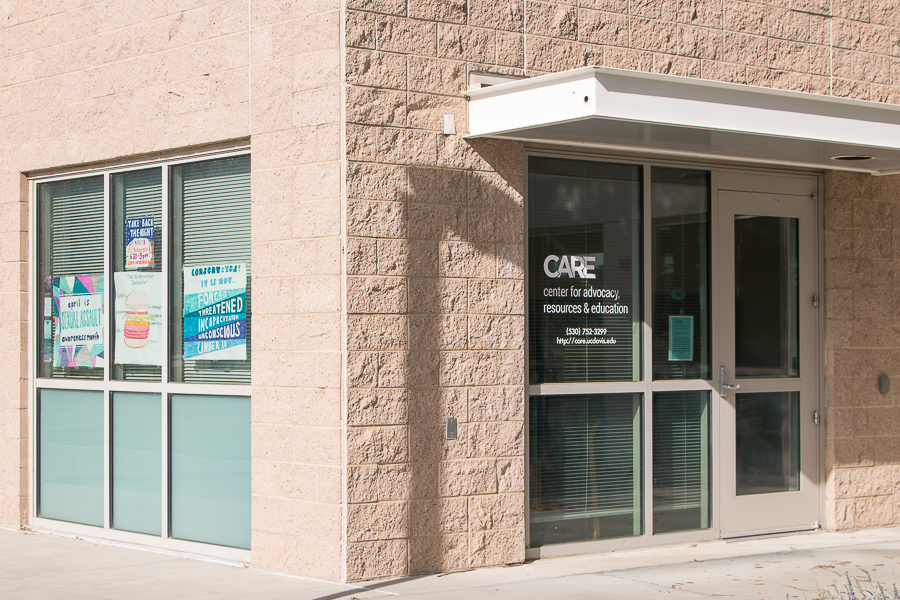
The Center for Advocacy, Resources and Education at UC Davis assists students and staff who have experienced sexual violence. Sexual violence prevention is an important aspect of the work done at CARE.

Sarah Meredith, the director of CARE, discussed how sexual violence prevention extends beyond education and into a greater cultural concern.

“We do a lot of presenting — in the sense of the people that are hearing us are probably going to be the true first responders in those cases,” Meredith said. “We want them to know that they do not have to solve it all. They do not have to do the investigation. They do not have to have all the answers. We want them to know that there are places that they can point this person to and get them to the right place.”

Meredith also said that CARE focuses on bystander intervention, prevention and education.

“We certainly do not discredit risk reduction,” Meredith said. “The programs that talk about self-defense — watch your drink or the buddy system — I think those can be really helpful tools. But if we really want to actually prevent sexual violence, we cannot be just focusing on risk reduction strategies. We really have to start shifting the culture — getting people to understand that the behaviors themselves are not okay.”

Meredith said that UC Davis community members should know that services and reporting options are available and talked about the most common way in which sexual violence is reported.  

“One of the things that we know is that if somebody experiences sexual violence, whether it is sexual assault, dating violence or stalking, the vast majority of the time the person the survivor is going to go to is not usually law enforcement right away,” Meredith said. “It is not really even an advocate [they go to] right away. It is usually somebody who is close to them — a friend, their roommate and maybe a close family member. [A person] they already know and they trust, usually those are the people that they go to first.”

Allyanna Pittman, an education and outreach specialist at CARE and a UC Davis alumni spoke about the sexual violence prevention program which starts when students first arrive on campus.

“I feel like we capture a lot in orientation — we present to 10,000 students [each year],” Pittman said. “What I have been noticing more recently is our student volunteers and the folks who are connected with our office have been a really awesome source of outreach because they are talking to their friends about [the orientation]. I feel like having our students, and the fact that they are spreading the word, have been a really big help with our outreach because they are connected to other organizations other than ours.”

Meredith spoke about examining one’s own behavior as part of the work toward sexual violence prevention.

“Without sounding completely flippant about it, the first thing I would say to somebody is to really think about their own behavior first,” Meredith said. “If they really want to prevent sexual violence, sexual assault, dating or domestic violence or stalking, the first thing I would tell somebody is: analyze and assess your own behavior. What would you like in your relationship? Do you ask for consent? Is that something that you prioritize? And how do you then model that to your peers?”

Meredith added that the issues facing graduate students and staff take on a different level of importance when talking about prevention with their own children.

“For graduate students or for staff, a lot of the times what we will talk to them about are how often [they are] talking to your kids about consent, about bodily autonomy and about healthy relationships,” Meredith said. “If we really want to talk about true prevention, that really starts with us acknowledging our own behaviors and how we are with our relationships. But also, how do we talk with the children in our lives about their bodily autonomy? Are we forcing them to hug and kiss their relatives when they really do not want to? And then what kind of message does that send for them long-term that they really do not have the right to say no or set boundaries for themselves?”

Meredith spoke about intervention in a range of different situations, from potentially dangerous situations to derogatory posts on social media.

“The other thing I would say is that there are sometimes opportunities to intervene in situations where it is not [what] we would consider a high-risk situation,” Meredith said. “By standard intervention, it does not have to be a situation where I see somebody who is really incapacitated, far too drunk and somebody else seems to be escorting them upstairs. That might be a high-risk situation where hopefully somebody will intervene in that situation. But there might also be opportunities to intervene in situations where somebody posts something really derogatory about a particular gender on their Facebook account and that might be an opportunity to intervene.”

Esther Grace Pillitiere, a third-year psychology major at UC Davis and a student volunteer at CARE, spoke about what brought her to join the program.

“They did the VIP talk at orientation and I was there and I really enjoyed it,” Pillitiere said. “And the thing I loved about the talk is that they were talking about prevention and usually when people talk about prevention for sexual violence they talk about the buddy system, always be with a friend, carry your keys and do not go in dark places. And I remember [Meredith] saying those are good, but that is not prevention. If you want to prevent sexual violence, then do not have non-consensual sex. I really appreciated that, because that is so right. Basically, I was really struck by their approach. I thought it was really genuine, direct and awesome, so I asked if I can volunteer for an internship.”

Pillitiere spoke about how volunteering at CARE has changed her.

“My language and approach have changed,” Pillitiere said. “A lot of the times when people […] talk about these issues, it is binary — like they kind of picture that a man who is a stranger who is hiding in the shadows who attacks a woman who is walking by herself and they do not know each other. That is not true. Oftentimes, usually, it is an acquaintance.”

Pillitiere also added that sexual violence affects people of marginalized communities the most and that “anyone can experience sexual violence.” She said that it’s important to realize that “folks with disabilities, members of the LGBTQIA community, minorities and other marginalized communities experience sexual violence at much higher rates.”

Additionally, Pittman discussed a challenge of providing prevention education to the large demographic of students on campus, from “different parts of California,” the United States and the world.

“Especially for international students, this is a topic that is completely new for them,” Pittman said. “I do not think even nationally that [sexual violence prevention] is taught in high schools a lot of times. Especially when we are talking about prevention — trying to work on empowering students — that is why we do bystander intervention [training], trying to normalize and instill that into the culture and really send the message that this is how it is done here. This is UC Davis.”


Written by: George Liao — campus@theaggie.org

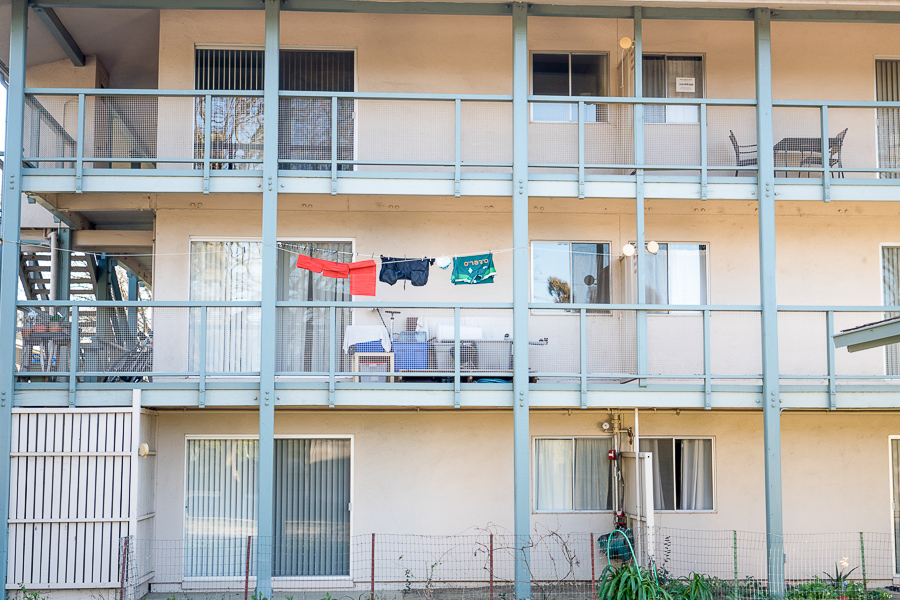
Graduate students frustrated with university housing matters, lack of transparency

NICHOLAS CHAN / AGGIE

Administrators disagree, maintain there is transparency

Members of the UC Student Workers Union Local 2865, a union that represents graduate student workers and undergraduate tutors on campus, have expressed concerns regarding mismanagement of funds by university administration, particularly with university housing. One claim is that the university has been taking rent from residents of Solano Park, a university housing community for graduate and undergraduate students with families, and putting it into reserves to fund luxurious housing projects, rather than maintaining current housing or building housing that UAW considers affordable.

“We know from other sources, for example, that the university has used reserves money to build the infrastructure for West Village, which is an unaffordable housing complex that private developers are operating and making money from,” said Caroline McKusick, a Ph.D. student in the anthropology department. “Solano Park has been paid off and residents’ rent has been going into paying for that reserves portion of the Student Housing and Dining budget. This raises some questions about how the university is using the money they are getting from very low income families and students. They’ve been raising rent here in Solano Park for a long time despite the complex itself being paid off.”

When asked how members knew Solano Park has been paid off, Emily Frankel, a Ph.D. student in languages and literature, said that she was informed by a resident advisor that “it was paid off” and that Vice Chancellor of Finance, Operations and Administration Kelly Ratliff “never denied Solano Park being paid off” at a meeting.

In response, Ratliff said via email that the “debt for Orchard and Solano housing is not paid off. The final payments will occur in 2026” and that some funds from student housing revenues “are held in reserve for major maintenance and facility projects.” She also said that “Student housing funds have not been used for West Village.”

Additionally, Associate Vice Chancellor of Student Affairs and Executive Director of Student Housing Emily Galindo maintains that the budget for Student Housing and Dining Services is relatively transparent.

“We have our resident hall advisory board that we meet with on a monthly basis where we review all of our budget with students,” Galindo said. “We are a self-supporting auxiliary which means that we are responsible for all the costs associated with the program, so we don’t get funding from the state or campus. Rather, based on the revenue, which is student rent, we have to ensure that we can operate effectively and efficiently, and that’s going to include a myriad of things: salaries and benefits of staff, facilities related expenditures, maintenance that has to happen on an annual basis and we have to plan for the future. We have our website [and] we have the budget documents which are available to anyone who requests them.”

However, according to Ellie White, a graduate student pursuing a Ph.D. in civil engineering, a major issue that UAW has with university administrators concerns transparency.

“Whenever we ask for information, they tell us it’s already up there, and that we just haven’t looked,” White said. “Or that it’s been on their website and we just haven’t found it. According to them, the budget is online and they’ve been transparent, which is not the case. When we do go and try to find it, there is nothing online for me to be able to see how much goes into Student Housing and Dining Services and how much goes out. It’s such a bold lie. When we’re talking to them at these town halls, it shuts us down because everyone thinks we just haven’t done our homework.”

White mentioned that the only way that UAW can receive information about budgetary concerns is through California Public Records Act requests.

“What we have to do is legally require them to give it to us through CPRA requests,” White said. “I made the request in December [and] they just got back to me about it. They use these bureaucratic methods to stifle us — it’s been a couple of months — and then they give us a 300-page document that we also have to pay for, 25 cents per page. The university’s use of complexity here is to obfuscate, to stop us in talking in opposition.”

Frankel suggested that the lack of transparency with the Student Housing and Dining Services budget is related to UAW’s claim of mismanaged funds.

“There’s obviously a mismanagement of funds,” Frankel said. “We already have seen this with the issue that they’re having with the mental health center. We know that’s happening here with housing. We know this has happened with medical insurance. We know this has happened in other instances. We know that this university, in particular, has a history with mismanaging funds. We know they must be mismanaging the funds here at Solano because we can’t seem to gain any sort of transparency as to what they’re doing with our rent money. Where is our money actually being allocated?”

When asked about RA responsibilities at Solano Park, Galindo noted via email the way RAs are involved in the ticketing of cars parked in the wrong spots.

As the RAs do their regular rounds, if they see a vehicle that may be in violation of some sort of parking situation, they tag it and notify TAPS,” Galindo said. “TAPS is responsible for responding, determining if in fact there is a violation, and then citing as necessary.”

White, however, discussed this RA responsibility as “pitting the community against the community” and causing the demobilization of graduate and undergraduate students at Solano Park.

“Immediately, I’m not going to like my RA,” White said. “This relationship of the community with the RAs gets conflicted because of the responsibilities that are forced on them by the administration.”

According to White, the UC Office of the President has only chosen a few developers that the universities “are allowed to contract with,” which has caused confusion regarding the university’s selection process of housing developers.

“We don’t know how they were selected [and] we don’t know why they were selected,” White said. “No engineering project works like this. You [generally] request for proposals and you get everyone who wants to send a proposal and you evaluate all of them — you have more options. They’re basically creating this kind of a market and there’s no transparency on why these developers were selected. Why was there no affordable housing developer among these people?”

Galindo discussed the process by which these developers were picked.

“We worked with two committees,” Galindo said. “The first committee was chaired by the former dean of graduate division, Jeff Gibling, and they did a pretty extensive review of housing and what graduate student families wanted to see, what was most important to them in a new development. Then, we created a project advisory committee that took that work and developed a request for a proposal for the next version of family housing and we provided some targets for rent. Based on that request for proposal, we gaged the eight developer teams that have been identified from President Napolitano’s housing initiative.”

Galindo explained that six teams responded from the eight reached out to, and the university interviewed four from there, eventually choosing University Student Living.

White said that she was okay with her “rent going to Student Housing and Dining Services.” With the advent of these private developers, however, she said she has a problem with the fact that her “money is going to go into the pocket of a rich developer.”

Frankel emphasized the need for affordable housing on campus for all university students, including international students.

“We know the university can make affordability possible for students,” Frankel said. “We have international students who have whole villages sometimes paying for their tuition just so they can come to the United States and get an education from UC Davis. When we think of this money, we can’t just think about [it] as domestic — we have to think about it as a form of international exploitation. The university knows that students want to come here to get this education and they’re going to do whatever they can do to take that money from that village or that family.”

Frankel also mentioned the difficulties domestic students face who “can’t come to this university because their families don’t have the money to pay for it.” She finds issue in the fact that California residents, who pay taxes that partially go toward public universities like UC Davis, can’t afford to come here because of tuition hikes and limited affordable housing.

White discussed why affordable housing has been an important pursuit of the UAW.

“I don’t want to be food insecure to pay my rent,” White said. “My quality of life dropped and I was considering whether or not it was worth it — to put your mental health on the line to pay your rent and to barely get by and not save any money. We are students who cannot afford an emergency.”


Written by: Sabrina Habchi — campus@theaggie.org

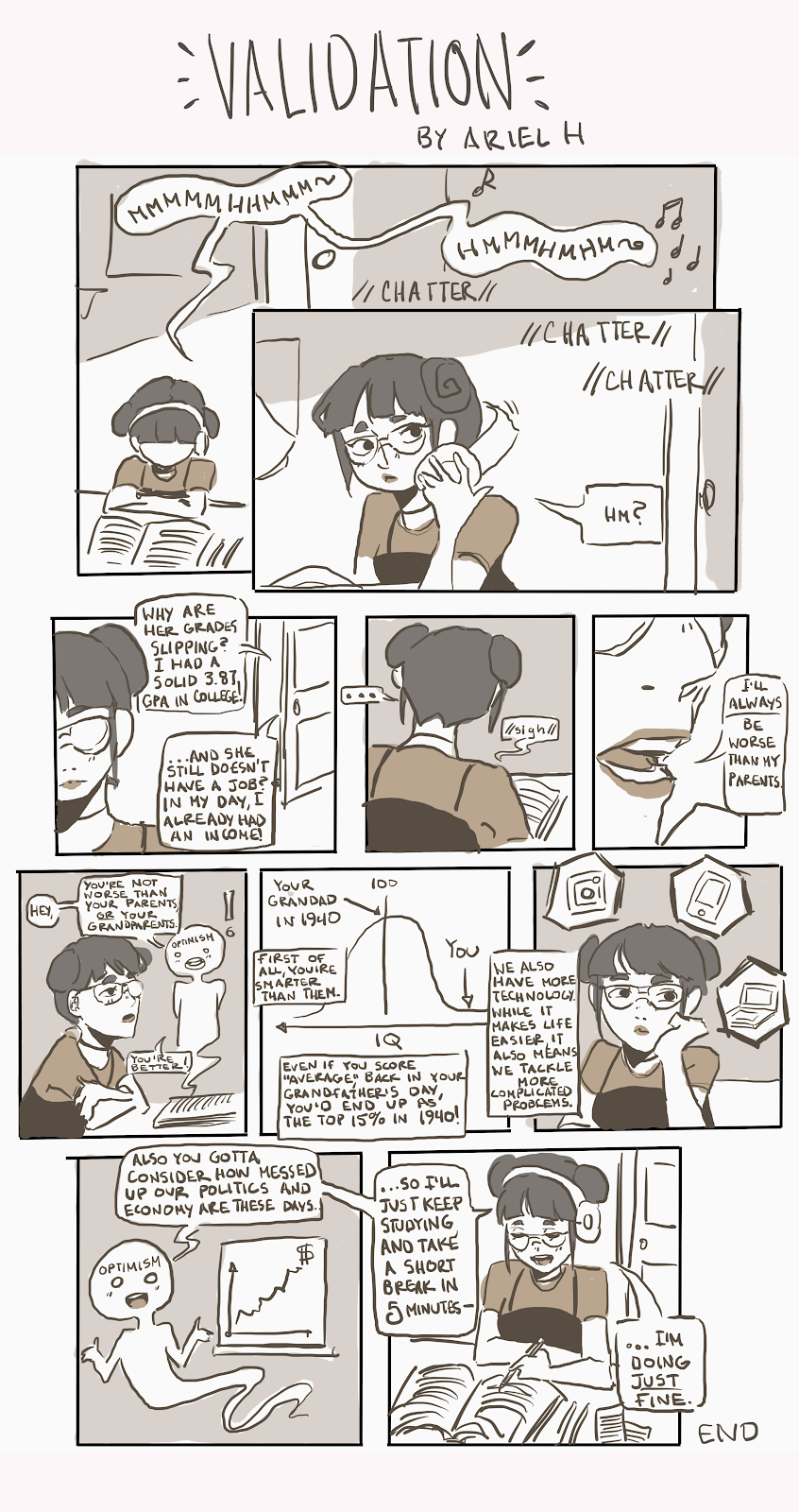
Cartoon: Validation

ARIEL HILOMEN / AGGIE


By: Ariel Hilomen — opinion@theaggie.org

Disclaimer: The views and opinions expressed by individual cartoonists belong to the cartoonists alone and do not necessarily indicate the views and opinions held by The California Aggie.

The issue we refuse to face

MOLLY ADAMS LIZ WEST [CC BY 2.0] / FLICKR
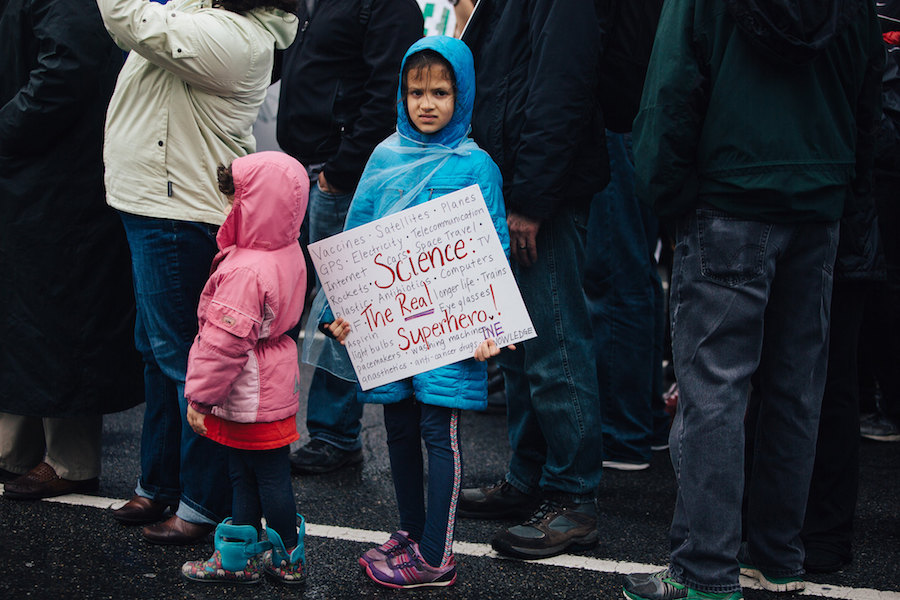
Global warming threatens all areas of life, future generations

On Dec. 27, 2017, President Donald Trump posted a tweet implying that the extreme cold weather blasting the eastern U.S. stands as further proof against the existence of climate change, noting that the North sure could “use a little bit of that good old Global Warming.”

But there I sat in Yosemite National Park in eastern California, where temperatures rested at a disturbing 60 degrees Fahrenheit and not a speck of snow had fallen in over a month — unusual for the December average of five inches, with temperatures hovering around 47 degrees.

Let’s face it: Climate change is the annoying relative at the dinner table who ends up, without fail, discussing politics. You know, the one who leaves the room in a tense silence oozing with regret because, at the end of the day, you know deep down that the fault lies with you for his invitation.

This is to those of you who have the luxury of remaining happily ignorant toward the problem: you, the young students who will likely live to see this change.

You don’t have to care about the fragility of the polar bear species. You don’t have to like nature or outdoor activities. You don’t even have to care about the state of the oceans.

Understand, however, that climate change will have a direct impact on your individual life.

Addicted to coffee? Scientists predict that the beloved bean will be extinct by 2080 due to a changing climate. The same applies to chocolate.

Just can’t get enough of that sushi from that one Japanese restaurant down the street? Sharp increases in ocean temperatures are set to drive fish into extinction by 2040, meaning no more sashimi.

Maybe you don’t enjoy those luxuries. Maybe, because you can’t notice the effects today, global warming remains a vague concept at the back of your mind.

Maybe you won’t be alive in 2080.

What about your children, or your grandchildren? Do you want them to know the sensation of snow falling on their tongues or the surprise when they see whales breaching in the ocean for the first time?

Your future is in the millions of homes in Cape Town, South Africa, whose residents will turn their faucets in April, only to find that no water will come out.

Your future is in the Parisian houseboat owners whose only hope of keeping their boats afloat is to pray that the Seine will only swell 18 feet.

Your future is in the Puerto Ricans and those in the Caribbean whose entire livelihood, entire homes were crushed by two consecutive Category 5 hurricanes.

This planet is our legacy, our inheritance. It’s time that we see past the lengths of our noses and remove our heads from the sand.

To think big, you must start small, and so by substituting old unhealthy habits for new ones, then you are contributing to the preservation of something we cannot even begin to consider losing.

Do your research if you have access to credible resources and make small adjustments to your daily routine if you can. Most importantly, eat less beef and red meat — cows and livestock produce 14.5 percent of total carbon emissions, and agriculture itself produces 24 percent of global emissions totals. Emissions from transportation, in contrast, is only at 14 percent, according to the Environmental Protection Agency.

If we accept climate change as a lost cause, then we’ve already forfeited the only chance we had.


Written by: Erin Hamilton elhamilton@ucdavis.edu

Disclaimer: The views and opinions expressed by individual columnists belong to the columnists alone and do not necessarily indicate the views and opinions held by The California Aggie.

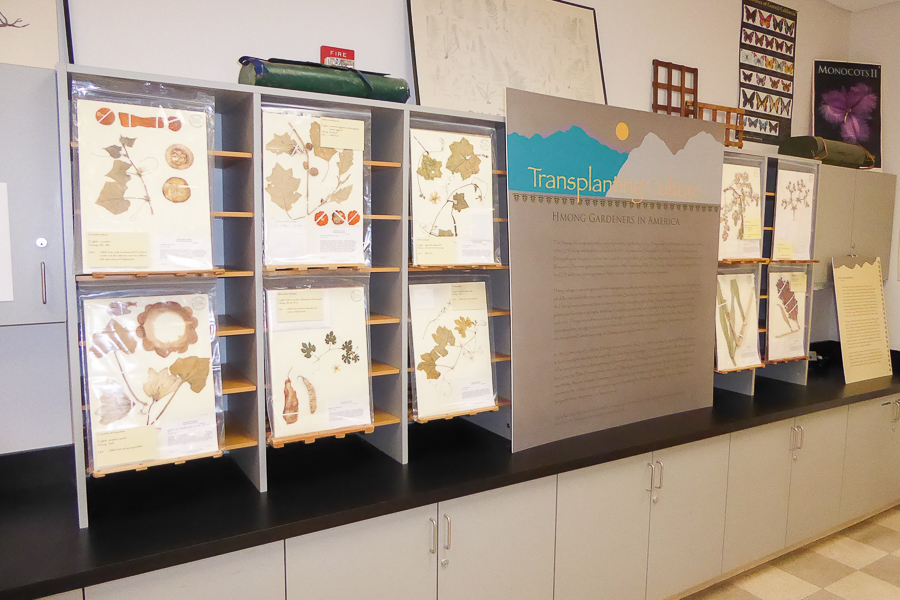
Herbarium exhibits plant species significant to Hmong people

ELLEN DEAN / COURTESY

Exhibit shows scientific and cultural roots of plants used by Hmong people

In January, the Herbarium at the UC Davis Center for Plant Diversity hosted a botanical tea event with an exhibition of Hmong plant specimens for culinary and medicinal use. A follow-up exhibit was given at the herbarium on Biodiversity Day in February.

The exhibitions were arranged by herbarium curator Ellen Dean and Mai Xiong, a fourth-year sociology and Asian American studies double major who has worked at the herbarium since her sophomore year, with additional help from herbarium staff. The specimens on display were culled from a collection of over 100 different plants from earlier university projects, Dean said. When Xiong came across this fairly extensive collection, she was inspired.

“Because Hmong is an ethnic group that is not well known, it surprised me that there was a collection of Hmong plants,” Xiong said. “I was inspired by the fact that while these plants were being documented, important parts of the history of my people were too.”

Xiong, a member of the Hmong Student Union at UC Davis, was inspired to work on the project so as to explore and represent the Hmong cultural roots of the plants. As part of the preparation for the events, she took Dean to Hmong New Year, bought and cooked traditional Hmong food, and asked Hmong students to participate.

“I want people to learn how plants are culturally used, in general,” Xiong said.

Bringing the cultural history to bear on plants is a type of study referred to as ethnobotany.

“I favor a broad definition of ethnobotany as the study of direct relationships and interactions between people and plants,” said Daniel Potter, a professor in the department of plant sciences who teaches a course on ethnobotany at UC Davis. “This includes studies of how people use, manage, perceive, and describe plants.”

Potter is enthusiastic about the exhibit.

“I think it’s a great contribution to understanding not only traditional plant-people interactions but also how they may change,” Potter said. “One of the reasons I like the broad definition of ethnobotany described is that it encompasses studies of migrations of people, movements of plants and cultures, and how cultural and biological changes affect people’s interactions with plants.”

This is especially significant for the Hmong culture, which has had only an oral language for most of its history. Without a formalized written language before the end of the 19th century, a lot of personal history has never been documented. The plants, then, serve as a type of text that hold the historical and cultural stories of the Hmong culture.

This aspect of the exhibition was important to Xiong, and through her research, it even brought her closer to her parents and to her culture. As a child, she never really cared for the plants her parents grew in their home garden, she explained. To this day, she says, her parents grow and collect plants that have been passed down for generations in their family.

“I began to have more conversations with my parents about plants,” Xiong said. “Those conversations usually turned into a mixture of plants, Hmong cultural practices and the religion, which is commonly known as shamanism.”

Xiong hopes that those who have seen the exhibit gain more awareness of the Hmong culture and its complex social history. And through all her and the herbarium team’s hard work, it seems to have paid off.

“We have an exhibit and tea every January, and this particular exhibit attracted more undergraduates than any previous exhibit,” Dean said.


Written by: Matt Marcure — science@theaggie.org


Concerns raised as UC Davis Rec Pool renovations set to begin

TREVOR GOODMAN / AGGIE

UC Davis club men’s, women’s water polo teams raise concerns about proposed plans for Rec Pool renovations

The UC Davis Recreation Pool’s convenient on-campus location for students and other members of the Davis public has been a staple of the university over the years. The Rec Pool has recently been closed for renovation, starting this summer and expecting to end in summer of 2019, according to Campus Recreation and Unions. The plan was four years in the making and is expected to cost around $7.5 million.

“The renovation of the Rec Pool will bring most of Campus Recreation’s aquatic activities into one facility, including lap swimming, fitness and wellness programs, and recreational use,” said Jeff Heiser, the associate director of Campus Rec and Unions, in an email interview.

However, concerns have been raised about the plans for the new renovation, specifically from the UC Davis club men’s and women’s water polo teams, who feel that the new design of the pool will be a hindrance rather than a help.

“One [of the two new pools] was made to be the competition pool and it isn’t very usable for any competitions [for the team], and we asked if it can be made larger they told us that everything was set in stone,” said Harrison Brown, the president of the men’s club water polo team. “The goal is for us to be there full time, but the pool isn’t suitable for us to be there full time.”

The women’s club water polo team is also concerned with how a possible size decrease in the new pool will affect the team’s level of play.

“Currently we have 50 girls on the roster, which is the largest our program has been since I have been a part of the program at Davis,” said Sofia Caryotakis, the president of the women’s water polo club team. “Having a two-hour practice with 50 girls in the pool [at the new facility] would mean we might have to cut down the size of our team, because we would have to be more selective, or split practices into two sessions of 25, which would divide the dynamics of the team.”

The plan for the new Rec Pool renovation includes one recreational pool with four lap lanes and diving well and a second pool with six eight-foot, 25-yard lanes. According to Heiser, the second pool would be suited to host aquatic activities, including water polo play. Even though the club water polo teams expressed concerns about the new proposed size of the new Rec Pool, and believe that the pool is still too small for competition, Heiser assures that the new plans are up to competition standards.

“The campus consulted with an aquatic design company that has experience designing pools for collegiate use,” Heiser said. “The activity pool has the required dimensions for club water polo practice play according to NCAA water polo rules.”

For Brown, the biggest concerns are that the club teams felt their opinions were not taken into consideration while designing the pool.

“I think the biggest thing was we didn’t really have a heads up,” Brown said. “We didn’t really have a chance to give feedback on any preliminary plans and now when we have a chance, it is pretty much set and there are no changes available.”

Because the work for the renovation of the Rec Pool has been going on since 2014, Heiser mentioned the planning and collaborations that were brought during the process.

“Both the Campus Recreation Advisory Council and the Campus Unions and Recreation Board (now part of the Council on Student Affairs and Fees) were consulted and provided input during the beginning phases of the process,” Heiser said. “Both of these groups are student run and led. Additionally, the Sport Club Council was involved.”

“This pool is a huge investment and it makes sense to do it right the first time,” Caryotakis said. “I think the best solution would be to revisit the design plan, meeting with students and seeing what is truly needed.”

Heiser also commented on the success of the club teams on campus.

“Campus Recreation is proud of the success of the water polo clubs as well as the participation of students in other aquatic programming,” Heiser said. “An additional pool on campus that can host a variety of aquatic activities will allow for greater flexibility in scheduling practice times for all aquatic participants.”

Hickey Pool, located on campus across from the Memorial Union, will continue to remain open according to Heiser, and club sports teams will continue to be able to reserve time and space in Hickey and Schaal pools as well as the new Rec Pool. The new pool will be under the same membership model as the Activities and Recreations Center when completed.

Additional information on the new renovation of the Rec Pool can be found at the Campus Recreation and Unions website.


Written by: Ryan Bugsch — sports@theaggie.org

Kings, Sacramento community join forces to raise awareness for Stephon Clark

BOBBY JOHN / AGGIE

Protesters, activists battle racial disparities through sports platform

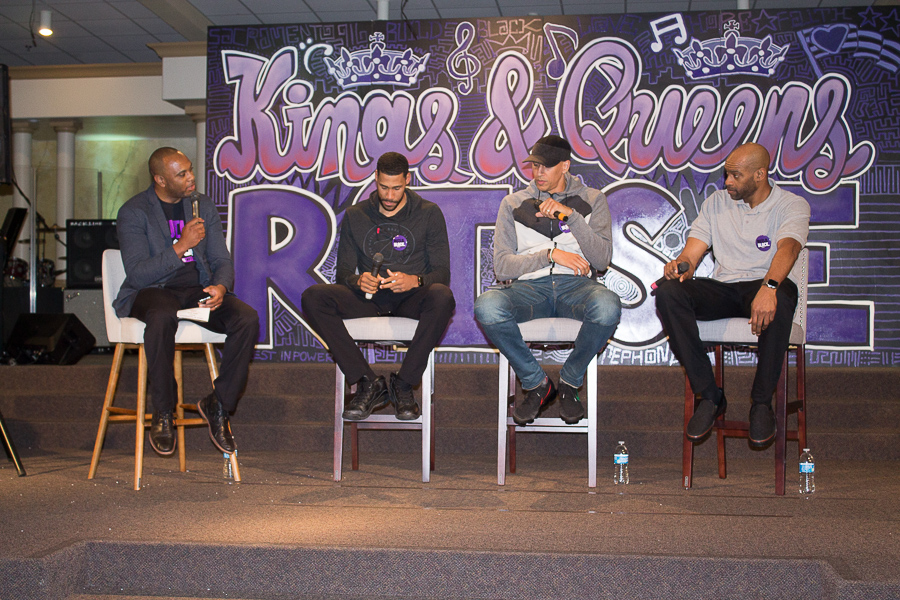
The Sacramento Kings teamed up with the Build. Black. Coalition and the Black Lives Matter Sacramento chapter at “Kings and Queens Rise: A Youth Voice Forum for Healing” to create of an education fund for Stephon Clark’s family as well as a multi-year education fund intended to help youth at the South Sacramento Christian Church on March 30.

Over 500 attendees participated in an evening of lectures from community leaders and a writing workshop with UC Davis poet mentors. There was also a Q&A session with Garrett Temple, Vince Carter and former Kings player Doug Christie.

This coalition was formed following the March 18 shooting of Stephon Clark. Clark, a 22-year-old father of two, was shot and killed by police in Sacramento in his grandmother’s backyard. Officers say they believed his cell phone was a firearm.

Protests took place at multiple locations last week in Sacramento: outside of Sacramento County District Attorney Marie Schubert’s office, at Sacramento City Hall, and on I-5. The protests led to traffic stoppage and a blocked the entrance to the Golden 1 Center, delaying the basketball game’s start time and forcing police to shut the doors to ticket holders twice in one week.

President Donald Trump called the shooting a local issue, but the demonstrations quickly garnered national media attention.

Dr. Bennet Omalu’s autopsy revealed that Clark was shot eight times; six bullets hit  Clark in the back.

The Sacramento County Coroner’s autopsy was completed on March 20, but those results are not expected to be released until after the Sacramento district attorney’s office completes its investigation of the shooting.

A Sacramento Police Department statement said that “prior to the shooting, the involved officers saw the suspect facing them, advance forward with his arms extended, and holding an object in his hands. At the time of the shooting, the officers believed the suspect was pointing a firearm at them.”

The Golden 1 Center was first targeted by protesters on March 22 and again on March 27. No official attendance was given by the Kings, but estimates put attendance for March 27 at around 4,000 out of a 17,600 seat capacity.

For both days, protesters caused police to close the doors to ticket holders due to safety reasons. Sacramento police worked with the Golden 1 Center to increase security, installing fencing and barricades in anticipation of the March 29 game against Indiana.

“This is going to get everyone’s attention,” said Paul Desrochers, a protester who blocked the entrance to the Golden 1 Center on March 27. “What we want and need, needs to be heard, as black men, black women everywhere, and it’s not just Black Lives Matter, all lives matter. I have a white mom and girlfriend.”

“The police are crooked,” Desrochers said. “They have their own 10th amendment, they have the police bill of rights. They are above everything.”

Activists and protesters also showed up at Sacramento City Hall where a special meeting was convened by Mayor Darrell Steinberg intended to address the shooting of Stephon Clark. Clark’s brother, Stevante Clark, voiced his frustration during the meeting, told Mayor Steinberg to “shut up” and jumped onto Mayor Steinberg’s desk.

At one point, an attendee pulled out his phone and directed everyone in the room to point their cell phones like guns toward city council members. Then council members were asked whether this looked like a cell phone or a gun.

Mayor Steinberg was visibly frustrated, according to Xzavion Stevenson, a Sacramento State student who attended the meeting.

Stevenson is hopeful for reforms in policing, but thinks that long-term change is out of reach.

“I’m happy to experience it, and be a part of it,” Stevenson said. “But I don’t think change will happen.”

South Sacramento activist Pastor Les Simmons, of the South Sacramento Christian Center, was calm and focused at city hall where protesters filled the lobby while police guarded the entrance to the council chamber and at times chantedF–k the police” and “20 bullets, murder!”

“Black pain runs very deep,” Simmons said. “Sacramento needs an outlet, and the community needs to come together.”

Simmons emphasized the importance of multiple communities participating and being aware of racial disparities.

“Everyone needs to come together, including the UC Davis community,” Simmons said. “We need solutions, we need system change, we need policy change.”

Stevante Clark later told ABC10’s Frances Wang that he owes Mayor Steinberg an apology and called for unity to combat systemic issues like over-policing, gang violence and poverty, and further called on protesters to stop demonstrating at the Golden 1 Center. Stevante Clark wants community resource centers created for at-risk youth to be available 24 hours, and believes resources like video games can attract youth, helping keep them off the streets.

Muhammed Ikharo, a fourth-year computer science major, did not attend the protests, but thinks they were necessary to get public attention.

“If you aren’t affected by [protests], then what would you expect to change,” Ikharo said. “You have to make people uncomfortable, you have to make people start talking about this.”

Ikharo is a basketball fan and believes the advocacy coming from the NBA players is good.

“One thing I appreciate about [the Kings and Celtics] PSA is stressing the idea of accountability,” Ikharo said. “I definitely appreciate the way the Kings are using their platform for positive change.”

Ikharo mentioned that he has tickets to an upcoming Kings game, and if a protest happened, he would not be upset and would join in.

“I am a black man in America… what if this would have happened to me, how would my family be affected?” Ikharo said. “Stephon has all this support and he’s not here to see it.”

The Kings and Boston Celtics issued a Public Service Announcement shortly after the shooting. In it, the Kings called for accountability.

“We will not shut up and dribble,” said Garrett Temple of the Kings, responding to a recent comment made by Fox News host Laura Ingraham.

The two teams warmed up with shirts bearing “Accountability. We are one.” on the front, and #StephonClark on the back, one week after the fatal shooting.

Christie believes it is critical for young people and college students to keep participating in this movement.

“I think more than anything, young folks are going to be the next generation to lead us,” Christie said. “It’s important that young folks get out and speak, and they let their voice be heard. You see the march in Washington to the marches here, the more we do that, the more we’re heard, the more we galvanize, the greater voice we have.”

The Build. Black. Coalition slogan is “This is a movement, not a moment,” and this is an important moment in history in the struggle to eliminate anti-blackness, according to Berry Accius, founder and CEO of Voice of the Youth, a Sacramento organization aimed at helping at-risk youth.

“This is the breaking point, the moment that people like myself have been talking [about], the empowerment of black people, no longer get looked at like I’m crazy,” Accius said. “This is a moment where even organizations like the Kings have to recognize this attitude that people have with anti-blackness.”

Anti-blackness has historically dominated the United States, but still pervades society today, according to Accius.

“It’s now happening in real time. You have the Donald Trump era, Dreamers, you have things going on locally in our schools,” Accius said.

Accius maintains that younger generations and college students have a role to play in this fight for justice and equity.  

“Continue to make their voices heard, continue to scream loud, let people know this is not an isolated incident,” Accius said. “They’ve had moments and movements at UC Davis […] for college students, it’s not about looking at this moment as something that’s going to go away, let’s look at this moment as something we can build on.”

UC Davis poet mentors from Sacramento Area Youth Speaks led the “Weapons as Words” workshop, which intended to help attendees explore and improve their writing ability by reflecting on their lives.

SAYS works in areas that are traditionally marginalized from city resources, including Meadowview, where Stephon Clark was shot.

This type of work is not new, according to Vajra Watson, the director of research and policy for equity at UC Davis and the founder of SAYS.

“We consider ourselves part of the community that was struck by the police brutality and police violence against Stephon Clark,” Watson said.

Watson noted the recent emergence of young leaders recently that should be honored, but Watson is concerned that institutions of higher learning do not offer enough courses on community organizing and scholar activism.

“One of my concerns for this generations is how they are being trained, and how do we turn this into a movement, not a moment,” Watson said. “I think the movement aspect of it needs to come with some educational prowess.”

SAYS will be presenting at 2018 annual meeting of American Educational Research Association this month, one of the largest education conferences in the world. SAYS, according to Watson, has influenced colleagues in the education field.

“A lot of other faculty and colleagues from other universities want to know how they can have a model similar to SAYS at their university or their community college,” Watson said. “Because it’s a really unique way to connect our education and this liberatory pedagogy in a way that holds the university accountable to the community in innovative ways.”

SAYS program coordinator Patrice Hill said that younger generations are taking a different approach to activism and that the use of social media could be a reason.

“College students rely heavily on social media as a basic way to communicate and I also think they’re using social media as a form of activism,” Hill said. “Not everyone can be on the frontline, but spreading that message saying you’re not going to take it anymore, reposting messages, it’s all a part of ending the over-policing of black and brown communities.”

Hill spoke of the demonstrations and protests that followed the police shooting of Clark and contends that the pressure for change is mounting.

“You can see from the [special] city council meeting Tuesday night, there is going to be no more politely asking to be treated to be treated with human rights, we’re going to take those rights,” Hill said. “At the end of the day, people are tired of asking.”


Written by: Bobby John — sports@theaggie.org


UC Davis Hosts Fourteenth Annual HellaCappella

DIANA LI / AGGIE FILE

Mondavi showcase features diverse range of a cappella groups.

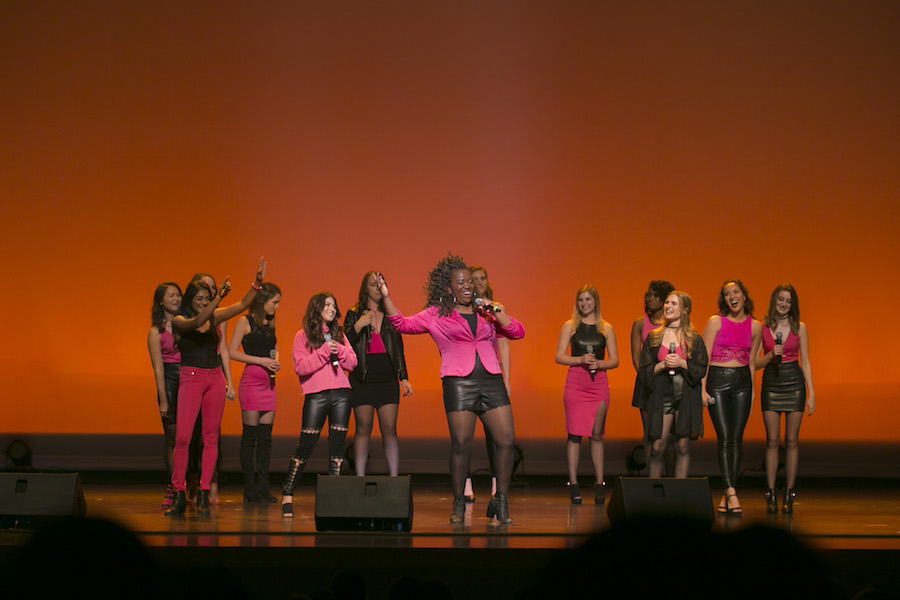
As students return from a week of rest and relaxation, UC Davis has no shortage of events to keep the fun going well into Spring Quarter. One such event is the 2018 HellaCappella showcase, featuring a cappella groups from all over the west coast.

For the past fourteen years, HellaCappella has served as a platform for a diverse range of vocal performance groups. This year, the event is hosted by The Spokes, an all female a cappella group based in UC Davis. They have assembled groups from throughout and beyond the UC system to participate.

From UC Berkeley, Dil Se is an a cappella group which blends the rich musical traditions of Southern Asia with contemporary conventions of a cappella.

“We’re going to be debuting two new songs in our three-set piece,” said Divyaditya Shrivastava, a second-year mechanical engineering major and member of Dil Se. “We’re super excited to show them off.”

The concert will also feature performances from UC Davis a cappella groups such as The Spokes and the Liquid Hotplates. The Spokes is UC Davis’ premier all female a cappella group.

“Our most important mission when it comes to the show is showcasing the best a cappella on the West Coast and this year’s line-up is going to be one of the most talent-filled yet,” said fourth-year cell biology major and co-president of The Spokes, Anusha Suresh.

From UC Santa Cruz, Cloud 9 is an a cappella group which will also be featured at the Mondavi Center showcase. Joining the showcase from Oregon are two a cappella groups: Divisi and On The Rocks.

Founded in 1999, On The Rocks is an all-male a cappella group from the University of Oregon. According to their website, the group has become a success due to its “fun-loving energy, great sound, and charming looks.” They have traveled all over the west coast to be featured in showcases like UC Davis’ HellaCappella.

All of the a cappella groups involved have practiced extremely hard to make this event a success and one that the UC Davis community will remember for years to come.

“We work very hard, and I couldn’t be more proud to be a part of something so meaningful and empowering in my college career,” said fifth-year psychology major and co-president of The Spokes, Amanda Beardsley. The fourteenth annual HellaCappella is taking place at the Mondavi Center at 7 p.m. on Friday, April 6. You can purchase tickets at the door for $22 or online for $17.


Written by: Isaac Flores — arts@theaggie.org

April Event Calendar

JAY GELVEZON / AGGIE FILE

Voices, conversations, sounds in the month of April


Film: Two Rivers

Where? Quaker Meeting House

When? Friday, April 6, 7 p.m.

What is it? A screening of the film will take place as well as a discussion led by the filmmaker Paula Palmer, a longstanding advocate for indigenous rights in Costa Rica and as a director of the non-profit Global Response in Boulder, Colorado.


Choremo and Phantoms

Where? Ace of Spades

When? Sunday April 8, 7 p.m.

What is it? Returning to Sacramento for the first time in two years, the Canadian electro-funk duo will be headlining the show alongside another electronic duo Phantoms as the opener.  


Fleet Foxes

Where? Crest Theater

When? Wednesday, April 11, 7 p.m.

What is it? Known for their folky, instrumental music, Fleet Foxes takes the Sacramento stage as part of their current tour. The concert will precede their show at Coachella Music Festival.


J.D. Vance

Where? Jackson Hall, Mondavi Center

When? Wednesday, April 11, 8 p.m.

What is it? Best-selling memoir author comes to the Mondavi Center to discuss his most recent book, exploring the status of the white-working class families in America. A conversation about classism and privilege in the making.


SOB x RBE

Where? Ace of Spades

When? Saturday, April 14, 7 p.m.; Sunday, April 15, 7 p.m.

What is it? Quintessential bay-area rap group will be taking the stage for two nights of serious hype. Meet and Greet tickets are available for the April 14 show.


alt-j

Where? Pavillion

When? Monday, April 23, 8 p.m.

What is it? ASUCD Entertainment Council outdid themselves (again). After bringing Chance the Rapper to the same location, alternative-electronic United Kingdom group alt-j will bring some serious groove to Davis.


Written by: Caroline Rutten — arts@theaggie.org

10 tips for a successful Spring Quarter

MACLEAN HARTFORD / AGGIE

How to make the most of these last 10 weeks

With summer just a quarter away, The California Aggie has compiled 10 tips for you to have a successful and fun 10 weeks.


  1. Get yourself to class!

This is some obvious, yet vital advice. Now that we have left behind the Winter Quarter blues, there’s no excuse to stay cuddled up in bed. Although attendance may not be graded, it’s in your best interest to go to class and be as attentive as possible. The uploaded notes and lecture videos may not be sufficient enough when midterms start to creep up on you. If you need to skip a class, plan ahead so you can borrow notes from a friend.


  1. Stay organized

Try not to overwhelm yourself with all the work you have to do by staying ahead of your deadlines. Planners may seem like yet another waste of money on a notebook that ends up in the deep abyss that is your backpack, but planning is everything. With so many exciting events just around the corner that you don’t want to miss out on, it’s in your best interest to get your schoolwork out of the way so you have time to enjoy yourself.


  1. Choose your classes wisely

Don’t overload yourself with too many test-heavy, project-heavy and paper-heavy courses. Take the classes you need to take to meet your degree requirements, but don’t be afraid to take classes in other subjects that might interest you as well.


  1. Don’t procrastinate

Coffee can only do so much for you when it’s midnight and you’ve got a 10-page paper due in a few hours. Planning is everything, if you dedicate a couple of hours a day toward your classes, you won’t have to waste your Sunday nights crying about how much work you have to do. Even if you work better under pressure, try to get some of the busy work out of the way so you don’t have too much to worry about at once.


  1. Change your study location once in a while

Try to find a study spot where you have enough space to lay out all your study materials and there are minimal distractions. Staying in the same room all day while studying can be dreadful. Get yourself some air every few hours and a change of scenery. That way you won’t feel as if everything but your brain is asleep.


  1. Eat healthy and get some exercise

Okay, so maybe blueberries and nuts won’t help you memorize all the material you have learned, but certain brain foods (such as eggs, broccoli and nuts) give your brain enough stamina to study throughout the day. Regularly exercising may seem like some cliche advice your mother gives you when you start getting stressed out, but studies do show that exercise relieves stress. The gorgeous weather in Davis during spring quarter makes it almost inexcusable to not go for a run around campus or take a walk around the arboretum.


  1. Get some sleep

Studying and attending class when you are half asleep will probably be the biggest waste of your time. If you’ve had a long night of working, treat yourself to a power nap and try to go to bed earlier the next night. Getting enough sleep plays a crucial factor in your ability to learn and process information, so try to get at least eight hours of sleep every night. And no — sleeping for four hours one night and 12 hours the next doesn’t count.


  1. Get involved in Davis activities

Spring Quarter is arguably the most fun quarter of the year. With the sun shining, you can always find students lounging around outdoors. This spring you can visit the farmers market, go to an on-campus concert and attend Whole Earth Festival and Picnic Day.


  1. Schedule some time for yourself

With a ridiculously busy schedule it can be easy to feel guilty about having free time. However, studies show that having downtime can actually increase productivity and replenish attention spans. The same goes for socializing — make time for your friends so that way you avoid anxious and lonely feelings. Midterms and final season can be hectic, but don’t be discouraged from taking a break for an hour or two to meet up with some friends.


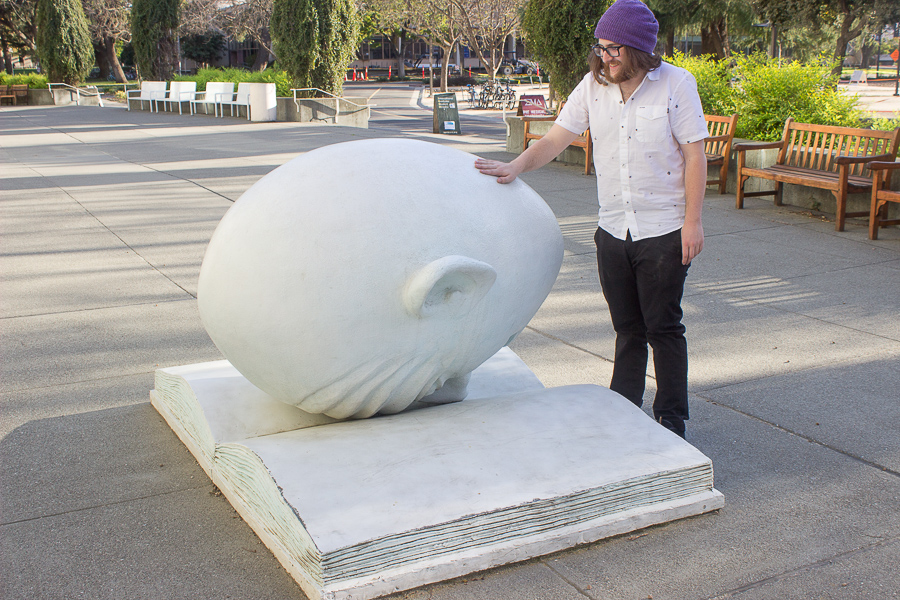
  1. Kiss the bookhead

If you disregard the last nine pointers and just kiss the bookhead, you are definitely guaranteed a successful quarter. Kissing the bookhead, in front of Shields Library, is one of the favorite Davis traditions. According to past Davis students, kissing the bookhead before midterm and finals will give you luck before an exam.


Summer break is just 10 short weeks away. Have a great Spring Quarter!


Written by: Sneha Ramachandran — features@theaggie.org

Unitrans celebrates 50 years of students serving students

TAYLOR LAPOINT / AGGIE

From anti-war beginnings, student grassroots movement is third largest transit system in California

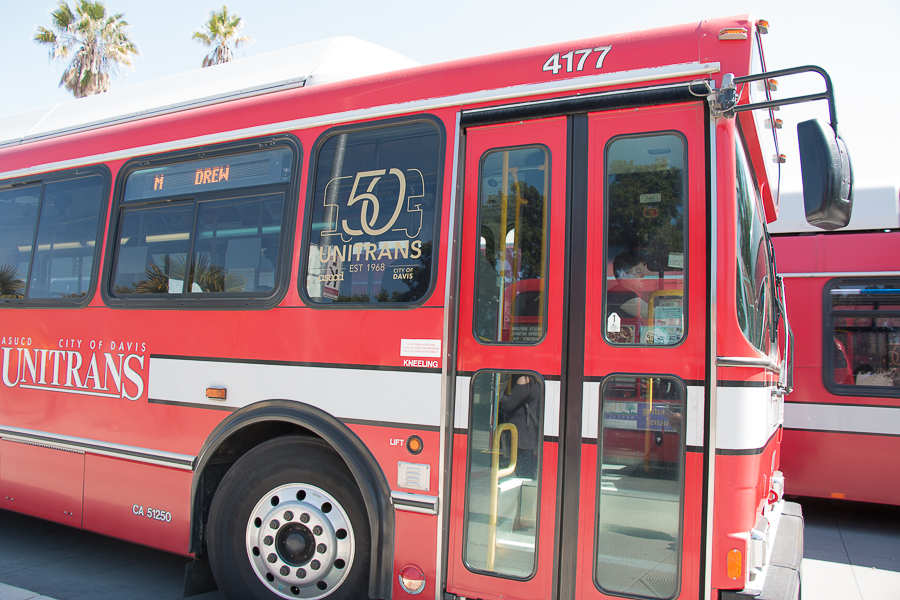
50 years ago, Unitrans began as an ASUCD executive ticket project to prove to administration the extent of student power and capability. Today, Unitrans looks back on its successes while also planning for the future.

In 1966, ASUCD presidential candidate Bob Black envisioned creating a student-run grassroots experiment to show the authority of student vision and voices. In the midst of the Vietnam War, Black won the executive ticket on an anti-war platform and a belief in student involvement as change-makers.

Two years later, in 1968, Black had taken his vision of creating a student-run bus service and turned it into a reality. Beginning with the purchase of two old red double-decker buses that were shipped to Davis from London and the hire of fellow student Tom Madoff as operations manager, Unitrans began to take shape as a UC Davis institution. Under Madoff’s management, the two old buses were brought up to code and student drivers were hired and trained.

On Feb. 28, 1968, Unitrans began with the original A and B routes. The original routes look very different from current routes today. In order to maintain Unitrans operations, in 1972 ASUCD and the City of Davis formed a partnership to expand Unitrans operations.

For the next decade, Unitrans continued to operate and was solely student-run until 1978, when the first Unitrans career staff was hired. Today, 15 career staff work for Unitrans, while the day-to-day operations remain controlled and operated by students.

In the late 1980s, UC Davis students voted to pay student fees to help Unitrans grow in exchange for allowing students ride for free.

“From there, ridership doubled,” said Jeffrey Flynn, the general manager of Unitrans. “It went from 600,000 to over one million by 1990.”

A staple of Davis life, Unitrans has grown to become the third largest transit system in the state, and remains in the top 20 in the nation. Today, Unitrans has 18 bus lines, 50 buses, employs 250 students and has remained an institution operated by students and for students.

The salaries of Flynn and other career staff members are paid for by the City of Davis while student fees are used exclusively for the continued maintenance of Unitrans.

“All student fees we get go back into student pockets,” Flynn said.

Students from all majors make up the Unitrans team, helping transport passengers around the city and campus.

Jack Breault, a third-year mathematics major, works as Unitrans’ human resources director. Over the last year, Breault has moved from the position of bus driver to a director.

“A big role I have in the company is in bringing new faces into Unitrans and helping old faces take on new responsibilities,” Breault said.

Third-year electrical engineering major Skye Ann DeVelasco works as a student mechanic and ad saleswoman. DeVelasco works alongside fellow student mechanics as well as professional mechanics. Along with rewarding career-building experiences for the future, DeVelasco has also found a tight-knit community of students at Unitrans.

“Shop also has a great group of people that can have fun together while we work and when we’re off the clock,” DeVelasco said.

With 50th anniversary celebrations underway, Unitrans can reflect on its successes while also planning for the future. In the mid-90s, Unitrans transferred to compressed natural gas in the hopes of making the institution more sustainable. Today, Unitrans plans to have 50 percent of its buses run on electric energy by 2022.


Written by: Ally Russell — campus@theaggie.org

Train fatalities in Davis

MICHELLE GORE / AGGIE

Victims struck by trains in close proximity to city

Recently, there have been several train fatalities and incidents in Davis along the Union Pacific Railroad tracks near Second and D streets, east of the Amtrak station platform. One of the victims was a 22-year-old UC Davis student, Krisada Ruampatarasindhu.

Piyaporn Eiamcharoen, who was Ruampatarasindhu’s friend, could only speculate on what happened since she is unsure of the exact details.

“We’re not sure how he was struck by the train,” Eiamcharoen said via email. “We were so shocked because we just met that night at Thai Canteen around dinner time before he left with his classmates for drinks. It was tragic and we cannot do anything for him. We had many questions following by. What had happened? Why was he there near the train track? What was he trying to do? Or was it perhaps anyone harmed him or robbery? His whole family flew here from Thailand and contacted us. Knowing his personality the best and believing in him, his family couldn’t believe too and that prompted us to investigate the scenes.”

Eiamcharoen, along with another one of Ruampatarasindhu’s friends, Paul Kasemsap, then investigated the scene on their own when they realized what had happened.

“We went to the accident spot where the police reported and were really surprised that such tracks are so closed to the neighborhood,” Eiamcharoen said. “It’s like you have the tracks in your backyard which is very easy to get access to and walk on the actual track. There’re only one-side fence between the track and Olive Dr. along to I80 but 2nd and the track, there is nothing. We thought he might try to walk back home in south Davis. He might try to walk back to Richard Blvd but might get lost and ended up at the train station.”

Kasemsap noted how close the tracks were from downtown, and he was shocked at its proximity.

“The night that he was struck by the train, me, Piyaporn and another friend just met him in the restaurant before the accident,” Kasemsap said. “We ended up finding that the train tracks looked surprisingly close to the neighborhood and it was short walking distance from downtown. It was like having a track in your backyard.”

They speculated on what could have happened since the fence they found by the tracks was not very sturdy.

“Another possibility that we assume is that he wanted to take the backroad by using Hickory Ln. towards Olive Dr,” Eiamcharoen said. “This route is even presented on the Google map. We checked this out but there is a locked gate on the fence across Amtrak station. It isn’t sturdy and we heard that some people can skip through the fence and use this shortcut to Olive. If this was a case, maybe he couldn’t find the way to Hickory Ln. and walked along the fence on the railway to find the connecting lane. You can get lost easily because it was dark.”

As the pair noted that the fence did not seem viable, Eiamcharoen prompted that this issue should not be overlooked.

“We hope the fence is stalled much sturdy than it is now and permanently shut the gate to Hickory Ln. to prevent anyone to use it,” Eiamcharoen said. “More important thing is that the fence is required along the city line and the track, especially to cover the downtown area where a lot of people commute day and night. The city should increase our safety surrounding the train station and the railway because they are just lined to the heart of Davis, just 50 feet away from the bars and pubs. That is the big deal. We don’t want to see more people take a wrong turn and end up at the railway again.”

Paul also wishes that the city can take preventative measures.

“We hope that the city can provide some measures to prevent people from getting close to the tracks,” Kasemsap said.

Justin Jacobs, the director of media relations for Union Pacific Railroad, elaborated on the investigative process the company takes.

“In regard to when incidents happen at specific crossings, the way those are handled is that our Union Pacific Police Department works in coordination with the local police departments,” Jacobs said. “They basically conduct investigations around what happened during those incidents. Unfortunately, at this location in Davis, we have had some incidents both recently and in the past. Our goal is to get those incidents down to zero and the way we do that is to work with local municipalities, as well as raise safety awareness all across the railroads.”

Nancy Sheehan-McCulloch, the California Operation Lifesaver state coordinator and executive director, explained how the nonprofit organization is taking steps to reduce train fatalities like this in the future. The organization is a safety education and awareness program dedicated to ending collisions, fatalities and injuries at highway-rail grade crossings and on railroad rights of way in the state of California.

“Every three hours, a person or vehicle is hit by a train,” Sheehan-McCulloch said. “The whole United States is impacted and California has many of those incidents as well. It is an ongoing challenge that we face everyday. One of the things we can do to prevent train collisions is to raise awareness. We are finding more and more that people are unaware of the law around railroad tracks, and that they need to know that railroad tracks are private property. You must always obey the law because trains have the right of way. It is more about raising awareness among the community and the public so that they understand what they need to do to be aware and alert around railroad tracks.”


Written by: Stella Tran — city@theaggie.org

Food insecurity a UC-wide issue

44 percent of UC undergraduates experience food insecurity, study shows

A recently published national survey conducted by the Wisconsin Harvesting Opportunities for Postsecondary Education Lab found that, of over 43,000 students surveyed from 66 institutions across 20 states, 36 percent of university students said they were food insecure at the time of the survey.

The U.S. Agricultural Department defines “food insecurity” as a reduction in the amount of food a person consumes or disrupted meal patterns due to limited resources. It is also defined as a reduced quality of or variety in one’s diet.

Food insecurity is extremely prevalent on UC campuses. About 44 percent of undergraduate students and 26 percent of graduate students “reported having experienced food insecurity,” according to the 2017 Global Food Initiative: Food and Housing Security at the University of California. Additionally, it outlines a plan of action, which includes “establishing a basic needs center” like The Pantry at UC Davis.

While the Editorial Board commends the necessary function The Pantry performs on campus, we recognize that it’s a temporary solution for a systematic problem. The Pantry has a limited supply of resources and must ration the number of items students can take, and other students might not even know about the purpose or location of The Pantry.

These issues in the UC system must be addressed with a multifaceted approach tackled at all angles by individuals in student government, university administrators and the UC Office of the President.

Addressing issues of food insecurity is one noteworthy platform of newly elected ASUCD President Michael Gofman and Vice President Shaniah Branson. They promoted the idea of a “Pantry On-Wheels,” which would supply on-campus centers with movable carts stocked with food items. We fully support this idea and believe Gofman and Branson should be held accountable for making this idea a reality.

Chancellor Gary May recently convened a task force on Student Food Security. All too often, administrators create committees that prove ineffective and irrelevant shortly after their publicized announcement. We urge the student body to also hold the chancellor accountable and maintain the university’s prioritization of food insecurity as a critical issue on campus.

Finally, the UC Office of the President can and should continue to address the issue of food insecurity in the UC system by funding resource centers, promoting programs such as CalFresh and expanding programs like Fruit & Veggie Up!, which distribute free fresh produce to students.

California has one of the world’s largest economies and is a lead producer of fruits and vegetables. It’s unacceptable that roughly a third of UC students don’t know where their next meal will come from or have to make the limited number of items they may acquire at The Pantry last for long periods of time. Food insecurity directly affects students’ health and well-being, and universities must address such issues if they are genuinely invested in the success of their students.


Written by: The Editorial Board

Say his name: Stephon Clark

CAITLYN SAMPLEY / AGGIE

Protests erupt following shooting of unarmed black man

On March 18, 22-year-old Stephon Clark was fatally shot by two Sacramento police officers when reaching for his cell phone, which the officers believed to be a gun.

This marks yet another black man who was killed as a result of police brutality and, in light of the ongoing investigation, it appears that the Sacramento Police Department would be content if this case joined the other five Sacramento cases in which a black man was shot and killed with no questions asked.

This time is not business as usual.

Protesters flooded all areas of Sacramento following the shooting that took place in Clark’s grandmother’s backyard, leaving no room for the incident to be ignored.

Blocking I-5, protesters demanded that passing cars say his name and not allow Clark’s case be diminished to just another black man on the list of police victims.

A march that began at Sacramento City Hall made its way to the Golden 1 Center, where the Sacramento Kings were scheduled to play. Protesters blocked the entrances to the game, leaving attendees outside. This occured not just once, but twice, putting the Sacramento Kings in a tough position. Faced with the echo of chants outside and various Kings players vocalizing their discontent with the franchise’s reaction, Kings owner Vivek Ranadive addressed the crowd and expressed the teams solidarity with the protesters. The team then decided to join the Black Lives Matter movement in the Build. Black. Coalition.

The Editorial Board commends the actions taken by protesters who have refused to let this national issue be swept under the rug when an unnecessary 20 rounds were fired at an unarmed man.

Clark’s murder is a reminder that these injustices are not just happening in Baton Rouge where the police officers who shot a pinned-down Alton Sterling got a slap on the wrist instead of a sentence. They’re also taking place right in our backyard, whether or not they are covered on the front page.

The urgency sweeping the diverse streets of Sacramento is much-needed and well-executed. Protests taking place at city hall meetings, the mayor’s office, sporting events and highways are no different than the demonstrations held on the steps of the Memorial Union. The Sacramento community is addressing issues that match a growing frustration toward a police-exempting America.

Despite what the White House says, this is more than just a “local issue.” The Editorial Board encourages those actively protesting to maintain peaceful relations, continue to seek area of influence and pressure policymakers to effect change.

The Editorial Board asks you to say his name.


Written by: The Editorial Board