55.4 F
Davis

Davis, California

Sunday, December 21, 2025
Home Blog Page 552

Sexual violence and the culture of manliness: Social reckoning aside, male emotional repression should be reexamined

ANTHONY EASTON [(CC BY 2.0)] / FLICKR
Cultural norms of behavior reveal more problems than they fix

In the movie “I Love You, Man,” Paul Rudd plays a newly engaged real estate agent who has trouble finding a best man for his wedding due to a lack of male friends. In the vein of comedy, Rudd’s character faces ridicule from his coworkers (and his fiance’s friends), kickstarting his search for the ultimate male buddy. We laugh as Rudd bounces between men, who are introduced by sympathetic acquaintances and family members, only to find little connection with them. The comedic value of “I Love You, Man” rests on the fact that men are less likely than women to maintain emotionally open relationships with their same-sex friends — and more likely to have fewer friends in general.

According to Shao Li, a doctoral candidate in counseling psychology at UC Davis, this might reflect how men view their friendships in the context of social norms. Male friendships, Li observes, are often more “like a partnership, rather than [a safe place where] we can talk to about ‘how I feel so hurt today’ or how ‘that person hurt my feelings today.’”

Li, who is writing his dissertation on traditional concepts of masculinity, has seen ample differences in how the average man and woman deal with emotions.

“Stereotypically speaking, males are less likely to express their feelings,” Li said. “For females, it’s at least more socially acceptable to express their feelings. Sadness is expressed kind of differently. Females tend to express sadness directly. Sad is sad, nothing else. Males tend to express sadness as if there’s anger, rather than sadness.”

That the average man has less emotionally satisfying friendships than his female counterpart — and is spoofed for it in movies —  is noteworthy for a few reasons. One, it reflects social norms of masculine and feminine behaviors, as Li suggests. And two, it reveals a cultural phenomenon in which men stay fortified against emotions in order to maintain images of power.

The movie “I Love You, Man” isn’t the only cultural icon that elicits the concept of male emotions. In the previous season of “Big Brother”  — a reality show famous for filming its contestants 24/7 —  there were two men who offered a perfect case study on masculinity.

Cody Nickson, a former Marine, embodied the muscle-bound and chisel-jawed hunk. His stoicism was notoriously difficult to engage with, alienating nearly everyone on “Big Brother.” When faced with dismissal from the show (and even a near-breakup with his girlfriend), Nickson barely grimaced.

Mark Jansen was also a muscley fellow — and a personal trainer to boot. Yet his personality belied his traditionally masculine exterior: He wasn’t afraid to show his emotions on live television. When Jansen realized his friends were leaving the show, he cried in front of the millions watching at home — and didn’t seem to care.

Two men, two different ways of showing emotion. One was apathetic and stone-faced, a tough military veteran who wouldn’t cry if his life depended on it. The other was a big teddy bear, a man able to show his grief and wear his emotions on his sleeve.

It was, admittedly, shocking to see Jansen bawl on TV. But where does this shock come from? We know that social norms teach boys and men to restrain their “weaker” emotions like Nickson in “Big Brother.” Meanwhile, the inner Jansens are shunned and buried. Sad emotions are reserved for women, so the mindset goes. Any slip-up, as we see with Jansen, is so incredible because it’s both rare and seemingly hostile to the ideal version of manliness.

The repercussions of this masculine apathy may be more pressing than we realize. Male behavior has been under intense scrutiny lately. The 2016 election revealed the widest gender gap between candidates in modern election history, with (white) men swinging rightward in droves. Many famous and powerful men have been exposed as sexual harassers and abusers, ranging from movie moguls like Harvey Weinstein and Kevin Spacey to Charlie Rose, the “60 Minutes” icon. Traditional power structures are eroding and new initiatives are introducing more women to fields like STEM, where men have generally dominated. The Women’s March following Donald Trump’s inauguration demonstrated a renewed vitality among women for women. The specificity here (“women’s” and not “men’s”) should be noted.

If men are under the microscope for bad behavior, it’s reasonable to ask where that behavior originates and what effect it has on society. What do we make of a culture that, while allowing men to engage in such egregious abuse and dominance at the expense of women, has a very real issue with the way men are expected to remain emotionally stunted while women are allowed to release their emotions without consequence?

The same culture that has historically preserved male dominance — in certain lines of work, in earnings, in sexual expression — has itself cultivated a system of male emotional repression that’s severely damaging. Sexual assault and harassment may be linked to this facet of masculinity.

“In traditionally masculine ideologies, [men] care about power, dominance, assertiveness and ambition,” Li said. “So if you possess more resources, that means you’re more powerful, you’re more deserving and you’re more manly” in this system.

According to Li, sex is one of these key resources that plays a role in the culture of masculinity. Objectification of women is another.

“It’s like they’re not human,” he said, speaking from the perspective of abusive men. “It’s like they’re my personal property, so I can take them. I can use them whenever I want, however I want. And that makes it even worse.”

Of course, men in power aren’t the only examples of a culture that needs to change.  While it’s hard to pinpoint the number of normal men — those outside the millionaire suites that come with Hollywood and media fame — who’ve harassed women, it’s easy to reference social expectations that may influence how some men, powerful or otherwise, act toward women. Could emotional apathy be one of the culprits?

Some blueprints of manliness may offer clarity. Over at dictionary.com (an old favorite that’s been cited before), “manly” is defined as “having qualities traditionally ascribed to men, as strength or bravery.” “The Art of Manliness,” a lifestyle website catering to men, offers readers advice on dealing with the fact that “modern men are confused about their role and what it means to be an honorable, well-rounded man.”

Beyond the questions raised by how men are now “confused,” these definitions come at a cost. Social expectations of masculinity — aloof, unemotional, angry, violent — coupled with such ingrained dictionary entries are problematic at best. Men have historically used biological strength as a power-enabler, and social consequences ranging from masculine self-interest to violent behavior have been linked to it.

“Manly” men resort to anger instead of sadness, face timidity with violence and balk at showing weakness. “Real” men are Nicksons instead of Jansens. Is it any wonder that sexual violence has been so rampant in such a culture of repression?

There are welcome signs of a changing attitude. A former chief of police in Newtown, Conn. — site of the Sandy Hook massacre in 2012 — recalled the mental strain on his police officers in the immediate aftermath of the shooting, yet lauded the cultural shift within police departments in coping with tragedy: “It used to be ‘grab a few beers and suck it up.’ Now, we get help.”

Organizations like the Vera Institute of Justice in New York City have dedicated funds for researching the emotional effects of violent crime around young men of color. Helping Men Heal, a nonprofit covering a swath of the Pacific Northwest, provides guidance for men dealing with trauma.

Yet awareness must spread to include not only men accustomed to traumatic experiences or youth exposed to the violence of inner cities, but to men who encounter an expectation of emotional stunting in their day-to-day lives. According to Shao Li, these masculine ideals can even be damaging to mental health.

“For men, it’s not healthy,” Li said. “It’s not good for their mental health, it’s not good for their behavioral health. It’s especially not good for a lot of things. So it requires more work and also more acceptance from both sides, females and males. We both need to be more accepting of males expressing their vulnerability and not to take it as a symbol of weakness.”

If the mental health of men can be affected by social expectations, then we should be willing to explore options to mitigate both the expectations and their effects. Jolena Pacheco, my former colleague at The Aggie, lamented these very problems in a column suggesting that the lack of resources for men in emotional turmoil is a detriment to college campuses and society at large.

Even so, the so-called Harvey Weinstein reckoning has already made its mark. American society is witnessing a mini-revolution that will have profound repercussions on workplace relations, gender relations and sexual equality. This is an admirable step for a society built on imbalanced power structures. The culture of emotional repression needs to change with it.


Written by: Nick Irvin — ntirvin@ucdavis.edu

Disclaimer: The views and opinions expressed by individual columnists belong to the columnists alone and do not necessarily indicate the views and opinions held by The California Aggie.
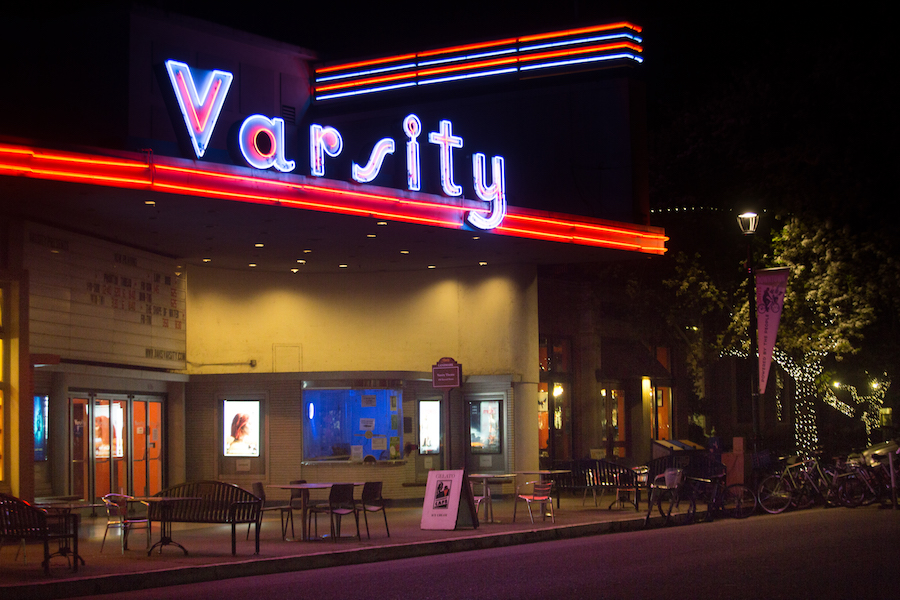
Varsity Theater: A Davis Classic

JORDAN CHOW / AGGIE

History behind neon lights explained

Bringing a unique selection of film and theater entertainment to Yolo County since its opening in 1950, the Varsity Theater is a staple of Davis culture. The first film to play at the Varsity Theater on June 9, 1950 was “The Eagle and the Hawk,” thus launching the start of a very long and continuing history for one of downtown Davis’ most recognizable landmarks.

“My grandmother actually worked here in the ‘50s as a teenager,” said 12-year Varsity Theatre employee and lifelong Davis resident Whitney Martinez.

At the time of its opening, the Varsity was considered the “newest, most modern theater in the Sacramento Valley,” with its angular architecture, bright neon letters and chrome detailing, according to an old theater flyer. After the theater’s popularity began to decline throughout the ‘60s and ‘70s, the Varsity was ultimately remodeled in 1992 as a performing arts and conference center.

“Growing up in the mid- to late-’90s, [the theater] was a playhouse,” Martinez said. “When I got here in 2006, we remodeled again.”

The 2006 relaunch transformed the Varsity back into an old-fashioned movie theater, exclusively featuring a unique selection of independent and foreign films. With the help of a programmer, Martinez and theater owner Sinisa Novakovic work together to figure out what films students and the Davis community hope to see and how certain films have performed in markets similar to their own.

“Varsity is completely different from other theaters in the sense that they have those independent films that most people may not know about,” said third-year cell and molecular biology major Frida Melgar. “And it’s right by Mishka’s Cafe, so you can totally just bring your cup of coffee with you to the movies.”

“It definitely seems like a more unique and creative experience,” said second-year managerial economics major Jessica Rasanayagam.

Connected to the neighboring gelato shop, Icekrimski Cafe, the Varsity is home to two auditoriums. Martinez says awards season is the busiest time of the year. In the past year, the Varsity has managed to bring critically acclaimed films such as “Lady Bird,” “La La Land,” “Three Billboards Outside Ebbing, Missouri,” “Shape of Water” and “Phantom Thread” to its screens.

“My biggest hope for the future would be to add more screens, especially during awards season,” Martinez said. “If only we had more screens, we could have films like ‘Call Me By Your Name’ or ‘I, Tonya.’”

Coming soon to the Varsity Theater are “I, Tonya,” “Isle of Dogs,” “The Party” and more. For more information, visit the theater’s website.


Written by: Sydney Odman — arts@theaggie.org

Migratory songbirds, genetics, climate change

JOE ELLIS / COURTESY

Study part of broader Bird Genoscape Project led by UCLA

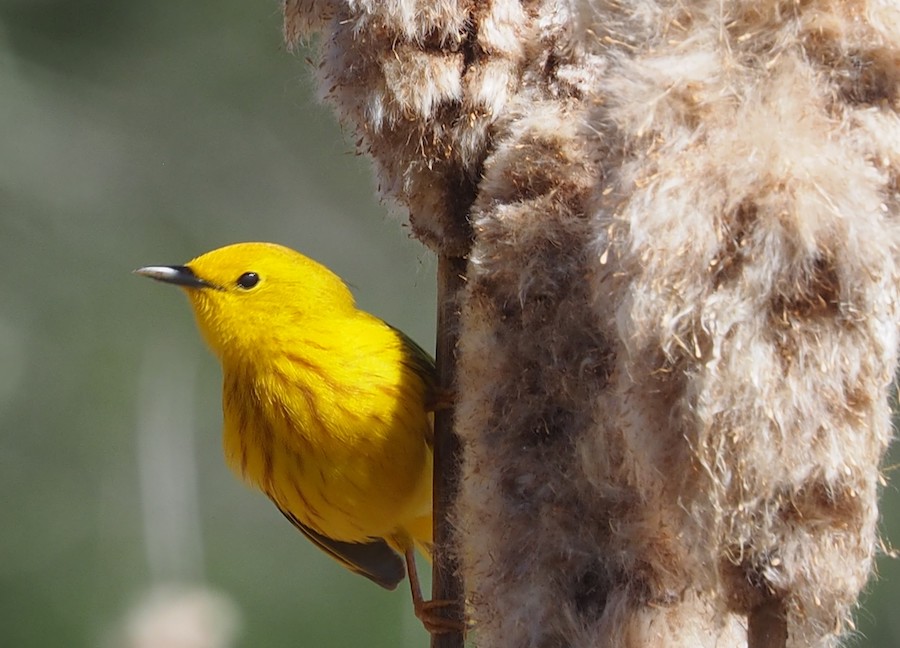
An article published in January 2018 connected genetic variations in migratory songbirds with population changes due to climate change. UC Davis evolution and ecology postdoctoral scholar Rachael Bay is the lead author of the study into a songbird common throughout the Americas, the yellow warbler.

Yellow warblers prefer to live near rivers and streams, eating insects and making nests in trees. The birds can travel up to thousands of miles between wintering grounds in South America and summer breeding areas in North America, requiring adaptations to multiple types of environments to remain competitive. This study of the yellow warbler shows vulnerabilities to climate change and is an extension of a larger investigation by the Bird Genoscape Project at the Center for Tropical Research at UCLA, which is currently mapping the migratory patterns and genetic variation of many birds across the world.

“The way we extended this analysis is to ask, ‘Well, if these birds are adapted to these types of environments now, what’s that going to look like in the future?’” Bay said. “For example, if we have birds in the Central Valley that are locally adapted to the specific environment that the Central Valley has been experiencing over the last hundred years, we know that we’re getting drier and hotter here. Are those birds going to be maladapted in the future? We were able to put a number on how maladapted birds would be and look at the places across the US where this species would be more and less adapted to their future conditions.”

Areas of greatest genomic vulnerability — the mismatch between what climate the bird’s genes are adapted to and what the predicted climate will be — include areas of the Rocky Mountains and, to a lesser extent, around the Great Lakes. While evolution and genetic variation between birds has been an interest for songbird and genetic researchers for years, recent advances have allowed investigations like Bay’s to flourish.

“You could use DNA from feathers to trace the breeding origin of migrants captured anywhere along the annual cycle — from wintering areas in South and Central America to somewhere along their migratory journey,” said Kristen Ruegg, the co-director of the Bird Genoscape Project at UCLA. “We didn’t have the tools to be able to do that at the resolution that was useful for conservation and management until about five years ago.”

Genetic variation was calculated from 229 samples of yellow warbler feathers or blood by comparing the samples to the bird’s fully sequenced genome. H. Lisle Gibbs, a professor in the Department of Evolution, Ecology and Organismal Biology at Ohio State University, contributed a large amount of songbird samples from a collection his laboratory had been saving for a meaningful investigation.

“Our samples came from breeding birds at a particular site — males that were defending territories and females that tended nests — because we wanted a sample of the DNA from birds at a particular location in the environment,” Gibbs said in an email interview. “The idea was that, if there were genetic differences (genetic tags) that characterize birds from location x, then later, if birds with this tag were sampled while they were migrating or were resident on their wintering grounds, we could infer that they were from the population at location x.”

The samples were collected from 21 locations across the Western Hemisphere by university researchers, bird monitoring stations and conservation organizations.

“By knowing what genetic profile a specific population may have, we can literally track where those birds go throughout the year,” said Ryan Harrigan, an assistant adjunct professor and assistant researcher at the Center for Tropical Research at UCLA, in an email interview. “A good way to think about it is by comparing it to forensics; humans and birds alike have unique DNA signatures, and by collecting DNA from various locations, we can re-trace where those individuals have been. This is an essential part of conservation of these migratory animals, because we need to think about management strategies across their whole range (breeding, stopover, and wintering locations), and these regions often cross international borders.”

Of the 25 genetic vulnerabilities to climate change calculated, Bay’s analysis found yellow warblers were most vulnerable to changes in precipitation, followed next by changes in temperature and vegetation levels. The team hypothesizes the vulnerabilities to precipitation may be due to the songbird’s diet of insects, whose life cycles and population densities are closely linked to moisture levels.

“It seems like, for [yellow warblers], warming isn’t actually as much of an issue as precipitation,” Bay said. “For whatever reason, their genetics seem to be tightly linked to precipitation patterns. Places where precipitation will change a lot may be the hardest hit by climate change.”

The new climate vulnerability tools will help research and conservation efforts to protect birds around the world.

“It’s a proof of concept of how you can incorporate the capacity for evolution into models of climate vulnerability, which can help species that are threatened or endangered,” Ruegg said. “It can help you refine your understanding of where the greatest needs are in terms of conservation and management.”


Written by: George Ugartemendia — science@theaggie.org

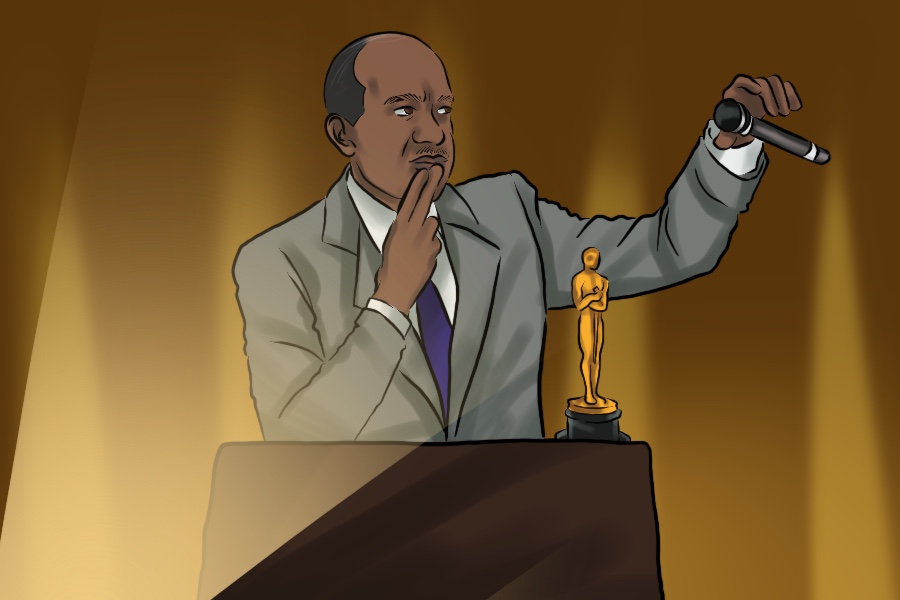
Humor: And the Oscar goes to… Gary May in that Christmas video?

CAITLYN SAMPLEY / AGGIE

With just six words in a 51-second video, Gary May takes home the big trophy

The Academy Awards have always had controversy around them in terms of nominations. Snubs, undeserving rewards and so on get audiences and filmmakers heated.

But no one can deny that Gary May just won the Oscar for Best Actor in a Feature Film fair and square.

Perhaps you recall the famous Christmas card video that UC Davis released on Dec. 17 to wish Aggies a happy holiday. Mainly, this video circled around three students missing the bus, but the scene-stealer was Gary May, commanding a Unitrans bus with his wife.

After performing in a full-length film (51 seconds long, as they always are), Gary May was shocked when he received the news via carrier pigeon that he was being considered for a trophy of a tiny, naked, golden man.

“Lil’ ol’ me? An Oscar?” May said, clearly blushing. “I mean, first the National Academy of Engineering and now this? Tickle me pink!”

Other actors who were nominated knew that they had no chance once they saw Gary deliver the line “Engage” at the end of his film.

“That man… is an acting GOD,” Tom Hanks said, as he boxed up every award he has ever received and sent them all to May.

Gary May utilized method acting in order to get into the headspace necessary for this iconic role of “chancellor commanding bus.”

“First, I became a chancellor so I could really understand the kind of authority behind my lines,” May said. “You could say that I have been training since I was just a boy for this role,” he giggled.

Gary May also trained to be a bus driver for the video, but he just couldn’t get the hang of it, so they had his wife come in to get the job done.

“Sometimes you gotta bend the knee and give the cool stunts to someone else,” May said. “A good actor knows when they are limited, and I just can’t drive a bus.”

When asked about the famous line “Engage,” Gary May revealed a teensy weensy secret that shook the entire academy.

“I improvised that line!” May said. “‘T’was all me and my creative brain. We needed a closer, and I like to pepper in ‘Star Trek,’ so it worked perfectly. Did you know I like ‘Star Trek?’”

After the entire audience nodded that they indeed knew of his fandom alliances, Gary May hoisted the trophy above his head and gave a beautiful acceptance speech.

“I’d like to thank The Academy, UC Davis, science and my greatest acting inspiration, Will Wheaton!”

With that, Meryl Streep and Denzel Washington gave him a standing ovation, throwing both money and their previous awards toward the man who deserved them more.


Written by: Olivia Luchini — ocluchini@ucdavis.edu

(This article is humor and/or satire, and its content is purely fictional. The story and the names of “sources” are fictionalized.)

UAW and UCOP to start collective bargaining in March

BRIAN LANDRY / AGGIE FILE

Preview of UAW, UCOP negotiations

The UC Student-Workers Union UAW Local 2865, the labor union that represents student workers at UC Davis and in the UC system, will begin bargaining for a new contract in March of 2018 following the expiration of its current contract. UAW has listed a total of 12 demands.

Amara Miller, a Ph.D. student in sociology and head steward of UAW Local 2865, spoke about the bargaining process that will take place between the UC and UAW.

“Essentially how it works with bargaining is that we have a group of graduate students who are democratically-elected members that serve as bargaining representatives for our union,” Miller said. “These bargaining representatives then negotiate with administration to determine the days and times that we actually meet. We usually rotate between every single UC campus and we have bargaining sessions with admin on those campuses as we negotiate our new contracts.”

Speaking to the ability of the greater Davis community to support UAW, Miller explained the concept of open bargaining.

“Open bargaining means that when we go to the table to negotiate with UCOP, all our members of our bargaining team and all [union] members and even community members who have a stake in the bargaining — for example, undergraduates — are welcome to attend,” Miller said. “Everyone who would like to come can come to the meetings and see what goes on in those meetings and also participate.”

In 2014, UAW was successful in negotiating a contract that provided substantial gains for workers covered under the union. Miller mentioned some of the benefits of the 2014 contract.

“We were able to get a 17 percent wage increase over four years that was higher than the cost of living to try to equalize that pay,” Miller said. “It is still not up to par with comparable universities and that is going to be a big ask with this bargaining contract as well. We also were able to get additional health benefits for dependents and access to all-gender bathrooms, which benefit not just graduate students but undergraduate students as well. We won a pretty substantial increase to the child care subsidies that graduate students have access to which is very exciting for graduate student parents.”

Duane Wright, a Ph.D. candidate in the sociology department and the previous unit chair for the local unit of UAW during the last contract negotiations, talked about the importance of awareness and involvement during collective bargaining.

“The most important part was organizing outside of the bargaining room, because there is an inherent contradictory or antagonistic relationship between workers and management,” Wright said. “Management want to get the most out of workers and so it’s not like coming up with a clever argument is going to get you a better pay raise. Rather, you actually have to put public pressure on them for them to do the right thing.”

Emily Frankel, a member of UAW unit at UC Davis and a Ph.D. student in languages and literature, mentioned the significance and importance behind the demand for housing.

“These demands were not just voted on here on this campus, these are UC-wide demands listed in chronological order of importance,” Frankel said. “Across the UC universities, access to affordable and well-maintained housing comes up as number two. [The demand includes] providing financial support to offset rising costs of housing across UC campuses and improving availability and affordability of UC housing.”

Ellie White, a member also working with Frankel on the issue of housing while pursuing a Ph.D. in civil engineering, explained the issue of graduate student housing. Solano Park, which is essentially the only housing provided for graduate students by the university, is set to be demolished in 2020 and housing alternatives are not up to par, according to Frankel and White.

“The houses at Orchard Park are getting old, so the university wants to renovate these places,” White said. “The issue that came up back in 2013 and 2014 was that the UC wanted to replace these houses with luxury housing. The same model that we see in West Village, for example, they wanted to apply to family housing. These are students who […] are single mothers and single fathers and they are living on the very little stipend that the UC gives to its teaching assistants and graduate student workers.”

Frankel commented that the university does not publicize its budget, so graduate students living at Solano Park do not know if their rent is being used in their best interest.

“In Solano Park, there are close to 300 units here and if you take into consideration the rents that are being paid, it is $2,800,000 that the university is collecting a year from graduate and undergraduate families, give or take, because there might be vacancies and people moving in and out,” Frankel said. “Solano Park has already been paid for. We do know that obviously that money needs to go to maintenance as well as the salaries of the people who are working at Solano Park. However, a good million and a half of that money is probably not needed for Solano Park. The question is, where is the money going that renters are paying in to the university — renters who many of whom work at the university and attend school here. We know that the money is going into university reserves.”

Describing the way UC Davis uses most of the money it receives from renters in Solano Park, Frankel is concerned about the possibility of private ownership of graduate student housing.

“[Administration] uses that money [from the university reserves] to create other housing projects with third-party vendors which is essentially what is going to happen here at Solano Park and Orchard Park as well,” Frankel said. “Once these housing projects are in the hands of developers, we have to really question how sensitive developers are going to be to the lives of students who are working and going to school at the same time and who have families.”

White questioned UC Davis’ true commitment to diversity after hitting obstacles with administration when asking about subsidizing rent for graduate students.

“If UC Davis is truly committed to having  a more diverse population, then they would pay us a living wage and they would make affordable housing accessible for us,” White said. “But, with their actions, they are telling us ‘We don’t want your kind here.’ What I see is the university sending a clear signal of ‘You’re not welcome here, we want the people who can afford West Village.’”

Miller commented on the reason that she believed the greater Davis community should care about these upcoming negotiations.

“Our working conditions are the learning conditions of undergrads and I think this is something that is really vital to emphasize,” Miller said. “All of the work that our members due is really vital to the success of undergrad students in this university. Graduate students teach a lot of instructional hours in the UC. I think it should definitely matter to undergraduates, because if we’re underpaid, and we’re dealing with depression, and we don’t have access to treatment, and we don’t have childcare and we have to bring our children to work, these all impact undergraduate students and the quality of the education they receive.”

Miller welcomes UC Davis students and community members who want to support the UAW to come to open bargaining meetings. The location and time of these meetings will be announced on the UAW local website and through social media.


Written by: Sabrina Habchi — campus@theaggie.org

The NBA’s College Question

0
PUBLIC DOMAIN

Lavar Ball’s recent escapades rehash league’s treatment of draft eligibility

Lavar Ball, the flamboyant father of Los Angeles Lakers rookie point guard Lonzo Ball, proclaimed to the world this past December of his plans to launch a basketball league dedicated to showcasing the nation’s top high school graduates who want to forgo playing in college. According to a statement that he shared with SLAM online, Ball is calling this league the Junior Basketball Association. It will be sponsored by his basketball apparel company, Big Baller Brand, and players who participate in his league will have the chance to be paid up to $10,000 a month.

As the Big Baller Brand CEO, Ball has been known for his opinionated personality and often unusual approach to managing the basketball careers of his three sons. Soon after his JBA announcement, Ball decided to pull both of his younger sons from school so that they could play professionally in Lithuania. He removed his middle son, LiAngelo, from UCLA after the 19-year-old was detained for shoplifting during a team trip to China. Ball’s youngest, 16-year-old LaMelo, will also be forfeiting his collegiate eligibility by going pro overseas.

Do not be alarmed; this is not just another clickbait piece detailing Lavar Ball’s unconventional antics in order to satisfy your cravings for sensationalist reporting. Instead, Ball’s dream of a Junior Basketball Association plugs in to a much broader discussion about an issue that the NBA has been struggling with for decades: the rules of draft eligibility.

NBA commissioner Adam Silver, in his annual press conference before the NBA Finals this past June, admitted that “a change” to the minimum age requirement in the NBA’s draft eligibility rules is needed. Silver, although he did not completely shut down the possibility of lowering the age minimum, is with the belief that the minimum draft eligible age should be raised to at least 20 years in order to appease both NBA teams and collegiate athletic directors who are unhappy with the current guidelines.

Silver’s position is understandable. By raising the age minimum above 19, the commissioner hopes to see more young stars staying at least an extra year at their respective collegiate programs. To the NBA coaches and general managers who are critical of the current requirements, an additional season of college experience, in their opinion, will allow players to enter the draft better prepared to play at the professional level. They believe that the current one-and-done college standouts are not ready for the NBA.

College coaches and athletic directors share the same position. From their perspective, there are several benefits that coincide with forcing players to stay an additional year. A primary argument that proponents of raising the draft eligibility age make is that it will allow student-athletes to be more focused in the classroom and gain motivation to continue their education beyond just one year. But the bigger concern for AD’s lies in the on-court product rather than academic achievement. With high-caliber players staying in the college game longer, the excitement and attractiveness of play would improve across the board. Programs will also experience more sustained success from year-to-year, likely leading to increased attendance and higher television ratings, which ultimately bolsters the profits for the college athletic programs. None of those profits will go to the athletes themselves.

Ball’s JBA, on the other hand, represents the opposing school of thought that favors a lower minimum age requirement with an option for players to get paid for their talents right out of high school. Ever since the NBA changed its draft eligibility rules in 2007, critics have disagreed with requiring players to be one year removed from their high school graduations. This effectively forced top high school prospects to either play in college for at least one year or search for limited professional opportunities outside of the United States.

The vast majority of players choose the college route, and for good reason. Playing for a well-known, highly televised college program gives young players the most exposure to NBA scouts while competing against the nation’s best. The college game, boosted by an exciting, single-game elimination postseason, is extremely popular during the month of March. Cinderella story upsets and the passion of fan-bases across the country is what helps fuel the March Madness fire. Who among the most recent crop of basketball talent would not want to be a part of the NCAA tournament atmosphere?

The truth is, there are plenty of recent high school graduates who are less inclined to continue their education and would rather seek financial compensation for their abilities on the court. Why pursue a degree when you know you could get paid doing something that requires no degree at all? Nevertheless, NCAA basketball has become the NBA’s primary development league without costing professional basketball a dime.

The NCAA, on the other hand, actually makes a quite a bit of money off the product put together by its student-athletes. In April of 2016, the NCAA extended its March Madness multimedia deal with CBS Sports and Turner Broadcasting to 2032. The deal totals $8.8 billion over eight years (2024 to 2032), meaning that the NCAA stands to gain just over one billion dollars per tournament on top of merchandising and ticket sales. In the announcement of this deal, the NCAA made the assurance that “more than 90 percent” of the deal’s revenue will be “used to benefit college athletes” in some way, shape or form.  

Even ignoring the outcries from critics who find the NCAA’s supposed commitment to re-investing in student-athletes dubious, that still leaves the NCAA with a cool $100 million profit –– more than enough to provide some direct monetary compensation to its athletes. Indeed, student-athletes are given generous scholarships that cover the vast majority of tuition and housing costs. But from an economic standpoint, many student-athletes find that the opportunity cost of forgoing the wages they would be making at the professional level is too high. Given the chance, many of these athletes would much rather go pro and get paid than remain an amateur, spending time in a classroom working toward an unwanted degree.

Once again, enter Lavar Ball and his Junior Basketball Association. It may not seem like the most feasible idea given Ball’s history with wild proclamations and relatively limited business experience, but one can not deny its appeal. High school hoops are already receiving more national television coverage than ever before, so the idea of freshly graduated players participating in a highly competitive league ran by one of the country’s most eccentric celebrities is not a ridiculous concept. If Ball could actually pull together the funding to make this league happen, it does not appear that securing a television deal would be difficult to accomplish.

Regardless of whether this league comes to fruition or not, it is already providing the framework for a future solution to the NBA’s college question. Ball’s brainchild has the potential to garner a robust viewership, one that could rival that of the NBA’s G-League. Formerly known as the NBA Development League (or D-League), the rebranded G-League –– named because of a sponsorship deal with Gatorade –– is the NBA’s official minor league. Currently, each of the 26 teams in the G-League is affiliated with one of the 30 NBA franchises. Rules do not prohibit 18-year-olds from being drafted into the G-League, but it is certainly a rarity for players to enter the minor leagues directly from high school.

The G-League has experienced significant changes and growth since it was founded in 2001, and in many instances it has come a long way. In the league’s most recent attempt to increase viewership and exposure, it finalized an online streaming media rights deal with Eleven Sports last month. But despite all of the developments, the G-League is still far from being a significant developmental alternative to the college game. For that, the NBA’s minor league will need significant financial restructuring and expansion so that it will be able to take on the costs of bigger salaries and television contracts more comparable to the NBA standard.

The way things stand at this moment in time, the JBA, if set up properly, could easily compete with the G-League by offering a superior product. Basketball lovers would salivate watching the young, untamed stars of tomorrow’s NBA compete against one another on a nationally-televised stage, promoted by Lavar himself. Players would be pleased to be compensated for their talents without being weighed down by the NCAA’s strict rules and regulations.

This change to the basketball status quo is by no means perfect. It might be unlikely that a league like the JBA will produce players that are more ready to enter the NBA than their college counterparts. On the other hand, the concept of a semi-professional league for high school graduates could become so popular that its existence becomes legitimately detrimental to NCAA basketball, maybe not at big conference schools, but certainly in smaller divisions.

Maybe Ball’s JBA will succeed, maybe similar leagues will blow up later down the road. Perhaps even the NBA will augment its minor league system to take on and pay younger players who do not want to go to college before they are draft eligible. What’s important is that young ballers who are hoping for a career in professional basketball are finally getting their cries for a more viable college alternative seriously considered by those who have the most control over the future of sport.


Written by: Dominic Faria — sports@theaggie.org


Davis Dance Marathon: Bad Dancing Saves Lives

DDM / COURTESY

Fundraising for children’s hospital, dancing in solidarity with kids

On Feb. 18, Davis Dance Marathon, a student-run organization on campus, will be hosting its sixth annual Dance Marathon event at the ARC Ballroom. With the motto that “bad dancing saves lives,” it encourages the campus community to get involved in raising funds for the UC Davis Children’s Hospital year-round and to participate in this event where they raise awareness for children’s health.

Dean Paz, a fourth-year neurobiology, physiology and behavior major and treasurer of DDM, finds passion in this organization and the work it does knowing that he is helping children.

“I think the idea of helping the children’s hospital is really something that attracts me toward this organization,” Paz said. “I mean children, they’re amazing. Helping children that don’t have the ability to get out of bed — I mean our slogan is dance for the kids that can’t — so fundraising for children that are really sick drives everyone to help achieve the goal.”

Dance marathons are a nationwide phenomenon in college campuses across the country. A Children’s Miracle Network initiative allows nationwide fundraising.

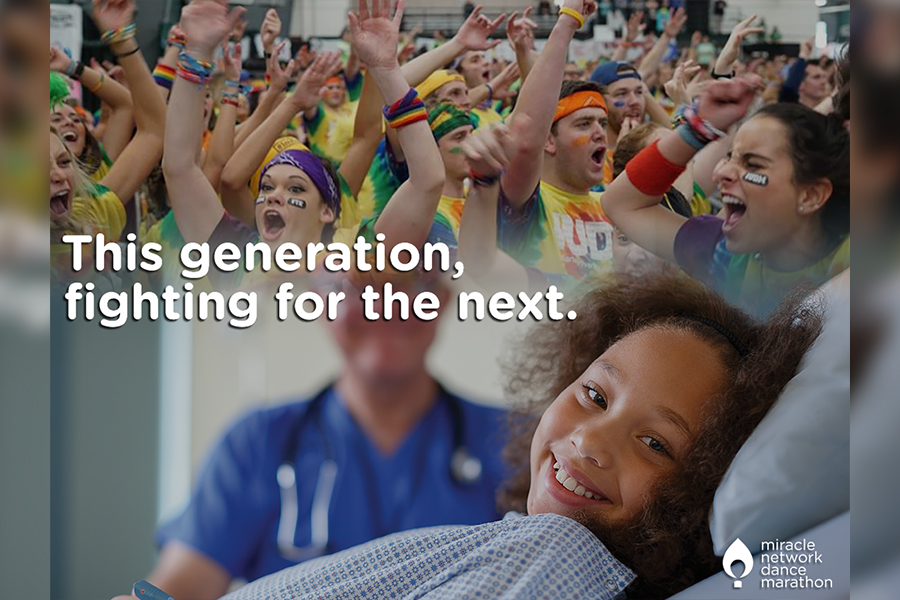
“Every year we’ve been trying to […] expand the movement,” said Olivia Schlanger, a fourth-year psychology and dance double major and executive director of DDM. “We want to create and generate […] commitment for the kids across the campus especially because our local children’s hospital is the UCD Children’s Hospital. One of our mottos is: ‘this generation fighting for the next.’ We have to invest in the kids [and] where would any hospitals be without donations?”

The DDM event is meant to bring together the community and celebrate children that often have or had debilitating conditions as they try to heal. A main focus for DDM through the 12-hour event is to keep everyone on their feet, and through that fragment of pain, to demonstrate empathy toward the children and solidarity with the cause.

“Part of the dance marathon movement is you committing to standing or moving for [a certain] amount of time in solidarity with kids who can’t take a break from their illness,” Schlanger said. “It’s the idea [of] realizing that it’s an ongoing struggle for these kids — you remaining standing and your legs start to hurt and you realize it’s bigger than just you.”

DDM brings some of the children and their families to the actual event to share their stories and also to enjoy the event with participants. Michelle Thompson, the associate director of the Children’s Miracle Network at UCDCH, helps serve as a liaison between DDM and the hospital itself. She found that children whom she thought didn’t have the energy to stay out for more than a few hours would find so much joy in the event, they would stay for nearly the whole time. She has watched as children accepted and grew past their limitations. For instance, she recalls a young girl who previously never liked to discuss her illness experience approached the microphone and shared her story with everyone at one of the annual events.

“I help get some families there to attend the event,” Thompson said. “I give tours of the Children’s Hospital so [participants] can understand what they’re fundraising for, and actually see the items and the programs and the things that we fund to make it more meaningful to them and [show] that it’s not just a party.”

The programs and tools Thompson mentions include multiple services that the hospital provides the children in order to ensure that they feel some sense of normalcy and have some way of digesting the challenges they are faced with at a young age.

“We pretty much fund all children’s services except for the MIND Institute,” Thompson said. “The CMN raises funds for the children’s hospital. But the way it’s set up here at UC Davis, […] it also reaches the children’s surgery center, the cancer center, some of our specialty clinics.”

The funds the hospital receives through the event are generally channeled towards areas where the money is most needed. For instance, funding has allowed the hospital to purchase equipment such as isolette beds for the NICU. After pooling in the funds over a few years, the hospital was also able to open a Pediatric Intensive Care Unit.

“We went to the hospital and got to tour the NICU, and I was just really inspired by all that was going on,” Schlanger said. “They have webcams that the parents now can view the babies from their home [through], so that [they] don’t have that disconnect — and that’s through hospital donations.”

Another area of focus for funding that Thompson mentioned is Child Life. This department provides a range of services, from helping children cope with anxiety before entering surgery to distracting children getting infusions at the cancer center to providing support to the entire family in the Emergency Department. A particular strategy that Child Life has employed to help children normalize their emotional experiences was having children simulate what happens to them using a doll. For instance, if a child with cancer is getting a port for infusion, that child can play that out on a doll to better comprehend the experience they are undergoing. The Child Life department also provides art and music therapy, and uses funds to purchase more play items for the children.

“Everyone takes something different out of their Dance Marathon experience,” Schlanger said. “I just think that it’s a really fun event, but it’s also really powerful. It’s really emotionally provoking and its really humbling that you are a part of this community and you’re building a better tomorrow.”


Written by: Sahiti Vemula — features@theaggie.org

Senator Term Review: Marcos Rodriguez

FARAH FARJOOD / AGGIE FILE

Rodriguez sought to increase resources for renters in Davis

ASUCD Senator Marcos Rodriguez was elected to the ASUCD Senate in the winter of 2017. A third-year political science – public service major, Rodriguez’s major platform was increasing resources for renters in Davis.

“Senator Rodriguez has been a spectacular senator who not only completed steady work on his platforms but also advocated fiercely for his passions and communities on the table,” said ASUCD President Josh Dalavai.

Over the summer and early fall, Rodriguez was in charge of organizing Housing Day for ASUCD’s Housing Advising for Undergraduate Students unit.

According to Rodriguez, while his initial intent was to work with HAUS to create advising opportunities for students to discuss their resources for housing, he ended up working closely to organize Housing Day, which helps over 1,000 students search for housing options each year.

“[Rodriguez] was most prominent and consistent on the table for helping Lauren, the unit director for HAUS, ensure it was a success,” said third-year communication major and interim senator Shaniah Branson. “This including tabling, publicity and ensuring they had all necessary resources.”

For the remainder of his term this quarter, Rodriguez said he hopes to keep working with HAUS to start remodeling the structure the unit is run with. He believes this will enable the unit to start advising operations.
Rodriguez has also been involved with ASUCD’s Housing Taskforce, a joint task force to address the housing crisis in Davis.

“What I have done here is helped on remodeling the model lease that ASUCD sells which encompasses a list of protections for student renters,” Rodriguez said. “My latest project has been working with people from Senior Living Homes to open up housing options there for students in exchange for services like maintaining the property.”
The senator describes himself as a hands-on person when working with his units. In the fall, he worked closely with the Entertainment Council to help create its sponsorship form for Lawntopia. Additionally, he assisted with making changes to hiring policies in ASUCD bylaws to help units.

“I love working with units,” Rodriguez said. “They are the bloodline of ASUCD, and that is where you can create the most long term changes that affect student lives. I have been with the association three years, and I can proudly say that ASUCD units have some of the most spectacular role models for strength [and] persistence and [the] strongest desire to see their unit succeed.”

In the future, Rodriguez said he hopes to work in one of ASUCD’s units or volunteer his time in a unit.  

“I have known Senator Marcos Rodriguez for all my time in the association,” said Ethnic and Cultural Affairs Commission chair Julienne Correa. “He has dedicated much of his efforts to his units and committees. His work for Housing Day reflects his passion to collaborate and continue building connections within ASUCD as well as providing for students.”


Written by: Clara Zhao — campus@theaggie.org

Nature versus technology

MEENA RUGH / AGGIE

Is our technology keeping us from really experiencing nature?

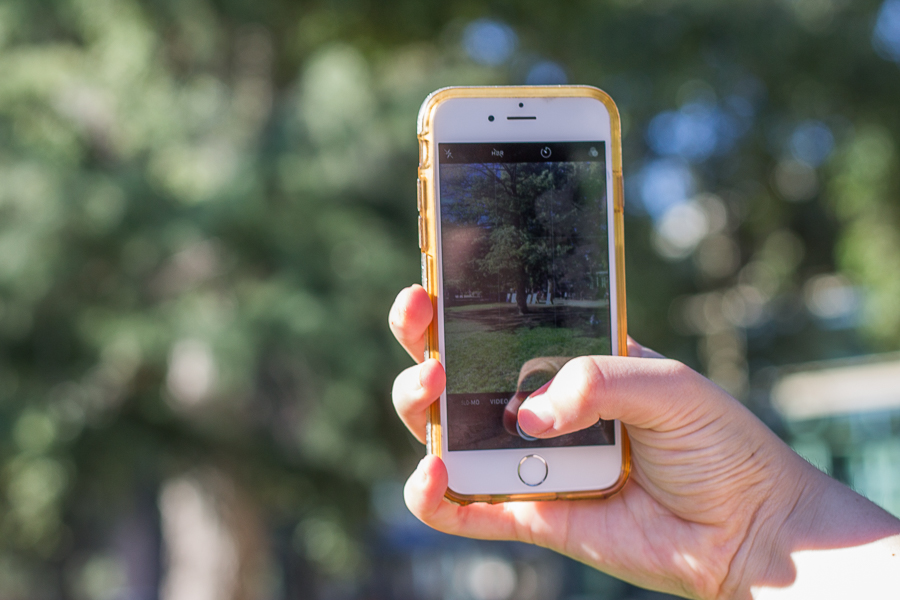
One day, while studying in the arboretum, I saw a couple of otters. They were swimming together, creating air bubbles underwater. They surfaced and ate fish on rocks. I watched them, and I noticed that onlookers began to get closer to the pair. The onlookers held up their cameras and watched through the screens. I admit that I managed to get a bad, pixelated photo from my spot on the grass, too. But I wondered why we couldn’t just watch the otters.

As technology advances and becomes more portable, people become more dependent on their devices — and more desperate for attention on social media. While technology has allowed people to experience nature in ways that were never before possible, it has also interfered with their relationship to the outdoors.

People don’t need to hike a mountain to enjoy the view from the top or take a trip to a lake to see the sun reflecting off its waves. They can scroll through photos on social media. They can experience nature online through live streaming and moment-by-moment updates. When they do go out in nature, they have their phones with them.

It’s common to see nature posts on social media. We love to share amateur photos of flowers. There’s no shame here, fellow shutterbugs. But when we take photos of flowers, we put the camera in between ourselves and the nature we are observing. We no longer see the flower. We see a copy of the flower. When we post that flower on social media, people “like” a version of the flower twice removed from the real flower. At that point, what happens to the real flower — do we care?

We’re often removed from the present, no longer experiencing nature — without thinking about the photo opportunity or the need to document our experience. It’s disappointing to see a cell phone camera blocking the view of a sunset or stunning a wild animal with a camera flash.

Technology is not to blame, though. We are. We should be spending more time in nature and away from devices. Nomophobics can bring along their phones for necessary use — for GPS or in case of an emergency — but we need the time to unplug.

There are side effects to avoiding the outdoors. Nature Deficit Disorder, not yet a recognized medical condition (it’s real enough, people), describes behavioral problems caused by spending too much time indoors. Nature Knowledge Disorder similarly relates to humanity’s shrinking knowledge of the natural world.

“We used to have natural processes, natural experiences in our life, and that seems to be becoming less common,” said Ross Cameron from the Department of Landscape at Sheffield University. “As biological beings we are physiologically adapted to be in certain environments — to run, to play, to hunt, to be active basically.”

Studies have shown that interacting with the outdoors or a green space has health benefits ranging from decreased stress to lowered blood pressure and heart rate. Researchers are now studying whether nature improves creative problem solving, too.

Besides, when we use our phones, we impair our ability to recognize danger in the wild.

Several years ago, while hiking Bald Mountain, I stopped to pose for a picture. The photographer encouraged me and two others to back up so that they could get a better angle. We heard a noise, turned and saw a rattlesnake creep into the bushes.

We should have been more careful. We were miles away from help.

We were fortunate. Others have not been so fortunate.

People have died for great selfies. They have fallen from cliffs, been struck by lightning and mauled by animals.

Others have simply underestimated danger while hiking and backpacking. They never realized that they were undernourished or dehydrated because they had their phones, which created a false sense of security.

The lesson: we need moderation. We should appreciate nature without letting technology interfere, and we need to know our boundaries with technology in the wild.

Whether I’m on a hike, in a backyard or crossing the street, I’m going to be present. If I see something particularly memorable, I hope I can resist the urge to take a picture and just enjoy the thing. And I’m going to try to give the otters their personal space.


Written by: Jess Driver — jmdriver@ucdavis.edu

Disclaimer: The views and opinions expressed by individual columnists belong to the columnists alone and do not necessarily indicate the views and opinions held by The California Aggie.
Shelter for homeless

0
KYLA ROUNDS / AGGIE

Proposal for 1,000 tiny homes in Sacramento

Darrell Steinberg, the mayor of Sacramento, proposed building 1,000 tiny homes in the next three years to address the homeless crisis in Sacramento.

“On any given night, there are about 4,000 homeless people and, sadly, half of them are outside because of no fault of their own and because of lack of shelter and affordable housing,” said Bob Erlenbusch, the executive director of Sacramento Regional Coalition to End Homelessness.

Jaycob Bytel, the deputy chief of staff of external affairs and the acting director of communications, also recognizes the urgency of this issue.

“We have spent the last year amassing unprecedented new levels of resources to provide assertive outreach, case management, health services, shelter, and we have had some success,” Bytel said. “Housing is going to be the big focus of 2018.”

Mayor Steinberg also emphasized in a press release the need to address the homeless crisis with urgency,

“This [2017 Homelessness PIT count] report is a call to action — no excuses, no boundaries — the only thing that matters is to dramatically reduce these numbers,” Steinberg said. “Let’s get at it.”

The tiny homes project proposed by Steinberg is targeted toward building 1,000 small homes to provide shelter to the homeless population in Sacramento.

“Our requirement is that the rooms have a secure roof, a door, plumbing, electricity and dignity,” Bytel said. “They provide dignity to the people staying in them, so there may be variations on the 300- to 400-square-foot home idea. We want to know what is the best way to get from where we are today to 1,000 over the next three years.”

Erlenbusch expressed his concern over the project being a permanent housing solution for the homeless.

“About 1 to 2 percent [of the homeless population] are so severely mentally ill or claustrophobic that they just can’t be in four walls,” Erlenbusch said. “If you can’t place your mom or dad in there for the rest of their lives, then don’t propose it as a permanent solution.”

Bytel, however, referred to the cost of permanent housing as expensive.

“We recognize that building traditional permanent housing is very expensive and it’s very slow, and the problem on the street is now — and it’s real,” Bytel said.

The 2017 PIT estimate of 3,665 individuals in Sacramento County experiencing homelessness on a nightly basis shows a substantial increase compared to previous PIT estimates. Overall, there was a 38 percent increase in total homeless from the 2015 PIT.

According to Erlenbusch, homelessness and hunger are not just experienced by the general public, but college students as well.

“Take the UC system, for example, report last year — 5 percent of [the] student body,  about 250,000 students, are homeless,” Erlenbusch said. “48 percent of undergraduates and 25 percent [of] graduates go to class hungry. They are food insecure. Homelessness and food insecurity are huge issues for college kids.”


Written by: Rabiya Oberoi — city@theaggie.org


Humor: A History Lesson: How the third floor of the library became conquered by the Greeks

DANIELLE MOFFAT / AGGIE

Why won’t they leeeeeeave?

Throughout the course of history, the Greeks have lost many battles. For past examples, here is a comprehensive list of triumphs the Greeks have been involved in and most likely lost — though we at The Aggie are still not entirely sure, because admittedly not all of us are completely literate.

More recently however, for the last couple of years, Ancient Greece has been doing swell in terms of winning battles. The most recent win dates back to four years ago, the time when I started noticing that the Greeks had conquered the third floor of Shields Library.

Though the timeline of the battle is very blurry because it took place so long ago, I will recount the events to the best of my knowledge.

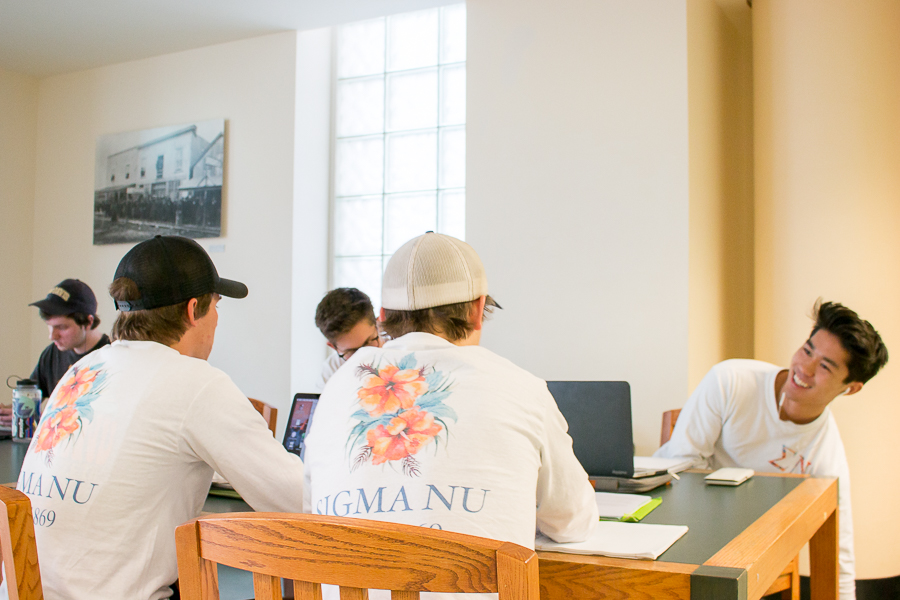
If I remember correctly, the city-state of Sigma Quinoa had a lot of territory at the time, but everyone had agreed that it was time to expand the city-state’s influence because wearing shirts of the neighboring Greek city-state, Delta GoatCheese, was simply not enough to exert their power and influence.

Sigma Quinoa knew it was time to conquer a new breed of citizens, so it took its influence to the city-state of Shields Library, where they planned to take all the good tables with outlets and natural sunlight just to spite the natives who already lived there.

Soon though, the other Greek city-states of Zeta Pie and others like it caught on, and seized the third floor with equal amounts of force. In just a short amount of time, the third floor of Shields became completely ruled by the Greeks, namely Sigma Quinoa and Zeta Pie, who spent their days and nights there pretending to study while really just talking to each other and taking up large amounts of space and outlets.

To this day, the Greeks still are the undisputed rulers of the third floor for some reason. This reason is not actually very clear, considering that the library is made up of four floors and maybe even five, if you count the basement that I’m only 80 percent sure actually exists.

So that’s how the story goes. Essentially, one day a group of people decided to go to a place and then they did. You may think that’s how a lot of history happens, and you are correct. Congratulations on earning your degree in history by reading this article.

All jokes aside, the real lesson we can all learn from the Greeks conquering a single floor of an entire university building is to pick our battles as wisely as the Greeks did. It is only after we choose our battles wisely that we may then fight for our cause, even if our cause is just to go to a place meant for studying so that we can talk with our friends while using tables with outlets, all while wearing matching shirts.


Written by: Lara Loptman — lrloptman@ucdavis.edu

(This article is humor and/or satire, and its content is purely fictional. The story and the names of “sources” are fictionalized.)


Genetically Modified Food For Thought

SCOTT HAMILTON KENNEDY / COURTESY

Film “Food Evolution” highlights major disconnect between public opinion and scientists’ consensus

Food is a part of everyday life, whether it is something that must actively be thought about or is merely within someone’s daily routine. Many scientists are tackling the issue of the most efficient and environmentally-friendly way to produce food, especially since the population is expected to grow to 9 billion by 2050.

The majority of scientists state that genetically modified organisms are safe for consumption and will help in solving the food shortage problem, but public opinion doesn’t quite line up.

“The majority of the public consider it to be unsafe, and the vast majority of scientists look at the data and say it isn’t,” said Alison Van Eenennaam, a cooperative extension specialist in animal biotechnology and genomics in the UC Davis Department of Animal Science. “That gap is 50-odd points of the public versus the scientists. That gap is developed through the marketing and misinformation that’s being spread by [anti-GMO] groups. That’s going to take a long time to go away.”

The debate about public opinion on GMOs and the scientific consensus is the driving force behind the film “Food Evolution,” which features UC Davis researchers as well as other scientists across the world. Part of the film focuses on farmers in Africa, who struggle to survive due to disease-riddled crops and the repercussions of activist groups in developed countries affecting developing countries.

“There are still many groups out there that are spreading misinformation and continuing on their scaremongering campaigns, especially in the developing world,” Van Eenennaam said. “What annoys me, as it says in the movie, [is that] these are first-world people having impacts on the developing world, and they’re food insecure. We’re food secure — if you pick organic or conventional, you’re going to have safe food either way. They have no food. It’s bananas or nothing [in Uganda]. We all want the best for our families and the environment, but one side is getting driven by unsupported information and so they think that they’re doing the right thing, with quite possibly good intentions.”

The rallying of anti-GMO organizations has, depending on the country, resulted in the required labeling, a restriction or a complete ban on GM foods.

“If you go to the medical world, biotechnology is everybody’s great hope,” said Kent J. Bradford, a distinguished professor in the Department of Plant Sciences at UC Davis and the director of the Seed Biotechnology Center. “But if you go to the food world, for some reason, people are scared of it. [Biotechnology has] come to be sort of identified strictly with genetic engineering, but there are many biotechnologies that don’t require that and many of those that could be enhanced by it.”

Van Eenennaam thinks that an alternate solution to food shortage should be provided if scientists are not allowed to produce GM foods for the public.

“I think that [being cold and robotic] is a style of communication that’s expected at scientific meetings, whereas, when you’re talking with the public, you want to be more human and much more emotional,” Van Eenennaam said. “That’s not usually an easy transition for people, and maybe they don’t even think about it because they assume everyone is convinced by data, so they don’t reframe the discussion with a public audience in a way that’s compelling to that audience.”

There were a few depictions in the film of a handful of advocates not being able to state what GMO stood for, even though they said they were against GMOs.

“Everything we eat is genetically-improved using some type of genetic strategy,” said Pamela Ronald, a distinguished professor in plant pathology and at the Genome Center at UC Davis. “I think that even in the Central Valley, where we grow massive amounts of global food, there’s still very few people who farm, and most people probably aren’t familiar with farming, so I think that it’s our job to teach about breeding and farming.”

Though the film focuses on GMOs, it’s used as an extended metaphor to highlight the broader issue of the public’s distrust of scientific literature and expert opinions.

“Yes, [the issue is] about GMOs, but it’s really about how do we make decisions, and the importance of objective evidence guiding our decisions, and how easy it is for fear and emotion to overwhelm science and people get the wrong idea about agriculture in particular,” Van Eenennaam said. “I think that was what the movie tried to address — that fight between what your gut tells you and what’s actually true.”

“Food Evolution” will be screening at UC Davis on March 7, with a Q&A with UC Davis professors after the screening.


Written by: Jack Carillo Concordia — science@theaggie.org


Humor: Nice weather leaves student feeling robbed of Winter Quarter

ANH-TRAM BUI / AGGIE FILE

An article for students who just wanted to have 10 weeks in which they didn’t see anyone

If you’re anything like me, you dread Winter Quarter until it approaches. Then, you decide that it’s actually not that bad but choose to use it as a topic of conversation with everyone you kind of know who sits next to you in class. Anyway, my favorite part of Winter Quarter is that everyone uses the rain as an excuse to not see anybody. It’s fun because we forget about cars, buses and umbrellas and act as if the rain is an oppressive force that stops us from any and all social activity.

But if you’ve been outside at all lately, you probably noticed that this sunny forecast of global warming has given the UC Davis students the idea that Spring Quarter is here early. To that I say, “I was not ready for this. No, thank you.” While other fun and dreadful aspects of Winter Quarter remain, such as the flu and no light after 4 p.m., the days are met with happiness and sun — two things for which I was not prepared.

In an attempt to see if I was not alone in this negative reaction to the sun, I asked a couple of people how they were doing, and then manipulated their quotes to fit what I wanted them to say.

“The rain makes me more creative,” said one second-year student who chose to remain anonymous. “Not that this school asks for any creativity out of me. But it was a fun concept to entertain.”

“I feel the same way,” said another student walking by.

Unfortunately, the bigger issue at stake is that all my spring clothes are still at home. I could tell that everyone felt the same when I continued on with my interviews.

“Yeah, I mean it’s nice that it’s sunny,” said a fifth-year environmental science major. “But it’s kind of sad at the same time that it’s like this in February, if you know what I mean.” And to that I responded, “Yeah, totally. My clothes are all still at home, too.”

My professors seem to be kind of upset at this weather as well. I can tell because every time I raise my hand to ask them about this crazy phenomenon of why the UC Regents decided to make Davis hot this February, they just look at me and say “This class is only for registered students.” Anyway, the point of my dissertation is that we need to change the way we talk about the weather, because there are always underlying issues at stake. Nobody is happy about the sun because now that the rec pool is under construction, what’s the point? Nobody is happy about the sun because nobody knows why it’s here right now. And most importantly, nobody is happy about the sun because it’s leading to an increase in umbrella and UV lamp returns.

For me, I just want things to go back to the way they were when I showed up to class sopping wet and had something in common to talk about with the people next to me (“Wow, it’s raining”). It’s going to be sad to tell my kids about the Februaries when I didn’t have to see anyone because of falling water, and it’s just a shame that I was robbed of that this year.


Written by: Rosie Schwarz — rschwarz@ucdavis.edu

(This article is humor and/or satire, and its content is purely fictional. The story and the names of “sources” are fictionalized.)

2018 ASUCD Winter Elections — meet the candidates

The Winter 2018 Senate and Executive candidates

Three executive tickets, 22 senatorial candidates

The following candidates are running for elected official positions in ASUCD for the 2018 Winter Election. There are three executive tickets — for ASUCD president and vice president — and 22 candidates running for six open seats in the Senate. The candidates are running on the following slates: the Golden Slate, Unite!, BASED, and Aggie Community Transfers (ACT). All candidates in ACT are running on one of the platforms in the acronym DREAM — diversity, resources, events, advocacy and mentorship.


Toni Sandoval & Kevin Butt — ACT

Toni Sandoval, a third-year transfer student and communication major, and Kevin Butt, a third-year transfer student double majoring in political science and African American and African studies, are running for the ACT slate executive ticket as president and vice president, respectively. Their platforms include increasing the inclusivity of ASUCD by cultivating an inviting and positive environment, fostering transparency in all aspects of ASUCD to make it more accessible to all students and holding members of ASUCD accountable in serving their communities.

“We’re here to promote change,” Sandoval said. “I think our campus is ready to see change within the way ASUCD operates and I believe that Kevin and myself are motivated enough, willing enough and more than qualified enough to do it. It’s going to be a different face for ASUCD, and if [students] want to ASUCD change the way it operates, they would vote for us.”


Julie Jung & Julienne Correa — BASED

Julie Jung, a third-year political science and psychology double major and a former ASUCD senator, and Julienne Correa, a third-year psychology and sociology double major and current chair of the Ethnic and Cultural Affairs Commission, are running on the BASED slate for president and vice president, respectively. Their platforms include stronger ASUCD outreach to students, more student involvement with administrative advisory committees and the UC Davis administration and a stronger relationship between the student body and the City of Davis. They would also like to increase resources for marginalized communities on campus and ASUCD committees, units and commissions, support ASUCD volunteers and student activism, and raise awareness of ASUCD itself.

“We want to put the focus on marginalized communities and minority groups,” Jung said. “We will be putting an important focus on those who’ve felt they haven’t been heard by their student representatives in a long time.”


Shaniah Branson & Michael Gofman — Unite!

Second-year economics and political science double major Michael Gofman, a current ASUCD senator, and third-year transfer student and communication major Shaniah Branson, a current ASUCD interim senator, are running on the Unite! slate executive ticket for president and vice president, respectively. Their platforms include promotion of transparency within ASUCD, an increased focus on disability rights on campus, tackling food and housing insecurity and bridging the gap between transfer and non-transfer students.

“We have the experience needed to create the change that we want to see,” Gofman said. “A lot of people run coming from outside of the association on changing the way it operates, and I’d say we’re the only ticket that wants to do that, but also has the experience within the association to know how to create that change.”


Henna Battan

Third-year managerial economics major and transfer student Henna Battan is running for Senate under the ACT slate. Battan is running her platform under “E” for events. She hopes to host community events that will connect and unify UC Davis’ diverse student body — something that drew her to Davis in the first place. She is confident that her passion for public service will help her to achieve her goals, and that her experiences as a transfer student will give her a new perspective on the position.


Daniel Tillman

Daniel Tillman is a third-year political science and history double major running on the BASED slate. His primary goal is to improve student resources with regard to housing. Rather than replace the annual Housing Day event, Tillman would like to work in conjunction with the event — and ideally adopt Housing Advising for Undergraduate Students as a unit. Tillman wants to create an online page that provides students with resources such as a timeline of the housing process, how to get a credit report and an outline of renters’ rights.

Tillman has been in contact with Student Housing to achieve this goal, and has also to inquired about including more gender-neutral bathrooms on campus. He recognizes the difficulty of constructing bathrooms in older buildings, and would rather focus his energy on ensuring new buildings include gender neutral bathrooms in their floor plans. Tillman also aims to improve lighting on campus by handing out more bike lights and expanding the Blue Light program, which provides students with emergency call stations across campus. Lastly, Tillman highlights that, as a transgender man, he would like to use his position on Senate to speak on behalf of underrepresented communities on campus.


Daniella Aloni

If elected senator, third-year communication major Daniella Aloni said she hopes to focus on two communities she belongs to: disabled students and transfer students. Running on the Unite! slate, Aloni wants to strengthen the Disability Rights Advocacy Committee and increase visibility for students who have different forms of disabilities.

She also plans to work alongside the Transfer and Re-entry Center to create an environment that helps transfer students transition into campus life more easily. Aloni believes ASUCD needs fresh voices to accomplish any significant change — a role she is confident that she can fill.


Sam Doolittle

Sam Doolittle, a third-year economics major, attended multiple colleges before officially becoming a student at UC Davis this past fall. This experience allowed him to compare and evaluate the transfer student experience here on campus — particularly in regards to where UC Davis can improve. Doolittle, a member of the Golden Slate, has three primary platforms: making it easier for transfer students to form connections with other students and faculty members; increasing funding for and management of club activities; and enforcing stricter punishments for those accused of sexual assault and violence. Through these, Doolittle hopes to craft a more inclusive, welcoming and safe atmosphere for all students at UC Davis.


Brandon Clemons

Third-year student Brandon Clemons, a managerial economics, philosophy and psychology triple major, is running for Senate on the Unite! slate to optimize the student experience at UC Davis as he inches toward the end of his own. His platforms include the improvement of academic advising and giving freshman an informal way to access advising in their student centers without appointments. He also wants to improve conditions for studying in Shields Library, such as strengthening the Wi-Fi and collaborating with the CoHo to have coffee and vending machines in the library. In addition, Clemons would like to work with The Pantry, the UC Global Food Initiative and CalFresh to create more opportunities for food-insecure students.


Valeria Duenas

Valeria Duenas, a third-year student majoring in political science — public service, is

representing the BASED slate while running for Senate in the Winter Election. She wants to put more emphasis on women’s health by working with the Women’s Resources and Research Center to ensure that bathroom dispensaries are properly supplied with menstrual products, such as pads and tampons. Her other main platform revolves around finding a safe space for the Chicano/Latino Community to meet and having more events like La Raza Cultural Days as well as increasing exposure to these events. If elected senator, Duenas also wants to extend outreach to other communities.


Ko Ser Lu Htoo

Second-year political science and international relations double major Ko Ser Lu Htoo is running with the BASED slate on four major platforms: more resources for the LGBTQIA community; increasing involvement and engagement at the International Center; increasing the presence of Service for International Students and Scholars and increasing activist and outreach efforts by the ASUCD Senate.

Htoo is running for Senate in order to bring more representation to marginalized groups and to give back to the campus community. They also want to improve ASUCD’s communication and connection with the campus and students by expanding outreach efforts and working to bring students from diverse backgrounds into ASUCD. If elected, Htoo is interested in adopting Whole Earth Festival or Picnic Day, two events that celebrate diversity and bring the campus together.


Luke Stocker

Luke Stocker is a second-year English major and computer science minor who is running with the Golden Slate. Stocker’s platforms include lobbying the city for more affordable housing; being a liason for clubs and increasing club financing and bringing priority class registration, which NCAA athletes currently have, to club athletes with more than six practices per week. He also has plans to streamline the reporting process for sexual assault through the university, make accusations more public and change the organizational structure so that cases are handled more quickly. If elected, Stocker is interested in adopting The California Aggie or working with Whole Earth Festival.

Stocker is also interested in improving the culture of ASUCD by encouraging senators to hold more visible office hours and addressing what he sees as a chronic absentee problem by publicizing senate meeting attendance. He is running for Senate because he sees an opportunity to make positive change with his slate and give back to the campus.


Colin Heurlin

Colin Heurlin is a third-year transfer student majoring in international relations with a focus on peace and security in Latin America. He is running his campaign on the Unite! slate remotely, as he is currently in Washington D.C. with the UCDC program. Heurlin formerly served as the ASUCD Internal Affairs Committee commissioner and is interested in running for Senate because of his passion for legislation, policy and student government.

Heurlin is running on platforms of creating a learning resource center that would remove the stigma of asking for tutoring or academic help and creating a transfer peer mentorship program where transfer students would be paired with a student who has been at UC Davis for a year or two to share resources and advice. He sees room for improvement in the demographic makeup of ASUCD — he says transfer students are underrepresented at the Senate table — and the expediency of student services and resource availability. Because he worked at Starbucks for five years and has experience in the customer service and food service industries, Heurlin is interested in adopting the CoHo if elected.


Jumoke Maraiyesa

Jumoke Maraiyesa is a third-year sociology major with an emphasis in law and society. They are running on the BASED slate on two major platforms: working with The Pantry on food security and having a physical location for people to gather around when hate crimes or sexual assault occurs on campus in order to promote inclusivity.

Maraiyesa is interested in running for a Senate position because they see issues that matter are not being addressed on campus. They want to bridge the gap between the students, administration and Senate. Maraiyesa hopes to do so by setting up programs or workshops to inform the student body about what ASUCD does and to make sure students are aware of what’s going on and how it affects them.

Simran Kaur

Simran Kaur is a third-year human development major running on the BASED slate. She is running on three main platforms, which include bringing awareness and expansion to The Pantry, improving cultural awareness to help people from different cultures feel more included in campus life and working to refine relationships between the student body and the UC Davis administration by increasing interaction between the two bodies.

“At the end of the day, we’re all in this community together and striving to get a UC degree in this institution,” Kaur said. “We need to come together and […] live by our quote which is ‘For Aggies, by Aggies.’”


Lucero Vasquez

Lucero Vasquez is a second-year undeclared major, but is on the pre-med track. She is running on the BASED slate because she believes that support and community is important and that the BASED slate is diverse and welcoming. Her platforms include emphasizing a welcoming environment to all students — socially, academically and mentally. By doing so, she hopes to increase student club awareness, increase the efficient sustainability of resources and reduce mental health issues on campus.

Vasquez also hopes to improve diversity within the Senate table and encourages students to reach out to senators and ask them questions. Vasquez also stresses the importance of bringing all communities together and stated: “At the end of the day, we’re all Aggies.”


Daniel Hernandez

Daniel Hernandez is a third-year wildlife, fish and conservation biology major planning on switching to an evolution, ecology and biodiversity major. He is running on the BASED slate on the platforms of increasing the grants the Community Resource and Retention Centers receive and making Tipsy Taxi a subunit of Unitrans.

Hernandez became interested in running for Senate because he realized that there were areas of improvement and realized that being in Senate would allow him to have a greater impact, as he would have more control over where money is allocated and the ASUCD bylaws. He also wants to make Senate a more inclusive and safe space since he feels intersectional identities are underrepresented.


Ben McDougall

Ben McDougall is a second-year undeclared major who is planning to declare a political science and economics double major. He is running with the Golden Slate on four major platforms: club finance reform, sexual harassment policy reform, cheating on exams and improving the Bike Barn. He chose to run for Senate because he is interested in politics and would like to work with the Bike Barn, Unitrans and KDVS as adopted units. McDougall also sees room for improvement in committee meeting attendance.


Shaden Cortez

Shaden Cortez is a third-year political science and communication double major. She is running with the ACT slate representing the “D” as her main platform, which stands for diversity and inclusivity. As a Latina, she feels that having equal representation in ASUCD is important and encourages students of all backgrounds to run for Senate. The units she aspires to adopt are the Whole Earth Festival, Bike Barn and Aggie Reuse Store.


Alisha Hacker

Alisha Hacker is first-year political science — public service major running with the Unite! slate. Hacker plans to be the voice of the first-years on Senate and was encouraged to run after attending ASUCD meetings where decisions that would affect her were made without representation for first-years at the Senate table.

Hacker’s platforms include increasing housing in Davis, especially focusing on second-year housing opportunities; increasing student advocacy and involvement, including the the registration of students to vote in Yolo county; and bridging the divide between Greek life and ASUCD. She hopes to work with the Office of Advocacy and Student Representation and utilize the proximity of Davis to the state capitol.


Teresa Lam

Teresa Lam, a third-year political science and history double major, is running for Senate on the ACT slate because she found a community on campus with other transfer students and feels that they have similar mindsets. Her platform is focused on advocacy and awareness. She said she wants to help whichever resources on campus need the most exposure. She is especially interested in raising awareness of the Women’s Resources and Research center as well as the Mental Health Initiative. Lam is interested in running for Senate because she believes this platform will allow her to make a difference on campus.


Mohammad Qayum

        Third-year political science major Mohammad Qayum is running for Senate on the Unite! slate because he believes in the values this slate stands for. He has three platforms: transfer and re-entry student representation, food security and “get out the vote.” He is interested in helping the Veterans Success Center, located on the second floor of the MU. Qayum believes running for ASUCD will give him the chance to get out and give transfer students the representation they need.

Atanas Spasov

        Atanas Spasov is a third-year student pursuing a double major in economics and mathematics. He is also running on Unite! and has been involved in student government for about a year and a half, as he worked with Gofman’s campaign. Spasov has three platforms — financial scrutiny, sexual health and student scheduling. Spasov is especially interested in developing the financial scrutiny of the Bike Barn and CoHo and is interested in adopting either of these ASUCD units. As a child of immigrant parents from Soviet Bulgaria, Spasov has come to appreciate the importance of a representative government and wants to put his talents toward public service.


Kim Helen Quach

A member of the ACT slate, third-year English major Kim Helen Quach is running her platform on “M” for mentorship. She would like to promote inclusivity, diversity and advocacy on campus, bridging the gap between transfer and non-transfer students. She would also like to improve bike safety on campus by making bike lights more accessible and working with the blue light program. Quach feels that serving as a senator will give her the authority to make these changes directly and to better get feedback from the student body.


The following candidates did not respond to a request from The California Aggie for an interview: Katherine Elizabeth Elaine Weaver, a third-year international relations major with the Golden Slate and Rachel Young, a third-year history major with the ACT slate.


Written by: The Aggie Editorial Board — campus@theaggie.org

Guest: UC Davis had a white supremacist and Nazi speak on college radio. Let that sink in.

V@S [CC BY 2.0] / FLICKR
KDVS allows Richard Spencer to promote racism and genocide

On Feb. 5, an event occurred here on campus that should be regarded by the entire community of UC Davis as a severe hate incident. A staff member of the UC Davis radio station KDVS provided a notorious white supremacist and Nazi, Richard Spencer, a platform to spew his bigoted hatred and promote genocide.

With a flood of reports on the increased presence of white supremacists and Nazis on U.S. campuses and the growing toleration of white supremacist ideas on a daily basis, we did not think that a member within our community would decide to aid and abet this dangerous uptick in bigotry by conducting a so-called interview with Spencer.

Until quite recently, before a wave of white nationalism had swept the country and indeed the world, such an interview would have been well beyond the pale. When last did The Aggie give a platform to genocide as an intriguing idea worth debating? When last did KDVS interview a Holocaust denier?

Well, last week it happened right here in Davis, California: A white supremacist and Nazi spoke on college radio, promoting and recruiting. Unfortunately, thanks to this incident and other across the country, it is now within the accepted spectrum of ideas with which students of UC Davis engage. And make no mistake, this precedent has dangerous implications for the well being of the non-white members of this community.

We write this letter as UC Davis alumni who watch with dread the specter of white nationalism and Nazism rear its ugly head on campus. We write this letter as Jews, remembering our family members who were murdered by the Nazis in Europe. We write this letter as immigrants to this country, fearing for the safety of future generations. Nazism is about genocide. If you think giving platforms to Nazis is more important than protecting students, you are prioritizing the right of Nazis to promote genocide over the safety of UC Davis students.

A liberal-minded listener, who is not a target of this form of bigotry, might have been listening to the interview as he was lounging comfortably in his armchair, blowing smoke from his pipe, applauding rational discussion, perhaps sneering, “How ridiculous the ideas of white supremacists! How lacking in depth!”

But when people of color on campus hear this, they hear death. When Jewish people on campus hear this, they hear death. When people who identify as LGBTQ hear this, they hear death. Could you imagine what it feels like to be Jewish and hear Nazis recruiting through your own university’s radio station? To hear the host constantly thanking and showing his respect for a leader of white nationalism?

The so-called “free marketplace of ideas” did not save the Jews from the Nazis. Nazis use freedom of speech to destroy it. They should not be legitimated as simply just another political group. Ideas that undermine the basic dignity and deny the humanity of people have no place on our campus — or in the broader public sphere for that matter.  

We urge UC Davis and all those who care about the university and well-being of the Davis community to take steps toward accountability, beginning with removing all people involved in this disconcerting incident from KDVS radio.

Our parents sometimes ask us about anti-Semitism in the U.S., and we usually reassure them that America is still a safe place for Jews. What about the future? We are not so sure anymore.


Both writers graduated from UC Davis in 2016 with Ph.D.s in history. Eran Zelnik is a historian of early America; Elad Alyagon is a historian of Imperial China and a current postdoctoral student in UC Davis’ Department of History.


Written by: Eran Zelnik and Elad Alyagon

Disclaimer: The views and opinions expressed by individual columnists belong to the columnists alone and do not necessarily indicate the views and opinions held by The California Aggie.