55.7 F
Davis

Davis, California

Monday, December 22, 2025
Home Blog Page 564

This Week in Sports

0
CHRISTIE NEO / AGGIE

Today, Jan .26


Women’s gymnastics vs. West Virginia and University of Illinois at Chicago at 7 p.m.


Saturday, Jan. 27


Women’s tennis vs. Santa Clara University at 12 p.m. at Myra Welch Tennis Center

Women’s basketball vs. UC Santa Barbara at 2:30 p.m. at The Pavillion

Women’s water polo vs. Fresno State at 4:30 p.m. at Schaal Aquatic Center

Men’s basketball vs. Cal Poly at 5 p.m. at The ARC Pavillion


Written by: Kennedy Walker — sports@theaggie.org

Not too late to get your flu shot

CAITLYN SAMPLEY / AGGIE

Protect yourself and others from the flu

If you haven’t had tissues and bags of cough drops stuffed in your pockets this month, you probably know someone who has. The outbreak of the H3N2 influenza strain has made recent headlines by causing a deadly flu outbreak across the country, with California as a hotspot for infection. California state officials have reported 74 deaths caused by the flu since October — a striking contrast to a death toll of 14 at this same time last year.

But it’s not just the rising death toll that’s a cause for concern. The peak of this year’s outbreak was on average earlier than previous years, with hospitals admitting large numbers of flu patients in early December compared to a usual peak in mid-February. This has left hospitals scrambling to treat a large number of patients sooner than expected. To compensate, medical centers have opened pop-up “flu treatment centers” across the Bay Area and even at the UC Davis Medical Center.

More notably, officials report that this year’s vaccine is a “poor match” against the H3N2 strain. This heightened risk of infection, especially combined with a rising death toll, has left many wondering how they can protect themselves against the flu — especially after being told the vaccine could be ineffective. But therein lies the fallacy; a less effective flu shot does not mean an ineffective flu shot. Vaccinations don’t always prevent infection, but they can mitigate the severity of symptoms when infection does occur.

UC Davis students can get their flu vaccines at a variety of places, including the Student Health and Wellness Center across from the ARC, your local primary physician or pharmacies like CVS and Rite Aid. At the Student Health and Wellness Center, students with the Student Health Insurance Plan can get their flu shots for free by calling the appointment center. Students without SHIP can still receive it for $40.

Similarly, students without insurance can receive a vaccine from a local pharmacy for $40. These pharmacies, as well as primary care physicians, offer free flu shots for students with private insurance.

The Editorial Board encourages readers to take advantage of these resources and to prevent themselves and others from getting sick simply by getting their flu shots. The Editorial Board also urges its readers to keep themselves and their fellow Aggies healthy by practicing simple habits like covering their coughs, frequently washing their hands and, when possible, staying home when sick.

Yes, you can get a flu shot and still get the flu. But even if the success rate is 1 percent, that’s one less person who gets sick — and ultimately, one less person to infect you.

Written by: The Editorial Board

No more recycled platforms

CAITLYN SAMPLEY / AGGIE

More candidates for ASUCD should bring fresh ideas

With the exception of Winter Quarter to Fall Quarter of 2015, winter quarters in recent memory have typically held higher voter turnouts and a greater number of candidates running for Senate, with approximately double what they were in the fall. The higher voter turnout, however, isn’t necessarily due to the higher number of candidates. Therefore, it’s crucial that each candidate possess strong platforms and clear ideas about how to reasonably achieve them.

The upcoming winter elections offer six Senate positions and an executive ticket. The Fall Quarter 2017 election had only six candidates, with a 1,289-person voter turnout. This was the second lowest voter turnout in the past five years, only higher than the Winter 2015 election, in which there were a mere 792 voters.

The projected increase in candidates, however, does not mean better platforms. Each candidate needs to have to have a comprehensive platform to set them apart. A qualified candidate should be knowledgeable in all aspects of ASUCD, such as what ASUCD can do in conjunction with the university and what lies within their scope of power.

Several past candidates struggled to ascertain the basics, including understanding what an ASUCD unit was, knowing the ASUCD budget or having reasonably achievable goals. The Editorial Board urges candidates to show that they’ve done their research and know exactly how they will execute their platforms rather than simply go out on a limb by saying things they think students want to hear.

One example of a past successful senator is Simran Grewal, a fourth-year neurobiology, physiology and behavior major who won 61 percent of the votes during the Fall 2016 election, in which 10 candidates were campaigning for six available positions. During her tenure, Grewal was able to accomplish all of the original goals on her platform, including implementing 24-hour library periods during finals week. Grewal also noticed the separation between senators, acknowledging that this gap needs to be bridged by having senators collaborate on platforms. This would help senators accomplish their goals in a timely manner during — and not after — their respective terms.

Grewal, formerly The California Aggie’s adopted senator, serves as an example of what current and future senators should work toward. Past platforms presented to the student body have contained some good ideas, though they have not always been properly executed. We have heard countless times that things need to be done about campus lighting and voter turnout, but exact solutions have not yet been clearly thought out.

There are many characteristics of a good senator, and with the role comes a tremendous amount of time, effort and responsibility. Running for Senate assumes that the candidate is prepared to take on extra hours by attending clubs and social events, maintaining good connections with the other senators, being available to students, making sure students’ needs are addressed and working to better the university. The Editorial Board reminds all prospective candidates to consider this as they campaign during the winter elections.


Written by: The Editorial Board

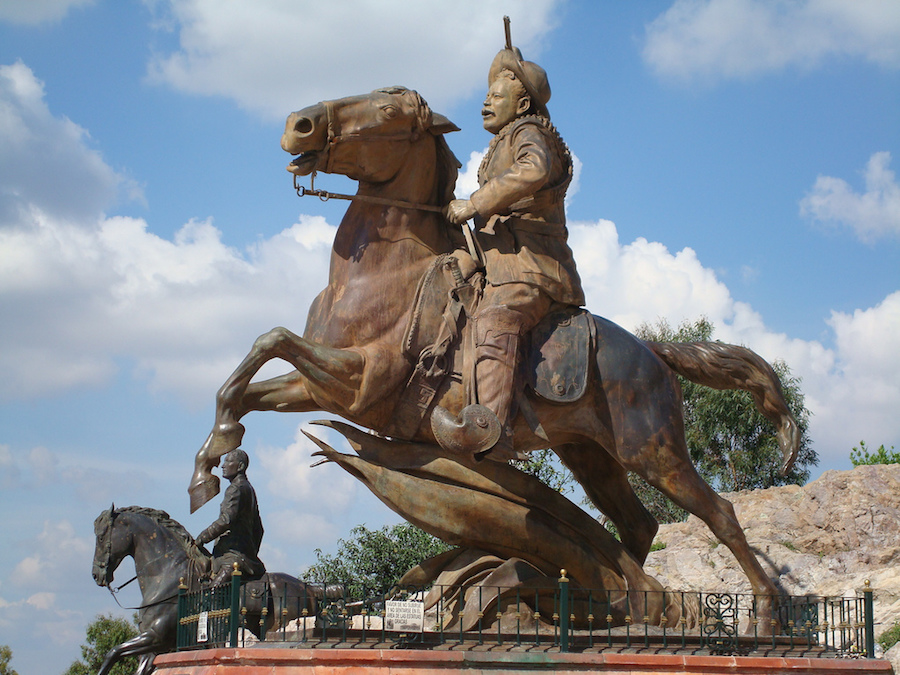
The little-known invasion of the U.S. by Mexico

TETRABRAIN [(CC BY-SA 2.0)] / FLICKR
American history books fail to recount Pancho Villa’s 1916 attack on the United States

Pancho Villa, a Mexican revolutionary from the early 1900s, is recognized as one of the most iconic figures in Mexico. He’s famous for being a great general and a bandit due to his tendencies to loot and pillage. However, he was also considered a Robin Hood-type figure for stealing from the rich, landowning elite and giving to the poor.

Throughout the history of the United States, it has been very common to label Mexican revolutionary leaders “bad men” due to many historical and cultural factors. And in the case of Pancho Villa, he is undoubtedly recognized as a bad man.

The first time a foreign army invaded the U.S. was Mar. 9, 1916, when General Villa and his army of 500 bandits attacked the town of Columbus, New Mexico. It was a symbolic event for Mexicans because Villa humiliated the U.S., exposing that the country was not as powerful as its citizens believed.

The battle lasted a total of six hours. Villa and his 500 troops devastated Columbus and managed to kill 17 North Americans in the process. Nevertheless, Villa’s troops suffered a loss of 100 men. Yet Villa and his armed forces managed to steal ammunition and set the entire town ablaze before going back to Mexico.

General Villas’ intentions for invading the U.S. were complicated and related to the Mexican Revolution. Villa had been severely defeated by his political rivals and lost the support of the U.S government to Venustiano Carranza, who would shortly after take control of the Mexican presidency. Moreover, Villa’s grand army had been reduced to dwindling numbers after losing land and power to Carranza.

As a last-ditch effort, Villa rounded up as many men as he could in order to invade the U.S. Ultimately, it acted as a big middle finger to his rival Carranza, who had been receiving aid and support from the U.S.

The newspapers and other media quickly broadcasted images of Pancho Villa as an evil man capable of committing other cruel acts. For this reason, the United States decided to invade Mexico and capture him, with President Woodrow Wilson launching the Punitive Expedition against Villa.

At the time, the U.S. regarded Villa as a criminal because they saw him as a threat to the future and security of the nation.

The Punitive Expedition began on Mar. 14, 1916, with President Wilson ordering General John J. Pershing to lead the manhunt for Villa. Pershing was granted the use of airplanes, vehicles, motorcycles and horses, along with 10,000 to 15,000 soldiers to join his crusade.

Ultimately, the search for Villa ended unsuccessfully. For months, Pershing and his troops raided local Mexican towns in their pursuit of Villa. They traversed 450 miles into Mexican territory before finally giving up their manhunt on Feb. 7, 1917.

What’s perhaps most surprising about this entire ordeal is that few people know about it. I asked my friends, my brother and my sister about Villa’s invasion, and none of them knew about this small-scale assault on the U.S.

As someone who’s proud to be Mexican, I wish I had known about Villas’ invasion when I was in high school. Pancho Villa and his troops successfully invaded the United States — if that happened today, it would result in front-page headlines all over the world. Instead, this embarrassing historical fact for the United States is kept out of history books.

Mexico and the U.S. have had shaky political relations for quite some time — and possibly now more than ever. The President of the United States continues to make wild remarks about the people of Mexico. There have been countless insults over the years that are simply untrue and hurtful to all Mexicans.

Above all, the president’s goal to build a “great” wall between Mexico and the U.S. has been in discussion for some time now, and it doesn’t seem as though he will stop his agenda anytime soon. With his instability, it’s possible that Trump will only continue to escalate the tensions between the countries — and there’s no telling what might happen due to his erratic behavior and poor judgement.


Written by: Alejandro Lara — amlara@ucdavis.edu

Disclaimer: The views and opinions expressed by individual columnists belong to the columnists alone and do not necessarily indicate the views and opinions held by The California Aggie.

Humor: Hell’s fire fueled by oil, U.S. military invades

ZACK ZOLMER / AGGIE

We found all the extinct animals, too

After the hardly surprising revelation that Hell’s fire is fueled by its vast underground oil reservoirs, the U.S. military has unrelatedly declared the area a possible terrorist hotspot and is set to invade next week. No demons have been spotted in the area, although it is full of animals that are extinct on Earth.

“It’s very strange,” said Gordon Freeman, a scientist who works for the World Wildlife Foundation. “Seemingly all of the animals that have gone extinct due to human actions are alive and well here. We’re considering declaring Hell a sanctuary state for animals, but we’re having trouble getting it through Congress. They want to eradicate all life before making it our 51st state.”

While initially concerned that demonic presences would be a major problem to the oil rigs and workers, it’s no longer a problem since health care for those affected by demons has been eliminated in the recent tax bill. The money that would be going to workers is now being rerouted to oil rig executives to compensate them for losing employees to demons and to cover therapy costs.

“After losing several men last week, I’ve been depressed,” said B.P. executive Ben Dover. “Things I normally found fun, like riding in my private jet, waging wars in third-world countries or even sending dick pics to my secretary […] it doesn’t make me happy anymore.”

“All this oil […] it looks more like heaven to me,” said President Donald Trump, who is eager to be the ruler of Hell. “You know what Hell really looks like? When Congress and the president are Democrats.”

The Trump Administration has finally decided to start building homes for the homeless now that they have more land to do it in. Soon Hell will be the 51st state and will be entirely filled with Section 8 housing and oil workers — at least until resorts can be built.

“When I’m done with this whole president thing,” Trump said, “I think I’m going to build another Trump Tower in Hell. Except this one is going to be a statue of me.”

“I don’t think you’re allowed to erect a statue of a giant dick though,” phallus expert Drew Hanson said.  


Written by: Drew Hanson — andhanson@ucdavis.edu

(This article is humor and/or satire, and its content is purely fictional. The story and the names of “sources” are fictionalized.)

Style watch: how to funk up winter quarter

RAUL MORALES / AGGIE

The ‘90s are back

The winter is a hard time to be stylish, but Kelly Brady, a fourth-year communication and psychology double major, makes it look easy. She effortlessly looks like a ‘90s cool kid with her bright, mixed colors against the backdrop of a gloomy day. Her love for thrifting can be seen through almost her entire outfit, making shopping on a budget seem totally doable.


ASW: Where do you get your style inspiration from?

Brady: I get my inspiration largely from music artists. More specifically, I love Sza, Rihanna, Aaliyah. I try to emulate their looks. Besides looking at artists, I find it through Instagram and fashion magazines. I love flipping through Vogue and Instyle. I also get inspiration from my Mom: I love her ‘80s East Coast style, and she lets me wear her vintage Coach purses.


ASW: What is your go-to outfit at the moment?

Brady: I’m really into baggy jeans and crop tops. I have these Fila sneakers that are really chunky and ‘90s that I would wear with that. I really enjoy dressing in ‘90s-style clothing.


ASW: Can you describe your style?

Brady: I love color-coordinating my outfits. For example, if my jeans have a specific color stitching on the side, I try to match the rest of my outfit to it. I’ve been trying to play with patterns recently. I layer a lot because it’s cold up here. I do a lot of trial and error, and I get inspiration from all the diverse people in Davis. I really like Korean fashion, which was influenced by black culture here in the United States.


ASW: When did you first get into fashion?

Brady: Probably in 5th grade when I changed schools and wanted to be different and stand out. That was when I first started to care about my style. I got more into fashion in middle school. My fashion sense has evolved and since coming to college; it’s always changing.


ASW: What is your biggest fashion regret?

Brady: I would wear leggings under my dresses. Looking back on it, it was not cute. A big mistake.


ASW: Where do you like to shop?

Brady: I love Urban Outfitters and Topshop, as well as thrift shopping. My favorite places to thrift are Wasteland and Goodwill.


ASW: Where did you get your outfit from?

Brady: I got my Jacket from Goodwill — actually, my brother got it for me. My shirt is American Apparel, my belt is from a thrift store and my jeans were passed down to me by a friend who cut them after getting them from a thrift store. My socks are Fila and my shoes are Vans.


ASW: What is the significance of your bracelet?

Brady: My family is from the U.S. Virgin Islands, and this is a Sonya bracelet — it’s a hook bracelet made from silver and gold. Basically the fable is that a mermaid met a sailor on an island. You wear it open or out when you are single and you wear the hook facing you when you are married, showing you are hooked. I never take mine off.


Written by: CaraJoy Kleinrock — arts@theaggie.org

Nursing: A world of opportunities

0

TAKOMABIBELOT [CC BY 2.0] / FLICKR
Pre-nursing students shed light on different nursing pathways, give advice for others

When pre-nursing student Haley Eichhorn was a freshman and sophomore, the prospect of getting an internship seemed impossible. After visiting the Internship and Career Center, though, volunteer opportunities were suddenly closer than ever.

“I started with [the ICC] and got an internship [in the Emergency Room] at the Medical Center (UCDMC) and I loved it,” Eichhorn, now a third-year human development major, said. “It was a perfect way for me to learn. They have so many options — you can do oncology, the cardiac unit, the ER, the pediatrics unit, like you can literally do the internship anywhere. It’s not super hands-on, and it’s good to see these environments because you think you want to work there and then you find out very fast if you like it or not.”

As a pre-nursing student, not only is it important to take the appropriate nursing school prerequisites, but experience is also important because it demonstrates competencies and passion in a nursing school applicant. Eichhorn, for example, has interned in the ER in the past. Now she works with a clinic in Davis as a sexual and reproductive health educator and also takes classes to become a doula at the Woodland Hospital.

“As far as getting experience, everyone does the same [kinds of things],” Eichhorn said. “They do research and do ‘this’ and do ‘that’ for anything pre-health, but I have done very off-the-wall kind of outside experience, which has been super cool and I want everyone to know that there’s so many options.”

UC Davis students who graduate with a bachelor’s degree in any major can choose a number of pathways, the first being to move on to obtain a bachelor’s in nursing (BSN) and registered nursing license (RN) at another institution. Some choose to stop there, but others will gather a few years of nursing experience after this and then return to school to pursue a master’s in nursing (MSN) or a doctorate program. After undergraduate, though, some students choose to immediately move on to a longer program to obtain their MSN and RN before gaining nursing experience or entering a doctorate program.

“Right now nursing is one of the biggest growing fields out there and there are couple different routes to become a registered nurse,” said Tiffany Lung, a fourth-year human development major and president of the UC Davis Nursing Club, via email. “Since UC Davis does not offer a nursing undergraduate degree, most students will apply for a two year program to get their second bachelors in nursing. However, most are now moving to masters program.”

The third pathway is similar to the second one; the difference is that after receiving an MSN and RN, students can choose a specialization as well, go off to gain experience, and have the option to return to a Doctorate Program. There are many MSN degree specialties, one of the most common ones being the Nurse Practitioner (NP). Other options include becoming a critical care nurse, a nurse anesthetist, and more.

“I think a lot of people probably have an idea of what they want to do, but become surprised by what they end up actually doing,” said Brooke Talkington, a second-year international relations major. “I think a lot of people go into [nursing] thinking they’ll do one thing and then finding out they actually really want to do something else. It’s just like going into college with a major you like and then realizing it’s not for you, you just kind of have to experience it and figure out if it’s suitable for who you are.”

This is precisely the dilemma Talkington experienced herself, as she’s in the process of switching her major from international relations to human development so she can pursue her interests in pre-nursing.

“You can pretty much do any major really as long as you fulfill the requirements but it is smarter to choose a major that has more science-based classes,” Talkington said. “If you choose something like international relations, you’re not going to be taking [the required] classes and might exceed your unit limit. I’m interested in being a pediatrician just because I really love kids and working with kids. I think they’re so much fun.”

Lung has similar interests to Talkington, as she’s interested in working with children too. This is something she learned about herself through her volunteer experience, another reinforcement of why pre-nursing students recommend having experience in order to find what kind of job works for each individual.

“I want to become a neonatal nurse practitioner,” Lung said. “Neonatal nurse practitioners work in neonatal intensive care and care for sick infants or premature babies! Like many others, I knew that I wanted to work in the medical field but didn’t know what I wanted to do. As I was volunteering in UCDMC and Willow Clinic, I realized I preferred working with children and infants more and found that being a neonatal nurse practitioner would be perfect for me.”

As the president of the UC Davis Nursing Club, Lung is full of advice for students interested in nursing or any health field in general. The club meets Wednesdays in Olson 106 from 6:10 to 7 p.m.

“You don’t need to be pre-nursing to be involved in our club,” Lung said. “There are many students who come are curious about nursing and will just check us out for one or two meetings. There are also people in our club who are deciding between being a PA, nurse or doctor!”

Although nursing schools are competitive, Lung, Talkington and Eichhorn all recommend three basic ingredients to be successful: it’s important to do well in school and get involved, experience is the best way to learn what works and what doesn’t work for each individual and that meeting people and seeking opportunities will always be of benefit.

“Try to get in touch with people that are on the same path as you,” Eichhorn said. “I’m sure if you got into a room of 20 pre-nursing students, we’d all have some great internship or some great advice to give. [Get] in contact with people who are doing the same thing and network.”


Written by: Marlys Jeane — features@theaggie.org

Police Logs

NICKI PADAR / AGGIE

What are the odds?

Jan. 3

“Davis Food Co-op card lost at Safeway.”

“On the far north side in alley behind businesses, male inside enclosed fence area dancing on possible electrical box.”


Jan. 4

“Reporting party had someone coming to her residence yesterday selling magazines.”

“Gas-operated vehicle parked in electric charging spot.”

“Reporting party lost wallet somewhere in Davis.”


Jan. 5

“Reporting party was turning into the alley and hit the fire hydrant after being cut off by another vehicle. No injuries and no damage to the fire hydrant.”


Jan. 6
“Female talking loudly. Reporting party thought the subject may be having mental health issues.”

“Unknown subject deliberately dumped raw food all over the reporting party’s childrens’ bicycles.”


Jan. 7

“Subjects threw a pumpkin in the pool.”

Improving waste disposal

JEREMY DANG / AGGIE

New trash, recycling bins installed in downtown Davis

As a part of the grant received by the State Department of Resources, the old concrete trash and recycling bins downtown have been replaced with new ones, which are made of recycled plastic from post-consumer products.

“In some of the areas of the downtown, bins regularly overflowed with excess waste,” said Jennifer Gilbert, the parks coordinator, in an email interview. “The new bins feature large color pictures of what can be placed in each bin, and each bin has a side for recycling and a side for trash.”

The new trash and recycling bins have also cut down on time needed to empty them.

“[The crew used to spend] 5 hours a day, seven days a week, emptying the sidewalk trash and recycling bins from Davis,” Gilbert said. “Within hours of being emptied, they would be overflowing again.”

Mayor Pro Tempore Brett Lee predicts that clearer labels on these new bins will allow for responsible waste disposal behavior from Davis residents.

“I think the level of education will go up,” Lee said. “And again, the good thing is that when they [the people] are in front of the container, it will have two compartments — the recyclables and the non-recyclables.”

Lee also added that the City of Davis is planning to expand the project if successful.

“One of the important ideas is that if this is successful in downtown, the idea is to place these receptacles in [the] city’s parks uptown and in other areas,” Lee said.

Tammy Rominger, the parks supervisor, had similar ideas regarding the new trash and recycling bins.

“I wouldn’t necessarily say it’s a long-term solution because educating the people is a big part of it,” Rominger said. “Education’s going to help with long-term. Everybody works together to ensure that we are doing the best we can for the environment.”

Gilbert also referred to the potentially detrimental effects that throwing things away can have on the planet.

“People often think that when they are done with something, they throw it ‘away,’” Gilbert said. “There is no ‘away.’ All waste goes somewhere, and where it goes is important. Your disposable coffee cup could be composted, the lid recycled — or it could all get buried in a landfill for hundreds of years. Each action you take has long-term impacts.”

Lee predicts that the disposal of trash and recycling can still be improved in the city of Davis.

“It’s not so much that it [trash and recycling disposal] is a problem, it’s just that we can do better and we can make it easy to do better,” Lee said. “Are we going to stop global warming by this? Probably not. But this is definitely a step in the right direction. Once these are in place, people will wonder ‘Why would we have done it any other way?’”


Written by: Rabiya Oberoi — city@theaggie.org

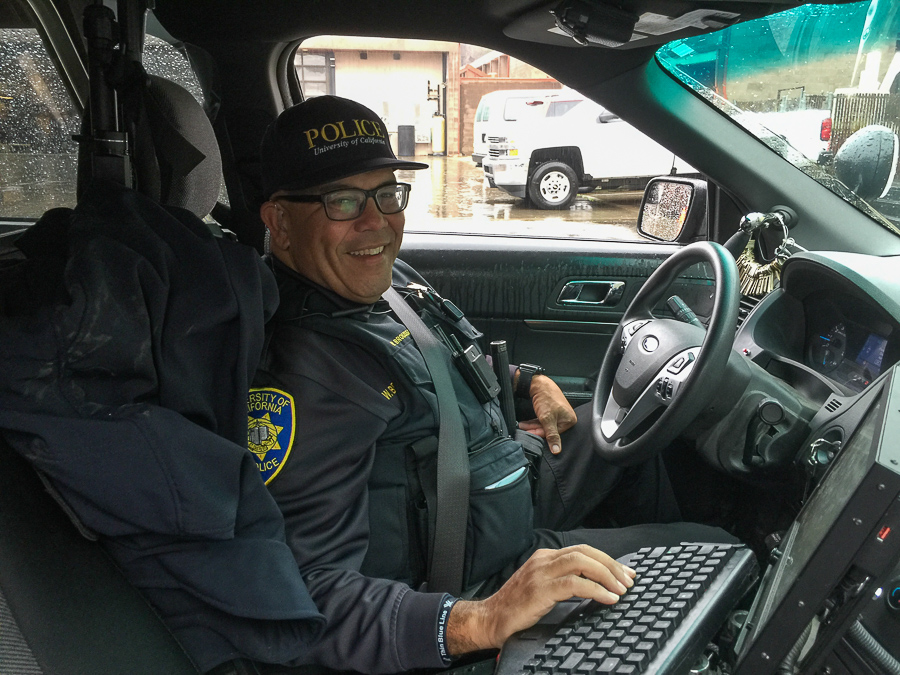
On the Road with UC Davis Police

Police ride-along aims to brings together officers, students

The Ride-Along program offered by the UC Davis Police Department provides a chance for students to ride with police officers on patrol and learn about what officers do on a daily basis. On Jan. 8, The California Aggie participated in a ride-along with Officer Walter “Walt” Broussard of the UC Davis Police Department.

The goal of the Ride-Along program is to bring together students and officers. It allows students to learn about police work by talking with officers and observing police calls. A side benefit of the ride is visiting less-populated parts of the campus that a student might not usually see.

Captain Jennifer Garcia of the UC Davis Police Department expanded on the work done by the Ride-Along Program.

“We have always allowed ride-alongs,” Garcia said. “We promoted them more — probably about five or six years ago — […and] made it easier for people to schedule, because they can just go online and schedule ride-alongs. People from all over want to understand what police do, and it gives opportunity for people to come and talk to a police officer in a no-stress situation and get to know us a little bit personally.”

Broussard, a 20-year veteran of the UC Davis Police Department, shared stories of his time in the department and also took pride in showing the sprawling properties within the campus.

During the ride, Broussard received a 911 call at the parking structure off of Howard Way that turned out to be a false alarm. This turned out to be the only call during the ride, which provided an opportunity to talk about the vast pastoral properties owned by UC Davis.

Broussard drove to the outer corners of UC Davis and stopped at the Russell Ranch Sustainable Agriculture Facility. He spoke enthusiastically about the property.

“They actually [conduct] research out here with the crops and on the other side where the tree line is [there] is a raptor protection area,” Broussard said. “There used to be a lot of farming out there. They used to have kiwis, pistachios, pomegranates; there was every known fruit out here known to mankind. And they tore it all out. There were 25-year-old kiwi plants out here. You can come out here and pick a kiwi and have a fresh kiwi for lunch. It is pretty neat.”

Kelsey McDonald, the student assistant to the Office of the Chief and a recent graduate of UC Davis, helps organize the ride-alongs.

“I do all of the scheduling for the ride-alongs,” McDonald said. “We have an online survey that people take […] and that is how you request a ride-along. I pick a date and time that I think will work best for our department and the person based on what they indicated on the survey, and I email them with the information.”

McDonald spoke about the uniqueness of the program.

“More than anything, I would say our officers are a super, super friendly police force,” McDonald said. “I love our ride-along program because our officers want to show [the] campus and not just answer questions. I know [when] I did my ride-along, we went out [to] the pastures, and baby sheep [had] just been born. I would have never known that — I did not know that we had sheep.”

During the ride-along, Officer Broussard later drove to the sheep facility on campus.

“Over here, they have the […] baby sheep,” Broussard said. “And these are the mommies with babies that can be out.”

Garcia spoke about the effectiveness of ride-alongs in building community and fostering  active police participation.

“It is good, because sometimes you make friends and you will maintain those friendships throughout the years,” Garcia said with regard to the Ride-Along program. “We tend to be more proactive instead of just reactive, so instead of just waiting for something to happen, we want to get out there in the community and know our community. We want to talk to the students.”


Written by: George Liao — campus@theaggie.org


Seven awards to be presented at Aggie Alumni Awards Ceremony

CAT TAYLOR / AGGIE FILE

Recipients will receive awards on Feb. 2

Each year, UC Davis honors alumni and friends of the university at the Aggie Alumni Awards ceremony. The event recognizes those who are exceptional in their fields of work and who have meaningfully impacted their communities. Recipients of these awards are selected by the Cal Aggie Alumni Association.

“[Award candidates] are nominated each year by both alumni, friends of the university, as well as many staff,” said Jennifer Thayer, the assistant director of programs for the alumni association. “All of the nominees have made significant contributions or progress to the UC Davis campus, to the university, or in their profession. A committee of Alumni Association leaders and board members, university faculty and past award winners then selects a recipient of the award from the pool of nominees.”

Thayer also discussed how the awards recognize the individuals’ connection to the university.

“Not only are we honoring the contributions that they’ve made to society, to their community [and] to their profession,” Thayer said. “We’re also showing that […] Davis was a key factor in making all of these individuals really great in what they’re doing.”

On Feb. 2, the university will commend the following seven alumni and one friend of the university: Patrick Sherwood (‘86), Cynthia Murphy-Ortega (‘91), Liliana Ferrer (‘87), Margaret Lapiz (‘89), John Madigan (‘70, MS ‘72, DVM ‘75), Jesse Rodriguez (‘13) and Ernest Tschannen, a friend of the university.

Patrick Sherwood is the recipient of the Jerry W. Fiedler award, which is presented to an alumnus who has made exceptional contributions to the CAAA, the UC Davis foundation and the university itself. Sherwood was previously an officer and a committee chair of the CAAA. He has supported recipients of various scholarships for alumni and has created multiple scholarships to support undergraduate students.

Currently, Sherwood is a member of the Dean’s Advisory Council as well as a trustee for the UC Davis Foundation. Sherwood graduated from the university with a B.A. in economics.

Cynthia Murphy-Ortega, who earned a bachelor’s degree in chemical engineering from the university, will receive the Aggie Service Award, which commends an alumnus who offered significant support to the CAAA and the university in the previous year. Murphy-Ortega has dedicated time and effort to support her fellow alumni in their post-college endeavours.

According to a UC Davis article, Murphy-Ortega is a manager of Chevron’s University Partnerships and Association Relations, where she works to connect students from many different universities with opportunities for employment and career exploration. Murphy-Ortega spearheaded Chevron’s scholarship program to financially support engineering students. Additionally, she is involved with the university’s Leadership in Engineering Advancement Diversity and Retention program, which supports minority students in engineering.

This year’s recipient of the CAAA Distinguished Achievement Award is John Madigan, who will be commended for his contributions to the field of animal welfare and health. This award primarily honors an alumnus who is exceptional in their career and recognizes their service to the university.

Madigan founded the International Animal Welfare Training Institute, which provides animal welfare training to university students and members of the Davis community. He also created the Veterinary Emergency Response Team, which is a volunteer subgroup of IAWTI that offers faculty, students and members of the community the opportunity to earn hands-on experience about animal emergency response.

“We’re kind of like a volunteer fire department,” Madigan said. “Right now, we have 146 students that are enrolled in our program that [are] all learning how to get involved with community response.”

IAWTI partners with researchers in countries as far away as New Zealand to share research with first responders in Davis and beyond.

“You see the need, and then you know you can do it,” Madigan said, referring to his motivation to continue promoting animal welfare and emergency safety. “That’s the combination.”

This year, the Emil M. Mrak award will be presented to UC Davis alumna Liliana Ferrer.  The award, created and named in honor of Emil M. Mrak, who was a chancellor of the university from 1959 to 1969, recognizes an alumnus for their exceptional work outside of the country.

Ferrer is currently the head of the Mexican Consulate in Sacramento. Her efforts in that position involve supporting Hispanic students in college. Ferrer has held several significant positions in Mexican politics and government — she was the head of Political and Border Affairs of the Mexican embassy in Washington D.C., and she held the title of deputy chief of mission at the Mexican embassy in Paris. Ferrer is currently making efforts to connect the Universidad Nacional Autonoma de Mexico with UC Davis for the benefit of both institutions.

Margaret Lapiz is the recipient of the Outstanding Alumnus/a Award, which is given to an alumnus contributing significantly to their communities and most specifically to the university.

Lapiz will be recognized by the Cal Aggie Alumni Association for her contributions in medicine to the Hispanic community. She founded Prep Medico, which focuses on supporting medical professionals who specialize in assisting Hispanic patients. Additionally, she created the Lapiz Family Scholarship Fund to support children of agricultural workers who are attending or will attend college.

Lapiz was recognized by the Global Filipina Women’s Network as one of the 100 Most Influential Filipina Women in the World, and she was named one of the Top 100 Under 50 Diverse Executive and Emerging Leaders by Diversity MBA Magazine.

The Young Alumnus Award honors a recent graduate who has made a significant impression in their field of work, their community or the university following their graduation.

Jesse Rodriguez, the recipient of this award, graduated from UC Davis in 2013. Since then, he has worked to support the Latino community through various humanitarian and professional endeavours. Rodriguez is the director of Latino Affairs in the California State Senate and also acts as a communications consultant. Rodriguez is a mentor for the Puente Project, an organization that helps underrepresented California students earn educations, as well as Improve Your Tomorrow, a nonprofit that offers educational support to young men of color.  

Finally, the university will recognize Ernest E. Tschannen with the Distinguished Friend Award. The award is presented to a member of the community who is not a UC Davis graduate, but who has meaningfully and extraordinarily impacted the university and its community.

“A friend of the university is someone who has given back to campus, whether it be philanthropically or with their time,” Thayer said. “They’re someone who is not an alumnus who has really participated in making UC Davis great.”

Tschannen has made numerous philanthropic donations to the university, specifically focusing on optical health and research. In 2016, he made a record-breaking $38.5 million donation to the UC Davis Eye Center and the Center for Vision Science. His donation supports the centers’ vision research initiatives and treatment programs for patients in the community.

He is honored by the university’s Leadership Giving Society, which recognizes significant philanthropists of UC Davis and the UC Davis Shields Society, which commends all donors to the university.

“He has philanthropically given one of our largest gifts to campus as well as been a great promoter of all things UC Davis,” Thayer said.


Written by: Jacqueline Moore — campus@theaggie.org

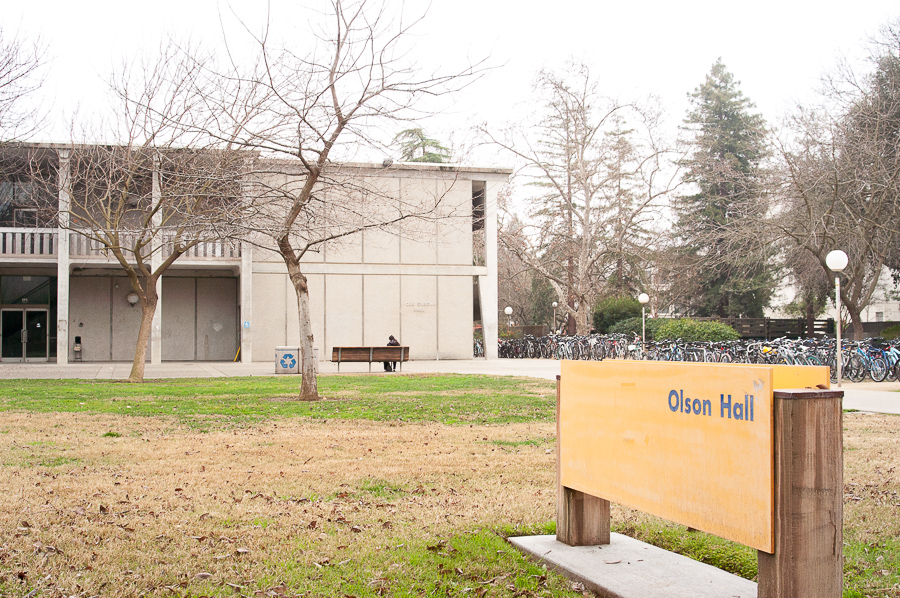
Humor: Portal to Hell discovered in Olson Hall, doesn’t cover smell of rancid piss

KYLA ROUNDS / AGGIE

Demons in classrooms may look like your friends — if you have friends, that is

A portal to Hell was discovered in lower Olson last week when first-year Max Williamson was shredded apart by feral demons who were initially thought to be protesters from UC Berkeley.

“We see this as an opportunity to bring the community together and also as a chance to make more money,” Gary May said.

“I just want my son back,” Dana Williamson, the mother of Max Williamson, said while bawling her eyes out. “On the bright side, the university has promised me stock in the new fracking operation they plan on building in Hell, which will probably bring me more happiness than Max ever did.”

Olson didn’t just smell like the usual rancid piss that leaches from the restroom floors into the rest of the building. Instead, it reeked of an oddly fruity scent, which mixed with the urine to create a sort of caustic designer cologne smell.

“Our main concern is that the portal may cause damage to Olson’s infrastructure and start dropping asbestos all over the place as the walls and ceiling decay. SHIP covers demonic interference and attacks but not asbestos-related health problems,” said Department of Health official Lar G. Rection.

Some of the demons who have escaped from the portal are now entering classes, wearing the flesh of students and attempting to fit in. They have primarily infiltrated political science classes, with some of them already drafting plans to run in the local elections.

“The problem with the demons is that they make roll call absolutely dreadful,” said Moe Lester, a professor of psychology. “I’ll ask, ‘Is Mr. Jim Diamond here?’ and they’ll say, “It’s Jim Belphegor Marduk Diamond, and I identify as a third level of Hell succubus and mind flayer.’ I thought they were an incubus.”

“These poor demons are getting so much hate,” said second-year Katherine Weaver. “And it’s mostly from xenophobic alt-right members like Dana Williamson. Sure, every once in a while a demon eats your kid’s face off. But to deny all of them an education because of that?”

“We’re looking at creating a program to help get these demons into the system and with proper financial aid,” Gary May said. “Trump killed DACA, so we’ll see what he thinks of our program to help demons in universities. We’re still thinking of a catchy name for the program that will support all of these ‘nightmarers.’”

“I’m mainly disgusted that these demons will get an American education and then leave America and contribute to Hell’s economy,” President Donald Trump said. “I think it’s about time to invade Hell.”


Written by: Drew Hanson — andhanson@ucdavis.edu

(This article is humor and/or satire, and its content is purely fictional. The story and the names of “sources” are fictionalized.)

Humor: How to become a CoHo Gold Member

JAMIE CHEN / AGGIE

With these tips, you’ll be hacking the CoHo in no time!

With Winter Quarter off to a quick start, many students are heading back to their same on-campus routines of frequenting the most illustrious eating establishment in all of Davis: the CoHo.

While the CoHo may already seem appealing to many students because of its affordable prices, convenience and guacamole that is definitely not made from powder, it’s a little-known fact that the CoHo actually has much more to offer to its loyal customers — a Gold Membership.

Though you may have thought there was no possible way that the CoHo could get any better than it already is, prepare to stand corrected. The CoHo is officially rolling out its Gold Membership program this Winter Quarter in an effort to show appreciation for students who voluntarily continue to eat there. The only catch is that the program is based on customer loyalty, so the CoHo is trying to keep the program pretty secretive in order to attract only the most deserving customers.

In an effort to provide an inclusive experience for all those who “like” the CoHo, The California Aggie would like to provide some helpful tips on how to achieve CoHo Gold status.

Take as many refills on coffee as you want

While this might seem like an edgy move at first, it’s one of the most important steps to becoming a Gold Member. Even though the CoHo acts like it doesn’t want you to get free and consistent refills at your leisure, this is all just a ploy to distract from the benefits of its elite membership program. Don’t be fooled, and remember, confidence is key in this step.

Cause a scene

This one is sort of up for interpretation. You can do something as small as repeatedly cutting the bagel line at noon or as big as physically stealing multiple vats of coffee from Swirlz. The choice is yours, but whatever decision you make is sure to cement you as a CoHo Gold legend.

Refuse to pay for anything

This is our last and most successful tip. It’s kind of similar to our previous one but has more of an anti-capitalist twist to it. It’s pretty simple. If you’re at the CoHo and an employee ever tells you to “pay” for something, just don’t. What are they going to do? Fire you? You don’t even work there. You have the ultimate power, and showing CoHo employees how powerful you are will make them respect you and therefore grant you Gold status. You’re welcome.


With these tips, you’ll be hacking the CoHo in no time. So come on down to the Coffee House today and get your Gold! 🙂


Written by: Lara Loptman — lrloptman@ucdavis.edu

(This article is humor and/or satire, and its content is purely fictional. The story and the names of “sources” are fictionalized.)

The Sanchi oil tanker collision serves as a sad reminder of the dangers of oil dependence

MARIANNE MUEGENBURG COTHERN [(CC BY-SA 2.0)] / FLICKR
The sooner we move toward alternative energy solutions and away from crude oil, the better

Whenever I see the words “oil tanker” in a headline, I imagine the worst.

I remember grisly pictures of oil-covered birds from the 2010 Gulf oil spill. (Refrain from performing a Google image search and spare yourself the guilt of being a human being.)

The Gulf oil spill is still classified as the worst oil spill in U.S. history. Over three million barrels of oil were released into the ocean. It cost 11 human lives and affected even more non-human lives: birds, fish, turtles and dolphins.

Researchers are still trying to determine how the oil spill affects their lives — and ours — today.

The recent Sanchi oil tanker collision is no less a tragedy. A human tragedy. An environmental tragedy.

The tanker collided with a cargo ship near the Yangtze River Delta on the evening of Jan. 6, and since then rescuers have fought through black clouds of toxic gas to try to save 31 crew members who remain missing.

The tanker contains 1 billion barrels of condensate, an ultralight version of crude oil — which happens to be highly toxic and flammable. The tanker partially exploded on Jan. 10.

The tanker continues to burn, and no one can do anything about it. But if the tanker sinks, it could mean even more tragedy. It would be the 10th largest oil spill in history.

“It’s not like crude, which does break down under natural microbial action,” said Simon Boxall, an oceanographer with the National Oceanography Centre at the University of Southampton. “This stuff actually kills the microbes that break the oil down […] If [the tanker] sinks with a lot of cargo intact, then you have a time bomb on the seabed which will slowly release the condensate.”

“The environmental impact of this disaster could be catastrophic,” said Dave Tickner, a freshwater adviser at the World Wide Fund for Nature. “The consequences will be far more severe if it affects a wide area of ocean or the Yangtze estuary, which is hugely important for wildlife, including significant numbers of migratory birds and a range of fish species.”

But another threat comes from the ship’s fuel, which could be up to 5,000 tons of bunker fuel, not including its cargo.

“The problem is the ship’s heavy bunker fuel,” said Chauncey Naylor, the director of emergency response and training at Tyco Corp’s oil-fire specialists Williams Fire & Hazard Control. “It burns real slow, and it’s heavy and will lay on the ocean and on any twisted metal and create heavy smoke. It’s the stuff that spills and gets on birds.”

The tanker reminds us of the risks we take when we extract and transport oil, which is especially relevant considering the United States’ recent decision to open the Arctic National Wildlife Refuge to oil drilling. If a similar accident occurred along Alaska’s coast, it could be devastating for the area’s wildlife — including birds, fish, caribou and the already-threatened polar bears.

It’s hard to imagine a world where these types of accidents don’t occur. But the moment we stop imagining that world, it becomes an impossibility.

Ottawa, Canada introduced a ban on oil tankers along the British Columbia coast in 2017. The Oil Tanker Moratorium Act bars oil tankers from operating along the coast from Vancouver to Alaska. The ban represents a victory in the struggle against crude oil dependence, proving that people still care enough to protect vulnerable animals, places and people.

I’m not suggesting that the U.S. can quit crude oil overnight. Unfortunately, my life is powered by crude oil, too.

I’m not suggesting that the U.S. rethink crude oil dependence, either. We’re past that.

We need to implement more alternative energy sources, like wind and solar, and move away from oil. It’s better for the environment, and it’s better for people.


Written by: Jess Driver — jmdriver@ucdavis.edu

Disclaimer: The views and opinions expressed by individual columnists belong to the columnists alone and do not necessarily indicate the views and opinions held by The California Aggie.

Did you read the user agreement?

JEREMY DANG / AGGIE

The deals we make with software

Recently, Apple came under fire for information that leaked about its handling of older phones. Apple blamed battery deterioration for its intentional slowing down of older models of hardware, citing old phones’ inability to keep up with increasingly demanding software updates. This modification of phones came about secretly and was only revealed to consumers after they began discussing the issue in online forums.  

The ethics of software patenting and its relation to consumers is contingent upon intellectual property, economic prosperity and marketability. Consumers often face the risk of being culturally disconnected if they choose to opt out of using popular programs, said Martin Kenney, a professor of community and regional development at UC Davis.

Gerardo Con Diaz, an assistant professor in the UC Davis Department of Science and Technology Studies, is currently writing a book about the history of software patenting in America for Yale University Press, which is projected to be published in 2019. Proprietary software is software that a firm develops for its own use and over which it claims ownership, Con Diaz explained.

“Patents is one of the means of protection, and the Apple case is not about patents but about proprietary software and about what a firm can and can’t — should and shouldn’t — do with its own proprietary software,” Con Diaz said.

Patents are available to the public, while proprietary software does not need to be shared with consumers.

“Software patenting started getting pitched as an ethical debate not among end users but among companies in the ‘60s,” Con Diaz said. “And that was primarily because of the explosion of popularity around an IBM system called the IBM S/360. As smaller firms started to become interested in creating a market for their products in big mainframe computers, one of the things they did was pitch the patent protection of computer programs as a business ethics problem, not just a legal problem.”

This would allow small businesses to succeed in the cutthroat marketplace of computer engineering. These small companies were not fighting against intellectual property, but against the strongly connected nature of hardware and software. By posing the problem as an ethical debate, these small software companies were able to carve out a place in the market for their software without having to develop computers at the same time. Software was included with computers when it first became available to consumers in the 1970s. Apple and IBM, which were creating hardware at the time, developed software along with new computer models. This trend allowed for an eventual separation between computers and their programs which no longer had to be marketed concurrently. For example, Facebook does not have to license itself, but built a place in the market for its service and has the choice to exist outside of having a piece of hardware.

When it comes to buying software from a company, the lack of attention paid to user agreements when buying a product — the desire to own a product outweighing the concern of what kind of information they are handing over — is not a new feature, Con Diaz explained. Con Diaz said that the scope of the user agreement has expanded and plays a much more significant role than it did at the genesis of software development. The freedoms given to software companies also changed in a way that has allowed them to keep their software hidden from other companies and consumers alike.  

“Most of the software that we use today is ‘blackboxed.’ We have absolutely no way of getting access to intellectual property,” said Ranjodh Singh Dhaliwal, a Ph.D. student of English whose research includes internet culture in association with the STS department at UC Davis.

A company’s ability to “blackbox” is like writing an essay in a language class or doing a science project and recording data. Writing demands sources along with the unspoken rules that make the paper well written, such as grammar and composition; doing a scientific study requires an idea and a result, along with the numbers and proof. So the unspoken rules when it comes to software are the secrets hidden from anyone outside of the company, the ones in the “blackbox” as Dhaliwal called it, and the sources are the user agreements.

“The idea of blackboxing software has the intention of protecting companies and their share of the market,” Dhaliwal said.

Both Dhaliwal and Con Diaz mentioned that France has rules making planned obsolescence — a marketing technique that forces consumers to buy newer products from the same company after a certain amount of time has passed or by drawing attention to newer products before older ones are broken or too old — illegal. The United States does not have such a law.

“Apple didn’t mention [their slowing down of phones] because they didn’t have to,” Con Diaz said.

It is becoming more difficult to live without services such as Google, Facebook, or Snapchat, Kenney explained.

User agreements explain the terms of using software clearly, but it may behoove users to be more familiar with what software companies are capable of outside of what they have to reveal to their users.


Written by: Jason Kelly — science@theaggie.org