57 F
Davis

Davis, California

Monday, December 22, 2025
Home Blog Page 652

Sacramento’s “ArtStreet” exhibit showcases diverse artwork

ARIEL ROBBINS / COURTESY

Don’t miss this free exhibit ending on Saturday, Feb. 25

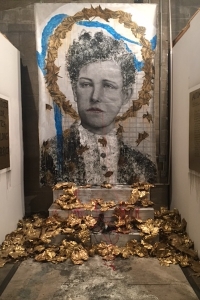
Entering the partially-indoor, partially-outdoor world of Sacramento’s ArtStreet exhibit, you are met with the largest wind chime you’ve probably ever seen, and you get to touch beautifully framed moss and have a glimpse at several colorful murals. The diverse art mediums — sculptures, decorated rooms, an interactive kaleidoscope — all blend together to resemble an Alice in Wonderland-esque theme park.

There’s no denying that ArtStreet is “weird,” but it’s the good type of weird. Besides, what interesting art isn’t a bit strange at the end of the day?

Jose Di Gregorio, a professional artist whose exhibited art works include two murals and a laser cut piece installation, agrees that weird is good.
PARI SAGAFI / COURTESY

“I’m a self-proclaimed weirdo, and I want to own that term as a positive thing, I want my daughters to be weirdos, and I feel like when you can participate in a weirdo community, and that grows, it starts to become less weird, and less of a fringe subculture,” Di Gregorio said. “The creative culture is out there, it’s just that they tended to be relegated as a peripheral. And when you put these things in the forefront — you can’t deny the impact that it has.”

Shaun Burner, a professional artist who has been creating murals locally and internationally for the past 15 years, was approached last year by the owner of the Art Hotel to paint a mural on the side of the building before it was set to be demolished. This sparked an idea in Burner, who then suggested that the inside of the hotel could also be utilized to exhibit different types of artwork. The project took off from there.

Now a year later, the team of artists who participated in Art Hotel call itself M5ARTS, described as “an arts initiative in Downtown Sacramento who are committed to envisioning and creating culturally significant multifaceted and multidimensional art experiences.” As one of the founders of M5ARTS, Burner knew early on that the artists wanted to continue what they had created with Art Hotel. This year’s ArtStreet project opened on Feb. 3 and features around 100 visual artists and approximately 70 performers and musicians.

Quincy Gonzalez and Johanna Peterson, River City High School art students, visited ArtStreet two times, and they hope to come back once more before the exhibit officially ends this Saturday.

“I really like that they bring up serious questions and issues that we have in our society,” Peterson said. “I really like the Women’s March Wall, because it makes me feel that we’re gonna fight back and make a difference because we need to make a difference.”

On the other hand, Quincy enjoyed how some of the artists “incorporated a lot of Sacramento culture to it, and a lot of the pieces were in collaboration to things happening in Sacramento.”

PARI SAGAFI / COURTESY

Having access to free, diverse and multidimensional art is not always a possibility — so check out some of Sacramento’s unique artists and their work while this special opportunity lasts.

“These [art exhibits] become culturally relevant to any city’s fabric,” Di Gregorio said. “There’s a cultural currency out of this that you don’t get with paying for a product, getting it, and that’s it. These things are intangible, but they’re so important to create so that people have outlets.”

ArtStreet runs until this Saturday, Feb. 25 at 300 1st Avenue in Sacramento, CA, and it is free to the public. Check out M5Arts’ website and the ArtStreet Facebook event page to find out more about upcoming events and artists before it’s too late!
Written by: Pari Sagafi — arts@theaggie.org


 

The A(Maze)ing Aggies

0
ZOË REINHARDT / AGGIE

Women’s tennis coach Bill Maze reflects on career, 2017 season

The UC Davis women’s tennis team is off to a solid 7-3 start this season. In a weekend trip to the heavenly Hawaiian islands from Feb. 10-12, the Aggies split their two matches, shutting out Chaminade 9-0 on Friday but falling to their conference foes, Hawai’i, by a score of 6-1 on Sunday in a match that was postponed the day prior due to rain. A week later, the Aggies split their two weekend matches yet again. UC Davis suffered a 4-0 loss to the UC Santa Barbara Gauchos on Feb. 18 in the team’s first conference home game, but then it rallied on the road the next morning to edge Santa Clara with a 4-3 victory.

Freshman Nikita Pradeep was one of the bright spots in the tough loss to Hawai’i. She recorded the lone point for UC Davis, winning her singles match in an intense three sets. Pradeep, along with her fellow first-year teammate Kristina Breisacher, was stellar yet again in the Aggies win over Santa Clara. Breisacher and Pradeep, competing in the four and five singles spots, respectively, both won their matches in two sets. Their victories proved to be crucial in contributing to the team’s narrow victory.

“The freshman have been fantastic,” said head coach Bill Maze. “We are lucky to have them, and they have really been living up to what I thought they were when I recruited them. They’re strong players, they compete well, they’re great sportswomen on the court and they do well in school. You can’t ask for much more than that.”

The team’s returning players have been competing fiercely as well. The junior trio of Lani-Rae Green, Kristy Jorgensen and Jessie Lee has continually battled fiercely in the top three singles spots. Jorgensen, who has played at the number-one spot in nine of the team’s 10 matches, leads her two other junior teammates with four victories. In the doubles number-one spot, Jorgensen and sophomore Kelsie Bryant have recorded six wins in the team’s 10 matches. This well-rounded play from the team as a whole is a positive byproduct of Maze’s recruiting process and his vision of potential players when he is scouting recruits.

“I look for attitude and effort and competitiveness out there recruiting,” Maze said. “It’s a skill, and I haven’t always gotten it quite right, but I think I have recently over the last few years. I don’t look at the results as much as I look at attitude and effort out there.”

Maze also added that the success of the team so far this year can be most attributed to the fantastic chemistry between each of its nine members.

“They have so much fun together,” Maze said. “It’s non-stop laughing, really. It’s great to see. They care about each other, and I think the more you care about each other the harder you try and the more you want to win for each other.”


***


The man at the helm, Bill Maze, is in his 22nd season as head coach for the Aggies. Soft-spoken, yet not lacking a charismatic charm, Maze currently sports a bushy, dark beard streaked with grey, giving him the appearance of a wise and tranquil master of the art of tennis.  

Maze is, in fact, regarded as somewhat of a tennis master; he was inducted into the U.S. Tennis Association Northern California Tennis Hall of Fame in 2014. He has been around the game all of his life, from his early years growing up in Bakersfield, California to his All-American collegiate career with the Stanford tennis team competing alongside tennis legend John McEnroe. For six years Maze toured on the Association of Tennis Professionals (ATP) circuit, competing in tennis’ most renown tournaments all over the world and eventually capturing a No. 87 world ranking.

Maze, despite being a man with such a wealth of success and experience, remains a kind and humble figure. He would rather talk all day about his players, not himself. When signaled that he would be questioned about his background and his playing days, Maze responded with a laugh, saying, “Let’s not do that.”

Nevertheless, he was asked about how his unique journey through the tennis world has helped him transition from his playing days into his role as a coach.

“That’s a good question,” Maze pondered. “I don’t think you have to have been a good player to be a good coach, by no means. When I first started [coaching] I thought, ‘well this shouldn’t be that tough,’ but it’s so different than being a player. That’s why I love it when my past players get into coaching and I love it when they call me and they say, ‘Coach! Gosh, I had no idea what you were going through, I’m so sorry I acted the way I did!’ I love those conversations.”

Just like winning a 16-and-under national tennis title or winning two ATP doubles titles, coaching tennis successfully is not without its share of hard work and dedication.

“There’s just so much to coaching, you never can get it down,” Maze admitted. “You just cannot perfect the job because every single day something new happens. There are just so many trials and tribulations and things that go on. Basically, the job is never boring.”

But is there something in particular that has motivated Maze to build such an impressive coaching tenure?

“I love Davis,” Maze responded with a smile. As it comes to coaching, Maze was a relatively late starter who began his career in his mid-30s; most other coaches start almost immediately after college or in their mid-20s. He describes coaching as something that he just fell into.

“When this Davis job opened up, I thought, ‘You know, I think I’m just gonna throw in my application,’” Maze said. “I’d never been to Davis and when I got here for the interview I thought, ‘Man, I hope I get this job.’ I loved it. I just loved the town. The feeling of it, I just knew it was right up my alley. But the reason I’m here, I mean, I’ve been sure about very little in my life, but when I got this job I thought, ‘Man, I’m just gonna stay until I retire because I love Davis.’ It’s my kind of place.”

Under his guidance, Maze hopes that the team will continue to build off its strong start to the season. The Aggies will play the first two matches of their five game homestand this weekend, beginning Saturday with a match against Pacific that is set to get underway at 10:30 a.m.

Written by: Dominic Faria — sports@theaggie.org

UC Davis women’s water polo dominates Aggie Shootout

0
IAN JONES / AGGIE

Aggies win three of four games over weekend tournament

It was a very successful weekend for the UC Davis women’s water polo team from Feb. 18 to 19 at Schaal Aquatics Center, as the Aggies won three of their four games, bringing their overall record to 7-11.

The start of the weekend was difficult for the Aggies, as they took an early loss in their first game on Saturday to Pacific, 11-8. Pacific, ranked 11th by the NCAA, was the 15th straight nationally-ranked opponent that UC Davis has faced so far this season. The 12th-ranked Aggies were not disheartened by the first game, however, as they took two impressive 19-6 and 19-4 wins against Sonoma State and Occidental, respectively, going 2-1 on the first day of play. Over the three games that the Aggies played Saturday, junior center Greta Kohlmoos scored a team-leading 12 goals, four each against Pacific, Sonoma State and Occidental. Sophomore utility Annie Kutt tallied her first collegiate hat trick.

Sunday’s competition against CSU Bakersfield (CSUB) turned out to be a continuation of the previous two games on Saturday, as the Aggies picked up a 12-6 win following a dominating performance. Kohlmoos put an impressive four goals on the scoreboard, bringing her weekend total to 13. Junior utility Paige Virgil added three more goals, senior utility Hannah Harvey had two and freshman attacker Kathleen Schafle, and utility Annie Kutt and center Mckenna Hauss, both sophomores, each scored one.

CSUB scored the first goal of the game Sunday two minutes into the contest. After the Aggies placed one in the back of the net and the Roadrunners answered, UC Davis went on a 3-0 run to lead 4-2 after the first quarter of play. The Aggies scored two more goals in the second quarter, entering halftime with a 6-3 lead. Kohlmoos and Kutt each scored in the beginning of the third quarter to increase the lead to 8-3. Although CSUB responded with a three-goal run of its own with 6:06 in the fourth, Hauss and Kohlmoos each hit the back of the net to finish the match and give the Aggies the 12-6 win.

“Today’s game was a good test for us because CSUB is a difficult team to prepare for,” said head coach Jamey Wright. “I thought we did a good job on getting shots on goal — it was really a great balanced approach from the team. We didn’t finish the counter opportunities as well as I hoped, so that was maybe one downside. We had maybe two or three counter attacks that we didn’t score that we should have had.”

As a team predominately composed of freshman and sophomore players, the UC Davis women’s water polo team has turned its play around these last few games.

“We are starting to turn around because the inexperience is starting to turn into experience and that is really good to see,” Wright said. “We have to improve our fitness level, our six-on-five’s, defense as well as our offense, and maybe build some more depth. It’s been good to watch and see the progression. We have had the hardest schedule we have ever had and one of the youngest teams we have ever had and we just have to not listen to anyone else and trust the process.”

The UC Davis women’s water polo team continues its schedule this Saturday, Feb. 25, as the Aggies go on the road to Santa Clara, Calif. to play a doubleheader against Cal State Monterey Bay and Santa Clara.

Written by Ryan Bugsch — sports@theaggie.org

Davis’ Whole Foods Market shuts down

0
CAT TAYLOR / AGGIE

Local Whole Foods closes Feb. 12

After five years of providing business to students and locals of Davis, the Whole Foods Market on 1st Street closed on Sunday, Feb. 12. The Davis location was one of nine Whole Foods Markets across the country to permanently close.

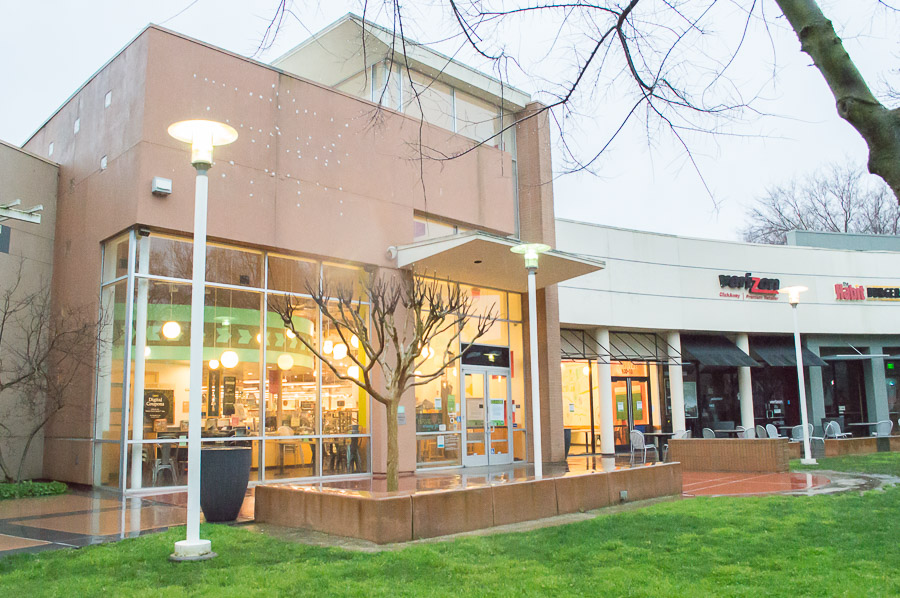
The Whole Foods Market in Davis was located in a small shopping center along with several other eateries. The closure was part of an evaluation nationwide to determine which Whole Food’s locations were underperforming. The local market faced competition from other supermarkets and stores in the city, such as Safeway, Trader Joe’s and the Davis Food Co-op. Whole Foods markets itself on its organic food that does not use artificial preservatives, colors, flavors, sweeteners or hydrogenated fats. Although this is a healthy benefit, many students could not afford the price tag associated with the products.

“I think it affects students for the most part,” said John Tuquero, a Verizon Wireless employee in the shopping center in which Whole Foods was located.

Despite the fact that not all students or residents could afford the prices at Whole Foods, the store was a common location for students to grab a bite to eat while studying.

“It saddens me that Whole Foods is closing because it’s not just a grocery store, but also an outing where people can connect together,” said Forrest Pasturel, a first-year environmental policy and analysis major and former employee at the Whole Foods in Los Altos. “It was at a very convenient spot, and would have been near my future apartment.”

However, others argue that people would go to Whole Foods but not actually purchase enough for the company to make a profit.

“That’s why it closed down –– people used [Whole Foods] as a hang out spot and not to purchase,” said Mike Silva, another Verizon Wireless store employee. “[Whole Foods closing] also provides more opportunity for local stores, like Trader Joe’s, to grow.”

Davis students, employers and residents are wondering what will move into the place of the Whole Foods on the Fulcrum Property.

“I’d love to have something in there that would generate sales tax revenue for the city –– it’s something that we critically need,” said Mayor Robb Davis.

And, while some are hoping for an Apple store or another big corporate company, others want to keep the small-town college vibe by supporting smaller, locally-owned businesses. No matter what the market is replaced with, the closing of Whole Foods will have a lasting impact on the Davis community as a whole.

“It just feels out of place, not having a Whole Foods in Davis,” Pasturel said.
Written by: Kaelyn Tuermer-Lee — city@theaggie.org

University of California, Davis City Council sever Wells Fargo contracts

REBECCA RIDGE / AGGIE

Wells Fargo faces fraud, predatory lending charges, other controversies

The University of California (UC) will retract a $300 million line of credit and a $150 million interest reset contract with Wells Fargo by April of this year. $200 million has already been retracted, and the remaining $100 million will be divested after a replacement bank is found. This follows the termination of the $25 million commercial paper contract with Wells Fargo by the UC in November of 2016.

In September of 2016, the Consumer Financial Protection Bureau (CFPB) fined Wells Fargo $100 million for secretly opening unauthorized banking accounts for existing customers. Federal investigators discovered that Wells Fargo employees had created two million fraudulent bank and credit accounts under the names of existing customers since 2011, prompting the California state treasury to suspend its Wells Fargo investment. The national bank was fined $185 million for these violations.

Wells Fargo is currently part of a banking conglomerate that provides a $900 million line of revolving credit to The GEO Group, the private prison and immigration detention company, and a $135 million line of credit to the private prison group CoreCivic. In August of 2016, the U.S. Department of Justice confirmed its intention to withdraw from privately-operated prison contracts.

Last year, the Afrikan Black Coalition (ABC) successfully pushed the UC to divest $30 million from private prison companies.

Wells Fargo has also faced accusations, lawsuits and settlements regarding racially discriminatory and predatory lending to African Americans and Latinos — it settled with the Justice Department for $184.3 million in 2012.

Recently, Wells Fargo received negative press for helping fund the North Dakota Access Pipeline. Wells Fargo is one of several large banks providing loans and support for the construction of the Dakota Access Pipeline.

Francisco Ferreyra, a third-year community and regional development major at UC Davis and the environmental sustainability officer of the UC Student Association, said that Davis residents and several student groups asked the Davis City Council to also take action against the Dakota Access Pipeline.

“We came to the city council and we asked them to stand in solidarity with Standing Rock and oppose the Dakota Access Pipeline,” Ferreyra said. “These oppressive forces of the fossil fuel industry, the finance industry, they don’t care about you or I. They care about two things: their profits and their reputations. The strategy for us on the ground is to hit them where it hurts, in those two spots. Divestment is a historically successful tactic.”

On Feb. 7, the City of Davis also ended its contract with Wells Fargo. It will be moving $124 million in banking services to another institution by the end of this year. Davis marks the second city embarking on this process, after Seattle finalized its divestment of $3 billion from  Wells Fargo on the same day.

“Over the years, a couple of councils ago before I was on, there has been a desire to move more of our banking services to local or regional banks as opposed to large national banks that may or may not have real tight links to our community,” Mayor Robb Davis said.

Davis believes that these unethical practices do not constitute socially responsible banking — they are another factor in the council’s decision to divest.

Claire Doan, a member of UC media relations, explained the university’s rationale for severing ties with Wells Fargo.

“UC believes unwinding some of our credit relationships and suspending our investment banking relationships in tandem with the state treasurer were appropriate actions taken in light of the unauthorized bank and credit card accounts opened by Wells Fargo,” Doan wrote via email. “However, we value our long-standing relationship with the bank, and moving forward we want to continue to engage with new leadership as they reform their business practices.”

Connor Gorman, a UC student workers’ union organizer within the local Davis chapter, said that the ABC was “the school’s driving force” in a push to divest from Wells Fargo.  

The ABC announced the divestment on its website and celebrated the victory.

By taking a stand against the amoral practices of an enormous corporation like Wells Fargo, the Afrikan Black Coalition is pushing the UC to exhibit the kind of leadership necessary for the survival of communities unfairly targeted by a criminal financial system,” a post on the ABC website read. “We dedicate this small victory to the hundreds and thousands of our people who are trapped in America’s gulags. Through the organized struggle of our masses, we believe our liberation is inevitable.”

Ruben Pulido, the vice president and communications manager of corporate communications for Wells Fargo, wrote over email that the bank will continue to support the UC despite the divestment. Pulido said that Wells Fargo does not deny lines of credit with private prisons.

“Since the 1970’s, Wells Fargo has proudly supported the University of California’s mission to be a world-class public research university system,” Pulido said. “And we stand ready to provide that vital support in the future. While we respect the seriousness of our country’s ongoing debate about the criminal justice system, we do not as a corporation take positions on public policy issues that do not directly affect our company’s ability to serve customers and support our team members. Due to chronic prison overcrowding, federal and state governments have for the past 30 years been contracting out detention services. People who want to change that should address their concerns with the appropriate government officials.”

Pulido added that the bank wields no influence in private prison policies and conduct.

“Wells Fargo is a bank,” Pulido said. “We do not set U.S. detention system policy; we have nothing to do with the setting or enforcement of laws; we don’t tell judges where to place people accused of or found guilty of violating the law; and we don’t tell the federal and state governments which companies should be awarded contracts. Wells Fargo holds no shares of either The GEO Group or CoreCivic. We have no seat on either company’s board of directors, and we do not dictate their policies or business models.”

Written by: Aaron Liss and Raul Castellanos  — campus@theaggie.org

Armadillo, KDVS collaborate to host Vinyl and Music Fair

MEENA RUGH / AGGIE

The perfect event for old-school music lovers

Armadillo Music, an independent record store located in downtown Davis, is one of the few places in the Davis area where music lovers can find quality vinyl, CDs and cassette tapes of all genres. On Feb. 25, Armadillo and KDVS 90.3 will be collaborating to host their semiannual Vinyl and Music Fair.

With over 40 vendors from all over California coming to sell, there is sure to be an abundance of all kinds of records catered to every music taste, from classic and jazz to heavy metal and reggae. In addition to vinyl, vendors will sell CDs, cassettes, DVDs, equipment and all types of music memorabilia. For those looking to get a first look at the selection, the fair is also offering early entrance at 8:30 a.m before the event begins for a $5 fee.

“There’s going to be plenty of stuff like The Beatles, Led Zeppelin and Pink Floyd available,” said Paul Wilbur, the manager of Armadillo Music. “But if you’re looking for something special for those hardcore collectors out there, it might be worth it to come early.”

Despite the accessibility of music through mobile streaming in the modern age, records are making a strong comeback. Many people desire a physical connection to artists and their music.

“I feel that vinyl provides a more authentic sound, especially when listening to tunes from decades ago,” said Laurasia Holzman, a third-year wildlife, fish and conservation biology major. “To me, it’s important to support this form of music because it provides a different experience of listening.”

The Vinyl and Music Fair has been going on for approximately eight years and happens twice per year. According to Wilbur, in the early years of the fair, attendees were mostly of the same demographic — men in their 40s and above looking to expand their record collections. Recently, however, the crowd has become more diverse, mixed with people of all ages from 11-year-old kids to seniors.

Hannah Presiado, a first-year environmental science major, is another young vinyl-lover and customer of Armadillo Music.

“The physical act of putting on a record and the smell of old records is really comforting to me,” Presiado said.

The Vinyl and Music Fair will be held on Feb. 25 from 9 a.m. to 4 p.m. at the Davis Senior Center at 646 A St.
Written by: Sydney Odman — arts@theaggie.org

Academics unite in peaceful rally against immigration ban

BRIANA NGO / AGGIE

Faculty, students recount personal tales of immigration; highlight value of diversity

UC Davis students, faculty and members of the Davis community gathered on the Quad on Feb. 9 to display their solidarity with those directly affected by President Donald Trump’s immigration ban.

In light of the recent executive order, universities across the country have organized similar rallies with the uniting objective of “Academics United — No Visa and Immigration Ban.” Nazanin Akrami and Ellie White — both graduate students at UC Davis in cooperation with SEDAD, the Iranian graduate student association — were the organizers of this peaceful rally.

The event was approximately an hour long, d

uring which participants were prepared with rain ponchos, umbrellas and signs that displayed slogans such as “Love not hate makes the nation great” and “No ban, No wall, No Trump, No fear.” It received publicity on multiple news platforms, including Fox 40 and CBS Sacramento.

Akrami said that her goal for the event was “to start a conversation about diversity in order to feel more connected and help people going through these issues.”

The rally showcased many speakers ranging from graduate students, to faculty members, to Mayor Robb Davis, whose speech was titled “My Home Towns Are Home to the World.”

In his speech the mayor stressed the importance of “proclaiming ourselves a sanctuary city” and  “welcoming people from all over the world.”

“They have an order that capriciously excludes people from seven nations at the stroke of a pen, including the victims of wars that have grown in the soil where our nation soiled the seeds of societal destruction in the name of freedom,” Davis said. “This affects all of us because it fundamentally puts into question what feels real and natural and beautiful to us. It offends our cultural values.”

Dr. Banafsheh Sadeghi, an assistant professor at the UC Davis School of Medicine, delivered an emotionally-charged speech about her personal experience with the executive order.

Sadeghi discussed the fear of entering the unknown as a result of immigration, in addition to the psychological and emotional tolls of making sacrifices for “following a path that leads to a better world.”

Furthermore, she expressed the grief she felt when she was forced to choose between staying with her children in America or visiting her mother in her home country of Iran the week the executive order was put into effect. She went on to discuss how crucial it is to maintain “love and compassion” in such politically turbulent and tense times.

Additionally, Koen Van Rompay, a recipient of the Chancellor’s Achievement Award for Diversity and Community, and Wesley Young, director of services for international students and scholars, both delivered talks on the priceless value of international ties.

Akrami and graduate students Hossein Karimi and Abdolhossein Edalati also shared stories of both triumph and struggle as a result of immigration and the consequences of the ban.

White read a statement on behalf of physics professor, Mohammad H. Hamidian, who was unable to be present at the rally.

In his statement Hamidian recounted the story of his immigration to Canada as a war refugee during his childhood and later to the U.S. as a student. His statement expressed his concerns for the “fading opportunities of future immigrant professors, artists, musicians, engineers and teachers” and how they may not have the chance to “be safe and reach their potential in a society with so many opportunities.”

On a lighter note, he concluded with having “immense hope in the outpouring support and generosity of the people in this country.”

UC Davis Yassi Mostafavi, a second-year political science and English double major, and Ariana Abedifard, a second-year environmental policy analysis and planning major, both felt closely connected with the speeches given at the rally.

“As an Iranian, it’s heartwarming to see that people are coming out to support those affected by this terrible executive order, these are not the principles this country was founded on,” Mostafavi said.

Abedifard said Sadeghi’s speech resonated with her in the sense that “you have two homes, and it is hard to decide between the two and pick an identity, and things like [the immigration ban] make it even harder.”
Written by: Kimia Akbari — campus@theaggie.org

Protest against Planned Parenthood in Woodland is met with counter protests

0
DIANA LI / AGGIE

Demonstrations take place at hundreds of Planned Parenthood locations nationwide

Over 100 protesters both for and against Planned Parenthood rallied outside of the Woodland clinic on Feb. 11 during a protest that was initially held to urge Congress and President Trump to defund the organization due to Planned Parenthood’s in-clinic abortion services.  

What was originally planned as a protest against Planned Parenthood quickly became an outnumbered protest featuring women, men and individuals of all ages, races and social backgrounds fighting for support of the organization and for women’s rights.

Over 80 individuals RSVP’d to the Woodland Facebook event that hosted the counter protests in support of Planned Parenthood, but estimates made by ralliers in attendance were closer to 150 people, with some showing up as early as 8 a.m.

This event in Woodland was just one of five rallies held in the greater Sacramento region, with more than 225 rallies held at Planned Parenthood locations across 45 states nationwide.  

In Woodland, those who rallied in support of the organization carried banners and placards with slogans saying things such as “I stand with Planned Parenthood” and “not your body, not your business.” Many men and women also wore pink to show their solidarity with the national health care provider.

“I support the clinic because it provides services that are needed for women’s health,” said Paul Wilson, a rallier in attendance at the Woodland event. “It provides mostly services for disease, reproductive and sexual health, and other complications. There are very few abortions, so it is incorrect to label it as an abortion clinic.”

According to Planned Parenthood’s 2014-2015 Annual Report, of the “9,455,582 total services that were offered during that year, 323,999 services, about 3% of the total provided, went toward abortions procedures.”

A majority of the services that Planned Parenthood provides go toward birth control information and sexual health and disease tests and treatment.

Yolanda Rodriquez, a rallier in support of funding for Planned Parenthood, was also in attendance with her 17-year old daughter, Holly Gainez, to speak out about the organization and the services it provides for her family and for the public.

“My two daughters go to the clinic,” Rodriquez said. “Their school is teaching them information about women’s health, so they know that they have a safe place to go to. [Planned Parenthood] is here to help teach our children, to help protect them.”

Those not in support of Planned Parenthood were also present at the Woodland event, though significantly fewer in number. Californians for Life, a social justice organization that fights to end abortion in the state, sponsored the protest Planned Parenthood event in Woodland. There was also a quiet praying vigil of three women and two children who stood by venue and repeated a short verse, “Holy Mary, pray for our sinners.”

At UC Davis’ Student Health and Counseling Services (SHCS), where health care providers offer a number of different medical, mental health and wellness services to students, abortion services are not provided.

Instead, their webpage suggests that if students are in need of abortion services, they can speak with a provider at SHCS where they may be referred to Sutter Davis Hospital, a provider in their associated insurance network, or to Planned Parenthood for further assistance.


Written By: Anya Rehon — city@theaggie.org

Memorial Union to reopen Spring Quarter

VENOOS MOSHAYEDI / AGGIE

Opening date pushed back to May 1

Students have awaited the full reopening of the Memorial Union (MU) for almost two years since its closure in early 2015. Recently, however, the reopening date was pushed back to May 1, meaning that students will be left for an extra month without access to the central hub of campus.

“We had been working towards a public opening that was slated to be April 3rd,” said Matt Fucile, the director of Building and Event Services, Divisional Resources, via email. “However, with some new information we have received on the construction processes, we are currently reviewing a postponement of that opening.”

Notwithstanding another delay, plans are in motion to host a “ceremonial grand opening.” Details remain scarce, however, on what this celebration will entail.

“A ceremonial grand opening will take place,” Fucile said. “Planning for that is underway, and details should be more readily available shortly. Of course, while we had been close to the date for this, this will also need to be determined by the new opening date we are resolving. The plan was for the event not to happen on the opening date, but within a couple weeks after (schedule dependent).”

Greg Secor, senior project manager for Design and Construction Management, is one person who has been working on bringing the construction to completion. Secor is looking forward to students being able to see the MU fully renovated.

“I will be excited to see the new wide open spaces created on the first [and] second floor of the MU,” Secor said via email. “These new spaces are reminiscent of the building’s original design which had a clarity to its clear open floor plan. I think students will be excited about the large amount of new lounge space the building will provide. Hopefully it will take some pressure off the COHO right next door by providing more seating options for groups and individuals.”

Sarah Santamaria, a second-year community and regional development major, is ready to experience the full MU for the first time, since it has been closed throughout her time at UC Davis so far.

“I have heard a lot of talk about all of the different things that are going on and that are going to be brought, which I’ve never experienced,” Santamaria said. “I have heard a lot about the gaming area and that sounds really cool. Right now […] the seating area, that sounds really nice. You’re always kind of having to run toward a seating area when it opens up. I think it’s just something that’s really exciting for our community here and something that makes us different and special and unique.”

Looking back on the renovation process, Secor said that construction teams have faced various unexpected challenges while working on the building over the past two years.

“As with any remodel project on a building that is over 60 years old we expect to encounter some challenges,” Secor said. “Over the years this building has gone through several renovations that have significantly changed the building. As a result, we have found unexpected conditions when we started opening up walls. Some challenges included finding space for new duct work between the confined space of the existing floor structures and new ceilings or  discovering data and electrical lines in walls and ceilings where we didn’t expect them.”
Written by: Kenton Goldsby — campus@theaggie.org

Humor: Midterm to cover slides, Ch. 1-14, lab, readings and any and all information ever written

ALEXA FONTANILLA / AGGIE (top left), LUCY KNOWLES / AGGIE (top right), ZOË REINHARDT / AGGIE (bottom left), PUBLIC DOMAIN (bottom right)

Students able to complete the course with B- or higher guaranteed total omniscience


DAVIS, Calif. — UC Davis’ very own general chemistry professor Tom Meineke has done it. He’s created a truly comprehensive exam.

Professors always strive for thoroughness when instructing students in their field of expertise. Complete understanding has often been considered the unattainable Holy Grail of academia. But there are roadblocks to vanquishing this Great White Whale, including lecture duration, notetaking speed, textbook completeness and finite student lifespan.

Professor Meineke’s innovative approach of ignoring these factors ensures students able to pass his course will become experts not only in chemistry, but all other fields as well.

“I just want student understanding to be thorough,” Meineke said. “As an educator, it is my job to ensure that students walk out of a class knowing the material, but also how to learn. I would also Iike them to be an unlimited nexus of information.”

Meineke admitted he asks a lot, but was firm on the importance of challenging students.

“When people ask me, ‘Tom, do you think it is important to push students?’ I say ‘no.’ I think it is important to thrust them into the atmosphere.”

Professor Meineke was kind enough to share some of the exam questions with The Aggie.

These questions include:

  • Which organelle is considered the ‘powerhouse’ of the cell?”
  • What proteins are responsible for transcription?
  • When is the best time to file an amended tax return?
  • How does acetylation occur in a zygote?
  • What year did Mark Twain write his very first thank-you note?
  • How would you calculate the volume of a sitting vice president?
  • How many vultures would it take to skin a full grown javelina in 30 minutes?
  • What is the technical term for cell division?

Meral Leigh, a second-year student at UC Davis, had some mixed feelings about the decision.

“On one hand it was a little daunting to be asked to have a complete understanding of all information in existence,” Leigh said. “On the other hand I’ve always wanted to learn more about the Italian Renaissance so I guess it evens out.”

Leigh expressed that she thought the best way to avoid study fatigue was to alternate what she was studying regularly. She said she began to notice the strain when she was about seven percent through the “A” section of the Abbeville, Alabama phonebook.

Leigh agreed to share her new schedule. She begins her day studying the technical manual for a Zenith XBV713 combination DVD/VCR player. Around noon she switches to a series of cover letters written by a man named Todd Migrim. In the early evening she makes flashcards to help her remember who works Saturdays at the Target Supercenter in Calgary.
Written by: Parker Nevin — phnevin@ucdavis.edu

Harlow’s Nightclub presents Khalid

ASHLEY LUGO / AGGIE

19-year-old brings soul, cutting-edge sounds to Sacramento

“That was Khalid with his hit song ‘Location,’” the radio blasted as I pulled around the corner to the Harlow’s Nightclub in Sacramento. Hundreds of people were lined up outside to hear the young artist perform at the last stop on his United States tour.

The 19-year-old R&B singer, who has traveled the world due to his military family, has gained recent publicity for his breakout song “Location. Khalid discusses themes of love and emotion in his music. Along with his own music, he has been featured on tracks with artists such as Alina Baraz and Brasstracks.

The small night club quickly filled up as attendees of the sold-out show arrived. Crowds of young people approached the stage as the DJ announced the opening act: Kyle Dion. The 21-year-old singer-songwriter took the small, intimate stage. He immediately grabbed the crowd’s attention with his sultry voice and amazing stage presence. Much like Khalid, he takes influences from R&B, soul, jazz and pop music styles. He performed several songs from his 2016 album Painting Sounds, along with others.

After Dion’s performance, the crew took a short 15-minute break to set up the stage for the main act. All of a sudden, Khalid’s voice resonated through the speakers as a narration about his life in El Paso, Texas began. In his narrative, the singer describes his isolation throughout his school years, and how that sense of loneliness has driven him to creativity in music. Following this brief anecdote, Khalid and his bandmates — who had been dancing next to me earlier in the night — took the stage. The crowd erupted with screams, waving hands and bright cell phone lights.

The set began with “Reasons,” a song about beginning a relationship, perfect for a concert on Valentine’s Day. The young performer interacted with the nightclub audience, touching hands, singing to Snapchat cameras and asking for feedback about love and exes. Next, he performed “Saved,” followed by a cover of “Lost,” by Frank Ocean, during which the guitarist executed a jaw-dropping solo, sending the crowd into cheers. Khalid took time on stage during the solo for a little dance break, showing his fun and playful side.

He then led into a song from his new album American Teen, which comes out next month. Perhaps the most action-packed part of the night followed directly after. The artist launched into his breakout hit “Location,” shouting “You all better know the words to this one!” The audience excitedly proceeded to sing along. The night ended with “Coaster,” a song all about heartbreak and pain over an ex-lover. The teenager finished off the night by telling the crowd “I love you guys.”

There is no doubt that Khalid pours raw emotion into his music. His sultry, retro sound captivates audiences attention and reinforces themes of love and vulnerability.

Khalid’s new album comes out March 3, and his music can be found on Spotify, iTunes, YouTube and SoundCloud.
Written by: Myah Daniels — arts@theaggie.org

ASUCD President Alex Lee vetoes amendment for creation of Judicial Council

GENESIA TING / AGGIE

Veto included revision abandoning creation of oversight committee for judicial council

Last month ASUCD President Alex Lee issued a series of vetoes on legislation passed by the student Senate, including a revision veto on a constitutional amendment to create a Judicial Council and a Judicial Council Oversight Committee (JCOC).


Constitutional Amendment #50, authored by the Internal Affairs Commission (IAC) chair Nick Flores, was passed on Jan. 26 with a vote of 9-1-1. Senator Sofia Molodanof voted against the measure while Senator Shaitaj Dhaliwal abstained.


“ASUCD Constitutional Amendment #49 was placed on the Fall 2016 ASUCD ballot and passed with an 86.49% affirmative vote, effectively dissolving the ASUCD Court,” Flores wrote in the amendment. “Given the necessity for an adjudicating body in student government, this Amendment seeks to create a new, functioning Judicial Council in ASUCD. Additionally, this Amendment creates a Judicial Council Oversight Committee. This Committee, comprised of ASUCD officials from each branch of government, would maintain the power to either concur with or overrule the Judicial Council’s ruling.”


The JCOC, which would have the power to overturn decisions by the Judicial Court by a two-thirds majority, would have consisted of three voting members, the ASUCD vice president, the chair of the Judicial Council and the chair of the IAC.


Lee’s revision of the amendment removed the proposition of the JCOC, saying that the Judicial Council should have final say on any ASUCD decision.


“I am returning CA#50 with a veto and recommending deletion of JCOC because I believe an appellate jurisdiction for the appellate jurisdiction is redundant,” Lee said in a statement regarding his veto. “If it is for this new Council to make judicial decisions under the Constitution, it does not make sense for another body to overturn their decisions. Especially as 2/3 of the JCOC are members of the Executive and Legislative Branches, who both historically have been opposed to judicial rulings.”


In an email interview, Lee described the unnecessary nature of having the final word be given to the branches who originally write the legislation before sending them to a judicial board.
“Allowing members of the Legislative and Executive to overturn Judicial rulings as the last appellate power is not only redundant but defeats the very purpose of Judicial Review,” Lee said. “What is the point of having another branch to check the other two if the original two (who first saw the legislation [IAC] and later at the vote and signing [VP]) can just reinforce their original will? It makes no sense to me that there is a mechanism for which the two other branches can just reassert their will. JCOC is the highest appellate power and thus the last word. So it makes no sense for the two branches to have the first and last word if you are seeking to have judicial checks. There definitely is an imbalance of power and renders the Judicial Council a useless piece of our already over-bloated ASUCD bureaucracy. If Judicial Council is to be created, it needs to be able to stand on its own two feet and not be rendered useless from the get go.”
Molodanof, who voted against the amendment, said that the significant inclusion of members from the other ASUCD branches in the JCOC did not create adequate representation for the student body.


“Basically, I didn’t agree with the JCOC portion of the bill, which is an appeals committee,” Molodanof said via email. “I wanted more student representation from the judicial board to be a part of the appeals team or to not have one at all. I didn’t like how other branches would have a say in appealing a vote by the judicial board (especially since the judicial board’s job is to act as a check). It didn’t really make sense to me that it could just be overturned by the majority of people from another ASUCD branch (exec and legislative).”
Lee said that since the dissolution of ASUCD’s judicial branch in the fall of 2016, concerns have been expressed to the Senate and administration over the need for judicial review. Since the Senate did not convene on Feb. 16, in solidarity with A Day Without Immigrants, the amendment will not be up for a vote on the winter ballot. According to Lee, Flores has stated that he will urge the next president to call for a special election in an effort to create a new judicial branch.

Written by: Ivan Valenzuela — campus@theaggie.org

Women’s gymnastics take two

0
NATALIE SKLOVSKAYA / AGGIE

Aggies’ win their sixth straight

The UC Davis women’s gymnastics team started its weekend off with a big win on Friday, scoring 194.900 against Alaska Anchorage in the first of two meets against the Seawolves. The win wasn’t the only positive takeaway from Friday’s meet — junior Alexis Brown had a strong night on the balance beam, tying a school record of 9.9 and holding strong in her other three events for a team-high total of 39.300 to help UC Davis come away with the victory.

The Aggies followed their stellar performance from Friday with a season-high score of 195.100 on Sunday, coming away with their second home win this week and sweeping Alaska Anchorage in the Mountain Pacific Sports Federation home meets. Sunday’s win was the Aggie’s sixth consecutive victory.

Friday night’s win set the tone for the dual meet. UC Davis cleaned house on bars and vault, securing the top five spots while compiling a score of 146.175 following the final rotation. Brown wasn’t the only gymnast with a strong performance — senior Yonni Michovska, alongside fellow senior Katy Nogaki and sophomore Kara Jones, collected scores of 9.725 on vault, while sophomore Aya Suzuki helped the Aggies secure the victory in bars by tying her season-best score of 9.725.

Sunday’s wrap-up to the double meet ended with an array of season bests from both UC Davis and Alaska Anchorage. Michovska showcased her expertise on the uneven bars with a near-perfect score of 9.900 that helped earn the squad one of two all-time top 10 scores for the evening. Brown followed her impressive Friday night performance with a solid showing Sunday, scoring 9.925 on floor exercise and a team high 9.850 on vault. Sophomore Kara Jones helped UC Davis earn the second all-time top 10 score of the night by placing second on the balance beam with a score of 9.875, falling just short to an Alaska Anchorage athlete.

With a 10-4 record, the Aggies will look to continue their six-game win streak in their home quadrangular against San Jose State, Seattle Pacific and Sacramento State on Friday, Feb. 24 at 7 p.m.           

Written by: David Flores — sports@theaggie.org

Humor: Don’t owe your friends money — owe them experiences

The barter system was made for college

I’m not someone who clings to his masculinity that much — it’s not easy to emasculate me, despite what you may think of my yoga pants (compression tights, thank you very much) or my affinity for Kygo.

But if there’s one thing that makes my masculinity more fragile than our “president’s” ego, it’s owing someone money. I was raised to believe that being in debt to your friends is just plain unacceptable. It happens, obviously, and if you must take on debt, you should have a good reason to do so. But if I waited a minute too long to pay someone back, my mom would let me have it.

College doesn’t give a damn about your upbringing. Especially when you spend winter break in a foreign country and treat your cash there like Monopoly money. It was reasonable to get steak and lobster for dinner every night when we went out in Colombia, but then there was a delay in the direct deposit of my paycheck because of some weird timesheet error.

So, for the first time since 2015, I once again became a broke college student for a week and a half.

I spend money because it’s fun to spend money.

My friends and I like to take trips to the outlets for fun. Being broke again was torture; it forced me to reevaluate everything. I found a growing sense of dread as I kept asking my friends to bail me out when we went out to eat.

Because damn, I wasn’t about to drop my high-flying college-wealthy 20-hours-a-week-at-barely-above-minimum-wage lifestyle. Hell no — this was temporary. Maybe I won’t find a new religion, but I’ll have some debt, some self-loathing and, at best, a humor column in the school paper.

I kept relying on the same friend to bail me out, because he wouldn’t accept my temporary broke-ness as an excuse to not continue our weekly tradition of eating at two-dollar-sign Yelp restaurants. When we both realized that, once this drought was over, I’d be taking him out a couple times, I made my enlightening epiphany.

We stopped counting my debt as a number of dollars I owed him in cash, and we started counting it as how many meals I owed him. When he spotted me for our alcohol, he noted that I was about to ball him out with some glass bottles (a true luxury for my people).

This was so great for our friendship. Because now, I didn’t just owe him my money. I owed him my time. My paycheck was going to come, and my 20-hour workweeks weren’t going anywhere. But my time is something I really short my friends on, and vice versa. I tend to connect with and relate to similarly busy people, and when we have a hard time aligning our schedules, it’s easily the biggest stressor on our relationships.

I owed him a dinner at Yeti and a night out together — drinks on me. Instead of just being relieved to get the debt out of the way, we were happy to have that experience together.
Written by: Yinon Raviv — ravivyinon@gmail.com

Davis’s Historic City Hall building to be put up for sale

0
NICHOLAS CHAN / AGGIE

California Redevelopment Agencies require Davis to sell Historic City Hall

The City of Davis must sell its Historic City Hall due to a statewide call for cities to dissolve any properties formerly funded by the Redevelopment Agency (RDA), which dissolved in February of 2012. The state hopes to return the property taxes to public agencies within Davis, such as the Davis Joint Unified School District or Yolo County services.

California has distributed money to revitalizing broken-down cities, and, while some cities desperately needed the funds, cities like Davis used them for less dire projects. The city chose to invest in properties like the Historic City Hall, the U.S. Bicycling Hall of Fame, the Dresbach-Hunt Boyer Mansion and the parking garage above the Regal Holiday Cinema.

“The state wanted [the money given to the cities by the RDA] back so we are complying with the state’s orders,” said Brett Lee, Davis city councilmember. “We are going to put it out on the open market and see who bids for it.”

The state looked through all of the properties that stemmed from finances provided by the RDA and allowed for cities to retain ownership of properties that still serve public and/or government use.

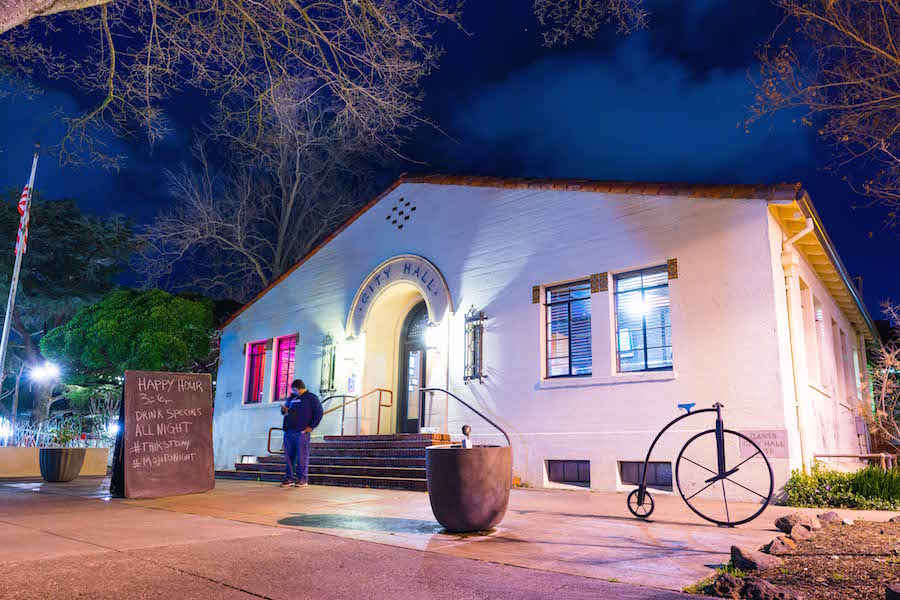
Davis’ Historic City Hall, however, now houses a restaurant and bar, which does not necessarily serve any type of public service. As a result, the state now requires that Davis put the property on the open market.

“Davis has initiated the early stages of marketing for its historic city hall,” said Stacey Winton, a City of Davis media and communications officer. “Located at 226 F. St., the vacant building has not been used for city affairs but contains a restaurant, Bistro 33, in both the building and outside patio.

Despite losing ownership of the property, the city will gain access to bond funds from the state once it is sold. Once the real estate has been dissolved, the city will also receive 21 percent of the proceeds, with 33.5 percent going to the Davis Joint Unified School District, 25 percent to the county Educational Revenue Augmentation Fund and the remainder to be dispersed among various organizations like the Yolo County Library and the Davis Cemetery District.

That process is now underway with the city looking to hire a commercial broker by this spring. While the new owner will gain rights to the property, the building is deemed a historical landmark. Therefore, no major structural changes can be made without first consulting the council and the city’s Historic Resource Management Commission.

While there hasn’t been an official appraisal of the property, the council estimates its value to be about $2.3 million. This number is too high for the City of Davis to consider investing in the property, according to city officials.

Mayor Robb Davis noted that the city will not seek to obtain the building. Although the decision and process has been difficult for the city, there are limited options. The building will remain in the public sphere and will continue to be valued as a historical space and part of the city’s history.

“We have to demonstrate to the state that we are maximizing revenue from that sale,” Davis said. “It would be difficult for us to demonstrate that we are purchasing it at market [value] if we get it at a rate that we can potentially afford so we are unanimous in saying that it should be sold at market rate.”
Written By: Bianca Antunez — city@theaggie.org