57.2 F
Davis

Davis, California

Monday, December 22, 2025
Home Blog Page 651

UC Davis endorses HPV vaccination recommendations

Dean Blumberg (ELENA ZHUKOVA / UC DAVIS CHILDREN’S HOSPITAL)

UC Davis, national cancer centers highlight the importance of HPV vaccines

Human papillomavirus (HPV) is a virus that infects human cells, and also serves as the cause of about 5 percent of all cancers. UC Davis and other national cancer centers endorsed the HPV vaccination in January 2017, contributing to a nationwide effort in combatting the rise and commonality of HPV-induced cancers.

“HPV is the most common sexually transmitted disease, about twenty million Americans are infected,” said Jyoti Mayadev, an associate professor at the UC Davis Department of Radiation Oncology.

Oftentimes, people become infected with HPV without even knowing it. The issue that arises with this is that the HPV infection unintentionally continues to get spread amongst people.

Without routine pap tests, there is not a totally accurate way of determining if a person carries HPV, even though almost anyone who is sexually active is susceptible to this infection, which can then turn into cancer later on.

“Progression [of HPV into cancer] depends on the type of HPV strain and on the unique characteristics of the individual who is infected,” Mayadev said. “The longer the virus is present, the higher the potential for a cancer to develop.”

The UC Davis Cancer Center, along with other national cancer centers, endorsed an increase in the amount of HPV vaccinations in order to combat the possibility of cancer from the start. HPV vaccinations will allow individuals to reduce their chances of getting HPV-related cancer, as the vaccinations prevent HPV before engaging in sexual activity.

“HPV infections are associated with many different cancers,” said Dean Blumberg, an associate professor and chief of pediatric infectious diseases at UC Davis Children’s Hospital. “There are different types of HPV strains that lead to these cancers.”

HPV infections are often linked to cervical cancer in women, but this is not the only cancer that can arise from HPV. The human papillomavirus is a risk for both men and women. While the protection against cervical cancer is stressed, males are equally at risk for these HPV-related cancers.

“Even though [HPV] is associated with cervical cancer, [doctors] are seeing more diagnoses of throat cancer, penile cancer and other types of cancer,” said Julie Dang, the director of community engagement and outreach at UC Davis Comprehensive Cancer Center.

Despite the fact that HPV vaccinations can help prevent these cancers, the rates at which people get these vaccinations are relatively low. There are a multitude of reasons why vaccination rates remain low, ranging from personal preferences to other social issues.

“The thing is, there is a misconception about the vaccine and how parents think that getting the vaccine is like a card to be sexually promiscuous,” Dang said. “It’s really not, it’s more about protecting yourself.”

According to Dang, the misconceptions surrounding the vaccination are the reason why there are low vaccination rates. HPV vaccination rates are especially low in minority communities, not only due to the lack of education on the topic, but also the stigma around vaccinations for sexually transmitted diseases. Despite this, the benefits of obtaining this small series of vaccinations outweigh the negative stigma surrounding children and teens obtaining the vaccine, according to medical professionals.
Currently, the recommendations from Center for Disease Control include two shots six months apart for children 11 to 12 years old and three shots for men and women ages 15 to 26.  

“The vaccination rates are unfortunately not as high as we would like,” Blumberg said.

The UC Davis Comprehensive Cancer Center and other cancer centers across the nation strive to increase these vaccination rates.

This endorsement is only a small step toward HPV cancer prevention, on the larger scale prevention will only occur with the increase in education and understanding of these vaccinations. Through UC Davis and other cancer center’s joint efforts, the HPV vaccination will be placed on the forefront of cancer prevention.
Written by Molina Hauv — science@theaggie.org
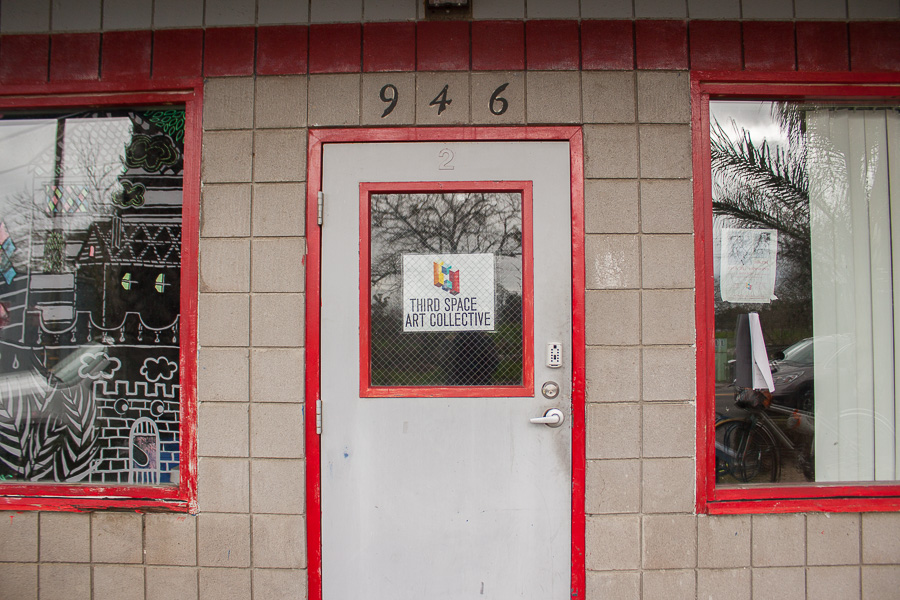

Third Space Art Collective ordered to vacate premises

NADIA DORIS / AGGIE

Davis collective launches fundraising campaign in search of new home

A single point of infinite energy. That’s all it took to create the universe. Planets, atmosphere, water, life — the entirety of the universe generated from nothing.

The artists of Third Space Art Collective may not be wielding hydrogen gases and subatomic particles, but they’re certainly creating something. They’re brandishing paintbrushes and re-purposing waste; threading plotlines at storytelling workshops; playing tetris with speakers for the night’s performance.

“In Davis there’s a lot of creative people, a lot of musicians, a lot of youth, and creativity coming together,” said Dylan Wright, one of Third Space’s co-founders and facilities managers. “So there’s a lot of music, a lot of people who want to get crazy with the visual and performing arts, and we realized that there was this void where it was critical. We just kind of took a deep breath and jumped into it — made it happen.”

Third Space’s mission remains consistent with its origins. The mixed-use facility, located on Olive Dr. in southeast Davis, serves as a community events space, a host for private and public studios and a hub for collaboration and creativity.

So when Third Space — the pulsing heart of the Davis art scene — was notified that they must evacuate their space, the city’s cultural extremities were put in jeopardy.

“Third Space Art Collective, a non-profit organization […that] serves as a unique creative and social hub for local artists and musicians, received an order to vacate their 6,000 square foot building by the end of April,” stated the collective’s press release. “The recent sale of the building means the Collective members need to find interim storage and raise money for relocation on short order.”

Since its inception in 2013, the art collective has hosted over 175 music shows, 32 art shows, 92 workshops, 41 theater events, 29 poetry and storytelling events and 70 other general events, according to its IndieGoGo campaign. “In total we have served over 15,000 people in just 3 and a half years,” the campaign stated.

Third Space had been a longtime dream for its co-founders, but the vision only came to fruition in 2013. Despite its relative youth, the space has become an important fixture for the Davis community.

“I believe that Third Space will soon be seen as one of the crown jewels of Davis. It already is as far as I’m concerned,” said Dave Griffin, another co-founder of the collective. “This is such an amazing organization and such a special concept and group of people that it would be a crime if we didn’t utilize every resource possible to help it stay in Davis.”

In addition to its community outreach, Third Space has proven itself a safe and reliable space for both its artists and its visitors. And, in light of the “Ghost Ship” fire that killed 36 people at a warehouse concert in Oakland last December, these vital community art spaces are being scrutinized now more than ever.

“We’ve never had an incident with the cops, never an injury. We’re a dry space (except for five to six times we’ve had a special one-time permit), we have a fat insurance policy and no one has ever lived there,” Wright said. “On the tails of the Ghost Ship, I hear they’re closing down places across the country. The liability is insane.”

Third Space prides itself on this professional attitude. And though the organization may hold a business mindset, it operates as a non-profit. In fact, the space was originally devised to house emerging artists who lacked the space or funds to kickstart their careers.

Basic membership at Third Space starts at $50 a month, but Wright noted this fee can be offset by volunteering in the shared space by cleaning, organizing and performing miscellaneous tasks that further the usability of the space.

“We saw that there was a huge divide in Davis between successful artists at the galleries, and all the hundreds, potentially thousands, of people who are artistic but don’t have an outlet, or don’t have a place to perform, or do their work or show their work,” Wright said. “So we felt that, as a service to the community, we would basically make this place available and most importantly, affordable.”

Making the space affordable for its studio renters remains a primary goal for the collective. In fact, the money accrued from renting these studio spaces is their primary source of income.

“These affordable opportunities, along with the communal work area, are such unique and important contributions to the Davis community,” said Emily Jones, Third Space’s publicity coordinator. “It really promotes creativity in our area, which is always important for any community, which in turn allows for artistic networks to form, which encourages more creativity and collaborations, and so on. It’s a positive feedback loop.”

For this reason, Third Space’s foremost objective is to find a new location. Without the physical space, their mission is intangible.

“Our primary goal is to find a new location for the Third Space community and mission to live on,” Jones said. “Because we are a nonprofit, we struggle with affording the expenditures that come along with moving.”

A fundraising site has been established for the collective with a goal of $50,000. The amount would cover a variety of expenditures, including their first few months of rent and insurance, a deposit, storage fees and more. As of now, the fundraiser has raised $679 — only 1 percent of its goal.

The non-profit organization has provided Davis with a safe, welcoming and collaborative environment for over 15,000 different people, yet its IndieGoGo has been backed by only 15 donors. The community benefit derived from Third Space’s existence is irrefutable; so why do their efforts reflect a drastically different number?

It’s precisely the same reason Third Space was contrived in the first place: artists lack the space, the material, the finances and, more importantly, the community support required to prosper.

“What I believe to be the most important function that Third Space serves to the community is as an incubator for entrepreneur[ial] artists,” Griffin said. “Virtually every artist that has come through these doors has been a self-employed business owner on some level. People are using Third Space as a stepping stone to launch their careers. This isn’t just a bunch of kids playing with paint. These are serious working artists dedicated to their craft.”

One member recalls how, upon moving to Davis, Third Space became the first place she felt explicitly welcomed by the community. After kickstarting her own podcast, Lisa Cantrell received unparalleled support from other members of the collective. Someone helped her make pins and t-shirts for advertising, and she even received advice from an audio engineer at the collective.

Third Space for me has been just crucial in terms of building a community here,” Cantrell said. “It’s not just a place where people make work or have their private studios, it is also a space where people come together and collaborate and make meaningful connections with another. And I think that is for me, a huge loss. The loss of that kind of community, of that kind of physical space where people come together, meet, formulate new ideas and then go off and do those things in Davis.”

Moving forward, Third Space and its members are in search of community support — whether that comes in the form of donations, physical help, suggesting ideas or attending events. Though they are primarily in search of a new location, Third Space members are encouraging anyone with special skills or ideas to reach out on their website. Some of the collective’s members are even attending city council meetings to bring the issue to light on a larger scale.

“We are hoping to apply positive, constructive and cooperative pressure to the political community of Davis as well as the donor class and business community,” Griffin said. “So our efforts are multi-pronged and we are trying to use every tool at our disposal to help keep Third Space alive and functioning.”

The community has explicitly attested to such support, and the testimonials found on Third Space’s website make this apparent. A particularly poignant testimonial reads: “If Third Space ever died, Davis would become exponentially less cool.”

Another reads, “Third Space is a place that the people of Davis have built for themselves, and the amount of work evident is astonishing. This alone should be proof that the community cares deeply about its benefits.”

“I think, in a word, [Third Space] is vital,” Wright said. “I think if you look through history, some of the most celebrated societies were those that had a vibrant art scene, or that which stands the ages is architecture and art and creative writing and performances. Next to politics and wars, those are the things that people focus on and remember.”

In order to persevere, this vital community space requires support on more than a verbal scale, more than money and space and supplies. Third Space requires a collaborative, community version of the Big Bang — a singular point of infinite energy, if you will.
Written by: Ally Overbay — arts@theaggie.org

Police Logs

0
NICKI PADAR / AGGIE

Brought to you by the people of Davis

Feb. 14

“Unknown subject entered backyard via fence, removed screen and left bike behind.”

“RP has an issue with neighbor’s basketball hoop.”


Feb. 15

Unknown subject “detached the water spout from gutter.”

Male subject “nailing plastic items to a city tree.”

“Citizen in the roadway attempting to direct traffic.”


Feb. 17

“Male subject took off with a high-chair.”


Feb. 18

“Male running through store trying to scare customers, threatening to power drive employees.”

“Two males were banging on front window with possible stolen barber pillar from the front of store.”


Written by: Sam Solomon — city@theaggie.org

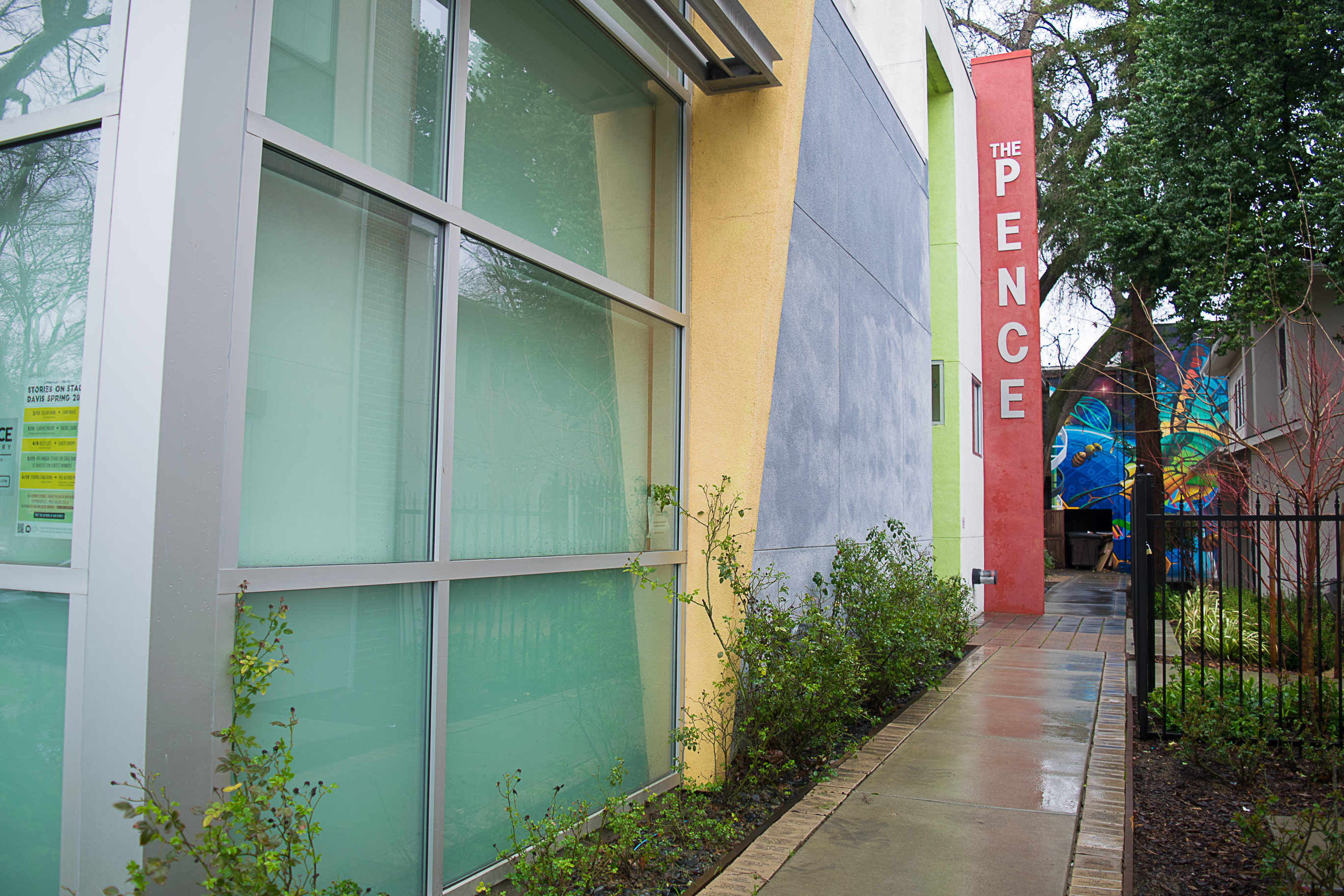
Humor: Pence Gallery to change name “for obvious reasons”

BRIAN LANDRY / AGGIE

Building in downtown Davis withdraws inadvertent support for controversial vice president

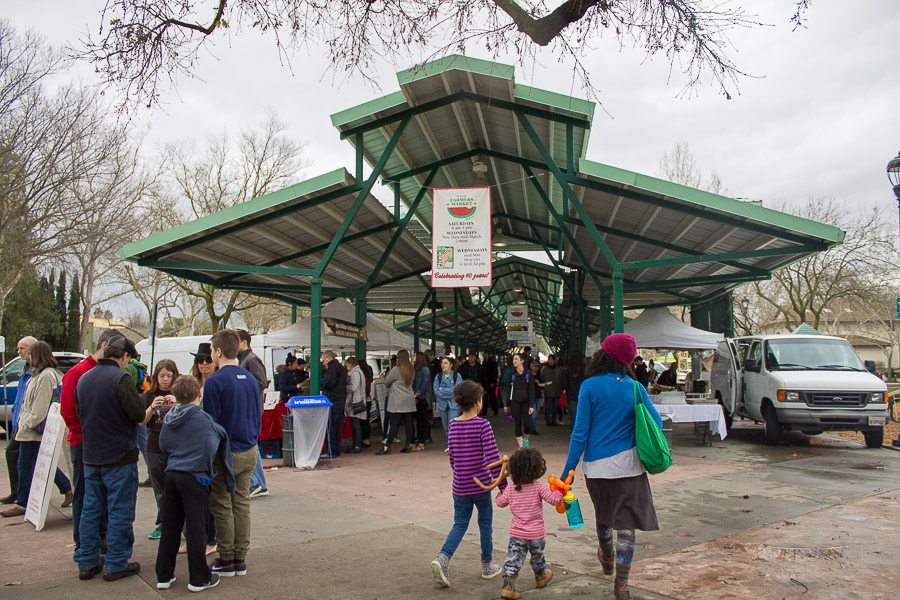
Davis’ 40-year-old Pence Gallery will be undergoing some changes in response to the results of the 2016 presidential election. The gallery — originally named after Joe Pence, a dentist — was gifted to the city by the Pence family. It offers classes, workshops and multiple art exhibits.

Since the election, protestors have been seen outside the Pence Gallery asking the organization’s board to reconsider its name. While the building has nothing to do with Vice President Mike Pence, citizens of Davis have taken it upon themselves to disengage entirely with President Donald Trump and his administration.

Members of the community have previously protested President Trump. Just last week, Davis withdrew itself from all things related to Wells Fargo, given the bank’s involvement with the Dakota Access Pipeline.

“I’m not a fan of Pence. I’m a fan of the Gallery, but I will not set foot in there until the name is changed,” said Bernard Watson, a 40-year resident of Davis. “I have no desire to go back. I’ll get my art from the students until the name is changed.” Watson announced that he will instead be going to on-campus art clubs and open mic nights in the meantime.

Watson is not the only one with this mentality. He is, however, part of a group that others find ridiculous.

“Look, I’m not the biggest fan of Pence either, but Dr. Joe Pence was an incredible dentist,” said a lifelong Davis resident, 80-year-old Rose Russell, as she flashed a bright white smile. “We do not need to take out our frustration on someone who clearly had nothing to do with the election.”

Protests are scheduled to continue until the gallery’s name is changed. There have been multiple appeals to the board, the first of which was shot down, but the second, third and fourth will all be heard — each with different suggestions for names that maintain the integrity of Dr. Joe Pence and his family.

The California Aggie reached out to the gallery for a comment, but received no response.

As the saga continues, protesters continue to fight for what is right. Regardless of how one stands on the topic, activism for any cause should be respected. Community members are using their voices to stand up for their beliefs. Moving forward, such advocacy should be expected as further controversial political decisions are made.
Written by: Ethan Victor — ejvictor@ucdavis.edu

(Editor’s note: This article is a humor piece, and its content is purely fictional. The story and names of “sources” are fictionalized.)

Stack parking comes to UC Davis

ANH-TRAM BUI / AGGIE

New parking program aims to increase parking availability during rainy season

A new parking program referred to as “stack parking” was implemented by Transportation and Parking Services (TAPS) in the Quad Parking Structure and in Lot 47 on Monday, Feb. 13. The program is in operation Monday through Friday, 7:30 a.m. to 6 p.m. and will conclude at the end of Winter Quarter.

TAPS implemented the new parking program in response to an increasing number of students who are driving to campus during Winter Quarter due to weather conditions. Stack parking increases the number of spaces available by allowing parking behind cars in an aisle once all spaces are full. Drivers leave their car keys with an attendant from a third-party vendor (Corinthian International Parking Services), and the car is then moved by a professional parking attendant if other drivers need to leave the structure.

According to the TAPS website, stack parking is unlike valet parking, because cars are self-parked and no extra fees are charged for the car moving service.

“Stack parking allows drivers to self-park in an available parking space where their permit is valid […]The driver will exit their vehicle, lock the car and provide the door/ignition key to the attendant on duty,” the TAPS website reads. “A claim ticket will be provided to the driver for reclaiming the vehicle/key later. The attendant will move the vehicle only as necessary to allow safe exit by another vehicle, or to move it to a regular parking space if one becomes available. Attendants do not accept tips or collect fees of any kind.”

Stack parking is only a temporary solution provided by TAPS while it works to develop other strategies to solve the increasing demand for parking spaces without excessive spending for construction of a new parking structure.

Some students believe it would be much more user-friendly to build a new structure altogether. Hannah Lau, a third-year veterinary science major, is skeptical about stack parking as a solution to the lack of available spaces on a daily basis.

“I think [stack parking] would be time inefficient,” Lau said. “You would have to wait for a car to be moved in order to leave the parking lot or get your keys from the parking services coordinator. In the case of an emergency it would be frustrating. I think it would be better if they just built a new [structure].”

Others, such as James Gonzalez, a third-year math major, see why stack parking may be useful. Gonzalez parks early enough to avoid using the service, but he thinks it may help some people who arrive on campus later.

“I don’t have any problems with parking during the winter,” Gonzalez said. “I haven’t used the program so I don’t think it’s necessary but for some people who come later it might be good.”

More information on stack parking can be found on the TAPS website.
Written by: Kaitlyn Cheung — campus@theaggie.org

Getting crafty in Central Park

LUCY KNOWLES / AGGIE

Monthly crafts fair brings repurposed books, gemstones to community

The latest monthly Vintage and Crafts Fair took place on Feb. 12 in Central Park. This fair will fill the heart of any craft lover: not only are there plenty of crafts to buy, but there is live music and food as well.

Here’s a look at some of the vendors that are there each month.


My Booklandia: Unique literary home decor made from upcycled books

Owner Gloria Pearson has been creating home decor out of books since 2013, when she decided to donate her abundant collection of novels. However, she soon learned that when books are donated to places such as Salvation Army or Goodwill, if there’s no room for them, they oftentimes get dumped in a landfill.

“I thought of a better plan,” Pearson said. “I started to make clocks and lamps out of my books, and then it turned into me buying books from all the places that would end up sending them to landfills.”

Her business has grown so much that she is no longer using her own collection of books and is instead forced to buy them. This allows her to take requests from customers as to which books they want to be upcycled; the most requested book recently has been Fantastic Beasts and Where to Find Them.

Pearson can be found on Etsy or at local craft fairs in the Sacramento Area.


RePurpose Salvage & Furniture

Steven Ropp’s craft booth started about eight years ago when he began making furniture and took an interest in reclaimed and recycled wood. This interest led him to explore industrial salvage and demo work. Ropp likes to see things reused and repurposed rather than simply thrown away.

“From a practical standpoint I think people appreciate it too when [furniture] has some character instead of the same thing from IKEA,” Ropp said.

Ropp has a workshop in Sacramento and sells mainly custom orders.

His items can be found on Craigslist, Amazon, Facebook and at some craft fairs.


Pamona Purdy Jewelry

Pamona Purdy, the creator of this jewelry business, learned the ropes of jewelry-making about five years ago from a friend in the same business. Her favorite type of material to use is gemstones. According to her, the different shapes help make each piece of jewelry unique.

“My favorite stones to work with and that happen to be the best sellers are turquoise and a pink stone called strawberry quartz,” Purdy said.

She sells her jewelry at a few craft fairs in the Bay Area, and Feb. 12 was her first time coming back to Davis in a long time. She is currently trying to transition away from craft fairs because it is a large time commitment. Instead, she is now working on getting her line into a few boutiques in Sacramento.  


The next craft fair will be held in Central Park on March 12 from 11 a.m. to 4 p.m. Those interested can visit the Facebook event for more details.


Written by: CaraJoy Kleinrock — arts@theaggie.org

The story of Derrick the Jumping Horse: more than meets the eye

TERRI HERRERA / COURTESY

Eye surgery of Derrick the horse inspires children’s book, funds research

As majestic as they appear, horses are susceptible to many of the same illnesses and diseases that affect humans. One particular horse, Derrick, was treated by the UC Davis Veterinary Hospital after he developed cataracts and gradually began to lose his vision. For a horsed skilled in jumping, this condition was an enormous detriment.

“A cataract is an opacity of the lens which can be small or occupy the entire lens, causing blindness,” said Kelly Knickelbein, an intern in the Department of Ophthalmology at UC Davis. “Horses can develop cataracts for numerous reasons, such as trauma, having a genetic predisposition, a developmental abnormality or,  most commonly, secondary to the intraocular inflammation, as was suspected in Derrick’s case.”

Initially, cyclosporine implants were inserted into Derrick’s eyes to minimize the flare ups of Equine Recurrent Uveitis (ERU). ERU, the leading cause of blindness in horses, is a chronic condition in which there is episodic inflammation of the uveal tract of the eye.

“Cyclosporine doesn’t treat cataracts directly — because the only treatment for cataracts is surgery — but may slow down progression of cataracts by reducing the frequency and severity of flare-ups of uveitis,” said Dr. Mary Lassaline of the UC Davis School of Veterinary Medicine.  “The cataract can develop secondary to these inflammatory changes that horses have when they have ERU.”

After the implants were inserted, Derrick went on to perform several shows as a hunter-jumper with vision in only his left eye. However, the looming threat of cataracts quickly re-emerged.

Derrik’s owner, Terri Herrera, was fearful that Derrick would harm himself and other horses, or have a degraded quality of life due to blindness. With those outcomes in consideration, Herrera decided that euthanization may be the best option.  

“I did not want [Derrick] to be in pain or in fear,” Herrera said. “When horses are afraid, they want to run. And if he doesn’t have vision, he could hurt himself or others.”

Lassaline was the veterinarian Herrera turned to for advice in Derrick’s deteriorating condition. When Herrera informed Lassaline on her decision to euthanize Derrick, Lassaline proposed the life-saving option of cataract surgery.

“The best candidates for cataract surgery are individuals that have cataracts that arise due to an abnormality in the lens itself, not cataracts that are secondary or caused by an underlying inflammatory disease such as ERU,” Lassaline said. “However, horses with cataracts secondary to ERU can still have successful outcomes — but their inflammatory disease can flare up when they have surgery.”

Though Derrick was confirmed to be a high-risk candidate for the surgery due to his pre-existing ERU, Herrera didn’t give up without a fight. After agreeing to the surgery, she stayed tirelessly by Derrick’s side as he underwent the complicated operation.  

Despite the constant diligence of Lassaline and her staff, the surgery couldn’t sustain Derrick’s vision. Though Derrick eventually lost his vision, Herrera gained sight of a different purpose: to uphold the message that a horse has both the capacity and the right to live after blindness.  

“Blindness doesn’t have to mean death for horses,” Lassaline said. “Many of them are able to adjust to life as blind horses, and some of them are even able to go on and continue to perform.”

Though how horses react to blindness varies and is dependent upon the horse, time is a critical healer in this process. Recovery usually takes a few weeks to a few months, but eventually horses become accustomed to vision loss and resume life normally.

As a part of his new life purpose, Derrick is the inspiration for Herrera’s children’s book, Derrick the Jumping Horse Has Eye Surgery. All proceeds from the book will be donated to the Equine Ophthalmology Service and to research focused on uveitis, eye problems, in children.   

“The people that thought that the surgery wasn’t a success may be looking through the lens of science,” Herrera said. “But the reality is that there is a much greater purpose than what the eye can see.”

Written by: Harnoor Gill — science@theaggie.org

Fun arts and culture classes to take in the spring

NICKI PADAR / AGGIE

Brighten up spring quarter with The Beatles, arts and natural sciences

With the wide variety of classes offered at Davis, it can be hard to decide on a Spring Quarter schedule. Whether you’re looking for a fun four-unit class, seeking to expand your cultural knowledge or simply want a break from a heavy load of science classes, here are a few spring quarter classes that will be sure to spark your creative side.


MUS116: Introduction to the Music of The Beatles


The Beatles, renowned for their songs like “Strawberry Fields,” “ Help,” “Hey Jude” and “Yesterday,” deeply transformed the music industry and altered the political sphere during the 1960s. While the band is known for its idiosyncratic music style, many remain unaware of the meanings behind their songs or even the band’s history.

Chris Reynolds, a professor of music, teaches a course about The Beatles every Spring Quarter.

“My Beatles class is about how to listen to music,” Reynolds said. “We’ll spend a lot of time talking about how one Beatles song relates to a song by Bob Dylan or by the Rolling Stones and how modern groups are echoing things that the Beatles did. I think it’s a course that ultimately changes the way people listen to music because they realize music says a lot of things that they didn’t realize were there.”

Though this is an upper-division course, it is open to almost any student who is interested.

“There is a big range of students who come into the class,” Reynolds said. “Some know quite a few Beatles songs and some know that the Beatles are important but know nothing about them. I enjoy talking to both groups. The groups that know a number of Beatles songs don’t realize what those songs meant when they came out and therefore don’t realize what the songs are trying to communicate.”

According to Reynolds, The Beatles’ music can be misunderstood. It does not exist solely as a spectacle, but as a collection of personal and political accounts from the 1950s to the 1970s.

“The Beatles’ songs are very entertaining but they are not just entertainment,” Reynolds said. “They are in many cases very serious, personal messages and personal expressions about problems in their lives or political statements. I think that people who know the Beatles’ songs still have a lot to learn about what they’re saying.”

The most important message you can expect to take away from this class is that music, like literature, is a work of art that needs to be analyzed to be fully appreciated.

“When I first taught the class, I was curious as to whether I would get tired of experiencing the Beatles so intensely,” Reynolds said. “It was quite the contrary. If you listen and don’t listen critically, you’re missing a lot.”


PLS006: Application of the Art and Science of the Beauty and Perfection of Flowers


A perfect way to transition into UC Davis’ spring festivities is to learn about floriculture. Heiner Lieth, a professor of environmental horticulture, wanted to teach students about flowers since they are so integral to social customs, from the celebration of an anniversary or mourning the passage of a loved one.

“I was traveling in Europe and realized that this particular concept could work fairly well as a class,” Lieth said. “I ran it as a freshman seminar, which is limited to only 15 students.”

However, he did not predict that this course would become so popular. The course’s increasing numbers have forced him to move into a larger classroom year after year.

“The first time I walked in expecting 15 students, there were actually 40 students,” Lieth said. “Not only were there students on the waiting list, there were students waiting to get on the waiting list. That was my first inclination that students would actually gravitate towards this class. It was never supposed to blow up like this, but now that it has gotten so big, I’m intrigued by it.”

This course teaches students how to distinguish different species of flowers and to use that knowledge in real-world applications. Heith created an assignment called “Flower Impact,” in which students gift flowers to someone and write about their reaction to receiving it.

The title of the course, “Flower Power,” derived from the counterculture movement, entices many students to take the course.

“Flower power was a slogan from the 60s and 70s and actually has been recycled many times by different industries. In the floriculture industry, flower power is used on the commercial side to describe flowering plants that have a lot of traction for people — they kind of ‘sell themselves’ if you will,” Lieth said. “The title of the course is not just ‘flower power.’ The full title of the class is something like ‘Flower Power: The Application of Art and Science of the Beauty and Perfection of Flowers.’”


ENT001: Art, Science and the World of Insects


Entering a research university like UC Davis can make it difficult to indulge in artistic creativity while maintaining a rigorous schedule of tough STEM courses. However, entomology Professor Diane Ullman proves that science is not separate from the arts; in fact, the two go hand-in-hand.

“The idea of the class is two-fold really,” Ullman said. “One is to bring together the arts and the sciences and let students explore the commonalities of those disciplines. We can benefit a lot from the different ways that we view the world. There’s a real borderland between the arts and sciences that isn’t explored that often, but it’s very rich and stimulates people to look for solutions to complex problems.”

This course offers three different studio sections, ranging from painting to glasswork. As both a scientist and an artist, Ullman realized that there is not enough encouragement for young scientists to stay innovative and artistic in college.

“One thing I’ve noticed now in my 22nd year at UC Davis, students come here and almost by necessity get really focused on their majors and courses that relate to their major, and they don’t always get a lot of opportunity to explore across these boundaries,” Ullman said. “Another goal is to have students connect what they learn from a classroom lecture environment with what they can do with their hands. Everything is pretty much intellectual and very focused on reading and searching for information in a written way. This gives students the opportunity to do synthesis of information leading to visual literacy and working with their hands to create something.”

This introductory entomology course is different from an average science class at UC Davis. Students will not only learn about terrestrial arthropod diversity, but also apply that knowledge into making artwork, which will be displayed in an exhibition at the end of the quarter.

“We also want to give students the opportunity to collaborate and work in teams,” Ullman said. “We often do large-scaled group projects, so if you walk around campus out in the arboretum, there are many ceramic mosaic pieces and ceramic sculptural pieces that came from students in this class.”
Written by: Becky Lee — arts@theaggie.org

Corporate America fires back at Trump in advertisements

JAY GELVZON / AGGIE

How companies are staking out a political stance in their ads
You only need to watch this year’s Super Bowl commercials to see that product ads have become increasingly political, particularly to speak out against President Trump. Corporations seized one of sport’s biggest stages to let their political preference be known.

Considering that CBS charges around $166,666 per second of airtime, the motives behind these decidedly political ads are worthy of consideration. While Super Bowl ads are notoriously edgy, the fact that many of them chose to express political dissent against the President somehow feels even more cutting-edge. This move feels unprecedented; we don’t see ads criticizing political figures outside of the campaign season. But these are product ads.

And here we are, with Coca-Cola countering Trump’s #MakeAmericaGreatAgain with #AmericaIsBeautiful.

The Super Bowl also saw ads from Budweiser, Airbnb, 84 Lumber and Audi — all objecting to some of Trump’s policies. Budweiser depicts the plights of the immigrant by following a German man being discriminated against in his attempt to make America his home during WWII. Many thought the commercial was directed at Trump’s anti-immigration policies (reflected in his travel ban and his desire to build a wall along the Mexican border) because the man was portrayed as an underdog protagonist and a contributing member of society.

In a similar vein, Airbnb aired a commercial showing several close-ups of racially and culturally diverse subjects. With its slogan #WeAccept, the ad seemed to speak against Trump’s hateful rhetoric targeting marginalized communities. While the aims of the commercial seem innocent, its content has met with plenty of criticism, especially in the comments section on YouTube, in which many thought that its political stance was needless. As of writing this article, over 40 percent of viewers took contention with the ad — if “dislikes” are a metric of such a response.

These commercials are not anti-Trump in the sense that they explicitly show him or mention his name. They subtly address the social justice issues that have become media focuses since Trump started his campaign. Audi aired a commercial centered around gender politics. It showed a girl in a boxcar racing competition against mostly male competitors, and her father wonders whether he should tell his daughter that the hardships she will inevitably face are owed to society’s treatment of gender. The fact that these commercials have been received so contentiously by some is remarkable given their soft political statements. Arguably, these commercials are only political in the context of our political reality. On their own, they advocate the importance of diversity, whether it be of ethnic background, thought, religion, culture and so on.

Over the past several months, the reactionary culture of online arguments has festered and grown. In these arguments, we’ve seen political dissent on both sides when it comes to supporting certain businesses and corporations. When these entities make political statements, deliberately or otherwise, they often face boycotts. Some on the left called for a boycott of Uber for its CEO’s support of Trump, and others on the right similarly called for a boycott of Starbucks for its statement in support of refugees.

The question of motives comes up again as we consider these companies’ strategies for publicity. The basic motive behind a commercial is to persuade viewers to buy their products. So, why do these companies risk losing clientele through politics? The less cynical answer is that they want to be on the right side of history. While the anti-Trump messages are meant to appeal to people who oppose his views, it’s important to note that they didn’t necessarily have to go the political route. And yes, political ads get more attention in the media. But that doesn’t mean that in its pursuit to gain publicity, an advertisement loses its credibility. On the contrary, the marketing teams of these companies are, in part, using their spotlight to encourage positivity and unity in a divisive political climate.

While companies can easily drop $5 million on a Super Bowl ad, you can’t put a price on political solidarity.
Written by: Jazmin Garcia — msjgarcia@ucdavis.edu

Disclaimer: The views and opinions expressed by individual columnists belong to the columnists alone and do not necessarily indicate the views and opinions held by The California Aggie.

No experience? No problem: Niche clubs on campus

0
LAURA LONG / AGGIE

Unique organizations offer students many chances to feel integrated, involved

Muscles strained under the power of his bow, Jason Sures trained his eyes at his target 70 meters away. Droplets of hail pelted the top of his head and shoulders as he gauged where to aim, taking into consideration the weather and the wind. He let his arrow fly and watched it sail through the haze of hail. A smile spread across his face as it sunk into the faraway target.

“[This is] the memory where I thought ‘this is awesome,’” said Sures, a fifth-year psychology major. “[As my first outdoor archery tournament], it was […] an amazing experience. It might not sound so, but in the moment it gets your adrenaline going.”

When he first came to Davis, he felt “a little stir-crazy” and wanted to get involved, so he looked up clubs on campus and right at the top of the list was the UC Davis Archery Club. Although he had no previous experience, he was adopted into the small group of students working to revitalize the club and quickly found his community.

“We started about three years ago,” Sures said. “We were a very small club at the time, we only had about five bows to lend out to people, and at that time more than 50 people would want to come [to our lessons]. It’s so hard to tell them no. But all the money we made went to purchase more equipment, […] so now we have more than 30 bows [and] we’re about 35 [people in the club] consistently.”

According to Sures, movies like The Avengers and The Hunger Games have recently inspired a large number of students to become involved in the Archery Club. Regardless of whether someone is a beginner or a seasoned pro, the Archery Club opens its doors to anyone willing to have fun or seeking to be a part of a community.

“We’ve had some good archers come through us,” Sures said. “They actually weren’t archers to begin with. We trained them through our club and they became some of the top in the nation, so that’s exciting. Hopefully we’ll get some more too.”

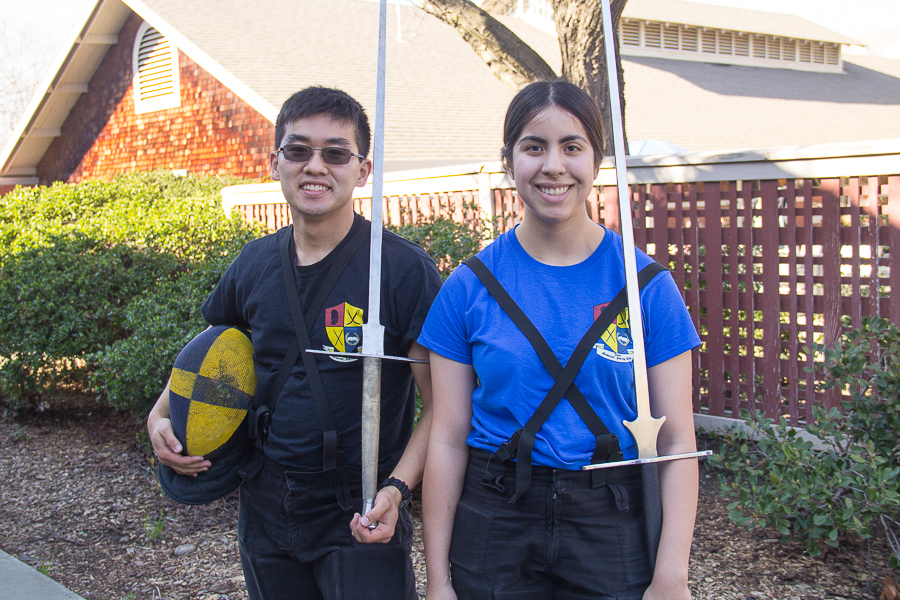
The Archery Club draws a crowd looking to engage in a specific sport, but another similar club on campus is the Davis Historical Fencing Club. It was officially established five years ago, but when second-year entomology student Seiji Yokota joined, he took it upon himself to revive the club, dedicating time to recruitment, websites, social media, reserving practice space and partnering with an established fencing school in Sacramento.

“I started fencing in the style in my sophomore year of high school, and when I came to university I didn’t want to stop this,” Yokota said. “Davis had a club but the president didn’t want to continue so I basically took it up again.”

The Davis Historical Fencing Club is a martial arts and combat sport group that practices historical European martial arts. The club is specifically focused on Renaissance-German style fencing and practices saber fencing a couple days of the week. A few members, including Yokota, practice long sword fencing on Sundays and even participate in long sword tournaments hosted out of town on occasion.

“When beginning here I struggled with this idea of isolation […] so finding this club made everything great again,” said Lisette Landarverde, a second-year undeclared major and club treasurer. “I was nervous because I’ve always been an introverted, reserved person, but figured I had to do this and try to make it work and just show up. I never regretted it.”

Joining a club on campus can allow students to meet people from different fields of study who they would never have crossed paths with in a classroom setting.

The Formula Racing Team at UC Davis, for example, is a team of students who design and build an electric race car to the specifications given by the Society of Automotive Engineers and then compete in an annual competition. This community of students sounds like it should solely belong to engineers, but, in fact, the Davis team is made up of a diverse group of students.

“We’re very open to anyone,” said Colton Miles, a third-year mechanical engineering major and team manager of the club. “It’s not just engineering that we do, it’s business reports, design reports, cost reports, the operations of an entire team [means] there’s room for all majors. Right now there’s about about 30 dedicated people showing up every week.”

Like Sures with archery, Miles jumped into this club his freshman year with no prior experience. After splitting his time between the team and PR and events, he realized his strengths and interests lied in operations and management. Today, Miles dedicates at least twenty hours per week to the team as manager, but he loves every second of it.

“We enjoy it or else we wouldn’t do it,” Miles said. “It’s easy in Davis […] to feel like you’re all on your own. We work [together] every weekend. Sunday meetings are all day, but it’s a fun deal when you’re with your friends. A lot of the people on the team I’ve known for two to three years now.”

Another student who has made good friends through her club involvement is Hana Branigan, a fourth-year communication major and editorial director for Spoon University. This club is, as Branigan puts it, like a “food-y version of Buzzfeed.” The organization is worldwide with chapters at different university campuses with the mission to help the next generation eat more thoughtfully.

“It’s very millennial and personable and when you read [the posts] you feel like you get to know the writer […] because their personality comes out a lot,” Branigan said. “I fell in love and I love the writing and I love food. I’m really passionate about food and nutrition too, so it was a perfect combination of all of that.”

As a transfer student, Branigan was anxious about the social setting in Davis, a new environment so far away from her home in Southern California. In order to find a home on campus, Branigan played trial and error with many different clubs until she found a couple, including Spoon University, that allowed her to feel like she was an integrated part of the community.

I encourage transfer students to get involved in as many clubs as possible in the beginning. Don’t force it, but attend meetings that would be interesting,” Branigan said. “You never know what opportunities you’ll be thrown into, and some of these clubs will let you be integrated in the community and you’ll find your friends and you’ll feel like you’ve been here all four years.”

With 200 registered student organizations on campus, there is more often than not a club to suit everyone’s interests. And, if not, students can establish their own clubs around a common purpose or hobby.

“I definitely found a fantastic community of friends,” Sures said. “Davis is a huge campus, you have to make it small. So these clubs, like archery, is a great way to find your own niche in the campus and make your own space.”
Written by: Marlys Jeane — features@theaggie.org

News in Brief: Ali Baba participates in nationwide boycott

0
JAY GELVEZON / AGGIE

Local Davis restaurant closes doors for “A Day Without Immigrants”

Imagine a day in the U.S. — people going about their everyday lives — but minus an important and sizable portion of the community. This is the idea pushed by participants in “A Day Without Immigrants”, or, as referred to by some social media accounts, “A Day Without Latinos.” On Feb. 16, many immigrants across the country boycotted work and school, and they protested by avoiding everyday activities, such as shopping.

The protest occurred in direct response to President Donald Trump’s remarks on deportation of undocumented immigrants and his promises to build a wall on the border of the U.S. and Mexico. President Trump has also previously advocated for the “extreme vetting” of Muslim immigrants from seven predominantly Muslim countries.

So what exactly did this national event entail?

Restaurants closed. Schools reported fewer students. And, while the economic impact of an America without immigrants is not clear, experts predict that the U.S. economy and workforce would fall into disarray without immigrants.

“If all immigrants were just to disappear from the U.S. workforce tomorrow, that would have a tremendous negative impact on the economy,” said Daniel Costa, the director of immigration law and policy research at the Economic Policy Institute in an interview with ABC News. “You’d feel an impact and loss in many, many different occupations and industries, from construction and landscape to finance and IT.”

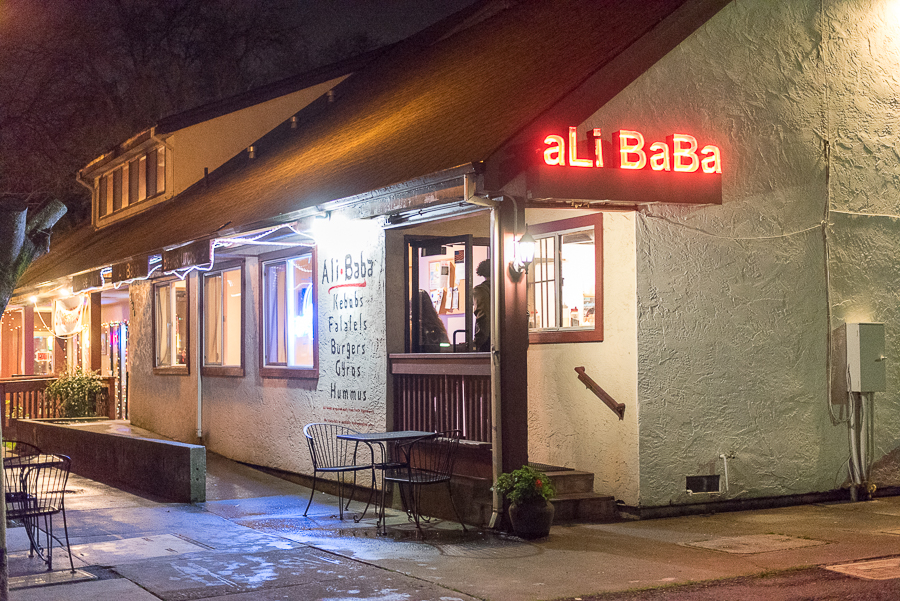
Ali Baba, on 3rd street, was a Davis participant of the protest. The restaurant closed its doors on Feb. 16, stating the purpose for its closure in a note in the window.

“In response to Donald Trump’s administration’s new unconstitutional immigration laws we have chosen to participate in a national strike so the nation can see what Hispanics do for our country,” the Ali Baba management said in the note.

Ali Baba apologized for any inconvenience, and the restaurant added that it would reopen the next day.

According to a 2014 report from Economic Policy Institute, although immigrants make up about 13 percent of the U.S. population, they contribute nearly 15 percent of the country’s economic output.

Restaurant closures in the Washington D.C. area included six food outlets in the Pentagon and three dining options at The Architect of the Capitol. Over 1,000 businesses closed in Dallas alone. Schools also saw a significant drop in attendance, with only 60 percent of students attending school in the KIPP Austin Comunidad charter school network in Austin, Texas, and the attendance rate down by 35 percent in the Fort Worth Independent School District.

In the aftermath of the protest, however, some employees were told by employers to not come back to work. Employers like Jim Serowski, founder of JVS Masonry in Commerce City, Colo., knew of his employees’ desire to participate in the protest, and he stood by his decision to fire those workers.

“It’s about work ethic,” Serowski said in an interview with CNN. “They were warned: ‘If you do this, you’re hurting the company, and if you go against the team, you’re not a member of the team.'”


Written by: Samantha Solomon — city@theaggie.org

UC Davis back on track with win over Matadors

0
BRIANA NGO / AGGIE

Streaky shooting guides men’s basketball team to 96-85 victory against CSU Northridge

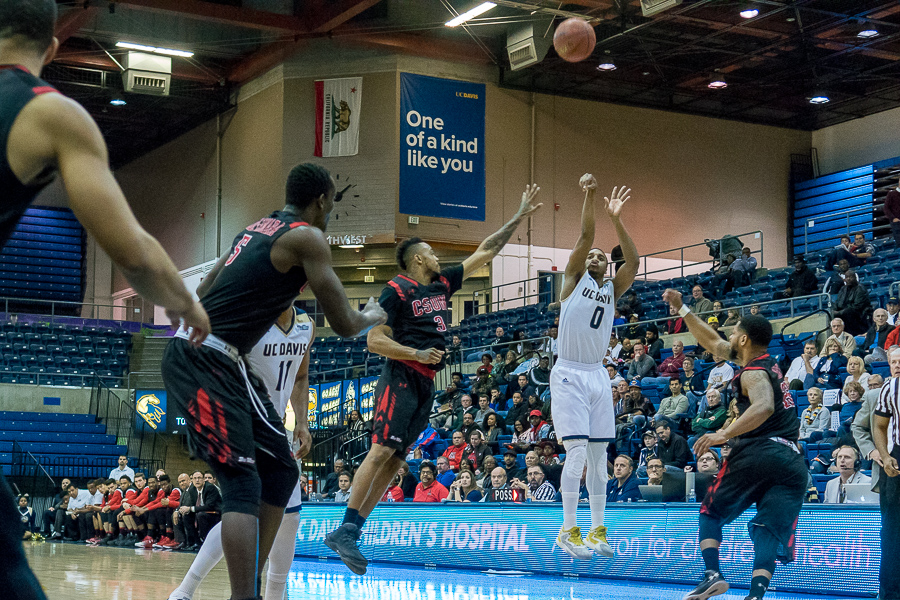
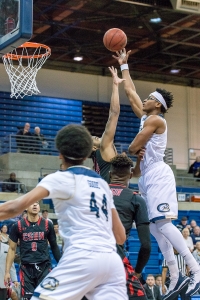
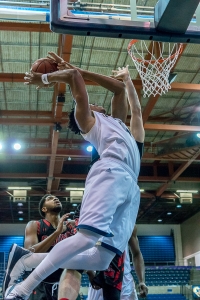
Coming off of consecutive losses, the UC Davis men’s basketball team bounced back and defended its unbeaten home record on Thursday night by knocking off the Matadors of CSU Northridge, 96-85, in a showcase of offensive firepower from both sides.

Just over eight minutes into the well-contested game, senior guard Brynton Lemar put a jolt into the Pavilion crowd by railing home a deep three-pointer as he was fouled and then splashing in a second three less than 20 seconds later to keep the building buzzing.

Lemar, in another one of his many standout games this season, caught fire shooting from all over the court early and kept it going throughout the game. Making 75 percent of his shots from the floor, including eight from beyond the three-point line, Lemar led the team with 28 points on the way to reaching a historic benchmark: He became the 22nd UC Davis men’s basketball player to reach the 1000 career point mark.

“Me and Siler [Schneider] got up a lot of shots earlier this week and I think that really transferred into today’s game,” Lemar reflected. “Just me being confident and my teammates finding the hot hand. If I’m hot, they’ll find me, so it’s not just me. They’re setting screens to get me open, it’s a team effort.”

Lemar wasn’t the only Aggie who shot the ball well early on, however, as three-pointers rained in from fellow senior guards Darius Graham and Lawrence White, along with a pair from sophomore guard Siler Schneider. The Aggies scored 56 points in the first half on an almost-unheard-of 83 percent shooting from beyond the arc and 72 percent shooting from the field to give themselves an 18-point halftime advantage.

BRIANA NGO / AGGIE

The Matadors opened the second half on a 7-1 run, with all of those seven points coming from CSUN’s junior guard Darin Johnson. He led his team with 24 points. Lemar immediately responded to Johnson’s offensive flash, knocking down his sixth three-pointer of the night to give the Aggies a 60-45 lead with just over 17 minutes remaining.

Aiding Lemar in second-half scoring were Schneider and junior forward Chima Moneke, who both continued to produce on the offensive end. Schneider matched Lemar’s 75 percent shooting from the field and scored from all over the court to amass a career-high 23 points. Moneke had another active night in the paint, totalling 19 points, six rebounds and a couple of blocks.

“I come into every game trying to get at least 10 rebounds,” Moneke said. “I try to be impactful, blocking shots and being in the right place on defense. Coach [Jim Les] always says that if you play with energy and effort, the ball will always find you.”

The Aggies eventually built their lead up to a comfortable 20 points after a late sequence of back-to-back dunks. The first came from senior forward J.T. Adenrele off of a dish from Lawrence White, and the second came when White caught a pass from Graham and streaked up the court to slam the ball home, finishing off his night with nine points. Graham had 10 points of his own in the contest, along with a team-high seven assists that helped him become the third player in school history to reach 400 career assists.

A late surge from the Matadors, who finished the game on a 15-5 run in the final five minutes, cut into UC Davis’ substantial lead. The Aggies still held on to secure an 11-point victory, boosted in part by the team shooting 70 percent from behind the arc for the night.

BRIANA NGO / AGGIE

“This was a trap game that I was really worried about,” said head coach Jim Les. “Everyone has been talking about [the upcoming game on] Saturday, and it’s great that there’s a buzz. It was our challenge as a staff to keep the guys locked in, not to stub our toe tonight. I was really proud that they were able to stay focused on the task at hand to get this win.”

With their ninth conference win, the Aggies are tied for first place in the Big West Conference, meaning that playing well in their final three regular season games will be crucial. In its next game, UC Davis will host Long Beach State on Saturday evening in one of the team’s most highly-anticipated games of the season. The nationally-televised event is set to get under way at 5 p.m.

Written by: Dominic Faria — sports@theaggie.org

Aggie women’s basketball team says “neigh” to Mustangs

0
CAT TAYLOR / AGGIE

UC Davis defeats Cal Poly 83-75 with monstrous night from Bertsch, Nafekh, Gianotti

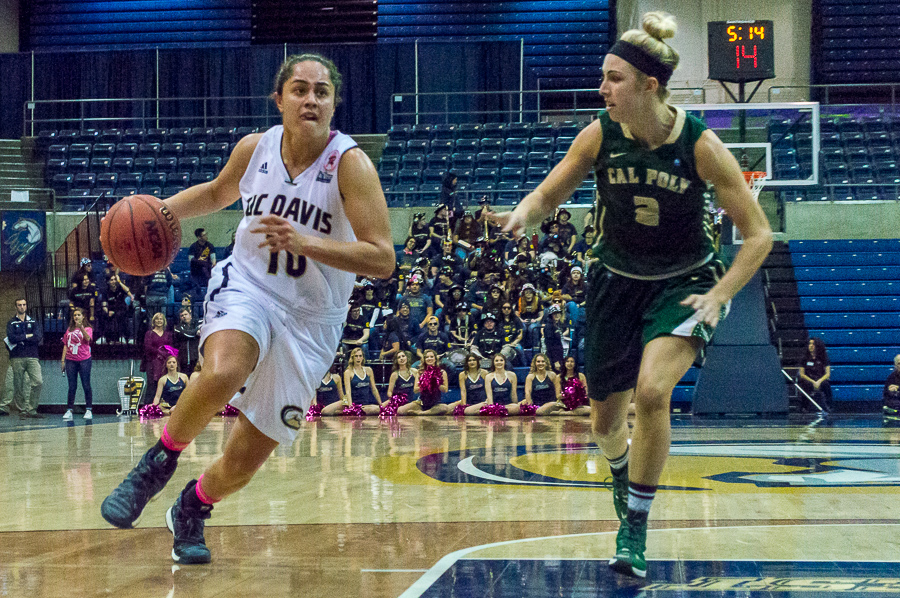
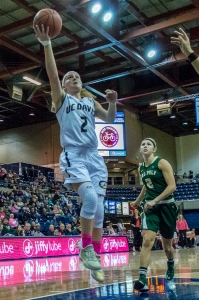
With six straight wins coming into the game on Wednesday, Feb. 22, the UC Davis women’s basketball team began the first of its final two home games of the season with increased motivation to keep its momentum going. The Aggies knew that they would need to play tough against Cal Poly, which entered the game having won three of its last four games. UC Davis responded with a hard-fought 83-75 victory in a physical and fast-paced game, securing its seventh-straight win, a feat which ties a team record for Division I play. With the win, the Aggies remained atop the Big West Conference standings.

After a rough first quarter, in which the team scored just 16 points and trailed by as many as eight, the Aggies entered the second quarter with a burst. Junior guard Dani Nafekh scored a quick 12 points during one three-minute scoring spurt en route to 22 points on the evening. Nafekh was quick to credit her team for her scoring flurry.

“It’s just kind of what comes to you,” Nafekh said. “Your team gives you shots, you’ve just got to hit them.”

Nafekh was not the only player to put up big numbers. Junior forward Pele Gianotti finished the game with 25 points despite entering halftime with only four points.

“I was just playing how I usually play,” Gianotti said. “Except this time I was like, ‘OK, I hit a couple shots, let’s keep it going.’”

On top of her hot shooting night from the field, Gianotti shot nine-for-nine from the free throw line.

CAT TAYLOR / AGGIE

The trio of Nafekh, Gianotti and sophomore forward Morgan Bertsch accounted for 65 of the team’s 83 points. Gianotti and Nafekh missed just two of their combined 14 shots, and Bertsch shot 9-14 on her own from the field.

Although the Aggies built the lead to as many as 15 points, Cal Poly cut their deficit down to six points before UC Davis finally pulled away with the victory. Nafekh explained how the team keeps its composure during periods of adversity.

“I think we just never lose confidence in each other and in our team,” Nafekh said.  “We just know that if we keep playing as hard as we can and listening to what we have to do, then we’re going to get it done.”

Heading into the team’s final three games, head coach Jennifer Gross hopes that the team can keep up the great work and continue to improve.

“I honestly feel like we can keep getting better,” Gross said. “That’s exciting! We always want to have momentum going into [the Big West] tournament, so I hope that we can keep continuing to win and playing well, but we’re really focused on winning and getting better.”

CAT TAYLOR / AGGIE

Gianotti echoed her coach’s sentiments as she spoke of the team’s motivation going into the finals games of the season, leading into the upcoming tournament.

“Oh, that’s what we’ve been working towards this entire year, so we’re not going to let it slip out of our hands now,” Gianotti said. “We’ve been working for months now, and we’re just really excited to finish it out strong.”

The women’s basketball team will play its final home game of the season on Saturday, Feb. 25 at 2 p.m.

Written by: Bradley Geiser — sports@theaggie.org


2017 Winter Quarter election results

JAY GELVEZON / AGGIE

Six senators, new executive team elected

Current ASUCD Vice President Abhay Sandhu announced the ASUCD election results on Feb. 24 in the Memorial Union’s Mee room. Six senators were elected: Sam Chiang, Michael Gofman, Khadeja Ibrahim, Rahi Suryawanshi, Marcos Rodriguez and Yajaira Ramirez Sigala. Chiang and Ibrahim ran on the BASED slate, while Suryawanshi, Rodriguez and Ramirez Sigala ran on the Bespoke slate. Gofman ran independently.

The new ASUCD president and vice president will be Josh Dalavai and Adilla Jamaludin. Dalavai and Jamaludin ran on the BASED slate.

The results will also be posted online at elections.ucdavis.edu.

Written by: Alyssa Vandenberg  — campus@theaggie.org

Protecting teachers unions from renewed assaults is a moral imperative

A new lawsuit aims to strip crucial funds from teachers unions

Teachers unions are threatened once again thanks to a new lawsuit that aims to eliminate “agency fees,” a crucial source of funding that unions often make mandatory for non-members they represent. If the lawsuit were to succeed, teachers unions would lose a significant amount of money used to help finance the wage and workplace negotiations that help make schools better and more effective for students.

The lawsuit, filed by the conservative Center for Individual Rights (CIR) in concert with a group of California educators, strongly resembles another case that went to the Supreme Court last year, Friedrichs v. California Teachers Assn., that failed in March after the court deadlocked 4-4 following Justice Scalia’s death. As the possibility of a Trump presidency seemed increasingly remote, the split decision was hailed as a victory by labor advocates. Now the opposite is true.

The plaintiffs in the 2016 case argued that agency fees violated an employee’s First Amendment right to free speech because the money collected was being spent on activities like collective bargaining — something a worker might disagree with on principle.

That position seems to willfully ignore the fact that in the 22 states that currently authorize unions to impose agency fees, caveats already exist to help exempt teachers from paying for a union’s political activities. Teachers in California can waive as much as a third of the fee by simply filling out a single-page form. Exceptions are also made for “conscientious objectors” — people who belong to a particular religion, body or sect that opposes public employee organizations.

Make no mistake: this new effort to stifle teachers unions by the CIR is nothing more than the latest witch-hunt in a decades-long assault on American organized labor. Unfortunately, they may succeed in their efforts. While Neil Gorsuch, Trump’s Supreme Court nominee, has not made any similar decisions, it’s probably safe to say the strict textualist would rule against teachers unions.

It’s a disheartening prospect, in no small part because of the undemocratic nature of this line of attack. In California, non-member workers represented by unions accounted in 2016 for only 1.6 percent of the entire workforce, according to the Bureau of Labor Statistics. This means the potential grievances of an extreme minority of workers could significantly diminish the power of millions of more unionized workers to be effectively represented in workplace negotiations.

Though the numbers of teachers paying agency fees to the CTA is higher, at nine percent, the fact remains: it would be fundamentally unfair for the collective bargaining rights of so many workers to be stifled by the concerns of a few. Tossing these critical agency fees would amount to an entirely hostile attack on workplace equity by union opponents.

And students would ultimately bear the greatest cost of weakened teachers unions. The working conditions educators face — including their salary, resources made available to them and the level of input they have with administrators — all contribute to whether they continue teaching or add to the increasing turnover rate costing schools billions every year.

But beyond the mere dollar cost, the damage of low teacher retention rates is felt most profoundly by students who benefit enormously from the experience and consistency of seasoned professionals. This is especially true in low-income school districts, where inexperienced teachers are more often discouraged by the lack of support they receive from employers.

Because teachers unions help educators by working with employers to improve support and resources, their strength is the strength of the students. Whether they can remain financially solvent isn’t a policy point as much as it is a moral imperative — a debt we owe to our children.

If the United States wants to boast an educated population, we will take that debt seriously.
Written by: Eli Flesch — ekflesch@ucdavis.edu

Disclaimer: The views and opinions expressed by individual columnists belong to the columnists alone and do not necessarily indicate the views and opinions held by The California Aggie.