59.3 F
Davis

Davis, California

Sunday, December 21, 2025
Home Blog Page 650

Rainy day commute playlist

GENESIA TING / AGGIE

Raindrop, drop top, this playlist is pretty hot hot

Your backpack is soaked and your feet are cold and wet. At the very least, you’ve got the perfect playlist for your rainy day commute.


  1. “Good Ol’ Fashion Nightmare” — Matt and Kim

Even though you checked the weather the night before and you knew the rain was coming, no amount of mental preparation can help ease the chill down your spine in response to waking up to the sound of pounding rain. It’s a good ol’ fashioned nightmare. After contemplating whether to skip class or deal with the weather head-on, the long walk to campus is no longer an option — “concrete and cracks won’t cut you deals.” Now you must brave the storm and commute to campus.


  1. “Appreciate” — Lemaitre

In times of true collegiate adversity, it is the random acts of kindness that make the sun shine on a cloudy day — the person who yields to you at the bike circle, the person who makes room for you on the bus, the umbrella-wielding student who doesn’t hit you in the face.


  1. “Campus” — Vampire Weekend

Just kidding — rainy days are a warzone that implements survival of the fittest. And with elephant-like memory, you definitely won’t forget the face of the person who splashed you as they biked quickly over a puddle in front of you. You’ll see them “walking across the campus” and think “I never want to see you again.” Hopefully the cheery and sophisticated sound of the boat-shoe-wearing New Yorkers of Vampire Weekend, who survived brutal winters at Columbia University, will bring back your appreciation.


  1. “Something Ain’t Right” — STRFKR

As rain pours down on your face in despair, you question your decision to live three miles off campus in exchange for cheaper rent. The hectic commute: “was it something you needed or something you wanted?”


  1. “I Don’t Really Mind” — Tame Impala

The last step of the grieving process is acceptance. When you get uncomfortably close to someone on the bus, when you accidently ride your bike through a puddle or when your umbrella breaks in the vicious wind, you can only shrug and subtly head-bang to some genius guitar solos.


  1. “Congratulations” — Post Malone

You made it to class. Give yourself a pat on the back and high-five that guy sitting in the aisle as you walk past him to take a seat. Why be surprised? You’ve “been balling since a baby” and you made it to Stats 13: “now they always say congratulations.”


  1. “Sidewalks” — The Weeknd  

After the day is over, your pants are awkwardly soaked only on the front side and you feel both mentally and physically exhausted from the horror that is commuting during a rainy day. You have an existential breakdown as you question your decision-making abilities — who decided it was a good idea to deal with public transportation or biking on a rainy day? Tomorrow you decide to walk because “sidewalks saved my life / they showed me all the signs.” Shoutout to sidewalks for keeping us off the streets.
Written by: Caroline Rutten — arts@theaggie.org


3rd Thursdays at the Shrem

DANIEL TAK / AGGIE

New museum offers Davis community a night of art, culture

For students who have yet to visit the recently opened Jan Shrem and Maria Manetti Shrem Museum of Art, the museum’s interactive “3rd Thursday” events provide the perfect opportunity to explore UC Davis’ newest on-campus museum.

3rd Thursdays are hosted at the Shrem Museum on the third Thursday of every month from 5 to 9 p.m. The most recent event, on Feb. 16, offered several different activities, such as live performances by Sacramento Area Youth Speaks and DIY arts and craft events. This particular event mainly focused on the discussion of human rights in Middle Eastern countries and the encouragement of political protests. Human rights speaker Sarah Leah Whitson gave a lectured titled “As Aleppo Burns: Human Rights and International Justice in the Middle East,” and attendees were given the opportunity to make protest signs.

“The global political climate is changing dramatically. I’m aghast at some stories that [are] presented in the news, such as terrorist attacks and refugees,” said Kyle Collins, a Davis resident. “Sarah Whitson’s lecture was very informative and interesting. She presented so many data and facts that gave me a better understanding of the human rights situations in Syria.”

Outside the museum, a projector showed pictures taken from recent protests including the Women’s March, which took place in Sacramento as well as other major cities. The museum encourages people to share their protest photos as a way of amplifying the voices of their community.

“Showing the protesting images is a good way to educate people about their rights to express and stand up for their belief, it is especially imperative nowadays for the younger generations,” said Vernassa Clark, a Davis resident.

In addition to participating in these activities, 3rd Thursdays also provide the perfect opportunity to peruse the collection of artwork on exhibit at the Shrem. Some current exhibits at the Shrem include “Out Our Way,” an inaugural exhibition that commemorates the founding chair of the UC Davis department of art Richard Nelson and his colleagues, and “Hoof and Foot,” a video installation by Bay Area artist Chris Sollars that presents the symbiotic relations between the animals and students at UC Davis.

“I’m quite excited to come to the museum for the first time,” said Jinli Hu, a second-year economics major. “It is interesting to learn more about the UC Davis’ Art Department and see the art they created.”

The next 3rd Thursday event will be hosted on March 16. For more information, visit the Facebook event page. For more information about the Shrem Museum and its installations, visit the museum’s website.
Written by: Betty Wu — arts@theaggie.org

UC Berkeley protests Breitbart Editor

0
MORGAN TIEU / AGGIE

Protest of Milo Yiannopoulos at UC Berkeley turns violent

On Feb. 1, about three weeks after Milo Yiannopoulos’ speech at UC Davis was cancelled due to on campus protests, Yiannopoulos was again turned away from his UC Berkeley visitation by a peaceful protest turned violent

Currently on his “Dangerous Faggot” college tour, Yiannopoulos is the former editor of the controversial far right conservative website, Breitbart News. Yiannopoulos resigned from Breitbart New on Feb. 21 after his past comments on pedophilia sparked outrage.

Preceding his Berkeley event, Chancellor Nicholas Dirks of UC Berkeley sent out a statement to the staff and student body.

“Mr. Yiannopoulos is not the first of his ilk to speak at Berkeley and he will not be the last,” Dirks wrote in a letter to the staff and student body. “[…] As always, we encourage those of you who wish to exercise your right to protest this event to review our standing suggestions regarding how to protest safely.”

Peaceful protesters gathered outside at around 5 p.m., three hours before the start of the event. By 6 p.m., groups of black-clad figures later identified as the anarchist “Black Blocs” shot fireworks at the student union and smashed windows of various buildings, with the event declared cancelled after fifteen minutes.

In response to the incident, President Donald Trump tweeted, “If U.C. Berkeley does not allow free speech and practices violence on innocent people with a different point of view — NO FEDERAL FUNDS?”

The statement drew visible confusion from the Internet and from students on several other UC campuses, questioning if Trump would “defund” UC Berkeley along with the rest of the UC system.

Yiannopoulos, who has been criticized for preaching what has been called fascist rhetoric, later called Berkeley protesters “batshit crazy leftists” in a Breitbart article addressing the riot that spurred on the president to threaten a withdrawal of federal funds. He has previously been labeled a troll and provocateur, using the Internet to build himself a platform for touting hate speech toward feminism, the transgender community and the Black Lives Matter movement — to name a few.

“There’s even better news,” Yiannopoulos wrote. “There’s a way to defeat protests without buckshot, foam cannons, or pepper spray […] defund UC Berkeley, and any other campus that encourages the mad, radical politics that is now causing violence on America’s streets on a daily basis […] President Daddy, tear down their funding.”

Despite backlash, many UC Berkeley students have remained passionate defenders of their beliefs and their university.

“The City of Berkeley, and the East Bay as a whole, has always been a historically liberal setting,” said Eda Yu, a fourth-year chemical biology and French double major at UC Berkeley.

Yu, also a writer for the Huffington Post, penned an article elaborating on the effect that radical groups like “the Black Blocs” have on UC Berkeley’s credibility as a politically active university. She claimed the violence, though, was both predictable and somehow inevitable.

“It makes sense that those in the larger community outside of U.C. Berkeley’s campus would feel compelled to engage in physical demonstration the night Yiannopoulos came to speak,” Yu said.

In the past, a number of events hosted by the Breitbart editor have ended in varying levels of violence spurred on by hate.

At an event at the University of Washington in January, a protester was shot and badly wounded by a supporter of Yiannopoulos. Yiannopoulos was also banned from Twitter for instigating violently racist and sexist hate speech against SNL actress, Leslie Jones. During a show at the University of Wisconsin-Milwaukee, he singled out and humiliated a transgender student from the university.

Actions like these have led to tensions between Yiannopoulos and college campuses rooted in progressive doctrines. Such tensions rose at UC Davis on Jan. 13 in a peaceful, but large protest when the Breitbart editor planned to speak. The protest ultimately ended in a cancellation, much like at Berkeley, and drew national attention to the UCs for false reports of bricks being thrown through windows.

Yiannopoulos appeared the next morning on the UC Davis Quad for a crowd of about 150. While on the Quad, Yiannopoulos also jokingly recreated the infamous campus pepper spray incident with silly string.

Written by: Caitlyn Sampley — city@theaggie.org

Major League Baseball is on its way back

0
©SAN FRANCISCO GIANTS / CIERA PASTUREL

2017 outlook for the National League West

Major League Baseball: I’ve missed you, my dear friend. When spring training rolls around, we baseball fans begin to feel rejuvenated. It serves as a useful reminder that spring is coming, and these dark winter days just may be behind us. Living in Giants territory here in Davis, let’s remind ourselves of what happened this offseason and take a peek at the outlook for every team in the National League West coming into the new season.


Los Angeles Dodgers

The Dodgers enter as the favorite to win the division for the 2017 season. The Dodgers had many question marks after the 2016 season due to the unrestricted free agencies of Rich Hill, Justin Turner and Kenley Jansen, but the club decided to bring all three players back on multi-year contracts. In addition to re-signing their core guys, the Dodgers filled a huge void at second base by trading one of their top pitching prospects, José De León, for the Tampa Bay Rays’ underrated second baseman Logan Forsythe. The first four seasons of Forsythe’s career were nothing to write home about, but, in the last two, he has really developed into a stellar player for the Rays, and he will bat leadoff for the Dodgers in 2017. In the 2016 season, the second baseman from Memphis, Tennessee hit 20 homers with 52 RBIs with a .264/.333/.444 slash line, which is a significant improvement over Chase Utley, the Dodgers’ primary second baseman last season. Additionally, the Dodgers signed Sergio Romo, the career-long San Francisco Giant, to a one-year deal to shore up the back end of the bullpen following the departure of Joe Blanton.


San Francisco Giants

The achilles heal of the San Francisco Giants in 2016 was the team’s inability to win close games as the result of a weak bullpen. The Giants blew an astounding 30 saves during the regular season in 2016, a number unmatched by any playoff team since saves become an official stat back in 1969. It was obvious the Giants were in the market for a closer coming into the offseason, and they signed one of the best ones in the league in Mark Melancon. Melancon, a three-time All-Star, put up another fantastic season in 2016, playing for the Pittsburgh Pirates and the Washington Nationals. In 71.1 innings, Melancon recorded a 1.64 ERA with 65 strikeouts and 47 saves. It’s safe to say the Giants found their guy to hold down the fort in crunch time. With limited financial flexibility this time around, San Francisco made a bunch of smaller signings of lesser-known guys over the past few months. This will add significant depth to the roster, although last year’s lineup and starting rotation should remain mostly intact.


Colorado Rockies

The Colorado Rockies are currently considered one of the biggest sleeper teams in baseball. The offense always seems to be there, but the ongoing question marks for this club involve the consistently mediocre pitching staff. Fortunately, for the Rockies, some of their young arms seem ready to emerge. The pitching staff will be headed by Jon Gray, Chad Bettis, Tyler Anderson and Tyler Chatwood, but it remains to be seen if this will be enough to limit opposing offenses in 2017.

Additionally, Colorado sported the worst bullpen in the majors last year, one that compiled a grotesque 5.13 ERA, but the team hopes that the signings of lefty Mike Dunn and former all-star Greg Holland will help mitigate these woes. The club also made an intriguing decision to sign outfielder Ian Desmond to play first base, a position in which he has no professional experience, with a five-year, $70 million contract. Regardless, a full season of rookie standout Trevor Story, along with the acquisition of Desmond, will make the Rockies offense lethal in 2017.  


Arizona Diamondbacks

Just a year ago, the Arizona Diamondbacks seemed poised to compete in the NL West after adding Zack Greinke and Shelby Miller, but they fell flat on their faces and had an abysmal 2016 season, finishing with a 69-93 record. The loss of A.J. Pollock, their 2015 breakout star, to an elbow injury in spring, was a huge blow. Additionally, Zack Greinke’s disappointing season was overshadowed by the one of Shelby Miller, who had a downright disastrous season, finishing with a 6.15 ERA in 101 innings — yikes. The Diamondbacks are hoping that a full season of Pollock and outfielder David Peralta will make 2017 a bit brighter. Starter Robbie Ray is projected to breakout this season, and, if Greinke can bounce back and Miller can find his 2015 form again to put last season’s struggles behind him, the D-backs may be able to find themselves in the hunt for a wild card spot as a post-hype sleeper, but I still have my doubts.


San Diego Padres

I’ll keep this one short. The Padres are probably the worst team in baseball, and they are also the most uninteresting team in baseball. Sorry, Padres fans, but you guys are going to finish last in the division this year. The Padres are in full rebuild mode this year, hoping to get some reps for their young outfield prospects Hunter Renfroe and Manuel Margot. The Padres are extremely young, so their focus this season will be solely on development and not their win total. The biggest piece of news this offseason for the Padres was the extension of first baseman Wil Myers. In 2016, Myers had a fantastic first half of the season, during which he hit 19 home runs, drove in 60 runs and stole 15 bases with a .286 batting average, but he significantly faded off during the second half of the season. The San Diego front office is obviously hoping that his first half is a better indicator of things to come, so it signed Myers to a contract that guarantees him $83 million over the next six years.


Written by: Michael Wexler — sports@theaggie.org

Elizabeth Spiller appointed as new dean of College of Letters and Science

Elizabeth Spiller (COURTESY)

Spiller currently dean at Virginia Tech, previously served as associate dean at Florida State

Interim Chancellor Ralph J. Hexter announced Elizabeth Spiller as the new appointed dean of the College of Letters and Science on Feb. 2. Spiller is currently an English professor and dean at Virginia Tech’s College of Liberal Arts and Human Sciences. She previously served as associate dean in the College of Arts and Sciences at Florida State.

Spiller received a Bachelor of Arts in English literature at Amherst College and a Master of Arts and Ph.D. in English and American language and literature at Harvard University. She specializes in early modern literature and culture, with an emphasis on the history of reading and on literature and science.

Spiller has written two novels, one in 2004 entitled Science, Reading and Renaissance Literature: The Art of Making Knowledge, 1580-1670 and another — Reading and the History of Race in the Renaissance — which was published in 2011. She also edited a two-volume collection entitled Seventeenth-Century English Recipe Books: Cooking, Physic and Chirurgery.

She has been awarded two fellowships from the National Endowment for the Humanities and is the recipient of a Fulbright Fellowship.

Spiller has accomplished much in her career while working as a dean, having established the Destiny Scholars program, a four-year scholarship for underrepresented and underserved student populations at Virginia Tech and having led a committee charged by the provost that created a system to provide salary raises to nationally distinguished faculty across the university at Florida State.

Spiller looks forward to coming to UC Davis to interact with students, faculty and staff.

“A university is never a set of buildings or a place, but a community of people who share a vision about the humanly transformative nature of education and knowledge,” Spiller said. “I am looking forward to meeting and working with students, faculty and staff, and the alumni of the College to learn more about that vision and how best to expand upon it.”

Current interim deans Susan Kaiser, Alex Navrotsky and Li Zhang, of the three Letters and Science divisions, agreed to continue serving as vice deans through the first months of the transitional period after Spiller’s arrival. They wished her a smooth transition and believe that the college will continue to thrive under her leadership.

“We look forward to welcoming Elizabeth Spiller to the College of Letters and Science and ensuring a smooth transition to a new leadership model for the college,” Kaiser, Navrotsky and Zhang said in a joint statement.  “We are confident the College will continue to thrive under Dean Spiller’s tenure. She is a respected scholar and experienced administrator. And she will bring a new vision and vigor to the college, creating new opportunities for scholarship and learning among our faculty, staff and students.”

Hexter also released a statement to UC Davis Dateline regarding Spiller’s appointment.

“We have found the ideal candidate to serve as our Letters and Science dean as we move back to a single-dean model,” Hexter said. “A distinguished scholar and accomplished administrator, Elizabeth has a deep understanding of the history of the liberal arts and sciences and their place at heart of the modern research university.”

Spiller will begin her tenure as dean on March 6.

Written by: Demi Caceres — campus@theaggie.org

News in Brief — UC Davis School of Education announces new dean

Lauren Lindstrom (COURTESY)

News in Brief — UC Davis School of Education announces new dean

In February, interim Chancellor Ralph J. Hexter announced to UC Davis Dateline that Lauren E. Lindstrom will be the new dean of the School of Education. Currently, Lindstrom is the associate dean of Research and Faculty Development in the College of Education at the University of Oregon. She will begin her post at UC Davis on June 1, succeeding interim Dean Paul Hastings.

The UC Davis School of Education was founded in 2002. According to its website, the school is ranked number 51 out of more than 250 schools, as of 2017. The majority of students are pursuing teaching credentials or Masters of Arts in education. 222 undergraduate students are also currently enrolled in the education minor program.

Lindstrom served at the University of Oregon for 25 years and received three degrees: a Bachelor of Science in human services, a Master of Science in special education and a Ph.D. in educational leadership.

“As a researcher, she is recognized internationally and nationally for her work in special education, in particular in assisting youth with disabilities in making the transition from high school to employment and post-secondary education opportunities,” Hexter said to Dateline.

Hastings explained that the School of Education was looking for a leader in educational research who would be a strong proponent of the research in education being conducted by the school’s faculty. The school required a leader who understands the breadth and diversity of the field of teaching across all ages and communities. It was important to find someone who would work to make high-quality education accessible for all.

“Dr. Lindstrom, with her outstanding experiences in teaching, research and administration, fits all of the goals for the School in our hopes for a new dean who could help us advance our work,” Hastings said via email. “We’re very excited that we’ll have such a recognized leader in education taking us into our next chapter as a school.”

In addition to serving as the associate dean at the College of Education, Lindstrom is also currently conducting research. She has several active research grants and is planning to continue and extend her research program when she joins UC Davis.

According to a statement from Dateline, as an associate dean, Lindstrom provided leadership and strategic direction for all externally funded research operations in the college and coordinated faculty orientation, tenure and promotion. She was also the director of the Center at Oregon for Research in Education, overseeing and coordinating externally-funded research and outreach centers focused on improving educational outcomes for children and families. She communicated vital information about research and outreach activities to various audiences.

“Dr. Lindstrom’s record of being an engaged and active education researcher, as well as her leadership roles in the University of Oregon’s large and multi-faceted College of Education, have given her a depth of understanding and appreciation for the breadth of research that is being conducted at the UC Davis School of Education,” Hastings said.


Written by: Jayashri Padmanabhan — campus@theaggie.org

Aggies make splash at MPSF Championships

0
ANH-TRAM BUI / AGGIE FILE

UC Davis women’s swimming and diving takes third place after four-day competition

The UC Davis women’s swimming and diving team arrived at East Los Angeles College on Wednesday, Feb. 15 to compete in the four-day long Mountain Pacific Sports Federation (MPSF) conference championships, determined to protect its reign of the conference. Although the Aggies weren’t able to defend their collective MPSF Championship title of a season ago, they still established remarkable performances, which enabled them to clinch a third-place finish with 593 points, just behind second-place UC Santa Barbara (623.5) and the newly-crowned champion, the University of Hawai’i (717).

The MPSF Championship event was divided into eight sessions across the weekend, with each session featuring a different set of preliminaries and ranked events that determined which athletes would move forward into the next round of competition and how many points would be added to their team’s collective score. The Aggies took a little while to warm up and ended the first day in fourth place with 60 points, but they upped their focus and maintained a consistent third-place standing in each of the following days of competition to ultimately take the bronze for the entire championship run.

The MPSF Championship meet served as a platform for stellar individual performances from several Aggies. Sophomore Solie Laughlin racked up the accolades for a huge weekend and managed to defend all three of her freshman titles, securing her title as the 400-yard individual medley (IM), 200-yard backstroke and 100-yard backstroke MPSF champion. She also has become only the second Aggie ever to win three individual events at the championship. Laughlin’s 1:55.37 200 backstroke time broke the previous MPSF Championships record by nine one-hundredths of a second, and she placed first in the 400 IM with a time of 4:10.86.

Friday’s diving event at the Rose Bowl Aquatics Center in Pasadena, Calif., boasted two UC Davis athletes amongst the top 10 finishers. Sophomore Shaifali Goyal finished in second place with a score of 229.20 to gain 17 points for the team, and junior Angeli Proshak put up a ninth-place score of 195.40 for nine points. Goyal’s 229.20 was a personal best and a new school record on the platform.

Other notable performances include that senior Marissa Brown, who finished third overall in the 1,650-yard free with a season-best time of 16:47.58. Even more astounding, however, was her 1,000-yard split, in which her 10:04.42 broke the school record by more than half a second. Senior Elise Roberts also outperformed her best time in the 200-yard breast by more than a second at 2:13.78 to land a second place spot in the event, adding 17 points to the UC Davis score.

Though some athletes took the spotlight in their respective events and excelled individually, commendable efforts from the entire team ensured that UC Davis picked up points across the board to boost the team to its third place collective finish. 37 points were collected solely from the 200 butterfly event, in which freshman Olivia Smith, freshman Cora McClelland, and sophomore Eva Chung finished fifth (2:03.79), seventh (2:05.20) and eighth (2:05.73), respectively.

The final event, the 400-yard free relay, was the icing on the cake for the Aggies, as the squad of freshman Jamie Pincin, junior Courtney Schultz, sophomore Iris Brand and senior Kirsten Brand finished in fourth place with a new season best time of 3:23.16, adding 30 points to the final score.

After the long weekend, the UC Davis women’s swim and dive team had much to be proud of; the combination of a bronze finish and an array of record-breaking accolades for many individual athletes will keep the Aggies on the map as tough competition in the chlorine.


Written by: Alex Arechiga — sports@theaggie.org

How technology can make healthcare more affordable

JOHN ALAN ELSON [] / CREATIVE COMMONS
New HIV, AIDS treatment has broad implications for health care


A research team at the University of Nebraska Medical Center recently discovered a new pathway to open cell storage areas in the body to store antiviral drugs. The breakthrough, which uses LASER ART technology (long-acting slow effective release antiretroviral therapy), could revolutionize the way we administer drugs and reduce the number of dosages of prescribed medicine a patient must take. Conventional drugs that are taken once or twice a day, for example, would need only be taken once per month. This fact can have a huge global impact on HIV/AIDS health care by improving the efficacy of current antiviral drugs.

Possibly the most important benefit of this breakthrough is its potentially broad impact on all the medicines we use today. The best part: costs will be much lower. In a country where affordable health care is still a major concern, new technologies like this could dramatically lower costs, making health care far less expensive than it is now.

Over the last few weeks, a lot has been said about the pros and cons of the Affordable Care Act (ACA). The law was created to emulate the benefits of the health care systems of many other developed countries, most of which have universal health care. Countries like Canada and almost all European countries have public healthcare systems that are federally funded and regulated by federal laws. Similarly, the ACA attempts to lower insurance costs to expand coverage as widely as possible, especially for lower-income families. But it does little to address the underlying reasons why health care in the United States is so much more expensive than elsewhere.

Healthcare in the United States is a for-profit system. Hospitals and patients do not interact directly, and insurance companies act as the middlemen. Under this system, patients don’t have the benefit of choosing a hospital based on their financial situation because the cost of a procedure is never known until it’s already been completed. The medical bill is divided between the insurance company, the hospital, your medicine, the doctor and, of course, taxes. There are far too many players for what should be a much simpler process, and the expenses pile up as a result. Doctors earn some of the highest salaries in the United States, but often use it to pay off huge medical school loans well into their career. Other developed nations have higher levels of overall health and longer life expectancies than the United States. In the end, no one is really winning.

Instead of trying to get everybody insured so they can pay bills that are already too expensive, perhaps it’s time to try a different approach to the issues facing American health care. Maybe it’s better to cut the costs instead of finding ways to cover them, which only results in more expenses overall. Eliminating the “middle man” — the insurance companies with a vested interest in our for-profit system — would be a good first step.

But to find better solutions we need to think long-term. For the sake of our environment and our pockets, we need to reduce waste and expenses. In the long run, the federal government would do well to pour more of its funds into healthcare and biomedical research, like many business giants in Silicon Valley have done.

The Chan-Zuckerberg Initiative has donated more than three billion dollars to their foundation for medical research that aims to make the world disease-free by the end of the 21st century. Philanthropists Eli Broad and Ted Stanley have donated to the cause of psychiatry and mental diseases like schizophrenia and Alzheimer’s disease. Innovative means found by technology, like LASER ART, can help us find simpler, pain-free medications that work more effectively. We may even be able to distribute rare medicines to the most remote and war-torn countries of the world. Medical research is as vital and critical to our well-being as healthcare as we continue to fight new diseases.
Written by: Shohini Maitra – samaitra@ucdavis.edu

Disclaimer: The views and opinions expressed by individual columnists belong to the columnists alone and do not necessarily indicate the views and opinions held by The California Aggie.

Humor: Student takes quick study break after thinking about starting homework

ALEXA FONTANILLA / AGGIE

Students share unorthodox study techniques that are probably fine

When walking through the library, one typically sees busy students toiling away at their schoolwork. But students can’t possibly be studying at all times, which is why many take breaks from their studies before, during and after their schoolwork.

One such student is Michael Scarn, a second-year psychology major and artist of an a capella-dubstep cover album that reached the number-two spot on the a capella-dubstep mashup charts.

“I personally like to take some preparatory breaks before I start my work,” Scarn said. “It would be unrealistic to both think about starting my homework and then actually start it. That’s just…a lot. So I usually just do a little thinking about the work I need to do and then take my first break. It keeps me fresh. Keeps me going. If I didn’t take breaks all the time, I wouldn’t get any work done. And trust me, I get work done. You don’t get a summer internship at a mid-tier Northeastern Pennsylvania paper supplier by doing nothing.”

Scarn is not alone. Several other students have similar stories about how study breaks help them.

“Sometimes I’ll actually just go to the library and watch Netflix,” said Sarah Cube, a fourth-year communication major and human lawnmower. “The way I see it, just being in the library automatically makes me productive, so it doesn’t even matter if I waste all my time. During finals week I’ll actually sit in the 24-hour study room for days watching Netflix. I’ll just absorb the knowledge from all the students studying around me by osmosis. I know it sounds strange, but from what I can tell, it really works. I’m getting pretty close to the number-one spot in my class, which they only give to the person whose GPA is closest to the number one. So, yeah, I’m going places.”

It’s becoming increasingly common for students to take a Netflix-based approach to studying. In a move to show that she really is qualified to be Secretary of Education, Betsy DeVos has ordered the Department of Education to spend millions of dollars to get Netflix to stream The Apprentice so that public school students can have something “godly” to watch while taking study breaks.


Written by: Brian Landry — bjlandry@ucdavis.edu


Formerly incarcerated students seek support

0
MORGAN TIEU / AGGIE

UC Davis lacks space for students previously detained

Students who received a questionnaire from Tina Curiel, a third-year transfer student and sociology major, responded that, if they were in a class with a formerly-incarcerated student, they might feel that such a person should have to share their past with future colleagues. Curiel, who was present while students took the survey, did not reveal that she had been formerly incarcerated.

“There was definitely a proportion of the students we interviewed that […] didn’t know what somebody who has been incarcerated might look like,” Curiel said. “[That] is why I am really open about my past. It’s our job to challenge what that image looks like.”

Groups like Project Rebound, established in 1967 at San Francisco State University and now at seven other California State Universities, and the Underground Scholars Initiative (USI), founded at University of California (UC) Berkeley in 2012, provide formerly incarcerated students with support, including tutoring and networking. Presently, UC Davis has no such group to support formerly-incarcerated students enrolled at the university.

Caleb Martinez, a fourth-year political science and policy major at UC Berkeley who is the transfer and outreach lead coordinator for USI and a formerly-incarcerated student himself, said that USI has contacts with several formerly incarcerated students enrolled at UC Davis.

“All of us [at USI] have made it here through support [from] our community or, in many cases, being fortunate or privileged enough to have mentors,” Martinez said. “We feel like we provide resources and opportunities […] to people coming out of detention to help them [arrive] here at Berkeley or at other institutions.”

Both of Curiel’s parents struggled with incarceration, addiction and poverty, and she struggled with heroin addiction and served differing amounts of time in prison from age 18 to 23. After receiving a possession charge, she enrolled in a yearlong, state-run program that, along with the fear of prolonged incarceration, was a turning point. After her release, Curiel had no financial support, but, with the help of her sister and a 12-step program, she was able to find a job and started taking classes at Modesto Junior College (MJC).

“I worked full-time when I went to community college, so two years took me like seven years with two semesters off,” Curiel said. “Funding [is a] struggle […] more often than not for people that have served time. How do you prioritize school over survival?”

Two professors at MJC, including history professor Eva Mo, encouraged Curiel to apply to the honors’ program. Mo was not aware of Curiel’s background but recognized her talents and later assisted in her applications to UC Davis and UC Berkeley.

“She had so much potential and she just needed the space to explore her abilities,” Mo said. “The more opportunities she had to demonstrate that she can very well succeed, and do it with amazing grace and eloquence, the more she became convinced of the idea that she deserved these things.”

In addition to mentors, both USI and Project Rebound promote the importance of education for both currently and formerly incarcerated people. Mary Maguire, a Sacramento State professor and chair of the criminal justice division, said that she believes education has the power to create systemwide change.

“The correctional system just isn’t really set up to help people get out and be successful,” Maguire said. “As a result, we have an incredibly high recidivism rate. I believe that education is going to make a difference in helping people get on their feet and be productive members of the community.”

Curiel has plans to become a public defender. She views education as a privilege that she can use to help those who do not have access to education. Additionally, Martinez said that he thinks education is unnecessarily politicized.

“For USI, […] we feel that barriers have been placed [making it difficult for] us to receive education, in a way that it hasn’t been for other groups,” Martinez said. “Education is the equalizer, and it’s going to put our population on the platform to better advocate […] for issues of people that were incarcerated or are incarcerated.”

Education is at the heart of third-year transfer student and sociology major Daniel Mendoza’s story. Mendoza was incarcerated from ages 14 to 19 on charges of first-degree murder with gang enhancements. Mendoza took college courses while incarcerated, and he was the first in the institution he was held at — as well as in his family — to do so. He had recently been sentenced to life as a juvenile, meaning he would remain incarcerated until the age of 23. At the time of the sentencing, Mendoza was enrolled at Sierra College, a community college, and showed the judge that he planned on continuing his education.

“Walking into that courtroom that day, [I thought] I was going to […] serve more time,” Mendoza said. “This community of people went up to the judge, wrote letters [and] were personally in the courtroom. The judge [decided to] release me with conditional terms. I got out in December, and started my first semester at Sierra College that January.”

Before his release, Mendoza spent his last four to five weeks in solitary confinement, with no human contact for 22 to 23 hours a day. His abrupt reintegration into society and community college was a struggle.

“I had anxiety, […] I was always looking over my shoulder [and] sudden movements would freak me out,” Mendoza said. “I couldn’t find a job, […and] I had no previous work history. For the next couple months, for my first semester, I would go to school, excited, of course, for the opportunity, but come back […] and stay in my room all day.”

After getting involved with the Annie E. Casey Foundation advocating for juvenile justice, Mendoza became more vocal about his past and the change he wanted to see. At his community college, Mendoza approached his counselor about starting a support group for formerly incarcerated students, but was told that it was not the right place for such a group.

Now, in his second quarter at UC Davis, Mendoza said that he has already met five or six formerly incarcerated student peers who have also not found a safe space on campus.

“I can walk into the Cross Cultural Center and they can accept me as much as they want, but there’s always that negative stigma behind my story,” Mendoza said. “My plan here, […] is [to] create some kind of support system. I don’t see [anything] around here that says, ‘You were incarcerated? That’s okay.’”

Curiel and Mendoza are in the process of brainstorming how to go about creating a support group for formerly incarcerated students. Maguire, who was also the former director for CSU Sacramento’s Project Rebound program, strongly believes in the importance of support groups for formerly incarcerated students at universities.

“The students that have been incarcerated have spent months or years in a really anti-social environment […] where people assume [they are] essentially bad,” Maguire said. “These students need a different level of support to avoid that feeling of isolation.”

Formerly incarcerated students, whether enrolled at community colleges or four-year universities, continue to be defined by their past. Martinez, speaking about USI and formerly-incarcerated students, emphasized that support is still needed.

“It is still a stigma and still a barrier to be formerly incarcerated in society [and] on a campus,” Martinez said. “Many of us suffer from disabilities. We graduate from college and can’t find employment. Some of us are in college and can’t find employment. Many are food insecure [or] housing insecure. We always [need the] community support of everyone in any way they can.”


Written by: Hannah Holzer– features@theaggie.org

Women’s Health: An issue of human health

0
JAY GELVEZON / AGGIE FILE

Structural changes in government affect women’s health; minority groups, lower income groups to be severely affected

In his first 21 days in office, President Donald Trump made many controversial picks for his cabinet, including the appointment of Tom Price as health secretary. Price is a staunch opponent of the Affordable Care Act and an advocate for the defunding of Planned Parenthood, and members of the UC Davis community and health and human rights groups across the country are worried about the possible consequences of this appointment.

Confi is a student organization on campus that works with its parent organization, Confi.co, to promote women’s health. Members table at the Memorial Union, host on-campus events, such as an upcoming self-defense workshop for all genders, and conduct other outreach events with the community.

“[For] Prop 60 [which dealt with condom use and pornography], we wrote up our own little packet and gave it out,” said Melina Tessier, a fourth-year global disease biology major and Confi’s advocacy founder. “We also had resources from Planned Parenthood that we gave out. It was cool to have our own opinion, and to be able to voice that [in light] of how women’s health was changing.”

During the election, Confi tabled on campus and at the Davis Farmer’s Market to talk to the Davis community about public health and propositions related to women’s health in California. Post-election events have motivated Confi to continue its efforts in women’s health advocacy.

“Because a lot of things that have been happening in the current administration have to do with bigger aspects of policy and healthcare, you can’t really get into that unless you are someone in policy,” Tessier said. “So we thought about things that really impact our community […] and we’ve really just been trying to do more toward [providing] resources that can be used.”

Although there are various resources on and around campus for safe sex, according to Tessier, many people don’t know enough about them to take advantage of what’s being offered.

“There were so many people that were worried about not having IUDs and also getting IUDs right before the administration started,” Tessier said. “So we put [safe sex products] together so our community would realize the resources they have around them. In the kits we hinted towards different resources that provide these services, like the Student Health Center and various others.”

Many reproductive rights groups worry that these types of services will not be accessible if plans to defund Planned Parenthood and other preventative medicine institutions are carried out. The issue of abortion, which is highly contested due to the interplay of various religious and political sentiments, has also been in the forefront of the new presidential administration’s plan of action.

“When they close clinics or defund certain programs, the rate of abortion doesn’t go down; it’s the rate of maternal death that increases,” said Hailey Barab, a fifth-year genetics and English double major. “Abortions will still happen, they’ll just happen illegally, with no safety precautions.”

According to Barab, a Confi member who works in three different clinics around the Davis area, these clinics provide more than just abortion services.They also make preventative medicine accessible to low-income populations that might otherwise not be aware of these services.

“Taking away those resources would be taking away not just abortions, but all the other things that go with it […including] the loss of normal gynecological exams and preventing cervical or breast cancer,” Barab said. “Even if [people] go in for birth control, the provider will ask them some basic questions about pap smears and annual exams, and if they see that there’s an abnormal result, they can [take preventative measures]. If they hadn’t gone into the clinic and hadn’t been asked that question, they might not have found out they had cervical cancer.”

Teen health clinics also identify issues of mental health and address possibly harmful behaviors.

“We are mandated reporters,” Barab said. “If someone comes in who’s being abused, hurting themselves, or is [or plans] to be hurting someone else, we must report it. Also, if they talk about being depressed, we go through the PHQ2 screening, [a depression diagnostic test], and if they answer yes to the questions, we send them to behavioral health [to get help]. So again, they might come in for birth control and be seen because they didn’t know it wasn’t normal to have little interest or pleasure in daily activities.”

The defunding of institutions that help low-income communities is part of a lethal cycle that perpetuates poverty, a concept similar to what anthropologists have referred to as structural violence.

“I think it’s very cyclical, because people who are fitting to that demographic [that come to the clinic] usually don’t have education,” Barab said. “I’ve helped teach sex education at different high schools and middle schools, and I’ve met kids that didn’t know that sex led to pregnancy. Cutting funding would definitely hinder people with lower economic status — exactly those who need it more.”

Because of this complicated interplay between race, gender and class, the issue of  women’s health is considered a human rights issue by many academics.

“I think that [these policy changes are a] blatant use of power, amassed power that cancels all meaning of democracy,” said anthropology professor Marisol de la Cadena. “And it’s this amassed power that’s wielded, dealt and enforced on definitely very gendered lines, with a notion of health that would reinstate patriarchy.”

According to de la Cadena, incoming policy adjustments are “not far from the idea that men should decide for women.”

“[It is] not right […] that men should make decisions for women,” de la Cadena said. “They think women are incapable of their decisions. That’s what I think may be the very harsh underpinning of these ideas.”

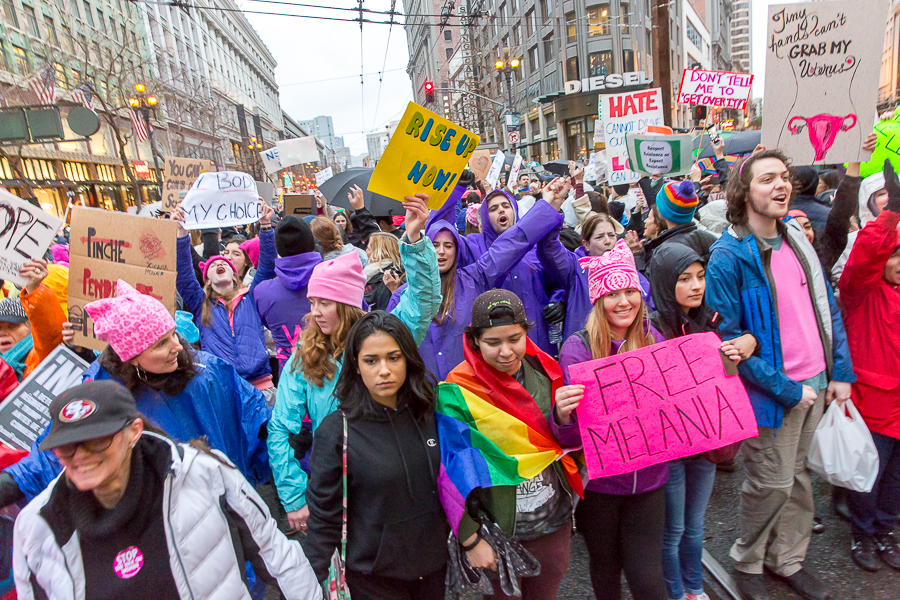
The Women’s March in Washington, D.C. and its sister marches across the nation on Jan. 21 are evidence that reproductive rights groups across the country are mobilizing.

“You have to fight it,” de la Cadena said. “You cannot just take it all. You have to confront the power that wants to enforce itself. You have to generate mechanisms to say no and to fight. Don’t be victims. Don’t allow the power to victimize you.”  


Written By: Sahiti Vemula—features@theaggie.org

Researchers begin new efforts to preserve government-funded data

CHELBERT DAI / AGGIE

Concerns raised over new presidential administration’s control of research

Since the inauguration of President Donald Trump, researchers and scientists have expressed concern about a series of removals of publicly funded information and data on official government websites. These researchers have attempted to salvage pieces of digital information that might be suppressed by the new administration.

“The new administration — the new federal administration — was broadcasting pretty broadly a certain approach to issues like climate change to issues like the environment, and whenever there is a shift of administration, there’s the risk of budgets being reduced in certain areas — there’s a risk of neglect with certain websites,” said Kevin Miller, the UC Davis university archivist. “I think what most people fear is the very direct kind of removing of easy access to certain types of data on government websites, and we saw that on day one — we saw that on Jan. 20.”

Earlier this month, Shields Library hosted the #DataRescueDavis event, in which community members from UC Davis could help archive scientific data related to climate change and the environment. The event, sponsored by DataRescue, a project by the University of Pennsylvania, is only one in a series which plans to address concerns about the removal of federal climate and environmental data by the new administration.

Miller, who also leads the Archives & Institutional Assets Program at UC Davis, a project that works with university staff and faculty to collect and preserve their research, noted the new efforts to preserve data.

“Again, agnostic of politics our principal is that lots of copies keep stuff safe,” Miller said. “And so, the more that we back up this data, the more legitimate and well-organized access points that we create for the data, the more that it’s backed up on servers that are under different control, the better it is for the life of the data and the better it is for the public in terms of their access.”

Nicole Karsch, a campus organizer for CALPIRG, said that, since noticing the removal of public information, organizations like hers have found new ways to combat the suppression.

“One of the things that has been of attention especially since this election has been the data that has been taken off of the websites of our government or other attacks to government data like regulating the EPA or overseeing scientist reports before they release them,” Karsch said. “So all of those kind of concerns of having one elected official who’s not a scientist per se or an expert in their field, kind of having power to regulate the information that’s released is of concern to the public interest and so research fellows of ours are working to preserve data and make sure people know that the data being taken away is happening.”

Since the removal of climate and environmental data, other researchers have scrambled to preserve data that might go against the new administration’s interests, including UC Davis’ Violence Prevention Research Center, which has downloaded data related to gun violence.

For Karsch, who is currently working with CALPIRG to ban fracking, the various issues faced by the new administration are better fought against in a concerted effort.

“I think I’ve more than before, a coming together of groups from different communities who recognize the need to preserve [data],” Karsch said. “So partnering with groups that maybe haven’t worked together so much before to recognize the need to have a concentrated effort, and partnerships and movements to do things, everything from preserving data to recognizing different groups being affected by different policies, it’s all kind of one group of people who, I think if we can align all of our problems, […] can fight together as a group against many issues.”

Diana Zaragoza, a third-year psychology and Chicano/a studies double major, said that witnessing the removal of scientific data has prompted her concerns over who controls publicly-funded information.

“Giving [Trump] full control is giving him the ability to censor,” Zaragoza said. “I know that when he censored these pages, his excuse was that they were going to review them and publish new information, but I don’t necessarily buy into it. I don’t think that it’s fair to anybody. When you google ‘White House’, that’s one of the first pages that comes up, and I think it should be available to everybody, it’s really the layout of the American government.”
Written by: Ivan Valenzuela — campus@theaggie.org

Davis community meeting sparks discourse on cannabis policy

0
HANNAH LEE / AGGIE

City facilitates discussion on marijuana regulations in Davis

With the passing of the Adult Use of Marijuana Act (Prop. 64), cities across California are creating their own policies and regulations for medical and non-medical (also called “adult-use”) cannabis usage. On Feb.1, the Davis City Council and its staff held an unofficial meeting to hear the thoughts and concerns of community members regarding cannabis use and to increase the transparency of city decisions.

With over 100 people present, there was an unusually varied mix of ages — even high school and college-aged individuals were fairly well-represented at the discussion. The community responded to a number of questions presented about outdoor cultivation regulations and zoning and about regulation on cannabis businesses like delivery services or dispensaries.

The city currently has a moratorium on outdoor cultivation and dispensaries in order to determine what regulations should be put into place to help minimize any negative outcomes; however, the city will enforce a strict schedule to discuss and draft appropriate policies in a timely manner. Davis plans to issue licenses for cannabis businesses and cultivation beginning in January 2018.

“Right now we do not allow medical cannabis dispensaries and I think there was an overwhelming sense that it was something we should consider,” Mayor Robb Davis said. “I think there was a strong push by many of the people there to allow for limited outdoor growing, too.”

Davis addressed public health concerns about safety, quality control and labeling. His goal is to ensure that some cannabis products, such as edible cookies or candies, are properly labeled to avoid any over-use or accidental use by vulnerable groups, including children who may be unaware they are consuming cannabis.

The focus of the discussion was to increase the accessibility of cannabis for medical purposes and to increase residents’ access to obtain it. There may be some benefits to recreational use — such as tax revenue — but the city also wants to ensure that a new legalized controlled substance regime is safe for all community members.

Brett Lee, a Davis city councilmember, made note of such concerns, such as the proximity of cannabis businesses to schools, but he noted that a majority of the people at the meeting were supportive of the change and were not against adult-use either.

“It was more about the detail of it, like ‘Oh we don’t want to have the rules too onerous,’ or ‘It would be nice if local businesses could be involved as opposed to outside businesses,’” Lee said. “The discussion had moved beyond ‘yes or no’ in terms of legalization and into, ‘It’s legal, so let’s make it as convenient and local friendly as possible.’”

The city had decided to focus on medical cannabis policy this year, since medical and adult-use cannabis are separate issues.

“A lot of the work that we do in cannabis policy is working towards shattering the stereotypes and propaganda that has been perpetuated over the decade […] without any real scientific rationale or background,” said Eric Gudz, the chief operating officer of Integrate Cal Community Partners, an organization that develops community strategies in the cannabis industry. “Since cannabis has been lumped in with other substances and associated with the black market, a lot of the issues people associated with cannabis and cannabis trade or commerce are really more of a product of [that].”

Gudz said that many of these concerns were flushed out during the meeting, which helped create a productive community discussion. He commended the Davis City Council for its support, reason and diligence during the process.

There will be one more community outreach meeting (date TBA) before city staff will draft proposed regulations. From there, it will go to the planning commission before reaching city council for a verdict on policy.


Written By: Bianca Antunez — city@theaggie.org

UC Davis awarded second energy institute for young African leaders

NICKI PADAR / AGGIE

Summer fellowship promotes sustainable energy solutions

Dysmus Kisilu fulfilled his dream of becoming an Aggie by participating in the Energy Institute for Young African Leaders at UC Davis in the summer of 2016. Now, Kisilu is working closely with farmers to reduce food waste in Kenya.

After a successful program last summer, students interested in addressing energy problems in their countries will have the opportunity to participate in the Mandela Washington Fellowship by attending the second Energy Institute at UC Davis from June 16 to July 30.

The six-week program will welcome 25 fellows, aged anywhere from 25 to 35, from sub-Saharan Africa to engage in workshops and coursework to improve their home countries’ energy conditions. These fellows have already made large environmental impacts in their home countries, but the program will boost their leadership skills within the energy sector of their career paths by enabling them to collaborate with the UC Davis community.

For Kisilu, a fellow from Kenya, the institute gave him the tools he needed to tackle food misuse.

“One-third of the world’s available food either spoils or gets thrown away — that’s enough to feed everyone in the world for two months,” Kisilu said via email. “[With] a population expected to increase [by] two billion by 2050, we cannot afford to allow these losses to continue.”

Jennie Konsella-Norene, the institute’s administrative director, said that competition for the fellowship is immense; there were 60,000 applicants this year, but only 1,000 will be accepted. Fellows will then be divided among the 38 institutes around the U.S., and 25 leaders will be allotted to each. At the end of the program, fellows will travel to Washington, D.C. to network and participate in discussion panels with U.S. leaders.

There are three themes for applicants to choose from: civic leadership, public management and business and entrepreneurship. Recently established as the most sustainable university in the world, UC Davis was selected to be a public management institute, but it was also awarded a concentration in energy policy. Academic director Peter Hartsough does not consider the special curriculum to be a coincidence.

“The strength of our renewable energy sector expertise [is] a big part of why we are the only institute that has an energy focus,” Hartsough said.

Hartsough added that the U.S. Department of State and International Research and Exchanges Board support the Mandela Washington Fellowship within the Young African Leaders Initiative.

“Two out of every three people in sub-Saharan Africa lack access to electricity,” Hartsough said. “So it’s a broad public diplomacy program.”

Konsella-Norene said that the fellows will participate in various projects, volunteer work and visits to the Lawrence Berkeley National Laboratory, the California Lighting Technology Center, West Village and the UC Davis Solar Farm. Fellows will also collaborate with the UC Davis community by working with graduate students, undergraduate interns and policy-makers in Sacramento.

“[The program] gives [fellows] an opportunity to talk amongst themselves and compare how things are done within their own countries,” Konsella-Norene said. “So they gained a lot just from talking with each other.”

Hartsough said the interaction between the fellows and the UC Davis community has natural benefits, as their alliance enhances “global awareness” and forms long-lasting bonds.

“When people return home they always think of themselves as Aggies,” Hartsough said. “[Fellows] think of UC Davis when [they consider] collaborating with a university in the future.”

Upon returning to Kenya, Kisilu began executing a Zero Energy Cool Chamber (ZECC) and training women to operate and preserve the ZECC.

“The impact of this will be a reduction in post-harvest loss from 60 percent to less than 10 percent,” Kisilu said. “I am [also] working to reduce marginalization by creating jobs and fostering the next generation of young women entrepreneurs in Kenya.”

Hartsough and Konsella-Norene encourage UC Davis students to interact with the fellows this summer to strengthen their global relations. Kisilu said that he was inspired by the “power of youth to imagine, innovate and make a difference” as a result of connecting with the other fellows.

“The 24 young African leaders I met challenged me to dream bigger and aim higher,” Kisilu said. “Both ladies and men are working on solutions to change the energy situation in Africa. It’s so motivating to know that you are not alone.”

Written by: Jeanna Totah — campus@theaggie.org

Oscars ‘shift to diversity’ not enough

GENESIA TING / AGGIE

Future award shows should uplift marginalized communities

Sunday night, as I feverishly searched for the livestream of the 89th Academy Awards, I could only think one thing: please don’t mess things up again. Like most people, #OscarsSoWhite was burned into the back of my brain, the start of a very disappointing 2016.

When Mahershala Ali won best supporting actor and Viola Davis won best supporting actress, I felt hopeful that the new Academy presidency of Cheryl Boone Isaacs, the Academy’s first Black president, had ushered in a real shift.

But despite it being the first year in Oscars history with more than three Balck winners (seriously, it’s 2017), I couldn’t help but feel like this wasn’t enough.

To start things off, Casey Affleck won best actor despite sexual assault allegations, proving that no matter how terrible you might be in real life, it’s okay if you’re a famous actor.

But probably the cringiest moment of the night was when La La Land was incorrectly announced as best picture winner instead of Moonlight. Finally, Steve Harvey can sleep at night. This moment was equally relieving and frustrating as the Moonlight cast members and crew climbed to the stage only to give the shortest speech of their lives as most of their time had been taken up by La La Land.

It was a strangely beautiful metaphor for the night, signifying that although the Oscars have attempted to solve the recurring problem of the last two years (and many prior) of not awarding diverse and deserving talent, it still struggles to truly move away from old patterns.

Many seemed satisfied with the fact that the Academy nominated six Black actors this year, seeing it as a sign that they were leaving behind the #OscarsSoWhite of the past couple years. Not only is this not enough, it is simply wrong to call this diverse as only one other performer in a minority population, Dev Patel, was nominated for best actor.

The Academy must do better — and not just when humiliated and pressured by the public eye. I can only hope they progress faster than their current glacial pace in recognizing artists of color.

I hope that in years to come, the Oscars can use this year’s awards as a stepping stone. Maybe next year we’ll see best actor and actress who are both Black. Maybe Hollywood will start casting even more people of color and tell more stories of intersectional identities now they see that these narratives can win.

As someone who is both a person of color and queer, seeing Moonlight win multiple awards honestly made me a little teary-eyed. To see a narrative like this turn out to be so successful and speak to so many made me feel supported, affirmed and very emotional.

And isn’t that the point? Because as Viola Davis said in her epic acceptance speech, she wants to tell “the stories of the people who dreamed big and never saw those dreams to fruition, people who fell in love and lost.” That is ultimately who the Oscars should celebrate: the stories of the marginalized, those who have gotten ignored and have been historically silenced.

The Oscars can mean so much more than just entertainment. They are a platform through which we can have honest conversations about politics and challenge ideas, like many winners from Sunday night used their award to do. This included Iranian director Asghar Farhadi, who won best foreign film and who decided not to attend the ceremony in solidarity against the travel ban imposed by President Trump.

Through the Oscars and the filmmaking industry in general, there is a great potential to uplift communities such as the Muslim community and the Black queer community, and to tell them they are not alone and that their stories matter.

It’s time we make the Oscars more than fluff, and to utilize them as a tool and as a reflection of society in the direction of acceptance.
Written by: Abigail Wang — arts@theaggie.org