58.7 F
Davis

Davis, California

Sunday, December 21, 2025
Home Blog Page 649

Events Calendar for March

MORGAN TIEU / AGGIE

What to look forward to in the coming month

José Gonzalez & The String Theory

Where? Mondavi Center

When? Friday Mar. 3, 8 p.m

What is it? José Gonzalez, a Swedish-born singer-songwriter, is an artist well-known for his emotional and captivating performances. Acclaimed for his popular cover of the song Heartbeats by The Knife, Gonzalez is likely to feature his newest album Vestiges and Claws, accompanied by The String Theory, a powerful 20-piece orchestra ensemble. It’s sure to be a night filled with beautiful melodies and powerful performances. Tickets can be purchased at the Mondavi Center website or at the Mondavi Center box office.


Contra Dance to Benefit Refugees

Where? Davis Community Church, Fellowship Hall, 421 D St.

When? Saturday Mar. 4, 7-10 p.m.

What is it? Dance for a cause you believe in! Opening Doors, a Sacramento-based refugee resettlement agency, will be hosting a fun night of live music and entertainment to benefit refugees from all over the world. Tickets can be purchased for $10 online or at The Avid Reader at 617 2nd Street.  


Food and Wine Pairing Class

Where? Cork It Again, 820 4th St.

When? Sunday Mar. 12, 3-5 p.m.

What is it? Cork It Again, a local Davis wine seller dedicated to environmental conservation, will be hosting a Food and Wine Pairing workshop to be taught by Krystina Kalapothakos for $45 per person. Immerse yourself in Greek culture and enjoy three traditional Greek appetizers from Kalapohtakos’ cookbook, Back To My Roots. After the cooking portion of the class, all dishes will be paired with wine to complete the experience. For more information, please visit the Cork It Again website.


STRFKR

Where? Ace of Spades, 1417 R Street, Sacramento

When? Wednesday Mar. 29, 9 p.m

What is it? An indie rock band based in Portland, Oregon, STRFKR provides a unique sound that’s also catchy and easy to dance to. With their newest album having just been released in early February, you won’t want to miss a night of fun and entertainment from this talented group. Tickets can be purchased online.


Abstractions of Nature art exhibit

Where? Gallery 1855, located at the Davis Cemetery, 820 Pole Line Rd.

When? The entire month of March

What is it? Gallery 1855 will be featuring the latest works of artist Thelma Weatherford. Weatherford’s show will consist of a variety of different abstract paintings depicting beautiful flowers, gardens, water and more. According to its website, Weatherford’s inspiration and creativity is drawn from her “observation of the world around [her]” in nature. Celebrate the coming of spring, and check out Abstractions of Nature for a vibrant art-loving experience.


Written by: Sydney Odman — arts@theaggie.org
 

Prehistoric climates revealed in Stable Isotope Lab

HOWARD SPERO / COURTESY

UC Davis Stable Isotope Lab houses climate reconstruction of the past

Due to recent unpredictable weather, students have to face the tough decision of whether or not to lug a jacket around campus all day in case it suddenly rains or gets cold. Surprisingly more accurate than our current everyday weather predictions are climate conditions of the past.

Scientists can determine what the climate was like in the month of August 100,000 years ago or what ocean temperatures were 30 million years ago.

These incredibly detailed reconstructions of past climate information occur at the UC Davis Stable Isotope Laboratory (SIL) in the Department of Earth and Planetary Sciences.

One research method at the SIL includes using a highly specific laser to shave off miniscule particles of a fossil material in order to analyze its composition and determine the type of environment it was in.

Daily sampling through laser analysis is used on coral because it grows so quickly. Essentially, information can be gained on what coral did on a day-to-day basis all the way back to 100,000 years ago.

“We are very interested in the ocean temperature of the arctic right now, and looking at data regarding how arctic sea ice melted over last 10,000 years and when the arctic was ice free,” said Howard Spero, professor in the Department of Earth and Planetary Sciences and the director of the SIL.

Additional research includes looking at the effects of ocean acidification in the past and present.

Inquiries into developing and calibrating new geochemical tools to reconstruct past environments also occur at this lab. Researchers seek to extract novel climate information from the geologic record.

The research lab in the Department of Earth and Planetary Sciences was founded in 1993 and will celebrate 25 years of research next year.

The goal of the lab is to have the analytic capabilities to measure carbon, oxygen, hydrogen and nitrogen isotope ratios on collected fossil material.

Through analysis of rocks and deep sea sediments, scientists are able to reconstruct the environment from when the organism was alive.

“We do a lot of research and collaborations with graduate students and researchers all over the world interested in looking at records of environmental change through changes in stable isotope geochemistry contained within skeletons, shells and minerals,” Spero said.

Types of samples that are often analyzed at the lab include: microfossils; corals; foraminifera, or sand-sized marine protists; diatoms, a type of phytoplankton; and radiolaria, tiny protozoa, or single-celled organisms.

When these organisms die, the remains and shells accumulate on the seafloor and become part of the sediment. Over time, more layers of sediment build up on top.

Scientists are able to deduce the age of sample sediments collected based on the composition and how deeply buried the layer is. A sample collected near the top of the seafloor will be younger than a sample taken at a meter into the seafloor.

“Trace amounts of other elements are incorporated into a shell when [an organism like foraminifera] grows,” said Jennifer Fehrenbacher, former post-doctorate and research scientist at the SIL via email. “The composition of the trace elements varies with growth conditions like temperature and pH. This makes them useful as ‘proxies’ for environmental conditions in the past.”

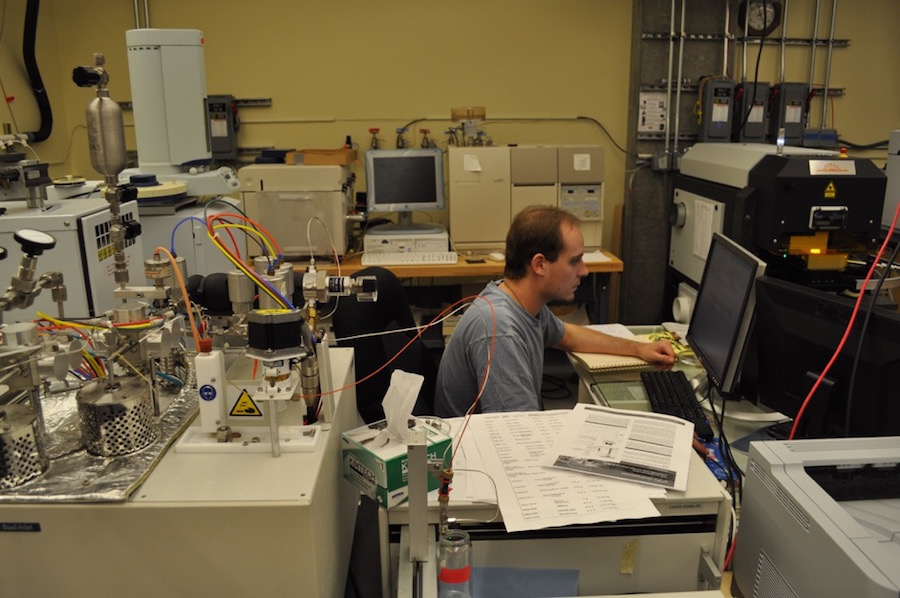
Extremely precise lasers and probes enable analysis of collected samples. Housed in this lab is an inductively coupled plasma mass spectrometer (ICPMS). This machine fires laser at a sample to ablate, or remove thin layers, of about 100 nanometers. To give some context, a dime is approximately 1 millimeter thick, and fits 1 million nanometers.

“The laser is an amazing analytical tool because it is minimally destructive so you don’t consume the entire specimen during analysis,” Fehrenbacher said via email. “That means that you can quantify the elemental composition of the specimen you are studying using the laser and the remaining part of the specimen can be analyzed using other instruments.”

The shaved off surface sample material goes into a mass spectrometer that then gives information about the stable isotopic composition.

Tessa Hill, an associate professor in the Department of Earth and Planetary Sciences and a researcher at the SIL, seeks to understand climate change impacts on the ocean in the past and present. By studying the chemistry of the shells of foraminifera, clues can be given to how the environments have changed in the past.

“In this project, we are interested in whether the chemical fingerprint of the shells (elements like Mg [Magnesium] and Ca [Calcium]) changes under particular future climate scenarios,” Hill said via email. “So, we raised foraminifera in the lab, under controlled temperature and water chemistry, and then we analyzed the shells in the Stable Isotope Lab.”

Hill, along with student researchers, utilized the ICPMS to remove a thin layer of the shell to determine its composition.

There are currently two stable isotope labs on campus which each serve a different function.

“The SIL is purely a research lab that conducts and analyzes primarily different types of calcium carbonate, silica and water samples for reconstructing climate history, as well as environmental change on earth today,” Spero said.

The second lab is a service lab, called the Stable Isotope Facility in the Plant Sciences Department. This lab accepts samples to analyze from researchers both on campus and worldwide.

Once analyzed, the lab sends the data back, and no longer takes part in that research. This facility has a far larger range of analytical capabilities with hundreds of thousands of organic and water samples cycling through.

The SIL collaborates with many institutions, and encourages graduate and undergraduate students who are able to operate instruments in the lab to collect data for their senior thesis projects.

“UC Davis gives students the opportunity to work with world-class researchers in their labs and learn techniques that will propel [their] career in the future,” Spero said. “Take advantage of this because if not, you are missing out on an incredible opportunity.”

Written by Shivani Kamal — science@theaggie.org

Women’s gymnastics springs ahead of competition

JAY GELVEZON / AGGIE

Aggies achieve seventh-straight win, gain momentum for upcoming MPSF Championships

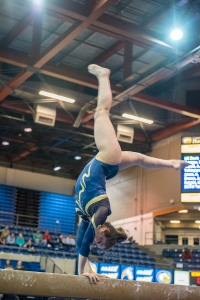
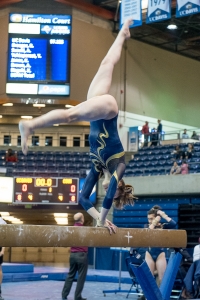
The UC Davis women’s gymnastics team hosted a four-way meet on Friday, Feb. 24 from which they emerged triumphant after taking first-place honors in three of four events plus the all-around title. The meet featured four Mountain Pacific Sports Federation (MPSF) conference competitors and could be considered a preview of the imminent championship meet on March 18, sans only two of the participating teams. The Aggies came out on top after scoring a collective 194.650 with San Jose State behind them at 193.900, followed by Sacramento State’s 193.250 and Seattle Pacific University’s 192.550.

The home team maintained an air of calmness and consistency throughout the meet; though the slightest of slip-ups occurred occasionally, the Aggies reigned for a majority of the meet. An unexpected fall on balance beam put the Aggies in second place for the first time in the meet after the third rotation, but a thrilling fourth rotation of high marks in the floor exercise enabled the team to take it all.

JAY GELVEZON / AGGIE

“Our mantra is never give up, never give in and work as hard as you can until the end until you get what you want, and that’s exactly what [the team] did today,” said head coach John Lavallee. “When you see everybody’s star rise, it is just reinforcement that Aggie gymnastics is on the right track and they’re doing the right things.”

The meet, which was the seventh consecutive victory for the Aggies, upheld the team’s continuing trend of remarkable individual performances. For the second time in just two weeks, junior Alexis Brown hit a 9.900 on balance beam, landing her in a five-way tie for the school’s all-time record. Additionally, Brown acquired the all-around crown with her score of 39.300 and emerged as the conference’s MPSF Gymnast of the Week for the second week in a row.

“You just have to hit for your team and I think that has really changed our whole dynamic this year,” Brown said. “We’re so much happier, so much more positive now that we do this for each other. I know my 9.900 [on bars] is helping the team get to where we want to go, which ultimately is [NCAA] Regionals.”

Solid performances delivered across the team also contributed to the near-sweep of events for the Aggies, allowing them to capture the wins in uneven bars, vault, floor exercise and the aforementioned overall title.

Sophomores Yasmine Yektaparast and Kara Jones both landed 9.875 on the floor exercise, qualifying them for a five-way tie for first place in the event. Senior Katy Nogaki tied for first in vault with a 9.800, while senior Yonni Michovska shared the top spot on bars with a score of 9.825. Like Brown, Michovska championed a career best in bars in the previous meet, an accomplishment that has contributed both to her and the team’s morale.

JAY GELVEZON / AGGIE

“To me personally, it is the greatest joy in the world, especially since I’ve been working for years to hit that exact score,” Michovska said. “It’s amazing because [the team] needs those five scores to come together and that is one of the highest scores you can get.”

Though the Aggies have been making quick work of their recent contestants, it is imperative that they remain focused and prepared for the intense competition looming in the near future. The coming championship week is just two meets away.

“We are making sure to get enough rest, mentally and physically […] we are staying in the zone every single day in practice,” Brown said. “Right now, it’s less about the numbers […] it’s just about really being there for each other at every moment and making each turn count.”

The Aggies hit the road for their next meet against Sacramento State University on Saturday, March 4, and will return for their final home meet against Air Force on Friday, March 10 at 7 p.m.

Written by: Alex Arechiga — sports@theaggie.org

Davis hosts Congressman John Garamendi

NICKI PADAR / AGGIE

Congressman Garamendi holds town hall at Veteran’s Memorial Theater

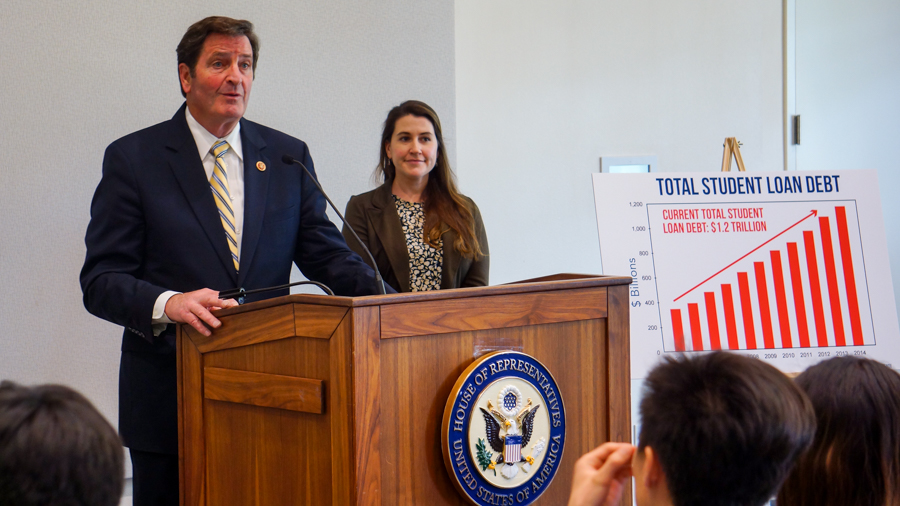
On Feb. 12, Congressman John Garamendi hosted a town hall in the Veteran’s Memorial Theatre on 14th Street.

Garamendi represents the 3rd Congressional District of California, which encompasses several counties north and west of Sacramento. He has served as a member of the House of Representatives since 2013.

A crowd of constituents large enough to fill the theatre gathered to hear Garamendi speak — a number of attendees even stood up around the back wall of the venue due to a lack of empty seats.

From the start of the event, Garamendi seemed to be focused on addressing the concerns of citizens in the new political climate and urging everyone present to remain politically active.

During the town hall, he commented on President Trump’s frequent tweets, saying that they “sucked the oxygen away.” The statement was met with shouts of approval and some applause from audience members before he continued.

“Here’s what you can do, and you’re doing, and you have to get your neighbors to do it,” Garamendi said. “You have to pay attention, you have to get past the […] constant tweets, and you’ve got to hone down on what is happening. Don’t become psychotic […] you’ve got to be paying attention and you’ve got to organize.”

Garamendi, a House Democrat, also acknowledged the Republican majority in the House and the Senate. Currently, 54 out of 100 Senators and 246 out of 435 House members are Republican; this is the largest conservative-dominated Congress ratio since 1971.

With a Republican Congress combined with a Republican president, Democratic voters across the United States have expressed fear that this will interrupt the government’s system of checks and balances, which are meant to keep any one group in the federal government from becoming too powerful or influential. As a solution, Garamendi stressed the importance of voting.

“We are 18 months away from the next election, in which the opportunity to change Congress and the Senate exists,” Garamendi said, which was met with a round of applause. “It’s a tough time. This is going to be a very, very difficult period. But, […] Congress is up for election. 435 of us in 18 months.”

Garamendi began taking questions from a very antsy audience; some shouted out to him to attract his attention, even as he made an attempt to quiet the room and take one question at a time.

One woman stood up to ask, “What will you do if Trump changes the abortion laws?”

He did not elaborate much on the issue.

“Possibly, [The Supreme Court] will. There’s been an effort all seven years I’ve been [in office],” Garamendi said.

Several other questions arose that were noticeably circumvented by Garamendi including a question concerning his position on the possibility of deportations in the Davis area and his position on the elimination of factory farms.

Concerning deportation, however, the Congressman commented that California may become a sanctuary state, a statement which was met with applause, but no further elaboration.

Another woman in the audience stated: “I’m really worried about the refugees and the immigrants […] Some of the most brilliant minds in our country are Muslim and come from many other countries [and] cultures.”

Garamendi responded to this by immediately expressing his abhorrence of the recent ban on travel and immigration.

“It was wrong in many different ways,” Garamendi said. “In my view, and in the court’s view […] they saw this as a religious ban on Muslims, and that is both unconstitutional and it is clearly un-American.”

Garamendi went on to say that the ban deprived America of important people; he made a reference to Davis’ student body and the number of students and scholars from UC Davis that were unable to travel as a result of the ban.

The White House is expected to issue a revised version of the order in the next few days.

“Hopefully […] [Trump] will be more careful and will not tread the same road he has already tread,” Garamendi said. “If he does […] all of the pushback from the public will re-occur. We’ll see if he’s a fast learner or doesn’t learn at all.”

In addition to providing his input on current immigration issues, Garamendi detailed his own ideas for what he called “comprehensive immigration reform.”

“We’re not [going to] build a wall […] it’s not gonna stop anybody, “ Garamendi said. “There are 10, 12 million illegal immigrants […] all of whom are working, have children […]  we need to regularize this. Recognize that they are here. If they care to, [give them] a path for citizenship. Get this done.”

Overall, the event was well received by the enthusiastic audience Garamendi attracted which consisted of in person attendees as well as an audience from an online stream that received over 1,200 views. He was very well-liked by the audience and seemed determined to keep his constituents informed by urging them to vote and inviting those interested to watch the C-Span footage of every upcoming session of Congress.

Those interested can watch the event on Garamendi’s Facebook page.

Written by: Caitlyn Sampley — city@theaggie.org

The key to uninterrupted focus

NICKI PADAR / AGGIE

The long-term effects of multitasking

Gloria Mark of UC Irvine reported that it takes an average of 25 minutes for a mind to fully return to focusing on a task after an interruption. This means that if students check their phones twice in one hour of studying, they have already wasted another 50 minutes trying to regain focus on their academic studies.

It may be difficult for students to pay attention in lecture or finish homework when they  are constantly thinking about their busy to-do lists or anticipating the “ding” of a text message. Robert Mangun, professor of psychology and neurology and Interim Chair of the Department of Psychology, conducts research to better understand the mechanisms of maintaining attention.

“Part of the basic principles of the attention system is that it has limited capacity,” Mangun said. “It is possible to do a few simple tasks simultaneously, but at some point the attention system runs out of capacity and that’s why you start paying attention to some things and ignoring others.”

While the current generation of college students is highly influenced by innovative technology and social media, it is easy to let these distractions infiltrate our focus by multitasking in an attempt to maintain social media interactions and academic success simultaneously. However, multitasking can work against students because it can result in lower performance on tasks and can even affect long term memory.

“When you overload the system with information, there is a cost between switching between different tasks,” Mangun said. “It’s not for free that your brain can switch from one thing to another and switch it back again. There is a switching cost because this leads to more distraction, and can result in information being lost down the line.”

Working memory, which Mangun defined as the ability to hold data in mind while completing a task, works with memory to help the brain keep track of information and refer back to it later. However, the human brain is a very simple system when it comes to managing several tasks at once, so it becomes easier to lose track of priorities and have a weaker memory in the long run. This can be seen when students decide to scroll on Facebook instead of paying attention to lecture, and then miss key information because their brains are focused elsewhere.

“‘Deep processing’ leads to information being better retained in the long run,” Mangun said. “If you have a lot of things going on and you’re not really engaged in each of the topics fully, you are not ‘deep processing’. Your brain cannot fully code all of the information properly, and this is the cost we see when we attempt to multitask.”

Mangun said that the best way to overcome this is for students to be aware of and analyze their weaknesses and strengths when it comes to how effectively they focus.

“It’s like when you’re on a diet, it’s a lot easier not to eat the cookies if you don’t buy them in the first place,” Mangun said. “If people could learn what environment helps them focus the best and manage their lives properly, this will have a much larger impact than training oneself to focus in a distracting environment.”

Nicholas Barber, a second-year cognitive science major, understands his personal strengths and limitations when it comes to performing his best academically. He has tried several different studying tactics and has stuck with an efficient method of focusing. Barber takes location into account when it comes to efficient studying; he feels more comfortable and productive in specific places and gravitates to these locations when he knows it’s time to get work done.

“I don’t really focus that well when I study at home so I like to go to the library or even find empty classrooms in Olson Hall because it’s pretty quiet,” Barber said. “I prefer to study with music as well as chew gum when I study because I am a jittery person so this helps take that distraction away and stay productive.”

Though Barber has a strict study plan, it can be easy for students like him to gravitate toward unproductive study spaces because of potential social interactions.

While it may come naturally for some students to avoid going on social media websites or checking networking apps on their phones, other students must take extreme measures like blocking sites or deleting social media apps in order to stay focused.

“I am an easily distracted person especially with social media, so I use a site blocker extension of Google Chrome,” Barber said. “[It] literally blocks me from accessing certain sites for an amount of time set on a timer.”

Annalisa Teixeira, coordinator of the study skills workshops and graduate adviser of the Student Academic Success Center (SASC), specializes in helping students discover and harness their focus.

“I see students who are scrambling or multitasking because they’ve let time throughout the day slip by and have to play catch up,” Teixeira said. “In the overcoming procrastination study skills workshop, we discuss tools like planners that encourage accountability and set up boundaries between tasks so they’re not overlapping.”

Focusing is not the only necessity for students to become academically successful. Lack of organization can cause stress to bleed into students social and personal lives. However, when students are caught up with their priorities by managing their time efficiently, they are able to be present in the moment.

“When you don’t have some unknown assignment or deadline hanging over you, you prevent this stress from affecting the time you’ve set aside for socializing or self-care,” Teixeira said. “Productivity means we can carve out time for other pieces in our lives and get the most out of our relationships and self care. Time management and organization actually helps us maximize relationships and academic performance.”

Working at the SASC, Teixeira has observed that students who are deeply focused are able to verbalize short term and long term goals.

“Finding focus is deepening the meaning of what you’re studying because a lot of times it’s because we’re going outside of the classroom in some way, connecting the theory to practice,” Teixeira said. “There’s real power in finding the things that motivate you and give you focus, and putting that on your wall as something you can look at and meditate on.”
Written by: Gillian Allen — features@theaggie.org

Environmentalists should renew message and appeal to states

DEEBA YAVROM / AGGIE FILE

The environmental movement can take advantage of its lost political power

Environmentalists have good reason to be sullen these days. This dear planet is tumbling unimpeded towards phosphorous depletion, ocean acidification, warmer climate and mass extinction. Developing countries are unable to tackle high birth rates and inefficient resource use. Our country, with the world’s largest economy and most influential power, is now governed by a political party with parochial views on the environment.

Environmental interests have no voice in Washington except the senate filibuster. Until this Republican-dominated political cycle runs its course, demands for new federal action will be fruitless. Legal organizations like Greenpeace and the World Wildlife Foundation will be on the defensive to protect the country’s existing, barely adequate anti-emission policy from Republican assault instead of on the offensive trying to tackle ever more threatening problems. In this woeful political situation, what can conscientious environmentalists do to affect positive change?

Environmentalists should take an intermission from power to strengthen their movement’s foundations. Thanks to internal weaknesses, the environmental movement whittled away its last major opportunity to influence legislative policy, when Obama and the Democrats swept Washington in 2008. To avoid a repeat, the movement should prepare itself before the next liberal administration provides it another romp with power.

First, the environmental movement should shift its focus to encouraging state government action. One inadvertent bright point of our divided political climate is that many Democratic localities have stayed blue in the face of 2016’s Republican upset. As the Constitution leaves powers not granted to the federal government to state governments, states like Hawaii and California have already implemented sweeping environmental agendas. Our Golden State has sustained strong economic growth while implementing cap-and-trade policy, clean water rules and electric vehicle incentives — defying conservative warnings of dampered productivity.

Environmental groups should urge such sympathetic administrations to forge ahead with regulation. In particular, they should target Pennsylvania, a large producer of oil and coal led by a Democratic governor. Not only do state actions shift large populations within our country towards sustainable energy, but they also serve as trial and error to discover the most effective environmental legislation. Courageous states, in the words of Justice Louis Brandeis, can “serve as [laboratories]” for innovative solutions to excess greenhouse emissions. As with our historical progresses towards slavery abolition, women’s suffrage and civil rights, future federal policy is bound to draw from the successes of the states.

Second, the environmental movement should work its hardest to depoliticize the issue of climate change. Fossil fuel special interests have been remarkably successful at lumping climate change with issues like abortion and immigration into the public’s perception of a “liberal agenda.” They have seized upon a tiny contingent of skeptical scientists to hinder “anti-business” environmental policy and undermine public faith in scientific consensus. These groups have also incentivized military-friendly Republicans to ignore the Pentagon’s warnings that climate change is a “significant risk” to national security.

Environmentalists should assert the factual higher ground by pivoting towards neutrality. They should strive for the bipartisanship of the late ‘60s, when laws like the Clean Air Act and National Environmental Policy Act enjoyed broad, bipartisan congressional support. The movement should keep climate change as far above the partisan fray as possible. When climate change is raised in political discussion, climate supporters should frame it in terms of national security, which both the left and right have a stake in. Ecological organizations ought to avoid commentary on unrelated social and economic issues, and emphasize their political neutrality by giving voice to climate-conscious conservatives. And above all, advocacy groups like Greenpeace and Ecowatch must purge themselves of malignant fringe groups, like the anti-vaccine and anti-GMO movements, for the sake of their scientific credibility.

The 2016 election was a blow to the already dismal prospects of environmentalists. But this new political order is also a great opportunity. By coalescing support and perfecting policy in sympathetic states, and reasserting its non-partisan objectivity, the environmental movement can make a great comeback as a lean, mean, green political machine.

Maybe the global thermometer is half-empty after all.
Written by: Sid Bagga — sabagga@ucdavis.edu

Disclaimer: The views and opinions expressed by individual columnists belong to the columnists alone and do not necessarily indicate the views and opinions held by The California Aggie.

What to look forward to during the football off-season

LUCINA M [CC BY-NC 2.0] / FLICKR
The Combine, Free Agency, NFL Draft

The 2016-2017 NFL season has come and gone. For some fans, the thrill and excitement of an overall successful season made the weeks fly by. For others, the season couldn’t end fast enough — sorry, San Francisco and Cleveland. We witnessed another, yes, another Patriots Super Bowl victory that proved once again that Tom Brady, aside from being one of the greatest signal callers in football history, is also getting much better at magic. As fans adapt to their football hibernation, there are some essential dates to keep on notice in the upcoming months. Here are a few events that football fans will want to mark in their calendars:

  • Scouting Combine (February 28 to March 6)
  • Start of Free Agency (March 9)
  • NFL Draft (April 27 to 29)  

Teams like the aforementioned Browns and 49ers, along with many of the below .500 teams, will look to the combine, free agency and the draft to restructure their weak rosters. As for the other teams, this is a time to build upon the success from last season and address some areas of concern. For fans, choosing what to pay attention to involves many variables ranging from investments in money pools to die-hard fantasy aficionados or just simply possessing a passion for the game.   

This year’s crop of collegiate-to-pro hopefuls is filled with talent. Defensive end Myles Garrett from Texas A&M had a solid junior year in which he amassed 8.5 sacks while only appearing in 11 games due to a lingering knee injury — Garrett is projected in several mock drafts to go number one to the Browns. According to NFL.com, before the draft as many as 335 total collegiate players, including Garrett, will get the chance to showcase their skills and distinguish themselves from the herd.

Watching the scouting combine can be daunting. Most fans will only catch a few players rather than sit through the entirety of the combine — but, of course, there are those who pay close attention to every player and every drill to feel like they are part of and well-informed of the decision-making process.

Free agency can be an exciting time for those fans who are more equipped to catch the occasional news clip on their favorite sports channel or notification on their phones. This is a chance for teams to fill glaring holes in their rosters and, for some, to appeal to the fan base by bringing in a big-name free agent. This off-season’s possible free agents are sure to make a splash with whichever team is willing to offer a king’s ransom for their services. Names like Le’Veon Bell, Eric Berry and Kirk Cousins are the headliners of the list, although some NFL experts are predicting that many of the big-name players will get the franchise tag.

While some teams will be looking for a reason to blow their money, others will focus on bringing in veteran leadership and adding depth to an already talented roster. Players like converted quarterback-to-wide receiver Terrell Pryor, who’s coming off his second season at his new position and his first where he eclipsed 1,000 yards receiving, should get some attention and would be a nice addition as a solid number-two receiver. Some of the most exciting signings are the ones that go under the radar and don’t really bring attention until they start producing on the field — one of the better examples of this would be last year’s signing of longtime journeyman and special teamer Lorenzo Alexander, who recorded 12.5 sacks last season for the Bills.

The NFL Draft is by far the most exciting event among the bunch, and has become one of the most-watched sports-related programs in America. ESPN reported that their viewership stood around 6 million for the first round of the 2016 Draft with a high of over 7 million. With the possibilities of big trades and shocking draft choices, the NFL Draft makes for an entertaining event for parties with friends. Some prefer the comfort and solitude of sitting in a favorite recliner at home with a cold beverage — this also has the added bonus of privacy so that when friends want to harass you when your team chooses, say, the fastest player in the draft instead of the future face of the franchise (disclaimer: bitter Raiders fan) you can only be reached via telephone, and there’s a simple fix for that.

Fans are faithful to their teams, so much so that it has become a part of their family. Traditions are built around the sport and lives are brought up in it. Football has become America’s pastime, and when the season comes to an end, many of us search for some form of comfort to alleviate the need for the gridiron. Luckily, the off-season offers some relief. If you’re a fan, you won’t want to miss it.      
Written by: David Flores — sports@theaggie.org

UC Davis museums highlights groundbreaking research

ANH-TRAM BUI / AGGIE

Biodiversity Museum Day showcases nematodes, yeast cultures, wildlife conservation

The UC Davis campus swarmed with guests of all ages on Feb. 19 as they examined the cutting-edge research done at the university. Among the research displayed were collections of nematodes, fish biology and yeast and wildlife.

The small but mighty nematode fanfare at the Biodiversity Museum Day featured a dynamic microscope in which visitors could see the small worms up close, as well as several jars full of nematodes relevant to daily life, such as a preserved dog heart in a jar with heartworms, a species of nematode, and also a preserved peach root that had root-knot nematodes, one of the organisms most economically damaging to agriculture.

According to Chris Pagan, Ph.D. student in the Department of Entomology and Nematology graduate group at UC Davis, nematodes make up about 80 percent of all multicellular animals on earth.

“Most people don’t know they exist, and not many species have been described,” Pagan said. “Only about 27,000 species of nematodes have been described […] [Nematodes] are everywhere life exists, obviously they are doing something and we’ve just begun the scratch the surface of that.”

The two small table displays generated a big crowd when they opened; children flocked to the microscopes and examined jars of nematodes eagerly. Pagan stressed that events like Biodiversity Museum Day are important to science but also important to generate “nematode appreciation.”

“These [events] are really gateways to science […] and generating interest in science in general,” Pagan said.

The Phaff Yeast Culture Collection had a two-room exhibition complete with microscopes and taste tests. There were several tables with displays explaining the institute’s research and its yeast collection. Kyria Boundy Mills, the curator of the Phaff Yeast Culture Collection, has been with the collection since 1998.

Mills maintains over 800 different species of yeast. Mills’ job includes sending yeast out to people who are doing research while also conducting her own research and expanding the collection. The Phaff Yeast Culture Collection is one of only four collections in the world that holds this much variety and volume of yeast species.

The research that Mills conducts has led to the discovery of a new kind of glycolipid, a molecule that contains a sugar component and a fat component.

“We’ve got some publications on the structure of these weird glycolipids,” Mills said “It’s a new class of molecules. Working with the metabolomic center, we were able to identify the chemical structure.”

According to Mills, the molecule’s nature makes it a natural detergent that is both biodegradable and environmentally friendly.

The Museum of Wildlife and Fish showed off an impressive collection of the animal kingdom. The display included primate skulls, touchable reptiles, a lion skin and bird dissections. The museum holds 55,000 vertebrates and is one of campus’ “best kept secrets,” according to Andrew Engilis, the museum’s curator.

Research done at the museum includes projects such as the Putah Creek Nestbox Highway, which involves setting up nest boxes for cavernous nesting birds while a team monitors them.

“The museum is very dynamic: it’s not just specimens in drawers and cases; it’s the focal point for teaching in our department,” Engilis said. “The specimens are a way for the students to connect to the natural world from the textbook.”

Nematodes, yeast cultures and wildlife conservation are just a small portion of what Biodiversity Museum Day had to offer.

“[Events like Biodiversity Museum Day] pave the way for a brighter future for our collections here on campus and across this campus our some of California’s most important collections,” Engilis said.
Written by: Emma Askea — science@theaggie.org

At least 124 UC employees accused of sexual harassment, violence

HANNAH LEE / AGGIE

Documents shed light on rampant sexual misconduct within UC system

At least 124 University of California (UC) faculty, staff and contractors have been accused of sexual violence and harassment since 2013, and almost a third of those accused are still are employed by the UC system. UC Berkeley’s student newspaper, The Daily Californian, released this information on Tuesday, Feb. 28 after obtaining documents through the California Public Records Act.

National Collegiate Athletic Association (NCAA) coaches, decorated scholars and department chairs are among those accused of sexual misconduct from each of the nine UC campuses. The reports spanned from Jan. 1, 2013 to April 16, 2016 and outline instances of unwanted sexual advancements, inappropriate comments and physical assaults from Title IX investigations. These records were never released to the public prior to Tuesday.

“It’s important to note that these cases run from January 2013 to April 2016, so most if not all of these cases were investigated and adjudicated under policies and procedures that are no longer in effect,” said UC spokesperson Claire Doan in a statement to The Daily Californian. “We’ve made so many drastic and significant improvements over the past two and a half years […] that we are able to provide more clarity (and) more fairness […] when it comes to these investigations.”

About 7 percent of cases involved physical assault, according to the documents.

“Rudy Thomas, the former director of strength and conditioning in athletics at UC San Diego, was training a female client when he inappropriately touched her breast and genital area,” one of the reports said. “When she said she was uncomfortable and attempted to leave, he hugged and tried to kiss her on the mouth.”

25 percent of the reports involved faculty accused of sexual misconduct and 35 percent of the cases were reported by students.

“Gurinder Singh Mann, a professor of Sikh studies at UC Santa Barbara, invited a student up to his bedroom during a meeting for a research project and asked her to lie down on his bed, putting his hand under her shirt,” one report read.

The UC Office of General Counsel released a statement responding to the documents.

“The University recognizes that there is a significant public interest in records that reflect the adequacy of the University’s investigation of and response to complaints of sexual harassment and sexual violence,” the statement said. “However, there are several competing public interests that must also be balanced under the Public Records Act or other relevant statutes.”

ASUCD President Alex Lee believes that these findings reveal the need for the UC system to seriously address sexual violence.

“The UC needs to do more to provide justice and prevent sexual harassment and assault,” Lee said via email. “The evidence and cases help us all understand the gravity of rampant misconduct but many more incidents go unanswered.”

The Daily Californian story is ongoing and will be updated as reporters obtain more information.


Written by: Lindsay Floyd — campus@theaggie.org. Alyssa Vandenberg contributed reporting.


Dada Life to bring their biggest show to the Bay Area

Swedish DJ duo to stop in San Francisco as part of The Compound: Evolved tour

Olle Cornéer and Stefan Engblom make up the infamous DJ-duo, Dada Life and they have plans to bring “no rules but the rules of Dada” to San Francisco on March 11. The duo said that they want to bring the experience to the crowd and stated they have “lots of new activities in and around the venue.” From their Twitter, activities will include “Banana Basketball, Pillow Fights, Hypnosis, Roaming Dada-bassadors, [and] Champagne Showers.” They also plan to bring new music to all the “proud Citizens of Dada Land.” Supporting acts ARMNHMR, LOUDPVCK and Arty will bring their music to the dance floor of of the auditorium.

Both producers have played at huge festivals across the world, such as Coachella, Ultra Music Festival and Electric Daisy Carnival. In addition to their craziness at festivals, their performances (or lack thereof) have incited riots in Los Angeles, Austin and Miami.

Their trademark live experience will be the only show in the state of California, so be sure to grab your tickets from TicketMaster. General admission is priced at $49.50 and as usual, Bill Graham Civic Auditorium does not have assigned seating. This will give fans the opportunity to get there early to get catch the Dada close-up and in action for The Compound: Evolved tour.

Written by Jay Gelvezon

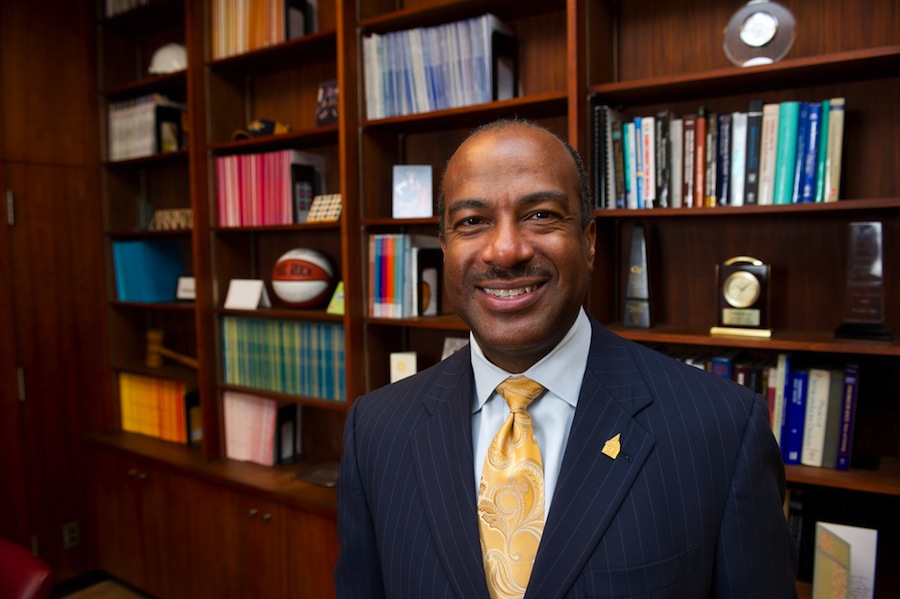
New UC Davis Chancellor Gary May receives $325,780 a year from paid board positions

GEORGIA TECH / COURTESY

May plans to keep current board positions upon assuming chancellorship

Incoming UC Davis Chancellor Gary May receives $325,780 each year from paid positions on outside boards, the Sacramento Bee reported on Feb. 28. May, who was unanimously confirmed as the new UC Davis chancellor on Feb. 23 by the UC Regents, serves on the boards of Leidos, a defense and technology company, and the nonprofit Charles Stark Draper Laboratory.

According to the Sacramento Bee, May plans to keep these paid board seats upon becoming chancellor in August, but will not accept any more paid board positions.

UC spokeswoman Dianne Klein believes that May’s involvement on these boards is not a potential conflict of interest, and instead will prove beneficial to UC Davis.

“The chancellor’s presence on these boards benefits the university,” Klein said in an interview with the Sacramento Bee. “They are not conflicts. For example, the Leidos board activity has resulted in millions of dollars in philanthropic gifts for Georgia Tech, and the company also hires Georgia Tech students.”

Former Chancellor Linda P.B. Katehi controversially served on the board of two for-profit companies, a factor that contributed to her ultimate resignation in 2016.

“There is a lot of trust that needs to be rebuilt with the Chancellor and students; and this is his first test,” said ASUCD President Alex Lee via email. “I hope [May] will be sensible about our recent history [and] culture and make the right decision even before he steps foot in the Chancellor’s residence.”

May will receive a salary of $495,000 as UC Davis chancellor, making him the fourth highest paid chancellor in the UC system.

Written by: Alyssa Vandenberg  — campus@theaggie.org

Photo of the Week: 3/1/2017

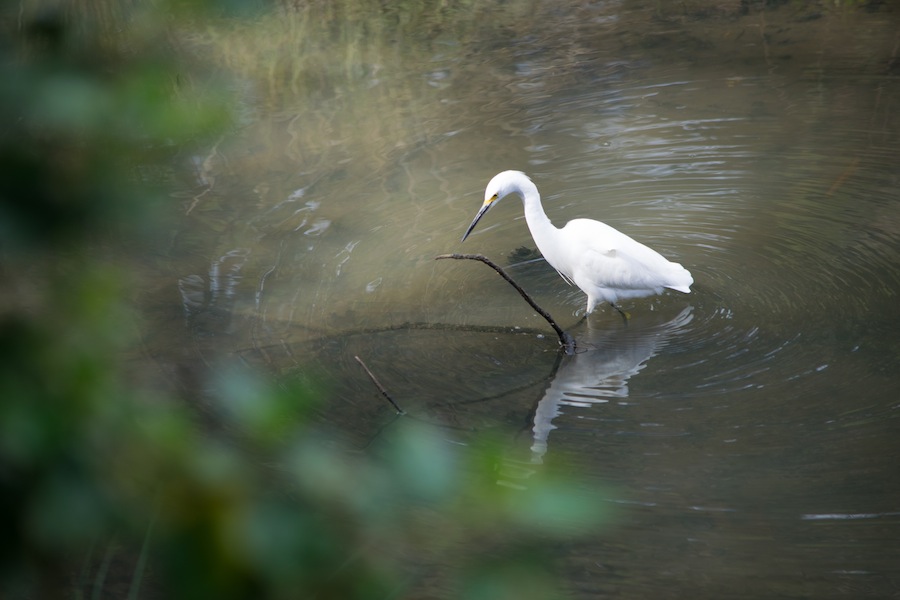
Wishing I was this bird during this week eight. (BRIAN LANDRY)

UC Davis ranked high in career success, financial aid services

VENOOS MOSHAYEDI / AGGIE FILE

56 percent of students graduate with debt in 2015, compare to national average of 68 percent

UC Davis was included in The Princeton Review list of the top 200 colleges that pay you back, announced on Jan. 31. The unranked list included colleges that deliver academics, affordability, financial aid and great career foundations.

The Princeton Review used 40 data points such as academics, costs, financial aid, debt, graduation rates, career data and salary data. The data came from the 2014-2015 Common Data Set, student surveys, alumni surveys, and 2015-2016 alumni career and salary statistics.

UC Davis was chosen partly on its academic excellence. With UC Davis’ 42 percent acceptance rate, the university displayed score of 90 for its admissions selectivity rating and applicants’ average high school grade point average being 3.99.

UC Davis’ affordability, considering tuition and financial aid availability, was another factor under consideration. From the 2014-2015 data, the tuition for California residents was around $11,220, while for non-residents it averaged at $35,928. Tuition after room and board for those living on campus totaled $32,208 and $56,916, respectively, for in-state and out-of-state tuition.

Trina Wilson, senior associate director at UC Davis Financial Aid, believes that UC Davis provides both sufficient financial aid and manageable loan indebtedness for its students.

“In [2014-2015] the average need-based gift aid (or scholarships and grants) for incoming freshmen was $20,111 and for undergraduates it was $17,591,” Wilson said via email. “The average financial aid package [provided] for incoming freshmen was $23,271 and for undergraduates it was $20,360.”

Wilson noted that UC Davis’ average financial aid packages exclude Federal Direct unsubsidized and PLUS loans, as well as private or alternative loans.

Wilson additionally emphasized UC Davis students’ declining debt and lower average debt.

“According to the Project on Student Debt by the Institute for College Access & Success, the 2014-15 national average student debt at graduation was $30,100 compared with $19,588 at UC Davis,” Wilson said. “Based on their findings, 68 percent of the students across the nation graduated with debt in 2014-15, compared to only 56 percent of UC Davis students.”

Wilson and the financial aid office are proud to show statistics that demonstrate UC Davis’ efforts to reduce student debt.

“Based on preliminary numbers, it appears the percentage of UC Davis students incurring debt declined again in 2015-16,” Wilson said. “Undergraduates have also seen a decline in the average loan amount as well as a lower cumulative loan balance upon graduation. [Reduction of] the amount of self-help undergraduates have to pay and [expansion of] our financial literacy resources [is occurring].”

Jennifer Duong, financial aid peer advisor and a third-year managerial economics and psychology double major, acknowledged many financial aid resources available for students.

“For UC Davis, there are emergency and short-term loans for students who need money ASAP, and there are also different types of forms and appeals that students can potentially submit if they believe they need more aid or are in a certain type of situation,” Duong said. “There’s also some meal programs that help students with food.”

Duong believes there are many different ways that UC Davis “pays you back.”

“Some of my peers have told me that they went to Davis because they received the most financial aid compared to other schools,” Duong said. “I’ve noticed that many students are able to receive financial aid refunds to help them with their personal expenses such as rent or utilities […] [refunds] help a lot of students pursue different opportunities that they might not have been able to pursue without those funds.”

Marcie Holland, director of UC Davis’ Internship and Career Center (ICC), believes going to UC Davis provides a great return on investment.

“UC Davis in particular [does] a fantastic return on investment,” Holland said. “40 percent of UC Davis are Pell [Grant] eligible because of their income. What that means is that UC Davis is a wonderful mechanism for social mobility. Within five or 10 years students from low economic backgrounds are making the same income as their family.”

One of the programs offered through the ICC that Holland emphasized was the Career Discovery Group. This career group collaborates with the College of Agricultural and Environmental Sciences to offer field trips, seminars and mentorship for in-depth career exploration to freshman and transfer students. Spots will open for this program in the spring.

Likewise, Holland said the ICC offers many other opportunities such as maintaining Aggie Job Link and providing internship workshops, career fairs and career advising. The winter career fair will be on March 1 and a startup career fair will be on May 13.
“In general, I think Davis is a great community filled with a lot of driven individuals,” Duong said. “I think that you can really create a lot of meaningful relationships within Davis, and that there are a lot of different networking opportunities for students.”


Written by: Yvonne Leong — campus@theaggie.org

Five ways to beat Winter Quarter

0
MORGAN TIEU / AGGIE

A guide to combating the gloom of winter classes, weather

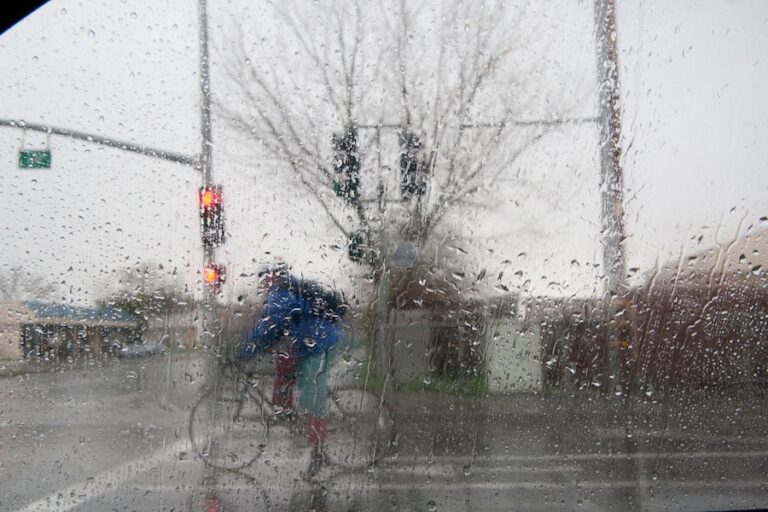
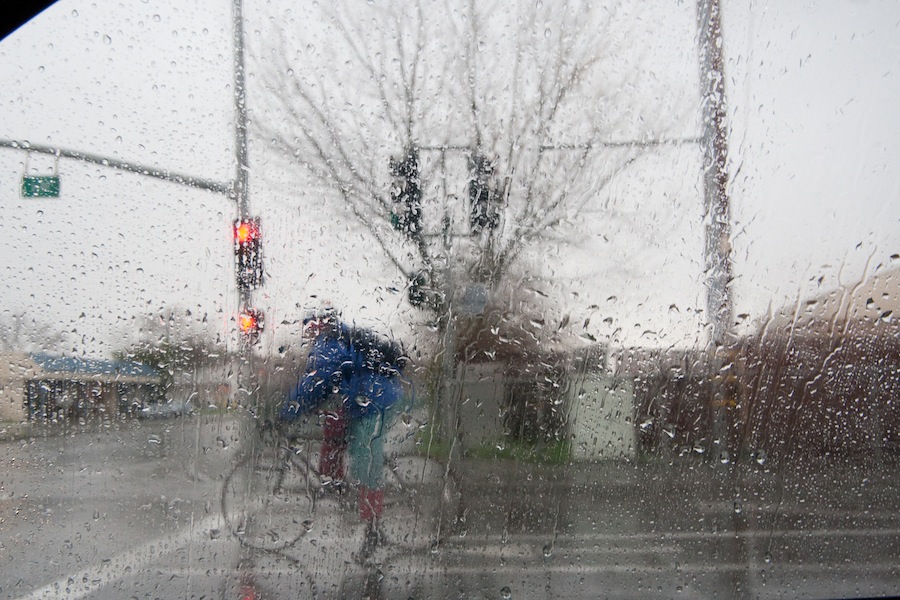
You’re walking from class to the bike racks outside, obsessing over your answer to problem number seven on the midterm you just took. The sky is the same shade of gray as the sweatpants you’ve worn every day for the last two weeks, the air is humid and the only thing you’re looking forward to is the weekend, even though it’s week seven and the most exciting thing you plan to do is microwave your frozen salmon burger between studying for a second round of midterms. At least you won’t have to bike to class in the pouring rain.

Welcome to the middle of Winter Quarter. Luckily, despite everything that UC Davis students collectively dread around this time of year, there are ways to beat the flood of winter blues.


  1. Ways to beat the rain

Yes, California is in a drought. Yes, it needs the rain. But no, we don’t like getting soaked from the first downpour of the morning and replenishing our clothes with rain water in between classes for the rest of the day. However, this is the perfect opportunity to look on the bright side, or at least pretend to look past the clouds; more water now means a prettier, flower-filled spring.

Until then, grit your teeth, make the wet bike ride home, strip off your clothes and take a hot bath. Light some scented candles (also essential for power outages) and stock your cabinet with snacks. If you don’t have a bath — compromise, make it a shower.

Now you have an excuse to wear your bathrobe all day and binge the Netflix series that you would have regretted watching if it were nice outside.


  1. Ways to beat the cold

From numb fingers to chapped lips, winter doesn’t take pity on the unprepared. So whip out your credit cards and start shopping! The Vacaville Outlets are a 15 minute drive west of Davis — stores like The North Face and Columbia are great places to get quality weatherproof gear. Once you have your basics, layer some scarves and trendy socks, and you’re set for a crisp winter stroll through the Arboretum.


  1. Ways to beat boredom

It’s 38 degrees and pouring rain on a Friday night — and no one you know is throwing a party. After all, who wants to leave home for a rager when they can cuddle up with a blanket on the living room couch? Staying home doesn’t have to be lonely, though, so knock on your housemates’ bedroom doors and start rallying. Make a pitcher of sangria together with frozen fruit and that leftover bottle of wine in your fridge and put on some music. Order cinnabread from Woodstock’s, or scrounge around for baking ingredients and make edible cookie dough. With this, you’ll be set for the night.


  1. Ways to beat school stress

School may cause the year-round blues, but, somehow, Winter Quarter seems to make it even more woeful. Students often struggle to stay upright against the wind and rain in addition to their mountains of homework, pop quizzes and midterms.

It’s all about the atmosphere — remember last spring when reading your biology textbook didn’t seem so bad when laying on the Quad with a cold drink? Change up your winter study habits and grab a hot drink at Mishka’s Cafe, where the hum of coffee makers and pattering rain will relax your mood and turn your textbook-latte combo into a solid Instagram photo-op.


  1. Ways to beat the overall winter “gloom”

It’s that feeling you get when you wake up and realize it’s a Monday morning, you have a midterm in 20 minutes, all of your warm clothes are sitting at the bottom of your hamper and it’s raining. Spring may not arrive for another few weeks, but that doesn’t mean you have to be seasonally dejected until then.

Plug in your earphones and crank up some cheerful tunes that remind you of sunshine. Put a trash bag over your bike seat. Tighten the drawstrings on your hood, and don’t forget your mittens. Think about hammocks and ice cream and tanning at the Rec Pool. Spring Quarter will be here before you know it.


Written by: Allyson Tsuji — features@theaggie.org


Humor: New professor actually just two kids in a trenchcoat

CIERA PASTUREL / AGGIE

Children stacked on top of each other attempt to teach a class in order to fund Lego hobbies

Even this late in the quarter, professors still manage to surprise us every now and then. This is especially true of mathematics professor Dr. Martin Jüsboks. After several long weeks of speculation, it was finally confirmed that Jüsboks was actually just two eight-year-old kids in a trenchcoat attempting to pass as an adult.

“We really should have caught this earlier,” said Nicole Monahan, a second-year physics major. “He kept on trying to have us ‘color’ for homework, which is odd because this is Math 17B.”

Classmates of Monahan also expressed suspicion when they noted that Jüsboks only brought a Cars lunchbox and Nintendo DS to class. But they figured he was just a quirky dude.

“I mean, his shoes were also dangerously small and lit up,” said Alex Polmer, a first-year neurobiology, physiology and behavior major. “But that seemed rude to question in case he just happened to have tiny feet. My suspicions grew after he spelled ‘calculus’ as ‘Kal Q Less’ on the board. But then, like, every math teacher prefaces their class with the fact that they’re a crap speller. I just kind of assumed that stereotype was true with Jüsboks.”

The gig was up when a sneeze erupted from what would have been Jüsboks’ groin, but was discovered to be a kid named Ryan. A little face peered nervously out from between two buttons, and the upper half of this professor tried to blame the noise on the taco salad he had for lunch.

The upper half of this equation was a little boy named Peter, clearly the mastermind of this adventure.

“I needed to get the new Legos because the Lego Batman movie is coming out and I wanted to make those and I needed to make money because my mom said it was too much and I had enough Legos,” Peter said. “I know my dad gets money from his job so I thought I could get one too. Ryan wanted Legos too, so we took someone’s jacket and I found my mustache from my Mario costume from Halloween. I looked so big!”

This sheer genius tricked students for nearly an entire quarter. For this alone, UC Davis has decided to allow Jüsboks to finish out the quarter just to see where he goes with it.

“I’ve made almost enough to buy two Lego sets!” Peter exclaimed.

Ryan was less than happy with this result.

“Peter can’t even do multiplication tables,” Ryan said. “I should have been the head and everyone knows it.”
Written by: Olivia Luchini ocluchini@ucdavis.edu