53.5 F
Davis

Davis, California

Tuesday, December 23, 2025
Home Blog Page 670

NFL Wild Card Weekend

0

KEITH ALLISON [CC BY-SA 2.0] / FLICKR
A round-up of NFL playoff competition

Heavy rains throughout Northern California meant one thing for every sports fan in the region this weekend: football, football, football. Unfortunately, there was not much to get excited about this time around.

The first game between Houston and Oakland didn’t garner much excitement as Oakland was unable to enforce an effective game plan without star quarterback Derek Carr to fight against the top defense in the league. The game was seemingly over by halftime. On the other side of the ball, Brock Osweiler, the recent signee of a $72 million contract in the offseason, had his most encouraging performance to date, going 14-25 for 168 yards and two TDs (one rushing), as he has had a pretty miserable 2016 campaign.

The second game between Detroit and Seattle seemed to belong to the latter the whole time. While the game was within striking distance until the fourth quarter for the Lions, quarterback Matthew Stafford was unable to get the offense moving against the Legion of Boom and the Lions continued to hurt themselves with dropped passes throughout the game.

The Steelers had a very strong showing against the Miami Dolphins in a game with frigid weather conditions. Aside from the two fumbles and one interception from Dolphins quarterback Matt Moore, he looked pretty solid throughout the game. Unfortunately for the Fins, they relied too heavily on their emerging running back Jay Ajayi, who he wasn’t able to replicate his Week 6 breakout performance against Pittsburgh — only rushing for 33 yards on 16 carries. Pittsburgh’s usual suspects, Le’Veon Bell, Antonio Brown and Ben Roethlisberger, took over the game right out of the gate.

The last game between Green Bay and the New York Giants was primed to be the best game of the weekend, and it sure started off that way. Aaron Rodgers was struggling out of the gate and the Green Bay secondary looked feeble, but unfortunately the Giants’ wide receivers couldn’t take advantage. Both Odell Beckham Jr. and Sterling Shepard of the Giants dropped perfect passes from quarterback Eli Manning in the first half and they had to settle for field goals two separate times in deep Green Bay territory. The Giants defense looked fantastic in the first two quarters and it looked as if they were primed to enter halftime with a 6-0 lead, but unfortunately for the Big Blue, Green Bay’s Aaron Rodgers was able to rattle off 14 straight points in the final 2:20 of the first half and didn’t look back in the second, tagging on 24 more points.

The Divisional Round will hopefully provide more entertainment than this Wild Card round, which failed to produce any close games. While many expect Tom Brady and the Patriots to dismantle the Houston Texans, the other three matchups are arguably toss-ups.


Written by: Michael Wexler — sports@theaggie.org
A workout playlist

JAY GELVEZON / UC DAVIS CAMPUS RECREATION AND UNIONS

Songs to help you fulfill your new year’s resolution

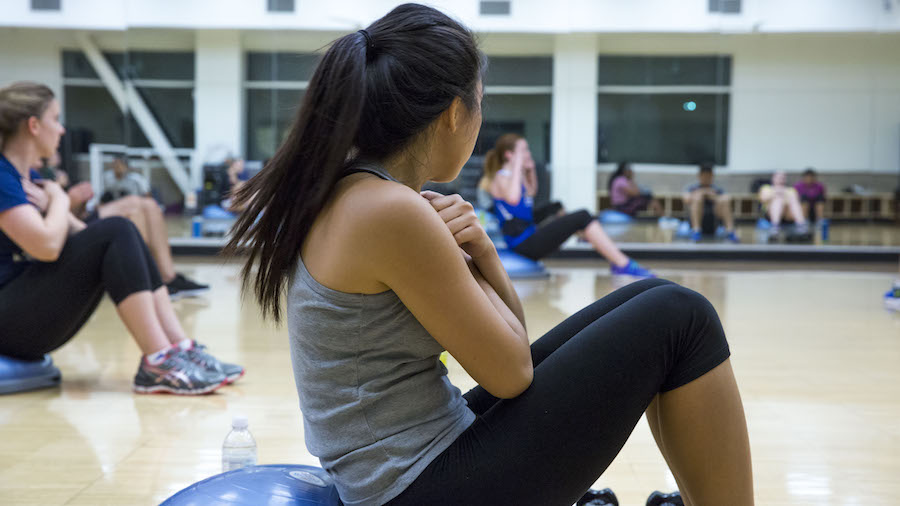
“Eat better,” “Work out more,” “Live healthier” — these are some of the most common New Year’s resolutions. And with busy schedules and high stress levels, these resolutions are especially applicable to UC Davis students. But the hardest part of living a healthier lifestyle isn’t getting a gym membership (thank you, ARC) or even a lack of healthy foods (thank you, agriculture town); it’s getting started.

For many, music is a great motivator for exercise. We asked UC Davis students how they use music to kickstart their exercise regime.


Courtney Lee, third-year history and sociology double major


Do you listen to music when you work out?

Yes; it helps pass the time as well as get me pumped and excited to lift.

What genre do you prefer listening to?

A little of everything, but generally more aggressive or beat-heavy music. It’s easier to sync up reps with certain beats. More “angry”-sounding music can help me get in the mood to hit heavier weights.


Emily Fehrman, second-year global disease biology major


Do you listen to music when you work out?

Yes, it distracts me in a way and allows me to go faster/longer.

What genre do you prefer listening to?

I listen to pretty awful rap. It’s funny because it’s stuff I never listen to in other circumstances. I just like the background beats I guess. I need it to be catchy.


Sam Shahriary, third-year computer science major


Do you listen to music when you workout?

Yes. Music usually excites me or gets me pumped up before an exercise. It also motivates me to work harder.

What genre do you listen to?

When I’m weightlifting I usually either listen to hip-hop or rock. When a song has a hard beat or rhythm it gets me more focused and amped to complete a set. However, when I’m doing cardio I’ll go for something lighter like R&B or EDM. The melodies usually keep me going longer than a single set of weightlifting.

Favorite workout track?

“Flexicution” by Logic


Kyle Cheung, fourth-year biological systems engineering major


Do you listen to music when you workout?

No, I become too focused on my workout and my surroundings and often tune out the music.


Laura Lopeman, second-year neurobiology, physiology and behavior major


Do you listen to music when you work out?

Yes, it keeps me focused.

What genre do you prefer listening to?

Normally rap or EDM because it keeps me pumped up and excited. But sometimes I’ll be in the mood to listen to soft rock or R&B, for reasons unknown.

Favorite workout track?

“There It Goes (the Whistle Song)” by Juelz Santana


Evan James, third-year communication major


Do you listen to music when you work out?

Yes, it keeps me focused and in the zone. Without it I would be distracted by all the sounds around me.

What genre do you prefer listening to?

Hip-hop. Mainly because the fast-paced beats keep me on-tempo with my sets and reps. It’s sort of like a subconscious timer always keeping my workout fast with minimal downtime.

Favorite workout track?

Semi On Em” by Chief Keef & Gucci Mane


Check out these other tracks to up your treadmill speed:


Written by: Ally Overbay — arts@theaggie.org

Humor: Extra week of winter break gives students additional time to do absolutely nothing

JEN GALLARDO [CC BY-NC-ND 2.0] / FLICKR
headshot_blHow three UC Davis students productively wasted their winter break

UC students were treated to an extra week of winter break this school year. The additional time off gave many UC Davis students the chance to accomplish a lot — a chance most of them squandered by doing absolutely nothing. The California Aggie talked to some students about the various ways that they wasted their long break.

“I wouldn’t say I did absolutely nothing with the extra time,” said Dwayne “The John” Rockson, a third-year linguistics major and pillowcase impersonator. “I bought myself a pair of socks. That’s not nothing. I mean, I lost one of the socks, but at least I put myself out there and bought them in the first place.”

So brave.

But Rockson wasn’t the only student who failed to use their winter break productively.

“No, actually I was pretty on top of my stuff,” said Amanda Starbuck, a second-year soil science minor and human umbrella. “I walked my dog every day. I mean like, maybe I didn’t actually ‘walk’ her, but I did think about doing it almost every single day. And I’m honestly proud of myself for that.”

Inspiring.

Although these students shared some truly incredible stories about what they did over their breaks, one story stands out from the rest.

“I wanted to do something that was just sort of unprecedented,” said Sharon Swallow, a fourth-year animal science major who enjoys being walked by dogs. “So I just slept. The entire break. Through everything. Christmas, New Years, the birth of my son. You name it, I was fast asleep.”

How did the people in Swallow’s life respond to her historic accomplishment?

“I know some people were going to call me lazy, including everyone in my family, who aren’t really talking to me right now. Also, my boyfriend isn’t super happy with me. Perhaps I should have been awake to, you know, have our child. But I had a goal and I stuck to it, and I think I deserve some credit for that. Now if you’ll excuse me, I have to go see my son for the first time,” Swallow said, not realizing that she had in fact given birth to twin girls.

Written by: Brian Landry — bjlandry@ucdavis.edu

I don’t just fear Trump. I fear the Republican Party

MICHAEL VADON [CC BY-SA 4.0] / CREATIVE COMMONS
headshot_tdPartisan politics threaten the integrity, values of our country more now than ever

Here we are: the year that Donald J. Trump officially becomes President of the United States.

It’s no surprise that Trump’s inauguration next week has sent ripples of horror throughout the country. Trump reimagines, warps or simply disregards the truth — about the election results, about news stories, even about his own words — nearly on a daily basis. His Twitter feed abounds with temper tantrums that make me roll my eyes harder than 30 Rock’s Liz Lemon. To make matters worse, our President-elect cannot restrain himself from unleashing petty personal attacks on anyone who pokes holes in his flimsy lies.

Trump doesn’t understand — or just doesn’t care about — democratic values. He consistently threatens freedom of press, freedom of speech and the right to protest in his attempts to sustain the dense web of half-truths and full-lies in which he resides.

But our political system isn’t imperiled only by our President-to-be.

The Founding Fathers constructed a complex system of checks and balances that prevents egotistical demagogues like Trump from completely dismantling the United States government. But with the Republican Party now dominating both chambers of Congress and prioritizing party interest over intelligent decision-making, Trump’s undemocratic practices will likely remain unchecked.

Although many Republican leaders strongly opposed Trump during his campaign, almost all of them have now surrendered their moral consciences for partisan politics. Ted Cruz ultimately supported Trump despite previously calling him an “utterly amoral,” “pathological liar.” Mitt Romney was open to becoming Secretary of State in Trump’s Cabinet even after declaring that Trump’s ideas are “extraordinarily dangerous to the heart and character of America.” House Speaker Paul Ryan hasn’t criticized the President-elect since the election even though he initially condemned many of Trump’s policy proposals, even labelling Trump’s comments about the Indiana judge ruling against him in the Trump University fraud case as the “textbook definition” of racism.

Given that virtually every prominent GOP leader eventually bowed to Trump’s authority before the election, there’s little reason to believe that they will change their complacency during his presidency.

Some intra-party tension has already risen over issues like the Russian cyberattacks that manipulated the 2016 election with the goal of getting Trump elected. But most Republican members have either blithely accepted or fully embraced Trump’s unprecedented vision for the country, conceding to his lengthy list of inexperienced, unqualified and plutocratic Cabinet nominees, and seem prepared to accommodate Trump’s numerous conflicts of interest.

How far are party leaders and voters willing to go for the sake of advancing their party? How much further can Trump push the GOP toward right-wing populism before Republicans like Senator Ryan stop bending and start fighting for their true values? Is there ever a limit, or will the Republicans simply realign their entire party to fit Trump’s ideology?

Make no mistake: The party’s capitulation isn’t about preserving conservative principles like small government, free trade, constitutional rights and balanced budgets; it’s about maintaining power at any cost. Otherwise, why would a Republican governor unconstitutionally attempt to tear away power from an incoming Democratic governor in North Carolina, and why would House Republicans unexpectedly unite to eliminate an independent ethics panel in the dead of night?

James Madison, in Federalist Papers No. 10, calls for legislation to be “pass[ed] […] through the medium of a chosen body of citizens, whose wisdom may best discern the true interest of their country, and whose patriotism and love of justice will be least likely to sacrifice it to temporary or partial considerations.”  

But we don’t live in an era of congressional leaders with a “true interest of [our] country” — we live in a time in which parties take precedent over the good of the nation. And unless we want to continue living according to the partisan lawmakers who undermine basic democracy, we must force our representatives to listen to our frustrations, fears and hopes. We need to be more vocal than ever throughout these next four years, or else we could witness our republic slip away.   


Written by: Taryn DeOilers — tldeoilers@ucdavis.edu

Disclaimer: The views and opinions expressed by individual columnists belong to the columnists alone and do not necessarily indicate the views and opinions held by The California Aggie.

The West Pond: the hidden gem of Davis

0
GENESIA TING / AGGIE

Conservation, preservation of nature flourishes in community effort

Davis is known for being a multifaceted college town filled with community-built treasures, the touch of local artists and a melting pot of different cultures.  One of Davis’ assets is in tandem with the city’s environmental consciousness — the West Pond, located east of Lake Boulevard and north of Arlington Boulevard, has much to share with its surrounding community.

Jo Ellen Ryan and her husband Gene Trapp lead a group of volunteers called Friends of West Pond, a group of volunteers who work together to maintain the pond. With their help, the West Pond remains an intact wildlife habitat that visitors can actively enjoy.

“The Friends of West Pond was established to protect the area and protect the wildlife,” Ryan said. “A number of us residents decided to form this group, and the goal is really the conservation of local species.”

The Friends of West Pond have made great progress since its inception, and its milestones were acclaimed by a proclamation of official recognition from the City of Davis in 2016. One of its milestones includes creating a beautiful landscape along the previously empty walkway leading towards the pond.

“Almost 10 years ago, there was a blank space along the walkway,” Ryan said. “We planted a butterfly and hummingbird garden with informational plaques so people know what they are looking at.”

As a part of the effort toward keeping the pond thriving, the Friends must counteract many negative pressures, such as that of harmful invasive species. Two of the invaders the West Pond must face include starthistle and pepperweed.

“Students who come from agricultural areas would recognize the names of […the] pepperweed and starthistle,” Ryan said.  “They’re not good in any landscape. They’re very invasive, and starthistle is dangerous to livestock.”

The Eurasian native Starthistle damages its new environment by crowding out native species, and is actually harmful to some livestock, such as horses. A part of the mustard family, the aggressive Pepperweed creates a dense single-species monopoly, spreading not only through seed production but also through vast creeping root systems.

It takes a grassroots community effort to root out these invaders, an effort students themselves can help perpetuate with their involvement. Ryan mentioned that students have the opportunity to take the wheel in building their own projects to come make a difference at the pond.

“We have had students do projects here and we’re always willing to talk with them and help them in any way,” Ryan said.

Despite its now lush landscape, West Pond started off as a storm water reservoir. Because of this, a lot of street trash drains into the pond, and the Friends take it upon themselves to go out into the pond and clean up the trash.

“Formally [the pond] is known as the West Area Drainage Pond,” Ryan said. “The pond was part of the [city] development because it was understood then that flooding was a potential problem. And so [the area] was dredged in order to hold storm water.”

The pond has been successful in attracting new visitors who enjoy the scenery in all its natural splendor.

“The UC Davis medical clinic and the Woodland clinic are at the north end of the pond,” Ryan said. “We noticed that many people that come for medical appointments, instead of getting back into their cars, come out and walk along the pond. I think it makes them just feel better.”

Sarah Mayhew is a professional photographer and a volunteer with the Friends of West Pond. She takes beautiful photographs of birds and other features of the pond, and often posts them on their Facebook page.

“[The pond] is a great wildlife area,” Mayhew said. “I live very close by, so I walk there all the time, and [that’s where] I met [Trapp] and [Ryan]. That’s how I started volunteer-gardening with them. Every wednesday a bunch of people get together and keep up the hummingbird garden. I specialize in bird photography now, and I help [Ryan] with the Facebook page.”

Keeping the pond in shape is an effort that requires the involvement of more people than may be anticipated.

“[Gene and Jo Ellen] stay in touch with the city and make sure that we get water in the pond if it starts going dry,” Mayhew said. “We are in touch with the city and the city biologist; it’s a kind of joint effort with everybody [in town].”

The winter season is a perfect time for students to pay the pond a visit, with all the rain bringing more liveliness to the habitat.

“We get a lot more rain in the winter, which brings a lot more ducks and birds,” Mayhew said. “It tends to be birdier with more water then, so the winter is a nice time to walk there.”

Ann Brice, who used to be the newsletter editor for the Yolo Basin Foundation and currently is a board member of the Yolo Audubon and Audubon California Societies, has worked closely with Gene and Jo Ellen to help publicize the West Pond and its events.

“I’ve known about West Pond and been involved with it for a long time,” Brice said. “When I was a grad student at UC Davis, I used to teach a course called ‘birds, humans and the environment,’ and we used to take field trips to the West Pond. That was a general education course, so it was just to try to get them interested in what’s going on in their own community.”

Whether it is to enjoy the nature walk, bike the trail, help with gardening and gain service credits, start a service project or photograph the wildlife, West Pond is just one Unitrans line away.

“People [who] go out there are interested in not just birds, but the plants, the butterflies and the environment in general,” Brice said.


Written by: Sahiti Vemula — features@theaggie.org

Lend a helping hand

0

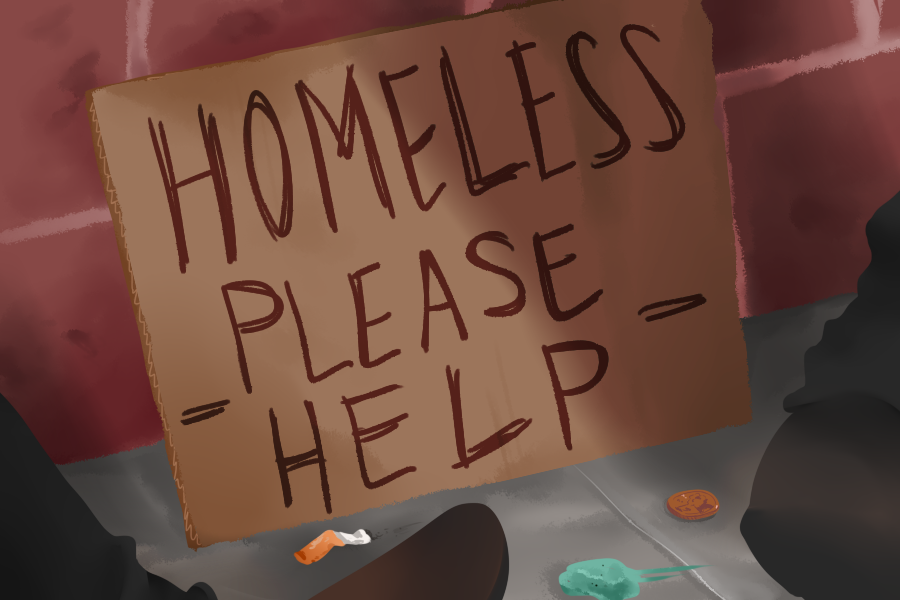
170105_homeless_feHomeless community in Davis relies on local facilities, resources

Three years ago, Noor Ahmed was volunteering at a transitional housing facility for women and children when in waltzed a beaming woman to announce that she had received a promotion and had moved into an apartment with her children. This wasn’t the first time that Ahmed, now a third-year psychobiology major, at the time, had met this woman. Just a few months earlier, Ahmed helped her create a resume and search for and apply to jobs. After succeeding in finding her a minimum-wage job, the woman lost touch with the other volunteers that assisted her; still, Ahmed was amazed to hear such heartening news.

“She looked so happy, and her kids were doing great as well — it was amazing to see!” Ahmed said in an e-mail interview. “They were very appreciative of what we were able to do for them in that short time. [This experience] will stick with me for the rest of my life, not for any particularly ’spectacular’ reason, but because it made me realize that simple solutions can make a significant impact if you care enough to take the initiative to help someone else.”

Ahmed is the president of the campus organization known as Homeless Outreach through Prevention and Education at Davis (HOPE). The group, founded in 2009 by a pair of undergraduate students, was recently registered as a University of California, Davis campus organization in 2016. Projects are sponsored by the Sheila Kar Health Foundation and focus on educating the local homeless and low income population with the information and health knowledge they need to improve their lives.

“For me, [this experience] really drove home HOPE’s mission of using the knowledge that we the volunteers have, to provide resources to individuals in the community that will benefit from them in the long run,” Ahmed said. “Our programs are intended to encourage local homeless individuals, by educating them on the opportunities they have in order to provide them with the information that they need […] to attain their goals, so we try as best as we can to provide skills rather than handouts.”

According to HOPE’s website, the Census Bureau cites that roughly 15 percent of Americans are living in poverty, which is about 45 million people. Davis happens to sit at the junction between the big cities of San Francisco and Sacramento, right along the railroad system, and is a convenient pit stop en route both east and west between the cities, and north and south through the Central Valley.

Bill Pride, executive director of Davis Community Meals and Housing, said that there are roughly 120 to 145 homeless people in Davis at any time; these can be people living in shelters or those who are involved in programs provided by shelters and community organizations.

“Davis Community Meals and Housing started out years ago as a soup kitchen type program for low income and homeless folks,” Pride said. “Since then have evolved into a day shelter, which [has] a range of services, like helping low income folks pay their rent that month, to having a whole range of services for folks to take showers, wash their clothes, get some food, assistance finding housing, mental health resources and substance abuse resources.”

Davis Community Meals and Housing is one of many organizations in the area that hosts a range of services for homeless and low-income people. The organization serves about 1,700 to 1,800 people on a yearly basis, with roughly 450 of those being homeless in Davis at one point in time. Some people who use shelters and programs stay in the area for only a week or two, but end up coming back in a couple years. Others come into town more regularly and stay for longer periods of time.

“The folks who are from out of town probably go to our resource centers [the most], [which is] our number one introduction to what services are available in the city of Davis,” Pride said. “For other folks, [they mostly use] our meals program.”

Despite sweltering summers that frequently reach above 100 degrees during peak hours in the day and bitter winters that fall below freezing in the nights, homeless people can be seen in Davis all year round. Julie Harlow, a member of the Board of Directors for The Interfaith Rotating Winter Shelter, pointed out that cold, damp weather creates the need for laundry facilities, considering the amount of people who only have one or two changes of clothes. This is a kind of service that is difficult for homeless people to access.

“There is only one shower in town that the homeless have access to,” Harlow said in an e-mail interview. “And most restaurants and businesses do not allow non-customers to use their restrooms […] The University coaches, led by Jamey Wright, have made a shower facility available one night a week. [Restaurant owners] would rather complain about unsanitary habits of the homeless than see that they could be part of the solution. “

The cold weather can be especially hazardous for homeless people, who experience increases in health problems like colds, flus and pneumonia; it can also exacerbate existing health conditions like diabetes or hypertension.

“It’s a hard deal, being homeless,” said Eric Elton, chair of the Board of Directors for the Interfaith Rotating Winter Shelter. “Even in the best of situations it’s really hard. When it’s cold, you can’t really find a safe space, which is really what gets people. Everything gets more miserable when it’s wet, you can’t get out of the rain [or] find a place to dry off.”

The Interfaith Rotating Winter Shelter (IRWS) is one organization in Davis that provides shelter and warm food for homeless and transient folk during the winter months of the year. Established in 2007 by a community group who wanted to help the homeless, the IRWS is made up of 15 different congregations that host guests or serve hot meals. This program houses about 25 to 45 individuals a night during operation and serves about 150 individuals over the course of a season.

The IRWS is completely volunteer-based and even offers an undergraduate student internship. The majority of those who work for Davis Community Meals and Housing are also volunteers. Homelessness is a reality that many people face in every town and city, no matter how big or small, hot or cold. Although students are often caught up in schoolwork and day-to-day responsibilities, it is important to learn about the issues others in the community face on a regular basis — it is never too late to get involved and lend a helping hand.

“There is always something that you can do,” Ahmed said. “If it is something that you are passionate about, don’t be discouraged from looking for ways to get involved. It’s also important to note that word of mouth is extremely important in order to pass along information about resources available, because homeless individuals often don’t have access to a regular computer where they can search information for themselves. Oftentimes, the first step is to take the time to talk to someone,tell them what you know and learn more about what they need.”


Written by: Marlys Jeane — features@theaggie.org

A dog named Disney wins grant money for Rotts of Friends

RUNE McNAUGHTON / COURTESY

Petco Foundation awards $10,000 to local animal shelter

For the past four years, the Petco Foundation has held its Holiday Wishes grant campaign, in which people who have adopted pets are able to submit stories of how their pets have changed their lives. This year, the grant money amounted to $750,000, including a $100,000 grand prize.

Rotts of Friends, originally founded by Renee Lancaster in Woodland, started off rescuing rottweilers and German shepherds but expanded to rescuing dog breeds of all kinds, and now rescues cats as well. As a rescue foundation staffed by volunteers, it can apply for grants, although this was the first time the foundation had entered in the Holiday Wishes campaign.

With a total of 5,100 submissions, Rotts of Friends was one of 54 finalists in the campaign. Touching the hearts of many, its story of a rescued pit bull named Disney won the foundation $10,000.

“When guests give a donation at checkout in a Petco or Unleashed by Petco store, their contributions enable the foundation to make big investments in lifesaving animal welfare organizations across the country,” said Lisa Lane, the manager of press relations and communications at Petco.

Donations for grants like these benefit animal foundations or shelters in order to provide for their rescued pets.

Rotts of Friends was encouraged to enter in the Holiday Wishes campaign by Gina Knepp, manager of the Front Street Animal Shelter in Sacramento, whom the company closely partners with.

Disney’s story started with a homeless man in Humboldt County, who abandoned Disney as he moved on. She was then taken to the Humboldt County animal shelter, where she stayed until their funding sent her to Rotts of Friends to be trained for a future home.

“She was with us at Rotts of Friends for a long time,” said Barbara McNaughton, Community Outreach Coordinator at Rotts of Friends. “No one was even interested in looking at her because she was a pitbull, despite the fact that everyone at Rotts of Friends knew she was going to make a great companion for someone who would give her a chance. Then came Jessica who adopted Disney.”

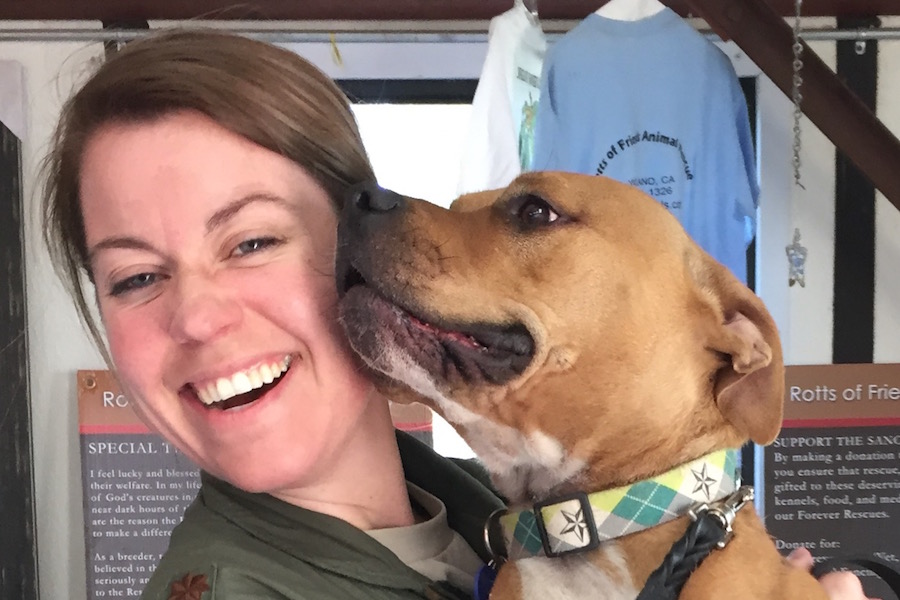
Jessica Bishop’s story about Disney described how she, as a veteran, underwent a tough transition in her life, coming from long-term deployment and battling loneliness and depression. Bishop hoped to adopt a dog in order to fill the empty space in her life.

“Disney is more than just a dog; she is my family,” Bishop wrote. “Military life can be very lonely. Now in my mid-thirties, as a single woman who has been doing this alone for over a decade, I have found a sense of purpose and joy, thanks to Disney.”

Disney was rescued and given a home, and Bishop found that adopting Disney helped her find herself and provided her with a much-needed companion.

“Disney has been attached to my hip ever since. She’s chewed up flip flops, destroyed rolls of paper towels, but in the process has taught me patience and how great it feels to care for something other than oneself,” Bishop wrote. “She’s filled the hole in my heart and changed my life for the better. It’s not always easy to handle a strong-willed, type-A hard-headed lady, but she mirrors me, and we learn from each other every day. I’m so thankful for finding her and the changes she has brought to my life.”

This touching story was selected by the Petco Foundation team for the grant, and it is now featured on its website.

“Disney’s story is a wonderful example of how pets can help people through difficult life challenges. It’s always better to have someone in your corner through a tough time, and Disney was just that for Jessica as she transitioned back to life after deployment,” Lane said. “All of the winning stories told a story rather than simply reciting facts as they happened. Quality storytelling and excellent supporting photos or videos made Disney’s and the other winning submission stand out from all the others.”

With the $10,000 grant, Rotts of Friends plans to purchase a gently-used full-size van, which will help transport rescued animals. In addition, the shelter is building a 26,000 square-foot rescue dog sanctuary. This will help the team add to the 250 dogs and cats already rescued per year.

“We were, of course, thrilled to have been chosen as a $10,000 winner,” McNaughton said. “There are many, many very hard-working, worthwhile nonprofit organizations doing the truly important work of saving animals in our country. So to be awarded one of the 54 grants was an honor.”
Written by: Kaelyn Tuermer-Lee – city@theaggie.org

Scientists help paraplegic patients move again through manipulation of the brain

HANNAH LEE / AGGIE
HANNAH LEE / AGGIE

Robotic limbs powered by mind yield unexpected results, movement, control restored in patients’ bodies

A miraculous medical miracle was the result of an unforeseen outcome. Long-term paralyzed patients have surprisingly gained the ability to move their own limbs thanks to studies using virtual reality and robotic prosthetics.

Professor Sanjay Joshi of the UC Davis Department of Mechanical and Aerospace Engineering and one of the authors of this current study published in the Journal of Scientific Reports collaborated with scientists from Duke University, the Neurorehabilitation Center in Sao Paulo Brazil, Institute for Cognitive Systems in Munich, Germany as well as other international universities.

These scientists have found a way to make paraplegics move again by training them with a virtual reality headset. The study consisted of 8 completely paralyzed patients, each fitted with a cap containing electrodes to record brain activity.

All the patients have partial or complete paralysis of the lower half of the body, usually due to spinal cord injury or disease of the lower region of the spine.

Joshi is also the principal investigator of UC Davis Robotics, Autonomous Systems and Controls Laboratory (RASCAL). This lab has contributed to much of the research involving robotic prosthetics advancing human health.

Ph.D. student Kenneth Lyons from the Department of Mechanical and Aerospace Engineering at UC Davis is a research member whose current project focuses on powering prosthetic arms.

“When seemingly insignificant actions like turning the page of a book or grabbing a cup become impossible to perform independently, day-to-day life as well as emotional health are negatively impacted,” Lyons said.

The technology used in the study was called brain-machine interface systems (BMIs), and allowed patients to utilize their brain activity to stimulate movements of their own legs inside a robotic exoskeleton and in a virtual reality system.

BMI creates a direct connection for the human brain to communicate and move the robotic prosthetic limb.

With the virtual reality system, patients could really see themselves move as they controlled a virtual avatar of patient walk or move while wearing the virtual reality headset.

In addition, the interface then sent signals back to the human brain, like sensations of movement, so patients could also feel themselves moving.

The experience of previously paralyzed patients being able to feel and see themselves walk was possible due to creative collaborations of scientists worldwide.

“As a biologist by trade, working on technology development has been a huge learning curve, but it is something that excites me daily,” said Britt Yazel, third-year Ph.D. candidate in neuroscience.

The colleagues aimed to build robotic limbs that paraplegic patients could control with their own minds.

However, after a year of training with virtual reality and BMI, patients were able to surpass the boundaries of medical science, not only manipulating the prosthetics but moving their own paralyzed limbs.

A shocking discovery came several months into the study — patients who were never supposed to be able to move again, regained movement in their own muscles.

Researchers confirmed that all the patients enrolled in this study improved significantly in the ability to control movement prior to their original state of mobility. This collaborative study is the first to describe any type of neurological recovery as a result of BMI training.

“There are many challenges in extracting the intentions of a person with limited ability to express them,” Lyons said. “Overcoming some of these challenges has the potential to transform the lives of people with amputations, paralysis and other mobility impairments.”

Applications of technology created under RASCAL has been in use at New York Presbyterian Hospital by patients with limited mobility. Research member Ben Margolis, a graduate student at Davis has been collaborating with Columbia University Robotics Group (CURG) to develop a robotic grasping system.

“[We] noninvasively measure muscle contractions using what are essentially stickers on the skin with wires attached,” Margolis said.

About 282,000 people are living with spinal cord injuries (SPI) in the United States alone, and about 17,000 new cases each year. The leading cause of of these injuries is vehicle crashes, and following is injury from falls and injury from violence, primarily gunshot wounds.

People living with SPI have a lower life expectancy due to increased risk of pneumonia, heart problems and metabolic diseases. Fortunately, this noninvasive research of training with BMI has the potential to be used worldwide in many therapy forms for paralyzed patients.

“It is inspiring to work with these people and learn about their clever solutions to unique challenges,” Lyons said.


Written by: Shivani Kamal – science@theaggie.org

Student regent recruitment for the 2018-2019 school year begins

NICKI PADAR / AGGIE
NICKI PADAR / AGGIE

UC Board of Regents creates position of student advisor to the student regent

Every year, the University of California (UC) appoints a new student regent, a member of one of the nine UC campuses, who becomes a voting member within the Board of Regents. The student regent serves one year as a student regent designate, where they become a non-voting member on the board until their term commences on July 1. They attend all six meetings throughout the year to represent UC students and their best interests.

Any UC student in good academic standing may apply to be the student regent. The southern and northern regional UC student nominating commissions each select five semifinalists, a total of 10, from those who apply. These semifinalists are then interviewed by the UC Student Association (UCSA) board of directors. The board chooses three applicants, who are then interviewed by the Regents’ Special Committee to Select a Student Regent. The committee then recommends a nominee to the full board of UC Regents, which votes on the nominee.

According to Claire Doan, media specialist for the UC, the student regent adds a student perspective to the board.

“The goal is to give the Board of Regents a more comprehensive student perspective on university issues, so that student concerns and priorities are reflected in Regents’ decision-making,” Doan said.

Duties of the student regent include contributing to policy establishment in areas such as long-range planning, student fees, admissions and compensation. The student regent helps oversee the financial management of the University and also helps to appoint the president of the University, the 10 campus chancellors and the officers of the regents.

The current student regent for the 2016-2017 academic school year is Marcela Ramirez, a Ph.D. graduate student in higher education administration and policy at UC Riverside. Ramirez is currently serving as the graduate student representative on the UC Office of the President LGBT Advisory Committee and was previously a member of the Undocumented Student Task Force at UC Riverside. She also served as the founding director of the Middle Eastern Student Center and as the diversity initiatives coordinator in the Dean of Students Office at UC Riverside.

Ramirez has accomplished many things so far as student regent, including being a part of the UC Davis chancellor search committee.

“I have served on several committees including the sexual assault and sexual violence task force, the UC Davis Chancellor’s search committee, as well as the search committee for the UCOP Vice President of Student Affairs,” Ramirez said. “I am currently on the academic affairs and student affairs committee, as well as the public engagement committee. The largest responsibility is making sure that student perspectives and interests are represented on all these fronts.”

The current UC regent designate is UC Berkeley law student Paul Monge. He is a non-voting regent-designate until his student regent term begins on July 1. He will be the 43rd student regent since the position was established in 1975.

Monge has previously held various leadership positions. He served as student body president for UC Santa Barbara, was a budget analyst for the San Francisco Unified School District, a legislative aide for the San Francisco Board of Supervisors, a health and human services policy analyst for Mayor Michael Bloomberg of New York City and a commissioner on the San Francisco Youth Commission.

Monge is currently the system wide graduate student representative on the University Committee on Planning and Budget, advising the UC on policies regarding capital planning, budget development and resource allocation. He is also a community advisory committee member for the San Francisco Public Education Enrichment Fund.

Monge plans to focus on issues of housing affordability and food insecurity, the need for proper handling of allegations of sexual harassment and sexual assault on campuses and expanded access to culturally comprehensive mental health services.

“As student regent I will work to ensure that the voices of students are both respected and reflected in the decision-making processes of the Board of Regents,” Monge said. “I plan to leverage my background in policy advocacy and community organizing to help prioritize some of the most pressing issues affecting students today.”

In January 2016, the Board of Regents approved a two-year pilot program creating a non-voting position titled Student Advisor, who is appointed for a term of one year and is selected from the student population not represented by the Student Regent during the same term of service. A candidate for Student Advisor must be an undergraduate, graduate or professional student in good standing at one of the UC’s 10 campuses.

The position will begin in July 2017. Applications for undergraduate student advisor and the 2018-2019 student regent are now available online.


Written by: Demi Caceres — campus@theaggie.org

Humor: UC Davis horror story — student forgets to Snapchat hammock experience

headshot_OLThe terrible tale of Katie Custodio and the hammock quad

It was a beautiful Davis day on January 11th. Second-year student Katie Custodio was released from her lecture 10 minutes early, a gift from the ghost of Gunrock. She fled to the Memorial Union with gusto, her heart set on a coveted taco salad from the CoHo. That’s when she saw it. The unicorn of Davis.

“I swear that Jesus himself put a spotlight on that famous blue netting,” Custodio said. “There it was…empty as my bank account.” Custodio went into an intense, yet self-proclaimed “casual,” shuffle as she made directly for the hammock.

“I think it was just like when Cinderella saw the prince at the ball,” she cooed. “At that moment, everything made sense to me.”

Custodio got to the prized hammock, plopping herself into it immediately. She said that she must have been there for at least 30 minutes before she tore herself away from the experience of a lifetime to go get lunch and prepare for her next class.

“I can’t tell you how good it felt to just relax in a net for a while over a plot of muddy terrain,” Custodio went on to say. “The suspense! It was by far the height of my UC Davis experience.”

However, no joy can come without tragedy. No win can come without loss. During her next class, Custodio arrived at a heartbreaking discovery.

“I opened Snapchat and it hit me: I forgot to post that I had gotten a hammock,” she said.

Just like the saying goes, if a girl sits in a hammock and no one Snapchats it, did it really make a sound?

“I keep telling everyone that I got one but none of them believe me,” Custodio weeped. “I feel like a fraud!”

Katie described seeing the hammock everyday on her way to class as “painful.” She has started biking with her eyes closed in order to prevent the connection between eyes and seat.

“It might be dangerous,” Custodio said. “But not as dangerous as forgetting to document yourself doing Davis bucket list activities.”

This article was brought to you by the UC Davis Snapchat Justice Association (SJA).
Written by: Olivia Luchini — ocluchini@ucdavis.edu

Meryl Streep’s inspiring words on the press

HANNAH LEE / AGGIE
HANNAH LEE / AGGIE

Holding power accountable in the age of Trump

At the 74th Annual Golden Globe Award this past weekend, Meryl Streep received the Cecil B. DeMille lifetime achievement award and, instead of reflecting upon her career, used her acceptance speech to condemn the abhorrent actions of President-elect Donald Trump.

During her time on stage, Streep focused on the profound effect Trump’s campaign had on her psyche in regard to his mockery of a Pulitzer Prize-winning reporter who is disabled, Serge Kovaleski .

Though we can take the time to redefine Streep’s position in critiques of her as a non-disabled woman, her speech pointed out Trump’s higher position of power and privilege over journalists, both on the campaign trail and over the next four years. With that, Streep called the audience to action to support the Committee to Protect Journalists (CPJ), “because we’re going to need them going forward and they’ll need us to safeguard the truth.” Trump took to Twitter to respond that Streep’s speech was influenced by, yet again, the “very dishonest media.”

The CPJ, which internationally protects the freedom of the press with diplomatic and financial assistance, receives about $1 million annually in donations. The CPJ received over 700 online donations on Jan. 8 – 140 times the normal amount for a typical Sunday evening.

Streep’s presence both on the Golden Globes’ stage and as a Hollywood icon allows her message to stand out amongst others. The influx of support to the CPJ indicates that the non-media public is in search of true information and accurate depictions of events that will transpire after the inauguration on Jan. 20. The press must be supported but held accountable to produce unbiased and ethical journalism.

The Editorial Board will not ignore this call to action. In an effort “to hold power to account [and] to call them on the carpet for every outrage,” The California Aggie will do its part in reporting unbiased news and holding ourselves and our community accountable. It is our position as your campus newspaper to suppress the urge to be volatile, discriminatory or partisan in search of an audience.

In 2017, our 102nd year of publication, The California Aggie will pursue the same journalistic ethical standards upon which we were established.

Yolo County Library materials to be more widely available

JAY GELVEZON / AGGIE

Books by Mail program will deliver materials straight to resident households

Good news is in the air for Yolo County residents who have limited access to the Yolo County Library. Through the new Books by Mail program, books, DVDs, magazines and other library materials can be delivered right to residents’ front doors, free of charge.

Involvement in the program requires a short application process available online or over the phone. Once the process is completed, residents select the materials they wish to receive in the mail. They can even opt for the library staff to choose a custom selection of materials based on personal interests. The library ships their chosen materials in reusable canvas bags with prepaid postage.

Books by Mail came about when staff at the Yolo County Library noticed how difficult it was for some residents to commute to their local libraries due to problems such as lack of transportation or limitations of illness. The library’s staff drew inspiration from the San Francisco Public Library’s Books by Mail service and worked to bring the program to Yolo County.

“This service gives residents another way to access our materials, such as movies, books, CDs and more,” said Scott Love, library regional manager at the Yolo County Library. “It is in line with our vision of providing opportunities for everyone to read, grow, discover and interact with one another and the world at large. The service can be an invaluable lifeline for someone who might otherwise have limited opportunities and resources at home.”

Joan Tuss, librarian II in the West Yolo Region, can see the great impact the program has already made.

“There are 22 Yolo County residents using this service,” Tuss said. “Five of these residents are first-time library users, and the oldest is 95-years-old. We are sending materials to Davis, Zamora, West Sacramento, Knights Landing and Esparto. Through this service, the Yolo County Library is improving access and providing library materials to community members unable to use typical library services.”

A recent survey was conducted to acquire user reviews, with responses such as “You picked out books I really enjoy” and “The service is great!” extolling the benefits of the program.

Books by Mail has been made possible by an Institute of Museum and Library Services grant, the Pinkerton Foundation, the California State Library and donations from the community and the Friends of the Davis Public Library.

For more information about Books by Mail, visit the Yolo County Library website or contact the Books by Mail staff at (530) 757-5580 or BooksbyMail@yolocounty.org.
Written by: Andie Joldersma — city@theaggie.org

Russell Boulevard intramural fields withdrawn from 2017-2027 Long Range Development Plan

JAY GELVEZON / AGGIE

LRDP update preserves Russell Boulevard fields for athletics

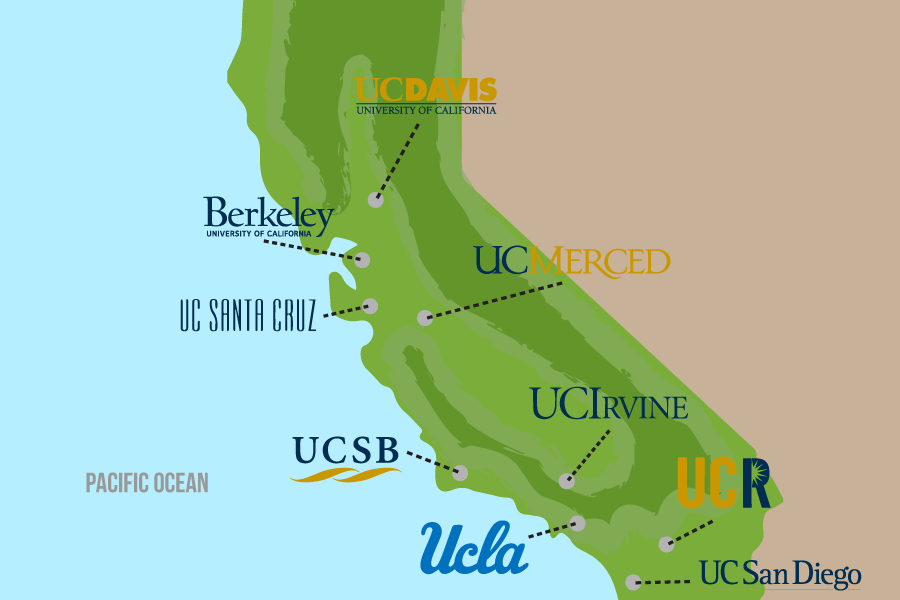
UC Davis has confirmed that it no longer plans to construct student housing on the Russell Boulevard intramural fields (IM). At a public city council meeting held on  Dec. 6 to focus on the Long Range Development Plan (LRDP), Bob Seger, the assistant vice chancellor who is head of Campus Planning and Environmental Stewardship, said that Toomey, Howard and Russell Fields will all be maintained as athletic fields.

After Seger announced the Russell Boulevard withdrawal at the town hall meeting, he explained the alternative plan: demolishing existing inefficient, low-density housing and building tall high-density housing to utilize acreage and ease Davis’ low vacancy rate. Construction will occur at empty West Village fields and on campus at Tercero, Orchard Park, Segundo, Solano Field and Cuarto. The map can be seen on the Campus Neighborhoods section of the LRDP draft, in which Russell Field is no longer designated for housing.

The Notice of Preparation Environmental Impact (NOP) report issued on Jan. 4 also confirmed the preservation of Russell Fields.

Davis Mayor Robb Davis and the City Council of Davis signed a resolution on Dec. 20 agreed upon by Davis community members to adjust the 2017-2027 LRDP. The resolution commits Ralph Hexter, UC Davis interim chancellor, to “remov[ing] all construction from Russell, Howard and Toomey Fields and retain[ing] those fields for community and athlete use.”

This 2017-2027 LRDP seeks to “accommodate 90 percent of enrollment growth in campus housing and 40 percent of the Davis-based students in campus housing by 2027-28.” The LRDP predicts 39,000 students will be enrolled by 2027, compared to the 32,663 students from 2015-2016.

The decision to no longer create housing on these fields comes after public backlash from students, athletes and members of the Facebook group Friends of Russell Blvd. Fields, all of whom resisted the development plan to take away the fields. They protested and advocated for athletic and community use of the fields through a petition, sending comments via e-mail to the LRDP planners and calling for town hall meetings.

Advocates for both saving Russell Fields and increasing student housing encouraged the LRDP planners to consider the the Nishi Gateway as an alternate housing proposal. This proposed 45-acre mixed-use Davis district could increase student housing and provide commercial connectivity and walkability near the university, similar to the housing at West Village. The prospective development is nestled in the open space between Old Davis Road and Highway 80.

After UC Davis withdrew its plan to build on Toomey, Howard and Russell Fields, the Friends of Russell Fields Facebook page posted a message of appreciation.

UC Davis has come to understand that the IM fields on Russell Blvd. are greatly valued by the broad community,” the post read.

Student-athletes who play on Russell Boulevard Fields are proud that they were able to help preserve the fields.

“We are very excited that the University is preserving Russell Field,” said Harrison Morrow, a third-year wildlife, fish and conservation biology major and UC Davis’ rugby team captain. “Not only is it important to various sport clubs at UC Davis, [but] Russell Field [also] serves as a recreation area for the entire student body.”

However, a large concern for students, the community and the university remains — a growing, low-vacancy Davis still needs more student housing. Friends of Russell Blvd. Fields have proposed a 100 percent student enrollment growth and a 50 percent in on campus housing, higher than UC Davis’ 90/40 plan 2017-2027 plan.

“We are, however, disappointed to learn [that] UC Davis continues to resist building student housing on par with most other UC campuses,” a Friends of Russell Blvd. Fields Facebook post reads. “The proposed ‘40 percent of the Davis-based students’ to be housed on campus pales in comparison to the 50 percent most other UCs are striving for. There is a backlog of on-campus housing need that has not been provided yet by UCD, significantly impacting the Davis community. Even Interim Chancellor Hexter recently admitted to the UC Regents that UC Davis has ‘completely saturated’ the Davis housing market, leading to extremely low vacancy rates. Davis is the largest UC at 5,300 acres and unquestionably has room for both the Russell Blvd. fields and more student housing.”

Colin Walsh, a former UC Davis athlete who graduated in 1996, is an advocate for preserving the fields. He described how the Davis community collaborated with the city council and mayor to save the fields.

“The city council last month passed a resolution and sent a letter to the university calling for the university to build more student housing,” Walsh said. “As the campus is getting so much larger, students are still living so far away. Compared to when I was a student, there are so many students coming from far parts of Davis or Woodland.”

Despite the need for increased student housing, Walsh hopes that the fields can continue to be preserved.

“[I have] lived in Davis off and on my whole life,” Walsh said. ‘My father was a rugby coach in Davis in the late 60’s, and I was a student playing on the field too. At every step of the way we simultaneously advocated for saving the fields, and building more student housing. UC Davis is the largest university, but provides less student housing than almost any other UC.”
Written by: Aaron Liss — campus@theaggie.org

Fashion trends of 2017

BRIANA NGO / AGGIE FILE

What new styles will be coming and going in the new year

With the arrival of a new year come new beginnings of every form: in life, in love, and, most importantly, in the world of fashion. As the trends of 2016 fade away — some we’ll miss, some we’ll be glad to see go — 2017 brings a fresh wave of different styles to try out, including bolder prints, the resurgence of stripes and the evolution of athleisure, just to name a few. Updating your wardrobe to the latest trends is a great way to revamp your closet and start feeling like your best self in the new year.

While minimalism ruled the runways and the streets for most of 2016, many are now leaning toward bolder statements, with an emphasis on more feminine looks. If the styles featured on the Spring and Summer 2017 runways last year are anything to go by, the 2016 trends of statement sleeves and ruffles are here to stay. Off-the-shoulder tops and statement sleeves were also huge in 2016 and are expected to stick around for the spring.

According to Elle Magazine, stripes are also back yet again this year. No matter how many times stripes go in and out of style, they continue to make comebacks. While plaid made a slight resurgence in 2016, the timelessness of stripes is expected to dominate the fashion scene in 2017 in all sorts of varieties and patterns. Additionally, bustiers, which were extremely popular in years past, are back this year, but now more as layering pieces rather than as pieces to wear all on their own.

“As soon as the weather starts heating up, I’m definitely going to be trying out fun new trends in the spring,” said Emily Whitehead, a first-year political science major. “Spring and summer are the perfect time to experiment with your style.”

Although Blair Waldorf once stated that “tights are not pants,” she clearly did not anticipate the phenomenon of athleisure. Luckily for many college students, the obsession with athleisure is continuing in 2017, meaning that leggings and sweatpants will still be considered acceptable to wear outside and not just at the gym. With athletic-inspired pieces being designed by not only athleisure brands but also some higher-end companies and couture houses, it seems that the comfort of this ongoing trend is simply too great to pass up.

“I love wearing workout clothes to class or when I’m running errands because it’s comfortable but still cute,” said Addy Newman, a first-year global disease biology major. “It’s convenient.”

However, despite the fact that comfortable gym-wear is dominating the current scene, the traditionalism of denim will always reign supreme when it comes to fall style. According to Glamour Magazine, the fashion world seems to be shying away from the old popularity of the stretchy “jegging”-type fit, and is turning back toward a more traditional, vintage feel. Boot-cut and wide-leg silhouettes are also on the rise. In the fall of 2017, denim trends are expected to include all sorts of fun embroideries and embellishments that were growing in popularity near the end of 2016. Additionally, the nostalgic love for denim mini skirts will surely continue throughout the summer and into the fall.

“In my opinion, denim will never go out of style, so I’m really looking forward to the new trends, such as the more flared, old-school looks that will be coming this year,” Newman said.
Written by: Sydney Odman — arts@theaggie.org

Carr-less Raiders walk home empty-handed

0

US AIR FORCE / T.C. PERKINS JR. [CC BY-NC 2.0] / FLICKR
Oakland Raiders lose in wild-card matchup, but promise is in the air

The last time the Oakland Raiders made it to the playoffs, it was 2002. Let that sink in for a moment. Many of us weren’t even old enough to throw a football, let alone remember the days of Rich Gannon, the last Raiders quarterback to take them to the playoffs, heaving the ball downfield to Hall of Famers Tim Brown and Jerry Rice.

This past Saturday, the Raiders went on the road to face the Houston Texans without their MVP candidate quarterback and team leader, Derek Carr, at the helm. Instead, they were forced to start their rookie third string, Connor Cook, after career backup Matt McGloin went down with a shoulder injury in the last game of the regular season. Cook started his first game in the NFL in an AFC Wild Card matchup against one of the most dominant defenses on paper. Tough break.

For the Raiders, many believed that their season was all but over after Derek Carr went down in week 16, against the Indianapolis Colts, suffering a fractured fibula that would end his incredible season. Before going down, on the lone sack that the Raiders stout offensive-line gave up, Carr was picking apart a sad Colts defense, proving what many have deemed was an MVP season and leading his team to a then 12-3 record.

He was clearly the heart and soul of this team, and it showed in his absence when the Raiders went 0-2 after his injury — losing the last regular season game in Denver that would have clinched a home field advantage throughout the playoffs. Instead, they had to go to Houston where they were beaten up on both sides of the ball — losing their first playoff game in 14 years.

Although many fans had to swallow a large pill of disappointment after such an exciting and promising 2016 season, Raider fans should not fret. Raider Nation can rest assured that this is no fluke season. The Men in Black will be back in the postseason next year if all of their key players can stay healthy and if Carr can make a 100 percent comeback. Seeing how Carr became this team’s emotional and physical leader this season, all indicators point to him following his third year, where he earned his second consecutive Pro Bowl and is still in the talks of MVP of the league, without missing a beat.

The Raiders are no longer an up-and-coming team. They are up, and they came — just without the key contributors that helped them get to the postseason. Having been forced to thrust a rookie quarterback into play on the road, with very few reps in practice throughout the year and the added pressure of it being a playoff game, the Raiders were banking on a miracle.

That miracle was sitting at home, nursing a broken leg.       

Written by: David Flores — sports@theaggie.org