52.4 F
Davis

Davis, California

Tuesday, December 23, 2025
Home Blog Page 671

Top Three Albums of 2016

HANNAH LEE / AGGIE
HANNAH LEE / AGGIE

From dust to side chicks, to Nikes, to big fella — introducing the year’s best albums

I have a hard time looking back at 2016 — or any year — and deeming it good or bad; there are simply too many things that take place over the span of one year to reach an overall consensus. 2016 felt different, though. It wasn’t an overall kind year: numerous shootings, deaths of legendary musicians, a new president-elect. But despite the chaos of 2016, there remains an outlying bright side: empowerment and vulnerability in the music industry.

This motif remained prominent in the year’s albums. As our accessibility to music transforms, a notable example of the year’s theme can be found in our ability to stream music. By providing listeners with greater accessibility, artists had the liberty to be more personal. Certain artists became our friends, as opposed to the acquaintances they were before. As they voiced their commentary, a greater personal connection between artist and listener emerged. And they sound damn good while doing it. Here are the top three albums of 2016:


  1. Blonde by Frank Ocean

Frank Ocean is a master lyricist, and his quiet hibernation from the music scene since his debut album made me itch for his social commentary and provocative sound. What he gave us on Blonde was artfully simple, gooey music and lyrics that sound as if they were quoted from Ocean’s diary. He touches on the racial tension that dominated 2016, mentioning that Trayvon Martin “looks just like me” in the track “Nikes.” His voice is hushed and smooth, the instruments simple with no harsh drums to be found. He thus creates a juxtaposition between his dreamy sound and the harsh reality of his content. He communicates directly to the listener, speaking of the drugs he took and the nostalgic, bitter-sweet simplicity of a broken love in the song “Ivy” as if the “feeling deep down is good.” Ocean touches on it all in Blonde, understated and humble. He doesn’t demand attention, but sits you down for an intimate conversation.


  1. Lemonade by Beyoncé

Who knew Beyoncé would make the list? It’s not just that Beyoncé is Beyoncé, but rather, she stepped out of her comfort zone and presented an album unlike anything she’s done before. Not too long ago she sang of being drunk in love, but Lemonade offered a mature and complex account of her confronting infidelity, and artfully parallels her emotions to the national betrayal and discomfort of this year. She plays with music genres the way her emotions fluctuate — initially calling for “middle fingers up” in the song “Sorry” to ending with an open-ended reconciliation in “All Night.” She elevates herself as much as she brings herself down. Outspoken and brave, she unapologetically sings about political opinions and personal hardship, leaving no room for adversaries and calling for us to do the same.


  1. Coloring Book by Chance the Rapper

“Don’t forget the happy thoughts, all you need is happy thoughts” summarizes Coloring Book as a whole — a gentle reminder that optimism must remain during times of adversity, and that challenges generate progression. Playful and whimsical, Chance goes beyond his breakout mixtape, Acid Rap, for a mature and personal account of his newfound independence as the most famous record-less artist of our time (an accomplishment itself worth a top place on my list), as well as his faith and hopes for the future. He raps to a beat of positivity and brightness in an explicit and genuine call for a better society, and emerges as the much needed high-pitched voice of honesty and humility. What makes him stand out, however, is his candor and ability to go beyond addressing the ills of the year. He also generates a universal mindset to attain the future he envisions. His masterful rapping paired with smooth beats, Donnie Trumpet and a gospel choir are an ideal remedy for 2016, and serve as the anthem of the good that is yet to come. So “are you ready for your blessings? Are you ready for your miracle?”
Written by: Caroline Rutten — arts@theaggie.org
UCs receive record-breaking number of applicants

NICKI PADAR / AGGIE
NICKI PADAR / AGGIE

Increase in applications brings more diverse pool of students

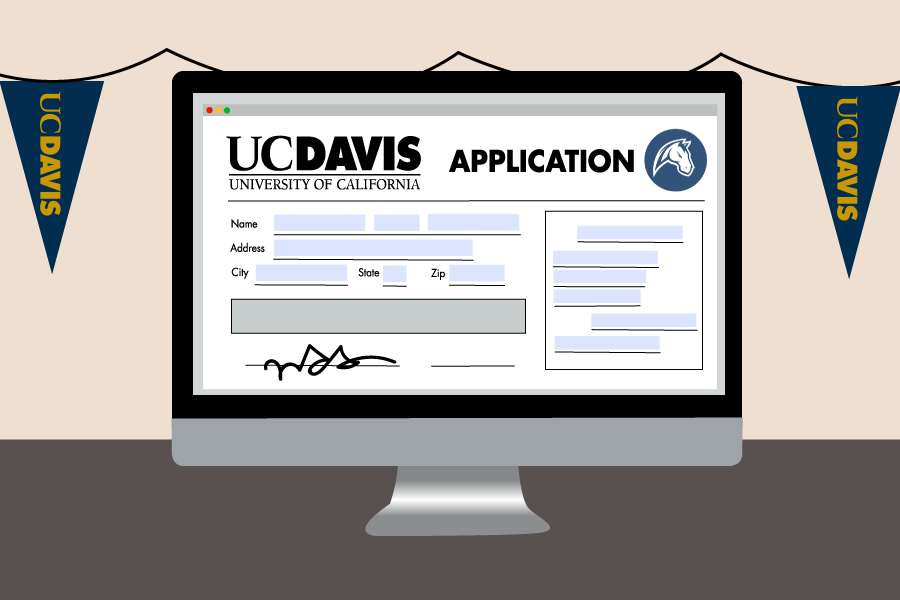
Of the 171,449 potential freshmen who applied to at least one of the University of California (UC) campuses this past November, UC Davis received 70,904 freshmen applicants, according to a press release. This is a 3.5 percent increase in the number of applicants from last year. There was also significant progress in diversity of the applicant pool, which included students from historically underserved groups and low-income families.

“This year’s applications affirm, once again, that Californians’ demand for a UC education keeps getting stronger,” UC President Janet Napolitano said in a press release. “This is a testament to the excellence of California’s public research university and reinforces the imperative to continue working with our state government to preserve UC’s quality and affordability, and to ensure there is a place at the university for every deserving California student.”

Walter Robinson, the UC Davis associate vice chancellor for enrollment management, said the UC seeks to create accessible education for California students by admitting 2,500 residents in 2017. UC Davis is on track to uphold the UC goal, as 72.4 percent of this year’s applicants are California residents — an increase of 4.2 percent since last year.

Robinson said that there has also been an increase in applications due to outreach and recruitment efforts in California and other areas.

“Everyone seems to understand the value proposition of a University of California [education],” Robinson said. “It would be irresponsible on our part, as a public institution especially, not to acknowledge which populations are struggling the most to keep up with the graduation and retention rates.”

The efforts toward recruitment have been successful, as the percentage of African American, American Indian and Chicano/Latino applicants have increased by 2.8, 2.2 and 7.5 percent, respectively. Through financial aid and resources such as the Educational Opportunity Program (EOP), the UC aspires to make their campuses more affordable to attend, especially for such underserved groups.

“I was nervous about applying to college because I knew it was very expensive,” said Joel Gutierrez, a first-year marine and coastal science major. “[The UC is] very considerate toward people and their incomes [and] they to want to make sure everyone has a good opportunity.”

The UC hopes to attract students who are first-generation college students, from low-income families or who are part of historically underserved groups. As it is the UC’s ongoing mission to admit a diverse pool of students, this year’s variety of applicants will help the campuses pursue that goal.

“Our hope is that with understanding diversity as value added, we will see a continued increase in diversity in all of its definition,” Robinson said.

Robinson mentioned that UC Davis considers students from all backgrounds and focuses on applicants who take advantage of the resources within their respective learning environments.

“We admit stories students tell us about themselves, and in doing so they give us an understanding of what each applicant could possibly bring to the intellectual, social and cultural vitality of the campus,” Robinson said. “[This] moment of introspection is probably the most mature thing a 17 or 18-year-old will ever be asked to do, […] so students have the opportunity to put their best [selves] forward.”

Gutierrez said that the UC application process in fall 2015 was highly competitive, so he concentrated on ways to stand out from the other applicants.

The UCs [offer] a very good education, so I thought they would be looking for students who put a lot of passion into what they do,” Gutierrez said. “It’s not just about preparing us mentally, but also for the real world and to be active adults with an impact on the world.”
Written by: Jeanna Totah — campus@theaggie.org

The meaning behind the mascot

0
horses_fe_cat_taylor
CAT TAYLOR / AGGIE

A look into UC Davis’ horse history

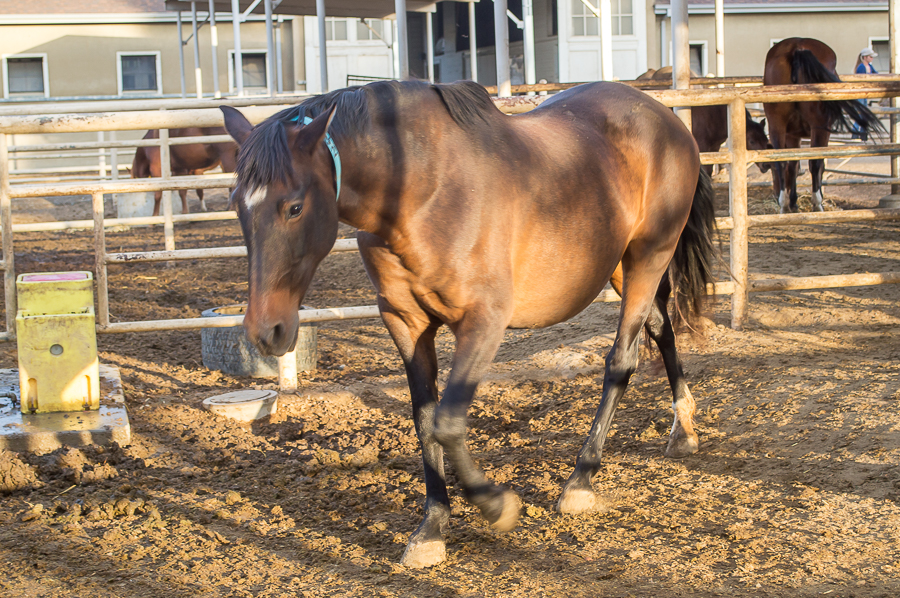
Before the Silo was a hub for Green Burrito and caramel macchiatos, it was a functional barn for some of UC Davis’ original inhabitants: horses. While the animals’ home has been relocated to the Horse Barn and Equestrian Center, horses are present almost anywhere on campus, from Gunrock to horse-drawn carriages.

“Horses are an integral part of many lives at UC Davis, and they play many roles as companion animals,” said Dr. Sharon Spier, professor of Medicine and Epidemiology at the School of Veterinary Medicine. “[The University] houses hundreds of horses between the Horse Barn, with a student workforce, [and] the Equestrian Center, where students can board their own horses and compete on equestrian teams or take lessons.”

Amy McLean, manager of the Horse Barn, earned her Ph.D. in Equine Science from Michigan University and has done research in 23 countries on various equine animals. Despite her extensive travels and experience, McLean says the UC Davis horses are among the most unique and special she has seen.

“This group of horses is very kind, forgiving and understanding of students, so it’s remarkable to watch how they get along with students who may be unfamiliar with horses,” McLean said. “Some of my favorite horses are the draft horses, a [type of] breeding horse from France. [They] are phenomenal to work with […and] are really gentle giants.”  

McLean explained that, among the several different breeds that call the Horse Barn home, each has its own personality.

“Draft horses are known for being docile like the larger horses who are known for being cold-blooded, which actually means laid-back in horse terminology,” McLean said. “We also have one of the oldest breeds of horses, which was originally imported from Spain during Christopher Columbus days. These horses are fiery and hot-blooded, as opposed to the mares which have great laid-back personalities perfect for classes and labs.”

While the UC Davis Equestrian Center is the place for sport, companion and recreation horses, the Barn is home to about 30 horses strictly used for breeding, teaching and research purposes. While most of the horses are excited to engage with students and get out of their stalls, not every animal may be compatible with every student. McLean strives to personally match each animal with a specific student based on personalities since the two will spend a lot of time together during classes and internships.

“In the winter and spring, our mares and stallions will be used intensively for an equine reproduction internship that focuses on breeding stallions and collecting them for artificial insemination,” McLean said. “There’s a little bit of match-making I do between stallions and the interns who will be working with them. It’s like finding a dance partner in that you’re asking a partnership from the animal.”

According to McLean, the horses at the barn are very patient, and she expects to see students bond with mares during the reproduction internship because of the commitment and time spent together. McLean has also seen close relationships form between the animals themselves as they establish their own communities.

“When the young horses are weaned from their moms it’s almost a tragic experience for the foals to go through — kind of like a student being shipped off to college and leaving home,” McLean said. “You will see a group of foals that were weaned at the same time go out in pasture and still stick together after, so they do form similar relationships the way humans do.”

When students first come to UC Davis, it may take a while to get adjusted before finding a solid group of friends. Holly Fox, program coordinator at the UC Davis Equestrian Center, explained that when the center receives its new herd of horses every year, there is a similarly slow integration process as the animals get accustomed to life at UC Davis and meet the resident horses.

“The new horses start by being separated from the current ones in the slow integration pasture so they can smell each other’s noses and get to know each other before joining the herd,” Fox said. “Soon they will have their favorite friends out in the pasture who will stand together in pairs looking after each other. Sometimes if the group is laying down there will be one standing up and looking out for any make-believe dangers, guarding the group.”

Fox has been working at the Equestrian Center since 1985 and has observed all kinds of personalities with its inhabitants.

“Some [horses] are sweet, docile and gentle, others are feisty and assertive, running around and wanting to be the first ones to eat dinner,” Fox said. “This is really great because out of all of the riders taking lessons or on teams, there is usually a horse that fits their personality and riding level.”

For Lizzie Wilson, a second-year neurobiology, physiology and behavior major, the Equestrian Center was the perfect opportunity to continue her 10-year long passion for riding, as she is now on the Three-Day Event Team. Coming to UC Davis from the East Coast, Wilson appreciates the campus horses for their diverse personalities and willingness to be worked every day.

“A dog is cool because [it] can be your buddy and friend, but with a horse it’s a little more of a soulful relationship,” Wilson said. “You and the horse are equal, they’re your teammate and best friend and it’s so nice to have that at college. It’s also an amazing stress-reliever because if you can’t get outside during school, you still have the responsibility take care of the horse which may sound like a chore until you get out and realize how much you needed it.”

Since UC Davis is an agricultural campus, horses fit in naturally with the physical environment and scenery. However, as the campus continues to grow and change, it is important to keep horses present in many forms as a part of UC Davis’s unique history.

“Going out to the horses on campus, whether to ride or just visit them, helps create a balance that gives students a moment to refresh, and benefits the animals as well,” Fox said. “I think it’s a very nice fit for this particular school.”
Written by: Gillian Allen — features@theaggie.org

Davis College Republicans club leads protest against cancellation of Milo Yiannopoulos event

LUCY KNOWLES / AGGIE

Yiannopoulos explains event’s cancellation, marches with students, community members

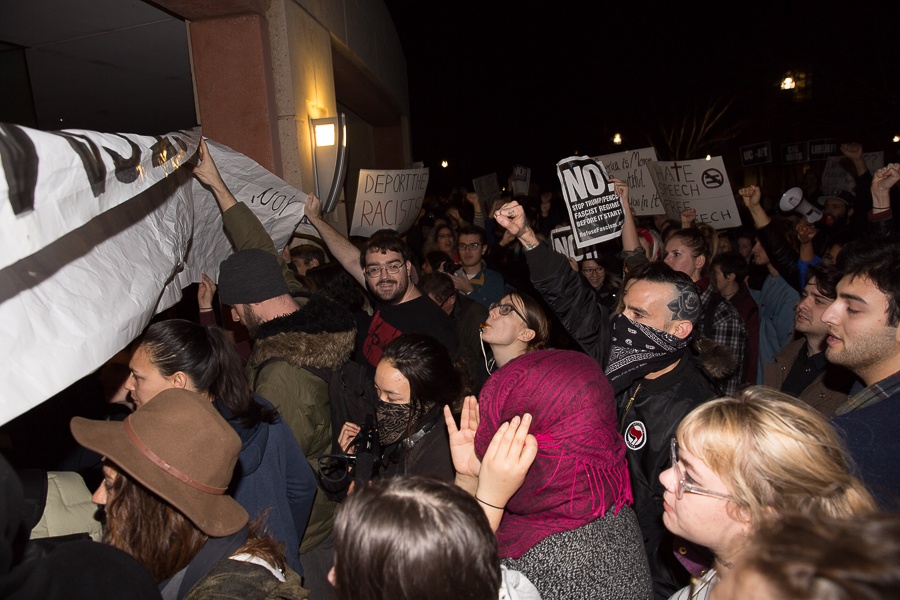
A protest was held at the Memorial Union (MU) on Jan. 14 in response to the cancellation of the Milo Yiannopoulos speaking event the night before. The Yiannopoulos event, which had faced backlash from the campus community, was cancelled about a half an hour before its start time due to hundreds of people protesting outside of the venue.

“We will not stand for the regressive left perpetuating violence, censoring speech and spreading hate,” read a Facebook post by the Davis College Republicans (DCR), the club that organized Yiannopoulos’ visit.

Yiannopoulos posted on his Facebook page about today’s protest as well.

“Come join us at 1 p.m. today in the Quad at UC Davis to protest the university’s pathetic failure to protect free speech,” he wrote a few hours before the protest.

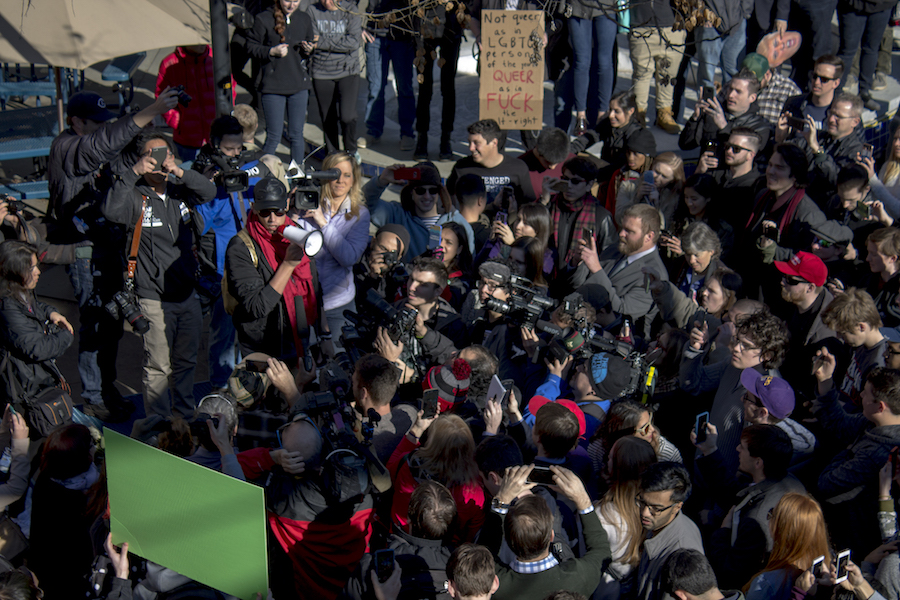
Over 100 people — a mixture of UC Davis students and community members — came to the protest. Several people attending came with posters or donned “Make America Great Again” hats, a signature piece of merchandise from Donald Trump’s successful presidential campaign.

“We’re here today to protest the actions that went down last night, the violent anti-free speech protesters,” said a sophomore at local high school Da Vinci Charter Academy who wished to remain anonymous. “We’re going to be responding to that with a little bit of a protest of our own. A protest in support of free speech.”

Although the protest was scheduled to begin at 1 p.m., Yiannopoulos did not arrive until about 1:50 p.m.

Yiannopoulos spoke for about 10 minutes to the crowd. In his speech, he claimed that DCR was pressured into cancelling his speaking event.

“Your university is trying to claim that the College Republicans cancelled the event last night,” Yiannopoulos said. “Well that’s only true to a point. It’s true because they were told by the police that they would be responsible for property damage […] so the university heavily pressured the College Republicans [to cancel it].”

When pressed as to why he chose to continue his speaking tour, Yiannopoulos said that he wanted to remind people that they can always express themselves.

“What I’m trying to do with the tour is remind people that nothing bad happens if you use words you’re not supposed to use,” Yiannopoulos said. “And words only have the power you give them. People should be free to express themselves however they want.”

Yiannopoulos and the protesters marched throughout campus before reenacting the 2011 pepper spray incident with silly string that Yiannopoulos had brought with him.

While some actively countered Yiannopoulos’ protest at the MU, other demonstrators from the night before decided to host a fundraiser for the Sacramento chapter of Black Lives Matter at Davis’ Central Park.

“We organized the protest last night and it was effective and it worked — we shut it down,” said Bernadette Fox, a fourth-year international relations and women’s studies double major. “This morning everybody was so drained. We woke up and it was like ‘oh great, they’re coming back.’ So we came to the consensus that we didn’t feel like we had the numbers really to […] shut it down again and we also saw all over Milo’s page and the Davis College Republicans’ [page] a lot of people asking like other self-identified white supremacist-type of people who are very violent to come, so we anticipated that there would be a high level chance for people to get hurt and we didn’t want to put people in danger.”

Written by: Alyssa Vandenberg  — campus@theaggie.org. Eli Flesch contributed reporting.

BREAKING NEWS: Milo Yiannopoulos event cancelled

JAY GELVEZON / AGGIE

Protests against far-right conservative Milo Yiannopoulos’ visit to UC Davis this evening have led to its cancellation. The event, which was to be held at 7:30 p.m. in the Sciences Lecture Hall, drew hundreds of protesters. Before 7 p.m., it was announced that the event had been cancelled.

“My event at UC Davis tonight has been cancelled after violence from left-wing protesters,” read a post on Yiannopoulos’ Facebook page. “There are reports of hammers, smashed windows and barricades being torn away. The campus police can’t guarantee anyone’s safety so I’m not being allowed anywhere near the building. Stay safe, everyone.”

However, according to a statement released by Interim Chancellor Ralph J. Hexter, there was no property damage as a result of the protest.

“Despite some reports, there were no broken windows or other property damage during the protest,” read the statement. “Earlier in the evening, one person was arrested inside the venue. No further arrests were made.”

In the statement, Hexter said he wished that the community had respected everyone’s right to free speech.

“I am deeply disappointed with the events of this evening,” Hexter said. “Our community is founded on principles of respect for all views, even those that we personally find repellent. As I have stated repeatedly, a university is at its best when it listens to and critically engages opposing views, especially ones that many of us find upsetting or even offensive.”

Martin Shkreli, who was going to be featured at the event, took selfies with students outside of the venue despite its cancellation.

“To be honest, I think this is embarrassing for the school,” Shkreli said. “I was going to have a pro-feminism discussion, believe it or not. […] I was going to rip on [Yiannopoulos] because he doesn’t know anything about feminism.”

More information to come.
Written by: Alyssa Vandenberg  — campus@theaggie.org

Women’s basketball fails to find shot, falls to Long Beach State

0
KELSEY GREGGE / AGGIE

Aggies fall apart in the fourth on their way to 64-51 loss to Long Beach State

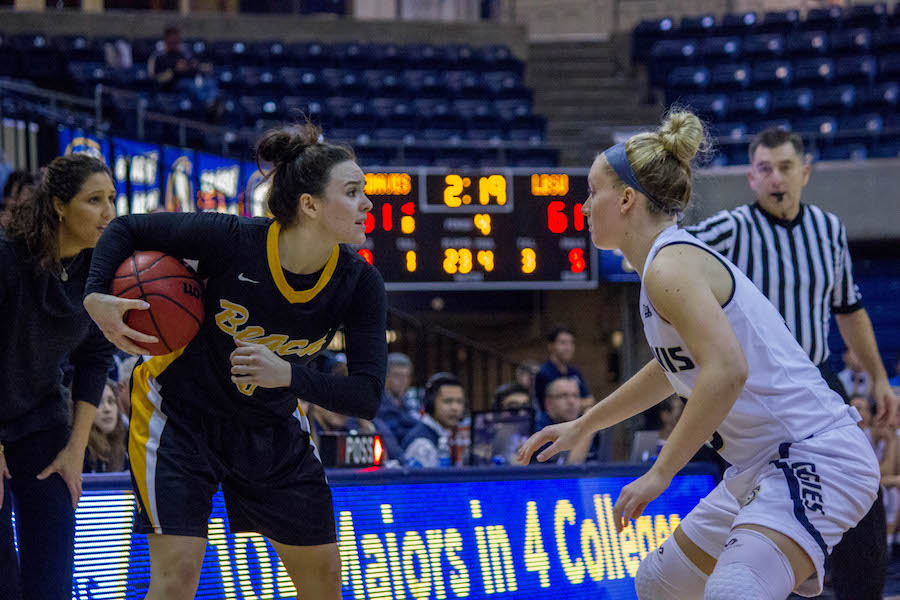
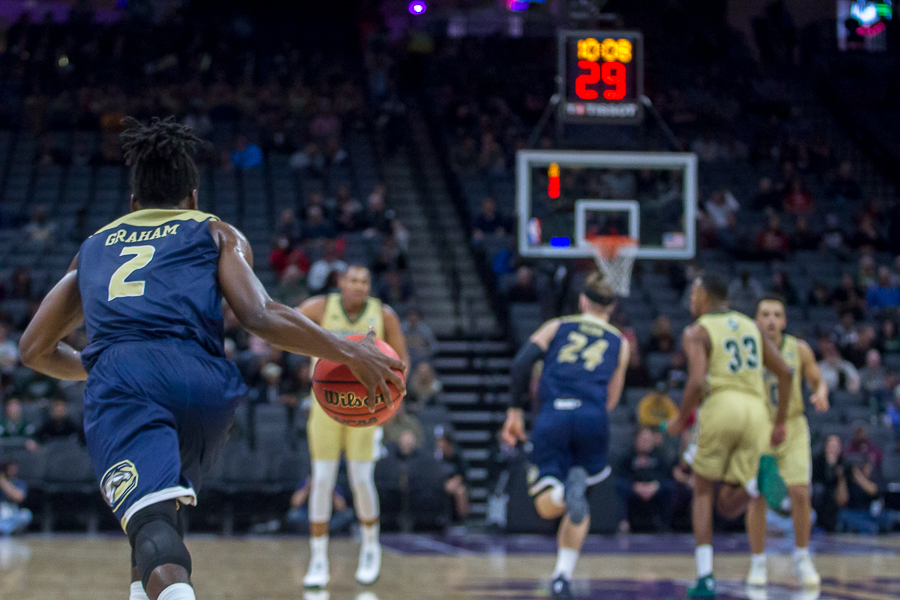
With a two-game winning streak and an 11-4 record coming into Thursday night’s game, things were looking good for the UC Davis women’s basketball team as the 49ers of Long Beach State came into town. Unfortunately for the Aggies, the team was never able to get enough momentum to take over the game, and after three solid quarters, found themselves in a hole early in the fourth which they weren’t able to dig themselves out of, eventually falling to their opponent 64-51. The UC Davis women’s basketball team now has an overall season record of 11-5, and is at 2-1 within the Big West conference.

“We faced some adversity in the second half, and I don’t think we did the best job responding to that,” said head coach Jennifer Gross.

Sophomore forward Morgan Bertsch saw the loss not as a deadly blow to the team, but instead a learning experience for her and the rest of the women’s basketball team.

“I think it’s really important to learn from this game,” Bertsch said. “We did have a problem with struggling and getting over that. That was a huge problem for us today.”

The Aggies, who led by as much as five in the first half of the game following strong performances from sophomore guard Kourtney Eaton and freshman forward Nina Bessolo, were never able to gain momentum. Though a majority of the game was close, UC Davis struggled to hit shots all night, shooting just under 30.9 percent from the field and 30.4 percent from downtown. Despite these struggles, the sixth-year coach would not let her team feel too down going into the next few games, which include an away game rematch with Long Beach State on Jan. 21.

“We know who we are, we know what we are capable of,” Gross said. “When things are going great, then we’re feeling great. When things are going down, we are finding a way to feel great again. Tonight, we just couldn’t find enough things to spark us.”

Despite sitting most of the first half, junior forward Pele Gianotti led the team in scoring with 14 points on 4/7 shooting. Bertsch, the team’s leading scorer on the season, struggled to get her shot going, shooting just 2/10 from the field.

“In the first half I missed a lot of easy ones, and that got in my head a little bit, but honestly, I was just missing today,” Bertsch said. “I wasn’t really focusing on it in the second half. Regardless of what happened, they just weren’t falling today.”

The UC Davis women’s basketball team will have very little time to focus on this loss, as CSU, Northridge comes to the Pavilion on Saturday, Jan. 14 at 2 p.m.


Written by: Bradley Geiser — sports@theaggie.org

Davis College Republicans provide platform for hate speech

HANNAH LEE / AGGIE
HANNAH LEE / AGGIE

Milo Yiannopolous brings nationalist “alt-right” to Davis

Roughly a week after the election of Donald Trump, the Davis College Republicans (DCR) announced that they would be bringing Milo Yiannopoulos to campus for a Jan. 13 speaking engagement. Yiannopoulos is perhaps best known as the technology editor for Breitbart News, a so-called “alt-right” website with a racist, white-nationalist agenda. He will also be joined by Martin Shkreli, a pharmaceutical executive with his own history of sexist and morally questionable actions.

The disclaimer on the event page for Yiannopoulos’ talk states: “[Yiannopoulos] is known for discussing topics, both political or not, that may offend some people but not others.” But the ideas espoused by Yiannopoulos should offend all people — at least, all people with any shred of humanity or decency. For the uninitiated, here are a few of the beliefs that Yiannopoulos holds near and dear: he deems rape culture a “fantasy,” argues that birth control has made women fat and miserable and was banned from Twitter after inciting a series of racist and sexist tweets against actress Leslie Jones.

Make no mistake: Yiannopoulos is a hateful spectacle, not a conservative political theorist or anyone who has anything interesting or original to say about the state of politics in America. While the DCR may not endorse Yiannopoulos’ views and may not have intended to incite campus outrage, by bringing him to campus, they are responsible for the impact that Yiannopoulos’ words may have on members of the Davis community. During a December visit at the University of Wisconsin-Milwaukee, Yiannopoulos mocked a transgender member of the audience by displaying her picture and full name prominently on screen, calling her a “tranny” and stating, “the way that you know he’s failing is I’d almost still bang him.” Many members of the Davis community, rightfully fearful of a repeat of the Wisconsin incident and outraged by Yiannopoulos’ beliefs, have called on the administration to cancel the event.

Interim Chancellor Ralph Hexter issued a letter on Jan. 11 stating that Yiannopolous’ talk would not be cancelled. While Yiannopolous’ visit will be protected by the university’s policy on free speech, the members of the Editorial Board are deeply offended by the ignorant rhetoric championed by Yiannopolous and his followers, and thus, we support any members of the community who decide to exercise their freedom of assembly and peacefully protest the event.

Another alternative: The Editorial Board encourages members to deny Yiannopoulos the attention he so desperately craves and instead attend Change/The Conversation, a student-led event featuring actress, comedian and video blogger Franchesca Ramsey and Black transgender activist CeCe McDonald. Given Yiannopoulos’ history of degrading the transgender community, the Editorial Board encourages members of the community to attend this event to engage in a conversation about race, gender, sexuality and oppression in a post-Trump world. The event will be held on Jan. 13 at 7 p.m. in the ARC ballroom and is currently sold out, but those interested in attending can join a waitlist for tickets.

Black transgender lives matter, no matter how hard white nationalists like Milo Yiannopoulos will have you think otherwise.

Police Logs

LUCY KNOWLES / AGGIE FILE

Season’s Greetings Edition

Dec. 24

“Downstairs neighbor tapping on RP’s floor”

Dec. 25

“Two intoxicated males ‘sitting in RP’s planter boxes’”

Dec. 25

“Motorola walkie found”

Dec. 25

“Guest currently walking around naked”

Dec. 26

“RP saw someone in front yard stealing plants”

Dec. 27

“Bundle of wood in the roadway”

Dec. 28

“Highly intoxicated male in women’s restroom”

Dec. 28

“Male subj. trying to push down a street sign”

Dec. 29

“Male just stole red lantern and walked out”

Dec. 29

“Female sitting at the intersection in an older Ford with missing hubcap […] RP thinks the female is stealing Wi-Fi”
Written by: Sam Solomon — city@theaggie.org

Tumbling into 2017

0
CIERA PASTUREL / AGGIE FILE

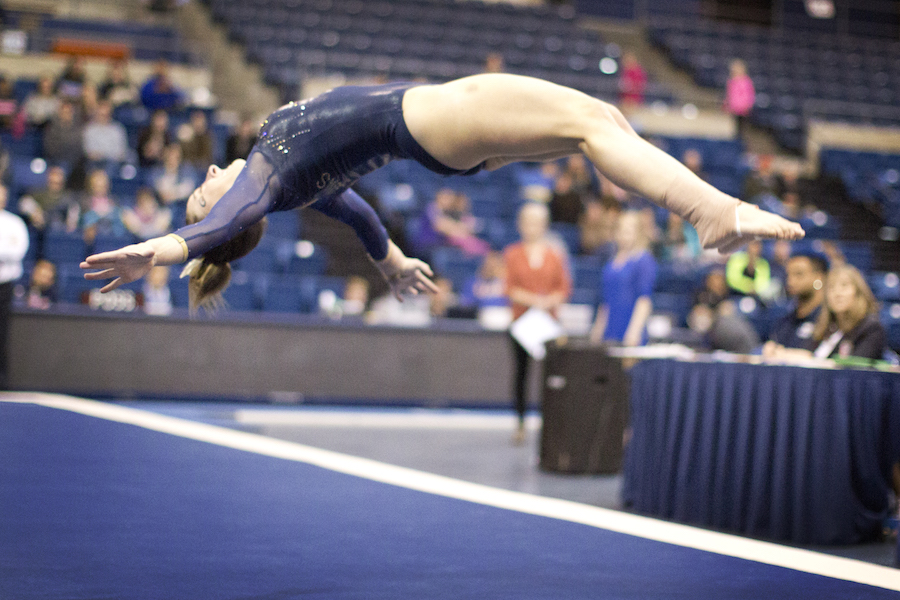
UC Davis women’s gymnastics team has high hopes for season

As the UC Davis women’s gymnastics team prepares to commence its 2017 season, one thing is clear: slow and steady wins the race. Even in the midst of the injuries affecting a handful of their athletes, the Aggies are determined to keep a positive and competitive outlook about the imminent season with confidence that they will capture NCAA postseason nods.

With an accumulated five Mountain Pacific Sports Federation [MPSF] conference championships in the past six years, the team has no reason to be humble, and it’s that same calm yet tenacious attitude that has been the key to the team’s success.

“We focus on our rituals,” said senior co-captain Katy Nogaki. “We keep an emphasis on the Aggie bubble, and centering [our focus] on what we need to do as a team in order to accomplish our own goals.”

This approach of fixating all competitive concern towards the team’s goals rather than outwardly during meets has proven to be successful, as its athletes look forward to another fruitful and thrilling season.

The team has accomplished impressive feats recently and hopes to use that excitement as fuel in upcoming meets. Nimble Nogaki is well on her way to becoming the first gymnast in UC Davis history to compete in four consecutive NCAA postseason meets. Junior Alexis Brown dominated the conference with All-MPSF titles in vault, bars and beam, while senior co-captain Yonni Michovska took home an All-MPSF title of her own for bars. The list of accolades continues and serves as a testament for the level of athleticism and contagious excitement for the sport that these Aggies possess.

Prior to the team’s first meet, the NorCal Classic, on Monday, Jan. 9, head coach John Lavallee emphasized the importance of slowly picking up steam throughout the season in order to preserve and rejuvenate the athletes for the bigger meets.

“Ultimately, we want to be our strongest at the end of season, so we want to give everybody the chance to be as healthy and strong as they can before they get out there,” Lavallee said.

Looking forward, the team takes to the mats to build its Regional Qualifying score with the hopes of qualifying for post-season competition.

“No matter what goes on around us, whatever happens, it’s all about Davis,” Nogaki said. “All eyes on Aggie.”

Despite some injuries across the team, the Aggies exceeded expectations and excelled with their performance at the NorCal Classic on Monday night. The meet, which hosted opponents like UC Berkeley and Stanford, proved to be the perfect place for the Aggies to regroup and perform; they ended the night with a third-place finish after capturing an overall score of 193.875, which was comprised of a 48.700 score in both vault and bars, a 48.075 on the floor and a 48.400 on beams.

Among the many standout performances of the meet, Brown’s 9.800 on uneven bars and 9.825 on vault and Michovska’s 9.625 floor performance were sights to behold.

The Aggies will host Stanford, Boise State and Yale for their home opener on Friday, Jan. 13 at 7 p.m.


Written by: Alex Arechiga — sports@theaggie.org

Davis is Burning fires up for two performances

DAVIS IS BURNING / COURTESY

Drag show highlights range of gender expressions

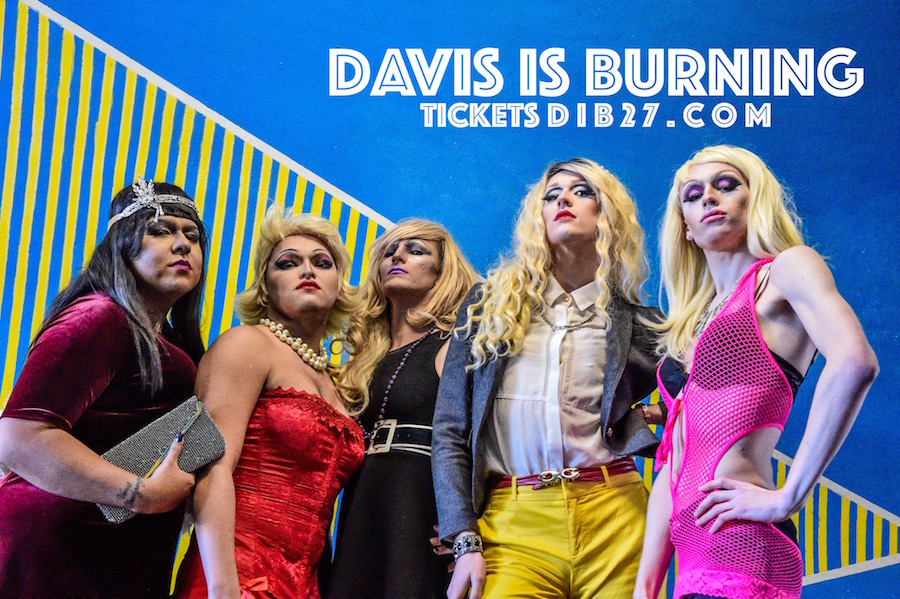
Davis is Burning, the annual drag show hosted by the Xi Chapter of Delta Lambda Phi (DLP Xi), an LGBTQ+ social fraternity on campus, will be held on Jan. 14 in the Wright Theater. The chapter will donate most of the proceeds to the Trevor Project, the leading organization for LGBTQ+ suicide prevention.

Matt Reese is a third-year linguistics and Chinese double major and has been performing in Davis is Burning since 2015.

“Queer youth have a very hard time in this world because oftentimes friends, family and community don’t understand the realities that we live everyday. The Trevor Project provides a lifeline for these kids, someone willing to listen to understand and to say ‘I believe you,’” Reese said.

Mason Schmidt, the vice president of the fraternity and a fourth-year international relations major, is the main planner for the event.

“I think drag culture has so much to provide for everyone […] it’s seen as a culture that is not mainstream but to be able to bring it to campus and for it to be student produced is really beautiful,” Schmidt said.

Schmidt was inspired to rush Delta Lambda Phi after watching Davis is Burning.

“I come from a really small conservative town and so experiencing that was like ‘wow’ everyone is so comfortable with their gender expression and who they are, and they’re celebrating it,” Schmidt said.

Schmidt also performs in the show as Lavender Woods, his chosen stage name.

“Everyone has their own unique way of picking their name. Some people take the last name of their drag mother, the drag performer who coached them, my favorite scent is lavender and I feel it kind of fits my drag aura and then Woods just had a nice flow to it,” Schmidt said.

The name Davis is Burning has a unique connection. It comes from the 1980s documentary “Paris is Burning,” about the drag balls of New York City. The show was first performed in the living room of one the members of Delta Lambda Phi and since then the tradition has grown and moved to the stage.

“[It’s] really liberating for me to be able to express myself and my gender so openly and in way that is entertaining and brings people together,” Schmidt said.

Performers start preparing for the show months in advance and the production is a labor of love. It can take the performers up to three hours to apply their makeup before the show. During rehearsing, the performers are paired with a more experienced coach or “drag mother,” from the fraternity. Despite the intense work ethic the performers feel that it all pays off during the show.

“My favorite part of performing is sharing my creative vision with others. I love having an idea for a song, picking out an outfit, doing my makeup, and making choreography to fit. When it all comes together others can see what I think and feel when listening to a song, what the song means to me,” Reese said.

Another aspect of preparation for the show has been the dancing. Jerrad Senesac, a third-year gender, sexuality and women’s studies major, is the lead dance choreographer for the show.

“I think that there’s a beautiful thing to be said about how someone can make you connect with their performance on stage. It takes a tremendous amount of confidence and whimsical nature to move on stage and to captivate attention,” Senesac said.

The show aims to promote voices that have historically been marginalized and to showcase a range of gender identities and expressions.

“Drag proves that we can act, dress and be how we want regardless of what society says is ‘for boys’ or ‘for girls’, that human expression is a vast landscape which cannot and will not be confined by prescriptive heterosexism,” Reese said.

Davis is Burning is the biggest drag show in Northern California and professional queens from across California and queens from other chapters of Delta Lambda Phi will be performing.

There is a 2 p.m. matinee and 7 p.m. performance. Tickets can be purchased online. Please visit the event page for more details. Tickets are $12 online, $15 at the door and $13 at the door if attendees come in drag.
Written by: Abigail Wang – arts@theaggie.org

Introducing the Winter Quarter columnists and humorists

eli_flesch1New writers will work to reflect the great diversity of ideas at UC Davis
Welcome back to school, Aggies. It’s a new year and the challenges facing this country are profound. You may have asked yourself: what can I do to make a difference?

The opinion desk will be working as hard as ever to make sure this paper fairly represents the great diversity of thought that makes this campus and community unique.

We’re going to be pushing harder to find columns written by guest authors, and we need your help. If you or a group you represent are passionate about a particular topic, especially in the news, email opinion@theaggie.org to submit an op-ed or a letter for consideration. If you would like to write a weekly column for the Aggie, please let us know and we’ll send you an application.

Let’s make sure the college newspaper remains democratic, essentially local and as refreshing to read as ever. Make sure you’re part of the conversation.


Tamanna Ahluwalia


Coming off a successful Fall Quarter column on the persistence of gun violence in America, second-year neurobiology, physiology and behavior major Tamanna Ahluwalia will be turning her attention these next ten weeks to the seemingly intractable issue of poverty in America. Paying special attention to how individuals contribute and react to destitute conditions, Tamanna hopes to better understand the underlying reasons for poverty. Columns on boredom and existentialism will help show the power of American materialism and its stark relationship to life at the bottom.


Sid Bagga


Could increases in tuition actually benefit students? What does ASUCD really do to represent the students it serves? Why do conservatives on today’s campuses seem more amenable to firebrand right-wingers than before? These are among the questions Sid Bagga, a second-year economics major, hopes to answer in his column this quarter. At a time when the political and social divisions in our society are hyper-magnified on college campuses, Bagga aims to look at the issues in a way that’s opinionated but not blindly partisan — holding all sides accountable.


Taryn DeOilers


After spending Fall Quarter exploring the intersections of the sciences and the humanities, second-year comparative literature and political science double major Taryn DeOilers will return to the opinion desk as an associate editor and part-time columnist. She plans on writing in response to newsworthy events in the culture, both nationally and locally — with an eye for the issues that will affect UC Davis students and the community.


Olivia Luchini


If you think first-year students should be versed in meme culture, you’ve got a friend in Olivia Luchini, a second-year English and political science double major who believes there should be an entire seminar on the subject. She’ll explore doping by Picnic Day dachshunds and terrorizing turkeys. A stand-up comic from Fresno, California, Luchini has her eyes set on writing for Saturday Night Live — the less-funny version of the daily shenanigans Aggie humorists get themselves into.


Parker Nevin


If you’re looking for the odd, off-brand humor that turns students into piles of dust and TAPS into a colonial power, look no further than Parker Nevin, a second-year computational cognitive science major. Nevin is a member of Birdstrike Theatre, an on-campus improvisational comedy troupe, which will come in handy when he needs to come up with an excuse on the fly as to why the Aggie’s humor desk just isn’t that funny.

Written by: Eli Flesch — ekflesch@ucdavis.edu

Letting Milo Yiannopoulos speak at UC Davis is difficult but essential

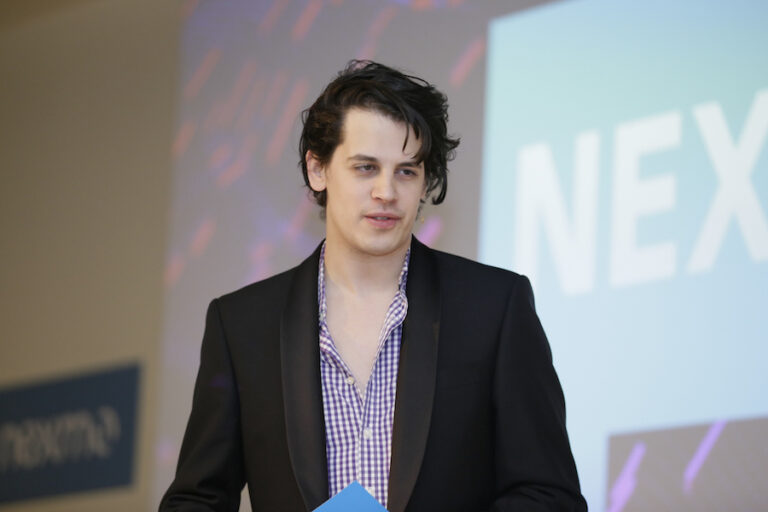
NEXTCONF [CC BY 2.0] / FLICKR
eli_flesch1Understanding what free speech entails is essential to a democratic society

The self-described “supervillain of the Internet,” Milo Yiannopoulos, is slated to speak today at UC Davis as part of his ongoing “Dangerous Faggot Tour,” which has taken him to college campuses across the country. He will be joined by pharmaceutical executive Martin Shkreli, who is on bail for securities fraud, Breitbart News reported Wednesday.

It’s not surprising that Yiannopoulos, a professional provocateur whose white supremacist, misogynistic and transphobic views have made him a symbol of the so-called “alt-right,”  has chosen American universities as a staging ground for his blatantly offensive rhetoric. For years, campuses have eschewed basic principles of free speech in a way that makes them particularly ripe for the type of reaction Yiannopoulos hopes to elicit.

But allowing Yiannopoulos to speak is in line with a public university’s commitment to free speech. Any argument otherwise either doesn’t understand what types of speech are permissible or simply fails to grasp the importance of free speech to preserving a healthy democracy.

Let’s immediately dispense with the idea that Yiannopoulos actually has anything substantive to add to the political discourse. If transcripts of past tour stops are any indication of what he will say at UC Davis, you can expect to hear a litany of slurs and degradations of marginalized communities that can only be described as anti-intellectual hate speech.

But, broadly speaking, most hate speech is permissible and protected. The courts have interpreted the First Amendment such that one of the only ways hate speech — or speech in general — can be limited is if it contains “fighting words,” defined as direct incitements to violence. But speech is protected when it’s deployed at a public forum and isn’t likely to instigate a violent reaction from the person to whom it’s directed. This is how Yiannopoulos gets away with regularly targeting individuals at his events with obscene insults. Private companies and universities can set and enforce their own harassment policies.

Yiannopoulos was suspended from Twitter for unleashing a barrage of hate against the actress Leslie Jones. Shkreli’s account was similarly removed after he harassed a Teen Vogue reporter who rebuffed an invitation to join him at President-elect Trump’s inauguration. Though penalizing these behaviors is acceptable in the private sphere, great caution should still be taken before limiting someone’s speech — normalizing such actions could create a dangerous precedent.

Hate speech has regrettably become, as noted African-American scholar Henry Louis Gates Jr. wrote, “the term-of-art of a movement — most active on college campuses and liberal municipalities — that has caused many civil rights advocates to rethink their allegiance to the First Amendment, the amendment that licensed the protests, rallies, organization and agitation that so galvanized the nation in a bygone era.”

The disinformation surrounding what kind of speech is and isn’t protected does a disservice to victims of unprotected speech. It’s possible that not being able to clearly define where the line should be drawn contributes to a growing sense among Millennials — a surprising 40 percent of whom believe the government should be able to limit speech offensive to minorities — that the liberal principle of free speech should not be extended so widely as it is currently.

There isn’t absolute consensus on whether laws designed to limit hate speech that broadly targets minorities and other underprivileged groups would be unconstitutional. It’s true that hate speech can create a mood just as effective as creating physical violence as any direct incitement — just look at the post-election uptick in hate crimes. But the vast majority of First Amendment scholars would likely say these broad and potentially vague laws would be unconstitutional — and for good reason.

Broadening the scope of what constitutes unprotected speech invites the kind of unfair prosecutions the United States government employed against suspected communists during the Red Scare of the early 20th century. The American Civil Liberties Union was formed as a response to these clear breaches of the First Amendment and has now positioned itself as the foremost legal opposition to the incoming Trump administration. Specific protections help prevent the powers that be from abusing their authority, as is wont in times of great uncertainty and anxiety.

It’s important to note this history because it’s become vogue among those who wish to limit speech to characterize pro-speech advocates as the privileged defenders of right-wing fanatics like Yiannopoulos. That’s a narrow-minded view that doesn’t give credit to the fact that many of those who come to the defense of free speech understand — and may even be threatened — by the alt-right’s dangerous rhetoric. Liberal and radical left-wing speakers on college campuses have also been sanctioned or faced disinvitation.

College Republicans at Texas Tech petitioned against a talk to be delivered by Angela Davis, the radical feminist who gained notoriety for her association with the Communist Party and Black Panthers during the Civil Rights Movement. The rapper Common was disinvited from speaking at Kean University after the law enforcement community charged the artist with portraying a cop-killer kindly in one of his songs. Safeguarding and expanding the First Amendment rights of these individuals is equally important as defending the protections afforded to their counterparts.

The right-wing tendency to limit speech is far from dead, however much conservatives now make themselves out to be the new guardians of open dialogue. The Davis College Republicans gave a platform to a white-nationalist, and they must be held accountable — they must be able to explain why Yiannopoulos and Shkreli are preferable to a principled conservative thinker who could open a discussion without involving the ugliness of hate speech.

But students should take Yiannopoulos’ invitation to speak by the Davis College Republicans as an opportunity to reflect on how free speech has made the opposition against Yiannopoulos possible — and how its strident defense will help ensure a democratic society.
Written by: Eli Flesch — ekflesch@ucdavis.edu

Disclaimer: The views and opinions expressed by individual columnists belong to the columnists alone and do not necessarily indicate the views and opinions held by The California Aggie.

Student vineyard: from class to glass

BRIAN LANDRY / AGGIE

On campus vineyard hosts classes for viticulture, enology students

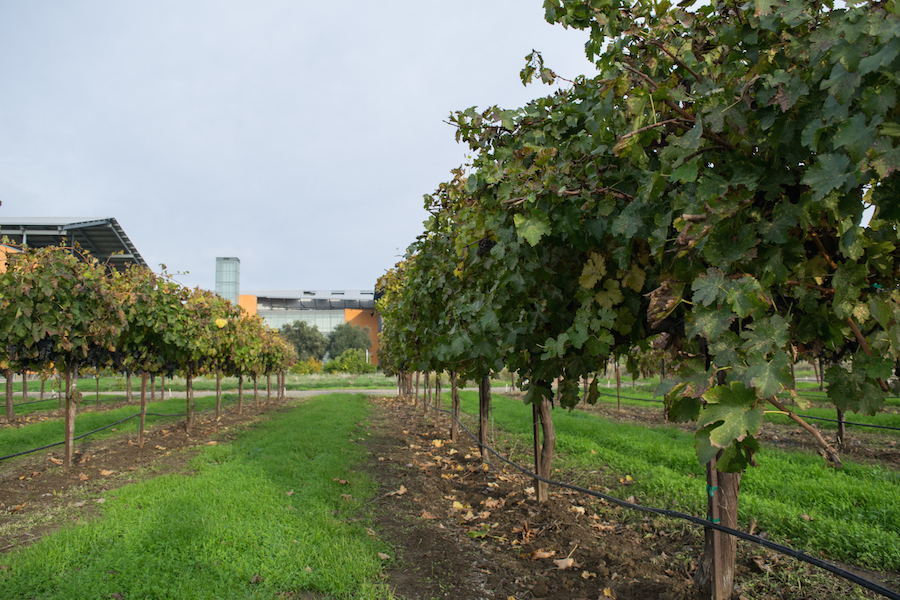
UC Davis is true to its agricultural background right down to its roots, or, rather, vines — specifically grapevines, 12 and a half acres of which sit at the front entrance of campus. This acreage, also known as the student vineyard, is used by the UC Davis Department of Viticulture and Enology as a teaching facility for students and represents the school’s rich agricultural history.

Located off of Old Davis Road near the Welcome Center, the student vineyard was first started in 2011. The vineyard provides viticulture and enology students with a hands-on learning opportunity.

“Our educational program is very applied,” said enology professor Andrew Waterhouse. “Our students are expected to work in a very specific industry. To be properly trained, we feel it’s important they get […] experience. They need to learn about the practical aspects.”

Depending on the class they take, students can get all kinds of experience in the vineyard. Some classes offer grapevine identification techniques, while others detail the arts of pruning and propagation.

“You [learn] to say what variety the grapevine is by its leaf shape,” said Chelsey Azevedo, a fourth-year viticulture and enology major. “One time I was going through the grape samples [and] I figured out that I was in the wrong vineyard […] by the shape of the berries.”

In Viticulture and Enology 101A: Viticultural Practices, a grapevine identification class, students learn to identify 40 different wine-grape varieties, as well as 20 rootstocks and 50 table grapes.

“Students learn by sight,” Waterhouse said. “They can walk up to a vineyard and say, ‘Oh, there’s chardonnay growing here.’”

The VEN 101 series also covers vine training and other growing techniques. Students are taught to train vines so that they grow into particular structures and produce the right amounts of fruit according to curriculum.

For both students and faculty, working in the vineyard is no walk in the park. As an outdoor facility, the vineyard is susceptible to weather and damage from natural elements.

“That [we’re working in] an actual field is the main challenge,” said Andrew Walker, a professor in the Department of Viticulture and Enology. “We have to deal with the environmental changes, the temperatures, the rainfall amounts and not having enough money to get all the plants in and [getting] funding for […] projects. Getting [the fields] properly irrigated and fertilized and pruned each year is a lot of work as well.”

However, in spite of both environmental and financial obstacles, students benefit greatly from having the vineyard in such close proximity to campus. Students can bike to class and access the vineyards easily.

“Having the vineyard on campus is extremely convenient because it allows […] us to go out and study the vines and grapes at our leisure,” Azevedo said. “The vineyard is so close to the […] lab. You can be studying flash cards of the variety names in the lounge [of the lab] and then go out to the vineyard and put the variety name to the actual vines.”

Besides the practical proximity, the vineyard is also an opportunity for students to hone their skills. Each year, six different rows of grapevines are planted, and after eight years the vines are pulled out and replaced as a part of a rotational system. Through this, students can study the vines from beginning to end.

“My graduate students get the chance to do everything from dirt to DNA,” Walker said. “It’s [important for them] to have a full range of experiences, so they really know how a grapevine grows […] more about it culturally and a lot more about it specifically in terms of genetics or even physiological responses.”

The vineyard and the scientific practices that accompany it draw students not only to take classes in viticulture and enology, but also to pursue the field as a passion or career.

“I like chemistry, and I knew that [viticulture and enology] tied into something that was an actual product,” Azevedo said. “You don’t just dump your products into the drain like in chemistry. People get to enjoy it — they can have fun with it. I love [when] everybody [is] having a good time, and wine helps with that.”

In addition to the student vineyard on campus, the Department of Viticulture and Enology also manages other primarily research-focused vineyards, including 40 acres in Napa Valley. Another 35 acres are located west of the campus airport. This facility, planted in 1975 to replace the early vineyards on campus, is used for researching topics such as the development of new varieties.

“I’m trying to develop new rootstalk and varieties, so [I look] at the individual [varieties] more intently,” Walker said. “We screen them for all sorts of diseases and pests, water tolerance, salt resistance [and] drought tolerance. We eventually work it down to a small number that we can release.”

As much as the student vineyard remains an important part of the viticulture and enology community, it also carries meaning for the UC Davis community as a whole.

“It’s nice that the vineyard is right there at the entrance to campus,” Waterhouse said. “It reminds visitors that UC Davis has an agricultural heritage.”


Written by: Allyson Tsuji — features@theaggie.org

UC Davis men’s basketball looks to break apart from the pack

0
BRYAN SYKES / AGGIE FILE

With conference play beginning, the Aggies hope build lead atop the Big West Conference

The UC Davis Aggies currently sit atop the Big West Conference’s men’s basketball division at 10-7, but going into the second half of the season means that they must begin to distance themselves from the rest of the competition atop the Big West standings. It has been a season of ups and downs for the men’s basketball team. What started out as a promising 5-2 season quickly turned sour after a four-game skid, but appears to be headed back in the right direction after winning five out of the last six games, four of which were won by double digits.

For head coach Jim Les and the rest of the Aggies, that change will need to start now, as nearly every game becomes a conference matchup that will have a profound effect on the overall standings.

Having played just five of 17 games at home, all of which were victories, the Aggies must also take advantage of a friendlier schedule. In the 2017 portion of the year, the team will have eight home games and eight road games to secure its place in the standings. On the backs of leading scorers, senior guard Brynton Lemar and junior forward Chima Moneke who was named Big West Player of the week on January 2 after putting up back-to-back double-doubles the team is looking to take advantage of a friendlier schedule going forward.

The team will need to keep up the dominant work not just on the scoreboard, but on rebounds and on defense as well. Brynton Lemar also received some accolades and was named Player of the Week by College Sports Madness during the same week as Moneke, in which the Aggies went 2-0 versus Seattle University and Utah Valley. He put up 19 points per game on 52 percent shooting, including 42.9 percent from three-point range. The team will need its leaders to keep up the great work going into conference play if they want to continue this much-needed upswing.

With the standings in their favor, as well as a much friendlier travel schedule, the Aggies are in prime position to enter the conference play with a little bit of momentum. Lemar, Moneke and the rest of the team must enter every game with the same intensity they have displayed during their better games, as well as learning from the mistakes from the others.

March will be here before they know it, and it is up to the Aggies to break out from the rest of the teams fighting for the top spot in the Big West Conference if they want to finish strong.

The team will tip off next at UC Riverside on Thursday, Jan. 12 at 8:00 p.m. The game can be seen on ESPN 3 and heard on KSAC 105.5 FM.

Written by: Bradley Geiser — sports@theaggie.org

Humor: Student waiting for Safe Ride pickup reduced to ash by sands of time

CAT TAYLOR / AGGIE
CAT TAYLOR / AGGIE

headshot_PNThe cosmic march of time has claimed a UC Davis student

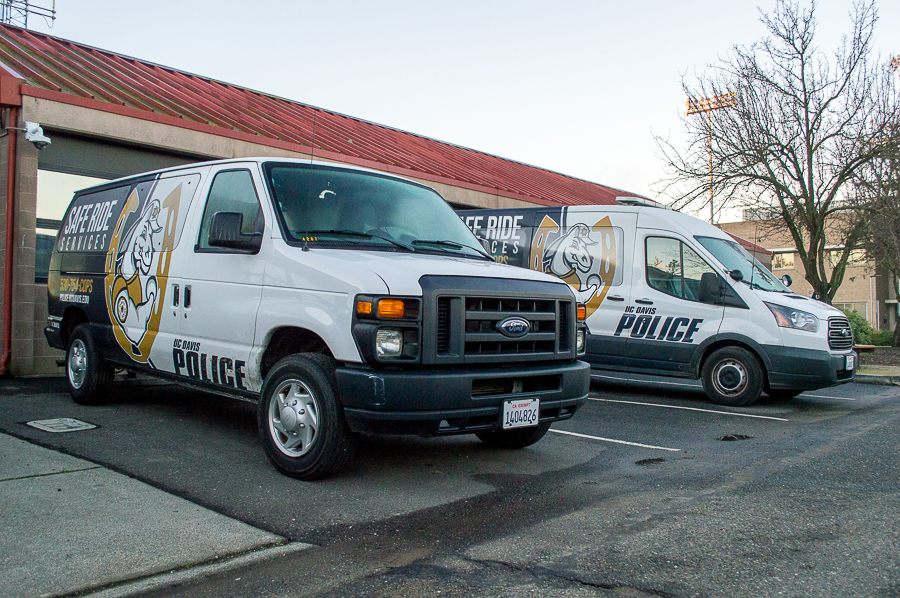
The UC Davis Safe Ride program has been growing in popularity as a secure taxi service for individuals in need of a later ride from campus to home. However, as the program has experienced more demand, the wait time has increased for those who take advantage of the free service. Tragedy struck Tuesday when a student was faced with a wait so long that it robbed him of his mortality.
Onlookers could only watch in horror as sophomore Sam Tierney was slowly disassembled by the forces of entropy before the student-operated escort service could arrive.
Forever the optimist, Sam was heard defending Saferide to his friends, announcing, “They’ll be here in just a sec,” and “Guys, nobody is even drinking on Tuesdays.” Generations of eyewitnesses watched in prolonged agony as Sam steadily deteriorated into a mound of ashen remains over the course of many millennia.
This most recent tragedy comes on the heels of a string of student check-ins at the Health and Wellness Center after using the Safe Ride service. A clinical advisor reported that students displayed sudden personality changes such as a profound interest in cushioned toilet seats, Wheel of Fortune, “the late, great Rock Hudson,” and other age-related symptoms.

However, this latest development shocked even doctors: A student’s slow desiccation in the steady unyielding drumbeat of time and space as he waited for the campus ride program to arrive.
In an effort to mitigate wait times, Safe Ride has proposed some alternatives to the program, including piggyback rides from a tired man named Todd, a king-size bedsheet that may be held aloft in case of strong winds and a bag full of carpenter ants you may attempt to convince to carry you to your late-night destination — all which have been determined to be faster than the current system.  
Although these ideas provide a glimmer of hope, some still are haunted by the memory of a student reduced to a silty collection of granulated human remainder as he waited for the student taxi service.
Written by: Parker Nevin — phnevin@ucdavis.edu