55.9 F
Davis

Davis, California

Tuesday, December 23, 2025
Home Blog Page 672

Neighbors unite

BECCA RIDGE / AGGIE
BECCA RIDGE / AGGIE

The Davis Manor Neighborhood hosts first Holiday Bazaar, opens new Little Free Library

The Davis Manor Neighborhood (DMN) celebrated its first Holiday Bazaar on Saturday, Dec. 17, due to the efforts of the entire Davis Manor community. Residents of Davis Manor brought the community together before the business of holiday festivities.

“Neighbors appreciated seeing the [diverse] talents and services people have to offer in our neighborhood. It’s good to know who likes to bake, who is good at canning, who sews clothing, who collects antiques, who offers massage or chiropractic services, who operates photo booths for parties, because then we can go to people right in your neighborhood when we need goods, services or advice,” said Jennifer Nachmanoff, a member of the Davis Manor Creative Action Team and the main orchestrator of the Holiday Bazaar.

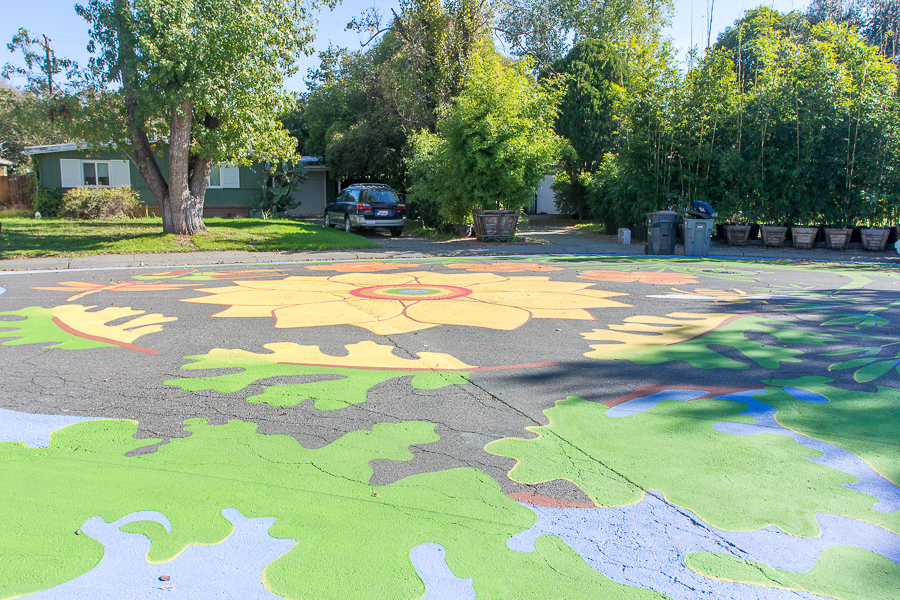
Previously, DMN came together to create one of its first community street murals, which is located at the intersection of M and Duke Streets.

“There has been a big effort in our neighborhood over the past few years to find ways to bring neighbors together and create a vibrant, connected community in a neighborhood that is somewhat lacking in city amenities, common green spaces and places to gather casually,” Nachmanoff said.

The bazaar is not the first time DMN has organized community events.  

“This was a sort of extension of the [monthly] Happy-ness Hours,” Nachmanoff said. “It was sunny, chilly, windy, but definitely happy. The opening of our Little Free Library in Colgate added to the community excitement and festive feeling.”

On the same afternoon as the bazaar, DMN opened a Little Free Library through community donations and inspiration drawn from the street mural around the corner from the new Little Free Library.

 “Davis Manor Neighborhood had been having visioning workshops for residents to explore what our neighborhood can do to connect with each other and make it visually beautiful,” said Laurie Loving, key organizer of the Little Free Library and DMN resident. “After a couple of meetings we had a design and began collecting donated materials. Many neighbors brought books and the corner nursery donated gardening books.”

Loving and her husband, Russell, volunteered to have the Little Free Library integrated into their property. It was placed on their garden at the end of their driveway, next to the sidewalk.  

Neighbors contributed by donating the initial books that would be stored into the Little Free Library. One unique feature installed into the Little Free Library allows neighbors to interchange fruit and vegetable seeds through a seed drawer.

“Many neighbors have commented that they love the ‘parklet’ look to the area, with plants, large rocks, a bench and a path to the library,” Loving said. “They like that the library was painted with the designs used in the street mural around the corner, the flora and fauna of the neighborhood.”
Written By: Dianna Rivera — city@theaggie.org
Human gastric simulator is developed at UC Davis

KARIN HIGGINS / UC DAVIS

New model helps to develop foods with customizable digestive qualities

Digestion is the process that allows the body breaks down a cheeseburger into nutrients that the cells in your body can use. With the help of new technology at UC Davis, this process can now be examined outside of the body.

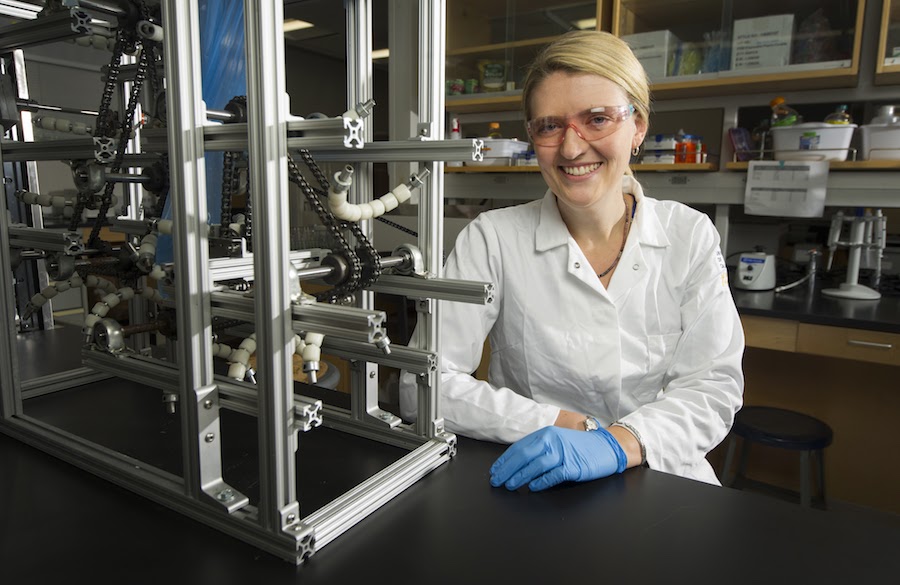
Gail Bornhorst, an assistant professor of food science and technology, was on the team that first built the human gastric simulator (HGS), a model that simulates human digestion.

“Our main goal was to be able to simulate both the the physical and the chemical aspects of food digestion in order to understand food breakdown processes to be able to model those processes, ultimately [designing] better food products that have the functional properties that we want,” Bornhorst said.

The HGS is unique because it models both chemical and physical digestion, two independently complicated processes.

“The physical aspect is that [the HGS] essentially has these rollers that move down a stomach reactor, and those mimic the contractions of your stomach,” Bornhorst said. “Your stomach has muscular contractions and that’s how it breaks down the food particles.”

While chewing starts the process of physical digestion, it still leaves food particles largely intact, so as the rollers are moving along the stomach reactor, the process of chemical digestion is also happening.

Yamile Mennah-Govela, a Ph.D. student of food science and technology, also works in Bornhorst’s lab. Components for chemical digestion are made in the lab using a unique blend of enzymes, salts and glycoproteins that simulate saliva, gastric juice and internal fluids, according to Mennah-Govela.

“We make it as solution, and we make a bottle of it,” Mennah-Govela said. “We store it in the refrigerator and we can use it within one week for different trials.”

Although the process of modelling digestion may sound simple, the enzymes that your body produces, as well as other factors, can vary drastically.

“We do sequential digestion, where we would mimic the stomach and then mimic the small intestines,” Bornhorst said. “The challenging part about that is that there are a lot of control systems: how fast [food] empties from your stomach, the secretion of acids and enzymes, and a lot of those are dependent on the food product and they’re also dependent on the individual […] There’s some data that exists from human studies, but if you’re using a different food product, then the values may be very different.”

If digestion is so hard to recreate, it might seem counterintuitive to try to mimic the process outside of the human body. Karen Rios-Villa, a graduate student in the Food Science Department, also works in Bornhorst’s lab. According to Rios-Villa, there are a couple of reasons why the development of the HGS was necessary.

“Most of the research regarding nutrient release is related to the after-absorption process, but the transformation that the food suffers during digestion is still not clear,” Rios-Villa said in an e-mail interview. “A possible way to understand this process would be using animals (“in vivo”), but there are numerous ethical, economical and methodological limitations. Therefore, the development of tools that can help us in the simulation of digestion have been built in Prof. Gail Bornhorst Food Engineering Lab.”

One of the ways the HGS is being used is to study how different ways of preparing food can change the breakdown of proteins and overall bioavailability, or the percentage of each nutrient that your body is able to absorb, of the nutrients that food contains.

For example, Bornhorst’s group did some work with sweet potatoes, preparing them in various ways, feeding them through the machine and then analyzing the broken down food. In the future, Bornhorst sees a place for models like the HGS in trying to engineer foods with specific desired properties, like a food that will make people feel fuller, or have a slower or faster release of glucose.

“All those things are related to the properties of food products and what actually happens to them when you eat the food,” Bornhorst said. “Because the models that we’ve had in the past did not incorporate both the physical aspects and the chemical aspects, we were trying to optimize a system where we didn’t really understand what was going on. By creating these types of models, like our mechanical stomach model, what we’re really trying to do is to be able to understand, at a much more detailed level, what’s happening both to the structure as well as to the properties after you consume the food”.

Written by: Meral Basit — science@theaggie.org

How Hallmark has mastered the holidays

JASON MRACHINA [CC BY-NC-ND 2.0] / FLICKR
The home of C-list actors and feel good movies

The holidays may be over, but before all the lights are taken down and all the leftover eggnog is sold, I want to reflect on a timeless holiday tradition: Hallmark movies.

Each year around Christmastime, the Hallmark Channel comes out with an abundance of holiday movies. These are the filler movies, where the mean businessman discovers his Christmas spirit or the workaholic lawyer finds love. Even though they are cheesy, they are still loved by many. During the holidays, watching one of these movies can brighten anyone’s spirit; they are the true definition of a feel-good film.

These movies are also good for employing many average actors. In total for 2016, Hallmark pumped out 47 new movies, with 20 of those being holiday movies. This means a lot of actors were working, and many of the actors are recycled between the Hallmark Channel and the Lifetime Channel. Year after year, the Hallmark Channel has increased its budget to accommodate the boom in holiday movies, which shows the company’s commitment to their viewers as well as their board of directors.

The Hallmark brand is known for tradition, family, relationships and romance, so their strategy is to have holiday spirit year round and to push the most around Christmastime. This means that every night from Halloween to Christmas there will be a marathon of movies to watch, and never a dull moment. People look at these movies as an escape, a transcendent experience of half watching and half loving whatever is on the screen because it will always have a happy ending.

Even  actor Matthew Gray Gubler (Criminal Minds) took to Twitter to confess his love for Hallmark movies.

“Seriously I’ve seen like 39 Hallmark movies this year and everyone of them is about a mean realestate developer or a sled that needs polishing,” Gubler tweeted in December.

Hallmark movies have become holiday traditions in many homes around the country, with new movies premiering every Saturday and Sunday during the holiday season. They allow us to believe, maybe just for a couple hours, that there is always a happy ending in store. The endings may be predictable, but the fun is in the journey. Only 12 more months until the holidays.

Written by: CaraJoy Kleinrock — arts@theaggie.org

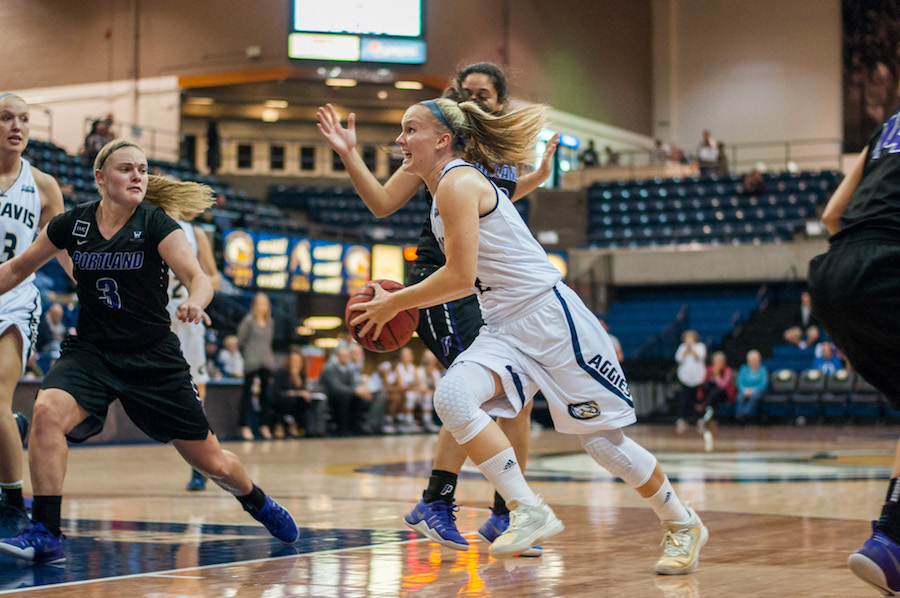
UC Davis women’s basketball breaks records on the road

0
IAN JONES / AGGIE FILE

Bertsch leads Aggies over winter break roadshow

The UC Davis women’s basketball team has been busy over the winter break with a six-game road trip that included the start of league competition against UC Irvine.

UC Davis went into the break looking to improve on its 5-2 record. In the first of eight games over school vacation, the Aggies hosted the Saint Mary’s Gaels in a thrilling performance by junior guard Rachel Nagel, who led the team with 18 points and a buzzer-beater to lift UC Davis to a 68-66 victory.

The Ags then hit the road to face the Oregon State Beavers, a team to which UC Davis has lost in all 15 previous faceoffs. The Beavers took a whopping 93-52 win and sophomore forward Morgan Bertsch and junior guard Dani Nafekh led UC Davis with 15 and 12 points, respectively.

However, the Aggies bounced back from the loss to set a record against rivals Sacramento State in their 110-78 victory as seven players scored in double digits. The win marked the second-highest scoring game in UC Davis women’s basketball history.

UC Davis then went on to fight for its second straight road victory against University of San Francisco, 78-58. Bertsch set a career-high record of 27 points and junior forward Pele Gianotti tied her career-high 12 points and posted her second double-double of the season with 12 rebounds.

Bertsch also earned herself the title of Big West Conference Player of the Week after her exceptional performances to help put the Aggies at an 8-3 overall record. This was the first conference award of her career and the first for UC Davis since last season.

Heading into the second half of their road trip, the Aggies kept the ball rolling even with Nagel out on injury, in a close, third straight win, 77-71, against the University of Central Florida Knights. Bertsch led four Aggies in double digits with 20 points to move the team to an impressive 9-4 season record. These road wins garnered attention across the nation, launching UC Davis 25 spots into the top 50 of the NCAA’s RPI ranking at No. 46.

The Aggies headed to Jacksonville in their penultimate road game. Nagel returned after her injury against the Knights with 16 points and Bertsch posted a 12-point game, but the Dolphins rallied to snap UC Davis’ win streak, 61-54.

With the best record in the league, UC Davis opened Big West Conference play at UC Irvine and dominated 89-48. Juniors Nagel and center Marly Anderson led the Aggies with 17 and 12 points, respectively. The game marked Anderson’s first double-double, with 12 rebounds.

The Ags made their triumphant return to the Pavilion after their six-game road trip to host the Hawai’i Rainbow Wahine in a Big West Conference championship rematch. Bertsch led the team to a 70-55 victory with the game-high 24 points to put UC Davis at 11-4 on the season and 2-0 in conference play.

UC Davis women’s basketball hosts Long Beach State at the Pavilion tonight at 7 p.m.
Written by: Nicolette Sarmiento — sports@theaggie.org

Dogs on duty

0
NICKI PADAR / AGGIE
NICKI PADAR / AGGIE

Student service dog handlers share stories, experiences

A blonde German shepherd named Memphis was dressed in booties and goggles, for safety precautions, while his handler attended her chemistry lab. This safety attire allowed Shannyn Bessoni, who graduated from UC Davis in 2014 with a degree in chemistry and animal science, to stay close to Memphis, her service dog.

Memphis [has] kind of become known as the benchmark for how a service dog should behave,” Bessoni said. “Protocol for having [service animals] in the lab were developed because of [Memphis]. The chemistry department was really, really exceptional in accommodating him [and] they went above and beyond what would be safe for him.”

Memphis continued to be an active service dog until a cancerous lump was found in his neck. Now, Memphis has recently finished his last round of chemotherapy and has retired from his duties. Throughout campus, a wide array of service dogs and comfort animals like Memphis are specially trained to assist those with disabilities.

“You can’t think of a service animal as an animal at all,” Bessoni said. “A service animal is considered to be medical equipment.”

Official service dogs are medical necessities to their handlers and have passed Public Access exams. Lysi Newman, a first-year animal science major, is always with her 3-year-old German Shepherd, Missy.

“[Missy] is permitted almost everywhere, including the dining commons, classrooms and places like the Silo and the Memorial Union […and] those with service animals do have the option to meet with faculty to discuss the allowance of the animal in labs,” Newman said.

Jennifer Barnhard, a third-year neurobiology, physiology and behavior and animal science double major, has had her service dog for over two and a half years. She adopted Lupus as a companion pet but later decided to train him as her personal service dog. The change in duties was followed by a change in title, and Barnhard renamed him ‘Spock’.

“Lupus was adopted to be a pet, [but] Spock chose to break the misconception and participate in the training process, and he is now a national poster pup of service training,” Barnhard said. “Spock’s training in escalation means that if he thinks something is wrong with my vitals, or that a situation is unsafe, he will keep alerting until I listen to him, a truly life-saving quality.”

Additionally, Barnhard co-founded Starfleet Service Dogs, Inc. (SSDI), a nonprofit organization that trains service dogs. SSDI has seven trainers in Cabin John, Maryland and nine more in Davis with a variety of specialties and knowledge, including search and rescue and K9 training.

“SSDI has rescued 100 percent of our own dogs that we train for service work,” Barnhard said. “Every dog that we graduate has a basic foundation comprised of 50 skills [and] will be in continuous training for the rest of their careers to make sure they perform better every day — and because they love to work and learn.”

Katerina, who wished only to be identified by her first name, is a first-year food science major and has no closer bond than that with her 3-year-old service dog, Lady. Lady allows Katerina more independence because of her specialized training.

“Freedom and independence is a huge part of why service dogs are so important,” Katerina said. “A disability of any kind hinders your life in a significant enough way that you are limited and restrained. A service dog helps me […] carry on and live life with fewer inhibitions.”

Katerina said UC Davis’ policies on service dogs make having one easily accessible. Although both Katerina and Bessoni have experienced instances of ignorance and even targeted malice toward their service dogs, they both have seen that, overall, students and faculty accept their animals on campus.

However, a situation between Newman and student housing escalated after students in Newman’s residence hall repeatedly complained that her dog Missy was “scary.” Newman was told she had 72 hours to remove Missy from student housing.

“I actually requested […] that I be able to write up a short notice about service dogs and have it sent to all students as a general informative message […but] I was rejected,” Newman said. “Then I requested to post said write-up on message boards in the nearby dorm buildings, so that other students nearby would at least know how to act around Missy. I was rejected again. I finally requested to put my message up in the services center, but was denied once again. I believe [my piece] would have made a lot of difference [for] the students who were afraid of dogs; Maybe it could have curbed their fear into tolerance of me and my disability.”

A petition was started by a friend of Newman’s in efforts to fight Missy’s removal notice and to prove that Missy is not only a medical necessity, but also a “sweet dog.” Although the petition collected 1,286 signatures, Newman eventually decided it would be best for both Missy and herself to move out of the dorms. While a representative from Student Housing declined to speak about Newman’s case, the representative did say that a professional staff member deals with “special accommodations requests” and that issues of this kind are “taken very seriously.”

After her own serious situation involving Memphis, herself and other students, Bessoni decided to become more active in spreading information and awareness about service dogs by creating the Facebook page “Service Dog Handlers at UC Davis.” Bessoni, like Newman, thinks spreading information about service dogs is effective in eliminating ignorance.

“[Students might ask] questions out of curiosity, but nobody should have a problem with that,” Bessoni said. “If anything, [it’s] an opportunity to educate and explain.”

One of the specific points Katerina would like other students to be aware of is that petting a service animal without asking is not acceptable.

“This isn’t because she is mean or unfriendly, but she has a job to do and if you pet her she gets distracted and that puts me at risk,” Katerina said. “The same goes for feeding or making noises at service dogs.”

Additionally, the seriousness of the functions that service dogs perform should not be downplayed.

“One huge misconception is that it is all fun having a service dog,” Katerina said. “Many view service dogs as just bringing your best furry friend around with you, and though I love my service dog more than anything, having her with me is a medical necessity.”

Barnhard said she is passionate about training other service dogs through SSDI because they bring independence, a freedom that is “often taken for granted.”

“[SSDI is] not in the business of changing anyone, just merely helping them negotiate the world around them in the most comfortable, and enjoyable way they can,” Barnhard said. “I can enjoy the world and count on Spock to warn me and help me if things start to go wrong. I also have a new best friend! If I can give others the freedom I have granted myself from my disability, than I have put my professional training skills and love for animals to good use.”

Written by: Hannah Holzer — features@theaggie.org

Martin Shkreli to join Milo Yiannopoulos at UC Davis speaker event

KMERON [https://creativecommons.org/licenses/by/2.0/] / FLICKR
KMERON [CC BY 2.0] / FLICKR
Interim Chancellor Ralph J. Hexter confirms that event will not be cancelled

Pharmaceutical executive Martin Shkreli will be featured during Breitbart editor Milo Yiannopoulos’ UC Davis stop on Jan. 13 for his “Dangerous Faggot Tour”.  

Shkreli, who was suspended from Twitter after harassing female journalist Lauren Duca, is currently out on bail after being arrested for securities fraud. Shkreli is also infamous for raising the price of Daraprim, a drug that helps prevent infections for people with cancer or HIV, from $13.50 to $750 per pill, a 5,000 percent increase in price.

Yiannopoulos, who has previously spoken out against feminism, political correctness and Islam, was also banned from Twitter due to racist tweets directed toward African American comedian Leslie Jones. UC Davis students have protested his upcoming visit on social media as well as through a public letter addressed to UC Davis administrators and the Davis College Republicans, the club hosting the event.

The announcement that Shkreli would be joining Yiannopoulos came on the same day that Interim Chancellor Ralph J. Hexter released a public letter regarding Yiannopoulos’ impending visit to campus. Although Hexter reaffirmed UC Davis’ Principles of Community and the need to support transgender students, he stated that the event would not be cancelled.

Like most places of higher learning and teaching, UC Davis is a community for all ideas,” Hexter wrote. “As a public university, we remain true to our obligation to uphold everyone’s First Amendment freedoms. This commitment includes fostering an environment that avoids censorship and allows space for differing points of view. Therefore, we will not ask the Davis College Republicans to cancel their event.”

However, Hexter stressed that hate speech is never acceptable.

“As a university leader, I take seriously my obligation to challenge discrimination whenever it emerges within our university community,” Hexter said. “Although I support the First Amendment’s commitment to free speech and encourage campus discussion of difficult issues, I will continue to voice my strong condemnation of messages that promote hate. I will stand proudly with the members of this community who oppose the spread of fear and intolerance.”

Written by: Alyssa Vandenberg  — campus@theaggie.org

Far-right conservative Breitbart editor to speak at UC Davis

NEXTCONF [CC BY 2.0] / FLICKR
Davis College Republicans club to host Milo Yiannopoulos

Milo Yiannopoulos, the controversial ultra-conservative Breitbart News editor, will bring “The Dangerous Faggot Tour” to UC Davis on Jan. 13. The event, hosted by the Davis College Republicans (DCR) club, is free to the public.

Yiannopoulos, whose other upcoming tour stops include UC Santa Barbara and UC Berkeley, was the speaker most likely to be disinvited to colleges in 2016, according to the Foundation for Individual Rights in Education. In December, The Hollywood Reporter reported that Yiannopoulos had signed a book deal for $250,000 with Threshold Editions, an imprint of Simon & Schuster.

In the past, Yiannopoulos has railed against political correctness, feminism and Islam. He was famously banned from Twitter in July 2016 after a series of racist and sexist tweets aimed at African American comedian Leslie Jones.

“[Yiannopoulos] is known for discussing topics, both political or not, that may offend some people but not others,” DCR wrote on the event page. “Please be aware of this when attending. Some topics may not be suitable for youth.”

In a letter created by UC Davis graduate students, over 900 students, faculty, staff and alumni called for campus administrators and DCR to cancel the event, arguing that the hosting the event would go against UC Davis’ Principles of Community.

“Milo Yiannopoulos is well known for his espousal of racist, sexist and Islamophobic hate speech targeted towards numerous members of our campus community,” the letter read. “The use of campus facilities and resources to host and therefore legitimize a white nationalist runs completely counter to the stated goals of the University of California and serves as a direct threat toward traditionally marginalized groups on campus. If the University of California, Davis is indeed committed to ‘maintaining a climate of equity and justice demonstrated by respect for one another,’ then campus administrators must rescind the use of campus facilities for this event and condemn the presence of white supremacy on campus.”

The letter further argued that by allowing Yiannopoulos to speak on campus, UC Davis administrators would foster discrimination in the campus community.

“We demand that UC Davis administrators remove Milo Yiannopoulos’ platform for spreading hate and bigotry on our campus and issue a statement condemning white nationalist rhetoric within our community,” the letter read. “Now is the time for our university to take a firm stand and prove its commitment to inclusivity and egalitarianism in the face of growing exclusionist movements throughout the United States […] the University administration is obligated to oppose discrimination and foster a safe campus climate ‘to protect all members of our community [and] ensure their continued success at the University.’ If they truly believe these words, the decision to cancel the Milo Yiannopoulos event should be an easy one to make.”

According to Deborah Porter, the DCR political director and a fourth-year biological systems engineering major, the club anticipated the campus community’s strong reaction to Yiannopoulos’ visit.

“As a campus club open to challenging our community, we decided to host [Yiannopoulos] in order to allow our people the opportunity to hear about ideas, policies and theories that may be entirely alien to their background,” Porter said via e-mail. “While the Davis College Republicans do not endorse Milo or his speaking points, we do believe that college is a period in life where students must be aware of others’ beliefs and able to support their own values.”

Porter hopes that community members from both sides of the political spectrum will come and listen to Yiannopoulos’ talk with an open mind.

“We hope that liberals alongside conservatives attend Milo’s talk with the purpose of pondering his ideas, asking difficult questions and promoting UC Davis as a place where we challenge the ideas set before us rather than blindly accepting them,” Porter said. “As members of this community, and members of the Davis College Republicans, we invite all people to peacefully attend this event.”

However, Amara Miller, a fifth-year sociology graduate student, who helped create the petition asking the UC Davis administration to cancel the event, believes that the right to free speech does not mean that a platform for hate speech should be allowed.

“Given that UC Davis is becoming more diverse every year and is an emerging Hispanic Serving Institution, [DCR’s] choice to host [Yiannopoulos] and the UC Davis administration’s choice to do nothing about the event are particularly disturbing and indicate an unwillingness to embrace the increasing diversity of our student population or serve the needs of these diverse students,” Miller said via e-mail. “Free speech is not hate speech, and it’s important to recognize that the rights of free speech can still be protected without providing a broader platform for the spread of hate and bigotry that legitimates, normalizes and tactically supports oppression.”
Written by: Alyssa Vandenberg  — campus@theaggie.org

UC, CSU systems consider first tuition increases after five-year tuition freeze

GENESIA TING / AGGIE

UC tuition, fees could rise by $363 per student by fall 2017

The University of California (UC) and California State University (CSU) systems are considering tuition increases after a five-year tuition freeze.

UC tuition currently sits at $12,294 per year, and CSU tuition is $5,472 annually. Each campus has its own fees that can increase the cost of tuition above the baseline rate.

Tuition costs have recently held steady despite declining fiscal support from the state for higher education.

Tuition at the University of California has remained flat for the past six years, despite the decline in state support,” said Claire Doan, a UC spokesperson, via e-mail. “The state has gone from covering 72 percent of the cost of educating a California student in 2000 to 41 percent last year.”

Doan also stressed that any tuition increase would be covered through financial aid for 65 percent of UC students.

Although CSU tuition costs less than half of UC tuition, the CSU system could approve tuition increases of around $300, according to a Los Angeles Times article. A UC press release also announced that the UC Regents will consider a $282 tuition increase and a $54 student service fee for mental health resources later this month. Each system would implement possible tuition increases during the 2017-2018 school year.

According to Elizabeth Chapin, a CSU spokesperson, increasing tuition is not the system’s first option.

“There is currently not a plan to increase tuition, but it could be an option if the state does not fully fund the CSU,” Chapin said via e-mail. “As of right now, there is a $168 million gap between the CSU’s preliminary budget plan for 2017-2018 and the state’s funding plan.”

Apart from tuition increases, Chapin said that the CSU system might also consider budget cuts. To avoid this, CSU officials will continue working with Governor Jerry Brown to secure adequate funding.

“If the state does not fund the gap, the CSU may need to consider difficult options including significantly scaling back support budget request priorities,” Chapin said via e-mail. “CSU leaders, students and stakeholders will work with the governor and state legislative leaders to advocate for increased funding for the CSU to ensure that the university has the resources needed to continue to provide affordable, high-quality degrees to California students.”

In November, students at UC Davis staged a walk-out protest against potential tuition hikes. Parker Spadaro, a first-year undeclared student in the College of Letters and Sciences who helped organize the event, hopes that there will be more protests against increasing the tuition, but also acknowledged that it can be difficult for students to make the time to participate.

That’s where we’re put in a bind as students we have to take time for classes, we have take time for work, we have to take time for studying, we have to take time for socializing and we have to take time for rest,” Spadaro said via e-mail. “Finding the time to organize and participate in demonstrations against injustices like tuition raises are so limited in available time despite their necessity.”

Spadaro explained that they are opposed to tuition increases in principle because tuition is already at unreasonable levels.

“Well if you can’t tell by now, [my position on increases is] definitely negative,” Spadaro said via e-mail. “The [present] cost of education is classist, sexist and racist […] Yet we still think of this country as the land of opportunity and the media, politicians, bourgeoisie and other working class individuals shove the idea of the American dream on us.”

Spadaro advocates for a tuition decrease rather than an increase.

“I think I’ve already made it obvious [that] tuition should actually be decreased,” Spadaro said via e-mail. “They should decrease as the university’s investments mature and start profiting until the university’s investments can completely cover tuition.”

Ralph Washington Jr., the president of the UC Student Association and a UC Davis graduate student, spoke of the time when tuition was free.

“Originally, many years ago, tuition was free for California residents […],” Washington said. “I think that one reason that students are requesting for a tuition decrease, a rollback, is to try and create a precedent to go back to the way the cost of education was at some point before.”

According to Washington, free tuition at schools like the UC schools would send a strong message about society’s views regarding the value of higher education.

“Free education would be an incredible thing,” Washington said. “It would be an incredible demonstration of our commitment to improving society, to providing a transformative experience for young residents of our society.”
Written by: Kenton Goldsby — campus@theaggie.org

UC workers to strike on Jan. 10 across UC campuses

Genesia Ting / AGGIE

University accused of violating state labor laws, bad faith bargaining

The University of California member-run union, International Brotherhood of Teamsters Local 2010, will hold a one-day strike on all 10 UC campuses, five UC medical centers and the Lawrence Berkeley National Lab on Tuesday, Jan. 10. The strike aims to bring attention to supposed violations of state labor laws and bad faith bargaining from the University as well as demonstrate support for skilled trade workers on strike at UCLA.

Those on strike will include administrative support workers at all UC campuses along with electricians, elevator mechanics, facility workers and plumbers at UCLA and UC San Diego, amounting to around 12,800 workers. The Teamsters provided ample notice of the strike to the University to ensure public safety, especially at the medical centers. It is advised that the public reschedule all non-essential medical appointments on Jan. 10.

The Teamsters will use the Unfair Labor Practice (ULP) strike as a platform to engage with the University in a conversation regarding alleged violations of state labor laws.

“Our Unfair Labor Practice (ULP) strike is over the University’s violations of state law which have been numerous and include bargaining in bad faith, stalling negotiations, interfering with our right to engage in Union activities, unilaterally changing work rules and management threatening retaliation for participating in a strike action,” said Christian Castro, Teamster communications director, via e-mail.

The University disputes these claims and cites a lack of justification for the strike. According to executive director of Strategic Communications Dianne Klein, the University is still bargaining with the Teamsters and provides its workers with a competitive wage.

We strongly disagree that there is any basis for this strike,” Klein said via e-mail. “We are still bargaining with the Teamsters.”

Klein says that the University has offered the workers an 18 percent wage increase over six years, lower premiums for their health insurance and more choices for their pension plans.

In defense of the strike, the Teamsters cited a study by Occidental College that demonstrated 7 out of 10 UC workers face food insecurity due to a 24 percent wage decline over the past two decades. However, according to Teamster Research Analyst Timothy Mathews, the strike is not primarily to demand more pay, but rather to initiate conversation with the University about unfair labor practices.

“The University has demonstrated patterns of disrespect,” Mathews said. “We’re hopeful [UC President] Janet Napolitano will take initiative to show leadership.”

Students and faculty plan to experience delays due to the strike. Teamsters also plan to picket and hold rallies at strategic locations around the state. Strikers plan to refuse deliveries of food, laundry, construction materials and UPS packages.


Written by: Lindsay Floyd — campus@theaggie.org

Support these organizations this holiday season

HANNAH LEE / AGGIE
HANNAH LEE / AGGIE

The Editorial Board’s favorite charities

In the spirit of the holidays, the members of the Editorial Board have listed some of their favorite charities and nonprofit organizations as a guide for your giving. Each group is dedicated to creating a more equitable and healthy society.

Read on for the organizations we recommend:


Scott Dresser — Editor in Chief

The Sierra Club

Of the many frightening, disheartening policy stances that President-elect Donald Trump has taken, perhaps the most devastating for the long-term sustainability of the country and the world is his position on climate change and the environment. He has falsely claimed that human-induced climate change is a hoax devised by China, promised to reject an international agreement to curb greenhouse gas emissions and chosen a climate-change denier to lead his Environmental Protection Agency transition team. The Sierra Club works to protect and restore the environment through educational programs, preserving wild spaces from development and leading the movement away from fossil fuel dependency.


Ellie Dierking — Managing Editor

The UC Davis Pantry

It’s easy to forget that there are peers among us who go hungry on a daily basis. Operating mainly on community donations, The Pantry is a student-run organization that aims to feed those who cannot afford basic necessities. The Pantry is located in 21 Lower Freeborn Hall, and is open Monday through Friday from 10 a.m. to 1 p.m. and Monday through Thursday from 4 to 6 p.m.


Alyssa Vandenberg — Campus News Editor

Room to Read

As college students, we are incredibly lucky to have the opportunity to pursue a degree. Room to Read helps millions of children in developing countries gain access to education. Through both its literacy and girls’ education program, Room to Read collaborates with local governments and communities, provides mentorships for students, donates school supplies and pays for other expenses like uniforms and transportation to schools.


Samantha Solomon — City News Editor

Days for Girls International

Menstruating individuals all over the world are forced to skip school due to a lack of feminine hygiene products. Days for Girls International distributes pads and other feminine hygiene products to aspiring students. Donating to this nonprofit helps fund the Days for Girls kits, which contain pads, soap, underwear and variety of other products that help alleviate the discomfort that generally comes with an individual’s menstrual cycle.   


Eli Flesch — Opinion Editor

American Civil Liberties Union (ACLU)

Founded in response to the Red Scare that saw the lawless rounding up of suspected radicals, the ACLU has for nearly a century used the courts to protect the basic rights of Americans. Today that mission is more urgent. President-elect Trump threatens deportations and a woman’s right to choose. The ACLU has the experience to fight any challenges posed to the constitution and our freedoms by the incoming administration.


Emilie DeFazio — Features Editor

Transgender Law Center

The Transgender Law Center envisions a society where the self-determination of gender is considered a basic right for all. The center strives to change legal policy and discriminatory attitudes primarily through individual donations so that those who identify as transgender or gender-nonconforming have access to resources, find a community and live safely. Donate this season so that the Detention Project, TRUTH and Positively Trans (T+) can continue to their full potential.


Amanda Ong — Arts & Culture Editor

Planned Parenthood

Contrary to what the pro-life protesters outside an abortion clinic will tell you, abortions account for just 3 percent of Planned Parenthood’s annual services. The nonprofit also offers equally vital resources such as STD testing, cancer screenings and contraception, especially to those who may not be able to afford it otherwise. We encourage donors to send a certificate of appreciation to the office of Vice President-elect Mike Pence, a man who has long crusaded against reproductive rights. Truly the gift that keeps on giving.


Bryan Sykes — Sports Editor

Camp Kesem

For a child whose parent has cancer it’s difficult, if not impossible, to actually step back and be a kid. Camp Kesem at UC Davis is an organization that puts on two weeklong summer camps for children aged 6 to 16 who have a parent who is or has been affected by cancer. The camp is specifically designed to take away the pain of living in a household that is ravaged by cancer, if only for a few days, while providing a strong emotional support system. The Davis chapter of Camp Kesem serves children in the greater Sacramento area. For more information about volunteer opportunities and donations please visit www.campkesemdavis.org.


Ariel Robbins — Science & Tech Editor

#NoDAPL

For months, protesters had been resisting the construction of the invasive, multi-million dollar, 1,172 mile-long Dakota Access Pipeline, that would carry crude oil through lands sacred to the indigenous people of the Standing Rock Native American Reservation and put their main water supply at risk. Although the US Army Corp of Engineers announced on Dec. 4 that the Dakota Access Pipeline’s passage through Sioux Standing Rock reservation will be rerouted, for the indigenous people, the fight to save their land and resources is ongoing. The Huffington Post compiled a list of numbers to call and places to donate to, complete with supply wish lists to help those defending their right to clean water. #NoDAPL #WaterIsLife

Letter from the Editor

scott_opTo the UC Davis community,

On behalf of The California Aggie, I want to personally thank you all for your continued readership and engagement this quarter. A newspaper is nothing without its readers and its community, and we appreciate you taking the time to grab a copy of The Aggie on your way to class or lunch over the past few months.

The transition from an online-only publication to a regular print publication has been difficult and time-intensive, but The Aggie’s staff has absolutely stepped up and risen to the challenge, setting a tone and expectation of professionalism that will hopefully resonate for years to come.

To the local businesses and campus departments who have worked to advertise with us thus far, thank you for investing in local media and supporting student journalism. One of our main goals this year is to rebuild relationships with local and national businesses, so we encourage both Davis businesses and student organizations to utilize The Aggie as a medium to reach thousands of UC Davis students and community members. The Aggie has brought in nearly $18,000 in advertising revenue so far, and these numbers should continue to grow as we work to develop an advertising staff.

As we have moved back into print, we have constantly looked for ways to responsibly manage and analyze our environmental footprint on this campus. We have streamlined our distribution locations to ensure that copies of The Aggie are effectively getting into the hands of the members of this community and are not going to waste. If any of this article’s readers have any concerns or recommendations for current or new distribution spots, I encourage you to send me an email and let me know.

Regarding feedback, The Aggie welcomes respectful, constructive criticism. Is there a opinion column you disagree with? Send us a “letter to the editor” and let us know. Is there something happening on campus or in the city that you think we can do a better job of covering? Let us know! We can always improve — external feedback is a key mechanism in improving the quality of our work.

Moving forward, we have specific steps that will help us to promote positive business practices, drive engagement and expand our presence in the community. We hope to hire a professional business development staffer, who will seek to find and develop innovative ways of bringing in revenue. We have also begun working on defining a process to digitize our 100-plus years of microfilm archives, which will provide unique, in-depth insight to the history of this institution and community.  

With one quarter, 10 print issues and hundreds of articles now complete this year, I can say with certainty that the future of The Aggie is as bright as it has been in years. We will continue to work every day to keep the UC Davis community informed, active and engaged.

The Aggie hires quarterly and is always looking for new voices and diverse viewpoints. Keep an eye out on our social media pages for information regarding Winter Quarter hiring periods, and make sure to pick up a copy of The Aggie in print each Thursday.

Happy holidays, and we’ll see you in January.

Scott Dresser, Editor in Chief

Goodbye, Australia

headshot_mcTen weeks abroad showed me I’m not ready to graduate

Well. Ten weeks have passed since I arrived in Australia. And I’ve got to admit: this program has been one of the most interesting experiences I have had in college. But I have come to a realization after everything that has happened here: I am still so far from being ready to leave the confines of college just yet.

In other trips abroad, I never took college classes and worked an internship for 18 hours each week. I know that many students have to work to support themselves and take on a full course load and that is normal for them. But I have been fortunate enough to not have to work while attending college, so let me just say that my metaphorical hat off is to everyone that does: it’s hard work. Not only do you have to pull yourself out of bed for work on a regular basis, but you also have to add that challenge to the general stress and demands of schoolwork and exams. Every time I would come home from my internship, I would just be able to barely slip off my shoes before falling into bed from exhaustion. This happened pretty frequently for me, and I can’t say that I’m going to miss that aspect of sleep deprivation and stress of this program.

And while I was always tired, the program was filled with excursions that made up for any boredom and exhaustion that came directly as a result of my internship. We went to the Blue Mountains and hiked where Darwin took notes on the indigenous species. We got up close and personal with animals like kangaroos, wallabies, echidnas and, obviously, koalas. We learned about the intense relationship Australia had with colonization of the indigenous people and how the nation was founded. We saw a show at the Sydney Opera House.

But here’s the thing: most, if not practically all, of my favorite parts of this program have occurred when the only effort I really had to put in was showing up for the field trips and excursions. I was so worried with making sure all my assignments got finished that I felt like I barely had any time to plan anything for myself except the occasional three-day weekend. I was so used to having a similar structure every day with class and homework that anything other than class seemed bizarre to me since I have been in school for the past 16 years of my life.

And what does this mean for me as an adult? I took it to mean that I still struggle with time management and how to cope with large amounts of stress in my life. These are skills that I have learned are vital to make it in the real world after earning my college degree this coming June. While I don’t seem to have too much time left, I believe that six months is enough time to work on these skills before I leave UC Davis.

Written by: Michael Clogston — mlclogston@ucdavis.edu

Disclaimer: The views and opinions expressed by individual columnists belong to the columnists alone and do not necessarily indicate the views and opinions held by The California Aggie.

We don’t have to tolerate ‘tolerance’

ABOCON [CC BY-NC-ND 2.0] / FLICKR
headshot_jyAcceptance of identities and opposing views is increasingly necessary
Tolerance and acceptance are two separate ideals that we, as a society, have come to see as synonymous. It’s a wrongheaded view that has resulted in tolerance becoming a standard of acceptance during conflict. But tolerance is a sham.

Tolerance isn’t a holy grail, high-achieving standard that we should be following, and it’s certainly no solution to conflict. Tolerance doesn’t mean acceptance or understanding. In fact, the use of tolerance in society is dangerous for attitudes and behavior.

There’s a misconception that if we don’t agree with someone, we should at least be tolerant of them. This is the worst form of conflict resolution because it doesn’t solve anything.

To tolerate an identity or belief simply means to allow it to exist, whether or not we agree with it.

For the most part, we tolerate LGBT+ identities. We allow them to exist in certain spaces, and most people have come to recognize that while they might not agree with these identities or understand them, it’s okay that these folks exist — as long as we don’t see gay couples walking around, or holding hands or other public displays of affections. Transgender folks aren’t allowed to use the restroom that aligns with their gender identity. And same-sex marriage? It’s not that gay, lesbian and bisexual folks can’t exist  — it’s just that marriage is sacred, and they shouldn’t be allowed to take part.

But as far as their existence goes, we’re tolerant, right?

This is how we use tolerance in our country, and it doesn’t work. It’s nothing more than a thinly-veiled attempt to dictate someone’s behavior.

We don’t get to determine whether or not someone is allowed to exist. It’s not our right, and no one needs someone else to tell them whether or not they can be. To say we tolerate these identities but to then police the rights everyone should be privy to means we’re doing the bare minimum of being truly accepting and open.

Some people think they have a right to police because of their privileged place in our society. We exist in a greater, systemic social hierarchy that has historically oppressed marginalized identities for the sake of maintaining dominance. Instead of perpetuating degrading standards of conflict resolution, we should break down these barriers and strive for acceptance and openness.

Acceptance allows us to move beyond tolerance, beyond just allowing someone to exist. It’s recognizing that these identities and people are valid and deserving of respect and the same rights in society as the rest of us.

Understanding is an even greater challenge. Realistically, we can’t truly understand what someone else is going through. We can try to, and doing so would help us be more accepting, but it’s not possible to understand every aspect of someone’s experience.

But it’s not necessary to understand in order to accept. The only requirement someone needs to meet to be worthy of acceptance should be their humanity. If their identity doesn’t hurt you or others, what does it matter if you can or can’t understand exactly what they experience?

Acceptance, insofar as it applies to identities, can and should also be extended to ideals, beliefs and opinions — to a certain extent.

There are a number of factors — experience, upbringing, perception — that shape our belief systems. I recognize that many people do not share the views that I have expressed throughout this quarter, and I accept the fact that people have different opinions. It would be wrong of me to preach acceptance only to denounce anyone who doesn’t agree with me.

However, if your opinion or belief system hinges on the oppression of marginalized groups, that isn’t an opinion. It’s bigotry. An opinion shouldn’t perpetuate injustice and oppression. If it does, that “opinion” is just hate disguised as an opposing view.

No one should have to accept injustice. We, as a society, shouldn’t accept it, and instead of saying that “everyone has a different opinion,” we should do everything we can to end oppression.

Written by: Jeanette Yue — jyyue@ucdavis.edu

Disclaimer: The views and opinions expressed by individual columnists belong to the columnists alone and do not necessarily indicate the views and opinions held by The California Aggie.

Fingerprint recognition on smartphones unsafe and hackable

ELLIE DIERKING / COURTESY

New ultrasonic technology to change personal information security

Smartphones, tablets and laptops have become so personalized that just the touch of a finger can unlock a device. Although this idea may seem foolproof to identity theft and fraud, new ultrasonic technology developed at UC Berkeley and UC Davis was created as a more secure way to protect personal information than modern finger recognition.

“Today [smartphone technology has] flaws. [It is] not extremely secure,” said Bernhard Boser, a professor in the UC Berkeley Department of Electrical Engineering and Computer Sciences.

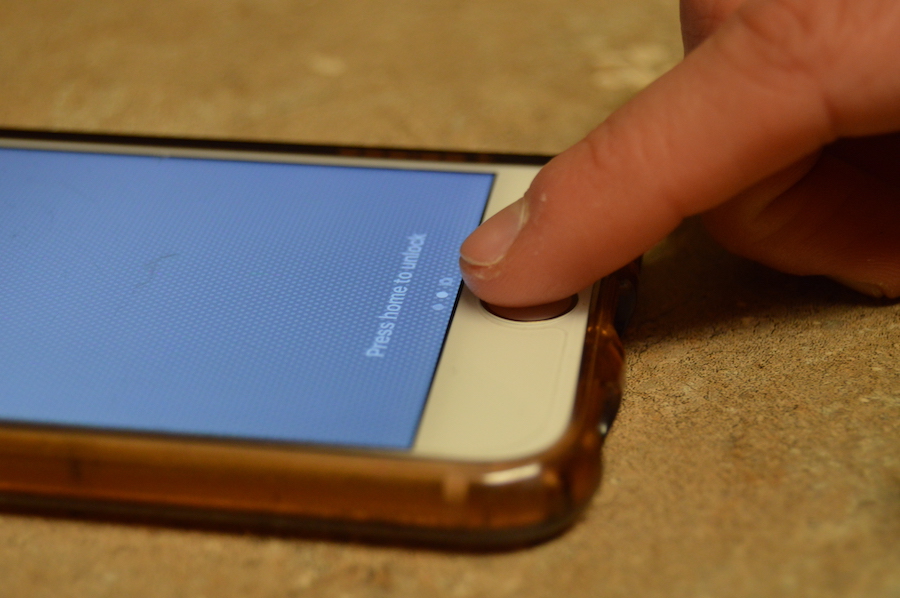
While modern technology allows access to a device granted by an individual’s unique fingerprint, the 2D image of a print can be copied and used as a fake print that can fool a sensor.

An ultrasonic sensor developed to capture images inside of human tissue is responsible for the new fingerprint recognition sensor that has the potential to be installed in all types of mobile devices.

“We have two different technologies: one is the ultrasonic sensor in air, and the other is the ultrasonic sensor in tissue,” said David Horsley of the UC Davis Department of Mechanical and Aerospace Engineering and collaborator of the ultrasonic technology project.

The compact ultrasonic technology captures a fingerprint in 3D to uniquely identify a person, imaging both the ridges and valleys of a fingerprint surface as well as the tissue right beneath the skin.

“We have made a new system using ultrasound technology, and it is much better. This imaging process can look at the surface of fingerprints and inside the finger,” Boser said. “There are more patterns inside the finger that can’t be put onto glass screen of a phone.”

The ultrasonic technology can sense the subsurface structure of the skin, distinguishing between layers of tissue by analyzing the densities of live and dead skin cells.

The additional third dimension of the fingerprint image will make it more difficult for someone trying to steal a fingerprint to unlock a phone or to commit identity theft.

On human hands, natural oils and sweat create the thin, barely noticeable fingerprints left behind on surfaces we touch. It is relatively easy for those fingerprints to be collected. A fake fingerprint can be made by taking a picture of a left-behind print on a phone screen and then copying it using a Xerox machine or 3D printer.

“The smartphone essentially contains all the info it needs to unlock it. This is quite a big security hole,” Boser said.

Individual electronic devices are so convenient that information stored on them might not only be personal, but include medical and financial information through apps like Wallet and Health on the iPhone.

“Imagine features such as Apple Pay and others that depend on fingerprint recognition. You don’t want people stealing your personal or financial information, because it is possible,” Horsley said. “This is something to be concerned about, so having a better system that is more secure is necessary.”

The hackable 2D fingerprint recognition scanner can be replaced with the ultrasonic 3D fingerprint touch sensor in all devices that utilize fingerprints as a way to secure information.

The research behind the ultrasonic technology started in 2007 with a collaboration between UC Berkeley and UC Davis, with the development of piezoelectric-micromachined ultrasonic transducers (PMUTs).

These transducers, devices that convert one type of energy to another, were the basis of the 3D fingerprint sensor technology.

The ultrasonic technology used in fingerprint recognition was inspired by the ultrasonic scanners commonly used in medical settings, such as viewing images of a fetus via a sonogram. However, the fingerprint scanner technology is much more compact and able to be installed in portable electronic devices like phones, laptops and tablets.

“The fingerprint sensor works kind of like the medical sensor. […] We made a pulse that emits ultrasound, and the transducers receive returning information about the composition of patterns on and just beneath the surface of the skin,” Horsley said.

Although many devoted Apple customers were excited about the release of an iPhone with a fingerprint recognition unlock feature, there were customers who were hesitant about how secure it really was.

“When the iPhone first came out with a fingerprint recognition unlock feature, the next day people proved that you could unlock the phone using a re-created fingerprint via Xerox or 3D printer,” Horsley said.

Despite the proof of how unsecure a 2D fingerprint recognition system may be, Apple, Android and other major-brand products have continued to flourish among consumers.

Installing a 3D ultrasonic fingerprint sensor, rather than the current 2D print recognition in mobile devices, offers a new design to smartphones.

“By putting the fingerprint sensor beneath glass of the screen, that smartphone could be redesigned, essentially eliminating the home-button feature,” Horsley said. “This is definitely a possibility for the iPhone 8.”

A commercial smartphone already exists with a fingerprint sensor under the glass screen: the Xiaomi Mi 5s. Xiaomi is a Chinese electronics manufacturer and the company is not planning to release these phones in the United States.

Another company involved in ultrasonic fingerprint sensors is Invensense, headquartered in San Jose, which announced in 2015 that they are manufacturing a sensor for mobile devices to be released in 2017.

The fingerprint touch sensor product is called the UltraPrint Mass, and it is able to be placed within a device without cutting a hole in display glass.

With the new development of ultrasonic technology for fingerprint sensors comes a new generation of electronic devices.

“There are two advantages [to our product]: one is the sensing over glass or metal, not plastic. Second, the technology can sense the live finger instead of the sensing just the fingerprint,” said Zaryab Hamavand, director of sales at Invensense. “Basically, the extra security is [that] it makes sure it is a live person’s finger, and not a copy of a print.”

Written by: Shivani Kamal — science@theaggie.org

Under pressure

TACSENSE, INC. / COURTESY

Woodland tech startup works on developing world’s most sensitive pressure sensor

TacSense, Inc., a Woodland technology startup, is currently in the works of perfecting its latest and most advanced product yet — the world’s most sensitive and flexible pressure sensor. With the help of UC Davis alumni and engineering students, the company aims to develop medical devices that will benefit future biomedical advancements.

The company was founded in 2013 by Tingrui Pan, a UC Davis biomedical engineering professor. TacSense operates under two divisions: microfluidics, which is the science of controlling liquids on the micro and nanoliter scale, and sensors. Many of the company’s ideas and products were brainstormed in Pan’s UC Davis Micro-Nano Innovations (MiNI) Laboratory, including the plans for the world’s most sensitive pressure sensor.

“We’re trying to take some of the really brilliant ideas we came up with in [Pan’s] lab and turn them into commercial products,” said Aaron Cohen, TacSense’s chief technology officer and a UC Davis alumnus.

Pressure sensors are typically found in car passenger seats and control when to set off the airbags of a vehicle. They are also commonly used in the medical industry for compression therapy that helps increase blood circulation in legs.

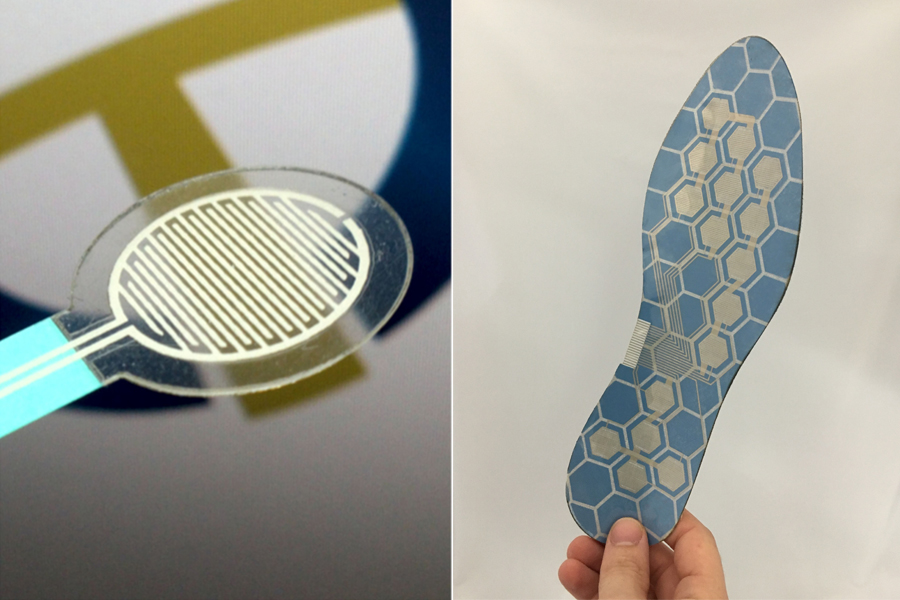
The product developed in Pan’s MiNI Lab, called a super capacitive pressure sensor, is 1,000 times more sensitive than typical pressure sensors.

“This is a really revolutionary product,” Cohen said. “There aren’t any products like it on the market.”

TacSense employees are continuing to perfect the super-capacitive pressure sensor so that it may soon be available for future public use.

The microfluidics division has also been working on developing an advanced technology to help glaucoma patients.

Glaucoma is caused by a buildup of pressure in the eye that leads to blindness and is currently the leading cause of irreversible blindness in the world. The Brown Glaucoma Implant is the microfluidic device intended to ease pressure buildup by draining and expelling any excess pressure from the eye.

“What makes this implant special is that we use advanced technology to prevent the eye from being clogged by excess proteins and to allow the implant to be accepted by the body,” said Ben Bazor, TacSense’s Microfluidics division manager and a UC Davis alumnus.

According to Cohen, the device takes only a minute to install and is expected to prevent the development of glaucoma.

Since opening its doors in the summer of 2015, TacSense has hired multiple UC Davis alumni and students passionate about developing technology for biomedical advancements.

Bazor attributes his success at the company to his experience as a UC Davis undergraduate engineering student.

“I feel that taking engineering classes at UC Davis really helped me understand the framework of understanding things quickly in order to keep our projects on a timeline,” Bazor said. “It’s been a lot of work, but it’s also been a lot of fun.”

Undergraduate students have also found ways to get involved with the company and pursue their interests in biomedical engineering.

“My experience at TacSense has made me a lot more interested in pursuing biomedical technology and creating devices,” said Amber Chou, a third-year bioengineering major and the production technician at TacSense. “As a biomedical engineer, I can help people do things directly [with the new technology], and that’s really important to me.”

TacSense hopes to expand its company into China and other eastern markets in the future, while also diversifying their products to include fabric pressure sensors embedded in clothing.

Written by: Emma Sadlowski — science@theaggie.org