60.8 F
Davis

Davis, California

Wednesday, December 24, 2025
Home Blog Page 688

Police Logs

DANIEL TAK / AGGIE FILE

This week’s most bizarre police reports

Oct. 22

RP “threw a chair from the neighbor’s apartment into the bush.”

Oct. 24

“Gardeners using leaf blowers too close to one another.”

Oct. 24

“RP is afraid of an assertive turkey that has him cornered against the building, requesting assistance.”

Oct. 25

“Subjects screaming for the last couple of hours — playing beer pong.”

Oct. 28

“Theft of paper cups and 2 empty pastry bags.”

Oct. 28

“Male subject outside yelling and making a strange noise.”

Oct. 29

“Turkey walking the roadway, not injured.”

Oct. 29

“Naked male sitting on the gate to the pool.”

Oct. 29

“Unknown subjects setting off fireworks in the cemetery.”
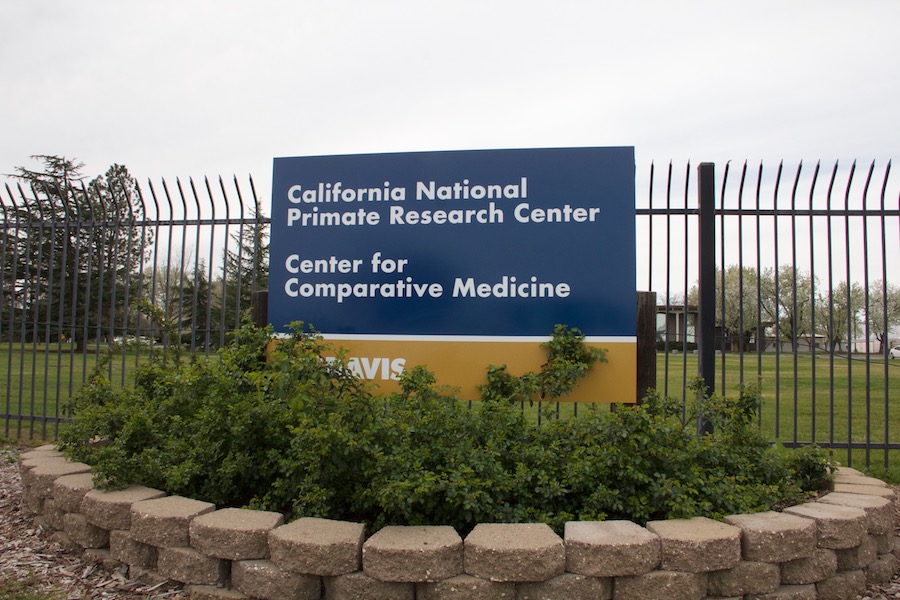
UC Davis Primate Center under fire after death of monkey

ASHLEY LUGO / AGGIE FILE

Watchdog groups call for full USDA open investigation

One of the UC Davis Primate Center’s test-subjects died on Aug. 23 because of failure to close the separating door between the cages of two non-compatible monkeys. This offense follows several other animal safety violations that have occurred in the past year at the Primate Center.

On Sept. 13, the U.S. Department of Agriculture (USDA) released an official statement of the incident, available to the public upon request.

“On August 23, 2016 two non-compatible non-human primates (NHP) were injured after staff failed to secure and lock a divider door that separated them,” the USDA said in the report. “According to the facility incident report the NHPs (adult male macaques) opened the divider and were found injured when staff returned to the room approximately 20 minutes after shifting animals. Both NHPs received prompt veterinary treatment. One was treated for minor wounds and has since recovered. The second had a significant injury and was promptly euthanized. The staff member involved in the incident has been re-trained. The facility self-reported the incident to officials.”

Watchdog groups across the nation took notice and filed official complaints to the USDA, pushing for an open investigation of the lab. The Center For Ethical Science (CFES) based out of Chicago filed a letter to Dr. Robert Gibbens, director of the Western region of the USDA and Animal and Plant Health Inspection Service (APHIS), urging that UC Davis receive the maximum fine of $10,000 per non-compliance.

“[The Primate Center] has violation after violation after violation; it is a criminal lab,” said Jodie Wiederkehr, executive director of CFES. “Pet stores with these same practices would likely be shut down, but when it comes to labs they are fined, then continue to harm and kill animals and the public never really knows. […] Research is important to me, however, animal research is not effective.”

The Primate Center recently came under fire in 2014 for another monkey-related death at the lab. The USDA published an investigative report in 2015 regarding the incident.

“On Aug. 9, 2014, a NHP was injured while being restrained for treatment of a clinical condition,” the USDA said in an official report. “The NHP, a 6-year-old male macaque, was left while on a restraint board in a treatment room during intravenous fluid administration. At some point during treatment the animal chewed through tape restraining his upper body to the board, leaving his legs taped to the board. The animal was found to have a broken leg, was treated, and recovered from the fracture.”

According to Andy Fell, UC Davis associate director of news and media relations, the Primate Center follows strict regulations needed to protect its animals.

“Unfortunately accidents do happen,” Fell said. “Research is strictly regulated. Care of animals is a responsibility that UC Davis takes extremely seriously.”

Ohio watchdog group, Stop Animal Exploitation NOW! (SAEN) also filed a report to the USDA based on the multiple infractions at the UC Davis Primate Center.

“Major violations of the Animal Welfare Act continue to pile up at UC Davis, and these failures to comply with the federal law appear to be fatal almost without exception,” said SAEN co-founder Michael Budkie. “It is pathetic that Davis can’t even manage to follow the law when it is already the target of a federal probe.”

The Primate Center performs cutting-edge research on illnesses such as HIV and the Zika virus, and is home to one of the top research centers for autism nationwide. Truvada, currently the top HIV drug on the market, was developed via resources at the Primate Center. The UC Davis Primate Center is one of only seven in the nation.

Written by: Lindsay Floyd — campus@theaggie.org

This week in senate

HANNAH LEE / AGGIE
HANNAH LEE / AGGIE

The ASUCD Senate meeting was called to order at 6:11 p.m. on Oct. 20, followed immediately by the establishment of the quorum with ten out of the eleven senators present. Senator Sam Park was absent.  

The meeting began with a presentation by Athletic Director Kevin Blue accompanied by a member of the women’s tennis team. Blue discussed the education of the athletes and the department’s continued effort to keep student-athletes on track and focused on their school work. He emphasized the impact athletics has on the academic enterprise, providing statistics of many universities’ level of academic and athletic success over the past years at schools including Princeton, Stanford and UC Davis.

Those in attendance then had the opportunity to bring up questions. External Affairs Commission chair Sara Williams asked, “What is being done about sexual assault awareness within the athletics department?” Blue stated that there are programs that athletes must attend every quarter to discuss that issue.

Senator Samantha Chiang also brought up the issue of mental health, asking if the athletics department is doing anything to address that issue. Blue stated that Counseling and Psychological Services provides psychologists for athletes to seek help and discuss issues in confidentiality.

Blue provided his e-mail and phone number, asking the senators to reach out to him with any other questions or concerns.

Citizens for Responsible Planning presented next, with Eileen Savitz, former planning commissioner for the City of Davis, stating her concerns with the current student housing situation. She expressed her worry regarding the lack of housing for students on campus, and the limited housing is unfair due to the fact that UC Davis is the largest UC in the state and many other smaller UC’s are able to provide more options.

“Davis has been growing over the years but did not increase the amount of housing,” Savitz said. “We won’t be able to house all students.”

Savitz agreed to discuss the issue with President Alex Lee personally on a later date.

Academic Affairs Commission chair Hemali Patel introduced new commission chairs fourth-year neurobiology, physiology and behavior major Kishan Patel and third-year microbiology major Justin Hurst. Senator Joshua Dalavai moved to confirm Patel and Hurst to the Academic Affairs Commission and the motion was seconded with no objections.

Gender and Sexuality Commission chair Allison Tam introduced GASC Commissioners Mary Rasooli, Sheyla Mirka Dirzo, Savannah Vandenbos and Weizheng Zhang. Senator Dalavai also moved to confirm Rasooli, Dirzo, Vandenbos and Zhang to the Gender and Sexuality Commission. The motion was seconded with no objections.

President Alex Lee then introduced Whole Earth Festival (WEF) director Jess Tierney.

Before confirmed as director, Tierney said that she hoped to fix WEF’s relationship with ASUCD and explained her goals for this year’s festival. Tierney said she would like WEF and ASUCD to work together to foster open communication and mutual respect. Her goal is to have a more student-focused festival.

“I would like to essentially create a festival for students by students,” Tierney said.

Senator Ricardo Martinez moved to confirm Tierney as Whole Earth Festival director. The motion was seconded and there were no objections.

The senators moved on to consideration of old legislation and discussed Senate Bills seven and nine as well as Senate Resolution one.

SB 7 would have allocated $720 for the ASUCD’s Gender and Sexuality Commission (GASC) publicity, outreach and supplies. At the meeting Tam withdrew the bill.

SB 9 is an ASUCD Senate Bill to allocate $61 for Housing Advising for Undergraduate Students to purchase a vinyl banner to help them advertise for Housing Day. Dalavai moved to call the bill into question. The motion was seconded. The motion carried unanimously and there were no objections to passing the bill.

SR 1 calls for the halt in the designation of the next chancellor of UC Davis until a more transparent and democratic process for selection and appointment has been established. Senate pro tempore Adilla Jamaludin moved to call the resolution into question. The motion was seconded. The motion carried unanimously and there were no objections to passing the resolution.

New legislation was then introduced. The Senate first discussed the ASUCD bill to exempt KDVS and The California Aggie’s social media pages from including ASUCD in their social media page titles. They also discussed the ASUCD bill to increase spending limits during elections, the ASUCD resolution to stand in solidarity with Standing Rock and the ASUCD bill to allocate $270.50 for Aggie Reuse.

The meeting closed with elected officer reports, announcements and approval of past meeting minutes.

The meeting adjourned at 9:48 p.m.

Written by: Demi Caceres — campus@theaggie.org

Hold your horses: equine work may prove healing for people with dementia

CAT TAYLOR / AGGIE
CAT TAYLOR / AGGIE

How horse grooming can help dementia patients, caregivers and horses themselves

Every 66 seconds, someone in the United States develops Alzheimer’s disease. Couple this with the fact that it is also the sixth leading cause of death in the United States, and it’s understandable why UC Davis researchers are conducting studies to help better the lives of those diagnosed with dementia-related diseases.

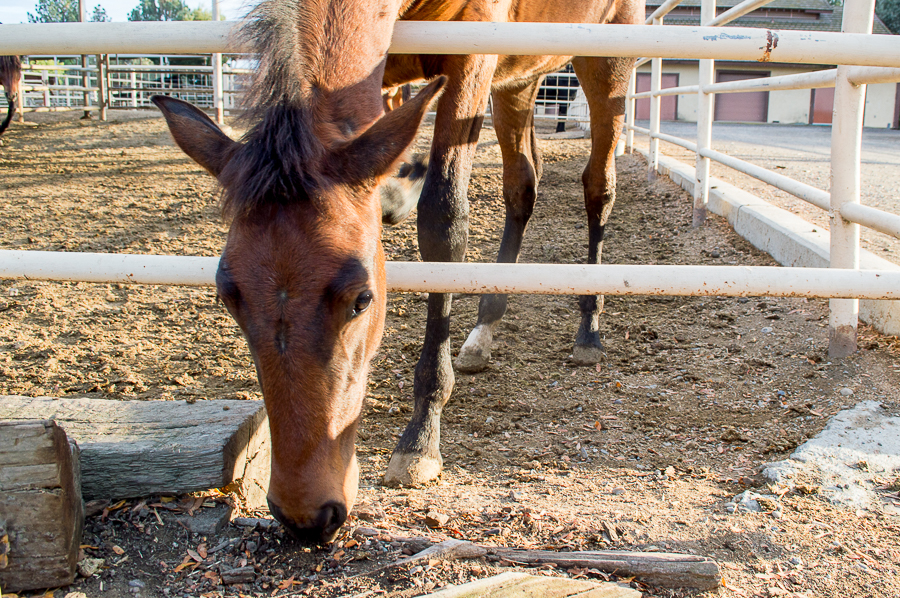
Paula Hertel and Nancy Scheir Anzelmo are the co-founders of Connected Horse, a nonprofit organization that partnered with UC Davis’ School of Medicine and UC Davis’ Veterinary School to explore the therapeutic benefits of having people with dementia, as well as their care partners, interact with horses.

Hertel and Anzelmo first developed and tested the cooperative studies at Stanford University. After their informational session which took place on Oct. 31, they are planning to hold another pilot study at UC Davis on Nov. 7 and 14. Despite common assumptions, participants will not be riding the horses. Instead, they will be spending time with, grooming and getting to know the animals.

“[The challenge is] how do you work collaboratively with a horse and be clear in your non-verbal reactions,” Hertel said. “That’s really where we see a lot of learning in terms of strengthening the relationship [between the participant and the caregiver], because we as humans rely so heavily on our verbal communication. When that gets compromised, we’re often unaware of what our body language is telling us.”

The study is unique in that it aims to monitor not only the participant with dementia, but also his or her caregiver and the relationship between the two. Anzelmo and Hertel believe that the diagnosis not only affects the person who received it, but the entire support network of that person. For this reason, the researchers place a heavy importance on relationship building, which is clarified by the presence of a horse.

Horses are herd as well as prey animals, which means that they have to be able to pick up cues from other horses in their herd while being attuned to their environment. Therefore, a horse will tend to mirror another horse’s behavior, a quality that is also seen between horses and humans. Anzelmo and Hertel plan to use this mirroring ability in horses to promote introspection with the participants.

By functioning as a mirror, the horses can inform participants about their body language, a tool that has proven useful in other therapeutic environments.

“The horses are really the teacher in these workshops,” Anzelmo said. “They’ve been very healing in many populations from traumatic brain injury, to veterans, to children with autism and physical disability and even prisoners […] so we know there’s a very strong therapeutic model.”

Dr. Sarah Tomaszewski Farias is a professor of neurology at UC Davis who conducts research at the UC Davis Alzheimer’s Disease Center. Farias is also the principal investigator on the project, a job that involves consulting, reaching out to prospective participants and analyzing the outcomes of the study.

“Right now, in terms of the medication we have available to treat Alzheimer’s disease, it’s pretty limited,” Farias said. “There are a couple of medications that are approved by the FDA to treat Alzheimer’s disease, but they really just slow the disease process. [The clinics are] not something that would take the place of those medications. [They] would be something in addition to medication, but really it’s geared more toward improving quality of life.”

Claudia Sonders is the director for The Center of Equine Health, as well as a professor at the UC Davis Veterinary School. She is in charge of the herd of horses that will be used for the study.

“For this particular project, what we’re looking for are horses that are accustomed to interacting with humans that are naturally calm and quiet and patient and that we can rely upon to be careful around humans,” Sonders said. “[We tend to use] geriatric horses who have a lot of world experience.”

In addition to providing data about the human participants, the study will also provide data about the equine counterparts.

“We’re also working with the Computer Science Department to train computers to recognize the equine face,” Sonders said. “It’s part of a greater project, which is a pain-detection project in horses. This pilot data will help the computer learning team get the computer to recognize the equine face.”

While interacting with the participants of the study, Sonders hypothesizes that the horses will be more calm, which can provide valuable facial recognition data. In general, Sonders plans to use the pain-detection program to help diagnose geriatric horses with problems associated with old age. The program’s creation is especially pertinent because horses evolutionarily tend to hide when they feel pain to avoid looking weak in front of a predator.

“If you have a horse that’s in pain, and it’s standing in its stall and you have a camera on it, and there are no people around, that horse will probably be in the corner, its head will be down, its ears will be back, it’ll have facial tension,” Sonders said. “When you walk in and you open that stall door, that horse is going to perk up, it’s going to put its ears up, it’s going to walk over, it’s going to interact with you. It doesn’t want you to know that it doesn’t feel well.”

While the pilot studies that Connected Horse is planning will help the creation of this program, Sonders said that it also gives geriatric horses who are past their athletic prime a purpose in society.

“It’s really important that a geriatric horse have a place in society because in many cases when a horse becomes too old to be physically athletic, it becomes a dilemma for what we should do with that horse,” Sonders said. “Some people put them to sleep if they’re no longer useful [or often, if] people don’t want to put a horse to sleep, the horse will end up in a rescue or in a situation where they’re living out their life at rest, and sometimes that can go well for them and sometimes that does not.The idea that we could take a public horse and potentially have it be a public asset is really exciting.”  

As for the future, Hertel and Anzelmo hope to both continue the growth of the program at Connected Horse by holding another workshop in the spring, as well as help to get similar programs off the ground in other places.

“We don’t want to just develop this for Connected Horse,” Hertel said. “We want to really share our knowledge and our curriculum with those who can use it. Whether they’re one person that has a small barn somewhere or a therapeutic riding center that’s been serving children but now wants to start serving elders too. We really see ourselves as a resource so that we can grow this option beyond the research.”

For more information on Connected Horses’ research and how to get involved, visit its website at connectedhorse.com.

Written by: Meral Basit — science@theaggie.org

Guest Opinion: Colin Kaepernick, Hillary Clinton, the double standard of political correctness

BROOK WARD [CC BY-NC 2.0] / FLICKR
How the alt-right gets PC wrong

Donald Trump has spent much of the 2016 presidential campaign railing against political correctness. And you know what? I agree with him.

People today get offended too easily. They can’t take a joke. Some of them have never experienced actual oppression, and they develop a compulsion to find something that angers them. In fact, when faced with differing opinions, they react so quickly with outrage that they effectively prevent any dialogue when it comes to the real issues facing this country. You probably know the type I’m talking about.

They’ve never been exposed to ideas other than their own, which has instilled within them a deathly fear of venturing outside their little bubble. Their fragile egos quarantine them from anyone who might challenge their views, and as a result, they expect everyone else to cater to what they deem acceptable.

I’m not talking about the so-called social justice warriors.

I’m talking about the people typically found in the comments section on ESPN’s Facebook page, complaining about how un-American Colin Kaepernick is and demanding he be banned from the NFL. For all they complain about political correctness, many conservatives today are just as sensitive as their counterparts on the left — perhaps moreso.

But before delving too far into the Kaepernick controversy, we should explore what political correctness means.

The phrase came into being in the late 1940s and early 1950s in Herbert Kohl’s examination of Stalinist Russia, where he used it to describe anything deemed appropriate by the Communist Party. In this sense, refusing to stand for the national anthem, a form of dissent against the state, is much more politically incorrect than, say, calling someone a racial epithet.

Today, “PC” is mostly used in a degrading manner to refer to those who avoid using slurs against people of certain identities.

Sure, some people take the idea a bit too far — refusing to talk about a subject altogether instead of addressing it delicately — but by and large, today’s anti-PC crusaders such as Mr. Trump do not want a civil discussion. They want an excuse to be racists, sexists and misogynists.

Somehow, over the last 70 years, the meaning of “politically incorrect” evolved from “critical of government” to “being a giant jerk.”

Let’s go back a month. On Sept. 9, Hillary Clinton referred to half of Trump’s supporters as “irredeemable” and “a basket of deplorables.” They didn’t applaud her for being “politically incorrect.” Instead, the comments garnered nothing but vitriol, eventually forcing her to apologize and retract her statements.

Let that sink in for a second. The ostensibly thick-skinned, anti-PC warriors of the alt-right forced a presidential candidate to retract a statement she made because they found it… too offensive? A bit ironic, to say the least.

And yet, in a twisted way, one can almost make sense of this reasoning. Secretary Clinton, after all, has worked in politics for most of her adult life; if we can’t expect political correctness from a political figure, who should we expect it from?

Certainly not average people like you. Or me. Or Colin Kaepernick. A popular, outspoken athlete who not-so-subtly accused Hillary Clinton of racism? He should fit the bill for paragon of political incorrectness. But because the anti-PC crowd disagreed with his taking a knee during the national anthem to protest police brutality, they made him a pariah.

Many folks on the right immediately ripped him apart for his form of protest, and, in doing so, unwittingly exposed a double standard. If these people were really fighting a war against political correctness, Colin Kaepernick’s actions would make him a right-wing hero.

Because of the invectives they direct against him, they not only display their own hypocrisy, but also forfeit their right to complain about others being too sensitive.

Here’s the thing about political correctness: it goes both ways. In the end, you can argue that people today get offended too easily. You might even have a point.

Just don’t forget that next you feel offended.

Written by: Zach Moore

UC Davis swimming and diving claims strong victory over BYU

0
CHELBERT DAI / AGGIE

The Aggies move to 5-2 on season, defeat Cougars 172-128

UC Davis dominated the Brigham Young University Cougars 172-128 at Schaal Aquatics Center last Friday, Oct. 28, winning 12 of the 16 events.

The Aggies started strong with a win in the 200 medley relay with a season record time of 1:45:68. The Cougars responded with a win in the 1000 free and 200 free, putting them up 33-22.

However, UC Davis responded with sophomore Solie Laughlin and senior Elise Roberts setting their season-best records for the 100 back and 100 breast, respectively.

CHELBERT DAI / AGGIE

The Aggies swept the 50 free event with senior Kirsten Brand, junior Courtney Schultz and freshman Jaime Pincin all posting top times to put UC Davis back on top 116-91. Schultz and Pincin then split the first place medal in the 100 free with a shared time of 52.50, making it Pincin’s first individual win as an Aggie.

UC Davis pulled away as Laughlin won in the 200 back. Roberts touched the wall first to win the 200 breast, and redshirt senior Marissa Brown won her event in the 500 free.

Other notable victories for the Aggies included sophomore Eva Chung in the 200 individual medley and sophomore Mia Facey, Brand, Pincin and Schultz in the 400 free relay.

On the diving side, sophomore Shaifali Goyal, senior Serena Yee and sophomore Inessa Toropov placed in the top five spots in the 3-meter. Goyal and Yee closed with a 1-2 on the low board to put a cap on the day.

With this win, UC Davis goes up 5-2 on the season and 3-0 against Mountain Pacific Sports Federation opponents. The Aggies return to Schaal Aquatics Center to host a meet against Nevada and Cal State East Bay on Nov. 4 at 4 p.m.

Written by: Nicolette Sarmiento — sports@theaggie.org

HUMOR: Alcohol should be the Sriracha in your life, not the actual meal

Alcohol, like Sriracha, is the nectar of life — but only in moderationheadshot_yr

I eat the same lunch every day. It’s disgusting and boring.

I find the cheapest frozen, boneless, skinless chicken breasts Costco has to offer, pretend to season them, throw them on a pan and plate them. They’re so dry that I feel like I need to moisturize after every meal.

I only eat these breasts because they make it much easier to manage my calories, something I really value. With the same calorie amount coming in throughout the day, I can go out a couple times a week and eat truly delicious, interesting food with zero guilt. I’d rather eat chicken breasts Monday through Thursday so I can have Jamaican soul food with beignets for dessert on Friday.

I haven’t had a mental breakdown yet because of one reason and one reason only. It’s over the counter, decriminalized and pretty cheap, too. The drug in question is made by a Vietnamese company that might be a little sketch but, I mean, no one’s actually died from this stuff.

It’s Sriracha. And if it weren’t for Sriracha, I’d either be dreading every meal or I’d never be able to go to the pool without taking my shirt off. I really do love Sriracha.

But I don’t eat Sriracha with every single meal that’s not cardboard-textured chicken breasts. I don’t eat it by itself, although I have lost bets and had to take shots of the stuff. And you know what? You can eat chicken breasts with ketchup, or with garlic aioli or with seasoning that doesn’t come pre-mixed in a box.

I see alcohol the same way I see Sriracha.

Going to college parties sober is not ideal. Alcohol is fun (for most people). And alcoholism in college is real and it’s sad and it should be recognized for what it is, but plenty of people are able to drink only recreationally, and as a means to an end.

Because it’s nothing more than a condiment. You don’t go to a party to get drunk. You go to a party to meet people. You go to a party to spend a couple hours not thinking about your midterm and your job applications and your nagging parents.

And you can drink outside of sweaty house parties –– I heard a rumor that other colleges have like, really good sports teams, and the sports games are insane, and people actually make a big event out of their home games.

I don’t know if it’s true because I go to UC Davis, but I bet those folks aren’t going to those games just to get drunk –– they’re going to represent their schools, to cheer on their peers and to bond with their community. The drunkenness aspect is there, and I won’t deny that it’s fun, but it’s not the primary reason.

I don’t cook Sriracha with chicken breasts, even though it feels like that most days. The sriracha is a welcome addition, but it’s never my meal. And that’s how I view alcohol. Alcohol absolutely makes large, social events more fun. But it’s not the one and only way that I have fun.

The cliche goes that variety is the spice of life. I say alcohol is the Sriracha you put on after you realize you have no idea how spices even work. Either way, I hope no one in our community is eating spices or condiments for their meals. Learn to use it just right and be seasonable.

Written by: Yinon Raviv — ravivyinon@gmail.com

HUMOR: Stop glorifying staying in

BECCA RIDGE / AGGIE
BECCA RIDGE / AGGIE

headshot_yrOur ancestors who stayed in died in blazes of mediocrity
I took a break from my diet the other week.

I’m usually pretty strict on eating nothing but chicken breasts, egg whites, sadness and sautéed vegetables, but sometimes, I just want to pig out. In the morning, my friends wanted a Baba’s breakfast burrito, so I went with them and ate with the boys. In the afternoon, I had to bake cookies for a friend, so I made Nutella salted caramel brownies. Of course, the most important part of the baking process is taste testing, so I had a lot of Nutella, salted caramel and Nutella salted caramel brownies.

Then I went home to see my family and my mom made borekas (savory Jewish pastries made of phyllo dough filled with cheese and spices and calories) and I inhaled a tray and a half. My brother was impressed. My sister was disgusted. I’m pretty sure even my dog judged me.

It was a one-time thing — purely hedonistic and indulgent — and I woke up the next morning with a pang of regret. I did some extra cardio, played an extra game of basketball, had an extra guilt trip or two and didn’t look at the scale for a couple days. I bounced right back into my diet and didn’t look back. It happens.

The other week, my plans fell through. I thought I was going out, but my friends at the very last minute couldn’t rally. I frantically texted a bunch of other people, but everyone else had plans, and it was 9:40 PM. I had committed a rookie mistake by not making backup plans. So there I was, staring at my ceiling, wondering what the heck I was going to do that night.

“Just stay in. You have food, you have drinks, you have someone else’s Netflix password… what else do you need?”

So I stayed in. It wasn’t the worst. Having a night where I do nothing and meet no one and just vegetate isn’t terrible, necessarily.

But it isn’t good. It isn’t exciting. It isn’t risky. It’s boring. It’s bland. When people look back at their youth, when people sit in their offices on a Tuesday morning when they’re 55 with three kids, a mortgage and a retirement plan, they’re not thinking about the nights they just hung out at home and relaxed. When my dad has his buddies over for drinks, they’re not laughing obnoxiously about their “cozy” nights. No one reminisces about all the times they were idle.

When I stay in, I get the same feeling as I do when I veer off my diet like a Kennedy on summer vacation. I’m ashamed of it. Chalk it up to my crippling FOMO, but I can’t even get out of my own headspace when I’m doing it.

I could have met a girl who’d end up becoming my wife. I could have met a girl who’d end up becoming someone my future wife refuses to let me contact lest I want a divorce. I could have made memories with my friends, stories we’d tell our kids in hopes of showing them how cool we were while they roll their eyes at THIS story again. I could have deepened my relationships, expanded my network, left my comfort zone and woken up the next morning with a wild story.

But no: I stayed in.

The other week, I read an article on Vice that showed, with fancy statistics and newfangled studies, that our generation is “over” going out. Now, I acknowledge that I’m a specific type of person — an extrovert who feeds off crowds — and I know not everyone can relate to that. But with passages like “you get to wear comfortable clothes, summon whatever food you want […] go to bed when you choose […] for most of the humans who have ever lived, this generation’s typical night in represents an impossible pinnacle of luxury,” the article doesn’t seem to do going out justice.

I hear one argument that suggests because our ancestors had to struggle to survive, we shouldn’t take for granted our creature comforts, so clearly, we should just stay stationary while the world turns around us.

You know how our ancestors actually survived? You know how your great-grandfather met your great-grandmother, how they both presented themselves as interesting people worthy of love and partnership? You know how all of your ancestors made it far enough in life to keep raising generations until it got to you you, who’d rather hole up without human contact because you’d rather stare at a screen with moving pictures? They sure as hell didn’t retreat into their comfort zones and stay in their cocoons while life passed them by.

Now, I’m sure there’s many people who 20, 80, 200 years ago did exactly that. And I bet those people, more often than not, didn’t forge incredible relationships. I bet they didn’t grow that much as people. I bet those people died childless and alone, ending their chapter in human history in a blaze of mediocrity.

Going out isn’t easy or comfortable. You often have to put in effort to present yourself. You have to find the energy or enthusiasm or courage deep within you (and by you I mean alcohol) to put yourself out there, and you have to be okay with the risks. You might have a bad night. You might meet absolutely no one who piques your interest, you might have an off night, you might get ditched by your friends, you might go past your limits and way out of your comfort zone to the point of it being absolutely awful.

But when you let go of the fear of having a bad night when you accept that the best you can do is just put your best foot forward and hope that the universe gives you something to work with you never know what might happen. I firmly believe that’s the only way to approach anything in life: without fear of failure, with a healthy awareness of the risks but also a healthy excitement for the rewards.

Whether it’s a party, a club outing, a salsa class, a beer and wine tasting, a concert whatever it is, let’s stop pretending like we’re actually happy when we pass out with empty take out boxes and the Netflix queue still running. We should feel guilty. And we should vow to get back on it next weekend much like a diet.


Written by: Yinon Raviv — ravivyinon@gmail.com

Maximizing the capability of the human body

RICHARD HAWKINS / COURTESY
DAVID HAWKINS / COURTESY

The Human Performance Lab at Hickey Gym researches musculoskeletal structure, applied to minimize risk of injury

The Human Performance Lab (HPL), located in UC Davis’ Hickey Gym, aims to understand the mechanisms of the human body in order to improve both quality of life and physical capability in the limbs, bones and muscles.

David Hawkins, professor in the Department of Neurobiology, Physiology and Behavior and head of the research group, seeks to provide the public with tools to improve their physical activities.

The HPL was originally founded in 1963, and the Hawkins Research Group (HRG) branch at UC Davis has performed some incredible research.

“The research done in the HPL has direct clinical applications, and I was excited to pursue research efforts that could potentially decrease injury incidence among active populations in the future,” said Erica Stevens, alumni class of 2016 and former student-researcher in HPL.

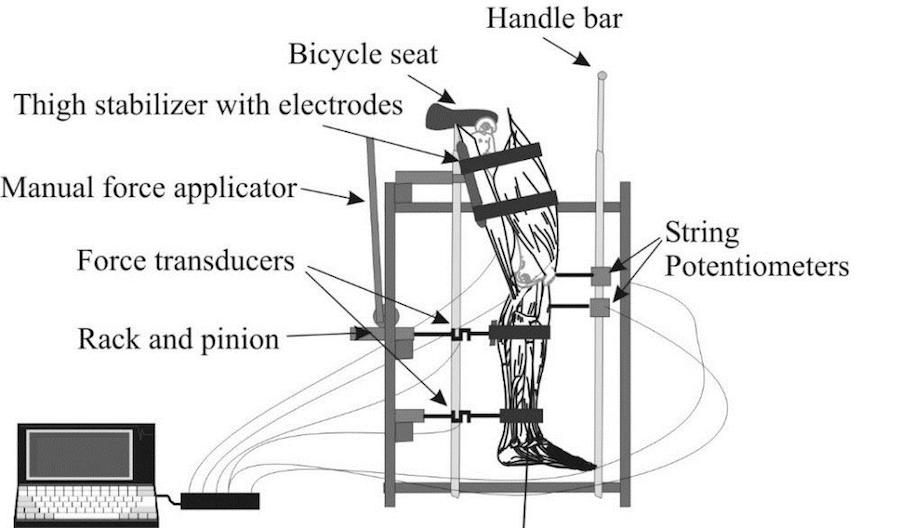
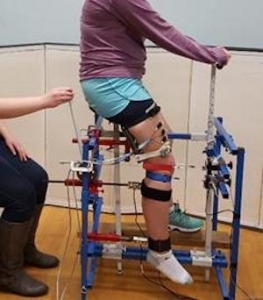
Current research is focused on knee ligament ruptures resulting from previous traumas and how small build-ups of damage over a long period of time may be the cause of these ruptures.

Hawkins has proposed a knee-laxity test, which detects small damages in ligaments before rupture and reflects changes in ligaments’ mechanical properties. According to Hawkins, the data from the tests supports the hypothesis that micro-damages can be detected prior to ligament rupture.

RICHARD HAWKINS / COURTESY
DAVID HAWKINS / COURTESY

There are a variety of students researching in the HPL under Professor Hawkins, including alumni Erica Stevens who had her own specified project which studied a possible correlation between noncontact anterior cruciate ligament (ACL) injuries and Patellar Tendon Insertion (PTTI) angles among UC Davis athletes.

The ACL is a major tissue that connects the thigh bone to the shin bone at the knee and helps stabilize the knee joint. The PTTI angle is the angle at which the patellar tendon, the tissue connecting the kneecap to the shin, inserts into the tibial tuberosity located at the top of the lower leg.

“We hypothesized that a greater PTTI angle would lead to increased anterior translation [the kinetics of knee movement] of the tibia [a bone in the lower leg], subsequently leading to increased ACL force,” Stevens said.

In order to determine the PTTI angle directly from the athletes, 10 plastic markers were placed on the lateral surfaces of their legs. Each leg was photographed in full extension and then digitized via MaxTRAQ, a motion analysis software.

The coordinates were later inputted into Microsoft Excel to finally determine the PTTI angle of each knee.

The data collected from this pilot study supported the hypothesis that there was a correlation between ACL injuries and the PTTI angle. However, due to the small sample size, the hypothesis must be expanded by a larger research group.

“It could prompt physicians, physical therapists and/or coaches in the future to screen for athletes with larger PTTI angles and provide them with preventative strengthening exercises to decrease their relative risk for noncontact ACL injuries,” Stevens said.

Another student working under Professor Hawkins is Shonit Nair Sharma, third-year biomedical engineering major, who has his own project analyzing acceleration data from runners to identify those at risk for injury.

Originally researching under the Mathematics Department on an exercise biology lab, Sharma became interested in the Human Performance Lab after reaching out to Professor Hawkins as a collaborative reference.

“My research project involved writing a MATLAB code to process and analyze workbooks of data collected during a study of collegiate distance runners,” Sharma said.

MATLAB is software that is used for technical computing, allowing the implementation of algorithms, plotting of functional data and easy visualization of complex problems and their solutions.

The data was collected from UC Davis runners via physical monitors. The acceleration data for the left side of the hip was often lower due to human error because the device was worn specifically on the right hip. Much of this project’s research was centered around solving this problem.

“It was necessary that the [MATLAB] code accounted for the discrepancy between left and right hip acceleration values, for the physical activity monitors worn by the athletes were unable to do so,” Sharma said.

The data was then analyzed to identify runners who were at risk for injury.

Past research projects include muscle-tendon lengthening, in which muscle performance was measured after being lengthened by one of two alternative procedures. Another research project studied athletes’ athletic performances while doing rowing motions on dry land, stimulating water training.

The quantitative information of the athletes’ kinematics and forms provided great feedback for both the coach and the athletes to improve their respective performances. This information included different techniques ability to change power output of the muscles and identify how techniques change with muscle fatigue.

HPL has investigated many effective studies, such as The Backpack Load Carriage Project, which evaluated the productivity of hip belts for reducing skin pressure and muscle exertion while one wears a backpack.

There is seemingly no limit to the creativity of the human-performance studies under the HPL.

“My research group is also exploring wearable technology to provide remote health-monitoring and physical activity prescription,” Hawkins said.

Collaborations with colleagues from different departments is common, especially when human and animal models are used.

I have collaborated with colleagues in the Veterinary Medical School to conduct similar types of human and horse anatomical modeling and movement simulations to explore potential mechanisms of injury,” Hawkins said.

Other projects include partnering with the College of Biological Sciences to explore signaling pathways that contribute to skeletal muscle hypertrophy, as well as with the [UC Davis] Medical School to investigate the healing response following various muscle-tendon release techniques.

“Professor Hawkins encourages all of his students to critically question the information they’re presented with […] so the last two years of my undergraduate career really helped me to become the inquisitive student I am today,” Stevens said.

Written by: Shivani Kamal — science@theaggie.org

Pioneering Punjabis

CALIFORNIA STATE LIBRARY, SACRAMENTO / COURTESY

A new digital archive commemorates Punjabi impact on American history, society

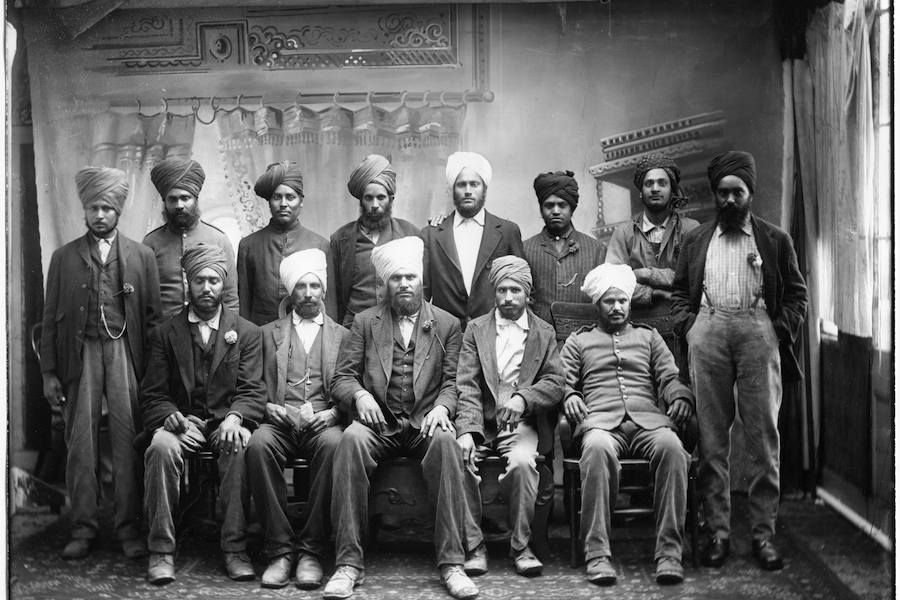
The accomplishments of Punjabi Americans, who have made tremendous contributions in all aspects of American society, will now be recognized in a digital archive thanks to UC Davis’ Middle Eastern/South Asian (ME/SA) Studies Program and the Punjabi American Heritage Society.  

The archive chronicles the history of Punjabi Americans, from their first arrivals at Angel Island to more recent struggles against discrimination.

“It is important to save and share the rich history of the South Asian pioneers in California […] it is a vital part of California history that is virtually unknown,” said Nicole Ranganath, a lecturer in the UC Davis Middle East/South Asia Studies Program, in a UC Davis news article.

UC Davis is a fitting place to house the archive, considering its close proximity to Yuba City, which is where many Punjabi immigrants first made their living in the agriculture industry.

Puneet Deol, a third-year managerial economics major, contributed to the development of the archive and believes the archive is important to the Punjabi community at UC Davis.

“We, [Punjabi Americans], have never been acknowledged in textbooks or history classes or anywhere really, but this [the archive] gives us a chance to present the impact we have made and are still making,” Deol said.

Deol explained that the first immigrants came to California by way of Hong Kong as farmers. One figure in particular, Didar Singh Bains, is renowned in the Sacramento Area as being one of the largest peach farmers in the world. Bains’ success, as well as the success of many other Punjabi farmers, has greatly impacted the agriculture industry in California’s Central Valley.

Today, many Punjabi Americans are making strides in engineering, technology and medicine. The archive presents physicians, like Jasbir Singh Kang and Harban Sekhon, who have dedicated their lives to medicine and championing for rights concerning Punjabi Americans.

Harjot Gill, a second-year neurobiology, physiology and behavior major, has a family with a long history in medicine.

“Back in India, my grandfather was a doctor and my parents are also both in the health field […] I think many [Punjabi] families have these histories that they want to maintain […] that’s part of the reason why I want to do something in medicine,” Gill said.

The archive not only draws attention to the history of Punjabi Americans but also brings awareness to the issues many of them face. After 9/11 and in the wake of recent terror attacks around the world, many Punjabi Sikhs bear the brunt of racist attacks. Sikhism is one of the most prominent religions amongst Punjabis; followers wear turbans and do not cut their hair.

“This often leads to hate being targeted at them solely because of their appearance […] even though Punjabis have a long history in America, their culture is still widely unknown and misunderstood,” Deol said.

To learn more about the impact of Punjabi Americans through UC Davis’ digital archive, visit pioneeringpunjabis.ucdavis.edu.

Written by: Krishan Mithal — arts@theaggie.org

Lack of conservative professors harmful for universities, diversity

headshot_niShakespeare and company at risk of dismissal
When universities finally become the diverse places they purport to be, shoot me an email. I will rejoice. For universities are not the bastions of diversity everyone claims. Their demographics prove otherwise.

Look around a typical campus and try to spot Waldo: a conservative professor hidden in a sea of intellectual homogeneity. It might be harder than you think. A Harvard study from 2007 revealed that a meager 13.7 percent of professors nationwide are Republicans, while 51 percent identify as Democrats.

If we instead break down the numbers by political orientation, we see that 8 percent of professors identify as “conservative” while 34.7 percent identify as “liberal.”

The ideological gap at universities increases even further when we look at certain fields of study. Professors in the social sciences and humanities are overwhelmingly liberal: 58 percent and 52 percent, respectively. Conservatives in these fields: 5 percent and 4 percent. This chasm is reflected in most other fields as well –– only computer science (by half a percentage point) and business (by three percentage points) host more conservatives.

The humanities and social sciences are known for their interpretative curricula, and such a liberal bias among teachers is worrying. There is hardly room for balancing the opinions on the left with equally adequate ones on the right.

English departments in particular are prone to this discrepancy –– the same Harvard study reveals that only 2 percent of English professors are Republicans. In any other setting, such incongruities with national demographics would spark outrage.

Instead of an outcry, though, a few English departments have sought to use their advantage in numbers (or been asked to do so) to transform established curriculum requirements into gender and race-inclusive ones. This attempt to focus on history’s lost voices is admirable in theory but misguided in practice.

Something similar already happened at UCLA: its English department in 2011 decreased the required courses on Shakespeare, Milton and Chaucer in favor of ones on sexuality and class. Is society supposed to be satisfied with English majors potentially ignorant about the poetic soliloquies of the Bard himself? Are Eliot’s poems and Hemingway’s novels next on the list for abandonment?

In fact, T.S. Eliot and Shakespeare were on the list of poets which a group of Yale undergraduates in June called “hostile to people of color.” They subsequently demanded the “decolonization” of their English department’s curriculum. The suggested replacement: courses on gender, race and class. Similar happenings recently occurred at Seattle University and UC Berkeley. Regrettably, this trend shows no sign of slowing down.

Some may argue that removing the “dead white male” from required curricula is a step toward real diversity. But this ignores the hallmarks these authors left on subsequent works, including ones penned by women and minority writers. Many were inspired by the same men the Yale students wish to discard. W.E.B Du Bois may have said it best: “I sit with Shakespeare…I summon Aristotle and Aurelius…they come all graciously with no scorn nor condescension.” His admiration is telling enough.

The reason why countless generations have been influenced by these “dead white males” is that they brilliantly expressed the complexities of being human.

The legacy of Shakespeare et al. should not be defined by their “whiteness” or “imperialism,” but by their ability to speak about the inner workings of human nature. They deserve to stay relevant in common discourse because they have added exponentially to the knowledge of our collective experiences regarding friendship, power, betrayal and love. Ignoring this for apparent political reasons is ignoring visceral analyses on all of humanity that transcend creed and color.

True strongholds of diversity would reflect a range of professorial ideologies and keep literary dynamos immortal. If English departments, and universities in general, had more conservative professors, those waging the war on Shakespeare and company would at least have worthy opposition.

Sadly, there is little evidence of this push for intellectual diversity at universities nationwide. Until this ideological gap is closed and the crusade against these authors abandoned, genuine diversity will only be a pipedream at universities. The hunt for Waldo continues.

Written by: Nick Irvin — ntirvin@ucdavis.edu

Disclaimer: The views and opinions expressed by individual columnists belong to the columnists alone and do not necessarily indicate the views and opinions held by The California Aggie.

A Clogston Abroad: The job hunt abroad

headshot_mcGraduation takes a lot of work. Some students will leave their undergraduate universities, apply to graduate schools and sign up for GREs, MCATs or LSATs — three of the most popular tests required for professions like medicine and law. Others enter the workforce directly after applying for jobs or internships. And some do neither. All are viable options in today’s society.
I will be applying to the Japanese Exchange and Teaching Program, also known as the JET program, for 2017. I will be applying for an assistant language teacher position, which will entail helping English teachers in Japanese schools with lesson plans, grading and homework, among other duties.

This particular job has a lot of required documents, and yet, I can’t say that they were unexpected. They want college transcripts, an application essay and two letters of recommendation, all pretty standard stuff.

But I’m writing this article not because it’s extremely difficult to get these materials, but because it takes a lot more preparation and forethought while abroad.

You first need to make sure that you have people back home who are aware of your specific job interests. You need a reliable person who is aware of your goals and is capable of helping you get information to and from the right places. In addition, it is best to have someone nearby or at at your university to secure the correct documents needed for the application.

While this next step may seem obvious, I cannot stress how essential it is, especially while abroad: start the application early. On a study abroad program, you are in all likelihood going to be busy with class, an internship or two and trying to have fun in a new environment. Not to mention you may feel really exhausted trying to keep up with everything going on around you.

Starting early will allow you to make any calls necessary to arrange document pick-up or to make sure someone else can pick something up for you while you’re abroad.

Next, make a checklist of the required documents. This is a really helpful way to stay organized and guarantee that you are not missing any deadlines during this arduous process. Finally, do not forget to file for graduation and the degrees that you worked so hard for in college.

I’ve managed to finish almost everything in my application process with a month to spare, but I still have quite a bit to do. I have to ensure that all my documents get to the consulate in Washington D.C. by mid-November. After I print out my answers from the online application, I get the pleasure of sending my physical application to my apartment in Davis where my housemate will then send that packet off to D.C.

I can’t say that the process will be fun, but I believe that with strong communication, applying for a job while studying abroad is definitely possible and should not deter anyone from going abroad their final year of school.

Just be sure that you communicate well with people back home and keep track of time.

Written by: Michael Clogston — mlclogston@ucdavis.edu

Disclaimer: The views and opinions expressed by individual columnists belong to the columnists alone and do not necessarily indicate the views and opinions held by The California Aggie.

The hot mamas of humor

headshot_ssAmy Poehler, Tina Fey and the fight for work-life balance

Not just anyone can create, produce and star in a show, be a part of the cast of Saturday Night Live and write a memoir before the age of 50. But Tina Fey and Amy Poehler, two amazing female comics, have accomplished all three. They have achieved great professional success without forsaking their personal lives — both women have had children in the midst of their fast-paced comedy careers.

Not only have they maintained professional lives while building families, but their work itself has accomplished larger goals than simply garnering laughs. In their time on SNL, each wrote and played politicians, crude characters, promiscuous girls and Weekend Update stars.

Poehler was known for her Hillary Clinton impression and Fey for her Sarah Palin.

“I was aware that I had dropped in [to SNL] at a really special time,” Poehler told Terri Gross in an interview on “Fresh Air.” “The women were so powerful and talented and in control of the show…”

Her point is reinforced by Fey, one of the powerful women in this era of SNL’s history.

In Fey’s memoir Bossypants, in a chapter entitled “I Don’t Care if You Like It,” she recounts an interaction between Jimmy Fallon and Poehler. Poehler was making a crude, obscene joke paired with an action and Fallon reacted negatively: “Stop that! It’s not cute. I don’t like it,” he said. Poehler shot back, “I don’t f***ing care if you like it.”

Fey and Poehler are not in comedy simply to please and be liked, especially not if it constrains them to “ladylike” behavior. They aim to make people laugh as provocatively as their male counterparts, like Fallon, whether through clever or crude means.

Both Fey and Poehler ran into challenges stemming from their authority as women in their field. They felt pressure to be “cute” and also struggled to claim power as showrunners of their own programs. Fey believes that “you’re no one until someone calls you bossy,” inspiring the title of her book Bossypants.

One episode of Fey’s show 30 Rock specifically focuses on overcoming the challenges of being a female boss.

After criticizing her staff for their lack of initiative in the writers room, she overhears one of her employees referring to her with the unprintable c-word. She is infuriated at his use of the slur and, at first, tries to win back her staff’s approval through positive incentives.

After they ultimately take advantage of her new attitude by leaving work early, she’s inspired by an episode of Designing Women and demands respect from her crew. She insists that because she’s the boss, it “will sometimes make me unpopular,” but she also makes clear she will fire anyone who calls her names in retaliation.

Poehler has her own take on workplace sexism rooted in her personal experience.

On constantly being asked “Where are your kids?” in meetings with powerful men, she muses: “It’s such a weird question. Never in a million years do I ask guys where their kids are. It would be comparable to me going to a guy, ‘Do you feel like you see your kids enough?’”

Poehler and Fey have done more than just run their respective shows — they’re also the stars. Both portray characters who are placed in major leadership positions. Poehler plays a city councilwoman and Fey a writer and creator of her fictional show. Within their roles, they are challenged with the proposition of balancing personal and professional spheres. But in real life, too, they struggle to simultaneously be high-power professionals, moms and women.

Many women, like Poehler and Fey, will likely never entirely evade the struggle for balance between work and family, authority and likeability. Their roles in comedy merit attention for the model they serve to fill — women doing intelligent and funny things under the pressures and expectations of their gender.

In the words of Beyoncé, “I’m not bossy. I’m the boss.”

Written by: Stella Sappington — sasappington@ucdavis.edu

Disclaimer: The views and opinions expressed by individual columnists belong to the columnists alone and do not necessarily indicate the views and opinions held by The California Aggie.

Maneuvering through the maze

0
NICKI PADAR / AGGIE
NICKI PADAR / AGGIE

A closer look at the Social Sciences and Humanities building

Looking at campus from 3rd Street, a tall gray building most commonly known as “The Death Star,” looms over the center of the UC Davis campus. Designed by architect Antoine Predock, the Social Sciences and Humanities building’s dark grey concrete and glass walls contrast the colors and symmetry of the rest of campus. Built in 1994, this building’s distinct architecture often draws people to the programs it houses and stands out to all who pass by.

“The architecture is really nice,” said Melinda House, a fourth-year human development major. “People say you get lost in here but it’s really cool once you explore it.”

The Social Science and Humanities building is a constant maze for students, who are often seen wandering the halls, trying to find a way through the perplexing layout. Many students on campus often get lost trying to get to class or offices; the building houses the Economics, History, Philosophy and Sociology departments as well as the East Asian Studies, Hemispheric Institute on the Americas, Jewish Studies, Middle East and South Asia Studies and the Science and Technology Studies programs.

“It’s the same with everybody else, the first time you come here you get lost,” said Kevin Tran, fourth-year managerial economics major and peer advisor for the Managerial Economics department. “The first time I was starting this job, I made myself come and look for [the office] at least once or twice so I wouldn’t be late on the first day of training.”

According to Predock’s website, the building resembles the geology of the Great Central Valley of California. The building was also purposely designed to encourage social interaction, as it is the building constructed for social sciences.

Its confusing hallways and floors force people to talk to each other and ask for directions.  Janis Ho, fourth-year psychology major, has experienced this confusion first-hand through the several classes he has had in The Death Star.

Written by: Fatima Siddiqui — features@theaggie.org

Four new university leaders hired

IAN JONES / AGGIE
IAN JONES / AGGIE

Leaders to implement changes to curriculum, research practices

Interim Chancellor Ralph Hexter has hired four new leaders for UC Davis: Graduate School of Management Dean Rao Unnava, College of Biological Sciences Dean Mark Winey, interim vice chancellor of the Office of Research Cameron Carter and interim dean of the School of Education Paul Hastings.

Unnava previously served The Ohio State University for 32 years, where he held  positions as associate dean of Students and Programs, associate dean for Undergraduate Programs and director of Doctoral Programs.

“[Unnava] has been voted Outstanding Professor by the American Marketing Association Student Chapter seven times, was presented [with] the Westerbeck Undergraduate Teaching Award twice and won the Outstanding Service Award at Fisher College of Business in 2014,” Hexter said in a press release.

While serving as dean, Unnava plans to implement the flipped classroom teaching method and make the Master of Business Administration (MBA) program more reflective of the strengths of UC Davis, including having it be more industry-focused. He also wants to create a more engaging communication system between the program and alumni.

“We are trying to reposition [the MBA program] based off the strengths of UC Davis,” Unnava said. “We will be incorporating professors from UC Davis as well as top industry experts. There are also programs called flipped classrooms which [are] being discussed at UC Davis. The reason it’s called a flipped classroom is because in the past, the [material] that is homework was what was lectured [on] in the class, and the application was given as homework. Now […] they are doing more enriched kinds of things in the class.”

Winey came to UC Davis following 25 years at University of Colorado, Boulder. Previously, he held a  chair position in the Department of Molecular, Cellular and Developmental Biology at Boulder. His background includes research in genetics and microtubule organizing centers, which include cancer development and miscarriages.

“Mark has the distinction of having been a Guggenheim Fellow and a Pew Scholar, and he was elected a fellow of the American Association for the Advancement of Science in 2014,” Hexter said in a press release.

Interim Research Vice Chancellor Carter has been involved in UC Davis throughout much of his career. Carter pursued his residency in psychiatry at UC Davis in 1985, then became a professor at the university in 1989. In 2003 he was appointed director of the Imaging Research Center and in 2009 he was elected director of the Center for Neuroscience.

Carter is well decorated in his field, receiving the Dean’s Award for Excellence in Community Engagement in 2008, the Dean’s Excellence in Mentoring Award in 2006 and Endowed Professorship in Schizophrenia Research. He also served as director of the Schizophrenia Research and Education Program.

While serving as interim research vice chancellor, Carter plans to take control of animal care and use under the Office of Research in order to raise standards for animal-related experiments. Carter also hopes to develop research partnerships with universities abroad.

“One of the things we will be doing in the coming year is we will take responsibility of animal care and use at Davis,” Carter said. “We are developing some partnerships with other universities including one with the University of Sydney that will probably lead to joint research projects in the areas of vet med, agriculture and the environment and possibly neuroscience and mental health.”

Interim Dean Hastings has been part of the UC Davis faculty since 2008, holding positions as professor and chair in the Department of Psychology. His research includes the emotional development of children and adolescents with a focus on the contributions of social environment and neurobiology. Hastings is also a member of the Center for Mind and Brain, Center for Poverty Research and the Psychology and Human Development graduate group.

In addition to these new leaders, the university continues its search for replacements for chancellor, vice provost of academic affairs and police chief.

Written by: Lindsay Floyd — campus@theaggi.org